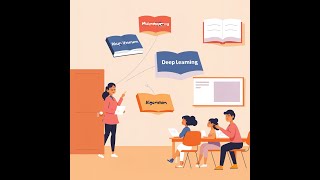
In this solo YouTube video, Ruth Kusemiju (also known as Ruth Krish and Ruth Koosh) shares how she transitioned from a digital marketing background into AI strategy, SaaS, and business automation. She uses the four‑step manufacturing process of M&M candies as a metaphor for building automated, scalable businesses: (1) bulk chocolate core as a solid foundational system, (2) cooling and coating as automation that adds efficiency, (3) polishing, sorting, and stamping as AI‑driven workflows that refine and categorize operations, and (4) mass distribution as SaaS‑enabled scaling. Ruth explains that curiosity drove her to explore AI tools, replace repetitive manual tasks with intelligent automation, and develop SaaS solutions that help any niche business operate without manual bottlenecks. She concludes by urging viewers to consider which single part of their own business they could automate, inviting comments and promising more insights in the next day of the Write, Record challenge.
Chapters
If you had told me a few years ago that I'd be working with AI tools, software as a service, and business automation, I wouldn't have believed you. But here's how everything actually shifted, and trust me, M&M's, which I know it's sounding weird, right, will help you understand why. So hey everyone, I'm Ruth Krish again, and today is day 3 of the Write, Record challenge, and I want to share with you a little bit more how I transitioned from digital marketing into AI strategy, software as a service, and automation. And I'm going to be using one of the simplest but most efficient business models, which is M&Ms. I'm going to be telling you a little story of how M&Ms are made Now, as I said yesterday in my video, if you haven't watched it, you can head over to my previous post and see it. My career started in digital marketing, yes, where I spent years mastering brand storytelling, basically how to make a product unforgettable. Um, I also spent years mastering marketing automation, basically how to scale businesses without burnout, and then also customer engagement how to turn your leads into loyal fans. But here's one thing: marketing is only one part of the equation. Now, a great brand, as we know, is nothing without efficiency, automation, and systems. And that's where AI comes in. Now, a lot of you have probably eaten M&M's, right? Taste delicious. I love them. I could just pop them every single now and then. But have you ever thought about how they're made? I mean, Akil brought up this question actually day before yesterday, and it was like, in your own way, say how M&M's are made. And then when I got to find out, I was like, oh, the process is actually a masterclass automation. It's like a 4-step process. 1, the chocolate core is produced in bulk, right? 2, then the chocolate is cooled and then coated in sugar shells, and then each candy is polished, it's sorted, and then stamped with the M logo on it. And then the last but not the least step, mass distribution happens automatically. Okay, so how am I tying the M&M story into AI automation business process whatnot? So like I said, the first step, which is the chocolate core, is produced in bulk. It's just like businesses that need to create a solid foundation before they scale, right? Create that solid foundation. The next step, where the chocolate is cooled and coated in sugar shells, it's similar to how automation adds efficiency to raw business processes. The next step, which says the candy is polished, it's sorted and then stamped with the M logo, and it, it's just like AI-driven workflows that help businesses refine, categorize, and optimize their operations. And then last but not the least step, which is mass Distribution happens automatically. This is the final step where SaaS, or what we, what we also know as software as a service, and automation help companies to grow without extra effort. And as I went through this, it hit me— I mean, every time you make a discovery about automation, AI tools, whatever— it hit me that if I wanted to help businesses scale Right, I needed to do what M&Ms do, which is create systems that run on automation and not manual effort. Okay, and how did I move into AI strategy and software as a service? Curiosity. I've always been very curious to learn about new stuff, new tools. Like, I come across a tool and I'm like, how can I get to use that tool? And that curiosity led me to business automation and AI. And here I focused on building workflows that remove manual bottlenecks because I was a queen of manual work, manual effort, just trying to make— do everything, being the super Wonder Woman as we know. That same curiosity also led me to using— to use AI to replace repetitive decision-making. You have it set up and then it just runs on automation, right? Also, um, developing SaaS solutions that would help businesses effortlessly scale, okay? And this opened— that curiosity opened doors to start working with AI-driven platforms, AI-driven tools, software, where, uh, I could use the processes or the systems or the solutions I come up with to help businesses optimize, um, automation processes regardless of whatever niche or target audience I'm dealing in. So the big lesson for me, I would say the big takeaway from me in this transition, is that As a business or as businesses, we should be able to function like an M&M factory, okay? We should be able to be seamless, efficient, and automated. Now, if you're relying on manual processes, you're making your business work harder than it needs to. So I have a quick question for you, and this is me wrapping everything up, right? If you could automate one part of your business, think about it, what would it be? Anything. If you could automate anything, just one part of your business, what would it be? Let me know your answer or your thoughts in the comment section below. And this is Ruth Koosh again. I'll see you guys again tomorrow for another day in the Write, Record Challenge. Take care. Bye.