The Essential Entrepreneur Skills You Need To Succeed
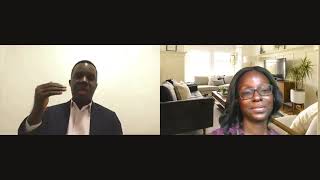
This content was created by Ruth Kusemiju. This content was uploaded by Ruth Kusemiju. This is a YouTube podcast episode titled "The Essential Entrepreneur Skills You Need To Succeed" (recorded/published Feb 17, 2021). It features host Ruth Kusemiju (aka Social Media Boss Lady) interviewing guest Jonathan Okonlawon about entrepreneurship and marketing tactics for entrepreneurs. The conversation covers strategic planning, execution, competition and Blue Ocean thinking, broadening and retaining a client base, customer experience and employee treatment, resilience, leadership, and practical one-liners and personal anecdotes; the episode closes with Jonathan's contact details for follow-up.
Chapters
Okay, hi everyone and welcome to another episode of Marketing Tactics for Entrepreneurs. I'm Social Media Boss Lady, aka Ruth, and today I have with me a very special guest. Of my podcast today, Mr. Jonathan Okonkwo. Jonathan, say hi to the listeners, to the viewers. Good to have you. This is definitely because we have been trying to work on this since last year, and then finally, new month, new day, we get Jonathan live on our podcast. That's good. So let me really start today. Basically, um, we're going to You're welcome. We're going to be talking really today about the essential entrepreneurial skills that we need to have as entrepreneurs, and Jonathan is going to be giving us, um, a look, or let's say a glimpse, into his wealth of knowledge. And but before, like, I make him go ahead, like, into the nitty-gritty, let me just introduce who you're going to be listening to. Jonathan, basically, he is an executive leader with expertise in all facets of business management, in strategy and development, in learning and change management, organizational management, leadership, consulting, and risk management. He's been very instrumental in streamlining, automating, and improving business processes. Not only that, he's also enhanced productivity and implemented document management solutions. Jonathan is a fellow of the Institute of Management Consultants, that's the IMC, and furthermore, he's also a certified management consultant, that's Certified Process Professional, BP, the BP Group USA. But I'm not done yet with Jonathan. Jonathan also has certification in risk Management, that's International Business Management, Berlin, Germany. And he has certification in ISO 9001. He's a certified Infobase expert, um, that's the Folio Group USA. Jonathan is also a professional member of the Nigerian Gas Association, the Council of Renewable Energy, the National Institute of Marketing in Nigeria, Jonathan, last but not the least, holds a BSc in Business Administration from the University of Lagos. Woo! A cockat!
Yay!
But, and he's also an alumni of the Lagos Business School. So ladies and gentlemen, you have Jonathan with you. Okay, so Jonathan, like, I've gone through your quote-unquote your LinkedIn CV, let's call it that way. So why don't you tell us something interesting about yourself that most people don't know?
Yeah, thank you very much, Ruth. And, um, social— it's a pleasure to be here, um, to be discussing with the social media boss lady. And I will say that you're one of the very best that we have. I've looked out and I know when You see quality, you know it. So it's a pleasure for me to be here just to say a few words, and I believe we'll have a very wonderful discussion. Basically, you've said a lot. Uh, I— if I want to say what people don't know about me, uh, I love the game of chess. I don't know how many people know that. And I love the game of chess because chess is all about strategy, and I believe we're going to be talking about strategy today. And in chess, you— it's all— it's a game that has to do with your strategy. Get the strategy right, you come out on top. If you don't get the strategy right, you lose the game. So, and strategy goes into life. So I don't know, at least one thing I don't know, people know that I love the game of chess.
Okay, that's good.
It's a beautiful game.
Definitely, it's a beautiful game, but I think it's a game not meant for everybody. But I do believe it is a beautiful game. I did try to learn chess one time. I think I, I won once and I never won again. So I think I just like, you know what, I don't think I'm cut out for chess. But, um, picking from your words, and you, we know definitely we're going to talk a little bit about strategy today.
So I think you can stay there.
And I can still play chess?
Yes.
Well, I think— well, I think if I put my mind to it, if I try it out, definitely I think I should still be able to play chess. I think so. Okay, so now we're talking about strategy, right? Um, there's a phrase that, um, one time caught my attention, and I want to know, like, what you think about it in, like, in your own words. So like, um, it says that a strategic plan is key, especially when your business is growing fast. And knowing you, having discussions with you, I know definitely, um, as a business owner, which I know you run a business, it's not easy to run a small business. So what does that phrase mean to you? Could you tell us like in a few words what you think?
Yeah, good question, Ruth. Uh, strategic planning is key. I mean, whether your business is growing fast or going slow, but I'll say even when your— your question says when your business is growing fast, and, um, uh, strategy, it's about painting a picture of where you are and where you want to be. And it goes to the core of what is it, what is it that you want. You, you think deeply your plan, and especially when, if the strategy is, is right, the execution would be even better. I'll say it again, if the strategy is gotten right, the execution will be even better. So, and we all know strategy is done by, in any organization, by either the top management or by the board of that company. And if, if they don't get the strategy right, then you are putting middle management and lower management in trouble. Because your strategy is supposed to be turned into tactics. So many times the success of an organization— the success or failure of an organization is dependent on the quality of strategy that emanates from the top. If the quality of strategy If the quality of strategic planning, the quality of strategic thinking is not top-notch, that organization is headed for failure. It's very, very important that organization get the strategy right. Get the strategy right, they are headed for failure. If they get strategy right, then the organization is headed for success, growth, accomplishments. So that's— it's major. Strategic planning, it's major. And as business owners, um, we always have to look at strategy on a day-to-day basis. It's constant. It's like a blueprint that we look at. You look at strategy, strategy cuts across Everything, everything that you are doing is all about strategy. There's corporate strategy, there's marketing strategy, there's blue ocean strategy. Every facet of your business goes into your strategy. Of course, in these times that we live in, it, it's very important that people look at their strategy very well because The world as we know it has changed. Yeah, we are living in a discontinuous, disruptive, change is very volatile world. Yeah, it is constant. So your strategy has got to be top-notch. You have to be looking at how do I make strategy work in times of disruption. So that's what everybody should be looking at. What's my strategy in the post-COVID? So in a nutshell, I think that's what, um, strategy in my way is all about. And to just drop this in, many organizations, even when they are growing fast— but I've seen organizations that they are growing so fast and they don't take note of strategy, and the growth actually kills that organization because the organization does not know how to handle growth, and there's no clear-cut strategy on how to move forward. So the organizations— the organization just— organization just has a sudden burst, it grows, before you know it, tomorrow the organization is gone, and you wonder what happened to organization. There was no strategy. There was growth. The organization had a good, good start, but I mean, there was no strategy for the long haul— 5, 10 years, 15, 20 years down the line.
Follow through. It didn't follow through, which, which is actually what you said, that once you get the strategy right, every other thing will fall into place. Implementation becomes easy because the fact is that you know exactly where you're going. So exactly, in that sense, as an entrepreneur, like, I, I want to know what, like, what really keeps you up at night? Like, what's your constant waking, sleeping thoughts? What keeps you up at night? Definitely.
Well, as an entrepreneur, a good question. The constant drive and passion to succeed. Of course, you know, when you run a business, and we run series of businesses, multiple businesses in, in various industries, You are looking at— you are looking at many factors. You are looking at your competition, you are looking at dominating your niche, looking at your regulatory environment, you're looking at so many things. So as an entrepreneur, there are a lot of, of factors you need to consider, especially Growing a business in Nigeria. Nigeria is a very dynamic environment, but the possibilities are there. And as entrepreneurs, just the thrill of doing business in Nigeria with all the difficulties, through all the challenges.
True.
With all, with all the You know the challenge I'm talking about. So many things, many challenges we face on a day-to-day basis, but, um, it's part of what makes us resilient. And in these times, we are looking at having adaptive resilience. COVID, post-COVID era, yeah, to be resilient, you have to know, um Um, the money did not disappear, but you have to look at where did the money go to. So as entrepreneurs, you position yourself to create value for your consumers and just move to where the money has gone to. And because people always want to pay for value, that's the thing. That's whether in a pre-COVID world or a post-COVID world, watch what is value. Value has not changed. Human beings want to pay for value. Entrepreneurs, you position yourself as value creators so that people— the marketplace pays for value. When people know you are value creators, automatically it will be like fish to water.
It should be like you put, um, gravitate towards you down on the, on the floor.
Yeah, and you see the ants gravitate towards— that's how it is as entrepreneurs. Position yourself as valuable. So the truth of doing business in Nigeria, it's, uh, the passion and the drive to success. That's what keeps us up at night and looking forward to making a change.
That's good, that's good. I mean, that's really like hearing from you speak and all that. One thing I, I, I, I, well In my course of like me talking to different entrepreneurs and even being an entrepreneur myself, like, I find out that like there are some key strategies that entrepreneurs can call upon to improve their entrepreneurial skills. And a good approach I know definitely is learning how to run a business more effectively. Um, that is, you could start— I mean, in learning how to run a small business effectively, you have to start with small Immediate improvements and then build momentum for bigger changes. Definitely, like they said, a little, a little leaven leavens a whole lump. Then little steps, little steps before you take that big gigantic step and all that. So I know that there are a couple of strategies that entrepreneurs can use, um, the right way to become successful at small business management. So, um, The few that like I'd go through, I would like to know how you apply these strategies in your business. Um, like, um, like first and foremost, which like has been like our keyword from the beginning of this conversation, which is strategy and all. So like, how do you make strategic planning, um, a top priority in your business?
Yeah, um Strategic planning, it's at the core of every organization. I'm reminded, my mind goes to a phrase by a Chinese, I think it was a Chinese philosopher, Sun Tzu. He said that strategy without tactics is a long road to victory. And tactics without strategy is the noise before defeat. So everything boils on to strategy. Now, your question talks about strategic planning. Strategic planning is very key because before any, um, thing is carried out organization. Um, for example, coming into 2020, looking at COVID, looking how our company fared in during the lockdown and post-lockdown period, the post-COVID period, and preparing for 2021. What things could we change looking at how the market has evolved? How can we improve on our service? We had countless meetings, top management, on how we could look at the dynamics of business in a post-COVID era and looking at how we can make strategy work in times of disruption. And I'll say, one, it's not just about having a strategic plan, but it's about also having a very good execution plan. Because a mistake that many companies make is that they just have strategy, they have very fine white dots black dots on white paper, very good strategy plan, everything well thought out. Yes, but the execution plan is not there. And execution, as we all know, is the discipline that converts strategy to results. I'll say it again: execution is the discipline that converts strategy to results. It's not just It's not just having a strategy or having a very good strategic plan in place as an organization, but you have to follow through with execution. Very, very important. And also, while you are executing, milestones whereby you review You look at, okay, this strategy, is it working? If it's not working, where can we course correct so that you can change? Now, strategy is not cast in stone. If you see that a strategy is not working, you cost correct, you change strategy, you take a 180 degrees or a 90 degrees turn, change. So it's all— it's something that you keep on looking at You keep on reviewing from time to time, and then you follow through with the strategy. You make sure you have your execution in place. That is very, very important. Execution is the sweet spot of strategy. That is the sweet spot when you see what you thought that people where you want to be, it's been— you are actually following through with it. And to have the consistency, the diligence to follow through on that strategy, to follow, is what makes this whole concept of strategy very, very good. It's not just having strategy of study sessions and all that, but your execution also needs to be thought out. Okay, thank you.
Yeah, all right. I mean, I can see why you are who you are. I mean, like, you have so much in you. I mean, and I'm sure, I'm sure those that are listening or watching are definitely taking notes. So like, yes, we've covered the ground on strategic planning. So how do you, as a business, how do you keep a close eye on your competition? Because definitely in every— in, I mean, any sphere or field of business, we always have competition. So how do you keep an eye, a close eye on your competition or on your competitors? How do you do that?
Yeah, uh, for the competition Like I said earlier, we are in a very discontinuous, disruptive, and digital world underpinned by rapid shifts in every facet of society. Now, people, people say, of course, competition has not changed. It's still business. You have, you have one concept I like is the Blue Ocean Strategy. You have the market whereby you are competing with other competitors in the red ocean dog world, but I always love the concept of you go and you create the outcome that you want. You go to uncontested business space. You go to areas whereby you have competitive advantage. Key whereby how to deal with your competitors is not— I will use the word operationally No, it is to outthink them strategically. I'll say it again: the key to business success is not to outmuscle your competitors operationally, but to outthink them strategically. So it boils down to the quality of thinking, the quality of thinking, the quality of the faculty the quality of the resource that you have available with you. How can you think? How can you create your— how can you become a big fish in a small pond and not become a small fish in a big pond? I'll say it again. How can you become a big fish in a small pond and not become a small fish in a big pond? Because if you are a big fish in a small pond, you, you are the— you control the, the largest market, you control the space. Largest market share. Beautiful. You have largest market share, you control everything. So that is how all those things boils down to thinking strategically. And of course it boils down to how, how, how are you going to— yes, there's a lot of thinking that goes into this. A lot of, there's a lot of brainstorming, a lot of strategy sessions, and Of course, going back to what I said, not just the strategy but also, uh, but also the execution, because, um, the competition is always there. The competition is not running away. And I heard this— I read this phrase in the book recently. He said many people always talk about, um, let's pattern after best practice. After best practice. No, the, the world we live in now, there's, there's no playbook for a post-COVID world. Nobody had this written down. There's nowhere. So right now it's not just after best practice, but everybody needs to, um, every organization needs to think and come up with next practice. Next, not best practice, but next practice.
What next?
So that's—
I mean, that's really— that's next.
Yeah, that's what you have to be thinking ahead.
That's the thing, you have to think ahead. You can't think that what worked 10 decades ago or 2 decades ago will work now. You have to be futuristic in your thinking. Yeah, so, um, we talked about, yes, how to, uh, broaden— to keep a close eye on competition. So So in that case, definitely, because you are definitely looking to increase, um, the clients you service, you're trying to increase, so to speak, your market share. So how do you— this actually maybe would lead me to the next two questions because I think they are sort of related, or they could go side by side. But, um, how would— how do you, as a business, how do you broaden your client base And I think the B part to that question would be, so how do you also now stay close when you broaden the client base? How do you stay close to customers?
Okay, uh, very good questions. Uh, first one, broaden the client base. Two, how do you stay close to the customers? Um, customers are the lifeblood of any business. If your business runs out of customers, you are out of business. So you must always make sure that you have a steady pipeline of customers coming either to buy your products or to use your services. Now, how do you broaden that client base or customer base? We need to look at it this way. We need to understand customer needs as opposed to customer wants. Henry Ford said, if I had asked the customers what they want, they would have asked for faster horses. Because we all know before this brought out the T-model cars, people were already used to horse. Now people did not know they needed cars. You have to now see what our customer wants and customer needs. And I would say it boils down to the product. Every organization needs to have a take a very, very close look at it. Customer experience, um, going beyond customer relationship and getting customer intimacy. Now I know I'm already going to the other question, but first one, let me just wrap up the first one, is broadening your client base By looking at what makes the customer tick. Look at this following thing. You look at what do people need, you look at what must they have, you look at what are their priorities, you look at who is currently buying, what are they buying, And how are they buying? Those are some of the questions you need to ask yourself as an organization. If you ask, if you ask those questions, you'll be able to know because what you might have been selling in a pre-COVID era may not necessarily be useful in a post-COVID era.
Sure.
So companies need to know when to pivot. Very, very important. Don't stay stuck in the past and say, no, this is what I'm doing. If your customers stop buying your product you are out of business, whether it's a product, whether it's a service. So you look at it, I'll say it again for those who get the first time, look at what do people need, what must they have, what are their priorities, who is currently buying, what are they buying, and how are they buying. And then to the next question, how do you retain your customers, right?
Yeah, or how do you— yes, how do you stay close to your customers?
You have to understand, like I said, it go— it has to go beyond from customer relationship to customer intimacy. You have to know the value of the customer. One good customer would open doors to a thousand more customers and one dissatisfaction. Because in this age of social media, all they need is just to take your name out to a court of public opinion, which I call social media— Twitter, Facebook. And you are gone. And if you look at— that's why big organizations spend a lot of money to have a very good social media persona. They want to be seen well by the public. So it's very important that you understand the value of a customer and make sure that any customer that comes that inquires about your product or service, serve that customer like as if it's the only customer you have. Value every customer that comes to either— they need your product or service. Treat your customers well. When you treat your customers well, you would have repeat business. When you treat your customers well, they would give you good referrals.
Yeah.
And you know, in the concept of customer experience, your customer— your first customers are your employees. So treat your employees well, make sure they are happy. When your employees are happy your customers will be happy. Very— it goes without saying, if you don't treat your employees well, your customers will not be happy because it is your employees that interface with your customers. If your employees, who are your first customers, have very good customer experience, then they'll be able to give out— they say you cannot give out what you don't have. So it is what the values they've been taught, the values they have learned, is what they'll be able— how they want to deal with customers out there.
Okay, thank you. All right, okay. So I don't know if maybe just like there are any additional one-liner strategies that I didn't ask or I didn't add for you to explain. Maybe you could just off the top of your head, just add that in.
Okay, I'll just to add to what I said earlier, um, where you said how do you stay close to your customers, I will add this, um, you have to listen to what they are saying and also listen to what they are not saying. It takes a skill. And listen— when you listen, you can also go to the phones that will tell you what people are thinking. And when you listen, you get insight. And when you get insight, you get intelligence. So it's all about staying close and understanding the heartbeat of your customers. First of all, you understand How do I get customers? When you get customers, how do I retain my customers? When you retain customers, it's all, it's all, it's all like, like, like a chain. You, you get a customer, you retain a customer, you, you, you get more customers, you retain those customers, and that way you keep on. There's also you You keep on learning because of course nobody has it all figured out. Let's also— the power to self-assess yourself. And also one very key example as, as business owners is to understand when many times you don't get it right. Many times you make— there are false starts, you make some mistakes in business. You make some wrong business decisions, it's— it takes a lot of this thing to dust yourself up and move on. And one very key thing we're missing in this country is leadership. We— there's a lack of proper leadership in our— of course, not just in business, all over the world, especially when it comes to business. Yeah. Looking for leaders and, um, serve as beacons of hope in these times. So we need, we need people to step up into leadership.
Okay, thank you. That, that's really, really good. So I know we are kind of like winding down a little, um, the clock is kind of ticking on us. So, um, and something I like to do really, um, for for listeners out there and the viewers out there to get a better and personal grasp of who they just listened to. So I'm just going to ask a couple of, uh, off-the-heart questions, just personal questions. And, um, well, the first thing I'd like to find out, like, as entrepreneurs, business owners, we definitely have all faced the major decision in our lives, um, if not many, some few, some many. And it has resulted sometimes into us choosing to take a left turn instead of going right. So in your own experience, okay, just maybe just a few lines, a few sentences, what has been your own fork in the road?
Yeah, it's a, it's a broad question. I've had a lot of fork in the in the role. But if I'm to mention one, I'll say a couple of years ago I took a decision to leave a company I co-founded with a few colleagues of mine and start out on my own. And I just felt I'd reached a spot where I needed to have a, a a career turn and, and do something else. And I would say it was, it was a major decision for me at that time. And looking back, I'll say it was worth it because I know every, every decision that you take has, has consequences. But I'll say I would say it was a good decision I took.
Even at the time, it was quite a very difficult decision, but you took it.
Life comes with a lot of choices, decisions, and you take it. Many times you don't know, you don't know. Many times you just go with a— you just believe that with faith. I'm a person of— I'm a man of faith. And I'm also a, um, try to be a very spiritual person. So you try to find out also what's going on, talk to God, what's, what was the next step in your life. And when you feel you made, you want to move a certain direction, fine. And I, it's, it doesn't change who I am. I'm still very good friends with my colleagues where I left the company, and I believe the company is doing good.
So what did you do? What did you— okay, so what did you do following that moment? I mean, what have you learned from that? Um, oh no, let me— before I go into that, um, can you share maybe an experience or a situation in a few words where things didn't go as planned? Like what your worst moment, uh, was or has been or is.
Yeah, worst moment. I know there are places—
I know, exactly. I know it's not one and it's not two, but we've had worst moments. So what, off the top of your head, just Pick one.
Okay, let's move then. Okay, pick one out of the many. All right, um, worst moment. Okay, I remember the project we were pursuing as a company, uh, let me say like, I think it was like 2 years ago, 2 and a half years ago, with a company And I remember we had done— now, we had put a lot of effort in the business, the business efforts in the opportunity. We had invested time, effort, resources, gone for presentation, and we got to the final boss, uh, the final point whereby for us to come and start the project. And then everything went quiet. Now this after a lot of money. I know how, how many times I had to visit that company in that period of time, and it was in an area that I didn't like going to because of the terrible traffic situation in that area. Terrible. Every day it was— anytime I think of it, it almost like wasted effort, but it's all part of the story. So when it's— when you— when you finally heard what happened, that some of the people in the house were not comfortable with what we were coming to offer, because some people felt threatened that what we offer would it will threaten what they currently have in-house. I'm like, why didn't you guys— didn't you tell us all the while? Why did you let us go all these many months and all that? And it was very painful because of course it's like all the time, effort, money, resources, everything. But one thing we've learned in business is that when you get situations like that You always— you need to have very thick skin, very resilient, and you put yourself up and you move on. You don't wallow in, oh, what might have been, what didn't I do right. It was what should have been. They said the things under your control, they're under your control, but what's not under your control is not under your control. You cannot You can't do anything about that.
Exactly. Oh, it's, it's something, it's a lesson that, uh, that you learned at that moment.
At that moment, at that moment, it was very painful. I'll tell you, it was very painful.
But you were able to pick the meat from the bones and like, okay, the lesson is resilience. Like, what you can't control, yeah, move on.
It's all part of the, it's all part of the story and you move on.
Exactly.
Yes, one, one client or a client that you are looking for does not define who you are.
So exactly, move on. Yeah, move on. Okay, so, so what's your favorite quote like? Maybe personal, it may be inspirational, maybe motivational. I know definitely you don't have— you have more than one. So that's because you definitely, from the way you talk, you have more than one favorite quote. So what do you do? One, like, from the heart. Like which one would be your favorite quote?
Hmm, that's a hard one because like you said, I have a lot of favorite quotes. I have so many. Um, but if I'm to pick one, I'll pick one from the Bible.
Okay.
Trust in the Lord with all thine heart, and lean not unto thine own understanding. In all thy ways acknowledge him, and he shall direct thy paths.
That's a good one.
That's a good one.
If I have to drop one more— I knew that was coming.
One more, um, keep pushing on, never give up, you are only a day away from your breakthrough.
Keep pushing on, keep pushing on, never give up, never give up, you're only one day away from day away from your breakthrough. That's powerful.
If you remember, I don't remember this movie when— when I remember this movie when I was small, I was very young then. I think it was Annie.
Oh yeah, Annie. Annie was like, she said, the sun will come out tomorrow. Just remember that Check your bottoms off tomorrow.
Tomorrow, tomorrow.
I love you. You're only a day—
you're only a day away. Yeah, only a day away.
So yeah, that's it.
So it's all about— many times, many times as business owners, definitely not every day is a sunny day. There are tough days, they are difficult, there are rainy days. They are not so rainy days, they are not so cloudy days, but cloudy days, they are hurricane days, there are no days. But the essence is just keep pushing on, just don't give up. You are only in the beginning of your breakthrough.
Wow, I mean, I'm sure we've We've digested a lot, we've taken in a lot. I mean, ideas, tips, information, strategies, and all that throughout this entire episode. But can you just share, just maybe in a few words, because I'm really looking at the time here, but, um, a few words, what's like just number one takeaway that, um, you really want the audience to like absorb in and like, you know what, this is number one thing you should do, so just go ahead and go do it.
Yeah, I, uh, thank you. I would say that one, number one takeaway from this discussion that we've had, the audience, many times people look at life and think life is not fair. Maybe if they had had— especially in a country like Nigeria, and I know that cuts across everywhere in the world, but I would say that it's time to make the options you take and not just take the options that are available to you. I'll say it again, it's time to make the options you take and not just take the options that are available to you.
Okay, all right, that's good. You guys heard, right?
I'll say this way, make options you take, make options you want. I heard that phrase recently. And it's so powerful. If you look at it very deeply, you will see that as human beings, you have the power to create what you want. It's not just, you know, it's not in anybody's hands, it's in your hands. So go out there and be a roaring success, because I mean, it all goes back to I mean, I believe in the, in the book of Genesis it says you should be fruitful, multiply, replenish, subdue, and dominate. I believe each and every one of us, within us, is successful beyond our wildest dreams. So make the options you take create the outcomes you want, and you will be a roaring success. Make— don't just have a good strategy, but also a very good execution plan. Make sure you think it through, do everything you have to do, planning, thinking, your execution plan, and go through. Never give up. And in the course of doing your strategy implementation, don't be afraid to course correct. If it's not working, it's not working. Change, course correct. That's the— admit that maybe you made a mistake and take the right turn and move on. Success of your life, you have it within you to be successful. You are only a day away from your breakthrough.
That's good. Thank you. Thank you so much, Jonathan. So is there a way, um, to contact you, maybe like an email address or social channel or website or some of the people that can reach out to you for more insights or for connections or networking or whatever?
Yeah, I'm, I'm on all the major social media platforms. I Okay, I'm on LinkedIn as Jonathan Okolawon. You can reach out to me, can send me a DM on Facebook. I'm on, I'm on Instagram and I'm on Twitter. I, I think on Twitter my name is Ukanjo. On Facebook I'm Jonathan Okolawon. On Instagram I'm also Jonathan Okolawon. Then Anybody wants to send me an email, uh, can send me an email at jonathanokonlawon@gmail.com. I'll say it again, jonathanokonlawon@gmail.com. Send me an email, yes, at gmail.com, and I'll respond to you. Send me an email, send me a DM on any of the social media platforms. Definitely, and they can get you to respond to you. All right, you can get me directly, whatever that is— advice, whether it's consulting, whether it's whatever. We'll see where we can, where we can be of service.
All right, Jonathan, thank you so much. You've really been really, really helpful. I mean, it was awesome having you today on this podcast, and, um, I mean Just as a way of like just wrapping up this, our conversation, in a few seconds, let me put it that way. We all know that successful entrepreneurs always, always help people that they meet, and succeeding in business really doesn't require an overnight success. In fact, whoever tells you that, that's like a big myth, really. The fact is that you have to take a long-term strategy and then build it in baby steps. Until it becomes a success. But the fact is that as an entrepreneur, you, uh, you have to be aware of the potential pitfalls, uh, that you meet across your way and be ready to fail. But realize that every point in which you are failing, it's the key to how to succeed in getting it done. Like, I think it was Newton that said— and they said, you, you I think you failed, um, you have like over 1,000 tests of the light bulb. He said, no, I just found 1,001 ways to make it better. So finding success as an entrepreneur, really, it's not an easy task. But I believe that with these strategies that we have gone through, like Jonathan has even given us, like, from his own personal experience as a business owner, as an entrepreneur, and giving us insightful strategies of what we can do as business owners and entrepreneurs, I believe that it will become a little bit easier. I mean, it's essential that as an entrepreneur, you cannot exist on an island on your own. You have to reach out there, connect with people, and see how we help each other. I said together we move as a team. We make it, uh, because entrepreneurship is not a solitary pursuit. Like, as a village, it's a village that makes a community. So together we work together. So basically, this is it, Angela. And I do hope that, um, on future episodes where we would need you again, we definitely have your number, we have your yes, we have your acceptance, we have your participation to come again on our, on our podcast and talk again to entrepreneurs. Is that a yes? I already say that it's a yes on your behalf.
Anytime. I'll be very grateful anytime, whatever, whatever topic you want me to speak on, or whatever, it'll be my pleasure. And so you have that as a yes.
Thank you, thank you so much. So guys, this is Social Media Worth Lady with Jonathan Okonlawon, thanking him so much, and we are all saying thank you. And don't forget to come connect with him on social— Facebook, LinkedIn, Twitter, Instagram, YouTube— wherever you find Jonathan. And this is Social Media Boss Lady signing out, and then hope to see you all again next time for another episode on marketing tactics for entrepreneurs. All right guys, take care and see you again on the next episode. Bye Jonathan, thank you so much.
All right, thank you very much. Bye.
You're welcome, you're welcome.
Thank you.
Yeah.
More from Ruth


Day 14 Write Record Challenge - 5 AI Terms You Need to Know (Without the Confusion)



Day 11 WriteRecord Challenge - 3 Ways to Stay Productive & Efficient with AI Tools

Day 10 - Write Record Challenge - 4 Ways to Build a Digital Ecosystem for Your Business That Works
Day 9 WriteRecord Challenge - 3 AI Automation Hacks That Save You 10+ Hours a Week