
Ep 21: Selling Chiropractic with Dr. Dan Bai
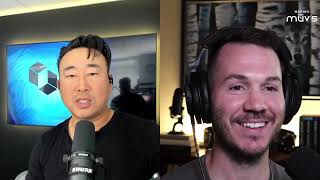
Dr. Dan Bey explains how chiropractors can ethically sell care by using a value stack, listing every benefit on paper with a blue Sharpie to anchor price perception, and uncovering patients' deeper goals like dancing at their daughter's wedding. Trust, not likability, drives payment.
Chapters
What's up guys, welcome back to another episode of Makin' Moves: Rapid Practice Growth for Chiropractors, the podcast. I'm your host, Dr. Travis Stewart, chiropractor and owner of Move Chiropractic and Yoga in Boulder, Colorado, where we built an amazing community-based cash practice from scratch during the middle of the pandemic and one of the hardest places in the country. And man, did we learn a lot along the way. So the entire intention behind this podcast is to share real-life, tangible principles, strategies, and tactics that you can use to build a practice you've always dreamed of without the same challenges and struggles we faced while figuring this stuff out. One request here: if you do enjoy the value you're receiving, please share it out with someone you know and care about so that we can grow and expand our reach. You never know how impactful this resource could be for someone's life or practice. We believe that the Empowered Chiropractors movement is here and we're looking to spread the good word of fortune and success. So take a quick screenshot of any value bombs you take away, post it to your IG story and tag us, and we'll share it and be super grateful. I also want to share this podcast is brought to you by ChiroLux, uh, the best portable table in the game. I've been using these tables since I was early on in chiropractic school, and I absolutely love them. We still use them in the office today as our exam tables. And they're great for training or practice on the go. Anytime that I'm serving outside of the office, I'm always doing it on a ChiroLux. I've carried mine to multiple countries, like literally all over the world. And this table and company are both just— I can't say enough great things about them. They're co-owned and operated by a chiropractor. They're always giving back to the profession. They hook us up with a table, portable drop pieces, and other awesome tools to give away for free at each of our Making Moves live seminars. They get nothing in return there. They literally give this stuff away to students for free, thousands of dollars worth of tools every single seminar that we're—
that we do.
So if you're looking for a portable table, go use code Travis Stewart so we can keep giving back to the young chiropractors of this profession. Huge thanks to ChiroLux. Now let's get into the guest that we have coming on today. It's Dr. Dan Bey. Dr. Dan is the CEO for Clothes for Chiro. It's a— it's an awesome business that teaches chiropractors sales strategies that they can use to increase their conversion rate and increase the profits in their business. Close for Chiro is a provocative, enterprising business consulting company from an unlikely industry, chiropractic. Dr. Dan is an author, a speaker, and a thought leader on the subjects of sales and marketing in the— in the modern world and has changed the antiquated notions most have about the subject. He's real, he's raw, he shoots from the hips, he leaves no punches held. And, you know, really he dove straight into what sales truly was in chiropractic and why we struggle so much with it. And I think that's why I enjoyed this episode so much is because I agree. I think that as chiropractors, it's our duty to sell chiropractic because we know what happens when people don't choose it. And, you know, Dr. Dane and I, both saw eye to eye there. And so I think this is going to be a great conversation for you to tune into if, if you want to, uh, you know, start to sharpen your skills a little bit on, on communication and persuasion and what we truly offer as chiropractors. You know, we, we both agree that, uh, sales is a skill that we should be honing in on and, and continually sharpening, sharpening to make sure that we can reach larger percentages of the general public. And, you know, it's something that I had to put a lot of effort into as a young chiropractor within the first, you know, year or two of my practice because I honestly, I was nervous, you know, and I felt like I was being pushy if I was trying to sell chiropractic. But I realized that, you know, with certainty and conviction and, you know, a tone that conveys that, that we can really get the point across, the magnitude and the seriousness of what it is that we're providing for people. And so, I know you're gonna love this episode. I can't wait for you to dive in. I do wanna end with— there was an issue with the sound here. I had gotten my computer fixed and for some reason, the sound was peaking on my microphone and I wasn't aware of that. And so, I had to go in on the back end and do a lot of sound cleanup. So, I think it sounds okay now, but you'll notice that Dr. Dan's way cleaner than I am. I think it's gonna be alright for the podcast, but I just wanted to acknowledge that. And let you know that I did my best to clean up the audio. And, you know, even this intro should sound much better. But thank you guys for listening. If you want more resources from us, Making Moves, you can go to makingmoves.com.
That's move with a U.
It's making, M-U-V-E-S, makingmoves.com. You can check out the practice growth resources that we have. We have a new practice growth course that's coming out and a marketing course that's coming out pretty soon as well. So check in on that if that's something that you're interested in. If not, then enjoy the show.
Thanks for listening. All right, let's get going. Uh, super excited to get this episode off the ground. Uh, Dr. Dan Bey, thanks for being here with Clothes for Chiro, which I'll let you kind of explain, um, what Clothes for Chiro is and, and what you stand for and what you guys bring to the profession. But I just want you to know, I'm ecstatic to have you on the podcast today for several reasons. And I actually sent you over a talk track that kind of walked through, uh, several specific questions that I typically ask just to keep us on, on like a little journey. I like to send— like, take people through a journey as they listen and experience your experience in chiropractic, all the way through different pieces of advice and skills that you think would be great for them to start to work on. But today we're going to scratch all of that. So I want to go as organic as possible and really allow us to have a clean slate and, and just provide as much value. And honestly, I want to break some limiting beliefs. That's what this podcast— for me, selfishly, you asked me selfishly what I would like to get out of this podcast for the listeners, and I think it's to break limiting beliefs around sales, the word sales, and the process of sales in chiropractic. So with that, why don't you go ahead and take the mic and tell the listeners who you are, what makes you you, and then we'll get started.
Thanks a lot, Travis. First of all, thanks for having me. I'm honored and privileged as well, especially when I have a host of a podcast that comes on and says, hey, I want you to talk about what exactly you do instead of Trojan horsing this whole thing and then trying to back end it. And it's not really my, my gig. I shoot from the hip. I shoot pretty direct. And for that reason, I get a ton of hate. I get a ton of critics. I get people who actually have my head on a pole somewhere, I bet. But that is the— I expect that. And I actually want that because one of the things that I do not want in this profession is apathy. Either you hate it or you're with me or you're not. The people in the middle are going to get killed. And right now the marketplace is getting so sensitive and so polar. If you don't take a stance on certain things, you're dead and you got to play big. But anyway, that's for another podcast probably. But in terms of sales, I love how you just brought it out. Yeah, the nasty 4-letter word, although it's a 5-letter word. Sales has been a thing that has plagued our profession from the very get-go because the mere fact of the word using— we use the word sales, it already brings up this really bad, icky, sleazy, like manipulative, trickery, fraudulent, you know, feel. And that's not entirely anyone's fault. For those of you who are listening to the word sales, you probably counted how many times we said that word already in the first 3 minutes of this podcast. And if it's giving you a weird visceral negative feeling, I want to let you know it is not your fault. It's the fault of our upbringing, because anytime we heard the word sales, it's always been attached to bad sales. You know what I'm saying, Travis?
Like, yeah, totally.
That guy sold me a really nasty car. He's such a salesman because he tricked me into buying something I really did not want, need, or desire. So bad sales gets a ton of press. You know what I'm saying? But what doesn't get credit, what doesn't get any good press, is the good sales. Now listen, and off camera, uh, Travis and I were talking, and he's like, I love what you said, uh, sometimes you got to manipulate the verbiage. I totally get that, and sometimes you do. However, when it comes to this, I'm not going to manipulate that verbiage. Sales is sales. I'm not going to call it converting or K-6 seconds or whatever other fucking thing people have said in their careers to wrap sales in a beautiful package so it's more consumed. No, fuck that, man. Like, listen, it is what it is. And if it's not, it's not. Again, playing in the middle will absolutely kill us and we're not going to do that here. So, if you're still hanging around this podcast, congratulations. It's going to get a little hairy. Because when we talk about sales, it's exactly what we're talking about. Okay? And if we're not gonna be talking about sales, we're not talking about sales. It is what it is. Sales, sales, sales, sales. So I'm just polarizing the audience right now, Travis. So for the people who have no interest in this thing called sales, and they already assume that I'm an icky sleazy, you know, you know, manipulative, you know, douche, and you are the same, then they can go take a hike. Totally fine. There's plenty of other lollipops and unicorns and people doing cartwheels all day long if you want. But if you want the real deal, you want the real hard truth on exactly how this thing freaking works, I mean, I'm glad you're hanging out. So again, that's my intro, Travis. Sorry I took the mic for a little longer. But thanks for having me. And for those of you who are still hanging around, this is Daniel Bey, Close for Cairo, and it's an honor and privilege to talk to you guys today.
Yeah. Yeah. If you've made it through the first 4 minutes and 45 seconds, then I think it's only downhill from here, you know? Yeah, I mean, that's a word, right, that has— it's almost like we create an archetype or a visual of what that word means. And it's like this guy in a, you know, a three-piece suit with his slicked-back hair and a cigarette in his mouth. And, you know, he's trying to sell you something that is not in your best interest. It's not going to improve or enhance your quality of life. And he's trying to get more than it's worth from you in an exchange, you know, and he's using these weird manipulative tactics. We've seen it, right? On Wolf of Wall Street with the straight-line sales, which is great content, by the way. Like, you can dissect that stuff and you can take a lot of great valuable, uh, skills and nuggets away from that and then mold it into, you know, what we do as chiropractors. And, and one thing that I always talk about is, you know, if anybody was, was going to lean into sales, I think it should be chiropractors, simply because we know what happens when people choose chiropractic, and we know what happens when they don't choose chiropractic. And so if those people are making healthcare decisions decisions based on our inability to lean into something that we now know so much about, and we can take from, you know, different industries, and we can kind of piece all this consumer and behavioral psychology together so that we can increase the chiropractic utilization rate. Like, we're doing the, the mediocre majority a disservice.
No doubt, no doubt. And I'm glad you said that because, um, when, when we talk about sales, and I'm talking to the docs and the people who say they hate sales, because I think we need to address that, is they need to understand that if we don't sell them on chiropractic, we're selling them on the antithesis of the chiropractic paradigm. That's right. Let me repeat that for the people in the back of the room. If you don't do what you're supposed to do and you don't make it your obligation and your duty to get someone across to me to say yes to your life-saving care and your life-saving work, Understand, you're literally packaging them up to the BS modern medical system that you know is not the answer for them. Actually, the medical profession should give us kickbacks for all the patients that we refer to them because we suck so bad at this thing called sales. So, this obligation and duty of sales is a different reframe, right, Travis? Because people think, okay, let's say you're okay with the idea of sales. Okay, let's talk the middle of the bell curve. Okay, I understand sales is a thing. I got to learn how to do it. Great. Awesome. Now, Now, let's take it another step. Did you ever think about the, the sales process actually being a part of the service? Did you ever think that if you do sales right, that actually is the start of the healing phenomenon that you are trying to instill and, and, uh, establish for you and your patient? Have you ever thought about that? And that's exactly what we're trying to accomplish. It's the start. I just had a patient this week said after a day one, she goes home and she texts our— my front desk, a picture of her running a marathon in the Chicago Marathon in 2019 or whatever. And she said, caption, this will be me in a couple of weeks, months, or however long this freaking takes. How did— like, I didn't even touch her. Like, I just talked to her. You know what I'm saying? I did my objective. I took my X-rays. I did what I did. And by the way, for those of you who don't know, I'm still in practice just like many of you. Okay? So, I'm still in there doing it. And what makes a person after a conversation, by the way, an 8-minute conversation because I time all of my day ones, What makes them go home and say, wow, like I'm inspired to take action for my health? Well, that's because the sales process was actually part of the service. So, it goes way beyond the fact that sales is a means to an end. Sales is not something that you, oh shit, I gotta do it so that I can be the doctor. No, docs, the sales process is part of you doctoring. Okay? It is If you don't do that, you're not doing your obligation, your duty as a healer or someone as a guide or a leader to get someone from point A to point B. And this is what people want. That's why they're in your office, you know? If you don't do that, you're neglecting your obligation, your duty. Yeah.
I mean, it's part of dealing hope, right? I think that comes through in the sales process. Like it's a transference of belief and you have two appointments, you know, depending upon whether you do a day one, day two, maybe you do a day one process depending upon like what what sales structure that you use, or conversion structure, or onboarding structure, whatever you want to call it. Whatever sales structure that you use, you got 2 days to transfer the amount of belief and conviction that you have in the most powerful message in healthcare. And you have to get them to believe just as much as you do, or at least enough to say yes and commit their time, energy, and money. Otherwise, they're going to be in somebody else's office, and we know whose office that is, and we know damn well that they will sell them. And now They're being trained in sales by, you know, the, the, the most well-funded, um, organizations in the world, corporations in the world, and, and that's the pharmaceutical companies. And, you know, they— there is no holds barred there. Uh, they're not trying to use conscious sales. They are using sales. They're using all of the sales psychology that we know can be manipulative, and they're using that without remorse and without guilt. And, you know, it's, it's our moral obligation, as you said, and our duty to get good at this stuff to to make sure that the general population does not end up in the office of someone wearing a white coat.
All right, and listen, I'm glad you said that because let's talk about that for a second. And this is a kind of a, you know, turnkey moment for everyone in the— that's listening right now. What Travis said is absolutely fact. The other industries that are selling shit product, okay, like products and services that we know are hurtful to the general population, they are learning how to do this, and they've been learning how to do this for like probably centuries. I don't know how long, way longer than chiropractic. In chiropractic, we haven't even accepted that sales is a thing yet. Like, we're so infantile on this journey. And at Close for Chiro, behind the scenes, like, our purpose and our passion, even, even if, you know, we don't even make a dime off of this, is that if we in my existence anyway, if we can get the majority of the profession to just merely accept that sales is a thing, right? That it is an art form, science, and philosophy all in itself, then I've done my job, right? Because then, we can start this conversation. For those who have already turned this one off, they can't even accept that sales is a thing. You know, let me rephrase that. Sales is a thing like Marketing is a thing. The chiropractic technique is a thing, right? Physiology, a thing. Anatomy, a thing. Okay, I could keep going on forever, but it's a thing. It's such a thing that in the top business schools around the world, including Wharton and Harvard and the big, big, big guys, they're teaching sales right up front from either the number one MBA program or as a sales concentration. Watch the sales concentration. Concentration in an undergrad program, right? And this is what they're exposed to. They learn that right off the bat. Because business schools around the world know that if we can't teach a future CEO of Google or Tesla or whatever, that sales is a thing, this person doesn't stand a chance in the modern marketplace. Doesn't care what you sell or what you represent. They're done. They lay that foundation right up front, you know, to business professionals all across the world. That's what we're competing against. So let me ask you all this. Is there any doubt on why chiropractic still is only assuming a single-digit marketplace after it's been around for 100 years? On top of that, chiropractic in itself is the best healthcare product in the world, both in its application and its philosophy. So how the fuck did that happen is my question. If it's so goddamn great and it's been around for freaking 100 years, can anyone here name anything that's been going around for 100 years? Shit, I can't. And if it's still around for 100 years, it's probably the market leader in whatever it is. But chiropractic's been around for 100+ years. It's based off of a sound philosophy. We've endured all the shit that came along with it, right? We won a freaking antitrust lawsuit against the medical monopoly, yet we're still around. Yet we're getting results. How in the world did this happen? How did we not turn that corner? My opinion, it's because we're not selling it properly, period. Now, hopefully toward the end of the podcast, we'll get to more, you know, boots on the ground, you know, nuts and bolts thing. But, Doc, if you can't wrap your head around this whole thing right now that we've done in the first, like, you know, 15 minutes, like, you don't have a chance in understanding the technique behind it and the how-to and the templating. right? Because there's a ton of that. But you'll never get there if you can't say to yourself, oh, shit, you know, sales is a skill like me playing a yo-yo or the piano or play soccer or golf.
Or adjusting.
Thank you. Right? Thank you.
Right?
Yeah. You adjust. I mean, you learned it as a concept, as a technique. And guess what, Travis? You and I both just hit reps, right? I remember, I don't know where you went to school, but I went to Life 2001 and I remember just doing like cervical chair thrust into the back of my popliteal fascia like a million times. Repetition, repetition, repetition, repetition. That's a thing. That's because we accepted it. Sales, it's so esoteric to everyone. It's like, I don't really have to work on it because there's no skill involved. I just have to wing it. I just have them— I just have to have them like me. All I have to do is, you know, show them a testimonial book and see how all my greatest accomplishments— I just have to What is the other one? I have to make sure that I know how to handle an objection. If I need to go home and talk to my spouse, then I'm good. My goodness, no, you're not good because you've never sat and learned the technique and the fundamentals and the moves and then repeated that repeatedly so that you get better at said technique. You know, that's where sales lies, man. So, man, it's so refreshing talking about this because, man, what a week we've had. We talk to docs all across the world, and in the first 2 minutes, I know exactly where they stand, you know? And the docs that I know, unfortunately, are not going to make it are the ones who are so far from accepting that sales is a thing. They're so opposite of that, that they think that it's just going to happen naturally if they do, if they just do a good job. And that's the one that hurts the most. Docs, listen to me. Just because you do a good job, First of all, that should be a given. You should do a good job. But just because you do a good job does not mean anything. I'm sorry, I hate to say it. Just because you're a great adjuster, who cares if the person across from you is saying no to you hand over fist and you're closing at 20, 30, 40% at the end of the year? Who cares? You know, none of that shit matters.
Yeah, I agree. I, I think that you asked a really great question, and you asked the question like, if this has been around for 100 years and we know it to be the, the power— the most powerful healthcare product known to man, right? And, and we continue year after year to, to provide astounding results to the people that are under chiropractic care. Why do we still have a utilization rate that is so low, right? Why, if the satisfaction rate is so high, why is the utilization rate so low? And I think the answer to that question is us, right? We have become the bottleneck. Chiropractic is not the bottleneck. The chiropractors are the bottleneck. And I, I almost believe that, uh, you know, and this is because I— first off, I went to Parker, uh, just to answer that question. And at Parker, you know, the philosophy is getting pretty diluted, it's getting pretty watered down. And, you know, it's interesting for me to hear, uh, you know, vitalistic chiropractors have such an aversion to sales because they have the most powerful product in chiropractic, you know, and these evidence-based chiropractors— we could put air quotes around that— and, and kind of how the school is changing the, the curriculum and the philosophy that, that is in the schooling curriculum is, is being promoted in a salesy way, you know, like they're, they're using tactics to get us to believe something and start to practice something that may or may not be in alignment with the premise or message of chiropractic. So going back to, uh, kind of what that bottleneck is, it's almost a philosophical resistance of the vitalistic chiropractors that they're going to leave with— they're going to lead with loving service, and if I can just get my hands on them, they will believe, you know. But it's, it's interesting because we have this, uh, this kind of descent of, uh, chiropractic philosophy being perpetuated in the school systems, and The philosophy is not going to be as prevalent, is what I'm saying, in the chiropractic profession as it was in 1926, right up until now. So it's up to us to carry the torch. And if we're going to carry the torch, we need to lean into these tactics and strategies, bring them into the vital— the vitalistic chiropractic space, and start to perpetuate the philosophy, art, and science of chiropractic, and do it in a way that we know that works. We don't leave it to chance, right? We don't allow, uh, the— these— this disadvantage advantageous percentage to dictate whether someone starts and stays with chiropractic care for the rest of their life or not. I'm not leaving that up to whether or not they have a great experience in their first 2 days, because there's so many external variables in this world that is, you know, very forceful, right? We're playing against some of the strongest forces ever, and you're only spending, uh, you know, an hour potentially in your office for 2 days to get them to say yes, to get them to commit to chiropractic, to them to say yes to a potential life transformation that may or may not provide generational health and healing and philosophy in a way of life that is pure, that is clean, that is, uh, lived from above down, inside out, that uses the endogenous doctor that we have within us. So that's why I speak so strongly on this stuff. And like you mentioned, a lot of times I do have to manipulate my verbiage because some people don't want to hear it. And I'm not in a place like you yet where I've worked thousands of doctors doing this, and I, I've— I haven't got as assertive or as aggressive. So sometimes I try to manipulate and mold my language to fit the audience just so I can, you know, sell them what they want and then give them what they need over time. Just pull them a little bit further. So I'm excited to hear, you know, what you have to say and for you to dive deeper into all those things that we just talked about.
Yeah, no doubt. But before I do that, I want to comment on one thing that you said is the vitalistic versus the other end, you know. I'm seeing the problem across the board is what I'm saying. Yeah. I'm seeing the vitalistic docs have the same hangups about sales as the other end air-quoted evidence-based docs. Okay. I see it both ends because you understand the evidence-based docs, they still have a philosophy, right? I mean, not having a philosophy means that you're dead, right? Like they believe in something. The vitalistic obviously have their philosophy. Unfortunately, one of the biggest hangups in sales is, is putting your own philosophy, beliefs, values secondary to your patient's beliefs and values, you see. So when I see a bad salesperson, right off the bat, it's look at what I do, look at what I believe, look how great I am. So what that actually translates into is the vitalistic chiropractor that's doing high pies and cartwheels holding a, a spine on his back with a safety, with a giant safety pin, makes sense. And they're gonna espouse the 33 principles, they're going to espouse that the power that made the body that heals the body. It doesn't matter what anyone says because they're wrong, because they have an incorrect viewpoint and paradigm on health and wellness, while I have the answer that's going to change the fucking world, right? So they don't listen, they get rejected every single time They're the cult leader. They're the weirdo. I don't really want to deal with it. So what does this philosophical vitalistic chiropractor do? He or she says it louder, which is the, again, an antithesis of proper sales, right? So sales is really about putting that secondary and philosoph— like philosophy, docs, I just want to let you know is my, by the way, I went to the home of the falling keys, okay? DE, that was my upbringing. I was a Gonstead chiropractor by trade. So I made my homage to Mount Horeb, Wisconsin every freaking year and a forerunner would 6 smelly guys did that every, every year. I did that. Um, but when you get to that point, the, the, the philosophical docs, you got to understand something, is that if you want them to know— okay, let me rephrase— the philosophy that you're carrying around is not to espouse to your marketplace. It's not how it was designed. BJ Palmer, D.D. Palmer Stevenson, and all the rest, uh, uh, Barge, Reggie Gold, all the greats If you really listen to them, what I hear is, listen, this is for you to become a better you. This is for you to execute the principles of chiropractic to the best of its ability. It was never designed to, by the way, take this one-liner, let's say the power that made the body heals the body. And that is going to be your tagline that you post against your wall. And some of you are like, shit, it's on my wall. I know it's okay. Like that was never meant to do that. It was meant for you to become a better version and better chiropractor for yourself. Instead, philosophy has become rhetoric for our marketplace. And by the way, philosophy does not sell. People don't want to buy philosophy. The only people that philosophy sells to are the philosophical chiropractors, right? Your marketplace has no business in that. It's actually none of their business. It's our business, you know? Let's go to the other end of the spectrum. The evidence-based doctors, still a philosophy. I'm only going to execute what is based on the empirical evidence that has been provided to me. Great, good for you, okay? What did they do? Well, Mr. Patient, based on the research X, Y, and Z, based on the research X, Y, and Z, based on this clinical outcome X, Y, and Z. And they think that's gonna sell chiropractic just the same way as a philosophical chiropractor uses philosophy to sell. The evidence-based chiropractor does the same thing, just a different philosophy is trying to be shoved down the marketplace's throat, right? It's not gonna work. What is the research or the quote evidence on a metapractor, sorry, a metapractor's philosophy? What is that for? It's to make him a better metapractor, right? And I don't judge. We work with docs from all ends of the spectrum. I got docs that are, are high pie-in and, you know, air adjusting. And then I have the docs who, you know, looking to see where they can poke a knee with the stem cell. Like I, we see it all, right? It doesn't matter to us, right? All we're going to do is teach them to sell what they do better. But if either ends of the spectrum are selling what their philosophy is, that's breaking the number one rule of sales. And that is number one, always be in agreement. What that qualifies as is always sell them what they want first while educating them on what they could have later. It's very simple. If you guys are taking notes, probably good one to write down is sell them what they want. Now than educating them on what they could have later. And what they could have later is all the deep layers of your offerings, your knowledge, your experience, your philosophy, right? That is consumable to the general member of the population. And another quote you should write down is, "The less of a chiropractor you can become, the more of a chiropractor you will ever become." come. In other words, don't be a chiro, man. Like you're a human being and that's what sales is because people buy from people who, that know them, that remind them of their friends and family. And an espousing chiropractor, whether on research or philosophy, doesn't sound like someone in their family that really wants the best for them. It's just kind of how it goes. So yeah, man, we can talk about this all day, but maybe we can get into some nuts and bolts. I don't know. What do you think, Travis?
Well, I think that you made a few good points there that I wanted to circle back to, and that That was allowing your philosophy and your values and your beliefs, which was something that you acquired over a 4-year educational experience in a container that cannot be replicated in the external or the real world, right? We're in a container where everyone is on the same wavelength. We're all on the same team. And so, because of that, it starts to become everything, right? Our environment starts to creep into who we are, how we live our life, how we speak to the the, uh, the people that we speak to, our behaviors, our actions, our habits, all of those things. And because we're in this chiropractic bubble, you know, we, we tend to use specific, like you said, rhetoric, lexicon, verbiage, uh, whenever we're communicating things to people. And then those become— we become saturated or doused in those. And then we get out into the real world, and now we're talking to people who have been so strongly conditioned by the Western culture that when we are speaking these things into them, what we're actually doing is invalidating all their past experiences as well as their own beliefs and the values that they hold. And we're doing it so strongly that it becomes a repellent, you know, instead of an attractant. And right, you know, I, I love Patrick Chin-Tempo's, uh, like he has a book called Your Stain Is Your Brand, and I love that. I love like being polarizing, but like first we need to get them onto our home turf and we need to be able to keep them there. And once we've got them to commit to being a member or being a patient or being a client of our practice for a specified amount of time in that Defined End program, then we have them now, uh, for let's say 90 days. So that's when we can start to spoon-feed them the philosophy, the values, the beliefs, the experiences without invalidating all of their past experiences first.
Validating without Invalidating. But guys, uh, docs, that is such a huge— and we invalidate travelers without knowing we're invalidating. Exactly. It's so insidious. Can I give you an example real quick on, on, on a clear example of how, uh, we— I, I have invalidated my patients early on in my career. It's, it's hilarious. And some of you, depending on how long you've been around, you'll recognize this move because this was taught, you know, in the late '80s, '90s, and, and still taught to philosophically. So let's say we understand that the power that made the body heals the body. We understand that when a nervous system is stifled and it's congested and it's not operating 100%, that symptoms appear as a sign of such. We understand that symptoms is not the main problem, but we also understand that symptoms is a sign, so we need to get to the cause. Okay, so we got that nailed, right? So that's philosophically. So early on, I was taught to say this when someone tells me, ow, my neck hurts, right? Oh, John, oh, your neck hurts? Well, listen, I really don't care how you feel. I just care how you heal. Wait a second. Philosophically sound, right? Because we can all get behind that one, but practically devastating, right? Because that immediately invalidates the patient's want, need, or concern, right? And if you start a relationship relationship, any relationship, I don't care if it's a doctor-patient relationship, business relationship, you know, a romantic relationship, you start out with an invalidation and a disagreement at that level, you don't stand a chance. The same chiropractor goes on, me, uh, for a day to go through all the findings and all the line drawing and all the things and all the report of findings, and at the end the patient's like, you know, I just— it's a lot of money. And I mean, wow, it's a lot of time too. And, you know, I'm traveling and getting married for the 4th time and I'm buying my 3rd house. I'm overextended. Yeah, I just, I think I'm gonna have to wait or I need to go home and think about it. And so you get that at the end and the same chiropractor is scratching their head. And by the way, this is me thinking, what went wrong? Like, what happened? I mean, I made my case, told them the beauty of chiropractic, how great it was. And I'm sitting there, sitting in an empty office thinking, what happened? Where did I go wrong? Watch this, docs. Oh, it couldn't have been me. Oh, I did everything I needed to do. It must be him or her. Oh, that person was just kicking the tires. Oh, that person wasn't really interested. Oh, that person— watch this, docs, you've said this to yourself, and don't lie to yourself because you and then you say to yourself, oh, that person just didn't get it. It's their fault. And so if you operate the, the problem with operating and not learning how to sell and getting rejected overwhelmingly, I wanna let you know there's a bigger price that's paid other than your business is that your outlook on humanity gets really dark, man. Man, really dark. And the people that you've taken an oath to serve now become your enemies. It becomes a battle every single time, you know what I'm saying? And so your level of service, give love and serve, uh, man, that's starting to flicker until it's completely out and you say, fuck this, I'm not doing this anymore. What can I— what else can I do? You start looking above, and then of course those people leave the profession or they continue on this depressing journey journey of thinking everyone out there sucks because they don't get it, when in fact they never really looked in the mirror and said, where am I going wrong here? Where could I have invalidated my patient's wants, needs, or desires really early on? And that's— I mean, that's a devastating thing, Travis, because imagine a whole career like that. Is there anything more depressing than that?
No. I mean, ending up with your real estate license trying to sell— trying to sell houses instead of being a chiropractor, you I think that that comes back to extreme ownership, you know. I, whenever you were saying that, I literally, you know, heard in my mind— and again, I haven't worked with near as many chiropractors as you, but now kind of being in the position that we are and helping people with their marketing, I do get to have coaching conversations with a lot of people. And one thing that I hear them say all the time is, first off, tire kickers. So that's a good one, you know, poor quality leads, they're not my ideal client, and they just don't get get it, right? So, uh, what I hear there is a lack of extreme ownership, uh, right off the bat. I understand that, okay, first off, we got to get through some of this mindset work before we can even get into some of the strategic and tactical work, uh, as it pertains to your internal systems. Like, you have to connect with the frame.
Before I forget, I want to say— before I forget, I hate to cut you off, but, um, see, look at that, I always— I already almost forgot. Oh yes, I do. So So, the— this is one mindset thing that I want everyone to understand is the people, if you ever find yourself saying they're tire kickers, they don't really understand, they don't really want it or need it or desire it, let me just tell you something. I talk to, not only do I talk to thousands of chiropractors, Travis, I also talk to thousands of other sales professionals in other industries, right? Because I just want to stay abreast on just sales in general as a profession, right? And I talk to them and I say, yeah, you know, like, what are some of the issues in chiropractic? And they're like, yeah, yeah. So like, what percentages are we talking about? Like, you know, they range. I don't hate giving people numbers. And then they go, okay, wait, what do you close at personally? Well, me, I mean, I'm closing like 85-90%. He's like, bullshit, no way. I'm like, yeah. And they think about it. Okay, well, that kind of makes sense. I'm like, why? And he goes, well, for me, I'm essentially warm calling them. They don't have no idea who I am. I went to them, they didn't come to me. Interesting. So what are you saying? So this is what we're saying is your new patient, whether they came from a Facebook ad, a referral, it doesn't matter where they came from, you understand they made an appointment, right? Mm-hmm. They actually did an action step that was more than a couple of clicks. They entered their phone numbers, they entered their emails, they looked at their own personal calendar to see the appointment that I'm taking, does that work? They say yes. They had to think through that one. They hit submit. They got a confirmation. They put it on their calendar. They waited for their appointment. On that day, shit, they just can't get up and go. They gotta get the kids fed, off to school. If they have other appointments or things, they made sure that the way was clear for me to go to the chiropractor that day with Dr. Travis. That was all said and done. Watch this. They got in their cars. They pushed a button to start their car and watch this, docs. They drove to your office. They've never been there before. They plugged you into their GPS. Who does that? Who does that? Who does that? Does that sound like a tire kicker? I mean, seriously, this is someone who was walking by your office. It started to sprinkle rain and be like, well, shit, let me get out of the rain and see what's up. Ooh, look, a chiropractor's office. Like, do we do that? Does that happen? So this is the thing, docs. People do that when they have a deep want, need, or desire. Yes. Even your, what you would call low quality unqualified— God, I hate that— unqualified Facebook lead or the Groupon lead. You know, all you guys make all these excuses why the leads are weak. No, you're weak. You don't know what you're doing. I'll make this challenge to anyone who's watching. If you want, one of these days I'm going to do this and I'm going to have a camera on me. We're going to make a whole documentary on this. Put me in any office in the world. That you think have the worst quality leads and watch me. I challenge it. It is a challenge. Okay, watch me go. And not only me, but watch any of our colleagues that we have trained over the last decade or so, so go, and we'll show you the difference between what a trained salesperson can do in chiropractic and what a non-trained salesperson could do in chiropractic. The difference is immense. Okay. I just wanted to say, put that out there because, you know, the whole, and you know, when you teach marketing, yeah, you'll, you'll, I feel bad for, for B2B marketing and chiropractic. You guys, you guys take a beating, man. You know, absolute beating. Cause it's like, oh, you suck Travis. Cause you got me weak leads. Like, what the fuck are you talking about? What do you mean a weak lead? I got them in. Right. Yeah, that's my job.
That's what, that's what we say. So that was something that we say to summarize all of that is that the best buying signal is that they're in your office. That's the best buying signal. They're there. And like you said, like, you know, you were, you were kind of making light of it, but like, think of all the hoops that they had to jump through, right? They may have gotten a babysitter for their kids.
Exactly.
They had to take time off of work. Like, whatever that is, we can, we can talk about all of the possibilities of the things that they had to do to shape their schedule in order to be in your office for an hour a day for for two different appointments. And we know now how busy people are. And so if they're as busy as we are, which they are, we all are, right? It's, it's 2023. Uh, we have more things to do than we have time in our day. The best buying signals that they're in your office, which means that you should be formulaically and strategically crafting an experience from end to end. The moment that they become a lead, the moment that they raise their hand and provide you their information, every single touchpoint from that point forward should be strategized. And it should be artful, and it should be scientific, and it should be based on your philosophy and making sure that that doesn't invalidate their past experiences and provide them with the best opportunity to say yes, because that's what they need. It's a transference of belief, and it's a value exchange. Like, that's how we should be looking at it. We're exchanging value to them, and typically it's, it's in surplus of what they're, what they're paying. You know, they're paying maybe $2,000, but we're offering them— first off, if we just want to be quantifiable maybe we're saving them from a $20,000 surgery within 7 to 10 years. So we can already say that's a 10 to 1 ROI.
That's not even a maybe, Travis. That's a guarantee, man.
For sure.
Absolute guarantee. Yeah.
And then if they drink a little bit of the Kool-Aid and that starts to, uh, you know, trickle out into their family and how they interact with the world and the, the lifestyle decisions that they make on a day-to-day basis, and they start to live a purer life with more vitality at a higher quality, then now that's an unquantifiable return on a $2,000 investment at scale. At scale.
At scale. Absolutely. And, uh, that's a good point because in the end, who got screwed in this deal? You know, everyone's like, oh, I don't wanna, I don't wanna sell.
That's a lot of money. That's a lot of money. $2,000 too.
Yeah. It's like, you got screwed. If they paid you $2,000, you're the one that got screwed. Cuz you probably already spent that in rent or whatever, and your patient goes home with a lifetime time of value that's unquantifiable at scale. I mean, I don't know what the better deal is. Oh, maybe we should raise our fees, maybe 2%. Okay, let's start there. And this other thing is so many of the docs that I talk to are so underpriced, you know, their margins are razor thin. And from a business perspective, razor thin margins is very dangerous. You know, you just can't withstand any mistakes. Like Walmart has incredibly thin margins, but they're so good at what they do, they will sustain any problems like supply chain issues. Um, but for us, we can't afford razor-thin margins, you know what I'm saying? So, you know, we have to demand, you know, the fees that are appropriate, and usually it means higher. So before we run out of time, should we get into nuts and bolts, Travis?
I mean, this is a great conversation, but can, can we go a little bit deeper into that and then let that lead us into our sales choreography? So whenever you're talking about, whenever you're talking about like OVA, you know, um, and your office fees at average or collections purposes at average, or whatever you want to call it, and your patient visit average, um, you know, how can you, or what have you seen in your experience? First off, like the industry averages there, if you happen to know those numbers versus like what you guys can facilitate with Close for Chiro.
Yeah. So, uh, when we talk about pricing, okay, and I would switch gears for a second. Um, we first have to figure out about what it costs us to execute one office visit. You know, my parents were business owners back in the day, and, you know, they used to buy product at wholesale. So a, a 6-pack of Gatorade, uh, was, let's say, you know, I'm just gonna make up a number, $6. That means that wholesale, each Gatorade is a buck. It's very easy to quantify that, right? And when you put that on the shelf for retail now, Well, obviously we have to charge more than a buck, right? Because there needs to be a profit margin. So you mark it up 100%, stick $2 onto the bottle, put it into the free refrigerator, and you sell it at $2. So now you have a profit margin of 100%, and that's how retail is done. In a service business, unfortunately, we don't have the, the ability to say this is what my costs were per unit of product, but there is a way to figure out your cost per unit service. Right? And that's different for everyone. So I hate the question, what should I charge? Well, shit, I don't know. Like, what does it cost you to run one visit through your practice? So I'll give this out, uh, people come to a master class, like, we literally sit down knee to knee and go through all these calculations with them. Because at the end of the day, you need to be comfortable that what you're charging is going to be profitable, okay? And again, profit, sales, profit, something I'm not sure— I'm not shy about. You need to profit. That's That's how it goes. Why? You need more money to feed your values, right? And to do bigger and better things. I don't want to go into that, but that's true. So profit is okay. Totally understand. That's why you do this. So that's number 1. And number 2, what you charge needs to be obviously higher than the cost of per unit service. So if you're looking for a standard, like across the thing, they vary obviously from, you know, you know, downtown Manhattan, New York, or, you know, some of the poorest counties in Tennessee, you know, you know, but I'm gonna say that what we're seeing on average is about $35 to $40 per visit unit cost. That's what I'm seeing. Okay, $35, let's say $30 to $35 across the— I, I, we take care of docs who are at $70 cost, like in San Francisco or downtown LA or Manhattan, or, uh, where was it, uh, somewhere in Monaco or somewhere in, in um, in the Middle East.
So is this like your absolute stop loss, kind of like your, your total expenses divided by total services?
Correct, correct, exactly. And so that is your, um, you know, cost for the Gatorade, right? And then based off of that, we need to— classically, we'd love for you to be at 100% markup. So if your ASL, which is your cost of the Gatorade, is a dollar then, or $35, I'm sorry, $30, then your retail fee should be $60, right? That's what we like to see across the board to answer your question.
Yeah, that's great. Okay. And then what about PVA, patient visit average? What do you see there?
Um, I see an average across the industry for our clients. Um, we don't do pre and post, we should, but, uh, classic when they start with us, they're a single digit PVA. 8, 9 is very common. Yeah, 8 or 9. Uh, and then when they're really humming along really good, uh, we're seeing upwards of 40, 50, 60. But statistically though, you got to understand, when you start selling better, you can start turning down the marketing faucet a little bit, because if you keep it going at the same marketing rate, uh, you'll soon find out you're going to run out of a ton a ton of human resources and a lot of real estate. So, so that means new patients go down, patient visits go up. So generally the PVA starts to grow exponentially at that point.
Yeah, no, that's great, man. Hearing an 8 to 9 patient visit average, that, that hurts me, you know. Yeah, I mean, we know who gets the best results and who lives a clear life of full expression. That's the people that make it to the chiropractic table, um, more than 8 to 9 times. And so what he's referencing here, for anybody who doesn't understand KPIs, is patient visit average is the amount of time or the average number that a patient makes it to your table or makes it into your office. And so the fact these offices that may have been open for 20 years now only have a PVA of single digits, that means that every person that comes into their space, the average amount of times that they continue to come into their space is 8 times. And, you know, we've been open for 3 years yesterday, was our birthday. Birthday. And our patient visit average right now is 24. Our office visit average is 102 for the, the last quarter. And that is something that I'm super proud of, but I'm still working hard to get those numbers up. So I can imagine how bad people are hurting that are on the other end of that spectrum, you know. And that just speaks volumes about how important you guys are in this industry. So I hope that people, you know, take all of this light stuff that we've, we've gone through so far and kind of talked about overarching concepts and they start to become curious and intrigued and start to ask better questions. And hopefully we can give, uh, some answers here in the next 30 minutes or so. Um, so let's get into the nuts and bolts.
Yeah, sure. And, um, and you know, the, I guess the biggest nuts and bolts is just understanding just basic business acumen stuff. Uh, that's number one. We went over one of those. The other thing is the concept of of— let's start here— is the concept of minimizing, right? And Travis, I know you've already been trained, um, by one of our best students. I know you went through with Brad Glowacki. And by the way, if you talk to him, tell him to give me a call. He stopped calling me, talking to me for some reason. I'm not really quite sure why. Let's let him know I'm thinking about him and I want to give him a high five. But, um, he— we— when we talk about minimizing, and this is a common theme, is that we allow our patients to minimize. We allow our patients to accept the fact that this is not a big deal, not a big problem. And number one, we have to stop that, right? And when someone comes in and says, you know, I have a headache and it just kind of hurts here and there and I've only had it for a day or two, like clinically, if you've been doing this for any length of time, you're going to call bullshit because most people are coming in with an acute exacerbation of a chronic condition. Clinically, that's usually the case. So, but how do we prevent someone from minimizing something without lecturing them, without telling them they're wrong? Because on a sales perspective, that will be the incorrect way to go, right? We want— don't want to invalidate them, right? So how do we do that? So this is a real, real-life, bare-bones, appropriate question-answer that achieves this without being confrontational, okay? So it goes like this. Typically, it'll go like this. So Travis, what brings in and you'll say what? Just roleplay with me, Travis.
I got bad headaches and neck pain that's been bothering me for a few days and I saw your ad and thought it would be great to come in and get it checked out.
Right on. Okay, so that's typically what you'll get. Then the follow-up question is like, okay, so a few days, so how long have you had the neck pain for, Travis?
I mean, I slept funny the other night. I think I need a new mattress. Mattress or pillow. Do you guys have pillow recommend— we'll talk about that later. But yeah, slept funny the other night and, you know, I just got a crick in my neck. So it's been since probably last Wednesday.
Got it. Very good. Very accurate. Travis, I think you have a future in Hollywood. It's very well acted. Yeah, that's exactly what patients usually say, right?
Since Wednesday.
He has a fucked-up forehead posture too. Right? So it's very accurate, right? Now, to me, you know, I've been doing this 22 years and very rarely does a new new neck problem happen because someone slept funny, okay? And that's just my experience clinically, not only from seeing thousands and thousands of patients in my career. And so, the follow-up question, what you really want to say is, Mr. Patient Travis, like, bullshit, this is not a new problem. Like, that's what you want to say, right? But instead of saying that, there's a way to formulate a question so it goes down back to the true nature of the problem. It goes like this. If you're taking notes, please write this down because this is what doctors pay thousands of dollars to learn how to do. So Travis, prior to last Wednesday, when was the first time you recall ever having any type of neck pain at all, like whatsoever? Hmm.
Yeah, probably. Let's see. We were in Telluride in 1998. Yeah, I think it was like after that ski trip. Yeah. So probably after my first kid was born, 1998, something like that.
Okay. Got it. Intentional pause. How many years ago was that, Travis? Help me out here.
Oh man, that was 15— over 15 years, maybe.
Understood. 15 years. Got it. Done. So essentially what we've done there is timeline the, the problem from last Wednesday to 15 years ago. Now, while you're processing this in your head, docs, I want you to consider this. Let's be doctors and clinicians and scientists just for a second. Would you all agree with me that's the symptomatologic presentation of a fundamental problem problem, whether it's a subluxation or whatever you wanna call it, would you all agree with me that the symptomatologic presentation can evolve or change over the course of 15 years? Answer is yes. When someone first has, let's say, a 7th cervical subluxation, right? Let's just say that is affecting the nerve roots in this, in that level. When it first happens, is it possible that's asymptomatic? Of course. Then it festers and it stays around. It gets fixated even more, more inflammation ensues, more neurological disturbances ensues. Is it possible at that point it becomes more dull and achy, maybe into the fascia around it or unilaterally in the right scalenes. Is that possible? Absolutely. Then maybe it just goes away because the body's adapted to it and compensated for it. Sure. And then over time in the next 10 years, is it possible that it feels like it's just more sharp and stabby? And it only happens when they sleep funny, quote unquote, and then it starts shooting down to their hands and fingers in their, you know, 4th, 5th, and half of third digit, which I think is the correct dermatome. I'm sure some students will let me know. Is it, is that possible? Like, you know, is it possible that those things happen? Yes. So when you ask a question that's clinically appropriate, at the same time prevents your patients from minimizing this problem, which they most likely are, without confrontation, that will be a good move. That will be a good nuts and bolts strategic communication that is well thought out, that's gonna get you to the truth about what the problem is, not for your understanding clinically, but more importantly, the patient's understanding of, of the actual true nature of this problem. And now it's 15 years because if you fast forward to day 2 and let's say you found concrete evidence and data and clinical, uh, um, uh, evidence that this particular subluxation or disc is now like, I don't know, like, you know, a D3 disc and it's paper thin and you got a lot of problems and your recommendations are gonna be, let's say, 3 times a week for the next 2 months. Let's just make that up, right? Wow. That's gonna be a tough sell, especially if Travis now thinks, if, if Travis thinks at that point, this problem only happened last Wednesday. Do y'all understand? That's a tough sell. Now, if Travis understands through this questioning that, hey, this problem is not a last Wednesday problem, dude. This is a problem that you first started having 15 years ago, and it's gotten to a point where it is now. Now, I never said that, but the mere fact that I asked the question as such is allowing— watch this, docs— is allowing your patients to come up with their own conclusions without your help, without you putting words in their mouth. You know, how often do many of you want to lecture your patients and teach them, right? Instead of having the patience to ask certain questions that are in a certain way and allowing your patients to come to these conclusions all on their own, right? Because that's authentic, right? That's not tricking them. They're coming to the conclusion on their own. Holy shit. Wow, maybe this is not a new thing. Maybe that ski accident in Telluride and I shouldn't have done the Triple Diamond run, man. Damn. And I took a spill. Oh, shoot. I remember Oh, hey honey, do you remember that time I took a tumble? Like, what happened? Honey, you lost consciousness, ski patrol and everything. It was bad. Really? Yeah. Holy shit. Maybe that's when this whole thing started, man. All right. Well, okay. Now I know what's up. Now you have a way better chance of justifying the comprehensive nature of your care, right? To someone who now is not minimizing the problem. Does that make sense to everyone?
Dude, it makes sense to me. So in, in some summary here. Using Socratic questioning, which is asking them better questions that lead them to, uh, their own conclusions, right, without you having to lecture or teach them. You're using like a time anchor, so now you're, you're anchoring the problem to an event that happened 15+ years before. And then I'm, I'm not gonna like shortcut the path here, but it sounds like then whenever you're giving them their recommendations, those recommendations may be for 3 to 6 months, which you can now anchor against the 15-year timeline that it actually took to generate the problem, and we're going to do it in X amount of time, which now in comparison to is a fraction of the time to actually relieve the problem that's causing the symptoms, even though the problem may have been something that we acquired over 15 years of structural change.
Right on. That's it. That's it. So many different ways we can say this, but that is it. And really, when you think about it more on a high-level thinking. It's, um, it's the disparity between investment of time, right? And, um, the how bad the problem is. So, you know, if— so let's talk finance just for a second, just to draw the parallel. But if your patient thinks that this is going to cost $60, right? And then you're presenting a care plan for $3,000, there's no way they're going to come up to that level. But if you reciprocate, if you flip that and you get the reciprocal of that where the patient thinks this is going to cost $12,000 and you come back and say it's only going to cost $3,000, it's an immediate yes, right? So how do we develop that level of expectation in our patients so that they, they understand the true nature of the problem? This is, this is not a new thing, for example, or letting them, leading them to a point where this is so valuable, this seems like a lot money, $10,000, $12,000, holy crap. And then bring it and then we actually give them the actual value of the course of care, which is, let's say, 2 or 3. Like, how do we set that up in the, in the most efficient way in the shortest amount of time? And that's where the art, philosophy, and science comes in. Because every word that happens in a day 1, day 2 needs to be well thought out. And then of course, well executed. It can't be winged. You can't just wing it in there. Because if you wing it in there, and then you start to develop, you start to do do the typical mistakes. And typically, docs, like, what I want more than anyone, anything, is I want you all to stop getting chiseled, you know? It's like, all right, shooting at the hip, right? Like puppy dog, like, oh, look at me, let me lick you, please love me, please like me, like me, like me, then you'll pay me. No, people don't pay people who like— who they like. Actually, they pay people handsomely if they— if you're respected. Right? That's a big distinguishing, a big difference. So how can you do a day 1, day 2, an initial sales cycle that builds you an authority of certainty, competence, confidence, right? Respectable, truthful, and manage your expectations appropriately for it. That for as a result, at the end of the course of this cycle, they're saying, Yes, immediately. And this is a time thing. No, we don't want a yes 2 weeks from now. I want— we want a yes right now. Not just for our benefit, but for theirs. Feel me? Mm-hmm.
Yeah. No, I love that. We, we have our own process of doing that, but do you wanna elaborate a little bit on how you guys maybe price anchor a little bit or, um, provide like a perceived value in the mind of, of the, the patient or the, the prospective client, and then how you come in under that. And obviously there's the, the bigger discrepancy there, the better. So can you give us just a little bit? You don't have to give it all, but a little bit on how you guys do that?
Sure. In terms of the financial expectations without actually giving them a number. And I mean, there are people who— and this is— all right, so I'm gonna make a lot of enemies here. Oh, what else is new? So the pre-qualifying call, I'm not a fan of that where you— and it's so contrived, like, Oh, Mr. Jones, or untaxed, you, you're gonna be expected to pay upwards of $3,000, $4,000, $5,000, $6,000. You know, I mean, before you even meet the person, I don't think that's appropriate. Sorry, Travis, if you do that, I'm just not a big fan.
Nope.
What I, what I, what I would much rather do is have them come up with their own valuation of this process through what's called the value stack. And this is your explanation of the course of care that you're going to be providing. Writing. And the idea here is to list every feature and benefit in your office, right? And the timing is important, right before you go over your pricing, right? So let's say you did a whole day one, great, you nailed it, fantastic. They already see it's a solution. Now it's the logistics part. Day two, report of findings is done and clearly have a problem. It's been there for a long time. I'm ready to go. Let's fix this. Now we get into how do we fix it, which is what I'm talking about right now. So the value stack is— has to be comprehensive. It has to list out every single feature and benefit that you're going to be providing for them. Now, this is not an educational exercise. In other words, we don't expect our patients to actually understand all the ins and outs of how, you know, a cervical adjustment works, right? The neurology behind it, you know, or the afferents and efferents of the proprioceptive neuromuscular system. Like, we don't need them to know that. What we do need them to know is that this is a very specific process and service. And then watch this. What that means for them is, and that's the benefit in their perspective, which is a— this could be a 2-hour podcast just on that. And then you stack it. Adjustment X, Y, Z, A, B, C, and you listed all out on a plain white piece of paper. We use blue Sharpie, list it all out, fill that page really big because subconsciously when people see all of those services, features, and benefits, they're naturally gonna say in the back of their head, wow, that's a lot. That's what you want. You want your patients to say, wow, that's a lot. That's a, that seems like a lot of money. And boy, holy cow. Like that's what you want cuz you're stacking value. Value. Now, at the end of all of that, then we present our finances, which at that point should be a fraction of what they perceive the value to be. And then we're good to go, you know. So best example I have is when my wife, uh, quoted out a landscaping job, and I was thinking in my head, oh my God, it's gonna be like $20,000. I mean, they're moving earth and they're bringing like equipment and shit and grains. And I'm like, oh my God. And we got the final quote, it was like 7 or 8,000. What did I say? Immediate yes. I didn't even think about it. I was like, let's go, I'm ready to go, let's do it. That's the concept behind a value stack, and that's how we create disparity between the relative perceived value and the actual value. And that's how people say Yes, quickly, more often than not, when it comes to, you know, comprehensive high-ticket prepay situations or even visit-to-visit situations, you know, it doesn't really matter how you do it. But let me put it this way. If we're gonna do this, let's train on the toughest types of cases to sell. Because if you can do that, then you can sell anything. Yeah.
Absolutely.
Love that. And then, you know, he even dropped like a good nugget there in a detail. Which may or may not have been detected by the listeners, but you're using a blue Sharpie, and there's a reason for that too, you know. For the first 2, 2 and a half years of my practice, every day that I had reported findings, I wore a blue shirt. It was blue shirt day, and I took that from Michael Gerber. And I think they did the E-Myth, which I read thankfully very early on in my chiropractic career, and took a lot of what he, what he kind of broke down as a sales experiment where they had one group wearing blue suits and one group wearing brown suits. They had the same script, the same people, the same scenarios and situations, and the closing percentage of those in the blue suits was statistically significant. And so they started to do a little bit more research on colors and blue being a color of trust and authority. And so even that alone right there, like, there's a reason why you're using blue over green, and there's probably a reason why you're using red over Purple, right, and some of your other, um, some of your other things. So, uh, that's great. Do you have any other components here that you want to drop in this nuts and bolts section?
Uh, sure. I mean, uh, let's see, I got so many. I maybe—
you got, you got, you got 7 minutes.
Okay. All right.
Yeah.
Okay, good, good for the lesson. And by the way, if you guys are listening, um, we have a whole bunch of these nuggets that are actually free to download. If you go to our website, go to the freebies page, uh, there's like a half a dozen of these things and it's well more thought out. This is a podcast, but it's a tutorial, PDF downloads and all that jazz. So make sure you check that out.
Tell them, first off, tell them who you are. So you're the CEO and are you the founder of Close for Cairo?
I am.
Okay. So the founder and CEO of Close for Cairo and, uh, go ahead and tell them that website.
Yeah. It's www.closeforcairo.com. That's C-L-O-S-E, close, not the closure that you F-O-R and Cairo, C-H-I-R-O, not Egypt. So sometimes people are like, clothes for Cairo? Like, do people in Cairo, Egypt need clothes? I don't really understand. So it's clothesforcairo.com. Well, we're going to play off those— that word one day. It's just fun. But clothesforcairo.com.
Um, and what do you guys do? Give us a— give us a 30-second elevator pitch.
Sure. Uh, we teach docs how to get the yes with less stress, how to get more of your patients to say yes to your life-saving care. Care at your fees, uh, with the least amount of stress possible so that you don't have to overwhelm yourself with marketing all the single time. Get more of the people to say yes to your brand of chiropractic more often than not. It's what we do.
That's great, that's great.
Um, so the last nugget I guess, um, I'll leave here would have to do with a life effect. Now everyone seems to be the bane of the chiro's existence is because we all understand that people don't come to us just because they headaches. They're usually coming to us because those headaches are preventing them from doing something in their lives that they really want to do. They're missing out on some part of their life, you know. So the way we ask questions in terms of, uh, life effect is really, really important. And be— but what you all have to understand is, is that we facilitate them sharing life effect with us. We don't force them into sharing it with us. So the big biggest shift that I think a lot of the docs should be making here is that, yes, you would love for someone to eventually tell you, you know, Dr. Travis, what I really want to do is I want to be dancing at my daughter's wedding. Right now I can hardly go 1 or 2 steps without like feeling shaky. Um, and the wedding is in 3 months, and I really want to be there for my, my daughter because, um, it's the last time I'll ever be able to dance with her as a single a woman. Like, we would love to hear those types of wants and needs in our office every single day, you know what I'm saying? We'd be great. Unfortunately, people don't really share your deepest and darkest right off the bat, right? So we need to be— to kind of manage our expectations so that they tell us what they really truly want, need, or desire that's appropriate for where they are right now, because that does grow over time. So for example, the scripting is not so much as important important as what you do afterwards. So I would say, hey John, what are some things that this prevents you from doing, uh, that you wanted to do, needed to do, or you have to do, even if it's just, you know, partially? You know, anything. And then, uh, John would say, yeah, you know, I just like to be able to walk longer and stand on my two feet longer. So number one, let's accept that. Okay, docs, like, we know there's probably a bigger story behind it, and so we're going to accept that. However, we're going to give our patients a chance to what we call step them up. So after he says that, I'm going to say, got it. Be able to stand longer. It's a great goal because it is a good goal because he told me that's what he wants. It's a great goal. So John, let me ask you a question. If you were able to stand longer than a couple of minutes, let me ask you, what would that do for you? Like what's the end product of that? And he might say, well, Well, you know, I'd be able to just, you know, be able to have more endurance standing, doing certain things that I really need to do or want to do, you know? Again, response. John, that's a great goal. Good stuff. Let me ask you a question. This is another step up. What are some of the things that you want to do? Like specifically, help me out here. And by the way, for the MetaPractitioners evidence-based docs, um, or the documentation people, this is actually called ADLs, like Activities of Daily Living. This is a documentation like thing. So it's not inappropriate for your pa— for you to ask your patients this. So anyway, back to the story. John, so what would that be able to do? What would you be able to do with that? Like, what's the end product here? Help me out here. Like, what's the specifics? And he'll say, well, to be honest with you, my daughter's wedding in 3 months and I don't wanna look like an asshole or a, you know, a, you know, weak, you know, wobbling around dancing with my daughter. My daughter wants to do this whole choreographed routine thing. I'm frankly, I'm a little worried I won't be able to do those moves. John, that's a, that's a great freaking goal. Be able to dance a choreographed dance with your daughter. What's your daughter's name? Kelsey's wedding. And what's the date on that? December 24th, 2023. Hey, John, that's a great goal. All right. So moving on and you get right off of it and you keep going. Right. So that is a choreographed what Travis, you said, a choreographed move on a day one to allow your patients the every opportunity to share with you what they truly, truly want, need, or desire, you know? And in that particular moment, if you're thinking chiropractic, you're talking about technician, technical, you're thinking about, you know, how am I gonna convince this person that chiropractic is the answer? Like, you're screwed because you'll never be able to be on that bandwidth, that energy level for them to share with you something as deep deep and, and desirable as that. What creates, uh, this— for the C4DC docs we work with, we hear it all the time— what creates a situation where patients are telling you, like, you know, I, I, I, I don't, I, I don't feel like a man right now. I can't have sexual relations with my wife. It's been like 3 months. Every time she tries, I, I, I, I have to tell her I can't. What creates people to tell you that? You know, like, it's a certain level of trust and authority that creates people to share that with you. And that's really what we're trying to accomplish. However, we don't search for it. However, we don't pull it out of them. We just present it, guide them. If they want to share, great. If they don't, okay.
Yep, man. So I, I do want to shed some light on, on something, and I think it's because of how early early on I am in my career and how much I was challenged coming out of chiropractic school. So I had an awesome mentor, a loving mentor, a very supportive mentor that supported me in, in opening my own practice. And I was under the impression that I was ready because I had a good product. I was a great adjuster. I was a great communicator in, in like day-to-day communication. I understood the philosophy, uh, had great technique, and I was pretty artful. And so we had a unique selling proposition as well because we started Move Chiropractic Yoga, which is my wife's yoga and movement instructor. And so we thought that we were going to be able to move to Boulder, Colorado without knowing anybody here and kind of take hold on the market. And we were going to be able to build success very quickly. And we had someone in our corner telling us, trust the process, you got this, uh, you will be able to do this because of who you are. And we got into practice and I experienced a lot of pain and a lot of anguish and a lot of moments staring out the window in my office, wondering if that person was going to come back, wondering why they were no-showing us for their day 2, because I thought I did such a great job of providing value in the day 1. And, you know, just like crying and looking out and like seeing my wife and my dog out there and wondering how I'm going to support for the family. Tears in my eyes right now. Just, I experienced so much turmoil, and I started to look for all of these things outside of the industry. So I started searching for every, uh, you know, sales and value business acumen-based resource that I could find. And I worked my ass off to consolidate all of that into something that I thought was unique to us. And what you are providing people right now is an answer and a solution to that, and you're doing it in a podcast form where people are probably listening to this on their way to work or on the way home from the office or whatever, and it's just becoming information that they're consuming. However, if you truly dove into this and you reached out to Dr. Dan and you got into this formulaic and systematic way of moving through your conversion process, your onboarding process, your day 1, day 2, and you took all of these little small details that right now seem like just words coming through the airwaves and you actually put it into your choreography, you would immediately see an improvement in, first off, customer buy-in. Second of all, uh, commitment levels or conversion percentages. I mean, we're talking about people who may be converting, you know, 45, 50, 55%. If they can jump that up to an 85%, That's a 30% increase in, in top-line revenue and probably bottom line by just changing one strategy and system, and that's their internal conversion system. This stuff right here can not only be, uh, career-saving, it can be life-saving for you. And I speak that with conviction because I experienced the pain of not knowing this and thinking that my product, my adjustment, was going to be enough. And I I have a YouTube video that I just put out last week, and I call it the 7 Pillars of Chiropractic Practice Growth, and it talks about all the things that I learned. And you know, only one of those pillars is adjusting. Only one of those pillars is fulfillment. The rest of the pillars are all business acumen-based skills that you need to have and put them all together to have a bulletproof business process so that you can serve more people with what I like to call the Big 3, which is results, impact, and profit. Results, impact, and profit. And I think what you're providing chiropractors helps with all three of those— results, impact, and profit. Increases PVA, it increases OVA, it increases your certainty and your conversion percentage so that you can impact more people. So you're able to keep people on the table longer, to give them better results. You're able to make more impact because they're going to go tell their family and friends everything they've learned in the chiropractor's office. And then you're going to have more profit because you're going to get paid what worth. I appreciate you, Dr. Dan.
Dude, mic drop, Travis, mic drop. And dude, congratulations on your very early success. Um, docs, listen, listen, one of the things that I've developed over 20 years is an eye for talent, and Travis, you got it, man. You absolutely got it. Um, so continue doing what you're doing. And for the listeners that want to work with Travis, I am going to say, even though I'm not quite sure exactly what he does, I'm going to buy stock here and say that whatever he's selling, I probably want to buy it if I were you. And this is coming from a 22-year vet in practice and also in the B2B space. I've kind of seen it all. So, uh, congratulations to you, Travis, as well. Thanks for having me on. For all the listeners out there, hey, thanks for spending the time with us. Hopefully you got a lot out of it. And, uh, I'm really accessible, believe it or not. I'm— yes, I'm very busy, but I, I will take calls. I will take emails, questions from any of your audience members anytime. Thank you so much.
Awesome. Thank you so much. Um, appreciate you being here. Uh, hope the listeners had a great experience. I'm sure they did. Find Dr. Dan on any of the channels that he mentioned. And thanks for tuning in for another awesome episode of Makin' Moves. Cool, man.
Cool. Good job, buddy. Thank you for having me.
You too.
I gotta split, but hey, let's have another call. I'd like to know a little bit about what you're doing as well. I like to reciprocate the honor to have you on some of our channels. It'd be nice because you're not actually, you know, a past client
More from Ryan









Making MŪVS (Vlog) - Episode 1: Inside Acquisition.com's First Ever Marketing Workshop
