
Episode 39: The Win-Win Associate Model w/ Dr Noel Loyd
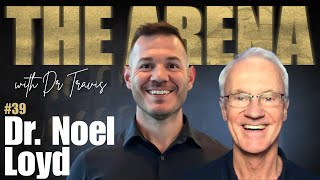
Dr. Noel Lloyd, who founded Five Star Management after a career-ending neck injury, explains his win-win associate model that aligns what clinic directors need (help, freedom, money) with what associates want (training, big earnings, successful futures). He attributes 85% of failed associate relationships to lack of intentional development, not malice, and outlines hiring criteria, a 7-step onboarding path, and a 100-visit target for new patients in the first 100 days.
Chapters
Dr. Noel Lloyd, welcome to the podcast. I really appreciate you being here today.
Well, it's my pleasure.
And I see here that you graduated from Palmer in 1971 and you practice in Western Washington, right? And I also just learned that you built 10 chiropractic clinics, Sound Chiropractic Centers, Right. And you also founded Five Star Management, which I'm excited to hear about today.
That's right. That's right. So, yeah, I graduated in '71. That's a few years ago. Wow.
That's exciting. You know, I, I feel like I've been in the profession forever. It's only been 6 years, you know, so I can imagine, you know, the experience that you have under that hat of yours. And so I'm really excited to ask you some questions today. And try to extract some of that wisdom and pass it along. You know, that was the point of this podcast when it first started, was I opened during COVID and I was having a difficult time building a practice, you know, just rightfully so. It was a really tough time for the entire nation. And so I started this so that I could bring people on like yourself, and I could not only learn myself but also, you know, provide a platform for other chiropractors who may have been in a similar situation as me to be able to learn from some of what what I like to call chiropractic goats. And so I'm excited to have you here today because I did not know that you were so well known in the industry. I actually, I put it out in our Chiro Ads Academy that you were coming on to do a guest expert lecture, which you just did a beautiful presentation on just before hopping on this call. And I got so many responses from chiropractors saying that you were the master of associate development. And so anybody out there right now that's, that's considering hiring associates, or maybe they have associates and they just want to better learn how to develop them and how to develop a more win-win long-term relationship, I think they're going to get massive value from this episode.
Great.
Awesome. Well, um, first off, I want to start with your journey into chiropractic. So how and why did you decide to become a chiropractor?
I was raised in Everett, Washington, which is a little mill town that's 30 miles north of Seattle. And at age 5, I fell off the monkey bars straight onto my head, knocked myself out. My dad thought I was dead. And I wasn't. So they end up taking me to the hospital because I was acting a little goofy and somebody thought I had a concussion, which I did. And the doctor said, well, you have to watch him, but he should be okay. Well, I wasn't okay. I got sick. I got sick and I stayed sick for about a year. And finally, there was this woman who knew about this thing called chiropractic. Now, this was a long time ago. This was in the '50s. And so I ended up at a chiropractor and my parents were They didn't know what to think, but they wanted to get some help for me. And I got that miracle adjustment. I got my atlas knocked back on. And I was the first member of our family that got the chiropractic miracle, but many of my family members did. And so fast forward about 6, 7 years after that, my dad and I were driving home from the chiropractor, and he said, I was 11 years old, he says, "You're not too young to think about what you could be doing for a living, for a career." He says, "You could be a chiropractor if you wanted to be, and you could help people." So my dad never gave advice, and so I just said, "Oh, okay." And so I made a decision, that simple decision sitting in the front seat of a 1955 DeSoto, to become a chiropractor. And I, I enrolled at Palmer College when I was 18, and I graduated and was practicing in Washington State when I was 22. Wow.
Hey guys, I know you're enjoying this episode, but give me one second of your time. This is my shameless plug for the Chiro Ads Academy, where we're teaching docs how to bring their Facebook and Instagram ads in-house and generate repeatable, consistent new patients month after month without the headache and hassle of working with digital marketing agencies. It'll not only save you 30 $40,000 a year, but it'll also give you outsized returns. It's the same exact system that we're running inside our 7-figure practice right now, and last month alone we generated a 34x return on investment. We spent $1,567 in Facebook ad spend and generated over $54,000 from Facebook ads alone. This system is proven, it's tested, and has been installed in over 150 practices across the world, and it can be installed in practice as well so that you can generate similar results. Click the link in the show notes to watch a free training where I break down every single step of the entire system. And if you like what you hear, book a call so we can see if this system will work in your practice. Click the link below and I'll see you on the inside.
Thanks for your time. Back to the episode. Well, I'm so curious, you know, as you're just talking about going to the chiropractor in the '50s, you know, like the, the reel in my mind, I see through like a vintage film reel right now. But like, what did that, what did that look like? What was the chiropractic landscape like? And like, what was the inside of a chiropractic office like and the message around chiropractic?
Well, I remember as a kid walking upstairs and they seemed to be so big because I was a little kid, and I went back to this office years later and they had little teeny stairs. And so I remember going into the reception and Dr. Haynes's wife was at the receptionist desk and there must have been 20 chairs in reception. And it seemed to me that they were always all full and I didn't like getting adjusted. It was a Palmer H.I.O. You know, toggle recoil on a drop headpiece. I didn't enjoy it, and it was great when I didn't have to be. But I mean, I literally grew up in a chiropractic office, and gratefully my parents took everything the chiropractor said as super, super serious and very, very important. So I avoided, I avoided vaccinations, and, and so I was under chiropractic care. So I, I had I had good chiropractic philosophy when I enrolled when I was 18.
That's great. Did they use a Nervoscope or what were they using?
Yes.
Okay.
NCM, right, right. The one that goes up on the, uh, up on the, on the track and it would be graphed and I was either, I was either in pattern or out of pattern and they got stapled to the folder and I remember looking over at that at the neuro calligraph be able to see if I was gonna get adjusted. If I didn't have to get adjusted, I was thrilled.
You were celebrating.
Yes.
That's awesome. That's great. I thank you for— thank you for providing me with what feels to be a memory, but it's not, you know, just a fresh perspective on how far chiropractic has come and just so grateful for the pioneers that have got us to where we are today. For the last 40 years, I believe, 40 years, that's That's crazy. For the last 40 years, you've led Five Star Management. Is that correct?
Yeah. And if it's not 40, it's 39. So, but I think about '84, '85, I started Five Star. And I loved teaching and I would teach at Parker and I taught for another group. And, and I thought, you know, I just, I love doing this. And so, yeah, I've been a coach for, with Five Star Management for, yeah, for 40 years. That's hard to believe, but yes.
Well, first I have a question. Did you know Jim Parker?
I did.
How? I went to Parker and— Oh, did you really? I did. Yes. I went to Parker and graduated from Parker. And so I got to hear a lot about Jim Parker. And the, the icon that he was. And you're not bone doctors, you're nerve doctors, you know, with that cigar. If I'm not, if I'm, if I'm not wrong, I believe he—
you're not wrong, he had a cigar.
Yeah. So how was that experience being around such iconic, you know, chiropractors?
You know, um, the interesting thing about Parker at that time is that not only would you meet Jim Parker, but you— I remember, um, seeing Clarence Gonstead there. I remember, I mean, either between Parker and D.E., Sid Williams, Reggie Gold.
Reggie Gold, wow.
I mean, Jim Sigafus.
Oh, wow.
So I've been very, very, very blessed. You know, the pioneers, the guys who paid the price.
Yeah, that's amazing. And I love that you're able to be the bridge now, you know, and you can also transfer a lot of the information and wisdom and philosophy that you had. But now, I would like to hear from you. What is Five Star and how did you end up doing it?
Well, I taught for somebody else for a while and I love teaching and then, we decided to not work together. And I, I, I just, I, I loved, um, talking about day 1 and day 2 and report of findings and helping a patient stay in what I call a patient-valued relationship. And then I also, I really liked external marketing and I liked external marketing because we produce gobs and gobs and gobs of new patients. And producing new patients and getting really, really busy, I needed to hire associates. But right about then, I had this career-ending injury. I was over in Sun Valley, and I was skiing, and I did what's called a yard sale. I don't know if you know what a yard sale is, but you crash so bad, your poles are over here, your hat's over there, your boots are— I mean, And so, and I just really, really screwed my neck up. And I was told by a neurosurgeon that I was supposed to have a bi-level fusion. And I was also told by chiropractors who took care of me, hey, Noel, you just can't do this for right now. You have to rehab if you can. So I had new wife, new house, new baby. And I just— and I was seriously wondering if I could continue in chiropractic. And so what I decided to do is I decided that I was going to manage associates and I was going to develop associates. And I went to work full-time on figuring out the chiropractic practice, figuring out marketing, and figuring out associate development. And so the foundation of what I teach in Five Star right now is what we call the win-win associate model, is making sure that your associates can help as many people, have as much fun, make as much money as they want while working for you. And so I started to work on that for myself. And then I started to teach other clients that. How to find new patients, how to get busy, strong, stable practice, and then bring in other associates so that they can help you see more people, have more fun, make more money. And so, I mean, that was the foundation of Five Star, and that's what I do today.
That's great. Yeah, I mean, I have, I have questions on that. Um, okay, you know, Coming out of school, I guess I would, uh, I would say that, that I had a similar perspective to, um, to a lot of the associates that you— or the— a lot of the graduates that you spoke about, which is, you know, we hear a lot about chiropractors eating their young, you know. I think that's a saying, that's a saying that makes its way around the industry and, and particularly into chiropractic schools. And so I'd just like to get, you know, from your perspective, first off, why do we have that reputation?
Well, so let's imagine that you've got a successful chiropractor and he or she loves chiropractic, loves their practice, loves their team, loves their community, but they don't know anything about developing associates. And I don't think the majority of bad associateships are because of bad intent. It's not because we have these evil chiropractors that want to, quote unquote, eat their young. It's they don't know how to develop a successful chiropractor underneath their roof. So by some estimates, 85% of associateships end badly. And what I mean by end badly is that it's disappointing. The clinic director didn't get what he or she was looking for, and neither did the associate. And I think most of the time you can blame just not knowing what to do rather than being, you know, somebody being evil. And so I think that the clinic director has an obligation to know how to launch an associate and The people that I've worked with, when I teach them how to launch an associate successfully, what happens is that the associate says to him or herself, "Hey, my clinic director is on my side," because they are. "Hey, my associate, my clinic director cares as much about my success as he does his own," which he does. And so if you get win-win relationships happening underneath one roof and multiple associates doing really, really well, it's not that you're eating your young, you're feeding your young.
That's right. Developing.
To work off that metaphor. I'm going to give you an example. Please. Let me give you an example. I've got a very successful client. And he says that on the way into the office, he drives maybe 15 minutes, one of the things that he thinks about is, "What do my associates need from me today?" He has his job. Now, they see hundreds of— I think it's about 700% growth in the practice since he's been working with the associate program that I helped him with. Um, he, and he sees less patients than he ever has, but his job is to figure out what the team needs. And it's not that the team doesn't do their work, they do their work, but his work is to coach, um, to help the systems in the practice, to provide an environment where, uh, the associate loves being there. I was interviewing an associate for another chiropractor, and he had come out of a real difficult associateship someplace. Not an evil person, but just a person who didn't know what to do. And he was going to try this associateship for a while. Spoke to him 2 years later, and he said, "I want to work for Dr. Milo forever." And I said, "Why?" And he said, "I'm helping a lot of—" in essence, not these words, but, "I'm helping a lot of people. I'm having a lot of fun. I'm making a lot of money." And so I believe that it's just that guys, men and women don't know what to do. They don't know the win-win paradigm.
I have two points there. So first one is I love the reframe of You know, somebody that I look up to and I've learned a lot from is the Hormozy couple. And I'm not sure if you're familiar with them, but they're pretty fast-growing entrepreneurs and now own a portfolio of companies. But Leila Hormozy actually says that some of the best CEOs in the world view their employees not as they work for me, but I work for them. And so I love that. I love that perspective that you just gave with the chiropractor that's grown 700% and on his way into the office, he's asking himself and, and may, may even be asking his associates, you know, how can I support you? What can I do to help lift you up today? I love that, and I'm going to take that into my own practice. But my, my question is, you know, when you mention that 85% of, uh, you know, the associate relationships or experiences don't go— or they end badly, they don't go as planned because either the associate didn't get what they want, the clinic did director didn't get what they want, or both, right? What, what have you identified to be what the associate wants, what the clinic director wants, and how can we meet in the middle?
Great question. So typically, I, I don't think that you should be hiring associates unless you're busy enough to need associates, unless you've established your success. And what that typically means is it's the busy, successful chiropractor that needs an associate. They need They need help with processing new patients. They need help with adjusting their overflow. They need, also, they need freedom. In other words, if you're a busy, successful chiropractor, and this happens all the time, somebody will tell me, you know, I don't get a fraction of the free time that I would like in order to be able to enjoy my success. Anybody, and I mean anybody in a practice, can close the doors for a month and take that month and go on vacation. But what are you going to come back to? The smoldering embers, right? The practice is gone. It's damaged. You've lost so much money, you can't do that. So that's why chiropractors have been trained by that. So you want help. Number 2, you want freedom. And number 3, and this is the thing that I have thought for years, it just makes no sense that the entire responsibility, produce all the overhead and all the profit lies on one person. Now if we double, triple, quadruple, 500% increase in gross collections, what happens is that your fixed costs go down, down, down, down, down, down, down. Profit margin can be better. There's more than enough to give the associate a great paycheck, cover all the overhead, and the clinic director can profit from his or her ability to provide that type of opportunity. Yeah, that's great. I don't know if I answered your question. You did.
No, absolutely you did. Yeah. So, from the owner's perspective, you want help, freedom, and money.
Help, freedom, and money.
Help, freedom, and money. And what about from the associate perspective? Like, what have you identified to be the main desires of an associate?
So, the associate wants to make money. They spend a lot of money, a lot of money going to school, and they want to have nice things as well. But they also, I believe, they want training. So, you need to put them into what I call a big money game. You need to give them an opportunity to make $100,000, $200,000, $250,000, or even more, but not at the expense of the clinic director, not at the expense of the hiring practice, but working with the hiring practice. So I'm going to teach my— I'm going to introduce my associate to an opportunity where they can make a percentage of collected money on new patients that they produce. So I'm going to train them on how to produce new patients, train them how to do a great day one, train them how to do a great day two with a report of findings, Train them how to be great technicians. Train them how to stay in a patient-valued relationship. So successful chiropractors can forget that they just didn't pop out of the egg that way. They learned all these things and they, they grew and they put things together. So what they need to do is train their associates to do the same thing. So the associate typically needs a big money game, training, and what I call a successful future. There isn't anybody who went to chiropractic college and told all their friends that they were going and what they were doing that wants to go back home and work for their brother-in-law and explain to their friends how they failed at chiropractic.
You gotta sell on real estate. Yeah. Right, right.
So, uh, So one of the things I train my clients to do is to have their associates' best interest at heart. So I was telling one guy, in fact, this was just this last week when I was in Chicago, I was telling the group, if your associate knows that their success is just as important to you as your own and that you are working to provide an environment where everybody can be successful, that's a pretty nice place to work. Yeah.
Yeah, that's good. So, if you do it right and you can create this win-win associate relationship, it sounds like it can be extremely fruitful. But it also sounds like it needs proper structure and potentially even guidance from someone who's done it A few times, maybe a few hundred times, right? Uh, correct me if I'm wrong, you had 70+ associates inside of your 10 Sound Chiropractic clinics, right? Yes.
In fact, I think the actual number is 76.
Wow. Okay, so 76 just in your practices alone, and then much less the amount of associates that have been under your, uh, mentorship under Five Star, right? Coaching. So you've done this, you've done this a lot, um, decades. So if the resource is available, like, what, what have you seen to be kind of the top reasons that chiropractors don't pursue an associate? Like, maybe they are strapped for time, they don't have freedom, they don't— they're not making the amount of revenue that they feel like they should based on the amount of sweat and sacrifice that they're pouring into their practice. And if we know that this associate model can be such a win-win relationship, why aren't more chiropractors trying to incorporate it?
Well, that's a good question. Anytime I speak to somebody about bringing in an associate, I give them certain examples of people, you know, large group practices that are working together, and I'm grateful that my successful clients also share their stories. And the big thing, the big thing is that Everything is foundational upon the win-win paradigm. So, I'm going to recruit somebody to win-win. Gratefully, I have really, really good track record. So, one of the things when I was hiring my own associates, I would let them sit with, in fact, invite them to visit some of my different clinics and speak to my associates on how are you treated what's going on. I think that most chiropractors don't know that this is even possible, and possibly it's just because they've heard some of the horror stories. And then also this— oh, I remember this. This is a good example. I was speaking to a guy who was thinking about becoming a client, and he said, 'Noel, my associate, drives me crazy.' I said, 'So what's going on?' 'Well, there are 3 things he does that just drive me nuts and 3 things that he doesn't do that he should do.' And I said, 'Scotty, have you told him?' And he said, 'Well, Noel, he should know.' And I said, 'Well, how's that working for us right now?' And so I came up with this rule over a period of time decades ago, is that you have no right to expect anything that isn't written down and at some point in time either taught or discussed. Yeah. And so what I have found and what my clients tell me is that we have a 7-step path for all new associates to become successful. We have a 7-step path, and as soon as somebody signs a contract, I'm going to tell them, moving forward, these are the 7 things that you and I are going to work on and that you need to make sure that you focus on in order that you can have the most successful opportunity here that you possibly can. So Travis, I know you're a new dad, and so I would imagine that someday maybe your son thinks that he might be a chiropractor, and so, and if he couldn't work with you, what would you want —his experience to be as an associate or working in a clinic. You'd want somebody to be on his side, have his best interests at heart, take a look at his skills, develop him in his strengths, support him in the areas that he needs support, and be his biggest cheerleader. And I think that if you provide an associateship like that, provided it's in a good business model, Everybody's going to help a lot of people. Everybody's going to have a lot of fun, and everybody's going to make great money. Does that make sense?
It makes a lot of sense. Yeah, it sounds like the path to a successful relationship in any area of life, you know.
So, let me tell you about that. So, I'm in Chicago last weekend, I'm just talking to some of the CAs, and I talked to this new CA, and she just loved her job. And, and, um, and her clinic director says, I think that this win-win philosophy has kind of permeated the entire office, is that we want our CAs to win We want our marketing assistants to win. We want our massage therapists to win and our associates to win. The clinic director's primary job is to set up a win-win environment and to make sure that everybody's winning. Now, that's not at the expense of the clinic director. It's with the clinic director.
That's good. That's good. And one thing that you, uh, you mentioned on the call that I thought was a great perspective, um, is you put it up on the slide and it was, you've got to think coach, not boss. And yes, um, you know, I really liked that. I really enjoyed that, um, especially because a lot of chiropractors, I think, coming out, just first off, it takes, it takes a certain type of personality to want to pursue chiropractic. It takes a certain life philosophy. And, you know, I, I find that a lot of chiropractors are entrepreneurial and they're competitive. In nature. And so I think that framing the relationship in the coach-to-player frame really makes a lot of sense. And can you, can you go into that? I, I won't expand on that, but I'd like you to.
Well, first of all, I want— and I remember an associate that I hired over 40 years ago. We had just opened up my first satellite clinic First of 10, first of 9 satellites, one was the mothership, 10 total. And I told him, I want you to beat every single record I ever established. I want you to be better than me. And he said, well, that's my plan too, which I thought was funny. And he became very, very successful. And in our time together, not only do he and I today still have a wonderful relationship, Dr. Craig Thompson, Craig became very successful and very well paid, and I did very, very well myself in my relationship with Craig. And so I think it's so important. I'm sorry, I kind of got lost. You had a great question there, and I thought about Craig. Help me. Coach-player. Could you say the question one more time?
Yep, the coach and player relationship versus boss to subordinate. Yeah. Okay.
So imagine this is that you want to be well known as a good coach. And so one of the things that you do is that you have a plan in order to win a championship. And you talked about prospective players and said, you want to win a championship too? Yeah. Okay, great. So here's what I'll do. I'll put together the best coaching squad. I'll make sure that, you know, I recruit the best players, but I'm going to need your best as well. And so I recruit somebody to a game. And so if we're both playing that, if we're both playing that game and we've got this goal in mind, then we're playing a game. It's fun. One of the best signs of a really, really good associateship is when your associate comes to the clinic owner and says, "Hey, I had my high day today," or, "Hey, I just wanted to text you and let you know we left the marketing event. We've got 7 new patients. All of them are coming in." So they bring you these little trophies and they share them with you. And I mean, so it's coach and player. Now you are the boss, so you're not only the coach, but you're also the referee. And you have to set standards. But my experience is that if you do that kindly and you insist on that kindly, that your players will also respect you for that and appreciate you for that. Because any person who's a success understands that discipline's a part of it as well. And I've had conversations with associates where I pull them aside and say, hey, listen, I never want you to, I never want to think that your success is more important to me than it is to you. So we need to do this, this, and this in order for you to be able to get what you want. Now, if you don't want to do this, that's okay. But never let me think that your success is more important to me than it is to you. So that's what a coach would do. Does that make sense? Absolutely.
That's great. I love that, like, mentorship and development aspect there. Right. And I think sometimes we do forget that, you know, especially if you get wrapped up in the day-to-day and it can be challenging to keep that front of mind, you know. So, I always think of things, I just grew up a sports fan and, you know, I've played competitive sports my entire life. So, a lot of times I like to compare entrepreneurship and business and development mentorship kind of to sports in general. You know, I understand kind of from a recruiting standpoint, like if I was a professional sports team and I was going out and I was trying to recruit an A-player to come in and play a pivotal role in helping serve our mission and grow our practice and allow us to develop them into the highest potential that they have to offer here. What am I looking for in an associate? You know, if I'm that owner?
So, first of all, you need to have the win-win paradigm. You need to have a mission, a vision, and goals so that you can recruit somebody to your mission, your vision, and your goals and have that win-win perspective so the associate can take a look at your mission, your vision, your goals, and say, I want to do that. That looks way, way cool. And you want to be able to show the associate that he or she can help a lot of people, have a lot of fun, make great money. And then when I interview somebody, I'm looking for 3 things. I'm looking for somebody who's driven, somebody who wants what I call that divine dissatisfaction with the status quo. So it's a gift from God that you want more. Number 2, they need to be coachable. There are some people that they're not coachable. They won't do what I ask them to do. And it might be because they're arrogant. And by the way, all arrogance is insecurity, or it might be because they're scared. But they need to be coachable. They need to be willing to do what you ask them to do. They need to trust you. And they need to be likable. So one of the things I do in my interview process is that I want not only my associates to talk to a new prospective associate, but if you're hiring your first associate, you want that prospective associate to be interviewed by your top or your lead CA. And I'm going to ask that lead CA, is this person likable? Because if they're not likable, if your team doesn't like them, chances are your patient won't like them. Now, if you have a great system and you've got a great day 1, a great day 2, you know how to do retention, you've got good marketing, you can drop somebody. They don't have to be perfect. They don't have to be a 10. A 10 is not going to come and work for anybody for a very, very long time. But if they're a 7, they, you know, everybody becomes an associate because they have some needs. If they had no need, they'd be in their own practice, right? But if you put a 7 in a great system, they can perform like a 9. And you can have a wonderful practice full of 7s that are in a great system, all performing like 9s, and have it feel just about like heaven. Yep.
Yeah, I like the thought of that, you know, that everybody's in the same boat rowing the same direction. Um, and I, you know, I've, I've even experienced in my practice where just based on my inability to lead properly, you know, we were all in different boats. And, um, that's, that's not very efficient and it's extremely frustrating, uh, for all parties. Um, and, and that can lead to, like you said, relationships ending badly. And fortunately, I think I do have the skill of self-awareness and being able to identify where I need to grow before things like that fester in most cases. But I can imagine some, some, some chiropractors or people in general allowing relationships to just inflame over time and, and blow up.
Well, you know, my associates could never read my mind. Mm-hmm. It was always on me. Before I hired them to tell them, look what we're doing here. You want to do this? Look where we're going. Do you want to go there? This is the process. Here's what we're going to do. This is what I'm going to ask of you. Here's what I'm going to provide. Now, if you, if you promise somebody that you're going to provide it, you need to provide it. Yeah, you need to be a man or a woman of your word. And you need to start the relationship on the right footing. So it's number one. In fact, we help clients do this all the time. Where do you want to go? What do you want to do? What do you want this practice to look like? What's your mission? What's your vision? What are your goals? And having a mission, vision, and goals that you can recruit people to. Now, if you've got a great referral practice, you've recruited your patient base to your mission, vision, and goals. Right? You recruited your CAs to your mission, vision, and goals. I say this frequently. I'll say it here. The best whys win. The best motivation wins. So if your motivation is to help people, help patients, to develop my team, to help them, If I want to develop my associates, that's a really, really good why—to serve people. Hans Finzel, in his book, 10 Mistakes Leaders Make, he calls it servant leadership. And, you know, you mentioned a little bit earlier about the family that you're talking about who does business is that it's the It's the job of the CEO, you know, to serve the team, to make sure that they have the resources and the development and the training and the encouragement that they need. So, um, I don't know, I'm just ranting now. That's good.
This is good rants. That's what this podcast is for, um, conversations, you know. I think that that's— I think, you know, I need to hear this now in my career, and I'm sure there's a lot of chiropractors out there that need to hear the same thing. I want to ask you a few tactical questions. And mainly, again, not to like toot your horn again, Noel, but it's because I, I heard from several chiropractors leading up to this conversation with you that you were the master associate developer, but that you also have helped— you've helped implement systems inside of these practices where the associates are driven and motivated to actually go out and pull in their own new patients. Their own new patients. And in that, they're somewhat innovative and they come up with these different ways to go out and set up these like coffee talks and, or, you know, like coffee with the doc or whatever it is. And they have several of these opportunities that they've created per week. And so they're able to get to a pretty high patient volume really quickly. And from what I've seen here, what I've seen here, you said you know, whenever you're launching the associate, which is an important part, obviously. You said something about fire— or finding them, uh, hiring them, and then launching them. And whenever you're launching them, the associates can be profitable in 30 days after launch. I know a lot of chiropractors out there are probably thinking, how in the world is that possible? And so I'd like for you to share maybe just a few tactical things that, uh, or tactical initiatives that you develop these associates on, on how to actually go out and bring new people into the office?
So the top 3 external marketing procedures are massage events, screenings, and talks. If you have a massage event— and I have a sister company called the New Patient Academy where we teach people how to set up massage events, screenings, and talks. And we train what we call a COA, a community outreach assistant. That's a CA who's responsible to set up events, to make appointments, and to make sure those appointments get into the office. And we drop the associate onto the COA's team And we start to prepare the associate for what they're going to do even before they start on their first day. And I ask my marketing team to set up all these events and we just insert the associate into the process. Now, your son's name is Theo, am I right? That's correct. Good memory. So, in a couple years, he's going to want to ride a a 2-wheel big boy bike, and Travis is going to be running down the sidewalk holding on to the back of that bike, and Theo's going to say, "Don't let go, Dad! Don't let go, Dad! Don't let go!" And what'll happen is that you'll be 25 yards away saying, "Okay, son," because what'll happen is that he'll get his wheels underneath him and he learns to ride the bike, but he starts out He starts out with training wheels. He starts out with somebody supporting him. So what we do is we set up all these events and we teach the associate how to set up events. Then we do the events with the associate and we teach the associate how to make new patient appointments. We also, one of the fun things that you want to teach Theo is riding his bike with Daddy is fun. We want to teach the associate that doing external marketing with the COA is fun. I mean, if going out and marketing and doing external marketing is just you being thrown out the door and somebody gives you a SAM machine or somebody gives you a massage chair and tells you to go get new patients, that's the worst. It may work sometimes, maybe 1 out of 1,000 times, but it's almost guaranteed to lose. What's almost guaranteed to win is if you have the right person who's driven, the person who's likable, and the person who's coachable, is you can teach them how to do a win-win marketing system where they meet people, make appointments, and we have all this stuff systematized, and we teach them systems, and we support them in the systems. Now, you come back in with a bunch of new patients, And some people have a patient payment plan where they can do what's called a cash prepay. And there's enough people that tell me, my associates went out and got a bunch of new patients, they came back, I've been training them and doing cash prepays, and we collected more money in the first month than their entire paycheck. Now there's another thing that we do at Five Star called 100 and 100 days. So we want the associate from new patients that they produce to produce a practice of 100 visits a week and to be able to do that in 100 days. Now we've got a number of people who actually do that, but it is the target. And again, it's the game we recruit the associate to. So who wins? When the associate wins that game, they win because they're in bonus. Clinic director wins because he's got an excited associate who's in love with the process, who's making more money than they cost. So that's part of the tactic. Does that make sense? I think that you need a marketing CA, or what we call a COA, community outreach assistant. Who also has a role in managing the associates marketing because, you know, I can't do all of this myself. Yeah, that makes sense.
Absolutely it does. And, you know, I'm sure it does for a lot of the listeners because, um, I found my way into the digital marketing space and, uh, you know, my, my co-founder of, of, um, the business that I I also own a second business is Making Moves and it's the Chiro Ads Academy. And so we help people with their digital marketing. And a lot of times it's figuring out how to reduce friction and allowing them to have more leverage to bring in more new patients while maintaining and preserving their time and financial freedom. And, you know, I think that implementing a COA could be really supportive in not only the role of assisting the associates to, you know, set up and schedule and manage those external marketing events, but also this digital marketing landscape as well. So if you could have somebody that could take ownership over their role and become a great community outreach assistant, then you could, you could really do great at driving new traffic to your associates that you're effectively developing, which seems to be That seems to be the model. You know, it sounds like that's the way you want to do it.
When somebody says to me, I'm ready to get my associate, then we are going to have a discussion on what we call the Marketing One Page. They need to know and believe— I'm patting my heart— that they can launch an associate effectively, because what I have on a piece of paper here is my marketing plan. And then I'll take a look at that marketing plan and I'll help them with that marketing plan. I might make suggestions or sometimes I just bless it and I go, "That's going to rock." Now, of course, you need to execute your marketing plan with some skill. But, you know, the nice part is that the external marketing done right is something that's really, really pleasurable and fun. Yeah. Yeah.
I mean, especially if you have an excited team and especially if you're playing the big money game, because I know that you can, you can put incentives around those events, you know, and I think that incentive can drive performance, but it can also create more energy around those opportunities, which I love. And I'm going to, I'm going to take that and I hope my associates are listening because they're going to They're going to have me coming back into the office with some ideas on how we can create better win-win relationships because there's room to grow in my practice just as there is most of the listeners, uh, hearing this right now.
So a year ago I started with this young woman and there were 2 clinics and I think 7 chiropractors or 6 chiropractors and they had these low motivated chiropractors. And nobody was in. They all got X amount of money no matter if they worked hard or not. So who wants to work hard? There's no incentive. And they had some type of fictional bonus system because nobody ever made the bonus. And so I said, we're going to take one person 'And you and I are going to work together, and we're going to launch that one person into a win-win relationship inside your office.' And one of the things that happened is that other doctors— what are they doing? Well, I want win-win. So we— she built her skills with me and that one associate the associate who's the most likely to succeed in that process. And then the whole office got taken over by win-win, which is just exactly what they wanted. So I help my clients all the time who already have associates transition from old school to win-win.
Yeah, that's beautiful, man. It just breathes life into the organism. Yes. Well, we've, we've been on for an hour now, and, you know, I just want to— yeah, I know, um, it's been a, been a good conversation. You know, I, I guess a few more questions here that I have. Okay. Um, what, what are some of the challenges that, that you help chiropractors with? If there, if there are a few that are easy to identify, um, you know, that maybe you see in a pattern quite frequently? Like, are there specific challenges that people come to you to solve?
New patients was number one for decades. And then I helped so many people with new patients, then we added associates. But so start with new patients, retention, and the business. And when I say the business is actually getting paid for what you do. There are some people that collect so little per visit that in order to be able to get the associate into bonus or to be able to have the doctor make the profit that he or she should, they need help with the business. So when we do our initial analysis or conversation, I ask myself, what does this person need in order for them to help more people, have more fun, make more money. I'm going to analyze 12 different capacity areas, figure out the quick fixes that we can help them implement so that we can get a, a bump in the practice right away. And then we always grow toward bringing on an associate when the time is right in a good relationship because there isn't anybody that I've ever met that who doesn't want help in a busy practice, want more freedom, and want more money. So new patients, retention, streamlining the business with a goal toward adding an associate. And if you're already a busy, uh, chiropractor, we're going to help you organize your stuff in such a way that you can teach it, organize your search so you get the highest number of applicants. So the person who has the most interviews has the most likely chance of finding somebody who they really like and someone to bring into the practice. And then once the first associate gets going, doctors typically are thinking, gee, this was a lot easier than I thought it was, or this is a lot better than I thought it was going to be. Can I get another one? So, we work to help people add multiple associates.
That's great. And you do it well. You know, from my understanding, there's been several clinics that you've worked with that have grown 300%, 500%, 700% since implementing an associate-driven program like this. Right. So, you know, you obviously do great work in the industry. And You know, for anybody who— I'm sure we've got a lot of people interested right now, so I'll put you on the spot here. For anybody that is interested in, in learning more about your Win-Win Associate Program, where can they find you? How can they get a hold of you? And what are their options here?
My5Star, M-Y-F-I-V-E-S-T-A-R.com, My5Star.com. There's a little survey that we have. It's called the Associate Readiness Survey, and it's going to pop up on the screen. Take that, and we'll take a look at your survey, and we'll get in touch, and we'll do what we call a fit call. This isn't a sales call. It's where you're at, Where do you want to go? What do I think is a really good track to take? And most of my conversations start with people that way. And then this is what we would do if we work together. And then it's simply a decision of would it be more fun, would it be more profitable, would it be faster working with Noel than not? And it's usually a really fun conversation. So, yeah, my5star.com, take the survey, and we'll get on the phone together.
That's beautiful. And just to clarify, this isn't just for docs who are looking to, uh, bring on an associate. This is also for practices who may already have associates that would like to kind of switch over to a better win-win relationship.
If your associateship program isn't working, if you don't have motivated associates If your profit margin is too bad because your gross is bad because you don't have motivated people in your system, I have a way of transitioning from old school to new school where you learn, one associate learns first, and then the success starts to spread through the whole organization. Also, if you're not busy enough to have an associate yet, but you want to head there, then being a part of Five Star might be exactly what you need to do so you don't end up creating so many of the mistakes that people have to go back and correct.
That's right. Yeah. Well, I'm sure you have a wealth of knowledge. And, you know, from my understanding, you're great at organizing and synthesizing that into implementable systems. And I'm just— I'm honored to have you on. I think that people are going to enjoy this information, but I really hope that not only do they enjoy this podcast, but they reach out to My5Star and see how you can help those guys. We'll be reaching out. You know, I'll probably go take the survey just so that I can kind of go through your client funnel system there. But also, I'm just Looking forward to further conversations on how we can better develop our associates inside of our practice because we always want it to be win-win. And I think that, you know, that message is, is a golden message, you know. And I hope that more chiropractors start to incorporate a win-win relationship. And I'd love to see that chiropractors eat their young message start to die out, um, you know, over the next 5 to 10 years. I think that would be awesome for profession. And we can all win. You know, we do have a great profession where we get to serve a lot of people, change a lot of lives, and we can make a lot of really great money doing it. And I think that, you know, based on what's going on in our world right now and in our society, I think we're in a great position to take the reins as the most powerful message in healthcare. And as long as we can have motivated team members and everybody's playing the big money game and we're all winning, you know, I think we're only gonna grow that much faster. So I really appreciate all the work that you're doing in the profession.
Truly my pleasure. Let's change it to chiropractors feed their young. That's right.
Yeah, feed their young. I love that. Chiropractors feed their young. Well, thanks for being here, Noel. I really appreciate you taking the time today. My pleasure.
Thanks for having me. Absolutely.
More from Ryan









Making MŪVS (Vlog) - Episode 1: Inside Acquisition.com's First Ever Marketing Workshop
