
The 7 Pillars of Chiropractic Practice Growth
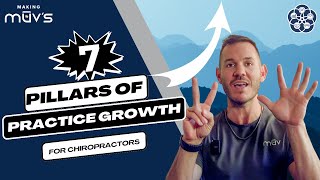
Dr. Travis Stewart built a cash-based chiropractic practice in Boulder during the pandemic using seven pillars: brand, practice model, offer, conversion system, promotional system, delivery, and accounting. He claims his event screening generated 14 paid exams and $28K in backend revenue, with up to 30:1 ROI on digital marketing.
Chapters
What's up guys? If you're a chiropractor looking for real implementable strategies to grow your chiropractic practice right now, then this video is for you. I'm Dr. Travis Stewart, chiropractor and owner of Move Chiropractic and Yoga in Boulder, Colorado, where we built the community-based cash practice of our dreams from scratch during the middle of the pandemic in one of the toughest places of the country. And man, did we learn a lot along the way. So my goal is to provide real-life value from the trenches with video education that I wish I would have had. In this video, I'm going to be breaking down the 7 fundamental pillars of chiropractic practice growth and how you can start using them right now to improve your new client inflow, lifetime customer value, and most importantly, patient results. But before I get started, if you want more videos on chiropractic practice growth strategies, go ahead and hit subscribe. I'll take it as a yes vote and keep giving you guys everything we've got. Now let's dive in. I'll start by sharing one of my biggest pet peeves in the chiropractic coaching industry, and that's chiropractors who have built a successful practice typically due to some favorable market conditions or other factors that they don't generally mention. They talk a lot about the business of investing, taxes, or even adding integrated modalities like decompression, Softwave, or other machines that allow for scale and higher case value. But if you're like me, you just want to grow your chiropractic practice from the inside out, keeping the main thing the main thing— chiropractic. And if you can't get people into your office, onto your table, and then keep them on your table, then you don't really have any money to invest with or taxes to pay. This is exactly where we started out, aggressively searching for real-world strategies that we could use today to improve our internal systems and external messaging. Well, after 3 years of learning, growing, and iterating, I've narrowed the key components of building a practice down into what I like to call the 7 pillars of practice growth. One of these areas alone can accelerate your growth tremendously, so imagine what can happen when we combine all of them. Number 1 is brand and language. For a while, I actually had these 2 separated, but have recently combined them after more realization that they can't really be isolated. I do, however, wanna make something clear. Your brand is not just your logo. Your brand is what the marketplace thinks when they think about your business. It's what you stand for. And as a brand looking to stand out from the rest of the marketplace, your stand should be very obvious and unique. This is often communicated through your own unique and compelling language, which is why I now believe these two share a pillar. Your language should be calculated and form-fit to your message, your philosophy, and your product. It should also, however, be simple and easy to understand, which we'll cover more in promotion. Make sure to keep your brand stance and language consistent to build trust and likability with your target demographic. Number 2 is product and practice model. This is a huge pillar and something we're never formally taught. It's literally the structure of your business and dictates nearly every decision that you make and influences every other pillar. The 4 most common practice models are pay-per-visit, or PPV, discounted packs, care plans, and memberships. There's pros and cons to each, which I'll dive into in a future video, but this choice is massive in how you should actually construct your systems, messaging, and business structure. And it determines what I like to call the Big 3: results, impact, and profit. Number 3 is your offer. Your offer is made up of your model, your packaging, and your pricing. It's how you package your product and present it to your prospective clients. Your offer has elements of your brand, your language, your practice model, and the results that you want to provide all wrapped into one. Your offer should be super attractive and present something that people can't get elsewhere. It's what eliminates the ability for people to compare your practice to any other practice. One of the most important aspects of offer creation should be customer surplus. Customer surplus means they're receiving far more value than what they're actually paying for. This can be done by a variety of ways, but we like to use a really solid value stack, and we teach a strategic way to do this in our Making Moves Masterminds. Doing this well allows us to sell the transformation and not the service. This is how we actually get to charge what we're worth and what we know chiropractic is worth while getting total buy-in and commitment from the client. This is how we've gotten our collections per visit average up to $94 as a cash office while having a practice full of ecstatic members. Number 4 is your conversion system. I could do several videos on this topic alone. I just recently gave a 2-hour presentation where I barely even took a breath on how we built our sales system and the psychology involved in conversion choreography and still barely scratch the surface. There is so much here. What I will mention is that as chiropractors, we first need to break some limiting beliefs around the word sales. Sales is simply helping someone make a decision that's in their best interest involving some type of value exchange with us and our business. This means that we're just transferring the belief that we have in what we're serving— chiropractic— to a prospective client that needs it. If anything, we should be the most willing salespeople there are because we know what chiropractic can do for people, and we know what happens if they don't choose chiropractic. So I believe it's our moral obligation to get better at sales. But I digress. Your conversion system should be a formulaic step-by-step process that takes the prospect through a journey. This journey starts in the initial phone call and ends with the welcome package they receive immediately following commitment that is scientifically proven to decrease rapid buyer's remorse, a natural psychological response after making a sizable time and financial commitment. Our Sales Syntax is a 12-step process with multiple sub-steps that we never stray from. If it's important enough to do once, It's important enough to do every single time. So make sure when you're building your conversion system, you spend days, weeks, and even months refining every detail of the process. Looking back, I would have paid over $50,000 for our sales structure alone because now we make more than 10 times that in one year, and it can increase the amount of people you're able to reach and impact by an unquantifiable amount. Dial in your sales. If you need help with this, go to makingmoves.com and sign up for our online course. If it's before November 20th, 2023, then put your name in the waiting list and we'll let you know when it's ready. Number 5 is your promotional system. B.J. Palmer is famously quoted saying, "Early to bed, early to rise, work like hell, and advertise." He was one of the most prolific marketers our profession has ever seen. Now, although things were a little different back then, he was still using cutting-edge platforms and channels to inform, educate, and attract. He used newspaper, direct mail, pamphlets, built floats for parades, epigrams, bought a radio station, and hosted massive events. Now, we're nowhere near the marketing mogul that B.J. was, but we do channel his mentality with our in-house marketing system. My biggest piece of advice for any chiropractor looking to increase qualified lead flow is to develop at least 3 to 5 consistent lead channels. You can start with the 3 main categories: internal, external, and digital, with 1 consistent lead channel in each of those categories. When starting out, I'd advise focusing most of your attention on the external and digital streams because internal is mainly made up of referrals and in-house workshops and other great strategies. But obviously, with an initially small clientele, it takes months, years, and even decades to build a strong referral pipeline. So in order to grow in the early stages of practice or catalyze growth in a plateaued practice, you can double down on the external and digital efforts. For external, I advise dialing in your screening process. And again, this process is super formulaic, and it's taken us almost 3 years to dial it in. We now use our Making Moves 3-step screening framework that has interchangeable steps depending upon the type of event that we're doing, but the bones of the process never changes. I can't give all of that away here, but I'll give you some stats to chew on to emphasize the importance of this system alone. We were recently invited to a screening event, a CU Kickoff 5K. The event cost us about $300 for entry. We used our Making Moves 3-step screening framework and generated 14 paid new patient exams in less than 3 hours. Hear that again: 14 paid new patient exams. So, put simply, we got paid to acquire 14 new customers. This is a net positive return on the front end, meaning that before the prospects even walked through the door of our practice, we were already in the green. This is the way to go. You always want your on-site exam collections to pay for the entry price of the event. Now, this is where things get juicy. So because we know our average ticket price is $1,500 for every new client, this $300 event produced over $20,000 in backend revenue for us. $28,000 to be exact. Pro tip: dial in your screenings. It's worth it, I promise. Next is digital. This is where we can really hit the nitrous. Now I'll lead with a caveat: in order to really excel digitally, either from an organic or a paid approach, we need to have each of the other 4 pillars dialed in: your branding, your language, your practice model, and your conversion system. If you're missing even one of these components, or you're just not as dialed in as you could be, either you'll end up not generating any leads or interest or you won't be able to capitalize on them when you do, likely leading to a situation I see all the time, and that's people blaming the type of leads that they get from these digital platforms instead of taking extreme ownership and looking honestly at their internal systems and bottlenecks first. Both scenarios can lead to the practice giving up on this potentially fruitful lead-generating channel that can provide a crazy ROI. I'm talking a 30:1 ROI if you do it well. This is why when we work with practices on their lead gen channels, we always start with the prerequisite systems, even if they feel it's redundant. I'll do a future video on entry-level framework that you can use if you're just getting started, or you can go to the courses page on our website and sign up for the digital marketing course that deep dives our entire process from writing, shooting, in editing your own content to targeting your ideal clients, how to compel them to act on your irresistible offer, how to organize them in a CRM, nurture them properly, get them scheduled, and get them converted once they're in your office. I'll leave a link down in the description to make it super easy. Pillar number 6 is skilled delivery and fulfillment. And I'm gonna keep this one super short and sweet. Results matter. So as a chiropractor, meaning by hand only, your adjustment should be professional quality. So you should be training it like a professional sport because as a chiropractor, you are a professional athlete. You literally have to create force with your body and transfer it into someone else's with laser precision, accuracy, and efficacy. This takes pro-level skill. So if your adjustments are not pro, it's time to refocus. Imagine the compounding skill that you can achieve if you trained chiropractic every day. I'll make a video of my favorite training tips, but for now, here's an incomplete list of where you can look to improve today: Kairos Training Culture, Mastery Love and Service, Centropy Chiro Training, Dr. Stratton Poulsen, Samurai, I Am Training Group, Dr. Tim Young, or you can join us at the Making Moves live adjusting seminars. Don't get complacent here. I saw a video of Dr. Tim Young the other day speaking to veteran chiropractors comparing their adjusting skill to their marriage. He said that a successful marriage obviously takes work, especially a 10, 20, or 30-year marriage. It doesn't get easier, it actually gets harder, because as the years pass, the passionate spark starts to fade. So you have to choose to do the work every day. You've got to choose to fall back in love with chiropractic and work on getting better every single day. From the inside out. This is why we must continue to train the art. Add it into your exercise and movement routine. Make it a lifestyle. Make it part of who you are. I guarantee that if you do that, you will immediately see improvements in patient outcomes, and that positive feedback will reinforce your motivation to train. It's a win-win-win. Train the art. Number 7, and the last pillar, is accounting and finance. Now, I'm by no means qualified to give any accounting or financial advice, but I will provide some great resources that have helped me on my personal and business finance journey. First is Profit First by Michael Michalowicz. This is a tactical book that gives you an implementable system to financial management. Second is The Richest Man in Babylon. This book is story-based and more philosophical. It's an easy and captivating read that speaks in the principle as Michalowicz's book, which is to always pay yourself first. You see, finance is never about how much you make, it's about how much you keep, and both of these books prioritize this fundamental yet profound law of wealth accumulation. The third is I Will Teach You to Be Rich by Ramit Sethi. Ramit is a personal finance guru that helps you first unwind your personal money story which started all the way back in childhood, that typically shapes your spending and saving behaviors. Then he educates on the most up-to-date ways to manage your money today to plan for an abundant tomorrow. He's got a great show on Netflix as well if you prefer to binge 10 episodes instead of reading the book. So there you have it, the 7 pillars to practice growth that you can use to build the chiropractic practice of your dreams today. And again, if you want access to all of our nitty-gritty details from each pillar and process, then go to makingmoves.com and click on the courses tab. Or you can subscribe to our newsletter for value-based emails sent right to your inbox. And check out our podcast on Spotify. Thanks for watching the 7 Pillars of Practice Growth, and I'll see you in the next video.
More from Ryan









Making MŪVS (Vlog) - Episode 1: Inside Acquisition.com's First Ever Marketing Workshop
