Building From Scratch with Ryan Hoover
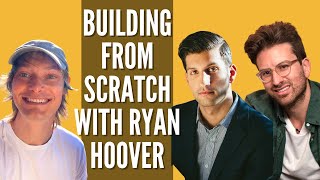
Ryan Hoover started Product Hunt as a simple newsletter that grew into a community through in-person meetups and maker profiles. He shares how to build product-led communities, product heuristics like starting simple and picking a niche, and practical advice for early-stage investors including writing fantasy memos and owning a niche.
Chapters
Social products, community products especially. It's not like you need everybody on there. You actually probably don't want everybody on there. You just want like a really tight knit group of people who are really excited about what you built and then that kernel can grow into something much bigger.
Dude, it's great to finally have you on. I feel like this has been a long time coming and we're excited to get a chance to jam and hopefully do some kind of live ideation on some ideas and different things along the way as well.
Cool. Yeah, yeah, I've listened to a number of your podcasts. I am, I think I'm a third of the way through the Tim Urban one from I think like a week ago or something. He's a fun one.
Yeah, Tim is a fascinating guy and a deep thinker on a wide, wide variety of things. I mean that was like I was sitting there having that conversation with him and none of those things were on my bingo card for the day. That was kind of how I felt coming away from it. Like I never thought I would learn about Boots Void. You know, the massive expanse of space that is unoccupied on a random Friday afternoon. But go figure.
Yeah.
Today's episode is brought to you by Element, a tasty electrolyte drink mix with everything you need and nothing you don't. That means lots of salt with no sugar. It contains a science backed electrolyte ratio. 1,000 milligrams sodium, 200 milligrams potassium and 60 milligrams of magnesium, but none of the junk. No sugar, no coloring, no artificial ingredients, no gluten, no fillers, no bs. I absolutely love it and how it's fit into my lifestyle. Whether you're keto, low carb, Paleo, or just want to feel better and more active, Element is the drink for you. I drink it after an intense workout to replenish my electrolytes. I also drink it after a few too many whiskeys late at night. It totally helps with the hangovers when you sweat. The primary electrolyte lost is sodium. Athletes can lose up to 7 grams per day when sodium is not replaced. It's common to experience muscle cramps and fatigue. The same goes for after a big night out. Drinking Element will fit into your lifestyle no matter who you are. Right now, Element is offering my listeners a free sample pack with any order. That's eight single serving packets free with with any Element order. It's a great way to try all eight flavors or share Element with a salty friend. Get yours@drinkelement.com happens. This deal is only available through my link. You must go to D R I-K L M-T.com happens to take advantage of this special offer try element. You won't regret it. If you're anything like me, your portfolio.
Is a mix of the usual suspectsstocks, bonds and mutual funds.
Maybe you've even dabbled in some alternative assets like crypto. But those investments can be incredibly unpredictable. You know what typically isn't unpredictable? Apartment buildings, rental homes, industrial facilities. Places we go every day to work, eat and live. That's all private real estate. And thanks to its historical stability as well as its reputation as a reliable income stream, these investments could be a valuable addition to your portfolio. This is where fundrise comes in. Fundrise is changing the game when it comes to real estate investing and making this powerful asset class easily available to investors like you and me. Their easy to use app lets you build a real estate portfolio tailored to meet your goals. It's a great way to benefit from real estate's many perks while adding some much needed diversification to your portfolio. So join over 250,000 other investors building a better portfolio with private real estate. Signing up is easy. Just head over to fundrise.com room again. That's F U-N-R-I-S E.com room to get started today.
Love that.
Ryan, do you listen to a lot of podcasts? Because I feel like I see you on Instagram posting stories of you listening to a lot of podcasts.
I think you're referring to my. So I have this semi new ritual. So I've been lifting weights for a long time. That's been my exercise kind of activity. And maybe a few months ago I was like I should do more cardio. But I really don't like running. And so I got a recumbent bike. Not like a peloton where you have to sit up. Got a recumbent bike where you get to sit back and email and tweet. And I have like my iPad set up here. So I watch podcasts and so I think that's what you're seeing is my promotion of the recumbent bike. Multitasking podcast, email.
There's a, there's a powerful learning in there by the way of like pairing behaviors, you know, like pairing a behavior you dislike but you want to, you know, adopt with one that you like or find productive. I've always done the same thing, like whenever I need to try to get back into cardio, I'm the same as you like, I have always been a lifting nerd from back in the baseball days, and so I'm still that way. But then I neglect cardio for long periods of time and realize, like, hey, I'm 30. I should probably, you know, take on more of this. Whatever. And I've always paired it with listening to something, watching some show I've been wanting to watch, you know, like reading emails, whatever. It is something where I'm like, oh, okay, I just unlocked 30 minutes a day. Make up the number of time that is now considered productive that I can, like, justify doing this thing that I generally hate.
Yeah, there's a I'll give you a Shout out to Huberman podcast. I don't know if you've seen his stuff. It's. It's quite dense. It definitely feels like I'm in a lecture, like, back in college, but it's great. I mean, for those that don't know it, he basically goes into the science of psychology around a number of different things, like how dopamine works or, you know, anxiety, depression. And he talks about. He actually has one podcast on. I forget the exact topic, but he talks a lot about that, that same thing. And how he actually recommends not listening to podcasts or music if you enjoy it at the gym every single time, because you start to. Essentially your. Your brain starts to expect that, and it doesn't get as much joy over time. And this is the unfortunate reality of, like, how dopamine works. And I know very little about it, to be honest, but it's unfortunate that what goes up must come down. And over time, you start to acclimate. It's kind of like hidden, a kind of treadmill that we're all on. Start to acclimate to those things. So he sort of recommends that actually don't always do all the things you enjoy. Maybe don't listen to podcasts at the gym. Just enjoy the gym as it is. And maybe the next time listen to your podcast that you enjoy. And I find that interesting because I'm a very habitual person. I do the same thing all the time. I make this coffee in the morning. I'm very, very routine.
But always listen to where it happens at the gym, please.
He mentions that. Yeah, I know he said something. There's something about the Where It Happens podcast.
I think he did recommend that.
He's actually. I have him coming on the show this summer. I want to do like a kind of layman's version of his podcast. Like, what are the 10 things that every person should try to adapt into, you know, adopt into their life to make them a healthier, happier person and. And do, like the takedown version of Huberman Lab on our show. So I've got him coming on this summer. He's supposed to be in New York a couple times, so I'm going to try to try to get him live.
Yeah, I think that'd be great. I do. I would like a tldr.
Yeah, totally. Because I've listened to several of his. I mean, he's kind of the Lex Fridman, you know, Joe Rogan. Like, it's that length sometimes and density.
Where, like, they'll do an episode on.
Sleep that is at, you know, unbelievable. Like, with Matthew. Matthew Walker, I think is that sleep scientist's name. But, like, you know, I'm sitting there for three hours learning about sleep. Like, I kind of want the, you know, what is the Cliff Notes version of this that will get me 80% of the way there with, you know, 10% of the thought.
Yes. Yeah. I mean, it's our.
It's our era of, you know, low attention spans. I'm actually amazed that people sit there and listen to really long podcasts, but people do, you know, those long episodes. People love them.
Yeah, I actually like. I like conversational podcasts. I like Joe Rogan for the format in part because it's. It's one of those things you can kind of dip in and out of. You can multitask to. I don't watch all of them, but this. Sometimes they're interesting guests. And I don't know, it also feels like you're in the room with other people. And I think, you know, I think more and more people are understanding that. That format and kind of adopting that format more and more. But I don't know, it's. It's better than like the. The sterile interview question, answer, back and forth format in my mind.
I agree. I mean, that was the original insight of where it happens too, by the way. It was like it was the room where it happens. It was like, we know that these conversations are happening behind closed doors, though. And so smart people or interesting people are having interesting conversations that generate insights that are then creating innovations in the future and changing the future. And so how do we open the door to those type of conversations and basically just bring guests on, super smart people that think about the future for a living, like, you know, and just jam on interesting things that are happening and publicize that conversation and, you know, and go put it out so that other people can hopefully benefit from it in some way. So that's kind of the spirit of it in general, as we've thought about it.
And selfishly, you know, both Sahil and I have Twitter, Twitter audiences. And we were talking about, like, how can we build affinity basically with our audiences. There's one thing about actually going and tweeting 200, 200 and some odd characters, but being in people's ears all the time definitely builds affinity. I'm wondering, would you ever start a podcast? Why or why not? And how do you think about that?
Yeah. So early product is. Well, I've listened to podcasts, like, probably you as well, for many years, and I really enjoy them. And I used to mow my parents lawn with gun muffs on with my, like, old school, like, you know, headphones underneath them and listen to like, stupid financial podcasts. Like, I don't know, I just would love to soak up, like, information and insight and perspectives. And so I've listened to podcasts forever. And then product and started and I was like, shoot, now I have an opportunity to actually start a podcast. Like, it makes sense. We have an audience, we have a brand. You know, it kind of wrote itself. The Product Hunt podcast was actually very similar format to kind of this to some extent. We bring on one or two people who are interesting. Maybe they're investors, founders, someone in technology. And we just talk about, like, what products do you love? What's in your home screen? Like, what things have you seen recently that you're excited about? And we did that for a while, and then I stopped doing it just because it was. It wasn't like the highest ROI thing. We never really cracked the growth thing for the podcast. Like, you know, the people who are most engaged in product hunt would listen to it, but it wasn't anything that reached like, hundreds of thousands of people, let alone millions. So the growth part of podcasting is the hardest part. It's kind of like Twitter itself. Twitter is really hard to grow your audience. For most people, it takes many, many years in some cases to grow a sizable following. And I feel like podcasts are that, but even harder because you don't really have built in, like social dynamics to grow it and get those feedbacks, feedback loops that you kind of get from social media. But I thought about starting a new podcast and I'm just hesitant to commit to anything right now. I'm just like, do I really want to do that right now?
Can we get into the. What you hit on is like an.
Interesting insight more broadly around building products. And it's like driving and creating these, like, incentives and referral loops that kind of create growth and create community. And it strikes me that, like, Product Hunt was a great example of that in the early days, like how you built this incredibly fervent community of product lovers and product minds. You know, I imagine and I don't know the whole story, so I actually would love to hear it of, like, the earliest days of like, planting that seed of growth that then sprouted and obviously has become something really massive globally. I would love to just hear a little bit more about that. Like, how did you think about creating those, you know, referral loops, incentive loops, getting people to share, getting people to interact and build that, you know, community fire that you could then kind of pour gasoline on.
Yeah, well, so I was talking to a founder yesterday who's exploring some different social community ideas. And so I'm gonna almost counter my own advice or experience. On one side, he has a lot of really good ideas. He's brilliant kind of designer, product thinker. And people like him can be challenged with overthinking things because we like to think in systems, we like to think in flywheels. We like to think of like, oh, if we have this thing, it unlocks this thing and unlocks that thing. And that's important, I think, very valuable to like, dissect and try to understand. However, you can also become paralyzed and like, over engineer a product if you think, if you think you're too. If you're like, too clever, basically. And what I mean by that is, is I've made mistakes in the past where we built new products within Product Hunt that were like, way too complicated. Like, because I thought I was so smart, I was so clever, I was like, oh, we can do all these things and what about this feature and that features? And we ended up spending way more time on it to bring out the V1 than we needed. So going back to product, in the very beginning, I wasn't actually trying to build a company or a product. I just was like, I like finding cool new products. Why do we have to hunt for the link inside of TechCrunch articles? Why isn't there just a simple list of here's what's cool that launched today? And I was also kind of weird. That was like browsing the App Store and various countries and I was browsing AngelList, looking at new companies just to see what people were building, basically. And so the initial idea was there was no systems thinking there was no grand master plan. It was just, oh, what if I started A newsletter, because that's easy to do. First, of products that launched or products that people find interesting. And that was sort of the spark that proved out that, okay, some other people, not just me, like this type of content. And then it sort of naturally fell into, okay, well, newsletter is a great start, but obviously we don't have any place to curate this at scale. We have no place for comments. There's so many things missing that can make this better. And so a lot of the, I would say first 12, 18 months of product, the roadmap sort of just, like, fell out. It was just, like, almost obvious based on what people were doing, the feedback we were receiving. And then over time, we started thinking more like systems, sort of organically, meaning. I'll use an example. So initially, when the Product Hunt website launched, it was kind of like Reddit. We're like, let's not reinvent the wheel. Let's have posts and comments and upvotes and keep it simple. And what we found was makers, the founders and people that built those products would increasingly come to the site and be like, oh, I made this thing in the comments. Like, if you have any feedback, if you have any questions, let me know. And then it was very obvious to us. It was like, okay, why don't we actually productize that and make it clear that this person made the thing or these people made this thing so that people in the community could identify those people. And now that might seem, like, obvious and kind of trivial, but actually what that unlocked is, you think about it like a system. It unlocked a really interesting dynamic where, okay, people follow these. People know these makers. Maybe they want to know what their friends launched or people that they follow launch. So it led us to unlock sort of these engagement loops through email. So, like, if Greg launched, you know, his new, like, islands back in the day, everyone that knows Greg or follows Greg on Product Hunt would now get notified, and those would have really high open rates and engagement rates. And then, of course, the next part of the system is, oh, now you can build a profile. You can have this profile of things that you made and kind of show it off to other people. And for a certain subset of people, especially like, indie makers or like young entrepreneurs, they're, like, very proud of that. And so all those things sort of, like, unfolded sort of naturally in the roadmap. But. But, yeah, if I tried to, like, think of all those things from day zero, in some ways, it might have been, like, paralyzing because it's like, okay, we have all these ideas, but like at the end of day you have to just prove out like the core dynamic, the core like value prop early on.
Yet two things you hit on that I want to double click into one. You know you mentioned like overthinking and paralysis and I mean you guys are both builders and have built multiple different products and different things over your years. I've always thought that like overthinking tends to come from inaction. And it's not that you're like not acting and so you start over. It's sort of like when you're not acting and when you're not, you know, having that bias to just get things out, test, learn, iterate, etc. That's when you find yourself prone to overthinking and over analysis because you're just, you're sitting there and you're like, I'm not going to act, let me just pause, wait, etc. And so you get caught in that. And so I'm curious just for your guys perspectives on that, like have you found in general that overthinking results from inaction?
So consumer social first of all is its own beast in my opinion. And when you think about zero to one consumer social, it's probably 90% art, 10% science. Now once you actually build some level of product market fit that changes over time. And you know, if you think about like Facebook, like you know, they had Instagram and then they're like they bought Instagram and they're like, okay, let's just sort of like bring what we learned on Facebook and apply it and optimize it on Instagram. So you, then you end up just running experiments and it becomes 90% science, 10% art. So I think what Ryan is saying, and correct me if I'm wrong, but I think what you're saying in the early days it does feel a lot more organic when you're building community or social products and you kind of have to just go with your intuition a lot of the time if you have a unique insight in a particular field. You understood at the time and I was there, SF tech products makers like you understood that and it was under, it was underserved.
And you're.
And correct me if I'm wrong, like the first time I heard of Product Hunt was, I think I was invited to a brunch and we did use.
Yeah, yeah. And some meetups.
Yeah, yeah. And could. And yeah. Wondering if you can talk a little bit about in the early days, the importance of, you know, the events and brunches. Um, because when you think about building a tech product, you know, you don't really think about over easy eggs that much.
There you go.
I don't know, I think of over easy eggs immediately. Greg? Yeah, that's a good, like avocado toast.
Actually that's a good chapter title for your next book. Yeah, I mean, so a lot of this was organic too. So even before product and I was actually doing some brunches and kind of meetups with like other founders and people and I don't know, I was trying to build like, you know, relationships with people and learn and I was just basically trying to soak up as much as I could. Meeting people in person, especially when you're in San Francisco, was enjoyable. And so when product kind of like, well, when we hit some level of product market fit, we had just this, it felt obvious to me, like, oh, why don't we just meet up in person? We've been like talking about this tech, you know, online. And so we started our first meetups and then over time other people in the community like, hey, can I do a meetup in Bangalore, can I do a meetup in Berlin? And so I don't know how many we've had, but maybe over a thousand meetups across the world hosted by the community where we support, but basically they run it all. And that's been just really effective in building more tight knit community. And it really is almost like an IRL version of what's happening on Product Hunt in some ways where people want to connect with the people, people want to learn about technology, they want to geek out about this thing. And there was kind of, you mentioned this earlier. There's sort of that was missing to some extent on the Internet. Yeah, there's subreddits for tech, there's Twitter, but there wasn't sort of this destination for new products and like this optimism that we were trying to, to encourage. So I think this goes back to like they do things at a scale component like I think social products, community products especially. It's not like you need everybody on there. You actually probably don't want everybody on there. You just want like a really tight knit group of people who are really excited about what you built. And then that kernel can grow into something much bigger.
Do you think, and this is a question for both of you guys, I guess just from your product building experience, do you think that the best products feel extremely obvious? Like you said that Ryan, in the early days of Product Hunt, like you were just letting customers guide you and like every, you know, the Product roadmap was informed by things that just felt obvious, like, oh, we definitely obviously need to do this because all the customers are asking for it. We had a discussion with Greg's friend, this guy Nick Saltarelli from Midday Squares, and he was like, there was this change that I just had to make, which made no sense on paper as, like, a financial move, but it was just so abundantly obvious from the consumers and from the people that cared about the product that I needed to make this change. And it started getting me thinking about this loop of, like, is a good heuristic to just say, like, the new rollouts need to be the things that just feel so obvious to you when you're going and doing them. Do you think that's an effective heuristic, or do you need to, you know, kind of be more dynamic than that?
I'm curious to get Greg's take on this. I mean, I. Hindsight is always obvious is the challenge, right? Because if you look back at some ideas and you're like, you know, let's take Snapchat. You know, it's in hindsight, like, oh, it makes a lot of sense why, you know, kids were sending ephemeral photos. But in the moment, you know, most people didn't get it. Most people didn't realize that opportunity. So I think a lot of it is there's another kind of, like, question to ask that's related to this in my mind, which we ask a lot on the investing side, which is, you know, what's changed? Like, is there a regulatory shift? Is there a consumer behavior shift? Is there a technology shift? What's changed in this world to enable this new thing to emerge? And going back to Snapchat, I wasn't obviously, in the company, and I don't know all the details about Snapchat, but a big shift, a big part of that was, you know, kids on, you know, Facebook just didn't want their parents and their teachers to see their posts. They were also concerned. I think this is also the rise of, like, cancel culture kind of emerging and other things like that. And so the ephemerality was very counter to, like, older generations who want to save everything and, like, go back to those things. That's really not what a younger generation, you know, wanted. So I don't know. I think a lot about that, like, what's changed in. Especially in consumer products, there's always. Even if you just take the generational shift, like, people that grew up in different times, like, grew up with smartphones, have very different expectations. And ways of speaking and engaging that maybe don't adapt or align with, like today's modern day, like giants. Like, you know, let's take Facebook as an example. Facebook.com, so I find that really interesting. I try to understand that when I'm.
Speaking with founders, it's almost like, I.
Guess the nuance or like the tweak I would make to what I said originally is like the initial insight, if you want to build something huge, world changing, et cetera, the initial insight has to be contrarian, really. I mean, it has to be something that no one really agrees with you at the time, and then everyone agrees with you later that it's like, oh, yeah, Snapchat, you know, you use that example. It's a great example. Like, at the time you're like, probably no one agreed with it. There was most people. And because if everyone agreed with it, someone else would have built it. There would have been a thousand Snapchats already. And so it was like an initial insight that was novel and contrarian that in the future everyone agreed with. And that's kind of as an investor or as a builder, that's what you want. You want to build things that everyone agrees with you on later in the future. There's some great kind of quote investing adage around that. But maybe it's that that initial insight has to be contrarian and very different. But then as you get that flywheel going and like, as product market fit exists, you're able to be led by the customers into things that feel very obvious. And so then like the next layer of rollouts, the next product, the roadmap, starts to be informed in a way that feels really more obvious because your customers are kind of leading you directly there. Post pmf.
Mm, yeah.
I think the way people's brains work.
Is.
Everything seems obvious in hindsight. So people will say, oh my God, obviously that product would fail because of XYZ in hindsight, or obviously that product would work because of XYZ in hindsight. And I think the truth is when you're building consumer product, it's all about having some key insight in a particular niche and being like, weird. Basically being weird and building a product that's weird and weird that's in a good way for the people in that niche and weird that the people outside that niche are kind of like, well, that's weird. Why would I ever use that? And that basically buys you time to iterate on a product in that particular niche and really, really serve them in a remarkable way. And Like Snapchat. Snapchat was a product for Los Angeles high school students to send nudes basically initially. And it was for them, like the best product in the world for a period of time. And then they expanded that and expanded that and expanded that so much to the point where now there's hundreds of millions of daily active users. So, you know, I'm not recommending create products that send nudes to people, but what I am recommending is pick a niche, go into that niche and serve them well.
I mean, Nikita did this right? With TBH and with any new stuff he's working on, it's like he. Even if it's not some, like, amazing, you know, insight about people, it's like, you know, what high schoolers are already doing? They're gossiping about each other, they're talking about each other behind their backs, and they're saying things about each other. And so, like, what is a product that you can build around that natural human instinct for gossip? And there's, there's a ton, right? There's just like having a small insight or being willing to kind of like play to a natural human instinct or desire. It can be a really powerful building insight if you're going to go create things.
And the truth is you need, as a, as a maker, you need one small insight which could absolutely transform your life.
That's a good point.
Yeah.
Like, if you come up with one small insight in a particular niche, it could literally, literally change your life. Just like, you know, you can have one tweet that gets 100,000 likes or 500,000 likes, and then all of a sudden you have this new audience and it might transform your life.
So just changing gears a little bit because I do want to get into some like, ideation stuff. Ryan, what are you, what are you working on now? Like, I know you're not formally working on product hunt stuff anymore. What's your focus day to day? What are you, what are you thinking about or getting excited about?
Yeah, so I'm investing full time now and we're investing early stage pre seed, you know, seed stage companies across everything. So we, we do love weird consumer stuff. We're investing in web3 stuff. We're investing in boring SaaS stuff. Like really a lot of our through line there is like, what is, what has changed? What's the consumer behavior shift, what's the technology shift? And part of that thinking is obviously startups are not private market startups are not 100% efficient, but they're getting more efficient because more and More people are building and trying new things. So that's why we think so much about the why now, like, what's changed kind of question on the investing side. So Vedica and I are working on the fund side. We're also constantly trying to experiment with different things. I would say, like, we kind of break up the fund and like one is, how do you say it, Business as usual. Meaning you meet founders, you evaluate founders, you due diligence, you support founders, Sort of like the table stakes of investing. And then there's another thread which is like experimentation. And we're always experimenting with different ideas we've had. I don't know how many experiments we've done, but basically we try to build things, not necessarily products, but build different products, not in the software sense. So the most recent one is operator LPs is what we're calling it. I don't know if it's a great name, but that's what we're calling it for now. And the idea is we're seeing a lot of our friends, a lot of people that we know raise funds. And a lot of them, of course, like raising a fund from LPs is very difficult for a lot of people. Furthermore, we also have a strong belief that investing is increasingly customer driven, community driven, network driven. And that's why we raised from 370 LPs in our latest fund. So we raised from tons of operators, like some top designers, data scientists, engineers, salespeople. We have hundreds and hundreds of LPs who are financially invested in our success and therefore the portfolio success. So we started this experiment called the Operator lp. It's basically like a GP demo day to connect Operator lp. So not necessarily the fund of funds and the endowments, but really these are people that might write 10k checks, 100k checks into funds who are excited to get involved and back these gps. Mostly smaller funds is what we focused on, mostly sub $20 million funds. And our selfish goal is. Well, our selfish goal is really to build a stronger network with LPs and with GPS to sort of help. But we're not charging for this. We're not getting economics. We're just experimenting to see kind of where this can play out. And so far we've run two GP demo days with three people in each demo day. First one had about $1.1 million in interest, second was $1.5 million in interest. So we're still kind of gathering data points to see, like, is this valuable to people like this? And sort of the next step is to figure out, okay, what does V2 look like? How do we expand this to more GPS, to more LPs? Just to really decrease the friction from the fundraising side. And what we really want to do is push the industry forward towards more collaborative, more community investing beyond just the investor, founder side, but GP and LP side as well.
If you're anything like me, your portfolio.
Is a mix of the usual suspects stocks, bonds and mutual funds.
Maybe you've even dabbled in some alternative assets like crypto. But those investments can be incredibly unpredictable. You know what typically isn't unpredictable? Apartment buildings, rental homes, industrial facilities. Places we go every day to work, eat and live. That's all private real estate. And thanks to its historical stability as well as its reputation as a reliable income stream, these investments could be a valuable addition to your portfolio. This is where fundrise comes in. Fundrise is changing the game when it comes to real estate investing and making this powerful asset class easily available to investors like you and me. Their easy to use app lets you build a real estate portfolio tailored to meet your goals. It's a great way to benefit from real estate's many perks while adding some much needed diversification to your portfolio. So join over 250,000 other investors building a better portfolio with with private real estate, signing up is easy. Just head over to fundrise.com room again. That's f u n d r-I s e.com room to get started today. Today's episode is brought to you by Element, a tasty electrolyte drink mix with everything you need and nothing you don't. That means lots of salt with no sugar. It contains a science backed electrolyte ratio. 1,000 milligrams sodium, 200 milligrams potassium and 60 milligrams of magnesium. But none of the junk. No sugar, no coloring, no artificial ingredients.
No gluten, no fillers, no bs.
I absolutely love it and how it's fit into my lifestyle. Whether you're keto, low carb, Paleo or just want to feel better and more active, Element is the drink for you. I drink it after an intense workout to replenish my electrolytes. I also drink it after a few too many whiskeys late at night. It totally helps with the hangovers when you sweat. The primary electrolyte lost is sodium. Athletes can lose up to 7 grams per day. When sodium is not replaced, it's common to experience muscle cramps and fatigue. The same goes for after a big night out. Drinking Element will fit into your lifestyle no matter who you are. Right now Element is offering my listeners a few free sample pack with any order. That's eight single serving packets free with any Element order. It's a great way to try all eight flavors or share Element with a salty friend. Get yours@drinkelement.com happens. This deal is only available through my link. You must go to drinvantage of this special offer. Try Element. You won't regret it.
So this is kind of a question for both of you. That's a branch off of that Ryan, because I think it's an amazing initiative. You know, I know more and more people are interested in investing. You know, want, you know, have some unique network or some unique angle, value add, et cetera, but don't have the LP relationships or don't really know how to go about like sourcing deals or deploying capital at scale. Like if you were for either one of you, and I'm happy to weigh in on it as well, if you were kind of like dropped with nothing and wanted to begin angel investing or begin investing in earlier stage companies, what's some of the advice or what actions would you take in order to kind of establish yourself and start to execute against that?
I'll jump in real quick. So I'm going to speak on Vedica's behalf. So her and I are the two on the fund. Met her over three years ago and she was a product manager working at a company. But she was writing fantasy memos is what she called them. So she was looking at companies like, I remember retool was one of them way back in the day and writing up a memo as if she was investing almost like an analyst would like, as if she was proposing an investment in this particular company. And she wasn't sharing that with anyone. It actually wasn't even online, which maybe she should have shared it online. But she wrote it for herself as almost like practice, like an exercise. And anyone could do that today. You don't need money, you don't need connections, you don't need to any of that. But what it will do is help you, I think, refine your thinking if you were to invest. And furthermore it creates a paper trail. When I interviewed her for the role, she just sent me these fantasy memos. I was like, oh my gosh, you're basically doing the job already. And I can see your work, I can see how you think. So I think that's an obvious brilliant step and if you don't want to do that, then maybe you shouldn't be investing. That's the job to Some extent, at least that's part of it. So that's my strongest recommendation.
That's such a cool example too, because there are real case studies of people doing that now in a very public setting. I think of both Paki and Mario at the Generalist as two examples of people who built a owned audience via their newsletters through writing and dissecting and deconstructing businesses and trends and principles. And then on the back of that are able to go and say, like, you know how I think about businesses, like to LPs or to people at scale. You can go say like, you know how I analyze businesses, you know how I think about bull cases, bear cases, etc. Because here, look, here are like the 10 cases where I've written about it in a, in a specific context. And so you can go on the back of that and like leverage the information you've generated at scale to go and raise capital and deploy it. The other one I always think of that, I think is just an untapped opportunity for I. It's mostly like, for, you know, people that I think have a lot of ambition or like a hustler mentality is just the opportunity to be a scout. For some of these, like, emerging managers that have come out. You know, I think about like, I think Saha Lavinia has like a scout program more formally, which is great, it's like a formal construct. But this whole idea of like, you know, for people that don't know it, it's like you're a scout. Like, you kind of go out and search and hunt for deals and when you find one, you kind of like bring the deal to some manager and if they do it and you get economics in that deal, that is, you know, future profits, if it goes really well, a portion of the carry and things like Angellist make it amazingly easy to do that on a deal by deal basis. Which is to your point earlier, Ryan, on like, what has changed in an industry that enables some great thing to happen? That is something that has changed. Ten years ago it was super complex. Like you had to go hire lawyers and pay them $25,000 probably to like dock up some like, simple thing like carry and splitting it on a deal by deal basis within a fund. It would have been too hairy. Like as a manager, I would have been like, ooh, no, it doesn't make sense for me to do that now. If a kid comes to me and says, like, hey, I have this deal, it's a close friend of mine, he's starting this, he's at, you know, MIT is building this, this and this precede, you know, like you split the carry with them in one click on AngelList. It's freaking amazing. And I don't think enough people are thinking about that as just like, honestly, like a little side hobby. If you're just with. If you have networks, if you're, you know, getting out of school or you're a builder, you're like in Internet communities wherever, and you have these networks of people that are building cool and you have a good eye for it and you have those ends. You can go, you. I mean, if you sent me a Blurb, you sent 10 other people a blurb on these companies, someone would probably take you up on the intros on the opportunities. And all of a sudden you're like building carry in a bunch of interesting future companies. That's kind of a, you know, massive hack or unlock from a. From a wealth creation standpoint when you don't have to raise any money to.
Do it and a name for yourself. You can say, like, I brought, you know, notion to. To Sahel or I brought this deal. You know, I think that that helps add a lot of credibility. I think my biggest, you know, advice here would be to, you know, if you do want to get more into investing is to become the XYZ person. So, you know, for example, like, some people called me the community person or Ryan, you know, the, the product person and stuff like that. And I think if you develop that niche, then people just start coming to you and you become the center of gravity for your vertical. So I think is this like naval.
Naval has that, like. Was it like type 4 luck or something like that? Greg, have you seen this? You or Ryan, like, naval has this whole concept of like four kinds of luck. And I think it was like type 4 that was this exact thing, Greg, where it's. You're just like the person in a given space. And so people come to you like, if you are the world's best. I think he used the example of like scuba diver, like buried treasure diver, than when there's some like, weird buried treasure that gets found in some place, like you're the person they have to call because you're known as that guy. And so now you're getting lucky because you're getting a cut of certain things by just being the guy in that space.
Yeah, I think, you know, and I think with like Twitter and stuff like that, you know, building the audience on those platforms, but also like owning these email addresses. So what I would be Doing if I was put on an island is like picking. Picking a vertical, being really different and weird and just putting out content that is unique in that space and then doing like, maybe weekly Luma video sessions. So for those who don't know Luma, basically it allows you to RSVP to different events. So you maybe you do a weekly. Like, you know, if it's me, I'm doing like weekly community, social, web3stuff or whatever. And then I get people's email addresses. And then, you know, after I get 5,000, I'm like, okay, everyone, like, big announcement. Like, I'm launching a fund. And, you know, that's what I did basically with, you know, the late checkout rolling fund. Like, we raise seven figures yearly of a fund in a matter of days. And I never even took one meeting. And I've never raised a fund in my life. And it was all through the magic of. Of being weird and standing on the shoulders of giants of platforms like Angelist and Twitter.
Yeah, I want one note on that, actually. Or one comment. So that's the similar advice in terms of if you're starting to invest, you should probably just be an expert in one thing and just own it. Ironically, that's not what we do. But like my dad says, do as I say, not as I do. But I think that's the ideal advice. However, the only caveat, like asterisks I'll put on that is I think it's super important to figure out what. What it is, what you choose. Because let's take an example. Let's say you're like the chat bot guy from, like 2016. You don't want to be the chat bot investor, because once you brand yourself as that and then, you know, people realize, oh, this isn't a hot space. It actually isn't as big of an opportunity as we thought. You're now actually, you know, you're starting from behind the starting line. Basically. You have to, like, rebrand yourself.
So.
So I think I would choose something that you have extremely high conviction in, that's authentic to you, that's sustainable, and that. That can be hard to figure out. Like, what is sustainable?
Yeah, it's got to pivot to be fair. Like, how many. This is one that I just crack up about still. Like, every single VC in the world was a creator economy VC in 2020, and every single one of them is a web3 investor in 2021. And it's like there was this hilarious meme. I think it was Jo, JB and Greg, our friend from Metafi posted that was like the Woody from Toy Story being thrown on the ground. And it was like creator economy was Woody. And it was like, I don't want to play with you no more. And throwing, throwing the creator economy on the ground. But like, I don't know. I mean I, I do think you can on the margins, you can shift obviously to your example on Chatbot. It then becomes very difficult to not be branded as like, oh, that's the Chatbot guy. But yeah, anyway, just like one caveat to it.
Yeah, there's also one, one small thing. I'm trying to understand this better. So this is like a me kind of shower thoughting. Some of the people that have, in the investing world that have made the strongest name in this respect, in terms of being known for this particular thing and an expert in this thing, they actually create language around this thing. Usually they're emerging trends. I would say like Andreessen, Horace as a firm is probably maybe one of the most exceptional at this. Like Chris Dixon, especially with, with regards to web3related things. Like there's, there's certain words he has. Like skeuomorphism is being one. Like skeuomorphism is, is sort of reflecting back to like the Steve Job days and that this product is too much. It's too much of derivative of like a web2 thing. Like web3 social isn't maybe just like Twitter on the blockchain, for example. And so the ability to create language that then everybody adopts is actually really powerful signal because now you become sort of indirectly known as the person who's like pushing the language forward, which pushes thought forward and an industry forward. So I think it's like a really fascinating thing to think about. Like what language can you introduce that isn't like cheesy or isn't forced? That's the hard part. It has to feel. It has to be something that people can grasp onto and understand and is valuable, not something that's.
More from Ryan
How to launch and grow your product | Ryan Hoover of Product Hunt and Weekend Fund
Ryan Hoover on Startup Growth Hacks, Products, Silicon Valley Success | Product Hunt | TRS 130
01: Ryan Hoover (Weekend Fund) | "101 Guide For Emerging Fund Managers" | 1947 VC
Learn How Ryan Hoover Transformed the Startup Ecosystem with Product Hunt's Explosive Growth
Behind the Scenes of a 2-Person VC Fund with 120+ Investments - Vedika Jain (Weekend Fund) | E58
How to launch and grow your product | Ryan Hoover of Product Hunt and Weekend Fund