Product Hunt CEO on AI-driven Product - Rajiv Ayyangar
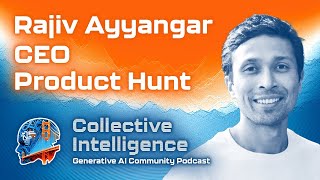
Rajiv Ayyangar, CEO of Product Hunt, talks about building Tandem, a virtual office app, and what he learned about product-market fit shifting over time. He explains how Product Hunt uses leaderboards and semantic search to help people discover tools, and why he removed Tandem's Chrome extension: installing one app is four times easier than two.
Questions this video answers
Removing the Chrome extension and focusing on a single app (installing one app vs two) — Rajiv: "installing one app is four times easier than installing two."
Chapters
I think the main thing is if there's a category of products that you've dismissed, check it out again. Like if you've gotten kind of burnt out on different to do lists, for example, check it out again because they're all the interactions are different, the things that they're able to do are different, and there's like a new wave of each of these categories happening.
Welcome, Collective Nation, to another episode of Genii Collective podcast, Collective Intelligence. We have a very episode for you today with Rajiv. Thank you so much for joining me in person. So make it worth your while for the very first in person podcast. We have a little bit of a spread here to. To enjoy ourselves. And what we have Here is a 2006 Chateau de Cremel Villain Rouge, and it's from Provence, basically in the outskirts of Nice. And you'll see it shows maturities from 2006. And so when you smell it, if we kind of give it a little bit of a smell here, actually, I'll let you comment and see what your.
That's nice. That's nice. Smells like a gsm, like a Grenache serum or Vet blend. Got a little bit of age, but it really doesn't show its age that much. Yeah, it's in a good place. Soft tannins, got some Gibbs Marangoni effect going on here with the tears.
What do you think about? I mean, you are. For the audience's sake, we know that you have a background in wine. How did that kind of passion come about?
I haven't worked in the wine industry in a while. I started a club in college. I got really into wine in college and then have kind of bounced between the wine industry and the tech industry a few times. Worked in a retail store and then later worked as product manager on a social wine app and then also led product briefly for a wine search company. So it's been a passion for a while. I did the sommelier exams and helped other people pass those exams, but I haven't worked in the industry in a while. I just enjoy it now.
Sure, sure, sure. Okay. So I know you might appreciate some of that. And to complement that, we also have a wedge of triple cream cow's milk cheese and a wedge of Manchego, which we'll enjoy later on in the show, hopefully. But yeah, so would love to. For you to have us tell us about your private experiences, why you chose those positions, what you're most proud of, and how that led you to your current role as CEO of QuietPoint.
Well, I originally studied Bioengineering, but never really worked in it. I found my way to startups. I grew up around startups, grew up in the Bay Area and did various things at various startups. It was, as you can imagine, pretty exciting. At some point I started a company with two good friends that I'd worked with before and we went through a bunch of pivots. We did stuff in web 3, we did things in personal finance. Eventually we built when both my co founders had kids around the same time. This is before the Pandemic. We started working from home and we didn't feel like a team anymore. So we built a series of tools that eventually became a virtual office. And that during the pandemic that took off, we had quite a ride. It definitely the market that we found ourselves in shrank as the pandemic kind of tapered off and people started coming back to work. So it was a really interesting ride. I think we created the category of virtual office, which is there's still some really, really strong companies going there, but ultimately we found ourselves in a market that was okay, but not venture scale. So yeah, it was a ride. I mean, we were able to kind of change the way people thought about work in hundreds of companies.
And then how did that lead you to Product Hunt? I think what's most interesting is what was the passion, what was it drive, not just kind of situation around it.
Yeah, well, so that company we launched on Product Hunt, we launched a few things before, but on Product Hunt when we launched it, there was a spark. We had tons and tons of new users coming in and using it. They were giving us feedback that like some really intense feedback. The buzz spilled over into Twitter and LinkedIn and everywhere and it just went viral. And that was when we realized like, oh, people want this. At the time, the app was pretty hacked together. So we then had to make it work, make it reliable. But yeah, Product Hunt was such a powerful signal, it made that entire journey possible. And when I left the company and then took some time off, was looking around for what's next. And long story short, I got in touch with Ryan Hoover, the founder. He had been an investor in my last company, Tandem.
And how did you guys meet?
We met when he. I cold emailed him to see if he would do a mock interview for yc. I knew he was into remote work. Product is one of the OG remote companies. And this is. We were building a remote tool before the Pandemic. Like it wasn't at all obvious that remote work was going to be a big thing. And so I asked him if he'd do a mock interview, and he was incredibly helpful. And we stayed in touch as we were in yc. And then he. Yeah, yeah. When we raised. He invested.
Okay. And then, I mean, how did you know, like, this was the next position for me? What was kind of the calculus for you? What was the North Star for you to go to Product Time?
Well, so the previous CEO, for various reasons, wanted to move on, and.
They.
Were looking for somebody to sort of take over and figure out the next chapter. And when Ryan actually DM'd me on Twitter and he said, hey, crazy idea, would you be interested in coming on as CEO? And there wasn't a calculus, I just kind of felt. I just felt this. Like, I think I felt two things in the moment. I felt just a rush of gratitude towards Product Hunt. Launching our very first side project on Product Hunt is what gave me and my former co founders the confidence that people wanted this to, like, jump in and build, build, you know, build a startup. So gratitude and then also this sense that Product Hunt's next chapter is unwritten. Like, it is the default place where people launch. But there's so much more it could be, and we can get into that. But I just had this. I had this sense. It wasn't clear at first, but I just had this gut sense of, like, Product Hunt is a tremendous force for good in the startup ecosystem and it could be so much more.
It's. I mean, and the thing is, the emotional connection I have, or when I see Product One, is because there's a few institutions in Silicon Valley that have made a lot of entrepreneurs in the area. So you have. Y Combinator is one of them. You know, like, with Hacker news, like, a lot of what goes on in terms of, like, new dev tools that get discovered, a lot of that happens in hacker news, a lot of happens in Reddit forums. And at least for me, like, I have productcon actually, like, bookmarked as, like, what opens up first on Chrome, because that's how you know that. And then, like some ML papers, papers of Code is another, just so you can keep on up to date with the space. And I feel like productron is one of those institutions in Silicon Valley, is that it has become that. And so I can. I totally resonate with your background and your issue and what Product Hunt means to you. And I think with that, we'd love to kind of get into the AI discussion portion. So the fabric of Product Hunt's story, I think, is going to be heavily with AI. And I'm sure that's going to be an important part of your future as you kind of step into this role. How do you foresee AI kind of enabling discovery? Because at least for me, the key magic of producton is you can go from a nobody to, if you just work really hard and you have a craftsman mindset.
You can put your tool.
In the hands of many people around the world. So that's one of the key things. How do you think AI will sort of enmesh itself into product moving forward?
Well, to start, to start, AI is changing what's possible to build dramatically. And we're seeing that on the leaderboard every day. So categories are shifting, of course, different AI categories are taking off. And with a lot of things becoming a lot easier to build, what's more important than ever is kind of filtering through, well, what do people actually want? And the Product Hunt leaderboard is that arena where you really test your ideas against the market. So that's, I would say, like the leaderboard is getting both more vibrant and sometimes more competitive than ever. But I think it's in a good way that like kind of gives everybody who's launching in aggregate, like more, more eyeballs at the in terms of discovery. So there's another thing in terms of discovery. One of the things that I think is unique about AI is the developer infrastructure is progressing far ahead of a lot of the end user applications. There's an explosion of possibilities in the dev infrastructure where we are seeing some crazy new applications. But certainly dev infrastructure is leading a bit. Right?
A lot of people have been rationalizing this as to build the, or deliver the shovels and pick the necks before the gold comes.
And the gold is coming, we can all see it coming. But also that means that as a builder it becomes not only interesting to discover what other people are building, that's the thing that Product Hunt's great at, but also to discover what's behind the products that other people are building. And that is a big reason why we just launched yesterday, actually, Shoutouts, which is another dimension of Product Hunt. So shoutouts is a way you can select three products that you couldn't have built this without and call them out, give a little bit of gratitude. And there's some dynamics here that are interesting. For launch, we let them know that a customer's launching because they kind of want to know if their customers are launching. But what becomes really cool is now you can start to see this graph of what other builders are using. So vapi, which is a voice API A voice bot API where you can sort of build siri like applications. You know, they shouted out OpenAI, they shouted out Deepgram for voice to text, they shouted out daily for real time voice and video. And you can start to see, oh, these are the things that not only are people using, but they love. Because that's the. I think discovery needs to be multi dimensional. It's not just about the end user applications, it's about like what's behind it. Like who are the people, who are the stories? Like who are the people and who are the tools behind what we're building?
I think you mentioned something that's really a critical idea, which is this idea of the leaderboard being a test to the market. Because you'd read like Paul Graham's blog a couple years ago and it'd be like, just ship, just ship a product. But then it's like, okay, I've built it, who do I go to next? And one thing is a lot of things that they say is at Steve Blank's course at Stanford, they say go down the block and go up to 10 people and get feedback from the 10 people. But what if you're not in San Francisco? What if not everyone who's in your area is an engineer who. And I think what Product Hunt allows you to do is like, all you really have to do is focus on building a product and by virtue of posting it to Product Hunt, you can get immediate feedback. And I think, I guess one thing is who do you imagine is the critical key user of Product Hunt? Because at least when I think about the next building new products, it's so it always starts with like customer interviews. And then once you have those customer interviews, then you start building and then you might release to a Product hunt. Like is that kind of who you imagine? Is it, is it sort of an indie hacker? Like, who's the customer Persona that you're obsessed with?
The thing about Product Hunt is it's much broader than most people think. What unifies everybody is they're interested in technology, where it's going, what people are building. So you see it's not just indie hackers, it's not just venture funded startups, right? It's also people who are building side projects while they're at maybe a larger company. Or it's people in certain groups of, you know, it's that person who brought, who brought notion or you know, voice flow into their kind of larger company because, because they're the early adopter. Or it's people who are thinking about starting Something or in between startups, it's really investors, it's people in media. It's a very horizontal cross section of tech. In a way, asking who's on product hunt is sort of like asking who is in tech, who's into tech. It's a lot of people. It's a full ecosystem. And product hunt is like a slice of that. It's not a sector of it, it's a slice of it, which is kind of cool. And so I think what that means is that we see just a lot of interesting dynamics play out on the leaderboard every day. And a lot of products. Actually, one thing I'd suggest maybe you do this already, but take a look at the lower section of the leaderboard, because that isn't necessarily worse products, sometimes they're more niche products or more focused products, and they still get a lot of engagement and interaction and questions. And, you know, we might actually do a section call out in our newsletter, like the bottom of the leaderboard, because sometimes that's the most interesting stuff.
Hidden gems.
Yeah, hidden gems. Yeah.
So I think I totally agree. I have found that consistently is that oftentimes what's at the top of the leaderboard can be maybe just a really of hip topic. And then you go down, it's like, oh, wow. I've been looking for a tool like that for a very long time. And I think it's sort of similar to like, you know, when you go on maybe like a Reddit, where it's like, what's kind of the most trending, trending topic is like if you just kind of dive a little bit deeper, there's a lot of interesting stuff. You'll find a lot of nuggets of wisdom. And your point on who is the kind of key person? I think that's what we, you know, we talk about with this podcast. Who is the listener? Oftentimes it's founders and operators, but a lot of it is just people with a wide range of interests. And one of the things for me is who's the person that you have empathy for on the other side of the cake? Who do you imagine is on the other side of the camera? And for you it's like, who's on the other side of that end product? But that kind of leads us to my next question, which is you were mentioning some success stories there, And I think ProductConnect has been instrumental in a lot of the success of a lot of startups and providing kind of a platform for them. But with AI reshaping the Landscape for how we interact with and surpass a lot of information. What vision do you have for integrating AI into product ecosystem to create a more personalized experience? So this is a topic that a lot of people have been discussing, which is the idea that you can have your own movie and it's not going to be some mass market movie where maybe in the 1900s to the 2000s, it was all about how do I find the lowest common denominator? The Henry Fords of the world building Coca Cola. It's like this one taste appeals to a whole swath of people. Whereas with AI you can take that same customer experience and tailor that to each individual on the fly. I think we had a little bit of that with. I think Facebook Newsfeed was one of the first products that ever did this, where each experience was tailored to you. But I'll stop rambling and let you discuss how do you think AI will create that personalized experience?
Sorry, personalization isn't a big priority for us. Actually. I think there are things we will do to allow you to subscribe to certain topics and categories. There's some things we're exploring there. But the thing that's amazing about Product Hunt is it's a shared leaderboard. It's a thing that everybody's looking at. It's sort of the central place. So the way we're using AI is more around exploration, like making exploration better, making search better, making it easy to structure and summarize data, those types of use cases, things that help help extract signal everywhere you look and help you kind of navigate Product Hunt. But I wouldn't say like personalization per se is a big focus and maybe.
You could dive a little bit deeper into the areas of sort of search. Maybe three things on kind of what you think is the highest priority there and how the latest innovations in AI might help you achieve those goals. Or I guess has anything sort of changed in particular, like in the last year for Product Hunt? Just because, you know, I think, and let me kind of give you my background, why I'm asking This is because 2010, 2020, at least for me, I felt like was the rise of analytical AI. And so you have some of the big AI companies, C3i, Palantir, Domo, who made a lot of Alteryx, is another one which is also going to get bought out soon or might have already been bought out, who have kind of made their money in terms of analyzing and making sense of the raw data. Whereas I think the next generation 2020-2030 will be about creating differences, creating new content, creating new experiences. Is that how you see or maybe you disagree that there hasn't been that distinction is a little bit less relevant.
I think about search from the product standpoint. I think there are two big opportunities now. One is to make existing search a lot better and then the other is to explore new search like modalities, like things that are more flexible. I think Notion's actually done a great job with this where they've augmented their core search but then they also have like a more LLM, like open ended search and they're kind of exploring that sort of hybrid interface. We, I am not the right person to talk to this and we are also early. But what I will say is that our ramp up is I'm just really excited by like how quickly we're ramping up and prototyping things. And a lot of it is powered by what's out there in the landscape. So companies like Vectara and Tree are really creating tools that are way better at search than when I worked on search at Yahoo. This is a different world and it's pretty exciting. Yeah.
I think with companies like Perplexity, what I think everyone has learned is that search for 20 years was just a no man's land. When Yahoo and Google, once they won the market, I wouldn't Google Google. But once that happened, everyone kind of cleaned up their hands and said like that's it, we're done. And then people kind of tried to do internal search. Tools like Elastic was a good example of kind of enterprise search. But I think, I totally agree that the landscape particularly has changed because of the being able to do a semantic search. So the fundamental reason why, one of the reasons why ChatGPT is able to produce such great results is because it's. Well, some people might disagree with me here, but I think it does have some sense of meaning. Whether it has an internal consciousness of that meaning, I think it still has some representation of that meaning. And with that internal representation of meaning it's able to kind of create a step function and improvement in search. So maybe curiously, what's your game plan for product hunt outside of of sort of adding new AI functionality? You mentioned shout outs, maybe set out the kind of the grand vision, the scheme, if you will, for the future, for the next five years. How about this? If you're successful, what does product look like in the next five years?
We're the place to discover new products. To be really brutally honest with ourselves. Like product hunt is amazing for a pulse on what's new, but it's terrible for discovery. Part of that is, you know, part of that is like how where we focus, like the leaderboard is so important that a lot of the energy has gone into like making sure the daily leaderboard is good, which is great, right? Like, but the opportunity is to, is to have the daily leaderboard create like a graph of products. And this is already starting to happen and people are trying to use Product Hunt this way. But. Sorry, but Shoutouts is just one little step in taking, I don't know if I want to say one little step. It's actually like kind of significant the way it's being adopted right now. But Shoutouts is like a way for, to capture sort of that, that energy at launch and also turn it into like a graph of products that people are actually using to kind of meet what people are trying to use Product Hunt for, which is, hey, what should I use to build this? You know what, what, you know, what voice to text API should I use? For example? That's like a big way people are trying to use Product Hunt. And right now it's not the greatest for that. You have to do a lot of filtering.
Whoa. Okay, so this is a. I mean, it's good that I'm getting it directly from you because that's not how I view Product Hunt. For me, I never. So for me, if I was saying, okay, I have this problem, I need it to be solved, what I would typically do is I might Google it and then I might read a few blog posts about it. And the way I viewed product was like, okay, this is what's sort of popping off amongst my peers. But what you're saying is that you want early so you believe that Product Hunt will sort of integrate its way or is already integrated into. Someone has a problem, they need to look up a solution. That problem through producton and Product Hunt can be that repository, that database of these tools, that kind of your vision.
Product Hunt is the. It's, it's.
I put this.
Yeah, there's. When you're looking for what to use, there are a lot of inputs that you mentioned, like searching on Google, like doing some, doing other research. But the high signal thing that we often use, if you have the network is you message your friends, right? And you know who to message because you know the people who are building in the space with high quality and velocity and high craft. Right. That is, there are really good reasons for that. It's not just laziness like you, you really get signal from the people you know who are the closest to this or who are actually building with the tools? You're not going to ask, you know, we're drinking wine. There are product critics, but you're not. You know, there are people who blog about products, but if you can go to somebody who's actually building with them rather than somebody who's just doing research on them, that's always better. Right? So the thing with Product Hunt and the reason shoutouts are so interesting is who better to see what tools to use than the people who are actually building products that are getting real consumer traction. And that's what Product Hunt has. So when I look at like, hey, what, you know, what tools to use, I think it starts to become really interesting to see what are people on.
The leaderboard using and then how do you think about, you know, the sort of upvote functionality versus the commenting? 1 of the things is that kind of, there's a limit limitation to like the upvoting which is that like it's, it's a very, it's, it's very. Communicates a lot in that it's very binary so it's very clear. But it also, there's a lot of maybe signal that is not present that you'd also see in the comment section of people like, okay, I like this and I. That's one of my favorite parts about, is that you, when you read the comments and people write breakdowns of a product, I guess how do you think about changes to that or do you think that it's going to kind of keep that same functionality in place moving forward?
We're looking at ways to change that just enhance the conversation. One of the ways we're kind of prototyping this is we're doing this series of live events also with Genai Collective Shout out for the open demo nights that we're going to be hosting. It's a really cool live event where people can demo and they get instant feedback from the audience. It's like a real life supercharged version of the Product Hunt leaderboard and people are brutally honest and it's really, really helpful. It's a really cool vibe. So we're taking some of the things we learned there and looking at ways to re examine and enhance the comments because the comments are sometimes the most helpful thing from the Product Hunt launch. Sort of that question you're asking reminds me of another reason I'm really intrigued by shoutouts. So there's upvotes and there's comments. These are strong signals of hey, I like this product or I'm intrigued by this product. But you know what's missing from Product Hunt? It's love. It's like in the early phases, when you have these tools that are really changing the way we work and think. What's happening with AI, for example, when you get companies that build something amazing, you know, it, it just changes your life, you know, as a builder. And there hasn't been that dimension to Product Hunt until. Until Shoutouts. Right. With Shoutouts you only get three and you get to like, just talk about only the products that you really couldn't have, you know, built your product without. And that's been really cool to see. So, yeah, okay, okay.
So that, so that makes it. So I think it's maybe adding additional ways of expressing yourself through Python and then the search functionality. What do you think is lacking now that AI can support? How can AI make a difference for Python in terms of service functionality?
I think it's precision and flexibility. It can do better at getting to your intent, you know, regardless of your exact query. And then also we can do more open things like, hey, I want a product that does this and we can surface better results. Right now it's like there are results, but you have to dig a little bit. I think we can make that way better.
And I think I've experienced firsthand. ChatGPT is a great example of when you're programming, I remember spending hours on stack overflows and cooking through, seeing how high a reputation someone had on stack overflow and then from there kind of coming to a decision on how to sell my problem. Whereas with ChatGPT now I just get the answer. And I think that might be the vision for product plan is like you might go through friend of a friend and see what tool they use to solve. Whereas now it's like, okay, this is the tool I need to use and I kind of the buck stops there, so to speak. So that's really interesting in terms of is there sort of, as AI stands to kind of redefine that simplicity of discovery and how do you balance that complexity of a lot of the AI algorithms that you're seeing? In the news, people are talking about how many GPUs are training on how much money they're spending on the new innovations. It feels like the semiconductor industry, similar to semiconductor industry today, which is in order to produce semicircular fab manufacturing facility, you have to spend a billion dollars, you have to create the foundation where it's sort of earthquake resistant and you have to do all this sort of stuff just to build a fab manufacturing facility, whereas maybe 50 years ago, 70 years ago, it wasn't as difficult. How do you kind of keep a balance between sort of heavy investments into AI versus staying lean, doing experimentation, seeing what works, and then from there betting better, heavily there.
You mean on the Product Hunt team.
So I guess more of a. So we kind of prior we were kind of about what could be done and then now it's more sort of implementation. So hand to hand combat. You know, a lot of listeners are also sort of leaders of product organizations of organizations, and they're thinking about how to integrate AI into their, into their ecosystem. They're tooling, but it's hard. Do you hire a consulting firm to come in and sort of build a bunch of systems, or do you kind of have a tiger team that's playing around with AI? So how do you think about that?
It's both. It's kind of a combination of both. I think there's some things that are, some things haven't changed about product development. Like kind of in, in our world, right? Like building quickly, talking to users like these things are fundamental. But what is different is that the tools that we have are changing a lot. And so we are investing and spending a lot of time just staying close to what's new. We have a really privileged position because we actually see a lot of things that are new. So I think that's one of the most exciting things about being at Product Hunt now. We are working with, we are using and also working with teams that are building some of the cutting edge tools. But also these tools only matter in as much as we can deliver value to the people using Product Hunt. So we talk with people. This is part of why we do the events. We want to hear from everybody. We build things. I do user interviews. The core principles of product development still apply.
Okay, I see. So I think your kind of take is it's a blend, but it's not as if the entire organization is going to upend. At the end of the day, we still have to do customer interviews. We still have to kind of see what types of functionality our users are looking for. And then AI is only as useful as it fits into that customer, actually offering value to customers. And I think what I see in Silicon Valley is this kind of debate between people who are AI first and people who have prior products and that they're integrating AI into. And that's always been a very interesting dynamic because you'll hear different takes people have based on what they're building for. So Maybe we can take a step back and review your path to kind of inform some of the lessons that you learned and maybe take those lessons for the listeners and viewers in terms of their own careers. So maybe let's go back to Tandem. You're redefining virtual collaboration. In your question, you wrote a reflection on Tandem and you articulated reality where the promise of Tandem's virtual office kind of worked, kind of grappled with this kind of different view of remote work and kind of way people view remote work today. So as you kind of navigate this balance between autonomy and kind of the human need for connection, maybe just talk about AI's role in terms of our concept of being present in an office workspace. Maybe you don't even talk about AI, just in general, what you're trying to do. A Tandem versus kind of what's changed about the world and what didn't change about the world post Covid. What are some lessons there?
At Tandem, we were trying to create connection in distributed teams. Connection, collaboration, that feeling like you're working in the same room, that feeling of like really thinking together and the kind of trust and speed and just like feeling of connectedness that comes with that. And we were able to solve that for a lot of companies, but not, you know, the world. And I think that on some level nothing has changed. It's still a problem. Every, every company is essentially distributed. You know, even if you're usually you're hybrid or there's some mix of in office and, and at home and there's an underlying physics there which is that trust builds three times faster in person than remote. Like there's data on this. And so that feeling that we have that we're less connected when we're remote is real. And so on the other hand, remote work offers amazing autonomy, right. And from a team building standpoint, the ability to have really, really strong people everywhere. So we're stuck in this hybrid world and that's still an unsolved problem. I think that I get. One of the things that makes me really optimistic going forward is that there are several other companies that are taking different approaches to solving this one that I talked to recently, Howard Lerman at Roam has a, in some ways a very similar approach to Tandem and in other ways like a very different form factor and they're taking a run at it, right. So there are some really, really strong founders who are tackling this problem still. So I'm hopeful. But yeah, I think it's still a big problem. I think one lesson that I learned going through this was just the value of staying close to the market. Does the market want what you're building? This is something that may never happen again. The pandemic. But when the pandemic first hit, we had such outrageous pull. Like, if anybody's ever felt product market fit, like, I've never felt or seen anything like this. Like, there was a, there were a few weeks where in a typical day we'd increase by 50 to 100%. Like we would double in a single day. It was just, you know, we were kind of crashing every few days just under the load of like new people coming in. And that felt like such strong pull that we had to build towards it. It felt very clear that people wanted what we were building. And then as the world kind of changed and settled into this hybrid world, I think what happened was in our form factor of the app we were building, people didn't want it as much anymore. But it took us a long time to realize that because usually the market doesn't shift that fast. One of the things I took away from that is even when you think you have product market fit, you got to keep going out into the market and asking, do people still want this? Or has what they wanted changed? Or did we not get it quite right? Like, are we in a different market? And maybe I'm just drawing the connection now, but I think that, like, curiosity about the intersection of what you're building and the market is why I really like working on Product Hunt. Because Product Hunt gives that test for every maker, right? You can convince yourselves that you're building something people want, but the real test is like, when you launch it to people who don't know you, right? Do you get that, do you get that pull from the market? And you can really tell.
So what you're mentioning is super interesting topic because you know, if you, if you talk to people in and that stuff, they'll always say, but, you know, you, you hit product market fit because you, you feel it. And obviously you, you felt that, I mean, were there, I guess let's start with this. Like, what was the most challenging piece about kind of staying up, up with, with the market pool? Was it a technical challenge? Was it like, what type of sales motion were you doing? Or was.
We weren't doing any sales. It was 100% just organic pull. There were two challenges. People clearly wanted an app to deliver remote collaboration. It was failing in two ways. The reliability, the underlying reliability was really tough. And also the interactions, like the UX interactions weren't really creating serendipity they weren't having the conversations that they wanted to have. It wasn't creating those like hallway chats that you would have in a real office. There's a lot of UX problems. Like I think the fundamental tension is I want to talk to my co workers, but I don't necessarily want to be available all the time and I want to share my availability sometimes, but I have to feel like my privacy is respected. And we over, through just a ton of iteration found that ways around that, like we show what app or you know, we show what app you're using. Like if you're in VS code or terminal, kind of like in Discord when you see what games your friends are playing and that's a way that, you know, we're not showing too much. We're not like showing your desktop or anything, but your teammates can kind of tell whether you're available. There were a bunch of little unlocks like this that summed up to.
You.
Know, half of all calls were under 15 minutes and people are spending hours in the app talking. It was really delivering those hallway chats that people wanted. So it was sort of half technical and half UX that had to be solved.
And so how did that inform your transition to product and what was the. Because a lot of people in the city would have accepted the job and would have, you know, you weren't the only one who would have kind of jumped, jumped for the opportunity. What, what about that experience at Tandem really well prepared you to take on your current role?
That's a good question. I think that there are, I think that's a good question. Like I actually haven't. I'm not sure if I've had like the conversation with Ryan on, on that specifically. That's a. I probably should, should ask. I think, I think what I'm. I don't know that I knew all this going in when I, when I first got the, from Ryan, I just thought like Product Hunt needs somebody to shape the next chapter. And I care so much about Product Hunt. Like I have some ideas. Like I want to, I want to be that person. I think there are a couple things that prepared me more than I expected. One, Tandem is for startups and for early stage teams especially. It's a similar type of people that I'm building for. And two, I think that the next chapter of Product Hunt is still not quite figured out and what that takes is experimentation. And there's something like I really loved with Tandem. It was the process of exploring the landscape. There's Like a. Yeah, I think just like quick iteration is something that I really gravitate towards.
And how do you balance that kind of quick iteration with. This is a classic question as old as time with sort of getting through that quickly with purposeful iteration. Steve Jobs saying he doesn't. Or we'll go with the Henry Ford quote. You know, if I ask people what they want, they would just say, faster horses receive Jobs. I don't ask customers what they want. Peter Thiel talks about you should have a deterministic view of the world and know what should be built as opposed to kind of taking a survey. Whereas, you know, I think, how do you think about this kind of quick iteration feedback loop versus being a visionary, so to speak, and saying this is what's going to happen in the world? Like, how do you. How did you balance that in tandem and product time?
I think it's a spectrum between whether you do quick iteration, which is sort of like from Calculus Newton's method, and then whether you do kind of big swings, which maybe is where you hop from a local maximum to a global maximum. It's a search.
Right.
Or an idea maze, like whatever visual metaphor really works for you. So I think that what you need to do is just be really intentional with yourself and with the team, you know, collectively have a. A shared view of whether you're trying to jump to a different maximum, like doing a big experiment, or whether you have some signal and now you're building toward it. So that's not a clean answer, but I think the answer is, like you do both depending on what your, you know, what kind of feedback you're getting from the market.
So then were there lessons that you had to learn unlearned from tandem now into your new role? So a lot of times we're taught the wrong things from our prior experiences. I'll give you an example, which is a lot of SERPs who were operating in, who might have been born around the 2021 era, where investors, you know, obviously customers are the most important thing. But if your priority was investors or, you know, one of the most important things is, was what your investors think about your company. They went from growth at all costs to a bit more margin, a little bit slower growth, but having more Runway and having more efficient customer acquisition costs. So I guess the question is we're in a similar. That might be a startup for you personally, whether incorrect lessons that you learn from him that you have to unlearn.
Yeah, actually this is a big one. I think we were all such builders like we came from building consumer apps at Yahoo. If there's one thing I believe I was really dogmatic about at Tandem, it was like no marketing. No marketing. I wanted product led growth at all costs. I think Slack had a huge influence. Slack, Dropbox, these like, like iconic companies had a huge influence on an entire generation of founders of Enterprise SaaS, founders who came from consumer. And man, I just had a very dogmatic view of no marketing. Put all the work into building, which I do think that a really good product can start to spread by itself, but it's not quite that simple. You also need to like describe it really, really clearly. One of the things that YC, that I learned from yc, that really unlocked that first Product Hunt launch and like that initial viral spike was just the value of a tagline, a one liner, a positioning statement. Right. And, and the thing that clicked for me was it can't go viral if I don't understand it because I can't tell a friend. Clarity is so important.
So what gets you so, you know, one of the things that people say in YC is like build something that people want also. Not just, you know, build something people want, but also talk about to their friends. And so you can't have them talk about to their friends if they can't easily describe it.
Yeah, yeah. So that, that's just like one example of the value of what people may dismiss as like marketing. It's like learning how to talk about what you're building is really important. And I think Product Hunt is in my mind a place where a lot of people who are more focused on creating value, more focused on the building part Product Hunt, the process of launching helps them raise their game in terms of describing what they're building and finding their early customers.
Maybe tease out that point because your product is basically distilled to a web page where you need to actively describe your product in a short sentence.
Yeah, it's like we, the act of launching on Product Hunt is going to kind of force you to come up with a 60 character tagline and it's going to force you to come up with something that is clear and compelling enough to, you know, to get, to get attention from the people who might use it. And you're going to get that instant feedback on what people are resonating with and not resonating with. Yeah.
And along those lines then is there a key precept or principle that you believe that a lot of that's incorrect in the Silicon Valley sphere of what people believe? So one thing would be this idea of no marketing because this is a very common idea. Is there some other sort of principles that you abide by in terms you've taken with you from tandem to product hunt? It doesn't have to be things that other people would disagree with, but just in general. It could just be general principles.
I'm trying to think of like what would be the most like helpful kind of unconventional thing that I took. Wait, can you say more about where you're. I'm not sure I understand the question.
I. So I think that there's a lot of dogmas in Silicon Valley that just annoy me a lot. So like one thing that happens a lot amongst my friends and I had this, this issue when I was younger, which is that people will, they'll just start building and they won't, you know, talk to people. About what? About what they're about to build. So what people will do is they'll have a hackathon. What's the point of hackathon? Well, I want to put something together and ship it. That's why I love Lean Stir Up. And I wasn't pushing back on the idea of Lean serp, the idea of having conversations with people. It's just that there are situations where we're talking about may not be, might not be the solution, but oftentimes I find that a lot of my friends would just start building and they won't talk to people about it. Other things are this idea that it's always good to just. I think it's a lesson that people learn in 2021, which is it's always good to have your, your foot on the pedal at all times. It's a market share grab. I think that's also can be a wrong opportunity sometimes. It actually is about making sure you have enough Runway and can survive. So some things like that maybe it doesn't even need to be sort of contrarian, just could just be. This is what I believe in. When you're building a product, you should abide by these to the five principles.
Yeah. Yeah. It's interesting. It's like this is kind of like a. Yeah. A self awareness question. I'm trying to think like what, what do I believe that is the most surprising to people? It's most surprising to people. And for some reason like not a lot of product things are coming up. It's more like company operations.
Okay, I'll do it off.
But yeah, I don't know, I don't know how that's, you know, let me think on the on the product side, I mean, this is not, I think, a new idea, but I think something that really stuck with me is the idea of startup progress as a marathon in an idea maze. It's not a race, it's not a hundred meter dash. It's a marathon in an idea maze. And what that means is basically talk to your competitors, share knowledge within reason. But if somebody makes it, it's very likely that there'll be room for multiple. And there's usually more value in sharing knowledge than in. In not. You're far more likely to die by other means than for a competitor to crush you. I think, I really think that's true. Also, I don't know, competitors can become your closest friends. Some of my closest friends are competitors from the virtual office days because unsurprisingly, we have similar values and we see the world in similar ways.
And so I think that what you bring up is a very important point, which is some of the things that people might take away in business school. There are techniques where the market isn't growing as much, where people are using this particular tool already, and the goal is to displace them or to remain as an incumbent. Whereas I find with startups, oftentimes the person doesn't even know they have a problem. They've just been doing it the same way. And your biggest thing is your biggest problem isn't even displacement. It's just a matter of, like, apathy. No one cares. So getting people to care about your problem that you're solving, and I think one of the ways to do that is just like, I wish I'd been more like this when I was younger with things that I built. I wish I was more manual, just like going door to door and like telling people about it as opposed to, I think I hid behind, I don't know. I think there's something to be said of just going up to people and saying, hey, this is what I look, can you check it out?
Actually, that's a great point. Show people what you're building. Launch.
Right?
I think that it's become such conventional wisdom that you need to launch early that a lot of founders who I won't name, who I've talked to recently, have invented new excuses for why they are not subject to the conventional wisdom. And I'm guilty of this. Actually, a lot of people have asked me, like, what is the most valuable thing from our time at yc? And I would sum it up in one idea. Speed. We learned what speed looks like at different phases of the company. And it looks like different things. Like, often if you're building an enterprise company, speed is not writing code. It's talking to customers, trying to make sales.
Right?
If you're building something that's more like what we were building, the virtual office, we thought, okay, we're gonna crank out a few table stakes features and we're gonna build self serve, and then we're gonna make the calls reliable. And then in a few weeks, we're gonna, you know, launch to yc. And then in a few more weeks, we'll launch on Product Hunt. And I remember talking, you know, we were telling our plan to Gustaf, who's one of our main partner at yc, and he said, yeah, so you should launch to YC like today or tomorrow, and then on Thursday, you should launch on product hand, not in a few weeks. And we, I just. So many excuses, right? We just spouted excuses. I. We can't do that. Like, it felt terrifying. And then he kind of listened patiently and then just like questioned that. Like, can you just build that? Now he's like, well, we, we need this.
We won't have this built.
And, and at some point he said, like, he just, he pushed us. He said, you need to launch this sooner because it's more important to find out whether people want this than to find out whether you can build it. Like, you know, you can build this. And he was totally right. It felt uncomfortable. But we launched it. We launched to YC and it did not go well. We were not describing it clearly. The product was too complex. And we, we learned from that. We changed the way we described the product. We found our way to the virtual office kind of description, and we cut out almost half of the product, quadrupled our onboarding activation rate. And when we launched on Product Hunt, it went viral. And we never would have gotten there sort of in time if we had kind of continued on that. Like, we would have gone down the wrong path. We needed to know whether people wanted it and what people wanted from it more than we needed to, like, build towards our vision. And I think that basically, if you're not kind of scared or embarrassed or ashamed or worried to launch, you've waited way too long. Again, this has been repeated so much, but I think it still bears repeating.
So, okay, let's back up into why. Why is speed important? Like, why couldn't you launch it?
Because of uncertainty. You don't know what the market wants. So every day you don't get signal you might be heading in the wrong direction. I see and also the market's shifting. There's a saying in, in alpine climbing, speed is safety, right? When there's a weather window and you see the peak, you got to go for it fast. The longer you take, the more chance that a storm will come in or things will shift.
And it's funny because speed is something that comes up across all industries. In New York, in Houston, when you go back 200 years, the businesses who end up winning a market were the ones who highly, highly prioritized speed, constructed everything, their lives, their teams around speed. So I just find it so fascinating. That's the one takeaway, and that is often the one thing that people cite the most curious. How did you do that? Sort of honing in of the product to an essential few items? How do you decide what to discard? Because what I found is that everything that you built and that it's there is things that you felt were important and you already feel like it's the minimum viable product. And when someone's telling you you have to scrap more, you have to make it more simple. Like that can be very difficult. What were some of the things that.
You weren't doing that it's really hard? There's no easy answer. Sometimes it helps to only build one thing because then you get clear signal on whether people value it or not. So you can build very focused products and kind of pivot the product sequentially. Sometimes it helps to build a set of things and then you can show it to people and maybe it's more than the sum of its parts, or at least you have multiple shots on goal and then you pay the price and it becomes a lot harder to distill what is actually useful. It's a trade off. Like both are hard in different ways.
Maybe you could tell just as a case studio, what were some features that you had to discard earlier on, just to kind of give people a frame of reference for what you mean by kind of refining the platform, refining division.
So Tandem initially was an app that let you see who's around and talk in one click. And then when you're in a browser on a video call, it was a Chrome extension that let you in one click, get on the same page, whether it's a notion, doc or something else. So it let you look at the same thing somebody else in the call is looking at. It's better than screen share because you're actually looking at that. For example, I'm on Figma rather than me screen sharing or me going to the Chrome bar, getting a link Sending it to you. I can just see that you're on Figma and in one click join, you open figma natively, we can collaborate in a multiplayer way. At some point, we weren't sure, maybe that Chrome extension was the value versus the calls, because the calls are really hard to build. So we had these two halves, the Chrome extension and the app after. So see who's around, talk in one click, get on the same page. Those were kind of our value props. After we got, you know, we got several companies onboarded. I kind of. I remember looking through Bookface for their emails and numbers and just stalking them until they. They got on a call and talked to several, talked to, like, several founders who had installed both, used both with their team, understood both and were very clear, the Chrome extension is fine. The real value is I can see who's around and talk in one click. And so we just completely deprivitized the Chrome extension. And yet that, like, quadrupled our activation rate.
And so it's funny because there was a period of time, I think it was when Honey Sold for like a billion dollars was where the knowledge or the takeaway for a lot of people in the Valley was that Chrome was the new platform shift and that a lot of these extensions were going to be critical and that you should kind of leverage Chrome. People thought about the App Store as a new platform. They thought about the iPhone as the new platform, but there was less certainty around Chrome. And that little. I think because it was off to the side, no one really thinks about it. But curious is that kind of the thinking that went into creating the extension was convenience. And then why do you think that kind of creates such crazy performance uplift?
Well, I think our theory about the Chrome extension was wrong. So by removing it, installing one app is four times easier than installing two. If you think about probabilities, right? It's like a kind of quadratic risk there that somebody's gonna, like, drop off. So I don't know, that's how I would describe it. But, you know, empirically installing two apps is like, really annoying. And installing two apps on a team, right, because you already need to get your teammates on board for it to be useful. If everybody on your team needs to install essentially two separate apps, that's so much friction, right? So we kind of knew this was a problem, but we had a hard time letting go of the Chrome extension, so. Because one of the things that's so cool about being in person is like, you can just pass me your. You can pass me Your iPad and we can look at the same thing together. And when you have everybody on board and they have the Chrome extension, they know how to use it. You do have these magic moments. They're not that frequent, but they are really cool. It prevents you from having to say, hey, can you send me the link? Right. Instead you can just say, hey, hey, Thomas, what do you think about this? And then you're like looking at it. It was really magical. And so we were really attached to it. But it turned out that as delightful as those micro interactions were, they weren't the core value. The core value is like, I gotta talk to you, let's talk. And so that was like a little hard to give up. But we had to make the call because one, that launch didn't go well, the adoption wasn't going well and we knew we had to launch a Product Hunt really, really soon. So we knew we had to make a call. And we also knew that having two apps was killing our activation.
Okay, okay. So I think so speed, I think is one core principle, simplicity. So at least in the beginning, honing in on the key message, the key feature, the key value proposition and the key journey. Is there anything I'm kind of missing there in terms of the key principles that you've taken away from your journey?
That's a good summary.
Yeah. And how do you think about. Because looking forward, there's a lot of AI driven products on Product Hunt. What excites you the most? What have you learned from skimming through Product Hunt? What should our listeners be paying attention to? Because you do sit in this really useful seat. I think, you know, talking to VCs can be useful because VCs talk with a lot of companies and they, they like, maybe they aren't in the trenches building something, but they do see what other people are doing. And I think as a CEO, you have a similar seat and you're seeing what's going on with Product Hunt. Is there any kind of tidbits of advice there?
I think the main thing is if there's a category of products that you've dismissed, check it out again. Like if you've gotten kind of burnt out on different to do lists, for example, check it out again because they're all the interactions are different, the things that they're able to do are different and there's like a new wave of each of these categories happening. And then another thing to pay attention to is if you try some AI applications and you're not thrilled, try new ones because the rate of innovation on not just the underlying models and the underlying tech, but on the interaction. The human LLM interaction is very, is very, very high. Like actually we, we have a, we have a little podcast ourselves and we recently had a pretty wide ranging conversation with, with Linus at, at Notion, who built Notion AI on the challenges of human AI interaction and kind of the things that they're experimenting with. And we're seeing this across the board. Chat is not the end point for our interactions with AI. It's like just a starting point. We're seeing lots of different types of UX emerge, of course, like video and AR is a whole new surface. So I guess I'd just say like the people who are getting the most benefit from AI are the people who are able to acknowledge their own scar tissue or their burnout on certain categories and get over it. Which interestingly is what I've heard is a big challenge with investing. Right. Because when you've invested in a few companies and they've failed in a category, you have the most scar tissue around it and you're the least likely to invest, but that's when you're the most knowledgeable and the most likely to pick a winner. So I would just say like to everybody and this is why Product Hunt can be so magical because it fuels that excitement of things that are new.
Yeah.
If you burn out on a category, try and fight that and take another look, take a second look because that's.
I mean I definitely had burnout from Knowledge enhanced conversational Agents. So I spent a lot of time trying to build compositional AI for healthcare and finance. And I got burnt out with like just not seeing, when you benchmark it on Q and A data sets, just not seeing the results that you wanted to see. And then everything changed overnight, basically. And so I. Exactly. So. But then the thing is, the lessons I learned in terms of information extraction, data cleansing, all those things still apply. And it's just like the model is.
The core principles that we learned in the past still apply. But it turns out where we fizzled out before, that was a local maximum and now we're in a different world. So if you've burned out on a category, you probably know just the principles that will make you able to assess and work with or build in that category now. And that category is open now. So like. Yeah.
So is there any final question. Thank you again, but is there any key takeaways of what you think the AI or product technology industry look like in one year? Or you can extend that out one to five I don't care. But what's true now that you think is going to continue to be true and then what do you think will change next couple of months?
It's harder to answer what I think will continue to be true, but I think the thing that will continue to be true is it's, it's still going to be hard to build things people want and still going to be valuable to build things people want because it's a moving target. The things that we're doing, the ways that we're working, the way we collaborate, the way we do work, the way we relate to each other. Right. Like all of these things are changing. So the tools are getting a lot easier to build things that we wanted to build before. But also, yeah, the markets are shifting, user behaviors are shifting. So I think it, I don't know, I think it's still going to be a hard and rewarding game to like build new things.
Right? Yeah. I think to your point, we'll see is that our workflows will change. When workflows change, our habits change. When our habits change, products will need it. And that would change with that. And so that will be be. I, I, I see it in myself. Every way I code to what I do day to day has, has changed because of the abilities of you Talk about Siri. Siri. You know, 10 years ago no one would use Siri and now conversational. So more, more speech activated AI is breathtaking compared to what used to be. So I, I totally agree with that. Is that things that you kind of mentioned alluding to what we use it for, which is reimagine the lessons that we've learned. Scar tissue that we kind of built over. And so with that everyone, that's our interview Collector Nation. As we wrap up another episode of the podcast, I want to express my gratitude to our guests and to you, our curious and passionate listeners. Case Stefans have once again illuminated the terrain of AI, offering us a rare glimpse into the mind shaping the field that we live in. And as always, Buildings podcast with Genai Collective, so please reach out with any feedback or suggestions. If you'd like to be a guest on the Collective Intelligence podcast, please reach out. Details for doing so will be in the show notes or podcast description. If you enjoyed this episode and want to support the Gena Collective podcast called Collective Intelligence, please leave a review or comment on your favorite podcast platform. Thank you for being a part of this journey. Until next time, keep exploring. Be collective.
Well, I think our theory about the Chrome extension was wrong. So by removing it. Installing one app is four times easier than installing two if you think about probabilities.
Right.
It's like a kind of quadratic risk there that somebody's going to like drop off. So I don't know. That's how I would describe it. But empirically installing two apps is like really annoying. And installing two apps on a team, right, because you already need to get your teammates on board for it to be useful. If everybody on your team needs to install essentially two separate apps, that's so much friction. So we kind of knew this was a problem, but we had a hard time letting go of the Chrome extension because one of the things that's so cool about being in person is like, you can just pass me your. You can pass me your iPad and we can look at the same thing together. And when you have everybody on board and they have the Chrome extension, they know how to use it. You do have these magic moments. They're not that frequent, but they are really cool. It prevents you from having to say, hey, can you send me the link? Right. Instead you can just say, hey, hey, Thomas, what do you think about this? And then you're like looking at it. It was really magical. And so we were really attached to it. But it turned out that as delightful as those micro interactions were, they weren't the core value. The core value is like, I gotta talk to you, let's talk. And so that was like, you know, a little hard to give up. But we had to make the call because one, that launch didn't go well, the adoption wasn't going well, and we knew we had to launch a Product hunt really, really soon. So we knew we had to make a call. And we also knew that having two apps was killing our activation.
Okay, okay. So I think so speed, I think, is one core principle, simplicity. So at least at the beginning, honing in on the key message, the key feature, the key value proposition, and the key journey. Is there anything I'm kind of missing there in terms of the key principles that you've taken away from your journey?
That's a good summary.
Yeah. And how do you think about. Because looking forward, there's a lot of AI driven products on Product Hunt. What excites you the most? What have you learned from kind of skimming through Product Hunt? What should our listeners be paying attention to? Because you do have to sit in this really useful seat. I think talking to VCs can be useful because VCs talk with a lot of companies. Maybe they aren't in the trenches. Building something, but they do see what other people are doing. And I think as a CEO you have a similar seat and you're seeing what's going on with Product Hunt. Is there any kind of tidbits of advice there?
I think the main thing is if there's a category of products that you've dismissed, check it out again. Like if you've gotten kind of burnt out on different to do lists, for example, check it out again because they're all the interactions are different, the things that they're able to do are different. And also. And there's like a new wave of each of these categories happening if you. And then another thing to pay attention to is if you try some AI applications and you're not thrilled, try new ones. Because the rate of innovation on not just the underlying models and the underlying tech, but on the human LLM interaction is very, is very, very high. Like actually we have a little podcast ourselves and we recently had a pretty wide ranging conversation with Linus at Notion, who built Notion AI on the challenges of human AI interaction and, and kind of the things that they're experimenting with and we're seeing this across the board. Chat is not the endpoint for our interactions with AI. It's like just a starting point. We're seeing lots of different types of UX emerge. You know, of course, like video and AR is a whole new surface. So I guess I'd just say like the people who are getting the most benefit from AI are the people who are able to acknowledge their own like scar tissue or their burnout on certain categories and like get over it. Which interestingly is what I've heard is a big challenge with investing. Right. Because when you've had a, when you've invested in a few companies and they failed in a category, you have the most scar tissue around it and you're the least likely to invest, but that's when you're the most knowledgeable and the most likely to pick a winner. So you know, if I would just say like to everybody and this is why, why Product Hunt can be so magical because it like fuels that excitement of things that are new.
Yeah.
If you burn out on a category, try and fight that and like take another look, take a second look because.
That'S, I mean I definitely had burnout from knowledge enhanced conversational agents. So I spent a lot of time trying to build compositional AI for healthcare and finance and I got burnt out with like just not seeing, when you benchmark it on Q and A data sets, just not seeing the Results that you wanted to see and then everything changed overnight, basically. And so I. Exactly so. But then the thing is, the lessons I learned in terms of information extraction, data cleansing, all those things still apply. And it's just like the model is.
Yes, the core principles that we learned in the past still apply, but it turns out where we fizzled that before that was a local maximum and now we're in a different world. So if you've burned out on a category, you probably know just the principles that will make you able to like assess and work with or build in that category now. And that category is open now. So like. Yeah.
So is there any final question? Thank you. Thank you again. But is there any key takeaways of what you think the AI or product technology industry look like in one year? Or you can extend that out one to five, I don't care. But what's true now that you think is going to continue to be true and then what do you think will change next couple months?
It's harder to answer what I think will continue to be true. But I think the thing that will continue to be true is it's still going to be hard to build things people want and still going to be valuable to build things people want because it's a moving target. The things that we're doing, the ways that we're working, the way we collaborate, the way we do work, the way we relate to each other. Right. Like all of these things are changing. So the tools are getting a lot easier to build things that we wanted to build before. But also, yeah, the market, the markets are shifting, user behaviors are shifting. So I think, I don't know, I think it's still going to be a hard and rewarding game to build new things.
Right? Yeah. I think to your point, we'll see is that our workflows will change when workflows change, our habits change. When our habits change, products will need an effort change with that. And so that will be. I see myself the way I code to what I do day to day, how has, has changed because of the abilities of. You talk about Siri. Siri. You know, 10 years ago no one would use Siri. And now conversational. So more, more speech activated AI is breathtaking like compared to what it used to be. So I, I totally agree with that. Is that things that you kind of mentioned alluding to what we use it before, which is reimagining the lessons that we've learned. Scar tissue that we kind of built over. And so with that everyone that's our interview Collector Nation as we wrap up another episode of the podcast, I want to express my gratitude to our guests and to you, our curious and passionate listeners. Casey Stephens have once again illuminated the terrain of the alliance, offering us a rare glimpse into the mind shaping the field that we live in. As always, we're building this podcast with Genai Collective, so please reach out with any feedback or suggestions. If you'd like to be a guest in the Collective Intelligence podcast, please reach out. Details for doing so will be in the show notes or podcast description. If you enjoyed this episode and would like to support the Genetic Collective podcast called Collective Intelligence, please leave a review or comment on your favorite podcast platform. Thank you for being a part of this journey. Until next time, keep exploring. Keep collecting.
More from Ryan
How to launch and grow your product | Ryan Hoover of Product Hunt and Weekend Fund
Ryan Hoover on Startup Growth Hacks, Products, Silicon Valley Success | Product Hunt | TRS 130

01: Ryan Hoover (Weekend Fund) | "101 Guide For Emerging Fund Managers" | 1947 VC
Learn How Ryan Hoover Transformed the Startup Ecosystem with Product Hunt's Explosive Growth
Behind the Scenes of a 2-Person VC Fund with 120+ Investments - Vedika Jain (Weekend Fund) | E58
How to launch and grow your product | Ryan Hoover of Product Hunt and Weekend Fund