How to launch and grow your product | Ryan Hoover of Product Hunt and Weekend Fund
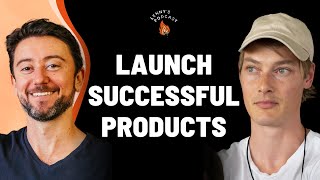
Ryan Hoover on founding Product Hunt, moving into investing with Weekend Fund, and what actually works for product launches. He shares how founders should think about delegation, where ideas come from, and why he moved away from the public eye after years of recognition.
Chapters
I don't know how to articulate that that feeling, but that flutter in your stomach that you wake up with in the morning of just anxiety and stress and and worry. Being a CEO or a founder makes it slightly harder in some ways because you still have to put on this mask. You have to put on this face of confidence externally and internally as well where people need to trust you. You also don't want to subject them to the same anxiety that you're feeling and be 100% transparent.
Ryan Hoover is the founder of Product, which you already know. He's also a former product manager, which I did not know. Currently he's a full time investor with his fund, the Weekend Fund. He's also an author of a bunch of great blog posts and an actual book called Hooked. He's also really good on Twitter and in my opinion, a very special human being. Ryan Hoover, welcome to the podcast.
Hey Lenny, thanks for having me. I've been reading a lot of your blog posts over, I don't know, past two or three years now and glad to see you do the podcast now.
It's cool. Thank you man. That compliment will go straight to my heart and I will think about it often. I appreciate that.
Cut that and put it on Twitter. There you go.
Yeah, that's the clip. We're done.
Yeah, done. Podcast over.
This episode is brought to you by revenuecat. Revenuecat makes it easy to build, analyze and grow in app subscriptions on iOS, Android and the web. Their platform lets you focus on growth rather than getting bogged down in subscription infrastructure. Revenuecat provides a backend and wrapper around Apple Store Kit and Google Play billing to handle the implementation and upkeep of in app purchases. Revenuecat is your source of truth for customer status across platforms and provides out of the box analytics for key subscription metrics like monthly recurring revenue, lifetime value retention, and more. With revenuecat you also get pre built integrations with best in class tools like Amplitude Apps, Flyer and Firebase. That means reliable, consistent data synced to your entire product and growth stack in minutes. See why Companies like Notion, VSCO and Life360 use RevenueCat to power in app subscriptions? Learn more at revenuecat.com hey Ashley, head of Marketing at Flat file, how many B2B SaaS companies would you estimate need to import CSV files from their customers?
At least 40%.
And how many of them screw that up? And what happens when they do?
Well, based on our data, about a third of people will consider switching to another company after just one bad experience during onboarding so if your CSV importer doesn't work right, which is super common considering customer files are chock full of unexpected data and formatting, they'll leave.
I am zero percent surprised to hear that. I've consistently seen that improving onboarding is one of the highest leverage opportunities for both signup conversion and increasing long term retention. Getting people to your aha moment more quickly and reliably is so incredibly important. Totally.
It's incredible to see how our customers like Square Spotify and Zora are able to grow their businesses on top of Flat File. It's because flatfile flawless data onboarding acts like a catalyst to get them and their customers where they need to go faster.
If you'd like to learn more or get started, check out flat file@FlatFile.com Lenny, you're such a tech celebrity. Everybody knows Product Hunt. Everybody knows Ryan Hoover, at least in tech. And I'm curious, how often are you recognized walking around the street in life? And has there ever been like a super awkward or super hilarious moment of that? Yeah.
So product and started in late 2013 and quickly got a lot of traction in the tech. Tech sphere. So yeah, people in tech might recognize me, people that doubt they recognize me. I actually do wonder subconsciously if I grew my hair out to avoid being recognized. I'm not sure if that's true or not. But anyway, it's been a couple of years or so growing my hair out and I'm like, I just kind of want to like disappear sometimes. But you know, in San Francisco where everybody's in tech, there's a lot of that. And probably the, the moment where I was like, oh, this is, this is like a thing. It was probably early Product hunt and I was at. Do you remember, I don't know if you know this. Do you know a club called DNA Lounge and they did something called Booty every Saturday. It was like a mashup dance party. Yeah. Super well known in the Bay Area. Really fun, fun kind of experience. Anyway, I remember being with friends and drinking like, like one does and somebody turns around and says, is that the protant guy? That was the first time that sort of happened in that setting where I was like, oh gosh, now I have to like think about my actions and I can't just like be entirely like loose and you know, relax with my friends. And so anyway, there's always pros and cons in those types of things. But you know, it, it definitely is. Makes you more aware of. I'm already a very like sometimes Anxious and like self aware person in terms of, like, my surroundings. And so when you combine that with, oh, these strangers might be watching me is not the best thing in the world, but it's okay.
I've actually gotten a little bit through that same experience recently in my, like, a much smaller sense where I. With this newsletter and the growth of this thing. There's meetups happening all over the world. And so I've been going to the SF meetups here and there, and it feels very strange to be, like, known and people get. They like taking pictures of me, like, what the hell's going on? Because I started this thing as Covid hit and it was like, everyone's at home. I was just typing on my computer. They have to go anywhere. And as the world has emerged, it's become a new thing I'm dealing with on a much smaller scale.
Yeah, yeah, Events are fun. We threw a bunch of them at Product Hut. And yeah, you could do a lot of selfies and a lot of, like, handshakes and there's some energy there. I'm an introvert, though. So by hour, like three or four, I'm just like, I need to use the restroom because I haven't been able to escape and I'm socially exhausted, so. But they are fun.
I know exactly what you mean. I am also an introvert and I get so drained doing things like that. I was gonna ask you about that. So, yeah, along the same lines, you're very public person. You tweet a lot, you share a lot, you do a lot of podcasts and things like that. What's something that people don't know about you?
Yeah, you're right. I probably should maybe overshare on Twitter and other things.
No, that is not.
There is a list of. No, no, no, I know. I know what you're saying. There's also a whole series of things that I don't talk about. Some of them. Well, anyway, I won't. I won't talk about the things I can't talk about. But one thing, that. One thing that most people don't know about. I know there's certain juicy things like everybody has in their life. I recently moved to. Well, I guess it's been a year. I moved to Miami about a year ago and I haven't been talking about it publicly, primarily because I just didn't want to be lumped into, oh, another person moving to Miami. Like, I don't know, I just. There's no benefit or, like, reason for me to do so. I want my friends there in Miami to know I'm there, but otherwise I don't need the world to know. I guess now they will. That said, in Miami, you know, we're. We're there about two thirds of the year, so I'm actually in California right now. As you know, the summer humidity comes through Miami and hurricane season, we're planning to do more of. I wouldn't call it nomadic and I wouldn't call it bicoastal per se, but something like that, where 2/3 of the year were Miami and maybe a third were in New York or LA or someplace else. And I love that. Fortunately, we have the flexibility when I say we, my girlfriend Suzy and I, to just carry our laptops and work anywhere. So it's been a nice lifestyle kind of shift.
I did not know that. That is very interesting. Why did you get pulled into Miami? What pulls you there?
Yeah, you know, so the way I describe cities are kind of like a product. So if you're in the supermarket or supermarket. I sound like an old, old person. If you're at a store, you're looking at different products. If you're online, you're evaluating different products and they each have like a cost and they have some benefits or values or whatever you want to use to describe it. And for me, each city is kind of like that. And so, you know, in terms of costs, there's cost of living in terms of housing, food, taxes, a bunch of things that go into the cost of living in the city. And the city provides a lot of benefits and things like that. And so in LA, so I was in Bay Area for 10 years, LA for two, Miami for one. Now, they each have their own pros and cons. They each cost effectively different prices. And so we visited Miami a year and a half ago and we just fell in love with lot, lots of it. We also. It's just cheaper. It's cheaper than the Bay Area, it's cheaper than la when you kind of counter count like all in costs. We had a bunch of friends move there, so we enjoy the city. We're like, this is good, strong roi. This is a good product. Let's move there. But at the same time, as I mentioned, we are traveling and exploring other cities. So it's kind of the best of both worlds for us.
Very cool. Curious how long you last there and how you like it over time. I love Miami. I always have a good time when I go there and I have many friends living there. Changing topics a little bit. Something that I've noticed you do recently, which is super cool, is you offer people the chance to DM you questions that they have about their startup or their journey as a founder, and you just offer to give them free advice, and then sometimes you tweet the DMs to share that with more folks. I'm curious just how many people have DM'd you, because this is such a cool offer. And what have you learned going through this and kind of hearing people's questions?
I first opened up my DMs. I had them closed, which is like, traditionally the default on Twitter, for a long time, because I was like, oh, if I open them up, I'll just get a bunch of spam, and I don't need another inbox to get cull through. I opened it up quietly and actually didn't get a lot of spam. Surprisingly. Yeah, people would shill something or promote something, but it wasn't too bad. So I. I left it open. And then I forget one day I was maybe I was like, on the elliptical bike or the recumbent bike or something, and I was just like, I tend to get on the bike and just hold my phone up and just do emails and work. And so I just said, hey, DM me if you have the question any founders, and I'll try and, like, answer as many as I can. And part of my motivation for that was, I don't know, I was just killing time. And the other was I used to blog a lot. I used to write a lot. I don't know, I've written hundreds of blog posts, but not so much anymore. I rarely write anymore. And part of it's because it just takes so long to write, and sometimes I don't feel like inspired by any topic. It's sort of like a writer's block. And so I found this also kind of as a means to, like, do micro. Almost like micro blog posts in a way where the prompt is the question from somebody else. I don't have to think about the prompt. And then the answer is in some ways a way for me to actually think about that topic. Almost like refine my own thinking in some sense. And so I started doing that, and I realized, well, maybe other people have similar questions, and maybe other people have other answers and other ideas too. So I would just take a screenshot of my answer and kind of summarize their answer. Of course, keeping anonymous, not sharing anything that would be sensitive, and just put it on Twitter and, you know, it's been fun. I do that maybe once every three or four Days, I share a new question and answer and sort of like a. It's like microblogging in a way. I guess that's what Twitter is. But, like, it's kind of like a real microblogging kind of like, activity for me.
Is there anything that's kind of surprised you or that you've learned from founders, what they ask you about? Like, wow, I didn't expect this was going to be such a common problem or question.
I wouldn't say anything, like, super surprising. However, a lot of people. So you could do the same thing on Twitter and say, hey, Ama, ask me anything in public. The thing is, people are not going to ask certain things for a lot of reasons. And maybe the biggest surprise was a lot of people are pretty vulnerable. These are strangers, founders who DM me saying, hey, I'm. We have three months Runway left. We're running out of money. Here's a situation. What advice do you have? Or just things that, you know, everyone has to wear. This unfortunate mask is kind of the way I. What I used to describe it. This mask in life and business, where everything is going great and, you know, you're super confident, there are no problems, you got it all under control. And so the reality is that's not the case. Like, if you peered inside of almost every single company, it probably looks chaotic in. In different ways. And so I guess, I guess maybe the biggest surprise or thing that I value the most is the authenticity of people willing to share some of these vulnerable moments and questions.
Awesome. What's interesting about your format is, as you were talking, I kind of realized it's very similar to my newsletter format, which I. Which I think is part of the reason it worked is it's based on people asking me a question and then I answer the question.
Yeah, it's true.
And that ends up forcing you to have, like, concrete, actionable advice. So you've kind of developed an even more interesting way of doing it on Twitter where it's more focused. So very smart.
I've always liked your format, by the way, in that your. You're a curator in many sense. Like, yeah, you have a lot of experience and good ideas, but you're not trying to answer all the questions in that you're really pulling in experts in their domain, expertise to, like, find answers or inspiration. And I've always liked that format because one it, I think leads to better, better results, better content, better answers. But also, it's arguably easier. Like, imagine if, if you tried to, like, write well, you're shaking your Head almost like, maybe if I had the.
Answers, I'd be like, oh, here you go, I'm done. You know, the research takes a lot of work and time, but. But I do agree it ends up being a lot more useful and valuable. And the reason I did that, just to kind of explain that briefly, is when I left Airbnb, people kept coming to me and asking me like, hey, how did Airbnb do this thing? How'd they do that thing? And I was just like. Like, they don't know what they're doing. They just did this thing. And who knows if that was the thing that helped them or if that was the right way of approaching it. So I wanted to do this. Like, what does everyone do? And what seems to be the pattern of the thing that works? And that kind of led to this approach. And it takes a lot of time, especially this new series that we're going to chat a bit about that I worked on, where it's just like, endless interviews and chats and researches and watching interviews. But, yeah, it works out.
Yeah, yeah.
You.
You. How many hours actually do you put into, like, a typical essay?
Oh, reverse question. I would say the medium.
Sassy questions, but I'm curious.
Banned. No, it's cool. I say. I'd say the median post is about 10 hours. It's like, maybe I kind of work on it through the week, so maybe like a few days through the week. But the most epic posts take hundreds and hundreds of hours that I kind of work on behind the scenes as I work on the weekly posts. So there's a wide range. Some posts take like, three hours, and sometimes those do very well. Much better than expected.
Yeah. Yeah, that's exactly. Going back to my. My point about, like, it takes a long time to write content that you're proud of. I'm also just very particular about words, for better or worse. And so I. The first draft actually is maybe like 20 or 30% of the time, and then the rest is refining it and getting feedback and everything else.
That's exactly how I find it. Question I wanted to ask is, startups are so freaking hard. They almost always fail. It's always just like, oh, my God, this is. Why am I doing this to myself? My general advice to founders is like, don't start a company unless you just can't not start a company because it's so hard. What's your take there? What do you think? What do you advise founders for when they're thinking about, should I start a company? Should I not start a Company which. How should I approach this?
Yeah, I do spend time ironically challenging founders sometimes when they're thinking about raising or thinking about an idea to not raise. I think people who are in tech especially are certain bubbles of tech. That's the default. It's like the first thing I do. I have an idea now. Let's go raise money. And we've gone through some pretty massive bull cycles where that was possible for a lot of people, but it's a huge decision. So with product time, it was a side project. In the beginning. It wasn't actually intended to be a startup at all, but in the beginning it was a newsletter, then it was a website and it was about five, four to five months before we even incorporated and we got a lot of traction. So it was during that time I was really just thoughtful around like, should we raise? Do I want to work on this for many, many years? What's the opportunity? Is this even a venture backable like idea? Like all those questions were circulating in my mind for a while and this was also in a time when the market was pretty. Was similarly bullish. This is end of 2013, early 2014, and investors were using product and they were reaching out to me and they were sort of courting me and kind of doing that whole song and dance to invest, but I just wasn't sure if I wanted to. And so I don't know. I think a lot of those decisions are very personal and contextual. However, I think it's super important that founders see a line of sight to work on this for. I think my rule of thumb is a decade. Just do you see yourself working on this for a decade? And maybe it's not a decade that you actually work on it. It probably won't. It either. It'll probably fail before then, as most startups do. But I think it's a good litmus test for yourself to be like, do I actually care about this enough? And am I really stoked to work on this for many, many years? But then, you know, the other thing is I think a lot of people also think I need to start a company, I need to start a startup. And they skip to that step without just tinkering and building and, you know, product. We called it not even a side project. We call it an experiment. And that framing, I think is for me has always been helpful because it's an experiment is really not about success. Of course you want it to be successful, but the goal is not success. I put that in quotes. It's really to learn and you know, see if people want this thing and then kind of adapt. And so, like, an experimental mindset is helpful and I think a valuable way to start. It even goes back to, like, why writing the fun weekend. Fun. It's like, what are you tinkering with on the weekends? You know, and how can you be more curious and experimental and kind of your exploration of new startup ideas?
I didn't know that's why it was called the Weekend Fund. I thought it's because you worked on it on the weekends. Or is it both?
It had, like, multiple meanings. Yeah, it was three meanings. One was, was that I started Weekend Fund when I was building Product Hunt, so took a lot of pitch pitches and calls with founders on the weekends. Two, I think a lot of great ideas start by, like, metaphorically speaking, nights and weekends of side projects or ideation. And then the third reason was it was like, more friendly. I don't know, I didn't want to name it Hoover Capital or something like sterile wanted it to be.
Wait, that's an awesome name. Hoover Capital. Wow.
Hoover Capital. All right. I don't know. I feel.
Well, yeah, it's not on brand.
Yeah, not on brand for me. Yeah.
As you know, I asked people on Twitter what questions they would want to ask you. And so I'm going to intersplice these questions as we go through this. And you just touched on product hunt and fundraising. And I'm curious, if you were to go back and, and do it again, would you raise money for Product hunt or would you not?
Great question. So at the time, this is also the thing I asked founders is why do you need to raise money? Like, what is it for? And surprisingly, some people, like, I don't know, like, they don't have a clear answer. For me, it was pretty obvious, like, we needed. We need to hire, we needed people. Like, I didn't have personal capital to pay people. There was an alternative reality where we actually built it open source. I was thinking, like, is that possible? Like, we're building something for the tech community. I'm sure a lot of people would love to work on this. Could we build it in an open source way? But that, like, that's really hard to do. And when you're building a company, you probably don't want to innovate on too many things, including like, essentially how to build a product and build a team. So anyway, to answer your question, if I don't, I don't know what the right. At the time, raising money was the right decision because I wanted to hire And I didn't have personal capital. There really weren't any other realistic options. I don't think today I could get further with my own. I'm not super wealthy and I'm super illiquid, but I have at least enough money where I could have funded maybe a year of development with this very small team. So today it might be a little bit different in which I might not raise venture capital because product and isn't the type of company that needs to raise a ton of money. It's also one which is not. Doesn't have like direct competitors in the sense of like an Uber and Lyft situation where raising is actually like kind of mandatory and you sort of have to build a massive war chest to compete. So there, there is a scenario where if I had more money, then maybe I want to raise venture capital. But yeah, there, there's a lot of other, like decisions and other things that probably bigger mistakes I think I made. Not that raising money was a mistake by any means. I think the right decision then. But yeah, there's a lot of learnings in hindsight's 20 20.
The point you made about you just needed money to run the thing. I think that's so overlooked when people bash the idea of fundraising for a startup that maybe didn't need it. You just need money. You don't have just money to burn and go into debt. That makes sense to raise some money and see where this thing goes without really knowing where it's going to go.
Mm. Yeah. Especially if it's. I mean, I think it's very important to raise. Raise from people who are aligned with you too. Meaning, like, why does this person want to, whether it's an angel or a fund, invest in your fund. Sorry, not fund your company. When you go down certain path when you raise a series, A, B, C, like you have different expectations when you raise your pre seed or seed round. So I think also understanding, like, you know what you're signing up for is super important.
What kind of treadmill you're. You're getting on.
Yes. Yeah. Cause you can get off. I mean you can, but it's not like a company. I always say, like when you're at a company, you could put in two weeks notice, one month notice, you can move on as a founder, CEO. You can't. Like, you really can't. Now you technically can, but you can't. It's really hard to exit.
Yeah. I look at the Airbnb founders who've been doing this for 15 years and like, you know they're doing well in life, but they also. It's very hard to leave. Yeah. Coming back to product hunt. People launch their products on product hunt. That's the thing. And I'm curious, founders are always so obsessed with launching and the power of a launch. And we got a launch. Do you think launches are worth it for a company? Is that something founders should be spending time on, or is it often better just to not even spend time on that and just build slowly?
Yeah, I always kind of, whenever I share like my perspective on stuff, I, I unfortunately I'm always, always like, it kind of depends which is kind of like sounds like a cop out answer. So it's, it's more, My answers are usually more nuanced. And the thing about launching is, is going back to why are you raising money? What's the goal? Same thing. Why are you launching? And a lot of people default to things like customer acquisition. Oh, I want to acquire customers. But sometimes that's actually not, it's not useful. Launch sometimes doesn't help with that. But there are many other reasons why you might want to launch. So customer acquisition is one to get the word out. Another can be recruiting. So by sharing your story, getting people excited, it might make it easier to recruit and get people excited about what you're building. Another is fundraising. Sometimes it can create momentum. As other investors, they do read the news and they know that when this company is more public, there might be more heat around a particular deal. Feedback is one feedback from users, feedback just serendipitously and sort of another one is partnership. So as you launch, you might also encounter more partnerships, more opportunities. I think there's a serendipitous effect of launching. So I think understanding, like what are the priorities in the business, like, if you. It might not be customer acquisition at all. It might be that we need to recruit and hire. Let's launch so we can get the word out. Hopefully that will help land, you know, our next, you know, engineers, designers or whoever. And then I'll also say there's like these little side benefits too of launching that we see a lot through product hunt. One of them is team morale. And this, this might, I think this is overlooked. And I would also encourage founders not to get their team too. I would say you shouldn't be motivated to launch a product just to get like the likes on Twitter and the upvotes on Product Hunt. But there is a, like a powerful team morale and kind of building moment there where you can all celebrate what you've accomplished and what you built and put it out to the world and, you know, somebody on the team can share, you know, the product at launch or you know, some TechCrunch article with their, their mom and you know, like, that seems like a trivial, kind of meaningless thing, but it actually matters for a lot of people. And then the other thing is SEO. So SEO is like a part of your strategy. Having articles, positive articles, having a positive product at launch, things like that can also be helpful.
That's awesome. I love that last point about morale. I hadn't thought about that. You've seen probably more launches than any person out there. How many launches of startups would you estimate you've kind of like, seen or been, I don't know, an observer of, if that makes any sense.
I should look at our database on product and see how many launches we've had because it's going to be a subset of that. I mean, by seeing some of it's very high level, but tens of thousands over the years.
Okay, so when you think about that, do you have any sense of what correlates with a great launch versus just like an okay launch? What do, what do founders miss with how they launch?
Yeah, I mean, this goes back to college and the, you know, I won't go on my own rant about education, but, you know, English class and writing class, a lot of teachers teach people to write with big words and fill pages of content and basically not speak like a human. And so one, one thing I've noticed among founders and just people in general is they tend to write like a PR person and not like a human and not like, you know, the, the way that I kind of describe kind of a frame of writing, maybe your tagline for product hunt or for your launch in general is like, how, how do your customers or your users describe your product to other people? Or another frame is how do you describe it to your friends? Like, when you're just, you know, hanging out, like, how do you describe what you do, what you built, what it's for? And that language, I think resonates with people because it feels way more authentic. And the people that use buzzwords and vague language, it just doesn't click. People see, right. People are sick of the PR speech. And so I think the language and the microcopy copywriting matters so much. And then there's a lot of other things around, like, we should go more to the product and less about the launch. Like, do you really understand who you're building for and do you understand how to communicate the value Proposal like where does fit in the mind of the user. There's sort of a lot of, I guess more strategic kind of like decisions that go into to that before the launch.
Imagine each of those points can be its own podcast and blog post. One of the questions that people asked me on Twitter was the classic how do I get to number one on product hunt? So my question to you is, I know that's like there's not going to be a silver bullet. Is there like a guide that you point people to that's like here, just follow this advice and. Or I don't know, two or three key things that you just got to get right?
Yeah, yeah. So we in the post flow, there's actually a link, links to a bunch of guides and FAQs and things like that. So it's really easy to find like sort of the best practices there. The team also has like this checklist. So once you launch there's like a checklist of things, recommendations or tips. And I'm actually forgetting like what each of them are specifically right now. But some of the things that I've noticed that make a big difference is we've already talked about the tagline copy that goes to not only the post but also the maker. Usually people tend to add like some introduction, some context. Generally a lot of people will they manufacture PR speak there too. And so speaking more like a human I think is important. Also keeping it a little brief. Some people write essays where which might be interesting, but the reality is most consumers, especially people on product neo, they're flipping through a bunch of ideas. They're looking for things that spark their curiosity and interest. And they're probably not particularly interested in reading like an essay from the maker. So keeping that short, I think is helpful. And then another big one is the gallery is often the first thing that someone is going to see once they land on the page. And so just naturally your eyes gravitate towards visuals. And some of the most interesting presentations I've seen is people use the gallery almost like a slideshow, like telling a story where each slide is communicating like a different, well, a story of some sort. It could be like here's the before and after with our product or here's the evolution of what this product can do. There's many different ways to approach it, but like a very clean, visually interesting story can also be a great way to capture people's interest in what you built.
Awesome. That was very tactical and helpful if you were to launch some on product hunt yourself. And it wasn't Like Hunted by Ryan Hoover, do you think you would get to the top?
I mean, I don't know. It's funny because if you. We should do some, like, historical analysis on Product Hunt, because I'd be curious to know the actual numbers, but it varies all over the board. So some people, they ask me, hey, like, I don't know, is Product hunt, like, do B2B companies do well there? And I'm like, yeah, probably more B2B companies than B2C companies, actually. And so you see seemingly boring companies that tap into something that people find useful or resonates with them, can go to the top. And then you also see the weird, wacky stuff, the silly apps also hit the top. So I don't know, it really varies. And sometimes it's also driven by the. Almost like the zeitgeist. Like, what do people find interesting right now? Like, what's sparking people's interest? Because Product Hunt, on one side, you are potentially attracting people who might be future users and customers, partners and so on. But it's also just a general kind of like zeitgeist of the early adopter tech community. Like, what are they interested in? What do they find compelling in general?
Got it. Okay, so I have a bunch of questions from Twitter that people wanted to ask you. And so let me ask you a few of those. And they're kind of a little bit all over the place, but we'll see. We'll see where this goes. Jessica Toy, who's. She's a PM at AngelList. She's actually a friend. We work together at Airbnb. She asked a great question.
Yeah, Jess is awesome. She shout out to Jess. She's like, been super helpful on the angelist side. So she's awesome.
Amazing. Okay. She's the best. She asked what you learned as a PM that has helped you in your venture career.
Yeah, so my background is marketing and then product management. Pretty quickly used to work in the gaming industry, which is like, I think an awesome industry. Really hard to make it in that industry, but, like, amazing place to learn. And I think product, I don't know, I have so many biases, so I have to, like, be cautious of that. But having a product background, I think is one of the most important aspects of early stage startup investing. Meaning oftentimes when you're building a new company, there are a lot of risks and there's a lot of important things to nail, but it all ultimately comes down to the product that you're building. And so I think having a product management or product background is helpful in one having more, I guess, perspective in evaluating different ideas and arguably more important, how the founder thinks about things. So it might be less about me evaluating the market need for this particular idea, but it's what's the thought process and how did this founder come to these product ideas and these insights? And so I think having a product management background is helpful for that. And I don't know, I also just find it really fun to jam on product with founders. And when it's early, early days, there there's more opportunity to create some sort of impact or, you know, help shape the product in. In a slight way.
Awesome. Basically, if you're a pm, you've got a lot of the skills that you need to be a founder.
Founder and. And arguably investor as well.
That's right. Okay, so Leo of Seuss Adventures, who's also an awesome dude. Yes. If he could go back.
I saw Leo in Miami.
Oh, he did? Oh, man. Oh, yeah, he moved to Miami too. Oh my God, everyone's over there. Okay, so he asked if you could go back and build Product Hunt again, what would you do differently? We talked a bit about this, but anything else?
Yeah, I've been thinking a lot about this actually lately. And yeah, I mean, there's a few things. One, Product Hunt in the very beginning and still today is very much focused on tech. And there was at one point ambition to expand beyond tech into all different types of categories of products. So we experimented with podcasts, actually podcast discovery, we experimented video game discovery, we experimented with book discovery. And the thesis there was, okay, this could be actually a discovery platform for all of these communities to discover all these different products. And I think there was a lot of good ideas in that. However, I severely underestimated how difficult it would be to do two things. One, the product experience and product is very different than how you would want to discover video games or maybe in the future fashion, and a bunch of other types of products out there. And two, it's really difficult to translate a community and expand into other community. Some have done it, like Reddit is maybe a great example where Reddit has this massive long tail of every kind of community you can imagine. But very few companies and platforms can actually do that. So that's one regret, is we should not have tried to expand horizontally. We should have just focused entirely vertically and serve the tech community better and with more things, which is effectively what we're doing now. Another regret. Another thing I would have changed is I would have actually tried to monetize and generated revenue sooner. We, we raised a seed in a series A, we had capital to grow and we didn't actually try to make money until after we were acquired by angellist. And my thinking at the time was, and to some extent there's some truth to this, is like everything you prioritize is at the cost of something else. You know, you're essentially taking focus from one thing to direct it to something else. And what mattered most was growth and to grow the community. But what I really should have done is dedicated maybe 10% of our focus on revenue generation, you know, because, you know, it was once we started generating revenue, we, we did so very quickly and we got to cash flow, break even, I want to say a year, maybe 12 months after we started generating revenue. So if we would have started in 2014 to make some money, we could have been cash flow break even, you know, maybe 2015, 2016, which would have just given us a lot of flexibility in kind of owning our own destiny and proving out some of the business model itself. And then like the last thing, because I've been thinking about this lately, is, is delegation. Is, is a classic founder challenge. You know, I'm just generally a controlling person. It's something I'm working on. And it's really hard sometimes when I have such strong opinions and I'm very particular about certain things to fully delegate and fully trust everybody. That said, like, we had amazing team, like, I worked with some amazing people still people that are at product today, like six, seven years later. It wasn't anything about the skills of the team. It was just my own trust in my own delegation. And what I should have done is, you know, up until shortly before I left, I was editing the newsletter every morning, for example, like every morning I was waking up, you know, 5:00am, 5:30am editing the newsletter. And that's just kind of silly, you know, to be doing that so many years later after starting.
I totally get that drive to just make sure everything you're putting out and then your company's putting out is top notch. I have the same feeling. And it is hard to let go. And just like, that's not perfect, but I'm gonna, I'm gonna be okay with that. I'll do other things.
Yeah, it's, it's really hard. And I think it's a tendency that is, in some ways it's, it's good in that you care so much about the product as a founder, you care so much about what you're building. You care so much about the details. And you need that kind of like almost OCD like behavior. However, you also just can't scale yourself, nor are you the best person at everything. So I don't know. With hindsight, I'm like, all right, I should have delegated more. I should have trusted people more. And yeah, there will be mistakes. I make mistakes all the time. But at the end, it's going to be way net positive because you kind of have to. This is the company. Anyway.
It's a good segue to a question Harry Stubbings asked that he finds interesting. Always what's the most painful lesson that you've learned but that you're also happy about to have gone through?
Yeah, yeah, there's actually I recently, in the past couple weeks, wrote a blog post that I'm not really able to publish because it's. It's basically when you. There's certain things I want to share that it, it can make things challenging and complicated for others. So I don't want to put anyone else in, in a pickle. So someday maybe I'll publish this post. But to speak more vaguely about it, like, there are some hard, really hard times in product. Like, you know, we, we have all faced in, in different ways as founders or not even just as founders, just as people. But yeah, there are some times where I felt physically ill, many different moments in Product Hunt, and it was just really tough. And, you know, I don't know how to articulate that feeling, but that flutter in your stomach that you wake up with in the morning of just anxiety and stress and worry. Being a CEO or founder makes it slightly harder in some ways because you still have to put on this mask. You have to put on this face of confidence externally and internally as well, where people need to trust you. You also don't want to subject them to the same anxiety that you're feeling and be a hundred percent transparent. So it's a struggle because I think, I don't know, I value authenticity so much and I kind of like thrive around people who are authentic. However, there is this tension with being a founder or CEO. We can't necessarily share everything. So anyway, everyone's gone through hardship building a company. The positive aspect of that is if I think hopefully growing some empathy for founders who are going through hard situations, I think it's made me a little bit stronger, maybe thicker skin for certain things and just provided more, more perspective, you know, into the company. Kind of like building Journey.
Okay, listen to this. If you can take 15 seconds to leave this podcast, a rating on Apple Podcast or Spotify or any of your favorite podcasting apps. You can enter to win $1,000 in cash, plus other fabulous prizes, including a one hour coaching call with me, a box of custom swag that I've just created that's full of really good stuff like an awesome water bottle, a hat and socks, and a few other things. And you also get a one year free subscription to my newsletter and even a goodie box for athletic greens. It's a giveaway bonanza. And all you have to do is go to lennyspodcast.com to learn more and enter the contest. Just make sure you apply by August 14, 2022. Again, the URL is Lenny's podcast.com bonanza and we talked about how hard startups are and how many people should not start a company. But at the same time, part of this question, which I think you would agree with, is you're probably very happy you went through all that and wouldn't change, wouldn't like undo that, right?
Yeah. Yeah. It's kind of like a lot of things, you know, what doesn't break you makes you stronger to some extent. So it didn't break me, it just scarred me a little bit, but didn't.
Break me and turned you into the Ryan Hoover that we. That we have today.
Yeah. For better or worse, maybe.
One last question from. From Twitter. Twitteratis from Sundeep he just wanted to know what. What have you found matters most to you or mattered most to you in life and in business versus what you thought would matter most?
Yeah, still figuring it out. I'm still asking the old stereotypical questions, like, what the heck is the meaning of life? Like, what am I here for? Like, all those things.
Let me know when you figure it out. Yeah.
And maybe there is no answer. Maybe the question is actually doesn't matter. So, I mean, if I'm honest, I'm still figuring all those things out. I mean, I think in life, some of the things that I've reflected on is so damn cliche. But sometimes the cliches are true. Is like friends and authentic relationships have been. I don't know, they just matter so much, I think. And the older I get to, it's less about, I don't know, I care less about having a lot of friends and more about a few deep, close relationships. And I don't know, I feel like that's very different than like middle school Ryan. Or like, you know, when you're on the playground, metaphorically speaking, where everyone's trying to be popular and you know, meet a lot of people. And even joining and being in San Francisco, in the tech community, you want to meet a lot of people and network and do all those things. That's less interesting to me and less important and then more on the business side. The thing I've been thinking about is again, I think this is obvious to a lot of people, but I think there's some nuances to it, which is momentum matters so much. And momentum is reflexive in that high momentum leads to more high momentum, low momentum leads to more low momentum. Because there's this energy that kind of goes through companies where, when there is momentum, when people are shipping, when things are going well, other people feel that energy and they want to do the same. But in the reverse, someone who might be slowing things down, not shipping, not really performing very well, that actually does the reverse too. It might lead other people to feel less motivated or care less. And so, I don't know. Momentum is this weird thing that arguably it's one of the most important things in early stage startups. And of course it's in an input to a lot of things, but it's just so important to nail.
Marc Andreessen talks about that, that last point that there's like a word for it that I forget that a company is either becoming a gravity and pulling in all resources and funding and attention, or losing it. And it's really important as a company to know which one of those are you. And as an investor, you often want to bet on the company. That's just like they're just becoming the center of gravity here. And there's not a lot you can do to change that once they reach a certain point.
Yeah, yeah, that's a really good point. I mean, it also mirrors with like the power law of investing where it's, it's, in most people's situation, it's one company is returning. You can invest in 100 companies, one of those companies is probably going to return 3-5x the returns of all the others maybe combined in some cases. So it's, it's, it's wild.
On the first point that you made earlier about cliches and platitudes reminds me, Michael Pollan has this point that he makes that like cliches and platitudes are cliches and platitudes because we've heard them so many times, but that because they're true, people just say them because they're so true. And as much as we don't want to hear them, like there's a reason that we hear them again and again. I had a similar recognition when I was on a little psychedelic journey where I'm just like, man, love is all you need. Love is all you need, man.
Yes.
Okay. People have figured that out, But I was like, feel that. Feel that right now. But it's true. That's why people. That's why we're like, okay, shut up. I heard that. That's in a song.
Yeah. I was listening to. To a podcast about someone who was basically describing, like, psychedelics as a gateway into, like, meditation and everything, and how it could be one of those things that makes people, a lot of people who take psychedelics come across as another hippie cliche, like, person who repeats, like, the same things we've all heard many, many times. But there's a reason why there's a pattern there. And, you know, he describes, like, you know, psychedelics as one way to feel that and learn that. That feeling that you can achieve with. With meditation, you know, with experience.
Yeah. I think Sam Harris talks about this where you could either meditate for 5, 10 years to work your way up the mountain towards, you know, enlightenment, or you could just take some psychedelics, visit it for a little moment, see what it's like, and then. And then be motivated to. To work on getting there more naturally. Yeah. This is a good time to play a little game that I invented just for you. Okay. So you're the founder of Product Hunt. Okay. And on Product Hunt, people upvote ideas that they like best. And so what I'm going to do is I'm going to give you two options, and you tell me which you'd rather, which you'd upvote, and it'll make sense once we get going. That sounds good.
Okay, cool. Let's do it.
Okay. TikTok or Instagram Reels.
And it's context setting. Are these within the context of products I like and know or products you.
Would choose to use that you like better? Yeah. Not like. Which will do business. Better business.
Yeah. Okay. Okay, got it. TikTok. For me, it's funny reels. I kind of joke with. With Susie, my girlfriend. I joke that it's like, reels is like TikTok but, like, two weeks late. It's not entirely true, but I feel like I see a lot of TikTok videos on Instagram reels, like, after, you know, weeks after they've been published.
I have some friends that work on reels, and I'm excited to see where they go. Okay, next. La Croix or Topo Chico.
Ooh, this is a tough one because I'm generally a Lacroix kind of person, but Topo Chico, I like the bottle. So when Topo Chico is available, I'll go, Topo Chico. I'm sorry, Lecori.
I. I totally get that. My wife's a huge Topo Chico fan. We have many, many bottles. They're beautiful. They've kind of changed a bit. They're, like, super clear now. They used to have a little. A little tint. Very important topic. Yeah. Okay, next. Next up, Bay Area or Los Angeles?
Los Angeles. Although it depends on the goals. If I was, you know, a new college grad or someone young and new in kind of tech industry, definitely San Francisco. You'll create a lot of serendipity, you'll meet a lot of people, but from a lifestyle perspective, la. La, I just find more enjoyable. Weather's better, there's hiking, housing is cheaper. So LA today, San Francisco, 10 years ago.
Very nuanced answer. I knew you were going to say la. And so next is east side LA or west side la?
I don't know. We lived in Hollywood, up in the hills for a while, so I don't know if that's east or west, but wherever that is, big fan.
I guess that's west, right? It's not near the water? That's a really good question. Hollywood Hills. All right, that'll be a third option. Okay. Electric bike or regular bike?
Nothing against electric bikes, but I feel like if. If your goal is to get exercise, then just get a regular bike. But I don't have either. I have a. A recumbent bike at home that I use for exercise. And the reason why it's recumbent and not like a peloton where you sit up is because I can do emails and work basically while I'm exercising.
Wow. Very productive. Okay, next. Dark mode or light mode?
Light mode. I've never used dark mode, like, ever. Actually. I take that back. Tweetdeck is the only dark mode kind of app that I use. But I don't know if a founder is prioritizing dark mode before they have product market fit too. It's like a big red flag for me. It's a little bit of a hot take. Some people are gonna hate me for that, but I don't know. I don't think dark mode matters for, like, 99% of people.
Wow. Big, big hot take. What if they just go straight to dark and there's no light mode? Does that count against them?
Yeah, that's fine as long as just one mode. It's the teams that prioritize all these, like, small things that don't matter before the product is actually is like, useful for people or that's. This is where I like my product manager hat comes in and I'm like, is this like the highest on your priority list? I don't know. Now, big asterisks. It's all contextual sometimes. Like the audience you're building for really cares about dark mode. Like, if you're building for developers, maybe you need dark mode or some version of it. But yeah, I'm light mode.
Awesome. Okay. Did not expect that. Love it. Okay, two more. Wash the dish right away or let it soak in the sink.
I'm looking at the sink over here right now. There might be dishes in there. So that'll be my answer. Yeah. Bad habit.
No, I think there's power in letting it soak. I get it. I respect that.
That's all I'll tell Susie next time. There's power. Lenny said there's power in soap dishes.
There's physics. It's soaking.
Yeah.
Okay, last one. Web 3 or Web 5?
I don't know what happened to Web 4, so I don't know. Maybe I'm going to split the difference. I'm going to go web four.
Okay. We did it. That was the inaugural edition of which would you rather upvote? Amazing.
There, you killed. I like this.
All right.
It's kind of fun. This could be a fun little segment, I think, for a lot of things.
Yeah, it'll plug product hunt. It'll be great. We'll see where this goes. This replaced my lightning round, which I experiment with. Okay. But actually I have other questions I want to get through before we. Before I let you go, if that's cool. Cool. There's kind of two topics. One is around consumer startups and just a few things that I've been learning there. And then angel investing and then. And then we wrap. So around consumer. By the time this post comes out, I'll have released some portions of this series that I'm working on on kickstarting and scaling consumer business. And there's a few things I've learned there that I just wanted to get your take on. One is that. And we talked a bit about this. Just like 99% of consumer apps seem to just like, not work, especially if their ventures scale, if they raise money. Just like just a reminder of how hard consumer is. Like, when is the last consumer app that really took off? And so I just wanted to get your thoughts as what's your take there? What should founders do that are starting a consumer company?
Yeah, yeah, it's tough. I mean there's, there's obviously consumer is pretty broad. So there's like different levels of difficulty. I think like consumer social or gaming, like games. Building games is probably like the hardest and the one filled with the most failures. And I think a lot of that is because a few things. I think one, monetization is generally harder than like a B2B company. Historically a lot of it's been like advertising driven and to do that you have to first get to massive scale for advertisers to really care and then you have to, you know, double it and double it and double it again. So monetization is super tough versus a B2B company. It's like people have a problem, they have a need, they are willing to give you money, you know, on day, day one. The other thing about consumer that's tough is you're, you're always fighting different. Essentially you're fighting for attention. And so you might be some consumer social company, but you're, you're kind of like competing with Netflix too, which isn't in your direct domain but like people could be watching Netflix or they could be using your product or your, your social app, let's say. So now you're competing with so many different things. Many of those are incumbents where the consumer also has like built in habits. Routines like this is a big, big part about consumers too is eventually you want to be like an internal trigger in someone's mind where they, they just without even thinking they go and use your product or services for some reason. You know, usually you don't start that way. You need like external triggers to like pull people in. But eventually you have to get to that point. So how do you overcome those internal triggers they have for other services and other products? It's really, really hard. And, and then I think a lot of it is like B2B companies. Usually you, you have a clear like problem that you're solving and you can talk to customers, you can understand what are their current behaviors, what, what solutions are they using now? What do they like about them? What do they not like about them? Whereas consumer, there's a little bit of that but it's, it's fuzzier. You know, if you take like Twitter and you kind of even ask someone like why do you use Twitter? And like people will have different answers that are all kind of like fuzzy and they ultimately tend to come down to some sort of, like, innate human desire. Like, it could be for Twitter, it could be about, like, I want to be informed with what's happening in the world. Or it could be I want to feel less lonely or connected to more people or something like that. Whereas if you go to, let's say, DocuSign, I think, is a great example of a B2B company. It's like, super simple. It's like a way to get legal docs signed online. That's what it does. It's a thing that people have to do. It's very clear, like, what it solves. And so B2B is just, like, easier just to navigate that, like, idea maze. And so with consumer. Your. Your first blog post on this topic touches a lot on the idea side. And I, I. A lot of it resonated with me, especially the. The insight piece. Like, what is. What is the insight that you as a founder have to build this thing? Because I think it's really hard to build a consumer company without some sort of unique insight. Maybe impossible. And you can get that in many different ways. It could be through your own experiences. I used to write, like, a problem journal. Like, just when things annoyed me or when things were, like, less efficient. I would write it down as, like, a note. And I didn't try to solve it. I didn't. Didn't say, oh, here's the solution. I was just like, this is annoying. Like in San Francisco, one example is a lot of people don't have laundry in their unit. So I'm like, that's kind of annoying. Like, that's a problem. Maybe there's a solution out there. So things like that, I don't know. There's. There's a bunch of different ways. Like, your blog post does a better summary. I think of, like, the different ways different companies, like, ideated and came up with their ideas. But, yeah, many different ways to navigate it. But it needs an insight of some sort.
Awesome. I hadn't heard that problem journal idea. I was going to ask you if you have any suggestions for how to come up with a startup idea. And that's a really interesting one. So I guess it'd be cool to hear where that came from and what that led to, or if there's anything else you found to be useful around that.
Yeah, yeah, the problem journal is one. And again, like, I think it's helpful not to try to come up with a solution, but just simply write down, like, the problem you observed or experienced. Another one I think is interesting is Just to like immerse yourself in different communities. Ideally like maybe like seemingly niche or weird long tail communities. It doesn't have to be that necessarily, but that might be where you'll see more unique insights or gather more unique insights. And you could do that through, I don't know, participating in subreddits, meeting a lot of people who are like really excited about some other thing. It could be like some weird robotics, like niche hobbyist community for example. And a lot of that I think will hone or just like create serendipity for ideas. You might see patterns or you might see problem statements emerge from many people in that community that are facing similar things. And then there's like the other, other component too, which is really about like observing trends and changes. Whether it's like a consumer behavior shift. Let's take an obvious one. Today is, is like distributed working. So five, five years ago when the weekend fund started, that was one of our themes. I was like, I think distributed working will be on the rise for a number of reasons. One, you know, it's harder and harder to recruit. Two, there's a subset of people who really value that flexibility and autonomy. And then fast forward we had Covid that accelerated remote working. And now that's a huge consumer behavior shift, not just in how people work, but also going to your Airbnb world. Airbnb has shifted their entire product to support more of this remote working kind of lifestyle. Just the way that the homepage is now more of a catalog of places that you could explore at different times of the year versus or maybe before was more like, I have a very specific vacation trip that I want to take during these days in these areas. It's like a very different like browsing kind of experience. So that's just one example. Consumer behavior shifts is one thing to observe, the other is technology shifts. So what, what new thing can you build today that couldn't be built yesterday? And so there's, there's a bunch of categories around there like web, three, AI. You know, the biggest shift that we've seen is mobile in the early 2000 and tens that unlocked a whole, whole bunch of things. So yeah, I think it's observing those shifts and those changes. Last thing I'll say on that is like I think startups, since there are more and more people building companies and technology, there's essentially more efficiency. It's certainly not an efficient, super efficient market, but there is more efficiency in problem discovery and solution exploration. And so for that reason you need even more reasons for Things to sort of answers to the why now? Like, what's changed? What insight do you have? Why doesn't this exist already? Because a bunch of people are trying to build something in this space, most likely. So that's a lot of what we think about, especially on the investing side when we talk to founders.
Wow. There's way too much good advice there. Have you written this down anywhere? Is there a tweet thread people could find, like your kind of approach to coming up with an idea?
I have not. I don't think so. Yeah, I don't think I have yet. Maybe a blog post for the future.
Yeah. Or this is the content for people to save and use. Thanks for sharing all that. That was really helpful. One other question I wanted to ask you along these lines is around the target audience and an insight that we both share is that it's really important to get really narrow with who you focus on initially as a startup. For founders, it's often so counterintuitive. They're like, you know, it's like, oh, my God, why should I focus on a thousand people or 10,000 type people versus the millions that might want to use this thing? What's your sense and where have you kind of seen that become important? Just the idea of getting very narrow on how you're going after.
Yeah, it's effectively the more narrow your. Your idea generally, and this is where I throw in the big asterisks, like, not for everything, there's always contextual differences, but generally the easier it is to build a great solution for those people, because now you can actually hone in the product experience the messaging and everything to serve exactly those people. And it can help with the product side, it can help with the marketing and go to market as well, where you're messaging. When people land on your homepage, you don't need to create kind of a broader, kind of like value prop to everybody. But really you can focus on what is the problem this particular audience or community is facing. And so generally it's just easier now. There is always that challenge of like, well, is this too small? Is it too, too much of a niche? If my goal is to build, like a massive company, my bias is not to worry too much about that because what you probably find is, over time, opportunities to expand beyond that. You'll see parallels maybe to other communities or other problems. And a lot of companies eventually expand well beyond that. Like, go back to Airbnb. You know the story way better than I do. But, you know, initially it was like just, you Know, basically couches and extra rooms and houses and like a lot of people, most people in the US would not do that. Like my parents, not, not in a million years. Even me. Like, I don't want to like stay in some stranger's like, room. I want my own space, my own house. So like that, that probably at the time seemed really niche and like small, but obviously they extended. Extended well beyond that now. Now I view Airbnb as like housing in generally speaking, like their TAM is housing in my mind, which they haven't yet expanded into like real estate sales or like long term rentals per se. But like that, that's a possibility.
This is a good segue to the last topic I wanted to touch on investing, which I believe you do full time. Would you say that it's your full time gig now?
Yeah, yeah, it is, yeah. Spending all my time there and. Yeah.
Cool. So from what I can tell, the weekend fun is killing it. I'm not an lp, but it feels like it's kind of this underrated juggernaut that's just doing very well. And so I wanted to ask you a couple questions along these lines. One is, what have you learned about investing, angel investing especially? What's most surprised you?
I mean, I feel like there's a lot, lot we've learned. So there's, there's things on the operational side. There's a whole category of, of like running a fund. There's a bunch of things that go into it from LP communications, LP fundraising. There's also like Vedica, who works with me on the fun side. She, she describes it like hygiene. There's also good hygiene when it comes to running a fund. For example, you know, when you meet a founder, you should get back to them, like, if it's a pass, you should let them know. And then there's a lot of different ways that you can do that. Some people, you know, might just say like, pass. And that's not very like encouraging to a founder if they give you no context, no details. There's also an element of hygiene, which is we always follow up with the person that introduced us to that company. And we just feel it's kind of like, that's what we appreciate. Like, we like to kind of know what happened, like have them close the loop. And so there's like good hygiene, operational things that we've learned and kind of honed over over the years. I mean, the biggest surprise, the biggest surprise has probably been, I gotta be careful of how this is interpreted in some ways, but it's There are cases when I didn't think the company would make it. I either the product wasn't working and, you know, many months had passed and it was very clear that they. Well, to me thought it was clear that, okay, this probably isn't going to work out. In my head, I kind of wrote it off and then that company either pivoted or some massive partnership or M and a kind of event came through out of nowhere. And so I guess the learning is never count a portfolio company out until it's over. And that relies on, of course, backing founders that are very resilient and creative and driven to create momentum out of nothing. But that's been surprising to me, and it makes me kind of excited because we've invested in over 110 companies now, and it's fun to be able to kind of see behind the scenes a little bit how all these things kind of play out, both the good and the bad.
That's such an inspiring takeaway. Does that change how you invest? To me, that's like, all right, I guess I should just take more bets on founders that are awesome. Although I find just founder bets. It's like a very expensive hobby slash approach because there's so. There's so many great founders. How has that informed how you invest? Seeing that happen, I would say we don't.
We don't have, like, it's again, my cop out. It's contextual kind of answer. Like, you know, some people are like, we are team first only. Some are we're market first, some are we're product first. And we look at everything kind of holistically. And I think the evaluation of the product is sort of a reflection on the team. So our assessment of the thinking behind the product that they built today, and maybe some of the traction is a reflection on, like, the team's abilities and like, their thought processes. So we try to look at it holistically. And I mean, yeah, I mean, every investor would say, like, yeah, we want to back, you know, resilient founders that are very driven and insightful and all those things, of course. But it's also sometimes hard to, like, fully evaluate that unless you really know that person. So. So we try to take as much data around how the product is working, how they made those decisions leading up to this, to evaluate the team sort of indirectly.
That's kind of what I've started to do is I try not to invest as a founder bet unless I just know them, because it's just so hard otherwise.
Yeah, yeah, there's a few founder bets that we've made. One going back to consumer social kind of thing. He's somebody I've known for many, many years, one of the most talented, like designers, engineers, product builders and I've just been waiting for him to start a company. And so that was one of those. I'm going to bet on you because I believe in you. I'm not sure about this first idea. Who am I to judge? But I don't know if that's going to be it. But he's probably going to launch 10 apps and the 11th is going to be a massive success. And so that's sort of the way I think about those consumer social founder first bets.
I love that last question along these lines, for someone that's hoping to get into investing or angel investing in the near future, do you have any advice for folks around that?
Yeah, I actually wrote a tweet storm and converted it to a blog post on this because we've gotten a lot of. You probably as well get a lot of emails or people saying hey, I'm thinking about raising a fund, how should I do that? Or I want to get into venture, I want to start investing. What advice do you have? So yeah, wrote a blog post on this and there's many different ways to invest. There's, you know, angel investing is one. So great thing about that is if you have the capital angel invest, you would do it today, tomorrow, like there's no, no sign offs required. You have maximum flexibility but of course you need to have disposable income. You need to be able to be willing to lose all of it and then hopefully you know, you'll make, you'll be on the other side of that and make some money in 10 years. It takes a long time. There's scouting, that's another opportunity. There are more and more scout funds probably than ever before right now in different flavors. Some of them are like dedicated kind of scout programs where you have capital to deploy on your own. Some are more like you still need approval but you send the deals and you get carry on those deals. In many cases those have pros and cons too. Like they're easier to start and get into than raising a fund typically for most people. But you also are sort of reliant on that, that program or that fund. You might have less autonomy in what you can't invest in and what you can't. And then there's a few others. There's SPVs, is, is one angle which works really well for a lot of people. So for those that maybe don't know on, on listening to this right now, SPVs are essentially like a single vehicle investment into one company. So you raise money from LPs from other investors to invest in this specific company. And there are a few great things about that. Like one, you get deal by deal carry meaning like the, the outcome of that company is, is you get paid when they exit, essentially. So assuming there's a positive outcome versus a fund, you have to like return the entire fund first. Two, it allows you to also bring in maybe very strategic, helpful people into that particular round for that company, which can actually be a strong value add for that founder. The biggest trade off is it's a lot of work. Sometimes you have to basically do a fundraiser every company you invest in. And that's super time consuming for a lot of people. And then the last thing is like raising a fund. So that, that's the decision that I decided back in 2017 is I wanted to raise a fund. It's a lot more work to raise the capital and there's a lot more responsibility in managing funds and so on and so forth. But it provided me with the most flexibility and in a way to deploy many checks into many companies, especially when I didn't and still don't have like a ton of money to angel invest. So. So anyway, those are like different options. Like I think my blog post goes into more like pros and cons for each of those things. But the last thing I'll say actually is let's say none of those are really an option. You don't want to start a fund, you don't have enough relationships to do SV is you, for whatever reason, you can't do a scout, you don't have any money to annual invest. One thing you can also do is just like pretend angel invest. And that doesn't mean that you're meeting the founder and like writing a trek, but you can write memos or you can almost create a fantasy portfolio. And this is what Vetica, before she joined me, was doing to some extent. She was writing memos about companies she was excited about. And in some ways she was like doing the job before getting the job. And anyone can do that today. And that can be helpful too. If you're applying or trying to prove your abilities. You can say, hey, here are the memos, here are the companies that I would have invested in if I had the opportunity. And here's my thought process behind that.
I love that I'm curious about the logistics of knowing the prices of all these startups. But anyway, we don't have to get into all that. That's an awesome idea. I've seen people on Twitter do that too. Where do you think this all goes for you? Are you thinking of increasing the fun? This is basically the last question. Just. Yeah. What's the future of Ryan Hoover at this point as far as you know?
Yeah, still figuring out the meaning of life as we established earlier.
I thought we cracked that one.
Yeah, yeah, I'll let you know when I figure it out. Yeah, we're on a third fund right now. We're actually about 30, 35% deployed. So we have plenty of capital and we're not going to be raising anytime soon. And yeah, we're just investing in early stage companies right now. But yeah, when I fast forward like longer term, I don't know, I will always be investing. I'm also more of a fan of maintaining a smaller fund. Our latest fund is 21 million and that might, I might change my mind on this but that might be the biggest fund we ever raised. I might keep it around that same size for the next one because it really allows us to be really collaborative. We can write smaller checks, we can fit into competitive deals. I think it's a better product for founders. We're not trying to take the entire round. We can try to bring on the lennies of the world as co investors, things like that. And so investing will always be a part of my future. But I also love building. Building is the most fun. So creating something is whether it's a company. I don't know. I don't know what it is. I'm not going to even call it a company. But building something is hopefully in my future. I just gotta figure out the right idea. And maybe maybe reflect on your blog post too on the idea generation stuff that you shared. Cause that, that is helpful.
As long as you let me invest, all is good.
Yeah, well, I don't know. I don't know if I'll. Part of me is like do I ever wanna raise from venture now? It depends on the idea.
If.
If I need it, if it's required. Strategically then yes. But to be quite honest, maybe I shouldn't say this. I'm kind of really interested in just owning something 100% and you can always raise venture later. It's a one way door. So I kind of want to delay that door for whatever I build next if I can.
I 100% get that. That's how life is with this newsletter operation. And I highly recommend it. If you can pull it off.
Yeah.
Okay. That's it. Just a couple. Just where can people find you online? It's kind of a dumb question because you're very easy to find, but where do people go to learn more if they want to reach out? And then, and then how can listeners be useful to you?
Yeah, I'm just easy to find.
R.R.
Hoover on Twitter. Ryanhoover me simple website. Have a bunch of old blog posts on there, probably with a bunch of broken links and broken images, but it's there, the contents there. I don't know. We're investing, we're investing in the early stage companies. B2B, B2C. If you're building something weird, I don't know, DM me, email me, I'm around.
Amazing. Ryan, thank you so much for being here. It's kind of a surreal experience interviewing you and I'm really honored that you came and I can't wait for people to hear this. I'm really happy about all the nuggets that I was able to extract out of your head and thank you for sharing them. Thanks for being here.
Yeah, thanks, Lenny. Yeah, these, these conversations are, are helpful in like reflecting on, on what do I actually believe Anyway, so it's, it's just like writing.
It's helpful and it is just as helpful to everybody else. So thank you again.
Cool. Thanks, Lenny.
Thank you. So if you found this valuable, you can subscribe to the show on Apple Podcasts, Spotify or your favorite podcast app. Also, please consider giving us a rating or leaving a review as that really helps other listeners find the podcast. You can find all past episodes or learn more about the show@lennyspodcast.com See you in the next episode.
More from Ryan
Ryan Hoover on Startup Growth Hacks, Products, Silicon Valley Success | Product Hunt | TRS 130
01: Ryan Hoover (Weekend Fund) | "101 Guide For Emerging Fund Managers" | 1947 VC
Learn How Ryan Hoover Transformed the Startup Ecosystem with Product Hunt's Explosive Growth
Behind the Scenes of a 2-Person VC Fund with 120+ Investments - Vedika Jain (Weekend Fund) | E58
How to launch and grow your product | Ryan Hoover of Product Hunt and Weekend Fund