How to win in a global startup space? ft Ryan Hoover
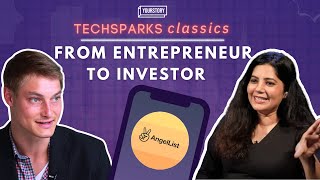
Ryan Hoover built Product Hunt from a 2013 side project into a community platform, then sold to AngelList. He talks about staying focused on a vertical, asking for help when stuck, and why he's now investing in Indian startups through Weekend Fund.
Questions this video answers
2013.
Conversation places acquisition discussions toward the end of 2016 and sale around 2017 (Ryan: "towards the end of 2016... evaluating next steps" and later references to selling in 2017).
Over 350 investors and operators.
Six companies (examples named in the talk: GHC, Invoid, Wise, Dukaan, Pesto, Nvidia).
About 900 million Indians online by 2025 (growth ~45% from current baseline, as stated).
Chapters
Foreign.
Thank you so much for joining at this text path. This is a special year for many reasons. Difficult, very, very difficult. But we're looking at what's next with lot of optimism and we thought that who better to tell us because you've carved a whole business, a startup if I may say so, which I told you last time when we were talk that, you know in India, startups, builders, tech people, all of us follow Product Hunt and it seems like we know you through the product that you built and today you also run weekend fund. Thank you for joining today. Want to ask you straight away get into the question about and I'm sure you would have asked this many a times, what got you to build Product Hunt? Tell us the story.
Yeah, as I mentioned earlier, I've followed and seen your story over the years and really impressed with what you built over there. And you know, for me I've always been really curious about technology and very much like an optimist in many ways, for better or worse. And for me, I have always been playing around with new apps and products. You know, this is back in 2013 is when product had started. I was playing with apps, downloading them from other country app stores actually just out of curiosity to see what you know, was popular in Japan and what was popular in other regions. And I come from a product management background, so part of my, I guess motivation was, was just to learn frankly and get inspired and see what people are building. And so the idea for Product Hunt was really, it was a side project. It was supposed to be just a thing for me and my friends to share cool things that we found and kind of a way for me as a product manager to stay up to date what people are building and get inspired that way. And you know, from there what we really realized and I think you may have, I don't know the whole your story story, which I'll have to hear about later. But there might be some similarities in that. I think what we found and what you may have found too is like there's this hole in a sense a hole in the ecosystem to come together as a tech community and really celebrate and share and discover new products and things that people are making. And so that's really kind of the initial inspiration from there. Of course there's a lot more to the story, but we learned a lot from that initial experiment.
Somewhere what stands out about Product Hunt and from the very, very initial days is that you were able to garner the that mind space and somewhere, that energy somewhere people coming together and celebrating and then I'm telling, you know, as an entrepreneur and also wearing the product hat, how did you make Product Hunt happen? That thing happen in Product Hunt, a.
Lot of it was, I wish I could say it was like super strategic and I had like a brilliant plan all mapped out. A lot of it was just driven by what I found interesting. And some companies are born this way where it's simply, you know, the old cliche, scratch your own itch. For me, I was scratching my own itch. I was curious to explore. And what unfolded kind of beyond that was a lot of just realizations and observations and how people were interacting with the community or with the product and kind of adapting to that. So some specific things that we did. One, it was very important to me and I think for the success of product to be a very optimistic, friendly place. Because when you are building a product, especially if you are, let's imagine you're a 15 year old, you're launching your first product on the Internet. Maybe it's a web app, maybe it's a mobile app. Whatever it is, it's really nerve wracking. It's really nerve wracking to put yourself out there and kind of show the world like, here's what I created. And that's true across like everything from like music to art. Like anyone who's creating something, there is that anxiety. And so part of my motivation was, okay, we need this to be a genuine, like healthy place for people in a safe place for people to launch and get feedback. And so there's like small things around, like how we communicated as like early users in the comments and the questions that we asked to kind of guide a conversation and also guide like in some ways implicitly train people to say like, this is what you can do on the platform and here's the type of conversation that we want to see. But then there's like small things like we are mascot is a cat with Google Glass, which is ridiculous and silly. And that was intentional. It was very intentional because we wanted to create a playful kind of energy. And you know when you see that it starts to change and shape kind of the narrative. And you know, the site itself is pretty minimalistic. It's simple. You could imagine a very different version of product that's more sterile and a little bit more like businessy. And that's not really what I wanted to build. So there's a lot of small things that we kind of did to shape the community and the culture. But that was really important in the beginning days.
Tell us over the years, from 2013 to at least till 2017. I think that's when you sold it to AngelList, right? Tell us what it meant as an entrepreneur building that. And I think you were the solo founder.
Technically, yes. Although I always feel like a little hesitant to say that because it's, you know, like anything else. Like your team is. You need everybody, it takes a village, you know. So I had a great founding team and, and then of course we scaled kind of beyond that to help and support. But you know, the, the journey was interesting. It's my first company that I started before. Part of. I never managed anybody so I literally never had a direct report of any kind of. And it took me about four or five months since product started to decide to like turn it into an actual company and incorporate and raise money and everything. And so a lot of, lot of this is learning on the job. Definitely made a lot of mistakes, but also did a few things right. And I think the. I wish I could compare this to other startups because this is the only one I really built. Unless you can't. We can fund as a company or a startup. It grew very fast in the beginning days especially. And for me personally it was interesting because especially living in San Francisco, everybody in San Francisco that was in tech kind of knew of Product Hunt and then a lot of people knew of me. And so there was a moment in time where I started to feel a little self conscious, even going out to like a club with a friend or something and seeing people that recognize me. And so there was like elements of that that were a little bit like personally jarring at the same time. It was also exciting and fun and it's really cool to like meet people who like appreciate what you built and everything. So it was a long, windy kind of journey, but, you know, an interesting one nonetheless.
What got you excited or interested or convinced about selling it to Angellist Again.
First and only company, first and only acquisition so far. So I wish I had many data points that can compare it to. It was honestly, it was fairly organic in many ways because Naval was actually a seed investor so he'd invested in Product Hunt. I have always admired Angellist. I actually is one of the few companies that I would love to join and what's funny about that is I actually used to browse Angellist looking for companies, not as an investor, not really for any purpose other than to discover what people are building. And obviously Angelist is not built for that. It's not designed for that type of use case. But I Used to do that on a Saturday morning like a nerd. And when naval invested, that was great. It was like, okay, you have a lot of experience in building something for the tech ecosystem. And then fast forward to towards the end of 2016, we'd raised a round with Andreessen Horowitz, a letter series A, and we raised a C before that. And we were evaluating sort of next steps and what we wanted to do with the company. And ultimately there's a lot more details that I could go into. But ultimately it felt like a really good fit between Product Angelus and that culturally we have a lot of similarities, yet also differences. And I think that's kind of good, especially like even relationships, like whoever you marry, you probably want some similarities, but you probably don't want to be the exact same person either. Angellist is very much focused on product and engineering is kind of more of its culture. And we are very much focused on product and community. And there was a nice little overlap there where we had a similar mission to support entrepreneurs, founders, creators and the tech ecosystem broadly. But we came in with different perspectives and different kind of value props. So we're more the community kind of perspective. Angellist is a little bit more like the network and engineering perspective and being kind of underneath Angellist with venture and talent and they also have Coinlist and Republic now as well. It's essentially a family of companies and it was a really good fit. Well, it still is. Angellist is still a large stakeholder and productnt, even though we technically spun it out as its own company now. But yeah, it's been a good bit.
For all the entrepreneur startups here in India. You know, there is a boom. We have 65 unicorns, we have 54,000 startups in India. But there are a lot of entrepreneurs and young entrepreneurs when they're building. There are a lot of pitfalls and challenges in the journey, but what gets celebrated are the successes, outcomes and fundraisers. If you could tell us one or two things, which, which you as an entrepreneur, you as a human, you as a person, while you were in the journey of building and growing product hunt, you encountered and you had to deal with and you learned from it, what would one or two things be?
Yeah, you know, I wish I journaled during the whole journey. There's like so many things I learned that I kind of assimilated and forgot about. But you know, there's. I mean, I think in hindsight with anything that you do, you kind of realize some of the mistakes that you made and you're like, shoot, I wish I knew that. And there's a few like, missteps that I'll mention. Some of these are like product strategy. So one of them was we started with tech as being the core focus of product tech. This is a place to discover mostly like apps, websites, tech related products, sometimes hardware products. And the goal ultimately was to actually expand kind of beyond that to go to games and books and, you know, basically all these different categories of product discovery. And in some ways I think I know there's still an opportunity there. However, our execution on that was not quite. What I underestimated really is how difficult it is to actually translate and expand a community that's really strong into another kind of category, even though a lot of the people in the existing community may also really love podcasts and books and so on. And so we attempted to kind of expand the different verticals and really create like, we even thought about like Registering the name hunt.com and making it like hunt for everything. You know, it ultimately didn't work. And my realization, learning was just the difficulty and kind of horizontal expansion. I think again, this is very contextual to everybody's story and everybody's company, but it's almost easier to go deeper in a vertical or an audience than it is to like expand beyond that audience, I think. And that's really what we're doing now with Product Town. It's, it's more, less about going horizontal, being everything to everyone, and more about serving the tech community even more and better and kind of going deeper into that ecosystem. So that's some of it. I mean, there's other, more tactical things, like really obvious things where I didn't ask for enough help from my investors, from mentors, from people. It's like as a founder, and I see this on the investing side too, a lot of founders don't ask for help. And there's a bunch of reasons why. It's one, they don't want to look weak, which is a legitimate concern in this environment. People talk and if you're going to have to raise money in the future, you want to have people around you that have a high conviction. The other thing is founders don't know how to ask for help. What do I ask for? How can they help me? And so as I reflect back on years of building product and I'm like, shoot, I really should have been more vulnerable and should have asked for more help. And maybe that would have saved me some of the mistakes I made or put the company in a better position.
Ryan, now you are an investor with Weekend Fund. And you closed weekend fund three with over 350 investors and operators. Tell me, donning this new hat, different hat, what has this been, this journey been like?
So there's a lot of. A lot of differences. Obviously, as a founder, like, I imagine I visualize being a founder as like a sine wave with extreme, extreme ups and downs, high highs, low lows. And the highs are amazing. They're so fun. It's so much fun to build something and put it on the Internet and have people use it and learn from it. And especially when you're hitting that product market fit where the community and the people are pulling product out of you. It's frankly an amazing feeling. But the lows are also extremely depressing. And many. Not that you have to cry as a founder, but if you haven't cried as a founder at some point, are you human? Are you a robot? I cried many times. Going through really difficult challenges. Everything from, like, team stuff to fundraising stuff to, this isn't working. I don't know what to do. My team is, like, relying on me to have all the answers. And I'm like, it was really hard. So there are never those moments where as an investor, you're like, I can't make, like, what are we going to do? Are we going to make payroll? Or, I don't know what to do next. There's no moment where it's, like, really low. Are you having those existential crises of, like, worry and fear of, like, losing everything? But then also, the highs are not as high as either. I mean, you know, it's great to support and help founders and, like, when there's a markup or an exit or, you know, all the good things that happen, they're great and we're happy for founders, but we're not. I don't feel, even if we help tremendously, I don't feel like it's my. It's not my doing. I can't take credit for it. So I can't really feel as high as, you know, it is when you're building something. And so there's pros and cons to both. I mean, I really enjoy investing, and part of what I love about it is I get the ability to meet so many founders and kind of learn from them, in a sense, and learn about what they've learned in their industry or their expertise. And also, it's probably the best job for anyone who's really intellectually curious about technology, because your job is basically to learn about a bunch of different things and with some of the people who are, you know, shaping that future. So there's a lot of fun to be had. And you know, we're Vedica, who works with me on the fun side. We're exploring a bunch of different things around, like how do we build community around the fun, how do we run some experiments that, you know, scratch that building itch a little bit. So we're in just investing, but we're also building. So we've been tinkering a bit behind the scenes on some things.
From your lens, you would be seeing some very, very interesting companies. I want to understand, and this is for all the entrepreneurs watching, what are some of the exciting things that you're looking at? What are some of the exciting ideas? And I have to ask you, are you looking at investing in Indian startups and businesses?
Yes, yes, yes. So we speak to the second part first. We invested in six companies in India so far. So like ghc, Invoid, Wise, Dukaan, Pesto, Nvidia and so that's roughly maybe 5 to 10% of the funnel probably be in Indian companies. Vedica is originally from India but she went to school in Berkeley, now she's in London. So she's been all around the world. But she can kind of come in with more perspective, more from a cultural perspective of the Indian ecosystem. So that's been a real kind of advantage that we have. The other interesting observation too is from really the beginning of productant, India has been the second largest in the community. India is the second largest from country perspective, population in the product and community. And so what I've observed is there's an interesting correlation or interest among like US based tech people and Indian based tech people actually read a lot of the same things and have a very similar kind of mindset and culture I think when it comes to technology and building. And so we've always had a fairly large audience through the product community in the Indian ecosystem. And so yeah, we're actively investing in the category. I mean there's some interesting things happening with sort of the digitization of India with more Internet access, more people going online. I read a report that I think 900 million Indians will be on the Internet in 2025 growing like 45% from today. UPI. There's a bunch of different things that are creating this infrastructure and this technology for other entrepreneurs and startup founders to build on top of. And you mentioned unicorns also coming out of India. I mean this is the flywheel that made San Francisco so powerful. Is you know, over time, as you have more companies be successful who, you know, hire a bunch of people, effectively train them, they meet a bunch of people, they eventually spin off those people that they worked with, they start companies with those people and then you know, that, that sort of flywheel keeps rotating from there. We're going to see a lot more, I think entrepreneurs and founders come out of India. There's already a ton of. But I think there's going to be more and more as we see more of these IPOs and success stories come about. So yeah, we're actively looking at India. We're also pretty broad investors. I mean one area that we're spending more and more time in is you can call it Web3, you can call it blockchain, you can call it crypto, whatever you want to title it that world. And there's a lot of, I mean fundamentally the Internet is being reshaped and also the way that communities form and the way that they're incentivized is also changing with these new both cultural shifts and technology shifts. So yeah, we're doing a lot more there and find it really exciting for the future.
You're a builder who's built product hunt now with the fund, investing, helping, supporting companies. If you had to say as a builder, what are some of the mindsets which assures that you are in a continuous learning, you're on a continuum of learning and improve. What would that be?
Yeah, I think like with anything else, it's hard to know what you've learned when you're like day to day, kind of in the weeds. It's really only takes, it really takes reflection. I think before sort of product I was a company called Playhaven and I was there for about three, three and a half years and it was a great experience. I was a product manager there, learned a ton for the first two, two and a half years. And it was really after about two and a half years it started to feel like I wasn't learning as much. And you know, a friend of mine, Nathan Bashaw, had a saying, he was like, hey, if you aren't slightly embarrassed by yourself, you know, six months later, like reflect on the way you did things, the way you thought about things from six months prior. Maybe you're not learning fast enough. And I took that to heart and that was one of the motivators to leaving the company ultimately and then eventually starting product. And so I think some of the, I think processes of founders, you're constantly learning, but I think important to like reflect and maybe Journal or consider, like, what you've learned or what mistakes you've made is sometimes an easier way to identify those learnings. And, you know, a lot of it is also making sure you're not doing. Making sure you're actually experimenting. The word experiment or experimenting is something that I use a lot in my language, both product and days and at Weekend Fund, because experimenting, like, the whole purpose of an experiment is to learn. Of course, yes, we want experiments and products to be successful and to achieve its goals, but fundamentally, if you focus on the learning aspect, that's sort of a precursor to building something successful. And so I think being experimental and not overthinking things, which is something I've done, certainly where I overthink things for way too long instead of just shipping an experiment or a simple idea. My fastest learnings have been usually by, like, pretty small MVPs or like V1s that aren't overly complicated, that get to market, and then I learn and adapt from there.
Ryan, if I have to ask you, what to you personally and professionally and as a human, what has. What does purpose mean to you? What has been your purpose? And then if I have to ask that, you know, what does leading or living your fullest life mean to you?
I'm honestly, I ask myself sometimes, like, what is the purpose? What's the point of it all? I wish I had a real, like, philosophical, great, like, thoughtful answer to that. I'm still figuring out, frankly, like, what is the point? I have a lot of interests and, you know, whether it's around technology or just other personal interests, kind of outside of work stuff. But, like, sometimes I do wonder, like, what is the point? What is the goal? And I think historically my personal focus has been on work stuff where I have, like, with Product Hunt, there's a very clear goal. I'm immersing myself everything into that particular mission and goal, and that's what consumes my energy and frankly, my thoughts, like, almost 24 7. But when I don't have something like Product Hunt, it's a little different. It's like, well, what is the point? And this is where a lot of founders go through these, like, existential crises when they either sell or leave or transition out of a company. It's like, I've been spending years thinking about this, focused on this. Now, who am I and what do I. What am I for and what is my purpose? I don't know. But one, there's a few areas I'm really excited about and, like, personally driven to explore more of in like life, work, environment and culture, at least in knowledge, working and technology. And friend James Zara has a good blog post on this called the Multi Hyphenated Career or something like that, where he talks about how a lot more people are. They're not doing a 9 to 5, they're doing many things. They're maybe building a side project, they have a podcast, they're investing. They really are doing many, many different things. And I think if you look at Web3 and where crypto's going and DAOs, that's also opening up a whole new economic structure and a way for people to essentially leverage and use their skills to get rewarded or paid in some way. And so this is slightly meandering from your actual question, but it's something I think a lot about and it's something I'm practicing to some extent with, you know, weekend fun and some things on the side. And I think more people are going to be moving that direction and I think it's good for the world, like having more work and kind of economic opportunities driven by, like, their skills and their talents, less so the recruiter, gatekeepers or, you know, traditional nine to five commitments. So I don't know. I think that is a trend that was going to give a lot more people purpose and accessibility in the future and something that I see myself being a part of in some way.
Ryan, I have to thank you on behalf of everyone today watching this. Thank you. Lot of humility, lot of authenticity. And I don't know, there is something about you which I'm sure every builder, every entrepreneur will connect to, I think is there. There is something so bare and honest about you. And thank you because there's so much to take away from this very, very normal conversation that we've had. Thank you so much. Thank you.
Yeah, thank you.
More from Ryan
How to launch and grow your product | Ryan Hoover of Product Hunt and Weekend Fund
Ryan Hoover on Startup Growth Hacks, Products, Silicon Valley Success | Product Hunt | TRS 130
01: Ryan Hoover (Weekend Fund) | "101 Guide For Emerging Fund Managers" | 1947 VC
Learn How Ryan Hoover Transformed the Startup Ecosystem with Product Hunt's Explosive Growth
Behind the Scenes of a 2-Person VC Fund with 120+ Investments - Vedika Jain (Weekend Fund) | E58
How to launch and grow your product | Ryan Hoover of Product Hunt and Weekend Fund