How to Launch Your Next Project /w with Product Hunt's Ryan Hoover
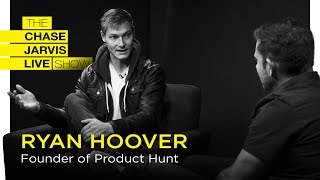
Ryan Hoover, founder of Product Hunt, shares how he built the platform from a Thanksgiving weekend project into a daily hub for product launches. He emphasizes building community before product, launching repeatedly with MVPs, and learning from mentors. Product Hunt now sees roughly 100 new products posted daily.
Questions this video answers
December 13, 2017.
About 150 essays that year.
About a little over 100 new products per day.
Approximately five full days to build the site, plus ~5–10 days beta-testing.
Around 100 users in the beta.
Chapters
Hey, everybody. How's it going? I'm Chase. Welcome to another episode of the Chase Jarvis Live show here on CreativeLive. You guys know the show. This is where I sit down with the world's top creators, entrepreneurs and thought leaders and do everything I can in a short sit down conversation to unpack their brains to help you live your dreams in career, in hobby, and in life. My guest today is a writer whom you know. He's an angel investor, and you will definitely know him as the creator of Product Hunt, the place on the Internet where you go to find out about new things that happen every day in the world of physical projects, physical products, digital products. I've been tracking Ryan for a very long time. Very happy to have him on the show. Ryan Hoover. Hey, in the house. We love you.
How's it going, Chase?
Super good. We've been trying to make this happen.
For a long time. I know, I know. Been a while since I saw you. Amsterdam.
Amsterdam, yeah.
That was a fun trip. Yeah.
How it sounds like it sounds? I don't. I'm not a fancy person. It sounds fancy, though. We say last time we saw each other.
I know, I know, I know. It was my first time, actually. I rarely leave the cafe.
Yeah, I was very sophisticated.
So I went to a museum at the Banksy exhibit, the Banksy Museum.
I mean, how many trendy things can we say in two sentences?
The reality is we got, you know, it was a free trip for us because it was a conference, it was a tech thing.
Exactly. Oh. So I have about 10 different things that I want to try and cover in the next hour. I'm struggling honestly to, like, I really want to go right after one. But for the folks, the few folks who don't know who you are or about your background. Give me, like, the overview. I know you consider yourself a product guy. I first knew of you as a writer. Also, you know, you'd been a contributing writer to a book that I love by Nir. We'll talk about that in a little bit, but give us a little shape on who you are and how you got to where you are right now.
Yeah. So let's see. Once upon a time, I grew up in Oregon originally and I was there. Oregon, Oregon. Very green over there, very cold. I've grown very soft now, living in San Francisco, but grew up in Oregon, went to school there, was there for about 21 years, then moved to Portland, Oregon. Long story short, ended up stumbling into a startup, video game startup, which was my first career in the world of tech. As an intern, so unpaid intern, which was great. I learned so much. It was, you know, without that, I don't know where I'd be. Honestly, that ultimately didn't work out. Ended up leaving that company, moving to San Francisco to join another company also in gaming as a product manager. So my sort of professional career was marketing into product management and learned a lot there at that company for about three and a half years. We went from 10 people downsized to six I think at one point and then went to about 100 or so before I left. So wild ride company still around and still really good friends with CEO. And then three and a half years into that company I realized, well, I'm kind of sick of building things for other people. I got tired of building for mobile game developers was our audience. And while I loved the vision and what we were building, I just wanted to build something for myself at the end of the day. So I realized, okay, now is a good time maybe for me to move on, transition and do something new. I gave notice to the company and said, hey, here's what I'm thinking. Don't know what I'm going to do yet, but I want to do something different. So I'll give you two months to transition out. That turned into part time role, which actually was great. I'm super fortunate to have that opportunity where they just cut my salary in half. Said work 20 hours a week and then go figure out what you want to do. And between that time is when I was doing a lot of writing and then ultimately started Product Hunt around that time.
Okay, so there's so many gems in there that I'm going to quickly unpack. One is that you didn't actually set out to create the destination on the Internet where people discover new products every day, that you were just sort of following one step at a time. I think that a lot of people who are paying attention to the show are people who want to do a lot of the same things that you just talked about but don't know where to start. And they think that they have to sit back and plan their whole life. So I love that. We'll touch base on that in just a second. And the fact that you had this transition period, I think everyone else out there at home is like, okay, bet it all, quit everything and go all in. And to me it's one of the biggest sort of misunderstandings about the life of an entrepreneur or a creator is that you have to, you know, to say that you're going all in. That's More of an emotional, spiritual journey. Because there's things like food and rent that.
Or families.
Yeah, or families that actually get in the way. So let's go to Product Hunt. How do you describe. Because for those of you who don't know, it's a very popular site, so there's probably not that many on the Internet who don't know about it. But how do you describe it? I talk about like that's where I go to get new products every day.
Yeah, people use it for a lot of different reasons. At its core, it's a community of people launching and sharing new products. So these are physical products, one you were just showing right before we hit the record button here.
That's not out yet, but.
Which isn't out yet, but coming soon.
It's right over there.
That's the type of thing. I have to be vague about it. That's the type of thing you'd see on Product Hunt. You also see apps and a lot of trends kind of emerging. You see these waves of new technology trends surfacing, whether it's drones back in the day when they were brand new, a lot of people are experimenting with not only software, but hardware around drones. Today we're seeing a lot of blockchain and crypto related products and things emerge.
What is it? Cryptokitties. I saw that today.
I was on it. Yeah. Cryptokitties is the latest and coolest thing. And it's essentially like a Pokemon or a Beanie Babies built on the blockchain. A lot of people, over $3 million today in the past week has been spent in US dollars on that, on this crypto collectible they're calling it. And it's just a really interesting example of how you see these kind of trends emerge in these people using new technologies in creative ways.
Yeah. So I think that's a really. It's a very nice package to put Product Hunt in. I think that's a really good descriptor. I feel like I use it for not just launching products because we launch podcasts on there. This podcast was on your platform. I think to me it's the trend part is really interesting because you start seeing a lot of volume about a particular thing and it's sort of because it's for the people who are the builders of those products. And that passion is usually much earlier than mainstream or even early adoption. These are for the people who are actually creating the things. So it has helped me in the past get into that. But what part of you is reflected in Product Hunt like Is it the curious part? Is it like, are you a gadget? Are you a gadget geek? So many of the people who are watching here are camera freaks, design freaks, the newest productivity hacks. So they're entrepreneurs and creators. I'm trying to map what part of you said, I want to create this thing where we discover new products.
Yeah. So going back to what I said earlier in that I wanted to build something for myself, and I was experimenting with a bunch of different ideas, but ultimately I realized me and my friends are always sharing new products all the time, whether they're apps or new products that you read about in the tech press. But there wasn't a place for a community of people to come around and share these cool things that we were finding in a structured way, nor was there a way to talk to the maker of these products. So for me personally, I grew up as a kid just learning how to do basic HTML CSS just because I wanted to build a website. And the goal was I want to build a website. Not necessarily I want to make money or do it for any other motive than just I want to create something. So I also used to hack Xboxes when I was a kid. So playing with hardware and learning how do I exploit this thing for my own game, those are all things that I did as a kid, and some of it inspired by my entrepreneurial parents. But then product in itself sort of manifested with all this interest in new technologies and products. And even the way that we try to build the community, we try to make it playful. And kittenish is like a word that we use. Yeah, kittenish, which means playful. There's other words that we've kind of described, internally described product hunt, which is like curious. People go there because they're curious about new technologies and playing with new things. All of these traits ultimately are mapped back to my personal passions and interests. And it wasn't necessarily, I'm going to build a product that maps my own kind of inherent motivations, but it sort of organically happened that way as it started to grow and form.
I guess one of the things that I find is when people scratch their own itch, like, those are the things that work. Because for every Ryan Hoover, there's probably, you know, I don't know how many, how big your community is, but tens of millions of people who are curious about hardware, software, the new products coming out, want to be at the center of it. And the fact that you're able to make a living in a life like literally discovering new products every day, it's almost like you're curating and reviewing and building community around that. If you'd have said that five years ago or 10 years ago, that was possible. People are like, wait a minute. So you're gonna create an entire career and a company out of playing with shit on the Internet?
I know, it's the old joke. There are now infomercials on this where it's like, can't believe I'm getting paid to play video games. And it's like a QA job or something. But the reality is, a lot of these, especially early technologies or movements ultimately start out by hobbyists or people who are passionate to explore certain technology. My brother, I was just telling you earlier, before this, my brother just finally got a job in videography. He's been doing jobs he hated for years. Actually didn't go to college, but he found this passion in doing drone filming and editing videos, doing all this, and now he is able to do that as a career, which is amazing. So, yeah, I think people who build things for themselves, that's not the only way to build a company by any means. However, it's incredibly motivating. And one, you're probably more likely to stick with it when things get really hard, because they do. And two, you know, the user, you are the user. And so it's a lot easier to empathize and build for that person if you are that person.
Yeah, that's spoken, folks out there. If you're watching this, then I'm looking at you. And if you're listening to this, then you should know that I'm looking at you. So there's another. I realize I'm bouncing around a little bit. I'm trying to set up the base of the triangle that we're going to build up. But how did you create this thing? Because I think this is a group, and I talk about this a lot on the show. The group that's trying to go. There are people who identify themselves as creators or entrepreneurs or makers. And then there's a group that is, you know, I'll call it creator curious. And they've got a safe job that provides for themselves and their family, but there's also that lack of fulfillment. And they're trying to find a way to bridge from where they are to where they want to be. Tell me a little bit about your story. You were younger, but you still didn't just quit what you're doing and go all in. Go back to that point you made just a little bit ago. How specifically and as detailed as Possible. Did you create Product Hunt?
So Product Hunt in some ways started years before Product Hunt began, which it started off initially by. A lot of you mentioned my writing. I'm not a professional writer. I actually hated writing back in high school and I think it's because my teachers make me write book reports on books I barely read and didn't really like. But I loved writing about technology and user psychology and marketing and all these things which were usually based on observations or maybe conversations with people. So I back in maybe, I think it was 2013, I ended up at the end of the year marking down like how many essays did I write? It was 150 that year, some of them very short. So it wasn't super long. But still 150 is a lot. And I was surprised by that. And a lot of that had over time, over the prior two years, built, didn't have a massive audience, but at least enough of people following my writing or following me on Twitter subscribed to my email list, my personal newsletter, where it built up some tiny bit of reputation or at least an audience that when I did launch product and I launched it into an audience of people who would at least pay attention and check it out, and also a community of people who clearly were into technology just as I was because I was writing about tech. So Product Hunt, in many ways it started well before Product Hunt was even an idea. And then one morning the actual idea for Product Hunt was just, it wasn't anything. I didn't write a business plan, I didn't forecast my five year financial projections. Initially it was just an email list. And in the beginning and I wanted to create something that I could build very easily. I'm not an engineer. One, so I was forced to get creative. And then two, I just wanted something out there quickly. So I'm like, ok, how can I do that? Let me create an email list. Every day there'll be new products that are launching and I'll see if people like this content. And that took about a half an hour or less to set up, send it to the people that were following me on Twitter and other communities. And then that sort of organically started to grow from there.
Great. And then at some point you did Y Combinator.
Yeah, yeah. So this was, we went from email newsletter for about two, three, four weeks. People kept signing up.
I thought you were going to say years and then you said weeks.
Yeah, well, two, three, four weeks. I was just having fun with this. And meanwhile I'm again in a good position where I'm making at least enough money to float financially in San Francisco. I was working 20 hours at play Haven and then kind of experimenting with this on the side.
Take note, folks at home, that's the way to do it. Wait tables. Do something where you have more time, even if you have less money. Because at the beginning when you're experimenting, you don't actually need money. You need time and space, mental freedom to pursue the thing. So I think that's key. Sorry.
Yeah, I mean, and a lot of people, they. Some are fortunate also to work nights and weekends on their projects when they're employed somewhere. You don't have to quit full time and go in sometimes. So ended up working on that on the side. And two, three, four weeks passes and it starts to continue to grow. And I'm getting people emailing me saying, hey, I like that product in email. That's really cool. I'm finding cool stuff on there. So it was a bunch of reinforcement saying, okay, people seem to like this. And I was having fun with it. So I'm like, all right, email is great. It's a great place to start. But we need to build this into a website, a community where people can interact. So I reach out to my buddy Nathan Bashaw, who we'd known for a while, and over Thanksgiving break, this is almost exactly four years ago actually, he and I were hacking together, he was building it and we were collaborating remotely because he was back at his parents place and he had free time. So it was like Thanksgiving break. And we built the site and launched it to some beta users, got their feedback, sent them wireframes, getting them involved in the process. And then we eventually launched it shortly after that in December, the website itself.
So total time from start to finish on the website was weeks.
It was about five full days of. And it was just a Ruby on Rails app. Simple, like a website where you could post things and then have a comment feed, basically. So not very difficult really. But yeah, about five days roughly. And then we had maybe five to 10 days of beta testing. And this was about 100 people where we would manually, I'd be emailing each one of them one on one, getting feedback and getting them one ultimately bought in and excited about what we were building. You don't need thousands of people on day one. You just need 100 people who love what you're building. And a great way to do that is just being very community focused and like very personable with those people. So combination of people I knew or people who were using the email and then so we launched that and then the website kind of fast forward over the course of like three or four months, it just kept growing and we kept working on it again, still a side project, not even incorporated or anything. And then it was a time where we were like, okay, well it's been five months, thing is growing. I could see where this could go. What do we do? So that's the big question is do you raise money? Do you build a team? Do you keep it a side project and make money on job postings or some other revenue stream? And then that's when I started talking to yc, around that time. Y Combinator.
Okay, what's that like?
So my path towards Y Combinator, our path towards yc, was unique in that ironically we're building a product that is for people in technology and for startups. So in some ways we had an advantage in that they already knew about Product Hunt and their YC Companies in that prior batch were actually using it. They were using it at launch.
Yeah, a great little meta reflexive thing there.
Yeah, yeah. And so it started circulating inside of YC and then I got a DM from one of the Nicholas, CEO of Valgolia DMs me and was like, hey, have you thought about Y Combinator? Gary Tan would love to meet you if you're interested in. And at the time it was like, right at the moment where I'm like, what are we gonna do with this thing? Do we raise money? Do we build a team? Do we not? I wanted to be very careful because once you raise money, it's not like you can be like, actually, nevermind, here's the money back. I want to do this other thing. So you gotta be confident. So at first I was like, I would love to meet Gary. I want to get his thoughts and feedback on it. So I met with Gary and then after that, met with. He connected me with Kevin Hale and Kat and Alexis Ohanian. So I spoke with all four of them before applying to yc and the impetus is really, I just want to get feedback ultimately and understand just their perspectives. They built companies like Alexis, built Reddit, one of the largest websites in the world, very community focused, obviously property. So I'm like, if anyone's going to know what to do or have good advice, it's going to be Alexis. So spoke with them and then decided why CBD the best place for us to kind of kick off and make this a real company and build a team. And then just ended up applying, got an interview and ultimately got in.
Yeah, there's an element of mentorship there that I love, which is you're finding people in the community who've done something bigger or first or similar to the thing that you're aspiring to. And that's just a recurring theme that I also. I can't. Of the 150 people who sat in the chair that you're sitting there, like, there's like 145 of them who said that same thing. That role, that mentorship that I think maps to the story that you just told me. Do you feel like you have. Outside of yc, do you still keep a mentor? How do you think about mentorship and what role does that play for you?
Yeah, I think it's for me. Mentorship's always been somewhat organic. I never said, hey, emailed someone, do you want to be my mentor?
Because that is scary, right? It's like, hey, we're going to date for the next X years.
Yeah.
Whoa, bro.
So I don't have any official mentors, let's say, but I do have a lot of people who are older and more experienced than I do who helped me in the beginning and still help today. And in fact, near Eyal, who I connected with and admired his writing for years, I just actually Colt emailed him and just told him, hey, I love your writing. I'd love to meet sometime. And it was kind of. That's how our relationship started. And that ultimately turned into helping him write his book. But, yeah, in terms of mentorship, I think the way to approach it in my mind is always identify who can you learn from and try to create value for them in some way or just be casual about it. I've received emails where people are like, can you be my mentor? And I'm just. This is the first contact I've had with them. It's like, I can't say yes to that. I don't know you. And anyone who's probably being asked to be a mentor also has a lot of other commitments to other people. So it's a hard ask. So all that to say mentors and people who can teach you things and help in different ways are super important. I actually met with a person I've known for years, and he's thinking about starting a company now. And we met up and I had flashbacks to four years ago when I met up with someone like Josh Elman, who I had similar conversations with. I was like, hey, Josh, should I start this company? Should I join a company? What should I do? And he was helpful in thinking through that and making connections to other people, like lawyer Josh Cook at Gunderson and others who helped along the way.
Josh Allman, for the record, early product at Twitter, Facebook and LinkedIn. Right.
Yeah.
He's a partner at Greylock, which is an investor in CreativeLive. Known Joe for a long time. Amazing.
It's like we set that up or something.
Yeah, no, but I think that the concept of mentorship, when you're creating something new and ideally useful, is so critical. I'm a huge fan of the casual use, mastermind groups and other things where you can create more accountability for yourself and the people who've actually done the thing. The reality is that they don't have formal mentorship programs as humans. You know what I mean? Like, okay, I'm taking six mentors and we're going to march them through. But there are more structured things like Seth Godin's alt MBA or mastermind groups, whatnot. But it's interesting to hear how that's played a key role for you. Well, again, there's several things that was important for me to have you on the show to discuss. One of the most important, which I've admired in you for a long time. And I think hearing how you think about this will really benefit the people on the other end of the show here, people who are listening in and watching you watch how stuff is launched every day and have for years and years. And presumably you've seen it done really well and you've seen it done poorly. And this community is a community of makers. And so if you were to give not just professional advice, life advice, or like, conceptually tell us the best way to launch things or a good way, and tell us some crappy ways and what are some patterns that you've seen because you've had a front row to some of the biggest hits on the Internet. So what does it look like? What does it not look like?
Yeah, I think one of the things that doesn't get as much attention, there's advice like make sure your tagline or copy your marketing landing page is clear and concise. And all of that's true. But the things that I think people don't talk as much about is more about how do you start building an audience or a community or people who are excited about this space that you're operating in before you actually build your product.
Think about what you said with Product hunt just like, five minutes ago. You're like, you had a group of 100 people. It's not like you had 10 million followers. You had 100 people that you were designing for, right? Is that what you mean?
Yeah, exactly. So Product Hunt wouldn't exist if I didn't have, if I wasn't writing prior and building this audience who was made up of people who love tech. And of course I'm building a thing for people who love tech. So I think that's something that people can take away even today and say, you may not know what you're going to build, even the product or the startup or whatnot, but you can today start building an audience. And I don't mean that in a transactional way. I'm going to be a self promotional marketer, but more in the sense that can you create something of value for a community of people? Whether it's a podcast or a video show, or write or host meetups, there's a bunch of different things that you can do to gain respect among a group of people. And if you start doing things that you're passionate about in that type of context, you'll find and attract people who are passionate about the same things as you. And that will not only be your first people to talk to, to get feedback, but they'll be your first users, first customers. They might even be the people that you hire in the future, like some of the people who were early product users. Like Andreas is our CTO and he was initially a product user to begin with. So I think building this kind of audience and creating value for a certain group of people is super important and something that we think a lot about at product. And how do we enable people who are building products to do so? Because most people end up working in the old way of doing things is like, I'm going to go in the basement or whatever metaphor you want to use and build my product and not talk to anyone. And then I'm going to put it in the Internet and people are going to find it and love it. The reality is you might have built an awesome product, but if no one finds out about it, it doesn't matter. And right now, distribution discovery is so difficult because it's easier to build things and more people are building things as a result. So in some ways it's like, flip it around, think about how do you find an audience and build an audience before you actually build a product is how we think about it.
And what a lot of folks don't know is that's why CreativeLive exists. In large part, we facilitated. I was a photographer and had built incidentally an audience around photography. Just because talking about photography and sharing trade secrets and helping that community be more open and incidentally created a large social following. And that was on the backside of like, hey, and we built this other thing for you because we heard that you guys want to learn.
So there's a bunch of photographers and you built credibility. You also probably had a pretty good idea of what they needed and wanted because you literally have been talking to those people for years and you're a.
Part of that community. I think that's embedded in your advice. There was these are your people. And this is a great thing also to do on the side. Like if your side hustle while you're employed full time at Fill in the Blank can be building community around the things that you care about. And building is both. It's like it's creating something for that community, but it's also participating in it. Right. So it's how did you get into products? Like, what did you do specifically tactically to build that community? Where did you go? What did you do? Was it physical, digital? Both. Neither.
Yeah, actually both. So see, let me go through the list. I mean there's writing itself. So writing about technology and what I love to write about was looking at new products like Tinder in the early days and I just scratched my head and be like, why is Tinder so compelling? If you're to break down the components from a psychological perspective, what about even the subtleties of the card swiping feature makes this engaging Stuff like that some posts no one really read, some of them read by thousands of people. But when you keep doing it consistently, you start to build up some reputation and audience there also did brunches and meetups, like very small gatherings with other mainly founders or other entrepreneurs. How did you find them mostly Twitter in that I was also using and still today, for better or worse, use Twitter all the time. And it's the best place to get to know people because it's a very passive way to not only follow people you find interesting or insightful or whatnot, but then over time you start engaging them with them in the lightest touch ways. It's very different than trying to email someone, hey, do you want to be my mentor? But for example, if I was to interact with someone for 12 months and hopefully add value to a conversation on Twitter and then email them and say, maybe not. It's me from Twitter. Yeah, it's me from Twitter. Do you want to meet up, for example? That's one way to break the ice and also get people comfortable with you. I would of course Interact on Twitter. I would also read a lot. I was reading a lot of tech related blogs and one tactical thing was I would always mention the author. So it took an extra 5, 10 seconds to find the Twitter username, but I would always tag the author. And that was another way of one giving them some credit and be like, hey, I read your thing. Awesome. Authors love that. Every tweet is encouraging, especially if they aren't already don't have a huge audience. Doing that for years also builds up some recognition and eventually relationships where you start following each other and then over the course of 12 more months you start to get to know each other more. So I don't know, it's Twitter meetups, writing. What else did I do?
Was moving to San Francisco part of that? Because I think a lot of that's a question that I feel a lot. It's like if I want to be great, fill in the blank, do I need to move from Oklahoma to San Francisco or to Seattle if it's music or New York, if it's fashion? So what weight do you place on that? Yay, nay, impossible, possible. What's the spectrum?
Yeah, Product Hunt would not exist if I wasn't in San Francisco due to the nature of what Product Hunt is. It's a community of people who are excited about technology. And a lot of the things that kind of the serendipity that happens in this city led me to connect with people like Josh Helmlin, who I mentioned earlier, or other future investors in Product Hunt. Those connections probably wouldn't have ever happened if I wasn't in the city. So for Product Hunt it was very important. However, I also think increasingly more today, you of course, can build a product anywhere in the world. We see it happening all the time on Product Hunt. More than half the people are outside the US that are building these things. So it's quite a global community. But the world of tech is global. So in many ways I think it depends on what you're building and who you're building for. So building a product for tech people, being in San Francisco is obviously a huge benefit, but I don't think there's like a. I don't think there's a right way to build a startup or a single way to build a startup for really anything.
Yeah, I think that's really. Let me pull on that thread a little bit. So you've seen it done lots of ways. Right. And so there's no one path. Are there some preferred paths or is it literally like follow your intuition? What's your coaching there. For people who are thinking about it, there's many ways to do it. People want a prescription. How do you reconcile those two things?
Yeah, I think one way to approach things is break down. Well, one thing is you don't know exactly what this thing will become like with product. And I didn't know it was going to become a company in the very beginning when I first started it. So you have to take with what you know, what's the biggest obstacle to get over. In some cases, of course, it changes with different stages of the company, but in some cases it's, I just need to hire, I need to recruit. So you have a couple paths. From a geographical perspective, you can build a distributed team and Product Hunt is a distributed team. We have people in nine different time zones, I think.
Nine different time zones. Wow.
Yeah. So all over. That's one way of approaching it. But other people might prefer building locally. So if you're building locally, how do you. If you're in San Francisco, you have a lot of talent, a lot of amazing people to connect with. If you're in Eugene, Oregon, where I was born, not many people in technology there. To build a local team would be very difficult. So I think in some ways you could just dissect what are the problems or challenges as I'm progressing, if the next challenge is fundraising, if that's a path you want to go down again, you don't have to be in San Francisco. You could travel and live remotely. But being in San Francisco makes it a lot easier to raise money in general as a technology company.
So you're tackling sort of the biggest challenge, like, what's your biggest challenge? And then tackling that.
Yeah. Or if you're like a media company, being in LA has a lot of advantages too, because there's a lot of people who are experienced and capable in those cities. And then there's a lot of serendipity that happens when you're in the hubs of the core markets. So like in New York with finance, for example, and SF with tech, LA.
With media and entertainment, not required. But I think, again, cultivating that serendipity. And again, it goes back to physical community. I talk about it as the other 50%, like making stuff and publishing it and getting people in the Internet to know about it. But there's this other 50% of, like, what are you doing to participate in the community? Are you contributing to blogs? Are you commenting? Are you following people and being a part of the physical and the digital, like, going to Conferences, I think it's huge. Like faces and names and all that stuff. Even if that example that you gave earlier of communicating with somebody for 12 months on Twitter makes you infinitely more likely to help them if they make an ask 12 months from now and you've seen their name in your feed every day for 12 months. That's a powerful, powerful tool.
Yeah. I think the best way to get to know someone is in person ultimately. And I think I try to avoid conferences actually in general, just because I find it very costly from a time perspective. And it's usually not as intimate of a connection. Not to say that they're not valuable sometimes, but in person, like, intimate conversations are the best. That said, you can also reach very few people at the end of the day. So I guess the majority of my emphasis has always been digital communication. Because you can write one blog post, send one tweet, and it can reach thousands of people. I'd err on the side of doing things that are a little bit more scalable in that sense. Yeah. But then doubling down on the people you really want to get to know. Get them to know them in person.
Awesome. So what's an example of people at home, in their basement, using your analogy earlier, creating things and seeing them not succeed? Like, what's the dominant pattern for people who are. And this goes. I want you to talk about the range from hardware to podcasts. Something costs a lot and takes a long time and somebody made at their house in 45 minutes. Cover the range of people's ideas and what bombs, what sucks. What is something that you see over and over that could be mitigated? What advice would you give?
Yeah, the most common thing, and it's. We try to of encourage people not to approach things, they're launched this way. But one of the biggest issues or challenges is that people start to speak and talk in a markety kind of language, in the sense that they start to lose touch with the actual value proposition that they're presenting, or they start to get ahead of themselves and use buzzwords too much in their tagline or their messaging. So much so that one, it feels like disingenuous a little bit, and two, it's confusing. People just literally don't know what you're building. And it's a common challenge because founders or people building things, they know it very intently. They know it the best and they're super deep into it. They're also thinking in many cases, like what it could be in five years. So what they tend to do sometimes is they Start to describe as if the people, their audience knows what they're building already. And they also try to impress people by kind of touching on things that are five years in the future instead of focusing on, here's what I have today and here's how you can find value in it. So it just comes down to simple, clear language, I think generally does best when it comes to communicating an idea. And I would also recommend just getting people who don't know you or people who don't know what you're building, just get their feedback on whether it's a landing page or onboarding or the copy itself. A lot of that can fix a lot of issues because people who discover your thing, they're going to take two seconds to judge it ultimately and say, is this for me? One? And then two, does it look useful or interesting? And if you can't hit both those two things, they're not going to sign up, they're not going to care.
So what's done on the flip side of that, what is exceptional? When have you seen things? Assuming that they check the boxes that you just talked about, they don't do. They do a good job of the things you just described, people usually doing a poor job of. But what are some other attributes or patterns that you've seen?
Yeah, actually, so one comes to mind. Do you know Superhuman, the email client?
No.
So it's sort of in private beta and has been for a long time. Rahul, the CEO, is the former founder of Rapportive, which some people may recognize was really popular, acquired by LinkedIn, and they're approaching in a really methodical way in that they're building an email client, which we've seen done a million times before. There's a graveyard of email startups that have failed because it's really hard to build a better email client that's 10x better than Gmail. But they're approaching it and they're onboarding new people manually, like one by one and getting a lot of feedback first. They digest what are the things that you need as an email user, they have a survey about 20 or 30 questions. And some of those questions are things like how important are is speed, how important is email snippets, how important is read replies, stuff like that. And they're making sure that their product today, which is early, will serve all those needs. Because if you as an email user are like, I need labels. I can't use anything without labels, for example, and they don't have labels, you're not going to find value in it. So where I'm getting at is they've done a lot of customer development conversations and they've narrowed in on not only a feature set for a particular audience, but also the way that they position email is really unique. They're actually focusing a lot on speed. And the value prop isn't better email client. The value prop is save you time and give you superpowers in getting through your inbox, which resonates with people because people are like, I hate email. Can't get to email inbox. 0. Spending all this time. And so they're focusing on building a product primarily for that. How do we help people save time? And it's why people buy and use a lot of products. It's not necessarily the. It's the underlying need, which is saving time or saving money or solving loneliness. Like, that's why people use Facebook and Twitter. In many cases. They're really focusing on like that core message which resonates with their audience. And so that's a type of. That's a really good Harvard case study, I think, on how to think through positioning and marketing and onboarding for a company in any way.
Let's use your thread of simple language. Let's pull on this a little bit more and say, so is it when people are creating things, whether it's a podcast or a new email client, do you see the most success in products that actually solve for that? The human, like the human need, like the juxtaposition. You said don't aim to build a better email client. I also talk about don't just aim for better, aim for different, but in different, you're trying to solve for a thing. And that is this value proposition. So keep talking about that for just a second, if you would.
Yeah, I think it varies because sometimes it might be as literal as help you save time, like position that way. Sometimes it's more implicit in how it's positioned. So it's not literally saying that, but it's through its copy and the way it's presented. It implies that will save you time. I mean, you could argue that things like Instacart, while they don't say that they're going to save you time, you as a consumer understand through its messaging, oh, it's a service where I don't have to go to the grocery store and spend an hour picking out groceries. That's one of the value props that it kind of positions. So, yeah, I think it depends on what you're building. I think going back to cryptokitties, that Value proposition. There's a couple of them. One of them is around just having fun. So it's basically like a. It's almost like an old school card game to some extent where you collect these things and you own them and you can trade them and breed them and so on. And so part of it is just like the playful nature and its cartoon kitties and that kind of thing is all about having fun. There's sort of a side piece which is like economics, which is doubling down on this cryptocurrency and blockchain kind of hype train that we're on right now, which is like a secondary value prop, which is implied as well, just due to the fact that it's built on the blockchain and it uses ether to purchase the kitties and things like that.
So you're investing, you're participating in that community while you're doing the cryptokitty.
Yeah, putting two kitties together, breeding new kitties, trading kitties. It's a weird thing, but it's. In the past week or so, millions of dollars have been poured into this game because people are excited to have fun, but also potentially get on this new train, this new money making opportunity. Potentially.
Well, I've been focused for the last 15 or 20 minutes on helping people launch things, on probing you for what's good and what's bad. Any hard and fast advice that is just do this, do not do this.
Yeah. One thing that should be obvious, but it's really not, is launch is not a one time thing. You're always launching. So we launched the email list in the beginning, then we launched the beta, then we launched the website, then we launch numerous different features and other initiatives and I think that's how people should think about it. It's not like I'm going to launch on Product Hunt or get a TechCrunch article and then I'm done. But you're always building new things and as a result of that, you also should be always talking to people. And so we at Product Hunt we have feature flags and we have beta users and we're always experimenting with both the qualitative but also quantitative side of things to get feedback on new things that we're building. In fact, this weekend I haven't pushed it out yet, but I'm MVPing a new idea that we're experimenting with and I'm planning to use a Typeform survey and quip just like a document tool to identify behaviors and see if people will use this mvp, which is not even using any Software just out of the box tools.
So by mvp, for those of you who don't know, minimum viable product, basically you're going to launch something very simple and do a little testing and try and get some feedback over the weekend. So you're still launching, still talking to people, paying attention. And I think we're talking about this right now in terms of launching products because that's I think appropriate your bias. But the same is true for new series of photographs, new series of paintings, or a mini documentary series, or what's embedded in everything you've said is communication with other humans. This idea of going in a bunker and building something and coming out and saying ta da, that's just fiction.
And also everything you create or are working on can be an opportunity to get feedback, but build respect or some engagement with people. So going back to my brother, he's published dozens, maybe hundreds of videos on YouTube and Facebook and Instagram. A lot of it's just footage he's been playing with for fun and building on his own. And then now he just got a job. And that's solely because one, he's built the experience and the talent to do so. But two, he has a portfolio that he's been showing. I've talked to some people in more of the creative fields who are really nervous to share their stuff. They're like talked to this one guy who has some pretty good music. I'm like, I, I was bobbing my head to it and I'm like, you should publish it. And he's like, he doesn't want to. He's too nervous to. I'm like, don't worry about it. Worst case scenario, no one will read it or even care and they're not going to say anything. If they hate on you, it actually is probably a good sign. It means that they're paying attention. So I think that's a theme that I think people can take away, is just be OK with sharing openly and then more on the technology product side. A lot of people are secretive. They're like, oh, I don't want someone to steal my idea. I think that's not your worst fear or concern. At the end of the day, you have a lot more problems other than someone stealing your idea. I think it's more advantageous to share and get feedback and talk to people rather than be secretive and stealthy.
I've had people ask for lots of people, 100,000 probably asked me to sign an NDA to give them free feedback and they're like, wait, you want me to do some work for free to help you out. You want me to sign like, dude, people don't care. They're too busy. And for the amount of passion that you have to actually stumble across, the person who happens to be building the same thing is going to take your idea and leverage it into theirs. It's somewhere around zero. And by contrast, this trend that you've seen of someone who's watched hundreds of thousands of products being launched, like a theme is communication, sharing, getting it out there.
Yeah, yeah. Again, there's no right way to start a startup. There are certain companies which should maybe be stealth, but the majority should not. And that person who's hearing about your idea, they probably don't care. Or two, maybe they're not the right founder or person to build it. So, like, for me, I shouldn't be the one to build Creative Live. I'm not creative. I can press the button on my iPhone to take a photo. That's about it. But I'm not in my DNA, whereas it's certainly in yours. And you had experience with videography and working with brands in this community so many times. There's like this. I think it was. Chris Dixon has a really interesting blog post from way back around. Founder Market Fit. And there's Product Market Fit, which is all about the product you're building, has some sort of need in the market. Founder Market Fit is more about are you the founder or the person to build for this type of market? You're certainly built for this creative world. I'm certainly built for this tech kind of maker world. But we all have our own biases or advantages in that way.
Yeah. All right, so this. I would get roasted if I didn't ask, but it's not why I wanted you on the show. All the stuff we've been talking about today is really the community has always asked me. So I wanted to bring on someone who has seen more launches probably than anybody in the world. And I think, I mean, firsthand, you get people sending you how many things you receive every day. New launches.
See on product in itself, we'll have maybe a little bit over 100 a day.
Yeah, 100 new products a day.
It's been four years.
And then you're looking at data of which ones are successful and why, and the ones that are successful. You obviously go, you know, you double click into that and say, wow, what's making these people successful? Oh, they have a community. Oh, they have a founder who's out there. Or this particular podcast, this person's been really thoughtful and they're differentiated. So you've been watching that. But here's the reality. People want to know what's coming. We opened the show with your. You see trends, macro trends. You've said blockchain like 50 times already, so obviously that's one of the trends. But right now, there's someone like that they've been wanting. They say, oh my gosh, Ryan Hoover. They're listening to the episode right now and they're like, I just want to know what's coming. I don't want to build anything. I just want to know what are the hot trends. And I try and avoid content that's not really evergreen. I think that evergreen content is what makes the world go round. But here we are. When is it?
Roughly six.
It's early December, heading into the holidays here in 2017. What's happening? What do you see? Look at your crystal ball and give us some guideposts of what's cool shit that's coming down the pipe.
So I've been thinking more recently about trying to predict, and I'm certainly going to be wrong, but at least trying to think through what themes might be telling in 2018, in the next year. Sometimes it's hard to know what's too early and whatnot. Like VR, for example. Four or five years ago, we all know that VR is going to have a big impact on the world. But four or five years ago, some were betting like it's going to be this year or it's going to be next year. But it still hasn't played out from a mainstream kind of adoption perspective. So it's always hard to know. It's more about timing than if, in my view, I think there's a few interesting areas that I'm excited about, and one of them is voice. And looking at voice input and communication, we're seeing Alexa and all these echo devices infiltrating people's homes. I'm forgetting the exact numbers, but in the US this is middle of this year, something around 11 million Alexa devices were in homes, I believe. I'm sure it probably could be three to four times that by now. Then you have Google home and you all have the iPhone in our pockets and other things like that. I heard a study that teenagers half of the searches are actually through voice by younger generations versus just typing on the phone. So you're seeing combination of one, adoption of these devices in this hardware. But two, a behavior at least within a certain subset of the populace that's using voice to input data and that's changing the way that people interact with technology. So I look at that and I'm like, okay, well, what does that enable and what can you, as a maker or creator build for this future? If you assume and place a bet that voice will actually eat into a lot of the tap tap computing that we've historically been doing?
Yeah.
And it's just fascinating to think through that. Does the world need a new social network for this type of interface? Is there an opportunity to build a platform or a tool set for other people to build on top of voice technology? And there's a bunch of people doing all those types of things. So voice is super interesting. I think we're also seeing this. I don't know. I haven't solidified my thoughts on this quite yet. So it's a little bit raw. But there's a lot of interest, I think, around avatars. And we're seeing everything from Snapchat, of course, a few years ago, introducing these face filters and like the dog face and all of these other things using sort of augmented reality and Facebook and Instagram and a lot of others are.
Animoji.
Animoji is a good one. Animoji is probably the most prominent example, at least for a week or so future forward. Yeah. And thinking through avatar communication is really fascinating and how. There's a couple reasons for that. One, we have the technology to create really emotionally driven, lifelike avatars that actually express our facial recognition, like our facial features and expressions and emotions. And two, it solves actually some interesting challenges and problems that I'm seeing more and more in social in particular, and that I'm increasingly frustrated sometimes with all the hate and all the nastiness that's coming through social networks today. And I think avatars create this veil of privacy to some extent, yet it doesn't avoid the intimacy of a video or a visual kind of expression. So, again, really nascent. But I think there's something around there that we'll start seeing more avatars used in different forms and maybe even new social forms of communication or even networks built on top of something like that in the coming year or two. There's cryptocurrencies, blockchains, all that stuff is obviously super nascent. People are excited about it. There's partly a lot of hype around that. There's a lot of ICOs that are very questionable at best on their legitimacy. But then there's also a lot of innovation and really fascinating things that are really. We don't know how it's going to change Things. I think a lot of people are comparing it or looking at early days of the Internet and that like TCPIP enabled a whole lot of things to happen.
That's the Internet Connectivity protocol, right?
Yeah. Without that, we wouldn't have. At least without that specifically, we wouldn't have websites who would have known that TCP IP would have enabled us to even communicate through Twitter. That's several years in the future. But that protocol is what enabled these things to happen. And so when you look at blockchain and cryptocurrencies and how it's changing the incentives and removing barriers that once existed before, it's super fascinating. So we'll see a lot of things in the next year on that.
Okay, so voice characters or avatars. Blockchain. Give me two others.
Two others. Let's see some of them. There's this theme that I'm hesitant to talk about. Perfect. Yeah.
That's what I want to hear.
I'm hesitant to talk about because it's a tricky one. So there's a lot of. So Silicon Valley is both loved and hated. And I'm afraid we'll see more of it hated in the future, particularly in the next two years. And the reason for that is, of course, every industry, including Silicon Valley, has a lot of problems. And we're seeing this past year in particular, a lot of sexual harassment finally coming to light, which is a good thing. But we're also seeing a lot of distrust around traditional venture capital and a lot of the ways that people build companies and raising much money, never focusing revenue, and then doing a fire sale. And there's a lot of themes, and that's of course, a problem. And the big issue that is coming soon, I don't know exactly where this will play out, but it's automation and thinking through Silicon Valley is both a location, but it's also an industry or kind of like a brand in many ways. And Silicon Valley is seen as a place where automation is going to destroy people's jobs. And there's a lot of different opinions around one that is a problem. And we need to have basic income and things like that to protect against that. Others, like, don't worry about it, we've had vehicles put horses out of work and we're fine, and other things like that. But the reality is, no matter what, whichever direction it goes, there's going to be a lot of distrust and hate and frustration placed on Silicon Valley for innovating in these technologies. And so it worries me a little bit on what will happen in our ecosystem and how the world will perceive Silicon Valley. And I haven't mentioned all the other problems it has because that's a longer discussion. But I'm generally an optimist. I'm always one that believes we should be responsible, but also always push forward technology. And technology has also always been with us, like this jacket. This is technology to some extent. We didn't have these types of ways to create elastic wrists, shoes. We didn't used to have shoes. This is technology. The world will always progress, technologically speaking, and Silicon Valley has traditionally been the hub for that. And I'm afraid that the problems that do emerge from advancements in technology will be placed. Silicon Valley will be placed the blame.
For, maybe disproportionately blamed for.
Yeah.
Is it justified? This is what you're wrestling with?
Yeah, it's hard because part of me. There's some of. It's justified in terms of some of the specific things around, you know, the way that a lot of the culture. Yeah, a lot of the culture around like, okay, raise a bunch of money. Raise. Raise money. That's success. That's not success. It's actually a vehicle to do something meaningful, create value in the world. And there's this culture that's sort of manifested in the past, I don't know, five to ten years around that. That's a problem that needs to be fixed. But then there's another side of Silicon Valley, which it is a place that's innovating and solving a lot of problems in the world through technology. And we'll see more and more problems solved through Silicon Valley. In particular, we'll also see Silicon Valley causing a lot of problems also. So I don't think it's a black or white thing, but I am afraid that if we don't think through how do we address these other issues that we're causing in Silicon Valley, we're going to get placed a lot of the blame. And there's even being in a big city like this, it's kind of some ways fearful when you think about even fiscal attacks and things like that, not to go down that rabbit hole. Terrorist attacks. Anyway. It's something I think about a little bit. I don't know the answer, unfortunately.
No, that's good. I want things on the show that are raw and not fully baked yet not fully processed along the same lines. What are some things that. We're in the same community. We've known each other for a few years and you're very. We've talked to this for the Previous hour, almost about sort of being open and having community and whatnot. So what are some things that people wouldn't know about you that would be surprised to find out in this episode?
Let's see. I'm trying to think of the most interesting thing here. People may know this because I think I've written about it, but I don't know. The first website I built was really awful, as most are. It was. Again, I was just learning. I was building basically a joke website. I called it operationallaff.com. the domain is probably still on the Internet Archive somewhere. The domain expired and I don't have anymore. But it was embarrassing in that not only was the design terrible, but I was building it with static HTML. Every single page was its own thing. There was no cascading universal style sheets. It was just terrible. So that's one thing. But that led me to learn more about technology and get excited about it. Let's see, what else did people not know? I almost. At first, I didn't know what I wanted to do in school. In business school, I was thinking, oh, just work for my dad's company, which is in the recycling waste management industry, which love what they're doing. They build an amazing business. But, I mean, gosh, if I was doing that right now, I'd hate myself. So there's always those moments where I think people can empathize, where you don't know what you want to do and maybe you try to go for the least difficult path, which for me is like, oh, work for my dad's company. My dad was smart to say, no, you're. You will work somewhere else for a year after college and then come back to me if you're still interested. Thankfully, I found something better, but I think that's something that I took away is like trying to play around, be creative, and discover what you actually want to do and not settle is an important piece.
All right, you have to keep going on that one because that's good. So not settling. Do you see people settling? Do you see people making things that they don't really want to make? Like, what's. What made you say that? What made you realize that that was an important thing for you?
Yeah, I mean, there's the. There's a almost cliche thing where it's, my parents want me to be a dentist or a doctor, and so they go to med school and then they spend all this money.
I was that cliche?
Oh, yeah, that's right. Yeah, yeah. How long. How far did you get into med school?
Way too. No, I bailed before, but the. Whatever. Three of my four years in college spent preparing for it. Absolutely. Waste of time and money. I mean, I didn't lose a bunch of sleep over it, but those were the most sort of painful because I was doing something that felt so counter to what I was supposed to do in the world. And I think it's important. I'm glad that you said cliche, because at the heart of every cliche is not every cliche, but at the heart of a lot of cliches is some. There's some part of it that's like, I need to look at that.
Yeah.
And I'm glad you said that. Having personally felt like I was so lower middle class, not like dirt poor, but not well off, but the fact that I'm white, male, born in the United States, my mother and father are still together, the fact that all these things happened and I still found it. Probably one of the biggest challenges of my life was breaking free of the thing that everybody else wanted me to be. The things or the people or the human that I was projecting versus the one that I really was. To think that a. I had all those advantages, and it was still arguably the hardest thing I've ever done to think of people who don't have all of those advantages. And then you put that in the big pot. And I think that's why things like CreativeLive are so powerful. Product Hunt is powerful for people to be able to discover things out in the world that get them closer to themselves. So when you're saying it's cliche, that was so real for me. It clearly is a thing that manifests itself in you as well. Talk to me about it.
Yeah. Yeah. Because it's. I mean, I've had friends that have gone to law school and then they get their degree and then they spend a year or two in law school and they drop out and they realize, I never wanted to do this anyway. And it's really hard to know what to do again. I didn't know until my senior year in college. I happened to get an internship at a video game company. I was always into technology, but I never saw a path to actually get into technology where I was located. And now we do live in a world where the Internet has everything from learning opportunities. It's pretty much you can learn almost anything on the Internet almost for free, if not for free. And you can also connect with pretty much anyone on the Internet who has the same passion, whether it's through Twitter or Reddit or other communities online. So I think it's easier for people to avoid those mistakes because there are paths to figure out and explore things that you might be passionate about. Yet still people fall into that trap because it's my parents or everyone else doing this or this is the easiest thing to do, but maybe not what I want to do.
Do you have an anecdote like, what's the cure? How do you fix it?
Yeah, I think just being. Recognizing that is the first step. Recognizing, like why am I doing this thing? Or what do I want to pursue? And most people, I'm almost speaking more to college students because I know this is a very common problem. It's like I don't know what I want to do. So I'd always recommend just exp. Explore. Talk to different people, explore different industries. Like my brother just randomly picked up a camera two or three years ago and just liked it. And now he's doing that for him, for a career. Yeah. And it only takes like that one moment or that one thing, you know, non professionally. I went to Coachella. 2015 was my first year. And for whatever reason Coachella was, I've always listened to music. But it was that weekend which made me really appreciate music, especially live music more. And now I love going to shows and going to festivals and I listen to more music and I appreciate it a lot more than I used to. And it was that one weekend that changed my entire perspective.
Never forget, you're one decision away from an entirely different life.
Yeah, that's a really good way of putting it.
Someone way smarter than me. Probably it's a quote meme somewhere, but just I think that's a really important, you know, a pin to stick in to. There's so many people you talked about college students. There's also so many people who got bamboozled to go down the wrong path. And they need to figure out they had a couple of kids, bought a house, got in over their head. And extracting from that, I think that's a huge challenge and opportunity. Again, that's one of the reasons that CreativeLive exists. I've said before, if our parents had one job, we're going to have five. The next generation has five at the same time. Yeah, it's fascinating. So what's next for you? Where are you going? What are you building next? Where are you going at 11:35?
Let's see.
No, no, give me a little context. What are you thinking about? Where are you going? What's next?
Let's see. I can answer a few different ways. One, on the product side, we're thinking through next year's roadmap and a lot of it's around two different themes. One of them is monetizing. So we've as of two months ago, started selling our first thing collecting money for the first time because historically we haven't. And we're having hundreds of makers and companies now paying us on a monthly basis, which is really exciting because it's new and it's like a different thing to explore. And then on the other side, we're also experimenting and exploring. Like, okay, Product Hunt is the best place to see what's new in technology. And everyday you click on Product Hunt and you just like it shows you cool stuff, things that you would never search for because they didn't exist yesterday. However, we now have this database and this community of people who are curating, reviewing, recommending all these things. How do we make this a place where now people can come and browse and discover the things that they're looking for? So Christmas is coming up. If you're like, okay, what should I buy for my mom, for example, for her home? There should be a place where you can discover all the coolest smart gadgets, for example, for the home, if you just got a new Android phone, what Android apps are the best for photography lovers, for example. So there's a lot of that which is changing and actually building more for a mainstream, bigger audience. To be honest, more people have that problem than want to just discover what's new in technology. So that's the Product Hunt side. And then also been doing some investing as of about six or seven months ago, raised a small fund and investing.
In early stage companies, doesn't it make so much sense? Like you see them first, why not be able to put a little bit of your own money behind them or your money plus some other folks. That seems radically intuitive.
Yeah, it's actually going back to your question, something that people may not know about me. I, during the whole transition from Playhaven into Product Hunt, around that same time I was looking at maybe entering vc because I naturally am like, I love new products, I love technology, I like talking to founders. Maybe I would enjoy doing venture capital. I ultimately didn't do it at that time. Now I feel like I'm in a good position and have more experience, experience and credibility to invest in companies. So doing that, which is really fun, my favorite part about it is it's an excuse to learn about different industries. One company I invested in is in the shipping space, which truthfully I don't know much about shipping, and now it's basically a motivator to learn more about it and understand the industry more.
Is it ship?
No, ship is the product that we built, which is unrelated to shipping. But it's got a really cute sailor kitty mascot. But yeah, there's just these opportunities to talk to these founders who are building early nascent companies, some of them even pre launch. And so that's been really fun and a learning experience for sure.
So we talked about a few things that people would know about you. There's a couple of things. Or what's next? It's my goal to have this be the definitive interview with you on the Internet. So now pressure's on. Yeah. No, just like you know that the Product Hunt community that you personally. There's been a lot of professional talk. What drives you personally privately? Is it recognition? Is it awareness? Is it discovery? Is it learning? I'm trying to unpack some of the attributes of the people who are on the show. So what are some of your personal attributes that you think have created.
What.
People see on the Internet and how you think of yourself?
Yeah, there's a lot of motivators, I think, with anyone in anyone's job or career. I think there's some of it's. Frankly, there's some of it's like proving and building credibility in something. So going back to the monetization piece, my goal is for our business unit at Product Hunt to break even to cover costs next year. And it's both my goal and the team's goal. But it's partly my goal because I want to accomplish that. I want to check that off. As a founder, it's like a milestone is now you're floating. At least then the next goal is figuring out how to make more money. But that's partly it. I think also the somewhat cheesy but real answer, too, is that I also really enjoy those warm, fuzzy feelings when you help someone. And to articulate that I mentioned earlier, I met up with a guy who I've known a while, really young guy, 21 years old, thinking about starting a company. And he's been building products for a while. And he asked me, Ryan, towards the end of our conversation, he's like, why are you helping me? And I was like, that's interesting. Let me think about that. I hadn't thought about asking myself that. And a lot of it really was around, you know, I saw myself where you are four years ago, and I want to just genuinely help you and see you succeed. Because I feel like that's the way other people treated me, going back to Josh Elman and so many other people like Nir and others, they helped me when I was at that stage. And so those feelings of, like, having a small part in maybe someone's success or helping them in some way, and it could be through meetings, could be intros, could be funding. That's why funding and investing is such an exciting thing to do now, to extend the ways that I can help people. So a little bit cheesy, but it's authentic in that I hopefully, at the end of the day, want to have a legacy of helping people do cool things and build valuable products and companies.
Amazing. Thank you so much for having me on the show.
This is an amazing, amazing studio, by the way. Most of the interviews I've done have been some sort of omnidirectional mic in a conference room.
And you got the tinny sound.
Yeah, yeah. This is pro.
We do it right here. It's pro. It's pro. Thank you so much for doing what you. I've got so much joy from Product Hunt. Discovered new things, been on the delivery, like, brought new products to you that the Product Hunt community has found joy in. We've learned a lot just throughout voting and downvoting in the comments.
You're on Product Hunt live a long time ago, way back in the day.
Way back. Long time ago. Yeah. Well, congratulations on what you built. Extraordinary. How do people follow you? You're Ryan Hoover, right?
Yeah. Rrhoover actually is my Twitter username and also the same thing on Snapchat and everything else, so.
R.R. hoover.
Yep.
Awesome. Thank you so much.
Really appreciate it. Appreciate it. See you tomorrow. It.
More from Ryan
How to launch and grow your product | Ryan Hoover of Product Hunt and Weekend Fund
Ryan Hoover on Startup Growth Hacks, Products, Silicon Valley Success | Product Hunt | TRS 130

01: Ryan Hoover (Weekend Fund) | "101 Guide For Emerging Fund Managers" | 1947 VC

Learn How Ryan Hoover Transformed the Startup Ecosystem with Product Hunt's Explosive Growth
Behind the Scenes of a 2-Person VC Fund with 120+ Investments - Vedika Jain (Weekend Fund) | E58
How to launch and grow your product | Ryan Hoover of Product Hunt and Weekend Fund