Product Hunt's Ryan Hoover on raising Weekend Fund, new markets, creating communities | Angel S3 E8
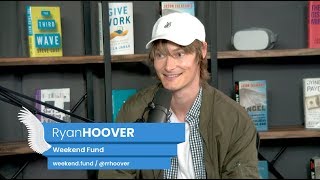
This is a transcript of an Angel podcast episode (season 3) featuring Ryan Hoover (founder of Product Hunt) interviewed about his Weekend Fund and views on community-driven products and emerging platforms. Key facts in this chunk: Product Hunt incorporated in 2014 and later acquired by AngelList; Weekend Fund is a $3M micro/nano fund with ~37 investments and median check size ~$75K (typical checks $50–100K); Hoover's thesis focuses on early-stage bets around platform and consumer behavior shifts (not sector-restricted), with particular interest in audio/voice and community-driven businesses. Example portfolio mentions: Voice Flow (no-code voice app builder, community via Facebook group), Girlboss (community & events), Breaker (podcast discovery app; YC ~2017). Product Hunt began prioritizing revenue in 2018; promoted homepage slot pricing ~ $4–6K/day. Hoover hired a part-time chief of staff amid controversy over compensation structure for the role.
Questions this video answers
2014
$3 million
About 37 investments
$75,000
Approximately $4,000–$6,000 per day
Chapters
Angel is brought to you by LinkedIn. You already know LinkedIn as the world's largest professional network. It's also a better way to find great talent. Go to LinkedIn.com angel to get a $50 credit towards your first job post. Terms and conditions apply and Salesforce Essentials jumpstart sales and support by leveraging the world's number one CRM at a startup price point of just $25 a month per user. Go to salesforce.comangel for an additional 50% off and a free onboarding call.
Hey everybody. Welcome to season three of angel the Podcast. I started to compliment the book I wrote. The book is called angel. The podcast is called Angel. You can go buy the book angelthebook.com it's also in Japanese and Chinese, soon coming to seven other languages. I don't know which ones they sell them. Thank you Brockman Inc. For selling my book around the world. I appreciate it and I'm hard at work on the next book. This podcast is to give you an idea of how other people think about investing. There is no one thesis or theory or overriding magic bullet of how to invest in private companies, nor public ones to be honest. What there are are a lot of people who've become successful at it and different theories, different takes on it, different strategies and they are all contextual. So while there are heuristics, the game changes based upon the environment we're in. The environment we're in in 2019 at the taping of this is radically different than when I started in 2008 and 2008 we had a hard time finding six companies to come to open Angel Forum, which was just like a little get together of 15 angel investors and six founders. One of those founders that came was Travis from Uber, another was Marco from Thumbtack, Melody from Style Seat Back. Back then if you met a startup, they were likely legit, hard working and determined. The chances of them failing were still great, but much less than today when we have a lot of noise. Probably 100 times as many founders today are creating companies, perhaps 200. What that means is the name of the game in 2019 is to sort properly and the name of the game in 2008 was to place bets actively. Who knows what the name of the game will be in 2029, but we'll figure that out here on angel the Podcast and you can visit angelpodcast.com I'm really excited to have our next guest because he's a longtime friend of my other podcast this week in startups and an extremely talented founder. His name is Ryan Hoover. You know him because he was the founder of Product Hunt, which he started back in 2013. Ish.
Not quite that. Yeah, it was 20, actually. End of 2013, so 2014. Incorporated. 2014.
Got it. Yeah. Incorporated 2014, sold to Angel List. And now you are the founder of Weekend Fund. The Weekend Fund, which is a $3 million fund. I think you've made 37 investments. Typical check size is 50K, 100K. Something in that range.
Yeah, exactly. I did. The median is 75k, so right in the middle there.
Perfect. And you have, I'm sure, a thesis about investing, given the fact that you created Product Hunt, which ranks the top product launches of the day. Almost like a Reddit or a Digg for. For newly released products. What is your thesis about angel investing? And welcome back to the program.
Thanks. Thanks. Yeah. I'm glad you're doing this. By the way.
Thanks for shaving.
Yeah, I did shave for you, Just for you.
That mustache was. I was like, what happened? Did you have some chocolate milk or something?
No, no, I was. I had never grown up my facial hair. This is total tangent, but I'm like, let's just see what happens. I was in LA for a while. I'm gonna try and get some like.
Failed experiment.
Yeah, it was a failed experiment. I shaved right before my brother's wedding and now I'm here. I was tempted though, to keep it for you, but I knew you'd probably kick me out.
No, I wouldn't have kicked you out. I would have directed you to one of the many bathrooms we have here in the studio and given you some edge shaving gel and would have just cleaned that mess up.
Yeah. Hopefully I look right.
Don't worry. When I don't shave, I look like a drug dealer or something, or a homeless person. So we don't all have equal facial hair abilities. But let's get back to it. What's your thesis? Do you have one after these first 37 investments in your $3 million micro fund? I guess we call that a pop.
Up fund or nano fund. I don't know what to call it. People have different.
What do you call it? Nano fund.
Some people say nano fund. Micro fund for some people is like $50 million fund, which is totally different. I mean, some people call it that, so we need better definitions.
Anyway, you have your first fund, 3 million, to make angel investments. It's an angel fund, essentially.
Yeah. Yeah. It's been two years now since I've.
Started and what's the thesis, what's your theory? And then the next question. You can take whichever order you want. Did you have a thesis when you started and do you have a thesis now? Have they changed?
Yeah. So I, like some investors, they focus specifically on one vertical, one space. They own it, they become an expert in it. For me, I've always considered myself somewhat of a generalist anyway. And while I do focus on a couple of particular things, like product marketing, community is kind of where I think I can provide help and value and that's where I spend a lot of my time in product. And I generally am more of a generalist when it comes to investing as well. And so the weekend fund is really focused on early stage investing. It's $3 million fund investing 50 to 100k check size. And these are usually investing in the first round of funding. There are some later stage investments which we can talk about later on, but the core focus is the first round of funding when they're super early. Maybe there's not even a product built yet. And what I'm looking at a lot of times is really looking for people who are building for platform shifts and consumer behavior shifts. In other words, like who's building something really interesting today that's super nascent for a future that they're imagining or can articulate in some way.
So you don't have a specific vertical that you focus on, like say Jason Lemkin at Saster or maybe some other people who say they focus on marketplaces. So you're agnostic to a specific vertical and you're looking for a market that has yet to materialize or maybe is just starting to materialize. Summarize that correctly.
Largely some investments certainly that don't exactly fit that sort of thesis. I'm not super strict around that. But a lot of them are like audio and voice is a category that I'm super interested in as a consumer but also as an investor. As we're seeing more and more smart speakers, there's probably a few of them here in this room. I'm sure the one right behind you actually.
Yeah, it's unplugged.
Yeah. Thank God. Because otherwise, you know, Alexa, CIA. Yeah. You turned it off.
Okay, Google. I have my phone on. That's interesting. Okay, Google works. Is it even in airplane mode? Okay, Google works. I didn't know that would work.
It's listening to us.
It's listening to us. Yeah, you can put it in airplane mode. The CIA can still listen. So you have a thesis that audio interfaces and audio in General are going to work. Is that driven because of the AirPod phenomenon, which means people can keep audio in their ears longer, or voice. I guess those are the two wide nows in that category, huh? Voice recognition.
Yeah, certainly that's part of the theme, I think, when you look at it from a platform perspective. So you have, I think the latest numbers that I saw reported were around 70 million US homes have a smart speaker. Most of that's Alexa or like an Echo kind of device, but a lot of Google home devices as well. And also Alexa is being integrated into microwaves and clocks and everywhere. And so that number, it's about a quarter of the US population has a smart speaker, which is kind of crazy if you think about three, four years.
Ago, how quickly that happened.
Super quick.
Yeah.
And I even remember seeing a stat before Christmas last year. I think it was around 40 million. Was. Was the report. And it jumped up to 60 to 70 million shortly after that.
They're so cheap.
They're so cheap. Amazon is promoting them like crazy. They're bundling them. You know, for 20 or $30 you can get an echo dot. So we're seeing a lot of proliferation of this hardware now. A lot of people are like, well, what do you use it for? Music, weather, maybe calendar and nothing else. And that's true to some extent. Like there's. It's TBD on exactly how people are going to build on top of this platform and build interesting experiences or let alone businesses on it. But I think the same is true for mobile. You think about mobile in the early days, it didn't have an app store in the beginning. It didn't have a lot of the infrastructure, nor the consumer behavior, the understanding of how to use the device in the beginning. And the same thing is true for Voice. We're still figuring out how do we even use our voice to interact with technology.
Yeah, it literally parallels the smartphone and the PDA revolution. When the PDA came out, people thought it would be for trading business cards, the Palm Pilots. First, you know, killer app was to point your Palm Pilots at each other. You had to get within like, I don't know, 6 inches of the IR that had some sort of, you know, infrared at the tip of it. And you would flip your or, you know, your business card to each other. You don't have to carry a business card. You just carry a device that had a battery life of two hours.
Yeah.
And then the other one was to send money between each other. And that's actually what PayPal was going to be was sending money between PDAs and then they were like, well, kind of the last thing had scale. Email and PDAs don't have scale. So why don't we just make it by emails, less friction. And it kind of worked. What have you looked at in Community? Because it seems to me that you really mastered this combination of social plus community on Reddit. Is that because you grew up. I'm sorry, on Product hunt. Is that because you grew up on Reddit and you kind of just learned about chaotic message boards?
Yeah.
How did you become an expert on Community?
I don't know is the honest answer. I think it's a lot of. A lot of what I've learned is just by doing things and following what I'm interested in. And so when I reflect on my childhood, I played a lot of video games. In fact, gaming is probably my gateway drug into technology. And it was not only my first career in startups was in gaming, but before that, gaming is kind of what led me into. Did you ever play StarCraft?
Sure. I was in Age of Empires. Yeah, I like, but I love that. Is that the category? Massively multiplayer online gaming?
Starcraft is in, oh, rpg, rts.
Real time strategy. Yes. So real time strategy. Oh, massively multiplayer online game would be.
Like World of Warcraft. Yeah, World of Warcraft. Wow.
No, I like rts. Real time strategy.
I was a huge fan of Starcraft and many other similar games.
Zerg. You played Zerg Rush?
I was. I was actually more protoss. Oh, yeah. And then Starcraft 2 came along years later and then I switched to Terran. But what is Terran?
Oh, Terran is the other. There's three civilizations.
Yeah. They're the more human like Zergs.
Zerg is like the bugs. Yeah, they're like sort of Terran humans. And Proton is like the power electricity one.
Sort of like alien.
Like alien creature.
Got it.
Yeah.
But the reason why I mentioned Starcraft is because StarCraft was one of the first online games I started getting into. And the company Blizzard that made Starcraft, they had this thing called battle.net which is basically IRC. And so I first got introduced to battle.net, started learning about clans and meeting people on the Internet and talking with them under a pseudonym. That then led me to irc, which opened up this whole world of all kinds of stuff. Because IRC is this kind of weird rabbit hole of the Internet which doesn't exist in the same form. I think probably the equivalent today is Twitter and Discord and, you know, various, like Internet forums is kind of equivalent to what IRC was back then.
What was going on in IRC? It was just a bunch of like 15 year old kids and developers talking insanity.
You know, a lot of it was. So there's a lot of like illegal downloading in IRC in that whole world.
Trading wares.
Trading wares, yeah. Trying to get movies and games for free, of course, like 0, 0 day, 0 second uploads. So that was an interesting kind of wait.
What does that mean? Zero day, zero second. Like the day when they come out.
The moment it comes out, there's a whole network of people and you know, it still exists today and I'm not a part of it at all. But you know, it was exploring that world back then and people would release and, you know, illegally videos and screeners and whatnot, and it would just get distributed like this as an instant across multiple different servers.
It is crazy.
Still occurs, Communicate. Yeah, still occurs just in different, I'm sure, different ways.
BitTorrent and stuff like that. Because people who are expats in China or, you know, France or whatever and they want to watch Game of Thrones, there are some group of people who are ripping it in real time, which is crazy when you think about it. Some group of people are so passionate about stealing movies and TV shows that they record them in real time and get them on the Internet and they kind of brand their clan of people who do it because they want credit. Yeah, not monetary credit.
It's reputation.
Reputation.
It's all about reputation.
Who can get it up first.
And even the way that these systems worked actually is you would get access. If you through the network, through friends or people you met, you get access and then you basically have to earn your keep. And so you'd upload basically movies and games to get credits and you'd basically be ranked on a leaderboard. So this is kind of where the social and community aspects kind of come into play is you have these communities that are distributed that are working together that are doing largely for access but largely for reputation within this community.
All right, when we get back, I want you to tell me about what investments you've made based upon the community thesis and reputation thesis that you learned as a kid playing video games and hanging out in IRC with your parents, not knowing. When we get back on angel hiring is so hard. It is probably the hardest thing you're going to do aside from raising money. And you know what, A lot of the people I know who raise money, they have a harder time finding team Members. It's arduous. It's hard out there. We have incredibly low unemployment and there's a massive, massive competition for great talent. But luckily, there is LinkedIn jobs. With more than 500 million active members, people come to LinkedIn every day to make connections, to grow their careers and to discover new job opportunities. 90% of LinkedIn users are open to new opportunities, but they're not actively looking on job boards. You know these people, you're probably one of them. So LinkedIn jobs gives you access to an entirely different demographic that doesn't exist anywhere else. We call those passive job seekers. They might not be looking for a job, but they would consider a new gig if it was better. And we found director Sir Charles and our marketing manager Maureen on LinkedIn. You need LinkedIn jobs to find the right people for your business. And you will get targeted job promotion, promotion, recommended matches and candidate management through a dashboard that tracks everyone from application all the way to hire, all in one place. So you're not going to lose valuable candidates. LinkedIn Jobs uses knowledge of both hard skills like cloud computing, social media, marketing, video production, whatever it is, and soft skills like collaboration and time management. And they do that to match people, people who fit your role best and your company. So here is your call to action. Post a job today@LinkedIn.com angel a N, G E L and get $50 off your first job post. And that's right, a 50. A 5 O from JCal and your friends at LinkedIn by going to LinkedIn.com angel. It's that simple. Terms and conditions, of course apply. Let's get back to this amazing episode. Hey, welcome back to Angel. My guest today, Ryan Hoover, who has been a guest on my other podcast this week in startups many times. But now he's moved from being just a founder to being an investor and founder. Which one do you like better?
I like both. It's kind of like peanut butter and jelly. It's better together. I don't know.
Yeah, it is, isn't it? It is. Although people frequently deride the add folks like us who do both. I kind of like doing both. But I do understand people's position. When we left you and the weekend fund, I'd ask you about your thesis on investing and community is part of it and reputation in community and wanting to move up the leaderboard. So obviously Product Hunt had a lot of those dynamics in it. I know this because Product Hunt would start the voting at midnight and then every founder I had because I don't know, somehow I became a super router on Product Hunt. I guess because I authenticated my Twitter and my Facebook.
You're pretty early. Your user number is probably. Probably in the three digits.
Yeah, for sure. Yeah, I was early. And I guess because I authenticated my Twitter back in the day, Facebook, it would bring those friends along with you. I don't know if you can still do that anymore. Can you still do that? Bring the social graph with you or no?
Yeah, you can.
Yeah. It's a little harder now or still Facebook lets you do it. Facebook cracked down on that because of the whole Cambridge Analytic of like, bringing your friends.
Yeah, it's still. It's still working, as far as I know. Unless we need to check something.
No, you know what it probably is? Is it probably. If your friends show up there, then it connects you. But anyway, I be. I started having, I don't know, tens of thousands of followers or connections. So then everybody who wanted to post their launch on Product Hunt in my portfolio was like, will you do it for us? And I was like, oh, my Lord. So literally at 12, 15, once a week for a year, I was setting my alarm in case I fell asleep to go post for people.
Too kind. We actually introduced, finally, this is probably two or three months ago, the ability to schedule launches.
Thank the Lord.
It's a request that founders have asked forever and there's reasons why we didn't do it. But now you can go to bed.
You shouldn't have done it. You should have made people stay up for the person.
That's kind of part of the fun though, too, for some reason.
I know. Take that feature up. So what have you invested in and what haven't you invested in and how do you make a decision? Because community is one of the hardest things to invest in. Right. Like most people don't like to invest in community, even though we have some outliers like Reddit or Twitter is a community. How do you make a decision on what have you invested in that space?
Yeah, so there's. I think it's really hard to build a community. And not every business should have a community aspect. I think communities is sort of trendy. It's like some ways people think, oh, community is the hot next thing and everyone should have a community. That's not really true, but you can build a really strong business and defensibility by building community on top of your core product and core offering. So I'll mention one company, Voice Flow, I invested in, which goes back to the audio voice kind of focus. They're A super simple tool to build voice apps in the browser. No code. I built a joke app in about 10 minutes just for fun in the browser. You know, I'm not an engineer, so.
It'S like Twilio for voice, would you say not really Squarespace for voice, more.
Like squarespace for voice or wix for Voice is how I describe it. And so you can build really complex apps, you know, for yourself, for your business, whatever it may be. And the reason why I got. One of the reasons why I got really excited about Voice Flow and committed to invest was the founder and Specifically Braden, the CEO's focus on community, which doesn't necessarily need community to build a product. And almost like a SaaS based product like that, you don't need community per se, but it's such a strength for their business and where they're heading long term. And the way they've done this is they have. It sounds basic, but they have a Facebook group and they're super early, but they use this Facebook group and speak with their community and get feedback from them in a really authentic way. Braden will do vlogs basically with his camera, super authentically speaking to his Facebook group, his community, and just like say, hey, here's what so and so is building. Here's what's coming up. Thanks for the suggestion, Bob. Thanks, Sarah, for submitting your app to the marketplace, things like that. And this focus has allowed them to really build more of a community around this sort of nascent group of people who are building voice apps which are very underserved. There's no really place for them to go to or at least a single brand, canonical brand for them to.
So it creates like a. There, there, there's like something for you to do if you're passionate about it. Just like if you were using Battle.net and you were passionate about StarCraft, joining a clan would lead you to learn how to do the Zerg Rush or some esoteric technique, tower defense, whatever, you know, some, you know, crazy techniques and just bond and geek out.
Yeah. And learn together is the cool thing. Because people are, people are exploring this nascent space and figuring out what can they use Voice Flow for. But more specifically, what can you do? What kind of voice apps could we create together? And so they share this sort of like a show and tell in this Facebook group. It's really cool.
Yeah, that's neat. And then you also have Girl boss. Yeah, Sophia Amorosa's company, and they're doing live events which are super community driven, but they're also Going to release at some point a LinkedIn for women. Is that right? Yeah, yeah. They'd be sharing.
I was in LA last two months or so and met up with Sophie to talk about and kind of jam on some ideas around that. And you know, Sophia is. Is kind of a natural community builder, really. I mean, she started off more in, well, just selling things on ebay, fashion, like products. And over time she sort of built, well, has built a brand and wrote a book and there's a Netflix show based on her story. But she's just a natural community builder. And that's, that's the thing that this is sort of the X factor in this founder Sophia, that got me committed and excited to participate.
And then Breaker, the podcasting app you're also in. Is that Leah Culver's?
Yeah, Leah and Eric.
Yeah. She had made Pounce, which was a Twitter clone back in the day, which was so much better than Twitter. It had like so many cool features. Like Twitter didn't have image hosting, it didn't have video, it didn't have location, didn't have any of that stuff. And they just built it all in. Pounce was so cool.
Yeah. Yeah.
I don't know why they stopped producing it. They shouldn't have shut it down. They should have kept going.
Yeah.
There needs to be an alternative.
Yeah, I don't know. I mean, there are alternatives. It's just hard. Network effects of Twitter so strong. I mean, it is really strong. For you to switch your entire audience and focus from Twitter right now with. With your following and brand to something new is tough.
It is tough. But I mean it really. I woke up the other day, I had 20,000 followers on Instagram, which is weird because I don't really use it for anything. But posting meat and that I'm grilling and my kids, that's like literally all I do. I don't think I've ever done a selfie on. I did one selfie in the last year and it got like five. I guess that's the problem is I don't do selfies and I did one and people were really excited about a selfie, but I just find like an. If you're an adult, like you're 32 now, right? What are you, 33?
Yeah, 32.
Yeah. Yeah. Like you're. You're aging out of selfies like you're about to when you hit 35. The idea of a 35 year old doing selfies is just so sad.
Or maybe just this behavior will move with this generation and then the selfie is going to be the lame thing, you know, for the kids that are one or two.
The next one. So you think your millennial generation will be like, 62 years old and being like, selfie, Coachella. My 40th Coachella in a row.
Yeah. I just went to my fifth.
I was about to set the line. Thanks for ruining. I was about to set the line at 4. That's how good of a gambler is. I was going to say pick the over under a four, Jackie. And I think I would have gone four and under, not five. But you've been to five.
Five. Yeah.
And the best band, the best moment for you. Give me your best Coachella moment.
The. The best. This is an easy one, actually. So my first Coachella.
I knew it was mgmt. I got it.
No, no. Porter Robinson.
Okay.
Do you know Porter Robinson?
No. What? Is it a band or is it a.
It's a dj.
It's a dj. Yeah.
Yeah.
So you were in the Sahara tent?
Actually, yes.
It was in the Sahara. Sahara tent. During the day. 2 o' clock in the afternoon, or was it 2am? There's a big, big difference. Okay, so it's a nighttime night. So it's only 84 degrees.
Yeah, only 84.
And how close are you to the stage? Are you in the pit? Are you in the center? Or you're on the periphery? Because I don't even go. I am on the periphery. I'm like, one foot out of the tent.
Yeah, I was in the middle.
One foot in the tent. I keep one foot out of the tent just so I can make my exit.
Yeah, it's smart, actually.
Yeah.
It can get crowded. We were in the middle.
You're in the middle. See, that's why the difference generationally, like a Gen Xer, we're just like, you know what? If this sucks, I need to be able to bail immediately. But you're a millennial. You're all in. You go right to the center. Yeah, I would never go to the center of the Sahara tent.
So fun. There's. If you follow me on Instagram or if you check out my Instagram, you can scroll back.
Actually, there's selfies of you in the tent.
There might be, but there's. There's a video, and it just encapsulates the whole moment when you're in the middle. And this is why I love live music. And I'm going off on a tangent, but I love live music. I love concerts, because it's sort of this moment to sort of forget about work and just come amongst all these people. It's like a tribal expense.
Yeah.
And just dance and have fun and listen to good music.
Now, when you first go, you just got the general admission tickets, but now that you're an investor and you got all these huge management fees, I'm assuming you had the $5,000 VIP. You were backstage. You have a trailer. What did you have?
No, we do ga. Um, and actually, I don't take any.
You're in general pop?
Yes. Yeah.
Wow.
Honestly, it's. It's not that big of a difference.
No, I know. I had the vip.
It's not worth it.
My opinion for the bathrooms, I'd say yes, it is.
Oh, that. That is a nice luxury. But for three, I mean, having like the cost.
A hundred portie pot, 100 porta potties and like two are in use and all of them are clean.
Yeah.
That's kind of worth it.
Yeah.
The weight on the porta potty is pretty crazy.
It's gotten better, hasn't. Yeah. This past year it was like there was no lines. Porta Potties weren't too bad.
Yeah. Yeah. All right, welcome to this week in Coachella music festivals. My guest is Ryan Hoover and Breaker. What was Breaker's concept here? Yeah. So Charles is like, in the chat room. I'm so old. You are, Charles. You are. But you know what, Charles? I'm going to do a 40 and over trip to Coachella. Me, you and Jackie are going. We're going to go the 40 and over trip. Anybody on our staff under 40 going to get your gen pop? I'm going to get VIPs for the over 40 crowd here. And to answer your question, in the chat room, the entire tent, the Sahara tent, is open on all sides, basically. So you can walk in and out almost anywhere.
Unless you're in the middle, you're kind of stuck. It's hard in the middle.
You're stuck. But I'm saying, like, if you're on the edge, it's kind of open. There's doorways up and down, all sides. See? So that's the move. What was the thesis behind Breaker? Because you have. Android has its own built in podcasting player now, obviously, itunes created their own. What's your thesis of why you would create or why you would invest in? Because most people would be scared. It's a free product from Google and Apple, pre installed in Apple's case, on the phones. I guess. Google doesn't pre install the podcasting app, which is so weird.
They announced it. I Think about a year ago.
So maybe they'll pre install in the next one.
Yeah, it's very likely that they will. They're starting to actually show podcasts in search results that are playable too.
Big deal.
Which they're indexing as well. Because historically, podcasts haven't been really discoverable, at least the same way that, like, text has been discoverable through SEO.
Hey, Nick. Emmy nominated Nick Noemi. Nick, can you make a note about SEO for our two podcasts in Google? And just check it. I have to wait to figure out how that works. So why did you invest in Breaker?
So, Breaker, what's funny about podcasts in general is if you're really familiar with the product hunt kind of history, we actually explored podcast discovery.
You did?
Yeah.
You had a category, and I used to. Myself and Kara Swisher used to post ours, but we were the only people posting our podcast.
Yeah, we had this small niche kind of group of podcast creators that loved it. After we killed it, one person was really upset. They're like, wow, our downloads just dropped in half since you killed it. And they were really disappointed. And they found that, you know, the reason that they. What they were looking for was there was no community for podcasts on the Internet. There were very few places to get your podcast discovered. Same thing with technology products, like how do you get your app out there? How do you get users? And so there's a lot of similar characteristics to someone building an app, to someone doing a podcast that we wanted to support and help on the product hunt within the product community and experience. You know, that's a whole other conversation. But it failed. There are a number of reasons why it didn't work, but the thesis and the idea of there is a need for this, there's a need for discovery, there's a need for community around podcasts. Stuck with me. And then Breaker was the first company actually invested in. It was in YC 2017, I think, one of those batches. And I'd been following Leah for a while. I got to know Eric later on and invested because of just the partly the need within the market of how do you build community, how do you support creators and help them get feedback and help them get listeners and so on.
All right, when we get back from this quick break, I want to talk about what you've learned after deploying almost all of the 3 million, what your future plans are and how you think about joining another firm, which you could. I know you've had some offers to join some nice firms. You don't know that. I know that. But I know that you had offers. You didn't take them. People recruited you. You didn't take them. You've decided to stay independent and raise on Angell ish your own micro fund. I want to know how you came to that decision to not join a bigger firm and stay micro and independent and then what your plans are for the future. What do you think about now that you've already done these 37 investments and hey, you could work at a big firm. You could even raise a bigger, a bigger fund. Or you could join with a couple of these micro funds and maybe start your own when we get back on Angel. Scaling sales is so hard. My startups are struggling to build their sales teams and increase the number of leads they get. It's hard to scale sales. We all know that. But you also already know that Salesforce is the world's number one customer relationship management platform, which is also known as CRM in the business. And now with Salesforce Essentials you get an easy out of the box tool and support all at a startup price point. And that's the key here. Salesforce wants to engage startups and they're willing to give you a great price which I'm about to get to. And the benefits include instant setup and you can easily scale your sales team with just a couple of clicks. You don't need to code and you will get simple integrations that connect and integrate all of your data under one roof. You'll have full cycle customer support so you automatically connect multiple support channels in one place and you'll be able to automate busy work and repetitive tasks so you're not wasting time and money. Also, your customers can help themselves with a self service support website that makes it really easy breezy. Everything you need is on one screen so you can track emails, calls and meetings just from your inbox. Super easy. Get access to the world's number one CRM at a cost fit for a startup. So here is your call to action. I want you to go to salesforce.com angel and get a 50% discount with an annual contract and get a free onboarding training session. You got nothing to lose and you're going to get that 50% discount. And really thanks to the Salesforce team for being so generous to the startups who listen to this week in Startups And angel, my two podcasts go to salesforce.com angel and get that 50% discount. Hey everybody, welcome back to angel the podcast. We have a Patreon now for this week In Stars, my other podcast. And the last two questions of this episode will be exclusively available to the Patreon subscribers who get ad free experience, which is 0.01% of our user base, but maybe we'll grow to 1% if you're into such things. So you get your own custom RSS feed over there and that's quite nice. I enjoy having the option to be ad free and also getting that bonus material. So we're going to be working on that a whole bunch for you. Go to Patreon and type in a search for this week in startups. Okay, let's go through it. Why didn't you join another firm? You could have gotten, let's face it, probably a quarter million, half million dollar salary and you could have been a partner at an emerging firm. Why did you turn down those offers? I won't say which ones.
I'm curious which ones are on your mind.
I know everybody, Ryan. Yeah, I know everybody. But you did turn down some. So let's talk about why.
Well, so it's been almost two and a half years since the acquisition of Product Hunt by Angellist.
So you have a four year.
Yeah, well, it's transparently, it's like a three year, primarily lockup, but it's. Lockup is such a weird word because it's not. It's at willemployment. I could leave tomorrow if I really wanted to and.
But you're vesting some shares and so.
That has to happen. Shares. There's certainly, you know, economic reason to stay.
Sure.
But independent of that, for me there's, there's a lot, for lack of a better like phrase. It's sort of like I have an unfinished business at Product Hunt that I want to complete and we have an amazing team. I have, you know, some people have been with me for over four years now, so through most of this journey in Product Hunt and they're amazing teammates and they're, they're really excelling and taking on more responsibility, which has allowed me to really think more strategically and focus more on the strategic stuff rather than day to day operations. And that's allowed me then to free up time to do investing also on the side. So to go back to your question around, why not, you know, leave and join a fund? I, I enjoy what I'm doing and I know that I could learn a ton from joining a big firm and you know, from, from people who invested way longer than I have. But, but I, I have more interest and passion and excitement around building my own thing and Building my own brand longer term. And while we can fund is, is tiny in the world of, of, you know, venture firms and it's still only two years old. I'm hopeful that I can build it into something really meaningful long term and, and a brand that people respect and want to be a part of. And that's more exciting to me right now. Now maybe, maybe I'll join a firm some someday years in the future, but right now I just don't have. It's not the obvious right choice for me.
Yeah. And you learn a lot by being independent. It's a forcing function to sit in the captain's chairs. So while you might not be in the second chair or the third chair in a big plane, you're at the controls of a small plane. Being at the controls of a small plane is most analogous to being at the controls of a big plane. And being the navigator or the flight attendant or a passenger in a big plane is not the same responsibility of even being in a small plane. So if you're In a little four seat Cessna right now, it's $3 million fund. I'd say that's closer to being a partner at a 30 or $300 million fund than it is to be the flight attendant or the navigator, you know, on a big plane.
Yeah.
So I kind of agree with your strategy. Why? What was the eventual business model going to be at Product Hunt? Because Product Hunt doesn't need to have a business model because angellist is making $20 million off of jobs from what I understand. So it's printing money, I'm sure that pay. So Product Hunt can just be a place to aggregate data and you know, sort of be this full life cycle. It's quite brilliant of like here's the product launching and here's the product getting staffed and getting funded. It's a brilliant, I think merger or acquisition rather. What was your eventual plan for monetization? And did you ever turn on any monetization ad? Product Hunt didn't seem like it.
Yeah, so we started early last year, 2018. We started making it a priority actually to make money. Historically we haven't and now we're five.
Years of not making money.
Yeah, it's. It's like any company, you know, you, everything you prioritize is a trade off for something else. And so revenue was on our, was not the priority priority at the time. Now in hindsight, maybe it should have been at least part of our focus. But for us, 2018 was the year. Okay, let's get to profitability now we're, we're making more money than we're spending right now on the product and team. And so we've, we built a model and it's working every single month, which is based primarily on product promotion, job promotion, event promotion, and then a couple other things that are takeovers. So we have multiple products essentially, and they're all serving different startups. So whether they're small indie startups, you know, with, with maybe seed funding to companies like Segment or, or you know.
Oh, you have that, that page with the startup packages. That's, that's a revenue opportunity.
That's one of them. Yeah. FounderKit, which is a bunch of deals for like Algolia to AWS and so on. Got it. But honestly, the simplest, the thing that's worked the best is the most obvious and most simple product of ours, which is promoted posts on the homepage. So we sell one slot, it's the fourth slot down on the homepage to one company at a flat fee.
What does it cost me? I need to get on this.
It's between like four to six thousand dollars per day is what we're charging.
That's it.
Yeah.
And how many clicks, downloads does it typically drive?
It varies. It can be a lot more than that, depending on the partner and how it's positioned.
Do those votes count towards your overall votes then? So is it a way to kind of goose your votes?
So the way we, we actually approach it. Because the worry is with any community you introduce any way to make money and people are like, oh no. Yeah, well, game it. Or oh, now you're. It's pay to play.
Yeah.
And so the way that we're doing it is it's always products that were posted before in the past. You can't launch a new product and then pay to be in this spot. So this way it's always something that's been essentially validated or upvoted by the community in the past.
So smart you came up with that issue.
Yeah, I don't remember if it was me or someone on the team, but so smart.
So you can't win today, but if this community works for you, if you're like some SaaS product, or if you're, let's say breaker and breaker was number three on the day they launched or number two, whatever, that day's pass. But if they're paying $5 an install on Facebook, maybe you can beat Facebook installs for a dollar because these are high quality people.
Yeah, it's that. And it's also, frankly, we're selling the brand too. Like this is unique real estate. You own it, there's only one spot. And if you want to get in front of this early adopter tech community, a lot of investors, a lot of reporters, here's the place for you.
If you had introduced that before you sold, would you have been able to sustain the company as an independent company? And do you think about that ever? Like the sellers regret.
I don't have sellers regret at all. But if we introduced it sooner, we could have covered. So it's about third of our revenue to a half of our revenue that we're making right now. So we could have covered a significant amount of our burn if we introduced it soon.
Yeah, like a third or something. Yeah, you would have been spitting distance. So how does that experience as a founder then relate to the value you provide to new founders? Do you advise them to? Maybe because we had this little moment here where you said like, yeah, you know, if you put on monetization, you're burning cycles that could go to community building or other things. When is the right time and when do you advise a startup to turn on revenue?
Yeah, so everything like things in life, you, you give advice based on your own experiences and learnings. And I, when I do give advice or my opinions, I always caveat with, you know, context can be different. The community that, that Sophia for example is, is building is, there's a lot of similarities but a lot of differences too. And so my experiences in building product and are not necessarily going to be exactly applicable to what she's building at Girlboss. So that's sort of the asterisk I put with all every piece of advice I do give. But with me, what's nice about being an early stage investor is I have more alignment with the founder than typically a later stage investor in the sense that it's in my best interest for this company to survive and succeed. And if they exit for $100 million, I'm happy. Like economically I'm super happy. Whereas with other later stage investors, they need these companies to really go big. And so there actually might be a trade off where it might be in the best interest to de risk the company by starting to generate revenue today rather than tomorrow. And the later stage investors would rather them take the slightly higher chance of them not generating revenue today at the chance of growing bigger, faster and either burning out or becoming the billion dollar exit.
How do you think about your next fund and the loneliness of not having a partner on the existing fund and not having any management Fees. So basically you only make money when you return. You get 20%, I take it, of the. Any dollar amount returned past 3 million, which means you don't get paid any cash. Now you're going to start receiving money for weekend fund one, best case scenario, year six in all likelihood. And you're in year two or three.
Yeah, in my, like late 30s. I might make some money from it. Yeah. So a couple things, actually. I did bring on a chief of staff recently. About two months ago.
I know. We had a whole controversy on Twitter. I forgot about that.
Ye. Yeah. Yeah, she's. She's been amazing. She joined part time. Part time as well.
She's 20 hours a week.
A little, actually. I don't know. I don't count her hours.
Oh, God. Okay.
She, she's. But she's kind of like me. She loves, she loves working on the weekends. She's super autonomous. She's proactive. She's helping me with a number of things from evaluating investments, doing market research, diligence, to even sourcing, you know, everything in between.
How did you get around the management fee? So for people who don't know, you put up an opportunity to work part time, like 20 hours a week like you do on spec for return, which was more like.
I think I forget the exact hours I put there, but somewhere between eight, eight to 15 hours. So it was fluctuating. It wasn't like a super.
Yeah. So, okay, let's call it 12 hours a week. Not even part time. It would be like a hobby. You put this amazing opportunity to do a hobby and you got savaged on Twitter for offering people a job that had compensation the same as yours, the same as any angel investor, which is. Yeah. In year six, you will get part of the carry and it's uncapped. If it hits. If we hit an Uber, if we hit a Robin Hood, this could be, you know, hundreds of thousands, millions, tens of millions of dollars potentially. And you got savaged by the Twitter mob, which is ridiculous.
And to the Twitter mom's credit, I can't believe I'm saying that.
I, I give them zero credit.
I did.
Lunatics.
Yeah, I did. The way I positioned it, the words I use were not. Were poorly word worded.
Really?
I said, yeah, I don't, I don't think people. Because the thing with, you know, this with Twitter mobs and quoting, when people take a quote out of context of the situation, it. People make assumptions and then it spirals.
Assume bad faith. Because you said job. Yeah, the thing. Or you.
It was the way there was some language I used that basically said, this isn't a paid position when it is just not paid in cash initially.
Right.
And so the way that people interpreted it was, I'm asking for free work and free labor.
And that triggered a bunch of the libs. You triggered the libs? The snowflakes.
Yeah.
It's a bunch of idiots, honestly. I know you can't say it, but I can. Here's the difference. I've made my money already. You people are idiots. Honestly, what a bunch of idiots. I wrote a vibrant defense of your position, which is, hey, idiots. If you take this position and you work for 12 hours a week with Ryan for free, and you get, let's say you gave them 10% of the carry, two of your 20 points, and you return 10 million. You get 2 million, they get $40,000 for essentially would have been two years worth of work, 10 hours a week. That's a pretty good deal for just 10 hours a week. And now you've got on your resume that I help source deals for Ryan Hoover. Somebody who's known. Listen, you're not proven in the venture space yet, but you're a known quantity in the entrepreneurial space. Now you've got an entree into Naval Angellist. You had Andreessen Horowitz as investors. It is like the easiest on ramp. And these idiots are like, oh, there's an on ramp? Oh, you're taking advantage of people. It's like, oh, my God, people are so ridiculous.
It's tough. Well, despite that feedback, hundreds of applications, a lot of people were excited before you made it. Paid before. Yeah, and I did shift it. And I have some new thoughts around. Like, you know, it's important to me that the person that does accept the job feels well compensated, whether it's through cash or carry or a mixture of both. You know, basically it was provided different options there for that person.
Okay, so you told them, like, listen, you could take 10% of the carry and no cash. You can take 5% of the carry, some cash, or 1% of the carry and more cash.
Yeah.
Give them like two or three options.
It's kind of like. And I've done this with people. I've had a product hunt, too. Some people care a lot about equity. Some people need more cash compensation for financial reasons.
Right.
And so we just lay out the options. Do you want more equity? Less equity. More cash. Less cash.
The thing I object to so much is that I know you as an individual and I assume good faith, and I know the Opportunity. The problem with the hysterical mobs on Twitter, right and left, is they just want to destroy somebody for sport and assume bad faith. They could have just asked you like, well, would you consider paying somebody and giving them less comp. Or what if the person needs some money to live off of? Would you give them a stipend of $500 a month, you know, minimum wage, and give them. You would have been like, yeah, sure, I'll consider that. Instead, they're just like rich person. Which you're not rich yet. You have equity, you will be. But I assume you're not rich yet. Right. Your trust fund is. Parents are giving you the trust fund at 45 or something.
Yeah. No trust fund. Yeah. I mean, I'm, you know, you're doing middle. Doing okay. Do okay. But I'm not going to retire anytime soon.
You have to work.
Yeah. Even if everything materializes that's on paper right now, I'm not going to be able to retire.
So how do you think about the next fund? How do you think about it? Do you think I want to. Now that you've done the $3 million one, with the help of Angell, is pop up funds, which these things only cost, I think, $75,000 to set up over 10 years. Is that the ballpark? 100,000.
They're different pricing and kind of like ways of. Actually, in the first fund, there was no payment of any kind, actually.
Right. You give them 25% of the carry.
Yeah, a piece of the carry. A smaller piece than that.
10% of the carry. Got it?
Yeah. Yeah. And so you don't.
I think it's out there anyways.
Yeah, the numbers are out there. They make it super easy to manage all the back office and everything.
More from Ryan
How to launch and grow your product | Ryan Hoover of Product Hunt and Weekend Fund
Ryan Hoover on Startup Growth Hacks, Products, Silicon Valley Success | Product Hunt | TRS 130

01: Ryan Hoover (Weekend Fund) | "101 Guide For Emerging Fund Managers" | 1947 VC
Learn How Ryan Hoover Transformed the Startup Ecosystem with Product Hunt's Explosive Growth
Behind the Scenes of a 2-Person VC Fund with 120+ Investments - Vedika Jain (Weekend Fund) | E58
How to launch and grow your product | Ryan Hoover of Product Hunt and Weekend Fund