Romans 8:1-11 No Condemnation, Period!
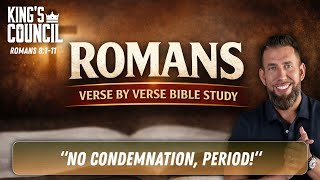
In this extended Wednesday study, the host (Christian) leads a verse‑by‑verse exposition of Romans 8:1‑11, emphasizing that believers have "no condemnation" because Christ has already taken our punishment. He organizes the passage around four foundational facts: (1) our punishment is finished, (2) our position is defined as being "in Christ," (3) our power is dynamic through the Holy Spirit, and (4) our practice must change, living by the Spirit rather than the flesh. The group discusses what it means to be "in Christ," using analogies (vine‑branch, storage vs. contact principles, car vs. fuel gauge) and personal anecdotes (hotel check‑in, road‑rage, worship, prayer). A recurring theme is the distinction between conviction (God’s holy prompting) and condemnation (the enemy’s lie). Participants share how the Holy Spirit convicts, comforts, and empowers them, and they explore practical ways to stay connected to Christ daily. The session ends with a prayer for a sick member and a declaration of victory, reinforcing the central claim that there is no condemnation for those who are in Christ.
Chapters
You went up, you went up to the cross. You settled my score, you tore down the veil to show me I'm yours. You said you never would leave, your promise I keep. Your word I can trust, your word I believe. Power in the name, healing in the name. Jesus, your name is Jesus.
Jesus.
You stood on my score, you tore down the veil, you showed me I'm yours. You never did me—
Good morning, good morning! Happy Wednesday to y'all. Hey Castle, good to see you. Lola, um, Jedidiah, I'm sorry, on prayer call too, didn't shout you out. Good morning, everybody. Hope everybody had a wonderful, blessed Resurrection weekend, Resurrection Sunday. And, um, I'm always grateful to be here on Wednesday spending these mornings with you all. And I'm excited to get back into the book of Romans because, um, you know, we started first week of January. We're finally at chapter 8, which is regarded as one of the greatest chapters in all scripture. I would be remiss if I didn't say it's one of my personal favorites, uh, but it should be a personal favorite for, for most of us. If we call Jesus our Lord, our Savior, then this should be a personal favorite and kind of a go-to chapter for us all. And it is widely regarded as one of the greatest chapters in all of Scripture. A couple commentators had some good things to say about Griffith. Thomas says, this is undoubtedly the chapter of chapters for the believer. William R. Newell says, there is scarcely a passage in the New Testament that, that is more delightful reading to the spiritual Christian than the 8th chapter in the book of Romans. And part of why chapter 8 is so remarkable is because it, it begins with no condemnation and it ends with no separation. All right, and, and in between the no condemnation, no separation, there's lots of victory, lots of victory there. And it comes on the heels of chapter 7, which we were in a couple weeks ago, and the desperation of chapter 7, and particularly verse 24, when Paul said, 'Oh, wretched man that I am! Who will deliver me from this body of death?' And then he says, 'I thank God through Jesus Christ our Lord.' And that 'Oh, wretched man,' that's that, um, just tired, exhausted from futile efforts of trying to will yourself through your— through sin, trying to defeat sin through your own human effort. So while chapter 7 is a cry of anguish, chapter 8 is a cry of victory. And chapter 7 is filled with a lot of personal pronouns. There's a lot of I, me, my. It's— and Paul, he gets vulnerable. He's, you know, I think we could all relate to Paul in chapter 7. And it's not the most pleasant of chapters to read, and it really sounds like a man the, the sound of a man who's stuck in himself, whereas chapter 8 is filled with the Spirit, the Holy Spirit. Prior to chapter 8, the Holy Spirit is mentioned 2 times in the book of Romans, and that's if you count in chapter 1 where Paul refers to the spirit of holiness. So if you count that as a reference to the Holy Spirit, only 2 references to the Holy Spirit up until chapter 8, and then the Holy Spirit is mentioned 20 times here in this chapter. Romans 7 is self-focused. Um, I do, I don't, I want, I can't. It's the language that Paul uses. It's striving, it's frustration, it's anguish. And, uh, it makes sense that he uses a lot of personal pronouns. In particular, even if you just look at Verse 15 of chapter 7: For what I am doing, I do not understand. For what I will to do, that I do not practice. But what I hate, that I do. There's a lot of I's there, right? It's very personal. And I, like I said, I think we all can relate to, to Paul when he shares the— shares these statements. And I've heard it once said that if you want to solve the problem of sin, you start by looking at the middle letter, the I. Right? The, the I in sin, it's, it's us. We, we have this sinful, fallen nature, and we— it's a lot of anguish, it's a lot of frustration when we try to will ourselves not to sin. But then Romans 8 shifts dramatically. The focus moves from the I to Spirit, from self-effort to self-empowerment, from defeat to victory. And just the contrast between, between chapter 7 and chapter 8, um, it speaks to the more self-focused you are, the more defeated you feel. The more spirit-focused you are, the more victory we walk in. So chapter 7, we, we feel the bondage of sin, we feel the, the chains on our wrists, on our ankles. And then chapter 8, we could go through chapter 8 and hear the sound of those chains falling, like, like feel the, the breaking of chains, the breaking of bondage. And Uh, again, it doesn't have to do with us. The focus is on Jesus, the Holy Spirit. And Jesus said to his disciples himself, he said, hey, uh, it's better when I go, right? It's better that I leave here because when I die, I'm going to send you the Comforter. And you can imagine at the time, it's like, wait a second, what's better than actually being with you in the flesh, walking with you side by side, day by day? But Jesus said, no, no, no, it's going to be better because once I go, I'm going to send the Spirit. I'm going to send the Comforter. And, um, you know, they didn't quite understand it at the time, but then we look at Acts 1 and we, we see why Jesus sends the Comforter. And we, we, we see the power of the Holy Spirit. And the power of the Holy Spirit, it's transformational power. It's the power to bear witness to Jesus. It's the power to perform miracles. And when I say it, I'm not— I mean the indwelling Spirit within us. The Holy Spirit is not an it. Holy Spirit is not a dynamic force. The Holy Spirit is he, the, the third person in a triune God. So what I'm going to share today, and we're going to get through the first 11 verses here in chapter 8, I believe, but what I want to share with you guys today is just 4 facts that we're going to see here. A lot of them comes in this first verse in chapter 8, but 4 facts that make us secure and really tether us to safety. And each fact that we're going to see, and we're gonna, um, I'm gonna point out facts about our punishment, our position, our power, and our practice. So each fact that I'm going to speak on builds upon the last. And the first fact that we're going to find here in today's reading is our punishment is done. Verse 1 says, there is therefore now no condemnation to those who are in Christ Jesus, who do not walk according to the flesh but according to the Spirit. Now, I use a New King James Bible, so after it says there's now no condemnation to those who are in Christ Jesus, there's a comma, and then it says, who do not walk according to the flesh but according to the Spirit. If you have an ESV, an NASB, um, more modern translations, when there's a period after Christ Jesus, that's actually the, the correct, um, the correct writing, because the original manuscripts do not actually have that comma. Paul didn't write those words, who do not walk according to the flesh but according to the Spirit. He does, um, use those words in verse 4 where he says that the righteous requirement of the law might be fulfilled in us who do not walk according to the flesh but according to the Spirit. But what this is, is just really a copyist error. So when, you know, there was no copy and paste back in the day when, when scripture was originally, uh, the original manuscripts were, were written. And what probably happened is the, the transcriber here, he, he wanted to kind of emphasize Paul's point, so most likely put in the margin, uh, that, that piece there, who do not walk according to the flesh but according to the Spirit. And as the manuscripts were, were being written, more than likely somebody saw that, thought it was an omission, put it back in there. Um, and so the King James has that in there, the New King James, but Verse 1 simply should read, there is therefore now no condemnation to those who are in Christ Jesus, period, period. Now the therefore is important because it means that what Paul is saying here, he's coming from a logical argument. It says, as if Paul is saying, I could prove what I say here. And what he's proving is that if we are one with Jesus and he's our head, then we cannot be condemned. You can't acquit the head and condemn the hand. You can't drown the foot as long as the head is out of water— out of the water. So when we're joined to Jesus, we hear the verdict: no condemnation. And it's important to know there's a period after that, because if we focus on the, the comma um, what's added, who do not walk according to the flesh but according to the Spirit, then we can get caught up in the fact, uh, that say, okay, am I walking in the flesh? Am I walking in the Spirit? And we should acknowledge those things, we should be mindful of those things, but we tend to look inward if we just simply, um, focus on, okay, how am I walking? There's no condemnation if, but there's a period after no condemnation. If we just read that first verse, there is therefore now no condemnation to those who are in Christ Jesus, period. We don't look so much at ourselves, we look upward, we, we look at God, we look at Christ, we look at what he's done. And so again, it's good to look inwardly at times to kind of assess ourselves. Okay, am I feeding my flesh? Am I feeding my spirit? But there's a period after condemnation. There's no condemnation for those who are in Christ Jesus. It doesn't say there's no mistakes by those who are in Christ Jesus. Doesn't say there's no failures experienced by those who are in Christ Jesus. Doesn't say there's no consequences for, for actions for those who are in Christ Jesus. But there is no condemnation. And anybody who's been a Christian for any amount of time, uh, you've probably felt, or what you thought was condemnation. There's a big difference between condemnation and conviction. The Holy Spirit will convict us, and thank God for the conviction of the Holy Spirit. But the enemy will always try to twist that conviction and turn into condemnation and have us to walk with a feeling of guilt, to walk with a feeling of shame, feel— walk with a feeling of inadequacy. And that word condemnation in the Greek, katakrima, it's a very strong word for judgment. And us as believers, when we live a life in Christ, we— there is a judgment. It's the, the bema seat of Christ. But it's not a judgment as far as are we in or out of the kingdom of heaven. It's more of an evaluation, that we're being evaluated for our works. That's where our rewards will be given, or perhaps some words taken away based on things that we did or didn't do. But we will never face the White Throne Judgment if we are in Christ, because the White Throne Judgment is punishment. It's that eternal separation from God. And, um, you know, I, I think probably perhaps, um, you know, our forefathers, our Constitution, our, our, our laws when this nation was founded, I think the Fifth Amendment, which, um, you know, speaks of Double Jeopardy. Uh, if anybody's ever seen that movie Double Jeopardy, it's a, uh, it's an old one, but it's a pretty good movie. But you can't be tried twice for the, the same thing, right? That would be double jeopardy. So we can't face the punishment because Jesus already took the punishment for our sins. So we're not going to be punished for our sins. Will God discipline us? Yes. Will he chasten us? Yes. He does that out of love. But we cannot be punished because Jesus already took the punishment. Now, being that Jesus took the punishment, he doesn't just say to us— no, yeah, in the '90s, that's ancient nowadays, Raj. '90s is ancient. Um, now God doesn't just— as we talked about through the beginning chapters of Romans where we be declared, or Paul declares, that we are sinners. We're sinners by nature, and we're not righteous, not at all. We all fall short of the glory of God, but God imputes his righteousness to us. So there's no condemnation, there's no punishment that we'll face because Jesus took the punishment. And but oftentimes we do act as if, um, you know, God is punishing us. And you may have even said it like, oh, I'm going through this, God's punishing me for this because, you know, I haven't been spending time with him, or I made this mistake, I slipped up, I, you know, I, I drank and I'm not supposed to drink, I watched porn, or I did this, I did whatever it is, and God's punishing me because now, you know, you felt like you sinned. And then you walk out of the room, you stub your toe, and it's like, oh, it's God punishing me for, for what I did. That's not God punishing you for, for what you did. He, when he sees us as, as righteous— that's why it's so important for us to know our identity in him and to know scripture, know what God says about us, what he calls us, who he, he thinks we are, who he believes we are. Because who he thinks we are, that's who we are, right? He's God. And it's not like, um, we're found not guilty, but it's like that there's residue and there's baggage with that. Like, like, okay, O.J. Simpson, right? Everybody knows he killed them people. He was found not guilty. But if you hang around O.J., you're probably like, this man's probably got a couple screws loose. Like, he did it even though he was found not guilty.
It's—
that's not what happens for us. We're not found not guilty. We're not imputed this righteousness and then God's like, oh, but I know that, that that real— I know all that baggage, all that residue that's there. It's like, no, if the glove doesn't fit, you must have quit, right? It's like you're cleared of all charges because you actually are— you're now free, right? You're now— like, everybody looks at O.J., says, yeah, that guy's a killer, right? God doesn't look at us and say, oh, that's a sinner. He looks at us and he says, oh, that's my son, that's my daughter. That's an overcomer. That's a more than conqueror, right? So, so these 4 facts— the first one, our punishment is done. No more punishment for us. And then the second fact is that our position is defined. And what is our position? And why is there no condemnation? Because we are in Christ. 87 times in the New Testament the term 'in Christ' is used, um, 2 times by Peter, once by Luke. Every other time is by Paul. It's one of his favorite terms to use. And, um, I, I'm okay with even instead of being called a Christian, just like, no, I mean, I'm in Christ, right? That, that's what Paul says we are. That's how he declares our relationship. We are in Christ. And if you add all the times where in the New Testament where it doesn't just say in Christ but in him, in whom. It's 100— over 130 times in scripture where we talk about being in, right? 1 Corinthians 5:15-22: For as in Adam all die, even so in Christ all shall be made alive. And then we remember a handful of weeks back in Romans 5, the whole passage about death in Adam but life in Christ. So it, it's, it, it's living in Christ. Now I, I want to ask you guys, like, what does that mean? Because it's like, oh yeah, live in Christ, but what does that actually mean to live in Christ? Because I know the Spirit of God, the Spirit of Christ lives in me. So what does it actually mean to live in Christ? It's a term if you try to dissect. It's like, what, what does that actually mean, to live in Christ? And I'm curious as to just your thoughts. What, what does that mean to you? What is your personal thought on that? What, what does it mean to live in Christ? And then I'll be curious at the end if it changes at all as to what that means in Christ. Tozer said We do not preach Christ with a comma after his name as though waiting for something else, or Christ with a dash after his name as though leading to something else. But we preach Christ, period. And because you are in Christ, there is no condemnation, period. So what does that mean to you, to be in Christ?
Wow, I just had déjà vu so hard. You asking the question and then I was like, wait, then he's talk— wait, it was a rhetorical? Um, so, so one thing that— this isn't the answer I typically give, but what, what kind of jumped in me when you said that, um, it, it just— I, I remember the, the scripture, uh, God is love and all who live in love live in God and God lives in them. Um, and so it was just kind of a neat way to interpret that, letting scripture kind of interpret scripture in a way. Um, but living our lives out of love— if you think about it, everything that Jesus did while he was here was out of love. Even when he's whipping people in the temple, it was out of love, righteous anger for his Father's temple, you know, but also for the people that were being wronged there. Um, so, so you think about it, his actions were motivated by love. And, um, and so if we live in love, in a way, is living in, in Christ.
Yeah, absolutely. I like that. I like that.
Yeah, I think just like, uh, on like face value, the in Christ or Christ in us, like the, the hope of glory, right? The temple, like we are the temple. Abide in me and I will abide in you. And that this is the manifestation of it being better than Jesus walking on earth with us. He's in us, right? So, uh, yeah, I'll wait before I put my foot in my mouth.
No, no, no, these are good thoughts because the— there's no like one verse that says exactly what it means to live in Christ, right? You can't just, just point out one, one verse. Um, in Christ is obviously used a ton of times, you know, 2 Corinthians 5:17, which I— that, that verse just always stands out to me because I lived that verse before I even knew the verse. For if anyone is in Christ, He is a new creation. Old things pass away, all things become new. So it's like, I know, I knew the day I got saved, I was like in Christ. I, I was fully surrendered, fully committed, still not knowing the verse for certain. Knew I was radically transformed but didn't know that, oh, there's actually a verse that backs this up. But, but to be in Christ, like, what does that actually mean? Leslie?
Um, for me it was kind of recently, um, the— when, when Jesus said to drink this cup like with him. So like, you know, like the Last Supper, he's like, drink, you know, eat my bread, eat my flesh, and drink from this cup. And kind of how he in the Garden of Gethsemane is asking God, I don't want to drink from this cup, which is to, you know, go into his passion like we just did last week. Uh, we went through that. And so when he He's like saying he needs to drink this cup of dying for us, and yet he invites us to drink from that same cup. And so that goes into like taking into ourselves his life and ways and what he experienced and the way that he did things. I think that's what— like when he invites us to drink from his same cup, but yet when we do what he did and said, we get to engage in the same you know, glorious heaven alongside him that he said. So that was kind of like playing around in my head last week with the whole, um, Easter celebration is drinking of the same cup that Jesus offers.
Yeah, yeah, another good one. These are all good and all right answers.
Castle?
Um, yeah, to me, uh, to be in Christ is to follow him and to let the Holy Spirit teach me and lead me and guide me and to, you know, just walk in his ways. I choose, you know, there's a scripture that says choose this day whom you're going to serve. So I getting up every day and choosing to do what he says for me to do instead of me just going off the rail. You know, and so to me, I look at, I think it's in John. The first thing that he said to the disciples was follow me. And then the last thing he said before transitioning, or trance, whatever that is, he told them, follow me. So just The fact that I choose to follow him and to do his will and to make him happy and just let him lead my life throughout the day and do that, that makes me happy too.
Yeah, amen. Yeah, another great answer. Vincent put in the chat the give self wholly to from Strong's Commentary there, that yeah, it's all, all right answers. And what, what helps maybe a little bit is to know what being in Christ is not. It's not just believing in Jesus, it's not just agreeing with him, it is being wholly joined to him. Jesus said in John 15, I'm the vine, you are the branches. A branch doesn't just believe in the vine, right? The branch is connected to the vine. The, the branch gets its life from the vine. It cannot survive without it. So to, to be in Christ, uh, means that you're, you, you're united with him, you're covered by him, you're defined by him, and yet you give yourself wholly. Um, all the answers are correct. They're all accurate. And I like hearing the different perspectives because it, it helps as the enemy is constantly trying to get us to believe our identity is something other than what it actually is. It's good to hear these different perspectives because I want to remember all these things, like what it means to actually be in Christ, because it's just— it's two words: in Christ. But it's so heavy, it's so meaningful, so impactful. And it means a new location, a new position. It means that we're under God's covering. And we had a Good Friday service, and my pastor, he was talking about, um, the, the blood covering, right? And, and we talked about it a little bit even through the book of Romans. When Adam and Eve sinned, you know, that it that to cover their sins required a sacrifice. They, they— it was most likely sheepskins. Scripture says animal skins, most likely sheepskins. And it was like one sheepskin for one person. And then Passover, you know, one sacrifice for the family. The day of Yom Kippur, you know, one sacrifice for a whole, whole people for the year, for, for the whole Jewish nation. Then ultimately Jesus, the one sacrifice for all of humanity. But that blood covering, it's like the covering is there, that umbrella is there. Are we under that umbrella, right? Are we— it's, it's going to rain, but are we going to be under the umbrella of God's covering? And it truly means that Jesus is accepted, so we're accepted. Jesus is righteous, so we're counted righteous. Jesus is not condemned, uh, so we're not condemned. It's simply, again, to be united with him, covered by him, and defined by him and to be defined by Christ. And somebody mentioned, yeah, is that Galatians 2:20? It is not I now, I live, but Christ who lives in me, right? It's like I've been crucified, it's actually Christ that lives in me. So really, that me living in Christ is full acknowledgment, agreement, surrender, to give yourself wholly to Christ who's actually living in you. Uh, those are all, all great. I like all those. Um, the third fact that we find here is our power is dynamic. So we, we had our punishment is done, our position is defined, and now our power is dynamic. Verses 2 through 4 read, for the law of the Spirit of life in Christ Jesus has made me free from the law of sin and death. For what the law cannot do, in that it was weak through the flesh, God did by sending his own Son in the likeness of sinful flesh on account of sin. He condemned sin in the flesh, that the righteous requirement of the law might be fulfilled in us, who do not walk according to the flesh but according to the Spirit. Again, that not walking according to the flesh but according to the Spirit, which that the early manuscripts did not have after verse 1. We— there's now no condemnation for those who are in Christ Jesus, period. And again, the Holy Spirit shows up twice in the first 7 chapters and now 20 times in this chapter. And all that, that anguish, that turmoil that we feel from Paul and we could resonate with in chapter 7 turns into victory because it turns from I, my willpower, my, um, my self-sufficiency to, to surrender to the Holy Spirit. And verse 4 says the righteous requirement of the law is fulfilled in us. Doesn't say by us. So that righteous requirement of the law, the Holy Spirit works in us, right, through us. God has always been a God that accomplishes things through the cooperation of his creation, and he desires to have us take part in the things that he does. Um, again, in John 16, Jesus said things will be better when I'm gone because I'm going to send you the Holy Spirit. Now we see the word law written a couple times in these couple verses, these 3 verses, but they're used in different ways. In verse 2, when Paul uses the word law, he, he's referring to law when he says, for the law of the Spirit of life in Christ he's, he's talking about law in regards to a governing or controlling principle, right? Not the Law of Moses there. But in verses 3 and 4, the law is referring to the Law of Moses. So when Paul talks about the law in verse 2, the, the controlling principle, what he's saying is it's like the law of gravity. Right? It's a controlling principle. And the law of gravity is a law, but it's like, okay, why can airplanes, which weigh a couple hundred thousand pounds, why could they actually fly? Why could they get off the, the ground and, and lift off and soar, hover for, for hours upon hours? If the law of gravity is indeed a law? Well, it's because there's other laws that supersede the law of gravity— the law of thrust, the law of aerodynamics, the law of lift. So what Paul is saying here is that the principle of the Spirit, right, the principle of the Spirit supersedes the principle of the law of sin and death. So if the, the law determines that, hey, we're sinners, we fall short of God's glory, we, we can't possibly achieve and attain all these 600-plus Levitical laws. But Paul's saying, wait a second, although we were born in the sinful nature, there, there's another law that supersedes that, that law of sin, and it's the law of the Spirit. Again, the Holy Spirit is not a force. He is a person. And the secret to our, our victory is, is abiding in Christ and living through the power of the Holy Spirit. That word power, we've talked about it time and time again, where we get the word dynamite from, dunamis. And the Holy Spirit is is the third person of a triune God. And it's important for us to, you know, and Luke says that if we desire the Holy Spirit, if we want more of the Holy Spirit, we simply ask God for the Holy Spirit. Now, the Holy Spirit empowers us. The Holy Spirit, you know, if we jump ahead to verse 11, says, but if the Spirit of him who raised Jesus from the dead dwells in you, he who raised Christ from the dead will will give life to your mortal bodies through his Spirit who dwells in you. Um, in this chapter we, we're going to read and we'll focus more on the Holy Spirit a little bit more next week. But it's the Holy Spirit that, that adopts us, right? Um, it's the, the, the spirit of adoption where we're, we're welcomed into this family of faith. Um, the Holy Spirit comforts us. Holy Spirit gives us peace, gives us power. The Holy Spirit has emotions. I mentioned it last week, Ephesians 4:30: And do not grieve the Holy Spirit of God, by whom you are sealed for the day of redemption. It's a good verse to bring up to Jehovah's Witnesses when they talk about the Holy Spirit just being like a force. You can't grieve a force. A force can't be can't be sad. And of course, the Holy Spirit is always referred to as He in Scripture. But, um, I, I heard this illustration when I was preparing for this, and I thought this would— I thought this was pretty good, good nugget. So I'll share it with you guys. Now, cars move because of what's called the storage principle. Cars will store fuel, or even electric cars, they'll store energy and when the fuel or energy is out, they have to get refilled, and they store more. And then as it runs out, they fill it up and it's stored, and cars are able to run because of the storage principle. You don't really see them too many places nowadays, but there used to be like bus cars that would run on the contact principle. As long as contact was made with the, the bus and the electrical lines above it, the bus cars will move. So How do we as Christians, as believers, those who are in Christ, how do we move by both principles? The storage principle, but we're filled with the Holy Spirit, right? And then the contact principle, we abide in Christ, we have constant contact with Christ. And Paul even says in Ephesians, you know, do not be drunk with wine but be filled with the Holy Spirit. And that's in that present imperative, where the literal translation would be continuously be being filled with the Holy Spirit. So we operate, and when we operate, when we're at our best, you could probably look at your own lives and say, oh man, things were, were clicking. I found favor. Everything seemed to be, um, working just according to God's perfect plan for me. When we're operating by both principles, the storage principle And the contact principle— I'm abiding in Christ. I'm— I— there's just constant contact with Christ at all times. And the storage— I'm be— I'm going to be being filled at all times. Whereas a car will continue to run up until there's, you know, that, that gauge is on E, and eventually if you just keep driving, it's gonna putter, putter, and then car ain't gonna go anywhere. But for us, we're not to wait until um, you know, we're filled with the Holy Spirit and then just kind of, kind of roll with it, just flow, flow, flow. Then all of a sudden we're not abiding in Christ, where we, we feel like we could conquer the world. And then all of a sudden, uh, we realize that we feel like the Holy Spirit almost runs out, the power of the Holy Spirit runs out. Well, Paul addresses that by saying to be being filled with the Holy Spirit If you sat with the Lord this morning and you just felt this remarkable outpouring of God's Spirit where you felt filled to the point of overflow, guess what? Do the same thing later today, tomorrow morning. You know, we should, um, I always like to, when I pump my gas, I'm one of those guys where it's like I'm gonna fill it and then like when it stops I'm gonna get a little bit more in there, right? Just as much as I could get in there. And I like to see if that gauge could go a little bit past the full, like just a little bit past. And that's where God wants us to be at all times with the Spirit. Like, if we even get to that full line, it's like, okay, time for me to sit with the Lord to, to be filled again with the Spirit. But our human tendency typically is when we, we, we feel the outpouring of the Spirit— I, I felt it on Sunday, right? I, I felt Um, you know, my, my personal goal is to be brought to tears sitting with the Lord every single day. Does it happen every single day? No, but that's my goal because for me, I know that when tears start flowing, um, it's not just an emotional thing. It's literally— the way I see is God's Spirit is filling me to the point of overflow, and the overflow is coming out by way of tears. That, that's how I see it for myself. And I desire that every single day. If I have a day where I haven't like sat and just cried with the Lord— it's not a cry where you cry out to— which of course we should be doing also, cry out to him, let him know all that's going on in our minds and our hearts. If we're angry, talk to him, um, have that constant contact, that constant communication. If things are going great, talk to him about it, thank him for it. Don't, don't let anything be taken for granted, but to be in that place where we just have constant contact, constant communication. And that, that was really how I, like, gradually started a relationship for— with Jesus myself. When Lucy had told me to wake up in the morning, just thank God you're alive. And I did, and I didn't feel anything. And then I tried it again the next morning, and I didn't feel anything. And I, I did it over and over. And then after a number of days doing it, I felt somebody on the other side. And then, like, going from not believing, a skeptic, a cynic, to the Holy Spirit drawing me near, just found myself throughout the day talking to God. And it's like just that constant contact, constant contact, just constant talking. Anything good happens, oh, thank you, thank you, Lord. If I'm mad about anything, one of things that I realized that helped, like, break the, the wall, the barrier in the relationship I had with God. But when I, like, fully surrendered to him was realizing that he's a God where I can just pour everything out onto him. Everything. If I'm angry, if I'm even angry at him, like, he, he already knows, right? And sometimes we don't share things with God because we figure he's God anyway, so he already knows how I feel about this. But it's just so powerful and impactful when we actually communicate that to him. And he's not a, a God that shies away from that type of conversation or communion, communion with us. He, he's there. He wants to hear it. He, he ultimately wants to heal our hearts. If there's any anger, if there's any bitterness, he ultimately desires to heal that. And it's really that confession to we confess all things to him, even if we feel like the thing we're confessing is him. It's like, you did that. Yeah, I'm, I'm the victim because you did that to me. You punish me. Um, so I, I think it's just— I thought it was a good illustration that we move forward in Christ by way of the storage principle and the contact principle. The last fact I'm going to mention is And the fourth P is our practice is different now when we, we are in Christ. And the reason our practice is different, our actions are different, because the first three are true. Our punishment is done, our position is defined, our power is dynamic. Therefore, our practice is different, our lives are now different. Verses 5 through 11 say, for those who live according to the flesh set their minds on the things of the flesh, but those who live according to the Spirit, the things of Spirit. For to be carnally minded is death, but to be spiritually minded is life and peace. Because the carnal mind is enmity against God, for it is not subject to the law of God, nor indeed can be. So then those who are in the flesh cannot please God. Those who are in the flesh cannot please God. Think about that, just being in the flesh, uh, Yeah, I mean, yesterday I, uh, got to my hotel, or what I thought was the hotel I was checking into, and it turns out, um, when I took a little screenshot of my confirmation, I actually screenshotted the, uh, the page that had the button to confirm it, and I had yet to actually confirm the hotel. But when I got to the hotel, um, with Eli, who I'm on the road with, Um, there's nobody at the desk, and somebody, uh, for quite a while. And then there's a phone, pick up the phone, called, we're waiting to check in. And this woman, she was a little larger in size, very slowly moseyed her way from down the hall, didn't make eye contact, didn't look, look at us, and just went behind the desk. Said, can I help you? And my flesh was like, what kind of customer service is this? Like, you just like moseyed right past us, very slow, but not even making eye contact. Now, like, oh, sorry, sorry to keep you waiting. Nothing. And my flesh was like, this lazy son of a gun, right? And we all have flesh, and none of it's pleasing to God. Those who are in the flesh cannot please God. Now, part of our sanctification is realizing like, hey, this isn't godly. And maybe if we're a babe in Christ, we may say something that we regret and realize we're, we're just acting out of our flesh. But it's why it's important to, to not have a carnal mind either, because then it's like, okay, this woman, I don't know the kind of day she's having. I don't know why she was in the back. She could have had something devastating happen in her life. She was in the back crying somewhere, and maybe she didn't want to make eye contact because she— maybe she's ashamed. Maybe she didn't want us to see tears in her eyes, whatever it is. But it's so quick for our flesh to rise up. And this is not like a huge example or a very significant example, but it just happened to me last night, so that's why I bring it up. But the, the point is the same. Like, our— so easy to act in our flesh. Um, road rage. I mean, I, I've seen people who are in Christ, um, get a little bit un-Christlike when somebody cuts them off, right? Um, I— and I'll confess this to you, uh, I was driving with Ezzie. This was last year where I, I pulled out and a guy came the other way. And like, I started pulling to the intersection, and he literally just started coming from the other, like, parking lot, and he just started driving right towards my car. And I was pulling out, making the left, and he just started driving to my car. And then he like slammed on the brakes before he hit me, and then he just started like cursing me out. And what did I do? I, I'm ashamed of it now, but, you know, we're family. I, I cursed him out. It was just one curse. But then I was like, oh my gosh, as he's in the car. But that was like my initial fleshly reaction. And part of it was because I did have Ezi in the car. I was like, this guy is just reckless with his driving. But then what really gets me mad is when somebody does something to you and then they get mad at you for But what really ticks me off too is when I like to be very in Christ when I'm driving. So, um, when you grow up in New Jersey, learn how to drive the streets of New Jersey, like New York City area, um, you know, it's like survival of the fittest. It's like when you could go, you go. You're going through red lights if you have to. It's like you're weaving in and out of traffic. But now it's like, oh, I'm in no rush. I'm gonna stop. I'm gonna let this person go. And what really gets under my skin— when there's no acknowledgment, it's like, I just stopped, I let you go, I could have made you sit there, and they just whip out as if it's nothing. It's like, no, give me a little wave, give me a little acknowledgment, a little something. When I'll get that acknowledgment, I want to like hunt that car down and be like, hey, where's my thank you, right? So, um, flesh is still there. But, uh, didn't mean to go on that tangent. I was actually in the middle of this passage. Verse 9: But you are not in the flesh but in the Spirit, if indeed the Spirit of God dwells in you. Now if anyone does not have the Spirit of Christ, he is not His. Right? So we— if we don't have the Holy Spirit dwelling within us, we're not His, we're not legitimate children of God. And if Christ is in you, the body is dead because of sin, but the Spirit is life because of righteousness. But if the Spirit of him who raised Jesus from the dead dwells in you, he who raised Christ from the dead will also give life to your mortal bodies through his Spirit who dwells in you. And that, that life in our mortal bodies— we have life in this mortal bodies, but then in these mortal bodies, but then we have an expectation. Like, our practice is different. Like, part of our practice, our everyday walk, is different because we, we live with the expectation. We know that that these mortal bodies are going to die and they're going to be replaced one day with incorruptible, immortal bodies. Our spirit is alive, will always live. Um, but I want to ask you guys, if, if this is for all those who are in Christ, what happens to those who were in Christ maybe at some point in your life but you're not in Christ anymore. Now you can have the, the backsliding season where you grow distant from the Lord. Oh, if all these facts are indeed facts and there's no condemnation, that there's no punishment for us, but verse 4, that righteous requirement of the law might be fulfilled in us who do not walk according to the flesh but according to the Spirit. How long do we have to walk according to our flesh before we realize, wait a second, the Spirit of God perhaps isn't in us? Maybe there will be condemnation. Galatians 5 is a sobering chapter, and those who practice, um, who practice these things like life in the flesh, they're not fit for the kingdom of heaven. And for me, it's always like, how long do you have to practice sin before you— it's like you're out? And then if you're out, were you never in to begin with? So, um, we don't have to turn this into a whole talk about losing salvation, but— or a whole discussion about losing salvation. But if those first three principles are true, then we, we act differently. And we need to be convinced. Remember I mentioned with Paul, um, Paul mentioned knowing, right, in those first couple chapters of Romans. It's so important that we know these things and not just, just know them, but reckon them as well. Where we know them in our mind, but we reckon them, where our knowledge in our mind, it turns into a heart posture and a heart knowledge where we're actually convinced of these things. And again, the enemy's plan, um, and his, his plot for all of us, a scheme of his, is to get us to be unsure of our identity in Christ. Because when we stop believing these things, when you stop losing trust, stop losing hope in these things, stop believing the promises of God, then we start to act quite different. Even when we just have a, um, a season of shame or inadequacy, you know, that, that just wreaks havoc on our lives. And if any of you have been in ministry, you, you've counseled folks who are just walking in the shame. It's like, you know, they're in Christ, you know, they're, they're a born-again believer of Jesus Christ, but they just walk in the shame and guilt and condemnation. But this is why this chapter is so powerful. And one of the greatest chapters in scripture because this is the chapter on victory, and the victory comes through the Holy Spirit. Jonathan?
Yeah, um, this is super good. So I don't know if I have like an answer for that last question, um, but maybe to original— a thought here for the original question you asked about being in Christ. I listen to this guy a lot, uh, Taylor Welch. She has a podcast called The Deep End. and I probably learned more from that guy in the last year than any other preacher or podcast. I listen to a lot, but, uh, he talks about when it comes to this, uh, chapter, uh, you know, chapter 7 is so much about like Newtonian, uh, law physics, right? Cause and effect. You do one thing, this, this is your outcome, right? It's very linear. And that's kind of, kind of what seems like Paul's kind of going through here, here on Earth. But then he gets into this chapter 8, and where you can operate out of the third heaven instead of just all cause and effect, cause and effect. You do this, this is your outcome. It's this— you can almost— it's like a circle, or it stacks on top of each other, and you can tap into the third heaven where the Spirit, um, of the Lord is, where, where you can abide in Christ, you can be in Christ, and you can you can come to outcomes, you can see, receive outcomes, so to speak, before the, um, before the, the cause. And you can, uh, it's just a whole different way of operating, so to speak. I'm not going to try to like unravel any thoughts there, but I thought that was so, um, cool when Taylor was talking about that because, um, I wonder, is there like some kind of different principle for those that are in Christ? Is there some kind of something you can tap into? And then can you like, though, you know, kind of back out of it to your last question, or so to speak, or not, or go back to a more linear cause and effect type of thing here on this earth? And I just wonder if that was like a, a correlation there, because Paul also seems to I was talking or looking a little bit at the superposition, which is like, uh, science— science are just like starting to come around to it. It's like quantum physics where like superposition is like two things can be true at once. And like, and so is this, you know, especially verse, uh, 10. So if you are in Christ, your body is dead because of sin, but the spirit is life because of righteousness. But also, you just gave an example of driving in traffic. So what is— what's true? Are you alive in Christ, or are you— is your body dead? Because, or, you know, is— so what is true? And what if, like, superposition, two things can be true at once when you are in Christ? And, uh, when does that change though? And maybe science is just catching up to what Paul is explaining here in the Bible.
I was, you know, I wondered Yeah, that's interesting. As long as we have these fleshly tents, right, our flesh is always going to be something we contend with, always. But the victory— we have victory over it. You know, 1 Corinthians 10:13, we, we have the ability now to withstand sin. We, we have the ability now to Um, and to Castle's point, like, we, we have a decision we can make. We have a choice. We could choose. We have the power of volition. Where am I gonna put my, my flesh to death, or am I going to feed my flesh? Like, there's, there's things throughout the day that are feeding our flesh that may not be sinful, but we're still feeding our flesh. So just because it's lawful to do something doesn't mean that it produces good fruit. So I, I think that the two could be true. But with, with Christ— well, with Paul, we have the ability— you see his life, right? There was times where he was down and out. There was times he was frustrated. There was times where, you know, he and Barnabas got into this, the split, right? And there was no condemnation, but there, there was consequences for, for, for sin. But ultimately, it's important for us to know what the Bible says to know our identity, to know that we, we walk in victory, not for victory. And it's just getting back to making the choice to stay connected to the vine and to be being filled with the Holy Spirit. And I don't know anybody on planet Earth that's perfected that, right? I've certainly met people, and you probably have too, those people in your life that just have this constant peace that just have this constant joy, this outlook on life where nothing of their circumstances matters and determines the joy that they have. Um, but I don't think any of us have perfected it, but we, we could certainly not be sinless, but we're gonna sin less the more we stay connected and the more we operate by that, that storage law and that that connection law. Zach?
Uh, yeah, I was just gonna sort of respond to what Jonathan said. Um, but yeah, Christian, I do know people like that. There's this one lady at the church— I think it's Jim Carrey who talks about— he's like, you know, you see those people who are just so happy that you just want to burrow under the ground to avoid them? And she's, she's like joy overflowing all the time, and she has been through it in life. Like, she because she's had a rough life if you know her past and you know her testimony, but you would never know it because it's like no matter what it is, it's an ear-to-ear smile that's just genuine and filled with life plastered on her face. And, she's the most encouraging person you'd ever meet. But, in answer to what you were saying, Jonathan, the conversation I was having with my son this last week and it's actually come up a few times is like, um, the verse in the Bible where it talks about, um, basically like how you judge is how you'll judge others. I know we talked about this probably 5, 6 weeks ago on here, but, um, it's, it's also like the, like the, the scale with which we measure is how we're going to be measured, right? And, and so you're talking about, uh, quantum physics, and so like when there's like an observer that it changes the outcome. And so in the same way, like, we're in relationship with God. If we assume that we're living under the law, then, well, we're bound to the law. But if we assume that we're living in freedom to Christ, well, then we get to experience that freedom in Christ. And so both of those things can be true at the same time, but it's sort of like it's how we choose to exist in this world. It's like the rules by which you play in one way or another. And I think the Lord honors that either way. But when you have freedom in Christ, it's like we have the opportunity to experience that, which, uh, that's where, you know, we get that joy from that people are so overflowing with.
Yeah. I don't know if this is a good illustration. I'm just kind of gonna verbalize this as I'm thinking of it. You could be healthy, right? I have a good diet, work out, take care of your body, and then have a day where you don't, like maybe it's a cheat day, maybe you're tired, you just stayed in from the gym. All in all, somebody would look at you and be like, oh, that's a healthy person, right? Even though that one day they, they took the day off from it, right? And I'm not saying, you know, I'm not trying to give a license to take a day off from walking in the spirit by any means, but all in all, if we fall short on a particular day or even a particular season if we are in Christ. Um, part of being in Christ— and Leslie, I thought your daughter just had a tattoo on her arm. I was like, oh Lord.
Um, it's an Easter kind of basket, spring. Okay, no, temporary tattoo.
Yeah, yeah, yeah, right here.
But I, I am in a musical, so I'm gonna take it off.
Okay, looks pretty cool though. I liked it. Thanks.
She's got a sleeve.
Yeah, yeah, yeah. Um, yeah, the, the, like, even when we are finding our lives, like, where they are, again, like, if we want to address the problem of sin in our lives, just look at that middle letter, the letter I. Like, what, what did I do today? I got a text yesterday morning early, um, from somebody uh, who said, you know, they just like spiritually attacked overnight and they felt like, like they woke up but they felt like they have paralysis. They just felt this, this heaviness. They couldn't move. And as much as he could, he just tried to like call in the name of Jesus and then he could actually like verbalize it. And then whatever that attack was just like lifted. And then after getting with him you know, they've been just seeing like weird things around the house. Like a door will be open that they know they closed, things like, things like that. Um, but then he said, he was asking my opinion, he said, you know, the other night I was watching a show and he's like, I know my spirit was telling me not to watch it, but my flesh was like, one more episode. And he was asking, do you think, you know, it was just because of that? Right, which is impossible for me to know the answer to that. But if that's something that could potentially— if we are covered under God's protection, right, why would we try to duck our heads out to satisfy our flesh? Because as soon as we— it's like whack-a-mole, right? As soon as we, we pop our head out from under that covering of, of Jesus, it's like the enemy, he's right there, ready to whack our heads. And if we open the, the door an inch to the enemy, he's gonna do everything he can to just bust that door wide open. So it's like, because he watched one more episode, is this why he's literally physically feeling restrained by a demon? I can't answer that, but a good way to, to operate is to not do the things when the Spirit tells you to not do something. That abide and listen to what the Spirit's telling you. And perhaps next time something like that won't happen. Um, and again, I don't know anybody who's perfected that. I've shared with you guys, uh, my, my battle that I had with the Sons of Anarchy TV show. That was my show that my flesh wanted to watch every week, and I wanted to tempt, uh, tempt my fate by just, uh, one more episode, kind of see what happens. And then I just knew like that was just like feeding my flesh and just like killing my spirit. And those are the, the realities of life. What, what is it that— what are we going to feed more, spirit or flesh? When we put to death our flesh, the misdeeds of our body, um, what does that look like? And I, I believe we have— we We have the power of the Holy Spirit so we can walk in that victory. There's no temptation we can't withstand. There's no— not to say there's no excuse if somebody slipped, if somebody, um, you know, took part in a vice that has been their vice and knows their vice and they, they slipped. Does that mean you're condemned, you're crucified? No. But we have the ability, we have the, the opportunity to opportunity to, to overcome those sins, those temptations, because the power of God lives in us. It's— I want my gas tank— if you could say there's a gauge for the Holy Spirit within me, I know when I'm operating on full. I know it's like, oh, temptation comes my way, it's just like, like, brush it off here. Just kind of like, uh, you know, whatever. Temptation, whatever attack comes my way, it's just you got the shield, you're speaking the word of God, and you're just— it's like nothing could touch you. And then there's times where you become distant, you feel you're still connected, but maybe you feel distant from the Lord. You haven't been, um, refilling that tank, you haven't been getting those fresh fillings of the Holy Spirit. And then it's like everything, it's a little obstacle, that, that molehill becomes a mountain in your life. It's like, oh my gosh. And then the enemy's whispering in your ear, trying to get you convinced that you're, you're a loser, you're guilty, you should be ashamed of what you did. And isn't it something when the— when God speaks to us so clearly, not just through his word but through encouragement of others, even when he, he calls us his children, when he calls us overcomers, when he declares us victorious. And if we don't happen to feel it in that moment, we were so easily convinced by the enemy. It's like, no, I'm not, I'm guilty, I'm ashamed, I'm inadequate. It's like, why are we giving the enemy's voice more power than God's voice himself? And, you know, we go through seasons. There's mountaintop seasons, there's valley seasons, but those valley seasons will be shorter and perhaps not as low in the valley if we operate by that storage principle and the contact principle. Stay connected to the vine, connected at all times. Even think about it today, like, no matter what you do throughout the day, if you're driving in the car, if you're at work, at home, at dinner with your family, whatever it may be, like, literally View yourself as connected, literally yoked to Jesus Christ. Like, I'm connected, I'm connected. It's not like you're stuck to him, like he's just chained to you, you got to drag him around all day. But I'm yoked to him, I'm yoked to God himself, I'm yoked to the one who defeated death, the one who rose from the grave, the one who's seated at the right hand of the Father right now. And if you're connected and share everything, have those weird conversations— some of those people like Zach mentioned that just have all this joy and all this peace with all the crap they've been through. Sometimes they do, even us Christians, like, that person's a little weird, right? They're a little bit weird. It's okay to be a little bit weird. It's okay to have those conversations with Jesus at strange times. It's okay to just belt out in worship at any time. Um, you know, it seems less weird when Lucy does it because she's got the voice of an angel than when I do it. But me, everybody's like, oh, what was that noise? What was that screech? But you do it because you're just staying connected to Jesus. So yeah, Vincent, Revelation 12:10, the accuser accuses night and day before our God. Yeah, but there's no condemnation, period. No condemnation. There, there's no punishment. Jesus took our punishment. Roger, close us out, brother.
Yeah, I just wrote down, I think that's so, so good. Conviction versus condemnation. You know, the, the enemy only has a few, a few tools, and that is a— that is just a—
it's, it's such an easy—
it's such an easy mark right there for it to, to make somebody jump. And when, you know, you look at, at people who easily transition over from that conviction into condemnation, they end up carrying so much guilt and weight and shame and stuff that they weren't designed to carry on their back. But if we are— if we are truly abiding in Christ, if we are— if we are sourced in Christ, um, it's easier to make that distinction. And, um, I just like— that just really super, uh, hit me today, um, conviction versus condemnation. Like, that is— so when I get in my head and I start thinking about like, oh, um, you know, I failed again, or, you know, I've fallen, or I, I missed the mark, um, that's conviction because I'm in Christ. Um, it's— but it's very easy for the devil to come in and whisper those words in our ears to kind of transform that into condemnation. And just a good word. It was a good word for me today. And I love it. Just a reminder. I actually wrote it down, and I'm going to put it on a Post-it note, like, so that I can see it a lot because it's such a slippery slope to easily go from conviction to condemnation. But it's okay to be convicted. That's what we're called. It's part of our sanctification process, right, to be convicted, but not to slide into to allow ourselves to be condemned.
Amen. I remember years ago when I was working with the high school ministry, this kid, 16-year-old kid, clearly loved the Lord. He came to me and he had sex, and he wanted to wait till he was married, and he was so distraught about it, so distraught. And like, he was remorseful, he was sorrowful about it, and As he's sharing this, like, I didn't smile in front of him, but I wanted to smile a bit because, like, okay, thank God you're convicted about this, right? Now let's make sure that conviction doesn't turn into condemnation, because what you feel in that moment of the conviction— he did feel ashamed, he did feel guilty, but it was the conviction of the Holy Spirit to allow you to recognize your sin sin. But then there's a game plan, there's a blueprint. We confess that sin, we repent, and God in that moment, he forgives us, and then he cleanses us of that unrighteousness. So I, I'm always grateful when somebody, when they do mess up, there is genuine remorse, a godly sorrow, not just a worldly sorrow like Paul differentiates in, uh, 1 Corinthians. Because it's like, okay, well Well, this is what— thank God for the Holy Spirit. Thank God that the Holy Spirit lives in you and he convicted you, because now you could deal with it. You could repent from that thing. And it's like the Holy Spirit convicts you, but then you draw up more and more upon that power of the Holy Spirit that when you repent, you really don't go back. You, you change your mind on it. You turn your back to that thing and you don't go back. But yeah, the enemy— that line between conviction and condemnation Sometimes people are right on that line, and the conviction— beautiful, blessed thing, it's a gift from God. That condemnation is, is a lie from the devil. A lie from the devil. So with that said, no condemnation for you all who are in Christ, and know that today. Walk with that. And it's not a, a pride or a boastful, um, you know, chest out no condemnation, and it's not a license to sin for certain. But there, there's no guilt, there's no shame. Know who you are in Christ and live your, your day. Walk out your day today in victory. And I'm excited the next couple weeks to keep going in Romans chapter 8, um, this chapter of victory. And I think for all of us, if we walk through this, we apply these things, we're convinced of these things, we know these things, we reckon these things. Um, it's like, yeah, let's get ourselves on a path of, of walking in righteousness. Um, not to say anybody's not walking in righteousness now, but let's, let's get that momentum going, walking by the Spirit, not of the flesh. We'll talk a little next week about, um, winning the war in our mind, that carnal mindset, that perspective that that we could fall into sometimes. And, uh, yeah, keep Rylee and his son Titus in your prayers. He was rushed to the hospital last night, um, with a very high fever. And, uh, yeah, but no weapon formed against them shall prosper. We declare victory. We are in Christ. Love you guys. Have a blessed day. Amen.
Thanks, Christian. See y'all Yes.