Romans 8: 12-18 FROM SLAERY TO SONSHIP
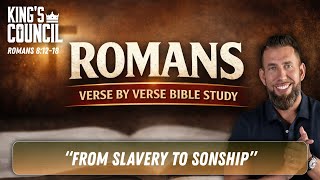
Speaker B teaches Romans 8:12-18 on the shift from slavery to sonship through the Holy Spirit. The passage emphasizes adoption into God's family, the legal meaning of "Abba," and Paul's "now-but-not-yet" theology that contrasts present suffering with future glory. Participants share how the Spirit's power helps them mortify sin and resist temptation.
Chapters
The rock on which I stand when everything around me is shaking. I've never been, I've never been shaken. I put my faith in Jesus. He's never let me down. He's faithful through generations. So I, so I will keep I've never seen you fail. You are faithful. You are faithful. I have a testimony. I have a story to sing. This is my story, this is my song. I have a testimony.
Y'all see my testimony?
Rain came, wind blew, my house was built on you. I am safe with you. I got faith. I feel somebody's faith rising. Rain came, wind This is the reason you made it. One more time. This is the reason I'm standing.
Good morning, good morning! What's happening, everybody? Happy Wednesday to y'all. Hope everybody woke up this morning with, uh, just a, a healthy appreciation for life, for breath in our lungs, for all the physical, uh, capabilities that we do have, for everything that we have, whether we have a little or a are a lot. Um, I, I woke up this morning with a lot of gratitude in my heart, and especially I tend to wake up on Wednesday mornings with gratitude in my heart because I get to spend my mornings with you guys. So, um, honor to you guys for being here, uh, many of you so faithful on Wednesday mornings, and it's a blessing to me. Raj, what's happening, man? Not much.
I woke up grateful this morning too. I ended up all day in a car yesterday I actually flew down to Southern Florida to buy a new vehicle and spent 6 hours in the car, came back out in time for my men's group, still going amazingly strong. We had almost 150 dudes at our church last night. Was pretty epic. And then I came home and went to bed and woke up without an alarm just 4 minutes before I would normally get up to spend an amazing morning with you guys.
Love it. Love it. And thank you for doing what you do, man. Always, uh, just faithfully serving, uh, what we do here on Wednesday morning, and I appreciate it. Rylee, what's going on, man? Where are you at? Peoria, Illinois. Okay. Peoria. Yes, 6 and a half hour drive down here. So, Raj, I'm in the same boat. Heading back here, got a couple meetings this morning, then hitting the road back home. Nice. I'm in Amarillo, Texas, and, um, if you guys have ever seen the movie from years ago, uh, Necessary or Unnecessary Roughness, that old, uh, college football movie, I'm pretty sure that, that Texas State University was based out of Amarillo, Texas. So I, I was looking for the stadium, I didn't see it. Out here, but I have seen some tumbleweed. It's pretty, pretty windy. It's pretty dry out here.
Isn't Amarillo on the old Route 66?
Um, I don't know. I just follow the GPS. I don't know what road I'm on.
Turn here.
Yeah, yeah, yeah. I think there's a Route 40 that this hotel is on. I don't know about 66. But, um, anyhow, I'm excited for, uh, continuing Romans chapter 8, one of the best chapters in scripture. And as I've said probably most Wednesdays for the last 5, 6 years, one of my favorite passages in scripture here. Romans chapter 8, the chapter of victory, coming off of chapters 6 and 7, the anguish and almost feeling of defeat in reading those chapters, kind of the anguish that you just feel in reading Paul's words. And Uh, you know, I mentioned just in chapter 7, he uses like over 40 personal pronouns. It's I, I, I, how I feel. I want to do this, but I do this. I feel like this, but I, I do that. And then the transition from chapter 7 to chapter 8, where now the Holy Spirit is ever-present in this chapter. Only 2 references of the Holy Spirit prior to chapter 8, and now 21 references to the Holy Spirit in chapter 8. And that makes sense because chapter 8 is the chapter of victory. And we, we can't get no victory without the Holy Spirit. So, uh, we're, we're gonna just do verses 12 through 18 today, but just to kind of get us up to, up to snuff, uh, leading into chapter— or verse 12, I'll just read those first few verses of chapter 8. Starts with, there is therefore now no condemnation to those who are in Christ Jesus, who do not walk according to the flesh but according to the Spirit. For the law of the Spirit of life in Christ Jesus has made me free from the law of sin and death. For what the law cannot do, and that it was weak through the flesh, God did by sending his own Son in the likeness of sinful flesh on account of sin. He condemned sin in the flesh, that the righteous requirement of the law might be fulfilled in us who do not walk according to the flesh but according to the Spirit. For those who live according to the flesh, that minds on things of the flesh, but those who live according to the Spirit, the things of the Spirit. For to be carnally minded is death, but to be spiritually minded is life and peace. Because the carnal mind is enmity against God, for it is not subject to the law of God, nor indeed can be. So then those who are in the flesh cannot please God. Uh, Rylee, you might want to make make note there, I actually pronounce enmity right. I know I've struggled with that in the past, but I think I've overcome that word. Verse 9: But you are not in the flesh but in the Spirit, if indeed the Spirit of God dwells in you. Now if anyone does not have the Spirit of Christ, he is not his. And if Christ is in you, the body is dead because of sin, but the Spirit is life because of righteousness. But if the Spirit of him who raised Jesus from the dead dwells in you, He who raised Christ from the dead will also give life to your mortal bodies through his Spirit who dwells in you. That verse right there where it says 'but,' it, it really should say 'because' or 'since.' It's not 'but if the Spirit raised him,' it's really 'because.' It's 'since the Spirit of him who raised Jesus from the dead dwells in you, he who raised Christ from the dead will also give life to our bodies.' It's that resurrection power that we have. The same power that raised Christ from the, the dead now lives in us. So before we jump into verse 12, I just want to pause for a second and talk about the Holy Spirit, because as I mentioned, the Holy Spirit is mentioned 21 times in this chapter. And what this chapter is really about is Christian living is not about trying harder, right? Paul kind of discussed or revealed with just trying, trying to overcome sin, trying to live a godly life just based on our own willpower. We fall short of it. And that's why the law was so impactful for many, because it's impossible to just through your own willpower, through your own gritting of teeth, just trying to fulfill the law, to live an upright, obedient life. This is about living an empowered life, and not our own power, not our own strength, but the power of the Holy Spirit. The Holy Spirit, as all of you Bible scholars know, is not a force. We talk about the power of the Holy Spirit and the power in Acts 1:8 when Jesus says that you shall receive power when the Holy Spirit comes upon you. That word power is the Greek word dunamis, where we get the word dynamite from. And even dynamite doesn't do justice to the word power. And the power that's received, the power that's revealed, and the power we walk in through the Holy Spirit. Now, the Holy Spirit, of course, is the, the third person of the Trinity, and it's remarkable that by way of the Holy Spirit, God actually lives in us, dwells within us. When we become born again, when we place our faith in Jesus, we're born again, a new creation, regenerated heart, and now God actually lives within us. The Holy Spirit has a mind. Holy Spirit has a will. Holy Spirit has emotions. Holy Spirit can be grieved. The Holy Spirit, if we're going to read here a couple verses up, can and will lead us. And the Holy Spirit can even speak to us. So oftentimes we say, I heard the Lord say this, or the Lord told me that, and I, I feel like I, I've heard the the audible voice of God. It was so crystal clear, uh, that I felt like it was actually his audible voice, but it probably wasn't his audible voice. It was just the Holy Spirit speaking so clearly to me inside of me, uh, just like the Holy Spirit talked to— spoke to Paul and Barnabas in Acts chapter 13. Now, with the power of the Holy Spirit, it means that we don't sin because we lack power. We sin as Christians simply because we choose flesh over the spirit, right? And that's, that's the battle that we're, we're in, the battle that we're going to face until God calls us from this earth and we're no longer living in these mortal bodies. There's always going to be that battle between our flesh and our spirit. We're not exempt from temptation because we have the Spirit of God living in us, because we're children of God now. Uh, same temptations are there. It's just that now we have the power to abstain. We have the power to withstand, and we have the power to overcome because of the Holy Spirit within us. Um, hold on, let me pull up this chat. I just saw something, Roger, about a beard.
Okay, my perfect glorified body, I'll actually be able to grow one.
Oh, okay, nice.
Yeah.
Nice.
I can't grow facial hair, that's why I'm growing all this out, you know.
So, right, well, just, uh, get even longer on the sides and just kind of wrap it down around your chin. That would be a good look. So because the spirit of God lives in us, we're certainly not who we used to be. And if we're not who we used to be, we have a new identity when we're born again and become children of God. We certainly shouldn't live like we used to live. So now moving into verse 12 here, Paul says, therefore, brethren, we are debtors not to the flesh to live according to the flesh. The, the NLT version says it, therefore, dear brothers and sisters, you have no obligation to do what your sinful nature urges you to do. And that's what Paul's really saying in this verse here, that we're debtors, right, but not to the flesh anymore. We don't owe our sinful nature anything. A debtor is somebody who owes somebody something. So what Paul is saying is that we're obligated now. We're obligated to live a certain type of lifestyle, but not to our flesh, not to our old sinful nature. We're not obligated to abide or adhere to our impulses, our cravings, our selfish desires. Because before Christ, we were in debt to sin and we had to obey it. Sin was our master, right? And no matter how much, even if you— for me, an addiction, you can lock me in a room for a day. If you lock me in a room for a year, I will— I wouldn't have been free from the bondage of addiction. Would I have been sober for that time? Yes. But I would not have been free from that bondage of addiction. But once we come to Christ and the Spirit of God is living in us, that debt has been paid. The master of our old life, that master of sin, has been fired, and we're no longer obligated to obey it. And just because our flesh is talking, we have those impulses, we have those cravings, we have those desires, doesn't mean that we have to listen. It's like Having a job and a boss who was just like a dictator, controlled your life, made your life miserable, you— and you quit that job. Then the boss calls you up one day after you've quit and says, 'Gotta get to work today.' You have no obligation to that boss. You don't work for him anymore. And what Paul's saying in this verse, just the same, we have no obligation to our flesh. When those impulses call, when those cravings call, we have no obligation anymore to fulfill And not just that, we have no obligation, but we have the power, the power of the Spirit to overcome them, to not fulfill those desires of the flesh anymore. We're not in debt to sin, so we need to stop making payments to that, that old sinful nature. Verse 13: For if you live according to the flesh, you will die. But if by the Spirit you put to death the deeds of the body, you will live. I like the way the NLT puts it here as well. It says, for if you live by its dictates, you will die, but if through the power of the Spirit you put to death the deeds of your sinful nature, you will live. So in other words, if you keep living how your sinful nature— even though we've been born again, the Spirit of God lives in us— but if we keep living how our sinful nature wants to live, it will destroy us. We will die. But if we use the power of the Holy Spirit to kill sin, to destroy sin in our life, that's when we experience real life, right? When we've been born again. I know my, um, my day of salvation, the day I was saved, it was radical transformation. Felt like I could see for the first time. Felt like a dark cloud that was over my life, not just through the 14 years of addiction, but my whole life. Even when, like, things were good as you know, uh, even that, like the good memories I had where even though Jesus wasn't in my life and I didn't have a relationship with him, like things were good. Even that, I felt like the cloud lifted from there, uh, because when we experience the power of the Holy Spirit and the, the love of God, that's when we experience real life. And that's what God wants for every single person born of this earth. His will is that we all come to salvation. We all repent, and not one of us perishes. And we, we've talked the last couple weeks about volition, right? The power to choose. And we, we could choose one of two paths. We could live according to the flesh, giving in to impulses, feeding sin, following our feelings, right? But we live in the year 2026, and, uh, We're in a culture in America of like cisification. My old self would have said a different word for that rather than cisification, but we're going to stick with cisification. Or if I was around some bros, I may just say a different word there. And we're about following our feelings, right? However you feel, like, do that, fulfill whatever that feeling is. If you feel like a girl and you're a little boy, oh, let's call you a little girl, right? Um, and we live in a culture where it is just so upside down, where we follow our feelings. And what's the result of that? The result is death. And it's not just physical death, but it's a spiritual dryness. It's a distance from the Lord. It's destruction. And this isn't just for unbelievers. It's us who have already been called out of that darkness, uh, We— our residence changed. We're now a citizen of heaven. Our identity changed. We're a new creation, but we still have a choice to make as to what path we're going to live. Are we going to live our lives as we talked about a few chapters back in Christ, or are we going to continue that old way to live in Adam and fulfill our sinful nature? The second path, of course, is living by the Spirit, and living by the Spirit is depending on the Spirit by choosing obedience, right? God wants us to be obedient. Jesus says himself in the Gospel of John, the way that we actually show how much we love him is by how obedient we are. And it's not just that the Holy Spirit— we see here that the Holy Spirit leads us, right? The Holy Spirit doesn't just possess us and turn us into robots where we're sinless and we're just the most devout followers of Jesus that ever walked the earth.
No.
The Holy Spirit is in us and will lead us and guide us, and he'll speak to us, and he'll show us which way to go, and he'll convict us when we're not walking in the paths that God wants for us. Remember, he'll convict us. God never condemns us. We talked about that last week. There is therefore now no condemnation. That penalty, that punishment for sin, that was fulfilled by Jesus's death on the cross. So we're— if we sin, God's not going to punish us for that sin. He will correct us, he will discipline us. There may be consequences of that sin, but the punishment was already, already taken by Jesus. If you guys remember in the Old Testament why Moses didn't get to cross into the Promised Land, what did he do? He struck the rock the second time, right? When, when God told him to strike the rock and water came out, he, he did, and water came out. And then when he was told to just look at the rock, and out of frustration he struck it, and, and he was judged pretty harshly for that. And not just ultimately part of God's plan— Moses represented the law, Joshua, um, a foreshadowing of Jesus— but, but ultimately that symbolism of striking the rock the second time, it's like, wait a second, the rock was struck once and that one sacrifice is sufficient, right? So if we strike the rock, or if we feel like God's just punishing us, punishing us, it's like, wait a second, no, Jesus took the punishment for our sins. God's not punishing us. Sometimes it feels like punishment when he disciplines us, when he chastens us, but that's just God being a great father and getting us back on the track we need to be on. And when we choose that, that path of living by the Spirit, that's where there's true peace, true freedom, true intimacy with God. Now Paul uses a very, very strong language when he says put to death, right? So if you— if by the Spirit you put to death the deeds of your body, you will live. It's the word mortify in the Greek, it's thanatao, and it's very strong language, and it literally means to to destroy, to render extinct. By death, to be liberated from the bond of anything, literally to be made dead in relation to something. So, so Paul is saying put to death the deeds of the body, right? Those impulses, those fleshly cravings, those temptations that come our way. Remember we talked about, um, that our members right? Our members are our eyes, our ears, like our different body parts are our members. So when, when our eyes are looking at things, when our ears are hearing things, when we're engaging in things that are sinful, we're to put those, those things to death. And it's literally kill it. Don't manage it, don't negotiate it, don't entertain it, don't cope with it. Literally destroy it. He didn't— God didn't call us to like manage sin, to dabble in sin. He called us to literally destroy it. And if you notice here, Paul says, but if by the Spirit you put to death the deeds of the body, you will live. So you notice the partnership. It's not God does it all, it's not you do it all, it's we act, right, to put to death the deeds of the body, but we're empowered by the Spirit. That we, we work in conjunction. We work together with God to do this. It's us doing it, but only empowered by God. It's like us swinging the sword, but it's the Spirit of God that gives us the strength to actually lift the sword. So the, the practical breakdown of this is we need to identify what's pulling at our, our flesh, right? What are those impulses? We all have different vices, right? If you've ever had a vice or a thorn that was hard to overcome, we all have different temptations, different things that we're drawn to, and we need to identify them. What are they in our lives? What's pulling at your flesh? What habits, environments, relationships, thought patterns? What are the things that are just pulling at our flesh that make it hard? I heard somebody say a long time ago, if your desire to sin comes face to face with an opportunity to sin, you're gonna sin, right? So oftentimes it's if, you know, you have a lust problem, well, guess what? You need to make sure— I mentioned a couple weeks ago somebody who didn't go to the gym at a certain time of the day because that's when all the girls are like all the young girls wearing almost nothing tend to go. So this particular guy said, I'm not going to go to the gym at that time. And that doesn't mean— and that's not like an admission of, oh, that guy, he probably has a lust problem. Well, guess what? If temptation is thrown your way, maybe you didn't have a lust problem before, but the enemy is trying to get you now with a lust problem. But we have to identify what our vices are that when our, our flesh is really weak in a certain area, but also set up boundaries, set up safeguards in our life that something new, some new vice, some new snare doesn't drag us down. And then what do we have to do? We have to stop feeding our flesh. What you feed grows, and what you starve dies. So you don't just remove sin, you don't just abstain from sin, you don't just starve the flesh, but you feed the spirit. You feed the spirit through praying, fasting, through time with God, through this. And with this, I love this because we walk through the Bible, but part of why I love this so much is just fellowship. You know, we all have an opportunity to unmute, to share thoughts. You know, the 30 minutes of prayer we have before this, usually we don't start for 15 minutes because people are sharing God stories, just testimonies from the week, which is phenomenal. So this, this type of fellowship are the things that we need to, uh, need to take advantage of to help feed our spirit. Uh, matter of fact, the Puritans, they used to call fasting soul fattening, right? You're abstaining from food, but you're fattening your soul. And if you've ever done like a real fast, you understand that that verbiage there. You truly are fattening your soul. You feel, uh, you feel weak physically, you feel hungry physically, but your soul feels so alive and so fattened. Moving on to verse 14: For as many as are led by the Spirit— and as always, I'm flowing here. I got 10 pages of notes, we're 26 minutes into it. If anybody has anything As always, feel free to interrupt me, unmute, throw a hand up. Verse 14: For as many as are led by the Spirit of God, these are sons of God. And I mentioned the Holy Spirit leads us. The Holy Spirit isn't a bully. The Holy Spirit doesn't just take possession of us and make us robots. The word led implies guidance, direction, relationship. It's not force, it's not pressure. Is not control. Think of a shepherd. The shepherd walks ahead, right, and guides and leads the sheep. They follow his voice. Matter of fact, Jesus said, my sheep will hear my voice and follow me. A cattle driver, on the other hand, pushes from behind. You know, when you're driving cattle, you're using pressure, fear, force to push those cattle ahead. But our God, he's a shepherd. He's not a taskmaster. And in this verse here, it says those who are led by the Spirit of God, these are the sons of God. We're not all God's children. All humanity is not God's children. Uh, Jesus makes this abundantly clear in John chapter 8 when he's speaking with the Pharisees, and he says, I know that you are Abraham's descendants, but you seek to kill me because my word has no place in you. I speak what I have seen with my Father, and you do what you have seen with your father.' They answered and said to him, 'Abraham is our father.' Jesus said to them, 'But if you are Abraham's children, you would do the works of Abraham. But now you seek to kill me, a man who has told you the truth which I heard from God. Abraham did not do this. You do the deeds of your father.' Then they said to him, 'We were not born of fornication. We have one father.' God. And so for everybody who says, oh, we're all just God's children, well, Jesus said to them, if God were your Father, you would love me, for I proceeded forth and came from God, nor have I come of myself, but he sent me. Why do you not understand my speech? Because you are not able to listen to my word. You are of your father the devil, and the desires of your father you want to do. He was a murderer from the beginning. Does not stand in the truth because there's no truth in him. When he speaks a lie, he speaks from his own resources, for he is a liar and the father of it. For those of you who are with us on Wednesday mornings when we walk through, uh, the First Epistle of John, we talked about that all of humanity falls into one of two categories. You're either a son or daughter of God, or your son or, or daughter of Satan. We all have a father that we serve. It's either God or the devil himself. Now, John said, uh, that, that infamous conversation he had with Nicodemus in chapter 3 of the Gospel of John, um, Jesus answered and said to him, most assuredly I say to you, unless one is born again, he cannot see the kingdom of God. And even prior to that, in chapter 1, he said, but as many as received him To them he gave the right to become children of God, to those who believe in his name, who were born— who were born not of blood, nor of the will of the flesh, nor of the will of man, but of God. Where not everybody is a child of God, but we are. If we've said yes to the Lord, we've placed our faith in him, Jesus is Lord of our lives, we are children of God. And not only is that an unbelievable privilege but it comes with responsibility as well. And, uh, Paul gets into that, that responsibility a bit as he gets into this next verse when he talks about adoption. Verse 15: For you did not receive the spirit of bondage again to fear, but you received the spirit of adoption by whom we cry out, 'Abba, Father.' Well, before I even get into adoption, talk about the word 'Abba, Father.' And most times, you know, people say it's a term of endearment. You know, it's daddy, right? And Abba is both in the Hebrew and the Aramaic. It's the word for father. And but it's the word father there. It's both daddy as far as terms of endearment. But also, if you do a deep dive on the word, it as in terms of respect, more like sir, both at the same time. So the endearment of daddy, but the respect of calling your father sir. Now, for me, as he— my son, as he's 5 years old, when I get home— well, tonight he'll probably be asleep, but when he sees me in the morning, he'll be like, Daddy, Daddy! When I pick him up from school, he runs out, Daddy, Daddy! And I love when I hear those words, Daddy, because it's just such— he's a kid. He sees me, he loves me, he adores me. And it just blesses my heart so much. I know there'll probably be a time or when he's an age where he's not running out saying Daddy, Daddy, because it won't look cool to his friends, right? But he's 5 years old and he's saying Daddy, Daddy. And then there's other times where, you know, I ask him to do something, as he 'Go brush your teeth before bed.' 'Yes, sir. Yes, sir.' I'm like, 'Oh, I like that. Yes, sir,' right? It's respect. Like, he's on it. We're on the same page. He's like just obeying. But that word 'father' is both of those in one. It's that endearment of 'daddy' but the respect of 'sir.' And what I've noticed, and even in like prepping for this, As he— sometimes he calls me Daddy, sometimes he says, yes, sir. And then there's times where he just says Dad. And I feel like when he says Dad, that's, that's him kind of saying Abba, as it's written in the original, you know, biblical context. Because the dad is— I see like that endearment of the daddy, but also the respect. When he calls me Dad. And that's what, that's what God is to us. So it's not just Daddy, like it's just almost a, uh, a, a whimsical endearment. And it's not just Sir, that, that, that respect that we have, because sometimes you say yes sir to somebody and you respect them, but you don't have a closeness to, to them. But this word Abba is both the same as that Daddy, but also the sir, the endearment and the intimacy, the endearment, but the respect as well. And then with the word adoption, Paul says we receive the spirit of adoption by whom we cry out, Abba, Father. Paul uses the word adoption 5 times in the New Testament. It's a word that he likes to use. It's an analogy he likes, and it's a picture he wants to paint as far as what new relationship with God is. And to be adopted, uh, especially there's, um, in Roman context back in the day, it simply means to be placed in a family as an adult son or daughter, right? Meaning adult, not that you have to be an adult to be adopted, but you have the rights of an adult in that family. Paul says in Ephesians 2 that by nature we were children of wrath. So by nature we're children of wrath, but God adopted us into his family. And in Roman adoption, it's where— and very similar to like adoption today, but in Roman adoption, um, when you're adopted into a family, you lose the previous rights of your former family, but you gain all the new rights into the family you're being adopted into. So even if there's natural-born children in that family, the adopted son or daughter was considered an equal and even a co-heir in the inheritance of the estate. In Judaism, typically the oldest son would receive a double portion of the inheritance, but in Roman law and culture of the time, it was equal even for those who were adopted into a family. At the time, back in biblical days, in the Roman culture, if somebody was adopted into the family, there was 7 witnesses. Because when the father died, one of the witnesses could step up if one of the natural-born children said, oh no, we're not giving that adopted one any part of the inheritance. One of the 7 witnesses would step up and say, nope, I was there. Legally, he or she has a right to this inheritance. FF Bruce, who's, uh, one of the great scholars and comment, uh, commenter of the New Testament, said, in the Roman world of the first century, an adopted son was deliberately chosen by an adoptive father to perpetuate his name and inherit his estate. So think about that. We've been adopted, and, and what Paul has in mind here, we've been adopted to perpetuate the name of our Father and inherit his estate. We're all good with inheriting his estate, right? Being heirs of God and co-heirs with Jesus Christ. But we've been chosen to perpetuate his name. He was in no way inferior in status to a son born in the ordinary course of nature and might enjoy the father's affection more fully and reproduce the father's character more worthily. It was like you almost— when you're adopted back in the, the first century when this was written in Roman culture, it's like there's more of an obligation to, to, uh, live up to the name of the father who adopted you. And yes, you, you have access, you're now an heir to the, the inheritance, but there's, there's an obligation Now, now there, there's, uh, something you have to live up to, right? Or you're expected to live up to. And when Paul uses this word adopted, what he really wants us to know is that, that God chose us, right? It's like, imagine a father at an orphanage, and it's like you could read the back of the trading card for any of these kids, and you're seeing which one is gonna to, uh, you know, live up to your name, who's going to make you look good, who's going to fulfill, you know, all that you require. And, and what, what Paul is saying is he chose us, like he intentionally chose us to be a part of his family. There's a story of a, a first grade class, and the teacher was discussing adoption because she wasn't sure if all the class understood that that not all kids have parents like natural— they were natural born, like flesh and blood parents. And one little girl shot her hand up and she said, I could tell you what adoption is. Teacher said, go ahead. She said, I'm adopted. My mom explained it to me. She told me it's when a child grows in your heart instead of your tummy. And that's what it is with God. God had us growing in his heart, right, long before we were born. Charles Spurgeon actually said— and this is really what the doctrine of election is, you know, that you could go back and forth with a Calvinist as to what the doctrine of election is, but truly what it is, it is— Charles Spurgeon explains it here. He says, I believe in the doctrine of election, and I'm quite sure that if God had not chosen me, I never would have chosen him. And I'm sure God chose me before I was born because he never would have picked me after I was born. That's really the doctrine of election. God chose us first, right? But here's the thing that you could debate Calvinists about, is God chooses all of us. And if you want to know if God has chosen you to be a part of his kingdom, that you are one of the elect, simply choose Jesus and you'll find out that he first chose you. Paul says in Ephesians chapter 1, verses 4 through 5, just as he chose us in him before the foundation of the world, that we should be holy and without blame before him in love, having predestined us to adoption as sons by Jesus Christ to himself according to the good pleasure of his will. He chose us before the, before the foundation of the world It wasn't, you know, well, once we were conceived, it wasn't 10 years ago, 100 years ago. It was before the foundations of the world. He chose us and he predestined us to this adoption. And I, I believe that he predestined all of us, but God gave us will, he gave us volition, the power to choose. And God chose us and it's on us to choose him back. Verse 16: The Spirit bears witness— the Spirit himself bears witness with our spirit that we are children of God, and if children, then heirs, heirs of God and joint heirs with Christ, if indeed we suffer with him, that we may be also— excuse me— that we may also be glorified together. It's important that our spirit bears witness of who we are, because when our spirit bears witness, we don't just know who we are, our new identity, we know whose we are. In Deuteronomy 17:6, Jewish law stated that the mouth of two or three witnesses had to establish everything, right? Everything established had to be witnessed by two or three. And there's two witnesses to our salvation. It's our own witness and the witness of the Spirit. How do I know that I was saved? I'm the first witness. I was there. I could tell you, right? But then my spirit bears witness to that as well. And our spirit will bear witness by us actually walking out and seeing the fruits of the Spirit in our life. That's how the Spirit bears witness that the Spirit of God lives in us. Um, everything that Jesus received by divine right, we receive by divine grace. So Jesus received everything, everything he, he— I don't want to say had because he, he's, he's alive still, but all the glory, all the riches, the inheritance in heaven, he received it. That's, that's his. He's the Son of God. But we receive it all as well as co-heirs with Christ because of his divine grace. And that just blows my mind, right? Then verse 18, and we'll wrap it up after this verse: For I consider that the sufferings of this present time are not worthy to be compared with the glory which shall be revealed in us. So the good news is we're co-heirs with Christ there's an inheritance coming. We have the power and authority of the Holy Spirit. We know who we are. Our identity is in Christ. Our old self has been crucified. We have a peace that the world can't even come close to. Everything we have now, we have access. But part of this is like, wait a second, there's some suffering as well. Now, suffering and glory belong together because they really characterize the two ages of the believer. The, the suffering here in this present age, and then the future age is all the glory and there's no more suffering. And it kind of takes you to, um, kind of takes you to the, the idea of instant gratification versus delayed gratification. Now, as sons and daughters, do, do we— should we have expectation and anticipation of our lives here on Earth and what we have access to for certain, right? But if it turned out to be a life of suffering, which is promised— I mean, 1 Peter 4, Peter says we should expect suffering, right? Jesus suffered, and we've been adopted into his family. If Jesus, God himself, suffered and we are adopted into that family, and we are to live up to his standard and kind of bear his name, why would we expect anything less than suffering? The world hated Jesus. The world's going to hate us as well. And Paul, you know, it's all about suffering. And I love this statement by Paul because he says, for I consider that the sufferings of this present time are not worthy to be compared with the glory which shall be revealed in us. Now I'm going to go out on a limb here. I'm going to say that Paul suffered more than most of us have suffered in our lives thus far. And 2 Corinthians, Paul mentions some of the suffering, some of the things, some of the trials he's been through. And this is Paul. You think I met somebody recently who had, who had some issues with God because they believed that one of their family members, uh, should, should not be going through what they're going through because his parents that you have been serving God their whole life and, you know, their son had MS and is going through it physically and not living a great life. And the person I talked to was like, yeah, I think if God was going to look out for somebody, it would be be their son because the parents that have served God so faithfully. And it's such an, uh, immature way of thinking spiritually because Paul himself in 2 Corinthians 4:17 says, for our light affliction, which is but for a moment, is working for us a far more exceeding and eternal weight of glory. He's talking about his light affliction. If you move ahead a few chapters in 2 Corinthians, he talks about some of the things he's been through. And you tell me if this sounds like light affliction. He says, 5 times I received at the hands of the Jews the 40 lashes less 1. So 39 times lashed by the Jews. 3 times I was beaten with rods. Once I was stoned. 3 times I was shipwrecked. A night and a day I was adrift at sea. So imagine that you're shipwrecked and you're just bobbing in the water, treading water for a night and a day. On frequent journeys, in danger from rivers, danger from robbers, danger from my own people, danger from Gentiles, danger in the city, danger in the wilderness, danger at sea, danger from false brothers, in toil and hardship, through many sleepless nights, in hunger and thirst, often without food, in cold and exposure. Basically saying like, I was homeless, I had no clothes, I was out in the cold, I had no food, I had nothing to drink. And apart from other things, there's the daily pressure on me of my anxiety for all the churches. So it's like all this, and apart from all the other things I went through as well, as if this wasn't enough, and then on top of it the anxiety, just the pressure he felt to just share the gospel of Jesus, the prayer that he was in for the churches, for God's people. But going back to chapter 4, he considers this his light affliction. And here in this verse in Romans 8:18, for I consider that the sufferings of this present time are not worthy to be compared with the glory which shall be revealed in us. It's remarkable that he could just kind of brush it off like, yeah, these light afflictions. I don't know how many of you have been like homeless. And what— I know, Matt, I know your testimony, so you could, you could attest to this. But homeless, without clothes, you're cold, you had nowhere to go, no food, no hunger. And when he talks about even like false brothers, like even that, like people turning their back on you, the loyal friends that you thought you had, it's like Paul covers it all here. The, the physical danger, just like the, the heartache of broken relationships, people stabbing you in the back. It's like, yeah, this light affliction doesn't even compare to what I'm going to get in the future.
Wow, this is amazing. Like, this is so good. And I feel like you're describing all the stuff I've been going through. And not to compare myself to Paul, but I know everyone on here has a similar story. All the afflictions we go through in this world, right? And, and we know it— look, it's a light affliction. Thank you for this powerful reminder, right? We have to remember that. And just being a Christian entrepreneur, they said— somebody said, and I don't know if I mentioned this before, but it exposed all the unhealed parts of you. And had to work through so much pain in the last 24 months. Part of it I've shared in this chat, um, just dealing with different things, right? Patience, building character, dealing with difficult people. But it all goes back to what Paul said, right? Like what we need to face within ourselves. And it sounds like he was really doing that. So I obviously admire Paul, but it's just so encouraging because, um, recently when the enemy tempted me with a sin, right, that maybe I would fall into before I got saved, but the same sin now that I am saved, this book of Romans is really what saved my life. Because I would say, I'm dead to sin but alive to God in Christ Jesus, and I would keep saying that. And then the power of that sin or the temptation to enter into that sin would just go away, and it was almost laughable. And then it turned into anger, like, how dare that sin even try to tempt me? Like, get behind me, Satan, in Jesus' name. So it's really powerful. I really love the book of Romans, and thank you. I could just never get enough of this. Amen.
Amen. Good stuff, Gita. Leslie, good morning. What do you got? You just muted.
Yeah, my puppy's acting up. She's literally biting my shoes. Anyway, but what I was gonna say was, um, those— a lot of those afflictions, you know, that Paul mentions. I mean, you know, I think even he was saying, you know, it's not about bragging, it's about, um, you know, all these sufferings that you go through, these trials and tribulations, but you're delivered from them by the glory of God. And so, you know, at the time you may not see why you're going through this terrible situation, but as long as you continue to persist in your faith and have that endurance, you know, he'll reveal to you in some way his, you know, his glory, goodness through it, which of course at the time feels terrible. You're like, how can this be a good thing? But, you know, his promises never return, you know, null and void. So you were saying some of those hardships, like, have you ever been, you know, shipwrecked and, you know, whatever? It's like, no, I've never been shipwrecked, but my family went through some really hard times when I was a child, um, and yet what that showed is the people who came into our lives to help us through that, um, just the love of God through them, you know, from such darkness to such lightness. You really see the hand of him through it all. And, um, I think that's where, no matter what you're going through, to always keep that in mind is he'll show— he'll show you in time. Um, yeah. And then earlier you were talking about like, uh, gosh, what are you saying, um, temptation being all around you all the time, but you have the power to endure. And I was like, you know, I just, I just always think of like the alcoholic in a, in a, in a liquor store, you know, you know, trying to resist that temptation. And I'm like, yeah, that's why I don't buy gallons of Nutella. Like, you know, I still have things that are my vice, you know, but I You know, you go to Costco and they literally sell gallons of it, and I'm like, ah, that looks tempting, but I need to not surround myself with that because, uh, it's like I'm not gonna walk around, you know, just like bringing it into my house. It's, it's like a temperance there.
So yeah, yeah, amen. And I mean, yeah, it applies to everything that— as far as those temptations and when you don't buy that Nutella and you overcome it, at some point you're not thinking of the Nutella anymore. But if you buy it and you have the big jug of it there, you're going to be indulging, right? But the— for me, like, being a former drug addict, like, there's times— and talk about instant gratification— it's like, for an addict, the, the reason they, they sometimes kill to get drugs or get money for drugs is because you're so in bondage, and it's so all about that instant gratification. You don't care about the consequences. You don't care about who you hurt in the process of it. It's about that instant gratification. And, you know, by you, um, you know, you could buy the Nutella and feed your flesh and feel good, but probably as soon as you took your last bite, you'd be like, oh, I feel awful. Like, why'd I do that? Right? But you feel gratified, that delayed gratification. And that's like almost the secret to the Christian life and just life in general is like, can you delay your gratification? Can you be disciplined to endure now and not just say, say yes and give in to every impulse so that the future could be better? You could have more in the future. You could have more peace. You could have more glory and riches at a later date. That delayed gratification is like the key. Raj?
I'm with you, Leslie. Nutella. Um, Christian, this is great. I love, I, I, I love Romans. It's so, um, it's so inspiring. Um, I'm, I'm thinking back to like the Judges cycle, right? The early Israel You know, they would, um, you know, they would, uh, they would, they would, they were, they were doing, they were doing great. And, uh, then, you know, um, a judge would die and they would go into sin. God would punish them, deliver them into the hands of an enemy. They would cry out. God would give them a judge, you know, salvation, give them salvation. And it was like this, this constant cycle. And what Paul's saying is like, we're outside of that. We don't have to do that anymore. We've been given We've been delivered once and for all. And sometimes we may feel like we are in that Judges cycle going up and down. We cry out to God, he's going, there, there, there, you've been saved, you've been saved. This is sanctification. So it's a different, it's a different process as opposed to like going through this crazy cycle where we, you know, we sin and, and then we have to get saved. We're already saved and this is a sanctification process like you said. So it's like we're not being punished, we're actually being refined and making those decisions and, and drawing close. It's like, just, it's, it's fantastic. It's like, I'm so, so happy that we live in this time, that, that, that, that Christ has come, that we have been saved, and that we're going through sanctification as opposed to, you know, like before Christ and just having to deal with, you know, atonement and, and sacrifice and just like kicking the can down the road. It's like, this is, this is an atonement for my sins sins. Now they've been paid for in full, tablas, die. So love it.
Yeah, amen, amen. Jonathan?
Yeah, super good stuff. Um, I— the question actually on the last verse you read, I'm curious your thoughts on, um, be compared to the glory which will be revealed in us. You know, if he's talking about heaven, you would think to us. Um, is he— and also that glory, I wanted to do a word search or study or whatever, because Paul also talks about, um, all have sinned and fallen short of the glory, right? But also here it says the glory which shall be revealed in us. And there's another place where it's like, hey, we all fall short of the glory, but like there's actually a redemptive path to the glory where we can actually reflect the glory through in us. And so I was just curious, like what does that look like? Is it more of like a Romans 5, like, um, Roger was saying, uh, you know, being refined? That Romans 5, perseverance produces character, produces hope, um, there, which then is the glory being revealed? Or is this talking about heaven or something?
Yeah, I, I think like so much of scripture is, there's a component of now but not yet, right? Where I believe God's glory can be revealed in us while we're here on earth, but the ultimate fulfillment of that will be in heaven, right? So, um, yeah, do we— we all fall short for certain, but God's glory is revealed in us. Because even when you, when you read through scripture, read through the writings of Paul, it's like God's glory is revealed in him through all he endured. Yet you see, even in his prison epistles, even in 2 Timothy, uh, the last thing he wrote before he died, you see there's such a peace, and there's such— you see the character of God in him, and he's so fulfilled, he's so satisfied. And so it's like God's glory is being revealed in him to, to me when I read that. So I think there's a component of like yes, now to some degree, but the ultimate fulfillment ultimately in heaven. And if, if we don't even like see or feel God's glory in us now, if all we do is we feel hardships, we feel trials, we, we endure, um, even if that's all life was for the, the short vapor of time that this lifespan is, if that's what it was, and that be us having the, the wrong perspective. Because part of when you see Paul and you read about this, all that he's been through, and, and, and Peter talking about expect the suffering, it's like, okay, like, there's suffering, there's things, there's hardships. The, the storm's going to come in our lives whether we're a believer or unbeliever. It's just that we build our, our house, our foundation on the solid rock and not on sinking sand. So the perspective we should have is like, no matter What mountain's in my way? Like in Zechariah, it's like you speak to that mountain and tell it to move, and that mountain shall be made a plain. So if you have that perspective, the same person has the Spirit of God living inside of them, could see that mountain and all of a sudden just have a victim mentality. It's, oh, woe is me mentality. Same Spirit, but the glory of God is revealed in the person that sees things from God's perspective. Where it's like, oh, wait a second, that's a mountain. But nothing's impossible with God. Just speak to that mountain and that mountain will be made a plain. So I think I'm just kind of like shooting from the hip on this, just kind of my perspective. But that would be my thoughts on it. Um, I want to share real briefly, got a couple minutes left here. Um, I heard a story. I kind of fact-checked it to see if it was true. Couldn't confirm if it's real or not, but whether it's real or not, nonetheless, plenty of pastors share stories that they just make up and they just kind of say, hey, there's a story of, right? And it's something completely made up, but it's awesome. Like, it just goes with the message. So years ago, that there was— there's some details in it that make me think it might be real. But apparently this guy named Tomas Martinez in Bolivia, he was homeless, he was a drunk, he was a drug addict. He was, you know, robbing, stealing to fund his habit. And the police were looking for him. Now, when he found out the police were looking for him, he went on the run. Little did he know is that his police were looking for him. Because his wife, who had divorced him, still cared about him and left a $6 million estate to him when she died. So police are looking for him to tell him that he's got this inheritance, but he was on the run. And we have an inheritance coming our way. Do we have part of that now but not yet? Do we have an inheritance here on Earth? Yes. But the ultimate inheritance comes when we're in heaven. We are heirs of God and co-heirs with Jesus Christ. That whole co-heirs piece just boggles my mind. It's like, just like Jesus doesn't get a little bit more of the portion. It's like, ah, like the inheritance of heaven, the glory, the riches, the experience of heaven. It's like we're co-heirs. It's like, man, I would expect Jesus to get a little bit more, but no, we're co-heirs, just like the adopted son that we talked about, or the adopted daughter, where it's not, you know, the firstborn or, or the eldest, or whoever's most important gets a double portions. Like, no, we're co-heirs. And the fact of the matter is, is there's an inheritance waiting for us, right? But are we willing to receive it? Are we running from it, or are we receiving it? Are we running like the, this guy in Bolivia who was running because he thought the cops were, were after him for to— because of the bad he had done, which all of us at times when we sin, when we, uh, when we mess up, that's typically what we do. Started with Adam and Eve in the garden. They sinned, they were ashamed, and they, they covered themselves. When we mess up, we want to run from God, we want to isolate ourselves. All of a sudden we're not fellowshipping the same way. We isolate, and then the enemy has us like right where he wants us. It's like, oh, now he's isolated, let me really pounce. Or are we ready and willing, and are we living every single day with expectation of this inheritance to come? No matter what happens here on earth, no matter what happens, Spirit of God lives in us. Spirit of God lives, gives us ability to overcome sin, to withstand and abstain from fulfilling the sinful, lustly desires lustful desires that we have, and that leads to life, as opposed to fulfilling the, just the, the deeds of the flesh and ultimately leading to death and that spiritual dryness. Ita.
Yeah, sorry guys, I know we're over, but wow, you just said something super, super important. You know, when we sin, or if we're tempted to sin, or if we're in sin, we need to run the Lord, right? And most people don't do that. They run the other way. And I used to do that when I was a baby Christian. And even just last night when I was having some of the wrong thoughts, just idolatrous thoughts, like putting things before God, and I just sat in my chair and I felt bad. I'm like, okay, well, you know, it's too bad how I think. And the Holy Spirit almost like got angry with me, like a knee-jerk reaction, and corrected me. Said, run to God, run to God. He's like, don't beat yourself up. You better run to the Lord. And then 2 Corinthians 5:21, I am the righteousness of God through Christ Jesus. Say that even while you're having those wrong thoughts or while you're doing something you don't want to do. Like, say that. Now I say that a lot, and it's just funny, the power of sin is just like melting off of me. So it's so, so important for us to not feel condemned, because that's what you said in Romans 8:1, there's therefore now no condemnation. We need to really be deliberate because it's not going to be our natural response or intention to run to God. We're going to feel like, oh, you know, we did this and now we have to hide or go away, and, you know, I'll pray later. No, you better pray right now, like even while you're sinning.
Thank you. Yeah, and that's what that spirit of adoption is, that knowing that we are adopted, we are God's son, you're God's daughter. It's knowing that when I mess up, I can still cry out, Abba, Father, that like still Daddy, still with the respect of sir, but not the distance of that, that that formal respect, that intimacy of daddy. You know, I always want to be a father where when my kids mess up, they're not scared to tell me. They want to tell me because they know I'm on their side. You know, they may get a little tap on the backside for it, you know, as discipline, but I want them to come tell me because they love me, they respect me, they know that telling me, it's a safe space. They know that if anybody's looking out for them, it's me. So I'm going to help rectify whatever situation that they're in. And Roger used the word purify, and, and that's what it is. When we— we— God will purify us. And the purification process, like when you purify your silver, it's not a pleasant process. You heat it up to, to bring all the, um, the impurities they rise to the top, and then the silversmith or goldsmith kind of like swoops away those impurities. But the only way to be purified is to be heated. So when like life gets hot, when you feel the pressure of life, that could be God just refining you, refining you as that goldsmith or silversmith. Leslie?
Sorry, just one more thing. Um, It's just I had this, like, you know, I get a dog who's a Belgian Shepherd, and so they were bred to basically keep lambs all together, right? And so I was just thinking about how God is like that for us. And so whenever you have a lamb go astray, you can imagine like a sheepdog is going to come around and bark at you and say, get back in line, get back in line. And it's mainly to keep you safe and to keep you from harm. So I was just thinking like, gosh, I'm just like a sheep being shepherded by barking dog sometimes, you know, not that that's how God is, but when I have this, you know, example of what a shepherd is in my house and knowing that I have a, you know, shepherd in heaven who's trying to guide me, it's like I'm not— I'm just— I'm going astray. And the reason that I'm feeling this way, you know, like Gita was saying, when you're like in sin and temptation and you just have to remind yourself that like that sin is, um, your shepherd trying to to reel you back in. Um, that was just one, you know, it's like you're being refined every time you listen to your shepherd who's just loving you, um, in the best way possible. Not disciplining you, but just, you know, convicting you back to like, follow my path.
Amen. Yeah, amen. Absolutely. Well, we'll put a bow on, on today's study right here. Next week, uh, Joseph Lee, if you could still hear me, maybe I'll have you just kind of, uh, share about about the late gratification. Joe made a decision a couple months ago to, uh, say, I'm gonna, I'm gonna get myself in shape. And, uh, I mean, it looks like a different person now than a couple months ago. But when you first start that process, it's, uh, it's a grind, right? But you have to endure. It's not going to come overnight. And that— so, Joe, I'm gonna put you on the spot next week to just reveal to us your delayed gratification and why it's worth it. Wait.
Yeah, I can do that.
Yeah, I already saw your video on, so I know you're not in bed watching this. So no, not this week.
Yeah, got 3, 3 appointments today, so I'm slammed.
Cool. Well, you guys have a blessed week. And, um, yeah, just, just kind of chew the cud on this study today, that we're adopted into God's family and that that's a new identity. We know who we are, we know whose we are, and that adoption piece is God chose us. God chose us. So if any of you today feel inadequate, unworthy, know that God chose And you bear the name, you represent Jesus. And it's not just such a lofty standard to live to, live up to, but no, it's an honor and a privilege. And God gives us the power of the Holy Spirit to, to walk that out. So feed your spirit today, not your flesh. Starve your flesh. And if you do that on a daily basis, you're going to be floating, you're going to feel like you're in heaven already. And thank you, Lauren, for, uh, turning the camera on.
Thanks, Christian, we appreciate you.
I'll, uh, let it slide this week that you, you and Zach had nothing to share for this study.
Okay, Zach always has something to share. We'll have to get Guma, his grandma, to say something next week.
Okay, awesome. Well, I love you guys. Have a blessed one, you guys.
Thanks, Roger.
See ya.
Bye, y'all.