Be yourself at work | Claude Silver | Sacred Business Stories 48
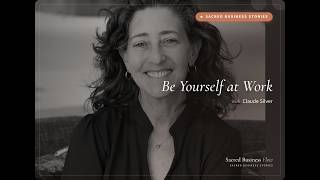
In this live Substack interview, Claude Silver, VaynerX’s inaugural Chief Heart Officer and author of Be Yourself at Work, shares her unconventional career journey—from early mentorship roles, an outdoor adventure startup, and agency work in San Francisco, London, and New York—to the creation of the Chief Heart Officer role that focuses on people, empathy, and culture. She explains how self‑awareness cultivated through therapy and spirituality enabled her to pivot away from traditional advertising toward a people‑first leadership model. Claude discusses the importance of authenticity at work, encouraging employees to align with their values, embrace vulnerability, and build connections—both in‑person and virtually—through rituals like poetry, music, and shared moments. She offers practical advice for individuals facing fear or resistance when considering career pivots, emphasizing the need to identify personal strengths, seek coaching, and ensure practical basics (pay, rent) are covered before leaping. The conversation also touches on the impact of technology and polished online personas, the value of imperfect, genuine communication, and Claude’s recent foray into Substack and her book, which provides actionable tips for self‑leadership, managing imposter syndrome, and fostering heart‑centered cultures.
Chapters
Welcome to Sacred Business Stories. This is our weekly Substack Live. It's really where we just have an honest conversation about what it looks like to build business from a place that aligns with your deepest truth. And today we are joined by Claude Silver. Uh, she kind of had us from her title when I, I was poking around. I found her on Substack here. She's the world's first Chief Heart Officer at VaynerX. I don't know if— is that the word? World's first chief officer or world's chief— Yeah.
So, yeah.
So we want to hear more about that. And she is the bestselling author of a book entitled Be Yourself at Work. So thank you so much for being here with us, Claude.
Oh, great to be here. Thank you. Thank you so much. As I said, my first Substack Live, so no other team I'd rather be doing this with.
That's so nice. Thanks for being here. And thank you everyone for joining us. If you have any questions, please post it in the chat and we're going to do our best to, to respond to that. And Claudias, I would love to hear, like, I thought of, I had a very cool title and my title, my title came from a client and I'm Chief Energy Officer at Sacred Business Flow. And I was very excited. And then when I saw yours, I'm like, oh, I like that too. That's the The second best, you know, just because I love mine a lot. But I would love to hear the story behind your title and more of like what you do.
Yeah, of course. I do. I think I have the greatest title in rock and roll. Maybe it's the second greatest, who knows? But, but I love it because it, it fits. It actually, it's, it's, I never had to ask Gary, my boss, Gary Vaynerchuk, what it actually meant. It just. Seemed like it fit well. And just to go back in time a little bit, I am, I've always been one of these kind of like unofficial mentors, players, coach. I love human behavior. I've been obsessed with it. And I probably, because I needed to figure mine out, I had to figure out myself in my 20s because I had, I had made some twists and turns that I just wasn't happy with. And so I really needed to really, really start to get into my own self-awareness through therapy and spirituality and all of that. And, um, that's important to say because that grounds me every single day. And because I have that and I trust myself after all of these years, it's so much easier for me to create and hold space for other people because I don't have the urgency to step in. I don't have the need to figure out if I'm right or wrong. I'm just me, which is great. It takes a lot of the accountability or responsibility of thinking I have to change people, which of course we know we can't change anyone but ourselves. But I was always in kind of like captain positions in high school and college and sports. And then when 9/11 happened, I was living in San Francisco for many, many years. 9/11 happened and many of us were laid off. And my partner and I at the time decided to start an outdoor adventure company. We called it Girls Adventure Out. And we, let's see, I taught surfing and rock climbing and mountaineering and tennis and all kinds of things for 5 years, but mostly surfing. And so I was in the cold Pacific Ocean with that, like that killer, you know, I had a killer neck tan and a killer arm tan, hand tan, because I was in a 4/3 wetsuit, which is pretty thick.. And, um, I just, I love that. I love being a cheerleader for someone. I love being in action with them on their journey. And all of this is really important because that's a huge part of what I do today. Um, went back to work. I've always worked in the digital space. I mean, again, sanfrancisco.com boom of '97, I was there. And so, um, uh, I've always been in agencies, advertising agencies, creative agencies, and. And leading teams and doing client work and all of that stuff. And one thing led to another, and I'm gonna just jump like almost 20 years, it feels like, um, 15 years to where I was living in London and I was running, um, digital strategy for Publicis London. And, uh, my best friend, uh, introduced me to Gary Vaynerchuk, my boss. And, uh, we had a, like a 2-minute conversation. He was boarding a flight. I was pacing my kitchen in London.. And then I came to New York to meet him and it was just so obvious when we were talking, we were at this, uh, like a coffee shop, literally on 70th and Lexington Avenue, if anyone's in the city. And, um, it was like talking to my brother. It was like talking to this other part of me. Um, and it's like we're two sides of the same coin in many, many ways. Obviously Gary is louder. He's known to be louder, but he's actually one of the kindest, most authentic people I've ever met. And he hired me. And so, I moved from London, came to New York, and I started at Vayner in May of 2014. The average age was 23, and I was almost double that. And so, immediately I went into the natural, the natural parts of me being that unofficial mentor, really helping to guide people, shape people, help people out of a sticky situation, all of those things. And while I was running a big account for Unilever, And then, um, it just dawned on me as I was, you know, living my day to day and, and doing, wearing many, many different hats, um, within Vayner and with Gary, that I was getting much more pleasure, growth, stimulation from being with the people rather than, you know, telling you like, does this have to be purple, brown, or black? And what should the logo look like? I had done that and that had been a wonderful career, but it wasn't, um, it wasn't satisfying to me anymore. And so I said to Gary, um, thank you so much. This has been a great experience. You're the best. I love this place, but I don't wanna work in advertising. And he said, okay, what do you wanna do? And I said, I only care about the people here. I care about the heartbeat. And about 9 months later, we came back to Chief Heart Officer. And when we sat down and he said, that's it, you're going to be chief heart officer. I said a couple of things. One, you know, I never wanted to do HR. So, uh, and he said, well, you are going to learn HR. You're going to hire a great team around you, which I have. I renamed it people and experience and have run that department, uh, for a long time in the way I, in a common sense way. Then I said, what do we know? What are we building here? You know, I've been with you for a while. What are we building? It's always good to know the vision. So I can get behind the vision and promote it. And he said, we're building the single greatest human organization in the history of time. Cool. Sign me up. Aspirational, never gonna be done, never gonna be completed. And then of course I said, how do we know if I'm successful? And that's when he said, you will touch every single human being and infuse the agencies with empathy. So we were about 400 people then. We were global, but not as global as we are now. And, um, and we're about 2,200 now across the globe. And so that's how we got the title Chief Heart Officer. Uh, as I said, it's one that I don't need to think too much about. I'm grateful for it. It's a, it's a fun, it's fun, but it also, it's, it's who I am. And, uh, I also think for anyone out there that has a heart to help genuinely, truly, and knows how to not only knows how to, but wants to create and hold space for other people and solve like complex people issues, strategies, you're a CHO.
Thank you. Thank you so much for that. And I, I almost get emotional listening to the things that you're sharing because I've had a life that I was frustrated, like throughout my whole career. And I thought like, Being happy doing work wasn't just for me. And then I quit corporate and then I started this business and, you know, I have the title that I was sharing at the beginning and it's just like really, really nice to see that there's people in corporate.
Yeah.
There's like fulfilled as much as I am doing this and we help entrepreneurs and our business is helping people creating business from their heart, but the vision that we have and actually what I see when we don't talk to people. It's not the marketing that we do. It's not how we put ourselves out there. It's like, I just want people to be happy doing whatever they do and making money and having a fulfilled life. And it really like expands my heart having this conversation with you because entrepreneurship is not for everybody. You don't need to have a business to be happy, but you need to say yes to your heart and you had to say no for sales, for example. To then say yes and allow the universe to bring something. So like, what would you say for people like, you know, maybe they don't want to open a business or maybe they do want to open a business, but how do they, you know, your advice for people following their hearts and actually like having a freaking awesome career with a freaking awesome title and, you know, helping others from, from their hearts.
Yeah. Well, thank you so much for sharing, um, where you are. And I, I totally get it. I totally know that feeling. Which is why I made the pivot as well. Like, I was not a happy camper doing what I was doing. Finally, I faced that fact. But most importantly, if we can, if we humans, if we can find something we love to do that aligns with our values or create something that aligns with who we are as a human, so we don't have to mask, we don't have to pretend, the imposter syndrome doesn't have to be there because it's your company, you're setting it up. That is what I think is really the key. And then bringing people in who are not identical to you, but that will complement those values and bring some curiosity to the table. So for example, maybe from another culture, maybe you, maybe you both are passionate and, and want to embrace the world and you're, you know, you just have so much vibrancy inside of you and you want to create an app for health and wellness, something like that. You wanna bring in people that have that same juice, but they don't need to look like you. They don't need to talk like you. They don't need to pray like you. They can be who they are because let's face it, the more I think that we can diversify our teams, it helps us not only diversify our mind and become curious, but obviously we're speaking to the world and the world doesn't look like me. World doesn't look like you. So that's what I would say. Stay close to the things you believe in because those are things that you can find passion in. You believe in them. I'm not trying to force something down, you know, force something that you don't, you know, you're not eating broccoli if you don't like broccoli.
Yeah.
Thank you.
And what would you say? And I'm curious, It's beautiful that you were able to kind of— you have the support to allow this reinvention of yourself, right? And what you shared, and even it sounds like you've reinvented yourself multiple times in the history of your career. But how do you approach that? I'm curious how you approach that with people within your organization who are having that similar pull, or they're questioning like, hey, is this still for me? Or hey, Should I be finding my way to the door? Or what does that look like from where you stand now?
Yeah, not quite an existential crisis, but one of like, huh, hmm. So a couple of things. I'm very much in favor of the pivot. And if I back up, in order to help support someone do that, we want to make sure that we're Putting them in positions of strength and setting them up for success. It's not going to do me any good as the business owner or you any good as the employee to be put into a role that you're kind of iffy about, but I think you're going to be great at it, but you're kind of iffy at it and you're just not going to find any joy in it. You know, you're going to end up being bored. You're going to end up with imposter. You're going to end up looking for a job elsewhere most likely. And so, Putting people in positions of strength is key. How do you do that? You have to spend time with people. You have to spend time with individuals and understand what their strengths are. And because Gary is who he is, he saw that my strength was in people, was in being the emotional framework for this organization. My strength wasn't in the P&L. My strength wasn't in trying to increase our retainer, our scope. That's not my strength, but my strength is really in the soil with the people. And so that's why I give him all the credit for identifying that, for being a boss, a CEO, a founder that can think outside the box, which of course an entrepreneur does, and that's who he is. And then find the right person and go, Plump. Because in that case, what's good for the goose is good for the gander. Like, what's good for him, I'm scaling him on a daily basis, is good for the entire org. It's good for Claude. You know, there's this like wonderful concentric circle about it. So that's what I would say. It can be terrifying to make a pivot. It can be terrifying to say, you know what, I've been going this way, now I'm gonna go that way or that way. I don't know, will you make a paycheck? All of those things. What I will say is, if you have a minute to stop and pause before you take that left turn, make sure you're set up right. Like you, you have to be able to eat, you got to pay your rent, those types of things. Um, but that, I would never want that to be the, uh, what prevents you from doing something that you're just supercharged about, super passionate about.
Sorry, our feed was skipping here a little bit, but I, I think I, I caught all of that. Um, yeah, I think we're, I think we're back. It's funny, this thing about the Substack, and we were talking about this with our guests last week, it's, um, it's one of these things where it still feels like a little bit glitchy and it reminds people of like the old days of the internet because it doesn't always work quite as we, as we hope. And I think I think that's part of the fun of it. So yeah, thank you for sharing all of that. And yeah, it's interesting just to kind of hear your parallels because this is, in many ways, this is the work we help people do. Often they're, well, they're pivoting out of corporate, or in many cases, they're pivoting from some other successful entrepreneurial venture into something new. And they've reached a limit where their current ways of working are no longer supporting the life they want to live. And, and yeah, everything you shared resonates. And one of the things that we also share, talk about it is like not making that, you know, not making that decision from the fire, right? Like trying to find the still ground underneath the situation and build that pivot as thoughtfully as you built the chapter before. Because I think sometimes people, when they get to that moment, it's, it's, there's so much emotion in it that it can feel like a need to move immediately. But we, you know, we try to help people people trying to tease that apart. It's not, it's not an easy thing for anyone, and I've been there myself. So, um, and so that kind of brings me to, I guess, the next question I would love to, to ask about is, um, and I think this is relevant for everyone, um, one of the things we like to, or one of the things we convey with our audience is that it's perfectly normal to have fear and resistance coming up, um, to doing the things that you know are going to move you forward with your meaningful work. And I feel that almost that's when it comes up the most, you know, when it's something that is close to your heart. And so I'd love to ask you, like, is there an area that, that maybe it's now or maybe in the past you could speak to where you in your professional career, you've had fear and resistance come up and around decisions you've had to make for yourself as a stand for yourself and how do you kind of navigate that or keep yourself moving forward?
Yeah, great question. I would say One of the, I guess one of the most pivotal ones was when I was living in San Francisco, my career was definitely on a wonderful trajectory. I was a strategist for a very long time in agencies, and I got a phone call from the CEO of the London agency that I was working at in San Francisco. And he said, I hear we need someone with your skill sets. And he said it in a very posh accent. And When I said, you know, how soon do you need me? He said 2 weeks. And so I was kind of in a, in and out of a relationship. Uh, I love San Francisco. Um, that was my home. I had been there for 16 years at that point. And so why did I say yes? The reason I said, and I, I certainly had to hem and haw about it, you know, my Nana, who I talk a lot about, who was my best friend, lived until she was 101. I spoke to her and she said, you know, Claude, all decisions can be undone. You can have any decision you make can be undone. Obviously she's not talking about children and stuff like that. And when she said that to me, it allowed me the space to be like, you know what? She's right. She's like, maybe she was like, I don't know, 90 at the time or something like She's right. If, if I really don't like it or I'm terribly homesick or whatever, like I can take care of that. And so I put all my stuff in storage and within 2 weeks I was living in London and it was really crazy. I was, um, almost 40 years old starting again. Literally, I knew no one. People had set me up with their friends of friends or friends of friends' friends. And those wonderful people were generous enough to, you know, share dinner with me or something when I got to London. Um, but I didn't know anyone. And here I was, you know, the American walking into a very stuffy British agency. Very raw, raw, raw. And had to make sense of that. Had to find a way to not only adapt to that, but also to be chill with myself, like in terms of like, I'm not going to change. I'm not going to become all rah, rah, rah, but I was living in that world and I needed to respect some of the difference. So yeah, it was like, it's like sliding doors. My life would be so different had I not, so different had I not said yes to that opportunity. And I am so happy that I said yes and just, yeah, sure. How soon do you need me? All right, let's do it.
So there's so much wisdom.
Yeah. Thank you. Yeah. What are you saying?
Go ahead.
Yeah, obviously there was a lot of, a lot of resistance there because I was so comfortable. I, you know, had to sell my bike, sell the car. So, you know, I mean, I had, had a life, but it was the best.
Yeah. I love the advice and it extends for everything, right? It's like every, except like kids, as you shared, but it's, it's almost like sometimes people, like, I feel that they feel that they want something, but because where they are is good enough, or sometimes like, oh, it's great. They think that like, oh, if I jump or if I take this next step, like, then I lose everything. And I think, at least in my own experience, like every time that I jumped, I always knew, like, I moved from Brazil to Canada. I moved from Canada to Costa Rica. Then I'm back in Brazil right now, and I don't know where it's going to be next. But of course, I can't go back to exactly what it was before. But in many ways, it keeps getting better and better because I discover so much about myself that if I had just protected that container, I would never, um, find out actually.
Yeah. And it builds, it builds muscle. It builds resilience. It builds. Being okay with uncertainty and, and, you know, maybe having an expectation, having that go south or trying to not have expectations and just be open to whatever because you're grounded enough to know how to kind of shimmy and shake to, to make it work. And we're amazing humans. We are absolutely amazing. And when we allow ourselves to actually feel something that doesn't quite feel right. Doesn't quite feel comfortable. It's like, whoa. I mean, I think that's how, that's how great art is made. I'm sure that's how the iPhone was made, you know, out of discomfort. I don't want to use this flip phone anymore. I want to be able to do everything on a phone, whatever. So we're, we are amazing creatures. Yeah.
Would you say that in your, you know, your ability to like, after this advice, then you moved to London, then you got an invitation, you went to New York, and then you said no for sales, And I also think that there is a level of courage of saying no for something that's like, oh, I'm going, doing well, but it's almost like, as you said, like a muscle that you kept exercising that, you know, maybe like if you relate to that, like your sense of trust begins to be like in you than more than in the career or the location. Like how, how do you relate to that?
Well, I knew that it sounds very. Exaggerated, but it just felt like my soul was dying. Like I felt so bad. I just felt like I was not me. I wasn't, I didn't have the light and I, anyway, I felt like I needed to make a change. And I also knew that I work for and with a very important person. And I was going to have to go to him and figure this out. And so I actually worked with a coach. I hired a coach to help me really figure out what, what, what, what, what, not only what I was passionate about, could I make a career out of that? Right? And lo and behold, he offered me the career. You know, I still would have stopped doing what I was doing because I didn't want to do sales anymore and that kind of work. I probably would have opened up my own consultancy or my own coaching company, but to be able to do what I do within the walls of a place that I just, I absolutely love, I treasure, I, I support, it's my home, it's that much sweeter, you know, but yeah, I had to, I had to seek out some help because I knew that I would continue the pattern if I didn't. Have someone on the outside kind of coaching me to be like, no, no, no, no, no, you're trying to go for that sexy job title again. No, no, no, no, no.
You know? Yeah.
That's, um, it's interesting in a very different context, but that's, that's been my experience as well, where fortunately I had, for example, well, let's see, two, This is my, this is my fourth entrepreneurial venture, I would say. And two entrepreneurial ventures ago, I found myself in a very similar situation to what you kind of described. In many ways, I was a victim of my own success. I created what I like to call an accidental business. I think I hit just perfect with kind of the rise of Facebook, and I had kind of found this niche where nobody was using Facebook advertising. This is probably around 2016, 2017, we're using advertising to reach kind of like a 65+ audience. And it very quickly became something. And I remember sitting at my desk and I had this conversation with myself, which was like, hey, this is really fascinating because I actually exceeded all of my— well, probably at that point, all limitations of my belief around what I could do financially. But I was like, if I'm going to keep going down this path, I'm going to kind of have to put my big boy pants on and I'm going to have to grow a team. And at that time, it's interesting because now I'm coming around and it's almost feeling like a new challenge that I want to take on. But that time, the answer was a clear no. I was like, I like this kind of like freeness of just small and operating. And I had to make— I made the hard decision to kind of shut it down and trust myself that I could do it again. And it was incredibly scary to walk away from, but it's It's really interesting, and that's why I really resonate with what you shared, is I've since done that again. And each time it feels that that muscle is getting stronger and my ability to kind of tune in and guide the ship in the direction that is aligned with my heart gets stronger. And interestingly, the more I feel that I can strengthen that muscle, it seems that more I'm actually amplifying the impact as well, which is interesting. I never actually really thought about it until this moment, but it's just an interesting thing to, to notice. So yeah, I feel like that's very much related to, um, yeah, something with this, with this idea of operating from the heart. So yeah, thank you for everything you've, you've shared there.
Yeah, yeah.
Um, one thing, another thing I'd love to ask about is your approach to, um, connection. So especially online, um, I find that this is like one of the areas that people struggle with the most is like how to make meaningful, authentic connections, sharing a message, sharing something that again is like really close to their heart. And yeah, if there's, if there's, what advice would you give to someone who is trying to share what they have to offer more consistently and maybe struggling to do that?
I would, I guess I would probably speak to the two parties. So there's the, the me, and then there's the you I'm speaking to, and you're in São Paulo, Brazil. Kind of having the same experience I'm having in New Jersey, which is, okay, we are working on, um, we're, we're looking at each other on, on virtual and, uh, the video might be in and out and we're really trying to create this sense of intimacy and connection and a bond through the screen where you have no idea how tall I am and I have no idea how tall you are. And so we're doing the very best we can. And so I think I'm going to come at it from both portions because we both have a job to do. So you as the, the per— the host of this, the two of you as the host of this, you want to make sure that I am feeling like I belong here, like you're creating a safe, a safe space for me to share and answer and respond to the questions. And we have an audience here and we want to make sure that they're You know, we can offer some value to them. And here I am over here making sure, like, I want to make sure that you all feel connected with me and that the audience feels connected with me. And in the meantime, you know, I don't have a background on, you can see what's, whatever's in my back, I can see what's, you know, so we're being invited into each other's lives in a way that, you know, that's what COVID did. You know, now people can put a background on and it looks like I'm in, you know, Greece or something. But there's a vulnerability there. And I think looking at that vulnerability of someone seeing your world, seeing how you are, um, and I really feel as though there's something wonderful about that. If we're willing to like take the risk and meet each other where we are knowing like, this is funky. I don't know if I'm ever going to see you in person. Like I have no clue, but the reception is extremely warm and we're both, you know, 3 of us are leaning into one another, body language. I, eye contact, you know, we're doing what we can to show each other that we're connected. And that is what I would say. If you can do nothing else, try to find some kind of, you know, just this connection with each other across the screen. And that takes two to tango though. It takes both of us and one of us Like I said, you know, at work, someone's going to be the leader and someone's going to be the client, or someone's going to be the leader and someone's going to be having to manage up to that person. And there's all those dynamics too. So, which I, which I don't usually think about, but I know it's important to think about because this is a challenge that everyone has. You know, what happens if I was introverted? You'd re— I mean, I am introverted, funny enough, but Not when I, I'm a situational extrovert. So of course I'm talkative, but I, you know, this could be a lot harder if one of us was quiet, you know? And so we're all showing up together because we want to make this the most fruitful experience that we can on screen in completely different geographies. We're doing our our part to connect with each other.
Yeah, I think you described beautifully, uh, presence, right? Like we are here and we feel into each other and we are having this conversation. And I, I would love to hear from you because I, I listened to your talk and, um, you talk about connection and then asking for people to bring their poetry And, you know, like that started, and I just found fascinating because sometimes like it's, I think connection is again, it's connected to the heart. So something that it's meaningful for me, that's meaningful for you. And then I ask questions about, you know, like this is like the true connection that is built, not because I'm, you know, I'm trying to understand anything. We're just trying to feel each other. So can you share more? Uh, and then I'm just thinking about like, creating that experience as well, like online. Uh, but could, could you just share that story so, uh, people here can, um, can listen to that too?
Yeah. What's so funny is like you were just talking about the flow and the company's called Sacred Business Flow, like the energy flow, the, the, um, commitment and appreciation we have for one another showing up here as, as the best we can. Um, so when I had that, uh, when I was running the, the very large account, before I was Chief Heart Officer, I had about 60 people on the team. And every Wednesday, every other Wednesday, I think we would meet as a group and we'd get some cupcakes and some bubbly and some bubbly water or whatever. And I didn't wanna do show and tell. I didn't want everyone to show their work. I just thought like, that's a yawn. No one really wants to do it. So I said, let's just start bringing in poetry or songs or song lyrics. And really, I think we created together, we all created like this liberal arts college, like this liberal arts curriculum just organically of just like being who we are rather than, well, this campaign got this KPI and this ba ba ba and ba ba ba. Like anyone can do that, but I just want to connect with people I want to connect with people where they are, and I would like people to try and connect with me where I am, because then it's, we both have skin in the game. We all have skin in the game rather than me just like, come on, heart, come on, reach over there, reach over there, reach over there. And the person could be like, I didn't get a lot of sleep last night. I'm really not, you know, I'm not in it. So anyway, the common— there's— we human beings, we all love stories, poetry. I think song lyrics are stories. We all love, you know, I happen to have a lot of people on in the world of improv on that team. So there were some improv skits, like people just doing what they would normally do had they not maybe been in an office setting. And that is You know, what I'm going for every single day. I understand that we all do have somewhat of a work self. Even me, I have somewhat of a work self, but that doesn't prohibit me from bringing my real self to work also. I just might not show it all the time. I might not just be like singing out loud all the time, but the people that really know me and I'm comfortable with, they know like Claude's got a song in her head 24/7. Like, what are you thinking? What are you singing right now? So finding things, finding things that are going to help each other, um, I think relax into a place where we can connect. Hmm.
That's beautiful. It almost feels to me that you are constantly helping people to drop their masks, right? Like just drop the mask, be who you are, and show up, you know, uh, the way you are. And, you know, you're going to do the productivity stuff and you're going to perform, like perform in a nice way because you need to give results, but you don't need to— productivity not necessarily is attached to a mask, right? You can be productive being yourself.
That's absolutely right. I mean, unless you are an actor on Broadway. There's no mask, you don't, you know, but of course people mask because they, there's a lot of shame in this world. There's a lot of embarrassment. There's a lot of poking at people that we do, uh, unfortunately. And so people feel like they need to protect themselves and the companies I want to be at the places I want to play are where, yeah, sure. We're not always at our best, but the, our intention, our intent is good. We're good-hearted people. I also am not, you know, I'm not 100% every single day, but we have to allow for that.
Yeah, I love, I love everything you're sharing. It connects to me what you were— it's interesting because one thing I wanted to say, it's one of the reasons I love this Substack Live format so much is, hey, kind of like you, I said, I'm, I'm a situational introvert as well. And when I first started doing these, it made me so uncomfortable. And if I'm honest, it still makes me a little bit uncomfortable and I can't always find my words. I'm not the most like eloquent speaker. But what I do love is, and I have this curiosity to show up and have these conversations and meet new people and learn about how they see the world. And then I also feel that this, for all of us, not just us here, but us as a larger society, this is more of what we need, which is, this is real. Like, like you said, like the internet going in and out, like there's no room for error here. Like if I say something really them, which sometimes I do, like it's going to be right here on the video. And but I think this is what people are yearning for, right? Because everything is becoming so polished and, and synthetic. And so for, you know, we had that conversation and when we were, you know, do we want to do this like more like formal podcast style and like with all the editing and everything? And in a way that used to be like a sign of success if you had the budget to do all those things. But now I almost feel like, yeah, people just want to, to know that there's a real human being on the other side of the line. And so I really like, yeah, I really, I really, I felt like the way you described the experience we were having here together was probably the most eloquent way I've heard someone, you know, describe the experience of doing a Substack Live.
Nice. I love it. Yeah, totally unscripted. And it's funny, you know, I was, before the call, I was like, ah, should I put my hair down? You know, should I put on like a nicer shirt, all of that stuff? And I was like, you know what, this is just who I am today. My hair's up, it's warm out, and I'm going to wear this t-shirt, you know, and I'm still the same Claude had I put on a different shirt and my hair was down and maybe I had earrings in. Same, same girl. It's the same me. I felt like, well, whatever, we'll figure it out.
You know, just show up as you are.
There's, um, there's a lot of technology I think has allowed us to get things, you know, faster than we can even think of them. And in many cases, you know, we're watching and looking at very polished Photos or Photoshop photos or videos or this and that, you know, on social and it can really do a number on someone, you know, can, oh, the way to look professional is to show up like this. Yes, ma'am. No, ma'am. Yes, ma'am. No, you know, with a collared shirt on and all of that. And I think, I don't know, I'm kind of like over that. It's not, it's not, it's not fascinating to me to see the polished person. I'd much rather see who you all are in São Paulo, Brazil, and being like, cool. I don't know. You're, you're fuzzy here and there, but like, I know you're still there. Yeah.
Yeah. And also, it's fascinating because It, I was just thinking about like, I, the ads that I receive, I don't know. I think it's an AI thing, uh, to correct, to speak English as an English, uh, a native. And then I'm like, sometimes like I get myself like, should I do that? Because my English is not perfect. I make a lot of mistakes. Like my accent is weird. And then Phil was like, stop. Like, you know, like, and I know like deep inside that like, it doesn't make any sense, but I'm constantly receiving ads. And I don't know if they hear my Substack, uh, 5s and then they're like, this one is a good client, you know? Oh, cool. So I'm constantly being bombarded of like, hey, maybe you should improve your English. Maybe you should do this. Maybe you should— and I'm like, that's, that's crazy. And if you don't pause to assess, like, does it make any sense? You ended up going on a line that, you know, it's, it's just, it's a recipe for failure because then it— I'm not American. I'm not Canadian and my English, it is what it is, you know?
And I think what I want to say about that also is there's nothing wrong with that. That's fricking awesome.
Yeah.
Like the ads I get are for women over 50 about my skin, you know, and lines and stuff. And it's like, yes. And isn't that okay? Like, is there something wrong? These ads are giving us products to like, maybe they're going to make us feel better, but is there anything wrong with There's nothing wrong with your accent. It's awesome. I know clearly you're from a different country. That's fascinating to me. Like, I love that. I love that none of us look the same on the screen, you know, but it is true. We get fed a lot of these things to, um, to make us, I think, make us feel a deficiency in some way, shape, or form. And then here's the magic potion. And I don't know, do you need that magic potion?
Yeah, it's a funny story about that.
I decided that I don't need to improve my accent, so.
Funny story about that. When we were first starting this business and we were still learning about working together, my background is more formally in like marketing and copy and all those sorts of things. And Carolina has been doing more of the work on the energetic, emotional side. And so at the beginning, I was kind of coaching her a little bit on like, okay, how do we get this message across by email? And so I would be like kind of reviewing emails before they would go out. And that was like one of the first decisions I made. I was like, I was like, should I be editing this? Like, this isn't quite right on the English. I was like, no, we got to leave that because that's, you know, that's the thing with all the AI now too. It's like, that's her, that's her. It's almost charming in a way. It's like, it's her personality. It's how she speaks. And if we, if we make it not a match, then why would we do that? You know, and it's also like the way I feel about doing these lives. If someone comes on here and watches us and they think I'm goofy or like this doesn't make any sense, then it's probably not a good fit for us to be working together anyway.
And that's right.
It's kind of saving all of us. It's kind of saving all of us the mess of trying to figure that out. You know, it makes it really easy.
That's totally right. There is no perfection. There's no perfection. And that's something I think is really important to share with the younger generations that there is no perfection. Be who you are. Like be who you are. When sometimes people are like, I want to be just like you, Claude. I'm like, no, no, no, you don't. Be you. Be you. Don't be me. I'm already me. And we need you to share your thoughts, your curiosity, all of your stuff. Yeah, it's wild. Well, I'm thinking a lot lately about, I think probably because I have young kids, thinking a lot about the world in which they will inherit and once they are old enough to get a phone, what that will be like. You know, it's like, I mean, I don't need to future trip that much. They're 7 and 5. So I've got some time.
Yeah, but I was just on a side note, like I have a 10-year-old and she's the only girl in her classroom that does not have a phone. And she feels that she's left out and she thinks I'm the bad mom in a way because everybody does that and everybody did it. And I'm like, well, you are not everybody. I'm not everybody. And I'm sorry that you're not happy right now, but I believe that I'm doing this from my heart and I believe it's for your, uh, your future. So you're not having a phone and just live with the frustration. It's crazy. Oh, like, yeah, it's just crazy.
Yeah. Totally.
Cool. Well, I know we're kind of coming up on time and I wanna be respectful of that, but I also wanted to leave a little bit of space just to share, like, I know you're here on Substack. How long have you been to Substack? Are you relatively new to the platform?
Yeah, I'm new to the platform. I was doing an email newsletter and I just felt like I was trying too hard and it didn't feel like me. Because I was trying to make sure like there was a kind of like a regular format to it. Um, and I was like, I just like creative writing much more. And so I've just been, every now and then I'll put something up. Maybe I'll put a picture up or an image. Um, mostly it's around like, I would say emotional literacy, emotional fluency, the heart leadership. Ways in which I think that we can find more humility and thus find more connection with one another.
Beautiful. Yeah. And we'll make sure that when we share the recap, we'll make sure your links to your Substack are there. So if anyone has found any of this conversation interesting, they can check you out there. I know you have a book as well. I don't know if you'd like to share a little bit. It's Be Yourself at Work. I think it's the picture that's maybe right behind you in your your background there. But yeah, if anyone's been curious about this conversation and might want to learn more, maybe you could share a little bit about that or anything else that might be interesting for people to check out.
Yeah, the book was like, I needed, I really wanted to challenge myself and like when as an adult with children, with a whole life, do you make time to do something from beginning, middle to end? Like it's very rare, right? Very rare. And so it was a great challenge. I really like how it turned out. Um, the book is really, um, based around who he starts out with you, like who you are. You are in charge of yourself. You are the CEO of you and like, then let's understand that. Let's get into that. And then it's you now understanding, having more self-awareness and understanding your imposter syndrome, bringing that to a team, solving problems, those types of things, like talking about the uncomfortable. Elephant in the room and being okay with that. And then bringing that to a culture and leading the culture. It's super easy read and/or listen to. And there's a lot of like really easy tips and tricks to it. So, if anyone's interested, you can go find it on my website, Claudsilver.com, or hit me up, hit me up on email. It's just Claudsilver@vaynermedia.com. And, you know, I love, or LinkedIn, I'm big on LinkedIn. So that's it. It's been fun. The book's been out since October.
Beautiful. Yeah, that's on our list of things to get done from beginning, middle to end. We thought it was going to be this year, but it's turned out that it needs a little bit more incubation. So we're, yeah, it's an interesting process. It's interesting. I've had many clients that have gone through the process, but it's a first for me. And Yeah, just, it's so interesting to see how my own stuff is coming up as I want to get that message out in the way that feels it deserves. So yeah, I've been really appreciating, enjoying speaking to a lot of other authors and hearing about their creative process and all of what goes into that. I know it's a big thing.
It's a lot. I can't believe that there are people that do this for a living. I really can't. Yeah. Well, thank you. Thank you guys so much for having me. Obrigada. Obrigado. Awesome. This is my first Substack call and I think we hit it out of the park.
Yeah. Thank you so much. We really appreciate your time and sharing all of your wisdom. And yeah, we'll definitely, like I said before, we'll, once we get the recap together, we'll share that with you and make sure everybody can find you here on Substack. So Thank you again so much.
We've helped.
Thank you. It's my friend for being here and for doing the work that you do. Thank you everyone.
Yeah.
Bye.
Thank you. Bye.









