Dan Roitman: Why The One Thousand Day Rule Changes Everything
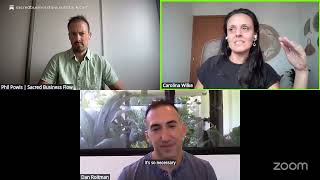
This is a livestream interview (Sacred Business Stories) with entrepreneur Dan Roitman. He recounts an entrepreneurial childhood, a music scholarship background, and the trajectory from a college dorm startup (text-scanning idea) through pivots into professional development and the Pimsleur language-learning brand, which he scaled to ~ $100M revenue over ~15 years. He discusses later ventures (Amazon/consumer products, a supplement company, a tax-optimization firm), mentoring, and a children’s book series (Miller Moguls) teaching entrepreneurship/financial literacy for ages ~8–14. Key themes: creativity as central to business, business as a crucible for personal growth, pricing/self-worth barriers to charging value, strategies to de-risk ventures (start side projects, buy businesses, offshore labor), networking as a source of “discontinuous shifts,” and his planning heuristics (100-day and “1,000-day” rules for commitment). He gives several practical claims (eg, tax optimization can save up to 40%; typical savings ≈ $150k per $1M EBITDA) and points listeners to millermoguls.com.
Questions this video answers
October 22, 2025
Close to $100 million in revenue over ~15 years
About $3 million per month in media
A full scholarship for jazz/commercial composition (music)
millermoguls.com
Chapters
There's usually like a little bit of an awkward moment here where we don't entirely know for if we're live stream.
So.
On substock to see if we're going to show up on my phone and I don't see us but I.
Guess there we are and I do believe we are live. So yeah. Welcome to Sacred Business Stories. If you're joining us live, this is our weekly substack where we really just have an honest conversation about what it looks like to build a business that aligns with your deepest truth. And today we are honored to be joined by Dan Reuteman. There's a lot we could say about him, but highlights. He started his first company out of his college dorm room and achieved something that is quite, quite. Yeah. He's built his company to 100 million over 15 years and he's also spent the last decade mentoring entrepreneurs and leads a tax optimization firm. And the other thing we're excited to share is he's now the author of a series of books for kids teaching kids 8 to 14 about entrepreneurship and financial literacy. So yeah, really honored to have you here, Dan. Like I've have you here, Dan. It's been a privilege to get to know you a little bit over the last couple years. Going on a couple events with you and yeah, just excited to share your story here.
Definitely. Thanks for having me. Yeah. Excited to help however I can.
I just like to. Well, first, it's an honor to have you here and I'm very excited to learn a little bit more about your books especially, but also your whole story. But I also like to remind people like why we created Sacred Business Stories. And it's really to inspire people to step into possibility. Like we talk about Sacred Business that it's, it's the business that brings us like all of who we are, like our victories, our failures, our challenges, like our certifications. And now we combine all of that and then we create something that supports our lifestyle. And then sometimes when people see from the outside, they just see what's happening right now and they don't know all the path and everything that took for you to be where you are. And then we all again, step by step. Right? It's one thing that we handle and then the other thing and it's not an overnight thing that just happens like this. And I feel that just uncovering the story behind the business allows many other people to see that as a possibility for them as well to just follow their heart and create something that is truly meaningful for them. So thanks for Being here. And thank you for you that here watching. If you have questions, we're going to do our best to coordinate that as well.
Perfect. Yeah. I mean, it's not, it's never. Usually it's not a straight path. I mean, I think if somebody's looking to get in business, into business, the, the, the best thing to possibly do is just to get started. I mean, then the question is just how you start. I mean, are you doing this as a side project maybe while you're working, and then building something up that way, which probably would be a smart, low risk way to do something. Some people call that like a kitchen table business. And then there's the. I think when you're younger, it's better to take more aggressive risks. I mean, if you have no family, kids, I mean, you know, everybody thinks they have to go into corporate or whatever, go work for someone. Maybe that could be helpful for a few years if you have a certain industry you want to go into. But at the same time, you're probably at the age where you could take the maximum risk. So. And most people actually don't do that. So that is kind of what I did.
I mean, I'm curious about that kind of taking us back and we can kind of connect that to where you are now. But like, you know, what was your decision making process at that time? Like, was it a very intentional thing or was it just kind of a accidental process? Like. Yeah, I'd just love to see if you can still connect with the version of Dan that was back in that dorm room.
Yeah, well, I mean, we had to go back, go back a little bit further. I mean, I was entrepreneurial as a kid. I mean, I, I remember I was home one summer, maybe I was like in 9th or 10th grade, I don't remember. And my stepsister came in and she was all like, covered in, you know, ice cream or whatever. She's working at this place called Friendly's, like, serving ice cream. And she saw me sitting there on the couch and she was like, why are you so lazy? And don't, why don't you go do, like, go work somewhere? I was, what do you mean lazy? You just came back working, you know, for four or five hours, and you got, you made like, what, 20 bucks? I can just sit here watching TV and I'll go mow a lawn in like an hour from now and make 35 bucks and that'll take me an hour. So, you know, it's all relative, right? So, I mean, I would, I would frequently, you Know, I'd knock on doors, see if people needed landscaping or mowing or shoveling snow or whatever it was. And so. Or in school it was like selling candy, you know. And even now, I mean, my kids are like, I mean they naturally kind of. I have encouraged them to be more entrepreneurial in many ways, but you know, I really don't. I'm not trying to be the doctor or the lawyer or engineer or accountant who's trying to push their kid into the same profession or something like that. I mean, I don't, I don't care what my kids, you know, do as long as they're happy and you know, are serviced, are in service of our helpful to others, are productive, you know, so basically. But, but you know, even now my kids are like, you know, I see them selling, selling candy in school, which is kind of funny, you know, or my. One of my daughters will come home and she's got, she bought these little characters or something. I'm like, what are you doing with those? And she's like, oh, I'm going to sell them. And I'm like, okay, all right, hey, go for it. So. But anyways, I was entrepreneur oil as well as a kid. And so that kind of developed over time. But then I think there were other things that kind of gave me confidence. I mean, so I actually ended up getting. I started playing guitar when I was 14 and started practicing like two hours, then three hours a day. And before you knew it, I got inspired one day, had this song in my head that I recorded on the guitar and sent it in as a demo tape to a university. And I ended up getting a full scholarship for jazz, commercial composition and that kind of, you know, I went down that path for the first two years studying music along with business. And also I happened to study German just because I was born in Germany and wanted to keep it up. I moved to the States when I was nine. So in high school and college I. I kept up German. But anyways, I burnt myself out on, on music. So practicing, I mean, at one point I had to practice. Like I was practicing like six hours a day because I mean, it's not just then guitar, it's also then at some point like sight singing and all this other stuff. And at some point I was like, you know, this just becomes so mechanical. I just don't enjoy it anymore. And I sure as hell don't want to be a starving musician if I look at the odds, you know. And so I thought, hey, I could apply that kind of creativity to business. So, so that was like one data point, you know, like just saying, hey, business could be creative. I could create things, figure out whatever I want. And you know, obviously when you go into business, you're kind of pursuing freedom. So in some sense, I mean, I had worked for, I worked while I was in college, so I mean, I had experience working for other, for companies and so forth. But, but yeah, no, so, I mean, those experiences I think led up to me feeling some level of confidence to try my own thing. And I kind of always knew I wanted to do my own thing, so it kind of turned out that way.
That's so interesting. I didn't know that history about the music thing. I actually, I went down the similar path at the beginning. I, I actually had a scholarship offer to Berkeley College of Music. But my parents, unlike you, my, well, my parents weren't supportive of the musician's path. My uncle had been a musician and my mom thought it was kind of like the worst possible career path. So they kind of helped me see the, the folly, I guess you would say, you know what you kind of came to on your own and, But I, you know, it's really interesting because I've always kind of considered business as a form of art and, and create an expression of creativity and I don't know. Yeah, it was just cool to hear you use those words because I don't know how many people relate to it that way, but I've always, I've always seen the, the connection there myself with that, that original passion. So. Yeah, it's just really cool to hear you share that.
Yeah, it's just basically, you know, creativity, it's like, it's a life force. Right. It can take many different forms. I mean, so in business, I mean in music now with books. Right. In fiction could be a non fiction, I mean, whatever. But the, usually nonfiction is more life experiences. But, but frameworks, if you, if you create them, I mean that's creative as well. So it's more, Yeah, I also, I, I, I got into Berkeley as well. I mean they were offering like, like 50 scholarship or something like that. But I, yeah, I was like, that kind of was more practical. I was like, let's go for the full scholarship. Plus my parents, I mean they were super generous. They're like, we already saved for all this stuff. So they're so like, hey, 50% of whatever the scholarship money is you can spend on music equipment or whatever you want. So I fe, I had like, I was like on Wheel of Fortune.
Jackpot.
Yeah. Want this and I want that. And that was just great. I mean, but that came to an end, you know, so gave that up. But you know, those are the trade offs. So. Yeah, no, I definitely think it's. Well, not only is it creative, but you know, you guys call it sacred business in some sense. I mean, business is a, is a major crucible for personal growth. Because I think most people think that, okay, people running these large companies and so forth. I mean, okay, there are old school, well, there are asses out there for sure. But I think the majority of, of companies can't be run in a way that demoralizes people. So it requires a leader, especially if it's a founder that's made it to that level because there's different stages of competency and so forth. So. But it requires a founder that, that has developed themselves or at least learned not to allow their weaknesses to, to basically be toxic in a sense, you know, so, so they've at least like neutralized their weaknesses to some extent. I mean, I don't advocate turning your weaknesses, turning them into strengths. I mean, it's just a waste of time but, but at a minimum. And we can't like derail you. So. So from that standpoint, I mean, I feel like people have to also like use business as a crucible to personally evolve and grow and so forth. And then, you know, eventually you also realize your limits. I mean, if you're working 60, 80 hours a week and you're not spending time with family and threatening your relationships and all this again, it's a, it means that you're not actually a great manager or executive. I mean, or you're hoarding money and not willing to spend it on people that could actually pull you out of that situation or you're just in a tough situation in the business. I mean, that happens too, but depends on the circumstance. But I'm talking about when things are going well and just overworking, it's just usually a sign of personal failure. So, you know, I mean, those are all things to overcome, right?
I love what you share about your kids and like that you don't have an attachment of like them following your path, but you kind of like encourage them as well, right? Like just be what you want to be, but like go if it's going to pursue a degree or open a company or work for someone or even if you want to open your own business. And I would love to hear like, because I haven't had the chance to get your books yet and I'm very excited about them and I want to have them to share with my daughter and she's nine years old. And one thing that I was thinking, I was actually talking to Phil about it that I feel it's so necessary and I would say that your kids are lucky to have you just holding the space for them to be whatever they want to be is there's so much and we see with like our clients and our community like there is this not healthy relationship with charging like not healthy relationship with like asking for money. And like I see for example at my kids school like, like I don't even think she's allowed to sell stuff in the school here.
I don't think any school allowed. Yeah, like I try not to. That's a really tough one because I, I kind of, you know, I want my kids to follow rules, you know and yeah, it's one of those things where I mean I, I, something hasn't happened yet. So I mean I basically I just remind them hey look, you know you're not supposed to sell things at school. So yeah, I mean basically it's free. But at the same time like this is probably one of the most, I mean other kids are selling things and I think this is one of the most important skills that kids need to learn. In fact, I would encourage parents to even like you know, when your kids are younger, I mean buy something where you just let them sell it at your cost. I mean who cares if they're, let them keep the money. I mean who cares if it's actually technically not profitable. But the main thing, most important thing is gaining that confidence and that skill to sell. Because if you have something that's of value to somebody else that is going to help them, then actually you're doing them a disservice not selling it to them. So I'm not saying that, you know, I mean, okay, what's the value in society of frickin candy? I mean, okay, I guess it keeps the dentist busy. But you know, other, I mean, but in, in reality most people are selling the service that really can add to somebody's life and they should be proud to sell that, you know.
And I, and I think it's despite the fact that if it's legal or not legal, I think the, this is just part of a culture that do not honor money in a healthy way. Right. And then we see people like coming to us right now like trying to build their business and then he's struggling because they can't charge their real value. And it's like all across the board of people like not knowing how to price their services and not knowing how to create like a sustainable business because they want to just be like generous because at one point in their lives they're told that like you are charging like way too much. This is too expensive. Look at those kids that cannot buy what you have to offer. And I just find that like, I would love to hear a little more like your perspective. And as you're like you had this naturally in you and maybe right now you need to step outside your autopilot and your way of knowing because you're trying to teach your kids. So like, what is your perspective on that? Like if you know, knowing that you're speaking to adults that struggle with that and maybe like if their child had listened to someone like you, they would be now in a much different position. Like in a different position.
No, but I think you gotta go deeper on that side too. I mean, is there some self worth issue? Right?
I want to learn.
If you think like, listen, let's say, let's say you give advice. I mean I mentor entrepreneurs and frankly I'm, I'm expensive. But there's times I feel like I'm not expensive enough because I could just, and I do, I've bought businesses and I could just do it myself and I do it for myself, right. And get all the value right. But I enjoy mentoring, I enjoy helping people. I enjoy. So I'm not, I'm not really concerned about that side of things. But when you give like, you know, competence is confidence. So if you're really sure in your knowledge and the value that you're bringing, then then you should have the confidence. And if you don't have the confidence, then that's some other underlying issue I would argue. I mean it's. Maybe there's not enough self worth, self love, that type of thing going on. Maybe there's a feeling of rejection and selling. Right? So there's that, that component people sometimes have to get through. So I don't know if that' you know, basically just not, not being willing to, to be in an uncomfortable situation or some people are like people pleasers. They can't even say no to anything themselves, right. So I mean there could be all kinds of things going on. But I, but I would, I would say that it's got to start with, yeah, some level of self, self esteem and self. Level of self worth. So if you know you're worth it, then you know it's important to charge, charge what, what you're worth. And then there's another aspect, I mean, I've more come across this more recently, which is interesting, which is this idea of like, like an upper performance limit where people have some threshold that they're not able to cross over. And what's interesting is that if you take, I. It was some study, I think IBM did it or something. And it was kind of like if you took someone who, I hope I'm remembering this correctly, if you took somebody who was making, selling something for $250,000 a shot and you put them in a role where they had to sell something for 50,000 and then their, their quota, let's say, was 250,000, they would all of a sudden come in and they'd start, they'd be beating everybody's record, they'd be selling like 600,000. But in the inverse, it didn't work that way because somebody who had hit a $200,000 or $250,000 quota all of a sudden, like when it was 600, even though it was just differently priced products, mentally, they just, they couldn't adapt. So it was actually more of a mental issue than it was an actual capabilities issue. So there are exercises and things, and I'm not as familiar with your practices, but there are ways to work through those performance limits, you know, and so, and that also happens even with like, people I'm mentoring. Like, just on a basic level. Like they, I mean, I'm, I'm scratching my head sometimes when I'm like, okay, you're cooking dinner. Like, why are you cooking dinner? I mean, unless you really enjoy it, that's great. But if you, if you don't, I mean, there's a certain point in business where you need to become kind of a diva. Like, you need, you shouldn't be cooking, you shouldn't be cleaning, shouldn't be grocery shopping. You know, unless, you know, it's taking a friend to the airport or family member. I mean, make your exceptions there. But otherwise it's like, you know, or taking the kids for certain things or certain reasons. I mean, don't, don't do any of that stuff because you need to, you know, freedom isn't free. You need to buy back your time. So there are that, like, that's a mind shift in general. But it does go back to, you reach a certain level. And you don't realize at that level you need to be spending your money in different ways, you know, have your meals cooked for you, eat more healthy, you know, have more time, have more time to think, have more time to relax. So I mean, those are just super basic things. But yeah, if you're not charging enough, then you'll never get to that place, right?
Yeah. And then it's the cycle that never ends. Right? Like you don't charge enough and then you don't have more time. And then you can be creative because you don't charge enough because you don't have time. And then it goes like, or move.
To Brazil or Colombia, you know, save your money on dollars and pesos or what is it the reality?
So, yes, yeah. Going to. This thing about confidence is so interesting because like when we were living in Costa Rica, like my daughter was, we, we had it, we were living at, in this farm and then we had events and she decided that she was selling rocks and then she would like collect rocks on the property and then we would make like a cute little boxes and then she would sell, sell it. And she was so confident that the rock had like a huge value. And then I remember there was like this, the guy that came and then his kids, like my daughter sold the rocks for them, but very like $10, one rock. And then the dad came then, now he owns the money and he's like, no, but like, I need a discount or something. And she was so like on her element that the dad ended up paying like, I don't know, 15 or $20 for three rocks that she found somewhere. And then it's just like making me think about like, how we lose that, like what, you know, like this as we grow and then we lose confidence on ourselves and then we lose confidence on what we are building that we can just charge like whatever the value is. And yeah, it was just interesting in my head like, and how much she was like owning it, you know, And I'm glad I did not. I did not. I, I held a space for her. I'm like, I'm not good. I, I do think that she's selling for a very high price this rock that she found here. But, you know, I'll let her play her game. And she did it. So. And she ended up making like, I think it was like 60 to $80 on that day selling rocks, which is like, exactly.
You know, the only time I've intervened is when my, my youngest is a number years back. She's like, she's like, yeah, oh, I sell them for. And it was like some inflated price to the younger kids because they'll pay that. I'm like, no, no, no, no, no. I'm like, don't, don't take advantage of those Little kids, you know, that's not nice. So that's the only. That's the only time I've really intervened that. But then again, I mean, she tells me, oh, yeah, I sold this thing, and, you know, he paid on credit. And then she's like a freaking loan shark. I mean, charging like 100. Like, she's like, it's no thousand pesos per day. And I'm just like, like, what the. What the hell? I mean, what are you doing? Like, you know, she's like, oh, no. It just keeps going up every week. Like, it starts to double, you know, And I'm like, okay, all right. Well, I didn't teach them that. So that. That. That's where you have to kind of rein it in. Or that's where you say, hey, that's why we do have some. Some rules that we all abide by, just like, go back to Lord of the Flies, you know, or something. So, yeah, yeah, sometimes. Sometimes the market breaks. You know, you need the regular regulations. So. But I love.
I'd love to take it back, Dan, and just kind of, like, connect. And for people that don't know your story kind of. And I don't know how you want to do this. You could tell the story in however way you want. But, like, yeah, I would just love for people to kind of understand kind of how you went from the decision with the music to starting this business that was wildly successful by most people's worldly standards, and then kind of like, what's unfolded since then. And then I'm really curious, like, how you've made decisions every point along the way. And, you know, one of the things that, you know, we talk about a lot is this idea that, like, if you're doing things that are meaningful, if you're doing things that are worth doing, it's perfectly normal to have this experience of, like, fear and resistance coming up. And, yeah, I just love to hear from you kind of if that's been part of your journey or not. And kind of. Yeah, just how you've kind of navigated from the outside perspective what looks to be. Have been a very graceful. Graceful career.
Yeah. So. So. Well, I mean, the. The journey was. I. My dad was living in Europe, so I was visiting him and I saw an ad for a text scanning patent, basically something that converted printed text into computer usable text. And so I had thought about that when I saw that ad in the in flight magazine. I was thinking, wow, I hadn't. I had come up with that same idea, like, three to five years Prior as something I thought that would be a cool invention. And so I had an idea of how to market that to college students. So when I was in college, I ended up approaching one of my professors who was Swedish and ended up convincing that professor to fly with me to Sweden to pitch this company on this concept. And so off we went and I ended up getting not much, but I got, you know, like, like 10,000 bucks or something in, in some funding to try this concept at, at college universities. And so then I launched it at the University of Maryland. And then I, it was going well, we got access to the school mail system. So I kind of like learned a little bit more about direct mail and things like that. And basically, long story short, when I was ready to expand it to 20 universities, they decided to pull out of the US well decided to switch their business model to more like security applications for their optical technology. And so so basically I had, I had to find a new product to sell. And after that I kind of landed on professional development products of which like, like communication skills, management skills, supervision, I mean a whole range of things, sales skills. But ultimately there was a category within that language learning that about a year later I ended up drilling down into and realizing that we had an amazing product there that just wasn't marketed well. And that's kind of what led ultimately we pivoted into the business that I ended up scaling to close to $100 million in revenue, which was with the Pimsleur brand, which became, which is an amazing audio based language learning methodology and at the time basically became the number two language learning company, language learning brand in the US and so my journey at that point was kind of one from entrepreneur to professional manager. I guess over those last, over those 15 years in the sense of going from just being me to eventually learning how to hire and grow and eventually have a management team and you know, just scale the business. I mean, because it went from $5,000 on a credit card for an advertising buy to eventually almost $3 million a month in media. So, so it's, you know, so that was, that was kind of a journey in itself. Just the learnings along the way and so forth. And then, you know, going into the second business, I ended up, interestingly enough, we, we were in the Amazon space and started off launching products, eventually built the technology to figure out what products to sell in the first place, and then had a sourcing team in China and so forth that could kind of create researched research, all the, all the sourcing side of it. We'd know kind of like where to, where to point the gun. And ultimately we sold some of that research other people so that they could launch and so forth and have a, have a higher probability of, of being successful. But that business was interesting because we, we went on stage at a conference in 2014 and we're like, hey, these Amazon businesses, it's time to consolidate them. And so we ended up buying a business in the Amazon space. And based on that experience I decided that that was not a good market. Meaning that okay, there's this consolidation opportunity, but even if you could pay 3 times 4x, 3x or 4x their earnings and get them at a, at a reasonable price, I didn't think they were sustainable because you needed like nitty gritty operators on top of like all the possible tactics that are constantly changing in that space to just stay competitive. I mean with Chinese entrants coming in Amazon sometimes gobbling up stuff, just the, just the fierce competition there. So we, we, we didn't pursue that strategy. So like that's an example of like not, well, just trusting our gut and like trusting our instincts and not doing that. I mean then, now you've saw a number of years ago Thrasio, which was one of the leaders in that space implode because those weren't sustainable purchases. And it just became, it just wasn't a good business model. But I guess one thing I wanted to say, just, just touching back on the fear side of things. You know, interestingly enough going into that business, I mean I ended up bringing in numerous executives from my previous venture, from my first company. And you know, honestly when I look back it's, I actually think that was a fear driven decision because I just didn't want to not do anything and just wanted to have a venture to kind of like jump back into and do something instead of pause. And I, I feel like most of my friends who've exited their businesses or moved on to new opportunity, they, the ones who waited like at least a year were massively more successful than the people that just jumped right into the next thing, you know. And so, so that would probably be an example of a fear driven decision. Just didn't want to be on my own, just taking a pause, wanted still, maybe still attached to the ego of, of being a CEO and doing big things and all that other stuff, you know, so probably, you know, I mean I have no regrets and I don't know that I would change any of my past, but just, I would say that that's just something that, because you Know everything leads to something else. So you never know what that's going to be. And you can only, you can only see that kind of in retrospect. So from that standpoint, maybe that's one. One point where I did make a leap and I'd probably say it's more fear driven versus many other things have just been, hey, this is the thing I want to do. And this is kind of like an area that I have a passion for like the early education company I have or that book series, which of which the books, the kids book series is a part of. So that was something that I really felt at the time. We started that company in 2020 and the premise was or 2019, but that AI and automation would take away a lot of jobs over the next decade and that schools weren't teaching the key skills that kids needed. I really believe that at the time and still today we believe that the best opportunities in the future are going to be in entrepreneurship, innovation. Entrepreneurship, innovation, you could say sales, leadership and probably vocational skills. Like if you think about the trades and so forth and how there's a shortage of people there and whatnot, or there's just generally an opportunity. So those are kind of like the five areas we thought there would be opportunities. And so we did something kind of with innovation, teaching creativity, innovation skills to kids and then also entrepreneurship.
So yeah, I'm curious, Dan now, like my perspective and it's, it's limited. I, I've not had the level of success you have had. I feel I've had my version of that. But I'm curious like at some point, like I'm curious what motivates you now. Like, you know, having had this successful strings of business, business and kind of, you know, I feel like with the children's book there's a connection there with the stage of life you're in with your kids and you know, the world that you want to see for them. But I'm just curious like the Dan today, like, yeah, what, what kind of motivates you to keep showing up and kind of creating and starting new ventures and things like that? I'm just curious to kind of unpack the way your brain thinks about that.
Yeah. Because one of my friends, Garrick Anderson, he, he makes this joke about retire, which he says, you know, means to, to take out of use. So I'm kind of with the mindset that if you have certain skills, you can build things. I mean, ultimately I think business is like when think about, when people think about charity and so forth and Needing to give back as opposed to pay it forward as an example. I mean, a business in itself is to me like a huge good in society because it provides opportunity to other people. And also it, it, you know, if you're offering good products and services, you're doing good for society. You're offering good things. So, so from that standpoint, I don't know. I mean, I always feel like it's. I don't have a passion for business, always think I'll be doing something no matter what. Again, because I, I don't want to be taken out of views. So the main thing is just doing something that I enjoy. So I think what, what's happened for me over time is more. Well, I mean there's, there's clearly the education company is a passion business. And then in the others, I mean there's parts that I am passionate about in, in all of them or feel like can, you know, add value to others with mentoring, it's helping people get over major hurdles with this tax optimization company. I mean, I think it's enabling entrepreneurs to spend money on things they otherwise didn't think they had the money for. Even if they're making a lot of money, they just mentally might not allow themselves to. And then there's also, you know, some mentoring kind of guidance opportunities with that. And I also have a supplement company and there it's just having a really great product that helps people solve a problem. Right. So, so it's just, it's just solving problems ultimately, you know, and having fun doing that.
Spine is like, I read this days, like some somebody said like being poor is, is hard. Being rich is hard. Being this like the. All the opposites is hard. Right? So pick your heart. And at the end of the day, like he has for me, like, fun is a big part of it. Like, and, and I know sometimes I, I could challenge people when I say that. But if you're not having fun doing what you're doing, like, why would you, like, how are you going to keep yourself in the long term? And I agree with you about the, the retirement. I always had this weird relationship that like you produce for 30 years, whatever, and then you stop and then what do you do with your, like that. That's just not a mentality that I see for being alive or being service. Like, it's for me, like I, I've always pictured myself like being this old lady, the white hair and then serving in, in a way. But being active and engaging with life and business is just a form of engagement with Life in a way.
Yeah. Yeah. I mean, I. I think you should be taking the time you need along the way to enjoy yourself in some way. I mean, no matter what, I've always taken at least a month off, always. Since I've always been in business, minimum. So. So at least. And then, you know, design your day the way you want it to be. You have all this flexibility, so it's more knowing where. Where you put your boundaries and so forth so that, you know. And then, I mean, there are times I have to revisit this idea of is something really a burden or am I having fun doing it? And sometimes with some things, it's kind of like you have to make it fun because there is some work that just has to get done. So it's just up to you to find a more fun way to get it done. And, I mean, these days, I'd argue that, you know, ChatGPT or your LLM of choice can make it fun because it's like, hey, let me just see what this thing throws out, like, with little effort. And then, boom. All right, now it's fun because I'm not staring at a blank sheet of paper, right? So that already makes it that much. That much easier in terms of, you know, with certain things or, like, let's say. I mean, there's so many examples, contracts or proposals or models or whatever, but. So I think. I think part of it is finding the fun or creating the fun in it. Right? So. And then being clear, like, the things you definitely don't like to do, you know, so then you just delegate those, pay for those, put a price on them, whatever it is, you can buy your way out of most problems. So, you know, you can keep. Make keeping things fun. So I think that's. I think that's super important.
I'm curious for someone that, you know, I think there's a way in which people can listen to an interview like this, and then, you know, they have this dream or they have this idea in their. In their heart for something they want to create, but they're kind of back to the fear thing. They're kind of like, hesitating to make the jump or take the leap or take the first action that's going to move them there, and they can listen to someone and kind of be like, that's great, but that's not me. And, you know, that's. There's something special about Dan that, like, sets him apart. And I'm just curious, like. Like, what would your. What would be your advice for someone like that. Who's kind of trying to. Yeah, kind. Trying to kind of build the confidence to kind of step into something new and maybe, you know, maybe the person that's been in the job for 10 years and. And knows they've got something cool and, you know. Yeah. What. What kind of advice would you give for them to kind of, like, kind of take the first step or test their way into a new way for themselves?
I like the idea. I don't remember where I heard this in the past. It might have been a Jeff Bezos thing. I'm not sure. But this idea of irreversible, like, reversibility, like, don't make decisions that are irreversible. Meaning, like, you just mortgaged your whole home. You went all in, and now it's like, yeah, I burned the bridges and I'm going. I mean, okay, there are times in your life you can do that. Other times, like in your example here, somebody's been out there working and now they're thinking about, how do I. How do I escape free and do my own thing. I would argue, you know, again, start something small on the side. See if you can prove it out, actually. Or alternatively, I would say buy a business because you can reduce your risk by 90, 95%. I mean, I don't think starting a business is forever. I mean, I think starting a business is hugely risky. You know, 90 failure rates, right, versus buying a business. And you think the success rate is probably 95%, assuming it's not some big company buying it for, hey, we're going to get synergies with these guys. And those things don't. Don't materialize. But if you buy at a reasonable price, you know, there's. There's a high chance of success. And so I would say that's another way to start. But then, broadly speaking, if we back up from this, you know, there is. There is, I think, I think another. Probably these days, one way I might answer that question, which is very different than I might have answered in the past, is like, what is that blocker telling you? You know what? You. You are protecting yourself from something, right? By not taking the action. So there's something in your past, whether it was success or something else that had some hair attached to it, that was difficult. Let's say it was a success. It still still had some challenges. And there are parts of you that are going to try to stop, like, protect you by not letting you move forward on something. Right? So there's a whole. There's a whole aspect of Kind of like the inner world that, you know, needs to be resolved. Sometimes if you find yourself procrastinating and not moving, take moving forward on certain things. And that's something I've become much more attuned to in the last, probably in the last year, I would say, using those as signals, like, for spiritual growth, basically, you know, anytime you, you detect there's anything but, like, clarity and freedom and joy and so forth in your actions. But that's probably something much more recent for me.
So what would be the signal for you to go all in? Right. So. So this is something I feel that's like a very personal thing that has to be negotiated, but.
Right.
Let's say someone has started their business on the side, they're experiencing some level of initial success, like, but they're struggling to give it all of the energy that it requires because they're still kind of towing the line and doing their day job. Like, what, what would kind of be your process for, like, evaluating? Yeah, like, I'm going to go all in. I mean, I know for me, like, when I left my corporate roles in product management, I just had this. I mean, I kind of just took the leap. I had this idea that, like, hey, I've built skills that are always going to be valuable or at least for some period of time, and that what I'm. To your point, what I'm doing here is not irreversible. Like, I have a network and I can always plug back in. And for me, I had the financial security to, to invest in myself in that way. But yeah, I'm just curious, like, how you, how you relate to that?
Well, like, let's say it's somebody who's making a lot of money or making good money in the States, and they've got something that's starting to work on the side. I mean, I would argue, hey, is there anybody offshore you could hire to start actually working in the business and starting to advance it even more? That would be my first thought. So that you're able to arbitrage the labor and while minimizing your own risk. Right. So that would be one way to think about it. The other way would be, I would want to know, is the profit model dialed in, meaning that, like, I was. There was. There's this concept I call the big click, which is like, when supply and demand meet each other. And like, let's say you're advertising online, let's say this is a consumer brand or whatever, it doesn't matter, but you're able to acquire A customer profitably, that is like magic. That is not something to take for granted. That is something very, very special. And so if you've achieved that, then I would say you've already de risked the majority of the business because that would be like the first point of de risk is you actually have a profitable, at the fundamental level, you have a profitable business model. Because I mean, many people can sell things, but they can't acquire a customer without losing money, even if it's over time. Right. Even all the other stuff people buy, the lifetime value is that, that was the problem during the dot com cycle back in the late 90s, is they would spend more on acquiring a customer than they ever even had the potential to have a lifetime value to make from the customer. So, so that would be another factor, I guess I would look at. And yeah, I mean, if you, if those elements are in place, then I mean the only other place that you can get to that like, so there's the 8020 principle, right? And then there's the 8020 of the 8020 of the 80 20. It's a fractal. It's a fractal relationship. This is something that Perry Marshall kind of figured out the math for in his book 80:20 Sales and Marketing, right? And so, so essentially you end up with 20% of inputs equal 80% of outputs, 4% equals 64 and roughly 1 equals 50%. So for me, in business, breaking even in a business is like the 150 relationship. That's like half the battle. Then you don't have to worry about raising capital, you know, or plugging capital. You're just focused on growth. And like, how do we, how do we grow from there? So there are these different stages of evolution of a business. And so you just have to know which stage you're in. And yeah, if somebody already has something kind of like starting to move and go and there's a real model behind it, well then, I mean, you've already kind of de risked the first part of it. Then it's just doing enough of it that you get to that next phase, which is breaking even. So you can combine that with, could you offshore some of this? Could you do stuff at ultra low cost, de risk it even more and then make the leap? Or, you know, there's other ways you can find investors. I mean, there's so many things you can do. So it just comes down to put a plan together, make sure you're not like burning the boats. And you do have that safety net. Like as you said, you had savings and so forth and just plan for something and then make the leap, or just buy a business and forget all that, then just leap in. I mean, there's so many ways to approach this thing.
I love. Carolina, we're talking about this. There's a book, and we were talking over the show about Derek Sivers, who we had on the show, and I, I really love him. And do you remember the title of this book? The one that's like all the Opposites, Carolina.
How to Live?
I think maybe, maybe it's how to Live, but I just love that book because it's like. It's basically like what you just said, and then it's like the opposite. And it's like this whole thing, it's like really hard to kind of, you know, some people just like, will be like, I'm just going to leap straight into it, like no safety net, and that's the way everybody should do it. And then it's like the opposite of that, which is like kind of what I was describing, my experience. And it's just, it's so fascinating to have these conversations and recognize that there's not really like one. One true, true way, you know, to approach these things.
There isn't, but I guess, you know, if things work out on the other side, great. But I would just, I would just argue that. I mean, I've also been in situations where I've met entrepreneurs where I just really question their judgment because they take this constant high risk. I mean, I'm super high risk. I'm calculated risks, but they take, in my, in my mind, like, there's no calculation in the risk that they're taking, and it's just excessive and it's not appropriate. And it's like, even in, like, for instance, on a growth situation, like investing in something that maybe would have a 10 improvement in growth versus you could have done all these other things that would have dramatically more and I mean, just making bad, bad decisions on that side. So, So I would argue it's probably better to, to, to. To make irreversible, like to make reversible action reversible. It's just you're betting everything. I mean, why. I mean, it's already high risk. Have a couple bullets, you know, to still in the, you know, in the gun, you know, whatever. It can be aimed at something. So. So that would be my, My recommendation. Yeah. And it's. And you know, the problem too is, keep in mind, I mean, it also depends on who you're talking about when you hear these Hear those statements about this entrepreneur went all in and so forth. People have to realize that entrepreneurs have, have this incredible tolerance for risk taking because they're the ones that are like, oh, there's a fire. Let's go run towards it. Right. But at the same time, you know, when it comes to managing their money, they're, they're pretty bad because everything becomes like, oh, well, now that I've got all this money, I should be doing angel investing and doing all this. And that's completely the opposite of what you should be doing. There's no way you're going to be able to size up those risks unless you've been trained in that and you're going to just blow your money like so many entrepreneurs have done. I mean, it's more like then they eventually have to learn, okay, well, maybe I should buy real estate and cash flow producing assets and like, okay, either put it in index funds or actually trust somebody to manage your money. You know, as hard as that can be. I mean, whatever it is. But that's an area where they're like, for most entrepreneurs and I have friends that have businesses that, you know, even teach entrepreneurs this stuff that, that part of the brain is like, just missing. You know, that's the, that's the risk tolerance, like, part is just out of whack. It has to be retrained, like, completely. So that's what I'm saying. I mean, a more prudent approach would be not to do that. Yeah, yeah.
I'm trying to think. We had one other question. I wanted to get in with you, which is around connection and like network and, you know, I, you know, that's how I met you, is going to live events, which has been a huge part of my own perception of my, my success. It's just, is that. And so I'm curious what your relationship is with, with this idea of connection. And so, and if someone is, you know, if someone's out there trying to kind of feels like they have something worth sharing, but they don't know how to, you know, they don't feel like they have the right network or there's. They're not able to get in front of the right people, like, what, what is, what is the best advice you might give them?
Hey, the best advice is buy your friends. I mean, you know, sororities and fraternities have been doing it forever. Right. I never was in 1:1. But. But still, like, you know, I guess I've been fortunate because I, I really have been a part of, like, lots of networking and I guess communities and so forth. For instance, I started with vistage. I think I was at the time I was the youngest member they ever had. And that was like it's an organization that's been around for 50 plus years. One of, I guess they're now one of the, they're probably one of two of the largest. Vistage and YPO Young Presidents organization. Then there's also EO and there's some others as well out there. I mean those are entrepreneur groups where you can meet other people and so forth. But then I mean I, so I started on that side but then I, I also tried to design my business in a way where I had the luxury of time to be able to go outside and network and meet other people just kind of by, by having inside, outside leadership. So I was more outside. And then I had, my business partner was kind of in charge of operations and everything else and they gave me a lot of time to be able to go and network on the outside, pull in fresh ideas. And so I think that's critically important. I mean there's a presentation I once did where I shared what I called discontinuous shifts. So discontinuous shift is when you have a lift or improvement of 30% or more in your business. And so in our case, when I looked at my first company, we had a compounded annual growth rate of over 70% for a decade. Over a decade. And that really was a function of this networking on the outside. So out of 17 discontinuous shifts that identified, 14 were from the outside. Three were from like grit and figuring stuff out and testing and so forth. The rest were all just ideas in mostly different industries. Just borrowed and adapted that we knew worked really well. Borrowed and adapted for what we were doing. And so you can't do that unless you're out there networking. In fact, I was at a, I was at a party a month ago in, in Austin and this one woman happened to be, happened to have a, was an esthetician and had a practice and it was like in a bad location in Austin. And she was asking, hey, you know, do you have any advice on what I could do? I said listen, I could give you tons of, of strategies, you know, get a better location and treat that as your advertising, you know, or whatever. But it says what, what I say doesn't really matter. Why don't you go find a group of estheticians in other cities or whatever or non competing or whatever. Even a different, even locally could be, ask them what they're doing that's actually working for them. That's the question you need to. That. That's what you need to do. I mean, whatever I say, great. I mean, but get it from the source course. I mean, that's closest. I mean, there's endless. I'm sure there's endless information and endless strategies out there that you could get that way. So back to your point. I think community is incredibly important.
Yeah, that's been probably one of the biggest amplifiers for me. And I had this rule, you know, I. You know, one of the things I really don't like about sometimes going to events is that there's just a lot of, like, talk and circular talk and, like, excitement building. And then what most people tend to do is just kind of go back, and then they kind of go back to their. Their regular, you know, norm. And so, like, whenever I would go to a conference or an event, if there was an idea there that would, like, inspire me, like, I was like, this is the thing. Like, this is something that I really need to implement. I would, like, give myself permission to, like, of course I would. I would stay connected group. I would give myself permission to go, like, lock myself in the hotel room and, like, try to have that idea, like, done before I, like, left the building. Because I just felt like that was, like, the whole point of being there, right? Because, like, we're there to get these ideas, and then how many people just go home and then they're just like. They lose that dopamine high of, like, all the excitement being around other entrepreneurs and then never, you know, never, you know, they actually fail to execute anything. And so, you know, some of the coolest opportunities, especially my first business, that was, like, the thing. I would, like, hear the idea and I would be like, okay, I'm locking myself in the room until it's, like, done, and then I'll go back and do the thing. So my rule for events has always been, like, basically, like, one good idea that I've already started to execute on before I left, or at least one, like, one strong connection that kind of goes beyond a superficial level. And for me, that's always been, like, the way I've. I've gauged successive events. But. But, yeah, my friend, I want to be respectful of time. I know we're kind of, like, close to the top of the hour. You're not. I know you're not here on Substack, which is where we. We hang out a lot at this time, but if anyone's been listening and, you know, they hear something that inspires them and they're curious about your work. Like where's the best place to kind of connect in. I know you do a number of things, but I, you know, I've heard the mentoring aspect. I know there's the tax, the finance optimization, then of course the, the books for the kids. Like, you know, anything that you'd want to share, we can make sure it gets included with the, with the replay.
Yeah. So on the mentoring side, I don't advertise that, so I guess people just find me, I kind of leave it at that. That works. You know, it's as far as the books go, you know. So Miller Moguls is about three siblings who lose their allowance and have to learn how to fend for themselves. And their dad tells them, them, hey listen, if you each save a thousand bucks, I'll double it. So they end up having a mentor in their neighborhood who kind of tells them, hey, only stick to a business you love. And that sets up the premise for the series because they start a business, I mean they have their own trial and tribulations. They fail on the first thing they ever start, but then they have the trial and tribulations around the business that they do start. And by the end they've saved some money but then they decide that's not what they like. And so then that sets the prem, sets up the premise for the next book. And so then there are currently six books available on the, on the website. We've got another six coming. Just gotta finish up some. I don't just haven't done the final, I've already sent stuff out to an editor and it's all been on my plate to review this stuff but I, I, I, I'm getting there. So it's, it's soon it's coming. So we've got six on there on millermoguls.com and then as far as the tax optimization, so long story short on that, that probably doesn't apply to most people because it's, it's unless you're earning at least if you're us, if you're an American citizen earning at least half a million dollars or more in a business, it does apply. And then we could save you up to 40% on your taxes. So typically 150,000 per million dollars of EBITDA. And so that's@jarvis morris.com but, but yeah, no, I appreciate, I appreciate the time and you know, if there are any follow up questions or whatever, I mean on, on Substack and So forth. Happy to, happy to answer them too. So just.
Yeah, cool. And we definitely, definitely want to share that book with our, with, with our audience. So we'll make sure that those, those links make it in and I'm going to tell you here live just because I might forget otherwise. Have you ever heard of something called Boundless Life? Are you familiar with this?
Is that the Travel balance.
The travel school. It's a travel school. Yeah. Like with something we've been like looking into for ourselves. But I was just thinking it could be like a very interesting organization to think about with, with this, you know, getting this book out there. It just feels very aligned in many ways.
Yeah, I'd mention that too recently went on that and I might have met two people. So I need to, I need to go look into that.
You, you've been part of that?
No, no, I know somebody, I know at least one person who's gone and you know we've definitely thought about traveling around the world for a year and it seems like they've, they make that a lot easier like with kids and putting them in school there and so forth. So. But also something I'd say about the books is look, if somebody has any ideas of how to get this schools or. I had like an entrepreneur say to me, hey, I'd love to donate this to my school. You know, I'm open to help. I mean this is kind of a passion business. I mean it's, it only breaks even as I mean at this point. I mean the business breaks even only because I've outsourced part of the team to like 100 million dollar plus company helping them with their advertising. They got a really amazing team there. But you know, it's one of these things that we're still figuring out the advertising on and so forth because I decided to self publish. I didn't want to, didn't want to go with a publisher at this point yet. So we're still, I mean that's what I mean. Some stuff takes time. That's why when I was alluding to like the big click, it's like you just, it just takes time sometimes to figure things out on the advertising side. I mean with my first company there was a point in time when we already were successful but it still took us two years to figure out display advertising. And then after we nailed that, all of a sudden we could spend a million, $2 million a month that channel. So some things just take time to figure out. So you just got to be willing I guess. Last thing I'LL say on the starting a new business thing, I have a thousand day rule. Just got to be willing to invest a thousand days, you know. And know that it's going to be super hard. It could be hard. A thousand days.
I really like that because having a realistic timeline, you know. Yeah, it's. Most people I feel have a much shorter expectation of what they feel is going to be required to kind of get to get to that point. And so yeah, I think that's, that's. I really like that a thousand days.
You know, think about 100 day rule. Like just you gotta have your plan ready to go and be implemented already to try to figure out how you can add value to that business in 100 days. So take your pick. Thousand days or 100 days, you know, it's your choice.
Yeah, I like that too.
So be sure new to world if you're gonna go that thousand day route. Yeah. Cool.
Well, awesome. Dan, thank you so much for your time. You've been super generous with us here today and yeah, I'll share. You know we post a replay with all the links and kind of everything that we've talked about. So I'll make sure you get a copy of that as well in case there's anything you feel called to share. And yeah, just really, really appreciate you being here with us.
Yes, thank you so much.
Thank you my friend.
Yeah, nice to connect. Bye. Take care.
I.