Dr. Kelly Flanagan: When Your Business Triggers Become Your Biggest Breakthrough
In this Substack Live interview, hosts SPEAKER A (Carolina) and SPEAKER C (Katya) sit down with Dr. Kelly Flanagan, an award‑winning author, psychologist, and speaker, to explore how moments of personal and professional triggers can become catalysts for growth. Dr. Flanagan recounts her path from a PhD‑focused researcher to a licensed therapist, the abrupt pay‑cut that pushed her into blogging, the viral essays that launched her public platform, and the subsequent book Lovable. She explains the development of her open‑heartedness practice, the "Peaceful Pivot" three‑step process for calming the nervous system, recognizing early warning signs, and choosing a heart‑centered response instead of reactive ego. The conversation delves into the distinction between genuine fear and resistance, the concept that business challenges are often "pattern problems" rooted in a single underlying pain point, and how aligning with intuition can guide decisions despite mental paralysis. Dr. Flanagan shares practical advice for creators on consistency, honoring relationships with audiences, and confronting imposter syndrome by naming it openly. She also outlines her upcoming book, The Road Less Triggered (release March 3 2026), the Less Triggered Tribe Substack community, and offers resources for listeners to engage further. The interview weaves personal anecdotes, actionable frameworks, and philosophical reflections on living and leading from an open heart.
Chapters
So we are live. If you're tuning in, welcome to Sacred Business Stories. This is our weekly Substack Live where we have really just an honest conversation about what it looks like to build a business that aligns with your deepest truth. And through an awesome recommendation and being able to check out his work, we are honored to be joined by Dr. Kelly Flanagan. He is an award-winning author, international speaker. There's a lot of things I could say about him. He's been featured in Five Love Languages, The Today Show, Success Magazine, and I I know you're, um, got a book coming out early next year as well. Is that correct?
I do.
Yeah. Yeah. So, um, and, and that book is called The Road Less Triggered, and, and you run a group here on Substack called the Less Triggered Tribe.
Is that, is that the Less Triggered Tribe? Exactly. Yes.
Yeah.
Yeah.
I have discovered that most of our personal growth in personal and professional spaces happens in the moments where we're getting triggered. And so if we can isolate those moments and repurpose them for growth rather rather than disconnection, amazing things happen. So that's what we do at my Substack, and, and that's what the book is about, The Road Less Triggered.
Beautiful. Well, um, well, welcome. We're really happy to have you, and I think this will be a fun conversation just kind of because I feel like there's so much overlap in how we're supporting people, maybe coming at it from, uh, different angles. So, um, yeah, we'll, uh, but I'll let Carolina share a little bit more about why we do what we do here with the show, and then we'll, and then we'll kick it to you.
Sounds great.
Yeah, I always like to remind people like why we created Secret Business Stories and it's really a container for inspiration. So as we see people doing things that we find interesting, um, and then we kind of understand their journey that everything began like many years ago and the road is not always very easy and it's not that an overnight success, uh, we just like to bring down to earth like, yeah, if it's possible for one, for two, for three, it's also possible for whoever is listening here. So this container is really, um, for inspiration to allow people and to give permission to more people to do business from the heart that is connected to something. Just like you said, like, I discovered that for myself. I noticed that we got triggered and then finding a solution for you for something that truly matters for you, you ended up like creating a bit. And I know it's not as simple as that. It's like a lot of, but you know, just to inspire people to create their sacred business as well. So we would love to hear like, about your journey a little bit, like when we started and how, how it came to be what it is right now.
I am just now realizing I'm in the middle of the kind of podcast I dreamed about hosting myself years ago, but I'm just not a podcast guy. Like, it was a podcast that would be designed to talk to people and have them tell their business stories so that Gen Z could learn that none of us know what we're doing. We're just making it, we're making it up as we go, learning to listen to our intuition as we go, and that no one's a fraud. We're all just imposters trying to sort it out. So, this is such a— I'm very excited for this.
Thank you. I love the way you explain. That's exactly what it is. Like, we are kind of like walking day by day and discovering as we go, right?
That's right.
Yeah, and it's very easy, I feel, to see kind of the success story, or even as I read out some of the legitimate successes that you've had, and just to think like, hold yourself apart from that and be like, okay, like something about Dr. Kelly is special, different, and that's not me, right? And that's really what we'd like to hear is like, of course we want to hear about your work and how you're impacting people, but, you know, more so like, yeah, what does that kind of winding road look like? Like where, where did the inspiration, the original inspiration come from? And, and, you know, how did you kind of find your way to where you are today? So, yeah, I mean, I think that's just like a really good starting point is like, you know, when you think about your own journey, like kind of what were the pivotal moments that kind of led you to the work that you're doing today with your audience and your clients?
And yeah, well, let's see. I was desperate to make my mom and dad proud of me. Let's start there because that's just the starting point, right? Can we just all agree? Like, and but no, I mean, seriously, Certainly one of the pivotal moments that first comes to mind, I was, I was in a PhD program where I met my wife and we got married and had our first child while we were in the PhD program. And the, there was a moment where I was working on my dissertation and I was at my desk and I just shouted out one day, like, and it was sort of a surprise to me when I shouted it, like, I just want to work with clients all day, every day. Like, I don't want to do research. This is just not for me. Right. And it was just one of those, like, it's like It happened to me, that awareness, rather than me sort of calculating the awareness. And so from there, I went into my mental— outpatient mental health practice, became a licensed psychologist, spent my days sort of building a full-time caseload. And then I think it was like— I want to say it was fall of 2011. The main third-party payer for my practice, Blue Cross Blue Shield, announced that they were going to cut our rates by 15%. And my family, my young family at that point didn't have the margin to handle a 15% reduction in my revenue, right? It was like, oh wow, like, I'm entirely dependent upon these jokers for my revenue and they don't give a rip about me, right? And, and so I'm going to have to figure out some way to start to generate a demand for my services that allows me to diversify my revenue stream. And, um, I remember thinking, I've always wanted to write, and this blogging thing's sort of a big deal right now, so maybe I write a blog, right? So I wrote a blog post, like 6 people read it, um, you know, but one of them said, well, what are you gonna write next week? And I was like, what do you mean? And she's like, well, if you're a blogger, you have to at least write a blog post a week, right? And I'm like, oh, I didn't know what I was getting into, but I really did enjoy writing that one, so I'll write a second one. And then I really enjoyed writing that one. So then I wrote a third. My 9th blog post, Marriages for Losers, went really viral. And then someone's like, so how many people are on your email list? And I'm like, what do you mean? And they're like, you have to be collecting email addresses. And I'm like, oh, okay. So I start collecting email addresses. And then about a year later, I had a letter that I wrote to my daughter go really viral. A year after that, a second letter to her went even more viral. She and I wound up on the Today Show. Um, it was a trippy couple of years, um, following that intuition to start writing publicly. Um, and, uh, and by that point— am I doing okay here? Do you want to keep going?
Oh yeah, yeah, yeah, please.
Okay, you're awesome.
Um, so then by that point, now I have— so I publish a book after the Today Show called Lovable: Embracing What Is Truest About You, um, so that you can truly embrace your life. And it is about— it's about learning to settle into a sense of your own worthiness so that you can start to show up to your, to your people. You know, you can start to actually like reveal yourself in the world and find out who celebrates that, and those are your people. And then with their support and their mirroring, to be able to go out in the world and do what you love. And, uh, and so I generated enough demand for my services at that point that I was able to actually leave my W-2 counseling job and start my own practice. And talking about a learning experience and making it up as you go, right? And, and over the course of several years wound up with, I think we ended up with 4 full-time therapists at our peak. But at the same time, I was developing a speaking career on the side in relation to this book, Lovable. and entrepreneurs were reaching out to me saying, hey, would you, would you coach me on some of these ideas? So that was starting to sort of take shape on the side. I was getting more and more speaking engagements. And, and so then, then it became a question of, do I, do I actually like depart from this, my main revenue stream, which has been outpatient mental health my entire adult life? Do I depart from that and sort of go all in on this other more entrepreneurial solopreneur sort of adventure, which I ultimately did in the beginning of 2023. And then things have progressed from there to where we're at today.
Beautiful. And how— go ahead, Katya.
No, it's just beautiful to see how you were almost like following the breadcrumbs, right? Like, it's not that I had like this massive plan. I'm like, well, I got my pay cut and now I need to create something and like do something that I like. Like, that's What sometimes I feel people underestimate, like I like to write and then you're like, oh, I'm going to write a blog, you know, so maybe writing wasn't totally connected to what you were serving or doing at your job, but you're like, oh, I like to do this. So, and then you get another breadcrumb, right? Another step or like what is next and what is next and is if you, if we just keep doing it, like we're going to get there, right?
Yes. Yeah. My own coach. So yeah, I was. Being a couple weeks ago, I got into a really pretty neurotic space about my upcoming book launch, you know, and like, I'm gonna mess it up and it's gonna be a terrible failure and I've invested so much in it. And, uh, he says to me something along the lines of like, well, Kelly, you're either going to mess it up royally or it's going to be a huge success, but all you will have done is you'll have created the next conditions for your spiritual growth, right? And, and I feel like when we try to get a little too far ahead of ourselves in terms of visioning and planning and this is what I'm going to accomplish in 5 years or 10 years, every time we take a step towards it, we're creating new conditions. And in my experience, learning to stay attuned to one's intuition as the conditions shift and change, as you sort of are creating the reality of things, it leads to much wiser decisions and even better outcomes than, you know, I have to say that nothing I've planned has worked out. It's worked out better because I didn't stay sort of tethered to the plan, if that makes, if that makes sense.
Yeah, I totally love that the way you put that, because that's something, you know, in our business, that's part of what we do is we help people create the plan and structure to kind of anchor their vision down. But one of the things that we always talk about is like, don't hold this too tightly, right? Like, hold it lightly. Like, this is all this is, is the best hypothesis or co-creation of your best thinking and our experience. And really, it's designed to to get you to take that next step. And when you take that next step, everything's going to become more clear because you're going to be learning what you need to learn from that next action. And so that's right. Yeah, I feel like this is this, this, this artful dance a little bit of like holding that vision and having the plan, but, but holding it lightly and just letting yourself be informed by the moment.
That's it. It's like, so this time of year, it gets, you know, the daylight's getting shorter here in Chicago. And so if I want to go on a morning bike ride, it's going to be in the dark. And so I got a headlamp on the bike, right? And so I know, I, I I know where I'm going to go. I have a sense of what the journey is going to be, but I can only see about 10 feet ahead, right? And you have to make constant adjustments for— and I feel like it's that, like the non-duality of that, the paradox of that, of like, I've got my plan, but I'm also really mainly attuned to what I can see in the 10 feet ahead of me. And I'm trying to adjust as I go. Like, I feel like it's both and, yeah.
I'm curious, back to your kind of back to your story and how you got to where you are now, like where Um, where exactly did that intersect with kind of like what I was reading about and what you shared about this message about the less triggered tribe and kind of, you know, I was reading your bio and you talked about kind of, I'm just curious, like how much of your own experience informed kind of this particular direction? You know, I know you mentioned your, your marriage and hitting a ceiling and things like this. So I'm just curious about that side of things.
Yeah, I skipped over that. Um, you know, I yada yada'd over the best part, as Elaine Benes would say in Seinfeld. Um, So, uh, for me, probably the biggest pivot in my personal and professional life happened at the end of 2020. So like COVID hit hard for me. Um, I, I was in the middle when COVID hit. I was in the middle of, um, my business partnership dissolving with that mental health practice and my, my best friendship with that business partner dissolving as well. Um, COVID hit, you know, my wife and I were both running mental health practices at the time in All of a sudden overnight, we had to do something that just yesterday was illegal, which was learn how to see people remotely. You weren't allowed to do that prior to COVID. Health insurance wouldn't let you do it. So now, now all of a sudden you have to do something that was illegal. So there's no infrastructure for doing it. So you have to build the infrastructure overnight so that you can pay your therapist. And so these clients can continue to get helped. Super stressful. I mean, the kids are at home, you know, I always said that they were, they were becoming zombies, just like, like you could just see the life draining out of them. Um, for me, it all culminated. There was a Sunday afternoon. My wife convinced me to buy an above-ground pool. Like, she'd been trying for years, but now all the local pools were closed. So she's like, you know, she has some leverage to get me to do it. And, uh, um, and so we did. And she was, she was filling up the pool one Sunday afternoon. She, she hung the hose over the side of the pool and put a rock on it to anchor it there, but the rock wasn't heavy enough. And we came out a few hours later. And the backyard was a lake and the pool was dry. And like, I got triggered and sort of felt like all the stress sort of added up. And I was like, I know if I stay here, I'm not going to— I'm going to regret the things I say and do. So I'm just going to go on a bike ride and blow off steam. It's not very smart to cycle at 30, 35 miles an hour when you're like angry. And I made a couple of stupid moves. I ended up going over the handlebars on my bike and I broke my left collarbone on the asphalt road. Um, and, but what happened was it was a break in just such a way that, uh, it never fully healed. They're called nonunion tissue fractures. So I basically got two hinges in this collarbone now where there weren't any before, but super slow, painful recovery. So I get to the end of the year 2020 and I'm like, I'm out of shape. And I'm like, ah, paleo, keto, cardio. So I don't know why I gotta get in shape. I gotta set some New Year's resolutions. And right as I'm thinking about it on New Year's Eve, I come across this quote by Michael Singer, and the quote is, "Don't let anything in life be important enough that you're willing to close your heart over it." I was like, mm, wow. That's why I'm at where I'm at. It's not because of what's happened to me. It's not because of COVID It's not because of life. It's because my heart keeps closing to my life and my people. That's why I'm here. And so I made a New Year's resolution going into 2021. Moment to moment, I'll try to notice my heart closing and open it back up. And I was wise enough to put the word try into it, uh, because it's easier said than done. And I couldn't do it, and my heart would close over and over again. I couldn't get it open. And I would sort of watch the ripple effects of the impact that would have on my life. And so I was like, okay, well, I gotta start. So I started doing reading on open-heartedness and how to keep your heart open. And I mean, to not let anything be important enough that you're willing to close it. And even Singer himself is like didn't give any instruction. He just says in his book over and over again, relax and release.
He's tricky like that, isn't he? He just, he loves to get you into the state and it's like, but how? And, but how? I, yeah, I spent, uh, months, you know, it's so cool you mentioned, I spent months going and sitting with him in person, uh, in his Temple of the Universe, and same thing, but it was always like, but how?
Oh, you're the third person now that I know who has gone down there to the ashram in Florida and said, okay, but how? You just, his answer is you just do it, you just do it, just relax and release it. And I often say he's like the— he's the math savant who, like, you know, calculus comes so easy to him he can't even teach remedial math. So I'm like, okay, if, if, if I'm going to learn remedial math, I have to come up with the curriculum. I have to come up with the, the process for learning how to keep your heart open. And really, that's what I dedicated my life, my personal life and my professional life to over the next few years. And what I will tell you is that in the first year of that, that year of 2021, dedicating myself to that practice, it completely transformed my life. It was actually that year, it was in the middle of practicing open-heartedness that I decided to close my practice. I was in a conversation with one of my employees. I, I was on the phone, I was standing in my driveway. It was still COVID, so we weren't in person. And I was on the phone, audio, and we were talking about something. I could feel my heart closing. I could just feel that, like, I don't want to participate in this, I don't want this. And, um, and I, right there in the driveway, I opened my arms, took a deep breath, and just said, what if you just experience this the way it is? And this voice inside of me said, let it die. Let it die. And I knew immediately it was the practice. I'd known that for a while and I'd been ignoring it. So opening my heart had allowed this wisdom to sort of come into the moment that I had been keeping out of the moment. And anyways, it transformed my life professionally. It transformed my life personally. By the end of the year, my daughter, and was saying things like, "Yeah, Dad, that's why every time something went wrong on the way to Mexico, I looked at you and felt calm." Like, that my presence in my relationships had changed. And so I'm like, I think I've, you know, the thing I've always hesitated with regard to business is, do I really want to embrace something so much that I tether myself to that work for the rest of my life? Like, you know, what if I want to write about this? What if I want to write about this? And when it came to openheartedness, it's like, no, this is what I want to communicate to the world forever. And in a way, I believe there's no bottom to what you can learn in the practice of openheartedness. So it's not like it's a dead-end journey for me. It goes deeper and deeper. And so I started working on the book and the subset got shifted to that clear focus. And so right now, Right now I have an email in my inbox saying, hey, review the back cover copy for The Road Less Triggered. And, uh, and that book lays out the 9-step process, uh, for, for keeping your heart open and, uh, and navigating triggered moments in ways so that they don't create conflict, but they actually lead to deeper connection. Um, and it's awesome to get to watch the tribe on Substack kind of like they've been, they've been digging, they've shaped it with me over the last year and a half and to be hearing the feedback of like, This happened and it was, it ended up totally different because of this. So I, I, you can tell how excited I get about it. Yeah. But that was, that was, I mean, one of the biggest pivots in my life was that New Year's Eve and that New Year's resolution. And now it's my, my, my, I'd say my, my primary spiritual practice every day is moment to moment. I'll notice my heart closing and try to open it back up.
Yeah, it's beautiful. And, and just the way you said it, because it's so connected to our message, because in a way, like, it was like a business experience, right? Like you're on a call talking with someone and sometimes we hold those things so separate. Like the heart thing, spirituality is right here. And then the business, the performance, like the making money is right here. And for me, and I can tell for Phil as well, like we've learned that like everything is connected. That's right. And the minute you like Oh, I'm going to open my heart. If it's for a relationship, it's for your business, like all the rest gets impacted, right? And if you can serve from your heart, it doesn't mean that the path, and maybe you can even talk about it, like it doesn't mean it'll be easier, but just, I don't know if satisfaction is the word, but the feeling of like, this is where I'm supposed to be. Like, this is, you know, I could dedicate the rest of my life and I can say that just like peacefully because I know it's seeing me. I think there's no price. I was just curious, like, because the mind, at least from my experience, my mind goes nuts. And right now I have the ability to watch, like, some of the decisions that I'm, like, following my heart that doesn't fully make sense. And then in that moment, like, if I would ask other people, they would probably say, like, are you crazy? Um, So like, how do you deal with that? You know, like you feel and then you get that. And then what about your mind? Like, how is it that conversation, heart and mind?
That's really good. In my experience, if you rely solely on the mind, you end up in a little bit of paralysis by analysis because the mind can generally generate a pretty equal you know, the pros and cons list, the proverbial— it can, when you're, when you're afraid or unsure, it can pretty much serve to keep you in paralysis. And so for me, I think the word that came up when you were talking about it was alignment. Like you're moving into this greater sense of alignment. You're by degrees discovering who you are, what you're passionate about, what you value. You're actually working that out through your evolving business approach. And so for me, like this year, my word for the year was intuition. It was— I'm beginning to learn through this practice of openheartedness what sort of like the signature of intuition in my body. Like when I know what it feels like in my body, I know what it feels like in my mind when my intuition is clear. And my goal is to honor that intuition above and beyond sort of any mentation, if you will, you know, because that, that mental, that mental thing will sort of can go all sorts of different ways. And what's interesting is like, my mind can be afraid of a direction, but if I— but my intuition feels very calm about it, if that makes any sense. So I can be anxious and peaceful about it at the same time, right? It just depends on where you're currently locating your sense of self. If it's up in the mind, you're probably going to be anxious and uncertain about it. And if you're down here in the body and in your soul, you're going to be at peace and feel in alignment about it. So that's been my journey this year, is to try to sort of locate as much of my decision-making and living from that embodied aligned place and follow my intuition even when my brain is kicking and screaming.
Yeah, that's great. Phil, I'll give space for you, but I have like a lot of questions.
No, go right ahead.
Yeah, I just like, because the name of your, your Substack is like The Less Triggered Tribe, right? Well, I, like, my, my background is a little bit like energy work, but I've studied a lot of like how the nervous system work and, um, and how to regulate. That's not taught alone, right? We have some postures and breath and all of the things that can bring a sense of safety to your system. And the way I see, and I'm relating to the name of your Substack, is the less triggered you are. The more your ability to discern between the voices. Um, right. Like, would you, and then another thing that I read about one of the articles that you wrote is like, oh, I thought I was connecting, but I was protecting. Right. Uh, can you just share a little more? Because I feel that like we live in constant, like fire flight and we don't realize that the physiology that we are in influences our ability to perceive, like, is it coming from my mind? Is it like, if you're in fight or flight, like your heart will never open. That's exactly right. So like, if you, if you're not in the right physiology, like you're going to find all the reasons why for protection, which is, you know, uh, so can you just talk a little more in like how, like, you know, your ability to be less triggered or your intentions to be less triggered will help you to increase your intuition or your ability to follow through?
Yeah, that's a really good question. Um, and I, I really like your point that if your nervous system is triggered and activated, you'll never be able to open your heart. Um, and, and, uh, basically, so the, I call it the curriculum I created is the Peaceful Pivot process, I call it. And it's got 3 parts. And the first part is just learning how to get calm, um, is learning how to bring your nervous system back to neutral. Because if your nervous system is activated, it's telling your mind you're in danger. And now your mind's job is to get active in the service of trying to protect you, right? And, um, and, and, uh, oftentimes making the situation worse in the, in the process. So number one, how do you learn to use your bodily signals, um, become so familiar with them that you actually get really early warning signs that you're about to be triggered? Um, so it gives you a little bit more space to start to watch your brain kicking into gear. In learning, as you said, to sort of— there's thinking and then there's awareness, right? And learning to sort of inhabit that space of awareness where you're watching your defensive thoughts starting to kick in, you're watching your self-protective thoughts starting to kick in, and then choosing to not act on them. That's the— that is the— that's the— that's how you create the powerful pause. I see what I want to do and I'm not going to do it. And instead, I'm going to take this space and this energy to get myself calm, to regulate my nervous system, to get grounded, to get back in my body rather than in my head. And now you've created an opportunity to do something different in the moment. You've created the opportunity to listen to your soul, right? Uh, to tune into that rather than that protective ego. Um, you created the opportunity to reconnect. Um, what we often do is we get it out of order. We think, I'm gonna connect with you to calm myself down in here.
Yes.
And it's like, it's worked zero times in human history, I think. Like, um, that, like, trying to go through someone else's thoughts and feelings and beliefs about you in order to get yourself calm. And so it taking that ownership to get yourself calm and then thinking about how you, how you reconnect. And one of the things that I have discovered when I start to talk to people about openheartedness, they often think I'm talking about weakness. They often think I'm talking about directionlessness, right? And, and one of the things I'll tell them is that, you know, openheartedness isn't— it doesn't make you weaker, it makes you wiser.
Right?
This is about getting to draw upon all of the best stuff going on in you in order to make decisions and decide intentionally how you want to show up to your life, to your business, to your people, um, versus having your protective ego mind kick in and decide for you how you're going to show up. So you're sort of taking power back in terms of how you're showing up to your life. And, um, and that's not weakness, that's wisdom.
Yes, we should clip that and copy and paste as a reminder, right? I love that. Thank you.
Yeah. So kind of like tying into probably everything you were just speaking about, you know, one of the things that we attempt to convey to our audience is that it's perfectly normal to have these feelings of fear and resistance come up, especially when you're, you're moving forward with this meaningful work, and especially if you're kind of choosing to follow the heart and kind of, you know, not listening to the mind in certain situations. But then people start to feel like almost like, or experience that if they're having that come up, that it's like something's gone wrong. And then there's this almost this feeling of retreat. And so I'm just curious how you relate to that. And in your personal story, it could be, you know, my experience, we all have things that are rearing their heads now and then, of course, in our past. But just where has that shown up for you? And, you know, what has your personal work been to kind of keep yourself moving forward when maybe it would have felt easier to turn back, you know, at a pivotal point.
Mm-hmm. Yeah, that's good. Um, and maybe what you're getting at is that the fear reaction or instinct is built into us. It's our survival instinct. It's there for a reason. Like, you wouldn't be here if you didn't have that reaction. If you, all of a sudden, you stumble on the edge of the cliff, right? And you become fearful and want to move backwards. You know, you don't want to ignore that and be like, actually, I'm going to follow my intuition to step out in the air.
Let's go.
Yeah, right. Like it's a, it's a healthy, normal, natural, and we should even be grateful for that fear reaction. Um, but resistance often masquerades as fear, right? Um, and resistance, I owe a debt of gratitude to Steven Pressfield for that, that term and understanding what that means. You know, he talks about resistance as this like almost personified force that is, yeah, there it is.
The War of Our Souls. We're so on the same page with our reading.
Yeah, we are, man. Well, I'm going to read— here's a quote from that. A rule of thumb: the more important a call or action is to our soul's evolution, the more resistance we will feel toward pursuing it.
Right?
Yes. And so this is how I try to parse that out. And it's— I think it's— actually, I wrote about it today on Substack. And I gave a, I gave a pithy example. Um, say your wife says, hey, after you pick up the kids, can you pick up bananas on the way home from the store? Right? So you go to the store and while you're there, you remember that you need milk too. So you're trying to decide between organic and regular and the cost. And then one kid pulls another kid's hair and you're like, ah, let's get organic. And you run out of the store, you get home 10 minutes later and your wife looks in the bag and she's like, where's the bananas? And you get triggered, right? You feel that little tightening, that little flip down here, that little thickening in the gut, right? It's actually your nervous system is activating. Here's the thing about that though. Your nervous system is designed to activate when you're in existential danger. That's it. That's when it's supposed to activate. When you're, when your life is being threatened, that's when it's supposed to activate. All your wife asks is, where are the bananas? Right? So in that moment, you can go, okay, I'm being triggered by something more than meets the eye here. Um, my, my body is starting to act like I'm being confronted by a tiger on the Serengeti, but I can just go get bananas, right? And so that's when we have to start to slow down and say there's something more going on here. And when I think when it comes to pursuing our passions and our, our business vision, we can ask ourselves, am I, am I experiencing a legitimate nervous system activation to an existential threat to my well-being, or am I being triggered by something else going on here? And if it's something else going on, usually resistance is a part of that. And boy, if I, if I really want to do something and there's no existential threat going on and I feel an enormous amount of resistance to it, I follow what Steven Pressfield says and go, this must be exactly the path I need to go down. Right. That happened with this book. Like, I can't— I felt more resistance writing this book than I have felt doing anything in my entire life. And you're sitting here, you know, I'm sitting here, there's my keyboard's right here and there's a blank page and my nervous system is acting like I'm about to get eaten by a tiger. Yes.
Isn't that crazy?
It's crazy. Like, that has got to be resistance, which means it must be really important for me to write this book, more important than anything else I've ever written, right? So that's sort of how I parse it out. Are you, are you about to be existentially destroyed? No, then that nervous system reaction is about something else.
Yeah. Yeah. Yeah. It's beautiful because it's, it is challenging your identity, right? But, uh, it, it's, um, there's nothing physically, like there's nothing that's going to happen to you. And if you just If you can just sit with that resistance and then like, I'm going to feel everything that I need to feel and I'm going to follow through. That's how you kind of like move forward in a, in a powerful way. And it connects to something that I read that it wasn't an awesome article that you wrote, um, that you said, like, I don't remember the title, but it was like, uh, solving multiple problems, uh, with one solution or something, which is connected to the pattern. Right. And we say, and it's connected, like those are, those are patterns. Those are stuff that from your past, from your life that triggers, that's not connected to your, you being like physically in danger. And one thing that we always say to our clients and to our audience is you don't have business problems. You have pattern problems. And I've never really saw anyone else saying the way, and I connected like the way we talk to our our, um, our group and our community. And this, I'm like, well, if you're being triggered, like, by showing up on Substack, by being consistent, by being disciplined, by, you know, sharing authentically, like, or, and you're not being able to connect or anything, it's not a business problem, even though you think it is, even though you think you need to change the strategy. So can you just talk a little more? Because it's, it was the first time I read someone, I I was saying like in a different way, but, uh, it's, it's so connected to our message.
Boy, and one thing I often say is there's no relationship problems, there's only individual problems that get worked out in relationships, right? You're sort of saying the same thing. There's like, there's not a business problem, there's a pattern problem that's getting worked out in the business. Um, yeah, I think the, the concept that you're talking about, it's the fourth step in the, in the nine-step process, and it's this idea that we think we have a lot of problems to solve because my wife triggered me about the bananas, and then when she said that thing in front of our friends the other night, and then, you know, and on my business partner does— obviously doesn't appreciate me, and my kids are so disrespectful. I'm getting triggered in all these different situations. And what I learned going through the process, and in, um, in the process of discovering how to be open-hearted, is that most of us don't have like a dozen or dozens of different situations to solve. We've got one pain point, usually maybe two, but usually one pain point that is underneath the hood of all of those different moments. And it's a single pain point. And if we can learn how to navigate that pain point consciously and in a way that's healing to us, then we will start to see that our pattern is driven by that pain point, not by the people, not by the problems, not by the situations, by that pain point. And now our pain point is something we can actually affect, right? We can actually do something about that. It's internal to us. And so there's a lot of liberation and simplicity in discovering, oh, That's my pattern. This pain point shows up in all these different places.
Yeah. And, and, um, it also comes responsibility, right? Because now you own it. Like you can't now, like, it's you that did that to me. Like it's the market that's not well, it's the Substack that is changing. Like now it's like coming back to you and like, okay, so what you gonna do about it?
Well, and what's interesting is that business people, entrepreneurs, are generally pretty well known for taking personal responsibility. And so one of the ways that they can know that they're triggered is that in their triggered moments, all of a sudden they're assigning responsibility to everyone else, right? And so, okay, that's— I'm triggered. I'm deviating from my value of personal ownership. And so now what's going on underneath that that I feel like— and a lot of it is your whole life has been arranged to avoid this pain point, right? And so I want to, like, in that moment, your pain point and the ego designed to protect that pain point wants you to focus on everything around you and doesn't want you to go internally at that moment. So the moment that you do, that's the pattern you're overcoming, is the tendency to go outward when you're hurting rather than inward. And, uh, and now you've taken ownership of it and you can actually do something about it.
Yeah.
Amazing.
Yes.
Well, there's one other kind of shifting a little bit and one other topic. And, you know, I think it'd be interesting just as someone who has put themselves out there in the public eye, has been growing a Substack, which, you know, our folks aren't just doing Substack, but it's, it's been a great place for people to be lately. And I'm just curious, like, as the, as the part of you that identifies as creator, like, how do you— what is your kind of approach to kind of meaningful, authentic connection as we kind of find ourselves in this online world? And, you know, what advice might you give for someone who, yeah, just feels like they have a lot to share and they want to be kind of putting themselves out there more consistently?
It's a good question. Um, well, I mean, I think we've already talked about it a little bit, that the resistance will never go away. In fact, it might increase as you get closer and closer to kind of alignment with what you're here to do. The resistance will go up. So, you know, I, I read a story about Stephen King, you know, publishing a book at 72, and his— and Tabitha, his wife's reading the manuscript in the passenger seat next to him, and he's like, finally, he's like, what do you think? Like, he's feeling vulnerable still. I mean, one of the most successful authors.
Stephen King.
Yeah, Stephen King. Like, that's just gonna— that's gonna continue. It's not gonna go away. I would say, I would say consistency is king in terms of nurturing online relationships. And I don't mean that in like a, you need to be on social media every day. I mean that in like, you pick your cadence that's in alignment with you and who you are and your business structure, but then honor that, you know, like if this is, these are relationships. You know, and even though you may not see some of these people, you may not meet them, they're here and they're therefore in relationship with you. So like, if you're, you know, if you only showed up sporadically and inconsistently to your kid's soccer game, right, what would they do? They'd start to emotionally wall off. They would know that they can't depend upon you. And so to sort of like honor that as that level of relationship and that regularity, consistency, predictability is important. Now I'm saying that, um, uh, literally exactly one week after I missed a Wednesday for the first time since February. Um, so you also have to honor your limits, right? And, and deal with your realities. Um, but I think deciding what does consistently showing up in relationship to your listeners, audience, readers look like, how do you want it to look? and then doing that and then letting it evolve like everything else. Right. Um, but, but I think that's an important piece of it, um, is just to remember. And I tried to, I had a, um, you know, a couple of new subscriber notifications come through today. I try to pause for 10 to 15 seconds every time that happens and recognize that this is a human being who is working their can off to make their life better, to make their life more meaningful. They're going to spend a sliver of their time with you hoping that you'll help them do that. And just to sort of honor the reality of the relationship that just started there. So that's, I guess that's the, that's the gist of it for me.
Yeah, I love that. That's something that we talk about a lot too, which is like we call it like kind of remembering the one because it's like, you know, even as your list grows, like, um, it's just remembering there's that one person that's right there in front of you and just treating it as sacred in that sense. Right. And I really love the example you just gave of the pausing. You know, there was someone else I saw here on Substack that they, you know, during a launch or something, they were putting like the names of the people that were signing up, you know, right above their screen so they could see. And I love that as well. And yeah, and like it's just so important and it's really easy to lose sight of that. And then it's— and, you know, I— and, you know, especially folks that are just kind of getting started, I actually will go as far as to, to tell them or remind them that I actually believe that the intimacy that they can create when they're at that early stage is actually a competitive advantage. And if they can, can keep hold of that idea as they think about their— how they relate and how they show up, and then hold on to that as they grow, um, yes, you know, there's, you know, it's all gonna get— it's all gonna work out just perfectly, you know. But, you know, it's so easy to kind of just, you know, people look around, they're like, oh, well, they have 15,000 followers or whatever, and, you know, they must be doing something different. I don't know. But yeah, I just really like this idea of just one person, one person, one person, you know, in every aspect of the business.
It's funny you say that. I haven't thought about this in a while, but, uh, in my very— it was back when Google Hangouts was a thing. That's how I— that's the platform I used for my very first, like, video kind of connection. And the very first one I hosted, one person showed out, you know, her name was Deb. I still remember Deb. And, and that was incredibly meaningful. And now, you know, 30 people, 40 people show up on a given meeting, but that doesn't diminish their value and their meaningfulness in that moment. And likewise, 15,000 on an email list doesn't do it either. So just trying to make sure that we stay in that space where each of these connections has its own value.
Yeah, yeah. And it's, it's another thing, like people are just getting started with groups. Like, I feel like one of the reasons people don't go there is because of that, that ego that's like, oh, something's going to go wrong if that just that one person shows up on the Google Hangouts. But then it's like, it's like, no, that's, that's awesome, you know. And don't, and don't forget, like, if someone is there to, to, to be with you, nobody, nobody's going to be disappointed that there's less people in the room because that's just more, more interface, more direct contact. And so I always tell people, don't don't let that be the thing that gets in the way. Don't, don't feel like, oh, I can't start this thing till 40 people show up in the room because I'm going to look like a fraud or an imposter or an expert. It's just like, show up and serve and you know, it's going to, it's going to grow from there.
Yeah, I think, uh, I think that is it is like, it's like, I'll be exposed as the fraud and the imposter. I think just get that out of the way. Like, yeah, we all have that. We all worry.
Be the fraud. Yeah. For a minute.
I'm a fraud. I'm an imposter. Exactly. Yeah, that's like when I'm doing a public talk, I will, if I can't get myself to the place emotionally and spiritually when I, by the time I get up on stage where I know I'm okay the way I am and that this doesn't have to be anything other than what it is today, I will own it. I'll start off the talk going, "Boy, I'm in imposter syndrome today." And as soon as you say it, you're not anymore, right?
It's that ego, so, eh.
Yeah, and everybody else in the place is like, "Oh, good." He is too, right? So yeah, just sort of owning that reality can be powerful. Yeah.
Yeah.
Yeah.
Cool. Well, yeah, I know I want to be respectful of time. I want to give a little space here to just— if there's anyone listening that does have a question for Kelly here that wants to chime in, please feel free to do so. But also just for you, Kelly, just, you know, I'd love for you to share kind of if anyone's been listening along either with us live or on the replay. They've gotten curious about something you've said about your work. I know you're here on Substack. That's probably the easiest thing, but what would be a great starting point for them to kind of explore a little deeper with you?
Yeah. Yeah. Drkellyflanagan.substack.com. The Less Triggered Tribe is the name of our, our community. That's a great place to start. I, in the last couple of years, I've got really, I've gotten really clear that this, this message of owning our triggered moments and learning how to live open-heartedly into our lives is the message that I want to be able to reach everybody with. So I've really set things up so that anybody at any level of investment can have access to what I do. Like, my Wednesday— my weekly Wednesday posts, they're free to free subscribers, so anyone can benefit from that. Obviously, you can buy a book of mine, costs a couple bucks. You can go up to the paid level of subscription and get access to our monthly trainings and videos. And and that kind of thing. So we all are welcome, and it doesn't take any sort of financial investment to really start to dig into the, to the ideas and concepts. If you're interested more in the things beyond Substack, like speaking and some of the coaching that I do and those sorts of things, then drkellyflanagan.com, drkellyflanagan.com, is, um, is where I'm located outside of Substack. So feel free to drop by there, and there's a place to contact me there as well, so you can always drop me a Well, yeah, so we'll make sure that, uh, all the appropriate links get, get shared with the recap. So it's because I, because I need to get into this mindset. It's still a little ways out. Um, The Road Less Triggered releases on March 3rd, 2026. Um, and if you are a part of my Substack by December, you'll get the announcement of like $350 worth of free bonuses for pre-ordering it. Um, they're actually really good bonuses. I'm very excited about them. So, um, yeah. Yeah. Drop by the Substack and you'll get that.
So they just need to join your membership? There's not like a specific signup for it? It's just join the membership?
Yeah. In December, it'll finally be my time to sort of roll that out to everybody and announce it. So as long as they're in the free level of membership, they'll get that, uh, they'll get that notice.
Cool. Well, um, keep us posted on how we can help. We would love to support you. I love your message. And if there's any way we can support the book, a book is something that's on our, uh, inspirational list as well. And, uh, We've been learning a lot about, yeah, everything that goes into that. So if there's any way we can, we can support you, we'd love to, love to do that.
Awesome. All right. Likewise. Likewise. I love what you guys are doing here. Yeah. Yeah.
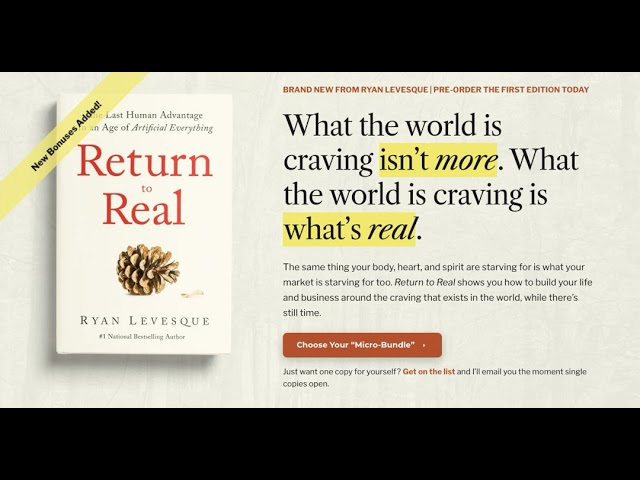
Thank you. Well, my last question for you is just because we're on a roll here like this. So, so it was, we interviewed Ryan Levesque. He introduced us to Matt Sprang and now Matt has introduced you or introduced us to you. And so all quality high-level humans and yeah, we just love to know if there's anyone you could think of that you know, that would be a good fit for coming on? And of course, if you're willing to introduce us, that's bonus points, but, uh, yeah, anyone that just comes to mind.
Well, I think we'll just keep it in the Front Row Dads tribe.
Um, all those guys, all of us are connected in Front Row Dads.
So, um, one of my, uh, so it's a, it's a good friendship that I've established in Front Row Dads. Um, his name is Mike Wagner. Um, and, uh, he knows Matt and Ryan as well. And he, um, He actually just launched a new business, so he's in the next iteration of what he does. I mean, he's a guy who, he started out as a physical therapist, got out of that and got into running a business of running storage units. Then he evolved that into a mastermind where he teaches people how to do that for a living. And he's exited that and now he's starting his own coaching business called feelingbetter.work. So yeah, Mike would be I mean, especially at this moment where he's just made a new pivot, I think would be a pretty cool guy to talk to. And he's always just a fount of wisdom. I love talking to him every time I have a chance.
Well, Mike, Mike Wagner, he said.
Mike Wagner. Yeah. And I can give you his information. He's, he is, he is here on Substack. I don't know that he's got an active Substack, but he's definitely a reader. So, yeah.
Yeah. Awesome. Well, thank you so much. Really, really grateful to have you here with us. It's been a wonderful conversation. We, you know, you may have seen them, but we'll put out a recap. We'll share it with all our people and we'll, you know, we'll send you that link as well in case it's something you feel like sharing. And we'll do. Yeah, we're just, yeah, really appreciate you. So thank you for being here with us.
Likewise. Blessed to have this conversation with you. I hope we have other chances to connect because I feel, I feel blessed by this conversation. I'm walking out of here in a better place and mindset. So thank you guys.
Yeah, yeah. Maybe we can, uh, maybe find a time offline to, to, to connect a little more. I love that. Sounds good.
Cool. Yeah, it's very nice to connect with you. Have a beautiful day. Bye. Thank you.
Ciao. Bye.