Finding Your Way Through Uncertainty with Wonder: A Conversation with Jeffrey Davis
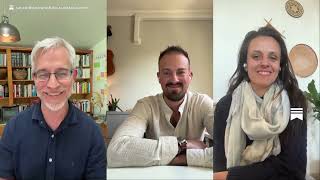
Conversation (Substack live) with Jeffrey Davis about 'Tracking Wonder' — a consultancy and learning community that helps mission-centered changemakers leverage wonder and curiosity to navigate complexity and pivot their work without burnout. Davis outlines his mission, pillars (integrity, wise strategy, connection, wonder), the six facets of wonder (including bewilderment and openness), the concept of 'young genius', and practical offerings (coaching, talks, retreats, year-long masterminds). He describes personal catalysts (Lyme disease, a house fire) and research into human flourishing and creativity, and points listeners to resources (WonderHub on Substack, trackingwonder.com/podcast-guest, a free chapter and a 'Wonder at Work' assessment).
Questions this video answers
About 25 years.
Tracking Wonder — first chapter available at trackingwonder.com/podcast-guest.
The WonderHub on Substack.
The 'Wonder at Work' assessment (available via the podcast guest page).
About 18,000 people (via Insight Timer and his platform).
Chapters
So welcome to Sacred Business Stories. This is our weekly substack live, where we have an honest conversation about really what it looks like to build a business that aligns with your deepest truth. And today, we are excited. It's been a few weeks, actually, since we've been doing this, and today we're joined by Jeffrey Davis. There's probably a lot we could say about him, but to keep it succinct, it seems he's spent the last 25 years of his life teaching teams and leaders how to harness wonder and curiosity to kind of unlock breakthrough ideas. And so, yeah, there's more we could say, but I think it'll be more impactful if we allow him to kind of share those details as we get into his journey. So welcome, Jeffrey. We'll take a couple minutes to let people join, but it's really our pleasure to have you.
Thank you so much for having me, both of you. I'm excited to have this conversation and see what unfolds.
Yes. I'm excited for this conversation, too. And I always like to remind the why we do sacred business stories. And it's really to tap into the realm of possibilities, just to bring inspiration and help, like, people to see that there are, like, a lot of people doing cool things out there. So it's. If it's possible for one, it's possible for everybody. Right. And we all have our own versions of sacred business. And for us, like, sacred business is really that business that brings all of who you are forward. So it's a combination. It's like an organic process. It's a combination of your challenges and your victories and your certifications and your life experiences that you were able to kind of, like, bring all of that forward and create a business that supports the lifestyle that is important to you. And that's why we're here. It's basically for inspiration and fun. And I just want to say that I love the word, like, wonder and curiosity. So I'm curious to get to know you more.
Great. Me too.
Yeah.
I so appreciate the way you framed these conversations. Right. So I hope your audience gains some inspiration as well as some nuggets, and that they see what's possible for them. Because every journey is unique, and it's all about, in part, staying in integrity with what your path is, particularly when you're looking at other people's paths. You can think, oh, I need to be like them, or, I need to do what they did.
Yeah, absolutely.
Yeah, yeah, yeah. So with that, Jeffrey, I think we just would love to kind of open the floor to you. And it's very open ended, but we'd love to just kind of hear more about your journey, of how you've arrived, where you are today, how you serve people, and to the extent that you're willing to kind of take us behind the scenes and. And how you found your way here and found your way to your calling.
Sure. Okay. Maybe I should start just by talking a little bit about what tracking Wonder is in its current incarnation. So I run a boutique consultancy and learning community called Tracking Wonder. In short, our mission is to equip mission centered change makers to leverage their best ideas for a better world. So we're always looking for people who are wanting to contribute to the greater good and integrity. That includes individuals as well as teams. And we think, my team and I think of these people as our business heroes. It's sort of a story model. There are business heroes, there are people coming to us with some yearning to change. In some ways, they're wanting to bring meaningful ideas to life without succumbing to the old school burnout. They're wanting to navigate quite often a lot of complexity in their life and in their work. Many of them are at a very accomplished stage, but they're at some pivot point in their life and work. And so I deliver on that mission in a few ways. One is through private consulting and coaching, private or team talks and trainings, our unplugged and unbound retreats that we run once a year. We just started that post Covid and one of my favorite ways of delivering is our year long tracking Wonder inner circle masterminds where we really do foster a great sense of belonging. So maybe I'll just talk a little bit more. And since you're curious about wonder, I can, I can elaborate on that as well. So we have some real important pillars. You've heard me reference integrity. So that's essential to everything we do. Wise strategy, connection, which I think resonates with you. And yes, the common thread is wonder. It's not a luxury, it is a birthright. We are born in wonder, which means we're also born in not knowing. It is what one poet describes as an astonishment of the soul. It is what I would describe as a quiet disruptor of our biases, so that at least for a fleeting moment, we can see again what is real and true, what is beautiful and possible about ourselves, about each other, about our ideas, about our situation, about the world at large. And experiencing and tracking wonder really does ground us, but it helps us stay open to possibility, to use your word, especially when facing uncertainty or resistance or fear. It helps us reconnect to what and who really matters. There can be wonder right here in this moment, you know, between and among us. So I have found in my journey that when people track wonder, when they recall moments of wonder, share moments of wonder, and actively track moments of wonderful, and they actually integrate it into their. How they work and lead, it really changes everything. I can get into the journey, but I want to give you a moment just to respond. So it's not a monologue.
Yeah. Like. Well, I have maybe many questions, but I just love what you share, and it's something that's very active in my mind, like, that you help people to navigate or like, you use the word complexity, like, you know, and it's becoming very clear to me that there's no way to navigate complexity or try to bring something that maybe we judge as being complex or hard without this wonder and without curiosity. Right. So how. How did you, like, came up with that idea? Or how, you know, like, maybe you tried stuff before and like, you, you know, it's not thinking more. It's not like creating more strategy that we navigate complexity, but it's more like with the openness of, like, oh, what is it? Or I would love to hear from you, like, like those two, the combination of complexity and wonder and complexity and curiosity and how this is actually, like, probably the perfect recipe for a success.
Yes. So let me see if there's a way to respond to that and put it in context for your listeners as well. So there was a pivotal moment in my life that I can backtrack for you, where I had a defining question of curiosity amidst crisis, really, which was I was working with so many people and studying so many people, and some of them flourished amidst complexity and challenge and change, and some of them floundered. And I did get really curious at this particular time about why that was so and to what extent wonder had to do with it, because I will back up to get to that point. I've worked, yes, For a long time before tracking wonder. I was working especially with a lot of authors and thought leaders and getting their books out into the world. I've worked with them in personal branding and other avenues. Not going way back to my boyhood and wonder. This is probably where it started. It was really. There was. There was a turning point when I really understood that wonder is what I've been seeking all my life and then later turned it into part of the business model. I'm sort of deep fried in yoga traditions and philosophy. I studied with my teachers, now deceased, in South India and Chennai. And I was actually researching for another book. Um, and I was trying to get at this idea of like, what brings us surprise and renewal both in our creative work and in our lives. And I came across this yoga text, the Shiva Sutras, where it describes a quality called vishmayo, Vishmayo, which in Sanskrit it means joy filled amazement or wonder. And the description, just a little sutra, said in essence, that when you experience sort of ultimate reality right here, you are filled with a sense of joy filled amazement and wonder. And was like a lightning bolt went through me. It was like, oh my gosh, this is what I've always been pursuing. So could I like pivot a lot and start researching that? So that was my typical mode. So for a few years, you know, I was doing some deep dive researching, but and I was testing out a few workshops at the time as well, to see if what I was experiencing might land with other people, could actually facilitate wonder. It turns out I could set. Let me get to like, the pivotal moment that also might inform your audience and you. My wife and I, we got married. We had this beautiful dream house, farmhouse in the Hudson Valley, like foundation, stability, boom. Let's grow some wonderlings someday here. And so we had. We had some personal mishaps. In a matter of weeks, I contracted lyme disease for the first time. And like, what would end up being four times? And just a few weeks after that, we had a devastating house fire caused by lightning one July. And everything you see behind me was like a wall of char. And last 300 volumes of books destroyed 20 years of my work in that moment, not right at that moment, but once we got resettled in a different house and so forth, that's when I got curious. I was like, okay, I've been tracking wonder under certain conditions now. That's when I got curious. Like, why do some of the people I work with and know and study flourish amidst this kind of crisis and challenge and complexity? And why do some flounder? And what does wonder have to do with it? So is this answering your question, by the way?
Yes. Yes.
Okay. Okay. So that's when I did what I do. I do have a tendency to have a little witnessing action amidst challenge and crisis and get curious. I can get down. I wanted to cry. I wanted to say what the heck is going on in my world? Did all that. But I also later got the wherewithal and witnessing to get curious. So I devoted my applied Research to the science of human flourishing, creativity and innovation and mindfulness. I studied at that time, researched and worked with. I wanted to study at least 500 fulfilled innovators. I've since worked with like thousands. But my conclusion was wonder's at the heart of everything. That beyond grit, 10,000 hours of deliberate practice, DNA or wealth, that those people who actively sustain or reclaim a sense of wonder have a singular advantage to advancing complex work. So tracking wonder has been our laboratory of sorts of applied research. So I hope that's like getting at it because so what, what does wonder do for complexity? It helps us re see complexity and find a way through it. Um, I've, I've tracked and identified a whole language of possibility to complement our very pervasive language of pathology with six facets of wonder. And one of those facets is bewilderment. Bewilderment is the disorienting deep woods facet of wonder. When we're confused and we're dealing with complexity, we don't know the way through. And experiences of wonder allow us, or like Alice in Wonderland or Dorothy and Oz, it allows us to navigate uncertainty and complexity and do what one masterminder recently said. She's like, I've got dynamic bewilderment now instead of this unhealthy uncertainty by fertilizing the confusion instead of pathologizing the confusion, getting creative through the complexity, learning by doing, those are in parts the way that wonder, tracking wonder and curiosity help us navigate complexity and uncertainty. I hope that's getting at it for you.
Yeah, no, totally. And I, I feel that there's like so much wisdom in everything that you're sharing. And when I think about like the people that read our stuff and are trying to create their sacred business, like we often say, that's like, well, the sacred business is unique to each person, right? So the mind creates. Like, it's not that I'm trying to imitate someone doing something. Like I'm trying to really bring the combination of who I am and kind of like, how do I transform that into a business or like a service, right? And then the mind goes crazy because it doesn't have a lot of reference. And I feel that like, the way you are sharing, it's kind of an invitation to like, can you just be in this space of wonder at the beginning of your journey? Like, I don't know how it's going to unfold. I'm not 100% sure how this business is actually like the form or the shape that it is, but just Being that energy that's like. Of, like, lightness and curiosity and fun allows you to see the path, like, one step at a time. So I'm just kind of like, using your framework in a way and thinking like, yeah, like, this is. It's an important piece for people trying to create, like, what we call a sacred business, but, you know, like a business or like a way to. For service.
I love, and I love the phrase sacred business, and I love even more sacred business flow. Like, you're hitting all of my light bulbs there. Yes. I can even be more specific, too, because in the unplugged and unbound retreat, I take them through an innovation method over five days, very much outdoors and indoors. But maybe I could get really specific, too, for your audience. Like, they have an idea. And so I often say it's one thing to fall in love with an idea. It's another thing to stand in love with an idea you're devoted to. So stand in love with that idea. And we all, like. You're like, yeah, I know what you'd be like. We all fall in love with ideas.
And then 14 days later, we're like.
Yeah, I'm not so sure.
So.
So that openness to possibility. So the first facet of wonder is openness. It's like. Like the wide sky, and it's like the blue sky mind, you're open to possibility, and that is really important. And it's important to even foster what I call little intelligent naivete. So we're born into wonder. We're born not knowing. We get to an age where we think we need to know what we're doing and we need to be the smartest person in the room. And it turns out, like, entrepreneur after entrepreneur starts off not knowing what they're doing, even if they've had two other businesses. And that's really important to be really open to possibility and override some of the naysayers externally and internally. But then curiosity comes into play, because what will happen when you fall out of love with the ideas you're like, how and how is paralyzing in the opening stages of developing an idea or founding a business instead, I ask people to get really curious and start with a why question or a why not question. Why couldn't. Like, this was my question 15 plus years ago. Why couldn't people experience more wonderful in the boardroom, in the bedroom and their schools, in their entrepreneurial work, in the workplace? Why couldn't, like, I started off really big and visionary and, like, let's go with this I then narrowed it down more specifically. But then I started honing in, and this is important maybe for your, your audience, honing in on the people I was working with. What are their particular woes and wants? So I'm drawing upon empathetic curiosity. I genuinely care about what are they suffering from? What are their woes? And what is it that they really want? And then how could we develop some tools and services and so forth to help them move forward? So then the how is tied to defining a problem that I really care about and I care deeply enough about and the people to seek some novel, useful solutions. That's not an easy process. And that's why it should come after some openness and some deep questioning that will motivate you, because those whys and the what if questions will keep motivating you through the challenges. Because every big idea will beget a series of challenges. So you define that problem without seeking an immediate answer to that problem. Right. So if, if I have a group of people, I've understood that their problem is they think they can't. They think they don't have enough time to advance their complex ideas and initiatives. Okay, I hear that a lot. So we defined that problem. Creative people and entrepreneurs don't have enough time to advance their complex endeavors. What kind of solution could we come up with? So we came up with the Mind RIMS guide to help creative people, like shape their ideas and block their time and color code and so forth. Then I realized it's not so much about time management, it's often about attention management.
Okay.
It's more to do with attention management that often stalls most entrepreneurs and creative minded people. So we developed a whole course that I've now taught to 18,000 people through insight Timer and our own platform around deepening your focus and flow at work. But that had to come first from my openness and my empathetic curiosity. Does that make sense?
Totally. Yeah.
Yeah, yeah. And I'm just telling you, like, person after person, particularly in our masterminds that go through a year where they face unbidden surprises, inevitable challenges. One cycle we went through the pandemic, a couple years together. This framework helps us navigate those surprises and those challenges and just normalize instead of pathologize the uncertainty and the complexity. I did read something you wrote, Caroline, recently about the simple mind, and I was really leaning in. So yeah, I was just imagining the simple mind in relation to complexity.
Yeah. And I feel that it is connected to this conversation here because sometimes I feel that we judge our dreams as being big and complex. And then we don't even wonder, like we don't dare to, like, oh, what is the possibility there? And then like we diminish the dream to, you know, diminish the complexity. Like, I don't want to deal with that because it's too complicated in my mind. And that was like I was connecting, like when I was asking you, I was connecting to those thoughts as well when I was writing the, the things online as well.
Oh, that's good. Could I, could I one, one plus that a little bit. Sure. Yes. So this is really important too that I address with our people as well. In track, you wonder. A lot of us are mission centered, which means, yes, we have big ideas and that can feel heavy after a while, honestly. And that is sometimes when we fall out of love. So part of what we work with and like, especially in this problem definition piece is like, you know, that why couldn't people experience more wonder in the boardroom, the bedroom, schools? And so like, that's really big. And so I had to scale the dream in a sizable feasible way that I could start making a difference. So part of that problem definition is like, we're going to stop pollution and all the seas, you know, and all the oceans. Like, okay, well you're only like three people or maybe one person. Like, could we define the problem a little bit more narrowly? Like your neighborhood. Start there.
Right.
And then what that does is it doesn't diminish the big dream. It puts you closer to making a difference, which is. Right. So motivating.
I always, I always have this phrase I use sometimes with clients around basically the same idea that you're talking about, which is basically saying like, not right now doesn't mean not ever. Right. Because it's like we go to this super expansive state and then it's just like, ah, like how do I do all this like now? And it's like to your point, it's like, okay, you're one human being with limited resources and time. We're going to get there. It's there for you, but it's like we need to come down a little bit. And so. Yeah, I love that you bring attention to that.
Yeah, I love that too. What you said. I did read some read what someone once said about the word yet and not yet. So kind of like what you're saying. Yeah, it's not never, but it's just not yet for us to reach that. Yeah, yeah. It's so important. The curiosity comes into play with being experimental. Right. Which I Know both of you understand, it's like, let's assume an experimenter's mindset and go out and, like, gather some data. Test this out in a small way, see what resonates with your people, but see what's being activated in you and what we call your young genius. Like, how is your young genius being activated in this experimental service or offer? Is this really lighting you up or is this something you think you should be doing?
Yeah, Yeah. I wanted to kind of actually connect that back to kind of when you were talking about the not knowing piece. And I think that's so important, like. Like, that we talked to that. Like, I say that, like, often I'll say that, like, on coaching calls, I'll be like, I don't know. But, like, let's like, like being honest about it, right? That, you know, none of us hold all the answers. And one of the challenges I'd love to hear your perspective on related to this idea of wonder, which I also equate with lightness and maybe even this word like whimsy. I feel that people that are in this transition or at a pivot point, especially if they have demonstrated years of expertise in an area where they've received a lot of merit and credibility for that, when they step into this new field of possibility, they struggle with this, like, not knowing and also their identity. Right. Because they're here where they're receiving all this positive feedback, and then they step into this transitory state where they're, like, looking to do something that's more connected to their heart, but it's like, it's a whole new journey for them. And I see people get stuck in this, like, state of almost, like. I call it, like, seriousness. Like, seriousness is a major block of, like, I have to do this right. And we. We talk about letting it be messy a lot as well. But, yeah, I'm curious if you're able to connect for someone in that state of transition, if you're able to connect your concept of wonder with, you know, with. With what I just described.
Yeah, that is so spot on. So I. I've written about it in articles related to a version of imposter syndrome. So this is like the accomplished professionals syndrome, where I've worked with a lot of people, worked with myself too, where, you know, very accomplished in their field or their profession, but now they want to write their first book, for instance, and it's like, oh, my gosh, I know nothing about writing a book that feels profoundly vulnerable. Or I've been going along this path in Consulting. And now I want to branch out in this whole different yet complimentary field. I don't know what I'm doing. So, yes, what comes up, as you can imagine and you probably experience with your people, is profound vulnerability. They don't want to feel ignorant or not knowing. So this is where some of the tracking wonder facets come into play. How can you maintain a sense of openness and especially curiosity? So what skills are you excited to learn and hone? Like, let's get curious about that. What kind of people are you curious about either working with, learning from, or engaging and ultimately elevating? So let's get curious about them and not put them in the abstract. That's essential. Bewilderment comes into play always when working with people in the accomplished professional syndrome, because they're in a new territory, they're in a new world. So we find ways to fertilize the confusion in part by helping them. Sometimes we do this bewilderment Venn diagram of overlapping circles, which is like a sacred symbol in many ways. And so we'll imagine, like the roles and behaviors you're letting go of over here in this circle. What are the roles and behaviors and people you're envisioning forward here in the future and what are the practices in the present that we can do to get you from here to here, particularly when over here in the future it's uncertain. It's like you are literally in the middle of some deep woods and you don't know where the clearing is and if you're going to find that clearing. So, yeah, yeah, that's a really, really important piece. Not to go from a state of knowing an expertise to I need to enter here knowing it all. So I've worked with people. I usually can tell on our first, like, pre call, like, we're trying to suss out whether or not we'd be right to work together. If somebody in that stage and it's. It's happened, you know, in the year or so, somebody comes to me in that state and they want something new and big, like, you know, I want to build community and. And I can tell by asking them questions, they think they already know everything about doing that and they're not coachable. There's no openness, there's no curiosity, then I know that we're not going to be a good fit, a really great fit. What about you? Like, how do you suss that out when you're kind of.
Yeah, like, I feel that the way you describe. And I love, like, the way you said it, like, oh, being curious about, like, what are the new skills that I need to learn? What are the new people that it's going to come with me or that I need to let go because it's not going to, you know, they're not walking this path anymore. And we often say like, and that's kind of like how we treat business. Like, people think that the business is the goal, but it's the transformation of who you are becoming, the process of, like trying to build that business. That is the goal. Right. And if we can focus more in the curiosity, and that's why we try to, to talk to our clients and that's why we have like the invitement class, you know, like that we bring to the physical and to the sensations and the emotions and all of that. Because almost like I feel that the business is just the excuse for your evolution. You know, it's, it's the way that life is inviting you to step outside the things that you already know. And inviting, like, no, you should be learning this because it's about the experience and it's about the transformation. And yes, if we don't have curiosity, we kind of feel that we'll be recreating the same thing over and over and over until we realize that it's not about knowing. It's not knowing. That is the gate. That's where the game is.
It is. That is the openness, right. To the mystery discovery of our own evolution. I talk a lot about like, your business is evolving or you've outgrown your business model. I mean, you just personally, psychologically, emotionally, spiritually, you've outgrown this business. So, yes, I so appreciate that, you know, you hit on something that came up recently in our inner circle mastermind. So we start off the cycle, like mapping out what we have as this vision canvas, big poster they have on their walls and so forth. And we work with that. And every quarter or season, every three months, we opt in for a vision recalibration session. Kind of like, okay, let's do some reflection. Where was your young genius activated? And so forth. And then let's vision forward to the next three months. So because by virtue of the questions I ask someone who's been in a number of my masterminds and events, she's like, you know, I realize she said exactly what you're saying. And it just like was reframed in the past week for me. She said, you know, I, I realize that what you're asking is really by virtue of me paying Attention to these particular endeavors over the next three or six months, who am I going to be? Who am I going to become by virtue of paying study attention to these particular endeavors? I was like, bingo, you got it. Someone once said, she's like, you know, I've taken a number of your programs, and it all comes back to one question. I was like, really? I'm leaning in. She's like, yeah, who am I?
Yeah, I love that question for you too, right?
Exactly.
Yeah. This is a huge part of our process, too, because, like, when we. In a similar process to what you have, I imagine we'll get to this level of clarity of what we see as the vision for moving their business forward and kind of like, okay, what is the roadmap of actions to take? But then we're also putting equal emphasis on, okay, this is clear. The mind understands this. But now who is the person that has to stand in the center of this? Who is the identity of the person who can actually has the capacity to hold what's coming, like, with this big vision, and maybe even who needs to die for this vision to come to life? And so, yeah, I love that this is all coming together like that, because I think that this is where a lot of people don't put enough emphasis on the identity of the person. They look at the logical plan. They're like, yeah, yeah, yeah, this makes sense. I want that. But it's like, okay, yeah, but we need to bring all of who you are along on this journey, and there's going to be. Yeah. Different demands that are gonna show up in different ways that you might not be anticipating outside of the traditional business structures.
So, yeah, yeah. Do you find people resist that dimension of the work or. Some people are like, yes, this is why I'm in this work. Do you find people resist that sort of personal identity work?
I feel that, like, when people get to us, they are probably like. They're. They're reading our things, you know, so they resonate with the message, and they are understanding that business is just not this. My life is here, and then business here. So they have, like, an understanding of what it is. But when the transformation begins, they. I see that often people fall back into the like, yeah, like, I want the transformation, but I want to remain. Remain who I was, you know, like, I. And then they bring, like, the whole. The old ways of being, and then that's the whole work that's like, yeah, like, you can build the business of your dreams with the same mindset from before. And then when you get There you're going to just realize that it's not fulfilling just as the one you had before. Because the transformation is about, you know, your perspective, your relationship with life is actually what's going to change and shift. Sometimes you don't even need to change your business. You just need to change the relationship with the business. You know, to be in this state of, like, wonder and fulfillment and. And joy. So I feel that people come with a desire, but when it comes to, like, now you need to let go this aspect of you. Then it's like, but I wonder, you know, like, I don't know how to be without this. And then it's. That's where the work is, you know, that's how at least, like, how we see and while we guide our clients through.
Yeah, that's so true. I love that, what you said. Of course. Yes. People who are coming to Sacred Business Flow have already probably had some filters. Unless there were referrals. And they had. They're dropping into the middle of Sacred Business Flow. Same. Same with us and same with me at tracking wonder. Mostly, yeah. Yeah.
Mostly, yes.
Mostly, yeah. Yeah. But that's okay. The ones that aren't like, deep, steep, you know, it's. They're. They're fun to work with too, because it's all. All new to them. Um, you know, there is a part of our work you've heard me allude to, like, genius and young genius. And it is actually seminal to what I do and trying to hold myself in integrity and in helping others stay in integrity with who they are and who they're evolving to. And it's what one psychologist calls the soul's code. So in the context of sacred, maybe this conversation's relevant. So your genius is unique to you, and it's something that you were born with, but you were born in not knowing. You forgot, in essence, who you are at your core. Your genius, or what in Greek is your daemon. It's this complex energy of character. It's what I call, you know, your true character that if you recognize it and activate, will guide you toward whatever you're called, toward at whatever stage you're in. But we're born forgetting. So how do you remember? Well, one way is through your young genius. And so we sometimes go through exercises to safely recall certain memories from when we were younger, at whatever age people are comfortable going to. To see when they felt most alive and free without regard for external reward. And that leads to some pretty profound memories of who they were. Sometimes it's childhood, sometimes it's a little older. It does bring up some sense of wonder and curiosity. Innately, we identify those traits of their young genius, and then we follow that sometimes through different periods of their life, and we follow it in the present. When are you activated? When is your genius activated? When do you feel really free and alive? Those are powerful indicators for who you are and who you're becoming in the next evolution of your business.
Yeah, like, I. The words that I use is, like, what expands your heart? You know, like, fully what expands your heart?
Oh, yeah, yeah.
You know, what is it that it's there for you that you could, like, you lose track of time and you're just. And then we forget that, like, the things that we like. And it's interesting, like, just sharing a little bit of, like, my. My thing. Like, I remember that I was playing with my dolls, and they would go always to, like, I don't know, there was, like, this celebration or this. That my dolls were, like, dancing. And it was always, like, English music. And I was singing. I was like, maybe 6 or 7, and I was singing this song without knowing anything about English, But I love that so much. And that was like, you know, and then I asked my mom, like, can I enroll myself in, like, English classes? And I love that. And then he ended up that, like, I moved from Brazil to Canada. My career was built in English, and now I'm here. Like, my. My business is all. So it's like. It feels unrelated, but it is related, you know, like, me, like, singing words that doesn't make any sense in my own language. You know, there was something there for me, and I want, like, I would love for people to just go back to that time more and, like, yeah, what was I doing that, you know, I could just lose the track of time? And I was playing with my dolls and I was teaching, like, you know, and I was playing with this. And there's, like, clues that life will start giving you, that will take shape eventually into something that fulfills your heart and can become something, like, greater than what you think it is. But it's like breadcrumbs, right? That feels. That doesn't make sense, but it makes sense.
I love that. Thank you for sharing that story. I would love for you to actually really remember her and witness her and, like, when you witness her with appreciation, if not admiration, like, what are maybe three words you would use to describe her that are most alive and free?
Well, absolutely, like, curiosity, joy, and fun, you know, And I remember being curious about, like, what is this song talking about? Because I was just blah, blah, blahing. And I'm like. And then just, like, the joy of being there and singing and thinking that I knew what I was saying, and it was just. But the, like, fun, curiosity, and joy, like, for sure.
Okay, I love that. So curiosity, joy, and fun. So, like, imagine waking up in the morning, and you. You take five minutes to remember her, and maybe that memory comes up or another one does. So you remember her. Then you. Because you've forgotten her. Right. You were born into not knowing, so you've remembered her, and now you recognize her. And you write down those three traits, and maybe something new will come up tomorrow morning. And then you say, okay, this is what I think is in my day's flow for the day. How can I bring forward my curiosity, my joy, or my sense of fun and something that I'm doing today? It doesn't have to be a hundred percent, but maybe 20% today. And can I just keep activating and reclaiming my young genius qualities today?
I love that. Yeah. I love that exercise. Yeah. And you're setting your day to that vibration, Right? Like, you're intentionally beginning your day. Like, this is what I'm gonna follow instead of just the creases of the mind. Yeah. Thanks for sharing.
Yeah. Yeah. It's just another way to say, okay, this is who I'm. This is who I'm bringing to the day today.
This is how I'm bringing to work today.
Yeah. Well.
Wow, Jeffrey. I feel like there's a whole laundry list of other topics and conversations that I think would be really fun to explore, but I. I know we've kind of reached our time here, but before we wrap up, I really. I really like to make sure that we have time to kind of let listeners that are. Have been tuning in, whether it's live or catching the replay later, to just learn how they can explore your work more more closely. So I know you're here on substack, so that makes things quite easy since we're doing this live on substack. But for anyone that has heard something that kind of sparked something in them that they might want to kind of follow along what you're doing a little bit more. What. What advice might you give them or what might. Might you point them towards?
Yeah, sure. Well, what advice I would give them is to remember, recognize, and activate your young genius and know that uncertainty is par for the course when you're living life and doing work at a sacred level. And there is a way forward, don't go it alone. Right. Find some allies on the journey. Really important. And experiment along the way. Yes, you can find me at the WonderHub on Substack and there's also a page we've created for your listeners. If they go to trackingwonder.com podcast guest, they can download the first chapter of my book Tracking Wonder, where they'll hear a lot about.
Beautiful.
Oh, nice.
That lit this up. They can take our Wonder at work assessment so they can get some, like, quick ways to experiment, depending on what their assessment results are. I think that's probably a good place to start. And yeah, they can reach me even at my email. Jeffreyrackingwonder.com Wonderful.
Yes. Well, thank you so much for this conversation. It was really an honor to have you and really grateful to have this conversation with you, learn from you personally and also just to share your gifts and talents with our audience. So, yeah, really appreciate having you here with us today.
Thank you as well. Yes. I'm curious about learning more about both of you as well. So I hope we keep the conversation going.
Yes. Thank you so much. It was a truly joy. Like I could stay here with you like many, many hours.
We can have a wonder party.
Yes.
Maybe that'll be next.
Yes, that's. That's such a good idea though.
Yeah, I do call some of my.
Friends in the city. I'm like, do you want to go for a wonder walk? They're like, please, let's.
Oh, oh, we have that. We have the Wonder Walk like we do once a week, which is like our day to, you know, wonder about what we were creating and what we want to create. And it's called the Wonder Walk. I forgot about that.
I didn't know that was actually in your terminology. But we, yeah, it's something that Kayleen and I started when we first, you know, when we first started this business. It was, you know, for part of us, I know we have to wrap here, but like we Fridays in general are kind of like our wonder, kind of like open inspiration. Like if we've gotten everything done in the rest of our week and, and that's one of our practices is the wonder walk. It's. We got to just like let it run and so, so that's awesome. It's cool.
Yeah.
It is part of our work.
Yeah, yeah. Love it.
Love that. Awesome. Awesome. Well, yeah, thank you again and thank you. Yeah, let's keep the conversation going and also we will share this recap with you after we do kind of a write up afterwards. So we'll share that with you if you find it useful. We'd love it if you could share it with your audience. Absolutely. It's not a requirement. Oh, we will. But, yeah. Thank you so much, Jeffrey. And we look forward to continuing the conversation.
Absolutely. Be well. You both take care.
Thank you. Take care. Bye.
Bye.
Bye.
It.