From Locked Out of Her Country to 13,000+ Subscribers w/ Veronica Llorca-Smith
In this Substack Live conversation, host Phil Powis and co‑host Carolina interview Veronica Llorca‑Smith, a former corporate executive turned creative solopreneur. Veronica recounts how the COVID‑19 pandemic left her stranded in Australia, prompting her to abandon a 15‑year corporate career at Apple and Estée Lauder and launch a “Frankenstein” business built around public writing, speaking, and multilingual publishing. She explains the philosophy behind her book The Lemon Tree Mindset – turning lemons into trees – and how building in public, embracing imperfection, and constantly seeking new challenges (live sessions, language expansion, courses) have driven her growth to over 13,000 Substack subscribers. The discussion also covers self‑management as a solo boss, rewiring productivity away from screen‑time, confronting fear and resistance, the power of live, multilingual connection, collaboration, and practical advice for creators seeking authentic, people‑first businesses.
Chapters
Well, we are live. Welcome to Sacred Business Stories. This is our weekly Substack Live where really we just have an honest conversation about what it looks like to build a business that aligns with your deepest truth. And today we're very excited to be joined by Veronica Lorca Smith. Did I, did I say that right? Hopefully. Cool. And yeah, we've just been, you know, this is actually our first time having a conversation with her, but we've just been kind of following her for some time on Substack. Been really inspiring to see her growth, the way that she interacts with her audience. And yeah, just a lot that we're looking forward to getting into with her today. So I know she's an international speaker. I know she does facilitation. She's an author of 4 books. I love the name, The Lemon Tree Mindset. So I'm curious to hear more about the origins of that. And also just, I love some of the just kind of personal color and flavor that you bring to your brand and just like some of the things you've shared about, like, it's very impressive speaking 6 languages. I'm, you know, we were just talking about, I'm here in Brazil and I'm struggling just to get basic Portuguese, you know, where I can have a conversation with Carolina's, you know, young son. But yeah, all to say, we're very grateful to have you here with us and excited to have this conversation. So thank you.
Yeah, I was very happy to be here. And it's great that you're in São Paulo. I'm in Hong Kong, and I see that we have people from all over the also very international conversation.
Yes, I'm also very excited to, to have you here and I want to hear more about your journey because what I read, like, it's very, very inspiring and it's very connected to what we call like a sacred business. And I always like to remind people like why we created Sacred Business Stories and it's purely for inspiration. Sometimes you have all those ideas in your mind and then you have a calling in your heart and you just don't know like where to begin or what to do. And it's there for a reason, right? So we say that like a secret business is just a combination of everything that you are, like all your failures, all your victories, all your experiences, all your certifications. And it's honestly like a business that supports your lifestyle. So we just like to go behind the scenes so people see like, oh yeah, she too like began at, you know, from zero and had to walk the path and had to build something. So this is really to inspire people and give permission to more people to actually follow whatever is in their heart. So thank you so much for being here with us and thank you all for joining us from all over the world. Yes.
Yeah, I think a great place to start is we usually like to just ask, and I know this is a very open-ended question, but as Kalina said, like, it's so easy to just kind of see how someone's presenting themselves and showing up on social media. I actually consider, you know, some people say Substack's not social media, but it's a form of it. And not really, um, yeah, not really see how they got to where they are. And so we really love to give people permission to kind of just share, yeah, the, the behind-the-scenes story of like where they came from, how they started, and kind of where they are today. So you could take that really, Veronica, any way that you like. Um, but yeah, it's really just the invitation is to share a bit of your story with us. As a starting point?
Sure. So I'll start with a bit of my origin story, and I always encourage people to share their story because I think that's how we connect, and people don't remember stats or numbers or anything like that, but we remember stories. And so to share mine, I really have to go back to the pandemic. And back then, I used to be in the corporate world. I was there for 15 years in big companies like Apple and Estée Lauder, and that's what I thought I was going to do. That's what I thought I was going to climb that ladder. And then the pandemic happened and I ended up in a very unusual situation, as most of us did. I ended up accidentally locked out of my country. So I went on holidays from Hong Kong with my young daughters and I couldn't go back to Hong Kong because of the quarantine and the regulation and all of that. And so I ended up abroad in Australia for over a year with my young daughters who were 3 and 5 at the time while my husband was here in Hong Kong with our dog. And, uh, so back then, of course, I thought, well, I'm going to continue my corporate life in Australia until we can go back. But, um, I found myself in front of a big wall. I wasn't able to find a job. I wasn't valued in a country where I was a stranger, where I didn't have a network, where I didn't have connections or credibility. And, uh, so I decided that I was going to start my own thing and I had no idea what that looked like, but The whole idea started with, well, if people can't see my value, then I have to show it to the world. And today, with technology, with the power of digital, there's really nothing stopping us. So I didn't have a grand plan. I didn't have a big strategy. As you said, very often we follow our instinct and our intuition. And I started writing. I was already 40 or 41 at the time. And I decided that I was going to share. So I started writing first on LinkedIn. That was my first touchpoint because coming from the corporate world, it felt felt very natural. And then I loved it and I started going into Medium for more long-form writing. And then from there, I started pitching to podcasts and I said, well, I might as well start using my voice because otherwise you're not going to be heard. And so slowly by starting to develop different skills, by starting to partner with different people, try different platforms, it started to grow and take some type of shape or form. I call my business a bit of a Frankenstein business because I don't have a niche as such. I have different pillars. As you said, I do public speaking. This was my first book, The Lemon Tree Mindset, which was all about mindset, all about reinvention. And to wrap up a little bit, the origin story, The Lemon Tree Mindset is really what my entire philosophy and my sacred business is about. And that's where the name comes from. The whole idea is that when life gives you lemon, not if, but when, because it's gonna happen, use the seeds not just to make lemonade, but to plant your lemon tree. And that's how my business was born in a moment of struggle, in a moment where I was feeling rejected. I was already feeling very lonely. And I realized that we all have so much value to give, but we have to give ourselves permission. And so that's a bit of my origin story. This book was published almost exactly 3 years ago. So I'm celebrating my 3 years as a creative entrepreneur. It sounds more glamorous than a Frankenstein business. And that's a little bit how it That's really nice.
I was reading one of your articles and then I really love like the way you were kind of like guiding your readers through. I want to remember exactly the words that you use and I would love for you to share a little more like it doesn't mean that you, because you are your own boss, that you are a good one. So like how was that for you? Like you were not a good boss for yourself or like how you being a good boss, I guess, because I feel that you're probably in a different face right now. How was that evolution?
Yes, so that's a recent post for those of you who want to find it. And I think the exact title was, being your own boss doesn't make you a good one.
Yes.
What I meant by that, it was that back in the corporate world, I used to have great bosses and I also had terrible bosses. And in this article in particular, I was talking about a boss that was really bad, that didn't listen, that was extremely demanding, that was completely disconnected from the reality of the employees. And so I thought, well, now that I'm going to be my own boss, I'm going to be a great boss. I'm a boss of one. My only employee is myself, and that's how it's going to be forever. And what I realized is that being your own boss is bloody hard. I think as solopreneurs, we are so hard on ourselves. We ask things of ourselves that we probably wouldn't ask of our teams, working when we are sick, uh, showing up when we are not having a good day. Like, we really don't have a lot of self-compassion. And so it was a reminder for myself, but also for my readers on how important it is to be a good boss to yourself. Because when you're a solopreneur, you're still your boss and you have to set frameworks and you have to protect your time because no one is going to do that for you. And so that's what I meant. It was a bit of a self-reflection on how I wasn't being a good boss and I had an opportunity to have more balance, to protect my time, learning to say no with kindness and with elegance, but at the same time, protecting my space and my boundaries.
That's, that's, that's a great reminder. And like, uh, were you like this since the beginning? Like since you start your, you know, I know it came like without you planning, but was that an evolution? I'm just curious because I was not a good boss for myself. Like it just made me reflect on the fact that like I let my story, it's a little similar, not similar in the fact that I got isolated from my own country, but I decided to quit my job and then for probably like 6 months to maybe getting close to a year, I was just behaving just exactly as in the corporate world. Like I was waking up at the same time, I was working 9 to 5, and that was exactly the thing that I didn't want for myself. But because I was so much in that box that, you know, and I was very hard, like I need to show up, it doesn't matter what's happening. Like I was rushing my daughter in the morning. I'm like, until one day I paused and I'm like, what am I doing? Like I can create differently, but it took me like a couple of months to realize. So I was just curious, like as I was reading And, uh, you're referring to like, I was at my husband's birthday and then talking to, uh, your boss and all of that. So like, were you, uh, conscious about being your own boss since the beginning or that was an evolution?
No, I wasn't because as you said, when we come from the corporate world, we're so wired and programmed in a certain way. For example, in the corporate world, especially before COVID working meant you have to be in front of the computer and it was more about keeping the, the, the asked, hot, than actual results. And now I'm rewiring myself. And for example, this morning I went for a bike ride just myself. And during that bike ride, I was working in the sense that I was thinking about my business. I was thinking about the live session that I was going to have with you today. So, so you really have to rewire yourself in terms of what being productive means. It's no longer about all these hours in front of a screen. And in fact, as creators, I think that being too much in screens, it just dries our creativity, we are less productive, we are less effective. So I tried now to be more aware of that. How can I do cool things? You know, because I want to enjoy life, but also because I'm going to be better at sharing stories. You know, a couple of days ago, I ran a half marathon. That's a cool story that I can share with my community about mindset, motivation, not giving up. So I think that this rewiring, especially when you come from the corporate world, is so important because I was exactly like you, Carolina, but I was worse because it took me more than a month It took me at least a year, I think, to figure out, okay, you can do things a different way. That's why you left that environment so that you can create an environment that works for you.
Yeah. Thank you for sharing.
Yeah. Uh, kind of a slightly different direction. I'm just curious, just because you use that, that term Frankenstein, like, I'm curious if you could take us back, like when you were, you know, because one of the things I see often with people is that they don't, you know, they have this kind of seed of an idea, but they don't quite know how to package all of their gifts and their skills and the way they want to express in kind of a way that makes sense to them. It feels really foggy. And so, yeah, I'm curious, like, what was that process like for you kind of making this decision of like, hey, I'm here in this country, I'm going to create something. I, you know, there's this opportunity to express, but like, how, what was the process of kind of getting traction or deciding like where you wanted to put your first focused effort, if I'm making sense what I'm asking there.
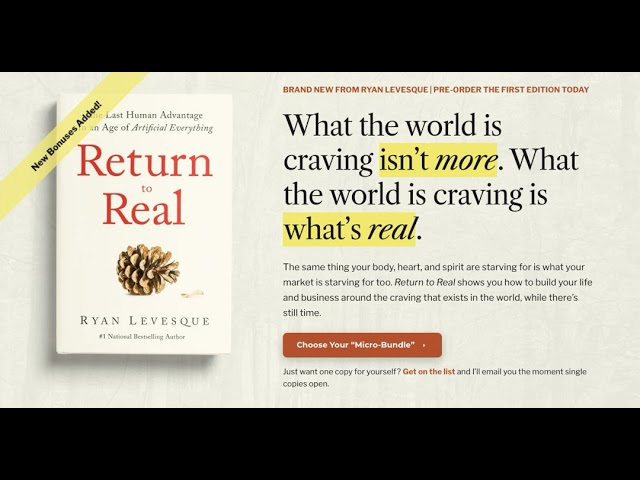
Yes, I think finding clarity is one of the hardest things and people very often want to find clarity first and then do things. And what I have found is that you often find clarity by doing things. You start writing and very often you have like this mental chaos and ideas start to become something or nothing, right? But I think doing helps you find clarity. And many people get caught in the, oh, but I don't know exactly what direction I'm going to take. And so there's a little bit of that, that analysis paralysis. So I found that starting to do, whether it was writing on LinkedIn, whether it was writing on Medium, I didn't have, as I said, a specific niche. I was just writing. First, it was more from my instinct, more from how I was, I was feeling it. And then I started to take an approach that has worked very well for me, which is building public. And whether I'm achieving results or whether often to achieve results, you also have a lot of failures and obstacles along the way. So I share those. And if you don't know where to start, I think documenting what you're going through, it's extremely, extremely helpful. And in fact, this, this first book that I was talking about is, uh, it's called, uh, The Lemon Tree Mindset: 19 Lessons to Reinvent Yourself. And basically what I did is kind of go back to my transition, this journey from corporate to solopreneur and talk about the mindset, about things that I found useful and try to create all these scales or turn all these scales into a bit of a framework that someone who wants to reinvent themselves in whatever capacity can follow some type of logic or some type of journey to help them get there. So I do find that this, this building public works very well. And in fact, every single book that I've written, whether it's this one or the most recent one The Anti-Procrastinator. It's also about how I have come or overcome obstacles and turn that into something that can be practical, that can be useful for someone else. So go back to your own journey, take that maybe as a compass, but then be very people-centric and how can this be helpful for someone else? Because otherwise it just becomes a me, me, me-centered story and it's really about the impact that you want to make.
Yeah, I love, I love all that. And, you know, that's totally agree. It's something that we share with our people all the time, like this idea of like letting your business kind of be, yeah, just being in relationship with life is the way I see it. Like there's a way it's very easy to get stuck up here in our heads and kind of intellectualize and everything and ask what if this, what if that. But it's quite amazing as you allow yourself to kind of, as you said, just kind of go out there and do the next thing, do the next thing, it just all starts to become clear. And to me, this is like one of the— I don't know, one of the most fun, like biggest joys of this process of like open kind of possibility is like when you allow yourself to go there, then yeah, just so often like you start to pull on a certain thread and this whole like new universe of potential kind of opens up or like a whole new idea of something that you haven't thought of. And so, yeah, I just love the way that you share that. And I totally agree with pretty much everything you said there.
Yeah. And very often people, they think that they have to have everything figured out. And like today, we are doing live sessions, right? The three of us. And from what I've seen, you've done quite a few already. I also have done quite a few. But if I go back a year ago, January 2025, that was my very first live session. And I was terrified and I had no idea what I was doing. Where is the button? Why are people not up. There's this awkward moment between pushing the button and then no one shows up and you think that you're there alone. And you have to go through these moments to really tell people what it's like afterwards and then gain that confidence that comes through experience. And there's no hack, right, for practice and flexing the muscle. You have to go there. You have to do it.
No. Yeah, we probably got started around the same time then with doing these. And yeah, I tell people, I'm very honest about it. Like, I still, like, I've never been super comfortable with public speaking and being on the camera. And I've actually learned to love these, where this is like one of my favorite things that we do every week, and especially getting to connect with cool people that we've been kind of watching from afar. But I still get that, like, every time I get on here, I still get that kind of like jittery feeling in my chest. But I've kind of learned to— yeah, I've kind of, you know, I talked about this too, like, it's— I've started to reframe it as a little bit of like a playful tickle. And, uh, but yeah, there's no way to cut, you The first time I remember the first time we did this too. Yeah, it was super, super uncomfortable. I was like, had to like coach myself up for like 30 minutes, you know, before sitting down and then yeah, as you start to do it, you, you, it's amazing how, how things start to shift. Like now I feel like I could just jump on in 2 minutes and just have a conversation, but, but that, that tickle is still there. So it's, yeah, it's interesting. Kind of on that topic. And yeah, it'd be really interesting to hear your perspective. Like, one of the things that we talk about a lot is kind of conveying this idea that it is perfectly normal to have like fear and resistance come up. And actually, when you're doing something that is meaningful or is close to your heart, it tends to show up even more. It feels like the stakes are higher and you know, I can imagine— I mean, there's a few questions we can ask about this, but I can imagine kind of going back to your origin story, like finding yourself in that situation. Um, you know, all of us, you know, during COVID and the pandemic, like wondering what the heck was going on and all this. I'm sure there was a lot of uncertainty and things coming up for you, but I'm, I'm just curious, like, when, you know, maybe kind of today, like, what do, do areas come up for you where fear and resistance is present? And, you know, how do you like as those things come up for you, how do you kind of work with that to keep moving forward?
Yes, and to be honest, I would say that it doesn't matter how big your business is or how much you grow your audience. I think it's healthy to always be in those situations where you're going to have that fear and where you're going to have that resistance because if not, then the question is, well, are you just in your comfort zone? Do you need to go to a bigger room or a different room? And so for me personally, every year since I've started, I've done different things, different things as in new things that I had never done before. So last year, for example, I started to do live sessions, some with people, some solo, which are even more terrifying. I do them live now quite frequently. I, when I was starting to be comfortable with my Substack in English, I grew a decent community. I became a bestseller. I had a strategy. Then I decided to launch it in Spanish because it's my mother tongue. And I was like, well, It's time again for a new challenge. And in this past year, I've been growing that community again, huge challenge and surprisingly imposter syndrome because my own language gives me more pressure than being a foreigner because, well, if I'm a foreigner, I can afford to make mistakes, but in my own language, it's like, oh, this is not okay. So language is another one. Then public speaking, for example, I'm always trying to go to bigger companies, bigger stages. I'm always creating new presentations. And so I always try to put myself in these situations where it's always going to be resistance. Another thing that I did last year as well was launching digital courses. Again, something that I had no idea. I had to start from scratch. How do I do this? How do I promote it? I made a bunch of mistakes, but then and I published the first one. And then from there, it's like, okay, I know what I'm doing. I know what works. I know what doesn't. So absolutely, I think it's healthy. I think it's part of what we do. I think we're always going to have that fear and that resistance, and we just have to, you know, push forward. And I always tell myself, reframing, instead of, oh, what's the worst that could happen, I tend to think, what's the best that could happen? And then that helps me focus on the positive rather than on the things that can go wrong. There's so many things that can go wrong. We don't need to talk about those. Let's talk about what was the best case scenario.
I really like that. It seems that very intentionally you go towards the things that you've never done it before, right? And it's such like, um, well, if you approach with playfulness and it does sound that you do approach with playfulness, it could be a fun thing. Like we have in our, um, planning, uh, we call it planning rituals, but we have one of the questions is like, did you do something that scared you this week? And sometimes like when the answer is no, we kind of look at each other like, ah, you're missing the point. If it's just the same and it's exactly like to your point of like, yeah, like I'm just playing within my comfort zone. So what is it that it's like new that it will like, you know, activate that feeling of like, uh, excitement and fear and being scary at the same time. Um, I'm just, I just want to touch into a point here because I feel that it It's very similar to me because, well, I'm not an English speaker. That's not my first, um, well, my mother tongue is Portuguese. Um, and you said something that's very interesting and I'm actually right now just, just for myself writing in Portuguese and I, I truly appreciate, like, I find just beautiful people here on Substack that English is not their first language and they just put themselves out there because there is like When there is this point that you said that like, oh, I'm a foreigner, so I'm allowed to make mistakes. So that's a great way of thinking about it that I never really thought about it. But for me at the beginning was like, who am I to be here? Like teaching in English for people, you know, with my not perfect English, but anyways, I did it and, you know, I make mistakes and I'm just there and now I'm writing in Portuguese and I'm kind of like, it's, it's just weird, you know, it's just different. I'm like, like how it almost feels that I created this personality in English that does not exist in my first language. Like, my professional life has been in English for, I don't know, with this business and even before that, but for the past like 13, 15 years. And now I'm discovering myself again in my own language, which is, I'm just curious, like, you putting yourself out there in English and now coming back to Spanish and like how you're dealing with all of that and there are like a lot of fears that I have in Portuguese, which is maybe weird to say that it's not present in English, you know, like for example, like posting, talking about Sacred Business in English is one thing because Sacred Business was born in English. But when I go to talk about Sacred Business in Portuguese, I find myself trying to explain in ways that doesn't feel the same. So I'm just curious, like, as you have the Substack publication in both languages right now, How are you dealing with that? What do you see that it's different, like Veronica, the English speaker, and then Veronica, the Spanish speaker?
Sure, Carolina. And this is a topic that I'm very passionate about that I didn't know we're going to cover. It's more about languages in general. And I see a lot of names in the audience that I believe are probably not from English-speaking countries as well. And the first thing is when we speak different languages, and there's a lot of neuroscience that talks about this, we are not exactly the same person as in We think a little bit differently. We might have a bit of a different personality. I grew up in Brazil. Portuguese, Brazilian Portuguese in particular, is a very cheeky language. There's a lot of slang. And so your personality or my personality in Portuguese is probably more cheeky. In English, for example, for me is the language of marketing. It's very clear. I'm very to the point. It's very concise. Latin languages like Spanish, French, Italian, where it's romantic, it's long sentences and there's a lot of detail and there's a lot of color. And so that's the first. Layer, right, about languages that yes, we kind of show up in a bit of a different way. And so I did find that when I launched my publication in Spanish, I had to find a little bit myself, okay, who is this Veronica, the Spanish version of Veronica, and how do I come across? And it's just a little bit like finding yourself in that new space. But I did find that it was quite fast. It's honestly like going back to a bike and you practice a little bit and it's like, oh yeah, of course I can do this. And it's fine. I still make mistakes in Spanish. The other day in a live session, I'm like, oh, I said a word that doesn't doesn't even exist in Spanish, my mother tongue, but it's okay. I think what we do, back to your point of playfulness, we all make mistakes and I think that's also part of what people like and relate to is like, hey, you don't have to speak perfect English to speak in English or you don't have to have a perfect course. My course that I was talking about, all my courses that I've published, I shoot them on an iPhone at home. It's very It's very on the go, it's very build in public. And so, so yeah, so back to your point, I think that it's a wonderful experience. It's very different. I don't just translate on AI and that's it. I have to think, you know, in different ways, how can this message in English land the same way in Spanish? So it's quite an interesting topic. And I have to say, I don't know if you have received these feedback or these inquiries. I have more and more people who ask me, I do coaching sessions as well, on how to write on Substack in multiple languages. So I see more and more creators that have English and Spanish. The other day I had an inquiry for English and Dutch. It's usually English and a second language, which is quite interesting. I think it shows how the platform is evolving and is becoming less niche and more, not mainstream, but it's really getting out there.
That's very interesting. Yeah, I created like a complete different profile for myself and I'm still playing with that, but I'm, it's, it's very recent. It's been like a month or two that I'm doing it and I've written separate from Substack. And I'm just like slowly like posting on my, on my Portuguese profile, but I haven't like, I was telling Phil about it, like it just feels, I haven't found my words yet, you know, I'm like, sometimes when I read something in English, I'm like, oh, this is so me. And then when I read in Portuguese, I'm like, oh, who is this person? You know, so it's, it's just that experience that it's been very, very interesting. But anyways, like I appreciate like non-English speakers putting themselves out there with their accent, with their, imperfection and just like sharing from their hearts because it's just as valuable. And it's just that thing about confidence, like I have something to share and it doesn't matter if my language or my accent is not perfect as, right? There's no perfection anyway. So I just appreciate that.
Yeah. And I also, it's, I also love what you touched on something there too, which, um, it's actually, it connects to the next question. Um, just this thing around, uh, imperfection. And you were sharing, you, you've, you filmed your— I think you said you filmed your, your course on your phone. Like, this is one of the things that I'm really curious about. Caroline and I were just having this conversation a couple days ago, and I was thinking about how kind of this creator space is evolving in the, in the era of AI. And I was thinking, I was saying, you know, it kind of used to be that, um, you know, it was a sign of like success, or you've kind of made it, or you have the budget now to like hire a team and make this like super high-end, ultra-polished production. And I feel like in a way it's actually flipping back where now that's— it's like everybody can do that. Like this idea of like polishing your, your content, it's like that's not a differentiator anymore. It's really your ability to connect from the heart. And in a sense, and it's one of the ways, like one of the reasons we love this show so much, you can tell this is pretty unpolished, unscripted, but I feel like, I don't know, I feel like this is kind of what people are craving, which is just more of like, who is the real you? And like, how do you show up in real life? And so I'm just curious, like when you think about connection, you know, I think this is an area where creators kind of do struggle. Like how do you make meaningful, authentic connection online? How do you cut through? How do you show kind of your true self as you're sharing your message? Yeah, I don't know. I'm just curious, like, what sort of advice would you have for someone who is trying to share what they have to offer more consistently and feel authentic, you know, as they show up?
So, a few things there. I talked before about this strategy of building in public. And if you are genuinely building in public, it means that you're going to show everything. You're not just going to show the front stage and the final shoot and tape where everything is perfect. You're going to show the backstage. You're going to show the mess. You're going to share everything. And that's a way that really helps to build meaningful connections. One story that I have of last year is this book. So I've been writing a lot about The Anti-Procrastinator. It was my first book with a big publisher. And so I've been writing everything about it, like the good, the bad, and the terrible. And the terrible was, for example, a book launch that I had in Singapore. So I flew all the way to Singapore and it was a bloody disaster. It was really bad. They didn't even have book copies. I couldn't sell a single single book. It was that bad. And, you know, you have two options there. You can just go home and pretend that it didn't happen, brush it under the carpet and say, oh, great event in Singapore. Or you can share the true story and say, hey, this is what happened. It was actually a disaster. I had less than 10 people. And so, that's what I did because when you build in public, you show everything. You show how nervous you are before a session and the little technical issues that you have and the things that don't go well, or that in this case was a flop. And you have no idea how much people related to that particular article. I had people send me messages. I had people thank me, say, hey, thank you for being so real. It just makes this whole thing more real and more achievable and more human. So I think that's one. Being human is not just having to pretend that everyone has a Ferrari and all these things. Like, who cares? You're building your thing, right? That's why it's called build in public.
Week.
So that works extremely well. Another thing that, that works very well, and surprisingly, because a lot of people are kind of anti-live sessions. I had so much pushback from my community, people in Substack in general, in this case, oh, this is not what Substack is about. The essence is about writing and we don't want videos and we don't want all these mainstream trends that are being pushed onto us. But then the reality, and I have numbers that show it, when you go live, is not like a super curated, polished YouTube video where you have had maybe a team or AI go through. This is us, it's the three of us showing up from São Paulo, from Hong Kong, having a real conversation in the moment. And I find that live sessions really help the audience get to know you. They know who you are, they know your accent, they know how you laugh, they know a little bit about, about your sense of humor. So I do find that having a bit of a mix of these different channels helps because there's so much that can only go be transmitted through written, but there's so much that can only be shared with your voice and with your body language and all of that. So for those who are hesitating, at least give it a try. I never thought that I would be doing live sessions as an introvert, as someone for whom English is a second language. Doing this is like, oh my God, never in a million years. And yet here we are. So that definitely helps as well in terms of engagement and community. And the third thing that is so simple is treat subscribers like people, like forget about subscribers and numbers. I have chat and I'm looking at here in this, in this live session. So Anfernee is one of my members, Desiree as well. Hey guys. And it's just nice to know a little bit who the people in your community are. I have chat that are active pretty much every day. We have collaboration days. I try to know a little bit of everyone. If they share a story, I try to remember. Where they are from or who their kids are, or just make people feel like people and not like numbers. And I think depth really goes a very, very long way. So use things like that, chat, engage with people, be human. It's really the basics, right? And the fundamental of human connection.
Even at the beginning, you said like sharing your own story, right? And our own story, like It's made of a bunch of imperfections, a bunch of failures, a bunch of victories. And that's also like what we say about like what I was sharing at the beginning about what a sacred business is. Like, it's not about performing someone that you're not. It's really about sharing all of who you are. And just to this live conversation, like I remember when we started having those lives, we've been talking for maybe quite some months before deciding to do the Substack live that we would like to have a podcast. Podcast, right? And then we're like, how it's going to be that we're going to have this app to edit and it's going to be this, going to be that, and then we have the live Substack. And I don't even think I shared this with Phil. And then a couple of days later, I was listening to someone else's podcast on Spotify and it was so perfect and so sharp that I almost feel like ashamed of what we're— I'm like, this is not a podcast. Like, what is it? Like, because it's just this conversation. And then this other guy over here has like all the right questions and all the right answers and all the right comments that I don't feel I have that. Like, I feel I'm kind of like sharing whatever is coming to me at that moment. But then I paused and I'm like, why, one, why am I comparing myself with someone else? And then two, the feeling that I have when I'm here with you and I imagine like, oh my gosh, like she's in Hong Kong and she's creating something that's like like, you know, it's fascinating and we can just connect like heart to heart. So for me, like, this is true connection and it's imperfect as it is. And I just love this so much that I agree with you. Like, there is a level of connection that happens when we see each other. Like, I've been following your content. Like, I read your stuff and, you know, like, but it's not the same when you get to see each other. Like, you know, and I encourage people as well. Like, if you could just come here, invite a friend, invite a reader, and just put yourself out there and like, hey, let's chat and have a meaningful conversation. I think that real connection happens. So yeah, putting your voice there, it's different from just reading it. Absolutely.
One of the things I've wanted to try, I don't know, do you know, do you know, Veronica, if you can do this? I always thought it'd be a cool exercise with my own fear. Can you start a live and then just invite people? Like, there's, I don't know, however many people with us right now. Can you just pull someone forward that just pops on randomly? Do you know if you're able to do that? It's something I was— it just popped back in my head because it was an idea I had, I don't know, some time ago that I forgot about. Have you ever seen anyone do that, or do you know if you can do that once it starts?
I haven't seen that. My understanding is that you have to do the invitation beforehand, but I do love the idea. I think it's really cool. Let me press your button. No, I don't think you can, but maybe it's for—
Well, I see, it's interesting because I see the invite. I think there is a max of 3 people, but I see the invite guest. Oh, I don't know. Maybe it's something to play with. I don't know. It just popped into my head that that would be like on this idea of connection, it would be fun just to, yeah, just to kind of pull someone forward kind of spontaneously to have a conversation. Seems like it'd be a fun exercise. Well, cool. I know we're kind of getting up on time. Like the last question I have for you, well, a couple more, but like really just, we love to kind of leave the audience with something sort of practical or tactical, kind of something that maybe you haven't shared or have shared that's like working really well for you right now that, that, you know, you see how it's showing up in terms of growth in your business and maybe, you know, it could be the smallest thing, but maybe an idea that someone could should experiment with them for themselves, if anything comes to mind for you.
Absolutely. And it was actually going to be a follow-up point from the previous one about building connections. So the first one is collaboration and find someone that you can collaborate with. I have so many different type of initiatives that bring collaboration to life, whether it's inviting to a guest post, whether it's doing a live session like we're doing today. You can have an interview. I've done this before and you invite 3 people on your topic whether it's confidence or women empowerment or whatever it might be. Invite 3 people with a set of questions. So collaborating really, really goes a long way. So if you haven't done that, go find a partner, start connecting today. That's my number 1 very practical strategy. And the second one is about public speaking. And we've talked about live sessions. Even if you don't want to be a public speaker, which is my, my main job, I have had so much benefit from putting myself out there, whether it's podcast, whether it's doing live sessions, whether recording my own videos for my course, because when you're comfortable with public speaking, so all of a sudden you open new possibilities. You open possibilities like new services. Like last year, I launched my first cohort, for example. You have to be comfortable speaking in public, or you might start selling workshops, for example, whether it's for your community, a webinar, a masterclass, but also for corporate. So So public speaking, if you dare to put yourself out there, I do think that is a really wonderful complement to what you're already doing as a writer and as a creator more offline.
Yeah, I love that. Yeah, it's been a big area of growth for me. Like, I'm an introvert as well, and I was always— actually, I'd been working kind of in the online marketing space for a long time, but it was only really 2 years ago where I chose to kind of come out from behind the curtain. Like, I was always so much more comfortable like letting someone else be the name and being like, okay, cool. I can help someone like Veronica, like put themselves out there. But for me it was like, and even for writing, like, it was just like, I could write copy for other people, but like for me to put myself out there and be like, oh, this is what Phil thinks. That was like, yeah, that was like a bridge that I couldn't cross for the longest time. But like connected to what you're saying there. Um, just yeah, for anyone that's hearing that, just know that even if it feels really uncomfortable, this can change in time. And for me personally, it's been one of the most rewarding experiences of my life. So, yeah, thank you so much for being a good model of that, Veronica. And yeah, we, you know, at this point, you know, I just love to, you know, I think, you know, we're here on Substack, so that's one of the things it's always easy to say, oh, if you're curious, if something came up that that, uh, you know, you resonated with. You know, you can obviously find Veronica here on Substack, but is there anything else you would like to, to leave, uh, to leave with, with listeners, um, you know, if they're curious about your work, like any, any good first starting point for exploring more deeply?
Uh, yeah, absolutely. So, well, I think coming to, to the Lemon Tree Mindset is, uh, is a great, uh, is a great hub, not only for reading. I really want people to be a part of the community. My vision for the Lemon Tree Mindset is that it's not about me, it's about people planting their lemon trees. And so don't come and just read, like, get involved, go to the chat, feature collaboration. I have a lot of stuff going on. Like, next week on Monday, I have a mastermind for collaboration where my premium members, they come, they share best practices of collaboration, what's working in 2026, what hasn't worked, what is your idea to pitch. So I think there's a lot out there to be a part of your community, but I also encourage people when you're writing, to kind of think bigger than just writing. And I always say, we are not a newsletter, we are not a writing business, we're a people business. And what does that mean to you? How you can bring this to life, whether it's a chat or masterminds or doing live sessions. But for me, it was really transformational to stop looking at these as a writing business or a newsletter and say, hey, this is really a people business. So let's really, you know, get together, plant our lemon trees together, get our hands dirty. There goes my message, like, go there and plant your own lemon tree.
I love that. As you were— can you guys hear me?
Yeah.
Yeah. It was, okay, freezing a little bit. I just had the picture, like, of, like, you and the people around you, like, in a beautiful field, actually, like, planting lemon trees.
Dirt, yeah. Rolling up the sleeves.
Yeah, I did like just the imagery of it, like, outside. Outside the online world and thinking of like in real life, how beautiful it is, us planting our own trees and just getting to the fruits and then getting the seeds and planting more trees. So thank you for creating that analogy and sharing with people. I love it.
Well, thank you so much, Veronica, for being here with us. We always put together kind of a recap of this conversation and all the notes, and we'll make sure that we link to your subs Stack, and if there's anything else that you think makes sense, feel free to share that with us. But yeah, we really appreciate your time, and it's been wonderful to kind of get to connect with you a little bit more as well. You know, as I said, it's like, for me, this is such a pleasure. It's, you know, it's obviously sharing for the audience and things like this, but like, for me, just that we get to show up and this is like part of our week and we're just meeting all these like intelligent, cool people over the world. It's a, it's a real, real honor as well. So, so thank you for being willing to be part of that with us today.
Thank you so much. And if you ever come to Hong Kong, I'll make sure that I'm a good host here.
Yes.
Yeah.
If you ever come to Brazil, like, to visit, I don't know if you have people here, but if you just want to, like, travel around, like, we would love to meet you here for sure.
Thank you. Thank you.
Thank you, everybody, for watching.
Yeah. Thank you. Bye, Veronica.
Bye-bye.