From Panic Attacks to 168K Followers: Jo Hutton's Journey to Yoga for Tired People
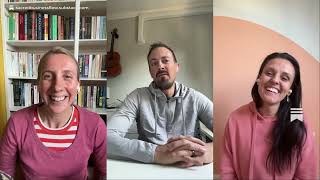
This is a live interview with Jo Hutton about her journey from teaching in-person yoga (running a successful studio for ~10 years) through pandemic-era burnout and panic attacks, to creating the online offering “Yoga for Tired People.” Jo describes shifting from vigorous physical practice to short, frequent 'off-the-mat' practices, building a community-focused paid Substack, and deliberately choosing platforms based on desired monetization and relationship with students. She also describes reverse-engineering Instagram growth (reaching ~168,000 followers within a year) and reflects on fear, visibility, and practical community-building decisions.
Questions this video answers
Approximately 168,000 followers in one year.
36,000 Substack subscribers total; about 29,000 came via the Substack network.
About 10 years.
Chapters
So, yeah. Welcome to Sacred Business Stories. This is our weekly substack live where we have an honest conversation with entrepreneurs about what it looks like to build a business that aligns with your deepest truth. And I'll let Carolina introduce her, but today we're joined by Jo Hutton, and we're really pleased to have her here with us today. So thank you, Jo, for being here and thank you to everyone that's joining us, joining us live.
Yes. Thank you so much, Joe, for accepting my invitation. And I always like to remind people, like, why we create a sacred business stories. And I feel that when we feel inspired by others and how, specifically in this case, how they created their business, it gave us, ourselves permission as well to create something that is sacred for us, that is meaningful for us, and that we could call our sacred business. So sacred business for us is that business that brings all of who you are forward, that honors your certifications, but also honors your experiences, your victories, your challenges. And I came across Jo's substack one. I love the name of her publication, Yoga for Tirid People. And I know she has a beautiful community around that. And I just felt inspired to have her here. And, and if I, if I write properly on your substack account, like, it was out of like your relationship with yoga and you burning out that you kind of like created what you create today. So I feel that's very inspiring for people, you know, that our struggles becomes also our victories. So I'll pass to you, like, thank you so much for being here. And if you could just share, you know, how you came to be, you know, Joe Hudson today, what is your sacred business and how you serve people? We would love to hear.
Yeah, so I've been a yoga teacher for a really long time. I started doing yoga when I was at university. And when I through my course, by the end of my course I was like, oh, I don't really want to do what I trained to go to university in. But I was like, but I'm all in on the yoga. So I just. And I was really lucky because I was young. So you don't have the same overheads when you're young, dear, and you're a little bit fearless. So I was able to have a start a career in yoga teaching because I think it's a little bit harder when you're a bit older and you've got like a mortgage and kids to feed and things. It's a, it's much more difficult if you've got like a corporate job that you have to give up and do. So I was really lucky that I was, you know, I was a student, I was able to live in a shared house and it didn't, I only needed beer money, it was fine. And then that kind of grew. And when I moved back home to Newcastle, I set up a studio and that ran really successfully for about 10 years. And I also do a yoga teacher training here in person. My, my business for a long, long time was just in person. I had no interest in doing Internet stuff at all. But then of course the pandemic happened, didn't it? And we all had to, we all had to go online. And during the pandemic, I don't think it was until after the pandemic that I really understood how exhausting keeping the business going during that uncertainty had been for us. And I just had a full on burnout. So I was getting these like I'd had panic attacks much earlier on in my life, but I'd never had them as since I'd started doing yoga. And I started getting panic attacks when I was teaching, like while I was teaching my classes. And I just thought, oh no, like I, this is, this is my life. Like it wasn't just something I love doing. Like it was a com, my community, it was everything. And the thought of not being able to do that, like it was quite a dark place in my life. Cause I was like, I, I don't know what I am without this. And then I had to just step away from yoga completely and be like, right, okay, I can't. I obviously what has been working in the past where, because I had quite a strong Ashtanga practice, I did a lot of vinyasa. I was quite, you know, I've always loved restorative as well. But my own personal practice, I was quite, you know, disciplined and get to the mat and I thought, right, I'm going to give myself space from the physical practice. And I just completely stopped and I went right back to the yoga sutras and I thought, right, what is yoga off the mat? So I started just really looking at the yamas and the niyamas and the living life, your yoga as a life practice rather than just something that happened on the mat. And I started doing these like five different 10 minute practices just woven through my day. And I thought that was gonna be how I practiced until I got back to doing big physical stuff again. I was like, okay, this is what I'm gonna do until I feel better. But actually it just completely transformed my practice and it transformed my relationship with yoga, and I just loved it so much. And I was like, I think that there's something here for. Because everybody I was speaking to, like, was burnt out. Everybody was exhausted. And I think that hustle culture and the way that we've been taught about the core beliefs in our society around work and what success is and everything, I think people are really struggling and there. It's difficult for people to rest when rest has been commodified into this, like, other thing that we have to succeed at. And so I was like, okay, let's go back to the drawing board and I'm going to teach the way that I've been. Listen. And that's when I created Yoga for Tired People. And I just thought it was going to be this really small little thing on top of the. The other stuff, but. But it wasn't. People have just really, really resonated with it and it's kind of blown up. And I'm a bit of a reverse engineer. So I like to. I like to, like, I like to take things apart and see how things work. And. And that's what I did with Instagram. So with Instagram, I was like, oh, that there must be a. A way that this works. So I was like, right, okay, I'm going to give myself a year to kind of go all in on Instagram and see how. See what happens. And at that point, everyone was saying that the algorithm is dead and nobody's growing. And. And I thought, okay, like, there must. And. And I did that and it in it. Within a year, I got 168,000 followers in a year. Like, it was. It kind of just blew. And I did not, I did not expect that at all because, like, a normal person in Newcastle, like, I'm not, like, I didn't. I thought to be able to do stuff in on Instagram, you had to be like, Uber. Like, you know, you know what the yoga is like, on Instagram. Like, it's the girls in the bikinis on the beach and the gorgeous, gorgeous, gorgeous. And I was like, is anyone going to be interested in me and my. In my, like, house in Newcastle? And I think people were just like, oh, thank God. Like, there's someone that, like, is not telling us that I have to get up at 5am and do all this stuff. And we've just created this really lovely community and I'm so grateful for the Internet that we can do this because it's. It's brand new, isn't it, that we're able to just tap some buttons on our phone and make a community. It's beautiful.
Yeah. I love everything that you share. Like when I love the fact that. And that's what I love about your work and when I read your stuff, like, it feels that you dismiss the fight. Yoga, you know, it's.
There's.
I see this part of like, yeah, like beautiful bodies and like people like putting their foot on their head and doing like a lot of like postures that most of the population cannot do it. There is this other part that puts you like on top of the mountain. And then yoga has to be this rigid thing that like. And I think you. I read something that you wrote recently about like, why I'm not waking up at 5am anymore and that has changed my life. Right. And what if yoga would be just you for five minutes going back within and connecting to your breath and like stretching a part of your body that feels like uncomfortable and back to the business. I feel that this is a, a gift that like you, you didn't know that that's what would happen to you. But like this is serving me and I'm gonna just share this with people. And that became like, you know, a business that you, you were not expecting. So what is the relationship like? And maybe a little bit off the topic, just for my own curiosity, like the relationship about yoga being like a spiritual practice, for example, and not needing to do that for an hour and just allowing five minutes to be enough. And how that transformed in you and how it is serving your life way more now. And how do you see the people that you serve, for example?
I think it's, it's. It's almost counterintuitive, but I feel like when you do the yoga, the smaller amounts more often, it feels closer to the surface. So it's. So rather than it being something that you do separate from your life, so you like go off into your yoga room and you do your yoga and then you step off your mat and you come into your life and there's like this yoga part of you and then there's this life part of you. I feel like it's much more integrated when you're like exactly what you said there, where you were like. And it's just remembering to be like, ah. And then I'm coming back. Because I think that I, I think that yoga is something that we all naturally do and know anyway. I don't think it's something that we really need to be taught in the traditional sense. It's more about being guided to remember that you already know this stuff. And I think that having it just five minutes more often, then it, like, feels more like it's your. Your life is yoga rather than you have yoga and then your life. I don't know if that makes sense, but it does.
Yeah. I always, I. I always say, like, yoga is life and life is yoga. There's no separation. What happens in your life happens on the mat, and the mat is part of your life. And, you know, if it's f. Five minutes, it's five minutes. If you need more, you need more. And how. The name Yoga for retired people. I love this name so much.
I just thought, yeah, I just thought, what do people need? I'm very like. I don't know if you have this in Brazil, but we have. Say what it says on the tin. That's what we say. What it. Say what it is on the tin, which is like you, you just make it really clear what it is that it's for. And it's a bit tongue in cheek as well, because I think that. I think people. We're all almost identifying with the word tired as well. It's like, it's almost become like this badge of. Because that's everyone, isn't it? Like everyone's tired. I feel like everyone you meet, you say, oh, I'm tired, I'm tired. But there's obviously like a scale of that.
There's like people who.
There's levels of it. But it's a little bit tongue in cheek as well, because I think that it's like trying to get past this identification of like, that tiredness is a. Is like a thing that we like an identity. If that. I don't know if I've explained myself very well now.
It totally makes sense. And I don't know if you'll do have any questions. I can give the space for you, but I have a lot of questions.
Well, I would love to ask you about this. One of the things we love to ask about is relationship with fear and resistance. And I love to hear it from people kind of regardless of where they're coming from. And with you, it feels like this kind of was this. I don't want to call it accidental because I feel like you were guided into it, but seems like you entered into this with this open curiosity and then also just receptiveness to what was being asked in the moment. But I'm just curious, as you've grown and as, as you've worked in your business, you know, are there areas where fear and resistance come up for you? You know, And. And how do you work with that? Because that's something in our audience that we see a lot, and people vilify that. Like, they think something's gone wrong. It's like, oh, you know, and we say, like, no, like, actually, like, when you experience these things, it's. It's normal. And it actually oftentimes means you' towards what's most meaningful to you. So I'm just curious how you relate to that and any guidance you might have for people who might not be as further along in their own perception or at any stage of growing their business.
Oh, I'm frightened all the time. I'm frightened all the time. I think that because I was saying, I teach yoga teachers, and this is something that we talk about all the time, which is that at some point you've just got to realize that the fear of, like. Because it's not right or wrong whether you do the thing or you don't do the thing. Like, you can do it or you can't, but you have to live with whether you've done it or not. And at some point, the pain of not doing the thing gets worse than the pain of doing the thing. So I put off doing stuff on the Internet for a really long time because I was so frightened of being visible. Like, it was just, oh, I really, really didn't want to be visible. I didn't want to be. It opens you up in the. I didn't want to be vulnerable. I remember teaching my first class. I was sick after I taught my first class because I was so frightened. Like, and I just think that you. The analogy that I use with my teachers a lot is it's like learning to drive. Like, I didn't learn to drive until I was in my late 20s. And it was genuinely the most terrifying thing that's ever happened to us in my whole life. Like, I could not understand how people could just get into a car and drive. I was like, how do you go on the freeway? And people would say. It was like, you go on the freeway by going on the freeway. And I'd be like, no, but. But who do I pay? What can I do? Like, I'll literally do anything except go on the freeway. And then people would be like, no, you just have to go on the freeway. And then I would go. And now I'm like, I can go on the freeway and it's fine. And I feel like that's the same with this. But as you get. As your business develops, what happens is you don't stop being Frightened. And this is such a cliche, but it's so true. You don't stop being frightened. You just know that the fear is okay. Like, it's okay to be frightened. And it doesn't mean that you're not. You're not. You're not doing the right thing. And I think that it's often when you button against your comfort zone because your brain is like. Your brain's like, no, go back. Go be safe. And the something that I always try and get my teachers to look out for is points when you will give yourself a reason to go back into your comfort zone. So, like, the first time that you drive and someone honks at you, you're like, ah, that must mean that I'm the worst driver ever, and I shouldn't be driving, and everyone knows that I'm a terrible driver and I should go home. And you can, at those points be like, okay, that means. Or you can be like. That's a rite of passage. So, like, the first time someone asks for a refund, the first time that you get a bad review, the first time that, like, a business relationship falls down, like, they're rites of passages that happen, and they're awful. Like, I'm not saying they're not awful, but you get to decide what story you tell yourself about that. But, like, does it. Does it make you go back or does it just become something? Because, like, things that were awful at the time, when I look back on them, I'm like, oh, that happens three times a week now. And I don't even care. I just don't care about that now. And, like, I can't believe that that would have ever stopped me. And it almost did. Like, there's things where I'm like. That would. Like, every day, I'm like, oh, well, that's. That's it. That just proves that I shouldn't be doing this. But you've. But, like, what's the choice? What choice do you have? You. You go back and.
Or you.
You go forward and. Yeah, but that fear. Never That. I. I hate to say it to people, but it's not going away unless you. Unless you then stay in your. Because you can just expand your comfort zone and then stay there, which is totally fine. But if you keep expanding your comfort zone, then the fear's not going anywhere.
Yeah. There's so many. I'll just say one quick thing and let Caroline talk. But. Yeah, I just think that's so powerful, so many things that you just said. But even just like, your. As someone who shared you had challenges with visibility and this whole Internet thing. Just, like, I think it's so powerful for people to hear what you just shared because just your presence here with us now is so calm and grounded, and you would never know that. Right. And people sometimes, you know, they'll hear someone that comes on that has, like, this, you know, hundred and something, thousand followers, and they're like, oh, they're just kind of. Kind of born this way or built for it. And so often that's. If not always, that's not the case. And, you know, I've shared live before that. You know, every time I come on these lives, which are like a simple thing, like, it's gotten easier, but I still feel that, like, little tickle in my chest. And then it's just the decision of, like, okay, do I go forward and do it like you said, or is that the thing to hold me back where in the past it would have? And so I just think that for people that are early in that visibility journey, it's. Yeah, it's extremely powerful what you shared. And I'll. I'll pass it to Carolina. She's probably got some other.
Yeah, it's just a comment because I feel that, yeah, you could choose to stay in your comfort zone, and that's okay, too. Right. But I feel that when you. When you decide to have your business, like, you need to constantly be expanding. Like, it's like, I don't know any business owner that's not facing fear all the time, you know, like. Like, like you said, like, it's not changing anything. Fear is still there, and I just need to, you know, keep taking the actions. And I love the name, the way you use, like, the rite of passage, you know, like, just the rite of passage. Like, just this thing, like, is gonna block me from moving forward or it's gonna, like, just being one more thing that's going to keep me, like, moving forward towards the things that I want to do. So it's. It's beautiful and a lot of wisdom there. I really hope people, like, get the message and just go, fear never goes away. Right.
Yeah. And. And related to that, the other thing that we've a lot of people share with us that they're challenged by is kind of. And this, I think, will be very interesting to get your perspective because you were more an offline business before you moved to this Internet thing. This. This idea of, like, how do we create, like, meaningful, authentic connections with these new mediums and formats, like substack that are available to Us. And so I'd love to kind of, yeah, hear like how you approach connection, what part that plays in the business you're building. I've heard you use the word community quite a few times, but just, yeah, any advice you'd have for anyone who's trying to share more of what they have to offer more consistently in this online format that you've now found yourself playing in.
So I would say that the first thing is that these platforms, you get to play them however you want to play them. So I think quite often people think, oh, it's got this feature, so I have to use this feature. Or it's got, this is how other people do it. So this is how I have to do it. And actually you get to choose how you, which, which features you use. You get to choose, you show up, you get to choose like what, what you do on, on the platforms. And because I had an in person business for such a long time and because a yoga studio is a community, like it is literally a community space. Like people come, they come for like I had people come into my studio for 10 years. It was really quite hard when I closed it down because, you know, these were my, these were my peeps and I felt that I wanted to create all of the good bits of a yoga studio, but online. So I was like, well, how do we still get that locker room chat? How do we still get. And I think that somewhere like Substack's great because you've got things like the chat function, which is fabulous. Absolutely love the chat function. It's got the comment sections which is great, but you don't have to use that. I think that there's a lot of like, you know, people do talk about communities and my, my business is very community focused. But your business doesn't have to be if that's not how you, how you are. Because one thing like this is going to sound awful and I probably shouldn't admit it, but I don't reply to Instagram comments. I just can't, like, I just don't have the capacity for it. Like I, I cannot do it. Hours and hours and hours of my day. And I was like, oh God, I feel like I'm just giving everything to this platform. Like if someone DMs me, of course I'll reply. Like I read them all, but I don't just don't have the capacity to reply to them all. And that's like my, and I know that that's like, goes counter to so many pieces of advice because People are like, you have to reply to everyone that. And it's. But you get to choose where your community is. Like, my community exists on substack, so if you comment on substack, I will 100% comment back. I will. Like, that's where I choose to have my community. And I think what can happen with online communities is if you have more than one platform, you can have a little bit of a dribble of a community over in the YouTube comments, you can have a little dribble of a community over here, you can have a little dribble of a community over there. And I think sometimes your job is to wrangle people and say, no, this is where it is. So it does feel a bit more like a town square and not, like, just random voices that you, as a curator, have to, like, go up, because it can be quite exhausting to keep on track. And also you get that thing as well, where someone's like, oh, I messaged you, and you, like, didn't see it because it happened. Don't know how did you send the homing pigeon? I don't know. Like, you have to have some kind of, like, control over that as well. I don't know if that's the question, but totally.
Yeah. And early in this conversation, you were talking about kind of reverse engineering Instagram. And I don't know if you agree with this or not. It's not just there's more than one path. But that's kind of why sometimes we'll share with people, like, especially when they're just getting started. It's like, choose your thing if it's substack, if it's Instagram, and just get, like, really good at doing that thing and get really good at plugging in and your connection with people, because oftentimes, if you spread yourself too thin, this is where you run into these things like you described, where it's like, people don't, you know, they feel like, oh, is there anyone here, anybody listening? Or, like, and then you've got to keep up with all these different threads. And so, yeah, and I. And I like that how you shared that, like, you declared, like, substack is my community. And so I agree. That is so important, too, just to let people know kind of where it is that you. That you hang out, you know? So I love that. But. Oh, go.
Okay. The other thing as well is that if you play different games, you win different prizes as well. So when you're thinking, like, what's the. What's. Where do I Want to be on the Internet, think like, what is your long term vision for it? Because like somewhere like Instagram and I love Instagram. I absolutely love it. I think it's a great place. Like I wouldn't be where I am without it and I spend a lot of time there. But you, it's quite a. You could spend nine hours a day on your Instagram and not make a penny ever on it. So you do have to have that in your head of like, where, where is it? Because you need to pay your bills, you need to pay your mortgage. So when you're thinking about, well, where do I want my platform to be? Think, well, how am I going to monetize this? Like so that I can pay my bills? Like how. And if you are going to be on Instagram, then make sure that you're, when you're making content. Because I don't monetize my Instagram at all. So maybe I'm just talking projecting from bitter experience but like, because I never wanted to make ads because I don't like the idea of my audience being the product. That's why I really like Substack. Because in on Substack you're, it's such an honest, clean exchange. I make this, you pay me the end. Whereas I think sometimes it's like on other platforms it's like I make this thing, you come and watch it and then I make money from selling your attention. Which is, which is, you know, it's a business model that I'm not, I've got no judgment against. It's just not the business, that's not the relationship that I wanted to create with my students. Like, that's not how I want. So I've never monetized my Instagram because that's the way that you monetize Instagram. So if think about like how what's the business model that I want to do and make sure you're on a platform that is that there is going to be at some point a place where you can monetize that.
Yeah, I love that because it's really this idea of yeah, it's begin with the end in mind. And I feel that it's a lot of emphasis that we put with our audience on like creating the right foundation and proper model from day one. Because if you're building on that, everything becomes easier and works. But like so much of what I see happening and it's, it's, it's admittedly it's so confusing out there. Like on the Internet, this whole thing People oftentimes, they look at any sort of crater. They could look at you. And they. In some ways, they only can see the tip of the iceberg. And they. And so then they're like, oh, I want to be like Joe. But they. They may have a very incompatible business model or perhaps they have a very similar one where it does work. But I feel this is one of the areas where people don't. They don't. They don't know what they don't know and they don't sometimes slow down to get that piece right. And then it can lead to. Yeah, it can. It's like you said, you get different prizes depending on. On. On where you're hanging out. So, yeah, I love. I love you calling that out, but I want to be respectful of time. I know, I know we said we had about. About 30 minutes and I wanted to. Yeah, I just wanted to make sure we had a little bit of time. Just to kind of give you a moment to. Yeah, just share. Kind of like if. If anyone is experiencing you here for the first time, either live with us or on the replay, obviously you're here on Substack. You've declared this is Community, so this is probably the place for people to reach out. But do you have any other guidance on. If anyone would like to explore your work and your community a little bit more? Anything you might suggest, I think come.
Over to Substack, because Substack is. Well, you'll be on Substack. Anyway, I love Substack. I think it's brilliant and it is quite hard to get people over from other platforms. So I've got 36,000 subscribers on Substack and 29,000 of them have come from the Substack network. And the rest of them, I've, like, had to, like, lift sue over from Instagram and it's taken, like, so much like, come on, come on. Like, it's so difficult. So, yeah, I just. I just love Substack, so. And I just think. And it's a great place to build community and I've got lots of fun stuff happening over at my substack, so if you. If you want more from me, it's my Substack Yoga for Time.
And is there anything specific you'd recommend they start with or. Or not?
Well, it depends what you like. So I've got a complete beginners yoga course for. That's free for people who have never stepped on a yoga mat before. They could do that or they can join the. So what I do with my substack is every Monday. I send them a short yoga session that they can do where they don't have to get out their mat or change their clothes for. So they just press play and, and go. And the first one of the month is completely free. So that's for my free subscribers. Everybody gets that. And then the rest of the time it's just for paid subscribers. But then I'm always yapping, so I'm always sending out things and doing stuff because just love it. So if you, it's worth. If yoga is your thing or if you just like hearing someone yap, you can subscribe.
What a pitch. I love that.
Yeah, yeah, no, thank you so very much. It was really nice to get to know you a little more. And for you. They're here listening. Well, I think like we call it yoga, but I think that, that your, your messages are like ways of making your day better, you know, making your physiology safe so you can actually be creative. You don't need to live with like a neck pain, like a shoulder pain, like, you don't need to be stuck in fireflight. I mean, there's like stress level that we are taught that's normal and at the end of the day it's not, you know, and I feel that, like, you speak to that in such a beautiful and simple way. And so if you're there, you don't like, like yoga, or maybe you do like yoga, but, you know, you want to just live more creatively and you want to feel better in your body and you want to connect with you, you know, with who you are in essence. That's not the person that's like ready to run or ready to fight. I would totally recommend your, your sub stack. I don't know your community. I'm not part of your community, but I read your stuff and I, and I love your message. So thank you so very much for accepting my invitation.
Thank you. I've really enjoyed this. I've really enjoyed this. This has been a lovely chat.
Yeah. Thank you so much for your time and for anyone that's listening that might have joined kind of in the midpoint, we do like a nice kind of recap summary post of this, of these interviews. So we will be sharing that to our audience by email and Joe will also share it with you just in case there's something there that you might like to see. So, yeah, thank you again for your time. We really appreciate you being here with us.
Thank you so much.
Bye.
Have a great day.
Have a beautiful rest of the day.









