How Fear Becomes Your Guide w/ Jari Roomer
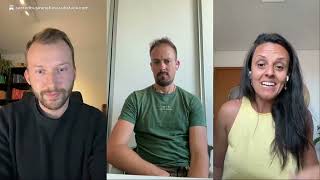
In this Substack Live episode, hosts SPEAKER A and Carolina interview Jari Roomer, co‑leader of the Write, Build, Scale publication. Jari shares his entrepreneurial journey from writing productivity articles on Medium, monetising via the Medium Partner Program, to co‑founding Write, Build, Scale on Substack. He explains how a desire for freedom and personal alignment drove him to build an online business, how fear, imposter syndrome and self‑sabotage surfaced at various stages, and how he learned to treat those feelings as signals of growth. The conversation explores the importance of aligning business with core values, the dynamics of partnership with co‑founders Philipp and Sinem, and the practices that keep their collaboration healthy—trust, regular communication, and autonomy within a shared vision. They discuss the role of community and authentic connection versus transactional collaboration, the impact of AI‑generated content on genuine interaction, and the myth of the solitary “solopreneur.” Throughout, the hosts and Jari emphasize celebrating small wins, seeking mentorship, and building supportive networks to overcome fear and sustain a sacred, purpose‑driven business.
Chapters
We are live. So, yeah, welcome to Sacred Business Stories. This is our weekly Substack Live where really we just have an honest conversation about what it looks like to build a business that's aligned with your deepest truth. And yeah, today we are really fortunate and excited to be joined by Yari. Is it Yari or Yari?
Yari.
Yeah, Yari. Okay. Caught myself there. Yari Rumer, who is really a writer and entrepreneur. He helps online creators, you know, scale their expertise. If you're here on Substack with us, kind of You're probably already familiar with him and his publication that he co-leads, Write, Build, Scale. And, um, yeah, just through newsletters, courses, and their Substack system, they're really teaching creators how to grow their subscribers, launch digital products, and really build sustainable income with their writing. So thank you, Jari, for being here with us today.
Yeah, thanks for having me and thanks for the great introduction.
Yeah, you're welcome. Yeah, I always love to share with people like why we created Sacred Business Stories, and it's mainly for inspiration, right? When we see people, uh, that we say like, oh, it is a sacred business, which is a business that brings all of who you are forward, uh, that is connected to your evolution, that supports your lifestyle. I think just having conversations like, what is the behind the scenes? Like people see where you are, but they don't see like your path and like what happened for you to be where you are. I just feel that listening to those stories, like we give other people permission to tap into their heart and like, if he can do it, I can do it too. And to be very honest with you, like, one of the things that really connected to have you here was one of your posts about being an Ironman and just relating that to, you know, like, I just love that idea. Like, hey, if I want to do this and I need 20 hours a week and, you know, and I want to build a business that supports my lifestyle, So I'm like, what a great example of what a sacred business could be. Not necessarily everybody wants to be an Ironman, but in your case, that's what it is. So I'm very happy to have you here. So thanks for creating the time and space for this conversation.
Yeah, absolutely. I'm really looking forward to it. And that's really been my number one reason for building an online business in the first place, right? To have more freedom and more flexibility to spend time pursuing cool life goals as well. And the Ironman happened to be one of those that popped on my radar.
Yes, that's really cool. Cool.
Well, yeah, just to kind of kick things off, it's pretty open-ended, but we love to just like, like Carolina said, like kind of hear a little bit of your path about how you got here today. You know, people that are finding you, experiencing your work here with Write, Build, Scale. Like I know from some past conversations you've had other kind of iterations where you're doing productivity and you were doing things on Medium and things like this. So yeah, just curious if you could take us a little bit behind the scenes of your journey here?
Absolutely. I see that my co-founder is actually in the chat right now, Philipp. I'll take it a few steps back to when I just started out. I think I always had this idea of I wanted to start my own business ever since I was in high school already, and I didn't even know what that looked like. I thought you needed like a million-dollar loan and build some sort of building, and that's how you need a factory, and that's how you start a business. So I didn't know anything about business, but I always had that itch that I wanted to like start something and build something for myself, basically because I heard this term being unemployable and I always thought of that as a negative thing, but I realized it can be quite a positive thing as well because I realized that's how I'm actually wired. I'm actually unemployable. So I had quite a lot of, I had quite a lot of like full-time jobs working for startups, working for other companies. And as awesome as those environments were, and I had amazing colleagues and managers, I was still like unhappy. Just the fact that I didn't control my schedule, I didn't determine my own working hours, I didn't really determine what to work on. It literally made me miserable and almost like depressed. So that was when I was like, oh, I know that I really need to do something for myself. I need to build my own business. I just didn't really know how to get started or what to do. So I just started like listening to a bunch of podcasts, watching YouTube videos, reading stuff online on how to get started. And that's when I got familiar with this thing of an online business, right? I was like, oh, you can actually run your business online and from the, from your laptop all over the world. That sounds amazing. And I'm sure you've read the book as well, The 4-Hour Workweek, like that really inspired me, but I still didn't, didn't really know how to get started. And I just discovered Medium by accident, really by accident. And I just started writing there about any topic that was of interest to me. And most of that was about self-improvement. I was just sharing about things I've learned from building habits, things I've learned from self-improvement books. Most of it was more geared towards productivity actually. And those productivity articles, they started to take off after a while. And I started to get like hundreds of views, thousands of views. And I was like, whoa, this is crazy. Like there's thousands of people reading my stuff about productivity. That's pretty cool. And that's when I met my other co-founder, Sinem, who was also writing on Medium. And we just did a few like strategy calls together, like mastermind calls, just sharing tips with each other. And she was like, you know, you can actually turn on like the partner program on Medium. You could just earn money with your writing. And I was like, wait, what? Like, I haven't done that. Like, I've just been publishing for free. So I turned on the Medium partner program and then my articles started generating revenue. And that's when this whole online business thing became real for me. And fast forward a little bit, a few years later, like, because I was steadily writing about productivity, then building an email list around it, launching courses around it. That was basically the business I had been running for almost like 4 or 5 years. And then I got pretty bored of it. Then I was actually like, I don't want to write about productivity. How did I become this productivity guy actually? Like what started as just pursuing my curiosity is now my full-time thing. And yes, it's great that I can, you know, have an online business and I can work from abroad, I can do cool things, but the actual topic of my business wasn't really the topic I was meant to be doing. And that's when I realized it's time for me to make a shift. I talked to Filip and Sinem, which I'd known then for a few years, and that's how we kind of like merged together. We started working together more and more because I really wanted to focus more on entrepreneurs and creators, and I I realized I enjoyed the building aspect more than the productivity aspect, right? I enjoyed the business building part way more. And that's how basically Filip and Sinem and I, we really started working together. Substack came along, there was a great timing, and now we're running Write, Build, Skill together. So yeah, long story short.
It's really nice and I love kind of like your intentions in like creating the online business and then like, oh, this is just happening and, um, now I can monetize and, and like just the pause to like, is this what I really want to do it? Like, you know, am I being, because like, I think sometimes people very often we read about success and it's all the metrics related to how much money you make. Oh, I've hit this, I've hit this. And, and I think there's a missing piece of like fulfillment. Like, it doesn't matter to me how much money you make. Like, if you're not, like, if your business is not supporting your health, if your business is not supporting your lifestyle, if your business is not supporting, like, you as a person and your own evolution, like, I don't know if I can call this success, you know? And sometimes it takes an unsuccessful business in terms of, like, all of those aspects to kind of make you pause, like, is this what I want to do? It's, I just, I just think it's very helpful for, for people to see that sometimes you're going to go to the direction that it's showing you a little bit, and then it takes us— I think it's a pivotal moment in life that you need to pause and ask yourself, like, what do you truly want, right? And then you can also create a business from that question.
Absolutely. And that's why I love what you're doing so much, because I, I realized that with my productivity business, for at least a year and a half, almost 2 years, I was like kicking to a rock because it was like my business wasn't really moving anymore because I was not doing the thing I was supposed to be doing. So even you can even argue that like if you truly want to build a thriving business, you need one that's actually aligned with what your core values are, your deepest interests, because I started self-sabotaging basically. I had on paper, a successful business. It was making, generating good money. But I found all kinds of clever ways, my subconscious found clever ways to self-sabotage, right? And after a while, I realized I just need to make a pivot. I need to make a change because I cannot do this for the next 5 or 10 years.
Yeah, it's amazing. I mean, how hard it can be to just get to the starting line if you're not feeling that alignment. And then on the flip side, how easy it could actually be to show up and how alive it can feel to be doing your work if, if you're able to find that clarity and alignment. And I really do, I do agree with what Carolina said and kind of, I feel like your path is very similar to mine where many ways I think sometimes you do have to go through that, right? Like it's, it's not like you can skip steps. And for me, at least in my experience, and I'm curious about yours, like I have really nothing, but even though I had a business that in many ways kind of broke my health and caused a lot of problems for me in my life, I'm I'm able to have gratitude for that because it's truly what has led me to know what I want, right? Because actually there's all these studies too about how the human mind is like actually really not that great at like sometimes predicting what we really think we're going to want. And then it takes going there to be like, oh, wait a second, like, is this really it? And so, yeah, it's an interesting journey for sure.
Yeah, I totally agree. I don't believe necessarily in Oh, if I could have gone back in time, I would have done it radically differently. I think it's exactly by, even if it sometimes is difficult or rough times, it teaches you exactly what you need to learn. And it's because of those times that now, you know, I've learned more, way more about myself and way more about building a business, which I otherwise would not have learned.
Yeah. And I think it's this, um, this different relationship with like contraction and negative emotions. It, it, for clarity, right? Like it takes, uh, sometimes like knowing what you don't want to actually know what you wanted. And that's the whole process of like, oh, like for me, it was like, oh, I want to build my energy healing practice. And I want to have a lot of patients until I realized that I don't want to have a lot of clients. Like, you know, like I want to build something different and I, I want to have my own space. And I'm like, well, but I want to travel more than have my own space. So why am I building something that's like physically attached to a specific, uh, location. And what you said about like love, we were actually having this conversation about like sometimes when we read about like being a coach, like sometimes our being in this online world sounds it's like so easy. Um, but not necessarily is an easy journey, right? And I think that the ones that succeed are actually the ones that are creating from the heart. Like that, you know, there is a meaning for you to show up every day and do the thing that you're doing, and it's not coming from here or numbers all alone. So.
Yeah, it's a way deeper source of inspiration, right? You're tapping into a deeper source of energy rather than, oh, I just have to do this because I have to follow my publishing schedule. Like if you don't really care about the message you're sharing, then yes, maybe you can maintain it for a few months or years, but eventually you'll hit a ceiling or you'll self-sabotage, right? So truly caring about your message and what you do or who you serve, right? Or who your customers are. I think that's so important. Yeah. I couldn't run my business any other way. No. Yeah.
I'm curious. This isn't a question I've really asked before, but like just because in a way it's a similar dynamic, but like we have a lot of clients who have this kind of desire for, for partnership. And it's really cool to see how you and Philip and Sinem collaborate and how in many ways, at least from the outside, it feels like a very strong partnership and you all kind of have your lanes and what I can see as your strengths and Sinem's strengths and Philip's strengths. And I'm just curious kind of like how that, yeah, just if you could speak more about that process, especially running a publication here on Substack and just how you guys work together in ways that feel good for you.
Yeah, yeah. So what I think was really key to how we work together is the fact that we've known each other for years already before we had a business or publication together. So CNM, I met there on this back on the Medium days, right in 2019. I met Philip a few years later and every month we would do these calls together just to exchange tips from one entrepreneur to another entrepreneur. So there was a really solid foundation already. And I do think if you want to collaborate with someone, that's really important, right? Don't just do it because you want to partner up. I think you really need to know who you're partnering up with. It's kind of like in a relationship, right? You're not just like, it's, you spend so much time together with your business partners, for example, you really need to know you can trust each other. You're a team, right? And you, yeah, you know each other, how everyone operates in that team before you even get started. So I think we had a very solid foundation there. And then I think when we work together, a key is communication. So we do, you know, multiple meetings per week, but we do these regular check-ins as well where there's space for everyone to indicate communicate if they're not enjoying how things are going, if they, if they're struggling with something, right? So really, so that you don't have to like hold it in you and then it builds up and then it comes out in a weird way. So I think that is really key in how we work together. And we still, because I, like I said, I always build a business for myself. I wanted to do that because of freedom. So we, in our partnership, in our collaboration, we still have a large degree of independence and freedom in how we work. So if Sinem writes an article, that's truly Sinem, her article. I'm not going to tell her how to write the article. If I'm writing an article, it's really my article, right? And I think that also is a strength. So yes, we operate as like one team, but within the team, there's a lot of flexibility and room to do it your way. And I think that also, you know, some people might be super into what Sinem is writing and maybe not so much into what I'm writing, or vice versa. And that's exactly our strength, I think.
Yeah, we see that a lot as well. Caelene and I have, in many ways, very similar perspectives, but we have different life experience and perspectives as well. And it's fun to kind of— and I see that as a strength too. It's kind of fun to see how those converge and some people really just love love everything Carolina puts out and some people dig my stuff. I actually think more people love Carolina. I'll give her the credit. She's the bigger personality in the room, but we have a lot of fun, you know.
Yeah.
Yeah. Another topic that— and this is kind of getting back to what we love to ask our guests about— is that one of the things that we like to convey is that it's really perfectly normal to have kind of fear and resistance come up, especially as you're building something meaningful. And, you know, I think now maybe more than ever, we're kind of in a very volatile, uncertain time. And, you know, there's, you know, yeah, I'm just curious, like, as you navigate growing your business and also as you've even as you think about the various iterations you've had from maybe leaving your job to doing your thing on Medium to what you're doing now, What is kind of one area where fear or resistance tends to kind of show up for you? And when you're able to notice that, kind of how do you work that so you can kind of keep moving forward? Because it feels to me that your ability to be consistent and keep showing up is there, right? And so I'm just curious kind of how you, how you relate to that.
Yeah, I, I would say things like fear, resistance, maybe imposter syndrome are very natural. Especially when it comes to being a content creator, because you're not just building a physical product that you're selling. No, you're sharing your message, your values, your experience, and now other people can criticize it or reject you, right? So I think that's even more common in content creators. I think knowing that it's just part of it helps. That helps me a lot. And at every stage of business, there's this new fear and there's new levels of resistance or new levels of, can I or can we really do this? And it's, I see it in that sense more like an indicator that I'm on the right path because if I would just be super comfortable the whole time, I know that I'm probably missing out on some cool things and a lot of growth as well. This doesn't mean you have to go and make your life completely uncomfortable all the time. There's absolutely space for comfort, but I think even doing the first Substack Live like a year ago, I was nervous, right? I was very nervous for it. And the way I speak on a Substack Live now is way more relaxed. I feel I'm enjoying, you know, talking to you now, talking to the people who are here. But the first time, definitely not, right? First time recording a podcast episode. I was nervous first time reaching out to a creator with 10x the audience size of us. I was, I was afraid that person was going to say no. Right. And I think knowing that it's just going to show up anyway, and then doing it anyway, that's key in my eyes. And I think trusting yourself enough that you might not know how to do it yet, but you know you have the capacity to figure it out and can get better at it. That's something I've always reminded myself, even when I started the Ironman. Like, I'm pointing to the medal back there. When I signed up for the Ironman, I really— I wasn't a good runner. I could do a bit of biking because I'm Dutch, but I hardly could do any swimming, right? So, but it was like, okay, I've signed up and now I'm going to figure out how to do it. And I know that my next few training sessions and my upcoming months I'm nowhere near the level I need to be to do the Ironman, but I know I'll get there. And I think it's the same thing in business. Do your first Substack Live, share your first post, record your first podcast, create your first course, and don't expect yourself to be good at it from the start. If you are, that's great, but just expect it to like not be good, to be awkward, that you are, you know, a bit stressed out about it, whatever, but that you will get better over time. You'll get more comfortable over time. Um, yeah, I think leaning on that is a good way to navigate fear for me personally.
Yeah, that's a very similar approach. Like, I, I don't think I've always been like that, but I, I feel that I almost see fear as my guidance. And if, if there is fear, and of course I'm not putting myself in a risky situation in terms of like, it's not about the, am I gonna die or not? Right. But if there's fear, like the psychological fear of like being seen or exposed or rejected or whatever, it means that I have to do it. So it's almost like a commitment. I'm like, uh, this freaks me out. Okay. That's exactly there that I needed to go. And the more you do that, like to your point, like, oh, your first slide, your first publishing stuff or talking to somebody, or then you realize that it's not that bad, right? It's just like, oh yeah. And it, and it's, it was just guiding me for my my own self-discovery in a way. And then you discover that, you know, that person that you thought was like much bigger than you is just another person, you know, and you connect in a nice way that if you do one Subcycle Live is one thing, but after you do 10, it's just another thing and it becomes like fun. So I think it's a very similar approach.
Absolutely. Yeah. Yeah.
It's like, it almost becomes a game. And, uh, and I always like, you know, kind of related to what you both said, I always have this idea. It's like kind of like wonder and curiosity. It's like I kind of ask myself, like when I feel that fear, I'm like, oh, like, who would I be? Like, what would it be like to just like show up on a Substack Live and be like totally loose and like not all like— because I was the same as you. And, and quite honestly, even I've been doing these, we've been doing these for over about a year now too, probably just like you guys. And still, even like as, as comfortable as I am, they're honestly one of my favorite things to do every week. It's so deeply ingrained in me. Like this fear of being seen is something that that kind of goes back to childhood for me that I still get that little twinge, like even though I've done these almost every week for years. So like it's kind of making peace with that and, and just, yeah, it's just, and then letting it be fun. So yeah, I really, I really respect that.
That's, that's a really good one, right? Knowing that, okay, that's a part of, of, of you for this activity and it's fine. It's completely fine. Like, I mean, I still, I still have that with if, if, if it's reaching out to a bigger creator, I'm like, oh, I know that they're a human and they're probably going to be very fun to hang out with. But there's still this fear that they might reject me. Okay, but it's fine. It's fine. It's just part of it.
Yeah, but in many ways it's like illogical at this point. It's a feeling because like, I'm not kidding, like this is literally one of my favorite. So it's weird when you can sit with this kind of tension of like it could be like one of your favorite things to do in the week. And then also there's just that kind of impulse, you know, that's just been there for a really long time. So yeah, it's, it's an interesting, it's an interesting experience for sure. I wanted to ask about— so another thing which I feel that you guys do really well with collaboration, I feel that as people kind of make this, kind of make this leap or decision to kind of start building something online, on one hand it could be kind of isolating, especially if you're working alone. But then it's like you want to get out there and make meaningful, authentic connection and, you know, find ways to share your, share your message. But Yeah, this can be really confronting as well. And so I'm curious, like, what your approach has been to connection and how you build relationship, how you see community as part of how you grow your business and support others. Anything that you would like to share about that?
Yeah, for sure. Because when I, I would say I'm actually way more of an introvert. So connecting with people and especially reaching out to people doesn't come naturally to me. And when we just started out on Substack and here on Substack, collaborations is really a big thing, but back on Medium, you could just write and your article would get selected and it would be shown to thousands of people and that's it. So you didn't really need to connect with that many people. So it was quite, quite new for me when we started on, on Substack. And initially I had quite a lot of resistance to it because it was so unfamiliar and because it wasn't a habit to do. But then with every creator that we did collaborate with, it was fun. Like it was like, oh, I actually enjoy talking to you. Like it's actually fun to collaborate together. It's not just we're working together, but I now know which football team you support and we can have a conversation about that, right? So it became more fun and therefore reaching out to other people, other creators became easier to do. And I do think, and we're pretty pretty strict on this. We only work together with people that we truly feel it's a pleasure to work with them. So even if there's creators with big audience sizes, but they're a hassle to work with, they cause you stress, they're not a positive energy, we don't work with them anymore, right? So really protecting, because I do believe the people you hang out with, you adopt their mindset, their energy, even if it's subconsciously, it rubs off on you in a way, right? So we really curate the people we work with that, hey, if it's a good match, we think you're a positive person, we would actually love to meet with you in real life rather than have this business transaction. Those are some of our guiding principles with collaborating, and obviously we try to be that for the other person as well. So that's been a big one, and seeing collaborations as this win-win, right? So if you approach a collaboration with, how am I gonna get as much as possible out of it, then it's never gonna work. And I don't think that should be the intention at all of any collaboration. So seeing how it can be a win-win is, is everything when you collaborate.
Yeah. And going to your first topic about connection, like and maybe you have that within, you know, your, your audience as well, but I, sometimes I see people like, kind of like thinking that connection is a strategy and it is a strategy, but it's way more than strategy. And I agree with you when I say like, I am not collaborating with you or any like creator because the outcome only. Like, it has to feel good and it has to be authentic. And recently, like, we were talking about, like, commenting on other people's posts. And I'm like, well, we do for business, but I'm not going to comment on your thing if I'm not connected to the message that you are sharing. So then, and I got someone asking me, like, so what's the, if you're attached to the outcome, what's the line between authenticity and meaningful connections? And I think It's all merged. Like, there's no way you can have connection if the only thing that matters is your winnings, or, you know, there's no way it exists, like, truly connection if you're only interested in the outcome of that comment. And I make, like, comments in people's stuff that, like, I love parenting, like, I love travel, like, I love food, and those are the things that, you know, makes my Substack fun. And maybe, like, because I'm doing that, there's people intercommunicating and growing the audience. And, and this is all reflection of the connection. I'm not sure if I'm making any sense, but I would love to hear your perspective on that because we have people like, I don't want to just comment to grow. I'm like, but that's not what it is. Like, you comment because you, you want to talk to people. You comment because, you know, you want to feel this bigger connection that online, that's the way you do it. Like, if you, it's in person, you would say something live, but, um, I would love to hear your perspective on that.
Yeah, I totally get it. I think if you see, like, for example, the commenting thing as a chore or a tactic, it's never gonna work, right? That's not the— then you're just ticking off a to-do, like a task on your to-do list. Um, if it's— and, and sometimes, sorry, it can be if you see someone else, it could be that initially you're drawn to them because of, okay, it seems like they have a good publication. It seems like it has a good match with my audience. They seem to be professional and high-quality work. So then it's more like the business perspective first that maybe causes you to reach out, but then you might discover they're an awesome person and now you have this personal connection, but it could also be the other way around. You first are drawn to their message, their core, their, even their hobbies and interests, right? I have, because I have my profile picture with my dog, I have so many people that are like, I love your dog. I have a dog too. There's a picture of my dog and we spend like 15 minutes talking about dogs. Talking about, you know, our common struggles. And then all of a sudden they're like, oh, by the way, I would love to buy your program. Where can I get it? Right? And it's like, it's, but it's that human connection first. It's just talking about dogs. There's no sales call, no sales pitch, whatever. It's just this personal connection. And those to me are the most fun situations, right? It's where you connect with the individual first and business is a result from that connection. This is not to say that that should be the only method. Like I said, right, it could be that you're first drawn to someone's professionalism and that's perfectly fine as well. And then you discover you actually get along really well. That's totally fine. But I think that feeling of being personally connected to someone, that's the core of it. If that's not there, it's not gonna work.
Yeah, I agree. And I also feel that that energy feeds your business. right? That's the kind of like the energy that you're putting yourself, I don't know, for all the hours that you work a day. And sometimes like, if it's just a strategy alone, it's just not sustainable. Um, and it has to, that's, you know, that's just my way of seeing things. Like if it's not coming from your heart, like even a strategy, like why even bother? Uh, it can be just empty.
So, yeah.
And exactly. And for us, and for us in many ways, like, and this was very, you know, back to kind of the beginning of our conversation, it was very intentional by design. Much of what we're trying to share with our audience and like when we go out and try to find cool people to talk to, it's following our own kind of inspirations, following our own wonder. It's kind of following like, what are we curious about? Like, what do we want to learn about? And like, who, you know, and so, and, and just kind of trusting that there's going to be a natural alignment there with what our people want to hear about as well. And that makes it really fun too, because, you know, Charlene and I often talk about like, we almost see this as like an infinite game where like the intention or the hope is is that as we grow and evolve, the business will grow and evolve. So who knows, like, we'll be, we'd be having the same conversations a year from now, 2 years from now. I don't know. But yeah, for me, this, this connection piece is, is huge. And someone said something, I don't know who it was, but I read so many things here on Substack, but just thinking about all this AI stuff, which I use AI, I see no problem with it. But like, if you, it gets to a point where it's like, if you, oh, it was this thing around like the internet, like, like why was the internet literally created? It was like for connection and like, you know, to open up dialogues and conversations. And if we take that out of it, it just kind of becomes this kind of pure, you know, cold, sterile, tactical, AI-driven thing. Like, where is that going? You know, it's not going anywhere. Where's fun? You know?
Absolutely. I see that a lot with— and actually talking about the commenting thing, right? I see a lot of people like leaving AI-generated comments, and I find it such a shame because it's very easy to see it's an AI-generated comment and instantly I'm like, yeah, but now I don't feel any pull to dive into this connection more because it feels like you're sending robot-generated content my way and I'm all like, I use AI myself as well. Like I'm not against that, but if you're just that personal reach out, if you use AI for that, I think then it's no longer that personal, right? So yeah, creating content, of course, it can be a really helpful tool. It can be your ghostwriter basically. But I think I sometimes think about this, right? If we all start using AI and AI-generated content and AI comments, what's almost the point of a social network? Like, it's like, oh yeah, just let's go offline communities and just hang out and drink coffee or tea together in real life rather than with a bunch of bots and AI-generated content.
Yeah, I've been totally having that thought myself and it's so crazy. Like there was a book I read, I wish I could remember the name, but it was like a science fiction book. It was probably almost 10 years ago, and I was— I remember, you know, reading it on the subway and as I would go to work. And that was this whole idea of like, basically where we are today. It was like basically about how AI would like get to where it was communicating on everyone's behalf. And then eventually we would like stop paying attention and just like let the machines talk to one another. And it just like, it was such— it was a crazy book, but it's like almost feels like that's where we're at, where it was kind of like you followed it through to where eventually it was kind of this apocalyptic book, but it was like email conversations back and forth that ultimately led to a nuclear bomb going off, you know, because there was just no one, nobody left at the wheel, you know. And it's just, yeah, it's just, yeah, I think about that too. And it's something we've been thinking about a lot for our own business. It's just like, what, where do we want in-person and live community to play? You know, what part do we want that to play? In fact, that was like a, it's a huge part of one of my past businesses. And it's something that that I've been missing. So that's something we're going to start experimenting as well with as well.
Yeah, same for us, same for us in person, hopefully, right? But even just our community itself, that's really something we'll focus a lot more in 2026. We have a community with a lot of creators, but getting, making that even better and making sure people can connect, even if it's in a virtual Zoom room, just like we are on a call right now, but we're still connected as individuals, right? I think I think that's going to be more and more important, showing yourself, whether it's on camera, on a live stream, or on a podcast. I think that's only going to be more important in this day and age. Yeah.
Yeah. And just back to the, like, it takes some time to go where you don't want to go to actually see where you have to go. I think we are in the phase of like going all in with AI. You know, and then maybe using for like, like comments and writing and, you know, stuff that maybe doesn't make any sense just so we can actually come back to center. You know, we didn't have AI at all. Now we have AI. So then it goes to all the extreme and now we go back and like, okay, but what's the center? Like, how can actually serve us? But we might not. And that's sometimes where I feel that it's hard for people to see that it takes like like the big contraction before the expansion or the destruction before the new thing is born, because you gotta go all the way to one side to like, oh, it doesn't work like that. You know? So how can we, and I agree with you, like I think community, uh, will be more and more valuable as, you know, those machines start like taking spaces and like real comments and videos like this, you know, like just being and, and seeing people like, because because if we don't be careful with it, like you could isolate yourself completely until you like, oh my gosh, like I need to go back and I need to see people, right? And I need to, even if it's through, through a screen.
Yeah, absolutely. Absolutely. I think it's fascinating, right? We need to find the balance point. I never thought about it that way, Carolina, but it's, it's indeed, it's like a new technology and therefore it's like now we move to that way of the spectrum and we probably have to find A balance point in how to use it. Yeah.
Yeah. We were, we were having this conversation a couple of days ago, Carolina and I, and I may have posted on Substack about it, but, you know, Carolina has a young, a young kiddo that just turned 3. But like we were talking about, like, I think ChatGPT just turned 3 recently. And so like we've actually been going through like this, the terrible twos of like, if we think about our AI use, like this is a whole new thing. It's like we don't know what we're doing. And it's like, so I try not to have like judgment, even like when I see people doing those things that maybe I'm like, eh, I'm like, all right. You know, this is novelty. This is people experimenting, playing, trying things out for the first time, seeing what works. And it's like, yeah, I think kind of in many ways as a society where, I mean, it's just crazy to think about. We're so early in this game. Like, we, we don't know what we don't know. And we're learning as we go, you know, and some people are providing good models for that. And that's beautiful. But in the end, it's new for all of us, you know.
Yeah, that's actually a good perspective. Good way to look at it. Yeah. Yeah.
I have a question for you about like, uh, like what you see in your audience and then the people that you help, like what is their biggest challenge? Like speaking from their heart, you know, like sharing their things. Like what is it that you see? You know, there's, uh, I'm assuming like you're, you know, selling, helping people to create courses and to kind of like build their presence on Substack. Um, but there's like a lot of fear involved, right? So what do you see, uh, that's like common and people like, you know, across the board, that's the one thing that people like, they know what to do, but they pause, like.
Hmm. Yeah. That's a really good question. I guess there's a few things that come to my mind, but the thing that comes to my mind the most is this feeling of not being good enough, which, which which translates itself into multiple different ways. For some person, the feeling of not being good enough is, I don't know enough about my topic yet, so who will listen to me? For other people, it's more like, I don't have the confidence in myself that I'm going to be consistent with this because in the past I've not been consistent with things, right? Or I'm not confident people will actually pay me for this. So yes, my, maybe I'll get readers, but who will actually pay me? Or I think it really boils down to this feeling of not being good enough, which I think is a universal human experience, right? And that materializes in different ways, but it's mostly this idea of, okay, yes, I would love a Substack. Yes, I would actually love to have an audience and have paid subscribers and make money this way. But then there's so many feelings of self-doubt, imposter syndrome. Who am I to be doing this? I'm not going to be consistent enough to succeed. So more often than not, and that's also how our programs are actually designed. The program teaches you what to do, and then we always add like 3 months of group coaching where we're more encouraging people to actually do it and making sure that when they have doubts and fears, we are there to help them out, right? So it's like, yes, you have the information on one hand, but I mean, knowing from experience that you can give people a lot of information, but then the implementation won't be there, right? So many of our coaching sessions are almost more, less tactical, less strategy, less marketing, and way more focused on the individual actually.
Yeah, it's crazy. Like we see similar things with our people as well. And it fascinates me, like this, this fear of like not being enough or, uh, not being like, sometimes I, uh, like, and, and, and I like to have those questions with someone like you and Phil and I, we talk a lot because like, even if I'm not good enough, I put myself out there anyways. You know, even if like for your point, like, oh, I'm not an Ironman yet, but I'm gonna I'm gonna, you know, register myself to do this because I know I can, I can get it there. And I just feel that, um, I don't know, I just, I just see Substack, like, like you guys, and I see other people and other creators, like, just encouraging people so much, you know, like, hey, go, you know, put your message out there, like, show who you are, like, be vulnerable, like, it doesn't matter, like, what you know now is enough for— there's people that need what you have. Um, and I was just curious because Yeah, it's across the board. I'm like, maybe there's something different, but at the end of the day, it seems that it's all the same, you know, things blocking people and we all have like beautiful messages to share.
So yeah, that's why I really love what you're doing, right? Because you can share the actual strategy and the funnels and the marketing part, but it's not going to work if someone doesn't believe in themselves or if they're unclear on what their strengths are, what they actually want, right? It's so, so important because knowing conceptually how to do something is completely different than actually going out and do it with all the fears, doubts, and inner resistance that comes with it.
Yeah, it's not my quote, but I often say to people, I'm like, knowing and not doing is the same as not knowing, right? So I don't know who said that, but it's step, like you can know, and sometimes you get people like, yeah, but I know this, but I know this, but I know this, but then go and do it. And those are like, it's very distant. It's very different.
Yeah.
And, and yeah, it's really, it's really wonderful to hear that, that you are tuned into that and you're offering that kind of support because I mean, you know, from speaking from our audience and our experience, like there's, there's this whole world out there, as you know, of like online offerings and so many of our people that come to us, they're it's almost like it's a form of trauma, quite honestly. It's like they've, they've gone down so many rabbit holes. They've bought so many courses and invested so many things and taken the, taken the pill, so to speak. And, you know, I believe there's personal ownership in that. But I also think there's a certain responsibility in how you serve and how you show up and, and how you actually deliver. And so, yeah, it's just really, you know, that's probably why we're having these kind of conversations. It's really good to hear that you guys are connected to kind of offering that kind of support because I think it's so So important because, yeah, the tactics are very important. Like, I mean, all the things that you're teaching specifically around Substack, like many of them have helped us. Like they're, they're, it's part of the conversation, but it's not the whole conversation. And so, yeah, I think we need to all kind of have that awareness, you know, in our, in how we support people.
Absolutely. I, and I just look back at my own journey where I, for the first year and a half that I have my first business. I didn't make a single dollar because I, not because I didn't know how, but because I tried to like do it myself with my own blind spots and with my own biases and with my own limiting beliefs. And I had no one there to actually like coach me through it and say, or give me like whether it's confidence or breaking through a limiting belief or just showing your blind spots. So I had the information, right? I was listening to the podcast and there they tell you if you just write in this way or if you built your funnel that that way, you will generate $10K a month. I was like, cool, let's go and do it. And then it doesn't work because you don't know, really know how to do it yourself, right? So that personal support. Yeah, it's just everything. So important.
Yeah, it's funny. We often talk about this idea of an iceberg and like, this is something I see oftentimes too, which is like, you know, you go on Substack and it's like, okay, you know, Yari from Write, Build, Scale says to do this. Phil over here said to do this. Alex Hormozi says write my emails this way. Gary Vee says this. And, you know, all of these that you're just seeing kind of the tip of the iceberg that— and then so much is the foundation that's below the surface and kind of, you know, and maybe, you know, I experienced that earlier in my, in my, in my journey as well. But maybe this is speaking to what you were saying is like you start pulling all this stuff and yet, you know, there's a way you can make that work to a degree, but you can also kind of end up with this like Frankenstein mess of sorts where it's like you're doing this thing over here, but you know, it's completely unaligned with, you know, something you're doing over here because there's so many different models you can be following, right?
Dude, that's exactly what I did. Exactly what I did because literally that's what I did. One podcast was like, you need to be on Instagram. And I was like, okay, I'm going to be on Instagram. And then the other podcast said, no, you need to do ads. And I was like, I'm going to do ads, right? It's like, it's, it's, it's not even shiny object syndrome. It's just not really knowing what to focus on and everyone's saying a bunch of different things. That's why it took me so long.
Yeah.
Yeah.
Yeah. And, and I just love what you shared about like, and, and, and I don't know, like sometimes when we, and when I first start my business too, and it seems that you did exactly the same, like we have this idea that we need to do it alone. That we need to figure it out in the hard way and we need to, you know, like, I'm gonna do the, and I'm the marketer and I'm the service provider and I'm the one doing the messaging. And like, it took me like 3 years to ask for help, you know, and that's when I actually hired Phil Powis as my business and marketing coach. And at the beginning, I thought I was saving money just the way you were like, you know, I'm like, well, I'm gonna learn myself because, you know, this is my business and I'm full-time here. But probably the amount of like money that I wasted and amount of money that I did not make because I didn't know how to make in, you know, in the right way, in a way, was way more expensive than going into a community or hiring someone like from the early stages. And, and I don't know if we're just wired to complicate our life and think that we need to figure it out alone. But I just see the same as you and I'm like, well, if we're starting right now, just, you know, ask for help. Like we're not meant to be alone anyways.
Absolutely. And it seems like hiring Phil was a good hire with a very high ROI.
Yeah, it got more than the business, but yeah.
But actually this brings to mind one of the things, um, one of my podcast guests, Michael Lim, I'm not sure if you had it on the, have him on the live stream as well in the past. He said that the word solopreneur is very deceiving. Is that the correct word? Where it tricks people into thinking they need to do it all by themselves as a solo, as like a lone wolf. You can still be a solopreneur, but surround yourself with dozens of other entrepreneurs, mentors, coaches, communities, and that's actually the way to do it while you're still a one-person business or a solopreneur. It doesn't need mean that you do it all yourself, because that's just, even, even if you're a big introvert, and I would say I'm a pretty big introvert, it's just not the way to do it, to be honest.
Yeah, it took me a few years to figure that out, but yes, if I had to start again, it would be like not doing that alone and just being surrounded by people like doing what I want to do and that have what I want to have. So absolutely.
Yeah. And even like, you know, in our community, like, so we have a huge celebration culture and it's like, this is another thing, right? Like when, you know, when you're kind of just all operating in isolation, it's, you know, we had this conversation, maybe it was just yesterday with someone where it's like you're doing all the things and you're like building the systems and you're writing your emails and you're creating your offer. And then, you know, especially if you've kind of jumped out of, say, corporate or something and none of your friends or family understand what you're doing. And then you're like early in the process. So it's actually quite normal to get crickets at the beginning. Like, it's like, okay, I put this thing out here, crickets. And then I'm not surrounded by anyone to celebrate with. And it can just be this very like, uh, almost depressing thing. It's like, wow, I just put my heart and soul for like the last week or 2 weeks or whatever it is building this thing. And I don't feel like anyone's experiencing the benefit of the work and I'm looking around and nobody understands what I'm doing. And so that's another thing that we are huge on, it's just like celebration and kind of celebrating the small steps along the way that are so important to kind of getting where you want to go.
You know, it really is, it really is. It makes it not just more fun, but you will speed up your progress so much more. And right, for everyone that could look different. For some people, it's hiring a coach, for other people to join a community, but even just even just reaching out to one person who is on the same journey that you are, that can already do so much, right? Having that one person. And for me, like, that was Sinem in the early days, and that turned out to be running a business like 7 years later, right? So you also don't know what's the result of that one reach out, that one connection.
Yeah, yeah, that's beautiful. Well, cool, man. I want to be respectful. I know we've been on here for a while, but, you know, we always like to end these with obviously we're here on Substack, Write, Build, Scale, people can find you here, but if someone's been listening, if they're more curious about what you all are up to, if there's any kind of one step or, you know, one thing you might suggest they do to kind of start exploring your work more deeply, you know, if there's anything you want to share there.
Yeah, I would say check out our publication, Write, Build, Scale, here on Substack, and there you could find the different categories. So a lot of the things we write about is actually Substack growth, but also building digital products. So whatever whatever stage you are at right now, you could find some articles that are probably useful to you. So checking out the publication, Write Build Scale, that's what I would recommend.
Cool. Awesome. Yeah, we'll make sure that that's linked in the recap here that we create at the end of these episodes. We'll share that with you as well in case it's useful in any way. Awesome.
Appreciate it.
Yeah. So, yeah, just thank you so much for spending this time with us and Yeah, it's been fun. I feel like, I think it was just last week we got to, we were talking to you maybe on your show or something. So it's been fun getting to know you a little bit more and we're definitely excited to be collaborating more as we head into the new year. So thank you so much.
Yeah, we're on a good roll and the podcast episode will be released soon and you'll do a workshop in our community. So I love that we see each other a lot more these days and thank you so much for having me on.
Cool.
Yes, thank you for being here. It was a fun conversation. Awesome.
Thank you.
See you soon.
All right, friends, take care.
Take care.
Bye.