how to try again w steve kamb
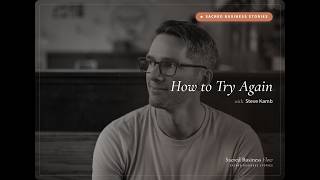
In this live Substack interview, host Phil Powis, moderator Caroline, and guest Steve Kamb discuss Steve's entrepreneurial journey, the creation of Nerd Fitness, and his new book "How to Try Again." Steve recounts his early days—leaving a sales job, buying the NerdFitness.com domain, and building a community by blending gaming culture with fitness. He describes the growth of the business, the challenges of scaling, and his decision to step back from the CEO role to focus on writing. The conversation delves into personal setbacks (skin cancer, divorce, massive traffic loss due to Google algorithm changes) and how they shaped the book's evolution from a fitness‑focused guide to a broader exploration of failure, resilience, and the concept of "Maximum Steve." Steve shares practical tools like the Toyota 5‑Whys technique for uncovering hidden resistance, the importance of aligning work with one’s unique strengths, and the value of authentic community connections. He explains why he chose a traditional publisher (up‑front advance, accountability) and highlights community initiatives such as the digital "Wall of Failure" linked to the book. Throughout, the tone remains conversational, reflective, and encouraging, offering insights for creators and entrepreneurs navigating fear, reinvention, and purposeful work.
Chapters
If you're joining us live, this is our weekly Substack where we have an honest conversation really about what it looks like to build a business that aligns with your deepest truth. And today we're joined by Steve Kamm, I hope I said that right.
Yeah.
The author of, cool, the author of the new book, I think just came out yesterday, "How to Try Again," and founder of Nerd Fitness, which is an approachable fitness company that helps business, busy humans level up their lives. And yeah, I just love what you do. I was sharing with Steve before this, you know, that I used to service for the first time, maybe a decade ago. And I just loved how he was kind of pulling together seemingly disparate threads of like geeky gaming and like epic quests and, and, uh, fitness at a time where like a lot of people kind of, um, found that intimidating. I know that was my case. So yeah, we're just really happy to have you here with us. Thanks for being here, Steve.
Well, thank you so much for the opportunity. This is so fun for me. And like I said, the book came out, or like you said, the book came out yesterday. So I'm in like this weird kind of surreal space of this thing I've been working on for 4 years is, is out in the wild and almost like a dog chasing a car. Like, I don't know what to do about it. You know, like I caught it, it's here and we did it. It's out in the world. And now I'm trying to figure out like what the, what, what this is like moving forward. So it's a really fun, very strange time for me.
Well, thank you so much. And, uh, it's very nice to witness your energy and be around that because it does sound very exciting. So thank you for your time and for being here with us and welcome everyone. Join, if you have any questions, please just post it in the chat and we're going to do our best to respond. And I just like to remind ourselves why we do Sacred Business Stories. And it's purely for inspiration. Like when we see people doing something from the heart and, you know, building a business that it's fulfilling, that looks good in the inside as it is on the outside. We like to invite people here. So if you're there and you're trying to create something, um, it's just kind of like giving permission that you can start from anywhere that you are. So I would love to hear like more the behind the scenes of your story. And I love, I know it could be like many years and you could take in different directions. So it's really up to you to choose, but like from the beginning of your journey, or, you know, when you feel that makes sense till where you are right now, like how was that journey for you?
Uh, a lot of ups, a lot of downs, a lot of unexpected side quests and things that I never would've expected. So I was raised, I joke and say like, I was raised by two loving parents and a Nintendo. I grew up playing, you know, Mario and The Legend of Zelda and then more complicated games as I got older and really just fell in love with this idea of like video games as an art form and a storytelling device and, you know, getting to be a part of that. Yeah. Experience. And, and then I entered the real world and I got a job in sales because I needed a job and I figured I like talking to people. Let's try sales. I was so bad at it. I hated it. I was so bad. So I would literally sit in my car and drive to different job sites and get rejected for whatever I was selling and renting construction equipment. And then I would get rejected and then I would sit in my car and read the next chapter of a book. And then I would drive to the next job site and get rejected. And this is right around the time I find, uh, The 4-Hour Workweek, which many people have probably stumbled across as well.
Mm-hmm.
In a time of like, what the heck am I doing? So this was 2007. Yeah, 2007. And I just had this thought pop into my head like, okay, what's something I'm good at or that I really love and a social group or like a group that I'm a part of. I Googled literally just Googled nerd fitness and nothing popped up. So I said, oh, okay, like, well, I'll just buy nerdfitness.com and we'll, we'll figure it out. So bought the domain, just started writing pretty bad, uh, kind of short, unfun articles, 'cause I thought that's what I was supposed to do at the time. And then I learned this thing where it's like, hey, if you write in a way that's very entertaining for you to write and you inject all of your personality into it, tends to resonate way more with people and gets shared more and goes over well. So I shifted my writing to add more jokes and Lego photos and got more interested in adding deeply, you know, deep research and really just getting into like, how do I help people who are beginners, who don't have the years to make mistakes with their health and fitness, but are also like kind of nerdy. and they're not gonna go to CrossFit. They're not gonna go to a typical big gym because it's intimidating. They don't feel like those people are talking to them. So I did that and fell in love with the idea, the community. Writing became the thing that like kind of surprised me how much I really loved, loved writing. And it accidentally turned into like this big business. I just kept writing. Google changed some algorithm and all of a sudden traffic exploded and I was trying to keep up with it and I was trying to figure out how to make money through this thing that I had devoted all of my free time to. So then I'm like, all right, let's try some online courses. Let's try some ebooks. Let's try, we'll try some in-person events. So just tried a bunch of things. And that worked for, geez, how many years did that work for? Um, a long time. I've been doing this for 17 years now. And so for those, let's say 14 of those years, uh, I just wrote. The team started to grow more and more and more of my time started to go towards meetings and quarterly planning and all of these things. And that came at the expense of the thing that I love more than anything, which is like chasing curiosity and writing deeply about things that are interesting to me. So I'll catch us up to this point, which was, let's say, 4 or 5 years ago. And Philip, you said like, I don't know how Steve connects these disparate elements. Like nothing makes me happier than when my brain will come up with like some random connection to a pot, you know, some, some. a pop culture reference or a TV show from my childhood and combining that with like behavioral psychology or nutrition or whatever. So that's the feeling I was missing and wanted to get back to chasing. So 5 years, 4 or 5 years ago, I told my team, I'm not doing the thing in my own company that I'm really good at, and I'm starting to feel like I don't want to do the job that I'm sitting in. Like, we have to make a change. I'm not helping anybody here. being in charge of this 45-person company. So I demoted myself and then I fired myself so that I could get back to writing. And I guess we'll stop there in case y'all have questions or any parts of that you wanna jump back into.
Well, I just wanna share that it's like fascinating and it's something that I truly believe. Like sometimes I don't think people realize how unique they are. Right? Like we think that we just, like, like how can you share a little more? Like maybe you didn't have that awareness back then, but now you do. Like, oh, I just look inside and like, what is the one thing that I like and the social group that I belong and how to combine that? Like if you were to go back with the understanding that you have about yourself now, can you share a little more about that inner process of like, this is me, this is me, and that combination, um, yeah, how to put it out.
Sure. So I, um, I've learned a lot about myself over the past handful of years and what I bring, what, like, what I bring to the world and also like where my, my strengths and also my weaknesses. So I have like really strong people-pleasing tendencies. I'm also, you know, recently like, uh, ADHD is something that's, that's been, you know, a new part of my A new part of my awareness. I wouldn't say it's been a new thing for me. I had a friend of mine lovingly say something like, I don't know what you have, dude, but you got something. And I, you know, have been working with a therapist. So I see opportunities and I get really excited about them. And then I like making people happy, which is like, I think a good thing, but I can tend to take it really far. So all of a sudden I find myself giving away almost all of myself to a community and an audience and a team and doing everything I can to read books on leadership and, uh, business planning and structure, because that's what I thought I should be doing. I, I thought that was my job to make everybody else, you know, make everybody else happy and, and make sure that I'm doing all these other things. Something that I'm not very good at. Again, all of this is at the expense of the thing, uh, like you were just saying, like the thing that I feel you— like my unique skillset. And, uh, only recently have I given myself permission, like over the past few years to, to lean back into that. Uh, a friend of mine named Josh Kaufman who wrote a book called The Personal MBA and First 20 Hours. He's just this unbelievable, um, author. He came up with this great idea, or he had this great term for me called Maximum Steve. And as I was working on this book, he said, like, some parts of this, you're trying to sound like somebody else, or you're trying to create something for somebody else. But this part of the book, this is Maximum Steve. Like, this is that unique—
Mm-hmm.
Weird combination of your experiences and your thoughts. And like when you lean into that, like this book soars. So let's get rid of those other parts. So this was about a year, year and a half ago when we had this conversation. He said like, let's get rid of these other parts, man, because Maximum Steve, like that is enough. And I've struggled with enough or feeling enough for so long. And only in the past year and a half have I finally leaned back into like Hey man, you're actually pretty good at these things and your unique perspective is what people are gonna show up for. So like lean into that and be okay and don't, don't try to also be other people. So I think it initially came very easy to me when there were no stakes involved, when I was just writing a blog and it was fun. And, and then that started to, you know, recede or reside when— all of a sudden the stakes got higher. You know, I had employees and a payroll and health insurance and just, you know, as the business grew and the audience grew, I saw these opportunities and kind of started to shrink myself so that I could serve these other avenues. And only in the past few years did I give myself permission to finally say like, man, there's one thing I think that you're really good at and you're not delivering it to this world right now. Mm-hmm. Like, let's get back to that and see what comes out of it. So we're coming up on 18 months of Maximum Steve right now, I think. And it's been, it's been really fun.
That's awesome. And the next thing I want to ask you about, which I have a feeling it probably dovetails quite nicely with, with the book, but you could tell, tell me if that's true. You know, one of the things that we spend a lot of time, or we like to convey to our audience is that it's perfectly normal to have fear and resistance coming up, and especially as you're doing things that are your meaningful work or it's from the heart. And it seems to me you've had this cycle of reinvention at least a few times from probably deciding that your original sales job wasn't for you and then going all in on the Nerd Fitness and the blogging and then realizing, whoa, I'm here, I've created this amazing thing, but it's not exactly where I want to be spending my time. Anymore. And, you know, I think this is hard for people, you know, that, you know, especially if they've tried things a few times and maybe haven't quite landed on the right thing for them. And so, yeah, I'm just curious, like, for you, what is kind of an area as you've kind of gone through your entrepreneurial journey, you know, that fear or resistance has kind of shown up for you and what sort of tools or, you know, things do you do to work with that to kind of keep yourself moving forward?
It's hard, right? I think what, what often looks like fear can also be, or rather like there are things that we might be afraid of that is actually us being avoidant of like an uncomfortable reality that we're trying to not actually face. So I'll give an example. As I'm trying to finish writing this book, like, oh, I don't have time to work on the book right now. I have to go rearrange this bookshelf.
Okay.
Like, why do you need to rearrange the bookshelf right now? It's like, well, okay, I don't have to right now, but if I go do this thing over here, that's way easier than addressing the fact that my book is not perfect. Okay. Why does your book need to be perfect? Well, I put a lot of pressure on myself because I've kind of restructured my life around writing this book. Okay. Is all of this extra pressure actually helping you? No, probably not.
Okay.
Like, let's keep asking. So, um, the, the technique that I, I talk about in the book is, uh, it's, this is so random, but it's from, um, Taichi Ohno, who was the father of the Toyota Production System, essentially like the Toyota production, uh, production, you know, assembly line. And he talks about asking, uh, you know, he calls it the 5 Whys. Ask yourself why 5 times until you get to the depth of like what we're actually addressing here. And, you know, we do this with our coaching clients at Nerd Fitness too. Like oftentimes we're beating ourselves up for something that we think is a motivation problem. And it's actually a resources problem. Like we're asking way too much of ourselves. Maybe we have young kids at home or we're taking care of a parent that just got diagnosed with, you know, an illness or something. And we're like, gosh, why can't I get myself to follow through? It's like, okay, like, let's ask a bunch of whys here. Okay. Turns out this is actually downstream of the fact that we're asking way too much of ourselves. So, okay. Now bringing this back around to, to your question here, when we think of fear and why we're not able to follow through on something, sometimes that fear is really smart, or rather like that resistance is life giving us a signal saying, like you're doing the wrong thing and life is just gonna keep trying to teach you that lesson. Um, and for me it was, I keep trying for 5 years to be a, a less bad leader and CEO. And every day I would wake up and say, nope, you just gotta be better at it and keep pushing through this resistance. And like, life is trying to, like with flashing lights, saying like, you're not doing the job that you're actually good at, dude. You're not helping your company. You're not— you like, I can't be more obvious about how much this is, uh, you're doing the wrong thing. Eventually I came to realize that I wasn't helping my company or myself by forcing myself into this role. So I think there was that element of it, which is like, yes, sometimes you have to do the work of slowing down and pausing. And whether it's journaling, meditating, uh, therapy, just like really asking that question, like, are you doing the thing that you're really good at or the thing that you love? And when you love it, it becomes a lot easier to get good at it. And then the other side of this is like the very real resistance of, I have to be perfect. This is hard. I'm gonna stop doing it because it's both imperfect and hard. Um, And I can't answer that question for you. Um, all I can say is like, there is probably some part of you deep down, maybe that wakes you up at 4 in the morning while you're lying there in bed and is asking you the question of like, are you doing the right thing? Um, are you hiding from the thing that you know you're meant to be doing? And that can go both ways. So, I mean, I would love to talk more about this. It just, it's so personal to each person that. I would love— I can't provide like, you know, a bumper sticker answer of like, just push through it or definitely give up. Uh, it's, it could be either one of those. You just have to do the work, which is so hard, of knowing yourself. Um, it could be the people around you that can help too, of like, am I doing the thing I'm meant to be doing? Or am I hiding from the thing? Because, uh, there's a part of me that wants it to be perfect and easy.
Yeah, and I truly appreciate your saying that, and I have my own version of it, and my question is like, what do I truly want? And like, it's almost like going to the root of the thing, right? Like if I, if I am answering, like, am I doing because I believe that this is what I'm supposed to be doing? Am I doing because this is what I believe that will make money? Am I doing because, um, you know, whatever? Reason, and that's not like because I love it. And I think it goes back to your not enoughness, right? Like sometimes we do things because we don't believe we're enough and then we cannot connect with what is in the heart. And then because of that, you're kind of like, oh, so then I'll do that. And it's, it's just fascinating how the mind, you know, so just pausing and asking questions, you're like, is this true? Is this true? Like, um, it's, it's really powerful, but I, I agree with you. It's not a, a one. respi fits all, and it requires like to slow down and ask multiple times because the mind, at least in my experience, will try to create, you know, when I'm feeling resistance, like all the reasons why maybe I shouldn't be in touch with the thing that I truly want. Yeah.
Not, not only that, but I think, um, and I see this question here about, you know, defining enough. Uh, it's so hard because our brains are so good at just constantly telling us That like, oh no, that because that was easy, that doesn't count. Like it needs to be hard. Or also we're every day inundated with the thoughts and the most successful person in any area of life at any time we step onto or check out social media or the news or whatever. And my brain is really good at suddenly saying like, oh, well, this person is like really good on Instagram. Or is it unbelievable on YouTube? Like you should also be on Instagram and YouTube and oh, wait a second, this other thing. And my brain will say, well, you can just go do that thing for a while until you're good at it. And then you can stop. And I constantly have to remind myself, like, don't just ask, um, the way I put it is like, don't just ask, is the juice worth the squeeze? Right? Like, is it worth doing this thing so that I can get the end results that maybe I don't actually want? Like also ask, do I like juice? Right? Like if, if you start something with the sole goal of like, so that you cannot wait to be done with it, oftentimes, especially in this internet-based business world right now, the reward for getting good at that thing and doing it is that you have to keep doing it. And I like struggle with that so much because it's really easy for me to say like, oh, I'll just do it until. For a while. No, man. Like, if it works, then you have to keep going. And if I don't want to keep doing it, then like maybe you're better off finding the path that aligns with your strengths on a platform that you love. Like we were just talking before this, Philip, about how much we're both really enjoying Substack. It's like, I love writing. Mm-hmm. I love talking about writing. I love connecting with people. And then I'm trying to like shoehorn in all these other paths diluting my efforts everywhere in— because that way I'm like, oh, that, then it'll, that'll solve all my problems. No, man. The, the end result here is you have to keep doing it. So like, what are the things that you're willing to keep doing for as long as it maybe takes to share your message or to fall in love with the idea of getting better at that thing? Um, that's, that's been so hard for me to learn, but has been really rewarding once I've given myself permission. to let go of all of these other things too.
Yeah, I just—
And that process— Claire's question, sorry, just because it's connected, she asked like, how long did it take for you to realize that you couldn't do everything by yourself and you needed a team? And how was that? Was that process easy?
Definitely not easy. I think, you know, so at this point I was 25 or 26 when I had started Nerd Fitness. And I made some decisions that I think maybe I would've done things differently in retrospect, but I can't go back. I also don't know if I would've been able to learn that lesson. And also I'm glad that I did or followed the path that I did. So I'll say like everything comes with trade-offs, right? When you're a solo entrepreneur and you're handling all the customer service things yourself, and then you're troubleshooting the fact that the PDF didn't upload correctly or the website, whatever, like there is a part of your brain that is going to say, man, I wish I had a team that could help me with this. And then you have a team and then you, you know, you hire somebody part-time and that can be really helpful. At the same time, you now have a payroll and that changes things. And I'll say like when I got to 40, 45 people, that weight on my shoulders as a, again, recovering people pleaser, um, recovering insecure overachiever. Uh, all of a sudden I'm like, boy, this is a really big payroll. And that affects maybe some of the decisions or choices you have to make. So since then, since I've kind of stepped back, I'm now like, I am an author. And yes, there are things I'm like, this morning I was updating the about page on my, on my website, cause I screwed up the footer and I'm like, man, it would be nice to have, no dude, like I have some part-time help. Um, and I'm like purposely keeping things small and I recognize that comes with trade-offs that other people. Or rather that I'm doing things that like, in some ways are kind of pain in the butt. And also it feels fun again, because it feels like the old school days of, of this. So I, I, I don't have a great answer for like, when did you know you needed help? Um, it's when I ran out of time and couldn't answer all the emails and couldn't do all of the things. And then the team just started growing and that made it easier for me to hire more people. And then I grew more and so on and so forth. So I think you just have to be deliberate and recognize that both halves of this, either side will have compromises. Hiring a team is great and complicated. Being a solo entrepreneur or just getting some part-time help is great and frustrating at times because you're having to go a lot slower and say no to way more opportunities, but it makes it a lot easier to turn. pivot and make adjustments to a business or your strategy or the products you offer or services, whatever. You have to accept that both of those paths can work. It just depends. Maybe if you get to know yourself, like I'm now learning me in charge of a company is a terrible idea. Me with like some part-time help and I get to write and not have to worry about what I'm writing about or carrying all these other, these, this, the rest of this load as well. Like I'm a much better creator and writer and artist when I do that, but I had to jump through those hoops and go on that roller coaster. So now that I'm not always wondering, oh, I wonder what if, you know, had I not gone down this path. So again, I wish I had a better answer other than it depends. Get to know yourself and, and then be kind to yourself if you happen to pick the path that maybe isn't aligned. Like, that's human beings. We're all trying to figure it out together, and this is really hard.
Yeah. And I, I imagine you've learned, you know, if it's, if your journey is anything like mine, I imagine you've learned so much of yourself through this entrepreneurial journey. Like Caroline and I often talk about how entrepreneurship is like almost like the fast path or highway to like personal evolution because you have to like look at all these parts of yourself so that, uh, you know, maybe you don't, normally get a chance to. And I like to use the word— I think you said, uh, early on, like, this was kind of like an accidental business. And it, you know, it's interesting because it was accidental in a sense, but at least in your case— well, I, I'll— it was accidental, but it was also pulling your, your, your kind of unique interests and, and passions together. And I had a similar experience. I, um, well, I ended up, uh, you know, kind of when Facebook was up, up and coming, uh, my partner at the time had a a hearing practice, it was a private practice and I had been in tech and I was like, oh, I think we can reach all these like 65+ patients online, you know, because nobody was like going for that market on Facebook and everybody in that industry was like, oh, you're crazy, they're not on Facebook. And I was like, I think they are. We had given my grandparents a, like a Kindle tablet that year or something. And so we started doing these ads just for ourselves, but all of a sudden it was taking off and all these other practices were asking for it. And like in a 3-month period, it like, it blew up. I just, at first I was like turning people away. I was like, oh, I'll try this. I'll do it for some other people. And before, you know, within 3 months I had kind of grown this like boutique agency and I was running it by myself with 1 employee. And interestingly, I, about 2 years into this, I remember exactly where I was and I sat down and I looked at myself kind of in the mirror and I was like, Hey, like, this has been a really unexpected fun ride, but at this point, like, if you're going to keep running this business, you've got to like put on your big boy pants and like hire a team to probably do a lot of things that you chose to do. And I was like, that's— I don't like, I don't want that. And I shut it down. And there was part of me, I think there was also a little bit of ego because like to date it was actually the most financially successful business I've had. But I had this moment of like, oh, this isn't what I want. And if I've done it once, I can do it again. And I've had good success, some success since then, but not to that degree. And, but, you know, I also could say it was like the best decision I made for myself. And, and I just bring this up because I think that like, yeah, just like that's, you know, people could see, I could frame my experience as a failure. You could frame your experience of like, hey, I'm not like leading my team. the way that it quote needs to be led. But I think that in that there's so much we're learning about ourselves and that's, that's the gift in all of it. And so, yeah, I'm just curious how, how you relate to any of that, if at all.
All, all of it. Um, all of it very much. Uh, yeah, I think when we, like, if you reach, there is certainly ego attached to like, oh, I have a big business. All right. Look at all these employees I have. I think that gets lionized and rewarded. Workaholism is rewarded in this country, um, uh, here in the States. And I have those tendencies. So there was certainly a part of me that was like, oh, isn't this fun? I get to tell people, look at all these employees and they're in 4, you know, 25 different states and we built this really cool thing. And that's amazing. But like, that does come with some serious trade-offs and challenges. And if Like, I, I, I kind of looked forward and said, like, if this works, the end result is the team is even bigger, the meetings will be longer, the payroll will be, you know, larger. Um, and my day-to-day, like, is that actually the life that you want? And when I asked that question, I was like, oh, I don't wanna do that. It's like, okay, well, why are we doing it now then? And I then had to say to the team, like, hey, I can't be this guy, I'm not helping. I need to go do this other thing. Like I need to go, I need to almost like create my own little like Steve company again, which is Steve Co. I don't know, Maximum Steve Co. That's what we'll call it. Um, where I'm just gonna go tinker and work on my little projects alone and I can help sometimes, but like I have to go do this. And, and you know, like everything, it's, uh, that, that came with trade-offs and challenges, but I don't know, like my day-to-day now is exactly how I want it to be. And the end result is a book that's now on bookshelves all over the world. Like, uh, but it required me to let go of the old version of me, which was so hard because I'm, I built nerd, like Nerd Fitness is my baby. I've been doing it for 15 years. There's a community. People have Nerd Fitness tattoos. They've met at our events and got married. Like, to step back from that was so hard and really challenging. And there's a lot of people that were like, no, you have to be here doing this. So the community would say like, where are you going? Which is really hard. 'Cause then I have to say like, I'm working on a thing. You'll see it in 4 years.
That's—
That, that, uh, somebody that has lacks patience, um, that was really, really hard. But I can finally this week say like, I'm so sorry that I had to step back for my mental health, for the health of, you know, all of this. And also we, I now have this thing that I'm so glad that I did it, but man, it sucked. It was really hard. And, um, but I don't regret, I don't regret the decision for sure. Um, oh, and this is also fun. While all this is happening, Google changes algorithms, ChatGPT scrapes all of our content. So while I'm— Yeah. In my cave, Nerd Fitness is losing over month after month after month. We're down 80% of our traffic. You know, it was getting 1.5 million hits a month and now that avenue was closed. And I had to say like, this sucks and I'm so sorry, but I also like, I can't fix that and do the thing that I'm like uniquely capable of doing. And I don't know if it was the right decision. I can say it was for me, and I hope— I'm not sure what the future holds, but I've kind of given up on planning for the future and I'm now just kind of taking things a week and a day at a time. And that seems to be working a lot better than having a very specific future that I'm working towards because that didn't work out.
Yeah, I so resonate. And Corinne said it's inspiring. Indeed it is. Like, it's just, Beautiful. And, and the way you shared, like, it's, it's just so, like, you don't see when you made a decision back then where it would be, right? Like, it's not that like, oh, I have this vision and I know, like, you just know that there is something like cooking inside that you need to say yes to that. And we, we kind of like call that the love-led leap. You know, there's something in your heart and you need, you know, I need to do it, but you need to say no for a lot of other things. And I would love for you to share a little more about your book because I think it's related to that journey maybe. And I think it's also like inspiring to other people, like a little bit like how to begin again. And I think we're kind of like reinventing ourselves, right? Like how we are always beginning, like at least for me, like I, I, I, I try to see every day, like how do I begin again and not bring the energy from yesterday? And it, and it's really hard, like to see with fresh eyes. But like, could you share more about the book and also like the behind the scenes of that journey? You shared like up to 4 years ago and then you paused. So then the 4 years till, till now.
Yeah. Uh, so 4 years ago I reached out to my book agent and I said, I'd like to write another book. And he says, great, what do you wanna write about? I'm like, I, I have no idea, but I just wanna write. And he said, okay, like, let's work on some ideas. So we bounced, you know, I figured at the time, I don't know if I could get another book deal, but I would like to be able to prove, you know, and I'll, I can speak also to why I went the traditionally published route versus, you know, publishing it independently. And we can talk about that if you'd, if you'd like after this. So, or rather later in our discussion, I spent 4 months writing a book or writing the proposal for a book. Essentially I was like, I guess I just have to call it Nerd Fitness. It's like, that's the audience I built. That's what I'm— and unsurprisingly, my heart wasn't in that idea anymore, but I thought that was the only deal I could get. So I send it to my agent and he says, Well, this, this, this is not, that's not the idea. Books with fitness in the title are a tough sell to publishers. Like, what else? Is there a different angle we can use for this? I'm like, okay. He's like, I wish you would come to me like immediately and said, what about this? You, we could have saved the last 4 months.
I'm like, okay.
So I then woke up on January 1st and the idea popped into my head and I said, I got it. I know how we help people at Nerd Fitness. We help them after they have failed to follow through on their workouts. Or their diet or training for a 5K. Like, what about a book for the moment after they've given up on their New Year's resolution? Like everybody gets gung-ho on January 1st and they go all in because they are all or nothing. Of course, all becomes nothing every time. So I wanted to write a book for that specific moment, like 3 weeks after they've given up. So that was the book that I pitched to my, my agent. who loved it. We then spent some months going back and forth on the proposal. And, uh, that was the book deal that I signed in 2023. And I spent about a year working on that book, which was like, you know, a little bit more practical and a little more maybe fitness, but personal development focused of like, what do you do after you fail at a, at a goal or a task? Um, And then, and then life took, took a few turns for me. One, I had my first, you know, skin cancer diagnosis. It was in like my hair, which was interesting. So I had to like scoop it out of my scalp and then suture my head shut. It was the good kind of skin cancer. My dermatologist told me, which is I guess a blessing, but kind of my first reality of like, hey dude, you're not getting younger and there's probably more of this coming. Uh, so, okay, that's one. Two, again, I'm watching as Nerd Fitness is losing 80% of its traffic and there's nothing that I can do about it because Google's not coming back. Um, and then I went through an amicable but like heartbreaking divorce and all of a sudden, like these things all happened with pretty close succession, uh, in close succession rather. So I tell my publisher, just a heads up, this book is gonna take a little bit longer. For reference, this book was supposed to be out in January of 2025. It's now June of 2026. 20 drafts later and a lifetime of lessons learned and adjustments, the book evolved from more like a, what do you do after you've given up on your workout? Like it still does that to a small part, but it's much more like a, What happens when life doesn't go the way that you expected and you're beating yourself up because something you worked on or something that you're a part of didn't work out, especially if you're somebody that has prided themselves on just working through problems or working harder to solve problems. What happens when that stuff stops working? So I had some really challenging nights and months. The term I use in the book is treading water. Where I wasn't making progress on a lot of things, but I wasn't giving up either. I was finding ways to do like the bare minimum to remind myself that I'm still here. So that's what this book evolved into was a, like, you know, I say right in the introduction, like, I don't have all the answers. I'm still going through it and I don't know what the future holds for either of us. So we can set that aside. This is not a book like privileged dude, you know, has very relatable challenges and then succeeds. Like, I don't think that's helpful for most people. Instead, it's much more like a, hey, here's what I'm going through, or rather here's what I went through while I'm writing it. I don't know what you're also going through, but let's go through this together. Here are some, some stories and some lessons and maybe some strategies that we can use and try. To see if maybe they can help you forgive yourself.
Oh, did we lose Sid?
Oh, I'm still here. Sorry. Can you hear me?
Sid?
Oh no, I'm still here. Oh, you're here.
Oh, weird. You just appeared on the screen for a second. Oh no.
Sorry about that.
Uh, yeah, absolutely. That was the first. Yeah.
No, good.
Yeah.
Oh, um, somebody was saying yesterday, uh, my friend Krista, who might even be in this group, she said, I love Substack cuz like some things are still like a little, little wonky, which feels like very much like old school internet. I'm like, I actually kind of like that too. It's not perfect. Which is great. So anyways, um, yes, this book is not, this book is not for, uh, I don't have all the answers. Instead, it's let's go through this together. Let's figure out a way to pause and tread water and see what tomorrow brings. And we can give ourselves permission to be okay that we're human and that we're struggling and we can, we can try together to figure out what's, what's coming next.
Yeah, that's really powerful. And I think we need, we all need that, right? Because sometimes you're so alone going through the journey and what we see out there is like, oh, I went through this and here I am emerged from the, you know, but I don't, at least my journey never ends. We're always going through something, right? And it's always like, um, like you feel alone and then it's just so helpful to just find that like other people are going through that too and we are not alone and we are not less than, or because I got this wrong, like that I failed. It's just a constant process of, uh, learning, I guess, and, and evolving.
Yeah. Failure is, failure's such an interesting, it's the first chapter of my book because I think it's the reason it's, it's the one I wanna make sure people absolutely get to. Uh, I think a lot of us are struggling right now, and I think a lot of us, there is, there is fundamental changes coming to the creator industry. Uh, we've, a lot of my friends have had to shut down their websites because they're, you know, they're Google, they're all of their content has been taken and now nobody has to click through to their website. So like, this is coming through no fault of their own and they're feeling like failures and they're cramming it down because everybody else is projecting strength, success. Look how happy and successful I am. You know, First of all, I think a lot of people that are posting about how happy they are on the internet are probably the people that are not happy. Uh, they're putting that out into the universe. Otherwise they would just be happy and don't have to post about it. That's beside the point. Um, I would then also say like failure is the most human thing we can do, like outside of breathing and complaining about traffic. We all fail. We all do it. We're all going through something right now. And when we talk about it and share it with others and say, here's what I'm— here's the truth. It's so— I think it's such a relief for everybody around us to say like, oh, thank God. I don't have to be perfect anymore either. Like we're all navigating a weird, weird, weird time right now in the internet, with your business, with the economy, with whatever is happening in reality today. Like it's weird. uncomfortable. And I think like when you talk about it, one, it makes you realize that everybody around you is also going through something and maybe it gives them permission to share it too. Uh, I tell this amazing story in the book about visiting the Museum of Failure. And there is this beautiful, the, the final exhibit is this, this wall where people write on Post-it notes and stick it on the wall, their failures. And I found it so encouraging and uplifting because it made me realize that I wasn't alone and that my problems, which felt so personable or personal and unsolvable, was like, all right, dude, like they're not that uncommon. Welcome to the club. Like you're part of it. Uh, like I even built a, uh, so if you go to How to Try Again, which is the name of the book, howtotryagain.com/fail or /fail. Yeah. Uh, you can add your own failures to our own little digital wall of failure. Uh, so I'm so, I'm so proud of that. People are sharing amazing failures, but I just want to like give people permission to share it and stop feeling badly when it happens. Um, whether it's something that happened to you, like a Google update or ChatGPT, or it's something that is just totally your fault. Like that happens too, and that's totally okay. It's like, well, welcome to the club. We're all human. We're all doing it and we're all going through it.
Yeah, I love it. And I, I, I wanna make myself a note because I wanna post my, some of my failures, that, that's for sure. And I encourage you if you're there on listening to this interview to do the same and just to share with you how much I resonate with that. We have a culture of celebration in our community.
Our community, we have this pose.
Celebrator. Yeah. So we do the movement. And I'm like, we don't just celebrate the things that happen to you.
I love that. Yeah.
So come here and share your failures and share like the hard moments that you're living and share like the shitty stuff that's going on in your head because this is all part of life and not necessarily needs to bring us down. It's just part of it. Right. Uh, so we have this, yeah, let's celebrate the good things, but let's celebrate your failures too.
I love it.
Yeah. People, it's, it's so fun too. And it's also, I think, training your mind in a certain way to relate to it because Now people in our community, myself included, are so primed for it. It's like someone shares something and we're all able to just kind of be in it and be like, yeah, that's awesome. You went through it. And guess what that means? You're growing and you're moving through it. And, and yeah, as you said, it's like one of the most human experiences that you can have. And, you know, we're all so afraid, afraid of that failure. But then when we kind of see that, you know, there's, there's life on the other side of that, then, you know, we can kind of take take the power away from that. So yeah, I love, I love everything about that. And yeah, we are in a weird time. It was funny, Caroline and I were just, um, it's funny because you mentioned, uh, The 4-Hour Workweek. We were, we were driving back, actually we had, we're driving back from, from Rio this morning. And, um, uh, I was reading Tim Ferriss had a post recently about how that book had been kind of printing him money. Yeah. And it was something like, I'm probably going to misquote it, but it was like an 80% drop or something. When he like looks at the run rate for the year and it's just, it's just insane to think about what that kind of is showing for, for the rest of us. So yeah, it's a really, really interesting, really interesting time.
Interesting. And also, I'm really proud, like there are lessons in this book, but you know, I could say like, oh, these are their 4 steps. Cool. Like you can Google that. You're just like, you can Google a workout, right? Or have ChatGPT build your workout. I tried to fill this with like deeply, like very enjoyable stories that you won't forget. And I want it to be an experience that you're going through, like we're going through it together. So those things actually hit for you. You know, there's one thing to read 4 words in a tweet and then it's another to like ingrain the, that, that feeling and sit and think with it. I placed every word in this book with as much care as possible. I said the, you know, the publisher got mad at me for continuing to tinker with it for months after they said, it's perfect, we love it. And I said, I can make this better because I wanted it to feel like that experience for people. So far it's been great. People have emailed in or people, I've met people who read it and then we've met in person and they say like, you're exactly what I would've pictured. After I read your book because it felt like you were talking to me in the book anyways. And now that I'm talking to you, like, that's just you. That's the, you know, the Maximum Steve part of this, I suppose, is just like, let's just lean, lean into that. So if the cost of information, you know, just very practical information is going to zero, then you have to find a way to provide a human connection, I think. And that's what I'm betting my future on. Is like, I'm a weird guy that sat and, and worked really hard to put these words where they are. I thought very deeply about them for the longest time, and I hope that that humanity shows through in my writing so that when people read it, they feel that connection and they know that I've really cared. Uh, because otherwise, like, it's not, it's not worth it to, to, to, to put it out into the world. So I, um, that this one-year project turned into a 3.5-year odyssey. Mm-hmm. And I'm so glad that I took that extra time and kept pushing back even while I'm having to navigate a new life. Um, it created a better experience, I think, for the reader afterwards. And I'm so proud of how it turned out.
Mm-hmm.
Yeah. That's beautiful. And if it's all right, like, I'd love to touch on—
Go ahead.
Go ahead, Caroline. I was just gonna ask you about connection and your approach to that because, and I feel like you've touched on a little bit with kind of your way you relate to authenticity and sharing kind of from being in it. But, you know, it's funny, the thing that came to mind, you know, we talk a lot about relationship and what I've experienced at least in my journey over the last 10 years is I can trace back relationships that I have to almost every huge win that I've been able to accomplish. It's funny, I saw, you know, you were on one of the notes I shared here on Substack, and I saw you reconnecting with Ryan Levesque, who's someone we've also had on the show. And, um, and I was just, yeah, I was just curious, like, how, you know, if you could share what, you know, and you said you're also betting your future on this, you know, this connection and this aspect of things. I'm just curious, like, what has that— what part has that played in your journey, like, through creating what you've created? And, you know, for someone who might, um, kind of feel like they struggle with how to do meaningful, authentic connection online. What advice might you give to them? Who's, you know, for somebody who's trying to share more consistently.
This is going to sound, I don't want to say counterintuitive, but it's one of the best things that I've done for myself. 15 years ago, a gentleman who I followed by the name of Chris Guillebeau, who maybe some people here listening are familiar with, he started a conference. Called the World Domination Summit. And at this time I was backpacking around the world while writing Nerd Fitness articles. So I made sure that my trip went through this conference. And at that conference, I'll say I met a woman by the name of Jodi Ettenberg who ran a website called Legal Nomads. She was a, she was a lawyer turned travel blogger, and it's now been 16 years since I've met Jodi. or maybe let's say maybe not 60, 15 years since I've met Jodi. And the entire 9th chapter of my book is not dedicated to Jodi, but tells Jodi's story because she went from being a world traveler. Uh, she had a routine, you know, spinal tap surgery go wrong and she's now essentially bedridden. Um, and don't know if things are going to get better. I've stayed in touch with Jodi for 15 years. I'm so— excited to be able to tell her story and how she navigated this because sometimes, like, just keep trying and you'll get better. Like, that is not an option for a lot of people. And I wanted to make sure that those folks had a, had, had a place to go to. So there's one example. I've known Jodi in person and met her 15 years ago. Um, 13 years ago, I got an email from a guy named James Clear who said, hey, I'm starting a website. I like reading Nerd Fitness or something like that. How do you think about this stuff? I said, oh, interesting. A few years, you know, a decade ago I moved to New York City and a friend said, hey, my friend Mark is gonna come over to hang out. Like, okay. And this dude named Mark walked in and we talked about video games. And then 6 months later, Mark's, hey, I got a book coming out. Can you give me a blurb? Sure, no problem. And it was Mark Manson who put out The Subtle Art of Not Giving an F. Mm-hmm. And so like my quote is on the back of that. Nerd Fitness's story is in Atomic Habits. Like I got an email the other day saying, how did you get all of these blurbs for your book? I said, simple. I've just known them for 15 years and have met them in person and we like each other. And then we also happen to be writers or do things. So, uh, I just got back from a conference in Boise, Idaho called Craft and Commerce. It's put on by the, the Nathan Barry and the company called Kit. Kit. And I've known those guys for, I've known Nathan for 12 years, 15, 13 years, cuz I met him at World Domination Summit all those years ago. So almost all of my online connections are people that I've also met in person because I've prioritized going to things and meeting people in person. And I'll say, like I said, like I'm not going to these conferences to say like, how do I meet the most popular person here? Mm-hmm. It's, I'm going because I like people and I wanna find out what they're doing. And then over the years, if you can stay afloat and tread water as a business long enough, like you have that shared experience of like, man, we've been through 17 different versions of the internet and social media and every online interaction suddenly becomes really deep and powerful, um, because you've had that in-person shared experience. So if there are opportunities, and it doesn't even need to be conferences, it can be, hey, I'm in this city, would love to meet up with one or two people, um, who are your peers, like, or pretty close to you. Like, who knows what can happen years from now? It, it just comes down to like, are one, are you a good person? How can you be helpful? Like, that's generally how I operate. It's like, what do you, how can I be helpful? And then at, at my at this current pace, it's like once every decade I say, hey, I wrote something. Can you, can you help support it? And they're like, yeah, man, of course. No problem. But it's not because we're like, oh, we're trying to like one-up or we're trying to leverage anything. It's like, just be super helpful, connect with people in real life, and then do good work and try to do as much of that as you can. Everybody's different. But that's been the strategy that's been really helpful and life-giving for me. Is leaning back into humanity, especially as everything becomes AI slop on the internet. Um, connecting more with people doing great work and people that I like. And then like the third question is like, how can I help you? Um, or like, what do you do and how can I help you? Uh, I remember having a 3-hour conversation last week with somebody. I was like, this is the best conversation ever. By the way, I have no idea what you do. How can I help? Um, he was like, oh, this is great. Uh, I'm a writer. I'm like, awesome. Like we're now best friends. So that's the way that I think about this stuff. It's so much more important than like, ooh, how can this make money?
Yeah, when you align with your, and then interestingly, when you're aligning with your actual passions and interests, it just becomes a natural, it's just kind of who you are. That's what I tell people when people ask me about kind of mixing it up here on Substack. I'm like, hey, just like, don't overthink it, just like go find the people people you actually resonate with and that you think are interesting and that you're curious about and that they're doing cool things or you appreciate what they're writing about. And if you just approach it from that space, it's— there's really no effort because you're just kind of following your own curiosity and your own thread. So yeah, I love everything that you said there. I can echo that. Like, for me, all of my best relationships have been from going to events as well. And I actually— I probably have a lot of people, know a lot of people in common. Jonathan Fields, Camp Good Life Project, those were big events for me, like back when he was doing those. Yeah, talking last week. And yeah, yeah. So yeah, I really, yeah, I appreciate everything you had to share there. Well, I know we're coming up on time and I wanna be respectful. I know you've had a pretty busy week, but you know, I wanna leave just a couple minutes here. Obviously, one of the cool things about Substack is, We're here on Substack. So if someone is listening to this or watching the replay, they can easily find you here and connect. But if anyone has been curious about anything that they've heard during this conversation, you know, what would you suggest? You know, what would be a good first step? Grab the book on Amazon? What would you suggest?
Yeah. So howtotryagain.com is where you can, you know, the book is available in every bookstore around the country and Canada right now. On Thursday it hits, you know, the UK, Ireland, South Africa, India, Australia, New Zealand. I recorded the audiobook, which was really fun. So if you enjoyed this conversation and like my scatterbrained comical delivery, there's a lot of bad jokes in this book and I made sure they were delivered correctly. So yeah, howtotryagain.com.
Yeah.
I also publish a weekly essay here on Substack. That I'm like, writing is, is my jam. So I, I'm so, so, so proud of how this book turned out. I, I've been telling people like, I wrote the crap out of this thing. Um, I worked so hard on it and really tried to make it something that you're gonna love and you will not just breeze through, but will feel like your best friend Steve is, is helping you through, um, whatever that challenge is that's waking you up at 4 in the morning currently.
I, I just have one more question. Uh, can you just go back to your choice of publisher that you said that like, what, like the, the why you didn't decide to do it yourself and, uh, to go for a publisher. So I'm just curious about that before we, we finish.
When you, when you go with a traditional publisher specifically for nonfiction, essentially you write a business plan and say, hey, this is the idea that I think I have, or this is the, the rough idea of what I have. Here's my audience. Here are the people that who will promote it. Um, So like, I didn't know if this was something that people would want, you know, like there's a tagline at the top of the book that says, some people wake up at 4:00 AM, run 15 miles barefoot, and take an ice bath. This book is for the rest of us. It's like, that was the first line of my book proposal. I didn't know at the time. I was like, I'm getting sick of this optimization culture and everybody getting shamed cuz they're not doing ice baths at 4 in the morning. I wonder maybe there's an idea here that people will resonate with. So when you go with a, with a traditional publisher, essentially you are trying to get them to believe in an idea. So from my perspective, it was, hey, if I don't know if I can get a deal, but this is an idea I'm willing to spend the next 5+ years of my life writing about and thinking about. So when the publishers, all of a sudden I went from, I don't know if I'm gonna have a book deal, and the publishers, a lot of them were like jumping on this idea. It proved it to me, which was like, okay, the market is going to want this. And the good news is 4 years later now, uh, I think everybody's kind of like, yeah, I get it, dude. We don't have to get up at 4 in the morning. So like it's hitting at a perfect time, which I, I'm fortunate for. Uh, and then also when you do a traditionally published book deal, you get some of your money upfront, but the other 75% of your money doesn't come until the book is turned in.
Mm-hmm.
So all of a sudden for a master procrastinator, uh, with, you know, ADHD and somebody that is like no problem avoiding doing a job, like, dude, you're not getting paid until you actually turn this book in. So there is like a real forcing function to get me to follow through on the thing that I'm trying to get myself to do. Now, also I'm getting paid upfront to write it versus, um, when you do an independent book, you know, an indie book, like you're having to find the editor, you're having to find all of these other avenues, you're having to do all of the work and pay for all of that upfront. Like, yes, you make more money per book. Uh, I wasn't in the position to be able to do that. So it was much more, hey, this way I can get paid to write this book, which proves the idea is at least worth it. They're gonna— I have to write it to get the rest of the money. And also I'm okay making less money per book if this works, because I can then walk into a bookstore and see my book. Like, that is so cool to me. Like, just 2 hours ago, I got a notification from Harvard's bookstore saying, we are featuring your book. Like, holy crap. That is so cool. I like that. I don't, I don't, I've never been to Har— I mean, I visited Harvard. I didn't go to Harvard. Uh, but I grew up in Massachusetts and I'm familiar with Harvard. So it's like there are some like very specific reasons why the artist in me loved the idea of having a book on a bookshelf and getting paid slightly upfront and being forced to write the book instead of spending years in my own money, hoping that the idea might work out. Uh, I, I'm, I'm really proud of or happy with the decision I made and my publisher has been delightful to work with. Um, I went with, uh, Macmillan, um, and St. Martin's Press as the imprint.
Great. Thank you. Thank you. I was curious.
Thanks for sharing that.
And I love the accountability part. Like, I need to get it done.
Yeah, for sure.
Aligned incentive for sure.
100%.
Yeah.
I like, I do that. I do that often. That's always been one of my tricks when I've been trying to create a new program or something. It's like, okay, I'm going to like talk about it. And get, make sure that people want it. And then as soon as like someone's like, "Yeah, I'll take that." It's like, "Well, now I got, now I gotta do the work, right?" Oh crap, now I have to do it. It's amazing how, how well, it's amazing how well that works though, you know? It's just, yeah, there's something about that that's magical. So, so cool. Well, yeah, thanks so much for being here with us, Steve. Really appreciate your time and it's been a really fun conversation. So yeah, and if there's anything else we could do to help you with the book, please let us know. We'll definitely be sharing out link with our community and, and people here on Substack. But, uh, yeah, I just really appreciate everything that you brought to this conversation.
Uh, thank you. Thank you for the opportunity. Thanks to both of you. This is so fun for me and I'm, I am really, really proud of how it turned out. And I'm just like, like, I love people and I'm doing my best to connect with as many people individually and, and wherever as possible. So, um, hopefully if you enjoyed this conversation, I do really think you'll love the book. Uh, I wrote the crap out of it, as I keep saying.
Cool. Thank you so much. It's awesome. It's very nice to connect. Yeah. And thank you everyone.
Thanks everyone for, for joining.
Yeah. Thanks for being here and, and we'll see you next time. Bye, Steve.
Thank you. Bye.









