Kevin Rogers on Closing CopyChief, Ending a 25-Year Marriage, and Starting Over at 55
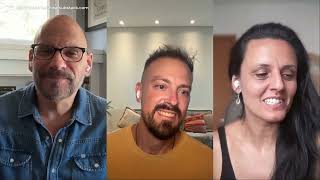
In this Sacred Business Stories Substack Live interview, host Phil Powis and co‑host Carolina sit down with Kevin Rogers, the founder of CopyChief, to trace his unconventional career path, the rise and fall of his community‑focused copywriting business, and his current personal and professional transition. Kevin recounts starting as a stand‑up comedian, moving into direct‑response copywriting, and launching CopyChief in 2014 as a curated community for freelance copywriters. Over eleven years the community grew to host live events that attracted 150‑300 attendees from around the world, fostering a culture Kevin likens to raising a child. He describes how burnout, the increasing mechanisation of copywriting by AI, and a feeling that the business had become a machine led him to cease new client work and eventually close CopyChief in December. Simultaneously, Kevin underwent a profound personal mid‑life “middle passage,” ending a 25‑year marriage and confronting questions of identity, which he frames as moving from a first adulthood to a second adulthood. He reflects on the tension between visionary‑integrator models (EOS) and his own need to stay creatively involved, acknowledging that scaling a business often conflicts with his creative DNA. Looking forward, Kevin is launching a Substack‑based podcast, “Paid to Create,” interviewing creators across industries, and commits to a disciplined publishing schedule before his 56th birthday. Throughout the conversation he shares practical advice on pausing, confronting burnout, writing down what brings joy, and using accountability partners to overcome fear. The dialogue emphasizes authenticity, the importance of aligning business with personal truth, and the ongoing process of reinventing oneself.
Chapters
Hey everyone, welcome to Sacred Business Stories. This is our weekly Substack Live where we just really have an honest conversation about what it looks like to build a business that aligns with your deepest truth. Today, we're super excited to be joined by Kevin Rogers. I've known him for a little while now. Um, but man, I'll, I'll tell you, like this guy, um, he is the founder of CopyChief, which kind of in the last few years as I was kind of coming up in marketing, you know, you, Kevin, were someone I really looked at and admired for what you had been able to create for yourself and how much impact you were having for solopreneurs. And so, yeah, I just have a tremendous amount of respect for you. And yeah, I know now you're kind of transitioning into some new projects, which I'm excited to— we're excited to chat with you about. And I love the way you labeled yourself a passionate— what was it— a passionate advocate for creative entrepreneurs. So, so welcome. I'm happy to have you here with us.
Thanks for having me. And, you know, I really appreciate you, Phil, um, helping me get more insight to Substack. I gotta say, like, I'm really stoked on this platform. Um, it, it's just, um, a beautiful place still, and I hope it stays beautiful. Thinkers and doers. And, you know, I, you, you know, Austin Kleon, do you know about him? He wrote some great books. Yeah. He was always the cat to me that it was like, he's marketing adjacent, but he's such an artist. And that this whole Substack community and culture feels like a lot of him, a lot more, you know, of that. So I'm thrilled to be here and I'm really excited to kick it off.
Yeah, I'm very excited for this conversation and to hear more about your story. And I like just to remind people watching us here why we created Sacred Business Stories, and it's purely for inspiration. So we invite people that inspire us, that created their sacred business, they're in process of creating, that need to reinvent themselves throughout their path. And when we tap into this behind the scenes, I think we give authorization to other people to just start from where they are. So if we could start, like, could you share a little more about you, your story, like business that you've had before and where you are right now?
Yeah.
So really goes back, I mean, my entire adulthood, um, it was, is I've been paid with words, which blows me away, right? Because I, uh, I'm a functional writer. I'm an essayist. I'm not a, I'm not a, particularly creative writer. But I started out in standup comedy. I did it, you saw, when I was, you know, 18, I, first time I walked on a comedy stage, I was hosting at my home club full-time within about 8 months. And then a year later I was on the road almost full-time and stayed in comedy as my occupation for a good decade. And then I, I transitioned and found copywriting. Through a small set of seeming miracles. And, um, and, and that's what I've been doing since, you know, I was a freelancer for 10 years, uh, in direct response copywriting. And then I opened CopyChief in 2014. And really it was the reason I opened CopyChief was because I had been fortunate to make a bit of a name for myself in, in, in this small industry and Clients were coming to me and wanted to book me but couldn't get on my calendar in time. And then a lot of copywriters are coming to me and saying, "Hi, where are you getting all these great clients? Like, how does that work?" And I was doing my best to help everybody connect, but I only knew 5 copywriters that I trusted to recommend. And I thought, you know, there should be a community where we can just all like hang out online and, and get to know each other, just organically see who's who and how we help each other. And I opened the doors to that place, Catalina, and, and, and 100 people, mo— most of whom I'd never met, came in and created this culture. You know, I can only equate it to having a child. You know, I'm a father of 2, and the thing about having a child come into your life is it's this 9-month project that gets your 100% focus, right? And it's all you think about. And it's, and then the child arrives. And one of the first things I realized was, wow, this does not belong to me. Right? Like, this is a, this is a citizen of the world. I'm here to guide this beautiful human and, and be as responsible as I can and keep it safe and fed. And, but it's got to have its own experience and it's going to And that's what it felt like to open a community, to start a community. It's like, this is no longer my project. This is everybody's. And so we did that for 11 years. You know, it ended up doing live events, the live events. I know I'm being dramatic here with all these analogies, but when we, when we did the first live event, I thought, I'm going to treat this like if I got to go to my own funeral. I know that sounds macabre. Like, I didn't want to die. I didn't think I was going to die. I just thought, you know, the bummer about a funeral is like, all your favorite people get together and have a hoot nanny, and you're dead, right? It's like, we should have the funeral in advance. I want to be there, man. I hate to miss that party. So I had that mindset going into it, and I thought, I just want to make it real and fun, and especially the party after the show. or after the event, you know, we, we put on a concert. My biggest thing was I would— my hero, a great friend and mentor, and a guy named John Carlton, legend in our industry. I knew he played guitar, and I, and I knew how fondly he spoke of his days, uh, when he was in like bar bands, you know. And I thought, if I— what if I could get him on stage in front of people who already love him from that industry but hear him play, and it'd be like he's having his own concert for once in his life. Because, you know, when you're the bar band, like, everybody, if they're not throwing stuff, maybe you're having— they're happy you're there, but it's not, it's not your gig, you know. And so we got to make that happen, and, and a bunch of players who were also cop— it was just amazing, you know. And we did stand-up comedy. Ian Stanley did stand-up comedy. Dean Edelson was amazing. And it was just, it was magical. So it was, it was everything I would ever dream of from a community. And, you know, look, it was a big part of our lives. My kids understand this industry. They understand marketing. They know these crazy wackadoo creative people and they love them. And so it really, really changed my life and my family's life to have CopyChief for, for those 11 years. And that just ended back in, back back, you know, back in December.
Yeah, it's, uh, yeah, and your events, I only got to go to one of them, but I, it was, it was epic. Like, how many people typically attended, attended those things? I went to the one in St. Pete when I was, when I was living there.
Yeah, we did 3 in St. Pete, so we had about 150 the first year, 200 the second year, and I think 300 the third year. And then, and then that was right before pandemic. And, um, you know, the man, you know, it was just, um, people coming in from Australia, people coming in from Asia, people, uh, it's just like you couldn't comprehend that I had manufactured this environment. And again, it wasn't me, it was everybody, but to sit back and go, wow, I'm, I'm, I'm leading this thing. You know, it was mind-blowing and it, it almost blows my mind more now that I'm stepped away from it to really appreciate it. But yeah, it was— and they call, you know what, the most beautiful thing about it, because you guys know, as entrepreneurs, especially as creatives, we don't quite fit in the real world. We're kind of visiting, like when you, especially when you have kids and you're at the kids' events and you're talking to them, they don't know what, understand what we do for the most part. And so all these people who deal with that feeling like an outsider, an outcast in their real life, were in the room together for 3 days going, my people, these are my people. And I heard that over and over and over. And I was like, yeah, this is our people. It was pretty amazing.
Gosh, man, I'd love to throw one thing and I'll pass it to you, Ken. I just got to plug it because do you know what? We're going to need to pick your brain. It's not the space for it, but do you know we're creating the Substack Unconference? I don't know if you saw we're launching that for— Really? Yeah, we're trying to throw an event in September 2027. Actually in Montreal, and in many ways, just to hear you, uh, yeah, describe your event, it's, it's so much of what we're hoping to bring. It's just like that feeling of like, yeah, feeling alone, kind of, you know, on their own behind their desk. And then just, we've made so many friends here on Substack. Um, yeah, it would just be incredible to have them all in a room. So I'm just making a mental note that you're a guy that's done this and you're someone we should talk to more. So I wasn't planning for that part of the conversation, but yeah, go ahead, Carolina.
Oh, especially because of like the energies of like just having fun and being there and meeting like as like my tribe and like, hey, I finally belong here. And I really liked that. One thing that you shared that I connected a lot and it's, well, it's very aligned with the way we see business. You said that's like, oh, it's like kids. And then when they're born, you realize that it's like not my kid, right? It's like through me and it's just like a partnership. I would love for you to share like, and then you share like the same as like, well, this business is not my business. It's something that's like bigger than me and I'm here like serving, right? And we say the same thing. We say like, it's not your business. It's like through your business. If you're like the recipient or a vessel, could you share more your perspective about that?
Yeah, absolutely. You know, it was interesting because, uh, I was a freelancer who slowly became an entrepreneur. Even that, I don't know if that word fits me because I think of an entrepreneur as somebody who has a very strategic mindset and sees the business as a chessboard very clearly and is kind of moving pieces around. I live in the moment. I'm very reactive. And so I was sort of like doing stuff, seeing what worked, reacting to it, and it just, it kept building. So there was a sense of that, what you said. And, and, um, you know, I'll tell you, as it went on, so when it started, it was me and I just went to my, I needed help. And so I went to my community and I said, hey, look, who wants to figure this out with me? You know, like I'm going to build a little backstage area where we're just going to experiment and see how do we, how do we get our hands around this thing that we're building here? And a couple of people raised their hands and Interesting. It's funny you mentioned Montreal because the guy who helped me the most, a guy named Russell Lachlan, lives in Montreal now and he's actually coaching me now as sort of a full circle moment. And he was really instrumental in helping me grow it. A guy named Tim Wu who was in the community, we figured out, you know, we were just plugging stuff in and connecting all these wires and and make— making stuff go as far as the tech was concerned. And then, you know, what happens is years go by and you— and it starts to feel a little bit more like a business. You've got these responsibilities and you really— it becomes like an obligation to have output. Yes, it's inspired, but it's not as pure anymore, right? It's kind of— I imagine it's like being a band, getting to make a record, going on tour with that record, and then you make your second record, and then it— by the third record, it's starting to feel like, man, I'm never home, I'm never decompressing, I don't feel as creative anymore. There's this huge obligation. People are always asking me for something, and it feels like you probably lost control of what you created in a lot of ways. That's definitely a factor. And you know what, one really good way I can isolate it is it got to a point where if I wanted to send an email or a series of emails, you know, I had to write it a week in advance. 4 or 5 people had to get their hands on it and tag it and do this. And I didn't, I wasn't allowed in any of the software. That was, that became a rule. Don't let Kevin push any buttons. And you know, I was, I used to, I used to long for the days when it was me and AWeber and I would wake up with an idea and I'd type it and I would send it and I would get replies. And it just started, it started to feel a bit like a, like a, like a machine. And we, we, I tried a lot of things to change that. You know, I finally, I got to know Gino Wickman stuff and that made a lot of sense to me, the concept of visionary integrator. And I found the most amazing integrator. I'm very fortunate to have two amazing integrators in the life of the business, but the first one I basically begged to join me was a woman that I'd been coaching for a couple years already named Rachel Mazza. And my God, she's just, she's a dynamo. She's creative. She's strategic. She can do things, everything fast. And we really built something amazing together. But the whole goal was, and you know, the whole idea in EOS, Wickman's, you know, protocol is the visionary should not have to know about the day-to-day or not be bothered by that. They get to float off in their hot air balloon and just, you know, wait for inspiration and see everything from 10,000 feet or whatever. And it just, it never happened. And I'm not saying that it's because of the system. I think it's because of me. Like maybe I need to be close to it. I need to be close to the thing that I'm involved in writing about, feeling, which makes me a horrible participant in some ways. For instance, you know, as a guy who's put on events, it actually helped me facilitate this for some of the speakers, but I'm the guy, when you tell me, hey, We need your slides 2 weeks before the event. I'm like, I can't do it. I'll send you slides, but I promise you I'm going to change them and I'm going to walk up to your tech guy that morning with a thumb drive and ask him to make those my slides. And some people are super uptight about it. But the thing is, I can't tell you what I'm going to be feeling and wanting to share 2 weeks even before I walk on stage. It needs to be the energy of the moment, right? And so those were my sort of like fighting, battling intricacies that made it challenging to be a business owner.
It's interesting, like how I love what you shared about like, I need to be feeling, and often I have this energy as well. Like, there's like a spark of inspiration and then I take action and then, you know, but how do you, you had a very successful business. So, and I know you had a team and all of that, but there is an element of consistency that also needs to happen. So how do you deal with both the spark of like, I do when I'm inspired, but also I need to keep doing even when sometimes I don't feel that.
I think, yeah, if I had it to do over, I would have found a way to force myself to let go more. And because I trusted my team, they were all amazing. I, but I don't know what it was. And, you know, so many intricacies to our personalities and what we need. But like I said, I just don't have that kind of entrepreneurial DNA. You know what blows me away when you, when you meet people who are in, you know, mergers and acquisitions and they're, and they're buying and selling businesses and growing business portfolios and they're like, yeah, I just bought another business. And so we're, you know, we're planning to scale it. I'm like, Well, who's going to do that? Oh, you know, we'll just hire some people. Like they have a team in place and we'll just get some other people. I'm like, I just can't even wrap my head around that. Like it's this, like it's like you bought a plant and you're like, yeah, I'll probably remember to water it and it'll be fine. You know what I mean? To me, it's like, I gotta go check it every day. And I don't know, it's just, you know, I don't get it. I just don't have that DNA. I'm never going to have a business portfolio. I can't. I can't let go and trust the process like, like some people can.
So I would, I would challenge that a little bit because I think you're a lot like me in that sense. I feel like I relate very much to what you're saying and I feel that it's because— and I've had conversations very similar to what you just described with people and what you're describing, what I've observed about you and the business you've built is your heart, your soul is like, you know, it's the, it's the ticking heartbeat of that thing. And so it's, it's different, right? It's a creative business that's built around around you. And I'm not saying that one way or the other, but I, like, for me, I would sacrifice to some extent the wealth to be able to stay in that creative, inspired space. And I'm not saying money's the devil. I'm not saying I don't want to make more money in my life, but I think there's different ways of doing business. And what you're describing is much more closer to the way we think about business. Yeah, just not really as an ends to a means, but it's more of, you know, who are you becoming as you grow this business? And it seems to me, and I would love to maybe hear more about that, it seems like entrepreneurship, or the way I see what you've built, has been the perfect opportunity for your own kind of self-reflection and kind of looking at how you've been growing as a human through all this. I don't know how you resonate with any of that, but I'd love to hear your thoughts.
No, it's a really good point. Like, for instance, you know, that's the thing. Looking back, Phil, like, it's like I did have choices, but you sort of only see the menu in front of you, you know? And of course, just like, take the basic concept in marketing of a funnel, right? Your real goal is to optimize this funnel. And, you know, when I had a very successful coaching program, and then it's like, oh, well, let's scale this program. So how do we do that? Well, we have to get leads, and then we have to get— we have to I hire people to sell the program. And even that, I really had a lot of, I would get uncomfortable on the calls because it all then becomes about who's a good prospect and who's going to close and how much can they pay. And then, but I haven't met this person yet and I'm going to be the one talking to them and guiding them for 6 months. And now it's a crapshoot. Okay, good. They had the money, but am I going to truly be able to help them? Are they going to resonate with me? Are they going to trust me? Are they going to do the things I suggest? And a lot of people in that industry are fine with it being, well, I know what my stuff works, and if they won't do it, I can't help them. I get it. It's true. I just, I, you know what I've been thinking of the last, you know, few months as I closed all that down is like, there's gotta be another way. What is the other way where I just cascade hopefully useful things to a great number of people? And you know, the bottom line is like, you have to charge more for the engagement and work with fewer people. I mean, those are the choices, right? You either price it at what your market can afford to pay and will pay, and you do your best to serve a bunch of people. Or you are very selective about the people who you invite into your world, and them having the means to— for your service is just part of the equation. I don't know if that answered your question, but that's—
no, it does. And I think, and for at least the way I see it, that's a very personal decision also about how are you going to feel joyful to show up every day. Like, for me, like, I, I love the— I get really juiced up about the personal interaction and like working with people one-on-one and seeing things through and having in some cases like multi-year arcs with people where, you know, they've had massive change and that's just what lights me up, right? But then there's other people who, you know, they'd rather architect and scale something and, you know, so I think there's that constant balance there and, you know, and also like a lot of things in hindsight are easier, right? Like my first successful business that I had with the Facebook consulting for doctors, like I actually had the classic crash and burn burnout thing, you know, like I built that thing to pretty, pretty significant revenue, but I, I kind of got to that, I got to that point where you went beyond it, but like I got to the point where I, I hit the wall of like, oh, I can't do any more of this one-on-one. And I looked around and I was like, I was like, I don't want to build this machine. Like I was like, I don't want to hire the team. I, I don't want it. Like I don't want any of it. And, and you know, what I probably should have done was, was sold that thing, um, because it probably could have been a nice, uh, continued windfall of, of of money, but I just shut it down. I, you know, I had this mindset of like, oh, like, and I think there was naivety in that too. I was kind of like, oh, I've done this once, I can do it again. And I trust myself. And to some degree that's been very true. But yeah, these are just, I don't know, I just think these are the kinds of things you learn. And that's why I really feel that, you know, entrepreneurship is, yeah, it's like one of the best ways to learn how you work and like work with your own resistance. Blocks and, you know, just, you know, to grow as a human. I don't think there's anything else like it.
I agree. I agree. And, you know, once, once you experience it, there's no going back. Very few people, I think, are going to be content having a boss and those kinds of, you know, if somebody's slacking me, it better be about my business. I'm sorry. You know what I mean? That's not, that's not pooh-poohing anybody else's method. And, you know, very, very few people are built for this. It's as much as a blessing as a curse. Really is. You know, if you're, if you're content, uh, in a job and in a career where that's how it works better, all power to you. If you get, if you get to clock out, I remember one time when I was, the business was growing, it was about 4:30 on a Friday and I'm driving down the street and I'm at a stoplight and there's a pickup truck next to me. With, uh, it was a lawn crew, and there was like 4 guys in the back of the truck, and they were like sipping beers, like looking around and like starting their, their beer time at the end of a long week. And I, I was so envious. I said, I just want to be in that truck with these guys. They don't— they're not thinking about anything else right now but not getting caught with that beer, you know what I mean? There's nothing waiting for them. There's no pings, there's no Saturday afternoon emergency. They're just about to live their weekend and they're sore from the hard work. They, it's very pure blue collar hard work, you know, is very pure. And it's interesting right in it now where with AI and all the, you know, everybody's wondering what all the knowledge workers are going to do. And a lot of young people are forgoing college to learn a trade. And I'm thrilled about it, frankly, for them, because I think learning a trade and doing that kind of work is incredibly gratifying. But like I said, if you do have an entrepreneurial spirit and you get a taste of it, you better lean in because you're not going back.
I'd love to, you know, speaking of AI and, you know, you've mentioned that you've kind of closed down things. Yeah, I would like to hear more about like Yeah, the transition you're going through and, you know, I'm aware, I actually don't know the full story, but I'm aware that you made the decision to close CopyChief after all those successful years. So I'm just curious to hear more. And I think this is really, yeah, I just think it's so useful for people to recognize that I see you and there's a way that many other people could see you as this like tremendous success, someone who has reached some of the higher limits of what's possible in creating online business. And yet here you are, you find yourselves at this crossroads again. And so, yeah, I just think there's a lot of wisdom in recognizing that this is— there's this element of uncertainty and change that is always present in entrepreneurship. And yeah, I'm just curious if you could talk more about your experience, what you've been working through, and maybe also where you're headed right now.
Sure. I guess a couple of things happened. The biggest one is that I personally went through a major transformation in my life. I'll try not to go too deep into this, but I do have another Substack, a Man in the Middle show that I do with my friend Joe DiRoma. And the reason we do the show is because I went through what we refer to as the middle passage based on a book by Dr. James Hollis, who we actually just interviewed on the show, which was amazing to be able to do that. And essentially the middle passage is that moment when you wake up, could be in your 30s, could be in your 60s, anywhere in between. And even though you've succeeded in all measurable ways, you just kind of got this uneasy feeling going, is that it?
Is this it?
Is this really it? It feels like there might be something a little more, but don't screw up what you got. Come on now. You work so hard to fill these roles and wear this identity that you create. You asked for this, so don't question it. Just keep doing it. But it won't let you go. And then come to find out, it's a very natural and necessary moment in someone's life. He refers to it as the first adulthood and the second adulthood. So your first adulthood, you are the only, let's say in your 20s, your only point of reference is your childhood. You know nothing else. Your tribe, your parents, your friends, your culture, you didn't have any control over it. It's what you were born into and it's what you absorbed. Right? When you have some agency to go start your first adult life, you have one or two motivations. You either want to live up to everything you experienced in childhood or do the opposite, or somewhere in between. And so that's what you set about doing. You re— you, you create your own identity. You have your own experiences. You create roles for yourself. It's all about respect and it's all about, um, um, significance. Right? This is the natural thing we should be doing at that age. But then when you have the moment I just described, this sort of like, is this it moment, that's when it's time to begin your second adulthood. And that's when you go through the middle passage. And the thing about the middle passage is there is absolutely no indication for what it might look like when you get to it. And it's not an overnight thing. It's a gradual thing. So, you know, coming from our world where there's always a workbook and there's a flip calendar with a little, little exercise to do every day to make sure you're keeping on track and getting on your way, right? There is none of that. This is real life stuff. This is in the middle passage. You just have to let go of any expectation for what life might have waiting for you. Right? That's a big leap of faith and not one that entrepreneurs are often willing to take. But I, that's what I went through in my entire life. It meant, it meant, um, ending a marriage of 25 years. Um, which was devastating, you know, but also incredibly freeing. Um, and of course, you know, making sure number one, that my family was taken care of, you know, my wife and, and two adult children were understanding this process and what I was going through, which is very hard to explain. Um, letting people assume that some crime had been committed, and this because that's why people break up and that's why people get there with somebody did something. What did they—
what happened?
I wonder what happened. And then everybody gossip and wonder and assume and do all those things. And, and just having to kick back and, and wait that out and go, you know, the truth emerges and people will only know by my actions what seems to be true. And I can't influence anything else. So that was in my personal life, just waiting all that. Also trying to find out who am I in the world now as a solo artist. I've been part of this amazing band for 25 years and now I'm out solo and like, where do I go? Who do I talk to? Like, what do I want? You know, wild, deep stuff. And then at the same time in the business, you know, the industry was changing. Look, you know, the thing that I, um, did very well was I was able to guide other creative freelancers on what was the best next step in their career, wherever they were. I created systems around it. I, I did all these things, but what it always came down to was what did they want? What brought them joy? What were they naturally good at and how do we Go sell those skills instead of trying to fit into someone else's box. And when AI came along, and after a couple of years when it really started to have an effect, the effect I saw in black and white, guys, was a lot— I got— I was getting a lot less requests for freelancers, for copywriters. And, you know, over the 10 years of CopyChief, I can count at least $25 million in contracts that went through CopyChief, whether I personally sent somebody somewhere or it happened organically or it happened at the events. And I'm very proud of that. And, but when all of a sudden it's now, I used to get almost daily requests for connections. Suddenly I'd, a month is going by, 2 months is going by and no one's asking to hire a copywriter. And I'm like, Whoa, everybody is going to find out if AI can be their new copywriter. And I think we're now at a place where they're like, nope, it doesn't do that. It does a lot of cool things. It doesn't write good things. But I couldn't wait it out and I wasn't gonna suggest to my clients that they wait it out. I said, look, this is the problem we're facing. You gotta go figure something out. Maybe it's time to create your own thing or do whatever. But all that made it feel to me, and again, I was just going through an identity refresh as it was, but I didn't want to pretend or suggest that people should be doing a thing when I didn't know for sure if it was valid. And so I just stopped. I just stopped accepting new clients in the coaching and stepped aside and said, you know, I want to step away and live my life, heal from what I'm going through, and see what bubbles up, what's still there. I've got some ideas. I've got some things I think would be cool. But if I don't think about any of it for at least 30 or 60 days, what's going to still be there waiting for me when I get back? And so that's what I did.
A lot of wisdom, just like pausing, right? Just, um, sometimes like, not always, uh, not everybody like can do that, but sometimes I feel that we rush into what's next. And because it's like being, like you mentioned, like divorce and, and business and you as an artist, like all your identities in a way dissolved. And now you don't know the next and you're sitting there and like, What do I do with that? Right? Like, I, like, but I don't know the answer either. And in many, um, I see myself sometimes in situations like this as well. And I think the wisest thing is just like, we have to slow down and pause, like, because it's something that it's more organic, right? Like we can't really predict or like, no, that's what it is. And you just jump into that.
Yeah.
Would you, do you resonate?
100%. And you said the most important thing. I mean, you know, for a lot of people, it's just not an option. I mean, you have to have a little bit of runway, you know, if you don't have a little bit of nest egg or, um, and I don't have much, I ain't gonna lie to you, you know, this is like, it's time, it's time to get some money back rolling in, but it's all relative, you know, and some people just go, I, I, you know, it shocked me when the government here in the US shut down a couple years ago. And all the parks workers were laid off. They were living week to week. And it's not a bad job, but all of a sudden these people needed aid and they weren't getting food. And you just go, wow, most of the world is really living like hand to mouth. And I know that's a lot of people's reality. So I do, I do appreciate that it's a luxury that I could buy myself a little bit of time. Um, but man, you know, I think we can also do this in our day and our week. Like, come on, for one day, if you completely unplug, maybe for the whole weekend, if you just set a hard rule and set those boundaries and say, I'm not gonna think about business, I'm gonna move outta my environment and just see what percolates. I'm gonna go have some new experiences and build some new neural pathways and find some, some inspiration. There's all kinds of ways we can do it, but we sometimes just get so locked into, especially with social media, you know, um, this person's doing this and this is the new trend and oh my God, I should be doing that. And And we all fall into this cycle of building something halfway and then something else comes on. Oh, I'm gonna do that. And you know, it's very, very, very exhausting. And you know, it's a bit cliché, but you really do have to just schedule some downtime and let it all go. Because I'll tell you the one thing, you know, I was also burned out. That's another thing I realized. It wasn't just 100%. I just, I don't know. I thought there was more, so I thought I'd take a walk and not think about anything. No, I was burned out. You know, I was, I was humping, man, for, for, for really 20 years. You know, when I was doing freelance, we were doing launches and Phil knows a launch is all hands on deck. Everything's an emergency. And we were doing one after the other, after the other, after the other, writing the copy. And I was really, really fried. And my friend John Carlton used to always say, You know, there's no promise that you come back from burnout. That was his warning about burnout. Because I think we think, oh, I'm burned out, I'll just, I'll take a couple days off and I'll get some sleep. No, it's more like if you drink way too much tequila and get very sick, you ain't drinking tequila anymore. It's more like that's the better equate, you know what I mean? It's like So, uh, you just got to be careful with yourself and give yourself some grace to give yourself some space. And, um, um, but yeah, and so to answer the last part of your question for what I'm doing now, you know, it's kind of ironic. I've been having to try to take my own advice that I've been giving people for so long, which is like, just go, just start the thing that you're feeling right now and see what happens. And let's just measure it. Well, I don't know. It's not as easy as you say. I'm kind of getting why a lot of people like just wouldn't do it. I'm like, why won't you just do it? You say you promised last week when we hung up you were going to do it. No excuses. And it's just that then I thought, I don't know, I kind of get it now. And like, for instance, here on Substack, I don't want to treat it like a playground. I want to show up. I know it'll build and I need to like just start doing the things and pressing all the buttons and see. See what has an effect. But I really want to have my parameters set when I come in. This is what I talk about. This is not for this channel. This is— but I'm overthinking it. I can tell you right now, I'm overthinking it. I started— I built Paid to Create as a channel however long ago. I still haven't promoted it to my list. I haven't invited people. I've got 5 amazing interviews in the Paid to Create What Page to Create started as was a podcast where I interview creative business founders about how they do it. And we could just all use that as a bit of inspiration and a blueprint for, you know, oh, okay, well, of all these different industries, these seem to be like the 5 things that have to happen that you kind of have to overcome, right? So I've interviewed a television producer, I've interviewed, um, an organic farmer who grows ancient grains, one of the world premier leather goods makers, right? All these amazing people, musicians from different industries, and I'm very inspired about it, but it's like, I should be recording one of those a week and publishing it and making that the thing. And I just been, like I said, I'm at the end of Taking all the time I could to really make sure that's the smart business plan and the thing that's going to keep me fueled. And I'm happy to say that I think it is.
That's very good. I don't know if you're reading the comments, but we have a lot of people saying like, powerful share, Kevin, love that you're healing and trusting your faith. Thanks for sharing the story. Amen to that. Uh, yeah. There is no promise you'll come back from burnout. Powerful. And Monique, I know this too well. So I guess we've been there in between. It's so important that we keep talking about it as it is an epidemic.
Yeah, it is. We have each other. It's so healing to know that other people have gone through it. So thank you for those comments and yeah, let's be friends.
Yeah. And, you know, one of the things I've seen, and I've experienced this in some ways as well at various stages, like, do you feel any sense of how to say this? Like, many of the people that we've coached that come to us, they've been like very successful in one arena in life, like, you know, successful doctor or a successful executive in a company. And then they go to create this new thing that feels really close to their heart, and then they just kind of freeze or kind of like what you said, it's like they know what they should be doing and they, they know all the advice because in many ways they've given it themselves, but then they're struggling to move forward themselves. And yeah, I'm just curious what, you know, one thing I see is like sometimes there can— it can be very humbling. Like I've experienced that. It's like you kind of get on yourself. It's like, I should know how to do this. Like I've done it before, but now I'm stuck. And yeah, I'm just curious, like what kind of narratives— I think it's a little bit different for everyone and I've had mine, but I'm curious, like what kind of narratives kind of kick around in there to the degree that you're willing to share?
Because I think you mean it's very honest as you've been very honest here.
And I think it's really helpful for people to hear these things.
Yeah. Do you mean in regards to what's sort of like got me stuck and holding me back? Yeah.
Just like where you are holding back at this particular moment. Because I see this person who has everything they need. You're a powerhouse, man. And just, you know, you're hitting those sticking points too. And I think letting that be seen is really inspirational for others. Hear, and I'd love to hear more.
Yeah, I think if I could narrow it down to— I know what it feels like when you don't want something anymore, and I don't want to accidentally create that again. And so I think what I'm trying to do, which is not something we really have the ability to do, is project 6 months ahead, a year ahead, and all this. And frankly, Look, you know, I want to treat this like a business, but I want it to be— and my Blast business was this, it was incredibly meaningful. I'm not, I'm not— I just burned out because I worked too hard because I did it wrong, right? Nothing about any of the people I coached or anything like that is what burned me out. However, I want to make sure that I'm coming from a place— look, I've evolved. I'm a pretty different person than I was even a couple years ago. I want that to be on display. I know it will naturally. I just, I don't want to do it under the lens of how I operated in the industry I was in before. And again, this is what excites me about Substack. It feels like a culture that demands more, that wants more, that you better be real and you better have real value to give, and that will be respected. And, um, I think I'm overthinking what that looks like a little bit. It's not probably quite as deep as something like that, but mostly, Phil, I just don't want to wake up and go, okay, you did it and you just got going, then it got good to you and you fell into the old pattern of now you've got— why do you have 3 programs all of a sudden? And should you even have that one? And but it's making the most money and you know what I mean? Trying to like project ahead what I don't want. And that's kind of a dumb way to start a new business because it's nothing right now. It's only going to be what I make it.
I feel you though, because I feel like we have a lot of similarities and I'm kind of that person that kind of runs at breakneck speed and kind of follows the impulse. And I can get myself really worked up and excited and then realize I've been sitting at the laptop for 12 hours. And it's really funny because I have to check myself because the whole reason we kind of— a big part of this business was kind of the observations of what got me in trouble, you know, with my own health and my relationships and everything that I went through. And I— it's a— it's a— it's a— I like to consider it a practice. It's a constant practice of checking myself and saying, am I bringing that same energy just now under the guise of this more like feel-good, you know, brand and, you know, talking about these different values? But Right. That's part of why I'm here doing it, because I feel it's so important. It's such an important question for all of us. It's important for me to keep looking at it in my life. And it's important for everyone that we speak to to be examining these things. And it's not easy. There's a tension and there's a balance to be found in all of that. So, yeah, I just feel like you're— yeah, I get everything that you're sharing.
You know what I thought when you just said that also is we also don't know who we're going to be in 6 months or a year, or, you know what I'm saying? We all have evidence that life can change in ways you did not anticipate, and ultimately, usually for the better once you get through any trauma or upset that it causes. So there's no way to plan the perfect business for a person we don't even know, we haven't met yet. So you're helping me, Phil, remember, like, just start doing it and let it— you'll know how to fix it you just shut down the whole thing and you clearly that's an option. So just keep going, you know.
Yeah, I love that. And that's something that I think a lot of people struggle because often like we don't talk as business, like from this aspect of spirituality, like it is a tool of transformation, right? So like you who had the successful business that you had before, it's not the same you that will have the successful business that you're starting to build right now. And because you don't know who that person is, then, and you kind of like the person that you are, you're kind of like, okay, like, do I, am I going to love that person as much as maybe I love myself right now? Or like, and then this, it's a death experience, right? Like you're going to die to become something new. And then like the good things, but also the bad things. And I think, um, curiosity is kind of like a gateway for the process because if you start just taking little by little and I'm like, oh, I'm curious about who Kevin is being right now. And I'm curious, like, what is lighting my heart right now? And then you kind of like enables you to give all the steps, right? Instead of like, you're not going to figure it out, your identity with your mind. You will figure it out as you walk. And sometimes you just like, we want to figure it out before and it's not going to happen.
That's powerful. That is truly powerful.
And it's so true.
I love what you— I'm gonna isolate what you said. You're not gonna figure it out with your mind. You're gonna figure it out as you walk. Let's get that embroidered on a pillow because that is so true. That is so true.
Awesome. And we know that, but yet we try to like, I know, but I still want my mind to tell me.
Right. We want the answers. And honestly, my goodness, it's such a privilege to even have this dilemma compared. And again, that's why I'm envious of the people who just put in the damn hard work. That's how we used to— all people, there was no option. Nobody was sitting on a rock going, yeah, I'd love to go hunting with you, but I don't know. I don't know if I like killing animals. I just might rather starve. You know, that wasn't a thing back a day, right? But now we're blessed to have this amazing world and these amazing comforts, but it's also made us a little soft, and sometimes we got to just muscle up and do the work. Absolutely.
Yeah. So one more thing I wanted to ask you about, Kevin, and I think it's related to everything that you're going through right now. And probably if you're anything like most people and myself included, You know, one of the things we'd like to convey is that it's completely normal to have fear kind of showing up as you're doing things that move you forward, especially if it means something to you, right? If it is this kind of business connected to your heart. So right now, where is fear showing up for you? And on a day-to-day basis, I know you mentioned the pause, which I think is a powerful practice, but on a day-to-day basis, what sort of practices are you using for yourself to keep yourself moving forward? Because I know, knowing you, I know you are going to have the breakthrough with what you're creating. And I'm And yeah, I'm just curious, like, what are the practices you're using to keep staying the course as you move through your transition?
It's a really good question. I think the fear is only directed at this, what we've been discussing. Like, it's almost like an out-of-body experience where I'm looking at myself going, what are you doing? Are you still— oh, you need a minute still? I thought that was the minute. Okay, no, take your minute. It just feels a little like I'm scared of the fact that I haven't gotten going. But if I look at the big picture, it's only been 2 months almost. I took December off. I want to give myself grace, but I'm also ready and I'm restless and I'm charged up. Right. And so I think the fear is only of watching myself hesitate at this point. Right. So that's where the fear is coming from. And what I do about it is I try to get one step closer to just making the damn decision. And conversations like this help me a whole lot. My friend Russell Lockwood has been unbelievably patient. I am so tired of hearing myself go back and forth and get on the call with him and go, I don't know, man. It's just, it's really starting to irk me. And so, um, you know, that, that's what I'm doing about it is chipping away and, um, I think after today, I'm just, you know, even just being here on Substack with you guys right now is really helping me because I really want to get into this platform, you know? And it's like, okay, what if I use this as a moment where I go, oh God, well, I told people I'm here now. I better start, better start telling them, you know, I'll just, I'll just use it as that. And then next thing I know, we'll be talking in 6 months about Wow, look what you built in 6 months and what did you learn? And I'll have all these new experiences to share. It'll be amazing, right? So thank you.
You're getting, you're getting some hearts already. There are a bunch of hearts lighting up there for a minute. So I don't know, you don't have to, but if you wanna actually make that declaration, the floor is yours.
I like it. I'm gonna do it. I will make that declaration. I'm gonna start. Yeah. I'm gonna post those interviews for one thing. Uh, at least, yeah, I'm thinking like one every 2 weeks to give myself some runway to, to, to create new ones. But also, I want to get the most out of each interview, right? They're about an hour long. We go through 3 parts. We go through the calling, like, you know, when is the moment you started to see your future self when you were a kid? What were the instincts? The craft about what they do. So with the farmer, you know, it was just amazing to hear all about, like, companion crops and how to not use herbicides or pesticides to grow these amazing grains. Like, I knew nothing about it. Um, and then the commerce, because most times when people, they don't want to talk about the money part of the business, right? And, um, and so they're really useful and I want to make everyone like a cool, like a blueprint and a playbook and, and, and make it really useful even beyond just listening. So I'm going to start doing that. And, and I'll, I'll tell you this, I will, I will, what's today? My birthday is on the 23rd. Before my birthday, before I turn 56 years old, I'm going to release the first episode. And, uh, to the world and promote it. There we go.
Will that be here on Substack?
Yeah, right here on Substack, I guess, on my channels. My channel's Paid to Create. I think that's where they'd find me. I don't know if I did it right, Phil. You tell me by looking.
I tried with it, but you know, well, we'll, uh, we'll, uh, we all—
He thinks.
We always do a recap.
I know it's Paid to Create. Yeah, so.
Yeah. So we do a recap of all this and we'll, we'll go do a little sleuthing and make sure we get all the right, right links.
And, uh, uh, you know, so, uh, we should reschedule our next live 6 months from now. So 18th of August, 2026, to see like what you've built in 6 months.
So that would be awesome. And it feels like such a long time. If I'm saying any of these same things in 6 months, I'll not only be much skinnier because I won't be eating anymore. I'll be really annoyed with myself. So let's hold me accountable. Cool.
Well, awesome. Yeah, I don't know if there's anything else you want to leave with folks. I mean, Paid to Create, we'll find the link. We'll share that on the replay. But is there anything else, anyone that's heard anything and said anything else you'd like them to do in this moment, Kevin?
Yeah, I've appreciated some of the comments I've been able to read. And obviously you're resonating. You know, if you feel yourself embroiled in the thing you created and it doesn't feel joyous anymore, I would just suggest pull out a pad and a paper, get away from the devices, and just write out the things you actually love doing in your business the most and think about how you could emphasize those and maybe shed some of the other things.
Cool. Beautiful.
Awesome. Well, thank you, my friend. This is a very powerful, yeah, this is a great conversation. I've gained a lot of, yeah, just really cool thoughts and wisdom from everything you've shared. And yeah, just seeing the comments, it seems that people have really, really appreciated hearing this as well. So yeah, man, excited to see what's next for you. It's always a pleasure to speak with you. And yeah, we're here, we're here to support and we are going to keep you accountable. I was looking at my phone here to look at the dates and stuff like that. So I'm going to be I'm gonna be checking in with you. I'll be giving you the—
I got till Monday. Yeah, we, I gotta get busy here.
Perfect.
Cool. Thank you so much. I really appreciate it. It was great meeting you, Carolina.
Yes.
I'm putting the T there and that's with the accent, right? So that's not right if I do that. So Carolina is what I would say. You say Carolina.
It's perfect. Carolina. Yeah, it's perfect. All right, cool.
Well, my buddy, I appreciate both of you. Yeah, it was great meeting you and I, you will be hearing from me, so We'll talk soon.
Bye, bye, everyone. Thanks for being here.
Bye-bye.









