Matt Sprang: A Daughter's Hug Changes Everything
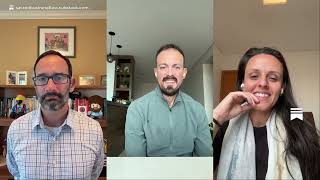
This content was created by Phil Powis. This content was uploaded by Phil Powis. This is a YouTube video titled "Matt Sprang: A Daughter's Hug Changes Everything" created on August 20, 2025. It features a live conversation on Sacred Business Stories with hosts Carolyn and Phil Powis, and guest Matt Sprang. The discussion revolves around Matt's journey of overcoming significant business challenges, including financial struggles and personal growth, and his transition into coaching and consulting. The conversation highlights themes of resilience, self-worth, and transformation in business and personal life.
Chapters
So hello everyone. We are welcome or we are live. Welcome to Sacred Business Stories. This is our weekly substack live where we have an honest conversation about what it looks like to build a business that aligns with your deepest truth. And yeah, today we are excited to be joined by Matt Sprang, someone who was actually introduced to us by one of our previous guests, Ryan Levesque. And I'm going to let Matt tell you a whole lot more about his journey. But just for the quick intro. He is a coach, consultant and a facilitator who has in the past built and sold a seven figure business and has a very interesting story around overcoming near collapse. Before he had the victory, there was a near collapse where he actually found himself in maybe over $800,000 in debt. So I think there's a fascinating story to explore there. And yeah, welcome Matt. Thank you so much for taking the time to be here with us.
No problem at all. I'm excited for this. Thanks Phil. And thanks Carolyn.
Yeah, thanks Matt for being here. And I always like to remind people why we do sacred business stories. And it's really to tap into the realm of possibilities. I love like, I know a little bit of what you're going to share, Matt, but I'm curious to go deeper with you. And we are just talking right now about like all the emotions and all of that and it's just navigating business, building business, creating business and you know, destroying a business and building a new one and all of that. There is a roller coaster that happens that often we just go with the details and the surface. Well, people that know us and follow us know that Sacred Business is about integration, is about honoring all of who you are. So I'm just very excited for this conversation and sometimes I would love to see to hear more your story, but the end of something is always opportunity to give birth for something else. Right. And. But when we are in the midst of the ending and that period that we don't know what's coming, like it's, it's really hard. So welcome everybody. It's nice to have you here. And yeah, like just want to hear more about your journey and what is your sacred business and how kind of like your journey, like where you were and all the emotions around the journey and where you are right now.
Yeah, that's a, it's a great story. It's one I've been very reluctant to tell for a number of different reasons, partially because there's a non disclosure agreement that is attached to part of the story. But we can definitely talk about that emotional impact. It's something that I think as business owners we don't get into nearly enough. We, we are up and down with our business multiple times each day and it's, you know, the, the emotional toll that it takes on us, on our loved ones. We're not talking about it enough, we're not working through it enough. And maybe sharing my story, it'll encourage more people to talk about theirs and maybe see a light at the end of the tunnel in some way. I don't know. But you know, I'm happy to get into it. Yeah.
So maybe, maybe just kind of take us back a little bit to. Yeah. Where this all started with this journey and kind of the arc of how it all played out and then you know, and kind kind of bring us to where you find yourself today on the other side of that.
Sure. This journey starts 40 plus years ago. When I started swimming, I was six years old. I took some lessons at the local summer club pole and the logical next step was to join the swim team. That turned into swimming year round, turned into swimming in high school, turned into swimming in College. I spent two years at a Division 1 school and then two years at a Division 3 school where I was had the opportunity to swim at Division 3 Nationals and be an all American and an academic all American. Started coaching around that same time in the late 90s. That was a part time job that I just did to make some extra cash on the side. That turned into a full time job and it turned into eventually me being the head coach of the program there. I just went through about 20 years of my lifetime in 90 seconds. So there's a lot more definitely in there. So yeah, I became the head coach of the program. The program was owned by a public school district here in New Jersey and that wasn't working out well because it was like a round peg in a square hole. After four years I convinced the school district that they needed to get out of the, of the swim team business. And I started Greater Philadelphia Aquatic Enterprises in its place. I was the head coach and all of a sudden I was a business owner as well. And that came, you know, I was the business owner, I was the chief financial officer, I was the chief marketing officer. I was the only administrator involved with the program. So I'm doing everything. I was like an octopus and I had my hands and, you know, my tentacles in everything and trying to be the best coach for the athletes that I was coaching that I could be. So it was very difficult around the same time, I had the dream of starting a swim school, a learn to swim business where kids as early as 12 months could come in with their parent and learn to be comfortable around the water and then learn to swim. What we were trying to do is take them from cradle to grave. Essentially. We wanted them at a very early age to learn to swim with us, then join our swim team, then go off and do successful things, but come back and join our master's program for adults, a lifetime fitness type program. So I wanted to kind of vertically integrate swimming in our area all in our one location. In order to do that, I needed to build a facility for our swim school because the pool that we were using was not great for swim lessons. So I started a journey that took three years to find the right location and the right funding in order to do something like that. And it was a lot of work. I mean, still doing all the business stuff and adding this other aspect into what I needed to do to reach my goals, to reach my dream for the. For the organization. What happened? You know, in 2015, I found a location. I found a designer builder. I was able to get funding through the Small Business Administration. It took me seven or eight stops, I think, before I was able to get a bank, a lender to say yes, which I know in our world probably is pretty good. I know there's people out there that have probably taken double or triple the amount of stocks to find funding for their projects. Shovels went into the ground around Memorial Day weekend, May 2016. And just unfortunately, I think the best way to put it is that it just. It didn't go as anybody had hoped it would go. I. I guarantee the builders, the construction folks, the contractors would say the same thing. They would have liked it to have gone better. Unfortunately, I thought the facility was going to open September of 2016. By Thanksgiving, it still wasn't completed. And some inspections revealed that things were done improperly, which means that they had to redo the work. Unfortunately, I was out of money at that point, though. All the money from the SBA loan was gone, and I had nowhere to go. Contacted a lawyer just to figure out what the options were, and we eventually had to go the legal route. Thankfully, we were able, after a number of years, to come to an amicable agreement, settlement. Glad that it was settled, that both sides were able to move on without having any detriment to their businesses, and I was able to move on. That was September 2019. The funny thing about that is people were asking me, what's next for you in September 2019. And I would say, I need six months to figure out what's next. I need six months to figure out our next move. Six months after September 2019 was March 2020. And what I thought was the worst business period of my life was just a preamble for trying to get through the COVID situation, where my business was shut down for a hundred days. Then after that, we were sporadic. We weren't in our home pool. Our swim school was completely shut down for over a year because of the COVID restrictions. So, you know, while I thought I went through the most tumultuous period of my business life, that was just a setup for what I needed to go through in Covid. Lost, you know, spent a lot of money without a lot of money coming in in order to get through that Covid period. But we did, I think, through the lessons that I learned Getting through the swim school obstacle. We were able to get through the COVID obstacle after that, expanded the business in 2021 by acquiring another program in our area, another swim team and some western program in our area. So nearly doubled the size of our program in that process. And, you know, I think what happened was I was recognizing that I was covering up for the fact that I had lost my passion for the business, and I was trying to grow to find a way to get that passion back. In late 2023, I realized what was happening through some. A lot of personal work. Attending Tony Robbins unleash the power within seminar helped a lot, and I realized that I needed to move on. So in the beginning of 2024, I started the process of finding a buyer for my business. And that purchase was actually completed very quickly by August 2024. We had an agreement and everything was stein sealed and delivered last October. So I'm at about what, eight or 10 months, having sold my business and moved into the consulting and coaching sphere. So that's a pretty, pretty vague, I guess, in some way, not as detailed aspect of where I was and where I am now. We can definitely go into more details, Talking about the emotional aspect, but that's just a bit of who I am and why I'm where I'm at right now.
Thanks for sharing. And it's so like, yes, it was like a brief explanation and it was like so many years. But I'm just curious, like you said that you're like looking for a space and for funding for like three years. And that thing was like feeding the dream and what's next for your. For your business. And Then that thing never really got to be realized, right? It turned into, like a giant, like, nightmare in a way, and then was hit by Covid. Like, how did you. And going to the inner experience, like, how did you keep moving? How did you find your own forces to, like, I gotta go through this. I gotta make this happen. And then, like, maybe March 2020, like, oh, now it's over. And then you got another hit. And it just. The way you tell the story, it feels that you navigated. And I'm sure there was, like, ups and downs, but what kept you going? Like, it was like your thought, it was faith. It was a connection with what made you go through this and be in this side right now, in the way you are.
That's a great question. Thank you for asking that. I hit the lowest point in my business life in September 2017. Not September, I'm sorry, February 2017. That's when I was talking with the lawyer, I'm talking with the bank. I'm trying to, at that point, have the bank basically double the loan so that I can build what needed to be billed the correct way. And my lawyer contacted me because we were trying to figure out how we could ever recoup any of the money that was already paid out for the work that had previously been done. And I woke up one morning, my wife was downstairs with her two young children at that time, and I opened up an email in bed from my attorney, and he basically was telling me that he didn't think we had any chance of being successful in any kind of lawsuit or any kind of mediation, and that I should consider talking to a bankruptcy lawyer and bankruptcy accountant. And that really rocked me. Now, I know now that bankruptcy is not the end of the world, but in my life at that time, that immediately made me feel like a complete failure. I was also. And this goes well beyond this whole episode of my life, but I really struggled with my own personal self worth. I struggled with my personal self worth for most of my life. So that was compounding the problem as well. I was so afraid of how I would look in the. In the public, to the parents on that were customers of the swim team, to the athletes, to all the people that knew that this was my dream and this was. This was going to happen. I felt like that was a devastating blow. And in a very, very brief moment of just lacking clarity for the situation, I recognized, I thought that I had life insurance policies. One just, you know, that we, my wife and I got. When we got married and wanted to make sure that if something were to happen to either one of us with children, that that would be taken care of. The other one was required by the bank to cover the expenses of the SBA loan. If something were to happen to me. And I thought for a moment, what if something were to happen to me maybe intentionally on my end and my, my wife and kids could cash in on those insurance policies and start over. And I got up and I went downstairs and my daughter was three at the time, and she came running over to me and just wrapped her arms around my leg like she did all the time. And she said, I love you, Daddy, good morning. And I had to like almost peel her off of me because that just rocked me emotionally, what I was thinking of and how I was thinking of myself, really, even though I was telling myself I was thinking of them, I was really thinking of myself, how could I escape this as quickly as possible? And I ran upstairs and I just bawled for a while and I talked to my wife about it. Now, I have a very big cheat code in life. My wife is a practicing psychologist, so the ability to talk through things with her is pretty amazing. I talked through things with her and I eventually told her what I was thinking and the thought that went through my head and she helped me understand that that was a short term solution to a long term problem. I think that's the way that it's said. I'm sorry if I'm phrasing that improperly. And I started to think, okay, if that's not the way I'm going to go, how am I going to get out of it? And I made the decision over the next couple of days that I wasn't going to be able to control winning or losing any kind of lawsuit that was out of my control, that was in the hands of a judge, a jury, my lawyer, their lawyers, the evidence, everything else. But what I could do is everything within my power to make being victorious possible. And I put it in my head that I was going to research everything I could research, and I was going to make sure I uncovered every stone that I could uncover that would make my case stronger. I was working with a lawyer who was great in the respect that he was very, very experienced. He knew all the procedural stuff. Without that, we would have never been successful. But he was also a one man operation. He didn't have a team of people doing research, conducting interviews, anything like that. So I did it myself. And I made sure that no matter what, I did everything I could to try to be successful, to try to get to the point where we could get to a settlement. And thankfully that was able to happen. But that was the moment and that's where the emotion all came from. And that was the moment where I had to make a decision, okay, this has to turn around, and if it's going to happen, it's going to be me who does it.
That's super powerful. And yeah, it's just nice to talk to you here and now. And, and sometimes, like, and by any means, like, I would be diminishing the situation. But when you, like the way I see it, like, you, like, you claim your power back, right? Like, I don't have control about, like, it's going to be a win or it's going to be a lot. Like, I don't know what's going to happen. I don't know about the trial, but I know what is in my power right now. And I'm going to do everything that I can. And, and, and then you turn the table, like, in a, in a beautiful way. So it's just. Thank you so much for sharing this because I, I feel that if someone is watching or it's gonna watch the recording, like, sometimes you're in the middle of the situation and you kind of, like you were hoping for something out there to happen to give you a sense of power or control, but sometimes, like, you have zero control over what's gonna happen. And you just translated that very beautifully, like, what's in my power and I'm gonna decide for myself, like, I'm gonna do what, what I can and then the universe reflects back in a way. Right. So thanks for sharing that.
Yeah. We control very little in life, but we can influence a lot.
Yes.
And I'm curious, Matt, so once you kind of made this decision, it feels to me, and I've never had that experience of having that sort of financial weight over my head, but I can imagine, I can imagine how that would feel. And when you made this decision to kind of move forward powerfully, how did you keep yourself stable in that? Like, was it something where you were able? Like, it was a one and done? Or, like, did you. How did, how did you approach each day? Like, when you rose from the pillow and you, you still found yourself kind of in this nightmare situation where things kind of. It wasn't clear what the resolution was going to look like. So how did you kind of, on a day by day basis, kind of, you know, keep your compass pointed in the right direction if you can, if you can remember or take us back to that Time.
That's a great point, because there's a lot about that time that I don't remember at all. I think I was just so laser focused on a few things at the same time that I was going through this whole situation with the swim school. My wife was very, very sick, suffering from adrenal gland failure, essentially cortisol levels in the tank. The only reason that she was able to get up and function was by taking 40 milligrams of prednisone every single day. So she was exhausted constantly. We have two toddlers at home. I'm trying to run a business. I'm trying to coach these athletes still, and I'm trying to fight this lawsuit. I mean, it was just what got me up every day. I really think it was just the fact that I had to. That I had it in my head that this is where I needed to get to that finish line. And there were plenty of years, plenty of times, plenty of days where I couldn't see the finish line whatsoever. I wanted it to be right in front of me, but it was nowhere to be found whatsoever. But I needed to get up. I needed to make sure my kids were taken care of. I needed to make sure that the athletes that I was in charge of training and developing were taken care of. And believe me, not every day was a victory. Not even close. But I think for the most part, we did what we needed to do to survive during that period.
And I'm curious, like, kind of being on the other side of that, what advice would you give to. And it's interesting because I think there's real and there's perceived threats to our system as entrepreneurs, and in most ways you were undergoing. There was a real threat there. But as people, you know, if anyone's listening to this and they find themselves struggling where there's some sort of fear arising in their system that's, you know, making it hard for them to kind of show up and kind of give their all to their meaningful work. From what you've learned through this process. Yeah. What is there any advice you might give to someone who might find themselves in a situation that they can relate to, to what you've shared with us here today?
Yeah, that's a, that's a great question as well. I think when it comes to fear, the worst thing that we can do is ignore it, try to push it away. I, I think there's always going to be fear for me. Every single day, there's some kind of fear that I'm dealing with. There's Fear this. There was fear this morning when I hit publish on. On this week's substack. Are people going to accept it? Is anybody going to interact with it? Are people going to think I'm an idiot because of what I'm saying? There's. There's fear that's there all the time for me. And maybe I'm. I'm different, but I don't. I don't really think that I am. I think everybody has some kind of fear, whether it's not. Whether it's every day or just with a project that they're working on. The fear is there. Don't ignore it. Accept it, and understand that the fear is. Maybe it's for me, my brain trying to keep me safe, trying to hold me back from going too far, from taking too big of a leap forward. And I respect that. I respect my brain for doing that. I respect my. My soul for wanting to protect me and make sure that I don't get hurt any more than I've been hurt in the past. I kind of think of it like the movie A Beautiful Mind at the end when John Nash, Russell Crowe's character, is walking on Princeton's campus with a member of the Nobel Prize Committee and the guy from the Nobel Prize is just to see there, to see if John is still dealing with the significant mental health issues that he had been plagued by earlier on in his career. And he says, they're always there. And he looks over and about 15 yards away, it's the, I guess, figments of his imagination. The man and the child, they were there, but they were at an arm's length and it was a healthy distance, and he recognized that they were there. He wasn't hiding from them. That's what fear is. Fear's there, and fear's always going to be there. Do you let it take over and win? Do you let it take over and win the day? Maybe sometimes that happens to all of us, but, you know, it's an opportunity to get up the next day and conquer that fear. So I think, you know, a long way to answering your question is to say it's always there, acknowledge that it's there, understand it, and then keep going.
Yeah, that's really powerful. Like, one thing that we share with our community and it's part of philosophy of, like, sacred business, is that the business is always inviting us for transformation. Right? And sometimes you're just focusing on the goal, and you went through a very powerful transformation, being able to handle all that level of stress. Like it's it's exceptional. Like, in. In my opinion, like, having two toddlers and your wife for sick and then making a business, like, keep a business running, and then, like, going under all the stress of, like, this financial situation and all of that, like, for your process of transformation, like, and kind of like shifting to the. What was the gift? You know, like, after this whole thing, I'm sure you got also, like, a huge gift in who you became, because now you're the person that has the ability to handle. So I'm sure, like, very few things in life right now, like you said, that fear is present and all of that, but your ability to handle stress has probably increased a lot. So talking about the transformation and. And maybe the gift or the lessons that you learned through this process right now that, like, oh, now I'm here and now I'm building this thing that's new, that we want to hear more about it, what would you say that's like, the biggest gift or maybe you have more than one?
All of it, every bit of it was a gift. Every. Every instance that I went through, every lesson that I was forced to learn is a gift. It's a gift because now I've been able to learn from struggles. I've been able to learn from, you know, the perception of somebody else harmed me when I know that wasn't the case. The lessons that I learned, like, you know, we all have a. Whenever there's some kind of conflict or whenever something goes wrong, we all have a role to play in it. I heard someone much wiser than me say to me, if I'm not part of the problem, I can't be part of the solution, so I have to look within first. You know, that was a huge realization for me. The gift of being able to forgive. I didn't want to forgive. I was so, so angry throughout the entire process. But I've been able to forgive. And if it wasn't actually seeing people and forgiving them face to face, I've. I've been able to forgive them in my heart. And then another wonderful, wonderful friend of mine said when I was on this. This healing process, he said to me, before you can forgive others, you have to forgive yourself. And that was amazing because I didn't do anything wrong. Why do I have to forgive myself? But then I was able to understand what my role in the whole situation was, and I was able to forgive myself for that role. And then moving forward to the lessons that I got from COVID I think the biggest lesson, and Michael Singer writes about it, in the Untethered Soul, you know, we think we get through a really rough period in life or in business, and we think it's just going to be smooth sailing for a period of time after that. Well, the universe has its way of making sure that's not the case. And another rogue wave gets thrown at you out of nowhere that you weren't expecting expecting. So you just, you've got to be prepared for any eventuality. You can't let your guard down thinking that you got through something and you know you're going to be left alone for a little while. That's just not how it is.
Yeah. Talking about Michael Singer, have you read his book, the Surrender Experiment?
I did not read the Surrender Experiment. I've read the Untethered Soul and I've used the. One of them's behind me. The journal I've used as well. It's wonderful. Yeah.
Because actually before you mentioned him, like your story and you just like keep going because he goes through a very like, similar situation where he's going. I think he needs to wait like five years to go for a trial. That's like. I remember exactly. Maybe Phil, you remember the story. But like, and, and just coming back to his core and it's just beautiful to watch because he had no control and it was like a big thing with his. The corporate corporation of like millions or billions of dollars. And it was the same thing. He's like, I have no control if it's. I'm gonna win or I'm gonna lose, but the only thing I, I can do is like come back to my core and keep going like one day at the time. It's, it's a, it's a very powerful book. And your story in a way connects with his story as well.
That's great. I've had several people recommend that to me. So I think it's time to.
Another element I'm. I'm curious about because you touched on it and. Yeah, I'd be curious. You know, you mentioned this, this aspect of self worth and kind of having kind of a low self worth. And then, you know, I experienced that earlier in my career too with like where we put all of our identity like in our. Of our worth, in our. In our business. Right. And our ability to, to create and to, you know, create resources for our families and things like this. So like, I could totally imagine how this, you know, if you were already struggling with that, how this would really exacerbate that. So I'm curious kind of behind the scenes as Much as you want to share, like what was the healing journey of that aspect too and like how. What is your current relationship with. Because we talk about how everything is connected and yeah, this idea that Carolina said about the business being the perfect vessel for your personal evolution.
Yeah.
I'm just curious how this has contributed to your growth in that area. And if that work is done, if it's still a journey you're on. I know for all of us that's something that there's many layers.
Right.
And yeah, I'm just curious how you relate to that aspect of the journey as well.
I should get a tattoo that just says work in progress. Cause it's there forever. Then I don't have to ever take it off. I wish I was able to go through this personal transformation before the whole swim school thing happened, but it took a lot longer after the swim school was done. I wrote about it on my substack just a few weeks ago in three years ago, I think it was three years ago, I took my son up to Maine. He was doing an adventure camp in Acadia National Park. And I used that opportunity. Instead of driving 10 hours back and forth, I rented a cabin on a lake up there by myself, completely by myself. And very quickly started to feel very, very uneasy. And I couldn't figure out why. By Wednesday I was sleeping in as long as I could because I just wanted to get to Friday when I would be going to pick him up. So I just wanted to waste as much time as possible sleeping. And I came to realize that I was felt uneasy because I did not like the person. I was alone with myself. And that went to me really going deep in, you know, in my own self worth, my own emotional scars that have been there since I was a kid. And you know, I think we all have, you know, Phil, like you mentioned, we all have emotional scars. Some of them are just little things, you know, some of them could be when you were a certain age, someone said something to you that made you feel a certain way. And you just for some reason carried that with you your entire life. You know, I'm part of a group, front row dads. It's been life changing for me in terms of learning about myself, learning that I needed to heal myself before I could be the person I really wanted to be in the world and be the leader that my family needs me to be at home. So that has been a big part of my journey as well, is being a part of the front row dads community. The people that are. I'm Friends with who have become brothers to me. It's one of the reasons I'm here today is because Ryan Levesque is a close friend of mine that I met through front row dads as well. So it's just been a long journey and I really had to learn to accept myself for who I am and not try to be something that I'm not. And for a very long time in life, I would make decisions where I would say things based on what I thought other people wanted to hear, not necessarily what was true to me or what I felt. I was so concerned with how other people viewed me. I was so concerned with how my decisions would reflect back on me by people. And I even got to the point where I was almost imagining what other people were thinking about me. And that was the story I was telling myself. So it took real work. A lot of conversations with my wife, who of course saw all this well before, years before I could see any of it. A lot of journaling, a lot of meditation. And the biggest aid to me really was when I got into somatic breathwork, allowing me to go a couple layers deeper into my own mind and seeing things and eventually seeing my own self worth and accepting who I was for the better of what I could do.
Beautiful. I, yeah, kind of touched on, kind of connected to that. And I want to hear more about. Well, there's a very nice happy ending to this story in the sense of you kind of glossed over a little bit, but it sounds like you had a pretty nice exit from that realm of your business life. And I want to hear more about where you're focusing your attention now. But you know, you mentioned this thing around fear, you know, as you press the button on, on substack today. And this is like something we hear like all the time with people who are kind of like leaning more into their creative expression. And you know, there is kind of a tangle up sometimes there with self worth. So I, yeah, I'm curious, like, how's that going as you kind of translate kind of transition into thought leadership and trying to share from that space? Yeah, I would love to hear kind of what that journey's been like for you.
I was thinking about that in preparation for this today and that fear is still there, but it's getting more and more faint into the background. And I think a lot of that has to do with that. I'm in a flow right now. I'm writing every day. I was always a journaler, but not necessarily every day. I'm writing every day. I'm starting to feel a good rhythm with the writing at a point now where I'm publishing every Wednesday. I was publishing every Friday. I missed a few in June. But, you know, it just feels good to just have that rhythm. And I think when you think about, you know, having a, you know, a routine or whether it's a writing routine or it's the morning routine, like the miracle morning, having a routine really helps you keep things organized and keep things in flow. That's been great for me. My morning routine has evolved over time, over, let's say, the last six years or so. But it works for me really well. And what's really cool is that my kids are starting to develop a morning routine and they're seeing success from that at 14 and 12 now. So that's one thing, I think that has been huge for me in being able to get over that fear, over that trepidation and just hit and hit and publish when it's time to hit. Publish.
Yeah, there's a lot of power to just consistency and discipline and showing up. And I know for. And you're very natural and confident, so I feel like you have no problem being on this live. But you had shared. This was the first live with us. And I was thinking back to the. My own experience when we first started this show. It's just so interesting, like, how some of those fears, yeah, they just. They die away. Like, I. I was like, almost terrified just to be on here interviewing someone else where I'm not even really the. The. The person in the focal point. Right. And so, yeah, I feel. And I. And I also think back to when I first started my own personal newsletter, which was probably close to about five years ago now. It's the same thing I remember I'm able to very much still connect with that feeling you describe of, like, pressing the button, which at the time was kind of like, illogical because I probably only had a, you know, 100 people or something on my list. But just like hitting that button and just being like, oh, like, my, my, is my world gonna, like, gonna blow up here. You know, like, share. Sharing from this, you know, from this vulnerable space. And so, yeah, I feel there's a lot of power to, you know, finding that creative rhythm and flow and then, yeah, just trusting that as you show up consistently and as you start to get positive feedback, I know it's not about. It's an interesting. It's not all about the positive feedback, but it does help to make yourself feel kind of safe in the space as you start to share more of yourself. But yeah, I'm curious, Matt, what form is you're taking your work now? Also, the other thing I wanted to say, I wanted to compliment you. I'm pretty sure we connected almost two months ago, I think, and, and I didn't know much about you, just what Ryan has shared and then we had a quick conversation. But I feel like you're absolutely right. I went back and I looked at your substack this morning before, you know, getting prepared for this and it looks like there has been a lot of activity there and I, I saw new branding and a lot's going on. So, yeah, I'd love to, like to hear about. Yeah, like what, what form your work is taking now, what's got you fired up, what, who you're looking to serve and yeah, like anyone that's, that's here, listening and feeling inspired from this interview and you know, how they can connect more with, with what you're working on currently.
Thanks for that question. That's, that's a good one. Yeah, I, I started publishing on Substack. I had the idea of doing it very, very good friend of mine, also a front row dad, Dr. Kelly Flanagan, has his own substack and he encouraged me to just start putting some writing out there. I admitted from the very beginning when I started it, I guess it was spring of 2024, that I had no idea what I was doing or what I was talking about, like in like what the flow, what the subject matter was going to be. Then I started writing about the state of the sport of swimming in the United States, particularly USA Swimming, which is the national governing body for, for the sport. And that got a little bit of traction in the swimming rods. Funny, when I write about swimming, I get probably 5 to 10x more views on my stuff than I do just writing about, you know, my feelings or my emotions or, you know, things that I've been through. But yeah, within the last month, I rebranded the substack. It was previously called Inset Leadership. That was kind of like the idea of the coaching direction I wanted to go and I've since backed away from that. And I call it the Edge of Known now. And the edge of known to me is, you know, when you're sitting on the edge of the mountain and you're looking out and you've conquered, you know, a big part of life or a big part of business, but there's still something else out there for you to conquer and it's kind of into the more unknown aspect of Things unknown, how it's going to go unknown, what challenges you're going to face out there. You stand on the edge of known, so you're standing on the edge of comfort. And you can stay there and probably live a great life, be very successful, be very happy. But some people, they just want to go a step further out past the edge of known. So we're kind of examining how I got to that place of being at the edge of known and then what's next for me. And that's really where I am in my life. That's really where I am in my parenting. It's really where I am in my business as well. Having taken the last 10 months to really figure things out, I know where I want to go. And you know, we talked about it earlier. I've had these experiences of near collapse in my business, near collapse personally, personal struggles. I was that, you know, that I was that dad who thought I was, you know, working hard for the family. I was doing everything for the family and I wasn't present whatsoever. And that was a real problem. So I had to learn how to be more present at home and learn that winning at home is so much more important than winning a business. And I know there are people out there who are entrepreneurs, executives, leaders in some way that are just burning the candle so hard on the business front. They have no energy when they get home. And it doesn't have to be like that. You can be successful in business and you can be very, very successful at home. So those are the people that I'd love to reach and those are the people that I'd love to talk to. You know, right now the sport of swimming is, is very much an important topic to me and I just wrote part two of a three part series on the current state of USC swimming. We're probably days away from a new CEO being announced for the organization. It's in a very, very tough spot. There's a lot of people that are of differing opinions of the future of the organization and I'm hoping that I can provide a little bit of light that there are possibilities down the road if we find a way to find some common ground and get the leadership that we need in the organization. So leading from that experience as well is where I'm at.
Beautiful. And so if anyone wants to connect with your work, substack is the main space to connect now or are there other places that would be best serving people connecting with your message?
Yes, Substack. Probably the best space. Matthew sprang.subsack.com. the Edge of Known is my. Is the name of my page publication. I don't even know what we call it. And LinkedIn is another great place to meet up with me. Matthew sprang on LinkedIn. I do have a website. It's not the greatest right now. We're working on it. Matt Sprang dot com. That's another way to learn more about me and what I do.
Cool.
Yeah.
Well, thank you so much for being here with us and sharing your story. I think, Yeah, I think it will be inspirational for many people who could find themselves under the weight of some of the decisions that they might be facing. You know, it's so easy for conversations like this to kind of be all the positives and we see people like, where they are kind of in their, kind of in their victory pose and, you know, just to. I love this idea of kind of giving, giving voice to some of the, yeah. Some of the realness of what, what can, can transpire along the way, but also to give hope to people that there is something on the other side of that. And I feel that you embody that in a very, in a very powerful way. So thank you for being here with us. We will, we'll. We always create a recap, summary and post of these, of these interviews, so we'll definitely share it with our audience and also we'll share it with you. So if you feel that anyone in your world might benefit from hearing the story, you'll have that for yourself. And yeah, I also always love to ask if, you know, some of our best kind of like you, some of our best stories have come from connections we've made through this show. So now if there's someone on your mind that you think would be a fun story to have someone come and share with us, I would love to hear it. If no one comes to mind and you, you know, and you later think of someone, that would be cool, too. But I always love to ask that if, if, if there's anyone that comes to mind.
Oh, man, there's a laundry list of people that I'd love for you to talk with and hear their story in this, in this format. I mentioned him earlier, Dr. Kelly Flanagan. His. He just changed. He just rebranded his substack. And off the top of my head, I can't remember what it is. He's an amazing person, very good friend, and I would definitely recommend Kelly to be a part of this as well. Another good friend of mine, Wayne Goldsmith, he's a coaching guru, youth sports, youth parent, youth sport, parenting guru. He's located in Australia, so I don't know if the time matches up very well. But he's a good friend and he's. He's doing some great work in the world in those realms.
Yeah. Thank you very much. Yeah, we'll. We'll check out their work and. Yeah, I appreciate that. And yeah, if there's any way we can support your efforts as you're bringing your new project to life. You have an ally here. And again, we're very grateful for you, for you spending the time to be here with us today.
I'm equally grateful for this opportunity. Thank you, Phil. Thank you, Carolina. And thank you to everybody who's been tuning in and watching or watching on the replay. This has been a great experience.
Yeah. Thank you. You do have a powerful story to share, and I feel that the energy of hope that comes when we talk to you is something that is necessary. So thanks for sharing a little bit more of your story and who you are.
Thank you.
Thank you.
It was my pleasure. Yeah.
Have a beautiful rest of your day. Thank you.
Bye. Take care. Bye as well. Take care.
Thank you.
It Sam.