Sacred Business Stories w/ Andrew Horn: Making Authenticity an Act of Service
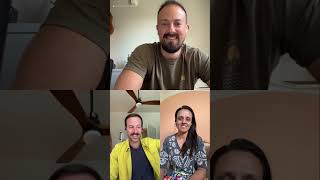
Live interview (Substack Live / YouTube) with Andrew Horn about authenticity, leadership, and the transition from founder to executive coach. Horn describes early social insecurity, a pivotal Gestalt Awareness retreat that reframed authenticity as an act of service, and his entrepreneurial path (founding Tribute in 2014, later exiting to focus on coaching). He names mentors (Lauren Zander, John Mackey, Diana Chapman), explains practical methods (emotional inquiry/parts work, "Breaking the Cycle", life audit), and offers actionable practices for boundaries, handling fear/upper limits, and cultivating flow/autotelic motivation. He also promotes his Substack (relational leadership), andrewhorn.com, one-on-one coaching, masterminds, and quarterly retreats (NY, LA, Austin).
Questions this video answers
2014
2016
22
23
25 clients
Chapters
On Instagram, but this is my first on Substack and I'm shifting a lot of energy over here and just love the platform, so it's cool to see what you're doing.
Yeah, we've been. We've been absolutely loving Substack since we. We came on maybe back in October. But yes, we are. We are live. So welcome. For anyone who is tuning in, this is Sacred Business Stories. This is our weekly Substack Live where we have an honest conversation with entrepreneurs about, yeah. What it looks like to build a business that aligns with your deepest truth. And we are here today with Andrew Horn. We're excited to learn more about his journey. So, yeah. Hey, Andrew. And we'll give folks. Give folks a moment to kind of come on here before we do your. Your official, official intro.
Yeah.
Thanks, Andrew, for creating the time and the space to be here with us. And I always like to remind people, like, why we created Sacred Business Stories. And I feel that it's very important for us to keep inspired, not only Phil and I, but also, you know, for our audience and just creating the space to invite people that we believe have, like, sacred Business. And for us, Sacred Business is really like a business that you created and you were able to bring all of who you are forward, that supports your lifestyle, that it is a combination of your challenges and your victories and your certifications and brings fulfillment to your life and supports the adventures that you want to live in your life in a way. So thanks for being here.
It is my pleasure.
Yeah. So for those of us, those that are joining us again today, we're joined by Andrew Horn. I'll just go ahead and give his official bio and then the fun part will just be getting to hear the story directly from him. But Andrew is an entrepreneur, executive coach, and a writer. I'm curious about this story behind the. I read that Forbes recently called him the Dale Carnegie for the digital age, which is quite a cool, cool thing to be said. And yeah, it's just really cool to hear. I'm excited to hear a story about how he's gone from building what sounds like a very successful company, taking that to eight figures, millions of users, tribute co, and then deciding to kind of step away from that and to focus on coaching and hosting transformational retreats for leaders. So, yeah, really with that, Andrew, I'd love to just, like, turn it over to you. Uh, we've never really met each other. I don't know a lot about you. I actually heard about you originally from a friend of mine that I think we have in common, Andrew Kippen. And just as I started to kind of check your work out a little bit, got intrigued and yeah, thought it might be fun to have a conversation. So yeah, we'd love to kind of hear from you about your story, your journey and pretty open ended, but we'll, we'll start there.
Yeah, I mean like where, where to begin the story, the journey. You know, I guess I'll, I'll speak thematically about the, the through line that connects all of my businesses and my coaching practice and my retreats. I'd say at the very core what I have always been most fascinated and intrigued by has been the nexus of communication and human connection. And the reason that that is true, I think is because I really sucked at it. When I was younger. I grew up in Maui, Hawaii and was, was bullied a ton. Didn't have the type of community or friendships that I desired. And I remember moving to Washington D.C. right outside Northern Virginia when I was 13 and I just had like one of the first moments of my life where I really displayed what I call agency. But I had moved here and I was so insecure that I would never think about like walking up to strangers on the street or putting myself out there with a girl. And I had this epiphany where I was at the freshman football practice and we all went to this like town center and all of these girls from a neighboring high school were on the other side of this fountain. And then there were all the guys on the football team and they were all kind of cooing at each other. And the last thing that I would ever do in that moment is go and talk to these girls. But I remember thinking to myself, you don't like your life and you don't like who you are, so you have to do something different or your life isn't going to change. And so I went and I talked to these girls and lo and behold, they were, they were into it. And so then I started the path of all of these validation seeking kind of like patterns to achieve love and find friends. And I got more adept at communication. And then my mom was a 13 time published author in the realm of interpersonal dynamics and relationships. I was like, whoa, there's something to all these tools. And I can ask the right questions to kind of make people feel like I'm deep and I can tell stories in a specific way to get up on a stage and like sell things effectively. And so I started to master all of the techniques and the tools of Effective communication. But my internal experience never really changed. That insecurity never went away. That self doubt never went away. I loved giving talks, but I'd, you know, be sweating profusely the whole time that I was doing it, getting cottonmouth and. And so I spent so much of my life. I started successful nonprofit when I was 22, gave my first TEDx talk when I was 23, and had raised millions of dollars by the time I was in my early 20s. So I was achieving externally. But everything really shifted for me when I was about 27 years old where I got invited to a conference called the Conscious Capitalism Summit by a guy named John Mackey, who's a mentor and a friend of mine. He started a Whole Foods. And at that conference, this person invited me to a workshop on this modality I'd never heard of called Gestalt Practice or Gestalt Awareness Practice gap. And it's the awareness practice that was utilized at the Esalen Institute in Big Sur, California, really to facilitate a lot of the instrumental conversations that were happening there at the precipice of the human potential movement, you know, Ram Dass and Alan Watts and all these people. And I went to this experience at the Cleveland Institute of Gestalt. And the facilitator, when we first get there, he says, I'm going to invite you to follow three simple pillars of awareness while you're here. And if you do that, I bet you'll have a meaningful experience. He said, I'm going to invite you to be fully authentic. So whatever you're thinking and feeling, just give it a voice, treat it as valid, deserving of a voice. He said, curiosity. Just going to invite you to trust your curiosity as a guide to connect. If you have a question, ask it. And so I'm just going to invite you to be present. So no prediction about the future, no stories from the past, just really be here. I was like, okay, I can try this on. And one of the first experiences I had at that retreat changed my life forever. There was a woman there named Megan, and Megan was a successful media entrepreneur. We were two of the only people there in our 20s. Most of the other people were in their 40s and 50s, successful CEOs, shows. And so I'd been trying to talk to Megan and ask her questions about her company. And I think everyone's had this experience where you're trying to connect with someone at an event and they're just looking around the room while you're talking to them, or they're giving you like short Answers. And in your head, you're like, this person does not want to talk to me. They're not into it. And I'm getting in my old pattern of like, oh, she doesn't think I'm successful enough, or I'm being awkward. And so I notice myself start to withdraw from the conversation. And at the first break, I'm at the clock coffee machine, and Megan starts walking over to me. And I was like, authenticity, curiosity, presence. Okay, cool. Like, let's do it. So I'm like, hey, Megan, can I share something with you? She's like, yeah, sure. And I was like, so I just want to let you know I love what you've built. I think it's so cool. And I've been trying to connect with you and ask you questions, but I just noticed that you've been, like, looking around the room and you've been giving me, like, one word answers. And my story is that you just don't really want to connect. And I want you know that that's all good, but I'm gonna stop trying. And so if you ever want to connect over here, just let me know. And can you guys guess what happened next?
I want to know what happened.
She burst out crying. Wow. She says, andrew, my co founder and I are fighting. My boyfriend and I are breaking up. This is the last place on the planet that I want to be right now. And it was in that moment where it's almost like at the end of Matrix 1, when Neo sees the lines of the Matrix and the code and Smith, and he just understands the nature of his reality. And for me, it was like this Matrix moment where I realized, whoa. My anxiety was not the product of, like, what Megan was doing. It was a product of the story that I was making about her not thinking that I was cool, like, thinking that I was successful. And I realized that what I was doing with Megan, I was doing with everyone in my life, with the audiences that I was speaking to, with my friends. It was just that I had so many stories about who I needed to be to connect with other people, the Andrew that I needed to perform and project, to connect, to be successful, to achieve. And so it was this massive awakening. But the moment that really shifted things actually came about a minute later where we then walked into the room and the facilitator says, does anyone have anything they'd like to share with the class? And Megan's like, yeah, I do. She's like, I don't want to be here. Like, here's what's going on. For me. And the facilitator who does this professionally says, great, thanks for sharing. He just rolls a bit. And then the facilitator says, anyone else? And two other people raise their hands. There's a guy who's an investment banker, and he's like, hey, like, this touchy feely stuff is just not going to fly where I work. And then the other person shared something that they were holding onto. And what I realized in that moment was that it was me simply being honest with what was real. That created space for Megan to share what was real for her, which created space for these other people to share what was real for them. And I realized that when done consciously, my authenticity could be an implicit act of service. That my authenticity wasn't just about me being confident or effective or actualized, but that it was an act of service. And that was already a foundational value of mine. And so when I could connect the act, the practice of authenticity to this divine service of the other, like a path to liberate others, to simply be themselves, I was like, man, these techniques and tools are cool. Like, I like being able to dial in a pitch or a story. But what I really wanted was this embodied experience of simply being myself and doing that in a way that was constructive and supportive to other people and the things that I wanted to build in the world. And so then, you know, the rest of my life just took form on top of that. And that's that, you know, is really where I'm at today. It's really just trying to be a stand of how can people really be authentic and effective and do that as a pathway to leading powerfully and creating things that matter in the world?
That's really powerful. Thanks for sharing. And I resonate a lot with that. And I feel that we always give first energy, and you create space and then you give permission. Like, the authenticity that you're talking about. Megan, like, hey, I gave myself permission to be authentic and to share from my heart and to just be fully honest. And then she felt that right? And then she just did exactly the same. It's very interesting that what comes to me is how culturally, often is hard to cross. Like, you were like, in an event, and I was just wondering how you keep your relationships in your life personal and how can you set your boundaries? I feel like for people listening to us, many of the people that we help, even for myself and especially in relationship with my family, like, sometimes it's hard to say no. And then we're like, and I want to please And I don't want them to feel bad about me. Or I see that with my mom sometimes, and I see with other people that feel like, yeah, what for you is the balance between being fully authentic or then taking the other person's in consideration needs and crossing that boundary and keeping a healthy relationship, but still, like, you know, even for business owners, like, how do I say yes? How do I say no? And I. And I keep that balance, If I'm being clear in my question.
Yeah, I'll ask. I'll ask you a question. Carolina, you mentioned difficulty setting boundaries, maybe with, like, a mother. Right. And is your mother still with us? She's.
Yes.
Yeah. And so let's just use that as an example. So do you want your mother to feel like she can authentically share her needs and express her boundaries with you?
Absolutely.
Well, then what I would say on top of that is that the only ethical way for you to create the space for her to do that is to do it for yourself. And that's. That's what I fundamentally believe in all aspects of authenticity is that if we are with people, be that an employee or a co founder or a spouse, that if we want those people to feel safe, to be themselves, to share the hard thing that might feel vulnerable, is that the most ethical and efficient way to create that space is to do it ourselves. And I don't believe that authenticity on its own is a virtue. I believe that authenticity with objectivity and positive intent a virtue because we have hyperbolic judgments and criticism of people all the time that would not be objective or would not have any positive intent. And so authenticity on its own is not a virtue. But when we start to embrace authenticity, objectivity, and positive intent, then I believe that no matter where we are, our authenticity really is a gift and a force for kind of positive momentum in their lives.
Yeah. And it's moment by moment, Right? Like, I think I'm much better doing this right now than, you know, even, like, a couple of months ago, and I had a situation specifically with her. But I feel that this can be translated, like, in many ways that I said yes for something that it wasn't exactly what I wanted. And then she came back to me, and she kind of, like, gave me permission, and she's like, hey, you could have said no, and that would have been much more appreciated. And then, like. Like, I'm not gonna go into the details, but the connection that we built in that moment was, like, really, really powerful. And then something else happened right after, and I'm like, hey, mom from that space. I'm saying no right now. And she's like, hey, I appreciate that. And it's. It's just perfect, you know?
Yeah.
I have a different question for you, Andrew, which is kind of like going back to your story of what you were sharing with growing this company to eight figures Tribute, and one of the things that I love hearing so people can see possibilities, just kind of like this twist and turn journey of kind of these unexpected ways that things kind of move forward in our lives. And I'm just curious if there's a story there or kind of how you moved through that period of life to kind of what you're doing now and kind of was that a calling or what was it that kind of really set your heart on the path of. Of choosing to kind of lean into the transformational work you're doing now after kind of experiencing that level of success in the tech or the, you know, the world, building what you were doing with Tribute?
And I will have to say, Phil, my headphones just were wigging out, so I had to take them out. So I missed the first part of that question before finding the success with Tribute. Sorry about that.
Oh, all good. Yeah, so I'll just repeat. I was just saying that one of the things I love to hear and to share with people listening is kind of how people's lives kind of unfold in a way that's not necessarily always predictable. And I'm just really curious if there's a story there about how you went from kind of building this tremendous success with Tribute and then ultimately deciding to kind of shift gears in many ways completely with the transformational work you're doing now and what was in your heart around that.
Yeah. So I wrote about this, actually. I'm publishing a post on Substack today that tells this story. But when I was building Tribute, we started in 2014 and I found my first coach in 2016, and the woman's name was Lauren Zander. She built this massive coaching firm, I think 50 coaches at the time. When I connected with her and within three minutes of meeting her, I was in tears because she had totally reframed this insecurity I held about. I had a really bad lazy eye growing up. My eyes would wander and I had so much insecurity about it and I wouldn't look people in the eyes because I was shy about it. And she had reframed it as this positive thing because so many of the kind of empathetic qualities that I've developed were correlated to the Insecurity that I felt about that and, like, the compassion that that gave me for the experience of others. And it was just. It was so powerful. And so I was working with Lauren for a few months, and she was a really brash, like, New York Jew. Tell you what she thinks. And in one of our probably fourth or fifth sessions, he was like, you know, I know you're doing the CEO thing. You love this company, but she's like, I just got to tell you, you're a coach at heart and you're going to do this. And at the time, I was not ready to hear that. I was like, no, we're building Tribute to be the next one, 800-Flowers, the biggest gifting company on the planet. And so I wasn't ready to hear that. But I did consistently work with her, and then our coaching dynamic turned into a mentorship teaching dynamic, and I started to teach some of her programs for Handel Group when I was still running Tribute. And so the path of coaching and personal transformation was something that was in my. In my orbit for a long time. And so because I had had so many people who invested in me, and I had just put so much energy into Tribute and really putting this into a world in a way that it could continue to thrive and do a lot of good, I just wanted to make sure that my exit was done in a way that was responsible and respectful to all the people who invested in us. And that moment came about two years ago where I think I had known for a few years that my life was moving more in the direction of executive coaching and facilitation, and it was just a matter of basically, like, exiting that business in a way that really felt in integrity for me, which is really the foundation of my coaching practice and something that I learned directly from Lauren, my first mentor. But really, how to. Another mentor, Diana Chapman beautifully articulates integrity as these three tiers. It is living our values. It is telling the truth objectively, with positive intent and honoring our agreements with ourselves and others. And that, I think, at the end of the day, I love the simplicity of that, because in the complexity of life and all that is happening, I have this deep knowing in me that if I walk that path of personal integrity, I can trust whatever results are on the other side. And my experience that has been that there's a great peacefulness and presence that's available in that because I'm just so much more oriented on what it is that I control in these moments. And I have all sorts of goals and aspirations and beautiful Things that I'd love to build. But I can honestly say that I wake up most days and I'm just like, man, I feel so lucky to be alive, and I really do love my life.
And how's that? That's beautiful. And so how is it? So you're about two years in and. Yeah. What would you say the most unexpected thing has been for you, like, in terms of making that transition? Is it. Yeah. Anything there? That. Because I think this is one of these things that a lot of folks struggle with is kind of. It seems like it was clear to you that you had this. You had this kind of plan that you're holding on how you wanted to make this transition with integrity, but many people kind of struggle with knowing, like, when is the right time to. To make the move. And yeah, I'm just curious if there's anything there that might be helpful for people to hear about what that transition has been.
What has been? Yeah, there's feel like there's two questions in there. What's been most surprising? And then what advice would I have for other people who are perhaps considering a transition in their life? And so the first one is what's most surprising about it? Being totally transparent. I am surprised by the depth of how much I love it and honestly, how successful it's been really quickly. And I think that the reality of this is that my entrepreneurial journey started when I was very young, and I had always built businesses I was deeply proud of that were having an impact and that were cool companies. But I had never really hit the point in my career of confidently being able to create the type of financial abundance that I would like for myself. And so I had never really done that. I knew that I could create cool things. I knew that I could lead, that I could gather, but the confidence that I could make money in the ways that I want to that allow me to support the life that I want, I never really got there. And it was when I shifted into coaching and hit this point where even early on in my journey, I realized, wow, I am already good at this thing. And I had been studying and practicing in ways for many years, but there's this thing that I'm good at, and I. I really enjoy doing it, and I'm obsessed with learning about it. And so even when right now I have a full roster, 25 clients, and that's the maximum that I'll take with coaching clients at any given time. And. But even when I had five clients, I was like, man, I'm still making decent Money right here with other stuff I have going on. But I'm good at this. I'm obsessed with learning more about it and I'm making good money doing it. And I was like, well, if that's where I'm at right now, I'm just gonna continue to be obsessed with this. And the more that I do it, the better I'm gonna get at it. And so I just, for the first time in my life, I just have this, this belief that things are going to get better into the future. And for me, like, that is abundance. I work with people who have a lot more money than me, but when it comes to abundance, to me that really is the mindset that I not only have enough, but I will have enough to do what I want to do. And it's not just a number, it's a belief. And so what's been really nice about it is finding the thing that I truly enjoy most professionally and giving myself to it fully. And, and I think that for a lot of people, I imagine folks who are listening to this podcast that they have a lot of the innate skills of the relational arts, personal transformation or coaching, meditation and mindfulness, and they take for granted that not everyone thinks or relates this way with other people, that not everyone is just fundamentally concerned or curious about the experience of another person. And I am, and it's easy to negate that. This is like a skill that other people really do value. And so I wrote something yesterday that was inspired by. I did another podcast and someone asked me, they said of all the your clients and the greatest entrepreneurs, what do they all have in common? And I thought about it for a moment and then it became so simple to me and I was like, oh, they all are doing what they're doing because they want to be doing it like that in and of itself is that it's this. Not extractive ego, fear, greed, it's they are doing what they're doing from a really self organizing place. That thing is exciting to them. That thing is deeply grounded in purpose and contribution. They're just doing what they're doing because they want to be doing it. And the more that we orient towards our own enjoyment of something, the more energy we have to invest into it, the more that energy we have to continue to pour into that thing. And so what I really invite people to do, it's like, is just to look for that thing that you really enjoy doing and to see how you can make that make sense as the path forward has really been like one of the greatest Lessons in this process.
Yeah, like, thanks for sharing this. And, like, something that you made me think. And I would love to hear you talking a little more about the energy of obsession, because I feel that when you are obsessed in a way, like, you have this burning fire, this burning desire that you're like, I'm gonna go here. You connect with trust and faith and just that sense of purpose that keeps you moving forward. And we've had people, like, we had a client before that he had, like, many, many plans, like, and he loved all of the plans, but then he was kind of like, with his energy all over. And if you could just share more about the power of, like. Yes, I'm obsessed about learning more, and I'm obsessed about. And how this contributes for you maybe to have success so fast and just keep moving and keep doing what you want to do, because you just love doing it.
Yeah. Well, I love this question because it gives me a doorway to step into flow states, which is a big part of my work and something I'm really fascinated with. Quick context. What is a flow state? A flow state is the peak state of human performance. It's a term that was coined by this guy, Mihaly Csikszentmihalyi, who is a professor at Boston University. In the 1980s, he wrote the formative book of this field of research called flow. And in that book, he talks about all sorts of things that we can do to drop into flow states. And he says that one of the most important ones is what he would call intrinsic motivation. And when he was talking about intrinsic motivation, he introduced me to what is now for sure, one of my favorite words, and that word is autotelic. And Mihaly says that if someone wanted to cultivate more flow, where we're doing our best, performing our best, but oftentimes without any effort and time stands still or speeds up, he says, you would develop an autotelic personality. And autotelic means something that is done for its own sake. So autotelic is something that is done for its own sake. And I would point to one of my favorite things is surfing. It's like surfing is exercise, right? It's the. If I go and surf and I'm done, like, I've just burned some calories, I've exercised, I've worked my muscles, but I'm not surfing because the outcome is that I have exercise. I'm surfing because the act of surfing is enjoyable. Right. It's when I. When I coach a client, it's like, I'm really grateful that that client is going to pay me for the time that I have invested into them and their problems or whatever they're facing, but also being fully present in a conversation with another person and deeply navigating and creating space for them to be totally open and transparent, introspective, that is enjoyable for me. And so the more that we can orient towards these places where the thing we are doing is the point, it's like, then what we'll find is that the outcomes we desire start to flow with so much less effort and strain. And so thinking about, like, what are those things that I naturally enjoy doing and how can I amplify the time and space that I give to those things is a really powerful way to, again, like, find these places where we are. You use the word obsessed.
Yes. Thanks for sharing.
Beautiful.
Yeah, it reminds me of. And I don't know if I'm going to quote it right, but we were reading up on some of Derek Sidder's quotes because we're going to be having him on the show soon. And he said something about. Yeah, he said something about, like, some of my favorite days are my. My days when I work 18 hours. And then he kind of goes on to explain it, but he's like, it's not like, because I'm a workaholic. It's because, like, at this point in his life, he's completely aligned. Everything that he does that maybe would be considered, you know, work with his joy, with his love, with his passion. And it just. He's able to get into these. These crazy flow states. And I feel that. Yeah, I feel that the more people recognize their ability to operate in this way and kind of redefine the way they. They think about work. Yeah.
As.
As really, as you said, there's so much power in this and. And kind of potential to. Yeah. To show up in a way that really brings fulfillment to your own heart, but also really creates something meaningful in this world and is of service. So, yeah, I love everything that you've had to share about that. So thank you so much.
I think he says that people call, like, work time, but he calls the me time.
Yeah, he calls it his me time.
Yeah.
Yeah.
So shifting gears a little bit, but not so far off. One of the things we talk about a lot is this idea of how it's really. People have this fear around fear, but how it's really perfectly normal for fear and resistance to come up when you're doing this meaningful work, when you're doing this stuff that is your obsession or Whatever label you want to put on it. I'd love to ask you, these days, are there any areas that you're willing to share that you still experience fear and resistance coming up in your life, in your business, and kind of maybe some strategies you use to kind of help yourself keeping moving forward? Yeah.
Yeah. You know, the work that's probably most relevant for me in the realm of fear right now would be some of the work of, like, Upper Limits. And if you. There's a great book on this called the Big Hit, the Big Leap by Gay. Yeah. It talks about these patterns that we get into again, like when we're finding new depths of professional success or connection and belonging, and that's new or novel for us, that we typically have these patterned responses that will purposely knock us out of those peak states because it's more comfortable to be back down in the struggle or the status quo. And so for me, you know, as I've been very fortunate to find a lot of success in coaching over the past couple of years, it's. I'll have these moments where I'll notice myself of like, looking through the lens of scarcity that, oh, you're going to lose these clients. Right. That these are going to go away. And I think that what we can do is just to really, like, transform our relationship to our emotions from this place of not needing them to really go anywhere or change, but really developing a more collaborative and welcoming relationship with our emotions is really foundational to everything that I do. And I think that there's this process that I practice and teach called emotional inquiry, which is really like a derivation of parts work. And it's just about. When I notice scarcity with clients, what's ultimately happening is that's like a fear or an anxiety. I'm going to lose a client and it's less money, and I'm not going to have, you know, the ability to buy the new house that I want, whatever that is. And so the more that I can just notice anytime my body taps into a state of reactivity and get curious of like, oh, what am I feeling? It's like, oh, look at that. It's like some anxiety. And then rather than ignoring it or resisting it, which I think a fun idea that I often play with is the idea that most of us don't really experience the emotions we're feeling, what we're typically feeling is the resistance to feeling the emotion fully. And when we open ourselves up to feeling fully, our experience of emotions is much more fluid and they don't stick around as much. And so if I'm feeling anxiety, I just feel like, oh, where did I feel it? I feel it in my tummy. And like, if I were to just get curious, like, what's anxiety feel like? Oh, it might feel like a tension or a contraction. And it's like, does it have a shape or a color, like visual reference? It's like, if it could say something. What are you saying? It's like, oh, you're gonna lose this client. And then I'd be like, okay, cool. You figured it was this client. I was like, is that true? No. Anybody you can know? It's true. Definitely not. How do I feel? I feel tense and like, actually like scared and like, it makes me less excited for work. And it's like, oh, that's cool. How would you feel without the thought? Better. It's like, could the opposite be true? Yeah, definitely. That's for people who aren't familiar with that. A process called the work by Brene Brown. But even more deeply to truly transform our relationship to fear, scarcity, stress. I think it's really about understanding. I have a mentor named Brian Franklin who's a really excellent coach and he calls this our ecology. And ecology is basically just how things relate to each other in the natural world. And for us, if we think about these patterned behaviors that we have that we would consider as more reactive, right? It's like, I'm socially anxious. It's like I have a scarcity mindset with money. Is if we have a patterned, reactive behavior that has existed with us for a long time, maybe since childhood. The only reason that that is there is because somewhere in us, that emotional response is trying to protect us or keep us safe in some way. And we have to get really. This comes through the lens of neuro linguistic programming, which they are much more focused on which thoughts than the emotions. But in my view, the thoughts and the emotions are inextricably linked due to the psycho emotional loop. If I have a thought that imprints onto an emotion, my emotion imprints them to my thoughts and so on. And there's this famous saying that there is no enemy in the mind, that our thoughts are not something that we control. We can respond consciously to our thoughts, but we don't control our thoughts. And so if that is true, there's no enemy in the mind. There's no enemy in the emotions. Any emotion that is presenting itself is there fundamentally because it is trying to serve us. It is trying to have some need met. It is alerting us to a potential threat. Or on the positive side of things, it's alerting us to something beautiful that we're experiencing, whatever that might be. And so the more that we can understand these states that we might qualify as negative or detrimental to our well being, the really helpful way to truly shift those is to get curious about how those emotions that we have held for a very long time might actually be trying to serve us, right? It's that the social anxiety is there because it's worried that we're going to say something stupid and people are going to judge us. And if people judge us, we assume that they're not going to want to be friends with us, they're not going to want to invest in our company, right? And so when I can understand the positive intent of the emotion, right? And just like, hey, thank you for trying to keep me safe, I can see you've been here since I was a little kid and like everything I've achieved, you've been there in the background, right? Just like making sure that I don't say anything dumb. And like, I see what you're trying to do. And once you can articulate the positive intention, we typically get more spaciousness, right? And if you think about what's happening in the body, when we calm down, we regulate the nervous system, we have more access to our introspective faculties. And introspection is just the ability to inspect our thoughts and feelings. And so now I can talk to that social anxiety and say it's like, hey, but I see what you're trying to do. And like, you're my homie, you're trying to help me. But actually like when you're here, like, I don't share honestly with people, right? I end up like, basically like being really self conscious and it's hard to speak clearly in important moments. And like, actually I think that when you're here, you're trying to keep me from saying something dumb, but you actually end up making me say things in a way that comes across dumb, right? And it's like, so this is the impact and we can start to really communicate and connect with the emotions and start to present new alternatives of like, hey, look at this scarcity mindset that I've had since I was 21 and couldn't pay rent while I was. And that scarcity was with me while I was raising millions of dollars and working for so long, right? So that's. Scarcity is this foundational survival strategy that is developed and when I can develop that mindset of like, oh, you're here to serve. But let me tell you how you're doing it. Let me present some other more integrated, most motivational sources to drive my action, to reorient myself, to like re establish my center of gravity. That's where you really start to shift these pattern behaviors that typically hold us back.
Yeah, like this. I, I do that all the time too and I love this conversation. And, and one thing that you were saying that called my attention was maybe you could speak a little bit about debt, which is the pattern, right. Like the scarcity was there when I had no money to pay pay rent, but then I was making millions of dollars and the pattern was there as well. So then my question is when you, for example, those patterns are still, like many other patterns are still showing up for you and then you see that it's not the outside world, it's not the external world, right. How would you help people to identify sometimes the patterns in them right now that is not like affected by the external situation. Like yeah, like I fear this because I don't have money, but you know, but now I'm going to get money or whatever and it's still there. So like anticipation in a way. If I'm being clear, I could say.
Many things about how to address and transform pattern behavior. But I would say that I specifically write on substack in a way where I try to create kind of evergreen practices that people can do. Right. So it's like here's a journaling exercise, here's a check in you can do with your partner. So they're very experiential. And one of my favorites is an exercise that I would call Breaking the Cycle. And the vast majority of our personality of who we are and how we relate to the world is developed through our relationship with our primary caregivers in early childhood. And so our relationship with our primary caregiver cannot be overstated in the development of these types of pattern behaviors that end up working against us. And what I've done in Breaking the Cycle is taken a lot of inspiration from the Hoffman process of I've been very fortunate to interview Raz and Gracie, the chairman of the board. And I've attended Hoffman. I've probably sent maybe 20 people to the Hoffman process now, but it's a whole week that's focused on justice of childhood patterning through the lens of our primary caregivers, essentially. And so in the Break the Cycle exercise, what I invite people to do is to look at mom and dad, primary caregiver, whoever was around and just create a list And I call the first list breaking the cycle. And the second list is carry forward. And so for your dad, you would just look at, okay, what are all of the patterns, characteristics, ways of being that I experienced in my relationship with my dad or that I saw him expressing in his life? So it could be like my dad was an alcoholic, it could be my dad was an isolationist, my dad was a workaholic, my dad was quick to anger. Right? Whatever that is, he was an addict. Look at what are all the behaviors that I want to break the cycle of just becoming aware of. Of what are those patterns that you experienced in him that you personally are putting an end to? And then also looking at, like, what are the behaviors, the habits, the characteristics that I experience and that I actually want to carry forward? What are those behaviors that I do want to integrate as part of my personality and way of being? And so one of the best ways to evaluate patterns is to see where they might have traces from our parents. And simply becoming aware of those is the first step in starting to transform them. And for a lot of us, many of them do have their traces back into what we experienced in early childhood. And the reason that we adopt these, we'll call them negative patterns from our parents is because of this thing that the Hoffman process calls negative love syndrome. And negative love syndrome basically posits that when we are pre verbal early children, right, that we don't have the ability to communicate or kind of act or ask for our needs. And one of the most effective strategies for receiving the love we need from our parents to make sure that we're cared for and that we survive is to simply mirror them. And so one of the first things and skills that we develop is the ability to mirror our parents. If we are like them, they will love us, and if they love us, we will survive. And then we carry that habit forward of simply wanting to be like our parents for better or for worse, because if we're like them, they will love us. And that's why so many of these patterns carry forward. Whereas you were talking about Carolina, like, this reaction or response does not make sense based off of the external externalities that I'm facing. But I'm still responding emotionally in a way that feels kind of out of whack with what I'm experiencing. And so I have that up on my substack. It's a good one to look at there. And then I would also talk about this process of ecology, of really starting to welcome in the emotions and understanding that oftentimes when it comes to wanting to optimize our performance or mitigate, call them kind of challenging habits or patterns that oftentimes our context, what it is that we're feeling and thinking about the thing is going to be much more important for improving performance than a new skill or technique of how to do something. And so oftentimes it's our context versus our content that is most valuable. And so I'd highly recommend investing into some of these tools that allow us to connect with our emotions more effectively. I'm a big fan of parts work and the various modalities, or even just watching one video with Brene Brown blowing your mind about how most of our suffering is simply caused by the thoughts in our mind. And as we transform our relationship to our thoughts, our relationship with reality tends to shift as well.
Great. Thank you.
Well Andrew, I know we're coming up on time and I want to be respectful of that. I think at this point, yeah, I know it's super easy here being on Substack just to be like, hey, check your work out on substack. But for anyone who's been listening here with us and they're more curious about what you have to share, what would your recommendations, where would be a good place for them to start?
I really do love the work that we're putting out on Substack right now. As I mentioned, I really try to write more activities than blog posts, so everything I post is typically like, hey, here's a system you can put in place to end gossip at work or here's the five question check in that you can do with your romantic partner at the end of the week. The one we're launching today is like the life audit, the 12 areas of life and how to truly align your life and leadership in all areas. So this is a great place since you're already here, to go over the relational leadership and subscribe. And then most everything runs through my personal website. It's andrewhorn.com and that's my handle on most social channels. But in terms of working more directly, I host quarterly retreats for men who identify as leaders. It's primarily entrepreneurs who come to our retreats and we do those in New York, Los Angeles and twice a year in Austin. And so that's a pretty consistent and easy way for folks to work with me. And then yeah, I do one on one coaching and masterminds and fun stuff like that. But yeah, check out some of the blog posts. Come to a retreat and don't hesitate to reach out if you ever have any questions or be helpful with anything.
Awesome. Well, we really appreciate you being here with us and getting the opportunity to hear your story. Yeah, we appreciate your time. We'll be sharing this recording afterwards. So for anyone that's listening that might have jumped in late and are liking what they had to, what Andrew had to share, we'll be sure to get that posted later today. And I'll share that with you as well, Andrew, in case you might find it useful for sharing. And thank you so much again and grateful for your presence and staying with us today.
Yes, thank you so very much for all your wisdom, a lot of good and applicable information. So I really appreciate that. Thank you so much.
Well, thank you so much for having me on.
All right, well, have a wonderful rest of your day and thank you for all of you that joined. We had some nice comments in there as well. So thank you, Lisa, for joining and Rich and everyone else and. And have a great rest of your day. Thank you so much.
Bye. Thank you.
Ciao. Have a good one.
Ciao.
Sa.