Sacred Business Stories w/ Charlie Gilkey
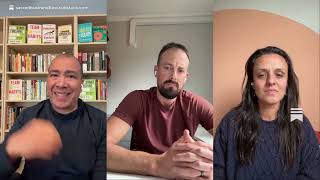
This is a recorded Substack Live / YouTube conversation (May 23, 2025) between hosts Phil Powis and Carolina and guest Charlie Gilkey. Charlie recounts his messy, non-linear path from Army logistics officer and philosophy graduate student into blogging, coaching, and founding Productive Flourishing (est. 2007). Core ideas: productive flourishing (productivity as a route to thriving, not mere efficiency); treat verbs (actions) before nouns (labels); accept neutral work and integrate it into sacred practice; say yes to invitations from others and allow identities to evolve; and lean into projects you "can't not" do. Practical guidance addresses side-hustles/bridges, prudent financial transitions, de-staking big commitments (e.g., publishing), and working with fear/anxiety during brand pivots (productivity → leadership/teamwork). Closing includes contact: productiveflourishing.com and Charlie on LinkedIn.
Chapters
Yes.
Yes.
Welcome.
To those of you that are joining us live, this is Sacred Business Stories. This is our weekly substack Substack Live, where we have an honest conversation with entrepreneurs about what it looks like to build. Yeah. Businesses aligned with your deepest truth. And today we are joined by my friend Charlie Gilke, who we feel is someone who has created a sacred business. We'll talk more about that. We'll do the official kind of intro here in a second, but we'll just give folks a moment to kind of come on here. But, yeah, thank you so much, Charlie, for joining us.
Thanks for having me.
Yeah. Thank you, Charlie, for being here. And I always like to remind people, like, why we create the sacred business stories. And I feel that the more we share our stories and for us, like, what sacred business really is. Right. Like, this combination of bringing all of who you are forward and just when people connect with your path and your challenges and your victories and all the things that you've experienced brought you to this moment. And then in a way, I feel that we give permission to other people to, you know, just honor their path and like, hey, you know, this is where I am right now. And, you know, my qualifications, my certifications, they do serve, but there is also my life experience. And then we give permission to people to create what we call sacred business. So welcome everyone. We are very happy that Charlie's here with us. And I'll pass to Phil to do the official intro.
Yeah, so, yeah, I'll do the official, and then I'll just kind of share a little bit more of my experience. But, yeah, just kind of working off the bio here. The important things to know about Charlie, he has advised hundreds of teams, worked with lots of Fortune 100 companies through your company, Productive Flourishing. And, yeah, how long has it been, Charlie, how that you founded Productive Flourishing?
So 2007. I've been doing this a minute.
Yeah, yeah, so he's been doing this for a minute. He's an author of several books. The first one I think I read was Start how to Go from Idea to Done. And the current book is Team Habits. So. Oh, yeah, he's given us the point out on the shelf there. I was like, what is he doing with his hand over there? But, yeah, Team Habits. How small actions lead to Extraordinary results. And then just another part of his story, which maybe we'll touch on here today, is his of previous career, former army logistics officer. And I love the way you phrase near PhD in philosophy, so I'm curious about your choice of words there, too. And yeah, Charlie lives in Portland, Oregon. So again, welcome Charlie. And yeah, I mean, just to kind of kick things off, I met Charlie for the first time and I guess really the only time in person in Costa Rica in an event that was hosting with another kind of friend of ours. And yeah, I was just really struck by his, his character, his deep thinking and yeah, I just feel like he has a lot to offer. And as he mentioned, he's been doing this for quite some time. I think he said 2007. And so he's experienced kind of the ups and downs of this creator journey. And even back in, I think it was 20, it was right before the pandemic when we met. I think it was literally the week that things kind of went a little bit crazy. And even back then I just remember having some really cool conversations about this kind of up and down and down journey. So I just think he has a lot of experience and wealth of knowledge to share. For those of us that have been doing this for a while and are looking for new ways to keep inspired and then for those of us that are kind of early in the journey and just looking to find ways to bring their meaning, work for it. So, yeah, would love to hear from, turn it over to you, Charlie, and just kind of let you share a little bit about how we got here, like what your journey has been from the start to now. I know that's an incredibly broad question, but we really love to. You know, it's easy for people to listen to someone who's been doing this for a while, who has accomplishments like best selling books and just kind of see the person that's here in front of us today. But you know, as much as you're willing to take us there, I think it's really useful to hear kind of what some of the messier parts were. The messy middle, kind of like what the real behind the scenes journey has been. So yeah, we'd love to hear about what that's looked like for you and I'll let you speak from there.
Yeah, well, you do this stuff long enough and you realize you're always in the messy middle. And so I can talk about the messy middle at the beginning or I can talk about the messy middle now, but you know, past this prologue, so let's go there. So some people will ask me like, hey, how'd you start business? How did you know you were going to do this like coaching, consulting, author thing? And I always had to tell the truth as I had no idea this was coming in the same Way fell ass backwards into the business side of this, to be honest. So back in the day there used to be this term that people use for themselves which is called a blogger. We're now creators or whatever the hell that is. And so I started way back in the day where blogging was still something you didn't want to tell your friends about, right? It was like up there back when D and D was also not cool.
Right.
And so I started it in 2007 and really the journey of me becoming an a creator and coach and author started with the basic problem that I was having at the time, which was I was simultaneously a serving in the Army. I was in the Army National Guard at that point, but I was a military commander and doing a bunch of special missions. I was, you know, roughly three quarter time. There's ways you could figure that out. And I was also working towards completing my PhD in philosophy. So I'm an ethicist and social philosopher by training. And I had this really, you know, what I now know is common problem, but to me it was really a paradox. It's like, how is it that I can move so much equipment and so many troops and I can coordinate all of those things happening and yet this 5,000 word essay is kicking my ass. They're like, how does this work? I can do these really complex things, but the simple thing of getting my ideas into a word processor, into something coherent is apparently a struggle that's going to take me, you know, three or four months to do, which sounds laughable now given how much I write. But anyways, that, that's neither there. So you know, I did what any good scholar and any good officer would do is I was like, you know, I'm not the only person that has a problem. Like, I'll go read and see how other people have figured, figure this out. And this was way back in the heyday. Some of you all are old enough to remember this. This was when Getting Things Done in the blogosphere had sort of reached its peak. So Getting Things Done is a book by David Allen written in the early 2000s for those of you all who are less than 25 years old that are watching this, right? And so I was reading David Allen, I was reading Stephen Covey, and I was like, I kept having to retranslate everything for both a creative person, but also a person that had the deep structure of strategy, execution and project that I had. And what I realized is where the productivity, the productivity literature was too granular, too, too hyper focused and the personal Development literature was too aspirational and high value and sort of things like that. The messy world or the problem that we were having is this messy world of projects that are in the middle. Right? Like, how do we get these projects done without going into like super nerdy project management sort of stuff and Gantt charts and all that kind of whatnot? But how do people have a lot of ideas, a lot of energy, actually get stuff across the finish line and that became the synthesis that is productive flourishing. And it's really important, I always have to say this for people who are new to me. Productive modifies flourishing. The point is this is about thriving. This is about being our best versions of ourselves in the world and really living a full life, not just getting more crap done and being better, faster, smarter, cheaper. Right, that. No, I'm not interested in that side of the equation. I'm interested in how do we do the work to become the people that we are and how do we do the work to allow the people that we are to be who they are? Which sounds like a tautology, but everyone on the, on the call knows what I'm talking about. So from that, people started approaching me like, hey, can you help me with my business? Or can you help with my team? And I was like, I don't know what you're talking about. I'm like, I'm a military officer and I'm a philosopher. What the hell? Like, I don't know this business stuff. But I realized that was a really lame answer after a while and so got my chops and learning the business stuff, got my chops in learning entrepreneur stuff, got my chops in learning the non academic, non military world. And I grew into becoming an executive coach and author and workplace consultant and speaker and all the other random ways that you get ideas out in the world. So that's, that's the not so short version, but that's the, the, you know, not going too deep in the woods version of everything.
Yeah. Thanks for sharing. I love the way you said, I'm here working for the army, and then I'm a philosopher over here, and then people are asking me to do something else. And at first it seems that you didn't see the connection. And I would love for you to speak a little more on that because I feel that we see that all the time with clients and people approaching us. We all have many certifications, we all have many personalities. Like, we behave in different ways. You're way more than just those two things. But I feel that there is something about life inviting you to integrate all parts of you that often people don't fully trust and they think they need to come up with. And it feels to me, the way you're describing, that it was an organic, hey, you're asking me how to do business now I need to learn this. And then, you know, this co creation with life, you could just speak more about that. Because I think it's very, very helpful for people to say that. It's like, it's not that one day you wake up and you're like, hey, now I'm going to become a business coach and I'm going to use my military background plus philosophy, plus this, plus that. And you know, it's. It's a process. If you could speak more to that, I think it's very, very powerful.
Well, thanks for that. And it reminds me of a conversation I was having someone having with someone Monday. So I just came back from speaking at the association for Talent development conference in D.C. and I was talking to someone and really what it came down to, a lot of her attention is she was fighting labels. She was fighting labels about who she would serve or who would need her and so and so forth. And she was the one that defined the labels, right? She was the one that had defined this is how this needs to be. So, you know, I bring that up because at that time I didn't have a label, that I was a business person. So I'm gonna go there. I don't know how many shows like it, but the other reality here is in my life, I did not see enough people who look like me who are authors and consultants and entrepreneurs, like in the way that we're talking about it now, like, yeah, I mean, I grew up poor and in the South. And so, like, if you had a business and you look like me in the south, you were cutting grass or, you know, you were like, you, you were doing manual labor and your business was around that. So I didn't have any. I didn't have that vision that I could be that person. Right. To start with. And so when people started coming to me, it's like, hey, you can help me with my business. It's like, I'm not a business person. Like, I had images of Mark Cuban or I had images like those were business people. Right. I wasn't. And then I finally sort of stepped back and realized that throughout my life and I still struggle with this. Like, I still don't see my native value in things. Like, I have to, like, be reminded by other people because from my perspective, everybody knows what I know and is old. And, like, everybody's read all the books I've read on the back of my shelf. Everybody's seen all the things that I do. I'm not saying anything new. And I realize that sounds absurd, but it's this construct of oneself that I just carry around with me. And so what I did during that time was I was just like, look, first off, I'm not a businessman, but I know this fighting with people who want to give you money to do a thing is a pretty dumb thing to do, right? If they're coming and saying, will you help me do this thing? I think you can help me do this thing. Well, they might be right, and they're the ones coming to me about this, so why not say yes, right? So that's thing one. Like, when people are coming to you and saying you are doing something of value, don't argue with them. Like, why are we so attached to arguing with people who see us shining and then reminding them that we're dim in different ways? So that's thing one. Thing two, I was a philosophy graduate student. Now, without getting too haughty about it, philosophy is hard. It's hard to figure out. Like, there. There are still days where I remember reading, like, three paragraphs. And that was my reading for the morning, right? Trying to figure out those three paragraphs. And so without sounding, like, condescending, I was like, you know, there are plenty of people who figure business stuff out. I've already done really hard stuff, and I've been trained in really difficult environments. This is probably something I can figure out. And so when I dropped that label, like, I'm not a business person. I'm not a consultant. I'm not a coach. And I really looked at what people were asking me to do. It's like, oh, I could totally do that. I do that every day. Right? That. That's kind of my jam. Oh, that's. That's the language you use for this thing that I do. Awesome, right? And so I went through this period of about three to four years of just creating my own Rosetta Stone of things that I knew and things that I thought about and what the market thought about and using more of the market language. And I still use some basic version of this. Like, if you've ever read Productive Flourishing, there's all sorts of weird Charlie Isms and analogies, and I'll write about the history of philosophy and sneak it in and then like, oh, yeah, the civilian world calls it this or this is what this looks like. And so, Carolina, the way that I'd say that is like, if you are in business or you are in business adjacent, which means you haven't really put your shingle out there, but you're thinking about it. If people are coming to you saying, I see this valuable thing that you're doing, or I wonder if you can help me in this valuable thing that I'm doing, at least play with saying yes to it. Don't block it from the very beginning. Play with saying yes to it. Go into it. Obviously, you'll need to figure out your boundaries with it. You'll need to figure out what's integrity. But don't argue with people about a more limited view of yourself when they see a more expansive view of yourself.
That's so powerful because, yeah, like, just the playfulness, right? Instead of like, oh, I'm not ready. I'm not this person. Like, they see you as that person that you don't see yet. And yet, for whatever reason, we need to prove ourselves more. But I love the. I always tell people, I'm like, hey, we gotta invite this playfulness. Like, just curiosity. Like, who am I? That this person. That person saw something in me, and then just go and experience. And it might not be that they're gonna get the full like, oh, yeah, now I am this. And label themselves. Because I don't truly believe that that's the situation or what needs to be done. But inviting playfulness and allowing that to be the next step, and then you take another one, and then you might get another invitation, and you might discover something about yourself that you didn't know before. Like you said, I'm like, hey, the market is using this language, but I do this over here that's exactly the same, but I call something else. Right? Yeah. I love it. Thank you.
And that's the thing. We get so hung up on nouns, right? When we need to focus more on the verbs, right? If you want to be an author and you want that noun, write, publish books, Right? If you want to be a coach, coach, work with people. If you want to be like, whatever that thing is, like, people are like, I'm not the noun. Do the verb. The verb is how you get the noun, right?
Yes.
And if you don't like the noun at a stop or at a certain point, you know what? Stop doing the verb, Right. You don't want to write anymore. You figure out that writing's not your thing, or podcasting or doing, guess what? Stop doing it. We are more than These friggin labels. And you know what I end up telling a lot of people? They get frustrated with me, especially around labels. I'll say your cage, your key, meaning you're the one that created that label in that context, that constraint and put yourself in there, right? So it's your key. Like why are you staying in there when you could do something different like. Or you could re change that or you can invert it. There's so many different ways to get unstuck, right? And when you realize that there is no label ever. I've been doing this long enough. And people will screw around a long time trying to figure out what their noun is and how, what to call themselves and what their unique category is and they'll do all that kind of whatnot. If you are really being the best version of yourself and showing up and doing your best work, that noun or that label will not last. You'll change it. So play with it like not from a place of like claiming credentials you don't have. I'm not saying that I'm just gonna search claiming credentials you don't have and all that kind of whatnot. But you know, if you're a coach today, great. You might decide not to be. If you're a consultant today, great. If you're an author, like whatever that wants, that is just take a step back and say, and I know this is me, I'm productive, flourishing. But I'm like, what are the verbs attached to this concept that I'm doing and do I want to do the verbs. And if I want to do the verbs and I'm open to doing the verbs, do the damn verbs and let the nouns emerge.
Yeah, I love two things you said just a little while back. First, and I think that's so helpful for people to hear this thing. I don't know if I'll quote you exactly right. But about saying you don't always see the inherent value in yourself. And I experience that not every day, but quite often myself. And so I think it's really valuable for anyone listening to recognize that that's such an absolutely normal everyday experience. And so you just work with that.
Right.
And then the second thing was it was just really interesting to hear you talk about the. Well, I call this the accidental business because it's actually the same. It parallels my experience. Like my first, you know, entrepreneurial business was in the hearing industry. And it was the exact same thing you described. It was, I was, I was early in the Facebook advertising thing and I was doing this for Our practice and other practice centers started being like, hey, can you do this for me, too? And it's funny because I had this resistance. I was like. I was like, this is my thing. I'm just, like, over here playing, having fun. It's like, I don't. That's not my business. Like, I'm not a marketing guy or anything like this. And people just kept asking and then. And to your thing about people giving money, finally someone just threw enough. You know, they. The amount of money that they waved in my face was so much. I was like, oh, maybe I should rethink this thing. Maybe I am a marketing guy. And that was kind of, you know, the beginning of my journey, in a sense. And I also love what you say about the labels because since then, it's been a very kind of twisty turning adventure. And I think that's something that I try to bring to my experience as well, is this playfulness. So I love the way that you described that with labels. But I did want to kind of go back to what you were saying at the beginning. So as you were, like, this shift or this transition, I feel like this is such a pivotal point for people, and we miss it sometimes. It's like, here's Charlie. You're the army guy. You're starting to write for yourself. You're starting to get the signals that, like, there's something there where people want to pay you. Like, was that, like, an easy transition? Like, was there, like, from a financial standpoint? Like, was there fear around that? Like, did you go, and everyone's story is different. Were you able to build this, like, while you were still in the military and, like, kind of create the bridge for yourself? Like, how did you kind of go from point A to point B? Kind of practically speaking, if that makes sense.
Yeah. So the language that we would use to these days would be, is. It was a side hustle for a long time. Again, I would. You know, I was a writer. I was writing what I shared. Like, so it was just that sort of outlet of, you know, starting as a blogger first and then as I got a big enough following and, you know, enough readers, then the question started coming in, and will you help me with that? And then I was like, okay, well, sure, but, like, let's actually figure out what the business model is using this language, like, what I'm doing and how to talk about it and how to charge for it, all those type of things.
Things.
And so I was doing it as I was a graduate student, as I was. I actually had an administrative job at the University of Nebraska Lincoln. So I was, I was on the admin side of things and I had that job. And then, you know, I was, I was serving in the Guard, like designing high level training environments and company command stuff. And I was, you know, some people start their entrepreneurial thing because they hated their job and they wanted to do something else. That wasn't actually true for me. Like, I didn't hate being in the, in the army, I didn't hate being in academia. But I knew at the time that what I was doing in, you know, starting my business and going, that it's like the, the way that I could be the best version of myself. So it was like the best of a bunch of good opportunities. And so I kept leaning more and more into that. Now there did come a point to where with that job that I mentioned, just something happened with my boss. And just for context, I had served in elite units when I was deployed. I was in company command at the time. I was doing, you know, and then I had this side career as a blogger that she didn't know about. It came to a point where I was designing a program and sort of running things on my own. And we had differences of opinions about which way it can go. And she sat me down and was like, look, you got a master's degree. Like, you're getting paid this much money. Like, you work for me. This is a good thing. Just do what you're told. I quit that day. And not because I was like, I mean, that's not a way. But I thought about it. I just happened to be thinking of Kantian ethics at the time, right? Because I was, that was part of the program. I was the, the assistant director of the Ethics center, right. And I happened to be reading that and I was like, you know, if I allow myself to be treated like this, this is what I'm going to get, right? This is where this is going. And this is a choice. I don't have to do this. That's what she didn't know, right? Is that actually the next day with either. Because I already, I had already had some clients for productive flourishing at the time. And then she didn't know that I could actually go full time in the National Guard or in the army if I wanted to the next day. And so from Purview, this job was something that I needed and that I needed to do it her way. From my view, it was the most like, dispensable part of my life at that time. Right. And so I was like, yeah, nah, I'm out, right? Because I just had so many other good things going. And I was like, I'm not going to allow myself to be treated that way, right? Especially I was 27, 28 at the time and just knew how careers, how what ends up happening when you follow that arc. And so quit that day or the next day, I think it was the next day, two, three days later, signed a few extra clients because I had the time then, right. And just went on. It wasn't scary. It wasn't that kind of whatnot. And I'll have to say, like, I want to be 100 honest on this one. It wasn't. I was in the job and I hadn't built anything and like, you know, I could just jump. It's like, no. I had spent a few years working on it. And I also had other economic opportunities for me that I could take either different, different ways. And so. And that's what I would tell most people. Like, I'm not the big guy. That's just like, you know, quit your job and go live your dreams right now, especially if you have kids, you have a house, you have all of those types of things. Like, there's ways to be prudent with this, and usually you are more successful to build before you jump than to make your business, especially when you're early stage your business. And the types of business that we're talking about, let's put, let's think about all the things we put on the business. It has to solve our creative needs. It has to solve our emotional needs. It has to solve our social needs, and it has to solve our financial needs. Right. And it has to survive. It has to sort of, you know, in the context we're talking about, it has to provide for our spiritual needs. You know, if you treat your business like it were a bit like a partner, like a real human, like, one of the ways relationships fail is we try to make the people closest to us serve all of those different needs. Like it's, you know, relationships. If you've got a spouse or you've got a partner, it gets tense when that partner has to solve all of your needs. And you don't have friends and you don't have a career and you don't have things like that. But we do that to our business. And so I would just be encouraging people. If you're earlier in the journey and you're thinking about when to sort of go, like, think about how few needs you can put on your business at the time so that you don't get in that sort of desperate gridlock right with it. And it has to do all the things. And so it might be that you need your partner or spouse to subsidize your business for the first year or two, if that's capable. If that's something that you do. It might be that you need to have, you know, you need to wait tables or you need to do something like that. I'm not. I want to be 100 clear waiting tables. Nothing wrong with that. Being a barista. Nothing wrong with that, right? Whatever the labor is, there's nothing wrong with it. And all labor has dignity. But what we do in this society is we're saying, like, you can't make money these ways. You got to go play this sort of hard mode way. And then when hard mode doesn't work out, we get all tights. I'm like, dude, if you can figure it out, working four hours a day, like, doing whatever other labor that you're doing, trust me, when you're on this side of it, you'll realize how much neutral labor you're doing for all sorts of shit, right? Like, you might decide, you know what? I'd rather do that labor for four hours a day than spend three hours a day screwing around on social media. Great, do that. Right? Or I'd rather do that labor there so I can focus my writing the way that I want to do my writing doesn't have to generate a certain type of revenue or a certain type of client. Great. So be flexible on how you do that. But, like, don't get in this. I know my sound like a frigging dinosaur here, but, like, yo, we got into this place to where, like, whenever we have anything that's a hobby or anything that fulfills us, we immediately go and try to make a friggin side hustle or try to start monetizing that shit, right? And I'm like, no, you can let that be for you. You can let that thing be sacred. You can let that thing be as it is and find other ways to make. Make stuff happen than just automatically thinking, oh, there's this thing I enjoy. Somebody might pay for it. So I'm gonna start a business that is a route to suffering, y'. All.
Yeah, yeah. And I love what you said, and there's probably someone who's coined a better phrase for this, but, like, this idea, essentially, it's like having a bridge. And. And you know, from. If you are trying to create, be an entrepreneur, it's like Having the bridge from your. Your corporate day job. And in a way, like, it's interesting because I've. I've experienced that. I just feel like there's a certain practicality to that. Like, I've experienced that even in my entrepreneurial journey. Like, something maybe I've shared before, but like, I was just mentioning a few minutes ago, that first person that was like, hey, like, I'm going to. I want to put money in front of you to do this. This marketing thing for hearing practice. That was my very first consulting client. And it was only three months ago that they stopped being my client. And I've been shifting multiple ways since then. My heart's been going in different directions. I've been holding this vision, and there's been certain practicalities to keeping some of those components in place. And. And, you know, I've been able. Because of the relationship I have with this person and putting that relationship first, I've been able to still show up, you know, with commitment to that role. And then when I didn't feel like I was able to and the time was right, like, we were able to. To kind of shift that. And so these are the sort of things. And I love you bringing this up, Charlie, because I feel like these are a lot of the things and the conversations that kind of get glossed over. And especially with a lot of the slick marketing, it's like, you know, earn your first six figures, seven figures, and quit your job tomorrow. Like, this is not. This is not what I've experienced for myself. It's not what I've experienced for the reality of most of the people like yourself that I get, that I speak to. So I really appreciate your kind of openness to kind of sharing those aspects of the journey.
Yeah, I think there's a lot of grace. Thanks for that, Phil. I think there's a lot of grace when we remember that we are not our work. The work is the work. We are separate from that. And the reason that's important is because, like, say, your journey feel where you're. You're. You're evolving as a person, but then you have this work, you have this client over there. Well, the. The work with that client doesn't have to evolve. Like, it can be what it is, and it can be great, and it can be collaborative, and it can be mutually beneficial. It can be all those types of things. But again, it goes back to what I was saying earlier. When you make every job, every gig, every dollar, have to be tied to your singular, divine purpose or whatever phrase you use for that. I think you actually fail to see the opportunity in the opportunity. You fail to see what the universe is presenting to you because you're like, it has to be this one way. And this is the way that I see it. And we get into this weird place as seekers where, like, on the one hand, we know that the universe, God, whatever your term for that is, it knows more and it's providing more than you'll ever be able to see. And yet we want to interpret all of our experiences from our limited frame of being. And being like, the universe isn't providing. It's like, no. All those people over there that you said no to was the provision, but it didn't come in this little package the way that you wanted it, and you said no to it, right? And so when we separate it, separate ourselves from the work, it gives us a lot of play space. And the other thing I want to say is we creative, spiritual people, you know, I talk about this a lot in my community, we get stuck in these weird rigidities and hyper and. And weird rigidities and myopia in that we'll. That there's like, you know, joy work, your best work, whatever phrase you have over here. Oh, you can't see my hands don't work. And that's the thing. And it's like, hell, yes or no if it's not that. And then we have the dread work, right? Which is just the crap we don't want to do. And it's like, whatever that is. And that's the construct we make of the world. It's either joy work or dread work. But turns out there's just neutral work. There's just this stuff that's in between. And when you don't create this huge existential story about it, it's just like, oh, I just gotta do it. Like, we don't. Most of us don't want to take the trash out every day, like, but also most of us don't spend a whole lot of, like, existential cycles worried about taking the trash out. You either do it or you don't, and you try to get through it as quickly as possible without making a mess. And so I think so many seekers and so many creative folks, when you sort of start packing all the work that it takes to do a business, they're like, but I only want to do this, really, one special thing. And I'm like, that's cool. But just because there's all this other sort of neutral work around, it doesn't mean you have to hate it doesn't mean that you have to make a whole story and spend a bunch of cycles at it. Like, you know, I have to say this for folks who are neurodivergent, we're gonna have to. I'm have to say it differently. But if you're on the neurotypical side of it, just do it and get it done and move on with your life. Right? The less time you spend thinking about it, less time you spent agony agonizing about it, the more actual fuel and energy you have for the work that you want to do. Right. And so I would just hope that people, as they start thinking about it and there's just gonna be aspect of every business, of every venture, of everything, even our personal relationships that we love, there's some neutral work involved in it, right? You gotta do laundry, you gotta take the trash out. Right. Sometimes you have to pay bills. It's okay, right? Get through it. Don't make a big story about it. And spend more of that time on the abundance that you are either getting or creating.
Yeah, I'd love to hear what questions Carolina has for you. But it just reminds me, when you talk about this neutral work, it reminds me of conversation. Carolyn and I have had that kind of leans towards the spiritual side of things. But I had that insight one day. It's like, what are we really doing here? There's really one thing that's happening if I'm sitting here. Yes, I could connect with the joy of reconnecting you and having this conversation, but what am I actually doing? I'm sitting here in front of this computer, which is what I do for 99% of my day. There's a variety of tasks that I do in front of this computer. And it's only the story in my head that dictates whether I feel incredible at the end of the day or if I'm completely zapped. But honestly, there's one thing happening, and it happens to be this conversation right now. And this is kind of my way of relating to that neutrality. And I think of that sometimes when I catch myself kind of getting up in here about a particular task. So, anyway, I just thought I'd share that. But yeah, I'd love to hear, Carolina, any questions you have for Charlie, because I feel this is really getting into your zone where you like to have conversations.
Yeah, no, I just feel that it's like in the simplicity of your talk, there are so many deep wisdom that I really hope people to capture. One we call sacred business. And basically what we do is helping people to build their business and something that supports their lifestyle and help people to bring their gifts forward and all of that. But at the end of the day, every work is sacred. If you approach that way. And often we have conversations like this. It's not about what you do, but who you are while you're doing it. So if you are working at a job that you might not like, can you just drop that opinion a little bit and just approach that with the sacredness that it is that you are serving something, and it's serving you at the same time? And the other thing about neutrality, that I went to Egypt a couple of years ago, and we went to this place, and my teacher in the guide, you're talking about how our power resides in the neutrality. Because if it's positive, you're attached to that, like, oh, it has to feel good for me to do it. And then all of a sudden, you're attached. If it's negative, it's also attachment. Right? Because then you don't want to do it, and you create resistance. But when it's just like, get it done, you move so much faster in life. And I feel that people have this, I need to be feeling good all the time, or I need to be avoiding feeling bad. And this is what fulfillment is. And it's the way you were explaining was just relating to me. And I hope people get the wisdom of that, because it's not about feeling good or bad all the time. It's just about your inner experience, in a way, but how you approach life. And you can have goals and you might want to transition, and then where you are, it's exactly perfect, you know, and then if you allow that to be the step to take you where you want to go, like, you know, you're gonna be fired. You're gonna get people inviting you to opportunities, and then the people that you would say no all of a sudden, like, oh, this is exactly what I needed, you know, but from presence, then labels and ideas, and it's. Yeah, just, like, I could just get so much wisdom and, like, powerful insights that I really hope people can connect with that, because it is in the present moment, and it is in how you approach what you do. And, you know, not that big vision that, like, my dream life is just do the things that I want to do, because it's not about that at all.
Yeah, I appreciate that. And I think Maria said this. She. She left a comment there, and I did want to make the sort of neurodivergence sort of Call out on that one right when she was talking about just do it. Like, I totally get that. I think if we are. We have different versions of ADHD and things like that. We. How we get our dopamine, oxytocin, serotonin, and endorphins changes. So we have to play with it in different ways. But fundamentally, you still need to figure out your way of getting the neutral work done, whether you gamify it, whether you make it have more meaning, whether you make it fun, whether you make it have, you know, some spirituality, whether you get a body double, like, whatever the techniques are, right? And in that state, it's like, yeah, you have to do all those things to do this thing that you don't want to do. And I was like, yeah, but, you know, it's really one of those things where it's like, well, I actually. Phil knows this more than you might know, Carolina. Everything that I just said previous, even including what I just said about adhd, actually rests upon deep spiritual and philosophical traditions. I just didn't do the, like, the Bhagavad Gita said or Aristotle said or that kind of whatnot. But, like, it's, you know, at a certain point, so much of work is fetch water, chop wood, right? It's. It's just like before. So there's a. There's a statement there. So before enlightenment, fetch water, chop wood. After enlightenment, fetch water, chop wood, right? And so what difference is how you approach the fetching of the water and the chopping of the wood, right? And so before enlightenment, you might have a lot of adjective about it. I can't believe I have to do this, and life sucks. And why do I have to chop the water and fetch the wood? And couldn't somebody else do this? And, like, I'd rather be doing it again. And there's all this sort of talk and all this sort of energy around it, but at the end of the day, you still need the water and you still need the wood, right? And so it's like, after enlightenment, it's like you just fetch the water and chop the wood and go on with your day, right? There's not a whole lot of story and attachment to why this thing needs to be done when you automatically know that it needs to be done, right? And so, yeah, there's. I think what we want to do more and more of is be present in the work. What I want to do. I'll make this less, you know, sage on the stage thing. But, like, that's what I try to figure out most days is like, okay, what's the noise? What. What of that noise am I creating? Right? And what of that noise is someone else creating?
How do I eliminate it?
How do I get it out of the way so that this thing, whether it's this conversation that we. We three are having, or whether it's my coaching call next, or whether it's the writing so that I can be fully there. Because our society, our technology, so many things are designed to pull us away to something else, right? And the practice, the sacred practice, is aligning your work, your value, your purpose here with the presence and the permission to allow yourself just to sit into that pocket and do that. And then when you can't do it anymore, you've done what you can to step away and go do what else that you can do. You know, we make it harder than what it is. And what happens, like, what I talk to a lot of people about is like, you know, suffering, difficulty, complexity. Life is going to give you plenty of those. Like, you don't need to add to those with your own sort of machinations. So if you're going to do that, like, well, if you need to have challenges, if you need to have difficulties, if you need to have some of those things, like, just take what life brings you and find the other places and maybe try to extract some of that. Because you don't need your work to be harder than what it's already going to be, right? Really showing up and saying, I've got this thing deep inside me that I've been working on that I want to share with you. That's brave work, right? Sharing that is already brave work. You don't have to make it harder than it already is going to be.
Yeah, thanks for the reminder.
I think we have time for one.
More question here, Charlie.
We got time for it. I realize I probably am rambling more on your, like, four questions, so apologies.
No, no. Like, we like to create space for that. And everything you've been sharing has been so beautiful and probably exactly what everyone needs to hear right now. So, yeah, I don't. I'm not attached to the script, but I did want to touch on this thing of the fear just because this is one of the big things that we see kind of coming up all the time. And also this, like, feeling that something's gone wrong. And so something we talk about often is, like, it's perfectly normal to fear fear. It's perfectly normal to have resistance. And kind of, to your point, especially when there's this thing that you hold in your heart and, you know, you talk to this as. This is courage. And so I'd love to ask you, and I'm sure it's shifted over time, but from where you are today, Charlie, what, what you're working on for, for your future, would you be willing to share kind of one area where, where that fear or resistance comes up for you and, you know, any. Anything that you think could be useful to share with others about how you continuously work with that, or maybe fear is not a thing for you, but I know it is for me. I. I find it and I have.
To work with it.
So I'd love to hear.
Fear is definitely a thing for me. It shows up as anxiety because it knows not to show up as fear. And so whenever I'm anxious, I'm like, oh, there's some fear underneath that. There's some discomfort underneath there. There's. There's something there. And so, you know, the biggest bit of either anxiety or fear that I have right now is usually around, well, I've reached the point in my career to where for the longest time, like, people have known me as more of the productivity guy, obviously because of books like Start Finishing, Productive Flourishing as the Brand. But that's always been just like one piece of the work that I do, right. I've actually been doing teamwork and leadership for a long time. Right. And so a lot of the fear from just the financial perspective is like, what if I lean too hard on that body of work that's always been there and lose my people who want me to show up and talk about, you know, personal productivity and sort of creating and doing your own best work versus the real leadership work on that side of things. And the fear underneath that is obviously the financial fear. Because, you know, when you make a. What seems like an obvious pivot to you, but it's actually a brand pivot to everybody else, then, like, that affects what clients show up, what clients don't show up, you know, sort of that. That side of things. So that's where I feel, like, the most uncomfortable when I think about the next three books that I'm working on and the arc of that. They're not in the arc of Start Finishing. They're not in the arc of a lot of the personal productivity work. They're not specifically for entrepreneurs and creators. There's this other aspect of my work that's always been there. Will it be received? Well, so on and so forth. Now I've learned, like, some of the ways I'm working with that is, I'm de staking the commitment. So there's a reason why. There are many reasons why. But for these next three books, it's unlikely that they're going to be traditionally published. Why? Well, when you do traditional publishing, that idea has to land at scale for you to, for it to make sense for all your partners involved. Right. If I get a multi 6 figure deal, I need to sell multiple 6 figures of books right. Now, obviously with advances, I don't have to have to. But you only get to play that game so many times before you stop getting any book deals at all. Right. And so it's just like that's one of the reasons why, while I'm not the grow your stuff on Substack guy, because that's not really my beat. That's one of the things I do love about Substack is that it lets me de stake a lot of the ideas and play with them and sort of go back to what feels like the golden era of blogging. Right. That side of things. And so that's really where it comes from. And while that might not seem, I don't know how that resonates with other folks, but like what we're talking about, and I know this because I've done it enough, is I could spend, you know, three to five years or three to seven years of my life working on these books. And not just the financial side of things, but like I'm 45 now. You've read, start finishing. You know where I'm going to go with that? Like, I only have so many big projects remaining in my life. And I realize now, you know, money is easy to recover. Easy ish to recover. Right. Depends on the scale and how many zeros you're talking about. Right. But times you don't get back. Right. I'm three to seven years working on this stuff. Let's round it up and call it a decade. I don't get that decade back and I don't have that many. I mean, I have three to four more of those decades, but I feel the weight of displacement a lot more than I used to, especially in the world of AI right now because things are moving super, super quickly. Let's be real. We don't know what our jobs are going to look like five years from now. Like which parts remain, which part went the way of horses in 1920. Right. And so there's a lot of momentum to this now. So, you know, that's where it gets me. Is this the right choice? Not just in the book and the project, but in the amount of years that I'm going to spend in these types of things, and I have a lot of experience with that because of our app momentum and some of the challenges we've had with growing that. Like, and I look back, and it's like, you know, that's four years gone. Not gone, but that's four years tied up into that project. Right. So I just get more. I feel more anxiety, a little bit more fear. Yeah. Fear about, like, is this the right thing? Is this not the right thing? I'm gonna do it one way or the other, though. At the end of the day, like, some people come to me, y', all, and they're like, like, I'm thinking about writing a book. Should I write a book? Should I do a thing? And especially about books, I'll say this, but I think it's about business general. Like, don't write a book because you want to write a book, because you can't not. Right. Write a book because it's like, it will bug you and haunt you if you don't. And I think that's some ways about your business at the same time. Like, whatever your sacred business is, don't start it because you're. It sounds cool. Don't start it because it sounds interesting or like, it might be fun. Start it because you can't not start it, right? Because there's something that's gaping and clawing at you to come out. And because you will need that fuel at some point in the journey. You will reach a trough. You will reach a body blow. That will happen in business. And if you don't have that deep well of, like, this is something that I can't not do. You'll bow right when it gets hard. But the beauty almost always comes after the heart. Right? And so when it comes to really big. I call them best work projects. Like, don't do them because they sound cool. Do them because you can't not do them. Y' all know what I'm saying? Grammatically, that's not correct, but everybody, I think, is getting what I'm saying.
Yeah, I think we wrap on that. That's amazing. And honestly, that's like. I just love hearing that because that's kind of. That was my experience with Carolina and I deciding to start sacred Business. It was like this thing where we both had this moment where, like, we cannot just do this. And it's. And it's interesting, and that's what keeps us going. Because, like, when I. And we've had this conversation, this is nothing new between Carolina and I. Like, when I think back of where I was and how I was making my income, it's very logical where it's gone. But this hasn't been the easiest path. Like, actually for me to go back to the way I was doing things prior to about three years ago, two and a half years ago, much easier. But this idea of, like, this is the thing that's calling and I can't not do it. That's it for me. So I just love that you share that. I think we end on that for the purposes of time. But I did want to. Yeah, obviously you're here on Substack and we didn't even get to talk about that. But I've mentioned that in my writing before, you were one of the first people that I saw, like, kind of doing things in a bit of an innovative way over here. And now it's been shifting really quick on Substack. So I mentioned that because obviously people can find you here. But if someone's been listening to this conversation and they're more curious about your work, how to explore the ways they can get involved, what would you want to share with them that might be useful?
Yes. So thanks for that. Thanks for having me, both of you. And maybe we schedule another call to go into something that's either more granular or tactical or wherever you all want to go with it. So I can say, once again, I'm happy to say that all roads lead back to productiveflourishing.com. so if you're interested in anything that I'm saying and you want to learn more. Productiveflourishing.com is actually hosted on Substack. Then I don't call it my substack because it existed long before Substack. So everything goes there. If you happen to be on LinkedIn, I'm on LinkedIn under fairly guilty. But if you're already here, the work's already here and I, you know, hope to see you, however I see you on. On the substacks.
Well, yeah, thank you so much for your time and generosity for being here. And yes, we'll definitely get the call. I'm committing now. I'm going to bug you. It's up to you to bug me back and accept. But Charlie and I have been talking about reconnecting for a while and this is going to be my trigger to get that done. So thank you again and yeah, it was really a joy having you.
Thanks.
Yeah, thank you so much, Charlie. Yes, thank you.
Take care. Thank you everyone who joined. Bye.