Sacred Business Stories w/ Ryan Levesque: Building Businesses That Serve Your Vision
Interview (May 7, 2025) on Sacred Business Stories with Ryan Levesque. Ryan recounts his entrepreneurial journey: leaving finance in 2008, launching multiple niche online businesses, developing the Ask Method (book released 2015), building assessments and software (Bukit/ScoreApp) and selling software in 2024. He describes two major exits (one involving a golf assessment with ~10 million users; another sale of a business/product to PayPal for over $100M), and his shift from ‘face in front of a screen’ empire-building to a farm-based life (140-acre hill farm, raising livestock, trout, bees, tapping ~1,000 maple trees, orchards and large production garden). Themes: courage, small actionable steps, curiosity, conviction, courage & grit, and a return-to-real / artisanal approach to audience connection (writes weekly Digital Contrarian on Substack).
Chapters
Substack Live. So I'm a newbie.
Nice. But I feel like you've done the. The Facebook thing back in the day. Probably.
I've done a million lives. Yeah. Just never before on substack.
Not on the sub stack. Yeah, it's a. It's a familiar, familiar feel, I suppose.
Totally.
And there we are. We are live. So welcome. If you're. You're joining us, this is Sacred Business Stories. This is our weekly Substack Live where we have honest conversations with entrepreneurs about what it looks like to create a business that aligns with your deepest truth. And today we are super grateful to be joined by Brian Levesque, who, he doesn't know this yet, but we have actually have quite a few connections. He actually played a huge role in my early business success, I would say from afar. So I'm excited to get into this conversation. So welcome Ryan. And we'll just give people a few minutes to join us here as we get settled.
Yeah, it's amazing. I'm so looking forward to this conversation. You've piqued my curiosity. I'm very interested to know more about that backstory and excited to have this chat here today. Yeah.
So thank you so much, Ryan, for being here and thank you everyone who's here listening. And I always like to remind people why we do the sacred business stories and really is a space for inspiration. So sacred business for us is really a business that brings all of who you. Who you are forward, your challenges, your victories like your life adventures, your certifications and brings fulfillment and it serves your lifestyle. And when we see that there's people doing that, we get the permission to do that for ourselves as well. So that's the intention why we created Sacred Business Stories. And I'm very excited to get to know you more, more here today.
Very good. Yeah, I should have. I feel like I should have been doing this substack with my farm in the background. It's a beautif, beautiful day today. We've had a week of non stop rain. And I woke up this morning and it was blue skies for the first time in about a week. And it was like, ah, it's a glorious day. So, yeah, I'm. I'm grateful to be alive, grateful to be here.
Yeah. I'm curious to hear more about that, that lifestyle you have going on there. I loved what you shared. Actually, I'll take this moment just to kind of share the official bio for anyone who's tuning in that isn't familiar with your work. And I'm going to kind of try to scan and read because there was a lot of, a lot of good stuff here. But again, again, for those who are joining us, this is Ryan Levesque. He is a seven time Inc. 5000 CEO and founder at least. Yeah, two, two number one national bestselling authors. Generated over 100 million in revenue, successfully sold two of his companies. Yeah. His work's been published a ton of places like Wall Street Journal, Harvard Business Review, Forbes, Entrepreneur. So this guy has done a lot. And yeah, it sounds like now he's moved into a pretty cool chapter of his life where he's serving as a strategic advisor for businesses while also raising his children and living the farm life, which is something I'm curious to learn more about. But. But yeah, I also just wanted to share kind of on a more personal note. Yeah. So back, I don't know, maybe this is probably around when did the Ask Method come out?
The book came out 10 years ago, so 2015.
Yeah, so that was right around. So for me, maybe around. I got introduced to your work, I think at a Mastermind retreat. I was on it in Costa Rica and I started paying attention to what you were writing about with the Ask Method. I think I took your course actually through that I met two people who are in our community who I think you know, Ron Reich and. And then Philip Sardi, I think. Yeah, yeah. So they're both, they're both in our community and I, you know, got to know them. Ron actually was someone as I was kind of start. This is like very early in my own marketing journey as I was like learning a lot of. From a lot of sources. And you. He helped me integrate some of this. But I used to. My ex wife and I, we ran a private practice in audiology in Boston and we were trying to. As Facebook was coming online, we were trying to figure out how could we capture new audiences. And I remember having this thought that like, hey, like we should be using Facebook for this. And you know, I think this audience 65 plus is there and everyone else in that industry, the hearing aid industry was like, you're crazy. Like these people aren't online. And I was like, I know they are. We had given my grandparents like a Fire, a Kindle Fire tablet that year and they were scrolling all over Facebook. And so anyway, your process and what I learned from you became like the foundation of our patient acquisition system, which then became this accidental business because I started going to conferences and other practice owners would be like, hey, like, what are you doing over there? Like how are you? How are you making this happen? And I was like, oh, this is just my thing. Like, whatever. Eventually someone kind of threw enough money at me essentially and was like, can you do this for my seven practices in Ohio, like within a six month period, I was just like replicating that and it just turned into a monster business that was kind of dwarfing what we were doing in the practice, which was doing well itself. So anyway, all of that came back to kind of the whole funnel, everything we built was based on the fundamental principles that you were teaching there. So I just.
Amazing.
Wow. Honoring you, kind of giving you a big thank you for that influence I thought would be cool.
Well, that's so cool. I mean, it's so cool to take that, to take something, apply it in your business. I think this is, there's like an intrinsic business lesson in this, which is you find a solution to a problem that you have in your own business and that has some leverage. And oftentimes even bigger leverage is applying that to other businesses like yours. And I think that is a universal move. Like that's a universal move that any entrepreneur can apply. Find a solution in your business for a problem that you're having right now. And then once you solve that problem for yourself, find other businesses that are similar to yours and solve it for them. So it's getting leverage, further leverage on the solution to your own problem. So I love that story and it warms my heart.
Yeah, absolutely. Yeah. So just wanted to share that with you. But yeah, at this point, like, I was just curious to open it up to you and just kind of let, let you share a little bit about yourself, where you find yourself in life now and kind of what's really interesting, I think to us and what I love to share with our, our listeners is kind of, yeah, your path of how you got here, like, what are the kind of the steps that you took to finding your way and how you related to, relate to this journey that you've gone on to create the success that you have.
Yeah, you know, it's interesting, right? I feel like as we, as we write the story of our life, we can think about our life in different chapters. And I think, like, it's interesting to think about just as we reflect. Anyone here live listening to this or watching this right now, just reflecting on what would be the title of this chapter of your life? Like, if you were to give a title to the chapter, what would you call it? And for me, I feel like I'm entering into a new chapter right now. As we speak. So what got me here? I started my first business in 2008 in the wake of the global financial crisis. I was living in Asia at the time. I was working for a financial firm that aig. That one day I walked into my office and the Wall Street Journal Asia edition read AIG to file for bankruptcy. And that was the company I was working with. That's how that we were in difficult financial trouble. And so I kind of thought to myself, all right, this is the sort of outside force I've been looking for to give me an excuse to go off on my own, start a business. And I had no idea what business I wanted to start. I just knew that I wanted to go into business for myself. So before I could overthink it, I drafted up a resignation letter, signed it, walked into my boss's office, turned it into him. I was living in Shanghai, China at the time. And he said, who snagged you? Like, who recruited you? I said, no one. He's like, where are you going? He's like, what's your next job? I was like, I've got nothing. And I donated everything that I owned at the time to charity except for what I could fit in a suitcase. I was married at the time, still am married to the same woman, but we were living in two different places. My wife was pursuing a PhD at Hong Kong University in Hong Kong, I'm in Shanghai. And we had this like jet setting marriage where we'd see each other on the weekends. It was so romantic and very fun. So I called her up and I said, look@the WSJ.com. and she said, what does it mean? I said, I don't know, but I think this is the opportunity I've been looking for. So sold everything I owned, donated the rest, moved into student housing at HKU and started my first business. And it was in the most weird, weirdest of markets. Teaching people how to make Scrabble tile jewelry. It's a story for another day. But it was the first money that I made online. And I grew that business to a few thousand dollars a month. And I realized that it was just a fad business. But it taught me a lot of lessons about the mechanics of starting a website and building an email list and creating digital products online. So I replicated that process in another market, Orchid Care. I replicated that process in another market. Memory improvement. Before I knew it, I was in about 20 different markets. And my vision at the time, I said, if I could build twenty half a million dollar a year businesses I'll have a ten million dollars a year empire. Like that was kind of my vision at the time. It was a terrible idea because turns out you can't really cross sell orchid products to people who are looking to improve their memory. So story for another day. But in that process, I developed this methodology. And this methodology became known in the industry as the Ask Method. And it was a methodology for understanding your market at a deep emotional level, how to enter a market successfully, how to identify the segments that exist in that market, and to segment your audience using the power of surveys and quizzes and assessments, and customize your marketing and messaging based on those different sub audiences. And so doing that got the attention of some big businesses that asked me to come in, similar to your story, Phil, and help them apply this in their business. And I worked with a number of big companies, many names that we would know. And two of those companies, through the work that we did together, had big exits. So one of these companies, Revolution Golf, we built a golf assessment that we had over 10 million golfers take online. So we built an audience of over 10 million email subscribers. And we sold the company, Nine Figure Exit to NBC, to the Golf Channel and NBC. I did the same thing in the business funding niche. Built a program called Loan Builder, which was an assessment to figure out what business funding is right for your business. And then we sold that to PayPal for over $100 million. So along the way, I realized, okay, there's something here. I should teach this. So I decided to write a book. The book that you read, ask 10 years ago, came out 10 years this year. And on the back of that book, I built an entire company that basically focused on this methodology, the Ask Method Company. From there, I built a software business which was the technology to implement this called Bukit. And last year, 2024, I sold that software company to actually a competitor of ours, ScoreApp. We decided to merge and exit out of that business. And so for me, I was kind of in empire building season of life for about a decade, working real hard and just grow, grow, grow. And I built a big team, almost 100 people. And I turned 40 along the way and kind of had this realization that, all right, I spent the first half of my life, my first mountain, with my face in front of a screen. And I asked myself, do I want to spend the second half of my life doing more of what I've done? And the answer was no. I felt like I wanted to enter in this new chapter. So first half of life, face in front of a screen Me, second half of life is much more focused with my hands in the dirt. And that's both literal hands in the dirt. We live on a farm, which we can talk about where we raise and grow our own food, but also metaphorically, hands in the dirt, like actually existing in the real world, not just limited to abstract proxy experiences, experiencing life through a screen. As amazing as this is right now, it would be even better if we're all hanging around the campfire and having a chat in person. This is the next best thing. But being really intentional about that, both for myself and for my family and the way I've designed this next iteration of my business. So that's a long answer to a short question, but hopefully brings us up to this moment right here, right now.
It does. And I just want to, like, ask you something about, like, one small comment that you made at the beginning when you're like, oh, yes. And then, like, I had to. I found myself without a job and then moving that and without overthinking. And I feel that this is such, like, if you could just talk about a little more about it. Because I feel that what blocks people from going with the flow and building, like, one step at a time is this idea of overthinking and trying to create a plan, the perfect plan ahead of time, and then they never really take action. So if we have and we at Sacred Business, we work with people trying to grow their business, trying to launch a new business, making transitions. And a lot of things that we see is like, there's not a lack of action. It's really like, what's going on here that blocked them? So what would you tell to not overthinking and taking action and then balancing of creating a plan or just following the flow of life?
It's such a great question. I have a few thoughts on this for sure. I've reflected on this quite a bit in my own life and the students and readers and audience that have had the opportunity to serve. It's a. It's a question that has been asked quite often. So I'll say a few things. First thought that comes to mind is this. I think most people are afraid to give up good in order to go after great. I think we get tied to the trappings of life. We have a good life, and we psych ourselves out of taking those risks and making those moves because we are afraid that we're going to give up this good life and we're going to lose something along the way. And so for me, I was very fortunate that after we, after I left my job and we were starting over, we're in Hong Kong and we made the decision that we're going to move back to the United States. And my wife was pursuing a PhD in history and got a job as a museum curator in Brownsville, Texas, which is right on the Mexico Texas border. And her salary was $40,000 a year. So that's what we were living on, $40,000 a year. And we started over. We moved into a tiny apartment. There were bars on the windows. We had no furniture. We opened up a bank account and got two little lawn chairs for opening up the bank account. We had a mattress on the floor. We had a $50, very strict $50 a week grocery store budget for our food. And we shopped at Walmart because it was cheaper than the grocery store. And it's what I like to call our ramen noodle and bologna sandwich. Season of life. And we didn't have much. We had one car. I drive my wife to work. I'd drive home, I'd work on my business. I'd pick her up from work in the. In the evening, I drive back home. But having that experience taught me that the worst case scenario that I could imagine, the most realistic worst case scenario, I'm going to live in a tiny apartment with bars in the windows. We're not going to have any furniture at all. I'm just going to have a laptop and I'm just going to work. Is a time in my life that I look back really fondly upon. And so I think one thing that we can all do, no matter what stage of life we're in, no matter what responsibilities we have, is we can create a version of that. So this is a challenge for anyone who's afraid of having to give up the trappings of life. Give yourself a month, rent an apartment that's a cheap studio apartment. Leave all your furniture at home. Give yourself one suitcase of stuff that you can live with for a month to try on the bologna sandwich and ramen noodle. Season of life. And what that's like and what you'll find is it's actually not that bad. And when you stop being so afraid of what failure can look like and you realize that failure is actually kind of fun and it's liberating and it gives you permission to take much bigger risks than you otherwise would take. So giving up good in order to go after great, that's the first thought that I'll share. Second thought that I'll share is business is not Like a recipe book. It's not like you have a manual that you can open up and you follow. Step one, step two, step three, step four. You only need two things to be successful. Number one, you need a vision for what it is that you want to create. And number two, you need clarity on what's the next immediate step you need to take. Now, the jungle in between is going to be messy. It's going to be scary. You're going to have to take that machete and chop your way through and figure out one step at a time how you get to that vision. But you don't need to know all the steps in between. And I believe there's no better bet than betting on yourself. There's no better investment than you can make than investing in yourself. So the hack that I like to use, as someone who studied the brain, I studied. My background's in neuroscience. I thought at one point that I was going to go into medicine. So I spent a lot of time studying the brain and our psychology. The hack is this. It's a question that you can ask yourself. And I would write this down. Anyone listening to this, write this down right now. What is one step I can take toward that vision I've set for myself that is so small it's literally impossible for me to fail? Now, the step should be so small that it's almost laughable that you almost smile laughing at it. So, for example, if it's writing a message to a potential partner, that might be a referral relationship, for example, and that's stressing you out because you don't know what to say and you don't want to mess it up, and you're afraid of rejection and afraid of failure and all of that, right? If that's the step, the next step that's so small it's impossible to fail is just open up your email client on your computer. That's it. And then once you've done that, what's the next impossible to fail step? Maybe it's typing one character on your keyboard. I'm just going to. You can type one character, right? Whatever. And then maybe it just type the first word, and then maybe you just close your eyes and you just start typing nonsense until before you know it, the words start to flow, and then you get into movement. So I believe that to answer your question, the secret is to shrink the size of the step to be so small that it's impossible to fail. When you do that, you hack the limbic system in your brain, you hack the flight or fight response in your brain and you eliminate the fear. So those are a few kind of big picture ideas, a few very practical tactical ideas that we can all apply that are universal. And I think it's a great start to the conversation.
Yeah, I love that second piece that you shared there about that one thing that you can do. And it mirrors. I was just at an event last week with Urban Mayer, who's like this war champion coach, and he was basically mirroring the same thing. And he was saying, be very, very careful what you ask the mind to do. That was his words. He's like, because if you ask the minds to do this big thing, you know, whatever it is you perceive, whether it's reaching out to that affiliate partner or whatnot, then if it perceives it to be impossible, it will just shut down. And essentially it's saying exactly what you said. If you can just say, what's the next thing? And the next thing. And so, yeah, I find that's probably some of the most wise advice that anyone can hear that's listening with us here today. So, yeah, that's amazing.
I wrote a piece years ago when I was early in my journey, and it's how I grew my business from zero to $25,000 a month in 18 months. And the secret was $500 at a time every month. The question I asked myself was, how can I grow my income by an additional $500? Now, at the time, I felt like I was led astray by a lot of conventional wisdom, which was to manifest this big amount of money. So what the advice that I received at the time was to write on a piece of paper that you keep either on a mirror, on your computer screen, or in your wallet. I am making whatever amount of money you want to make. I'm making 250,000 or $500,000. And, and you know, the world is great. Everything's happening. And when I thought about those big numbers, it stressed me out. Like, my brain couldn't get my head. I couldn't get my head around it. Like, what can I do to make an extra $500,000? It was too big of an amount of money that I could actually appreciate. But when I shrun to $500, I. I could always figure out something like, oh, I can. I can transform my physic, my. My ebook into a physical book. I bet there's some people who are not looking to buy my book. Orchids made easy in. In digital form. So I'll create a physical form, and then maybe there's some People who want to buy an audiobook. And then maybe there's some people at the time. I mean, this is a few years ago now, you know, 2008, nine DVD course. Like, maybe I'll do a DVD course, which I did. And then I started creating, like, courses on specific types of orchids. And every week, every month it was like, what can I do to add an extra $500? Now what's interesting about this is when we shrink the size of the step to be that small, every month I made more than an extra $500. So even though that was the problem I was trying to solve, every month I added, you know, an extra $2,000 or $3,000. And when you add it up over the course of a year and a half, literally starting from scratch, ground zero, no list, no audience, no experience, a $500 laptop, and just a bit of gumption and energy grew it to an income of $25,000 a month. My wife was able to quit her job. We moved to Austin, Texas, where we started our second business. And we just kept going into market after market following this path. So I think for me, like, it's this idea of Kaizen and incremental improvement that's been at the core of everything that I've done, every business. And it's, it's. I'm pass about it because this idea has, has changed my life. So, yeah, I'll wrap with that.
Anyway, it's, it's so like, it's fascinating because I love what you said about, like, you have your vision and your vision does not need to be small, but the steps needs to be right. Because it's kind of like, it's, it's you battling with yourself. It's you like, fighting with your own subconscious and your own nervous system. And if you could just make that action to become safe to yourself, then you were like, unstoppable, right? And it's not about, like, diminishing the vision and like, oh, I don't want to know. Just keep that there. That excites you and brings that fire within. That's where I'm going. But it doesn't matter how long it's going to take, but right now it's just this one tiny little step. And I'm sure, like, as you move, your small steps becomes like, it starts growing, right? Like, it's now it's like one letter that you type, and now it's like a whole email. And then the next one is like, oh, yeah, now I'm going to reach out to 10 people. Because you're building up on this way of being that fear is not blocking you and you're just like taking action from a very, very powerful place. So, yes, it's very, very interesting and I really hope people are getting that because it should be simple.
It's an idea that can be applied in so many facets of life. I'll give you a more recent, I think, story that maybe is segue into kind of what's happening now. So three years ago, I felt like I was starting to get burned out with my business. And we brought our business to sale for sale. We took it to market and we had an offer. It was a big offer, it was an offer. It was a life changing amount of money. And really, after a year long process and millions of dollars spent in due diligence, not on our side, but on the buyer's side, the deal fell through. And after the deal fell through, I sort of asked myself, okay, like, what do I want to do in this next season of life? And I've got two boys, two children, and I thought, you know, I don't have an unlimited window of time with my boys. And a question that I think that I spent a lot of time thinking about. I advise my clients to think about this question. And anyone listening to this right now, this is a question I encourage you to write down. And it's in this season of life, what are you optimizing for? We see on social media there's certain types of content and certain life paradigms that tend to be pervasive on social media. But just because someone is pursuing growth at all costs doesn't necessarily mean that that's the right path for you. And the choices that that person is making aren't necessarily the right choices for you. So you, I like to say, follow the contrarian voice of your heart. So what feels right to you and what felt right to me was not pursuing, not continuing to grow our business to the sky. And so I decided to take a little bit of time off and I took the summer to live and work on a farm in Vermont. Now, for anyone not familiar, if you're, you know, maybe listening to this from a different part of the world, Vermont is in the Northeast United States. It is the second least populated state in the country, I believe. And it is absolutely gorgeous. I mean, there are no billboards in the state. There's almost no fast food. It's a state that's really prioritized natural beauty. And so I lived and worked on this farm. And my heart, when I was there, knew that the right decision for me and my family was to do this. My heart knew that this was where I wanted to be. Now, I don't have a background as a farmer at this time. I had no prior experience. I just knew something in me knew that this was the right move. So I called my wife up. We thought about selling our house. And I said, honey, this is where I think we're meant to be. Let's put our house on the market. We put our house on the market. It sells that day, all cash, full price offer in Austin and a 14 day close, which meant we have two weeks to move out of the house. So I rushed back from Vermont, back to Texas. We call a moving company. Again, I have no plan, just a vision. We put everything that we own into storage, ship it up to Boston, from Austin to Boston with a B in the Northeast, and we sell one of our cars. And with nothing but a vision, a dream, no plan, we load up the family in the back of my truck and we road trip our way from Texas up to Vermont. And the only thing we had figured out was where we were going to stay. The first Airbnb where we were going to stay. Now we thought, I thought we might find a farm in a few weeks. Well, it turns out we underestimated the amount of time it was going to take to find what we're looking for. It took us a year and a half. So for 18 months we were moving to living in different Airbnbs, living out of a suitcase again in this life of transition, what I call our family's grand adventure. And two and a half years ago, we landed on the site that we're on right now. And so we're on a farm. We're on a site. It's an old hill farm that dates back to 1810. Hasn't been conventionally ag'd, hasn't been conventionally farmed in the last 100 plus years. It's about 140 acres. And we raise and grow our own food, most of the food that we eat. So we've learned how to raise cattle, pigs, meat, birds for chickens, egg layers. So for eggs, we have a pond full of trout. We raise our own trout. For fish, we have bees where we have our own honey. And we tap about 1,000 trees on our property for a maple syrup. We've planted 500 trees and berry bushes. So we have nuttery, we have multiple orchards, we have berry bushes, and we have a very large annual production garden where we grow everything from potatoes and Squash and tomatoes and herbs and greens and all the things that you might expect along the way. This was a massive learning journey. And even just saying it out loud, I think someone might say, where do you even begin? Having no prior experience and just wanting to do this. But this is another example of that. Set your vision, that dream. Do not compromise on that vision and that dream. And day by day, you just break down that big, scary, unmanageable project into tiny little bite size tasks like this. So whether you want to start a business and grow it to $10 million a year, or you want to start a farm with your family, or maybe just grow some herbs outside your back porch and have a little bit of fresh food that you're growing yourself or anywhere in between, I think for me, this path to life has been transformational.
That's super powerful. Thanks for sharing.
Yeah, it's. I'm just curious then on a personal. It's funny because I've been watching the chat and everyone's like, courage, courage. This is so courageous. Like, how do you do this? And it's really powerful to hear. And you know, this is a big part of what we share here on this series, is that it's like perfectly normal to have this fear and resistance come up, especially if you're doing something that's so close, close to your heart or like if you're pursuing your meaningful work. And you know, you've shared a lot of really good wisdom already with us here today. But I'm just curious, like now at this new chapter in your life, what is it kind of that keeps you up at night or like the fear of how does that show up for you kind of in the current stage of life? And you know, what are some other kind of ways that you work with that from the perspective you're at now to kind of keep yourself moving forward?
Yeah. So, you know, for me, I'm, what, what scares me the most on a personal level is the, the brief window of time that I have with my two boys before they grow up like that. That is really present for me. It goes fast. Like, it goes so, so fast. So that's what I'm optimizing my life for. I'm optimizing my life at this season of life to suck the marrow out of life. To suck the marrow out of this season of life. So when my boy last night wanted to go fishing outside in one of our ponds and was pouring rain, which is great fishing conditions, but not necessarily the most pleasant conditions to be outside, every fabric in me Wanted to say no, like, I'm just going to stay inside and do some stuff. But I've learned that the perspective of that I've tried to adopt is I want to imagine it's 40 years from now, and I'm looking back at this moment. What would the version of me, 40 years older than today's version, wish he would have done in this moment? And I think that's a universal perspective that we can all apply in life. Like what's. If you think about Fast forward, maybe 20 years, 30 years, 40 years, depending on what age you're at right now. And what would that version of you look back at this moment and be grateful that you made the decision in that action. So I'm spending a lot of time thinking about that. I'll say there are a few other things that show up for me. One is a life mantra that I've adopted in a big way. And it's A few years ago, we helped build a school in Kenya that provides an education to about 400 young girls and boys. And we had this opportunity to put a plaque over the entryway of the school and we could have it say anything we wanted it to say. And so it felt like a lot of pressure to put the right words of wisdom there. And what I chose to put on that plaque was as follows. Be curious, ask questions, seek truth. And I think that, to answer your question, that childlike curiosity is for me at the core of everything that I do. So when I wanted to learn the science of permaculture and build a permaculture focused farm, of course I read a bunch of books and I lived and worked on a farm and attended all these workshops and befriended all these farmers and soaked up all the knowledge that I could. But I think there's three ingredients that are necessary, I think in today's environment. And I believe that we may be in store for some changes. I believe that, like, for example, for my kids, the world that they are going to grow up in and live in as adults is going to be radically different than the world that our generation grew up in and what we experienced as young people. So think about what's necessary, both for ourselves, people our age, and for younger generation. I think it's three things. Number one, it is curiosity. Deeply curious. Why are things the way they are? Not just taking things to be self evident, but to be inquisitive, asking questions, seeking truth. Number two, it's deep conviction, loosely held. What do I mean by that? So I think oftentimes people with deep Beliefs hold onto those beliefs forever. And I think one of the reasons for that is we tend to think that people who change their mind are weak. We call these people flip floppers. We vilify it, the media vilifies it. But the reality is, if we hold on to a fixed belief that we never let go of for our entire life, what it means is that we're not willing to grow. And it can be scary to our egos to admit, you know what, that thing that I strongly believed in, I was actually wrong about that. That's hard to admit. So I believe it's deep conviction, loosely held. Being willing to change your mind as new evidence presents itself, as you have access to new data, as you have access to new opinions that influence your opinion. So curiosity number one, conviction number two. And number three, this is one of our core values as a family, courage and grit. So courage, which showed up in the chat here, is not about not being afraid. I'm afraid. There are a lot of things that I'm afraid of. But what I've learned is that courage is what's required to take action in spite of that fear. It's not about not being afraid. It's about recognizing that fear, acknowledging that fear, naming that fear, and moving forward in spite of that fear. And then the second ingredient, grit, is being ready to pick yourself up off the pavement when you fall and skin your knees, because you will fall. But here's the thing that I've learned, and this is true for all of us. You can do hard things. You can. You have. You have done hard things. And when you remind yourself that you can do hard things, you step into your power. You step into your potential. So curiosity, conviction, courage, and grit, those are what I believe are the key ingredients to thrive in the world that we're about to step into.
Yeah, it's fascinating, this whole relationship with fear. And I love the way you describe courage specifically because they coexist. Right. For courage to be able to exist, you need fear. Otherwise it wouldn't be courage would be just an action. And Ryan for President.
That's a first. So congratulations.
Yeah, exactly. So it's just, like, really awesome that we can relate this way. And like, yeah, you would. You want to take action from your heart. Fear needs to be present. And not because it's going to block you or not because it's like, you know, it's not meant to be for you or it's not your path. It's just because that's how you actually experience courage. And you're going to fall and you're going to fail, and you just got to keep going. Very, very nice.
Cool.
Well, I guess we'll shift gears a little bit. We had one other main topic we wanted to touch on, and, yeah, I'm curious on this, especially with some of the comments you were making around the screen and then how much better it'd be to be at a campfire and this sort of thing. And I'm curious about the role connection and relationship has played in the way you've approached business building over the years, your multiple success. And I think this is the things that folks in our audience can sometimes be challenged by, especially in this age where everything is kind of can feel a little bit isolating. We're spending more and more time in front of this screen. Yeah. How do you. How have you historically and maybe how do you today approach connection? And what advice might you give to someone who is, yeah, looking to kind of show up, create more visibility, express, and, you know, share what they have to offer more consistently?
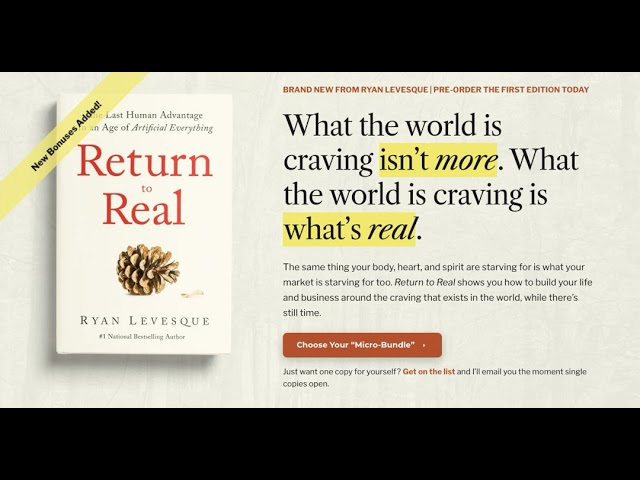
I have a lot of thoughts on this exact question. It's something I've reflected on quite a bit in the last year or so, especially. So about a year ago at this time, I made a decision. And it was a big decision at the time. So I built a pretty big team, pretty big organization, and there are aspects of my company that I started to hate. And I had this realization one day that I began hating my business. And in the process, I actually began hating myself. I began hating who I'd become and the choices that I'd made in some areas of my life. And so I decided on a whim to write an email to my email list, my audience. And I called it an embarrassing confession. And the embarrassing confession was, for a period of seven years, every single piece of communication that had my name attached to it, barring a few exceptions, was actually not written by me. It was written by one of my writers in an approximation of my voice. And that was something that bothered me increasingly over time. And what I realized is that there was a time when every piece of communication that had my name attached to it came from me. But what happens over time is you have a team of writers who are studying your voice, and it becomes a photocopy of a photocopy of a photocopy of a photocopy of a photocopy, and at some point, it becomes unrecognizable. These are words that I'd never say or write myself. And it bothered me. So I made this decision. I said, all right, this was in June of 2024, July of 2024. Going forward, any piece of communication that has my name attached to it is going to be personally written by me. And so ever since then, every week I have written a weekly email to my audience personally myself. It's called in a publication that I've titled the Digital Contrarian. And in this publication I share oftentimes what are maybe contrarian, unconventional, in some cases unpopular approaches to business that I believe are actually designed to help us be more successful. And after starting to write this publication, I've had more opportunity come my way in the last year than I think in the last 10 years. And it has been leaning into focusing on the unscalable. I have an idea that I've been sharing in my writing and I believe that the best things in life don't scale, truly. And oftentimes when I'm asked, you know, how do you make the time to write something every single week yourself? Or how do you take the time to respond to the emails and messages that come in in response to what it is that you write, which is something that I do well? I take great solace in that because I know that that's not something that my competition is willing to do. Because the question they are asking is, but does it scale? Or how does it scale? But what if it doesn't? What if it doesn't scale? What if we're not designed, biologically speaking, to exist in a scaled infrastructure? What if Dunbar's number is true? What if we're designed to have fewer relationships that are much deeper connections, as opposed to thinking about our audience in terms of clicks and opt ins, but actual human beings who are on the other side of that engagement. What if, what if that's what we're designed to do? And so I've been leaning into this a lot more. It's a movement that I described, the return to real. A shift away from the automated, the algorithmic and the artificial to the artisanal, to the authentic. And I believe that this is something that we can all lean into. It's all within our grasp. You don't need to have a big budget, big talent or big technology to be able to do this. You just have to have a willingness to lean in, to write from the heart, to not abdicate your communication to AI. And I believe in AI as a tool, but I do not believe in it as a tool that we abdicate our communication. What if you write from your heart? Because I believe that what your audience is looking for, what they want is. They want to feel like the communication they're receiving from you is coming from someone with a real beating heart. They want to taste the Sunday brunch version of orange juice freshly squeezed straight from you in a world that's saturated with a type of juice that comes from a can. And we can all be that. We can all lean into that. So I've leaned into that in a big way. I have a much smaller team than I had a few years ago. I have a lot less automation in my business. I do a lot more artisanal. I actually respond to messages by hand, something that I hadn't done in years. Now am I perfect? What's the trade off? It takes Ryan a little bit longer to respond. You're not going to get an instant response within five minutes. And sometimes I have to apologize and say, hey, I'm playing catch up. And I know you wrote to me a few weeks ago, and I'm catching up on responses here, but I believe that's the shift, if we think about the first, the shift that the Internet brought. It took us from belly to belly sales, having to communicate with someone in person to putting the world at our fingertips through technology and automation. But I believe the pendulum has swung in the opposite direction. We're tired of that. We don't want to exist in that way. We want to connect again. The novelty of that has worn off. We're tired of social media. We're tired of shallow connections. We want deep connections. That's what we're craving. That's what the world is craving. So if the world is craving that, as entrepreneurs, as creators, we have an opportunity to deliver that in our audience, in our niche, in our market. And I believe that is the opportunity of our era, and it's an opportunity accessible and available to every single one of us.
Yeah, I, I love that so much. And, and yeah, I mean, quite honestly, I was. I was super. I would say surprised, but, yeah, I was. I was kind of surprised that you, you, you responded. You know, and there's. And so often that you. You send a message to people and you just don't hear anything back. And I do feel there's so much power in that. I do feel that's what people are craving. And honestly, like, I feel like when people come to this place where they want to create something connected with the heart, that's the type of business they want to create for themselves. Like, that feeling of being in relationship is what we all crave. Whether, whatever side of the interaction. I feel that we're on. But I also feel, and I'd be curious, from a very practical tactical standpoint, I hear the objections of where do you draw the boundaries? Because you shared earlier. The most important thing for me right now is my two sons and my relationship with them. And so for anyone that's listening, that really resonates at the core with the words you're saying. But maybe back to the fear thing, they're like, yeah, but how do I not let this consume me? Or like, how do I make sure that I create the space and the boundaries and put my attention in the places that really matter? Like, I'm curious how you've managed to walk that, that path and how you relate to everything you were just sharing.
I think life is one long journey of making course corrections and recalibrations. Right? It's we're constantly a little bit over indexed in something. I'm doing a little bit too much of this in my life right now. I need to dial that back a little bit. Oh, I want a little bit more of this. I'm missing that. So I need to dial that up. And I think it's just a constant journey of making adjustments along the way to meet our needs. So like for me, for example, I believe that as entrepreneurs we should set constraints and rules non negotiables in our life that our business works around. So a question to be thinking about is what are the non negotiables for you? So for me it's. I don't want to miss a single lacrosse game or soccer game. I cook our. I'm the cook in the family, so I cook family dinner every night. We sit down, we hold hands and we are grateful for not only the opportunity to sit down at the table and have a meal together, but eating food that we raised and grew ourselves. That is deeply rewarding. But it comes at a massive trade off because that's not an instant meal, that's not Instacart. We don't live where there are Uber Eats or Instacart or anything like that. It's a time consuming piece. I spend hours a day preparing food. So what does it mean? Well, I've adjusted my life around that because those are my priorities. So for example, in my business, I don't take any meetings on Fridays. Fridays is my deep writing day where I write my weekly issue of the Digital Contrarian. That's my weekly publication. I don't take any meetings. Monday through Thursday before noon. My time and my meetings are between noon and 3 o'. Clock. That's my afternoon meeting time. That's my window. When I take times, I have a few exceptions like today for example. And the reason for that is I want to be done with my meetings when my boys come home. So I'm available to spend that time with them, that window. I also wake up really early. I'm often up between 4:30 and 5 in the morning because I got farm chores in the morning that I'm doing. I'm feeding the cattle. I just dropped the bale of hay for our cattle, fed the chickens. We're harvesting dandelions and dandelion gre. Our greens haven't come up great early greens. We just harvested some fiddleheads which are ostrich ferns that just as they come up unfurled that you can saute up. So we love that life, but it comes with trade offs. It means I'm saying no to a lot of opportunities. I say no to a lot of travel and speaking events that I'm invited to participate in because they take me away from home. I'm not scaling infinitely like I believe every business has an optimum size. This is not something that's often spoken about and taught. Being a farmer has taught me that, that on this site, this land that we're on right now, there is an optimum amount of food that we should be growing. We should not be trying to extract in a mining paradigm as much fertility as possible to maximize food production. We should be doing it in a sustainable way. And so that means leaving opportunity on the table. It means not saying yes to everything so you can squeeze every last drop of profit and revenue out of your business. It also means seeking awe and wonder in the ordinary and every day. You don't need an expensive consumptive lifestyle to have a tremendous amount of meaning and fulfillment in your life. Sometimes a sunrise or a sunset can be the best part of your day. And that's totally free. And it's liberating when we get ourselves out of I think FOMO culture and consumptive culture and opting out of the social media echo chambers that we find ourselves in saying like, oh, you should do this and you need to do that. Why? Who says make your own rules? So I believe as entrepreneurs we have the opportunity to build businesses that support what's most meaningful to us and it should not be the other way around. And you should have non negotiables that you're not willing to compromise on that are deeply tied to your personal values, rules that you set that who the hell cares what anybody else thinks? Who cares? Make these rules, live by these rules. And I think it's a recipe for a deeply fulfilling and meaningful life on the very short time we all have on this planet.
Thank you so very much for sharing. It's, like, so inspiring. And. And you translated, like, in every single thing that you said. What sacred business means to me. You know, it's not the business for the business. It's not the business separate from your life. It's actually, like, something that, you know while you're then. And when you, like, realize that, like, hey, I don't like the way I'm doing things, then. Then, you know, you change and then you adapt, and then is it serving my family? Is it serving myself? Is it serving my evolution? And then from that space, you built and you evolve and you. And you keep moving. So I really appreciate, like, all your wisdom and all your insights. I think everybody listening got a lot of it, too.
Yeah, yeah, it's.
It's. I was just gonna say it's been an honor and an absolute pleasure and real joy, and I'm really grateful for the invitation to share. And I think what we're doing and what you're doing is what the world needs more of like this. And so I think you're offering something really special, creating this environment and creating this platform to be able to have these conversations and to be able to present these ideas. And I'm just really grateful for the opportunity.
Thank you so much. Yeah, I could ask you a million more questions, but I know we need to wrap this up, but I did also just want to give an opportunity because I also saw people asking, like, you're here on Substack, so obviously, if anyone wants to learn more about you, this is a great place to start. But is your newsletter. How can people get. If they want to learn about your contrarian newsletter? What would you suggest for anyone who wants to get more connected to what you had to share?
If you follow me here on Substack, I publish the Digital Contrarian every week right here on Substack, and I actually have all the archived issues available, so you don't have to wait for this weekend's issue to be released next week. You can check out some of the past issues that may be relevant to you and some of these ideas that we've talked about. So anyways, that's probably the best way to follow.
Awesome. It's so funny because I didn't realize that I think that had crossed my radar at some point about the scoreApp thing. But you're still working in our business because that's what we're using now. We have an assessment that we offer for people that are coming into our world and it's on scoreApp. And and again, it's based on a lot of the same premises that we talked about earlier on with Ask Methods. So thank you again. Thank you for being here. We're very grateful. I'm grateful to you personally for your influence on my journey and just deeply appreciated. And for anyone watching who joined late, we always do a recap summary and share the recording of this interview. So we will be sharing that out in the next couple hours and I'll share that with you as well, Ryan, in case you find it useful to share with your people.
I would love to do that. That'd be amazing.
Cool. Awesome.
Thank you so much, Ryan.
Have a great rest of your day.
All right, take care.
Bye bye. Bye.