She Made It Through Medical School Drawing Cartoons. Now She's Building One of the Fastest-Growing
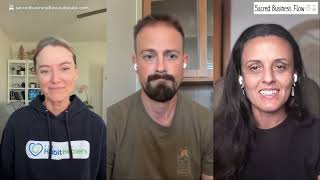
In this hour‑long Sacred Business Stories Substack Live interview, host Phil Powis (Speaker A) talks with Dr. Laurie Marvis, MD, MBA, founder of The Habit Healers. Laurie shares her journey from a childhood without health insurance to becoming a physician who survived medical school by drawing visual mnemonics, publishing six cartoon‑based study guides, and later pivoting to lifestyle medicine, tele‑medicine entrepreneurship, and creator work. She explains how the habit‑healing framework (the habit loop and the CAN habit test) grew out of her love for creativity, joy, and nervous‑system regulation. The conversation dives deep into practical creator strategies: daily publishing for “reps,” using multiple platforms (Substack, Facebook, YouTube) as a funnel, building a paid community, leveraging testimonials, and handling negative feedback with compassion. Laurie also discusses mindset—deserving success, taking action, and reframing setbacks—as essential for both personal habit change and business growth. The interview ends with concrete suggestions for newcomers to her Substack and a reminder that growth is a long‑term, experimental process.
Chapters
Well, if you're joining us, welcome to Sacred Business Stories. This is our weekly Substack Live where really we just have an honest conversation about what it looks like to build a business that aligns with your deepest truth. And yeah, today we are honored to be joined by Laurie Marvis. Did I, did I say that right?
Yeah.
Marvis. Laurie Marvis, MD, MBA, uh, double sports certified physician, and she is the founder of The Habit Healers, which is a best-selling Substack publication that's really exploring the intersection of behavior change, metabolic health, and healing habits. So yeah, welcome and thank you again for being here with us.
Well, thank you for having me. Like I said, it's going to be fun to kind of explore other things than, you know, dealing with just diabetes or something else. It'll be fun. I'm looking forward to it.
Yeah. Thank you so much for being here. And I always like to remind people why we created our live show, our Sacred Business Stories. And it's really for inspiration. So sometimes we want to create something, we think we need more, and then we see people out there and they have that, it seems that they got everything figured out and it's just not true. And you've had like a long way. And, um, we just like to show a little bit of like the behind the scenes. Um, we also invite people that we, we believe that have a sacred business and a sacred business for us is just a business that feels good. In the inside as well as in the outside. It's a business that brings all the combination of who you are, that you feel whole operating that business, and it supports your lifestyle. So thank you so much for being here. And I would love to hear a little bit of your story, like how you started. And, you know, I know it's probably like a lot and you just decide whatever feels good to you to share, but like how you came to be and create the Habit Healers the way you have it today?
Well, first of all, like I said before, I want to say thank you for having me. It's, it's a, it's fun. I love sharing stories. So I think just probably the best way to approach it is just understanding my interest in medicine. And really very, very quickly was when I was 10, I grew up in a family without health insurance. We were very struggling financially, so we didn't have health insurance and things. And my sister, who was 6 years younger than me, was very ill and she went on to have surgery. It took us a while to find someone who actually knew what was going on. And she went to have surgery when I was 10 and she was 4. And she had such a remarkable recovery when going from a sickly child to a really pain in the neck kind of sister. I was like, that is so cool. I want to be part of that. And so the healing aspect. So that's kind of where the Nidus began, but my folks didn't even finish Well, my stepdad didn't finish high school. My mom, you know, she had me when she was just barely 19. So I was the first to kind of say like, I wanna go to college and medical school. And so we learned how to work really hard. So I was not afraid to just keep trying. And I think those are lessons that you learn when you come from places where things aren't just handed to you. You just like, you just keep working and eventually something works and you just, you don't take it like as a victimhood. Like that never was part of my brain. Like it was just like, you just keep going until something works, right? Or you just, you're not, you can't be afraid to just keep going, right? So if someone said you can't be a doctor, and I had plenty of those, I'm like, why? I don't understand that. That language doesn't compute. Move on. And so I think if you have it like that, that understand when people say those things to you, that you just let them go. It's more on them, nothing to do with you. And luckily I had a few people in my life who were very supportive of my dreams and Um, when I got to college, I met my husband. So we got married early. We had 3 kids very quickly. Um, and so I actually started medical school when they were 5, 3, and 10 months old. And during that time, I'd always enjoyed creative writing. I, I did creative writing in high school. I love to draw. So I always had that creative element and that was kind of my, um, way of decreasing stress and just, you know, chilling time. So when I got to medical school, I was a lot of information. I had a grandmother who lived with me and my husband who was I was driving 100 miles one way to work every day. And I was meant to— so this is the late '90s, so I had to absorb large amounts of information with 3 little kids and all of their things that were going on. I was like, how am I going to do this? I'm going to fail out my first semester. And so I started drawing cartoons. And that's kind of how I started really breaking down a lot of information that was maybe complicated into easy ways to remember it because I was not going to be able to sit for 8, 10 hours and just rote memory. So I had to break down the systems and draw it. And so what was happening was some of my friends got hold of it and then they started doing it and I started making all of that for them. So I learned how to share that. So I broke it down, I explained it. So I was having to do all the things that memory works and I was also having a lot of fun and it was creative. And we ended up publishing 6 books in medical school called Visual Mnemonics. So that was honestly, I made my way through medical school drawing cartoons. So Take it for what it's worth, you know, there's that. But that breakdown and explaining, that actually carried through with patients, right? So I was known, well known to make eBooks for patients and, you know, share these things with them because it was just easier 'cause people would leave with questions. I could make it, you know, what I wanna say and explain it in a way that I knew my patients would understand and appreciate. And that's literally how it started. With that creative element, working and writing. And then I started looking for opportunities many years ago, writing online. I wrote for Livestrong, I wrote for our paper. I started a podcast almost, well, 10 years ago. Yeah, I wrote articles for all sorts of things. So that element was already there and it was refined over decades. And so when it came to Substack, I'd wanted to start one for a bit, But last year, January of 2025, I finally said, you know, I'm just gonna— why not? And so that's how it started. It started as The Healing Mindset. I really wanted to speak to the philosophy of healing and helping people understand healing is a decision, right? It's a decision on what you do every day, how you accept the reality of the situation and not feel bogged down by your current circumstances. And there's always a way forward that's a more positive path. And so That's kind of where it started and then quickly pivoted because I've always enjoyed habits. I interviewed James Clear, who wrote Atomic Habits, like 7, 8 years ago. I mean, the pioneers in this space, I'm already was making my way. If I like you, I will, you know, I might slightly stalk you. It's a friendly stalking till I can talk to you and learn. It's never meant to be harmful. But, uh, no, it's a lot of fun, but just really having conversations with people and learning from patients and what works for them. And then it's just kind of pivoted and grown from there. And so then it, I decided, you know, we're healing habits here. So it just came to me on a walk, which a lot of things come to me on walks, the Habit Healers. And it's meant to be the, the circle here is like the habit loop. And then the heart means for the healing. So I sat down one day, I was like, I need a something to represent what that is. And that really what it is, it's the healing of our habits, which really leads to healing of so many things in our lives. So that's it in a nutshell, very quickly.
Oh, that's fascinating. And I love how much you were able to, well, bring elements that brought you fun, right? Like drawing cartoons that it might not be like related at all to that theme, but you were able to combine it all. And a lot of your writing and also the way, um, I see your shares, like you talk about joy, right? And it's, uh, and I see like joy and connecting. I call like, you know, the business from your heart or something that you love doing or like your calling. And I truly believe that the physical body heals when you connect with this. Can you share more a little bit about your understanding behind like joy and healing?
Yeah, absolutely. I, it's funny because my husband and I, we've been married Oh gosh, 33 years now. And so we have these conversations, right? He's like, well, are you still enjoying what you're doing? Right? And so I think when I can sit down and go into a flow state very easily, or I'm really appealing to my curiosity, that for me brings me joy, right? And happiness. And so it's really created from within and how you are and wherever your situation is, just understanding you can have joy in any circumstance. So granted, you know, when I was on call, I didn't really enjoy the fact that I was exhausted, but I enjoyed the fact that I could help people, right? That brought me joy and happiness was the helping of others. And so when I see conversations within the comments, you know, people are having success with what I've written in it and I put it in a way that they truly understand, that is my true joy. It's really, it's the doctoring through words in a sense. But it's more than that because you're touching lives that I can't see 50,000 people in a day, but I can send out a post or an article and potentially reach someone or they share it with someone. I have no idea those ripple effects. I have some really cool stories of ripple effects of things people have learned and they've taught others and they come back and it's like, "Hey, this is what's happened." I was like, what greater joy is that than bringing comfort and healing to someone's life that you don't even know? And then they share it with others. I mean, that's really what I feel that I'm put here on earth to do is to be an example to the best of my ability and always refining and improving. Trust me, there's plenty to improve in a way that is not offensive to anyone, but at the same time, push people to like, you can be better, but there's ways to do it where you don't feel defeated at the beginning, right? So sometimes people feel The reason I really focus in on that tiny piece is because I see this regularly in clinic, right? Or my own practice is where people struggle because they want to like, I want to run a marathon. I'm like, well, first let's get off the couch. So, you know, and in a way to understand it, it's not a failure just to be able to walk around the block once. That's the win. And that's the first step into— and we all understand that. But until you actually practice it, I don't think people truly appreciate that is the easy road to get to your bigger goal. And, um, it's actually enjoyable because you get to celebrate every tiny win. What fun is— what's more fun is that? Um, so yeah, that, that for me is the joy is just seeing people succeed. Very nice.
That's beautiful. Um, so one thing I would love to ask you about, and it was, it was very cool. I don't think I realized that you had this, uh, 10-year history of, of kind of writing and, and, um, and podcasting and things like this. And I think this is, very helpful for people to hear because, uh, you're absolutely— from my perspective, you're absolutely crushing it here on Substack, but you've developed this kind of identity as a creator, it seems, over quite some substantial amount of time. And so I'm, I'm curious if you're able to kind of step back. Um, and this is something we talk a lot about, is this idea of identity. Um, you know, how was that for you, like that transition from maybe kind of doing things more traditionally as a, as a physician, and then making the decision that you wanted to kind of move into this new space. I'm just curious how you relate to that if you're able to go back a little bit.
Yeah, so I think it started— so I was active duty Air Force when I first went out of medical school. And so, and my husband had been active duty prior to mine as well. So we had some really interesting experiences in a setting where I didn't have control. And my husband will say, I like to control things because I can make sure they're done the way I want them to turn out. Out, right? And I understand that can be a problem as well. I learned some valuable lessons in the military that about, you know, as far as when you are putting yourself in a position just to do a job and not, and it's soul-crushing, you need to pivot, right? And so I know a lot of physicians who stayed in the military because it was a safe road. And you have to have the ability in your mind to understand, yes, it's scary not knowing where you're going to be. It's like my husband is very security-driven. Like he's, he's, he's military. He's worked for the federal government. He's an engineer. He's very plan-oriented. And he's like, then he married me. He's like, I don't know what I done. I'm so sorry. Um, but he, you know, it turned things upside down more than a few times for us. And so that, that number one is that you can't be fearful of trying something new and unknown because something is pulling you you need to, there's a reason, right? So I'm like, why am I being pulled this? Why do I keep getting opportunities or reading about this or my interests keep going? And I just follow that. So just following where I feel like the universe, God is pulling you, that is really where you'll find, for me, the true happiness is because I'm following my purpose. So that is step one. But two, I'm going back to the creator piece of it and entrepreneurially, Um, when I went into— we moved to Colorado and I was just practicing regular family medicine. Um, I came across lifestyle medicine, and lifestyle medicine is building of pillars of health. And I also found a whole food plant-based diet. So I've been plant-based for 14 years now, and I saw such a dramatic shift in people's health just by focusing on nutrition alone, not even addressing everything else. And then you start adding in all the other layers of the pillars of lifestyle medicine, which is exercise and sleep and stress management and community building, things like that. That is, that is really, I think, the crux of the educator piece and understanding. I started my own business. We launched a telemedicine company in March of 2020, right as COVID was hitting, and it did very well. We sold it 2 years later, um, and I went on and did build another business and also different things. Again, not being afraid to just do it. We've lived in 11 different states, but each iteration was the learning process. So one was, you have to have the confidence and the ability to know that it'll all work out. Even if things don't turn out the way you think they should have, what is the silver lining here? And what is the lesson to learn so you can build upon it? And that's really important because otherwise, you're just going to get really beat up by life's failures. I consider them data and learning opportunities. And when you bounce from those, right? So you're like, okay, here's what I'm learning. That means I can bounce even higher next time because I don't have to learn this lesson again. Now, because there's been a few times I've had to learn a lesson a few times over, then I was like, oh, that's what they're trying to tell me. Okay. So you just walk with humility and it's like, this is the way life's going to be. But as far as the building piece, I really, as you know, 10 years ago when I started the podcast, I really wanted to help educate people. Honestly, it started with the whole food plant-based diet and understanding that you could really eat your way to health. And granted, there's more to it than that, but just, I was slightly frustrated with our traditional medicine. You go to American Academy of Family Medicine conferences every year, it's just the same, oh, you see medication vendors. Not that there's nothing wrong with medications, they have their place, But when you go to a lifestyle medicine conference and you're surrounded by people who really hold that as the foundation of health is what is your daily habits? What are you doing every day? It's a different vibe. My husband goes, it's, he goes, Lori, you're basically going back to the mothership, recharging and then coming back. Cause I get, I come back so motivated and excited to share, share this with patients and see what else I could do. And I was always trying like, well, how can I reach more people? I was trying to do YouTube, gosh, my kids were still in middle school and they're like, my mom is so weird, you know? So now they're like in their early 30s, like, what is she? She's on social media more than us. But I was always looking for ways to really not just see patients one-on-one. Don't get me wrong, I love my patients, but I know I could do more and I was really called to do that. And I just layered on every opportunity. So if there was an opportunity, I took it. I walked away from traditional medicine probably a decade ago now and embraced telemedicine and just really just understood I could reach people across the country. So I'm licensed in all 50 states and DC, which is a task in upon itself. But what that allowed me to do was reach people who were really wanting to be helped, not just in one locale, because if you live in one city, there's only So many patients that maybe want to pursue, you know, a whole food plant-based diet or lifestyle. And I learned a lot from that process, building a business. And I, you know, I have an MBA, so I love the business aspect of it. I understood the data. The one piece that I think you have to learn is that when you put yourself out in public like this, there will be the negative naysayers and the hateful comments. And when you first do this, you're like, don't they understand from my heart I'm I'm just trying to help. Why would someone say these things? And it's really fascinating. Now it's just like, eh, but in the beginning, you kind of get your feelings hurt a little bit. And so now you just get a really thick skin. And I look upon them with compassion, go, man, you must have had a really bad day to have the energy to write back to a stranger who is just trying to help. And you can unsubscribe, move on. You're not my people. And that's okay. But I usually try to love them back, right, if I can. If I feel it won't cause things to get worse, I'll write back a comment that, you know, will hopefully say, "Hey, I hear you. I feel there's pain coming from you, and I hope you have a good day." It's just meant to be helpful. And many times people will back down. You just hit an emotional spark. So if anything, that tells you that you're doing something right. You're writing something that's going to be challenging for someone, and you're making them maybe open up their mind and and the perspective, and it's just amazing. But that piece was, I think, the hardest. And then looking at, like, when you look at data on Substack, I think these little— when you always— I'm always trying to grow, and I'm like, I'm never quite satisfied with our growth. And we've done amazing growth, like holy mackerel. It's when I go back, it's like, good job, boy, but we could do better. So, you know, you can't be afraid to look at what's not working and pivot. So I changed my name from The Healing Mindset to The Habit Healers. I've done series across a month, and That went flat, you know? So like, okay, we're not doing that anymore. Or, you know, I tried to convey something that I thought was interesting and it went, meh. And I was like, man, you guys don't find this interesting? Come on. It's like, I really tried here. Because then you're always looking also, like, if I'm, if I'm like, I'm just finished the book by David Sinclair called Lifespan. And now I'm like, aging is a disease. This is a very interesting concept. How can I pull that out? So you start digging the research. So I'm just allowing my natural curiosity to pull me in different directions. But as far as the creator element, right, you just, you learn, you pivot. What else are you interested in? Where are the opportunities? Substack's a fantastic opportunity. YouTube has its element. We're just figuring out Facebook. We've grown our Facebook following 50,000 in the last 2 months. And I think that is one thing people are missing out because Substack actually has a very limited population, right? So we have what, 35, 40 million users on Substack, but Facebook has like 2.8 billion. So if you can figure out how to have a presence and funnel them, the concept of funneling, you know, Russell Brunson's concepts and those things are very, very helpful. So we're funneling our patients, funneling subscribers from Facebook and bringing them into an ecosystem where you can cultivate, you know, loyal readers and help these folks. And that's actually been phenomenal. Um, so you can't be just afraid to expand and Try things. And if it doesn't work, no big deal. You learned and you move on. I just literally just love tinkering. This is the thing, tinker, tinker, tinker, but give it a long enough time to see, right? Give it a month or 2 months to really appreciate, is it going to take off? And you will see lags, right? You'll see it come and it'll be a plateau maybe for a week, 2 weeks, 3 weeks, or even a down, whatever. You're like, oops. Learn that lesson and up, you know, sometimes you'll put a post and you'll get people unsubscribes like, this is not what I wanted. I'm like, oh, okay. Lesson learned. Um, but don't take it personally. Just, it's just data. It's all good. You're still going to help people. So, yeah.
Yeah, I think you touched, like, there was a, like, a lot of wisdom in everything that you shared and the way I was relating, like, for me and, and I, I, I love like nervous system regulation and understanding like the body. And one of your things is like your body was designed to heal if you have in, you are in the right environment. And I relate like healing with creativity a lot. So like for you to be creative, you need to be in that parasympathetic state, right? Like there is a, a way of being that, and people talk about that all the time. I'm like, I'm stuck in survival mode and we're constantly like reacting. And I think that the way you described your path, I'm like, there is this pulling and then I'm curious and I'm going towards this comes the foundation from a well-regulated nervous system. So, you know, even though like, yeah, like you can heal your body and this is very important and you need to create all the circumstances and all the habits, but I feel, um, and a lot of people that read us and people that we have conversations, it's really hard to Follow the pull and my understanding and my experience with, uh, clients and, you know, working with, uh, the things that I worked for over the last couple of years, like it's because you are in stuck in survival ship and the pull that your ability to follow that comes from you being regulated. So I would love to hear your perspective because it feels that it's like easy, but I know how much people struggle. With that. And I think that like the tiny habits, moving your body, um, you know, like drinking water and like a lot of little things, this is actually contributing not only for your physical body, but for you to step fully into your, um, creator self. So I'd love to hear from you. You just said it all like in a very beautiful way, but I'm just, you know, in that context because it's fascinating to me.
Yeah, no, I think that's a really cool way to look at it was a regulated nervous system. So I, I will say if we step back into, not that I wanna, um, go too deep into it, but I came from a home that was not ideal. I'll just set that aside. And deciding very early on, I, I was very fortunate to have two very good friends that had very solid family and their parents took interest in me. And my grandmother took interest in me. And so that being said, I had adults in my life when my primary family was not able or capable to provide that. So I had some stability early on. And I think you will find that people who come out from challenging childhood trauma experiences, that they usually had somewhere in their early childhood or somewhere that an adult stepped in and took interest and said, "Provide, there's another way." And so I was very, very fortunate to have to have that happen. And so as I had people speaking on both sides to me, negative and positive, what I understood was, and I had some amazing teachers as well, which were such, I mean, just life-changing human beings. God bless teachers. They, we, teachers are most amazing people. But I was very, very fortunate that when I had a question or said, can I do this? Like, absolutely. Or my grandmother who was, such a pivotal part of my life said, "You know, Laurie, if you want to be a doctor, you absolutely can. You want to go to college, we'll figure it out," right? So that allowed me to understand there were possibilities that were beyond my experience of the people with me and around me. And so with that came also understanding that even during challenging times, how I perceived them and chose to look at them really decided my my experience. And so that's how I look at habits and building habits, right, is really, this is how can you do this walking to the least amount of resistance in a calm state? Because you're not going to be open to the possibilities if you're worrying about something in the future or you're just stuck in the past, right? You just have to let that stuff go, right? And this can be very challenging to people because they hold on to a victimhood as an identity, right? And so sometimes I will find patients who are struggling with the loops that are just so defeating for them. When I challenge them to say, like, we need to— or they keep harping on, well, when I was a kid, or this and that. I'm like, I appreciate and I honor your past, but you cannot let that continue to dictate your future. And when we choose to do that, that's where we continue to struggle. And so it's an acceptance, it's a radical acceptance, and it's very hard for some people. But the sooner that you do that, that's like peace just falls through you and then you're open and then you start seeing some crazy things happening in your life. You're like, wow, there's this opportunity. Then it's almost too many opportunities, right? Because then you got to decide which— which way do I go? And I feel like that's the pooling and that regulated system is just being present and mindful and taking the deep breath when something does— being aware and you start feeling it in your body. Like the stress and stuff, like, well, that's interesting. What's going on here? What story am I telling myself? Where am I challenging myself in this present moment that I can't just accept it, right? It doesn't mean you don't have emotions, but you can't let them run away with you, right? You can jump in the river, you can step out of the river of emotion and go, there it goes. This is really very interesting. That is that regulation. That's where I think is just stepping back and having learned over time that uncomfortable situations will pass just like good times, right? I have a ring here. Actually, I didn't wear it because I do my resistance training, but it's one with life and this too shall pass. Because when you think of life that way, the good times will pass, the bad times will pass. It's all going to pass. You just enjoy it while you can, the good times and the bad times. I just— and it's relative. What do you consider bad in perspective? It's just understanding that there's a lesson here that's going to refine me to make me a better human. And while I'm here on Earth, I just need to take it all in. And trust me, it doesn't mean that I haven't had extremely challenging circumstances, and as we all have, it's just that I've chosen to not let them dictate my future. And that is, that is giving yourself power. And some people don't feel they deserve the power or they have the capacity of power. And that's the cool thing about the tiny habits is people start building confidence. And when you start saying, someone who's like, I've never exercised before, and they start with just 2 pushups on the counter, and in 2 months, this is a real patient, was doing 60 pushups on a counter. I challenge anyone to go do 60 pushups in one setting and don't find that challenging. And she's showing me, you know, her biceps are like bulging. I was like, you go, girl. They, they're called guns in our house cuz 2 of my kids are boys and we're just like, Yeah, look at you, that confidence building, right? And so if you've never had that, to be able to interject that, and I think that's part of the joy, kind of going back to our previous conversation, is the joy of sparking possibility in people is beyond the coolest feeling you can ever have. It's just like when you have a kid, right? And you see your kid do something and they master a new skill, you're like, wow, or they were challenged and they overcame it. Um, that, that is the true joy. And that, that, that honestly is how I, I see it. Um, as far as regulating my nervous system, I'm just like, it's accepting. And the moment you accept, everything calms down.
Yeah, I love it. Yeah. And it's, it's just meeting the present, right? And the way you said it, like just letting go of the past and not being attached to like how it's going to be or if it's going to be the result that I have in my mind. And then you just meet every moment, every moment, every moment, and you find flow.
Yeah, absolutely. And it'll always turn out. I mean, it does help that I believe in a greater power than, or I'm a part of a greater power of a, of a greater, someone who has the wisdom beyond my little brain can even begin to comprehend. And I'm all cool with that. Like, that's awesome. So I'm just going to lay out my life and follow where it goes. And the fact, the more I do that, the easier and better it gets. And it's always honestly more than I've ever dreamt. Like, I'm so grateful for my family that, um, and my friends and my opportunities that, um, and people. It's funny, I had someone tell me one time, this was years ago, they're like, oh, you doctors, you have silver spoons in your mouth. She's like, really, you think that? And I was like, do you have any idea the road and the mountains that that we climbed to get here. And it really kind of tickles me. And it's so unfortunate that they have this thought in their mind instead of going, hey, what can I learn to get to where you are, right? How can I learn, right? Like, if you see someone who's where you want to be, speak to them, ask them, or if you can't have access to them, look at what they're doing. What is their attitude? What are they doing on a regular basis? And That is the difference between being stuck somewhere you don't want to be and moving in the direction that you want to be. And don't be afraid to have success. People, sometimes they just, they don't know it, but they believe they don't deserve it and that will keep it away. So the moment you change that belief pattern, you will see success come your way. That's just the way it is. So.
I love all of that. Um, one thing I would love to ask you about, I see things very similar to you around when you, you you said something to the effect of like when you help people connect with their possibility, that's just like, I really agree. That's so cool. And, you know, we have really beautiful, big-hearted people in our community, but one of the things that they struggle with often is this making online connection. And so they'll say things like, oh, I want to serve, I want to help people, but then they kind of compartmentalize, like here's life and then here's social media. And And to me, it's all, I don't know, it's all kind of one thing, but I'm just curious how, you know, how, what your approach is to connection and, you know, someone who finds them in that space where they know they have something really beautiful to give and they want to be of service, how can they kind of move through that discomfort or the way that they might relate to being on platforms? Even so, you know, people will say Substack's not social media. I consider it a form of social media and it's social media. Yeah. So like, um, so I feel like sometimes that was one way that was like the little trick people would be like, okay, well I'm on Substack, I'm not on social media, but if, but then you label it social media, all of a sudden it's like, boo, it's, it's, you know, so anyway, I'm just curious how you relate to all that and how you might encourage someone to kind of move through that resistance.
Yeah, it's interesting. So the, I guess it helps that I'm an extrovert by nature. Right. And I love Human beings, oh my goodness, they're just so fascinating. Like, mine's like, you've never met a stranger. Like, nope. And he is not, although he, he has his social circles and his dynamics. Um, honestly, it's just, you can't have fear and you're just going to have to take a breath and put the first thing out. It'll be okay regardless of how it's received or if it's just like, you know, you just hear nothing. It's just the birds chirping. Um, That's okay too. But you just have to get used to it. And it's just like anything, it's repetition, repetition, repetition. And you learn along the way. So it's a skill set. You're not going to have it perfectly the first time. And because I've been online for so long and people, you know, you look at my YouTube page, I have over 2,000 videos. And these were not, some of these were longer form. Some are me just doing live by myself and I'm answering questions or I'm just sharing sharing a story. Um, sometimes it's interviews with other people like here. You just have to be very comfortable with what your approach is. Now, some people don't want to put their mug on face. Like, I know I've been told I look like a boy. Some people didn't like my voice. I'm like, eh, I'm not your flavor. It's cool. Move on down the street. And so it's okay if you don't want to put your face up. Build something that you enjoy and love and don't, don't Hmm. Don't be afraid to take that first tiny step. So I feel like this is almost like a habit. Like you just make it small, put out your first note, and you're right. And then you put out maybe your first mini course or you put out your first, uh, Substack article. Um, and just know that you have to practice. You have to put in the reps. We didn't walk, come out of the womb running. You know, this is the same thing. You're birthing yourself into a new job. It's, um, it's, I mean, it really depends on how you want to perceive it. Some people think they're, they are owed, um, an audience just because they're pouring out their heart into something. And so it really depends on how you look at this. What is your perspective when you walk into social media and what is your, what is your goal, right? So for me, it's a business, right? It's part of my business that I love and enjoy, but it's still a business and you have to treat it as such. Now there's also hobby. So people feel like like the hobby is a business, but it's not, right? They don't come in with it in the same attitude that, you know, business has its ups and downs. You have to make tough decisions. You have to make choices of where you want to pivot or not. A hobby is just something that you enjoy doing. And some people feel like, oh, I should just be able to turn on paid conversion and people who just pay me for just sharing my life story. That's not how it works. But if you want share, go ahead. So first of all, like, what is this? Is it a business or is this a hobby for you? But if it's just a hobby, that's okay. There's nothing wrong with that. But if you want to make a business, you have to walk in with a different attitude and you have to be definitely put fear aside, right? Fear is just a hindrance. It's just something you're just going to have to jump over. And yes, it takes a little courage, but guess what? You'll still feel like some days, you know, when, um, I put out something and I'm not quite sure how to go. Like today I posted, I've found that doing too many notes, my audience doesn't like, right? They're like, you're just too much in my feed. Cause I was like 5 or 7 times a day, share, reshare. But now it's, I've brought it down one well-curated note and I'm trying to be, use my humor cause like, I don't know, I'm kind of a deadpan humor type thing. This is the way I am. And it was funny because someone's like, I do not relate to this at all. It's too negative and unnecessary jabs. And I'm like, I'm sorry you feel that way. It's just observations about life. And I'm glad it means that you have not experienced these things the rest of us are. God bless you. You are who I'd like to be. And I didn't say that, but sometimes I want to. But you know, you're doing everything you can. But when those people say those things, you just have to let that go. That is not you. That is their own situation. But it's just tiny steps. Take the first step. Afraid of whatever happens. And but you do have to decide, is this a business or is this a hobby? Because that will dictate how you approach it and how you need to be thinking about growth and how you turn the knobs and levers. Because it, it is— I'm working on this every single day of the week, and people are like, oh, you, you know, this online business stuff, it's so easy. No, it is a lot of work. I don't— people understand, there are articles that I've written in the past that had 40 different 100, you know, references. This is a month's worth of reading and trying to figure out how to bring it out and summarize it. I've shortened those now. I've taken a different approach because I can't keep up. But, um, you, you have to understand it's a lot of hard work, but if you love it, the work is, is actually not that much. You just have to be careful not to do too much and you, you isolate yourself from the people you love and doing the things that you need to be doing to take care of yourself. Because I, I can very easily go in that direction, as my husband will attest every day. It's a continual conversation. He's like, "Klori, you don't even know or understand the art of the hangout." That's what he calls it. And I was like, "Ah." He'd almost feel guilty when I'm not productive. So that is something that I need to work on on a continual basis because I'm just— I'm like, that's just the way I am. I've just always been a workaholic, work over, but you got to learn to pull back when you can. But oh man, there's so many things you could talk about. About the subjects. I hope that answers what you're thinking.
It does. And I think like, yeah, it's kind of to some of the point you had there. There's this mythology around online business that is just really so harmful. And you know, I love that you mentioned the 2,000 videos because, oh my, yeah, like people don't see that. And I think that's one of the things I see quite often is first you just got to get yourself in the game, which you kind of spoke to, and then two, you've got to you gotta give it the time. If you have to give it the reps and, you know, we're fortunate at this. I mean, I've been in, you know, this is like you, this is not the first thing that I've done online and we are now in a privileged position that we're grateful for where we do have enough people coming to us that this is fully sustainable. But, you know, it's, we have people that, you know, to this idea of like needing to get response back, we have clients that become our clients that that we, you know, they've been on our list 90 days, 6 months, sometimes a year. We've never heard from them. They've never commented on anything. And all of a sudden they show up on a call and they say, hey, that thing you wrote 6 months ago changed so much for us and now we're ready to move forward and I would love your support. And awesome. And I mentioned this because, you know, if you're just kind of starting out, I feel people don't, they don't see that, you know, and they don't, they don't give it that time to recognize it. Might need to be 90 days, 6 months of reps. And, you know, there's ways to work with that depending on your circumstances. But yeah, I just love that you kind of illustrated that. And that was something like one of my— in the habit space, one of my friends, actually one of my mentors, I don't know if you're familiar with Leo from Zen Habits, he was like an early blogger. That was like some of his early advice to me many, many years ago. He was like when he was just getting started blogging, He was just like talking about reaching out to other creators to kind of do collaborations. And he'd be like, don't just send one response. Like, he's like, I would sit there in front of my computer and I would send 100 in one day. And you know, a lot of people that'll come to us and they'll be like, oh, well I sent something to 3 or 5 people and I didn't hear anything back. I'm like, go send 100, you know, see, see what happens, you know?
And, and so, yeah, exactly.
So really, really good stuff.
It is reps. It is 100% reps. And, uh, and you can't be afraid of the 99 nos. And the cool thing is, like, for example, the first 6 months or so I was on Substack, I published something every single day because what that allowed me to do is have more reps, right? So if you think about it, if you publish something every day for 6 months, you know, so 6 times 30 is 180 versus doing that once a week, that'll take you 3 years. So you gotta decide what you're willing and able to do. Now, it doesn't have to be perfect, but you're learning, right? So I also didn't know what kind of audience I would be pulling here on Substack. I had an idea, um, probably similar to my patients, and it has turned out to be such, um, which makes it easy for me cuz I've been listening to these people's problems for 20+ years now. And I know them backwards, forwards, up and side and down. So that makes it very easy for me to understand and know my reader. Um, but they also surprise me sometimes, you know, things that they find interesting. And I was like, okay. Okay, let's see where that goes. But yeah, you just, you gotta figure out a way to repeat as many reps as possible and you cannot, you cannot have some emotional, like if you create something and all your heart and soul into it, you cannot be, get your feelings hurt if it doesn't go over. Because the moment you do, it'll blow you out of the water. And I do, you'll learn that lesson. I learned it a few times. I was like, Lori, it's just a thing. Let it go. You're on this little tiny rock in the middle of the universe. It's really no big deal. And so you just when you put the perspective in your mind and just like go outside, look at the sky and realize how insignificant this is right now. And that is always a really good perspective shifter for me. But yeah, you just have to keep going and trying and you never know the opportunities. I've been reached out by literary agents. I've been reached out by publishing editors already. So we're working on, you know, all sorts of different projects, speaking engagements. I'm flying to Florida in a week or not this week, in a few days actually. Well, actually tomorrow, it's Thursday. Oh, wow. To go speak from a reader who invited me. She was the past president of the American or the Women's W in the NBA. They put on a women's event every year called Generation W. So I'll be speaking at that. How fun is that? So yeah, there's just all sorts of opportunities and you cannot be afraid to take those steps because the life you want. And number 2, you have to believe that you deserve it. You have to believe you deserve it. And it doesn't mean that you're some narcissist or stuck up, or it just means that you're a human being on Earth that's here doing your best and you want to help people. And those opportunities will come and you do deserve happiness. You deserve success just like anybody else. And the moment you do that, I just find you just shift, right? And you start seeing opportunities and you enjoy it and love it, but you don't hold on to it either. Because like I said, it'll come and it'll go. It'll all be fine. It'll, you wake up tomorrow. If you don't, you're going to be in a better place anyway. So it is. So, yeah.
And I think it's this mindset actually that like, I deserve to be happy and I deserve to have like an awesome life that helps you to let go the comments that you don't like, that helps you to let like, at the same time that like, this is, I'm just a tiny being here in this huge universe. I also am everything in my own universe and I need to create it on my way, like, right. And if you do If you don't have that, and if you don't have the sense of like, I deserve, or that's why I came here, it's like my birthright to be happy and joyful and enjoying life, uh, then all of those things that comes from the outside will actually prove that you do not deserve. And then you just like get off track and you don't keep going.
But the deserve is also, you have to, there has to be action, right? So some of the folks that it was just like, I just deserve it. I'm going to just imagine it. It's like, you can imagine it all you want, but there's going to be some action. Now, sometimes you might go buy a lottery ticket and win something. That's fantastic. But you do have to take action. And I think the other thing that's really helpful is looking at when you have an intention and you're walking in that action and seeing where you go, be very mindful of your intention because your intention will kind of dictate your experience and your outcome. And so if you're walking into— it's like when I write an article, it's, you know, out of, oh, this would be the perfect one for, you know, conversions and whatever. I find those fall flat. But what I do find is if I'm writing to like I'm like, this is my reader, this is their problem, this is what they're going to want to know so that I can help them and how I can communicate it in an interesting and entertaining way. This is the part, the entertaining, because medical stuff can get so boring. And so I'm like always looking at different ways to make it interesting to the best of my limited ability. And when you do that, that are, those are the ones that convert. Those are the ones that people share. Those are the ones that people restack because you're walking in with a different intention and you're going to get a different outcome. So remember that energy is going to follow through with your words and what you put out. And so that is also very, very helpful when you're creating this type of thing, for sure, at least in my experience.
Beautiful. And yeah, I mean, you've given tons of gems really for anyone that's paying attention. But, you know, we'd love to, you know, as someone who is is or has been experiencing real growth here on Substack. You know, there's kind of, you know, there's this, the standard advice that everyone's kind of giving and it gets a little bit repetitive sometimes. There's nothing, you know, I really, there's people in that space that I really appreciate. There's nothing wrong with that, but I'm just curious, your, uh, I, I also consider myself a tinkerer and I'm sure you're always trying new things. So what has been like one of the most unexpected things maybe that's, you know, kind of a practical tactical thing that maybe you're not seeing a lot of people talk about, or, you know, that, that might be fun for someone to try if they're, if they're trying to get some growth going on.
I think if you're really looking to turn on growth and it depends on what growth you're, you're speaking to. So there's growth from free subscribers. So like, I consider it like a funnel, right? So you have your top of funnel, your middle funnel, your— so is it income growth? Is it subscriber growth? What do you want to do with those subscribers? Is it just influence? So really, number one, you have to be aware of what growth you're focusing on because those will have different levers and they're not all the same, right? So free subscriber growth is not the same as a paid conversion growth or in retention, right? So this is very different. So, but I do understand if someone is just getting started, they're probably just wanting to build their Substack list. And the thing is, it's what we'd call a qualified lead. And so where are the people that you want Where are they hanging out, right? So some people think, oh, if I write a note and it's one of those kind of cutesy ones and it gets shared, you know, 1,000 times, but you're going to be pulling in people that don't care about your writing. You want to be writing to the individual that you want to attract, right? So it's fascinating. And if you find that you're attracting people, readers that you're not interested in, like if they're asking questions, you're like, I don't want to answer these questions. This isn't what I want to do. What are you putting out? Because that's what you're attracting. So I think if you really pay attention to what is the business that you want to lead and grow or hobby or whatever, who you want to attract. And then the second thing was don't be afraid to step outside of Substack to push people towards Substack. And so we've taken the approach. So two of my boys work for me. Um, my daughter's a physician. I'm working on getting her to come over to the lifestyle medicine side and do things, but my boys are marketing and media management. So I'm very fortunate to have their young brains that are much more malleable and understand all this stuff than I do. But the piece is that we want to be seen everywhere, right? And so some people like, oh, just focus on the one. I was like, actually, I think with all the noise and everything, you kind of want to see what really works for you. So what we found is Facebook is growing. And Facebook has an incentive for people to creators because they want to get rid of the AI junk and all that stuff. They want to have new creative opportunities. So think about Facebook and then how can you move them over to Substack? And so, because then you get their email, that is, that could be a really interesting funnel because there's so many people on Facebook. I walked away from Facebook a long time ago and just kind of like ignored it. But when I started talking to other influencers who have been successful, not necessarily in Substack space, but in other on Instagram and different things, I was like, huh, okay. So We've seen our daily free subscribers double in the last 2 months. And so the way we've done that is we took a Facebook page that I had. It was kind of dead on arrival though. It had maybe 9,000 followers, but it had been like that for like 10 years. And like I said, we're just about to tip over 50,000 and we didn't start really paying attention until January 29th. That's when we started really honing in, learning how, what's working and Um, now what we've done is we funneling people to Substack with like a free little 7-day mini course and we add them to our Substack list. Um, I also have a community, a paid school community where people can come and join and I meet with them live every single week. Um, so that's kind of the next layer. So we have the free, we have Substack, and then we have the, the community where I can really get to meet people and work with them and learn from them. And so that would be stepping outside of that and then using your readers for inspiration and testimonials, right? So grabbing those folks and asking them, say, send them a little Google Document survey in your chat, like, hey, what, have any of you had success? And some of those I turn into articles. So this is the other piece here is that when you write, one, you have a new post. There's a post. And it's your testimonial that you can use. I have around 4 or 5 of those right now, and I can always pull those back, right? And it's like, share those stories. People will send me, you know, 2 or 3 paragraphs. I started doing this, Dr. Marbess, and I saw this happen. And I was like, can I write a story about that, please? And so that is how you approach that. So using the opportunities that are presented to you, like, how can I turn this into something someone else— because if someone had success with you, that is who you want to attract. So grab them, utilize them. And look for other opportunities. If you have opportunities to speak, to go on podcasts, to start your own YouTube channel or go on someone else's YouTube channel. When now, because I've stopped accepting new patients, wherever I go, I have a QR code for my speaking. It's like, let's connect on Substack. Let's connect on Substack. Let's connect on Substack. This is literally all they get. People ask, what can we do? I was like, share my Substack, share my Substack. And that is where you'll see that acceleration of growth. And it does. It's like, You'll see this and then it goes, right? And that has been really cool, fun to watch. And you'll hit, there's a tipping point for sure.
Yeah, I love that. Well, you just kind of answered Substack, come to my Substack. But if someone's listening here on Substack, of course, and maybe they're getting familiar with your work for the first time, is there any particular article or experience? I think you mentioned like a mini course or something like what, what would be a great starting point for someone that might want to get more familiar with your work?
Oh, I think the, probably the easiest is just go to the Habit Healers main page. And I try to pinpoint, there's some, the way I have it set out is, and that's also another thing with Substack, if you're building a Substack, is looking at how are you formatting your your, your Substack. I use the newspaper one, and it has the most popular ones on the, the left side, um, if you're on the computer. On the mobile, it looks a little different. But I would start with, you know, whatever's pinned right at the top, because a lot of times most of my articles are— there's a general theme. It's improving your metabolic health, which is basically how does your body utilize food for energy and energy, right? And so how do we, how do we create health basically in our day-to-day actions? So what I do is I take the science. I translate it into layman terms and then make it very, very actionable. So I'm a big fan of worksheets, uh, different little protocols, um, and different things that make it simple for people to do. I think I probably put out too much. I do get a lot of, as like, Dr. Myers, it's just so much. I was like, but there's so much that I want to share, you guys. I've tampered it down quite a bit. So I was like, um, so I went daily to 4 times a week. And some people are like, well, we were hoping for 3. I was like, mm. And so, you know, it's like, I'm a little obsessed. And, uh, but you, I, I, that is where you could go is just the main. And there's one habit, if you, there's a little search bar where you can look, a little magnifying glass within someone's Substack. Um, if you really just wanna see kind of the general, where I get started would be the first habit I prescribe as a, as a doctor. Um, And it really kind of brings you to the heart of where my philosophy is starting small with something that doesn't, that you can see as healing. And I have an article coming out next week using something that I came up with. It's called CAN, and CAN this habit heal? So it's clear, C for clear. Is it very clear what you want to do? A, is it actionable today without any extra? And N, is it nourishing? Nourishing, right? Because there are habits that people tell you to do that aren't nourishing for you. And so these are the 3 things to really determine. Is the next step or what you're choosing as your goal, is it right for you at this point in your life? Because I'm 55. What was good for me at 35 is not necessarily good for me now. And so that is how you need to be. I, you know, when I was a teenager was different than when I was a young mother, right? And so you have to look at what's available to you and what you can do and don't be afraid to tinker, but you have to give it enough time to, you know, at least to see if the feedback is good for you. So, but yeah.
Yeah. And you, you really have great stuff and, and that was a great reminder. I actually have, I can't remember what they are. So this is, yeah, it's a great reminder. I think I have at least 2 or 3 of your posts kind of like saved, you know, in my, my saved Substack to go back to, but they all were in a kind of a short burst of time and I was like, I was like, oh, which one am I gonna do first?
I'm sorry.
But no, it's really good stuff. So yeah, thank you so much for being so generous with your time and being here with us today.
And thank you.
Yeah.
And we'll be putting together a, yeah, replay, like a recap of this whole conversation. And so we'll share that with you as well in case if that's helpful. Yeah.
I'll share it with our community. Absolutely. I so appreciate you having me on. It's fun to talk about helping people grow their passion. I'm sure you just love that so much, right? Because yeah, I think that's fabulous. So yeah, it was really fun. I hope it helps someone. I really do. I hope it'll be amazing.
Yeah, we've gotten lots of good feedback.
Thank you so much for being with us.
You're welcome. Yeah.
Thank you. Have a good rest of your day.
Bye.
Bye.