The book he wouldn't let AI write | Shannon Algeo | SBS 48
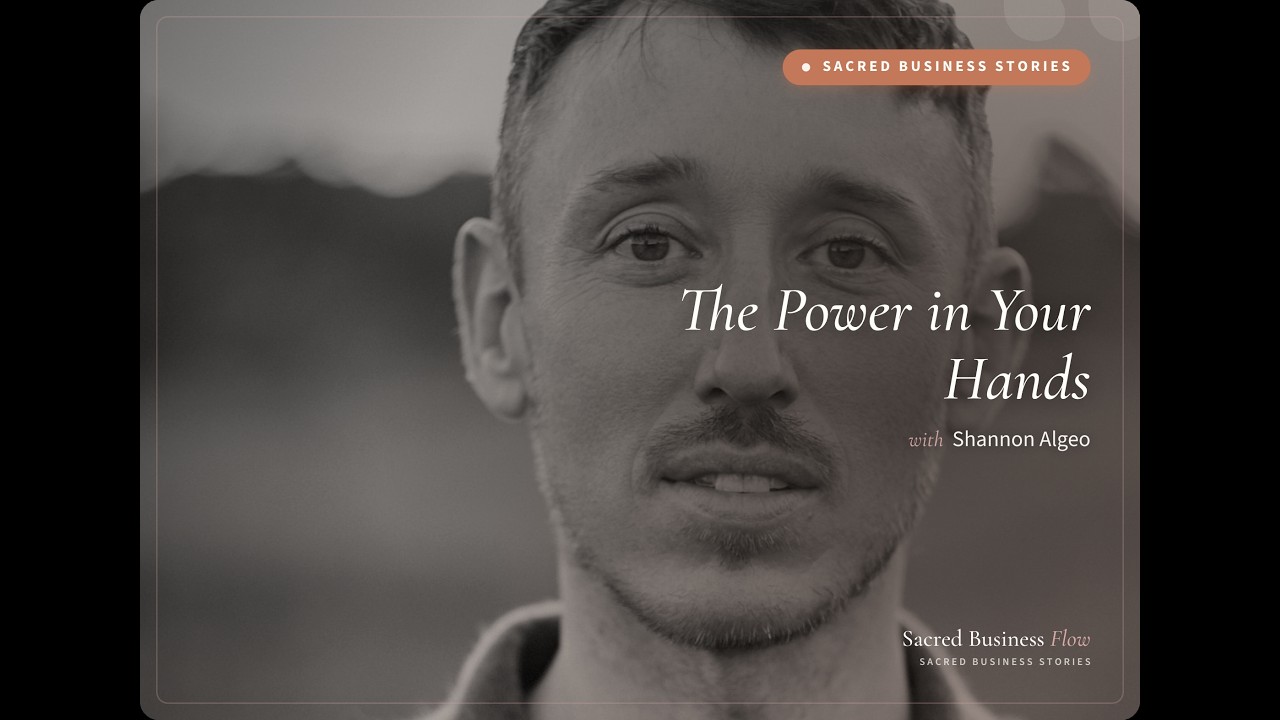
In this Substack Live episode of Sacred Business Stories, host Phil Powis and co‑host Carolina interview eco‑therapist, researcher, poet, yoga nidra teacher, and author Shannon Algeo. Shannon shares her eclectic background—from musical theater and yoga teaching to podcasting and clinical counseling—and explains how these experiences led to her book The Power in Your Hands: Liberate Yourself from Attachment to Technology. The conversation explores how smartphones and AI reshape human attention, attachment, and creativity. Shannon introduces a three‑layer attention model (spotlight, starlight, daylight) and argues that excessive screen time creates an "attachment economy" where people seek validation from devices and large language models, eroding inner knowing and secure attachment. She discusses the dangers of outsourcing decision‑making to AI, the importance of ego strength and self‑determination, and practical boundaries such as phone‑free zones, using a Light Phone, and app‑blocking tools. The dialogue also covers parenting strategies for limiting children’s tech exposure, the distinction between sacred and profane experiences, and the role of community in fostering healthy tech habits. Shannon promotes her book, her Substack publication The Sacred Ebb, and upcoming audiobook, inviting listeners to engage further.
Chapters
Welcome to Sacred Business Stories. This is our weekly Substack Live where really we just have an honest conversation about what it looks like to build a business that aligns with your deepest truth. And today we are joined by Shannon— is it Al-Jayyoush? I hope I didn't butcher your name there. Shannon Al-Jayyoush. Yeah, yeah, yeah. It was on my list to ask you before we jumped in here, but He's an eco-therapist, researcher, poet, yoga nidra teacher, and co-founder of WeHuman and WeHuman Podcast, and also the author of the books The Power in Your Hands: Liberate Yourself from Attachment to Technology, which we're very excited to touch on and get into today a little bit, and Trust Your Truth. So welcome, Shannon. We're really excited to have this conversation with you.
Oh, thank you so much. It's so great to be here with both of you. Thank you for welcoming me onto Sacred business flow and getting to have a real conversation in real time and see your faces. I'm so grateful to be here and to be connecting with those who are watching.
Yes, thank you so much for your time and thank you everyone for joining. So if you have any questions, please post it in the chat, uh, so we can, you know, bring the questions into our conversation. And just to begin our conversation here, I like to remind ourselves, our guests, and then the people listening to us why we do Sacred Business Stories. And it's purely for inspiration. Uh, there's like so many people doing a lot of like cool things and sharing their messages and sharing from their hearts and serving from their hearts. Um, and we believe that it's possible for everyone. So the more we see like the behind the scenes and how, you know, you came to be, for example, like I think the more we give authorization for people to just like, yes, I can do that too. Uh, and it doesn't matter where I am. I just need to decide that, you know, responding to something that's bigger than myself, that it's connected to my heart, is for me too. So to begin this conversation, I would love to hear from you. And it could be a long story, like you decide how you want to take this. Like, what are the behind the scenes that brought you where you are today? Um, and the way you serve, um, your clients and people. Yeah.
Oh my gosh. There's so much that I could share.
You take it anywhere.
Yeah.
I mean, I think of the, um, my background in musical theater and performing growing up. When I was 11, I started to take dance classes and voice lessons, and I was in musicals and shows with my sister, and my dad was in the shows with us. And, and I spent like 10, 11 years performing nonstop on the stage, singing. And, and a musical is a real, uh, communal ritual. I mean, to come together, to go all the, to those sweaty rehearsals and wrestling with choreography and memorizing lines and finding cohesion and flow and not stepping on other people's feet and making sure you're in the right place on stage. And, and then, and then finally, after all those rehearsals, you have, you put it on stage, you start to perform, the show opens opening night, and there's this big climax of— it's all over after a couple of weekends, the show closes, and there's this grief, there's this like emptiness there's this vacuum of, of, uh, that all of that energy goes away. And, and so it's just, it's so interesting growing up with this practice of making something, of putting it on its feet, of doing it in community and then letting it all dissolve into the background and then wondering like, okay, like what's next after that? So, so I think that, that ritual that's built into the ancient human art of storytelling and theater is like such a formative part of my, my being and my business even. And, and that led me to yoga. And then for the last 15+ years, I've been teaching yoga and meditation. Uh, and it was that path of becoming a yoga teacher that led me to start my podcast Soul Feed. And that podcast Soul Feed became an amazing platform to connect with people from all over the world and amazing thought leaders and changemakers and, um, Nobel Peace Prize nominees and spiritual teachers. And Yeah. And then from all of that learning, like studying yoga, my own kind of personal growth journey, healing, uh, patterns of trauma in my own experience, in my own body, that led me to, uh, eventually really dive deep into this journey of becoming a therapist. And yeah, so that's kind of, those are some elements of my background, the theater. The yoga, the podcast. We could talk about any of these more deeply. Uh, but yeah, the, the choice to become a therapist was a big one because I wanted to go deeper with people and I wanted to expand my capacity as a, you know, kind of shifting from life coach to clinician and to be able to have the ability to hold a container that could support someone to feel seen, to look at themselves, to be curious about, uh, what their growth edge is around what's coming up for them in their lives. And ultimately, that's what led me to write this book, is that I had to choose a topic in my research in graduate school in my counseling psychology program around something that I, I mean, I could have chosen any topic, but I wanted to choose something that I actually cared about. And I felt incredibly addicted to my smartphone at the time. And I was wondering, how is, how are smartphones and technology impacting the human psyche? How are they impacting the depth and quality of our relationships and our relational connections? And how is technology impacting my creative mind? And my creative process, because I identify as a creative person, as an artist, reclaiming the identity of artist, of artists. The artist has been a huge reclamation for me personally, because it's something that, you know, our culture doesn't really encourage the path of the artist. And, and so, yeah, the looking at how technology impacts our relationship to to our, our inner artistry and our relational currency, that has become an obsession of mine because I, I look around and I see this societal addiction of our time as researchers and journalists are referring to it. And, and there's a real reckoning, I think, for so many of us not to look at technology as an evil or bad thing, but to make sure that technology is a tool that we are using for our highest good. And that we are not being used by the technology itself.
Yeah, it's fascinating. And everything you shared is so important. And it comes to me like to ask you the question and how you relate to that, because for example, like we help people, um, build a business out of their calling, right? Like build a structure and actually like, hey, I received this calling, I have this, and I want to put that out in the world. And I see with our clients and people that we talk about, uh, how hard it is to use technology to actually benefit them and how it is distracting people from actually their ability to listen to themselves because the noise is so loud when you just get your phone and you could get any answer and you could see anything. And then you compare yourself to like 100-odd other people doing different stuff that, you know, it's like. It's, and it's nonstop. It's not before we had to like kind of open the computer. Now we have, we were talking this morning, like we have the phones in the pocket, like anytime you just get it and it's, it's a distraction. So I see how it's creating a distance between us and our inner knowing. And if you could just share your perspective on it, I would love to hear.
Yes. I mean, it is, it is creating a distance between us and our inner knowing. And that, you know, neuroscience shows that we have 3 brains. We have an embodied brain. We have the cognitive brain in that, in this, between the ears, we have a brain in our heart and we have a brain in our gut. And this embodied brain of this, this multidimensional capacity to know this inner knowing comes from a deeper place in the body than just cognitive understanding. That's one aspect of knowing, but there's also deeper embodied knowing there's gut knowing there. And I've, I've thought a lot about what does it mean that we're going to a large language model to ask questions that we might need to be asking our own heart. Our own gut that might, that there might be a somatic wisdom. The human brain has been developing for 300,000 years. And that in that evolution, our brains have learned because we are wildly social creatures. We need each other. We are interconnected beyond, beyond understanding. But our brains developed for those 300,000 years to crave tone of voice, to crave facial expression and to crave body, body language. So if, if, if you're having an important conversation via text message, there is no tone of voice. There is no facial expression. There is no body language. And, and there's a lot of reactivity in text message communications. It's not like you're handwriting a letter that you're going to send off in the, in the post. It's going to arrive in a few weeks to your beloved across the land. Where there's this kind of intentionality and there is a form of body language with the written hand, written word, but these kind of fast, like thumbs tapping glass. I think we all know, most people have gotten into a heated or charged text message exchange with someone they care about. And that to me is an example of technology failing us. It can often be used as a great tool. Like we're using it right now and I can see your faces and I can see your body language and we can hear each other's voices. But when we're having a meaningful or activated conversation via text message that lacks the, these technologies of the human knowing, that technology is actually doing a disservice to our humanity in that moment, for example. And so to bring it back to Carolina, you said this inner knowing, the, the The human mind actually needs unstructured time for higher levels of reflection and insight and meta-analysis, meta-analysis, meta-awareness. And that's a different kind of attention. So, so the, um, I love the work of this, uh, philosopher James William, and he talks about how there's 3 different types of attention. So there's spotlight attention, um, or spotlight awareness, I think he calls it. Spotlight awareness is like, I'm focusing on Philip's face. I'm focusing on Carolina's face. Now I'm, I'm looking at this book and I can direct my attention. I can, I can shed a spotlight on different things. Then there's starlight attention and starlight attention or starlight awareness is our ability to connect to the higher stars of our higher goals and values. So this type of attending or awareness is this capacity of the mind to determine what are my goals, what are my values, and how do I direct my spotlight awareness based on my starlight awareness, based on this kind of orientation to the, to the stars of my higher goals and values. And then there's daylight awareness. And daylight awareness is, is the ability to even see the room that we're in because the lights are on. We can see the world around us. And this is our ability to have metacognition, insight, uh, to, to make meaningful connections. And so I use the example of my book. I wrote The Power in Your Hands about our relationship to technology because I could see in myself and in the world that something is off in how much we're going to our phones and how much of the human psyche is getting poured into these devices and how much these devices are impacting the human psyche. This is not normal to spend 61— the average smartphone user spends the equivalent of 61 to 80 days per year on their phone. 2 to 3 months. That's so much human power. That's so much human attention. That's so much human time. So my daylight awareness said, wait a second, this feels like it needs to be studied, that it needs to be talked about, that it needs to be named. And then my starlight awareness of my goals and my values is like, I value human connection. I value empathy. I value human creativity. I value the artistic process. And I want to see if I can harness my attention to make something meaningful. And then, so then my spotlight awareness was like, okay, chapter 1. Chapter 2, you know, like today is Wednesday and I'm going to write. And so I love to share those different dimensions of awareness, the spotlight, the starlight, and then the daylight, because attending to our attention and being stewards of our attention, I think is essential in business and creativity. I'm so curious to hear your thoughts on this as well, because I'm blabbing about.
Yeah, it's, um, well, there's like a lot to say and my mind is just like connecting a lot of the dots, like just like the star life, for example, like it's hard for people to know what they want, right? Like the, like that's, that's a question that I keep bringing back, like all the time and for myself and people that I work with and I'm constantly like reevaluating. Like, what do I truly want? And when I'm constantly like in the like short, like thing of like, this is what it is. This is that like, then it's like the shiny object syndrome. It's like times a thousand because it's all the time there's new things. And with AI, like everything that you ask AI is always freaking awesome. So yes, go do this. And it's, it's very like hard if we don't create that space. And then I'll have a lot of questions about creating that space for you. Like, How do you listen to yourself? Like, how do you know what's for you? Like, how do you even know what do you like? Because we are being told constantly, like, that you should be liking this, that you should be doing this, that everybody's doing that. Um, and if you want to build a successful business, like, if you want to write a book, you need to disconnect from that and, you know, and go within and connect with your higher self and your higher intelligence that's not on your phone. To ask certain questions. And then in my opinion, once that's clear, then you're gonna use technology to help you execute, uh, but not to connect. Um, if I'm making sense.
Yeah.
Yeah. You're making so much sense. I think, I think this is such a central, uh, conundrum of, of the human experience in 2026. It is this. Interception of, of that central question, the central question, like, am I using technology for the purposes of my goals and aims of, of the project that I've identified as what I want to work on? Or am I in this shiny object syndrome? As you said, Carolina, shiny object syndrome, the research shows that that this level of smartphone use, 5 to 8 hours a day that people are spending on their phones, is creating ADHD-like symptoms in other— so attention hyperactivity or attention deficit hyperactivity disorder, ADHD-like symptoms in people who otherwise wouldn't present with ADHD, it's also creating narcissistic-like symptoms of kind of self-obsession and self-image management obsession. Um, it's, it's interesting because the way that daylight awareness is described in this article is that daylight awareness is, it allows us to want what we want to want. Yes. And so, yeah, what is that process of connecting to your sacred business, of your call, of your dharma, of your life's purpose, of what is that, what is that magical, sacred, meaningful, purposeful calling that I think exists within each and every single one of us. That is the whole message. That's the deeper underlying message of The Power in Your Hands. The power in your hands is that our hands are the living hands of our ancestors. We have been here for much longer than our own individual lives, and we're carrying forth in our hands hundreds of thousands of years of resilience, also trauma that's kind of being worked out in our own bodies and our own relationships that we're, we have the opportunity to heal, but so much resilience that, that has led to this moment that we are in right now. And To look at what it means to be swiping on a screen, to attune one's vision to images on a phone for 5 to 8 hours a day, to, to be binging the images of cat vids, of, of kitty cats in tutus, of, uh, AI-generated slop. Of, of actual war, of what it means for the brain to not know the difference. Is this AI generated? Is this entertaining? Is this devastating? It's, and then to just kind of be scrolling through that in a, in a 30-second window, that, that is an erratic and profane, uh, experience. And the sociologist, the French sociologist Émile Durkheim, define the differences between the sacred and the profane. And the sacred is something that we have reverence towards. We have awe, we have curiosity, we have wonder. We, we feel humble in the presence of something big and meaningful that we are an essential part of. And the profane is kind of this, this technical, this hyper-scientific, this obsession with kind of measuring and mundane. It's not that the profane is bad, but it, but it lacks a sacred reverence. And, uh, the social psychologist Jonathan Haidt, and I talk about this in the book, he writes about how modern life and digital life is this erosion of, of the sacred and this diminishment of sacred experience that human beings have evolved to need to feel part of what neuropsychiatrist Dr. Dan Siegel talks about, the eighth human sense, that we actually have 8 senses. And the eighth human sense is this ability to be interconnected. I'm sure you feel this in Brazil, the, like, the connection to the wildness of nature, the beauty of the natural landscape, the aliveness of the natural world. And this is a human need. Research shows that human beings have a need for wild awe. To experience awe in nature has somatic and embodied soothing effects on the body. To hear the sound of a river relaxes the whole human nervous system, slows the heart rate, lowers cortisol, prevents cardiovascular disease. So, so this is the reclaiming of, of the sacred and I think there, there, you know, there's 3 pillars to mind training. One is focused attention. So do we have the ability to focus our attention on that, which we want to focus our attention on the kind of the opposite of shiny object syndrome. The second pillar of mind training is open awareness that we're not kind of rigid in one lane obsessing on Instagram and just kind of like drilling into our business, but we also have the ability to, to widen the lens and see with open awareness, to be curious, to be open, to slow down, to kind of take a step back. And then the third pillar of mind training, and this is, this is neuroscience. Mind training research is kind intention. That actually our work is not just about us or, you know, and our, our, our minds are not just about us, but how are we offering the fruit of our practice, our, the service of our business and just our, our sheer presence sending compassion and offering kind intention to the world around us. Like that is a part of the human mind feeling whole is that we're not just navel-gazing, but we're actually attending to the world around us.
That's, that's beautiful.
Yeah, there's so much in that. Something I've been— I'd love to get your opinion on. It's just something that popped into my head as you were speaking. Something I've been struggling with clients, and I'm sure maybe this is not the first time you've heard this, and this, you know, you mentioned LLMs earlier. And to me, this is like a tragedy. Like, we had someone who's a client who spent over a year kind of building up their confidence to do, to take on this work that was from the heart and like was having success, like getting clients, starting to build community and doing really good work. And they still are. But during a moment of kind of doubt, and I've seen this with many people, they went to AI and said, hey, like, I'm struggling. Can I make money doing this thing that I'm trying to do? And I don't know exactly how it was prompted, and I believe we bring so much of our own kind of mind to that process, but it basically came back and said, no, you should not be doing this. If your goal is to make money, this is not a way to have a secure livelihood. Consider something else, essentially. And so then I went back and said, hey, it's a little bit of this seek and so you shall find. And let me show you how easy it is for me to prompt back and get the exact opposite answer and say, and show you how it says, hey, actually you could make $150,000+ per year doing this and beyond. And I just see, uh, that's to me the tragedy of this is that, um, seeing how quickly people are collapsing under the kind of authority or that belief of that AI holds the answers when life has actually been showing this individual and other people I've talked to, the signs that this is for them, right? That they're serving in a beautiful way. They have been actually getting resourced through the work. They've been making meaningful change in others. And yeah, I know it's a little bit of a departure from where we were just speaking, but I'm just really curious to hear your perspective on this. We had another person the other day who has been building a beautiful community here on Substack and getting traction, but in a moment of weakness or something happened where they were feeling a little bit insecure, they asked that question. Into AI and it's like, well, the problem is you're actually building your audience on Substack. You should be on LinkedIn. And it's just fascinating to see how far that can throw people off their center when they're doing all this, you know, work to kind of build up their belief structures of what's possible for them. And yeah, I'm just curious how you see that from your lens.
Oh my gosh, I have goosebumps right now. I think I'm just thinking about how in, in recovery communities and 12-step programs, there is a surrendering to a higher power, which is essentially the same thing as what Dr. Dan Siegel talks about as intraconnection, that, that we acknowledge that we are part of a greater whole. And that we are not, uh, we are not the whole, we are not the whole, we are, we're part of a whole. And the reason I bring this up is that, and I share this in, in The Power in Your Hands, um, Nikki Myers, who's this incredible teacher and she's the founder of the Yoga of 12-Step Recovery. She combines yoga and 12-step program. She defines addiction as the disease of the lost self. And Nikki says, anytime I reach outside of myself for something that can only be sourced from the inside, I risk forming an addictive relationship with whatever that thing is. And the reason I'm bringing in this, this definition of addiction, the disease of the lost self, is I think that we are programmed to seek connection to a greater whole. And for some people, that looks like a relationship with religion or God or spiritual practice or, or meaning and purpose or business. Uh, there are so many ways that we, that we reach to, for guidance.
Right?
You can even think of this simple in like the way that, that a child looks at their parents or caregivers as, as a god, as a, like, as a, like, you are my whole life. I need you. I am attached to you. I, I look to you to feel seen and soothed and safe and secure. And that is the work of, of this book, The Power in Your Hands, is I am, I found this attachment research that links compulsive smartphone use to insecure attachment styles. And, and the reason I'm answering your question, Philip, this way is that I think we are looking, we are looking outside of ourselves to a higher power-like figure to see us, to soothe us, to make us feel safe so that we feel secure. But what we're not doing is acknowledging that this is not an all-knowing omniscient being or consciousness. It is a large language model. It predicts language and then, and then essentially delivers high-quality appearing slop. It could say anything and it, it says it in a convincing way. That's the, that's the, that's its highest value is that it says things in a convincing way, but it doesn't say accurate things in a convincing way. It often says inaccurate things, but it does so in a, in a convincing way. Um, Zachary Stein, the psychologist who founded the AI Psychological Harms Research Coalition, who is talking about what my research affirms, this shift from an attention economy, which social media exploits our kind of dopamine reward system and need to kind of, uh, for, well, need for attention. Yes. But also it exploits our attention. He's talking about a shift from the attention economy to the attachment economy, where AI companies and large language models are actually exploiting the vulnerability of our human attachment, attachment system, which is like, if I feel insecure and I don't know what I should do, and I live in a society that has eroded the fabric of human, the human connection system, where I don't go to my neighbor for eggs anymore. I mean, I actually, me and my, my housemate, we trade eggs and bananas all the time. So I'm, I do work. I do resist this impulse, but Secure attachment isn't just, you know, with your romantic partner. Secure attachment expands to how we relate to our communities, how we feel seen and soothed and safe in our, in our world, in our worlds, in our relationships. And so if we don't have the strength of the, of a human attachment system, a communal safety system built around us, then, then we are more vulnerable to go to this very, to go to Burger King or McDonald's. It's, it's the fast food of, of this. It's a simulation of connection, but it lacks the nutrition of embodiment, of, of the human voice, of the, of the facial expressions, of, of the real caring. AI can simulate an experience in which I might feel like, oh, I'm cared about, but there's no one caring. And, and that, that, like, sometimes I'm just like, we can't, like, we can't actually replace it.
Interesting.
Yeah, this is, this is, this is like fascinating, right? Because I'm thinking back to this conversation and, you know, it's interesting what you're saying because I'm very aware that in kind of a, you know, pre-AI and still today in a coaching or consulting relationship, often people will try to outsource their inner knowing onto this person who supposedly has better understanding of said topic, right? And so then, um, and that's kind of what I was trying to articulate to this client. I said also, uh, and when I was just demonstrating, when I showed the example of my response or my conversation with AI, I was saying, just to be clear, my opinion here, or my way, is not— is also not the right way. I'm just demonstrating this to show you that what you're seeing is just one possibility, Um, but here at least there's a caring human. But what I was doing, trying to do, was point him back to himself. I was like, you hold the answer and only you know. But the danger I see is that at least if you're working with someone who cares, uh, I felt a responsibility to point him back to himself. The AI doesn't hold that. In fact, the AI, as you said, will continue to just defend its position and tell you with like absolute belief or, you know, articulate it as if it's absolute truth. And that's the part that I find, find the most scary about that whole, that whole scenario.
Yeah. Yes. It's totally. And, you know, in, in psychology and in the developing mind, our task is to develop ego structure and ego strength. And this isn't like ego structure and ego strength in the sense of I have like a big ego. It's actually about developing a toned, right-sized ego. So I need an ego to have a Shannon who can be here with Philip and Carolina. And, and that having ego strength actually allows me to receive feedback and test it against my own inner knowing, because I have a cohesive core sense of self with a capital S that, that has an I intact. If someone doesn't have ego strength, then they will likely kind of like dart in, in one of two directions. One could be this kind of narcissistic, like, uh, inflated it's not really an inflated ego. It, it, it's more of a compensation of I need to feel big by kind of controlling other people's perception of me, of making other people wrong, of, of kind of like outsourcing my sense of self through grandiose means of acquiring all sorts of of ego-stroking type identities. On the other hand, someone might go towards a shrinking of, and this is more of a depressive kind of personality type of like, well, who am I? I don't matter. Everyone else has good ideas. Everyone else knows, but I, who, this is more me, to be honest. Like I, to write this book. I had to remind myself every effing day, Shannon, no one can do it like you. You, you have worked hard. You, you have meaningful stories to tell. Your experience matters and you are an artist. That's why I include my poetry throughout the book, which is one of the things I'm most proud of. And when I was just recording the audiobook last week, I was getting just so many goosebumps reading these poems out loud. But for me, I have to really attend to remembering that I matter and my voice matters. But so, so if I have ego strength, then perhaps I can ask someone else for feedback, but their perception of me is not going to overtake my perception of myself. I can integrate someone else's feedback and filter it through my own sense of self because I have a sense of self. The reason I bring this up is for people who don't have a developed sense of self because they are like a teenager and that's still developing, or because they have attachment-related ruptures or relational ruptures in their developmental years that have led to a diminished sense of self or an inflated sense of self. Then when, when that person goes to AI, they're more, or, or to, or to anyone else, like you're saying to your point, Philip, they're, they run the risk of determining, I determine who I am based on what this other entity or person says. And I'm seeking a sense of self outside of myself, which is the definition of Nikki's definition. That's Nikki's definition of addiction. And, and this isn't a bad thing. We all do this. We're human. Like we have moments of vulnerability. We reach outside of ourselves. We binge eat. We have an extra drink. We seek validation elsewhere. That's fine. But are we conscious of it? Are we aware when we've given too much of our power away? And can we build the musculature of practicing self-determination? And that comes back to spotlight awareness, starlight awareness, and daylight awareness. Are we stewards of our attention in, in ways that we're able to self-determine? And that to me is one of the great dangers of AI that I think is not being talked about enough. When, when I, I, so there's a chapter in the book called AI and the Self. And when I first started writing, I went to Claude because someone encouraged me, oh, you got to try it. You got to try it. It's so cool. It's a writing partner. And so I had already done all this research. I had published my psychological research paper, my thesis. I, I had gathered the research. I had my research question, I, I, I had done a lot of work, but I hadn't started writing the book officially. And so when I went to start writing the book, I was like, okay, let me see, like, what, what is this AI Claude writing partner thing? And I asked it my question. I fed it a therapeutic treatment plan that I created based on my, my research. And it started spitting to me like chapter title ideas, uh, a, like mini chapter descriptions. And I like, I was like looking through it and I was like, this is fascinating. It was really catchy. And I started to feel this hollow feeling of like, wait a second, are these my ideas? Is it mirroring back to me something that I fed it, or is it generating like the book for me? And then, and that was a big moment for me cuz I was like, no effing way. The buck stops here. I'm drawing my line in the sand because I actually, I am a writer. I love to write. Writing is like a creative medium and channel for me. And I wanted to know that I wrote this book. I wanted to like be able to hold this in my hands and say to you that I wrote this because to me, that satisfaction is something that the artist gets to carry. And it, it doesn't matter what other people think. Like, I know that I wrote this. And, and I didn't want that to be taken away from me. And so I share in the very opening of the book, this, this book was written by me without AI. I did use AI to search for research articles that I knew about, but I just needed to get the like citation and, and I wanted to like find them quickly. So I used it as a search tool, but I didn't use it to write. I didn't use it for feedback on writing. And I'm not saying that other people should do what I do, but I am saying that we should do what we, whatever we're doing with a reason and with intention and be aware of how it can impact our sense of satisfaction when we're going out to create something from our own soul.
Yeah. And like, it's, um, It's beautiful and empowering. I love what you share about the sense of self and how, like, weird, like some people have that well-developed and they have determination and they have clarity. Some people, they don't. Uh, but then we mentioned a little bit about kids and I have kids and I was very curious to actually ask you some questions about it because, for example, like my, uh, oldest daughter, she's 10 years old. She's the only one in her classroom that does not have a phone. And I am the most annoying mom ever because I don't let her watch TV every day. She doesn't have tablets. I don't let her play. I don't give her my phone and I'm full of restrictions, but I don't believe, and I study like, you know, human development and I have my own experiences and like, she doesn't have the sense of self fully developed to actually judge what's coming so crazily from technology, from an iPhone, from Instagram, that I can let her just be there, right? And I would love to hear, but then like, I don't know the balance. And sometimes I almost feel that I'm too crazy to the side of like, no, like no technology. But I still hold the position that like 10 years old is not the age to have any of that introduced. I have a 4-year-old. That it's even more, and like his brain and her brain, they're developing. Like, how do I want kids with patience and focus if I'm giving something that they can be like, you know, losing their focus in every single second? So I don't know the introduction of that in their lives. I don't know if I'm right or I'm wrong. I am just trying to build like a healthy way for them so they can have a sense of self first. They can be in their core. And then from that space, they would choose eventually how to use it. But I would love to hear your perspective. Um, because I think we are losing our kids for that, like in a very sad way. It's depressing to see 1-year-old, 2-year-old, like with their face on the screen, you know, uh, while their parents are eating and having beautiful conversations and they're just completely outside the situation. Immersed in a world that does not even exist, that's a phone. So I would love to hear your opinion on that.
Mm-hmm. Yeah. Well, I mean, you, you have such direct lived experience of this being a parent and being in the throes of, of setting these boundaries for the young minds who, who you are, you are developing their minds, that the, the, the mind, the developing mind develops through borrowing the executive functioning of the, and the nervous system of the caregiver. We co-regulate with the nervous systems of our caregivers. It's this very unconscious embodied somatic like, uh, people reading capacity that we have without even thinking. We know the mood, the temperature, the anxiety, the, or the sense of relaxation and peace, especially when we are attached to our caregiver. So, so, you know, research shows the psychological research shows that the teen mind or the, or the, um, the developing mind of a child is with social media and with technology is all gas pedal with, with no brakes. So it's just like, there's not a braking system. There's not that executive functioning of stop. And so the developing mind actually needs the, the boundary of the parents. They might be kicking and screaming if you take their device away, but they actually need you. The reason they're kicking and screaming is because that's an opportunity to regulate when this device is taken away. How do you take care of your body? How do you take care of that transition between worlds? Because the, uh, the social psychologist Jonathan Haidt, who I write about, um, aspects of his work throughout, throughout the book. He talks about how parents have overprotected their children in the real world, and they're overprotecting their children from the physical world where children actually need to be going out and socializing with children and adults of different ages and learning, learning socialization, not through hanging out with their parents, but through actually going out in the wild and experiencing other other people and other kids and parents have been underprotecting their children in the digital world. And that has led to this erosion of the play-based childhood and the, and this exponential amplification of a phone-based childhood. And in the book, I, if you saw me flipping around earlier, it was, I was searching for this, this chapter, The Task of Adolescence. And in it, I include Jonathan Haidt's The Four New Norms for, for children, which is no smartphones before high school is number one, no social media before 16. The compare and despair, especially for the research shows adolescent girls. Is so dangerous and toxic. Um, no social media before 16, phone-free schools, because Carolina, if you are the one making the choice to withhold device from your child, that is so hard for you because, and it's so hard for your child because then there's a social price that she is paying. If all of her friends are on Snapchat or all of her friends have this device. But if the whole school and all the parents do it together, then you're solving a collective action problem with collective action. So this is where we have to act together. And when we do act together, we can make a bigger difference in our society and especially in the lives of our children. And then the fourth norm, the fourth new norm is more independence, free play, and responsibility in the natural world, in, in the real world. And Jonathan Haidt says that's the way children naturally, naturally develop social skills, overcome anxiety, and become self-governing young adults, which goes back to our theme of how do you become a self-determining person? It's cuz you basically hang out with a lot of people.
Yeah. I live life and go outside.
I was just, I just ran into a friend who, who's a breathwork teacher and a Chinese medicine practitioner here in Ojai who has a young daughter. And she was saying how, how different her daughter becomes when she has a friend over to play, because when she's alone, she doesn't have any siblings. So when she's alone, it's like iPad consciousness and she's tired. She's so tired. And then her friend comes over and the amount of energy and imagination and play is like infinite. They just keep exploring more and more and more. And it just was blowing my friend's mind. She was like, I can't even believe. And, and so real— so I mean, that's kind of a simple solution is like, what's up, you know, like playdates.
Like, yes, yes, absolutely. Thank you.
Cool. Well, I know we're almost up on time and I want to, I want to respect that. Um, but I'm gonna ask, I'm gonna try to squeeze one last question, just a quick 30-second answer. Like, um, One of the things that we see a lot with our people is that they really struggle with these boundaries for themselves around technology use. And they want to kind of— it's fun. We're here having this conversation, I think, using technology in a fruitful way. So they want the benefits that technology affords them. But then they're struggling to figure out, well, how do I do this in a way that honors me and doesn't become addictive or I get all fried out on technology? Do you have like a script that you play for? Like, you're here doing this, you have the beliefs that you share with us about technology, but do you have a set of rules that you follow for yourself? Maybe they're in the book. Maybe that's just the teaser to go read the book. I don't know. But like, what is the, you know, what are the quick list of rules that you have for how you choose to show up? Like, I know we were going back and forth on email for a couple minutes before this, so you're here doing it, right? Like, but yeah, you know, and you really, you clearly have your boundaries, right? And so, yeah, I'm just curious about that. 30 seconds. I know we got to go, but it's just, it'd be fascinating to hear.
Oh my God, 30 seconds. Okay. Well, for the first part of the 30 seconds, I'll show you. This is my, my phone box. My iPhone stays in there off all day. Um, and I'm on my laptop right now and I use a phone called the Light Phone, the Light Phone 3, which is a non-smartphone. Has no internet, no apps, but it actually has everything you need. So that, that create— not everyone can have a non-smartphone, so that's not my suggestion. You can have an iPhone too, but we need to create friction. There is a chapter in the book called Guardians and Protectors, which is based on this really fascinating podcast that I listened to called The Emerald. And, and it's about setting up friction as boundary, as protection, like friction. We, these apps, the apps on our phones are developed by behavioral psychologists to be addictive, to sustain our attention, not because these platforms are evil, but because they make money the more attention they can hold. And so. So they have been developed to be frictionless. Just, you just, you just, oops, I've been on Instagram for an hour and a half. Oops, I can't stop checking WhatsApp. Turns out it's the same company that owns those two. How convenient. So, so we have to be the ones to create friction. App blockers, there's Brick, there's Opal, there's OneSec. There's freedom. I talk about in the chapter Guardians and Protectors, not just about creating an app blocker, but creating a strict app blocker. The 1Sec app has a strict block feature, which means I can't change it. I can't undo it, which is like sexy to me. I'm like, I need, we need protection. We need to protect our minds. Like we are protected. We need to think about our, uh, our minds as inner children. And I'm so sorry, I'm, I'm bad at 30-second answers. So read the book and the audiobook is coming too if you wanna listen. August 4th.
Yeah.
Penguin Random House is producing the audiobook and I'm narrating.
Cool. Yeah. So read the book, we'll get the whole script there. Um, yeah. So anyone you're here, you're here on Substack. If anyone's been curious, if you know, this conversation has touched something in them, What's the best way to engage more? Obviously get the book. Are you publishing here regularly on Substack or is there somewhere else that you would direct people to check out your work?
Yeah.
Well, thank you so much. It's been such a delightful and engaging conversation. I appreciate both of you so much, your, your listening and your questions and your presence. And yeah, the, uh, so I have a channel here, a publication called The Sacred Ebb, uh, here on Substack. And I do publish regularly and, uh, it's about not just flowing in our business and creativity, but embracing those moments of ebb where we kind of go into the vastness of the inquiry of, of the creative process, both The ebb and flow. I love that connection between our two platforms here, the ebb and the flow. And ShannonAlgeo.com/book, that has all the information about the book. You can watch some incredible videos from book events that we've done in the past couple of weeks. It just came out on June 2nd. And I'm just so excited also to share the audiobook that's coming August 4th. So yeah, shannonalgeo.com/book and The Sacred Ebb. And yeah, just so grateful to be in this conversation with both of you on this morning. Thank you.
Yeah. Thank you. It went super fast. I could do this for a whole nother hour, but alas, maybe another time.
But yeah. Yeah.
So, so, so we, we'll put together a very nice recap of this conversation. We'll include all the links and we'll share that with you in case it's useful in any way. But yeah, thank you again for your time and generosity and just, yeah, how receptive you generally were to, to being here with us. Really, really appreciate it.
Yes. Thank you so much.
Oh my gosh. Yeah. Thank you both. So grateful for this opportunity to connect in a meaningful way. It's really a blessing. Thank you.
Yes.
All right.
Thank you so much. And thank you everyone. See you next time.
Bye for now.
Bye.









