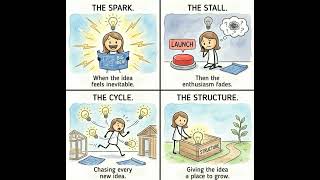
In this monologue, Phil Powis discusses a common pattern among creators he calls the "download trap": the urge to instantly build and launch every new idea as soon as it "downloads" into their mind. He shares a story of a colleague who, instead of sprinting to create a landing page, marketing, and offer in a day, let the idea develop over five or six days, which led to a more authentic commitment and a better result. Powis argues that urgency is often mistaken for readiness, and that true success comes from giving ideas a structured, repeatable process that allows them to mature. He differentiates between merely finishing a piece of work and fully committing to it, emphasizing that without solid commitment the work remains dormant. The talk encourages creators to adopt slower, more intentional workflows, focusing on building simple, repeatable structures that can be revisited when inspiration wanes, rather than chasing immediate execution.
Chapters
Hey, it's Phil. I want to tell you about something that came up in a conversation recently. Someone told me that when an idea lands, she feels like she has to build the whole thing right now. Landing page, marketing, offer, all of it in a day, maybe a day and a half. And when I asked why, she said something really honest. She said she's just not a project person. She's a feeling person. When something downloads, she wants it to exist immediately. Waiting feels like losing the thread, and I think a lot of people listening here might recognize that. Here's what's really interesting though. She told me that recently she tried something different. Instead of sprinting to finish in a day, she let it stretch over 5 or 6 days and something shifted. She said she actually received what she wanted to share instead of just pushing it out. And that distinction matters because there's a difference between finishing something and finalizing the commitment behind it. You can build the page, write the copy, set the price, but if the decision to stand behind it isn't solid, the work kind of just sits there, still landing, but still not live. And I've noticed this pattern in myself and in almost everyone I work with. The ideas come fast and they can feel urgent, and when they feel urgent, we think we have to act on them immediately or they'll disappear. But urgency is not the same thing as readiness. And what actually makes an idea stick isn't speed. It's giving it a structure that lets it develop. It could be something simple, something repeatable, something you can return to on the days when inspiration just isn't there. And that's the piece I think most people skip, not because they're lazy, but because they're used to following inspiration and slowing down can feel like they're actually losing momentum. But I believe it's the opposite. I wrote more about this, about why downloads alone don't build businesses and what does. It's not complicated. It's just a different relationship with time and commitment. So I encourage you to give it a read. And if you've been caught in that cycle of excitement, execution, stall, maybe this will land differently than the last 10 things you read about structure. Talk soon.