This is the doctor I would hire in 2026.
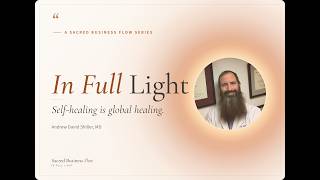
In this Substack Live interview, host Phil Powis welcomes Dr. Andrew David Schiller (David), a Harvard‑trained, double‑board‑certified physician who has spent three decades blending integrative/functional medicine with Torah, Kabbalistic study, and movement arts. David recounts his unconventional path—from engineering and Tai Chi in San Diego to medical school, through years of rehabilitation and pain‑management work, and finally to a deep immersion in Jewish mysticism. He explains how the ancient Kabbalistic concept of the four worlds (physical, emotional, mental, spiritual) maps onto modern systems‑biology and how “waters from above” (divine inspiration) and “waters from below” (empirical science) are converging. The conversation weaves personal anecdotes, such as a transformative osteopathic session with a chronic‑pain patient that illustrated the power of subtle fluid flow and compassionate witnessing, with broader reflections on self‑healing as global healing, the importance of surrender, and the role of love as a divine conduit. David describes his evolving practice: one‑on‑one clinical work, teaching other healers (nurses, therapists, coaches), and a vision of a future healing center in the mountains. He also discusses the psychological shift from fear‑based pride to the Kabbalistic quality of Tiferet—balancing love and fear, serving as a clear vessel for light. Throughout, the hosts and audience explore themes of personal sovereignty, the challenge of integrating spirituality without imposing doctrine, and practical advice for people stuck in chronic pain or despair. The interview ends with invitations to engage via David’s Substack, website, and upcoming community events.
Chapters
pay attention there as well in case— oh, there we are. So welcome to In Full Light. This is our newest Substack Live series, really, where we celebrate heart-led practitioners inside our Sacred Business Flow community who are stepping into their power and sharing their gifts with the world. And today we are honored to be joined by Dr. Andrew David Schiller. You go by David, right? Yeah, David. Um, and, uh, Yeah, he's been in our community for a while, but he is a Harvard-trained, double board-certified physician. That's a bit of a mouthful. With nearly 30 years of experience in integrative and functional medicine. But there's so much more to that story, which is really what compelled us to have him here on the show with us. But we're going to let him tell you more about that. And so, yeah, David, welcome. Oh, before I get into that, just if you are joining us live, Feel free if you have questions throughout this to drop them in the chat. We'll try our best to keep an eye on that, and we'd love to make this interactive. So if you have a question for David, feel free to participate there. But David, yeah, we'd love to just start by asking you kind of to tell us who you are, what you do. But I think more importantly, what we are curious about is why you do it and what the deeper calling is behind, behind your work.
Right. Yeah, I hear that. Taking a long story and making it into a short story, right? I mean, I trained in conventional medicine because I was living in San Diego working as an engineer. And when I was studying Tai Chi, I just woke up energetically and I was like, I want to go to med school and find out what chi is. And so as I understood it in retrospect, like I was looking for some kind of balance. I was looking for like what's that middle line that keeps us healthy and well? Like, I intuited it and I felt it. And because of my background, which was very academic, I went to medical school, which a lot of people were like, what? My Thai teacher was like, what? Why are you doing that? So, but that's the way I went. And so it was a lot of winding the path between very academic conventional medicine and taking that kind of rigorous scientific mindset and then going into more experiential learning in various kinds of consciousness work and movement arts and then nutritional, you know, healthy lifestyle type stuff as well. And so it's been a long journey. It's been like 30 years since I— well, 25 years since I finished my residency training. So anyhow, here I am. And the other piece I would add to that is that for me personally, that yearning and search. And, you know, it's like you find the truth, something seems truer and then truer and truer. And it's sort of a process. And part of where it led me personally was a reawakening of interest in my heritage faith tradition, which is Torah and Judaism that I didn't really live inside growing up. Um, but as I started looking into the sources and especially kind of the inner Torah that explains like, what are the metaphors behind all of this? It really kind of grabbed me and spoke to a lot of the deep experiential experiences I was having and also held kind of the rigorous academic approach that I was also learning. And then, you know, fast forward like 20 years of study, I like moved to Jerusalem because I was so into Torah and healing and kept practicing medicine, but found myself studying really the inner work that looks at how the body and the heart and the mind and the soul are integrated and how that relates to our well-being and purpose and life and kind of collective well-being as well. So maybe I should be quiet now and see if you guys have questions to help refine this conversation.
Well, I have 10,000 questions for you, but I'll start with one. First, I want to say that I love the way you decided to go to med school and just the question behind like, oh, what is she? And I want to find out what it is, but from that curiosity and like, there is more than to what we see. And I think that probably that gave you lenses to see medicine or healing from the beginning with like a different approach. And you say that self-healing is global healing. And when we understand that, we. You, you mentioned like that it's, um, it's a way for us to liberate ourselves from the conditioning, right? And I think this is a very empowering approach and I would love to hear a little more, uh, from a doctor, you know, that it's still in the system in a way, right? Like we, but I think you play outside that and I think it's, uh, there's a lot there, uh, for us to explore.
Right, right, right. I hear that. Right. And so, you know, there's all of this sort of, um, You know, there's a, there's an ancient text called the Zohar and it's the Book of Splendor. And it says that later in the future, the, the waters from above will meet the waters from below. Um, and it's talking about wisdom and the understanding of it is that the wisdom from below, the waters from below are empiric scientific observation of physical phenomenon. And the waters from above are the divine inspiration. And so we can like look at all of these questions from either perspective because they're meeting someplace, not completely, not perfectly yet, but that's the direction it's going in. And I've watched even in the past 10 or 20 years, just the way that science is racing forward as it becomes more nuanced and subtle and more able to hold complexity and, um, integration of all the different body systems and the way we're measuring, you know, tons of data points down to tiny little things and seeing these like biochemical cellular relationships that are reflecting spiritual truths in certain ways, depending on how we look at and understand it. And so, you know, that whole question of like individual healing and planetary healing. And I, I tend to think of things, there's also another concept that we bring in Kabbalah about four worlds that more or less are physical, emotional, mental, spiritual worlds. And those are four lenses, four understandings or pathways and connecting with what's going on. And they're all completely integrated. So it's not that they're separate, but it's like the four blind men looking at the elephant, you know? And so on a purely physical phenomena level of the physical emotional experience, If I'm bound up in pain and suffering, I become very self-centered. Like, that's the natural thing that happens, except for people who are already very advanced emotionally and spiritually. The natural thing is I'm suffering, protective responses come into play. And just to flesh protective responses, again, physical, emotional, mental protective responses. Our body is full of it, our stress response, our mental-emotional patterning. Looking for danger. We have this negativity bias that we all have built into us that's scouting for where's the next bad thing coming from. And if I'm already dealing with a big load of suffering and anxiety and I'm not sleeping, all those forces get turned on. And it's not really a resourceful state of mind from which to get past my own perspective and recognize other as human, as real, as having a point of view. We tend to get so wrapped into our own defensive posture that we don't even see the person in in front of us. And, you know, it's kind of like if you think about one of those well-known ideas about hierarchy of needs, like Maslow or something like that, I don't have it memorized, but it's like physical physiology, and then like safety, and then emotional, and then interpersonal connection, and then higher level connection. And so that map is probably relevant here also. So, and so the first thing just to sort of closing that a little bit, the physical, structural, medical, emotional response to illness and not being well, it makes it really hard to think beyond myself. And when I'm well, I can more easily think beyond myself. And then let's just jump to the waters from above, the spiritual perspective, which is that, you know, regardless of your faith or creed or tradition, I think almost every human has a sense that there is some kind of divine presence and there's some kind of divine unity that holds us all together, that through which we're connected. And on a certain level, it's sort of like, that's the only thing that's going to potentially save us from our significant challenges that we're experiencing in 2026, where there's so much division and breakdown. And it's like, can't we all just get along? Like, yeah, how do we do that? By realizing that we're connected. And just to speak from my own lived experience, I just remember when I was in medical training, before I started learning Torah and studying Torah consciousness, I was doing a lot of mindfulness training. And I remember spending like a week in the forest in central Massachusetts, just mindfulness meditation, drop the resistance, drop, drop, drop, drop, drop, drop, drop. And from just dropping all of the busyness and the irritability, feeling through some difficult pain that came up, dropping that, feeling some other pain, dropping that, there comes this space of, ah, wow. And like, I imagine anyone who's been there knows what I'm talking about. And what is that space like? It's a space of deep connection. For me, at least, it was like the trees are breathing with me, you know, like the butterfly lands on the flower and it's an exquisite poetic moment of like, ah, you know, it's so we start to get this felt sense of unity with all things that, you know, like, how can I resolve that and whatever tendencies towards conflict or self-protection I might have? And if I'm going to be an honest person and try to live integrity and integrity with spiritual insight and awareness and connection, then I have some work to do because I got to meet that part of me that's closed down around this or that issue or this or that social thing or whatever it is and be able to go like, well, wait, wait, I felt it and I know it that I and this person are connected. My people and those people are connected, whatever it is, and to somehow open to that.
This is so beautiful and profound. And the way you were just describing like the trees and the unity and, you know, like I, I, I had like goosebumps because that's the, um, that's the feeling of connection when we kind of like not only understand that, like I can say like, oh, we are connected, but the other thing is to feel that we are connected. And I can totally see how that plays an important role in healing the physical body as like There's this saying that like the best thing you can do for the world is to be happy, right? To be connected. Because when you reach that frequency, like even your physical body operating from that space, there's no space for disease. Like there is a certain frequency that you are that there's no space for your, your cells are operating in a higher frequency. And another thing that I would love to hear a little more, you said, you, you, you say something about like that we all have an inner point. An inner soul, and that's the highest source of healing. Um, and you, you were talking about the layers, the spiritual, emotional, mind, and the physical body. Um, can you share a little more about that and how you see this connection between your spiritual, uh, connection and your physical body, uh, healing?
Sure. Yeah. Ah, it's such a good question. Let's start again from the sort of experience of unwellness or illness. And, um, you know, my experience over the years, I trained in rehabilitation medicine and a lot of pain management and also internal medicine. So seeing a lot of people with chronic problems, spinal cord injuries, stroke, like chronic pain, fibromyalgia, fatigue, really debilitating chronic things, neurodegenerative problems. And, um, and I went from there because conventional medicine therapeutics are so limited. You know, it's like, okay, we've repaired your fractured cervical spinal bone and you have a spinal cord injury. Now go to rehab and live your life. Bye. You know, it's sort of like the conventional therapeutic is over and a person goes to rehab and they get the basics of sort of building strength and learning how to move, walk, pee, whatever it is, really hard stuff. And then there's all of the, as I started learning more systems biology and understanding everything's so connected, all of the dangerous signaling that comes from the original injury, the dangerous signaling that comes from the sense of loss of self, like, oh my God, I was the high school football quarterback. I mean, I'm sharing language I heard from 17-year-old guy I met in the rehab unit in Boston, like he went to a concert. I don't want to say this out loud. He lost a lot. He lost a lot. Like he was never going to be the studly college football quarterback that he was. Like he lost his hands and his feet. And like, he was just in such a place of grief and brokenness. Like, how do you come back from that? How do you come to a place of building a new life from that? And it's definitely not from where you were. It's definitely not from the place of, this is who I was. It's more like, well, here I am now. And then there's this process. If a person has the right guidance, which they don't always, of let's learn to sit with how fricking horrible this is and feel the pain together. Let me hold it with you so you can hold it so you can like release it. And not be in this misery all the time. And like, that's an extreme example of a situation that I've sat in with, you know, countless people where the illness experience brings the person into this constricted, difficult place. How do they climb out of that? And okay, so maybe they're going to learn meditation. I'm going to calm my mind. Maybe they'll do some dietary stuff. I'm going to learn how to eat things to reduce inflammation. My gut went out of control because of all the stress and the injury and all that sort the microbiome, leaky gut stuff that we do in functional medicine. But then there's this sense of a human being who feels so broken and is so clutching onto the need to change and be better and heal. And that place of motivation is essentially fear. It's the brokenness. It's the loss of identity. It's the pain and suffering that's saying, I need to get out of this. And so, you know, there's this famous saying that people attribute to Albert Einstein. It's not really accurate, but it's like, you can't heal from a problem that was at the same level of consciousness where it was created. Like, we've all probably heard that idea. From a Kabbalistic point of view, my physical, emotional, mental body, that's my embodied ego soul. That's my animal embodied soul. And it's a beautiful thing. It's not like some pejorative negative thing. Then there's my transcendent soul, which we call the divine soul, which everybody has. It's that spark of light. And that spark of light is just pure. It's never been hurt. It's never been corrupted and confused by the difficulties of this world. It's living in love and insight and divine desire. And so if I'm suffering and I'm learning some kind of therapeutic technique, whether it's a mind-body technique or it's exercise or it's some sort of nutritional biochemical thing, I call that the 3 Ms, right? Metabolic, mechanical, structural, and mind-body, right? It's the windows we have into our physiology. But if I'm trying to manipulate and control and change those things and my source of motivation is I I gotta change this, I gotta fix this, I gotta make it go away. Then I'm activating those subtle neural networks that are processing dangerous signaling, and that generates more dangerous signaling. And so the number of times I've heard someone come and say, I try to do this meditation and I can't make my mind shut up, or I try to do it, I get more anxious, or whatever it is, because they're in this place of struggle. And the place that's actually clear and pure And love is completely effortless. And, you know, so the sages have all these cool techniques for touching into that and for mobilizing the imagination and touching this place that's just light and letting go into it. And what I've been privileged to witness for a lot of people is that they start to touch that, and then they're touching something that just feels good. And it's positive and it starts to percolate through. I'm not sure if I just answered your question, Carolina, but yeah. And so it's like, how do we get out of this system, out of the embodied ego self, into the transcendent self, where we actually can access light? And the light and the relative darkness, the healing process is when they come together, for sure. but the light is this adjunct or support for it because, you know, in a Kabbalistic terminology, that light, that higher consciousness, that's where compassion comes from. That's where love comes from. And so when I started learning that stuff, there I was like learning vipassana and, you know, doing compassion practice from effort, from struggle, but then like, no, you can just go into the light and then like something deeper opens up. And, you know, I studied a lot of osteopathy and I studied the usual mechanical stuff that people think of that looks like chiropractic. But then I studied what we call cranial osteopathy and then an even more subtle approach called biodynamic osteopathy, which is really about sensing this very subtle fluid flow that's moving through the body. Which from a medical point of view, from a biological point of view, it was even a New York Times article about this this week, that we have this connected tissue system inside our interstitial space and there's fluid that flows. There's a fluid system that we didn't even know about medically and we're just starting to understand it. And so osteopaths have been talking about the fluid flow forever, you know, hundreds of years at least. And besides that fluid flow, there's this the breath of life. You know, these osteopaths who were the wandering, the son of a wandering minister at the time of the Civil War in Missouri, Andrew David Taylor Still, and his student started observing this subtle breathing and they said, this is the breath of life that God breathed into the first human being. And that's the framework they started working with. And so I found myself going to osteopathic training and sitting with these really beautiful, devoted, humble, like doctors becoming healers. And I was learning to be one of them or trying to be one of them. And these things would come up in conversation that, that sound like they're out of the inner Torah. They sound like they're from the holy books, but it's the holy book that is our body and our mind and our spirit together that through direct experience, hands-on, we start to witness these phenomena. Of this breath moving through, of the body releasing like ancient pain, suffering stuff.
So, thank you. That was a beautiful one. Autumn made a comment here that was, um, uh, very helpful for her. And yeah, like I'll let Phil speak a little bit, but I just want to say that, um, it's just beautiful that we can have someone like you doing this work and in the moments of like profound pain where it's often very hard to remember that we are light. You are there pointing that to people like, hey, you have a body or you might not have your hand right now. You might be in pain. Your body might not be working the way you expect to be working, but this is not even you. It's an extension of it. But just remember, like, You're a light, and I just want to say thank you that you were sharing your words and your wisdom with us here.
Yeah, you're welcome. Thanks for pushing on the buttons.
Sorry.
Sì, sì.
Yeah. And I think what I would love to talk a little bit more about is kind of— it's interesting, right? Because you started with the tai chi, and then it's interesting, it's from that space that you approached the medicine. But then, you know, over time, you've just kind of— I think you just used the words a little while ago, you've just kept kind of going deeper and deeper, peeling it back. And as you think about kind of what you're creating now, um, and the way your work is actually showing up in the world, um, as you've described it to us, kind of what I see with a lot of people is there's kind of a moment or a turning point where it's almost like the old way, uh, it's just not even an option anymore. And I'm curious for you, like, as you see your work today, was there ever a moment where you knew you kind of had to go all in in this, this new approach? And if so, what was that for you?
Really interesting. Like, how many times have there been like that? I think is the real question. But I mean, I think— can I share a few?
Yeah, whatever feels most alive to you.
Because I feel like, you know, I think there's the all-in that's more recent. And in part of that, that's coming from being in dialogue with you two, because so much of what you're doing with people who have this deep yearning for their integrated expression, whether it's in the arts or tour guiding or healing or whatever it is, there's so many amazing people in the Sacred Business community. And you're really inviting people to meet themselves and get real. And I feel like, you know, get real, like, okay, let's say this is on the line and this now, and you don't have a choice. Like, What are you really going to do? What's your legacy going to be? Who are you becoming? Like, how are you preventing yourself from opening to that? And so for sure, there's a piece of that that I think is the most strong one. Let me share that second if I could, because the first was, I think, also incredibly powerful. Like, I was fairly new in osteopathy. I'd been studying for like 3 years and was just starting to see these phenomenon that my teachers taught me about. And, um, I had done a bunch of traveling and I ended up working like in these nursing homes in the Bronx, New York, because I needed the job. And there it was. And so I was going in doing pain management in this like 500-bed nursing home, inner city, really rough space. And there's a woman there who was like 38 years old and she was in long-term nursing care. Like, what are you doing here? Well, it's my, it's my encephalitis. I have brain inflammation. And she was on like 300 milligrams of OxyContin, which would kill most of us. And a huge dose of, of Lyrica, which is an anti-neuropathic pain drug. And I looked through her case and there's like no inflammation anymore. And she had a history of lupus, which can create brain inflammation, but like, it was, it's over. The inflammation isn't there anymore. What's keeping her in that locked head pain thing, right? And so I barely knew what I was doing, but I just like, okay, help me God, what do I know? I put my— she lies down and I just hold her head gently. And I was like, this is exactly what my mentors taught me. Her meninges, the membranes around her brain, instead of feeling subtle, like an energetic breathing there, they feel like cardboard. Or concrete. Like they weren't moving and I sat and just listened to them and listened and there was a subtle movement and I just let my mind and my intention roll with it and resonate with it. And pretty soon her system did what we call a CD4. It's like an exhalation where it's hard to describe physiologically, but it's sort of like all of the tissue forces go towards the sacrum. And they just flow down. And with her, it just kept going and going and going. It was like a minute and a half. And she didn't take a thoracic breath. Like, and I was told this might happen sometime, but I'm thinking, did she just die? Because she hasn't breathed in like a minute. I was getting a little scared, but it was like, there's this famous monastery in France, Mont Saint-Saint something, where the tide goes out like a mile. That's what it felt like. And I waited. And then pretty soon, it's like the ocean came in. Not a tsunami, but a long, long low tide rolling in. And it rolled in and it rolled in and it rolled in. And at a certain point, she opened her eyes and started laughing hysterically. And without us exchanging a word, she said, oh my God, I hadn't exhaled in 10 years. And that was like the end of her pain. And what struck me about it was that it took my ideas of what is anatomy and physiology and neurologic function that I got taught in Harvard Medical School and just said, okay, but what? And I just watched it happen and we tapered her off the drugs and she like went home. I would love to hear from her. She ever sees this, send me an email. I don't know where she went, but it was amazing. And that was paradigm shifting, I think, in terms of just more deeply trusting. Trusting the felt sense and the presence and the willingness to show up. You know, Dr. Still was famous for saying, I love my fellow man because I see the face of the creator in his face. I may have misquoted it, but it was something like that. And I think that's where it starts. It's really with love. And that's the opening. That's what opens the gate. Because love is a godly quality of a divine soul. And so no matter what work we're in, whatever context we're in, if we find a little bit of love and just open up like, wow, what's beautiful about the person in front of me? Let me just appreciate it. There's an amazing sage from the 18th century named Rabbi Nachman of Breslov who astonishingly expanded in his expression and reach. And like thousands of people, Jewish, non-Jewish, are reading his Torah because it's so integrative. He was way, way, way, way, way behind his time. And he talks about finding good points. He talks about looking for those little points of goodness, whatever it is, no matter how dark it is, how negative it is, starting with that and finding another and finding another. And we find ourselves out of the dark. We find our way out of the darkest spots by finding the little points of light. So yeah. That's one of those paradigm shifters. And then Phil, you're asking, okay, what's the real thing? Yeah. And, and what I would say in terms of our conversation and what's really moved for me is that I was kind of living two worlds. I spent 25 years practicing training and then the last kind of 15, 20 learning a lot about Torah and healing. And it was sort of what I did. In the background with certain patients. So I knew how to connection. And I think what's new for me is, and what's paradigm changing in terms of taking it on and going for it. What was the language you used, Phil?
I was just asking kind of the turning point where you knew you wanted to go all in on this work.
Going all in. Yeah. You know, cause I think for me, like in, in medicine, there's a, there's a bit of a, um, Okay, don't get too much into spirituality or religion. Okay, ask people about it, support them, but like, don't go anywhere that could feel like you're putting a religious trip on people. And I feel that very strongly on a lot of levels. Like, I don't have any religious trip to put on anybody, but I do have this like learning. I mean, I feel like I don't know any Torah at all, but I've been learning for 20 years. But it's so vast, right? And I have teachers that are so beyond. Um, and I, but I don't understand it. I don't look at Torah as necessarily a religious doctrine that someone needs to follow. There are, um, what we call rules or commandments and, and things that Jews are supposed to do. And there's 7, um, mitzvot for people who are non-Jews that are common sense things that we all know about, like not stealing and not killing and et cetera, et cetera, the Noahide Commandments. But mainly the way I experience is that's the wisdom tradition. And it's a wisdom tradition about integrating spirit and matter, heaven and earth, and about learning to embody that integration in our lives and express that in whatever it is that we're doing in this world, whether it be healing work or painting or being a police officer, you know, whatever it is.
Would you say, um, you know, I feel like you've already kind of touched on this in some ways, but would you say that there's anything that you believed about yourself or what it meant to be doing? I'm going to call it business, but I don't really see what you do as— it is, there is the business of it, but, but, um, you know, in the context of your work, uh, is there anything you've had to kind of let go of, you know, in order to keep moving on this path? That you haven't spoken to already?
Sure. I mean, I think it's a process and it might be a process for a long time. Like I've always been the youngest brother who just sort of sat in the background and did my thing and, you know, learned what I had to learn, did what I have to do, but I've always kind of been, you know, hiding and not necessarily stepping up and expressing. And so there's this adjustment, you know, I'm not, nervous to sit here and talk with people online. And I got up and spoke in a conference a week ago, and it was like, fun. Hi, everybody. What's going on? It's actually much easier for me to communicate stuff live like that. And I don't feel scared about it, but it's not a natural thing to do. And so there is this process of learning, like, where am I restraining myself from opening up my voice and expressing it? And for sure that happens in writing also, right? Like, I'm writing much more about these things. I want people to know it. I want the world to see it because I feel like it's transformative, certainly for the people in the world who are connected to Torah, but for all the people in the world who want to understand divine wisdom as it comes into the world. So like writing about it and getting good at writing about it and making it easy. So I'm just like sharing stuff without having it be this like gut-wrenching process of like writing and getting caught in the weeds and making sure it's all medically accurate and all these sorts of things that get me hung up. So it's a whole process. If anybody's got some advice, happy to hear it. Yeah.
Yeah, going, going in that direction. Like I, I truly appreciate people that decided for themselves that they will bring all of them forward and share from that space. And that's what I see that you're doing. Like there's like, there's a version of us that we can be like, here's my spirituality and here's my business. Those are my beliefs. Those are my practices. And here's my business. And I. And very often, like we hear from people, like, I don't want to play like that anymore. I want to just bring everything forward. And I see that you, the way we're doing this is, uh, it's beautiful. And I appreciate the courage because I know that before, even for myself, like before, like, hey, I'm here and I want to share my message and I believe in energy healing and I believe in spirituality or I believe in the invisible world. And also like this can be explained by science, kind of like this merge of between science and spirituality. And often like we spoke a little bit about it, like with your brother and then hiding, like people doing this work when they start, let's say when they decide to come out of the closet, like this is me, you know, my, the full package, like I'm the doctor here, but I also have this, this, this, this, and that, like offer people a fear of being seen. So like, how do you relate to that in your own story? Um, was that a thing for you? Has, has ever been like part of your story or like, or, and then it shifted or not? Like you're still like, the fear is there, but I go, or?
Yeah, it's a great question. I, I think like looking back, you know, even earlier in, in medical school residency, we have to do presentations on all this kind of stuff. It's like part of the training process. And for sure it was very fearful and overwhelming, in part because it's a very judgmental environment. You know, there's a lot of ego in mainstream academic medicine in America. And so there was a lot of stuff. There's a lot of just like, how do I push this away and let this be about, here's what I have to share. And I'm not going to worry about anybody else's agenda. And, and so I would say the most powerful shift in that is, has been coming in recent years because I've just been getting the sense like, okay, this really isn't about me. This is about something much bigger than me that's coming through me. And, you know, I watch it in the clinic room. I watch it showing up, coming through me, and I see the effect it has on my patients. And Then I do various small groups and I do some online teaching and I start to bring it and share it. And it's like, wow, it's really impactful. Maybe I should just get over myself and not be so full of myself that I'm getting in the way of something that's bigger than me that really does need to come through. You know, what's interesting, occurred to me while right after you got done speaking, Carolina, you know, in, in in the Torah, we have this very special period that we're in. We call it Sefirot HaOmer. It's the time between Passover and Shavuot, the Feast of Tabernacles, right? And it's a 7-week period, 7 days, 7 weeks. And there's 7 fundamental divine properties that make up all of our reality. This is like Kabbalistic talking, the Tree of Life, that the 7 Sefirot that are in this world. And so each one contains all the other ones. So 7 fundamental qualities containing all 7, so it's 49, and they're expressed in the world. And the whole idea is during this time, we tune into it, we pray about it. Some of us really meditate it and reflect about it. Like, how can I bring a tikkun, a healing, a rectification to this quality? Where have I corrupted the quality? These fundamental qualities are like pipes through which divine light comes into us. And the world's created from that divine light coming through us, every one of us. And if I'm sort of, my pipes are bent or twisted, or I'm constricting them because of my habits of thought or emotion or behavior, then I'm not allowing it to come through me clearly. And so today is a very particular day, which we call Yesod, within Yesod, which means these are really complex phenomena, like the actual word Sfirah, it's like, you count it if you can count it, but you can't count it, you know? It's divine, but it's embodied. It's both at the same time. And we have to plug into that, like, okay, I'm going to get to know this as best I can with my intellect and my emotion and my felt sense, but there's an aspect of just surrender and let it come through me. And Yesod is what gathers everything else. Foundation. It's also connection. It's also healthy relationship. It's purity of, you know, like sexual relations. It's clarity of personal expression. And so here we are, we're talking about how do you put the expression and like, did your expression change? What's the expression within the expression? Like, all right, sounds like that's what this day is about. So here we are. Anyhow, maybe that's interesting.
Yeah, there's so much to your sharing. Um, like you explaining in such a beautiful way, like what we call like, um, your business is coming through you, right? It's not like, it's not my business. And it's like, we're just a vessel. And when we can not only understand that, but when we can actually feel that with our whole body, the way you said it, like I just, how do I take myself out of the equation. Like I, you know, it's not about like me not liking to do this or me, you know, like I don't want to be seen or it's just like, no, I just need to get rid of the part of me that thinks that I should be doing differently. And I need to allow this force to come, um, through me and express us the way he wants to. And then it takes you like in the, in other words, like to very uncomfortable situations and dealing with your own limitations and all of that. But just the way we relate to business and the way you translate it, like Yeah, like I fear to be seen, but it's coming through me and I need to be the vessel or the container for that no matter what. Um, because that's my fear.
Awesome. Beautiful. Yeah, it's always, it's always an invitation and an opportunity no matter what we're doing to like get out of the way and be the vessel. And, and on a certain level, that's, that's also what brings, you know, like I've talked with you, Phil, about this idea of four worlds healing. Which I'm just starting to share more, right? And the whole idea of Four Worlds Healing is physical, emotional, mental, higher soul. And that most of integrative medicine is three worlds, and the higher level is the transcendent place. And it shows up in so many ways in terms of— actually lost the train of thought a little bit. Oops, don't do that on a live. Yeah, it's just, it's about being willing to know that that space is there. Despite my efforts and my struggles, whatever I'm involved in, that I can put my finger on, that I can plug into, know that there's something that's bigger that's also part of the picture. That everything that I'm doing in the world on a certain level is God's will. and my job is to not be transparent to it, but be translucent so that it comes through me. Because I'm still here. You know, there's this beautiful expression in Kabbalistic writing that everyone has an aspect of God above, and that's the soul. And that's very famous. People talk about it a lot, you know, whatever. I won't go into the linguistic stuff, but we also, every one of us has a unique portion in this world down below. And like, there's no one else who can meet that. And that could be the work that I'm doing in the world. It could be the deep emotional pain that I had about something that happened. You know, the person I met this week with horrible chronic pain who's really suffering, who's starting to open up to do spiritual work with it and starting to bring the light of soul into the place in the heart that's so broken and bitter. He's illuminating that darkness and the brokenness of his heart with the light of his soul. And so he's illuminating the physical world. And we have this idea that, okay, there is a redemption that's coming to the world. And in that redemption, you know, like, put all away, like, who's the Messiah and who's what, like, all that sort of religious stuff. Like, no, there's going to be godly light flowing into the world and knowledge of God, whatever that is. It's not this God, that God. It's God. It's divine love. And it's going to flow into the world and cover the world like the ocean covers the sea. And each one of us has a piece of that. Each one of us is an aspect of that seabed on the ground here in our bodies, in our emotional experience, in our mental experience. And to the degree which we open ourselves to actually letting that divine light come through us, we're able to illuminate that space.
Yeah. And the next question, which is connected to the work you do, I feel like you're already, you've been alluding to it in this part of the conversation, really, throughout, but, um, I'm just, I'm just imagining, like, you're very— it's very inspiring. You're very comfortable speaking kind of these two languages, right? The scientific, the medical terminology, like, that brain is there, that part of you. And then, you know, all this, like, um, this more, you know, divine intelligence, this wisdom that you're able to share as well from all your years of studying. And I'm just curious, like, when you have a meeting with someone who may be looking for support, what is kind of one thing you wish more people understood about the work, I guess you would say, that you do with people that you feel sometimes gets misunderstood or overlooked, and maybe that misunderstanding or that overlooking kind of impedes their health or their ability to move beyond what might be challenging them in any particular moment?
Yeah. That's a great question. I think if I'm understanding, you're, you're asking about someone who's in the process of how do I move through this difficult illness, pain, crisis situation? How do I get where I need to go? And, and there's this wonderfully paradoxical saying that lots of people said that everyone's heard back to Buckaroo Banzai and Jon Kabat-Zinn and, you know, lots of sages that like, wherever you go, there you are. You know, like, like it's really, it's really, you're already there in a certain way. And the way we get there is by being here. Because this is going to sound like gobbledygook. Here I am. I'm already there. What that means is like, okay, Carolina's like giggling because she totally knows this and she teaches us all the time in her teaching and it's awesome. And Phil does too. It's like, we're not separate. The separateness and the brokenness and the fear and the pain and the sense of hopelessness are true only in your embodied experience. And there's this other place that you also exist in, but it's covered up. And you don't need to create it. You don't need to fight for it, but you, you learn gradually how to rest into it and discover it by bringing compassion to what you're experiencing, by having a fellow to be with you, whether it's your therapist or your best friend or your spouse who can see you and see the good in you and believe in you, because we've all got that part that doesn't believe in ourselves. And so the willingness to believe in ourselves, I think that's the main thing. Like, believe in the possibility. One of my osteopathic mentors said so beautifully once, we came in, we were starting this little meditation, he said, open to perceiving something you've never seen before. Kind of sums it up, because if we just, if we keep doing that, we then, then we'll continue to see a deeper, deeper level of possibility to the extent that we're being present and honest with what we're experiencing right now in the here and now. And so, you know, I sit with people and I do like one-on-one coaching and group training around embodying some of these Kabbalistic principles together with the neuroscience, the neurobiology, and the illness stuff and movement and all these sort of pulling all these pieces together and the willingness or the ability to cultivate like a dual channel awareness. Like, here I am, I'm aware of my physical body. Um, my shoulder hurts or I have a deep sense of aloneness. Like, okay, what else? Right? What else? Like, hold that, be with that. But our mind has the capacity. This is the only kind of multitasking that I recommend, right? Like, be with your embodied experience, but also open to what's beyond and what you don't know, what you've never seen, what you've never felt, and wonder about it, curious about it. Because the qualities of curiosity, you know, the things they teach in mindfulness classes, curiosity, and awareness and gentleness and like playfulness, that's part of what opens our mind to perceive what we haven't before.
And I want to like, uh, real quick, Caroline, I just wanted to ask you, because, you know, I think— I don't know how much we've talked about this, David, but it could be interesting for people to hear. You know, I, I struggled with chronic pain for over a decade, like from the time I was 29 until it was right around my 29th birthday until, yeah, until about 40, 40 years old, right around 40. I'm 44 years old now. It's been roughly 4 years that I've been what I consider healed and pain-free. You know, I have my creaks and pains from getting older, this sort of thing, but all of that is in the rearview mirror. And another thing is one thing people might not know is because Carolina did more work in that space before doing Sacred Business, that she was a big part of that process. But what I wanted to get to that's related to you is that that journey went on so long. And I, I give myself credit for being somebody who does have this curiosity and this openness to trying new things. But after, after a certain point, I also noticed in myself that this, this skeptic started to emerge, right? Like there's so many modalities, there's so many traditions, there's so many ways of approaching. And I keep trying and I'd be like, okay, like This is the thing. This is going to be the thing that someone has told me that is going to help me finally move out of this. And I would give myself to it, or at least I would believe I was giving myself fully to it. I don't know that I always was. And then in many cases, it didn't seem to give me the answer I was looking for. Fortunately, I think there was also the part of me that stayed curious and stayed willing to be open and to try new things. But I'm, I'm curious for you. I'm assuming you probably, because of the world you play in and your experience, people may come to you that are in various forms of this kind of situation. And I'm curious what advice you might give to someone who feels stuck, feels like they've tried so many things, maybe are experiencing— because I know in my experience, I did experience those moments of hopelessness where I just couldn't see the other side. So much so that I've shared this part of my story where I thought I was just slowly dying and I was letting that whole perception kind of guide my entire framing of how I was living life. And so, yeah, I would just love to hear what you would say to someone who might find themselves in some version of that narrative or story, because it's really real when you're stuck in it.
Yeah, I totally hear that. It's very real when you're stuck in it. You know, my sense of is that like the clearest, deepest answer is that, um, that place of despair, that place of perceived despair and perceived hopelessness, right? Because, you know, it's that place is looking back in time. Looking into ego self, looking into body experience. And all the clues are coming for that. All of the cues are coming from that. And that's what's driving the emotions and driving the imagination. And the reality is being created. Like, that's the vision. And it's from that past self of, I struggled and I tried this and it was disappointing. You know, I hear that a lot. I tried all this thing. Every time I had my hopes up and then I fell. And then like sometimes, oh, there's the big fall. So I don't know that there's a way to talk to that with words. I don't, I don't know. I don't know. I don't have a formula for sure. My way of dealing with it experientially is to show up with love and show up with my own sense of connection as deeply as I can. You know, I have meditation tools that are about going in and out. And I try to do them throughout the day. And I try to do it when I'm in a particularly challenging tight space with someone and just plug in and know as best I can know that there is always hope. And there is, it's another crazy saying from Rabbi Nachman of Breslov, there is no despair in the world at all. Like, what does that mean to the person who's despairing? It means that they're wrapped into a knot of thought and emotional pattern and memories that have brought them this to this place of perceived despair. But there's also a deeper reality underneath that, that even in that despair, there's a little bit of light. There's a little bit of potential because the person who's so frustrated and so full of grief because they're in that horrible place, there's a place in there that still believes. That's why they're so frustrated. And so there's, there's always a falling back and falling off the log and like opening into like, well, there is a place where I hope, and that's why I'm even asking this guy. So I think that's my best practical, like, expressive answer. And then the other thing is just holding the person in love, in presence. You know, like, like that, that beautiful, beautiful, memorable, um, little short video from Brené Brown that a ton of people have seen about compassion versus pity. And it's like these little stick figure characters that are being drawn and this little guy falls down in a hole and it's like, he's in a hole. It's in a cave, but a rain cloud's over his head and pouring rain on him. And then his friend comes down and goes, and he feels the rain cloud too. And you see that graphically, that he feels the rain cloud. And he's like, I'm not going to try to silver coat it for you. I'm not going to try to pretend for you, but I'm going to sit here in it with you. And in my being, I'm holding potential and I'm holding light, but I don't need to express it to that person. Just care. Just love. I don't know if that's a good answer, but that's my answer.
Thank you. That was beautiful. I don't know if you had anything else you want to say, Carolina, before I move on, but that was really beautiful, David.
It was, David. Thank you. Just a conversation, like this morning we were talking about meditation and pain. And the way you were relating and the way you were sharing, um, and then I shared with Phil, I'm like, oh yeah, he said actually like, oh, in moments that I was like in a lot of pain, I was able to meditate and kind of like find myself out of it. Like, and then I remembered that I had that experience as well, like right after, um, a surgery that I had that it was in so much pain and then the medication wasn't really working. And then something in my mind told me it's like, Yeah, but you are not your body. Like you have a body and it's an extension. So what part of you, um, which is the reminder of the light, right? So then in that moment I could experience, and I was aware that my body was in pain, but I was so identified with that other part. And it's probably one of the most beautiful experiences of meditation that I've ever had because I had that, that strong awareness of the pain and I'm not that, and it just thought of that and we were talking about it like this morning. So it was just very connected.
Yeah. Yeah.
Awesome.
Thank you. You know, there's this, there's this idea in Kabbalah that, um, Nikki's writing compassionate witnessing is one of the greatest alchemizers of pain and suffering. Beautiful. Yeah. Right. We can do it for ourselves, but it compounds when someone is witnessing us. Yeah. Amazing. Thank you, Nikki. Awesome. Um, the piece that I was going to share that's relevant to that, and it's a principle in Kabbalah that like nothing exists without divine light supporting it. And that when we're in a place that is relatively dark and constricted, it's a, it's a knot of emotion, energy, belief, body. There is a bit of light in that. And when we're able to be recognizing, like, I'm experiencing this intense pain, but I'm not the pain. I'm also something else, just like you said, Carolina. We're bridging those worlds, and it's almost like playing the same string on a guitar here and here, and they start to resonate. And that's sort of like the key therapeutic moment that happens a lot in this kind of like soul-powered parts work. Of like meeting that part that's in such a place of darkness and meeting it from a place of light. And the resonance, there's like an energy that gets released. And it sounds like that's the experience you had of like, it's just so beautiful.
Yeah. The way you said it, like, ah, that's the feeling. You describe it very well.
So David, I know we're coming up on the top of the hour. I have a couple more things I want to get us through, but the next question I want to have, which is more just like, yeah, just like acknowledging you and this journey you've been on, like not really just measured in results, but who you've been becoming as you've been building this new practice and the way that you're working with people. What would you say you're most proud of at this particular moment in your career and in your path.
Wow.
Wow.
I don't, I don't know if I even know what pride is anymore. Like, I know what pride is, but it's sort of like, um, I feel like that the, the, the thing that maybe gets called pride we call Tiferet. Tiferet is the word that has the root of healing in it, and it represents the balancing of fear and love and the balancing of the right and left side. And that's Tiferet, and that's that pipeline of, um, you done good, like, yeah, you're in the balance point, you know. And Tiferet is that quality of recognizing, like, Wow, here I am being what I'm here to be. But knowing that I'm only being what I'm here to be in the light of the source of life who's also experiencing an arousal of that same quality of Tiferet, that like, ah, right? And it gets translated as pride, but it's something a bit more, um, expansive rather than an individual Yeah, I did it. You know, like, it's good to say, yeah, I did it. But then, you know, like, let's just release that quickly because what we're aiming to do here is become a clear channel and a clear vessel for the light that's higher. And so I know that's a long way of answering, long-winded way of answering your question, Phil Powis. But I guess what I would say is that like, I feel like it's in clinical encounters and it's in encounters with my family and encounters with like people I meet in the community where, um, where there is this meeting point and there's presence and there's transmission and a person, the other person becomes elevated by it. And it doesn't really feel like it's me doing it, but it feels like it's me getting out of the way and letting my medical knowledge come together with whatever hoogie-woogie, I'm calling it that as a joke, but like letting that come together. You know, like somebody came to me yesterday and it was a mom with a 12-year-old daughter who had brain surgery 5 months ago for this like herniation of the brain into the spine, really horrible thing. And it's this child is like in pain all the time, but she's like smiling. She's got this radiance about her. And I'm like, how are you so beautiful? It's amazing. So there was this like relational piece of like the doctor witnessing her and witnessing her beauty and her godliness and her willingness to show up and live her life as a 12-year-old with this debilitating, horrible thing. And then like, okay, in that space, I was able to sit down like, Okay, look, I think this is the best rehab hospital and this is probably where to go. Let's do that referral. And by the way, we need to think about your pain and da-ga-ga-ga-ga. And there was this, you know, stuff that was technical, but it's just like being able to do that with a carrier wave of recognition of other and recognition of source. That just feels like such a blessing to be able to do that. And it seems to have a big impact and like, like we all, God willing, should be able to do that for each other. You know?
And we just like make you a spokesperson for Sacred Business. I feel like you're very poetically articulating much of our desire and belief for the people that we encounter. So yeah, it's really beautiful the way you're describing it.
Thanks. I'll have to listen to it later, what I said.
You should, it's so beautiful.
But it gets back to what we started with about the whole healing self is healing the world. And I feel like it gets to this idea of sovereignty. And I lost his name. There's this really special guy out there who's like a— I don't want to get lost on it. But what do I mean sovereignty? I mean that we plug into our own inner balance and we plug into our source and remember who we are, that we're here with an individual mission and Like, it's not about listening to that doctor telling me my problem list and how I'm broken. Like, okay, I'm going to use that diagnostic information to know what kind of treatment I should do, but like, not getting lost in the authority of someone who shouldn't have that much authority over me. You know, and like, we're in this time right now where we had so many gurus fall recently. Like, it was this whole crisis in like the self-help and self-healing world with I don't want to mention their names, people who are like wrapped up in the whole, yeah, we know what we're talking about. And so like, there was a lot of crises. A lot of people were like, I followed that person and I trust him and he's got this horrible behavior. And they were like horrified. And I totally resonate with that. But when I think about it, why do we give ourselves over to an authority figure? Instead of accepting the authority, receiving the information and the expertise, and maintaining our own sense of individual authority and sovereignty. And that sovereignty that I have over my thoughts and my emotions and my body, the ability to plug into my higher self and to actually do the inner work of aligning myself and creating a sense of personal coherence that lets me step into reality. And like, let's be clear, I'm a work in progress, right? I'm like a kid. I don't know anything. I'm still learning, but I've watched how different I am now compared to when I was like a toddler, little kid. And so it's like, if we in the world could all just learn to plug in and have a sense of respect for ourselves and compassion for ourselves that brings sense of respect and compassion and love for others and like live in personal sovereignty, all of us side by side, And I think we could do a lot to shift what's going on in, you know, these big authorities that are out there pulling levers and driven by interests that are not about love, healing, light, personal sovereignty.
Shameless little plug. This is very connected and maybe, I don't know if you're available, David, but it's very connected to the conversation we're going to be having in our, in our Wonder Questions call. Later today with the community. So if you are available, I forget what time it's at, but it's, um, yeah, it's a— what time is it, Carolyn? Yeah, I don't know, it's, uh, noon Eastern. Yeah, uh, you might enjoy that conversation. But David, like, just to keep us, keep us on a good close here, um, I mean, you, like all of us, I, I feel, who are choosing this path of evolution and self-expression, like, we're all in, we're all in the middle of it. I don't know if there's really ever a completion, but, um, You know, from your perspective today, what is the vision you're building towards? Like, where do you see what you're building with this practice and the way you're working with people today? Like, where is this all going from the, from the perspective that you have at this moment or the elevation you have at this moment?
Um, yeah. Well, I mean, I think I'm going to continue doing clinical work with people one-on-one. I love that. That's like the engine. But I'd really love to create a way of sharing this work with other healthcare providers and maybe not necessarily doctors, because a lot of them are too, like, in the box, but starting off with nurses and, you know, mental health practitioners and physical therapists and OTs and massage therapists and coaches and people who are working one-on-one who really want to develop not only their resilience and their ability to sit in their life and move forward with clarity and strength and a sense of balance and connection, but want to be able to build a therapeutic presence, to be able to sit in the room with another person and witness the greatness and the godliness and the goodness and the healing potential, not in an ideal way, but in a felt sense way, and mirror that back and to share that with healthcare providers. Because I think it's a way of just having a much broader impact with these concepts and ideas. And again, I feel like, I don't know, this is what I feel like I've been chosen for. Like, you know, my whole life has kind of like congealed around this and everything I've been doing for like 30 years is like this integration, this place of integration. And so that's one way to start making that express more fully. I'd love to step into a space of doing group stuff. And I don't know, it's like we did this visioning exercise with our sacred business group around what's the 25-year vision. And I just kind of went into this place and all this stuff came up that I never really thought or dreamt about because I don't know that I really want to be involved in building some kind of healing center in the mountains where people come from all over the world. We practice these things and we study the inner traditions and wah, wah, wah, wah, wah. But like, okay, that's what came up for me. Does that mean that's like a voice coming from a higher place that at some point is going to really say, okay, time to manifest. Remember that guy you worked with? He's a billionaire. He wants to give you money to do it or whatever. Let's hire a board of directors. Let's get some people who are business people. Let's go. Like, it could happen. What do I know? I'm not really thinking about that day to day because that just seems and like, I want to be able to walk in the forest and learn to play bass guitar. Nice.
We can create our sacred business band. I've been picking up the guitar again myself lately as a way of reconnecting with my own creativity. But yeah, so David, just to kind of close out, if you know, this has been a wonderful conversation. We will be sharing this with a recap and sharing with everyone who follows us. But if someone has been listening here live, or maybe they catch it on the replay and they would like to learn more about your work or what it might look like to even step into a space of working with you, like, what would you suggest for them? I mean, obviously you're here on Substack, so we can point them to all the links, but like, what would you say would be the best first step for someone who wants to maybe learn more, explore more?
Well, I think, you know, consuming the information I'm putting out there on Substack is part of it because that sort of unpacks the different aspects of what I'm doing. And, you know, with your guidance, I'm really getting more systematic about that. Like, what are the pieces that really help people understand it and whether it's meaningful to them or not and how to actually take it forward? And so that's sort of the pre-educational piece. And then people who look at that and think, okay, I'd like to work with this guy. Well, then there's a pathway for that to set up like a right fit call, as we call it, and have a little conversation and share a little bit about, okay, does this make sense? Is this a good connection? Do we want to work together? Am I likely to be able to help you? And then there's a pathway that is more detailed to sort of— it's probably not what you want me to unpack right now. Right?
Or yes, I want you to say whatever, if you feel called to say that you think would be most helpful for people in this moment. You've been doing a wonderful job with that.
Yeah, I think the parts I said, like, you know, stay tuned to my Substack. I'm going to keep talking and teaching and doing stuff. And, and the realms that I'm really intending to put more teaching out are for sure around the underlying biological aspects of integration and cohesiveness and the fact that like, from the time we are 1 cell, 2 cell, 4, 8, 16, 32, 30,000 cells, we are a unitive being that's connected to source. The source stuff, that's in another section, but the actual biology of why we are like antennas to our soul light, you know, like we're learning more and more about that and that information needs to be expressed and shared. And so That's part of my intention. And then the other part is, is sharing this wisdom tradition called Torah and Kabbalah about like, it's amazing the language that the sages express these things in. So I'm interested in sharing that much more and more so that can be fun and interesting. And then if somebody wants to engage in like an actual personal one-on-one or group-based, um, learning experience, transformational experience, then those pathways are there on Substack. You can click on it and we can connect.
Cool.
Yeah.
I don't know if Caroline, if you have any last closing thoughts before we close, but I just really appreciate you, David. I've been appreciating getting to know you. I feel your work is so valuable and important and we need more practitioners thinking and relating this way. So it's my sincere hope for you that you do get to that point of being able to, um, you know, educate and work with more people about how how this all could unfold. But yeah, thank you for being here and we'll, yeah, we'll be certainly sharing everything that, you know, with folks who may not have been able to be here with us live.
Great. Thank you. I appreciate that, Phil. It's great to be here. I wanted to add one little thing on the last, on that, what I said just before was like, I feel like I'm so such a neophyte about expressing and sharing all this. I've been teaching online and Facebook and YouTube about functional medicine and pain management, but this is like a new realm. I'm really interested in feedback from people about what touches them, what resonates, what is grating and doesn't feel good to them, but they don't want to hear. I'm happy to hear all of it. And so whether it's through Substack or through my website at drschiller.com, like share, let's have a conversation. I think that's the main thing. Let's have a conversation because my ability to serve and share depends on you know, whoever wants to listen, helping me hear what they need to hear and want to hear and all of that. So, yeah.
Yeah. I looking at the chat feed for the last hour, there's been a lot of, uh, yeah, a lot of really nice, uh, you know, feedback there in terms of things sounding like they're really landing. So I think you're on the path, but yes, uh, I love that, uh, that approach of inviting people to that conversation.
Yeah.
Yeah. And I just want to say thank you so, so much for sharing, uh, you, because I feel that this is like the whole you coming, uh, coming here with us. And I think your message is so much needed, like all over the world, like in this healing world that we are constantly like thinking that there is something wrong. And the way you bring your wisdom and the spiritual teachings and, you know, the understanding about the body, it was just like. I don't want to use the word magical, but that's how I found like that. It's you put everything together. Like I just feel like the share your hearing your words. Like I feel home. And when I feel the way I'm feeling this, I know it's true. Like I know there's like, oh, it's not performative. It's not like just, it's not a business. Like this is something that's very, very powerful coming through you. And I just hope to whatever extent you want to share that, like the minute Phil asked you the question about your vision, I could just visualize you sharing with like thousands and millions of people because this is, in my opinion, like really, really needed. So go up! And just reading the comments, like people were just feeling it and there's nothing more beautiful than this resonance that was created in this, in this chat. So just keep doing exactly what you're doing. I don't think you need to measure here or there, like, you know, the balance that you bring to this is science, this is me. And those are like the stages and the teachings that I learned. It was just perfect. So that's just a feedback. And I just love having this conversation with you and I would love to have this conversation again. So whenever—
more lives, because more lives, because your presence is felt. I think it's a great format for you. So yeah. So cool.
Thank you.
All right.
You shouldn't be doing anything, but I would suggest you to just do that more and more. More because I think your whole essence is playing here and it's just beautiful to witness that and be part of, um, of this conversation.
Thank you. Thank you. Thank you, Carolina. Thank you both.
All right.
Pleasure.
All right. Have a great rest of your day. Thank you for all of you that joined us. Yes. And, uh, we'll see you next week. Uh, who do we have next week? We have someone else really cool next week. We have, uh, Eva. Eva will be joining us next week also from our community. So we'll be actually doing that one, uh, noon— yeah, noon Eastern next, uh, next Wednesday. So if you can join us again, it will be another beautiful conversation. So thank you again, David, and we'll, we'll see you soon. See you all soon.
Bye.
Thank you.









