Why Most Creators Don't Know About This Until It's Too Late
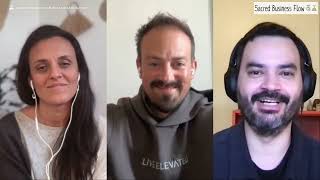
In this live Substack session of the Sacred Business Stories series, host Phil Powis welcomes email performance strategist Matt Brown to discuss why many creators overlook email deliverability until it harms their business. Matt recounts his unconventional path from a medical background to copywriting at MemberMouse, where a failed launch sparked his fascination with deliverability. He defines deliverability as the ability to land emails in subscribers’ inboxes and distinguishes it from performance, which is about maintaining a strong sender reputation. The conversation covers practical early‑stage habits: weekly tracking of open and click metrics, setting up Google Postmaster Tools, and monitoring DNS records. Matt emphasizes rigorous list hygiene, recommending a 180‑day re‑engagement window and using AI to flag bot or spammy names in CSV exports. He explains his generosity‑first business model—offering free diagnostic calls, then converting to paid audits—while maintaining boundaries to avoid burnout. Matt shares how he handles fear and resistance, especially around feedback on creative work, and how he channels that into disciplined processes. The hosts explore how authentic connection can coexist with strategic generosity, and Matt offers two actionable growth tips: consistently delight clients to generate referrals, and employ AI‑driven list validation to improve deliverability metrics. The episode ends with Matt directing listeners to his website deliverabilitynow.com for newsletters and services.
Chapters
So welcome to Sacred Business Stories. This is our weekly Substack Live where really we're just inviting people to have an honest conversation about what it looks like to build a business that aligns with your deepest truth. And today we are enjoying—
joy—
joined by my friend Matt Brown. It's very cool. I haven't had a conversation with him maybe in a year or two. It's been a minute, so I'm excited to be catching up live here, but he is someone I have relied on for support in the past with his experience. He's a very skilled email performance strategist and he really serves entrepreneurs and business owners and helping them maximize their visibility and impact. And he's also our favorite tea— resident tea expert. It's been on our list for many years.
Eventually, when we get our—
get a Sacred Business Retreat off the ground, he'll be someone we'll be inviting to run our tea lounge. But Yeah. Thank you. Thank you, Matt, for being here with us. It's really good to see you again.
My pleasure. It is so good to see you both again. And for— I see some people joining just to say I have learned so much from Phil over the years. Like, this is kind of like an Obi-Wan— hopefully I'm not Anakin situation, but I've learned so much from Phil. So I wouldn't be where I am today if it wasn't for Phil, his coaching, and just like the perspectives that I've learned from you. So always happy to chat. And yeah, I think it's been maybe like 6 months, a year. I forget exactly when we talked last. It's been a minute.
I think the last time I reached out to you was probably with some sort of an email deliverability crisis or something.
I think that was what was happening. Something about bringing people from Substack over, back over to Kit. Yeah.
Yeah. Yeah.
Yeah. Thank you. Thanks for being here, Matt. And thank you everyone for watching us. And I just want to invite you, if you have any questions, to Matt throughout our conversation, please post it in the chat and we're gonna, uh, do our best to respond to that. I like to remind ourselves, our guests, and people watching us why we do Sacred Business Stories, and it's purely for inspiration. Like, we like to invite people that they run cool businesses, that they have a business that supports their lifestyle, and this for us is a sacred business. It's something that you do with your heart, um, that supports the life that you want to live, um. So that's why we invited you, Matt. So if you could just guide us, like what you do, how you help people and more or less, and I know it's like a lot of, it's a long story, but just whatever you want to share, like the behind the scenes of like you getting where you are now.
Yeah, absolutely. So I would say the most accurate way to describe what I do is I kind of run like a boutique email performance agency, and that really encompasses like the world of deliverability. So I work with entrepreneurs and business owners and a bunch of different niches and kind of business styles to help them create like really powerful email marketing programs, not from like a messaging standpoint, but from kind of a technical strategic standpoint. So yeah, that's kind of like the nutshell version of that. And I really kind of help people demystify essentially what's happening with deliverability and sidestep a lot of the problems that people run into as you grow a list and as you kind of introduce more sophisticated strategies essentially.
Well, yeah, maybe if you could, like, yeah, I would love to hear more about your, you know, and I remember, was it MemberMouse? I think that was, but yeah, I'm just curious like your, yeah, how you came into this because it's such a specific niche within the marketing world and it's for very specific people. I feel that are at a certain level of sophistication and scale or moving in that direction. It's just, yeah, I just would love to hear more about how you found your space there because now I feel like you're some, you're actually really the guy I would trust with that kind of information if I, because I don't really keep up with it the way I used to. And if I had, you know, you're the kind of person I would reach out to. So I'm curious how you honed in on that and what it means to you.
Yeah. So I really started my marketing career working for a company called MemberMouse and I got connected with that company because I was of tea, actually, you know. So when my wife and I, we moved to Portland, we started going to this tea house, and there was always this guy there just hanging out all the time, and he looked cool, and we liked the same type of tea. And I kind of slowly got to know him, you know, after dozens and dozens of visits. And he was this guy named Derek. And at that point in time, I really had no concept of entrepreneurship. Like, I was working in the medical field. I was on a completely different reality And there was this guy who was just always on his laptop, never seemed to have to go anywhere, never seemed to be hurried. And I was just like, what's, what's up with this guy? You know? And like, we just, as we got to become closer and closer friends, we realized we have a lot of different things in common. Kind of separately from that, I got interested in marketing because my wife is an artist and I was kind of like trying to learn. I kind of had this idea, like, I think we could sell your art online, you know? And I was like, I radical concept to me at the time, back in 2015 or 2016. And as I kind of got more and more into doing marketing training, as I discovered like content marketing and copywriting, and I really got kind of attracted to that, and I just kind of devoured as much educational material there as I could. And so as that was sort of developing, I was talking with Eric about it. I really had no idea. I just knew he ran a software company remotely. He was a developer. and he owned this software company. I started talking to him about copywriting and content marketing and all this stuff I was doing that I was excited about. And he was like, you know, like, I need someone who can do that for my company. And I was like, oh, like, what is your company again? And he explained to me, and that's kind of when I discovered what WordPress is. That's when I discovered what membership businesses are. So I went to work with him back in 2017, and I probably spent like 3 just really solid years heads down. In that business, doing content marketing, doing SEO, doing copywriting. That's when I found like Ry and Copy Hackers and got deeper with copywriting training. And as I kind of like developed my understanding of that niche, the types of people that were using MemberMouse were like these online course creators, online membership builders, people who were building like the early versions of what is very common today, like as an educational style business. And so like we had a podcast, I would interview all of these people and then kind of over time, some MemberMouse customers started asking me to feel like, hey, can you write our launch copy basically for this upcoming launch? And this was all above board, you know, I was a contractor for MemberMouse and so I started kind of doing email copy and launch copy for these people. And there was one particular person that I did a launch for and he was in like a financial niche and I did all the copywriting and I was kind of at this stage in my career. I was just putting the email copy into a Google Doc and handing it off to the entrepreneur and then their team would put it in ActiveCampaign. And this guy George, who I'm still friends with to this day, he was like, hey, like our tech guy bailed on us. Can you build the automations in ActiveCampaign. And you know, MemberMouse used Drea. I was doing some stuff with email at that point, but I had never really used ActiveCampaign, but I loved learning. I was like, yeah, I'll do that. I didn't realize that that was all, there was a whole art and science to that. And so not only did I like write the copy and kind of develop the launch strategy for him, I built the automations and emails and all of that in ActiveCampaign. And that was the first time I really got to like track the performance of those emails in real time. And it was a really successful launch for him. I think we did like 100 and I think it was like 103 sales for like a $2,000 product. You know, this was like common back in the day and he was ecstatic. But I was like looking at all of these email reports. I'm like, we're getting like a 10% open rate. We're getting like an 8% open rate on this. Like this, something is wrong. And at that point I thought it was ActiveCampaign's problem. 'cause it's like, to me, a new tool. I had no idea about all the things that go into deliverability and performance. So after the launch, I like opened up a chat window, a support chat. I was like, "Hey, like something's wrong, like with you. Our emails are only got a 9% open rate." And the support person was like, "Yeah, like everything on our end looks good. You might have a deliverability problem." And I was like, "What's that?" And so once that concept was introduced to me, yeah. I was like, what's deliverability? Like, I had no idea. And so once I kind of sank my teeth into that, I really didn't let go. And I was probably, I think that launch was in 2019. And then, yeah, I kind of, from there, I kind of continued doing a variety of different projects and slowly started taking on more like pure email deliverability performance projects. And now that's basically all that I do. I write copy and content for my own business. But I don't do copy for clients anymore.
Could you just really quickly, because I think for our audience, a large portion of them, not all, but many of them would probably be at a point where they haven't had to think about things on this level, but you know, they will, you know, the ones that are growing and especially, you know, as people are doing more of this stuff around using Kit with Substack, for example, could you just give a short definition of what you actually mean by deliverability and why someone should even be keeping this in the back of their mind as they continue to grow an audience, Substack or otherwise?
Yeah, absolutely. So I think like the most basic definition of deliverability would be like your ability as an email marketer to get your emails into the inbox of the people that are on your list. And so like being able to get your emails delivered. A true deliverability problem is where you have done something either once or over time that has jeopardized your reputation and you get blocked by the inboxes. You know, your, your messages are get filtered or a percentage of them don't get delivered. That's kind of one side of deliverability problems. Another would be a pure technical error where you didn't realize you set KITT up incorrectly or it's conflicting with other records you have in your DNS, and you are essentially preventing yourself from delivering your own emails. So yeah, and then, so like, that's kind of like deliverability, but then performance is about like maximizing your sender reputation so that you don't have to worry about whether your emails are going to the promotions tab or the updates tab or the spam folder, the inbox, or like, it's like having an ambiguous, placement ability, essentially. I was supposed to be short, but I ended up being really long.
That's perfect. I know we're not here to go deep, but I just, it's a topic that I feel many people, especially those earlier in their entrepreneurial journey, they're not even aware that this is a thing. And, you know, it's a really important thing to have just a baseline understanding of. So I'm sorry, Carolina, go ahead if you had something to share.
Yeah. Like, is there, and that's not my world, but I really enjoy like just, oh, that there's that. And then I've been learning a lot from Phil, so I consider myself a little more than basic for email and all of that. Like, I—
Oh yeah, Phil's gonna get you up to speed fast.
It does. But my question is like, for our, you know, for our audience that they're like just learning how to grow their audience and they're not even thinking about that as Phil shared yet, but is there like something that they should be thinking from the beginning or something that they should be doing from the beginning that when they reach like a big audience and when they're like, hey, I want to scale that for like, you know, more people, like not only to avoid the being blocked, but like something that can build up, for example, like a little thing that they can be doing from the beginning to set them for success later in their career or their business.
Oh, definitely. So what I recommend for everyone, even if you only have 100 people on your list, is to just start tracking your email, like engagement metrics on a weekly basis, you know, KIT and other platforms, they do a good job of this, but having some outside source, like a spreadsheet, or you can build something with Claude or another tool to help you kind of track this over time. Cause you just want to have a sense of historically what your email performance looks like that way. If there's ever a major fluctuation, you kind of have a, you know, you're not just lost, but like, wait, why did our open rates all of a sudden go to 5% when we were getting 52% last week? The other thing would be to configure Google Postmaster Tools like today. So for people that run consumer-style businesses, you know, where you're marketing to people with Gmail addresses or Google Workspace addresses, you know, 60 to 80% of your list is probably using a Google product. Further inbox. And so Google has a tool called Google Postmaster Tools that gives you as much information as you can possibly get about how Google views you as an email marketer. So like, even if you have 100 subscribers, you just want to check to see what does your domain reputation look like? What are your spam complaints from Gmail users look like? Are you having deliverability errors? So, or delivery errors. So I would just like get in the habit of tracking that, even if it's all good and there's nothing, you know, really to write home about. As you grow, then you kind of have built that habit in and you're like not surprised when you reach 20,000 subscribers and all of a sudden now you're encountering more sophisticated issues. The other thing, and this is like the big one, is I would, I would say like the most important thing is to not get attached to your subscribers if they disengage. So like right now, people that are in the growth phase, like it's amazing when you double your list size and then you double it again and you get all these people and you start to think, wow, I've got 4,500 people on my list. But like, if you can build the habit of letting people go. If they don't engage with your emails within a, you know, a long enough timeframe, like 180 days, you're going to save yourself so many headaches down the road because what really causes the more subtle deliverability issues is when you have 50,000 people on your list, 20% of that list has an ambiguous level of engagement and you're just sending them all these emails and that lowers your reputation. With the inbox providers because they know you're not cleaning your list, you're not filtering based on engagement, so they put you into kind of a second-tier category as a sender.
It's very good that you mentioned that, and I just want to make a comment because here on Substack, we often see people like, well, I guess it's normal, right? They're just like celebrating numbers. And then they think that the more the merrier, but that's not necessarily true, right? So like, oh, now I have 30,000, 50,000, but like, they don't even, maybe they don't even know that people are not even opening their emails. They're not even delivering their emails. So it's just interesting that, you know, sometimes to just see outside and like, oh yeah, like 30,000, 50,000, but that's not the reality, like that, that's good, right?
Totally.
Yeah. This is really, really, this is really, really hard for people when, especially earlier in, in the process where they feel like they're like fighting tooth and nail to get every brand new subscriber and it can be a harder pill to swallow, but it's really important. And I think you probably know this, Matt, but like my philosophy has always kind of been like, I want people almost like off my list as fast as they're coming on if they're like not the right people. So we've been blessed by a high level of growth the last couple years and every month, people might be surprised to hear this, every month I'm letting at least probably 500 people go and That's part of what you're saying, but I'm curious, like you mentioned 180 days and there's a lot of different opinions on that, you know, from, you know, more aggressive 30 to 60 to 90 to 180. How do you— and I don't— my personal belief is that's not a one necessarily a one-size-fits-all, but for someone who's considering, you know, this idea of knowing when it makes sense to let somebody go, what would you say? Like, What was it that led you to say 180? Is there, is there any sort of a formula or a decision-making process that you might guide someone through to come to that decision on what the right length is of time?
Yeah, definitely. I would say like 180 is just like the maximum you want to adopt without getting yourself into too much trouble, but it really depends on how many emails you're sending and how many emails somebody has received from you. So like, if you send an email per day and somebody hasn't opened an email in 30 days or 45 days, you can probably remove that. But if you send 2 emails a month, then you're going to have much, much fewer touchpoints on which to evaluate someone's criteria or like if you are engagement criteria, if you have like a seasonal business as well, and you don't do a lot of sending in the summer or the winter. Then 180 days, it's like, is a, it's a broad enough window for you to consider re-engagement, but it's not so broad that it's going to get you into trouble. That's what I would say. So it's like the more you send, the tighter that window can be, the less you send. I wouldn't go further than 180 days. Yeah. Cool.
Thanks for sharing. And it's funny 'cause this isn't the typical conversation we have on this, and I want to kind of move back towards our other question because I also see you as a very, well, you're a philosophical, well-grounded person who has been riding the waves of entrepreneurship, well, at least since you said 2015 or so. And I think there's also a lot that people who are listening can learn from you about what that journey looks like in reality. Right. And so like one of the things that we talk a lot about with our audience and we try to convey is that it's like really normal if you're on this kind of entrepreneurial roller coaster to have like fear and resistance kind of coming up. And it's something that you just kind of have to make peace with, with. And I think even more so when it's something that is really meaningful to you, like the more your work feels close to you and meaningful to you, I think this even gets amplified. And so I'd love to ask you kind of where does fear and resistance show up for you as you've been kind of riding the waves of entrepreneurship, as you've been growing your current business, and how do you kind of work with that as you kind of keep even keel and keep moving forward?
Yeah, definitely. That's a great question. So I'd say that fear and resistance really came up for me a lot in my earlier kind of phase of my journey, especially when it came to writing, because like writing is so personal to me. It's, I love writing, I love copywriting, I love writing articles. And when you're writing for clients, like every bit of feedback really stings, you know, like I'm turning in this copy that I think is a masterpiece and they're like, redo it, you know, and that really hurts. So like it took me kind of a long time to build a, like, not a catalyst, but like just to build a, like, an acceptance for feedback to where, like, I was really, I kind of changed my process to incorporate feedback versus at the beginning it was more like, this is done, this is the way it should be, blah, blah, blah, blah, blah. And so as I kind of transitioned more into Deliverability, what I was able to do is like take the thing that was most personal to me, which is like writing and creativity and apply that to my own business and offer up a skillset that isn't as like, it's still very close to my heart and I love helping people in this way, but it's, it's a little bit like more agnostic when it comes to like right versus wrong, or it's, it's not subjective, like Deliverability is very cut and dry. So I think I've really found the thing that's the most sustainable for me in this world because I'm extremely passionate about it, but I'm not getting into little debates with my clients about this sentence here and that word there, you know, and stuff like that. And then kind of more recently, I would say, I don't know if it's exactly fear, but it's just like this kind of overwhelm with the amount of information that's out there. And as technology and tools and AI develops, I have all these ideas of things that I want to do, and I still want to live a balanced life and not be locked into my— locked in front of my computer all day, and it's dinner time and I'm cloud coding something that probably isn't even going to be something, you know. So it's like finding like the balance of staying in touch with everything, developing my skills, learning new things, and making sure it's not a distraction. So I'd say my fear would be like that I would— I like have a tendency to want to just like go down a rabbit hole and like I'm trying to prevent myself from just like disappearing into some rabbit hole and coming out the other end of it ended up being not doing anything, you know.
It's funny, you would be, uh, we just created, we haven't shared it super publicly yet, but we just created this new archetype assessment and you would be what I would consider a seer in that archetype. You have high vision, high, high, high skill set, high potential for doing a lot of things, but figuring out, yeah, how to, to wield that in a way that, uh, yeah, that, that works for you. Um, yeah, we call that the seer. So that's really interesting.
I made a link. I'll take, I'll take the quiz. Yeah. Yeah.
I would love to see if that's what you— I mean, many people, many people are, many people are, it's not like putting people in a box. It's more of like what the prevalent pattern is at this phase in their, their experience. So many people have kind of a combination of different archetypes that are at play, but those are some of the, those are definitely some of the qualities of, of what we're calling the Seer, which is pretty fun. So yeah, I'll send you the link. You can check it out. I'd be, I'd be curious to see what you think.
For sure.
And I just want to point that out that you mentioned about like, um, the feedback, like receiving negative feedback and just incorporating that to the routine and like, oh, this is just part of the process. And I just think that's very interesting, even though you were talking about writing and writing to a client and then getting specific feedback for that thing. It's just very interesting, um, to apply that for expand that in the business, right? Because we see people. Um, beginning their business right now. And then like often people, like they measure all their words because they don't want to feel rejection because they don't want to be criticized. And then sometimes they don't even post anything because they're avoiding that. And the way you shared felt so like, oh yes, it's just part of my process, you know? And then if I receive a good feedback, great. If I receive a bad feedback, great. But it's not, you know, affecting my, emotions or training myself for it. It doesn't even mean that I'm doing something wrong. It's just part of the process. And the way you said it was just like, oh yeah, it's, it's, it's natural and it's easy and it can be part of, um, you know, um, a whole in a way. So thank you for that.
Absolutely. And like, I think when I reflect back on that time, what was really was most frustrating to me was like having to redo a lot of work. And I was just in a less mature phase of my career. And so, you know, I would, you know, if you're a creative person, if you like writing, if you like creating things, like you're going to catch this wind, you're going to catch this wave and you ride it to the end and put a period at the end and boom, this is done. And then when the person you're actually creating it for reviews it, I'm like, this isn't what I want at all. This is, this doesn't make any sense. Then I'm like, oh great, I'm going to have to like redo that, like get the inspiration back to like do this whole thing. So. When I, I kind of just changed my process to only get it like halfway done or 50% done before asking for feedback on the direction. I want to make sure this is what you want. We're on the same page. And I think like incorporating the client or incorporating whoever you're working with in that process, it also helps them feel like they're part of the creative process. And then when the end product is actually created, it's like, wow, this is great. We did this together, you know? And like, it's just more. Harmonious, basically. Very nice. Love that.
Well, cool. Uh, the, the next topic I wanted to touch on is actually on, um, connection. And so I feel that one of the biggest challenges we see with creators online is how to create meaningful, authentic connection as they're sharing their message. And with you specifically, what I'm curious about is I see you kind of as a, a secret weapon, right? Like you're pretty niche down, but like, And as we started this conversation, like many people, especially earlier in their online careers, may not even understand what this world of deliverability is, but for the right person at the right time, you're like a godsend, right? Like you could be the difference between someone falling on their face with a launch and having like a multiple six-figure success with their product, right? And so we see a lot of our clients too are kind of like that, right? Where they are in a very unique niche or it's a unique combination of their gifts and they're serving a specific person that if they can make that connection, it's, it's just like, again, it's the same thing. It's like the perfect handshake. And so I'm curious how now and as you've evolved over your career, how do you— I know you have an awesome, like, it's super, you know, super informative, your newsletter you do through Deliverability now. But like, how do you approach connection and what advice might you have for someone who does want to connect with more people who would benefit from what they have to offer?
Yeah, definitely. So I mean, one, I would say I've just been incredibly fortunate to make connections with a lot of amazing people. In all the years I was a copywriter, I got to meet all of my modern copywriting heroes and get to know them and like become friends with them, be in Slack channels with them. And so like, just kind of like becoming friends with people, like at the kind of earlier phase of my career was just great because then when I made the transition away from being a pure copywriter to being more of a specialist, I then became an asset to all these people who encountered this problem with their clients. So like I was, it was a very easy recommendation. If somebody was the, you know, marketing chief, like fractional CMO for a big personality and they had email problems, they would say, hey, you got to talk to Matt. Um, so that's one thing. Like, I don't want to discount just like my own luck essentially of like meeting the right people at the right time, like meeting you, Phil, just like. There's, there's an aspect of it that is completely outside of my control. But the thing that is within my control that I think does really help is I'm like extremely generous with people who are wondering whether they have deliverability problems. So like, anytime I meet with somebody, anytime somebody reaches out to me, I will do like an hour-long testing call with them essentially, where we'll look at everything. They don't have Google Postmaster Tools set up, we'll set it up. And we'll kind of discover on the call together if they have a problem or not. If they don't have a problem, I'm going to like give them some best practices to follow and send them on their way. If they do have a problem, we might go into doing a project. But like, I'm genuinely trying to help people because it is such an esoteric, obscure world, and the problems that exist in this world are major problems. And so I think like just Having adopted that like approach, then like anybody I talk with, then they're anytime they hear from somebody that they have an email problem, oh, you should talk to this guy, Matt. He was super helpful. And it's just like, I think you even taught how like the golden chain of referrals or something like that, or just like you just help people, like it's all going to work out, you know? And I do genuinely try to share like actual helpful information that's infused with my personality in my newsletter. So it's like, there are not a lot of good sources to get digestible deliverability information out there. And so I get a lot of really thoughtful responses from people talking about how these emails are helpful to them. And then lo and behold, 3 months later, I hear from them, I'm working with this new person, they've got this problem. So it's just like a, a good web of connection, I'd say. Yeah.
And that, you know, generosity goes a long ways. And yeah, I mean, I, I would, if I had a major problem on my hands, you would be the first guy I would call. And if I had someone I knew that had a major problem on their hands, you'd be the first person I would think of to recommend. And that's, that's for a lot of reasons, not just what I'm going to say, but, you know, just as I, I don't know if it was before, before we started the call publicly or not, you know, there was a phase early on with our business here where I was running. I don't know if you may have even pointed out to us, you either might have pointed out to us. Yeah. So that's another, how, how cool, like, you know, you like, I think you took the initiative to be like, hey, like you're showing up in our, I forget what was happening. Maybe you remember, but, uh, but yeah, you were very, very generous with some back and forth. And fortunately I have enough of the technical skill to kind of take most of it across the finish line, but you were definitely able to point out some things. Very quickly that, uh, that I wasn't paying attention to.
And it was— yeah, I think what it was was that, like, you were both using the Phil and Carolina addresses, and one was performing very differently than the other. And there was something about, like, the Substack something. But yeah, I mean, I'm like, I'm passionate about this stuff, so I'm— I look at my spam folder every day across, like, 10 different emails that I have. If someone I know shows up in there, I feel like, hey, like, let's, let's look into this.
So yeah, and, uh, but one quick follow-up question to that, and because another thing I see, um, people get so like this generosity thing, right? Like, and, and with you, I mean, there is generosity as a strategy, and I think strategy and just truth and who you are can coexist. Like, you can just be generous and it can be a strategy, and I feel, uh, that's who you are. Like, I don't, I don't feel like Like, it just feels very genuine to me. But what I'm curious about is a lot of people—
Generosity strategy. I learned somewhere. It's just like, this is just the approach I decided to take based on what feels good to me.
But what I want to ask you about, because we see this a lot and often people are asking the wrong questions prematurely because they don't really have the demand, but like, there's like a lot of people that are, they're almost projecting into the future and they're saying, when I'm successful, like I need to protect my energy and like, I can't afford to spend all this time on calls with people and not getting, getting paid. And there is a point where that does actually become true that you need to be selective. And so I'm just curious, kind of as a counter to what you described, like how, you know, what would you say to that? Are there things that you do to make sure that like you're not burning yourself out or spending too much time kind of having free conversations that aren't leading somewhere, like where, where does the strategy intersect with that? If there's anything you could share or not, you know, depending on the way your world is.
So like, the thing is, is I also offer paid calls. So if somebody wants to, like, if someone reaches out to me like, hey Matt, so-and-so referred us to you, we don't know what's going on. We are, we've noticed these problems. I'm more than happy to like get on a call. It's like, Go into, you know, get your oil changed and they plug your engine into the check engine thing and it gives you a whole diagnostic of what's going on. I'm more than happy to do that because that's just like super easy to me. And I love meeting people and I'm happy to talk and like my count— I do protect my calendar. I'm not doing a ton of these calls every day, but if somebody reaches out to me with a specific problem, like, hey Matt, our DNS— like someone changed our DNS records. And this thing happened and now this problem exists. Like to me, if you've already identified the problem, then now you're eligible for a paid call. So I'll say, okay, I can help you fix this problem on a 60-minute call. This is how much it costs. And then people can sign up and I get paid for that call. So it's like, I've, I've become really good at identifying what deserves a free call and what is like, no, no, this is, this is a paid call. So, and I'm happy to tell people this is a paid call. They're happy to pay for them because It's a big problem.
It's very nice because the way, uh, well, at least the way I'm perceiving it, like one, generosity is very genuine for you. You know, it's, it's like you like to give, you like to serve the topic that you talk about and you, you know, you help people with. It's something that you love it. And it's, um, yeah, sometimes like people get to this discussion that like, oh, if I'm in the, you know, what it is to be authentic and if I'm doing connection because I need something, then it's no longer authentic. And I'm like, well, you want your business to succeed and you want money and you also want to help people, right? So the way you are sharing, it feels very like natural for you when you found like a very good balance of, hey, this is where up to where I can go and I can give you free advice here. If you want to work with me, great. If you don't want to work, I'll give the information anyways because it makes me happy or I'm just joyful in like sharing, but also I know this and I'm going to charge you, you know, so I, I just, I'm just repeating this because I think it's helpful for our audience to see that like, yes, you can be authentic. Yes, you can be genuinely like generous and you can do the things that brings you joy, but also like, you know, setting that boundary and like, hey, from this point Moving forward, it is what I charge for and not feel bad about it, you know, and, and I, you know, just the way you said it was very, uh, very, very nice and very natural. Like it feels very easy to you the way you do it.
Yeah.
And I'd say it really depends too on like the specific business that is the specific business someone's running who's having this question is like dealing with, cause it's like. If you're offering coaching, if you're offering a more specific education, like, yeah, it really could feel like you're working on a free call. But for me, it's like, I'm not working. I'm meeting somebody. I'm sharing like information that just exists in my brain that I'm happy to share. I can drink my cup of tea. You can have a good connection. If we want to do a project, we can. If not, no worries. Like, I've kind of left a positive impact on you and then Like, it's just has never gone wrong for me because people always come back. Like, 3 months later, it was like, okay, man, remember that call we had? Well, it turns out it was a bigger issue than we thought, and can we just hire you now? So it's just like, yeah, sometimes, you know, you got to do a lot of calls in the day, but it's like, you're in business and I'm sitting at home and I'm happy.
So, yeah, it's, uh, it's really interesting. We won't go too far into it because we'll get too, too out there, but we were just having prior to this conversation, we were just having, we have a, in our network, we have a call once a month called Wonder Questions. And we kind of go into these deep, kind of philosophical, spiritual rabbit holes, but we bring them back to how they relate to business. And one of the things that we were talking about was this idea of neutrality in kind of your energetics and around sales. And to me, the way you're articulating and also the way I've experienced your energy, I do feel like you have that— you're bringing like that neutrality. It's just like, oh yeah, we're here. I'm just having a good cup of tea. If it turns to sale, if it doesn't, I'm enjoying what I do, I'm serving and Let's just follow this and see. And that's such a great energy. I think that makes people feel safety as well, right? Like, probably I'm not saying that there's anyone on this call that has a delivery problem. Maybe, you never know, stranger things have happened. But that's the kind of energy that makes it easy for someone to feel safe to have a conversation because you're not bringing this pressure to the conversation for yourself or for the individual. Yeah, I really appreciate that about your approach as well.
And I think one of the things that helps that is like the specific world that I'm in, it is so clear when you have a problem or you don't have a problem. And it's like, if you have a problem, it's like, and you want to continue having an email marketing program, it's like, people are like, okay, let's go. So it's just like, I never need to convince anyone of anything. And if someone doesn't have a problem, then I don't want to do something for them. Like, some people are, they have really complex setups and it's ambiguous after the initial call, so I offer audits and things like that. But, like, you know, I also, I don't want to do a project for someone that doesn't need it, because that's just going to be weird.
Yeah, for sure. Cool. Well, um, One of the things we've been playing with a little bit lately as kind of a last question, and I'd be curious if you have anything that you can think of, is we like to try to leave, and especially, you know, no pressure, but since you've been in the marketing world for a minute, we like to leave people with something kind of practical or tactical that's been working for them in their business, you know, in terms of growing or finding clients or, you know, getting themselves out there with their message. So I'm just curious, and you know, you hear, a lot of the same, and I'm sure you hear it yourself, you hear a lot of the same stuff kind of being recycled and shared over and over again. And I'm just curious if there's anything you've played with in the last year or experimented trying that, you know, you've been seeing good results, or it could be the simplest thing, you know, that maybe someone might want to try if they're trying to grow their online business.
Oh boy, I hope this is probably going to sound like every other Answer that I would provide.
I know this question is like loaded with pressure, right?
But I'll give you, I'll give you two. I'll give you like a practical business profile and then I'll give you a practical like email marketing one. But I'd say like if you, if you were just like, if you do a really good job for people and you're fast and you're responsive and you're fun to work with and you make the other people's lives easy and you don't like, you don't, you know, cause more problems when you remove problems from their business and their life. Then they are so much more likely to refer you to their network. So like after I finish a project with people, I'll say, hey, do you know anybody? Are you in a mastermind with anybody that has a similar business to you? If so, can you introduce me? And they'll be like, yeah. And then they'll introduce me to people and it just kind of continues going like that. So that would be my advice. It's just like, be awesome, a pleasure to work with, make your clients life easy. Like don't cause them problems. Like be fast, be responsive when I message you on Slack, don't roll your eyes. Like just, they hired you, you know? So that's one, that's like the most like the practical business growth side of things. But for people that have an email list, one thing that I will, uh, like a super practical tip that's really been helpful for me is what, you know, Phil, you know about like list validation and how important it is to keep your list clean. And we're at a point now, like in the sophistication of email addresses and spam accounts and bots and things like that, where you, it's possible you have a lot of valid deliverable addresses on your list that are spam accounts or that are bots. And so I have actually found that if you take all of your name data, like if you take, if you export all of your contacts from Kit or wherever, whatever platform you're in with email address and their first and last name and any other information you can have in that CSV file. You can have whatever AI tool that you use analyze like the semantic quality of your list and flag people with questionable names. Because a lot of like the spam accounts will use like gibberish names where it seems like a real name, but it's not a real name. So like, it's just another layer that you can add on to cleaning your list to remove addresses that are potentially harming you, but seem legit. And so it's just a really, one of the best things I think about all the tools that we have at our disposal now is your ability to do like really bulk analysis of quality name data. So that would be the practical email tip I'll give people. Cool.
And can you speak one more part to that just for if people aren't educated on this? So like, obviously if you have a bunch of those people on your list, one thing is it's skewing your metrics, which is making it harder to understand like, oh, what's going on. But what are the other dangers to leaving those emails on your list? And then also we have a question from Finn. Hey Finn, Finn is awesome, by the way. You guys would get along perfectly. He has this really cool, he has this really, really cool tool for analyzing all of your behavioral data with Substack called Stack Contacts. But anyway, he has a question too. How about behavioral analysis on your subscribers.
So yeah, I'd say like for the first question you asked, it's like one, you're paying for those people. So like, you know, depending on how long these accounts have been coming onto your list, you could have thousands of additional contacts that you're paying for that aren't actually opening or clicking your emails. And now like ActiveCampaign and some of these other tools, they have really sophisticated abilities to filter out bot opens and clicks and things like that. So you can find them that way as well. But like, it's just, if you have a really big list, it's hard to just comb through a CSV and say like, you know, some of these names will be like, I don't even have an example in my mind where like you look at it and it looks like a real name, but if you look closer at it, like this is not a real name or it's like, you know, like I wish I had a better example, but it's like the, tool, you know, Claude or whatever can really tell you like this, this name does not exist in any language in the world. And then you just flag those people and you look at their behavioral data then and you say, okay, well, yeah, they haven't opened an email ever. Or it's like every time they click, it's within a millisecond of receiving the email. Therefore they're a bot, you know? So it's just like, it's just hard to find those contacts otherwise on your list. And then in terms of like behavioral analysis, Yeah, that's super important. And I'm talking more about like a pure email platform, not Substack, but as much data as you can collect and as much data as you can extract from your platform as well, the better, you know, like now it's very easy to go, I don't know, to get API access to ActiveCampaign and pull as much data as you possibly can from, you know, your CRM. So I would just say Yeah, look at as much of that as possible.
Yeah. Yeah. You guys, if I know you're a Matt, kind of, we were having a little side conversation before this and you're like, I should start looking at Substack a little bit closer. If you do that, you should connect with Finn. You would love what he's built and his, he, I don't think he has ActiveCampaign right now. I think he's just got, but he has Kit and Gumroad and Substack and he's able with an MCP that's connected to Claude and he's able to merge all of that. Data and it's like really, really powerful for like getting a very clear picture of what's going on with your audience. I think you would be a nerd for that, 'cause I know you and me are a lot alike in some of those ways. It's like automated, you know, you were in our course Automated Intimacy a few years back. It's like, yeah, it's like this on 100x steroids.
Yeah.
Yeah.
So that's what that, those are the rabbit holes I'm falling into every day. After I kind of do all my work, I'm like, all right, let's fire up Claude and pull out every piece of data we can from ActiveCampaign. And look at it. So yeah, Finn, I'll find you. And if you wanna reach out to me, my email is matt@deliverabilitynow.com. So.
Yeah, cool. Well, thank you for being here with us, Matt. This is fun. You know, I know you just kind of, yeah, I think you just kind of came on a Substack to have this, correct me if I'm wrong, just to have this conversation. So I don't know if you're active here.
Yeah, I created my account yesterday.
Yeah, yeah. So, So, you know, if someone is, you know, and we're gonna be sending this replay out to our list as well. So someone is curious about your work or maybe they've been having troubles with inbox landing or, you know, their email showing up in spam or promo and they, you know, your free content is amazing by the way with your newsletter. So if they wanna learn more about you, like what's the best way for them to plug in or what links should we be sharing in the recap for them?
Yeah, the best place to find me is deliverabilitynow.com. And you can subscribe to my newsletter from there. I am working on building a new website. So if it looks a little old, that's because I'm working on it. So don't email me.
Busy working with clients.
Exactly. Um, and so yeah, once you, if you subscribe to my newsletter, you'll get like a welcome email from me and then you'll get my newsletters, but I always send out stuff for people to get like back issues and things like that as well. Working on that as well. So yeah, that's the best place.
Well, cool. I don't know if, uh, yeah, we'll be sure to share that. Uh, Kelly, I don't know if you have any last comments, but yeah, we just really appreciate you being here. And yeah, we got to get a proper, proper catch-up coffee tea chat on the books as well, just, uh, outside of this. But it's good to see you again and hear you're doing well and business is good. And yeah, I think there's a lot people could learn from you if they're— yeah, yeah.
Yeah, thank you so much for being here with us. And I have to say, like, Phil has this ability, and I'm sensing that you have that too, to turn those very boring subjects, in my opinion, like, easy to digest. So I was paying attention and I'm like, oh, it doesn't sound like so, you know, it's super techie and it's super specific, uh, but the way you explain and the way you share feels like, you know, uh, I could handle that if I ever needed to do this. You know, to this level. So thank you for bringing like simplicity and clarity to, to this topic that I feel, you know, a lot of people probably like don't want to hear about, or sometimes they're like, eh, it's not my world. Uh, but it feels really simple, uh, when you're sharing. So thank you.
Yeah, my pleasure. That's music to my ears. I really appreciate it.
And thank you everyone for being here with us.
Yeah. Yeah. Thank you everyone. And yeah, we'll be sharing the recap soon. So thank you again, Matt. And we'll, we'll see you soon.
All right, talk soon.
Bye.
See ya.
Bye.









