57 Minute Masterclass on Cold Calling in 2025
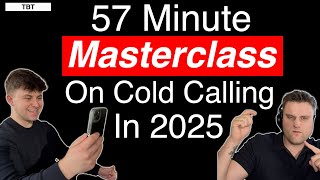
Matt Banks and Noah London share cold calling strategies for 2025, emphasizing skill-building over volume. They break down openers, objection handling with rhetorical questions, and why meaningful conversations matter more than dial counts. Daily structures like 9-before-9 blocks and power-hour coaching sessions keep momentum going.
Chapters
Hey guys, welcome back to yet another episode of Top Billers Toolkit, where me and my twin brother interview top billers from all around the globe to unlock the secrets to their success. Today's guests are Matt Banks and Noah London. Both of these lads are masters at cold calling. They make hundreds of cold calls every single week. Matt is an SDR at Salesfinity and Noah is an SDR at My Sales Coach, both brilliant companies in their own right. And today is going to be a mini masterclass in cold calling. We're going to be discussing the best ways to open a cold call. We're going to be talking about the biggest objections that the average cold caller faces and how to overcome them. And we're of course going to be speaking about the mindset needed to become a master cold caller. This was a fantastic episode, guys. Me and Ben really enjoyed it. I hope you enjoy it as much as we did. And as usual, grab a cuppa or a glass of wine depending on when you're listening to this, and let's get into it, shall we? Lads, thank you so much for joining us today. How are you?
I'm doing great, thanks for having us on. Uh, how are you?
Yeah, really good. Matt, Noah, thank you so much for joining us. This is a little bit of a different one today, guests. We have two hardcore cold callers, which is awesome. We've never had hardcore cold callers on this, and we don't actually speak enough about cold calling considering it's so important, and it's still such a widely used way of winning business for recruiters. So I'm really excited about this one. These guys are absolute experts in their field. They make hundreds of cold calls every week, probably. Guys, am I right? Hundreds? Or is that the numbers? Probably hundreds every week. Wow, that's crazy, man. Hundreds daily. So, you know, these guys have a lot of skill and experience with speaking to people on the phone. So really, really excited about this one. And again, thank you so much for joining us, lads. I'm going to jump into the first question. Maybe, Noah, you could start us off. What's the number one tool in your toolkit, whether it be a mindset, strategy, or software?
It's a great question. Um, I think with strategy and software, they're great tools. It'd be hard to, to use them properly if you don't have the right mindset, especially being in sales and recruitment. If you don't have the right mindset, you are just not gonna perform to the levels you need to be performing at. Quite simple.
Matt, I'm guessing you have a similar feeling towards mindset.
Yeah, so I mean, no, I could not have said it better. But when you look at how you address taking those calls, going into them every day, it's how you see them and how you perceive a certain conversation. Ultimately, that dictates how your next call is going to go, how your whole day is going to go. So being able to stay on top of that is way more important than any kind of tool that you can use.
I'm, uh, I'm diverting off the questions already, guys, so you can see how, um, how, um, kind of relaxed this podcast normally is. But I'm curious, like, when you have a new— I'm guessing you guys observe some new SDRs or new people who are about to make cold calls, and they probably go through this crazy mindset kind of experience where they're like, oh shit, I'm about to make— how do you help people overcome that? Is there like a way Is it just literally like saying you have to make more calls, or is there a way of getting people into that mindset? Like, what's your feeling?
I think one of the first things I normally throw at someone is you've chosen to do cold calling, like walking into a shop and complaining that you don't want to stack shelves. That's the job you've chosen. Doctor, save lives. You've chosen to make cold calling or sales as a career. You've bought into that. The only person stopping you at that point is yourself. So only if you just take that step and go into it, you normally find it's not that bad.
I like that. It's kind of empowering people to take control of what they're doing, which is interesting. Anything else to add to that, Noah?
Yeah. So funnily enough, I work for a coaching company, so a company that helps salespeople become better. And daily I listen to calls, observe SDRs that are fresh into the role, and the biggest mindset shift they need to make is I'm an SDR, I'm calling C-suite, they're up here, I'm down here. The huge mindset shift is you're both in sales, or you're both in the workplace in the same industry. You're calling for a specific reason to help that person. You're not begging this person for anything. You're not asking them for money for nothing in return. You're providing them value and they're returning you with their time, eventually their money. So not putting whoever you're going to call, probably a stranger you've never spoken to, on a ridiculously high pedestal— that isn't what you should be doing— just sets SDRs off in the wrong way. As soon as that mindset shift happens, it just clicks that you are just speaking to another person who more than likely has been in the exact same situation as you.
Really interesting. I'm curious, lads, When you first started cold calling, what was your mindset like? Like, did you guys go into cold calling like with a rock-solid mindset and it was relatively easy to— or like, what was your— I'm just curious to understand how you started.
Absolutely not.
No chance. My first experience of cold calling was door knocking for charities in the depths of Liverpool. Um, so my mindset was What if someone opens the dog, opens the door and a dog comes by to come and bite me? Really, as soon as that happened, anything other than that immediate rejection, nothing was going to set my mind away. So as soon as I came into SaaS sales and started cold calling on the phones, it was a world easier than knocking on someone's door. But yeah, there's definitely a mindset shift to have. What I talked about before about the pedestals and putting yourself on a level playing field with whoever you're calling. Was a really long process for me, probably longer than most SDRs take. Part of that might be my age. I was 18 when I started cold calling. I'm 20 now. It's taken me 2 years to really understand that my age really doesn't mean anything when it comes to calling prospects. And that's been the biggest mindset shift for me. But I feel like I'm in a great place with it now.
Awesome. I didn't realize how young you are, Noah. That's crazy. Matt, are you a similar age as well?
Uh, no, unfortunately cold calling's had a bit harsher on my years. I'm 26, nearly 27. I've not got Noah's youthful looks. Never, never did door-to-door, but I've heard that was like, that's one of the most brutal forms of selling. Um, yeah, commercial property tax. So it was 8 hours a day pretending to be on the phone for those 8 hours, normally scrolling through LinkedIn and generic things like that. But it was hostile. A lot of it was emails was pointless. There was no point trying anything besides ringing them on the phone. So just having to go through that, not having much of a choice. And then property tax, it's not the most interesting of topics either. Normally people would be more excited thinking you were someone calling from a utility company. So that's not as well. So yeah, a lot of abuse, a lot of rejection. And it took a lot, especially when I started off in sales, to overcome that. And eventually one day I just realized that no one else is going to do it for me. And I think that's the things that, especially with mindset, that I've realized is ultimately you can be taught. And said, Noah, great coaching company, they can teach you so much, but you can very rarely teach mindset to someone. That's something you discover.
Really interesting. Can we go deeper into that, Matt? Because it sounds like you had like a moment or a realization. Like, what caused that? Because people don't usually have them just out of the blue. It's usually caused by something. Was it like a really shitty call or like a mo— like, what caused that, that change, so to speak?
Oh, I've got a friend elephant on the podcast. Um, I got dumped and cheated on, so—
oh shit.
It's moments like that, to be honest. Um, it affects me in sales, affecting my performance massively. I'd only just started in sales about a month before the relationship broke down. So a job that's full of rejection after getting dumped isn't the best thing for you. And everyone has it. You have that period of time where you feel miserable, you feel lonely, you want to sit in your room all day, just eat takeaways, pizzas, gain an extra 20 kilograms. Ultimately, no one's going to get you out of that besides you taking that first step out the door, whether you own— and that's when I kind of turned around to myself one day and went, right, easiest way for me to get myself back to where I want, firstly, is financially, financial stability. Yeah, put that work in, focus on my career, just pick up that phone because every time I make a phone call there's a chance I'm gonna get £50, £100, so on. Yeah, little bits like that which typically work for salespeople as well.
Love that, mate. And pain is one of the biggest motivators for people, much more than pleasure. Like, I've been listening to a lot of podcasts recently about this about pain and like how we should be creating more pain in our— if we don't have that motivation, we should be thinking about outcomes of, you know, painful outcomes to drive us. Because pain— people are much more likely to move away from pain than move towards pleasure. So it's interesting that pain was that biggest driver for you, Matt, during that, that moment. Um, how about you, Noah? There was— whenever people are doing a skill, there's usually a growth curve, isn't there? It's like you keep on doing it, you keep on doing it, and then there's like an up Matt kind of told us his where he got— that was a painful situation. I think he went up that growth curve. Do you remember yours, Noah, and like what happened?
So for me, it was when I started as an SDR, obviously fresh out of school, I was still in the student mindset of the teachers are teaching me, they come to me with things I need to do, and if I do that, I'm safe. It's a switch of coming into, into the working world and realizing actually you've got to be a lot more proactive. And it took me too long to do that, where really no one's— no one's coming to save you. It's in your hands. If you want to develop and you want to get better, it's down to you. And the best way for me to be able to drive myself every day is to look at long-term goals, is what I want to do in the future. I can decide right now whether that's achievable or not. Wait for it to happen. No one's coming to save you. It's not going to magically appear. You've got to put the graft in yourself, really.
Love that, man. So I've just got one more question, Ben. Apologies if I keep on— go ahead, mate. But I'm just interested to know, like, there's not many 18-year-olds— I know you're 20 now, but 18-year-olds voluntarily going to knock on doors. Like, I just— usually they're on TikTok or just sitting at home, most 18. So what— why knock on doors at 18? Like, what's the drive?
What—
why do that? What was going on there?
Roundabout story. Finished sixth form, was taking a gap year between going to uni. I was working in a steakhouse. Steakhouse folded, needed more money. What's the quickest way to make money? Sales. So I took, well, interviewed for a sales and marketing associate job, which I thought would be emailing, picking up the phone. Always a red flag when you go to an interview and they offer you the job then and there. Yeah. Was there, turned up the next day, and they're like, right, we are in Hayton today. I was like, what? So I was there for 3 or 4 months doing that, and I realized actually I quite like it. But the reason for me going into it was purely from a monetary perspective so I could go traveling. And actually realized if I stick at this and it will compound in the skills I develop, it'll stand me in good stead. So instead of going to uni do 3 years in a career, and by the time that comes, I've got 3 years experience before anyone my age goes into the world of work. Even if they come into sales after doing a degree that's not related to it, I'm 3 years ahead of them. And then that was real— the real drive for me to go door-to-door and then transition into tech sales, SaaS sales, and then do that in my day-to-day.
Nice, man. Awesome. Love that. I'm gonna let you You go in there. Thank you, mate. No, I'd love to jump into— because I just, I really want to jump into some, some tangibles. Um, I'd love to— I'd love someone to walk away from this, one, be empowered to do more cold calling, and two, maybe have some, some little tips and tricks on how they can become better at cold calling. That would be an amazing kind of outcome for people listening to this. You guys might have— I'm sure there's a lot of crossover in what you do, but because you work at different companies, maybe there's some slightly different steps involved. So I'd love to ask you both separately You mentioned that there's a framework to a good cold call. Can you guys break us down? Like, if you were teaching someone how to make a good cold call, can you just go— can you take us through the steps that you guys would take?
Of course. Do you want to go first, Matt?
Go ahead, Matt.
Yes, I know right off the bat that Noah's and I's, like, framework to a cold call is going to differ. I very much enjoy that rogue off-roading, kind of mirror what the prospect's saying and relate my script to where that kind of leads. I know that sounds kind of vague, but my kind of point is I'll do a quick introduction, permission-based opener. They're normally the rave at the moment, just to establish myself, who I am. Hey, my name's Matt, I'm an SDR. Am I going to ruin your afternoon if it's a sales call? And based on their tone, that's normally where I'll take it. So interesting. Part of my framework is gamification and treat every part of it like a level you're trying to— every point there's a different objection. And I know that we're going to cover some objections later on, but which I'll kind of break that down a bit more. But it's that kind of idea that every time you go into a call, it's a different level and at different points you're going to find different challenges. So when you come across them, it's understanding why is that question come up? Why is that person responded this particular way? And from that you then develop pain. So identifying, right, how are you responding? What's put you in that particular mood? Okay. Is it anything that I can help with or is it something that is going to be better tailored to point you in a better direction, reach out to you a better way? And I use that first cold call just to establish direction.
Interesting. Can I just dig deeper into that, uh, Matt? So I love the first— so there's a permission-based opener, right? Um, can you, can you tell me the line again? What was the first line that you typically say?
There's 101 that you'll hear.
Cool, fine. What's the typical line? Then what would be like an average line that you might say?
So I normally say, gonna be honest with you, I am a sales rep, so I'm gonna ruin your Tuesday afternoon if I tell you it's a sales call.
Cool, awesome. And then you're waiting for their response and their tone will determine how you react, right? So I'm guessing that a lot of that is intuitive, but, um, can you give us an example? Like maybe a good tone and where you would take it, and then a bad tone and where you would take it? Like, is there any kind of, uh, feedback you can give us on that bit?
Yeah, so typically, especially with the people that I'm reaching out to, talking to salespeople, there's a lot of having that game of back and forth objection tennis. But when I'm typically reaching out to people, most people will give you that time just to establish why you're there, what is your calling about. And that's why you do that permission to almost soften the sales pitch that is going to be coming. Yeah. So if it responds positively, I'll then move into, okay, typically when I speak to leaders, I bring up two problems and that's when I then go, right, based on the tone, they've given me that warm welcome to walk in through the door. That's when I'll start going, right, okay, these are the problems we help fix. Is this anything relevant to you? And understand what pain that has and what impact that has. When it comes down to a negative one, that's where I'll kind of tailor it. So I'll drop the pitch and I'll try and understand why they're responding that initial way.
Got it.
Right.
Interesting.
But that will help me kind of tailor. There's no point pitching someone that doesn't want to be sold to.
Hmm. That's really helpful. So it's like positive tone, you can go into the pitch, and then I guess you're relying on the relevancy of the pain points, right, to kind of keep the conversation going. If it's a bad tone, you're trying to warm them up a little bit. I guess that's a number of different ways— your personality, humor, asking good questions. And then I guess, as you say, trying to strip back the, the onions— the— that's not a very good example, I'm thinking of Shrek right now— but, um, asking better questions to then get deeper into the pain, right? For the second. Interesting. Cool. That's awesome, Matt. That's really helpful. Noah, can we throw it to you, mate, and see what— how yours differs or any— how it changes?
No, of course. So for me, the most important part of a cold call is the stuff you do before it. So are you cold calling someone that actually, you know, that you've got a customer exactly like them? That you've solved problems that more than likely the person you're going to call will face. That is first and foremost what I do. I need to make sure that person I'm calling will more than likely have some challenges that we help solve. I'll then go in with my opener, mission-based opener. I like using humor as sort of a storyteller or as humans. Some of the best conversations we have, some of the best stories we have are from when we've had a laugh from someone that's been funny, from someone that's warmed you up. So I like using a bit of a quicker tone, bit of a joke in the opener. So I'll typically go, Ben, hi, it's Noah over at my sales coach. Your heart is probably going to sink because it's a cold call, but it is a carefully considered one. Have you got 35 seconds for me to explain?
I love that.
Yeah. When you smile, it warmed you up a little bit. But then that specific 35 seconds, it gives them an expectation, right? In 35 seconds, I'm going to be able to understand whether this is relevant or not. It's not a long amount of time. Doesn't have to be specifically 35 seconds, but then you've got some time uninterrupted to see if what you're doing is somewhat relevant in their world.
It's also how insane how important tone is. It's just so crazy how you open up completely when you just have hear a certain tone. It's just quite amazing. You kind of forget about how important tone is. But when you said that now, I was like, shit, I would take his cold call. I want to hear what he has to say.
What it is, you only want to talk to people that you'll enjoy talking to. If someone goes, Ben, your heart's going to sink. It's a cold call, but I've picked up the phone now. Have you got a minute for me to explain? Who on earth is he? Why do you think he can take some of my time?
Yeah, it's pretty interesting.
If you can provide an instant gratification or providing instant serotonin, if you like, being a little bit quirky, that then unlocks a bit of a door. Yeah. After that, I'll go straight in with, with challenges I typically hear, and it's one or two challenges that are specific to them in their role. So if I call a sales manager that I know is hiring, what's super important to them is making sure that they come in, they've got the right rep, they're reducing their ramp time. If they're an SDR, booking meetings from the get-go. And making sure that really those meetings are being converted into revenue. So I'll say that you spend a ton of time speaking with ambitious leaders who sit in your seats, who are hiring reps and know they need them to hit the ground running. The best way they can do that is with great coaching to develop their skills, but really just feel like they're honest enough to admit that they are pulled in too many directions to be able to do that and just really paint a picture of them in their role having some frustrations. Because then it comes to the end of it after I've shared those challenges and I flip the coin, I'm like, Ben, I'll pause there because I'm guessing you're actually going to tell me that none of that's true in your world. It's natural as humans, we want to correct people. If someone's wrong, we want to correct them. They'll go, no, no, no, that's interesting. This is relevant. And because they've said that, you've then got the ability to dig into it because they've told you it.
That's really, that's really interesting. I think I remember speaking to a chap called Marcus Kalki. He's in— he was a sales trainer and he worked with Sandler. I'm sure you guys have heard of Sandler Training. Um, that's really interesting. So you said that last line— do you always end with that last line, Noah? Like, if you've got it right, you always end with that last line? Am I right in saying that?
It's always a stupidly rhetorical question that you know the answer to. It's always a pause there though, because I'm guessing none of that's true in your world. A pause there though. If he's slightly friendly, you can go, I'll pause there though, because I'm guessing you're going to tell me that that's a load of bull. And again, if they've laughed at your joke at the start of the call, you know you've got a little bit of leeway to put some humor into it.
Yeah, I love that. Awesome. That's great. Great little tip there. Love that. And, and you said, I really, really interesting that you said that you put a lot of emphasis into the research, Noah. Um, I'm guessing part of that is just the fact that you've spoken to so many people now, so you intuitively know these problems. But again, if you were speaking to a maybe slightly newer rep, what would you get them to do for that research phase, do you think? What, what should they be doing, do you think?
So you need, you need to be spending time with the people that spend the most time with your customers. So whether that's customer success, spend time with them, understand why people buy from you. Like they don't buy from my sales coach to receive coaching. They buy from my sales coach because some of their reps are crap and they need to make them not crap. And what— whether it's a time aspect, the frontline leaders can't spend that time, whatever the reason customers buy from you, make sure that you're finding other people in their shoes So whether that's triggers through their hiring, they've just received a funding round, anything that's relevant into their world to show that you actually care about them and you're not just a salesperson wanting to book a meeting, wanting to make a sale, show that you care about them, you want to help them and what you sell will help people and just help them understand that to a level that seems relevant in their world and not like a desperate salesperson.
Are you— because you said, I'm guessing where you would come in is when people are bringing on new SDRs or new salespeople. Noah, are you also looking for information online of where, like, I don't know, job ads to see which teams are hiring and you're like, oh, they're hiring 4 SDRs, I'm going to go in. That's a great piece of information. Are you looking for stuff like that?
Exactly. So that is exactly what I look for in some companies that are hiring for SDRs. There's other companies that are promoting SDRs to AEs. Some companies that are promoting sales reps, whether that's SDRs or AEs to sales management roles, any type of situation that requires extra skills to be learned or requires constant growth. But if you're a salesperson, a good salesperson, and we might get into this later, but what differs an average salesperson from a great salesperson is their tendency and their willingness to learn and grow. And that's always what I'm looking for, um, when I speak to salespeople. Love it, man.
I love it. Great, really great response. I'd love to jump on to the next question for you, Matt, which is— I remember you saying in the pre-call the difference between the spray and pray approach, high volume, versus the targeted calling. And you kind of, um, you kind of said there's a place for both of them, which, which didn't surprise me, but it's interesting that you kind of vocalized it. Can you tell me when you would use both methods, like when it's appropriate to use volume versus a more targeted approach?
Yeah, so I think with spray and pray, it has a real negative connotation to it because there is a— there's a wrong way to do it, um, where it is you've got no information at all, you're just going into these calls blind, and you're just— you're almost hoping for the best. But then how I typically consider my spray and pray, so I'll get list of contacts, like say 100 numbers. And while I understand the value in spending that time doing that research, ultimately there's always that balance between the research that you need only for them not to answer the phone in the first place. And then all of that research you've done ahead of the time, making sure you've got the right scripts, you've got the right use cases, you've spoken to some relevant case studies. So you're going to nail that pitch once you get someone on the phone. What's the point in doing all of that if they don't pick up? So that's where I kind of consider that spray and pray approach. A lot of that comes from the world that I work in with a dialling space. So we do a lot more volume than your manual dialling. But the idea is that I'll do a spray and pray, which is a lot more higher volume, less targeted, less research to get my foot into a company. Once I've managed to, let's say I get through and I speak to Noah. At that point, Noah's going to give me some information. It might only be a snippet here or there, but straight away I've got a better case so that when I speak to Noah's boss, his team leader, or anyone else in the company, I start multi-threading it. And that's when I've become a lot more targeted.
Mm-hmm.
So the spray and pray, normally like intelligence gathering, if you want to give it a suave nickname, and the idea being just to gather intel as quickly and as fast and as efficient as possible. And then once you've got those snippets, then you can construct a highly targeted list based on that information. Because I say getting through to people, easiest way to do that is on the phones. So use that for your intelligence as well. What's the point spending hours on emails, hours scrolling through the website when you can pick up a phone and ask them?
Love that.
Yeah, it's really interesting. And just for kind of, um, relating this to recruitment, I feel like— and I've heard this from top billers as well— they do the same. They'll gather intel from, say, candidates, you know, speak to 5 to 10 candidates, gather intel on what the problems are, and then have enough information to then pitch to a senior leader. So I think, yeah, I mean, I can completely understand why volume for gathering information is super valuable. Um, anything to add to that, Noah?
No, so I work in a world to Matt in terms of he's selling a dialer, so needs to make a lot of calls. I'm selling coaching, so whatever I'm doing, I need to be at the top of my game because I'm a direct byproduct of what I'm selling. If I'm bad on a cold call or send a bad email or record and send a bad video on LinkedIn, that immediately puts whoever I'm speaking to off learning about my services. So I need to be a lot more on my game in terms of I do spend a ton of time researching because if I don't, it's only going to go one way for me. But yeah, there is definitely a time and a place for actually, I know these companies will have these challenges. So rather than go specific on an individual company, I'll be a bit more generalized. And then once they agree, then turn the screwdriver and dig a little bit deeper.
Interesting. Again, this isn't a question that's on, uh, sorry, Sam, have you got a question? No, no, go ahead. When do you know? So you've gave us a really good kind of, uh, snippet into how to start the call, the kind of two, the questions that you might ask or the, the pain points you might bring up. When do you know is the right time to book that next discovery call? Like, how do you know when the right time is to stop and say, cool, should we book another call? Like, maybe you could give us some insight into when that time is right.
Yeah. So after I share my challenges, they'll typically agree with one of them. And then I'll do a thing which is great. I've learned from one of my coaches is you put them— you give them two baskets and ask them to put themselves in one. So one will be they have this challenge, but it's fine because results are okay. Second, but more common, and emphasis on the more common is they have this challenge. Results are bad as a result of it, so they need to fix it. And once they do that, they're opening up the door to go, we, we need to fix this. This is something that's top of mind to learn more about. And then I'll take from what I've used at the start of the call and ask for 35 seconds and continue on the light-hearted, jokey manner and go, right, Ben, I appreciate you asked for 35 seconds and it's borderline 5 minutes here. Ultimately, the reason for picking up the phone was to see if you'd be open to learning some more ideas around this. I've got my calendar and when works best for you next week. And once they've shared challenges, you will— you're able to be somewhat assumptive that they want to fix it if they're then talking about that.
Got it. So they've admitted to the problems. And then just to go back, Noah, You're then giving them two baskets, right? You said to choose from. Can you just, can you tell us what that sounds like? You kind of, you kind of alluded to it, but can you just tell me exactly what you would say with like two baskets if you were speaking to one of your prospects?
Yeah. So let's say you've mentioned that there's certain skill gaps within your team. I'll then say, right, Ben, that is something I hear a lot speaking with sales leaders. Typically they fall in one of two baskets. They feel like some of their team have certain skill gaps. but other reps within the team are overachieving on quota. So bring it up to a level playing field and really it's not a concern because revenue is still being met. The second, but more common, is there's a generalized skill gap throughout the team. As a result, quotas aren't being met, revenue isn't anywhere, quite frankly, where it needs to be, meaning it's definitely just a challenge. Are you finding yourself in either or neither of those? And they'll put themselves in one. And if they, if they say neither, they will then— because you've described both— they'll then describe their situation. And then that, that then gives you an indication of what direction to go after that.
Interesting. And this is an obvious question, but why do you think it's so powerful to give them two options as opposed to one? Like, why is that such an effective strategy, do you think?
Because if you give them one option, if you say— if I was to say to you Um, as a football fan, you love it when— what, you love it when your team scores goals, don't you? You'll go, yeah, but your favorite part might be actually is, is the midfield build-up play. But you're not gonna give that because you've never spoke to this person before. You've only spoken to them for 2 minutes. You owe them nothing. And quite frankly, you might just want them off the phone. So you'll agree with whatever they put in front of you. But if you put 2 options and then ask either or neither, that, that's given all possibilities and giving them an out of saying neither. We're fine.
And I'm guessing prospects that— correct if I'm wrong— that if they have a problem, they'll always say one of those, those baskets or buckets, and if they don't, they'll say neither. Like, have you ever booked someone on a discovery call that says neither, uh, Noah or Matt? Or is it that— are they always going to be picking one of those two things, you think?
If they're saying neither, I've got it wrong. It's the appearance of giving them an option. If they say neither, I've got the challenges I've perceived that they face completely wrong. If they say the first, that it's actually not a challenge, I go, you know what, fair enough. It seems like you're all sorted despite having those challenges. The team are doing fine as a whole. There's no impact on revenue and there is real no need to help you understand how to improve those skill sets. And they'll agree or disagree with that. But then you know where to spend your time because you're not going to waste your time with someone who doesn't need what you need. But then with the second basket, if they say it's a challenge, then you're like, right, is this something you're actually wanting to fix? Or is it a situation of there's nothing I feel I can do about it? And then just learning a little bit more about the situation and seeing if they're open to learning how to overcome it.
Awesome, man. Really cool. Um, Ben, have you got a question? Or— I do, yeah, but if you, if you want to jump in, I want to ask about day plans and like how they organize their day. But if you're still on strategy, let's go into— let's keep on strategy. Um, well, the only thing I wanted to cover, because I feel like objection handling comes up so much in sales, how often do you guys get objections? Like, is it, is it every, every phone call? Is it 1 in 10? Is it 1 in 100? Like, how often do you guys get it? Just out of curiosity.
I think you have a phone call without one, to be honest.
Really? Interesting.
Yeah, there's a lot of things people think are objections aren't, and a lot of people that don't recognize as objections are. And I think that's the way to kind of look at them, is there's very rarely a right and wrong, like a perfect answer for an objection, because it depends on why they're saying it, and that's where it matters a lot more. So yeah, we come across objections, but a lot of it is almost like Noah said at the end of the last part, which is typically it means that you've got something wrong. If you are getting that instant abrasion, why are they responding that way? So classic one, not interested. Normally one that you hear before you've actually told them anything about yourself. So you're taught really early on in sales to challenge that and be like, well, why aren't you interested? I've not said anything interesting. Normally. So it's yeah, when you get an objection, you need to pause. Everyone's— you get a point in sales where you become really good at handling objections. And you just rattle them off straight away because you think, yeah, I've got this, I'm the best objection handler in this sales floor or wherever you might be working, and you think you're the dog's bollocks. But then, and I noticed that I reached a point where it was I was able to throw them out super quick, but I wasn't understanding them. And I'd always count it as I'm winning this one, or I've managed to handle them, I've managed to close them. And then they wouldn't show up to the meeting, like the discovery call would end up in no-show. And then you start looking at going, well, why were they turning up to that meeting? And if you don't recognize objections when even they're not there, any kind of hesitation. So a lot of salespeople, there's tricks. I know Noah's done it a couple of times, which is even once you've got that meeting booked, give them an objection at the end being like, look, I appreciate like you've let me chew your ear off for 5, 10 minutes. Is there any reason why you wouldn't turn up next week? Give them that weird little challenge, them an objection, because sales teams and recruiters are so quick to be the ones to handle the objections. They rarely throw out one themselves and that will change from a good call to a great call.
Awesome. I have to go right to that not interested because that's got to be the biggest one I've heard and probably the most challenging one if someone just shuts you down straight away, not interested. How do you deal with that? Like Noah and Matt, I'd love to hear both your opinion on that one.
Yeah. So there's a couple of objections that are under the not interested bracket. It's I'm in a meeting, send me an email, I'm on another call. Those things are more than likely FOBOS. They just don't want to speak with you. They don't know why, but they don't want to speak with you. And most salespeople will give into it. Junior salespeople, salespeople haven't experienced it loads, will give into it. Oh, okay. What do you want to see on that email? Oh, when does that meeting end? When do you want me to call you back? Oh, totally understandable. Of course you're not interested. I haven't said anything yet. That is just reasons for them not wanting to talk to you. Call it out. Typically, Ben, when I speak with sales leaders that tell me to send an email, it means one of two things. They're absolutely hectic and want to see an email and speak at another, a better time. Second, but more common, it's just a polite way of telling me to do one. Guessing it's the second one for you here, Ben. And then just unarming them. And if they tell you, I don't want to speak with you, you've saved your time. You're not wasting any time writing up an email, following up on calls. You know they don't want to speak with you. Spend time with the the right people and in the right places.
That's great. I love that. Great little tip. Because I feel like, um, I feel like you know, in particular, I'm guessing you use humor quite a lot. Maybe Matt, you do it as well, but humor seems to be like part of your kind of, uh, the way in. But I feel like, correct me if I'm wrong, it's hard to be funny sometimes, you know what I mean? Like, it's not— you sometimes have that or you don't. It's hard to teach someone to be funny, do you know what I mean? So like, like, have you found that to be the case when you're teaching other SDRs? Like, you, like, they struggle with being funny or try to and it doesn't— they just don't pull it off in the same way, or it feels awkward. Do you know what I mean?
There's definitely a time and a place, and there's definitely a personality type that can get away with it and use it and it'd be useful. And there's definitely more personality types where it might not work. Really, your role as a salesperson as a recruiter, whoever you are, whatever your role you're in cold calling, is to understand what personality type you are. And that's simple with a DISC profile. But also, you need to understand from the get-go what personality type you've got on the other end of the call. There's some people that will just want information, and there is some people at the start of a call where I will dull my tone a bit because they've answered the phone and gone, no one's speaking, who's this? I'll go, Ben, they're over at my sales coach. Won't expect the name to ring a bell. I've picked up the phone for a specific reason. You got 35 seconds for me to shoot my shot. It's definitely a time and place for humor. I just find personally, for my personality type, how I like to speak with people, how people are receptive to it, that I can get away with humor more often than not. But it's really all about understanding the situation.
Yeah, I just want to go back to Matt with the not interested. I don't know if yours is very similar to Noah's, Matt, or if you have a slightly different way of getting past the not interested. I just want to go back to that for a second.
Yeah, ignore it. I'm not saying just keep talking and pretend that they've not said anything. I learned this list, someone that I know Noah's seen a lot of over his time himself as well, but Ben Dennehy. Yeah, sales coach and what he kind of talks about those initial objections that Noah said fall under that one bracket is they're just like a quick-fire deck of cards in their heads that are just trying to find the quickest one to throw out. You'll never hear someone say, send me an email, I'm not interested, quicker than any other sentence in a cold call because they just want to slam it down, shut the door, leave me alone, don't want to talk to you. So Yeah, a lot of it is ignore it. As Noah said, a lot of reps will dive at that opportunity. Oh, right, they've told me to email them. Yes, I've got it. Oh, they've said to call me back after the meeting. They're not going to answer the phone. I think I still do it, and I'm sure Noah does as well. We occasionally fall for it. Give me a call back in an hour. You never hear from that person again. And yeah, so don't waste your time with it and kind of go, right. They've given you that initial objection. Don't rush to it. Don't let it move your flow. I kind of— I sometimes just go, okay, why not? And just let them kind of— and it's that initial challenge to go, oh, I didn't expect him to say that.
Yeah, it's interesting.
Like, I've let him— okay, you've taken control of the conversation. What are you gonna do with it now? So are you just gonna hang up on me? Because if you wanted to, you would have done that anyway. That's kind of the process that I go with.
That's really interesting.
An additional point, and I think it goes back to what newer salespeople are guilty of in terms of the pedestal. This is the flip side of the coin, is people you're calling immediately put themselves on that pedestal and hammer down authority. They're giving you tasks to do because they're putting themselves above you. Send me an email, call me back, I'm not interested. They're all types of things that if you had a boss, they'd say, oh, go call this person for me, do this email. They're setting you tasks. As soon as you combat that in a careful way and go, okay, but typically when I hear this, it means X, typically when I hear Y, it means Z, then actually they go, oh, okay. And they'll start leveling the playing field. But the further you give in to their asks and their tasks, the further that gap gets and the harder it gets to amend.
Really interesting, love that. Um, one thing I really— better— was there any more strategy? I want to go to like day plans because I'm just fascinated, uh, because we— again, me and Ben don't speak to many recruiters who are making like hundreds of cold calls every day, so I'm just fascinated how you guys— you said recruiters, Sam. They're not recruiters. I know they're not recruiters, but you know, recruiters on and they— I have one more strategy question. Well, it's not really— it's more of a broad question, guys, in terms of it. If again, if we just— if there's someone listening to this right now and there's— and assuming they're a new SDR or a new recruiter and they wanted to jump into cold calling, is there anything that we've missed, do you think, that you guys use on a daily basis that you think would be useful, like as in the tech, on a tactical level? What's your feeling?
Bite the bullet. Mm. As soon as you get into it, as soon as you start doing it, it becomes the norm. The longer you delay it for, the scarier it gets.
Yeah.
Good advice. Is there anything you guys do outside of cold calling that really helps cold calling? Like running or like, is there anything you guys do that sets you up for cold calling? I'm just curious.
Anything that's challenging. So for me, that's playing sports, going to gym, anything that challenges myself. And then in relation to what you're doing, say you are a runner or say you want to start running, there is no way making a cold call is anywhere near as hard as even going on a 5K run. And just put it in perspective, like, is this going to be the hardest thing I do today? 'No, I've got to babysit later.' 'Oh no, I've got to pick my kids up from school.' Things like that, in terms of putting it into context. Like, it's just being silly. Picking up the phone— you'll do that to your mate. You're on a night out, you'll call your mate, see where they are, you'll chat their head off. It's the exact same thing. Imagine your mates on the other end of the phone. Just have a conversation.
I remember seeing a post from you, Matt. Did you go into a— you did— did you make cold calls in a pub?
Yes.
I've got to hear about this, mate. Come on, you got to tell us. What was this about? You started with this.
I feel like a Cheshire Cat when you said like, what do you do outside of work? So I brought my outside of work into work and this is something that massively helps me about 6, 9 months. And it's like how when Noah and I came to meet, I do most of my cold calls from a pub. If I'm doing a call or a podcast, I'll sit at home sometimes, background noise. But I've got a fairly good headset. I'll take myself into Manchester city centre, find the busiest pub I can find, and I'll start calling. Um, confidence and like a big— there's loads of reasons behind it, one of them being I love Guinness. Um, like, if you— what sort of recruiter or sales rep loves going to the pub on a Friday afternoon, having a couple of beers, and then they normally come back to the office, don't do much work, but you normally find your calls are a lot better because you're less hesitant to, you're a lot more flow, you're a lot more confident, a lot more comfortable. Benefit of my Guinness. But yeah, just putting yourself in that environment I found was I spent less time worrying about the person on the end of the phone because I had all these people around me. So it's like calling on a busy sales floor, a sales call or cold call in general. It's nerve-wracking, especially when you're just sat there on your own doing it. That's why there's things like, there's communities out there, there's power hours like my sales coach do, and even just WeWorks, even, or just take yourself out to a cafe, a park, a pub, just to give yourself a change of environment. It helps you be creative and also just reminds you that my big thing with sales is don't take it too seriously. Don't take cold calls too seriously. If you're able to not just detach yourself from the outcome, but the whole process, then you stop worrying about objections. You stop rushing into answers. You start focusing on what matters, which is just pretending you're having a conversation with someone at a pub across the table. You're not just going to spend the whole time talking about yourself. You're going to be talking about them. They're going to say something. You're going to listen to it and you're going to ask them questions. You don't meet up with your friend and just spend the next 2, 3 hours just telling them about what you're doing and what you want to do. It's all about two-way conversation, and that's all a cold call is. Whether you're calling a prospect, calling a client, or calling a potential candidate, you're speaking to a human being. They've got their own problems. So going back to the objections, if you get someone that's a horrid to you on the phone, their cat could have been run over this morning. And that's normally what I tell new SDRs, like when they get someone horrid, is You don't know what someone's going through. You might also be going through some stuff as well. But when you're having that conversation over the phone, you're two strangers on two equal levels. No matter where you put yourself on that pedestal, if they put themselves— you're two people having a conversation. Treat it like that, and all of that stress and that pressure will slowly start going.
The new FDRs must love you, Matt, when you bring them to the pub for the training sessions.
Is that, um, There has been a lot of requests, to be fair. I wouldn't be surprised. Noah and I have done it in Liverpool. I love that. It was an interesting experience for you, Noah, wasn't it?
Oh yeah, we'll get into that after this.
Love that. Can we get into day plans now, guys? I'm just interested how you structure your day, when you're making calls, when the best time is to make calls. Like, can you just give us some insight into what your day looks like, if that's okay?
Yeah, my day's super structured. I rely— and a lot of salespeople, SDRs, recruiters rely on self-accountability. It's your job. You've got to make sure you're doing the right things. First thing in the morning, I've got a rule called 9 before 9, 5 after 5. So every day I make 9 calls before 9 AM, because then as soon as you get into your bigger blocks, you've already started calling. Nerves are gone. And then 5 after 5 to finish up the day, wrap it up. So that's typically how I start my day and end my day. A lot of time is spent researching, finding new people to call, probably more than I'd like, but I've got to make sure I'm calling the right people. I've got the right volume of calls to make and I'm specific enough. That typically lies between half 9 and 11. I'll then either do an hour call block between 11 and 12, or I'll send some LinkedIn videos to prospects. So that is essentially what I'd normally say on the phone to people I haven't been able to catch on the phone yet, but of course, but I've connected with them on LinkedIn. And that's just another way of getting through to people, breaking through the noise, because speaking with my head of sales, co-founder, CEO in the past 6 months, They've each received less than 3 videos each, but I've received more cold calls and even more emails. Actually, I do not send any emails as a salesperson. I will not send an email to you if I can't get you on the phone. If I can't send you a video, you're not worth my time because no one's going to answer their emails. It is so archaic, so outdated. Yeah, I'll typically have an hour lunch. That hour is important to me. I've worked really hard in the morning. I like to decompress, make myself lunch, go on a walk, go on a run, hit the gym if I've got time, and then I'll go straight back into either whatever I haven't done in that 11 to 12 block, I'll do in that 1 to 2 block, whether it's calls, LinkedIn. 2 to 3 is the My Sales Coach Power Hour. Essentially, that's a free Zoom call like this. You've got a coach on, they give you tips and tricks to cold call on, and then you go and spend the rest of that hour cold calling prospects, come back into the room and then get feedback on your calls, immediate feedback. So that's what I'll do between 2 and 3. I'll then spend some time on LinkedIn, some internal meetings, and then 4 till 5 will be another call block. Love that, mate.
Awesome. And Matt, how about you, mate? How's your— is it a similar structure or can you tell us about your day?
Yeah, so I'm going to be straight away, I'll say it's my biggest weakness, my own organization. Self-accountability. Yeah, something that, as Noah said, you've got to have in sales. So going into it as an industry, one of my challenges very much so going into remote as well, not having that kind of being office-based, it's tough. So, yeah, again, even using Noah, I think he was the one that helped me kind of have a bit of structure to my day. I kind of move a little bit and I think I have a block, a diary where I do similar things, whether it's a call block where I'll do spray and pray, I'll then do recaps afterwards. So I'll normally do 3 call blocks throughout the day and then throughout that, depending on what meetings I've got, if there's a power hour, that will be flexible. But it's about intent. So not going, right, I have to do this job from this time to this time. But more having the intent. So, right, that's where I'm gonna turn off LinkedIn. I'm gonna delete the tab on my phone or on the browser, hide everything, no distractions, and I'm just gonna have my dialer, hit dial, have conversations. At the end of that hour, I'll then look at, again, Salesfinity with our product, it helps summarize that for us. So I'll then look at, right, these are the emails I need to do, these are the referrals, and it will automatically set tasks for when I need to do it. So at some point in the day I'll go, right, I'm now going to do an email block, go on to my CRM, look at any email tasks I've got due, whack them out. So I think it's just about having that variety, being flexible as well. If you go into your day, it's good to have plans, don't get me wrong, and not just wing it, but don't get stressed if you start moving away. Like you said, we had questions for the podcast, but as you get a flow, you start moving away from it. And it's important to understand that in sales and not get disheartened when you do kind of go off-road a little bit. Because ultimately, if you're able to have a chase of a deal, if you're able to spend time that's going to be either beneficial for yourself or for the product, the company, etc., that's also worthwhile. So yeah, structure your day, but don't have it so rigid that you can't be flexible.
Love that, Matt. Thank you. Oh no, just one more before we end. This is, um, just curious about like ratios. And no, this might be more of a question for you, Matt. You might be able to answer it as well. But like, no, because you're training other SDRs and salespeople like every day, that's your job. I'm just wondering, when, when someone's fully trained, they've understood the process, what does good and bad look like in terms of ratios? Like, am I aiming for 20 calls and 1 meeting booked? 50 calls and 1 meeting booked? 10 like, is there a ratio that you tell people that is like, you should be aiming for this? This is a good ratio to be hitting. I'm just curious.
Yeah. So first of all, I want to set expectations. I'm an SDR for the company that sells the sales coaches. I'm not a sales coach myself. Um, but typically, well, it really, really varies, right? So some industries are harder to get through. I know selling to CFOs is a lot harder or it'll take more than selling to other salespeople. So for me, if a day of making 40 to 45 calls, sending 10 videos, doing some follow-ups, if that doesn't result in a meeting, something has gone wrong. But a newer rep might need to do 60 to 70 calls. And I know Matt has a lot of opinions on calls and call numbers and connects. That is Matt's world. With the dialler, so I'll let him get into that as well. Awesome.
Yeah, as Noah said, there's not a right answer. Depends on the industry, depends on what you're selling, depends on your experience. And as I said before about it being two people having a conversation, ultimately there's very little you can do to control it, or at least there's a lot that is out of your control. So that's normally what I say to people where The— when you're looking at targets, especially for sales team, naturally you do want it to be based on revenue or sort of like opportunities booked. But that's not the only purpose of a sales rep or a cold call. Even marketing, like every phone call you make and say, hey, it's Matt from Salesfinity, that's one more person that is aware of the product. Because I often find is meetings that I do book in, there's a load of them that just haven't heard of a solution like ours. And I'm sure Noah's probably— I didn't know when I first went into sales that there was a massive company full of top-tier coaches that you could just message on LinkedIn. I thought it was a corporate trainer that came in and showed a certificate they got 30 years ago. So yeah, when you're making these calls, I've seen some teams do— I've done over 800 calls in a day using the parallel dialer.
What? That's insane.
That's crazy.
It calls multiple people at the same time. So you're able to— and it's not long-term, it's not viable. Don't get me wrong. I'm not saying that you can every single day call 8 hours. I was exhausted afterwards. Likewise, I could do that and get 4 or 5 meetings potentially. But likewise, I could do a lot more targeted, only make 40 calls to the right people. And have a lot more effective calls. And that's why I said at the start about that balance. I will do that mass, maybe not 800 anymore, but I might do 250, 400, and that's just me generating pipeline. Okay, Noah from My Sales Coach has answered. He's given me a couple of minutes. I know that there's a human being that's willing to talk to me at this company.
Might not get them straight away.
But I now know that there's something in my sales coach that I might learn what dialer they use, add it to it. I then might call his colleague Joe, tells me what their manager's name is. Eventually, by the time that I then call their manager, Noah's told me something, I'm on good terms with him. Joe's told me something. By the time I've reached out, I'm a friend to this company and CFO. Your CEO is going to be a lot more receptive.
Love that. I love that, because when I think of cold call, I think of like pick up, try and book a call on the— like, that's how I've always perceived cold calls. But you're— and I'm sure there's part of yours now— but Matt, what you said there was like, actually cold calling is as much gathering information and then going for the kill as it is trying to just book a call on the first one. So I really love that reframe. That's really cool. Um, yeah.
Nice bonus booking it on that first call, don't get me wrong. Like, I'm not going to turn it around. Yeah, but I'm sure Noah's answered, like, I've started as I've become more of a senior sales rep, I've had it where they've agreed to the meeting almost instantly sometimes because it's like, oh yeah, we are looking into this, why don't you put something in my calendar? And it takes a lot for a sales rep to then go, oh, slow down a minute. And I just want to kind of understand, like, why are you so keen? And that will tell you a lot more. An okay sales rep will get to a point they can close someone really quickly and just put that meeting in. But why are they there? What kind of reason? Are they having any pain or are they just a sales manager that, I don't know, found a £20 note on the floor this morning, is in a better mood? So Bitcoin. It's all about understanding both positive and negative, but it's still just a conversation.
Yeah, I'll never forget. Sorry, Noah, what are you gonna say?
Let's say if we, if we take it back to metrics, the most important metric as a cold caller isn't the amount of cold calls you make, it's the amount of conversations. The conversations are your ultimate target. The amount of cold calls are just a way to filter down to that. So if you make 10 cold calls or connect to 5 people, that's equally as great a day as making 100 calls and having 5 conversations. It's all about the conversations you have and really the information you learn from them. So the metric you're looking for if someone's cold calling for the first time is the amount of conversations they have, not the amount of dials they make.
Awesome, lads. Thank you so much for joining us today. I got a ton of value from today. I'm hoping our guests did. I'm sure they did. I learned a lot more about cold calling than I thought I was going to. So thank you so much. Um, I hope you guys enjoyed it and just really appreciate your time and saving us last minute. So yeah, really appreciate it and, um, thank you for coming on.
Thanks for having us on.
Appreciate it.
Hey guys, thanks for tuning in to this episode. If you enjoyed it, please don't forget to subscribe on YouTube and Spotify. Tune in for another episode next week. And we look forward to seeing you again very soon. Peace and love.
More from Sam




The difference between a $200K biller and a £1,000,000 Biller (full Breakdown video)

how to go from agency recruiter to Lone wolf (Advice from a $2.4 Million biller)



This Recruiter has billed $750K+ for 30 years straight. (Master of Consistency)

How to increase your candidate response rate by 25-30% (Whats app messaging system)


This recruiter has billed $1,000,000 for 5 years straight! (Master at Enterprise deals)