After Listening to this $2 Million Biller you'll play a bigger game....
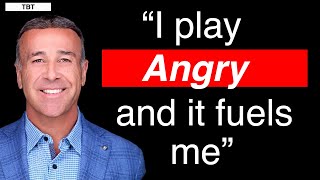
In this episode of Top Billers Toolkit, host Sam (SPEAKER A) interviews Brent Ursuga, a $2 million‑a‑year contingent recruiter. Brent recounts his abrupt exit from a previous firm in 2014, the personal crisis that forced him to start a recruiting business from scratch, and how he turned that "dark energy" into relentless drive. He shares his core mindset – intentional, offensive, and focused on high‑performance – and outlines the daily routine that fuels his productivity (early‑morning gym, podcasts, disciplined time‑blocking, and a "brick" device to block distractions). Brent explains his recruiting playbook: niching down to supply‑chain and logistics, building a strong personal brand on LinkedIn (55k+ followers), using short personalized video messages, and leveraging tools like MetaView for call transcription. He details how his business development evolved from cold outreach and flat‑fee deals to high‑fee contingent placements, emphasizing metrics, goal‑tracking, and a mental model of breaking large revenue targets into smaller, visible milestones. Brent also discusses reputation as a magnet, the importance of being a "person of influence" rather than an influencer, and how he cultivates raving‑fan clients through genuine relationship‑building, niche authority, and consistently delivering value. Throughout, his tone is energetic, motivational, and tactical, offering concrete advice for recruiters seeking to replicate his success.
Chapters
Hey guys, welcome back to yet another episode of Top Billers Toolkit, where me and my twin brother interview top billers from all around the world to unlock the secrets to their success. Today's guest is Brent Ursuga. Brent is a $2 million contingent biller, and he's one of the most intensely focused and motivated recruiters I have ever spoken to. His energy is truly unmatched. But Brent hasn't had a smooth journey. He was completely betrayed by an old colleague. Within one evening, he was pretty much locked out of the entire company, and with no income, he was left to look after his 1-year-old and his wife. This is really one of the turning points in Brent's life where he would do anything to succeed and failure was not an option. On today's episode, we're going to be going into more detail of Brent's personal journey and understanding why having a chip on his shoulder has actually fueled him to do amazing things. Brent's going to be explaining why niching down is one of the most powerful things you can do as a recruiter. And finally, we're going to be understanding a few of the prospecting strategies that Brent does to grab attention online. Today's episode is going to be very intense, but in a very good way, guys. I absolutely love Brent's energy, and after speaking to him, I wanted to jump off the pod and make 100 cold calls. I hope you love his energy as well. Hope you enjoy it. And as usual, grab a cuppa or glass of wine depending on when you're listening to this, and let's get into it, shall we? Hey Brent, how you doing?
Good. Glad to join you guys here this morning.
Yeah. Thank you, dude. I have seen some of your podcasts. Um, I've seen how passionate you are, not only as a human, but about the industry and you're doing some insane numbers and you've got a lot of wisdom to share. So thank you for coming on the pod, dude. I really appreciate it.
Absolutely.
Um, we're going to jump into our famous first question, which is what's the number one tool in your toolkit, whether it be a strategy, mindset, or software? What would you say, Brent?
You know, a new tool that was introduced to me that I'm loving right now is called MetaView. So the website is like metaview.ai. I don't know if a lot of people in the UK, for example, are using this, but it's an amazing tool because what you do as you call a candidate, it's going to recap your entire call and then send you a bullet point breakdown afterwards. And you can do this on Zoom, Teams, any kind of video conference. I've really enjoyed it because I'm old school. I'm pen and paper and taking notes. So what I've really liked is this allows me to be more present. I'm not trying to be in two places at once, right? I'm not trying to take notes while I'm writing stuff down or trying to ask questions. So it allows me just to really be present and engage with the person knowing all that information is going to come my way anyway. So I highly Highly encourage that for any and all recruiters.
Awesome, dude. Yeah. Sorry, Ben, were you gonna say something? I was gonna say, how long you been using it for, Brent?
Um, Matthew, you, you know, it was introduced to me, I would say 3 or 4 months ago, and now I'm totally hooked. The best part about it, I believe they actually give you like 25 free conversations to beta test it out. So you really have nothing to lose, but it's amazing how it's gonna decipher everything that you go over with these people and then just shoot it back to you because We'll tap into some of this, but this is what I'm really big on. I don't play in the resume game. I want to tell the whole story of who the person is, not the paper. And so this does a really good recap of that.
Interesting. Cool. I want to get into your story, Brent, because I found it really fascinating. Um, there was a particular moment in the beginning of your journey that was quite a, I guess, a, a eye— not an eye-opener, because you— but it was a, it was a difficult journey, just to say the least. And I think you you took that energy but used it as fuel. But can you, for people that don't know, would you mind just telling us about that journey, if that's okay, Brent?
Yeah, I think, look, everyone has a how did I get into recruiting story, right? So I'll even go back a little bit further because I think this is also important. So, you know, coming out of ASU, I went to Arizona State and I got recruited by Enterprise Rent-A-Car. So they really recruited a lot of athletes. Basketball was my thing. So I have a lot of success there leading people, hiring, training. So at, you know, 23, 24, this was already part of my background. There was a local management recruiters, MRI is really a big kind of franchise model here in the States. And they contacted me, but what I didn't realize, they came to me as a candidate. They didn't re— I didn't add a story that said, let's keep the best and place the rest. So they looked at me and they said, well, we don't wanna place this guy at a company. We want him working for us. So that was my introduction to recruiting. They talked me into coming and working for them in the construction industry. So construction in Arizona from, call it '03 to '08 was booming, but I didn't know anything about construction, but I knew how to talk to people. And they put me into like a blue collar type industry where it was very easy for me to relate to people. Well, fast forward, we had the global crash in '08, and this is when I made a shift, and this is gonna make sense in a second. Into supply chain and trucking. And I teamed up with a local company here to do that. And what I realized is construction and trucking are pretty similar. You know, it allowed me to kind of be myself, talk the way I talk. I could gel with these people. You know, you put me in accounting or legal or finance, might be a little bit of a different beast. From '09 to '14, I was running with an individual where we had a lot of success. We're taking on clients. It was a firm. And then this is the day that changed my whole life, if you want the truth. On May 1st, 2014, I got an e— or my email just stopped working outta nowhere. No heads up, no red flags. And I remember messaging the person saying, hey, something's off, and didn't get a response. 5 minutes later, I get an email that our partnership is done. No phone call, no heads up, no red flag, no conversation. Done. So at this time, I'm 37 years old. I have a 1-year-old child, and I realize really quickly my whole life just changed and I have to go into decision mode. Within 48 hours, I went straight offense. I started to tap into my network and realize that really at this point I could go two paths. I could go out and get a job, or I can bet on myself. Hmm. Within 48 hours, I started a company from nothing. And I think this is important for your audience to know. And when I say nothing, I mean nothing. 'Cause you gotta remember, I had no heads up. So I didn't have months and months of a business plan. I didn't have cash reserves. I didn't have a website, agreements. Oh, I didn't have clients, by the way, either. Usually you kind of need some clients to start a business, right? When I say I was starting from zero, I remember sitting in a bedroom with a laptop being like, what do we do? What's next? But I'll tell you what I did have. 1-year-old kid, a wife that depended on me, and a chip on the shoulder like you wouldn't believe, right? Because I carried that and I used what I'm gonna call that dark energy or that fuel to turn me into an absolute monster. To go into action. So I didn't sit there and cry and swirl and why me and play victim. I went at the complete other way of, watch this, I'm gonna show you why you just made one of the biggest mistakes you're ever gonna make. And I'm gonna make sure over the next decade you watch my success and watch me winning at the highest level possible. And as you can probably tell, I still carry that to this day. I play a little angry. But it's a mental trick that I play with myself to go into high-level intention. It's really interesting. That's how we started.
Love that. Your energy reminds me so much of David Goggins, Brent. I don't know if you've heard of— I'm sure everyone has, but he, he plays with like an angry energy and it fuels him and he has this like dark side to him, which is part of his success. And you just remind me of him quite a lot.
Well, we— and we can tap into that because I think there's something there for people. I think a lot of people have to be able to channel that properly, but You know, I get told— this is a common response I get— I get told a lot I'm very intense. My response to that is, I'm not intense, I'm intentional. I know exactly what I want. I know exactly what I'm going after. And there's nothing that's going to stop me because I always ask myself 2 questions. This is how I live life. Why not me? If not now, when? So my belief system that things are going to go my way are at a very high level. I always come from a place of expecting to win, and I've built that confidence with myself because I know how much work I've done behind the scenes, or I know how much work I do in the dark when other people are not there.
Yeah. Can you— Ben, do you have a question, by the way? I was— I think I'm listening. Go ahead. Oh no, I just wanted to— because I think this scenario, Bren, is— a lot of people can relate to it in the sense that— well, I say a lot of people, I'm just curious, you had nothing, you had no clients. What did you do to start getting clients? What was your most successful method to start getting your first clients after all that shit went down? Excuse my French.
Old— this is 2014, right? So it's a different game. The LinkedIn brand was not what it was. I, again, I didn't have a website. Like, I had to go into massive action very quick. At that time, what I was doing is literally just looking for anybody in my industry of supply chain, cuz I knew it, that was hiring. So I had to go on Indeed, I had to scour LinkedIn and say, hey, who's hiring for these positions? Then I had to figure out how to reverse engineer that and be like, well, who's the sales manager? Who's in charge of the hiring? And then go out to them. And very quickly I had to develop a story of why they should engage with me. See, one of my biggest skills with business development is I've always made it very hard for somebody to tell me no. I'm a better friend than a foe. You want me on your side because if you, if I, if you tell me no and I am going after your people, I can assure you, you do not want that. You want me in your back pocket, right? So I just made that very clear and I've always had extreme confidence because the confidence comes from the work ethic. And I would tell these people, I said, look, this is contingent. You have nothing to lose. You have nothing. And there is nobody, and I mean nobody right now that's gonna work on your stuff more than me. All I want is an opportunity to perform and allow me the chance to do that. The results will speak for themselves. If you give me another chance, that will become because I've won the first time and then it just compounded. Hmm. Interesting.
And that's really interesting, Brent. And so 2014 to now, how has your business development strategy changed, do you think?
Well, you know, early on, I hate to say it, like many recruiters, you're saying yes to a lot of stuff, right? Because I need the work. And so think about this. I look back on some of the agreements we did back then, and I'm like, gosh, I was doing flat fees, I was doing 10%, I was doing whatever I had to do to take care of my family. I was probably even taking on stuff that now looking back, I would not. It's subpar in my mind. Doesn't mean they're bad people or bad companies, but I also had to pay my dues. Now you fast forward 10 years and a lot and a lot of placements. Who's in control to say no now? I am. So now I represent some of the biggest logos out there because we've produced at such a high level. Now I don't have to bend on pricing. I can hold firm. And now I'm in a position to work on what we want to work on, which is the complete power shift. But you got to think that took a decade. Hmm. In this world of instant gratification and everyone wants to win right now, you sometimes forget that you're using those companies and those situations to increase your skill sets to be able to gain that confidence and get better clients.
Interesting. So am I right in saying, um, Brent, your reputation does a lot of the speaking now and you don't have to go out hunting for business anymore? Or does that still happen? Do you still do business development?
The business development for me is because it's something that I want, so I will seek it out. So now when I'm going to conferences, I'm seeing certain companies or hearing about them behind the scenes, even from candidates I engage with. I said, wow, I'm not familiar with that company. That one has my attention. I even nowadays talk about, again, how much different it was than back then. I have a lot of like private equity companies who will come to me and say, hey, we're pouring money into this company, or we're gonna get this baby off the ground. We heard you're the guy to help us do that. So that goes to say too, yes, you talk about reputation. I think a lot of us discount how many conversations are happening behind the scenes. Think about what we do with candidates, right? You're texting someone, you know, hey, what's the real deal with this guy? Is he the real deal? Is he all talk? That happens for recruiters equally. Yeah.
Interesting. Sorry, Sam, I'm just gonna have one last question.
Go ahead.
Go ahead. Brent, so I completely get that. And, you know, you've obviously built up this amazing reputation and confidence and expertise. So business development and/or acquiring new customers is probably a lot easier. If there's a recruiter listening to this who doesn't have that same reputation, who still wants more business, what would you, what kind of words of wisdom would you give them in terms of anything you know about strategies, tactics, or ways to get your foot through the door with kind of net new clients?
Well, I think number one, you have to have a very strong story. This is going to go back into something I'm sure we'll tap into later, which is nichey. Riches are in the niches. And I think if you're just a recruiter aimlessly going about saying, well, I can work on this job, I can work on that job, There's nothing special about you if you want the truth. Here's a kind of a funny story too. Back in 2014 when all this happened, I, I took and I said on my LinkedIn header, the top recruiter in supply chain and logistics. I never, I didn't even have clients, but I had belief, but I also knew, think about that. Think about confidence, right?
Yeah.
I still carry that to this day because that's, that's real estate. But it was also intentionally tricking my mind into believing that that's who you are. I believe I'm that guy. I'm gonna carry myself accordingly. And I knew when people would do their due diligence or creep behind the scenes like we all do, that would be something they say. So I was telling them a story without even having to say anything. It was creating curiosity. It was intriguing to them. And so if I'm not getting, the business development I want, I would think, am I really laser focused on a specific niche? Could I come from a lens that I am a good person to know because I can give them value no matter what of what I'm seeing in the marketplace, of what I see their competitors doing, compensation models, commission models. I get no— I'm aware of layoffs before they happen. I am a good resource for you, whether you use me to hire or not. You want me in your network. There will be a time when maybe we do work together. But you always have to plant more seeds, more outbound activity than I think people understand.
That's an interesting point. I think that's really, just to kind of riff off that, when you say you always need to do more, what can you elaborate? What do you mean by that?
Recruiting is a contact sport. Recruiting is a contact sport. I don't care if you talk about recruiting or headhunting specifically. I can guarantee there's not one recruiter who has gotten on 10 calls and they're 10 studs. No chance. Doesn't happen. So the— you— this is the more people you talk to, the more you start to understand what a high performer looks like, what is good. Your own personal caliber and definition of I'm putting my name behind this will change. The reason that people deal with a lot of average or low performers is because they get excited that someone just responded to them, and so they feel like they want to show that to their client. I am very, very picky. And this is an important thing too. In recruiting, you're only as good as two things: the logos and companies that you represent to the market. And number two, every recruiter should remember this, You are what you show. You are what you're— what you show. Your identity is always going to be linked to the caliber of the person that you show a company. If all of a sudden I'm showing average people, that's my identity. They will push back. Even to this day, Ben and Sam, when I show a candidate to a company, 98% of the time, because of the reputation and trust I built, They'll say, set it up. They don't question me. The minute a company questions you, you're done. Always stay at the highest level and show them something others can't.
And if you were to choose again, if a recruiter is listening and they're like, Bren, if I was to choose one outbound activity that you think is going to get me the best ROI, what is that? Do you think— is it cold emailing? Is it cold calling? Is it turning up at someone's door? And literally barging it down. What do you think is the— what would you say?
Yes. All of it. I'm all offense all the time. I touch you everywhere. Now, we'll get into this, I'm sure, later too. But I'm also very visible. There's a part of the LinkedIn branding that is associated with all this. If you are a nobody that isn't even on the radar of a company, you're hiding behind a static photo that's probably 7 years old. They don't feel like they know you. You want to know a real trick that I do? How many— you want to know how many times I grab my iPhone and I just make a little 30-second video of myself? And I'll— if I'm able to get a cell phone number for somebody and text it to them, you know why? There is no chance if somebody texts you a video of themselves that you don't hit play out of curiosity. Think about that.
Yeah.
You're just gonna be like, who, who, who is this person? Why am I seeing their face? I want to click play. Then when I can make it direct and you can feel my energy, when you can see my emotions, when I'm so clear and concise around the purpose of why I'm trying to engage with them, the responses I get there are very, very strong. Again, I come off very confident, but confidence comes with competence. I know my stuff in my industry, in my niche. And if they were to ask about me, I know what they're going to hear on the other side. Again, I'm a better friend than a foe. You do not want me coming after your people. And I make that very, very clear. I don't threaten, but I make it very clear that— here's the thing too. Why in the heck would a company not sign a contingent agreement with me? Why? Hmm.
Yeah.
Why? Why would you not want to know the network of people that I can access? Why would you not want to know that I came across somebody and I thought of you guys? I'm a really dangerous person to have in your back pocket. Hmm.
I just want to go into that video in a bit more detail, Brent, because I think me and Ben are big believers in video and audio notes. I think the fact that you're doing that is awesome. Who are you sending those? Because those videos must take a bit of time, so you can't send them to everyone, can you? And so, who—
A bit of time. It's one take in 30 seconds. You can't go too deep in that stuff. But the reason I do that is I want to put a face to a name. I want them to really understand my tonality, my energy, my facial structures, how I carry myself, how I present all these little things. Think about that. A website can't do that. An AI agent can't do that. It's very, very authentic, man. So don't overthink. A lot of people overthink time when it comes to content. 99% of my stuff is one take on an iPhone for 2 minutes.
And would you send that to net new clients that you want to introduce yourself to?
Sure. Cool. Yeah. Net new clients. I'll send it to candidates. I prep people if I'm negotiating with deals and I need them to see me because think about it. If I'm negotiating a deal and I just text somebody, hey, I know we're $5,000 off, I think this and that, it's not the same as if they can feel my energy or my passion. You have to remember, recruiting and sales is nothing more than an exchange of energy. It's an exchange of belief. You don't have to believe in it as much as I believe in it. And all you have to do is believe that I know that I know what I'm talking about. And I can transfer that to people. How can I do that via email? How can I do that over text? They have to feel you, and this is sales 101 and something people discount. We're living in a world where people wanna hide behind bots. They want shortcuts. I will eat people alive because I'm able to connect with people, and I've always been able to do that. People are gonna feel something and have an experience with you every time they engage with you. What is that experience? That's how you get remembered.
Awesome. And have you found it might be completely different for every message, Brent, but have you found in that 30 seconds because you don't have long, do you? It's quite, it's quite a, it's quite a short amount of space to say stuff. So what are you saying to capture the attention, let's say, for like a net new client? Like, what would you say?
Yeah, I would just say, you know, hey, Ben, very niche. You've been playing in this space for 16 years. You guys are a company that has come on my radar. To be transparent, here's a little trick. I've actually had candidates I've spoken with ask me if I partner with your company because they want to be there. So when I've heard that from 5 or 7 people, I feel the duty to engage with you guys and find out what you're doing over there. Let me know when we can jump on a call. If nothing else, I can let you know what I am seeing and hearing in the market and hopefully give value to you from a competitive lens. See, the more you give, the more you're going to get. If nothing else, I'm going to leave them with a lot of impression. I'm going to leave them better than I found them.
It's awesome. Really great little nugget there. Yeah, great, great videos. I love that. Um, I want to— I would love to get into, um, LinkedIn now, uh, Brent, because you are one of the very— there's not— there's still not many recruiters using LinkedIn content effectively. And I've gone onto yours and you're doing videos, you're doing a variety of different content and it feels very strategic as well, like most of your stuff. But can you tell us, when did you start using LinkedIn? Why LinkedIn? And what are you doing at the moment with LinkedIn?
Well, look, there is a billion users on LinkedIn. Only 30,000 accounts have over 30,000 followers. I think I'm almost at 55,000.
Wow.
If you study LinkedIn, let's call it what it is. When people look at LinkedIn, they think of business. That's what that is for. Instagram, Facebook, TikTok, all these social media platforms are different. I take LinkedIn very serious cuz that's where the dollars are. So the things that I'm gonna post and put out there are very intentional. Mm-hmm. Right? You may see a different side of me on Instagram. You may see a different side of me at Facebook. It's all gonna be consistent. But I don't mess around when it comes to business. LinkedIn is a great platform to build a community and eyeballs. Do you ever wonder, guys, why the same faces come up all the time on your feed? Do you not think that they are desiring more people to put out content? Because the reality is you only fall into 2 categories. You consume or you create. Think how many people watch everyone. Hmm. Guess who gets watched? Somebody like myself. Attention and eyeballs are their new currency. You have to be seen and known.
Yeah, love it. You know what? It's— and I think a lot of people, you've vocalized that perfectly, and I think a lot of recruiters know that, but they still don't do it. So maybe if we can describe the results you've had, Brent, you might convince them. What difference has it made to your business or to your BD or to your conversations?
Well, here's, here's the magic hack that I have figured out. People do business with people they like and they trust. So you have to become a magnet or show them a day in the life, how you operate, who you are to like you. To trust you. So think about from a content standpoint, I'll even give my own examples. What do I put out there? You don't ever see me talk about, hey, I'm hiring in Chicago for $150,000 VP in sales. Down in Dallas, Texas, I need 17 sales reps for these positions. I don't play that game. I attract things into me, business and candidates, by showing them that I live the 4:00 AM lifestyle. And I'm a girl dad with 2 daughters. I'm a regular dude. I share podcasts and books that I'm listening to. I'm always giving value. If I see an article on Business Insider or Forbes or Entrepreneur around hiring and business and trends, I'm sharing that with my audience. I wanna be a very consistent person in the feed. Because what happens is when I reach out to somebody, I want them to say, I've, I've heard you, I've seen you, I've recognized you. And my response rate is gonna be 10x.
Mm-hmm.
And at the end of the day, ultimately the mindset, I just shared this on another podcast, was always this. He seems like a good dude. He seems like a good guy. I will back it up from the business standpoint. But again, nothing I do is self-serving. Here's a really good question for your audience to ask yourself. Are you trying to be an influencer or a person of influence? There's a massive difference in the two. When you think of an influencer, think about it. It's very self-serving. Look at me. I'm chasing likes for dopamine, right? Selfies, lifestyle, abs, cars, travel. When you can be a person of influence in your industry, because I niche down, I become a name that is known, respected, and wanted to put out content. So I'm giving value in anything I see that can make people better.
I love that. And this is a good, um, transition into— there was something you said which is not spoken about enough, but It was the high-performance brand you're building, and that specifically what you said was you want to scare away the average, and I love that. And can you just go into a bit more detail of that, Brent?
I think a lot of people— you got to understand, there's a formula in recruiting and hiring. A lot of companies are asking people— I hate to say this— who are 6s to go chase 10s. It's never going to work. The old formula in recruiting is C deals with C, B-B-A-A. An A recruiter is not gonna show a C person, and a C recruiter is not going to resonate or attract A talent. The formula is off. So for me, by showing I live this lifestyle, I wake up at 3:30 every morning, I'm at the gym at 4 o'clock, right? I'm always hustling, I'm always moving. I'm showing you that that is going to resonate more with high performers. Who do you think I want from a client standpoint and a candidate standpoint? Average people should be scared of that, that I don't relate with that guy, I'm gonna go talk to somebody else. Good, please do. So again, I have become a magnet because that is the lifestyle that I live. That is what resonates with the people that I personally want.
I love that, man. Yeah, I really love that. Um, Ben, do you have a question? No, I'm, uh, well, I'm sure another one will come, but go ahead. Cool. Um, what I also wanted to understand— can we actually go into your— I love understand, especially someone like you, Brent, who's up at 3:30, gym at 4. And I— this is a very popular question asked, but I'm curious, what is your day plan? Like, can I understand what you are doing from sunrise to sunset? I want to, want to understand how you fill your day up.
Yeah, I'm robotic, so, but very, very efficient with time. So 3:30 wake up at the gym at 4:00. I'm usually there till 6:00. And one of the things that I always do is I'm always consuming content via podcasts. So not only am I going to move my body, but I'm also going to feed my mind. So I'm already starting the day on a positive note. I'm a big believer in win the morning, win the day. So by the time I'm driving home, I'm 1-0. I've already won the morning. From 6 to 7, I have to go play dad, right? Just like most people, you got small kids, so you gotta help them get ready, get their lunches, get them out the door. I go and drop my 6th grader off at 7:15 to call it 7:30. Then I'm in my office by 7:45. One of the things that I do the minute I get in is I say I play offense, not defense. I'm gonna control what I want to push out. A lot of people play defense in the sense that they're gonna respond to emails, they're trying to put out fires. They're very reactive.
Mm-hmm.
I'm proactive. I'm going to dictate what I want to tap into from a candidate standpoint, from interviews we have going on, offers that may be stuck. I'm sending out texts, I'm pushing out all my stuff, and I'm letting people respond to me. I'm in control. Mm-hmm. Then once I do that, I then look at my calendar and I try to have it as filled as much as possible. Guys, I'm only doing two things. I'm talking to companies, I'm talking to candidates. Everything else is noise and a distraction.
It's exactly what Mike said, another $2 million plus biller, like literally said he simplifies it to two things, which is BD and speaking to candidates. I love that.
Everything else, you know, you don't think I get requests all day long? Can I grab 15 minutes here? Can I pick your brain on this? I'm very selective. More productive with my time. Here's another little hack I'll give you that I would discover. There's a little device here called the Brick. Okay? Cool. Costs $50. What I do is I have this in my office. I grab it and I tap my phone on it. I can then designate what apps I want to be removed from. I wanna remove distraction. I wanna remove Instagram and TikTok and Twitter, and anything that's gonna pull away from me. So I do that intentionally. I almost throw this thing because the only way I'm gonna unlock it is I have to retap it.
That's cool. That's so clever, man.
Forcing myself for $50 to go into action. And then for me to answer your other question, I'm very good on time blocking. Because I think it's a big ask in 2025 to ask people to lock in from 8 to 5, no distractions. We're all human. So I work in what I call sprints. I work for 30 minutes undistracted, give myself a 10-minute break, work for 1 hour undistracted, go take a walk for a half hour.
Mm-hmm.
Because I know that during those time windows, I can absolutely laser focus, all blinders on, lock in, and that allows me to do searches. It allows me to be present and focused on any phone call that I'm doing. And not be pulled or distracted or two places at once. How many times you guys been on calls and people are looking down at their phone like this, right? Two places at once. I don't play that game. You get me? You get me.
Yeah, I love that. I actually a big believer of that as well, Brent. Great way to work. I feel like you have more energy throughout the day as well because you're rewarding yourself with breaks, which is really cool. But yeah, great little tip. Love that. Um, did you have a question, Ben? No, go ahead. Uh, no, I just— what I found really interesting is you've, you've billed $2 million with a pure contingent model, Brent, and other recruiters I've speak— I've spoken to, a lot of retained, um, would be like, how the hell does Brent do that on a contingent model? Are there any tricks that you've discovered on the contingent model that have allowed you to be super efficient? And, and make so much money on contingent?
Yeah, when you're, when you're cranking like that, it's, it's hustle. I mean, you can say that whatever you want. I mean, I just get after it all day long, every single day. It's a lot of outbound activity. You know, one of the other things that's gonna lead to that though is when you get better clients, you have higher fees, you can do less. I mean, to me, everything is purely a math equation. I mean, if you think about it, Let's just say that I really study the average fee. I think recruiters should really study that number. Mm-hmm. The higher the average fee number, the less deals you have to do to manipulate or get to the revenue mark you want. I'll use high-level numbers. If I want to do $2.5 million in revenue and my average fee is $25,000, I only have to do 100 deals. But I don't focus on 100 deals the same way people may. I break that down and I always make these numbers smaller. This was taught to me and I hope people can get value from this. Number 1, I don't have to do 100 deals. I got to do 25 a quarter. So I don't— I focus on— I make every number smaller. And then here's another mental trick that I do that really works wonders. Number 2, I have these numbers in front of me at all given times. I know exactly what I'm chasing, exactly what I'm pursuing. You can call it a human GPS. There is nothing loose about me. Everything is intentional. Hmm. But the other trick that I do is on every deal, I already come from a place that that happened. The 2.5 is, is my year already done. So now every deal that I do, I will work away from it. 2.5. Nope. Now we're down to 2.2. Guess what? We're at 1.8. Now we're at 1.4. Now I'm at 700. So I again make every number smaller and then you can start to create belief internally or to your team because you're like, look guys, we got momentum. We're almost there. We're getting closer. If everybody shoots up, the number seems bigger. I work away. Remember I talked about 25 deals in a quarter? Well, every deal, 24, 18, 12. Crap. I only got 6 more to do. I'm gonna crank it up, be a little more intentional. I think if people started to implement that, they would notice a shift.
I love that. Yeah, something I'm actually gonna do as well. How do you, when in terms of how you like actually visualize the numbers, like how are they presented? Are they on a board or a piece of paper? Like where are they?
Oh, I wish I could show you. Well, number one, on my phone, which I'll try to share, I have number of placements I want, average fee, and the millions in revenue that I want.
I love that.
And it's another thing where it says, I will, I can, I must. Mm-hmm. I see this every day. I had a graphic made and I could tap into this graphic stuff cuz it's real. On my TV, I have the same thing. On my whiteboard in front of me, I have all these numbers. I have the yearly revenue number, I have my average fee, and I have how many deals left in the year and the quarter.
Mm-hmm.
So I have to see it constantly. It constantly has to be in front of me. So I know exactly what I'm pursuing. Think about how many people just wake up on a Wednesday morning and be like, well, what are we going to do today? Let's, let's see what the world is going to bring us in recruiting, right? God, if I get a good call, if I do a couple of deals this month, that's very loose. If you are casual, you will be a casualty. The reason I've been able to win at a high level, win these awards, produce consistently not be a one-year wonder year after year after year is because everything comes with intention and purpose. I know exactly what I want. Remember I told you I'm not intense, I'm intentional. Prime example, man. What's going to stop me? Why not me? If not now, when? That's how I roll. 7 days a week, all gas, no brakes. That's just real talk.
I do have a question. Sorry, Ben, I have to keep asking.
It was actually off.
I was actually going to ask When do you take a break, Brent? Because you sound so, you sound so intentional/intense that you strike me as a person that's always working. When do you actually switch off?
Look, I mean, I hate to say this, but I live a boring lifestyle, but it's by intention. I'm 48 now, right? So I've done a lot of things that, that doesn't get me excited. I'm still a dad of two young girls. I'm still a husband. I still have certain things that I have to lean into. But I don't really go out. I don't drink. I don't, you know, partake. If it's not gonna serve me or make me better, I'm not putting myself in that situation. I find joy in hiking mountains. I find joy in playing basketball with my buddies. I, I love to work out. That is a release. That is a mental release for me. So I just dumb down my world and I make it simple where there's not a lot of distractions for me. So for me to calm myself or find peace, look, man, I might be older. I know I'm older than you guys. The older you get, you know, the rooms get bigger and the circles get smaller. And that's okay too. You can't appease everybody.
Love that, man. I really— and I don't usually ask this question, but it's when I'm really fascinated, like what What motivates you, Brent? Because there's— and I know there's past experiences play a part of that, but like, what keeps you going to this level every single day? Have you got a vision in mind of where you want to get to? Is it just you enjoy the game so much? Like, what is, what is keeping you going?
I'm a sports guy. This is my new sport. Business is the most competitive sport there is, and I really, really like to win. And so for me, what motivates me every day? Well, here's the thing too. If you want the real talk, when you're in contingent, I start every month at zero. No one cares what I did last month, last year, 6 years ago. No one cares. That's in the rearview mirror. So I always have to have my foot on the gas. I always have to produce at a high level. I got 2 girls. I had a father that passed in '16. I have a mother that I help. I have what they call reasons to win. Mm-hmm. So I don't have the luxury to get burnt out. I don't have the luxury to have a lot of emotion. I am the one person in my family that a lot of people depend on. When you have that pressure, you're either gonna embrace it or fold in it. Mm-hmm. I want it all on my shoulders. I'm that dude. I'm that guy. Put as much heat on me as you can because I've built an armor around me physically and mentally to be able to withstand that. Hmm. This is also how I'm able to go through down cycles. Think how many recruiters react to the market. When it's really good, they're riding high. When they get crushed, they can't navigate it. They have no mental toughness. They have no endurance. And what happens? It got hard and they run away. When they run away, they don't come back. Entrepreneurship is nothing more than an endurance game. You have to outlast people. That's all this is. If you put 100 people that started 10 years ago in a room, how many do you think would, would still be there? You think it's still 100? I can assure you it's not. Yeah, that motivates me to just stay at the top of my game and just get better year after year after year. I'm obsessed with becoming the best version of myself.
I love that, dude, and I feel that every time I speak to you. Um, last question from me, unless there's anything we haven't mentioned, uh, Bren, that you want to speak about, but, um, and I got this from another podcast actually, you have generated raving fans from your clients. Um, again, very strategic and And arguably, you know, if you can keep accounts for longer, then you don't have to do more BD. But is there anything you are doing specifically that moves the needle forward the most, apart from doing an amazing job? Is there anything else that you're doing behind the scenes that you think is, is, uh, helping keep, uh, clients as raving fans?
Yeah, I play the long game. I'm not transactionally mindset, right? So I, I always am constantly checking in with the companies, checking in with the candidates. How are you doing? Because You gotta understand, with what we do in recruiting, we have a pretty big impact in somebody's life, more than people think. This is why I love and respect this industry so much. There are 3 major decisions in somebody's life. 3: where they live, who they're in a relationship with, and who— where they work. We get to impact one of those. How can you take that lightly? How can you try to put somebody in a situation for your own gain, for a commission check, when you have to understand in recruiting we win last? The company has to win and get something they want and couldn't get on their own without my golden touch. The candidate has to be put into a better situation. If I do those two things at the highest level, I'm gonna win myself. I always put others first before my own needs, because if I put myself ahead of any of those, the whole triangle breaks. Hmm. Stop being transactionally focused. Stop selling. Start helping. And we've all heard the quote: the more people you help get what they want, the more you'll get what you want in return. Become really good at what you do. Niche down, become the dominant player, and give companies something they cannot get on their own. If you are a recruiter and you're taking a job description, removing the company name, and just blasting that out there, what value are, are you to those people? They are trying to pay you a premium to get something their internal team can't do, or that they don't feel they can get on their own. If you continue to give them something that they can't, you don't think they're going to come back for more? This is how you get fans. This is how you get referrals. This is how you get testimonials. All these things compounded.
Love that.
Love it.
We've had an absolute ton of value today, Brent, and you've given some real golden nuggets. So thank you so much. I just got one last question, which is Is there anything that we haven't spoken about that will give other recruiters listening the best chance of success? Anything that we've missed, do you think? Maybe we haven't, but I'd just like to end with that.
You know, I really wanna stay on the niche thing because I think that's important. I think that ultimately what you want in your recruiting career, I know a lot of agency owners listen to this, you want people to immediately associate your name with an industry and a sector. So like when people say supply chain, I want Brent to be the first name that comes up. If somebody says I need an accounting firm in London, who are they thinking of? They're thinking of somebody. They're thinking of somebody. If they say I need a construction recruiter in Houston, they're thinking of somebody. Why not you? So the way that you do that is through content plus results. Mm-hmm. You have to be out there. You cannot hide behind a static old website and a picture and not become a magnet to draw people in because money follows attention, good or bad. People that are known and seen, there's an instant credibility. There's science around this. There's podcasts you can listen to. There's even an amazing book people should pick up called Hook Point. You have 3 seconds to catch somebody's attention when they're scrolling. So your game is gonna be so much harder if you're just hiding behind the scenes, twiddling your thumbs, waiting for stuff to come to you. What did I say earlier? Offense or defense? I'm all offense. I'm touching companies. I'm touching candidates. I'm putting out content. I'm texting video behind the scenes. Think about all these little, little things that are the separators. There's not 10 things, but all these little things add up that your competitor or someone like me may be doing. Would you guys want to compete with me every single day, especially when I'm locked in? Here's the other beautiful part. If I continue to elevate my skills in my game, would you guys not get better also trying to keep up? Do you not think that we can elevate everybody by playing this game at a much higher level? The whole industry would get a lot better respect. Everybody could increase their prices. Hmm. When there's a race to the bottom and you have people playing this game that shouldn't be in it, it ruins it for everybody. The cream will always rise to the top. Stay there and play there and become the person that other people want to become. You will elevate everybody around you.
Love it. Thank you, Brent. Your energy is unmatched. Every time I speak to you, I feel like I just want to become a better person and then go off and do 100 cold calls in a positive way. So thank you so much for your energy, your time, and your wisdom today, dude. I really, really appreciate it.
I appreciate you guys having me on, and I hope some new audience gets a glimpse into how to do things at a high level, because I'm all here for it.
Hey guys, thanks for tuning in to this episode. If you enjoyed it, please don't forget to subscribe on YouTube and Spotify. Tune in for another episode next week, and we look forward to seeing you again very soon. Peace and love.
More from Sam




The difference between a $200K biller and a £1,000,000 Biller (full Breakdown video)

how to go from agency recruiter to Lone wolf (Advice from a $2.4 Million biller)



This Recruiter has billed $750K+ for 30 years straight. (Master of Consistency)

How to increase your candidate response rate by 25-30% (Whats app messaging system)


This recruiter has billed $1,000,000 for 5 years straight! (Master at Enterprise deals)