Blueprint to $1.5 Million In New business (Copy this guy to become successful)
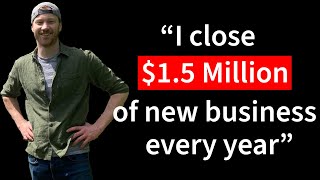
Adam Tiberius, a 22-year-old recruiter, generates $1.5 to $2 million annually using deep market mapping and a repeatable cold-call script that moves from opener to problem menu to impact questions. His system helped recruiter Stefan hit $780k in revenue after 18 months, proving the approach scales.
Chapters
Hey guys, welcome back to yet another episode of Top Billers Toolkit, where me and my twin brother interview top billers from all around the globe to unlock the secrets to their success. Today's guest is Adam Tiberius. Adam brings in $1.5 to $2 million worth of new business every single year. At 22 years old, he managed to close 100 new accounts for his company over a 2-year period. At 24 years old, he's now gone out to conquer the US. He's absolutely obsessed with his craft. Today we're going to be speaking about the exact BD strategies that Adam uses in order to win $1.5 to $2 million worth of business every single year. We're going to be talking about market mapping and how vital this is to Adam's success. We're also going to be talking about how Adam has managed to systemize his BD strategies to such a degree that a recruitment graduate has come into his business and managed to build $700,000 in one year. Adam is an absolute beast, a fountain of knowledge, and for his age, The wisdom this dude has is absolutely mind-blowing. As usual, grab a cuppa or glass of wine depending on when you listen to this, and let's get into it, shall we? Hey Adam, how you doing, mate?
Great, thank you. How you doing, Sam?
Very good. Thank you for coming, dude. I have seen you on another podcast. I've seen the amazing work you did, so I had to hunt you down and try and get you on the pod. So thank you for coming today, mate. I really appreciate it. So awesome. Let's get into the first question, which we ask every guest, which is what's the number one tool in your toolkit, whether it be a mindset, strategy, or software? What would you say, Adam?
I think I have to go with strategy. And the reason for that is when it comes to software, you can always iterate and improve on software. I think with mindset, you can— if you have the right mindset, you're fine anyway. But when you're trying to build a team, oftentimes, uh, that can be improved upon. The thing with strategy is that what you decide to do now is going to impact you in 2, 3, 5, 10 years' time if it compounds. So super important you get that right from the start.
Love that, mate. You are the first guest in a very long time that's chosen something other than mindset, Adam. So, uh, Gotta tip my hat to you.
Yeah, I think mindset's the easy way out, right? It's, it's kind of like every, you know, of course you need a good mindset with anything. Yeah, but, um, I think mindset means different things to different people.
Yeah, that's a great point, mate. And going back to strategy, you said if you don't have the strategy, the right strategy, which me and Ben know all too well of running, running our own business, because I completely agree with you, but you said that if you don't have the right strategy, it can impact you, you know, 1, 2, 3 years down the line. Was there a point in your career, Adam, where you were like, where this became most apparent, where you were like, hey, this is the biggest thing I need to focus on and here's why?
Yeah, it'd be, it'd be back when I first started doing, um, business development. So back then is, we have an amazing internal database and system, right? We've been in the UK where I first started, worked in those markets for 20, 30 years, so a long time, and When I initially went through, you know, the first basic mapping that everyone does when they first start doing BD, I noticed that the majority of these companies we'd, A, known about for a decent period of time, you know, for most of the time during us working in that space, but B, we hadn't actually done the consistent outreach to them over that period of time. So if we would have gone back, right from day one, you know, 20, 30 years ago, and we decided these are the companies we're going to work with, these are the top major banks we're going to work with, this is how we're going to approach them, and we did that for 5, 10 years, we'd be in a different position than we are now. So we kind of fixed that, you know, sort of 3, 4 years ago. We've now— that's what's allowed us to open up the US office, open up a European division. But if we got that right from the start, we would have been able to do that a long time ago.
Interesting. So the, um, just to confirm what I got there was the consistent outreach over long periods of time to the same accounts would have been the biggest needle mover. Adam, is that what you—
yeah, there's, there's, there's that. And also picking out which of those markets is going to give us the biggest, the biggest bumps, right, um, across, across that period. So with anything within, you know, staffing and within our, within our space, um it's all about compounds. So if you change your strategy specifically around market, specifically around role type in the business, you know, where your people are, it can take, you know, 2, 3, 4 years for someone to become properly specialized within their sub-niche and within their role type. So if that changes frequently, if you haven't got that right from the start, all that time you're spending investing in those people, and investing in your brand in that market, investing in those candidate relationships and database and access to information. If that changes too frequently, then a lot of it's wasted and you keep going back to square one. So that's why I think it's super important getting that right from the start.
Interesting. And I'm guessing you found the— you were doing, or you observed the opposite. People were kind of had a bit of a scattergun approach. They were shifting, changing. Am I right in saying that, Adam? That's what you were observing.
Yeah, I think that's super common though, right? I think there's a lot of shiny objects when it comes to this industry. There's shiny new markets that seem super appealing before you work in them. And a typical 360 biller, especially in today's market where some markets are more turbulent than others, you know, you're looking at your quarter-on-quarter results, you might think, crikey, I've gone down the last couple of quarters, maybe I've got this wrong. Oftentimes you see people pivot way too quickly into way too many different directions, and then you don't actually make use of the compound that you really need to have a brand in the space, to know the customers in the space, to have enough candidate access, all the things you need to actually deliver a good service to the end customer. You end up losing because you're chasing, you know, fool's gold or the next shiny thing. So That's also why I see that happen all the time in lots of businesses. So getting it right from the start, sticking to your guns and following it through, generally speaking, is what I advise. Mm-hmm.
Love that. I want to jump into a bit about your story, Adam, because when you told, when you told me your story and your age, I have to say, mate, and I mean this with the greatest respect, like I had no idea how young you were and how much you've accomplished at your age. It's quite amazing. But can you, can you, um, bring me back to the, the decision of moving to the US at 22 and then you building a team from scratch? And you've gone on to do amazing things since then, but can you just take us back for people that don't know your journey? Because I'm just interested in learning a bit more about that.
Yeah, sure. So I started, um, I started at 19 in, in the business, and it was a typical 360 business. Um, so at that time, you've got to picture what my life was like. I was living next to a train station in this awful little apartment, horrendous, in High Wycombe, just grim. And so when you're in that environment and you're in recruitment, really you're given an opportunity to change that, right? So I went through that process and, you know, I was in the office at that point from sort of 7 till 7 and working weekends. And the reason for that is when you're in that tiny little hole and you're on about 16 grand a year base salary as an apprentice, it's like, well, you can't really go out and you don't really want to stay at home. So it gave me a lot of early motivation to make some impact, to make some change. So that allowed me to really push forward in my first 18 months in my career and really focus on how can I improve my life. That's by onboarding a good amount of high quality accounts I can make some money out of. And that was the original motivation. After doing that and going through effectively a process of speaking to a lot of external coaches and improving my internal BD processes, that then led me to doing the first full-time BD role in the business where across the UK and the EU I onboarded about 100 accounts during that time in about sort of 2 years for various people in the business. And that's where we got a lot of our standards in terms of, you know, why we onboard business the way that we do, why we go after certain markets, why we work at certain fees, why we work with certain exclusivity. That was really baked in during that period of having hundreds and hundreds of discovery calls and getting things wrong, getting things right. But that sort of step-by-step process is how I was able to do that. Now, at that point, I, you know, I think once you do, you know, 100 accounts in that space, it was kind of done for me. I was like, well, the next one's like 200, 500. At that point it kind of gets boring. And I was sitting there talking to my director Liam about, you know, where the growth is. And there really is no market in the world for us except the US in terms of the volume, the scale, the size of the fees out there. The vast majority of businesses that we work with are SMEs and good-sized SMEs. There's just reams and reams and reams to go through. It's a completely different landscape to the rest of the world. And when you're looking to try and grow quickly with opportunity, you don't have the same barriers that you have in Europe or APAC in terms of language, in terms of currency, in terms of cultural change. It's very much one large country despite what they say. The states aren't that different between each other. They're all pretty similar. So the opportunity was so vast, I went to Liam and I said, I want to do this and I'm going to do this with you, right? And set up the subsidiary business. So I'm going to try and do it by myself. And he said, well, let's go out to Charlotte, North Carolina. Let's have a look. So we went down, we had an amazing time, you know, absolutely fell in love with, with South End Charlotte in this region. I was like, this is, definitely what I want to do. And because of the historic success I'd had, you know, in the UK and EU, I knew I could onboard accounts. I'd done that for a long period of time. I looked at the markets in terms of the volume of potential customers in our core markets in the United States, and it was vast. It was vast. So I knew that given our conversion metrics that we had in Europe, that it wouldn't be immensely difficult to do the, the US market. Um, but at that point, you're guessing. So it just took a bit of a leap of faith originally to get that going before actually seeing the outcome.
Epic, mate.
That's wicked.
Um, I've got so many questions to ask, uh, based off that, Adam, but I want to go back to the UK for a second. When you, when you brought on 100 accounts in 2 years, did you say, Adam? Yeah, which is insane. Um, how were you doing your business development then? Like, what was the— can you take us through a typical tra— um, a typical process that you would do to win a new account? Just so other recruiters thinking, how the hell did Adam do 100 accounts in 2 years? How did you do that?
Yeah, so a lot of that came around the mentality of what an account was, which is important first before I go through that process, because I remember so I remember what I used to do. I used to think, I think my very first meeting in the business when I was a sourcer, someone brought up a company called Siemens. Now we all know Siemens, right? Huge OEM blue chip business. And I remember thinking at that point, I'd love to bring in an account like Siemens. And that's generally speaking the mentality of a lot of recruitment consultants. It's chasing the blue chips. Now the way I was able to onboard so many accounts in such a short period of time, that quality accounts that were making us money, was redefining what does a good company look like, right? For us, it's not the shiniest company in the world. It's not. We're talking about regional or nationwide SMEs where you can reach the decision maker straight away. We're talking high cash flow businesses that have recurring revenue. They're stable businesses and doing what I call maintenance hires. So we work in field service. A lot of what we do is field service. So in the UK, you might have a field service team of 40 They might be going out there and fixing some type of medical device and they're going to lose between 10 to 20% of those staff a year. That's just the way it works, right? Just general churn. Well, these small businesses, generally speaking, don't get as much attention by the recruitment world because they're not shiny. You know, it's just very stable, very boring business. But because of the nature of that business, they need these people constantly. To come in. And if you have a really solid kind of a strategy, you know, you can deliver very quickly for those customers and they have not had that level of service before and it's really a need. You can go in there, you can sell that pretty quickly. You can sell it directly to the main owner of that business, convert them and be working 4 to 8 jobs with them a year exclusively. So the process of that was mapping out how many companies like this can I find? So we call them score 2 or 3 companies depending on the size. So, and then we know based on the volumes and our historic conversions that for every 100 score 2 or 3 companies that we find, we can onboard 10 of those exclusively over a 12-month period. So then at that point it's just find more of these 2 or 3s, stick them through the process, which we'll go through in a minute, and that will then spit out 10, right?
Fascinating. Cool. That's so interesting, Adam, because like it's such a common thing to start with, like, hey, what was the BD tool? What, what's the message you're sending? But you, you kind of pulled it back and, and started with the market mapping. And it sounds like the market mapping was really the foundation to everything, choosing a market that wasn't, wasn't as shiny but was actually more profitable and easier to win. Am I right in saying that?
Yeah, yeah, I think, yeah, yeah, it is that. I think at the end of the day, a lot of— I think it's the nature of our business where a lot of people were very self-involved to some degree about the markets they work in. You know, they think very sexy, spicy markets are the way to go, and that's what excites them. And they want to have those logos on their website, on LinkedIn. But at the end of the day, you know, we're here to solve people's business problems. And the people with problems, generally speaking, are not going to be your blue-chip companies because they've got those solved internally. I mean, if Siemens have a problem hiring like they've got some serious work to do, right? They should have already had that fixed internally, right? It's those mid-sized businesses where they have great cash flow, they're really historic, you know, but perhaps because they're, you know, 40 people, people haven't heard of them, right? They might be a great business, but they haven't invested in marketing. They haven't invested in staffing in general. They used to go a lot through word of mouth, right? And that's changed a lot over the last 5 years in terms of that actually working for these businesses. So you're actually going out there and talking to people that need your help, that need your service, not ones that you want to work for. And I think it's a slightly different mindset shift when it comes to, you know, why you would work with a company in general and then what your purpose is as a business to achieve that. Yeah, love that.
Um, I'd love to go into how— so you've picked this market, you can see it's profitable, you can see a lot of Potential there, Adam. How did you then identify these people? Let's, let's say you're kind of going to the BD process. How did you identify these businesses? Was it just like using ZoomInfo? Was there something a little bit more intricate? Like, how did you identify these businesses?
Yeah, so that's changed. So the way we used to do it is we used to, we work in field service again. So field service, like most specialist industries, once you're in the industry, you don't really leave. And we noticed this on candidates' CVs, right? They've been in field service for 20 years. So what we did is we looked through every single field service person on LinkedIn, not only at their current experience, but all their past experiences. So if you imagine we used to have someone doing that manually and putting that in the sheet, then we used some scraping tools to do that. So we'd normally end up with something like 100,000 lines of data. So this is like the company name, the job title, whatever. Once we take out the duplicates, it's generally speaking something like 10,000, 20,000 companies. And then I used to sit there every night manually going through those and then splitting them up. So that's how I did. That's the best way of doing it because in theory, even these small businesses, they might have a handful of people on LinkedIn. But we can be pretty safe to assume that at least one person on LinkedIn has that company name somewhere in their experience. Right. It might be a previous role, might be the current role, but that was the only way that I found of doing it 100% correct. Now there's pros and cons to that. You can imagine me looking through 20,000 lines of data is pretty soul destroying. It's, but it's how we got those outcomes pretty early. What we found recently though is some of the M&A tools that are available are getting better and better and better at finding the quality of these businesses, and the data is significantly better than the recruitment tools that people use. And the reason for that is the, um, the quality, or, or the barrier for quality is way higher in that industry than it is for us. Because if you imagine you know, the threshold for a company like an investment firm buying another company is a lot higher than a recruitment company working with someone, right? Yeah, much, much higher. So generally speaking, what you find is you can be a lot more restrictive in terms of your searches. The data quality coming back is a lot better. Um, so we use a lot of those tools now, and we can get about 60 to 80% of that 10,000 cut down. That would take me 3 months of evenings to get done properly. We can sort of get most of the way there within 2 weeks using these new tools, which I have my pros and cons with. I'm very, very focused on getting it 100% right. And so it's very hard for me to pull back from that. But when you're looking to scale and test the buoyancy in, let's say, 50 markets, I can't do that for 50 markets. It's just not feasible time-wise. So we are able to use these new tools that have come out to effectively build out, let's say, 30 markets within a month or so, do some buoyancy testing, pick out the 3 to 5 most buoyant ones, and then run with those.
Love that.
I've got to ask, sorry, before Sam jumps in.
Go ahead.
Probably everyone is thinking the same thing. What are these tools, Adam? Do you mind sharing some of the ones that you used?
Yeah, there's Invend.ai. That's a really good one.
I'd recommend Invend.ai.
Okay.
How do you spell that?
Sorry, Adam.
That's I-N-V-E-N. I think it's a Swedish company. That's one to look at. It's super cheap. It's actually really underpriced because it's a new entry. Cool. That's one I would certainly look at. That's the main one that I'll go into today. That's probably the one that if you want to do this to start with, Cool. It's really easy to use and the AI on it is pretty decent, right? So I've historically spoken about how a lot of AI in the recruitment world is pretty dire. And the reason for that is the issue they have with the recruitment AI is it's relying on candidates inputting correct data, which they never do. Obviously they're people, but on the M&A side, it's very different in terms of the data sources they pull from. So it's a lot more accurate.
Interesting.
Interesting. Great.
Yeah. Yeah. I'm going to check that as well, Adam.
So thank you.
I'm sure everyone else is. That's great. Um, cool. So we kind of went to market mapping. I just want to go back to, um, the BD process. So you started with market mapping, used to do it a bit more or a lot more manually back then. But you said something that, um, that sparked my interest that a lot of your BD was candidate-led. Adam, am I right in saying that? So to get through to decision makers? Would you find good candidates and then spec them? How did you get hold of these decision makers?
No, it was the opposite. So we didn't do any candidate-led outreach whatsoever.
Oh wow, that's, that's crazy.
I've got to hear this, this sounds interesting.
Yeah, so all of the prospects we do is problem-based, and for those small businesses that we work with, you know, I spoke about how the maintenance hires, they need 4 to 8 a year, they have the same challenge all the time. And the challenge they have in our industry is finding people who are willing to travel, finding people who aren't gonna cost them an arm and a leg to do that 'cause they've got fixed price on the service contracts. And then people who have a short ramp time 'cause if they lose someone, they've got a service contract, they need to come in and fix it straight away. So these are evergreen problems. And again, in this particular market, they're always around. So it meant that by buying the best data for that owner, and they score 2 or 3 companies, constantly speaking about those problems, specifically using cold call based outreach, we were able to then get about a 10% conversion rate on our outreach from outreach to meeting. And then once they're in the meeting, because of how niche that was and the way we'd done that mapping in the UK at that time, I've got 50% conversion rate, it's dropped down to about 40% now to new accounts in. But because we focus on specifically the problems that owner face, we knew they were consistent, we knew not a lot of other people were talking about them because finding field service for SMEs is not very sexy. So, you know, when you're talking about it, they actually, you know, most of the time you're the first guy to say it to them. It meant our conversion rates were so high there. And the other reason we don't really lead with the candidate is I'm very account-focused, not job-focused. So The way that we map out the size of our teams, the size of our markets is based on the volume of accounts in the space, the average fees, the fill rates, and the vacancies per account per year on average. Right. So if you go in with a candidate, what you're immediately doing is you're setting yourself up effectively as a CV shop. Like, here's someone, let's go interview them. Whereas in order to get an 80 to 100% fill rate, which we have in our contingent teams, you have to be able to sit down with the customer and basically tell them why they can't get what they want and what alternative options they can get. Right. And if you leave with a candidate each time, it's very difficult to position yourself to have that conversation. You just say, interview this guy, talk to this guy, this guy's interesting, rather than you face this problem 8 times a year, let's solve it forever.
That's pretty fascinating.
Yeah.
So you're essentially creating a stronger relationship with clients because you're going in and positioning yourself as the problem solver as opposed to the CV giver, so to speak, which is really, really interesting. Small detail, but really, really interesting. Um, I've got to ask, Adam, um, you are obviously very problem-centric. You obviously understand the pain points that you're addressing with these decision makers. What did you say on the cold call? Did you pick up and like, um, you cold call them, what are the first 60, 30 to 60 seconds that you say in order to get them interested?
That's changed so much because in the UK I used to do the stand, but this is a cold call, you know, hang up now, give me 30 seconds. So that classic one, yeah, I love it. It was always so fun to use that. I remember in our UK sales team for doing the outreach, It's always more fun when you've got people around you because we do, you know, really silly things like, you know, get a jumper as this is a cold call, stuff like that. It's just, you know, we just like to throw silly things out there. For the US market, generally speaking, I found that didn't work at all. And that was something interesting that I had to fix immediately. Yeah, I'm not sure why. Perhaps my— I had a very blunt— you can probably tell— I had a very blunt tone when I was doing a lot of my cold outreach in the UK. And to this, like, my ICP at that point was like 60-year-old Dave, you know, who runs a service team in the UK. Very direct guys, work really well, you know, cutting through the bullshit. Sorry if I can swear on this, I'm not sure.
Yeah, it's okay, it's fine.
As much as you want.
But, you know, cutting straight through that worked excellently. I found speaking to the American market is a lot of them were thrown off. Perhaps it was tone, like 90% of the cold call openers based on tone. So I changed that slightly, right? So I'd either call them and say, hi, I spoke to this person, this face, this one talking to you. I would say, hi, this is Adam. I would try loads of different things. I found a softer approach in the US was much better than my very, very blunt, very rough approach.
That's so interesting.
Yeah, I honestly would have thought the opposite for some reason.
Yeah, same.
With the US, but it's really interesting. And so what did you learn?
Sorry, go ahead, Adam.
I was going to say, like, it got to the point I had to get a US-based sales coach for a bit. I was like, what is going on? I was like, what is— what's wrong with this? Because it just wasn't— I wasn't getting the same conversion rates and it was just the opener because the rest of it was fine. As soon as you go through the opener, you run through the 3 problems, ask them which problem has, you know, is most common in their world. They'll tell you, you stretch the problem, you ask about impact, stretch the impact. Ask if you wrap that all in a bow, ask them if it's worth solving, they'll say yes, then you book a meeting. So once you get through the opener, it's exactly the same.
Wow.
Yeah, I just found that first bit different.
So is that what the sales coach said, Adam, or did you kind of come up with that conclusion on your own from the calls?
Well, yeah, I mean, the guy who I work with, he was just like, yes. And I was like, okay, fine. And so I tried a couple of his ones I wasn't too much of a fan of them, but it was more— I've always found that because obviously no one I've worked with in the business have done the US market. It was a little unknown to some degree. And whilst most of it is exactly the same, you don't really feel that in your gut until you've gone through it. So you start questioning yourself all the time, like, is this wrong? Do I need to change this? Is there a cultural difference? All that's wrong, by the way. It was probably my tone. When I look back. But I think it was more having a sounding board, someone who'd done it before, that I found most useful. Yeah.
Interesting.
So just to confirm, because I find this absolutely fascinating, 90% of the cold calls stayed exactly the same from UK to US. The biggest thing you changed was the tone for the US. Yeah, that's so fascinating. And was it specifically with tone, was it just coming across less blunt and more like more empathetic? What was the tone change if you had to kind of describe it, Adam?
Probably happier. Like I was smiling.
Interesting.
To be honest with you, I think I remember listening back to my team's like sales calls in the UK and when they sounded too happy-go-lucky, like the, with our ICP, they cut them down straight away. Like they just haven't got any time for it. I don't know what it is, but they're a bit too happy-go-lucky.
UK are such, yeah, so funny. That's the typical UK.
Yeah.
Yeah.
I'm joking. Why are you so happy? You should be miserable, right? That's, that's kind of, you know, it's like, it's so funny. I think, yeah, so I think, um, I think the rest of it's exactly the same. It's literally just a bit happier, sound like you want to be there, is 9 times out of 10.
Yeah, I find that so fascinating. Yes, it's funny because it's like that, you see, you're— I'm sure you're, you're right, Adam, like for 95% of things the cultural difference between the US and the UK is not that different, but there's little nuances like that that actually make a massive difference by the sounds of it, which is interesting.
I've got a funny story on that just quickly because I didn't meet a single one of those accounts I onboarded in the UK and EU face to face. Not one, not a single one. And I've now been living in North— we had the US business for 2 years. I moved out permanently 3 months ago and one of our US customers invited me to his family home for a barbecue with his daughters. And then following, 2 weeks later, his daughter came to my birthday event. Wow. So just to give you a little bit of cultural difference, like, that would never have happened in the UK.
Yeah.
You know, ever.
Yeah.
So there is a lot— I mean, I am in, in Charlotte, so there is a bit of the southern thing there. Um, but that's a little cultural thing that was— it's very stark. This is not to do with sales, this is after you're with the account and you've been working with them for a little bit of time. Yeah, but they're way more inclined to do that kind of stuff with you.
Yeah, that's so fascinating. I was going to say Southern hospitality, I know it's famous. I wonder if it would be in other areas of the UK, of the US, like New York.
We get invited out all the time.
Really?
All the time. Yeah, it's crazy. Yeah, and, uh, because of the, the nature of the work we do, our clients are sporadically based all across the United States.
Interesting.
Um, not really in, in one hub. Yeah, which has its pros and cons, but, uh, it makes that difficult. But I'm probably gonna be flying a lot this year, so that's so interesting.
And I'm guessing you didn't get invited out much from UK clients?
He said it never happened, Ben.
Never happened. No, I've never—
no, it's so crazy. The Brits are so funny.
I don't know, this is funny. Maybe I should have been more happy-go-lucky on the phone. I don't know, but, uh, Oh, it's so fun.
It's brilliant. Great little details there, Adam. Thank you. Um, cool. So I would love to jump into, uh, Stefan. He is a fascinating case study on how creating a system, a very well-oiled machine-like system, can allow someone to bill high amounts in a very short space of time. Can you tell us a bit about Stefan and the journey that he's been through with you, Adam, and then what allowed him and his numbers and just everything around that? That'd be amazing.
Yeah, sure. So Steph's a bit of a case study for us, as you say, in terms of when you get the strategy right from day one, how important that is. Right. So he's been with us just over 18 months now. So he's pretty fresh. We immediately put him into the imaging team, which is field service for X-ray, MRI, all that stuff, but it's super niche. We have 103 score 2 and 3 companies in that sub-niche and we've got to go after about 20 or 30 accounts in that area, something like that. Yeah, just in that one sub-niche. We've got 12 others. So that kind of gives you some clarity there. Now, when he came in, I was adamant from the start. I don't— we had no clients at that time. I think one. I said in the US market, I said, this guy, I don't care. If we get a million clients elsewhere, he is just talking to these candidates and he's just talking to these clients. Turns out it's our best market, so we kind of lucked out there. But he just spoke to those candidates and those clients, which meant he's basically working the same job over and over and over and over again. It meant that we interviewed in that year over 1,000 engineers who just did service on this equipment. Now no one has that level of data. And to give you context, we were talking, we worked that same industry in the UK for two decades. I think over that period we had 600 engineers, all right, in that sub-niche, which is our interview. So that's some context in terms of just the volume of work he was doing in that space. What that meant was that I was able to move him after six months of going through learning how to fill roles and recruit and all the rest of it within that sub-niche and engage candidates, all that fun stuff. To then move into the BD order and pull through the BD order. It also meant that he immediately got 10-15% conversion rates from his calls with his discoveries, which is really high for someone super new. It meant that because of the nature of the US market as well, where there are a lot more chassis between each other, we got referrals coming in very quickly. We're talking in, you know, 6 months or so from starting. It meant that he is now part of an imaging service group. So there's about 30 of these companies in that core niche I spoke about of the right size who meet all the time. So me and him went down to Florida as part of that group, again, all within 18 months of working in the market. So we were able to establish ourselves with such pace and his knowledge was able to compound at such pace that he was credible and fluent, which is the most important thing, being fluent in a market very, very, very quickly, which led to the high levels of conversions. You know, that market then produced, I think it was like $780,000, you know, in that, in that first period. He's now gone on to do business development. You know, he can onboard 2, 3 accounts a month, no problem at all. Each account to us is worth between sort of $50,000 to $200,000 a year depending on the value of those accounts. So That's really the success of that guy. And we did, you know, we hired someone here in the US recently who Stefan has got with Josh. They met at Vegas this week, which is really nice for the first time. But it's allowed us to then succession plan, which is something people don't do enough in the recruitment world where they don't invest enough in succession planning for those markets. But him being able to do that so quickly and so confidently and, you know, actually doing it in a way where I know he's going to continually get those conversions based on the volume of 2s and 3s and how he goes through it, that I have a lot of faith investing in more talent for that division, right? So he's a really interesting guy. And I'd also say that like he's quite charismatic, but he's definitely very chill. So a lot of the, you know, hard yards of early prospecting did not come naturally to him. So that's something I'll say, like he certainly wasn't natural at those initial discoveries and getting things to a close, to pushing on those calls, you know, past the initial objections. So he wasn't that natural guy that goes and smashes through it. He's excellent, right? Wasn't that natural guy, had to learn all that, but was still able to get these results through being super focused and following that process.
Really fascinating, dude.
Love that.
And is, um, is Stefan using exactly the same BD, um, tactics that you are? I don't— like, literally, is it literally just duplicating it and rinse and repeat?
Yeah, if he, he just did something different, we have worse, I think. Uh, but I think, I think, you know, again, he's only like 18 months or 2 years into the business, right? He's been doing business development about 12 months now, so He's very much towards the start of that process. There's a guy called Dan who I worked with in the UK for a while. He's now kind of 2, 3 years and he's now iterating on what we do. But when you're that new, you should just follow it and then once you get properly good, you know, doing 2 million a year, then you can start looking at changing it.
Cool.
So I, yeah, I get the feeling that the point of the conversion point is that cold call, isn't it? Like the cold call pitching and then getting them, getting them as a client or booking that second call. I'm not sure what your process is apart that point, but am I right in saying that one of the most important parts of that process in order for him to close business is getting good at those cold calls? Am I, am I right in saying that? Am I missing a bit, Adam?
No, no. Yeah, I'm with you. And I hate the rhetoric that a lot of people who can't do cold outreach have, which is basically, I'm really good at closing your meetings but I can't book any of them. Right? It's that ridiculous rhetoric that you hear all the time from people who think they're great at sales. You know, I'm pretty average, but you know, people who think they're amazing, but you can't book a meeting with your core customer. It's like, it's the same thing. You know, a prospecting call is very similar to discovery in terms of structure. It's just way shortened in less depth. So you talk about their problems, their impacts, how they're trying to solve it, if the problem's worth solving, all these other things, which is what you do in the discovery anyway. Be, you just have a little demo at the end, you ask them if it's going to fix their problem and a quick close and then price. So I think I wouldn't be comfortable putting anybody on a discovery call where it really matters with that customer if they can't convert them onto the call in the first instance. And that's my view.
Yeah. Interesting. And given that this is such an important part of the process and you kind of already talked about it in a high level, could we go into a little bit more detail? Like what have you found if you were to put go back to the training that you, uh, that you and Stefan had. What were the things that you were teaching him that were like, Stefan, you've got to know, you've got to do it in this way, and you've got to make sure you do this in this way, and at this point, what's the kind of structure that you found works?
So the way that we do all— do you want to go through the cold call structure or what his problems were?
Um, maybe problems first and then structure, if that's okay.
Sure. Yeah. So the Generally speaking, what you find with most people doing, they went, they're learning how to prospect is they skip steps. So when you're looking at the step from basically taking a client cold through to wanting to meet you, there's a lot of low friction steps along that process that make them actually feel like they should meet you or realize in themselves that they should, right? So a lot of those is spending the time to expand on impacts. Most people will say, you know, these are 3 problems, which one do you have? The customer or prospect will say, I have this problem. They get super excited, they're like, right, let's meet and talk about it, right? Whereas they need to step back and spend the time qualifying, is this actually a problem for them? What actually is the broader business impact? Is this something they actually want to solve? And by going through those steps and actually having that conversation, having the prospect open up about how long the problem's been there for, what's the impact to themselves, their bottom line, their team, their retention, their end customers, the quality of the service contracts, whatever it happens to be. Unless they go through and actually verbalize that through, through speaking, they're not going to be emotionally invested enough, you know, to actually meet you. So that's where most people go wrong, is they the happy years, they'll hear the first, the first yes on that low friction ladder and then try and jump straight for the call. Yeah.
Interesting. Really? Yeah, that's great feedback. Yeah.
Should we get into the cold call structure now? Because I'm—
was there any other problems, Stefan, before we jump into it? Was that the main one?
Do you think? I've coached about 9 people through the cold calling process across the EU and the US. That's normally the biggest one. The other one that people get wrong is they don't— once they've found out like the problem and the impact, you wrap it in a bow and say, you've just told me you have this problem, it's causing this impact for this long. What they don't do, which you need to do, is ask, is this problem worth fixing? And getting that first yes. Because if they say yes, it's worth fixing, then you say, right, let's meet to talk about how that potentially could be fixed. They're always going to say, well, most of the time they're going to say yes. If you don't ask whether that's worth fixing, you're going to get the objection like, oh, this isn't important right now, right? So that's normally the point where they've done all the hard work, they've been 5, 10 minutes on this call, they've done the problem, they've done the impact amazingly, and then they just didn't ask that final closing question to get the meeting.
Interesting. And so assuming someone, like, I'm guessing the, the sign for to move forward is, is this worth fixing? Someone says yes. What are the other answers that you might get that would say this isn't a good prospect, or this isn't a person that you want to be meeting? Would they just say no? Would they make up some sort of excuse? What do you think, Adam?
Yeah, so with that final close, it all comes down to, as I mentioned before, the impact and the problem, right? Because let's say we're having a conversation on the phone and we'll talk about experience in terms of the actual instrumentation they're working on. And let's say they told me that I can't find people who are working on these instruments. That means that my other engineers are flying into that territory. That's costing me a load of money in terms of flights and expenses. That means that they're getting burnt out and they're more likely to leave. My downtime is high on my instruments, right? If you, if you have that actual technical conversation at that level on the phone and you allow them to actually expand on the impacts, you will only ask them, is that problem worth solving once it's pretty obvious it is. So if you get to that point in the call, you've done, and they say no, You haven't done the first two parts correctly.
Interesting.
That's super valuable. Yeah. Um, should we jump into the cold call structure, Adam? That I'm, that I'm really fascinated just to understand the, the, the structure to that.
Yeah, it's really straightforward. It's opener, doesn't matter what it is, just keep them on the phone there. Um, then it's a problem menu. So you say, generally speaking, I talk to people like you, they tell me they have one of these three problems. Make sure they're correct, by the way, those three problems. Which one of these is causing you the most headache. So you don't want to get them to say, you know, is one of them. You assume they have one of the three, ask them which one's causing the most headache. They'll give you the one. Now you have a problem. So in that instance, I spoke about the instrumentation experience. You then expand on the problem, you know, in terms of what exactly do you mean by that? So you get niche, like what instrument experience? What exactly do you mean? How long has that been an issue for? All these other things expand the problem. Once you've expanded the problem, you go into impact. So what's the impact not finding this person for the team? What's the impact to, again, yourself, your customers, your wider business, your wider staff, all that good stuff? So they've then told you that we can't find this person, this is killing, you know, our customer service, blah, blah, blah. It's impacting all these things in my business. I'm losing loads of money. They're crying into their coffee. At what point you then wrap it all in a bow and you say, you've told me this, this, and this is causing this, this, and this. Is that something worth fixing? They'll obviously say yes. And then that's when you say, let's book some time. So that's how that works.
Love it.
And I think you might have already said, you might have already said this before, but what part of the process have you noticed takes the most amount of skill in terms of listening, tonality, timing? Would you say it's all even or would you say there's a certain part that takes the most skill?
No, I'd say, I'd say it's the impact and the fluency of the impact because what people generally get wrong is they'll get a problem, but they won't delve deep enough into it to make the impact hit home. So, and the close hit home. So for example, if I'm talking to someone and then the issue they have is finding someone who'll travel. And we don't qualify what that means. You mean nationwide travel? Do you mean staying away 5 days a week? What exactly do you mean by that? If they don't go into enough detail there, when it comes to the close, they can't be specific enough to cause enough pain to warrant the meeting happening. So generally speaking, it's spending the time, taking a breath, you know, sitting back. Now you know they've got a problem, they're talking to you about it. Use the opportunity to get very specific. So when it comes to building that nice little bow and doing the close, you can be as specific as possible to that specific person and that's going to give you the best conversions. So that's, that's the skill part. I'd say I love that, love that.
Really interesting. And it's interesting, the emphasis on pain in order to get them to commit. That's kind of what I'm getting here. It's like you have to stretch the problem, you have to stretch the impact, you have to kind of cause enough pain, I'm guessing, Adam, in order to get them to commit to a meeting. Am I right in saying that?
I'd say, I'd say there's, I would say causing pain, you know, I'd say you want to uncover where it is. I'd say a lot of the time in every, I mean, you guys know business is a pain. Things go wrong constantly, right? There is going to be pain somewhere. And, you know, in sales and like when you're booking these meetings, it's about uncovering where that pain is and figuring out how you can solve that through your solution. So it's more uncovering it than creating it. I mean, if I could create pain and make them a lot of money.
My poor wording there, but yeah, I completely get you. Yeah, um, but that's really helpful.
And I can't help but think about this whole foundational, um, strategy, Adam, which is really understanding their problems. Because if you didn't understand their problems in the first place, they probably wouldn't even stay on the call, would they? Like, if you, if you couldn't open and articulate exactly what they're going through, at least in 3 problems, choose one, then they'll be like, hey, fuck off, he doesn't know my, he doesn't know my industry.
So we've, we were about a year or so into the BD team and we got aggressive with it and we thought, you know what, let's, let's bring someone in after only 3 months in the business. They flopped so badly, they probably had 100 calls without booking a meeting. It was actually abysmal. I've never seen anything like it. So we wouldn't do that again. I was like, so it's, it's super important that they have a level of fluency around their sub-niche, around whatever the, in our case, the engineers are working on. It'll be the same in whatever market. When you're fluent about it, A, it comes across in your tone, in the jargon that you use, in the jokes that you tell, right? Because there are certain sub, you know, little jokes by different companies or different equipment or, you know, little things you'd only know if you worked in that industry that you can just kind of float, like kind of float in. you know, quite slyly. And it's like, well, this guy clearly knows what he's talking about. He's just said this little thing. Now, if you haven't got that level of fluency, you just bash on the phones and hoping to get the conversions. What we also find is within that whole process is if you do it right, that's the reason why our discovery call conversions are so high because we're only talking to people who genuinely have issues that genuinely want to fix them within our sub-niche. Like, if you got that person in the meeting, you don't convert them, I don't know what's going on.
Right, so yeah, really fascinating, mate.
Um, cool. I can't believe how, um, quickly this pod's gone, Adam. We only have 7 minutes left, or like 5, because we probably need to give each other some time to prepare for the next meeting. But last 5 minutes, is there anything we haven't spoken about, Adam, that you're, um, that's on your mind, that you're passionate about, or do you think we've covered pretty much everything about, um, about, um, your process today?
We've spoken about a lot. I think I want— what I'm probably saying, what I'm hearing a lot of rhetoric about in the market from recruiters is there's a lot of people who are concerned right now about the, you know, their billings. They're concerned about their growth. They're concerned about the industry at large. And I'd say to most of those people is that, you know, take a more long-term mindset on what you're doing, right? Actually have a 3 to 5 year plan, not a 4 week plan. Right. Actually spend the time to find people that genuinely need your help rather than those you just fancy working with. And remember why the recruitment exists in the first place. We're a service, we're a supplier. We're there to help people grow their businesses, people who perhaps don't have access to talent that they want to have access to. That's what it is. So find people with that particular issue in whatever sub-niche you're in and you'll fly. Focusing on the next shiny brand is going to get you nowhere. So that's, that's one thing. If someone was listening to this and they were having a tough time, I try and reset a little bit of that and focus on why the industry exists in the first place. Yeah.
Fantastic way to end the pod, Adam. Thank you so much for coming, mate. Absolutely pleasure. An absolute pleasure to speak to you. You're obviously an expert at what you do and so many golden nuggets today. So thank you, mate. I really appreciate your time.
It's fun.
Hey guys, thanks for tuning in to this episode. If you enjoyed it, please don't forget to subscribe on YouTube and Spotify. Tune in for another episode next week, and we look forward to seeing you again very soon. Peace and love.
More from Sam




The difference between a $200K biller and a £1,000,000 Biller (full Breakdown video)

how to go from agency recruiter to Lone wolf (Advice from a $2.4 Million biller)



This Recruiter has billed $750K+ for 30 years straight. (Master of Consistency)

How to increase your candidate response rate by 25-30% (Whats app messaging system)


This recruiter has billed $1,000,000 for 5 years straight! (Master at Enterprise deals)