From Sleeping in a basement and -$400 in her bank To becoming TOP SDR in her Company....
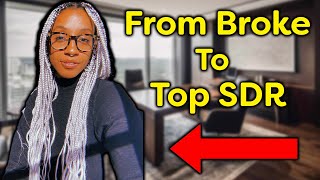
Gabrielle Blackwell went from sleeping on an air mattress with -$400 in her bank account to becoming a top SDR through mindset shifts and mentorship from Dan Barr and Kevin Dorsey. She built a personal brand on LinkedIn and built a newsletter to tens of thousands of followers while learning to set boundaries against burnout.
Chapters
Gabrielle Blackwell went from sleeping on her uncle's basement floor on an air mattress with minus €400 in her bank account.
I was living in my uncle's basement on an air mattress and also like checking my bank account and seeing negative €427.
To then climbing the corporate ladder and working for some of the biggest SaaS organizations in the world. She escaped an abusive relationship, overcame countless obstacles, and refused to listen to the people but doubted her.
Within a year, I realized, I was like, oh, I'm in a relationship from hell. Like, this is terrible.
She's now one of the most sought-after sales development managers in the industry. In today's episode of Top Billers Toolkit, Gabrielle is gonna be sharing her mindset shifts and tactics that took her career to new heights. She's gonna be giving us her tips for dominating enterprise sales, the importance of surrounding yourself with the right people, and the power of self-belief. This is going to be a good one, guys. So as usual, grab a cuppa or a glass of wine depending on when you're listening to this, and let's jump into it, shall we? Hello, Gabrielle, how are you?
I'm doing great, how are you?
Yeah, very good. I was just saying off camera to you that I've been watching you for a while. It might seem really strange, you probably have never heard of me, but I love what you do, love your content, love the message you put out. And I know you are an absolute expert in sales and everything sales related, so I thought who better to bring on than Gabrielle herself? So thank you for coming on.
Thank you. What a fun time that we live in where someone can say, essentially, I've been stalking you. I'm a great fan. Here you are on their podcast.
It's mad, isn't it? You probably get that quite a lot though, Gabrielle, right? In terms of like when you get— when you speak to people on the phone, they're not saying, oh, I've been following your stuff for ages.
Yeah, I, you know, going to like conferences or summits especially, um, and then having a newsletter as well for sales managers, it is nice to have people come up and say like, hey, you know, I really appreciate your content. Um, I just giving you a hard time. So, but it is a good point though.
It is a great point that we live in an age where people can watch your stuff, um, and get to know you for like even years and you have no idea, but they love your stuff and they, they feel like they know you. And it's really, it's really interesting. The weirdest thing is when people watch you for like, pretty much what you did, Sam, maybe, is watching for like a year. We make it sound really crazy now, but it's— well, and when they don't engage, which is typical for lurkers, when they don't engage and then they're just sitting there behind the scenes watching, it's interesting. Yeah, yeah, yeah.
I'm like, hey, holler, like, let me know, send a note. Or I don't get to every single thing in the most timely manner. And also, uh, I, I do see, I do see when people engage, whether it's on the newsletter or over LinkedIn. So I appreciate it big time.
Yeah, awesome. Well, thanks for coming on, Gabrielle. Um, we always start the podcast with this question: what's the number one tool in your toolkit, whether it be a strategy, mindset, or piece of software? What would you say?
Ooh, I think it's maybe a mixture of a strategy and a mindset. Like if mindset was a strategy, it'd be that. For me, what I really think about is, number one, I don't need to always know the answers. It's OK to ask for help. And there's this other piece that my grandfather always shared with me. He's like, whatever you do, just do a good job, right? So put forth great work. And if you're not good at it, work really hard at it. So I, I think it's more of like a mindset kind of thing that helps me get better over time.
Yeah, I love that. In, in terms of that ethos or that what you got from your grandfather, was he just kind of repeatedly telling you that over and over again? Did you watch him do stuff? How did that come about, Gabrielle?
Yeah, it's a little history. Uh, my grandfather, his name is, uh, Bob Blackwell Sr., and he started off at IBM as a systems engineer in the late '60s. So my grandfather is a fascinating human being. Like, he grew up in service class industry right outside of Philadelphia and grew up in an environment where people who look like him, like Black men, the highest aspiration they could probably have is to be a milkman or a postman. No shade to those folks whatsoever. But I look at what my grandfather has been able to do. In the '90s, he had a— like, I think $26 million. It was either $26 or $62, but somewhere he had— he, at one point in time in the '90s, he had one of the largest owned minority-owned businesses in the Midwest for IT services. Yeah. So I grew up— yeah, I grew up seeing my grandfather in like the Chicago Tribune, in cranes, in, um, uh, doing keynotes, getting awards and recognition, um, also being on boards of like very prestigious art councils and those kinds of things. So, um, and, and he was a salesperson at IBM for 20 years.
Wow.
So from systems engineer to sales rep, and then he worked his way up leadership. And so at one point in time was a branch manager, and so had about 100, 200 people who rolled up into his branch as well. And, uh, on top of that, like, where I'm from in Chicago, he had such a presence. People would come up to me and be like, hey, like, you look like a Blackwell. Do you know Bob? I'm like, he's my grandfather. And they would just tell stories of the kind of impact that he had on them. And so when he shares his knowledge with me, like, I take it to heart big time. So every time I would start a new job, right, he'd just go, Gab, do good work, right? And so even with my reps, like, I'm managing sales development reps. And what I think is really interesting about that space that people are in, in their careers, is I think they're still trying to figure out what exactly they want to to do. And, uh, there could be this doubt of, is sales the right path for them? And I go, doesn't really matter. Like, the number one thing that you can do for yourself and for your future self is you can, you can deliver a really great work product, right? Whether you go to sales or marketing or recruiting, or if you go off and you do your own business, if you're doing it, if you're delivering a great work product, that translates everywhere, right? So like, let's just learn how to deliver a great work product And if you still want to explore sales as like the work product that you're going to deliver, awesome. But nonetheless, deliver a great work product. It'll help you in the future get to where you want to go.
Absolutely love that, Gabrielle. It's kind of like the foundations, like do good work and everything else will kind of shoot off from there, won't it?
It's really interesting. Yeah. Yeah. I think it's like doing and learning how to do good work. So I reflect on my experience when I was in university. And I joke around, I tell people, I'm like, I didn't really know how to college. I looked at some of my classmates who did really, really well academically that opened up opportunities for them very early on. While for me, it maybe took 3 or 4 years before I knew what I wanted to do post-graduating. But these were folks who recognized the resources that were available to them. They had a really great work ethic and study ethic. They were the ones who had their essays ready and written 2 weeks before they were due. And I'm like, they just had a huge leg up because they knew how to work in that field. And so what I try and impress upon the folks on my team, because I'm like, man, I missed out on so many opportunities because I just didn't know how to function. I didn't know how to work in that environment. So I never wanted to— for myself, I never wanted to relive that or open up the door to the risk of that in a corporate setting. And so that's something I impress upon my reps big time and anyone I mentor and coach, which is like, hey, let's learn how to work within a corporate setting. Let's learn how to navigate corporate settings. So what is the mindset that you need to have in order to do that? What is the discipline that you need to have in order to do that? How do you build up your confidence and self-esteem, right? So that you're not swept away when things aren't going your way. And so like, because these are all the things, if you learn that earlier on in your career, this means that you're going to be, you're going to be that person who's ahead. right, compared to the folks who are entering into the corporate workspace at the same time as you, right? Or if you have career transitioners, very similar, right? So it's like, hey, maybe for other folks it takes them 5 years to get to where they want to be. For you, maybe it only takes you 2. And there's all types of benefits with that, right? Whether it's promotions, but lifetime earnings big time as well. So it's like, hey, if you're able to get $20K more tomorrow versus 3 years, like, think about what that does over time for yourself, but as well as for the generations to come in your family.
Absolutely love that, Gabriel. I'd love to move on to your story because I went through a few of your posts and it was— I had no idea some of the roller coasters that you've been through to get to where you are today. And I love a good story and I love sharing these stories with our audience because they're so, it's so powerful just to know what, how the journey other people have been on and what they've, what they've done to get where, where they are. Um, the specific post that caught my attention was one where you said you started sales in a desperate place Can you kind of just go back and for anyone that hasn't or doesn't know your journey, just kind of give us the rundown, if that's okay? Gabrielle?
Yeah. Yeah. Thanks for asking the question. So I had— after I graduated from university, I had moved abroad and I was living in Paris, France as an au pair. And if you don't know what an au pair is, it is an indentured servant, like with a family, basically. And at that same time, I was also in a relationship with a Frenchman. And, um, and I was thinking about moving back to the US, and he asked me to marry him. So I'm like, all right, awesome. And I, I go to, um, so after we're engaged, moved to France, and, uh, within a year I realized, I was like, oh, I'm in a relationship from hell. Like, this is, this is terrible. And so I, I went from being in a, uh, like verbally and at times physically abusive relationship with him to then needing to come back to United States, um, and not having planned for it. So when I came back to the US in 2015, um, the story that I tell is I was living in my uncle's basement on an air mattress. Uh, one of the worst days was like waking up in the morning with my teeth chattering because it was so cold. Uh, it was like a Chicago winter. And also like checking my bank account and seeing negative €427. And at that time I was going for, um, I thought I was going to go for jobs in HR or recruiting, and I could never get past the first interview. So I was like, what is life? And this is not, this is not the life for me. So there came this point in time where I'm like, I really am not, I'm not in a position that I ever thought I would be in. Like, in the basement, like, recently left my ex-husband, have no money whatsoever. And I think I had, um, just a suitcase of possessions and my dog at the time, and that's all I had to my name. And so when I kind of took a step back and I thought about, all right, I'm not just looking for a job, I'm really looking to build a career. Like, where do I want to see my career taking me? I landed on sales as the first place to start. So when I say I started out of kind of desperation, it was, all right, like, I can't go any lower than this and I need to figure something out. But I do recall like looking at the job description of cold call and cold email and I was like, is this really what my life has brought me to? And I applied on a Wednesday. I started the job the following Wednesday. And so That was really like the beginning of GB story.
That's such a mad story, Gabrielle, especially the chattering. And I know Chicago winters are insane. Like, I haven't been to Chicago, but I have heard Chicago winters are insane. What was going through your head at your lowest point? Like, because a lot of people would have been down and out at that stage. Like, what was motivating you to get up, find a sales role, and want to have some kind of transformation? What, what, what was it, do you think?
I, yeah, I think, um, I'm gonna pull from— there's this book, a mentor of mine. So Kevin Dorsey's been a mentor for a few years, uh, and he had recommended this book called like Never Hire a Bad Salesperson Again and what to look for when you're interviewing folks. And they talk about drive and drive being broken down into 3 key things. So there's one, there's the need to achieve. There's secondly, there's a thrill of competition. And thirdly, there's an optimism, or what I call like just a deep-seated belief in yourself. No matter what's happening. And so from my end, whether it was— I was like, oh, I'm— this is just— I see this big life for myself. But really, I think for me, I was like, I cannot continue to live the way that I'm living. Like, it's not going to be a life worth living. Um, being very vulnerable. And so I was like, I want to find a way to enjoy my life. Like, I deserve that. And so I really held on to this vision of this woman I don't think I've ever shared this in like a setting before, but outside of my friends. But like, I can recall, like, I was outside on my, on my uncle's patio and I was just like looking up at the sky and I was like, I need something. I need some kind of vision to tether myself to, to help me through this really dark period of my life. And I just envisioned this woman who's like 40 years old and she just looks awesome. And I'm like, all right, cool. Like, that's what I'm working for. It's like this 40-year-old version of myself who is just shiny and bright and happy and on her shit. And so I really started to think about like, okay, well, what is she doing? Who is she like? And so it was like, oh, like maybe she's a CEO, maybe she's like this. And that's— and then how do CEOs start their career? Cool, sales. And so for me, it really was, I think, this like instinct to survive and this optimism of like, oh, I can become this person that I envisioned myself to be. I was 24 at the time. So it's like, all right, cool. In what, 16 years? I can get there. Like, I can do that in 16 years. It's funny because I had this moment like a few months ago where I was like, oh shit, I'm— I just turned 33, but I was like, oh, at 32 I've become that woman that I had really dreamed of becoming. So now I need some, some new dreams to create. Yeah, but yeah, I think I really do think it was like a survival instinct plus like that optimism in myself.
That's so cool. I love that you, you spoke about visualization, Gabrielle, because I'm such a big believer in that. Even this morning I sat down and I'm looking at videos of the house I'm gonna get like that's how deep I go on that stuff. I'm listening to a track in the background, visualizing myself in this house, what the car that I want. So, and I, I think that is so powerful. So I love that you— was that kind of going when you were— when you went through your toughest moments, maybe in the office, was that constantly coming back to your mind, like the, the woman you wanted to be? Or was it more of a— you used it in the most difficult situations?
I think back then it was like, I, I didn't know about meditation, I didn't know about guides. I was like, I'm just I'm just out here like cowboy, what is it, bootlegging. I'm just bootlegging everything that I'm doing, just trying my best. And also at that time, like, I wasn't getting a lot of support from the places that I thought I, I would have been able to rely on. So I kind of developed this weird— I call it a fuck you complex— and where it was every time that someone said something like to doubt me and my decisions, it was kind of like or like, hey, like, just wait and see. So I had this, uh, very interesting— when I got some haterism, I would try and convert that into being motivation for me. I will say that that worked for a short bit of time. It's not sustainable. And so for me, there was a switch of, okay, like, I, I'm actually becoming untethered to my vision and I'm focusing more on proving people wrong. However, like, is this stuff that I actually care about? And so for me now, it's funny because I have this like big-ass binder next to me around like achievement, and it changes over time. And so it's everything about like, let me learn about— let me learn about myself. So it's assessments that I've taken about personality and strengths, for example. Um, it's, uh, um, like what kind of goals do I want to set out for? And then how do my strengths align to that? And who are the people that can help me? And also like notes on books that I've read maybe, or conversations that I've had with mentors and coaches. Um, so there's all of that. I will say in the past like year or so, because I've been so career-oriented and so ambitious in my work, um, that it's like, I'm like, I'm actually exhausted from doing so much career development stuff. So now it's been much more focused on all right, like, what are things that I enjoy doing outside of work that are actually way more fulfilling? Because I realized the more fulfilled that I am outside of work, the more that I can do fulfilling things at work. So yeah, so like a lot of my goals now are, are really on like, how can I find people to help me kind of scale myself out so that I don't have to do as much so that I can make space for the things that matter, such as, not just hobbies, but like things that I feel very called to, to be in service to outside of the outside of corporate America, um, as well as like what kind of relationships do I want to start to develop in terms of friends and romantic relationships as well. So that's, that's really helped me be a way better professional, if I'm being very honest.
Yes, I completely agree. I'm a, I'm a fanatic of jiu-jitsu, Brazilian jiu-jitsu, and that literally keeps me sane outside of work, Gabrielle. And I feel like it definitely makes me more disciplined I've met a lovely community of, of lads who I enjoy seeing on a weekly basis, and it just makes life 20 times better. So I totally agree with having something outside of work that you can kind of obsess over and love and do. For people that don't know your, your story, you were at your lowest point, minus £400 in the bank account, and then you absolutely smashed it. Within 3 months, you were top rep in your company. Within 4 months, you broke every performance record that an SDR held at the company. 6 months you had your own place, 14 months you were promoted to AE, and 2 years you were promoted to your first management role. Absolutely insane, like just crazy results. Can you break down— this is a difficult question, but can you break down as much as you can step by step how you managed to have so much success in a short period of time? What were the fundamental blocks, do you think, that allowed you to do that?
Yeah, I like saying that I have 3 things, so right now I only have 2, so we'll see what happens when I start talking. I think the first one for me was, um, I, I can recall my first day at work and we were doing role plays. Uh, we, we jumped straight into, okay, like we're gonna practice our cold call opener and our objections. And, uh, I just remember I was so nervous. I said the company name wrong. And, um, and I was like, out of the 3 people who were hired that day, I was by far the worst one. And so, That being said, what I did do was I took notes on everything. So I took notes on, okay, what should we be saying? How should we be saying it? I took notes on the feedback that I got, but I also took notes on the feedback that my coworkers got. Like, oh, Nick said this way, and my boss gave them this kind of praise. Dana said things this way, and our manager gave her this kind of feedback, right? So I was really paying attention to, okay, what is being praised? What is being recognized? What's not? And it wasn't just for me, it was for other people as well. So I think that was like the first thing that I did was I really started to like analyze what was going on. Uh, much— also, I played sports. I played, uh, basketball and volleyball from the time I was in 6th grade. I played at the collegiate level as well. So like game tape feedback, reviewing, like that was just something that I, I would, I would just do anyways.
Yeah.
So I think for me, the first thing that I was doing was coming in with kind of like an analytical mindset of, okay, like, what does it take to get better? And let me really break this down. And I have my notes somewhere in my, like, somewhere in my home from that time. And so that was the first part. And so what I did before the second day was I was like, you know what, I want to get better. And like, no matter what, even if I'm not good on the first day, like, I will be the most improved. So I think that whole piece of what I was sharing of like, I, it's okay if I don't know, I need to ask for help. Like, I'm always looking for ways to improve. So based on the notes, I just practiced. And I roleplayed by myself, like getting ready in the morning, like brushing my teeth, just saying the cold call pitch like over and over again until I— being on the bus on the way to the office, saying it over and over again. So I come in on the second day and it's like, whoa, who is this girl and what has she done? Like, this is not the same person who came in yesterday. So I think on that second one is like, all right, based off that analysis, now you need to practice like Based on what you know, if you know there's a better way to do it, practice getting better at it, right? And then the next thing that I did is like I would go and I, I'd go ask for help. So I got mentors. I'm like, I have no idea what I'm freaking doing, but I know I at least know one person in my network who's really good at sales. So I got a mentor and I would meet up with them over lunch every other week and I'd say, so here's our pitch, here's what we sell, here's what we're doing. And they would coach me up. They'd coach me up on what to say. They'd coach me up on how to say it. They'd give me resources. I'd follow through on the resources. I'd give them feedback to it, like, hey, I tried this out, here's how it worked, or here's how it didn't work. I've got questions. So again, it was like, right, let me analyze, let me practice, let me get feedback big time, let me ask for help and get more feedback and more coaching. And so what ended up happening over time was I just got better really quickly, and I just kept on getting better while everyone else, it might have taken them 3 months to get the exact same results that I got in maybe 2 weeks. So, so I, I really looked at things from a level of like continuous improvement and continuous iteration. And the only way you can do that is if you set out and go, so here's what it is. Here's how we analyze. Here's how we know what's going on. Like, let me go, like, let me, let me practice, or let me make one hypothesis of how to improve. Let me get mentors, ask for help, and let me get feedback. If I follow that script, right? Like I'm going to get better.
Absolutely love that. Marcus must have loved you, Gabriel, because he drummed that into us, you know, every single time we met with him. He talked about those things consistently. Um, but it's amazing because you, you look at people, and I'm always amazed at people that achieve so much in such a short space of time. And you're that shining example of someone who literally, you know, propelled and fast-track your success when someone would have taken 3. I think it's amazing, um, because not only do you achieve more in a short space of time, but I feel like you have more life as well. Because it's a weird way to frame it, but I feel like you have— you're using your life more, um, effectively. I don't know if that's the right way to phrase it, but that's how I feel. I feel it's like, uh, it's really interesting.
Yeah, there is, um, man, I'm gonna butcher this quote, but it's It's something along the lines of, all right, the person who sees the world the same at 20 as they do at 50 has wasted 30 years of their life.
Yeah.
Right. So I think what can happen, and this is like in life, this is not just in a sales profession, is someone goes, well, this one way worked for me, so therefore it's going to work forever. And they become really close-minded. And they inhibit progress and innovation. So it's like, all right, like, sure, you could be somebody who works 80 hours a week and you get 100% performance. If you want to work 80 hours a week for 100% performance, ew, but good for you at the same time, right? I was the person who was like, I just want— like, how do I do this? Like, I just want to get better. Right? And so I even think about where I'm at in my career now. So, yes, I achieved so many things in a short amount of time. I do think it's important to note the difference between my approach and maybe my coworkers. So my approach, it's like, all right, I'm first one in, last one out. I'm kind of living and breathing work while other folks are like, hey, work is work. You know, they're like, work is work. It pays my bills. I would rather like watch a show, hang out with my friends. Um, I'd rather like invest in my hobbies and do those kinds of things. And so both are beautiful. Like both can be beautiful for me. I actually had a really big burnout one year into my management experience. So it's important to note that of like, you can accomplish a lot in a very short amount of time and that's beautiful. However, if you don't have the other supporting systems, like all that success that you achieve in a short amount of time could be a huge burnout towards the end. And so I think there's this phrase called the shooting star, which is they rise really quickly, but they like, they, they, they burn out.
Yeah.
Yeah. Yeah. That's interesting. Right. So I, so I think for, for my, my tale is also like a cautionary tale. And so this is also what I try and impress upon my reps big time is, all right, like I had this huge burnout in 2018 where I took about a year and a half off from working. Which was not like— it was, yeah, that's a little excruciating. So I'm like, how am I going to pay my bills? And like, now I'm going to go move into my mom's house at like 28 years old. That's not cute. But yeah, but for— I think coming back, it's been more about, all right, again, I don't want to be that person who's being a high achiever, but the only achievement that I have is at work and I have no sense of achievement or purpose outside of work. Work. So yeah, so that, that's been a, it's been a huge learning for me. I think also the importance of finding ways to get better so that you can, instead of it being 80 hours to get to 100%, it might be okay, you might actually only need 35 hours to get to 100, right? So if you want to do 40, now you're getting into the 105 range versus always just working hard just for the sake of working hard.
Yeah, one thing that really stood out to me what you said, Gabriel, was you just wanted to get better. And it sounded like you were just enjoying the process of learning. And life and work is so much more fun when you don't attach your identity and self-worth to an outcome. And you're more focused on getting better and improving. Like, whenever I switch my brain to that mode, I'm just happier. Because I'm like, oh, I learned that new thing today. I'm improving, I'm getting better. Like, don't, don't attach my personality to an outcome, because it's always going to there's a— it's okay to have outcomes, but you know what I mean? It's always—
yeah, it's the difference between intrinsic motivation and extrinsic motivation. And then from a motivation kind of theory as well, what is, um, what is more effective is intrinsic motivators, right? Because it's like, oh, there's joy. It's not, um, there's the joy of just doing the task for the sake of doing the task, right? OK, what is it? What's in it for me to just simply do this task? Like, to make calls. OK, I showed myself that I could do it. Wow, I'm building up my self-esteem. Compared to, all right, hey, like, I've had those moments where I'm like, all right, I accomplished so much in such a short amount of time that I attached, like, my sense of self to, oh, I'm the person who gets promoted. Fun fact, I haven't been promoted since 2017. OK, so like, it's like, it's It's— and however, I, like, I'm now a thought leader, right? In the past, I was like, all right, I don't mean anything and I don't amount to much unless I am having this upwards trajectory in my career. However, there's so much outside of my control. And so I can recall having a conversation with another mentor of mine. His name is John Gilman. And, uh, and he was— he's like, oh, hey, Gabrielle, you know, like, what do you want to do? And What, where do you want to be 2, 3 roles from now? And at the time I was like, all right, I definitely want to see myself continuing to move up in my career. However, I feel like I've been on this pursuit for like 2 years now and I haven't been successful in like positioning myself very well. Not yet anyways. And one of the things that he, um, it was, it was him and it was also Lars Nielsen, funny enough, like they, John introduced me to Lars. And I was talking to Lars about this and I was like, hey, like, how, what do I do? Like, what do I do to get promoted? And Lars Nielsen from Snowflake, he tells me the story of how he had to be dragged into promotion. And he's like, what you do is like, you just get really good at the job that you're in. He's like, so if I'm you, I'm getting really good in sales development and commercial, I'm getting really good in sales development and mid-market enterprise strategic, right? He's like, I'm mastering every single aspect of sales development. and I get so freaking good at it that someone goes, hey, listen, you've got all the experience that we need in order to get promoted. And so that's kind of, that's what I've been doing. Have I gotten promoted yet? No. Do I necessarily care about promotions as much? No, I don't. So funny enough, because I'm like, oh, I, I am now someone who's like incredibly, like, I'm credible, uh, reputable as well. And so the promote, the promotion is there, could be there in the future, but I'm actually like, oh, I have a BDR leader coffee talk with Sixth Sense, and I also have a newsletter with a one-on-one. Um, and so like there's an opportunity to still deliver a lot of values, to still get better, and it's not so singular for promotion. Now I actually have more options than I was considering too. So I think when we start to look at it and detach from the outcomes, we all of a sudden start to see way more possibilities than if we were to go well, success only means this very narrow singular definition.
Yeah, well said, Gabrielle. I completely agree with that. One thing you said, Dan Barr, he said one of your bosses encouraged you to aim for more. And I have a feeling by the, just the small post that I read, that he had a big influence on your journey. Can you just tell us what impact he had and the importance of maybe having someone like a mentor during your, your, your time in sales? If that's okay.
Yeah. So Dan was the guy who hired me into my first sales role. And, and as I mentioned, like, I, I applied on a Wednesday evening in my first— I remember I signed my offer letter on my first day at the office. Like, that's how quick the turnaround was. And, um, I, I think I, I can recall going into my phone interview with him. I was having coffee with my godmother Vanessa, and, uh, she's like, shouldn't you be preparing for this call? And I was like, whatever. I was like, I don't even know if sales is for me. I'm just having fun. Like, if they don't want to hire me, they're— who cares? I don't care. And so I like took the phone call from the car, and I'm just having a good conversation with him. And I remember at one point in time, I felt like, oh, like I need to present myself a certain way. And he goes, he's like, honestly, I don't give a shit about that. Like, you just seem awesome. He's like, I kind of just want to offer you the job right now, but I believe in face-to-face interaction. And I was like, Wait, here's this guy who's ready just to give me a job after one conversation. That meant so much to me because I had been interviewing at all these other places and I couldn't get a shot, like, at all. And so I'm like, for someone just to believe in you so quickly, it does something for your self-esteem and for your confidence. But it also did something for my motivation of I don't want to let him down. He's taken a chance on me, and I never want to prove him wrong in that. And so I also think about the conversation that we had first face-to-face. And initially, I was like, I don't know if this is the right role for me. He goes, why not? I'm like, I don't know if my family would approve. I just don't know what I'm doing. And he's like, who do I need to talk to in your family to convince them? I'm like, oh, and he's going to go to bat for me too? So I was like, all right, here's someone who believes in me. He's going to go to bat for me. And then when I came on board, right, I was sharing a little bit about, hey, like, here's what's going on with me and where I'm coming from, leaving my marriage, not having a lot of support. Like, I'm like, but here's what I want to do as well. And he's like, hell yeah, like, I want to support you. And so support could look like, hey, man, I just need to talk about some shit that's happening in my life, right? And he would meet me with that energy. Also, I think he recognized, hey, here's a woman who's going to work really hard, but maybe struggles with her self-esteem and self-confidence. Some managers will prey upon that. He did not, right? So there was times, I can recall being in a one-on-one, and I was like, dude, I'm starting to realize I'm a freaking rock star. And he's like, yeah, yes, yeah, you are. He's like, I've been waiting for this moment. And then there was times where I was like, hey, listen, I want to be the number one rep. I was like, I know I can do it. I want to be that. I'm really competitive. And he just goes, hey, there's going to come a point in time where you're no longer competing against anyone else. You're competing against yourself, right? Like, he's like, I'm really looking forward to that moment in your career. So I think he just did these things that really challenged me to like, all right, the way that I'm looking at my stuff is kind of small-minded and it's maybe discrediting what I'm really capable of. And so for him, like, and just this person just believed in me so much where I was like, oh shit. That if he's believing in me so much, then maybe I should start believing in myself so much. And then also another thing, when I came back from my big burnout moment, I was having some challenges finding a job again. And he was somebody who stuck his neck out for me at In Futur and got me hired there. So he was this person who was just like, hey, listen, I just believe in you. And I think very often in these corporate spaces, we don't have a lot of people who just believe in people. It's always this, you have to prove yourself, you have to earn the trust. Like, it's like you're just never enough, you're never deserving, you're never worthy. And that just takes a toll on people big time. So I think he just met me as a real human being in a moment where, like, I needed it most. And so I'm really appreciative of that.
He sounds like an awesome dude. Yeah, sounds amazing. Yeah, I hate to bring Marcus into this again, but he sounds so much like Marcus because Marcus did the exact same thing for me and Sam. And he built our self-esteem up so much, and he just cared. He just really wanted us to do well, and you felt that. Yeah, every single interaction with him, and that it was so— like, it was such— it helped us through such a difficult time as well. It's so amazing to have those types of people in your life. Yeah, the power of having someone that just believes in you, like, it's so— it sounds so simple, but it can literally transform your life in a really—
transform it. Yes. Oh, I got the shivers just thinking about it. I think, like, there's a— say if a company is about to issue out, like, an employee engagement survey, one of the main questions that gets asked on that is, do you feel like your manager cares about you? Right? And so it's unfortunate that there are so many people who would answer that question no or neutral, right? Like, it should be, in my opinion, it should be a resounding yes. Like, hell yeah, my manager cares about me. And especially in sales, it's like this weird, hey, what have you done for me lately? Like, feed your eagle, starve your pigeons kind of thing. And I've definitely— I've had that mindset and I realize how detrimental it is, like, for myself, for the people on my team, even the high performers. Because something else that my grandfather told me, he goes, you know, treat everyone on your team with dignity because, like, however you treat your, your your, your worst player, just remember your A players are watching. So, right? So it's like, because, and I've had that moment where I've seen leaders that I worked for and I respected a lot. They've been mentors of mine and I saw how badly they treated people who weren't performing well. And so with sales being so up and down and like life can happen, like my first AE position, I was sitting at zero for the majority of the quarter. I ended up pulling out like a 193% performance, which is awesome. But for like every moment that I wasn't the top performer or that I was at zero, I was having like a full-on panic attack because I was like, all right, am I going to now receive the worst of this leader? Because I've seen what he's done to other people. And so at that point in time, if it's like I can't even focus on getting better because I'm just so scared, I'm, I'm having such a stress response. Then I'm not going to be able to perform well because I'm like, I'm spending so much energy just trying to be settled, like, versus like, oh, I need to like actually do my job.
100%. The importance of creating the right environment for people mentally and, and the physical environment as well. Um, what were some of the most important lessons you've learned along the way? Maybe more technical lessons, would you say, throughout your career, from the moment that you were on your uncle's mattress up until now? If you were to go back in time and say, you know what, I would probably change this, I would do this differently, or that taught me something really amazing, what would you— what were some of the biggest lessons, do you think, Gabriel?
I'm trying to think, like, I don't know how technical this is, but I, I think there's one lesson that I learned, and I tell it to everyone that I can if it comes up naturally in conversation, is like, you got to take control of your career. Like, no, no manager, no business, no corporation is going to manage your career for you. And I see— I saw this for myself at times where I'm like, okay, well, I'm just gonna go along with what my manager says or what, like, mentor say. Um, but at the end of the day, like, I'm gonna suffer the consequences. I'm also gonna be the one who reaps the rewards. And so, uh, I am a strict, like, and, uh, uh, profound— what do we call this—
prophet of, like, extreme responsibility kind of thing.
Well, not just extremely responsibility, yes, Yes, yes. But I was thinking more about in order to own your career, you really need to understand what are your strengths, what are the areas where you thrive in, right? So what is the kind of work that you're doing, the kinds of people you're doing that work with, the kind of person that you're reporting into as well? What do you need truly? And it happens so often where people self-abandon in these corporate spaces for a paycheck or for recognition or for whatever. And then they're sitting around bitching and moaning about the workplace and their manager and whomever. And it's like, okay, well, what's your role in this, right? So I'm not saying that if someone is in a hostile or a toxic work environment that they are 100% responsible of that. I'm like, no, that's not what I'm saying. However, I do think that we live these lives that are really not that long. And if we're going to spend the vast majority of our time at work, we should be enjoying ourselves. And so I think for me, I learned this really hard lesson of, um, you know, like, I— there are some costs that I'm just not willing to pay for work. Like, I'm not willing to pay for being treated badly. I'm not— I'm not for being yelled at. Like, I'm not— I'm not here for somebody going out of their way to try and, like, whittle down my self-esteem. I'm like, you're either my biggest fan or I don't know you, right? And I— and I keep it very black and white. Um, I'm like, you treat me badly one time I'll give you feedback, treat me badly a second time, I will handle this appropriately in a way that's going to benefit me and it's probably going to be at your detriment, to your detriment, but that's on you, right? So I think there's this piece when I say like, you have to control your career, you have to be in command of your career. It also means being willing to make really hard decisions for your benefit. It, right? Even if it comes at the expense of certain relationships or even potentially certain job opportunities. Like, if you do that in the long run, right, it's like, all right, cool. Like, I'm at a level now in my career where, uh, it's not to say that I don't work hard, but I don't need to. Yeah, right. I've got a great support system. I got a boss that I vibe with, right? I've got, uh, the space to be supported. I've got— instead of me just working alone by myself and working hard, I've got teams of people who support me. So I'm like, that only happens when I know what I need, I set my boundaries, I say no a lot more. So yeah, I think that's something very specific, like look for opportunities to say no versus saying yes, because that, like, that to me has been a career changer.
Great, I love that, Gabrielle. Um, what really resonated with me there is, I know you didn't say extreme responsibility, but that's kind of what kind of came into my brain. I was whatever's not working in your life, you took control of it, not waiting for something external to come in. You said, no one's going to change this for me, I need to change this. And so you created the life that you wanted. And I'm a massive advocate in that. Anything bothering you in your life, you, you probably have some control to change it, um, which is— yeah, I'm a massive advocate of that. Um, I can't believe how quickly the time has gone. We're nearly coming to the end of the pod, but what I would really love to dive into, just a couple more questions, Gabrielle, is journey with social media? And because I'm sure— well, I don't know, you, from them, from the, from your kind of run-up as an SDR having a lot of success, was social media always part of your strategy? If not, when was the moment when you were like, oh, oh shit, I should probably start using this and this is going to be good? Do you mind telling us your journey with that?
I never, I never as a rep thought about social media ever, ever, ever. And Like it was, it was, again, I was a rep from like 2015 till 2017. So I was only a rep for a very short amount of time compared to my career tenure. And at that time I was like, all right, I can call people, I can email them, I can call them some more. I can have all my success over the phone and over Zoom. And I'm not a really big networker. It's not natural for me. So I'm like, I'm just, I'm just calling strangers. I can do that all day long. And, but what happened, so 2020 comes around, I'm a manager, and COVID hits. And I was just, I kind of just had all this time on my hands. And I really thought about, again, where do I want my career to take me? It was kind of like I had this flashback moment to being 24 of like, what's my vision? What am I going to do? So I had that moment at, I was 29 at the time. So I'm like, all right, cool. Like, where do I see my career going? Like, let me make it a little bit more concrete and how am I going to get there? And as I, I was just going through social media, I was going through LinkedIn specifically, and I was taking note of all these folks who were in positions that I would eventually want to be in. And one of the things that I saw is that they were all in this one professional organization called Revenue Collective, now Pavilion. And I was like, all right, cool. Well, I, let me go put myself where these people are because maybe that's step one. And one of the rules or one of the suggestions that Pavilion had at the time was for every one question that you ask, ask, answer 5 people's questions. So I just went through. So it was a Slack group at the time, just Slack group at the time. So I just went through and I was just scrolling through all the Slack channels looking for questions where I felt like, oh, I can actually deliver some value. And so I would just do that every day because I didn't even know what question I wanted to ask even. But I was like, I'm gonna have questions, let me just answer them now so that I can ask them when they come to me. And so over time, what ended up happening was I started to be associated with certain themes and topics. So where I was offering up my perspective was for sales development, outbound, right, prospecting, and a little bit of management. And so I— so it's like anytime someone had a question about outbound, setting up a sales development organization especially, they'd— people would go, hey, you need to go talk to Gabrielle. So I started to build up a certain level of credibility in that community. And then I thought to myself, um, of like kind of how where else could I do this? And there was one other piece to this too on the social side is there were people that I would see posting on social media and very honestly, I was being a hater. I was like, what? Like, this is what gets all the attention and all the engagement. Like, I could have thought of that. That seems so simple. And one day I was driving over to my grandparents' house. They lived about an hour and 15 away from me. And I was, I was just like, why am I being such a hater? This is so silly. I'm like, I was like, ooh, I was like, I'm jealous.
We've all been there, Gabrielle. We've all been there.
Yeah, I was like, oh, I'm so jealous. I'm like, what is— I was like, what does that say about me, right? And I had this moment where I was like, okay, the only difference between this person and myself is that they're posting and I'm not. So I'm hating on them because they're doing something I'm not. So like in this world of haterism and being jealous, they would need to stop. And I was like, wait a minute, that just means that I don't believe in myself. Like I'm over here hating on them because I don't think I could do it. That's not true. So I was— I really did think about, all right, I'm getting engagement over here in this community. So like maybe, just maybe I can get engagement over here on LinkedIn as well. And so that's really what started me posting. Then there was the next piece of, okay, well, I want to get engagement, so I'm going to need to go and connect with people, right? So I set up daily goals for myself of people that I would connect with. So I'm like, I want to talk to sales managers, sales development managers, directors as well. And this is all in 2020. So that's really what I thought about for building my network. I wanted to put myself in environments where those kinds of folks would be there. So those are the kind of conversations I wanted to have as well. And it's been, what, 3 years going on 4 years now. Uh, when I started, I think I had like 1,200 connections. Now I've got almost 30,000 followers. Uh, LinkedIn, uh, sales influencer and top voice. I've been a Salesforce top influencer. Uh, I've been on lots of lists and like, yeah, yeah. And have a newsletter that has 15,000 subscribers to it. So it really was more about about, hey, like, starting off with, I want to just— let me just find— let me just go find ways where I can share value, right? Um, that's how it's— that's really how it started, and that's what I've been doing.
What I love about your content, Gabrielle, is the variety. Like, there's always— you're always delivering it in a different way, and you're always— the format's always different as well. So you always manage to keep it fresh, which is a very hard thing to do. You make it look very easy. I don't know if you— if it's quite more difficult behind the scenes, but it's, it's very cool. I think that's one, one thing I just observed about your content, the variety. It's really, really good.
Thank you, thank you. I will say starting off it was a bit more structured. Like, I had, I had set goals for myself to make sure I would do it. So I was like, I'm gonna post, um, uh, if it's, if it's Monday through Friday, I'm making a post. Like, that was the rule. I'm gonna do that for 2 months straight just to learn the discipline But also during that time, I started to learn ways to make it easier to create content. So I was like, oh, actually to try and wake up in the morning and think of content was really hard. But instead on the weekends, I'm like, all right, there's things that I'm doing from a skill development standpoint, like reading a book. So I'm like, all right, I'm gonna read a book or I'm gonna listen to a webinar and I'm gonna take note of what are the 5 key takeaways. Now those 5 key takeaways now become posts and I'm gonna write them on a Sunday. I'll schedule them out to send and I'm done. Done. So I really, it really helped me to learn the discipline of creating content sustainably. Now though, I'm at the level where I'm like, well, how do I feel today? Or like, oh, my dog's cute, people like dog pics.
So when you get better and faster, you get, you have the flexibility to play with it a bit more.
Yeah, it's go call back to what we were talking about earlier of, okay, cool, if you like get better really quickly right now, all of a sudden you're like, okay, cool, I now— yeah, now I have some more space where I don't, I don't need to work so hard for the stuff.
100%. Um, coming to the end of the pod, we always finish off with this question, Gabrielle, and you're the perfect person to ask because you have been through the cold calling journey and now you've built up an audience and, and social media and you're using, using, you're using your personal brand to good effect. Cold calling, yes or no? Is there still a place for it? If so, oh, absolutely. Okay, cool.
Yeah, absolutely.
Yeah, I was expecting that.
Yeah, I was writing a newsletter to send out like on Thursday about tomorrow about cold calls. Yeah, I'm like, let's make calls fun again. Um, but yeah, absolutely.
And for all the haters that are like, Gabrielle, how can cold calling still be relevant in today's day and age? What would you say them?
I would go, show me the data. That's what I was— I'm like, hey, show me exactly how you tried it, right? With enough statistical significance. Show me the results, right? So let's start off there because more often than not, the people who say cold calling doesn't work are the people who've never done a cold call before. Love it. So I'm like, show— point me Show me specifically to the data that says it doesn't work. And if you can't show me that, then you just have an opinion. Opinions are like assholes. Everyone has them and most of the time they— Yeah.
Love it. Well, anyone who wants more cold calling tips, when are you releasing that? You're releasing it tomorrow, Gabrielle, on your newsletter.
Yeah. So yes. What is that? November 2nd. Yeah. So November 2nd, the send will be on ways to help with cold calls. Honestly, I've got a bunch of stuff. Just hit me up. I've got content. Yeah.
Awesome. So people, best place to find you is LinkedIn for any cold calling sales tips?
Yeah. So, uh, most, most of my tips are on like that I promote are on sales management. However, uh, I've, I'm, I'm really good at, I tell this to, I tell my people, the folks on my team, I'm like, hey, listen, y'all, like there's no one better at than me at cold calls. Like you can't, however, What I'm even better at is making or helping folks get really good at cold calls. I was like, that is actually what I love to do. So I have a lot, I do have a lot of content, even if I don't publish a lot of it now. I have a lot of content on cold calls and I, I just, I really do think that there's many channels that can be effective on a sales level and also calls can be really, really helpful and powerful in someone's So it's not to take away from anything else. It's just this is something else that can be really helpful.
100%. 100%. We've had more people say that cold calling is still, you know, live and well than people that have said no to it. Just to let you know on the podcast.
So I just think that people, it's like sexy to be a contrarian now.
Yes. Yeah.
They're just like, oh, cold calls are dead. I'm like, what are you selling? Are you selling? Are you selling a product that is like social media informed or email informed? Like you got to be selling something if you're saying cold calls are dead.
Yeah, 100%. Gabriella, it's an absolute pleasure to have you on the pod. Thank you so much. It's been lovely to know you after watching your content for many, many months. And yeah, lots of wisdom shared and loved hearing your story. So thank you so much.
Thank you, this has been great.
Hey guys, thanks for tuning in to this episode. If you enjoyed it, please don't forget to subscribe on YouTube and Spotify. Tune in for another episode next week, and we look forward to seeing you again very soon. Peace and love.
More from Sam




The difference between a $200K biller and a £1,000,000 Biller (full Breakdown video)

how to go from agency recruiter to Lone wolf (Advice from a $2.4 Million biller)



This Recruiter has billed $750K+ for 30 years straight. (Master of Consistency)

How to increase your candidate response rate by 25-30% (Whats app messaging system)


This recruiter has billed $1,000,000 for 5 years straight! (Master at Enterprise deals)