GENIUS BD Advice from a $2.4 Million Biller
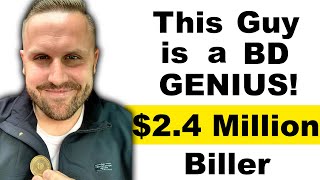
Mike Anderson billed $2.4 million in a single year using a split-desk model targeting 25-50 employee companies and a 4-email outreach sequence that gets a 97% response rate. He credits his turnaround from addiction and jail to 12-step programs, daily Bible study, and radical honesty in sales.
Chapters
Hey guys, welcome back to yet another episode of Top Billers Toolkit, where me and my twin brother interview top billers from all around the globe to unlock the secrets to their success. Today's guest is Mike Anderson. Mike is a $2.4 million biller, and he's got one of the most insane stories I've ever heard on the podcast. After years of drug abuse, addiction, gambling, multiple DUIs, Mike woke up in a jail cell and decided he needed to change. Fast forward to today, and he's a transformed human being, and he's making more money than he's ever ever done before. Not only has Mike got an insane story, but his recruitment strategies are extremely clever and very out of the box. Trust me, you're going to want to pay close attention to this episode. On today's episode, we're going to be speaking about Mike's story from addiction to getting clean and how his billing skyrocketed as a result. We're going to be discussing the BD strategies that allowed him to become a £2 million biller, and we're going to be talking about how honesty is one of his biggest superpowers in closing the deal. This is one of those episodes that you're going to want to listen to it again and again and again. There is absolute gold in here. As usual, grab a cuppa or a glass of wine depending on when you're listening to this, and let's get into it, shall we? Hello, Mike. Thank you so much for coming on the podcast, mate. I was introduced to you or informed of you by a guy called Stuart, and I think you've met Stuart. And I listened to your story. You have an amazing story and you're obviously a, a, a top biller, which we'll get into the numbers in a second. But thank you so much for coming on the pod, mate. I really appreciate it.
Yeah, no problem. Good to be here with you guys across the pond. Excited.
Awesome, dude.
Awesome.
We always start the pod with this question, which is what's the number one tool in your toolkit, whether it be a mindset, strategy, or software? What would you say, Mike?
Uh, for me it's 100%, it's a mindset. Um, I've been in this business a long time, and, uh, the— my favorite way that I kind of operate my business is that if, if I— I mean, I run my own business, but if I work somewhere or whatever, or if I had no way to make money, I have a skill set that allows me, as long as I have a phone and I have internet, I can make money with what I've learned how to do. And like, generating income is not an issue. Um, and so it doesn't— the industry or none of that matters. I know how to like create demand out of thin air, and that is like the most important, in my opinion, the most important intangible, uh, for agency recruiting. So, um, it's a mindset thing. The main mindset for me, it's just real simple, is I'm never down and out. I can always make money even if I have to start from scratch.
Love that. Sorry, Ben. Were you going to say something? I was going to say that it's fascinating and I love that. What would you say that— I think you kind of touched upon it. What would you say that skill set is that allows you to generate income on demand or, you know, whenever you want?
It's seeing— it's playing from 30,000 feet above, seeing the whole field, but then also being able to insert myself in any position that I need to to create demand for something that's a need. So, like, for me, the, the biggest skill set is, um, like, if I, if I want to go create demand, right, and I know the Lakers have 5 NBA players and have LeBron James and 4 other people that nobody can name, and they have a starting 5, and you can only play with 5 players, they're not hiring. But what if I come along and say, hey, I've got another LeBron James? Sorry, Charlie, you're on the bench. New LeBron James, you're in. And so just creating demand out of nowhere, even though there's nothing officially open or they're not a potential buyer or whatever, You know what I'm saying? If a family has 3 cars in the driveway and they're all Toyota Camrys and they don't need a new Toyota Camry, I might just keep driving by with my Toyota Camry to get them to say, oh, that's a nice one. And now they want to buy it. Create demand. You just got to create demand.
Love that, man. I feel like a lot of sales is just kind of about kind of if they said yes, bringing them through the funnel. But to create demand is a whole nother skill. That I'm still learning as well. And I would, uh, and I guess that's one reason we're doing the pod, to learn from the best, Mike. Um, we haven't got a lot of time, so I want to get into your story, Mike, because, uh, for anyone that doesn't know, on your LinkedIn profile you have a video, um, about your past and your story. I loved it. I looked through all— I watched the whole video, absolutely loved it, mate. And I love how vulnerable you were and just your journey. So I really respect that, man. But what I'd love to know is what key events do I need to understand about you, Mike, to understand the man that you are today?
I would say the main key events for me are the day that in 2009 I had— well, I would say I had one year where my mom was diagnosed with breast cancer, my dad died, and my girlfriend of 4 years who I thought I was going to marry and ended up not working out. And from that point on, I said, you know what, screw this. I don't— I'm not trusting anything bigger than me. I'm just gonna go have fun. I'm gonna party. I'm gonna do things my way. I'm gonna do whatever. I knew that I was not scared to talk to people, and I knew that in order to live the lifestyle I want to live, I had to have money to do it. So I was like, I'll go be in a Wolf of Wall Street environment. I'll do sales, and I'll do all that. And then, you know, and then I snorted and drank all my commissions away and did all that for years. And then, so that's the— well, that's what kind of kickstarted me on my path. But what stopped me in my tracks is on May 25th, 2018, the Friday day before Memorial Day weekend, I got arrested for probably the 18th time under the influence and drunk and high and on cocaine and all of the stuff. And I was done. And I remember laying in that jail cell, and I won't go through the whole story, but getting sober on May— I woke up May 26th with 7% battery on my cell phone. And I didn't have a single missed call or text message or anything from anybody. And I was like, I was the lowest of low. And I was making $400,000 or $500,000 a year, but I had a gambling problem, a drinking problem, and an alcohol or a drug problem, and I couldn't stop. And I was like, I need help. And so all I learned was when I went into the 12-step program that I was in was start telling the truth. And then they told me something, they were like, hey, if you tell the truth in here, you'll stay sober. If you tell the truth out there, you'll have a really good life. And I was like, okay, so apply this to all my principles. And I started being in sales, and I realized the big kicker for me was you can make a lot of money by telling people just the truth because In a world of universal deceit, telling the truth is a revolutionary act. And I just started telling everybody everything, the truth. Clients, don't hire this candidate. Candidate, don't take this job. Like just being transparent with everybody. And what I realized is I didn't have to do a lot of business development because people just wanted to work with me. And then I made more money than I ever have. And I stopped gambling, stopped drinking, stopped using. So I kept a lot of the money that I made. And then life was really good from that point on.
I love that, man. A crazy story. Absolutely crazy. And I, and, uh, And I absolutely love that when you came out the other end, started being more honest, you started making more money as well, Mike. That's just so— I just absolutely love that. That's so cool.
It's crazy. It's crazy. I'm— one of my biggest goals in what I do in business is to convince— not convince, but to teach other people that you can be in sales and you can tell the truth and you can have a great career doing it. It's totally possible.
What, what, um, What kind of comments, reactions did you start seeing from clients, candidates when you started telling the truth? Like what changes did you start to see in those conversations?
So here's what I started doing. I learned early on that you don't have to defend what's right. So I started telling people the truth and they'd be like, huh, that's different because we would not normally hear, like a client wouldn't normally hear from you, hey, we should not move forward with this candidate. It's a waste of time. They don't really normally hear that. They often hear, come on, like, let's make it work, like, please, fingers crossed, like, whatever. And so, and then it doesn't necessarily benefit me to pull a candidate out of process or to tell a candidate not to take a certain job or to, like, just open up exactly what I'm doing or telling a candidate I'm representing other candidates or doing the other, doing the stuff that not a lot of people do. And what I started realizing was that people just, if I opened up with truth, they were like, well, he's opening up, here's my truth, here's everything that's going on with my job search, here's everything that's going on with other candidates that we're seeing. And I started to have this, this ability to gather a lot of information that was honest information. And I've always said information is gold. Whoever has the gold makes the rules. And I realized that the more information that I gave in truth, I was getting that tenfold back. And then when I took all that, I could take that as a good salesperson and I could create the best narrative that I needed to to close the deal. And like, it was all truth, all transparent, all the time. And here's the deal, the best part is When you're a recruiter, you're in this business, you're trying to figure out how to close the deal. Sometimes you're in the shower in the morning, you're washing your hair, like, how am I going to do this? How am I going to do this? And you're— then you do— you're tempted to do something shady to close the deal. That temptation had left me. And then what I also realized is the weight of looking over my shoulder to see if somebody found out what I had lied about was gone. And it was just way easier to move forward with that. There was no baggage. And so that's, that's kind of— I guess hopefully that answers your question.
Yeah, it does, man. Sorry, Ben, say something. Yeah, sorry, me and, uh, me and Sam have to take turns, uh, Mike, so that's probably why you see us apologizing to each other. Um, but I'm right in saying that you're a $2.4 million biller. Is that— are those numbers correct?
Yeah, yeah, my best year I did $2.4 million, um, and that was on a split desk model, so it was technically $4.8 million or whatever because it was 50/50 splits because I was all— I was 99% candidate or client side. Because I just love everything about sales and candidates is not my— I don't love it, but I can do it. And so, yeah, $2.4 million. And then over the course, but over the course of 10 years, somewhere between, I don't know, I figure it's hard to add up exactly, but somewhere between $9 and $10 million in total billing.
Wow. Amazing, man. Absolutely amazing. What do you think had the biggest impact to having your best year of $2.4 million? I'm guessing telling the truth was one of them. Was there anything else that you think had the biggest impact to closing that amount of money?
Totally, 100%. So, uh, for me, that— well, let's— in the year that it happened, everybody was hiring. I mean, if you could fog up a mirror, you could get a job. So like, there was— it was that year, right? 2021. We've all talked about that. But I, I backed it up in '22 with $1.9 million. Um, and so like, I could— I, I saw this thing I saw this thing working, and what it really was, was my goal was I would take on smaller companies. So anywhere between, call it 25 to 50 employees, that's what I would go after, right? And so my whole model was very simple. It was— I had heard a long time ago, like 6 years prior to this, the split desk model is the way to go if you want to make a lot of money. Full desk, it's hard to do. It's hard to do a million-dollar billing being a full desk model. Like, that's hard to do. And I was like, okay, I never believed that. And then finally I saw firsthand So what I started doing was taking on companies that were like 25 to 50 employees, and I would just be like, hey, you know, I have no idea, but my gut says when you started this company, you didn't wake up and say, I can't wait to get to 46 employees and stop hiring. So with that, you want some more candidates? Like, let's go, right? I did my biz development approach, which is a different conversation, but I would break in. And what would happen is I would do, call it, 5 or 6 placements. Then they'd go get like a Series A, Series B, whatever, right? And then that bill would come from me for $200,000, $240,000, and they would— and some finance person would look at that and be like, holy, who's this Mike guy? This is expensive, we can't do it, blah blah blah. So then what my game was is I would go place an internal— they would be like, we're gonna hire an internal recruiter. And I would tell them, I will place your internal recruiter for you and I will do that for free. And then get the internal recruiters, usually were ex-agencies, so they would understand how the game worked. And if I was not taking a percentage of their salary, they thought they would get more money on salary on their end. I put them to work at a company, build a great relationship with them, and then, you know, they'd obviously have to fill roles themselves. But at the moment that it was time to turn on that agency faucet back on, because there's no way they could keep up with the demand that the clients needed to hire with, I was that first call. And like, that was the game that I played. And we had, we had, I don't know, 5 or 6 companies that we did 30, 40 placements with. I mean, maybe not 30, 40, maybe 20 or 30. And it was like a lot of money. I had 3 different clients that did over a million dollars with. And like, that, wow, that's how you build those books of business. But it all started from, we have one role, one need, or maybe they don't even have a role. Maybe they're just like, yeah, you have a good candidate, we'll check them out. So that's how it started.
Wow, amazing. So there's two things I got from that. Obviously finding the right company at the right time who are, who are growing and, and doing multiple roles for them. But the other key pivotal moment is, is hiring their internal recruiter so that when the time is right for the next stage of growth, you're the person they call. Am I right in saying that, uh, Mike?
Totally, 100%. And there's different schools of thought on that, right? The internal recruiter route, like avoid them, avoid them, avoid them, HR is bad, all the stuff that you hear all the time, which is— I, I understand it and I don't Sometimes it could be accurate, but if you, if you, if you play, if you play from a 30,000-foot level, you see the whole field and you're like, you have a relationship with them and you get them in there, what are we talking about? Like, and it's a win-win for everybody, right? And so, uh, that was the game that I played and I played it really well. And, uh, and then usually a company gets to 300, 400, 500 employees, now they got a head of talent, then they hire a big team and you kind of get phased out. And like, that's how this— that's actually what happened with this company Chime. I started working with them when they were way small And I did over a million bucks with them and then they hired a massive team and I got, you know, I was no longer, but that's how that started. And so anyway, I go on and on about that, but that was the big kicker for me when I saw understanding how I would start from the ground level, input somebody after 3 or 4 or 5 placements, then get more and then be done after about 25 or 30.
Wow. Really interesting. How did you start that initial conversation with them, Mike, with these companies? Was that, is there a consistent tactic you use to always start that initial conversation, you know, to get your foot through the door and just get them to speak?
Yep. So I do a, uh, I do a 4-email sequence over a 1-week period. Okay, so like for me, when I do business development, um, business development is 2 things. Okay, I— this is just my personal whatever, but I, I think it's correct. Um, business development is sales and it's marketing. Sales says, hey Ben, Sam, buy this from me right now. But marketing says, hey, Ben and Sam, when you're ready, I'm here. And so if you do business development correctly, you're, you're touching both of those at the right time, at the same time. So what I would do is I would create a narrative, and I would say something like, hey, you guys hired Bob Smith, right? Let's say there's 40 employees. You guys hired a guy named Bob Smith, right? Well, I've got his clone, you know, that I think is a good fit. So whether you're hiring or not, you want to see the resume. That was kind of like what I was doing, a very minimum barrier to entry. And that was email 1. Email 2 was a quick follow-up. Email 3 was then actually attaching a resume— was actually like attaching a resume of somebody that, by the way, was pre-approved by the candidate for me to do business development on their behalf, right? This is not some secret game. And I would ask the candidate, hey, do you want me to redact your resume, or do you want to keep your contact info on there? Either way, I would do whatever they wanted. And then I would basically do that on a 3-email sequence. That was like— it was, let's say, if it was a Monday, and then email 2 would go out on Tuesday, email 3 would go out on Thursday. And then email 4 was a marketing email. And email 4 would go out on Sunday, would go out on a weekend, literally would go out on a weekend. And it would say something like this, hey, uh, it would say, you know, hey, doesn't sound like there's the right fit right now, um, but I guess I just became the chief marketing officer of mikeanderson.com. So hey, when you're ready, I'm here, but this is the candidate I had in mind that might be good for you, you know, let me know if you're ever interested, whatever. And I tell them, this could be my last email, so don't put me on your block list. And I'll put that on the email, right? And sometimes I would come back 3, 4 weeks, 6 weeks, 8 weeks, right? Somebody quits at their company and now they're like, oh yeah, who was that guy? They come back, whatever. Um, and I would do that, and I would reach out to smaller companies, right? 25— my rule was 25 to 150 employees was my target. And for every 25 employees, I would reach out to one decision maker. And so if they had 100 employees, that was 4 decision makers. And I would just Go after them. And I would do that 4-email sequence. So if you think 4 decision makers with a 4-email sequence, that's 16 emails plus resumes attached. Here's the bottom line, guys. If they're hiring, they're gonna get back to me. And if you look at this holistically— and I know I'm kind of babbling here, but this is important— if you take 100% of opportunity in front of you, if you're, if you're a recruiter and you look at 100% of the market that you're going after, all companies, there's 10% over here, they're like, hey dude, we're desperate to hire, we don't care how, you know, how expensive they are, whatever your fee is, we'll pay, like whatever. Those are your whales. Like any, any recruiter, I don't care if you're Mike Anderson or the worst recruiter on the planet, planet, you can get that company. That's not hard to do. Then there's 10% over here that think we cause cancer, we're the scum of the earth, we suck, we should go to hell, like we're the worst things ever, right? So there's that 10%. Cool. Here's the margin, the 80% in the middle. This is how you go from I'm making ends meet to I'm buying my mom a new house or something like that, in the middle with that margin. And so my goal was to attack the 10%, obviously the good 10%, and then also the 80%. And what I found was my email campaign was able to get me into the 80 and I could push them into being the 10%. You got me?
Yes. Yeah, that's fascinating.
Does that help?
I love that. Yeah, yeah, that was brilliant. What I'm— I'm getting a few things from this, but I'm guessing one of the most important things— correct me if I'm wrong, Mike— um, for them to actually come back to you was the fact that the candidate that you were presenting to them was important to them in some way. Am I right in saying that? Otherwise, why else would they come back? I'm guessing, you know, obviously good copywriting, good timing, stuff like that, How did you select and/or decide who was going to be that important candidate to these people, if that makes sense? Because I'm guessing that was the key, is finding someone that they really want and presenting it to them in the right way.
It was very simple. It was, I would look at, I would go to a profile that works at their company currently, and if that person— this is somebody that already worked for the company, not somebody I'm targeting— and if that person had been there for at least a year and they had been promoted at least once, then I could assume that they're probably a good person for that company and they're not a flight risk. And so then I would take that profile and I would just go find another profile like it, and I would reach out to that person and I would just be like, hey, you look like this guy that they hired. I don't know if you're on the market, but like, I'm gonna try to break that door down. You mind if I use your background? Go ahead. And then if they were like, yeah, sure, use my background, but I'm not looking, I'd be like, great. I'll give you $250 if I get a contract signed with them, whatever. Like, and I would just go down the road. I would just try that and see what happens. And a lot of times, most of the time, candidates would say— it would be candidates that are looking. And my pitch would be, I'm only going to come back to you with opportunities that are better than you have now. So basically, you could just sit there and keep working away, and then when I find you something that looks good, I'll come back to you. But in the meantime, can I use your resume to break the doors down? And like, sure.
So brilliant.
And then I would put the onus on the client. I would put the onus on the client. Whoever said yeah, send over the resume that looks like Bob Smith I'd send it over and they'd be like, we want to interview Jerry. So it's like, great. You better pay an arm and a leg or whatever. Let's get on a call and chat about it so I can sell your company to Jerry. Blah, blah, blah, blah, blah. Wash, rinse, repeat. Interesting.
I love that. I love that. This comes back to what you said at the beginning, Mike, which is creating demand. That's what you're doing with that 80%, isn't it? You're creating demand where there wasn't any originally.
Yeah.
That's crazy, man. That's so cool.
Anybody, if I come into you and say, my car just broke down and I've got $50,000 in a briefcase, You can sell me a car. That's not hard to do. We can all sell that car. The question is, can you get me to stop when I'm driving past you and tell me that you need to buy a car? That's, that's, that's the difference. That's the, you know what I mean? So that's, that's where you could unlock another level, is creating demand out of thin air. Because here's the thing about creating demand out of thin air: if you create that demand out of thin air, then not a lot of other people know about that demand. Everybody knows when a company gets $250 million in revenue and they're hiring 1,000 positions, and we're all going after it. It's the low-hanging fruit. We all do that. That's why that, that's easy. What I'm trying to do is find— is create nuggets that nobody else knows about. That's what I'm trying to do.
Absolutely love that, man. We've spoken to multiple top billers, probably north of 20 now. Nobody has— nobody has vocalized it like that, Mike, and nobody's really doing what you're saying, unless— unless they've kept it quiet and we've missed everything, which I don't think we have. So you've definitely— you've definitely found something there, and we appreciate you sharing that with us.
If it helps your podcast, I'm happy to share it. Here's the great thing about it. What I'm telling you might be like what I do and everybody's like, you got to keep it quiet. The reality of it is, is that LeBron James could tell me what his workout routine is, doesn't mean I'm going to do it. Yeah. It's true.
Yeah. I feel like you just created the perfect transition, Mike. If we could go, if we could take a dive into your day plan, I'm fascinated by top billers, people making the money that you are. And how they structure their day. Would you mind giving us a rundown of how you start your day from the morning to the evening and what you do from like an hourly by hourly basis?
Totally. So I mean, I could do like my whole day from when I wake up to when I go to sleep, or I could do just work. It's up to you guys.
I like to know the habits as well, if there's any habits, so like work and outside of work.
Totally. Great. So I'm up every day at 5:00 AM, and I read my Bible every single day. I'm going on my second year in a row of having without missing reading my, reading my Bible. That's the most important thing to me. Like, whatever. Then at 6 o'clock in the morning, I'm at an Alcoholics Anonymous meeting, giving back what was so freely given to me because I understand that that's important. So, every day Alcoholics Anonymous. I don't miss. It's just that important. Then after that, I'm in the gym by 7:30. I go right from AA to the gym, and I'm in the gym for usually about 2 hours. And at that time, What I do is when I— because I'm a treadmill fiend, I walk on the treadmill like crazy. It's become an addiction. But anyway, just because I'm, I'm on the treadmill or whatever, but I'll say this call was just too important for me to wait on. And like, they will feel that sense of like, oh wow, this is good. Like, he's actually taking time out of his day and not waiting until he gets to his desk to call me, right? So I would basically, I mean, it's the middle of work, it's like 9 o'clock in the morning, but I'm still doing it at that time. Right. And so I would create demand that way, but I, uh, and so for me, that follow-up time is anything urgent, whether I have interviews that I need to confirm that day, offers, whatever. That's all, that's all the morning. But then when I get back and I shower up, obviously I'm on this podcast now with you guys, but at this point, um, I'm doing like, if this was regular, I'm doing 2 hours, no, not 2 hours, maybe an hour of business development. Right. Right now though, as in like right now, right now, like since I launched my business, we've gotten, I want to say like 44 contracts signed in like, I don't know, 8 months or something. Like we don't need, like I don't need any more business. So right now I'm on the candidate train to find candidates, so that will substitute. But basically the biggest demand that I need, whether it's business development or candidates, is a 2-hour straight window. And I just go and I hammer. I put on Yacht Rock Radio in the background. Somebody else calls me, they're getting declined, and I'm just rolling and getting people, getting people, getting people, um, whatever it is. Like, it's just— I'm not stopping. And I've always been a very good creative writer, and so I know how to create demand through writing, um, which has been a gift. And so, you know, I definitely take advantage of that. Take about, uh, around 1 o'clock, I'll take an hour for lunch, brush, usually a big lunch because I haven't eaten at this point yet after my workout, which is crazy, but I haven't. Um, Then I get back around, call it 2 o'clock, and from that point on I'll do another 2 hours. I'll usually do an hour or hour and a half, 2 hours of coaching, a coaching session till about 4. And then from 4 o'clock on, I will wrap up my day with any sort of follow-ups that need to happen or conversations or closing or whatever. And then I'm often, you know, and I usually shut down by 6, 6:30, and that's my day. And it's, it's easy. I do it myself and I love it. And so, um, I don't know if that helps, but I'm very disciplined in what I do. Very disciplined. And I'm— here's, here's my issue where I need, I need to work on it. If something throws a wrench in my schedule, I need it to not derail the rest of my day, which it totally can. And I think, I think top billers have this like kind of neurotic kind of like thing about them where they're just like, and that's cool. But what I got to get better at is like when then I could get back to blah, blah, blah. You know what I'm saying?
I get you.
I love that. Yeah.
Completely get you. Yeah. Thank you for that, man. I always love hearing how people structure their day and that was really useful. I couldn't help but notice there was something you said, Mike. You said you've always been good at creative writing and creating demand through writing. For some reason, when I think of top billers and most of the people I spoke to, they're like, they're big on cold calling and calling. Am I right in saying that you've leaned more into your creative writing to win most of your business more so than calling, or has it been a mixture of both?
90. I'm not against cold calling, let me be clear. I'm not against cold calling. I do not bash cold calling. But in any of my coaching, anybody that works with me or anybody that has worked with me or I do myself, my demand, I create it through writing. I'm very good at creating pitches. I'm very good at writing sales. I think in today's world, you know, it's a lot of calls. If they don't know the number, they're not gonna get answers. I'm not saying it doesn't work. I'm not saying it doesn't work. I'm saying in my experience, it hasn't worked out well for me. I have no problem cold calling. I'm good at it, but I just get more— I can become more efficient and get more volume out. And then based on the way that I write, um, I put the onus on people to get back to me if there is a sliver of interest or a sliver of, you know, what's this guy talking about or whatever. If I get that, I got them on the hook, then I'm— let's get on a call, and then boom. And then that call is not so cold anymore. It's a little bit warmer. It's still kind of cold because they're like, what's this about? But at least they have some context going in. And usually when I get on a call, I mean, if I do, if I do a job order, which by the way, I do all my job orders on video, I don't do them over the phone, I do them all video chat so I can see the people, which is a big-time benefit I think that people don't realize. But I do video chats in my calls. When I do those calls, if, if I end up quoting fee, and by the way, I only quote fee if there's a bunch of stuff that checks out, like as far as their compensation's right, so the job's fillable, all of the stuff that they're looking for. I don't just sign up fees just to sign up fees. But if I end up quoting fee, I'm usually closing like, I don't know, 85 to 90% of the fees that I close or that I quote, like getting those contracts signed because of the way I set it up. And like, that to me is a lot more stickier of a client, right? And so that's, that's what I said. I feel like— and I'm not saying that you can't do this, but for me, my cold call, if I've ever had a successful cold call, maybe I've done a deal, maybe I've done two. But like, for me to build those big whale clients, those Chimes and the bigger companies in the world where I've done the million-dollar accounts, started with a slow burn through my emails, getting them on the phone, creating campaigns, and then like winning them over.
Absolutely love that, man. Brilliant. So would you say— I didn't— I think we lost a little bit of connection previously, but you said about 90% of your business was initiated through your writing. Am I right in saying that, Mike?
90% would be low. I'd say 97%.
Wow. Wow.
It's real. Yeah, like I put the onus on the person. I give them just enough information to where they're like, what's this about, right? Like if you're selling cookies outside of Costco and you're trying to sell some cookies and like you see a husband and wife walk in and like a bunch of people walk in, they pass you, they pass you, they pass you, I'm not going to stop everybody and say try my cookies. But if the husband and wife walk in, the guy goes, oh, those smell kind of good, and then you hear them say that, they walk in, you best believe on the way out I'm stopping them. That's all I need. I just need the nugget because I only need to hit my sales quota for what I need to sell. Right? And I always say this, you can do 40 deals at 40 clients, you can make the same amount of money you can do 40 deals at one client. Hmm.
Yeah, 100%. I feel like me and Ben have had quite a few top billers on the podcast and I haven't met anyone that's managed to master writing in the way that you have, Mike, and make so much money. How did you learn how to write so effectively? Was this just trial and error and doing it lots? Did you start with a training program? Like, how did you learn to do what you do?
So here's the deal, you want to know how I learned it? I started talking to clients and I'd be like, hey, what's annoying to you guys about recruiting? And they'd be like, the emails are just so generic and blah blah blah, and they're not the truth, and people can't write, and like, whatever, you know, like just on and on and on. They didn't— they never said they love cold calls. Nobody's ever— I've never heard anybody say that. Nobody ever said they love getting cold calls. So I never heard that. They also— I also, I would talk to them and I'd be like, and I literally— hey dude, I'm just surveying here. What do you hate the most? You guys pitch generic pitches, you spam us with the same thing you send to everybody else, and you also say you have something you don't have. So you have a generic pitch and you don't tell the truth, and you, and you say you have a product which you don't actually have. Okay, that's a problem. Okay, so I was like, okay, let me solve all that. Let me have a real pitch that's not— that's just Mike Anderson talking. Like, it's very like conversational. My pitch is not like oh, Happy Friday. Hope you're having a great day over here at Smith and Wesson. No, no, none of that crack. No, it's like, hey, dude, I have no idea if you're high. Like, it's just, boom. You're a hiring manager, I'm a recruiter. I want money, you want candidates. Let's work together. Pop up, right? Like, it's. You know, And I make no bones about talking about the elephant in the room, which is I'm here to make money. I'm not a nonprofit. And so, like, I always tell people, if there's an elephant in the room, introduce yourself. Like, talk about it. And so I will just put it out there right away. My subject line is wordy. I'm making sure it's only about 18 seconds to read total. At the end of the email, I'll say, wow, I can't believe you actually read this. You know what I mean? Like, I will comment on the fact that they actually didn't delete me. I will say things like that, you know. And, uh, and I just— I'm very personable in my pitch. Um, and I actually— here's the, here's the big kicker. Like, if you talk about telling the truth, if they get back to me with what I'm trying to get them back to me, get back to me with, and they ask for something, I actually have the thing that they're saying that they want. I'm actually not lying to them. Which is like, they're like, wow, you know, like you actually said you have it and you do. So it's like, okay.
That's interesting.
I love that. So instantaneously, instantaneously you gain credibility.
And so I love that. So 18 seconds to read. So just for people listening, how many lines is that would you say roughly for an email just so we can get an idea of the length?
I can tell you right now. Legend. The, let's see, the last pitch when I did that, 1, 2, it's, uh, it's 4 total paragraphs and it's every paragraph is 2 sentences.
Interesting. Cool.
Boom, boom. If you've ever looked at my LinkedIn post, if you've ever seen one of my LinkedIn posts, that's how I write. That's how I write. Very conversational, keeps the reader engaged. You literally don't want to delete the email because you're like, what's this clown gonna say next?
I love that. I love that. That's so cool. And is there one particular area of the email that you think— I know this is probably really hard to even quantify and/or understand, but do you think there's one particular thing about the email that's getting such a high success rate? Like, if there was one psychological trigger and/or thing that is making that email so successful, what is it, do you think?
Here's, here is what I tell people constantly. Everybody wants 15 minutes of everybody's time. Everybody wants it. We all want to pick your brain for 15 minutes, right? No, you haven't earned anything. Like, you're not gonna go 15 minutes— I can't just go knock on a door and say, hey, can I sit in your house for 15 minutes? Do you mind? Like, no, no, no, no, no, no. What you need to do is you just need to make your barrier of entry as minimal as possible. So much so, look, 97% of emails in 2023 were read on cell phones. Okay, if somebody's reading an email on cell phone, they need to get through it quickly, and they're also sitting at a stoplight probably, or whatever they're doing, or they're at a meeting, and they just want to hit that one response where they can just respond to the simple question mark. So you need to have a question mark because psychologically when people see a question mark, they think that they need to do something. Okay, and then when they see that question mark, as long as it's not, you know, 10 pages long at the bottom, it's like I said, it's 15. And I will tell them— here's another thing— I'll say, hey Steve, give me 20 seconds max. And I'll say like, and at the end I'll be like, 17, 18, 19, 20, told you. Like, I will tell them, I'll do a countdown at the end, but my thing says, do you want to see the resume, question mark? And it literally is a yes or no barrier to entry, nothing else. And then he comes back and says, send it over. Great, now I take it from there. Like, it is the most minimum barrier to entry. This idea of, you know, we work at an IT staffing firm and we can help you solve your hiring problems, and why don't we set up a 20-minute donut-eating, coffee-drinking consultation. No, I love that.
Cool. So yeah, what I got from that is the biggest thing is the question at the end. Well, there's probably, there's probably quite a few things going on in there, but one of the main things is making it really easy for them to read and understand and to, to deconstruct, and then having a very simple yes or no, yes or no response so they can get back to you quickly and efficiently, right?
Ben, to your point, when Sam reached out to me, I didn't know who Sam was. He added me on LinkedIn. I'm like, okay, cool, here comes a sales pitch. Nope. Uh, I, uh, I accept Sam's thing and he's like, he's like, hey, got your name from Stuart. Check. Now I have contact. Obviously Stuart's a very trusted contact of mine. I love Stuart. So got that, check. So he— the man right there— got your name from Stuart. Do you want to be on a podcast we're doing? It was a yes or no question. I could have said no, been done. I said yes and here we are. Like, it's boom, boom, boom. Like sales is not complicated. It's not even rocket science. It's just do, ask for what you want. 95% of self-proclaimed salespeople don't ask for the sale 95% of the time. That's a problem.
Absolutely love that, man. I know you've got a hard stop in 5 minutes, Mike. I wanted to just delve into your content.
We can go, we got 10 minutes. We got 10.
All right. Wicked, man. I wanted to go into your content because I feel like we should stay on that creative writing piece considering that's gotten you so much success. Um, I know in 8 months since you've launched your new coaching company— might be 9 months now, um, because I read one of your posts— you serviced just under 400 sessions, and 95% of your business, you said, comes from LinkedIn on the coaching side of your business. Um, you've obviously, to a degree, mastered the, the content side of things. Can you talk us through your strategy? Like, what are you— how do you come up with post ideas? How are you getting so much success with, um, content on LinkedIn?
Yes, yes. So for me, I, uh, I started— I, there was so much chatter about, I don't know, 2 years ago, it's like, you got to beat the algorithm, you gotta, you know, post at this time, 17 times a day, twice on Tuesdays. If a dill pickle has 17 seeds, then you gotta skip it. Like, all this crazy whatever, right? Like, those were all the things that were out there, and I was like, dude, I can't follow this. Like, I, I, what am I gonna do? I'm not gonna beat a computer. So what I started doing was I just said, you know what trumps all this, just being raw, just being real, and just not having this like, you know, happy Wednesday LinkedIn, hope you're just that, that, that. No, like, I'm just gonna be that, that, that, that, that. And here's the thing is, I, I learned a long time ago that I was focused— I focused on a following that was about, like, the people that like my content are going to like working with me. And so I knew that if I could gain those followers, then I would get buyers of wanting to work with me. Like, I knew that because they liked the way that I operated. If you don't like what I say or whatever, just, you don't have to, like, you can unfollow, you cannot, we cannot, it's fine. And so I just wanted to create a very, like, this is what you're getting when you work with me, whether it's coaching or recruiting, and like, this is what I will be. And I'm very out there about that, and I don't mean this in an arrogant sense. This is not, I'm not trying to say arrogant thing, but I just wanted to make sure that the people that I was working with knew exactly what they were getting. So if they went to LinkedIn or went to anywhere to find out information about this Mike Anderson guy, it was the same across the board. And if you guys talk to my family, my friends, or anybody else, like, it's just the same. So that's kind of where I decided to create content and why I decided to do it. Now, as far as the motivation for the particular post, it's real simple. If ever I come across a situation that I think has relevancy to a market that could use it, I'd post about it. It's very simple. Like, it's just that simple. I'll go— sometimes I'll post twice in a week, sometimes I won't post for 3 weeks, sometimes I'll post every week. Like, it just depends. And it could be, it could be a thing where I Maybe it's a coaching conversation I'm having and multiple people are having this kind of topic and I'm like, okay, I can talk about that because there is, I feel like at this point there's not anything I haven't quite seen in recruiting. So I have a story that I could talk about that situation in my life when it happened versus what I'm talking about coaching and I will put it out there. And I try to tell it in a creative way with a good story so people want to read it and it's engaging, but it also gives them hope. Like I'm trying to be inspirational, direct, but also give them like a call to action that people need to do to improve themselves. Like, that's, that's kind of what I'm writing about. And so I try to create content with, or with relevancy, um, and sometimes it's off the wall, sometimes it's funny, sometimes it's whatever it is, but it's, it's always raw, it's always real. And here's the thing, it's never generated by anybody else. It's always me. I'm sitting right here at this thing typing away and sending. And so, and my rule is this, if it takes me more than 30 minutes to write it, I don't post it because I'm putting way too much thought into it.
That's so interesting, man. Thank you for sharing that, dude. Have you noticed a pattern with what types of— are you— because I've looked at your content, you post quite a variety, but you've given us a kind of a bird's-eye strategy. Have you noticed the types of posts that tend to convert customers more? Is there like a post that you know that if you do this type of post and you write it in this way, it's more likely to get inbound leads? Or— I know that's a tough question, but, um, is there anything you've noticed?
No. It's not a tough question, it's an easy one. There's two, um, there's two main, uh, strategies for that. Okay, so like when I started creating following, by the way, I was working at an agency, I was not doing coaching. So I just started creating a following because I just started telling the truth, like telling a cool story. People like, oh, this is different, like whatever, and started working. And I think a lot of people have kind of taken off on that, like just start being raw and real and you get— you generally can engage with people because people like just the truth. So anyways, there's that. But, um, for me, like, if— like, I don't do— my LinkedIn posts are not for recruiting to get clients for recruiting. They're not to get that. Now, if my clients want to go to LinkedIn and see the kind of person that they're working with, by all means, feel free, like no problem. But I'm not doing that to get clients. Has it worked to get me clients? 100%. But that's not why I'm doing it. What I'm doing it is because I, I don't— I'm not even trying to get more coaching people. But in the beginning, like, I had all this following, I knew there were a bunch of recruiters, I knew I could help them. And so I started talking about, these are situations that I've dealt with, this is how I overcame it, if you want to talk more about it, let's work together. Because I got, I got so many people messaging me saying, dude, can I have 20 minutes of your time? You have 30 minutes of your time? And I would always say sure because I'm such a people pleaser and I, you know, want to do like me. But I was like, dude, I got to make money here. Like, why don't I monetize this? And so I started doing that when I left my last company, and it's been fantastic. So talking about something that's a real situation, talking about how I overcame it, and talking about how I can offer help to people that are struggling with that is part of my post strategy. And sometimes I don't even do a call to action because the post itself is the call to action. You know what I'm saying? Yeah, I identify with that. Great post, you know, can you tell me more? Sure. Want to schedule a time? Okay, so there's that. But then the other one is telling success stories about— like, I just posted one on Friday about a guy I'm working with that used to work with me, and now he does coaching with me. And he took a deal, a pay cut, relocation placement, which is hard to do, and he did— he made it happen. And it was all through our coaching and conversation that we had. And so I try to tell stories to tell people, like, yes, I'm a coach, but I also have, like, success with it that's done well. Now look, there are people that have coached with me that have been like, thanks, I got it, no problem, I'll take it from here, and they just want my information. And that's cool, you can totally do that. But it's like buying somebody a gym membership. I can buy you a gym membership, but if you actually don't go in the gym, you ain't gonna do anything with it. And so, like, the people that work with me consistently are the ones that seem to be seeing reasonable success.
Love that, Mike. I know we've only got 4 minutes left. I wanted to end with something a bit more personal because again, I followed your journey on LinkedIn and I feel like you've been through a massive transformation. What's your definition? You made a lot of money, you've come out the other end and had a lot of transformations. What's your definition of success today? What does success mean to you now? Is it still making lots of money? Is it other stuff? Like what's success to you?
No, no. Success for me now is, and everything I've said on this podcast is all real and all accurate. The most important thing in my life is I want to help alcoholics achieve sobriety that need, that want help. I want it like, I like, that gives me more joy than anything in the world. Like, I can close 1,000 deals today, but if somebody calls me and says, I can't stop drinking, can you help me? I can say, yes, I can help you. And that like is like one of the most important things. That's one of the most important things to me. The other one is, uh, I want to tell everyone who will listen about my faith. And like, this is what my life was like before I met Jesus. This is what happened when I met Jesus, and this is what my life's like since. Join us or whatever. So I've been a recruiter for a lot of companies. I feel like I'm now a recruiter for sobriety and Christianity, but I don't push it on people. When they come to me and they want to know, I'm open book about all of it. And those two things, sobriety and my faith, are the two most important things to me. This avenue of recruiting just allows me the freedom to be able to do that in my own way. And like, that's— it's a lifestyle business. And so I don't— you know what I mean? I don't, uh, I don't live to work, I work to live. You know what I'm saying?
Yeah.
And like, and that, and that was big, right? And so because of doing stuff well financially for a while, I'm able to do that. And so like, that's where my success comes from. I don't— it's not about deals for me. Obviously I need to close them to make money and all that kind of stuff for sure, but I know that I can make money if I decide to, so that, that doesn't worry me. What I care about is like impacting people, because I don't think when I die, I don't think a lot of people are going to be saying, man, dude, his submission to interview ratio is really high, man, that guy could write really good. What they're gonna say is, dude, that guy really impacted me, dude. When I was down and out, that guy helped me out big time. Like, that's the stuff that I care about. It used to not be like that. I used to live for cocaine, fast women, fast drugs, fast alcohol, all that stuff. It's not like that anymore. It's about the impact that I can have on other people. And I get more joy out of somebody saying, dude, on this day you posted this and it said this, and that was 7 months ago and I've been sober for the last 6 months because of it, or whatever. Like, that stuff is the stuff that like, my cup is overflowing at that point. You know what I'm saying?
100%. That is beautiful, man. And I think that's the perfect, perfect answer to end the question, to end the podcast with. Mike, you're a legend. Thank you so much for coming, mate. So much wisdom, so much beautiful energy. And just thank you for, for coming on, mate. It's been an absolute pleasure. Hey guys, thanks for tuning in to this episode. If you enjoyed it, please don't forget to subscribe on YouTube and Spotify. Tune in for another episode next week. And we look forward to seeing you again very soon. Peace and love.
More from Sam




The difference between a $200K biller and a £1,000,000 Biller (full Breakdown video)

how to go from agency recruiter to Lone wolf (Advice from a $2.4 Million biller)



This Recruiter has billed $750K+ for 30 years straight. (Master of Consistency)

How to increase your candidate response rate by 25-30% (Whats app messaging system)


This recruiter has billed $1,000,000 for 5 years straight! (Master at Enterprise deals)