How to bill $300K in your first year of recruitment
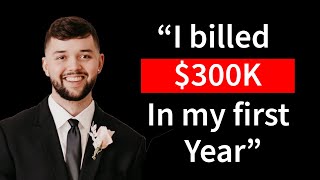
Isaac James generated $300K in his first year of recruitment by making high-volume cold calls and emails, shifting from trying to win business to delivering market intelligence and candidate snapshots. His three levers: volume, efficiency through targeted outreach, and detailed organization. He credits early workouts, meal prep, and a mentor named Mike Williams for his success.
Chapters
Hey guys, welcome back to yet another episode of Top Billers Toolkit, where me and my twin brother interview top billers from all around the globe to unlock the secrets to their success. Today's guest is Isaac James, and if you want to learn how to go from no experience at all to making $550K in your third year, then this is the episode for you. Isaac started straight out of school. No network, no experience, no recruitment pedigree. But what he did have was an insane competitive spirit and a drive and hunger to be successful. He billed $300K in his first year. $400K in his second year. He's just hit $1 million in total revenue for his company. And in his third year, he's on track to hitting $550K, which I think you'd agree for any new recruiter is pretty insane. In today's episode, we're going to be diving into how Isaac uses cold calling and targeted email in tandem, and he's going to be sharing his exact sequence and follow-up cadence. Isaac's also going to be sharing with us his MPC strategy, and how he's used it to close countless deals. And we're gonna be talking about how he can bring massive value to every conversation by knowing his market inside and out. Guys, today is gonna be a fantastic episode. Ben and I absolutely loved speaking to Isaac, and we hope you get as much value from it as we did. As usual, grab a cuppa or a glass of wine depending on when you're listening to this, and let's get into it, shall we? Wait a second, guys, quick question for you. If you could land a new client on LinkedIn in the next couple weeks, how much would that be worth to you?
20?
30, maybe 40K? Well, we have a pretty crazy offer on right now. If you are a recruitment business owner, then we will work with you for free and write you 2 posts at absolutely no cost. And here's the cool part: other recruiters that have come through this free trial have managed to win new clients. They've racked up hundreds of thousands of impressions and started conversations with top-tier candidates. It's completely risk-free, so you have nothing to lose and everything to gain. If you're interested, the link's in the description below. If not, no worries. We hope you enjoy the podcast. See you later.
Isaac, thank you so much for joining us today, my friend. How are you?
I'm good. I'm good. Thanks for having me.
Amazing. So for those of you that don't know, Isaac is Mike Williams' protégé, and we, me and Sam, have seen him over the years on LinkedIn getting some insane results. And then we saw a post from Mike Williams saying that you've officially hit a million. Isaac, and we were like, damn, we got to get this boy on. We got to get him on. And so he's here. And Isaac, thank you so much, mate. I'm really looking forward to this one. And let's jump into the first question as always, which is what's the number one tool in your toolkit, whether it be a mindset, strategy, or software?
Yeah. So I would say number one, and I know that you guys get this answer a lot because I've seen the pod, is the NPC call. I think that's the king. It's the best tool to have in your toolkit if you're good at it. So I'll kind of harp on a different thing, which is more of a mindset. I think for me, the shift of becoming okay at this to becoming really good at this, or I guess good at this, was understanding that you need to focus on bringing value to the clients and that should be the main draw, right? And so I think for me, starting as a 22-year-old kid, it was like when I'm calling somebody, I was kind of hoping to win their business instead of realizing that, you know, I'm bringing value to the client, to the customer. And so that's what your focus should be. And so Mike talks a lot about this illustration of having a piggy bank. And so every time you do something that adds value to the client, you're making a deposit and you want to just keep making deposits, make as many deposits as possible, and then withdraw seldom. Right. And so whenever we need something from the client, then hopefully we've already put a lot of deposits in so that we can get something from them. So everything that I, you know, every interaction I have with a client, the focus is to bring value. And so it really just shifts, small things that you do. So instead of sending an email where you're like, hey, you know, what's the feedback from this person? Can I get feedback? And asking for something from the client, just give them something in return. So instead of, hey, you know, what was the feedback from this interview? I'll just shoot and be like, hey, I talked to Josh. He thought it went well. You know, he thought this went well, that went well, and that was his feedback. What'd you think? That way they're getting something from it. Um, same thing when I'm calling just out of the blue, it's, hey, I've got this candidate for you, take it or leave it. Do you want it or not? If not, I'll go to a competitor. So it's not like, hey, can I have your business please, which I feel like a lot of people get in the habit of doing.
So, interesting, man.
I love that.
I love that. Just reframing it with a deposit, like adding value, uh, into the piggy bank.
That's really cool.
Um, how else do you add value on the call, Isaac, out of interest? So you're, you, you're— let's just imagine it's a brand new client or prospect who's, who's maybe who you're trying to approach, you want to deposit those, those coins into the piggy bank. Is there any bits of value that you tend to share more than others in order to deposit those, those coins, so to speak?
Absolutely. So I think also understanding where your place falls into it in the client relationship. So ideally you want it to be a partnership, right? And so what do you bring to the table? You're the market expert. In this field and in the recruiting field for their specific niche and what they want. And so a lot of clients, they have an idea of what they want, an idea of how to get that and, you know, what it should pay, what it should require, those sorts of things. But they will rely on your skill set in doing so. So if we're just having a fresh, open conversation, a lot of what I do is first kind of drop market knowledge. So, you know, see what's going on in the industry. Drop that, hey, here's what I'm hearing from, you know, candidates out there on the market. Here's what I'm seeing they're at comp-wise. Here's what I've heard about your company from candidates, which a lot of times they're very curious to hear because they don't hear anything outside of, you know, what their employees say. So yeah, I talked to 2 people that interviewed with you in the past 6 months. You know, here's what their thoughts were, here's what they said. And so a lot of times that just kind of perks the ears of the clients of, okay, you know, this person's tuned in, they know what they're talking about. So, You know, it seems like they would bring value in that way of our hiring process.
Cool.
Love that. So you're listening to the market, you're listening to candidates.
Uh, and yeah, I think one other really easy thing is just make their life easier. The two most important things to any client is going to be their time and their money. And so if I can make it faster for you, you know, if I can just grab this candidate's availability and all you have to do is just select which time slot you want to interview them, it's so much easier. And just sending, you know, a 5-bullet write-up so they're not having to scour their whole resume and see what this person's about. Just do little things to save time and they'll appreciate that. And they want to come back because you're easier to work with than if they didn't have you.
That's awesome. Love that. Love that. Um, um, oh, go ahead, Tom.
I just want to get into a bit, uh, a bit about who Isaac is because I always find it fascinating Um, you're— I mean, you're not— me and Ben aren't that old, but you're maybe a bit on the younger side of the typical guests that we get on Isaacs. And I'm always fascinated at maybe a slightly younger guest and what motivates them at such a— at this age. And like, what's driving you, I guess? Um, what, what are you— what is pushing you to hit these numbers and, and come into the office and, and do what you do every single day at the moment?
Yeah, great question. I think the first thing is I'm just super competitive, so I love to win and I want to win. So every day I come in, it's like whether it's internal competition, somebody else put a big number on the board, or just thinking about our competition, you know, here in the local market, I want to win. So I want to win the business, I want to build the most, that sort of stuff. And so when I met Mike, I was just wrapping up my last semester of college. I wasn't sure what I wanted to do besides, you know, probably do something in sales. And so I just kind of had a chip on my shoulder of I want to go out there, I want to prove myself and prove that I can be really good at something. And so that's what kind of drove me. So once I started working for Mike, you know, it was basically ground zero. It was just Mike and the company. So kind of building from nothing here. And so my focus was I'm just going to whatever Mike sets the target of, you know, hey, here's how many calls you should make, here's how many sendouts you should have per week, here's how many interviews, whatever. I want to go above and beyond that. So if it's, you know, his target was 80 calls a day. Cool. All right. I'm going to make 120. That's my goal. So I just want to— I'm going to be the hardest worker in the room day in and day out. And then I'm just going to compound that every day and hopefully it leads to success. And I think recruiting is a numbers game. If you come in and put the work in, then, you know, the success will follow.
So love that, dude. And that kind of brings us on to the second question, Samuel. Which is, um, and you've kind of already said that, um, Isaac, you came straight out of college, um, recruiting was brand new to you. In your first year you did $300K, which is insane for someone with no recruiting experience. Like, that's very, um, abnormal. Um, and then second year, $400K. You're on track to do $550K this year, which is amazing. Um, you kind of already touched upon it, but what were the, the needle-moving activities that drove your success, do you think? Like if you could look back at some of the things that really made the biggest impact in your billings, what were they, do you think?
Yeah, so I think I realized this probably a year in as to it's really important to control the variables that you can control. Because as you guys know, in recruiting, a lot of the process is out of your hands. You know, the candidate, you could do a perfect job of walking them through the whole interview process, then all of a sudden they get a better offer or something else happens. Same with the client, you know, they might get all the way through the process and then All of a sudden, you know, they lost out on a deal they were supposed to have, so now they don't have the money to hire this person. So there are some things that are out of your control. A lot of the job is. So control the variables you can control, which to me, I think of 3 main things. It's volume. So kind of like I talked about your output, you know, how many calls you're making a day, how many emails you're making a day, how many sendouts you have per week, whatever that looks like. The second thing is efficiency. Getting really good at those things to the point where, you know, maybe you don't need to make 100 calls a day. Like at this point, I'm not doing that. So becoming really efficient at the things you're doing, that way you have more time for other activities. And then the third is organization. That was the hardest thing for me. And I came into the job thinking I had a great memory and I was like, I really don't need to take notes on all these calls. I'll just remember them. And 2 weeks in, I probably talked to 8 candidates that day. I get a resume, I send it to Mike. I'm like, this guy's great. And he goes, okay, cool. Tell me about it. Like, what's his reason for looking? And I was like, uh, I don't remember. And he was like, okay, call him back cuz I'm not gonna send him over to my client without the backstory on this guy. So be organized, like write your stuff down. I have Excel spreadsheets with all my business development stuff. Every time I talk to a candidate or a client, there's a note that goes in, you know, either recruiter or ATS. That way I can just easily draw back to it and, and see what's going on.
Mm, I love that, dude.
I couldn't help but, uh, go straight to efficiency. You said, uh, you used to make 100 calls a day, now you don't. What, what has changed that's allowed you to not make as many calls, Isaac, in the efficiency category?
Yeah, I think one of them is just learning who specifically to call. So on both candidate side and biz dev, if I can narrow down my search to where now I've got you know, 50 candidates that are hyper-focused that can do this job, it's a lot easier than now we've got a search of 200 people and I've got to call all 200. So if I can narrow down specifically my search, I think that's a huge way to do it. And then on the biz dev side, pretty similar, you know, instead of just kind of spraying around companies, find 5 target companies who do exactly what's in your niche, find the key decision makers that are going to be for that individual position and NPC. And then focus your time and your effort on that. And I think the results are a lot better than if you're kind of just, you know, spraying out in general. Um, and that's why when I first started, I didn't, you know, I didn't know who to look for, who to call, all that sort of stuff. So I was just calling, and, you know, thankfully in some ways it worked out. But yeah, that's kind of how the efficiency plays into it.
Cool, man. And how do you decide— you kind of mentioned it, so 50 high-quality candidates, 5 clients— how do you decide Are you starting with the client first, James, and then going to find the best candidates? You start with the candidates first and then going to find the best clients? Like, how are you deciding on where to focus your time, if that makes sense? Like, specifically?
Yeah, so I do both. So if I have an existing job order, then I'm specifically basing my candidate search off of that. And so then it's obviously more candidate-centric. Um, so for that, you know, using Boolean search through LinkedIn, different search filters to really narrow it down. If I'm on the client side, then typically what I'll do is I'll identify my target market, you know, my target niche. And maybe it's— I want to— I do a lot of work with utility sales. I do a lot of HVAC sales. So maybe I want to target a specific HVAC rep firm. So I'm going to find an NPC for that area. I'm going to find somebody that they would be interested in, right? Like a really good top salesperson. So I'm going to talk to that person, I'm going to get their resume, and then I'm going to market it out 2 companies that that, you know, person would be in the market for or want to go work for. So from that standpoint, if you're looking at, you know, an NPC and trying to pick up clients, and if they're kind of based off of— I mean, one, really who you want to work with, but two, who that NPC would be applicable for.
Um, love that. Interesting.
Um, we are absolutely peppering you with questions, Isaac, and, uh, we do this every guest. Um, but only because me and Ben are so fascinated and we want to get as much value as possible and we're just curious as well. But, um, when you're— have you noticed any nuances with how you present an NPC to a client, Isaac, in terms of, uh, what gets a better response or a worse response? Like, I'm sure you've been sending them for quite a while now. Is there anything you've tweaked in the process along the way to like guarantee or increase your chances that you're going to get a response?
Yeah, for sure. So when I first started, a lot of what I would do, whether it was a call or an email, is kind of just word vomit. It was like every keyword I could think of, of that person that would fit that industry, I would try to just spell it out. And it would work sometimes, you know, it does show that you understand the space. But in some ways, I think it does look like you're doing exactly what you're doing, which is just dropping every keyword you know. And so I think they pick up on that. So what I found is you know, the best you can synopsize that person's experience in the most favorable way possible. So it's, you know, 1, 2 sentences in an email that captures their attention a lot better than a giant paragraph about it. So that's the first thing. The second thing is the more personal information you can get about that candidate and why they might want to change jobs, I think really tells the story about who that person is and makes them more relatable. So it's like, hey, I've got this candidate, you know, here's who they are and what they do. But the reason they're looking, you know, there's no growth potential at their company, or they just got bought by private equity, something that's going to catch their attention and be like, okay, yep, that makes sense why they're on the market. You know, it's not like they just got laid off or fired or something. So I think those two things really catch the candidates or the client's attention and then help to pull them in.
Great advice, man. Absolutely love that.
That's cool. I haven't heard many of the second one, why someone wants to move. I haven't heard that often in an NPC, which is interesting. But it makes sense and it almost makes the— if you're presenting someone who's like amazing, it almost makes it more realistic. It's like if you can give a reason why, it's kind of like, oh yeah, this is, this is a real person. This sounds like he's actually real, if that makes sense. So I find that quite interesting.
And I got this feedback a couple weeks ago, it was an existing client of mine where I sent the candidate's reason for looking and they were like, you know, that candidate's kind of on the fence, but the fact that they have a real reason for leaving their job We want to talk to them because we know that if we make them an offer, they will leave their company. And I know you guys had Mike Anderson on the pod. He talks about this all the time, that if your candidate does not have a real reason for looking, they're not a real candidate. They're not going to change jobs. So first you need to identify that, but then being able to say that to a client is super valuable for them because all the time they're sending out offers to candidates who are then turning down or taking a counter or whatever. Because they never understood why they were looking for a job in the first place.
Yeah, so true, man. And just to follow up from that, how many times do you— how are you sending the NPC and how many times do you need to do it, Isaac? Is it usually like one email and then you're done, or is it like multiple follow-ups, phone call? Can you tell us a bit about the process and where you tend to get the most success, like which touchpoint, if that's okay?
Yeah, absolutely. So definitely not just one time. What I typically do is I will cold call and then cold email in tandem. And so the first outreach, I do both. I start with a cold call. And so, you know, I'll just typically have a person's resume pulled up. I make the call. Let's assume they don't answer the phone. I'm going to leave a voicemail. At the end of my voicemail, I'm going to say, hey, I'm going to send you an email with some more information. That email is basically going to be the same exact thing that I said in the cold call. But a lot of times they'll see your email and they'll kind of disregard it. But then they listen to your voicemail and they're like, okay, so this person's real. That makes sense. They connect the dots and then they'll reach back out. So that's my first outreach. I find that when clients respond on that first outreach, that's where I have the most success. And it doesn't always lead to a contract signed immediately. It might take me, you know, 10 more touchpoints from there to get a contract signed. I just got one the other day I've worked on for like 2 years and it's been probably 20 different touchpoints across that timeframe, but we finally got it through.
So nice.
But from there, from the first one, I then alternate calls and emails. So typically the second outreach, I'll just send a follow-up email. And again, I want to focus on a value add. So normally I'll just add something to the first email. So I'll say something like, hey, I forgot to mention in this first email, my person's looking for $100K. That way they identify the salary range. A lot of times they'll respond and be like, okay, cool. Yeah, we actually do have that role open and it fits the range. Great. So I'll say something like that, or I'll be like, hey, you know, Josh could interview Tuesday or Thursday next week at these times if you wanted to talk to them. And a lot of times that gets something back from them. They're like, oh, okay, yeah, I could talk to them Tuesday and then we'll talk about the contract and worry about that. So that's usually my second touchpoint. If they don't answer that, I follow up with a phone call. Assuming they don't answer that, I'll then send them another email, which is typically, you know, drop something else. Sometimes I'll even just cold send the resume and then I'll do like one final cold call. And after that, I usually put them in a nurture campaign so I don't completely get rid of them, but You know, if they haven't responded after 5 or 6 touchpoints, I'm probably not going to get them on the phone if I keep hammering away for another 2 weeks. So, and that usually takes place over like a week and a half, 2-week period.
Cool. Awesome, dude. Lots of detail there. Absolutely love that.
Um, and I will add one thing to it. The first thing I do on an email, my last line, my whole target of the email is, can I send you the resume? That's my goal is because I have a, a good real NPC, I want you to see the resume. 'Cause so many recruiters, you know, they hit up companies with fake people or people that aren't that good.
Mm-hmm.
So I just want you to see the resume and just typing back yes is so much easier than trying to do something, you know, trying to have them answer some long question or try to get information from them. Just say yes, I'll send you the resume. If you like it, then we'll talk. And now I have leverage. So that's my whole goal of the NPC email is to just send the resume.
Cool.
Okay, so you're giving them the bit of information so they're interested with the goal obviously to send them the resume and then that's going to do most of the heavy lifting.
Exactly. Yeah.
Cool. Interesting, man. Really cool.
I'd love to be— I don't want to put you on the spot too much, Isaac. Like, you don't have to go into roleplay here, but I'd love to know what you're saying. Like, say you're picking up the phone and you're trying to get this client's attention. Love to know, like, roughly what are you saying Are you going straight in saying, hey, hey, this is Isaac, you know, I've got a candidate, these are the top selling points. Like, how are you, how are you getting their attention and piquing their interest, do you think?
Yeah. So typically what I'll do is, and just thinking through if you're on the other end, right? So if I call you, it's a random number, you answer the phone, your first thoughts are, who is this? What do they want? And how long is this phone call going to take me? So I want to address those things right up front. So I'll usually say something like, hey, Isaac James here. We've never met before. That way we can go ahead and address that. We've never met before, but I'm a recruiter and the reason I'm calling you is I've got a sales engineer candidate in your market. He works for a competitor. He's got 7 years experience. Last year he sold $8 million of equipment. He's on the market. Would you want to talk to him? So it's real simple.
So it's amazing how strong that is with such few words. It's really interesting. I'm sorry, go ahead, Isaac.
Yeah, so I mean, that's the general start. And sometimes, you know, if I'm really plugged into that market, I might drop some other keywords and be like, hey, my name's Isaac, you know, whatever, I'm a utility recruiter, I work with so-and-so, so-and-so, and so-and-so. That way it piques their interest of like, okay, so this guy works with 3 of my competitors, or, you know, 3 companies I know, so he's in the space. Now let me listen to what he says, and then I'll get into You know, the reason I'm calling you specifically, I got this guy, you know, here's who he works for now. He's thinking about changing jobs. Do you need somebody like that? So, um, and I want to have a, an NPC that also brings them direct value. So for me, I do a lot of sales work, so it's easy because they're going to make them money. So it's like, if I have a great salesman, why would you not want to talk to them? It's not going to cost you money. They're usually on a draw or commission basis, and then you're going to make money. So you're going to probably say yes.
Yeah, I love— if I was a recruiter, which I don't think I'll ever be in recruitment, but if I was, I'd love to work with salespeople because there's such a tangible difference that a good salesperson can make to a business. And it's like, it's a really exciting thing to sell, if you know what I mean. So I think it's a great sector to be in for sure.
Um, I've got a question, uh, Isaac, that just came to my brain. Um, part of the power of an NPC is obviously finding brilliant candidates isn't it? And that's, that's really difficult to get top salespeople like, like, uh, the guy you just mentioned turning over $8 million or making $8 million. How do you grab their attention? Um, how do you— yeah, how would you get a brilliant candidate to even show any interest so then you can turn them into an MBC, so to speak?
Yeah, good question. So, um, you know, that's kind of the flip side of the coin, is when you're calling candidates, you also have to have something good to offer. You know, if I work with the worst rep firm in town No one's going to want to go there. So it's like, I want to target good companies. So from there, sometimes what I have to do is if I'm breaking in a new market is I kind of— hopefully none of my clients are watching, but sometimes I make people up. So it's like, hey, I've got this because— and caveat— because I know I can find that type of person. And realistically, the odds that I place the NPC that I call about are usually pretty low because usually something happens, you know, it ends up not working out on one side or the other. But I've identified you are looking for talent, so I can go find exactly what you want because the candidate I call about, they might have— they might check 5 out of the 8 boxes that you need, but I can find somebody that checks 7 or all 8. So sometimes if I'm just trying to break into a new market and I don't have that super strong NPC, then I'll either have somebody who could potentially relocate that's good in a different market that I've already got. Or more realistically, I'll kind of make somebody up based off of, you know, what the marketplace looks like and their clientele, or I'll just find a good LinkedIn profile and then run with it.
Cool.
And then once we get on the phone, then I'm asking the client questions more about their company, what they're looking for, what they want in this position, that sort of stuff. And then I'll steer them away from the NPC that I called about and then focus on, hey, let me go find somebody that works. Exactly for you. And sometimes that means I'll take all the risk and I'll do it without a contract. If you're like, hey, yeah, I would hire that person, but I'm not going to sign it till I see somebody. Okay, cool. I'll go run, I'll spend a week, I'll go find somebody that's good, and now I'll come back with exactly what you want and now we'll get the deal done. So I've done a lot of deals like that where I'll just go out on my own, no contract signed. I'll find exactly what they want. We'll walk through the process, contract signed, then they get hired.
So yeah, I, I love that, man. And it's so funny, uh, some recruiters get a lot of shtick for, um, making, making it up. But I think, you know, if you make it up and you still provide insane value to that client, then who cares, you know what I mean? I think that's— it's a great way to, to get someone's interest. And as long as you're providing value, which you definitely are, because clients wouldn't work with you if, if you weren't, um, I think it's absolutely fine. So I just wanted to say that out loud because I know there's probably a lot of recruiters out there like, uh, throwing the laptop out the window.
Yeah.
No, never.
I mean, I kind of get it.
Yeah, yeah, exactly. I'll call with somebody real and then a client will steer away from them like, oh yeah, you know, that guy, I don't think he's good, but, you know, we could use somebody like this and then tell me what they want. So half the time it doesn't work out anyways.
But yeah, I think the, the thing that makes it more palatable is you're not making up someone who's like unrealistic. You like, you have, you have knowledge of what is realistic, what's achievable. This is the kind of person that I can get you. Because I guess, yeah, the flip side is if you over-promise and then you bring someone who's like, who, you know, who's completely crap, they also probably won't work with you, right? So you've got to, you've got to match the expectations from what you're selling. So, and I'm guessing if it's landing a business, Isaac, then it's obviously working, which is interesting, right?
Yeah, the most effective way is always having a real good candidate, but I mean, you have to start from somewhere. So if you don't have something—
exactly.
Yeah.
And you know, Mike Anderson, love Mike. He does a lot of work with our company. He does something really interesting where he will just directly cold call candidates and be like, hey, I don't have anything for you right now, but here's what I do. And if you are interested, I'll go market you around. That'll only bring opportunities that are better than where you are now. Would you be interested in that? And I mean, who's gonna say no to that, right? Like, all right, this guy, you know, is gonna call me with things that are better than I have now and not bother me otherwise. Yeah, sure, take my resume, just redact my info, whatever it is. So that's another way you can do it too.
I just have this image of Mike like doing some crazy cold calls. He's such a— he's an absolute legend, Mike. Like, yeah, yeah, so brilliant.
It's got the energy of like 10 horses when he speaks.
Yeah, let's go! Yeah.
Um, awesome. And well, because you know what I feel like is quite interesting is that I know how good Mike Williams is, and I think, you know, as well as your mindset, your work ethic, and like how I'm sure you pick up things really quickly, Isaac, but also the fact that you got to work with Mike like one-on-one for a year, I thought that was awesome. You know, I feel like that was a— that must have been an amazing learning curve for you, and it must have been like really interesting to just like soak up everything. What were some of the things in the first year that you noticed from Mike that you were like, oh wow, he does it like this, or oh wow, this is how Mike sells, or this is how he— do you know the nuances of what made the biggest difference? What did you learn from Mike, do you think?
Yeah, so much, so much. I mean, it was a blessing just to be able to sit there and be a sponge. And I feel like that's how I learned half the stuff I learned is not from Mike directly teaching it, but just from us sitting side by side and me just watching what he's doing. So that was huge for me. I think one thing that stands out to me about what Mike does, I think he does this better than any other recruiter that I've talked to, is building a relationship with a client. So literally this morning we sat down, me, Mike, and then two of our more junior recruiters. We sat down and we did a biz dev training session. And so we just passed the phone around in a circle. I would do a call, Mike would do a call, then the other two would do a call.
I love that.
Sit back, we would listen. You know, we'd give feedback on each other's calls.
I said this.
Mike's first call leaves a voicemail. 2 minutes later, the CEO of the company calls him back. Mike sends him to voicemail because Mike was dialing out. So that guy leaves a message. He calls him back and they start talking like they've been friends for 20 years because Mike's just this guy's chops. And Mike does such a good job of just making it a casual relationship and evening the playing field. I think that's huge. One of, one of the things is just confidence, right? Being confident in who you are and what value you bring. Because a lot of recruiters, they call with this mindset of like, can I please recruit for your jobs? Can I please do this or that? And so you're automatically putting yourself in a lower position, but really we're bringing value. It's like I bring a great service, I'm bringing you a great candidate. You can take it or leave it. And so Mike does that really well. I think just building rapport with clients and how to do that. Mike is phenomenal at that. And so I'm still trying to learn how to do that at the level that he does it. He makes it look so effortless. So I think that's probably the biggest thing there. And the second thing is just kind of picking up on the intuition that he has. And some of that, a lot of that comes with experience, but some of it is just kind of sifting through the garbage that candidates will throw at you. Any time I have a tough close, Mike always— I'll be like, hey, Mike, what do you have for this one? And it's something that I would have never thought of. So it's just kind of seeing things at face value for what they are. And I think a lot of candidates or a lot of recruiters that get in this mindset of like, I want this deal to work out so bad and this candidate said something to me that should be a red flag, but it's not a red flag because I just want it to work out. Or you pump the brakes and, you know, really press them and get the truth out of them. So I think Oh, Ben, I think two of those things were huge in my—
Oh, sorry, Isaac, the internet just went a bit funny. What were— I think we— do you mind going back like 20 seconds?
Well, it was more like 10 seconds, but I think you'd ended, Isaac, and you said those were the most important or the most of the things that you learned from Mike. I'd love to go back to— now, this might be hard because I suspect that a lot of what Mike does is just from thousands of calls and just experience and intuition. But if we were to be a fly on the wall or even just, you know, you observing Mike on these calls, what is he doing to build rapport so quickly? Is he spotting something about them on LinkedIn and asking a question? Is he going into family? Is he going into sports? Like, what are the things— have you noticed any kind of nuances in how he's able to build rapport so quickly, Isaac?
I think one of the, one of the major things is just being relatable and being a real person as opposed to a random recruiter that's calling you. And so, you know, this call that I was talking about, the CEO that called him back within 30 seconds, Mike kind of stops and say, hey, so let me tell you a story. So here's who I am. You know, I've been an agency recruiter for 8 years. I moved to Charlotte. I started my company. I did this. We built it up, do this. You know, now we focus on manufacturing, industrial, this sort of stuff. And so he's kind of pitching the story of like, this is who Mike Williams is. Um, you know, here's who Mike Williams is as a person. Um, and kind of just brings it to a more, you know, level idea of like, hey, I'm I'm a person too. I bring value. I'm not just some random recruiter cold call. And he never takes himself too seriously. So he's more than willing to kind of, you know, poke fun at himself or whatever the situation is. So I think, you know, just that and showing your people helps out so much. And then, you know, then it's easier to, you know, grow the relationship from there. Then you start talking about, hey, family stuff, this or that. Once you identify, hey, you know, we're real people, we have something in common here, so let's just talk like real people.
I love that. You know what, I've never heard someone pitching a— like, framing it in that way, like, let me tell you a story. What I love about that is that you've never met this person before and you're basically painting a picture in their mind. Like, as Mike is describing this, this man or woman is, is like literally imagining and coming up with like scenarios in their head as to what— who Mike is. And so that's why I find that so interesting, because it's like If you can come up with a short, snappy, engaging story, I can completely see how that brings down the guard and humanizes the cold call. I love that. I think that's really cool. Mike should turn that into like a little, a little course, I think, to sell to people. It would make a million.
Yeah, you definitely should. You should have on the training program or the book wave.
Have you tried to do that in the same way, Isaac, or have you got your own kind of— have you kind of stuck to the Tried and tested NPC kind of style. What's your feeling?
Yeah. So once, once I kind of break down the, all right, we've identified you have a need or a desire for what I want and I can supply that for you. Now let's talk specific. So then I kind of, like I was talking about, even if my candidate is real or if they're kind of fudged a little bit, I'll move aside from that and let's talk about me and you. Like, tell me more about your company. Tell me this sort of stuff. And then I kind of take that same like story idea and I just pitch, hey, so here's who I am, here's how I got into recruiting, here's what I focus on. This is what my business model looks like. And one thing that I've found that's really successful is I tell them exactly how I do my job. I'm like, this is how I'm going to build a search for you. This is how I talk to the candidates that I'm sending you. And this is why I'm sending the information that I'm sending, you know, whatever the write-up is or that. And then I talk about, 'cause I think a lot of recruiters have this idea of my value as a recruiter is I'm bringing you candidates and that's less value is I'm walking them through your interview process. I'm identifying what are their pain points in their current job, why are they looking to make a move? You know, what are they making now salary-wise? What, you know, what do they wanna make in a move? That sort of stuff. And you know, I'm giving them feedback the whole time during the process. I talk to my candidate every time before and after an interview. So I'm talking, hey, how are you feeling about this opportunity? Where does it rank compared to your other opportunities? And that way I can loop in the client, and now I'm much more of a value add than just, hey, here's a resume, you run with it, and maybe I'll set up an interview or two.
So, um, interesting. Awesome.
Um, thank you for that, uh, Isaac. So much value there, so much interesting, um, stuff that me and Ben haven't heard before that people can be implementing into their into their cold calls. Um, I was going to ask, are there any habits that you've developed, Isaac, since working for Mike? You've been there 3 years now, you've hit the million mark. I'm just curious if over those 3 years you've developed any habits outside of work that aren't necessarily the recruitment side but help you either improve your mindset or just get ready for the day. Is there anything that you've developed, out of interest?
Yeah, I think that's a super underrated part about— I mean, not just recruiting, but any performance career that's out there— is does your lifestyle outside of work contribute to or redact from, you know, your success that you're trying to get? And so I think for me it's absolutely true. Um, you know, one thing is I've always tried to be dialed in with what I do, just, you know, lifestyle-wise outside of work. Um, even if I mean, work is not— I love what I do. I'm very passionate. I want to be successful. Work is not my number one priority. I don't think Mike would say it's his either. I mean, it doesn't have to be to be a top performer, but the things that I'm doing outside of work also happen to contribute to success. So it's like, you know, I'm exercising, I'm fueling my body with good things. I'm prioritizing my sleep. In my downtime, am I just staring at social media and frying my dopamine receptors, or am I reading and learning things that now I can apply, whether it's my on the job or just conversations in daily life. And, you know, in other things in my downtime, am I going out on the weekends every night and then coming in Monday morning all tired and worn out? Or am I coming in refreshed from having rested up and, you know, spent time with friends and family over the weekend and now I'm really fueled and ready to work? And so I think especially as I'm 24, so it's a lot of people in my age group in my same career field. Their Friday, Saturdays, and Sundays is they're out partying on the weekend and they come in Monday and now they're trying to recover. And so the week is just recovering until you get back to the weekend, whereas mine is on the flip side. It's like I'm coming into the week and I'm ready to work hard Monday through Friday. Friday comes, now I'm ready to relax, I'm ready to rest up, I'm going to take care of the stuff I need to on the weekend, and then when Monday comes around, I'm ready to go.
So nice, man.
I think doing that, and then just little things like working out in the morning You know, after work I usually have something, whether it's church or family activities or hanging out with friends, something. And then I'm in bed by 9 o'clock, ready to rock the next day. So nice. Cool. I think just, you know, figuring out how your lifestyle can apply into what you're doing.
Love that, dude.
I am a big habits person as well. Like, I'm very conscious of the habits that I'm doing. Um, there's a few 80/20s in my life with, with habits. Mine are waking up early, exercise, reading, and cold showers. And reading also goes into like podcasts, like good stuff I'm listening to. Those are my 80/20. Like, if I stick to those, my life is good and everything's— Do you have like 80/20 habits, Isaac, where you're like, hey, if I stick to these, I know I'm going to be good? And there's probably quite a few habits, but are there any like 80/20 ones?
100%. So workout every morning, Monday through Friday. So wake up usually at 5:30, go to the gym, come home and get ready for work, and then we're there. So I think for me, the days that I do that compared to the days that I don't, if I'm just rolling out of bed and driving to the office, it's kind of night and day how my day starts off. You know, it's like if I'm not up and working out and doing something, the first hour at the office is just trying to wake up and figure out what I'm doing today. So that's a huge thing for me. And then my lunch break every day is I bring my lunch, I meal prep on the weekends. And so I take an hour, I sit down and I reset. So my phone is away. You know, if it's an important client call or an important candidate, you know, I'll answer. But other than that, you're not getting my time. That's my hour. So typically I'll eat in 10 minutes and then I'm reading my Bible and then I'm reading, you know, maybe some other book. And then, you know, after work it's very similar, right? So I'm doing, if I have an activity, I'm doing that, then I'm eating dinner, I'm trying to read before bed, and then, you know, kind of like we were talking about, lights off by 9 o'clock or whatever I'm doing. So just the cons— I think consistency is huge. Anytime you're doing things that are inconsistent, it then changes how you feel, it changes how you perform. So just figuring out your habits and staying consistent, I think, is such a huge part of just being able to perform and be consistent in a day, in day in and day out.
Yeah, I love that, dude.
I like how you take a reset as well, because a lot of high performance people have this kind of thought that people are always on, like, oh no, you've got to work every second, but actually taking like 50 minutes just to unwind and unplug from technology, you probably go back feeling like twice as refreshed. Is that why you do that kind of unplugged time, Isaac?
100%. 100%. And I think that stigma is so true. It's like you always have to be on, you have to work all the time, you've got to work late. And I mean, typically we don't work more than 45 hours a week. And, you know, I, I've thought, it's like, hey, should I come in on Saturdays and grind it out? And for me, I think my value of being able to rest and then come in Monday fresh is so much more val— and, you know, incoming and fresh, being more efficient and better at what I do is better than just slogging through a Saturday. And then I come in Monday tired and it's like, yeah, I put more hours in. but were they really good hours? So focusing— I think that kind of ties back into the efficiency thing as well.
Yeah, I love that, man. Great advice. Really like that.
Interesting. Um, I'd love to go to this question, which is, what's the biggest mistakes you see new recruiters making? Because I'm guessing you see this maybe in the junior recruiters now, Isaac, in your current firm, where you're like, oh yeah, that's what I used to do. Oh yeah, I remember doing that. What are some of the biggest things that you see either people in your firm or outside? What are some of the biggest mistakes you see them making? That, you know, if you were, if you were their mentor helping them to, to get better, that you could help them with? What do you think?
Yeah, I think the first thing is confidence. Um, you got to know what you're doing, or if you don't, at least act like you know what you're doing, or else whoever you're calling is going to pick up on that. So be confident, you know, don't apologize for whatever you're doing. You're, you're trying to bring value here. So confidence. I think the second biggest thing is a lot of new recruiters they either don't have or they don't know their niche. So if you don't know your niche, it's really hard to be valuable because you don't know what candidates to look for. You don't know how to pitch them the job in a way that's favorable. You don't know how to present a candidate favorably. So you have to know your niche. So those are two things. I think the third is not every job order is a good job order. You'll hear that a lot. And it's a lot of new recruiters. They get a job order and they're so excited and they waste 3 weeks on a job that's not fillable or never going to close. Those. Um, so that just kills your time. I think the 4th thing is some people just aren't coachable. Um, you have to be coachable and willing to not only listen to advice but actually implement that. Um, and we've had people here at our company that didn't work out for that one main reason is we would sit down, we would have a review, we would talk about what they need to do and, you know, small improvements. Hey, don't say that, like try this instead. And they're nodding their head. Yep, got it, got it. They go back 5 minutes later, they're saying the exact same thing. And it's like, if you're not able to implement advice that somebody is giving you, then, you know, you're probably not going to be successful in whatever you're trying to accomplish.
Love that.
Great advice, Isaac. Um, this is kind of going off track, uh, to what we have just been speaking about, but I'm curious, Isaac, because, um, you came straight out of university, or college is what you call it over in the States. We call it uni.
Yeah.
Um, and you've been with Mike, you've done some amazing things. Is there anything you've kind of learned about yourself, uh, climbing the ladder and, and hitting the goals that you have? Because I think to hit a million in revenue for the company is quite a big accomplishment at your age as well, for anyone, let alone at your age doing it. So is there anything you kind of learned about yourself over those 2-3 years that you've surprised yourself with, or has it all been pretty much like, yeah, I'd smash that, and, uh, And I knew I was gonna do that, which is fine. I'm just curious.
Yeah. I mean, I didn't even have a million on my radar, Mike. We have a morning announcement every morning and he made that announcement and I was like, oh, like I didn't even know that was happening. So that was super cool. But coming in, I definitely didn't know like, hey, you know, am I gonna be really good at this? Am I gonna be really bad? I was just committed to, I'm gonna do whatever it takes for me to be successful in this day in and day out. And if that means that I'm working every Saturday, if it means I'm making 200 calls a day, I'll do whatever it takes. And I think one thing that I learned about myself is I love the process more than I love the results. And closing a deal is fun. Like that feeling of cashing a commission check, it's great. Like it's really energizing. But I just love the day in and day out of making these calls, talking to people all the day, you know, all, all during the day, talking to a CEO of some company. And it's like, When Mike pitched me this job, I knew nothing about recruiting. It seemed like magic. Like you're just calling two people that you might never meet in person and you're connecting the dots here and then you're getting cut a check for it with just a phone computer. It's pretty wild. And 3 years later, it still feels like magic to me. You know, sometimes I still don't even understand how it actually happened. Um, I think it's just so cool. So yeah, just learning that, I mean, really the process is a lot more fun than the results.
Love that.
It is cool when you think about it like that. I think Mike actually posted about this. He was like— I can't remember exactly what he said, but I was like, oh my God, that's so true. Like, you essentially, like, you've got a phone, you've got a laptop, and it's just basically like communication. Like, in essence, it's being able to communicate value to different parties and match them, and you can get paid a shit ton of money for it. And I just think it's what an epic industry, what an epic job that must be.
It's pretty wild. I mean, I would— if you told me 3 years ago that, hey, you're gonna bring in $1 million in revenue by just using a phone and a computer, and you don't have a product that you're selling, and you're most— a lot of these people you're not meeting in person, be like, what are you talking about? So, um, but it's just so cool how that works.
That's awesome, man. Um, and I don't know if Ben, you have another question. I'm just— I'm, I'm very curious about you as a person, Isaac, because I'm just fascinated at your success at such a young age. I just get that. I just really fascinated at that. But I'm curious in terms of future, like, what are you thinking about at the moment that's really exciting you? Is it like your house you're gonna get? Is it you and your partner?
He's already got a house, Sam. Okay, all right. Well, that's maybe your second house, Isaac.
Second house, whatever it is. But I'm wondering, is there anything implanted in your brain that is, uh, not part of the process but something you're like, yeah, I want that and I'm gonna get it and that's really driving me? I'm curious.
Okay, so, um, yeah, I got the house like 2 months ago, so that's new. Thank you, thank you, I appreciate it. That was like my outside of work goal, um, when I started, was like, I want to be able to do that and kind of set myself up for the future. So, um, that was great and it's still fresh and it's fun. I think for me You know, I mean, this is still work related, but building out a team here, I'm really excited for. And so I've got a, I've got an interview later today with somebody for internal, but kind of moving into that function of I will still be running a desk. I still love running a desk and I have, I'm far from having mastered the just regular recruiting side of things, but stepping into management and teaching somebody what I know is something new that I'm super excited about. So I think that's kind of the next step in the journey. Um, that I'm really looking forward to, you know, conquering.
So awesome, dude.
I would say that that's kind of the thing on the agenda.
Cool, love that.
That's epic, epic stuff, man. Um, Ben, I, I think I'm out of questions now.
I've, uh, I, you know what, I think, um, I'm gonna have one final question, Isaac, because you've given us a ton of value today and it's been such an enjoyable podcast, so thank you. But, um, is there anything else that we've missed that you think— and maybe it's a no and you've given us everything, which is completely cool— but is there anything else we've missed that you think might be valuable to other recruiters listening to this right now? Is there anything else that you want to end with, do you think?
Yeah, I would say two quick things. One thing I forgot to mention in terms of building rapport, one cheat code is, and this is, I mean, this is not cheat code, it's old school, is go meet your clients in person. That's huge. And so being local is great because it's really easy, but go fly out somewhere, you know, like spend your commission, go spend $500 on a plane ticket. Go fly out and meet your client in person. And just breaking down that barrier is huge because now you become a face. They've met you, they hear more of your story, um, where, you know, other people are going to call them and cold call them and try to win their business and compete with you, and they're now just a voice over the phone, whereas you're a real person they've met. So that is huge. Um, the second thing is, you know, I'm 3 years in, so I can't speak to having a 15-year career, but I can speak to getting started. And so I think a lot of people join recruiting and they end up in a really bad situation. You know, they don't— the company they're with kind of sucks. It's just like a sink or swim model. We're not even going to throw you a lifeline, just hope you can tread water enough to survive. So how do you identify what's a good opportunity? Um, I think the first thing— I mean, one is the comp plan, right? It's like you can be in a great situation, great company, if they're not paying you well, it's not gonna be that enjoyable for you. So that's kind of the first thing. But the second thing is, what's the company vision? You know, where are they at? Are they growing a lot as a company? Um, how are they doing it? Are they hiring 30 people a year and keeping 5 of them, or are they just strategically adding one by one and training and really teaching them how to do the job? So I would say that's a huge thing to look for and ask the company. And the third thing is, who are you working for? Is there somebody at your company that can teach you and pour into you and kind of mentor you along the way? If not, if you really want to be successful, you know, you can do it yourself and grind through it, but you need to have a mentor. So either having somebody like— I was blessed and lucky to have Mike, so that was huge. But if you don't have a Mike at your company, go find a Mike that you can either pay or, you know, maybe they're just willing to mentor you. But, you know, go find a coach that can do that for you. And I'll plug Mike Anderson again.
He's great.
And Mark Whitby's great as well. So, you know, go find somebody that can help teach you, and that's just going to expedite your learning process and really help you to, you know, swim.
Yeah, awesome.
That's great advice, man.
Yeah, I really love that. Uh, the one that resonated with me the most was, was the mentor, like actually choosing a mentor, because I feel like that if you have someone good by your side who, who has the right intentions, that's really feeding you the best stuff like that, that is on another level of exponential growth, I think, if you've got that person. Um, so that's, yeah, just really valuable.
Um, yeah, and you got to learn too who you are in the process of recruiting and what works for you, because it's like Mike says stuff that I'm never gonna say. Mike Anderson uses stuff that I'm never going to use just because who I am, it doesn't work.
Yeah, yeah, yeah, yeah.
I'll take bits and pieces and then I make it my own. You gotta figure out who you are and what works for you too.
Yeah, so that's such a good final piece of advice. Absolutely love that.
I think I've said this before, but that really brings me back to— I worked with a sales trainer who was actually brilliant. He was a brilliant sales trainer, but, um, he was a very technical seller. He had like an amazing memory, he remembered everything, and he was a very technical, um, salesperson, and he like knew all the tricks, all the techniques. And I was so obsessed with like getting that right and getting those techniques right and trying to look smart and stuff like that. And I wasn't closing anything. And it was like, I mean, I was closing some deals, but it was just like it felt like a real push uphill. And then I don't know what happened one day. I think it was after some hypnosis, after some hypnosis. That's what it was. I did hypnosis because I wanted to change the way I was thinking. And then I just said, fuck it, in my mind. I just like started to be myself and stop trying to try to sell in a way that wasn't me. And it was like night and day difference. It was amazing. Like, I felt so much better. I started closing more, people started feeling more comfortable. So yeah, I don't know why I kind of just remembered that and felt like voicing it, but it's such a good ending, Isaac, which is you can't— you have to like be yourself and roll with what you're good at and almost channel the energy that you're innately given. And that's a bit of a weird thing to say, but it's kind of like, yeah, sure, no, no, what your energy is and kind of channel it in the right way. Mm.
Yeah. Love that.
Oh, Isaac, I think I just ended with a spiritual bang.
So there we go. There we go.
Hey, I've got—
go ahead, guys, because I'm sure that I know that you guys have talked to the industry's best and the who's who. So for each of you, what is, I would say, the best piece of advice that you've gotten on the podcast?
Oh, whoa.
You are the first person to throw a question back to me. And so you get an award for that.
I should have given you a heads up. You could think about it, but now you're on the spot.
You know what?
So there's one that sticks to me that Mike Anderson— funny, he is— we've mentioned him like 7 times, but Mike, he's the man. You're coming back on the podcast, mate. No, that one, one thing he said to me that will always stick with me with counteroffers is that he will actively, if he senses a counteroffer or he senses that there's something a candidate can do to change their situation internally before accepting or even working with him, He'll say, hey dude, have you asked your manager about that pay rise yet? Okay, if you haven't, go back and ask them. And then, uh, that dramatically reduces his counter offers by, you know, actively telling the candidate, go try and sort it out there first. And then if they haven't sorted it out, come back to me, then we can talk. So that is one piece of advice. I was like, oh shit, that's so simple. But that is an amazing way to limit the counter offers that you have.
I think that one's huge.
Yeah, I steal that from him all the time.
Yeah, mine's kind of— I hope I'm not cheating here— mine's kind of broader, which is the value of knowing what candidates are in demand. Like, I feel like that's something that— because I speak to so many recruiters and they're kind of— they're in sectors or they're pitching candidates that aren't really in demand. And it's like, if I was in their shoes, I'd be like, oh my God, that is such a slug. Like, you're basically trying to sell something that nobody really wants, or it's not really— it's a nice to have, basically. And I think for me, the biggest thing I've learned is being to all these recruiters is like, you have to sell what's in demand. And if you can find what's in demand and pitch it in the, in the right way, like, you're gonna make your life a lot easier. That's why I think sales is no— by no means easy, um, but I think it's definitely— if you were to look at all the types of candidates you could sell, uh, sales is like— would be my number one, like, hands down. Um, so it's not really a specific thing, but it's more like a general, like, focus on what's in demand and you know, that's— you're gonna make your life a lot easier. That's kind of probably my main takeaway.
Um, that's great. Yeah, I had to learn the hard way of just trying to NPC good candidates weren't desirable or didn't move the needle, and it's like, man, what's wrong with my guy?
That was a bloody good question, Isaac. Yeah, first person in over, like, I don't know how many episodes we've had, like, first person to come up, I think. Yeah, that's crazy. Yeah, that's crazy. That was, uh, that was very good, Isaac. Thank you so much for coming on today, man. This was an epic episode. I really enjoyed this one. Thanks for having me.
It was an honor.
Yeah, really enjoyed it. Thank you so much, dude. And, um, who knows, there might be a round 2 on the horizon when you hit 2 million.
Yeah, let's do it. Yeah.
Hey guys, thanks for tuning in to this episode. If you enjoyed it, please don't forget to subscribe on YouTube and Spotify. Tune in for another episode next week, and we look forward to seeing you again very soon. Peace and love.
More from Sam




The difference between a $200K biller and a £1,000,000 Biller (full Breakdown video)

how to go from agency recruiter to Lone wolf (Advice from a $2.4 Million biller)



This Recruiter has billed $750K+ for 30 years straight. (Master of Consistency)

How to increase your candidate response rate by 25-30% (Whats app messaging system)


This recruiter has billed $1,000,000 for 5 years straight! (Master at Enterprise deals)