How to make millions while traveling the world
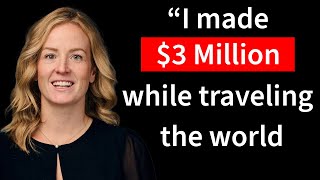
Recruiter Ashley Woods has billed over $10M and visited 45+ countries by outsourcing execution, using AI to cut candidate evaluation from days to an hour, and partnering with senior recruiters instead of hiring sourcers. She credits time-zone strategy, energy audits, and coaching for scaling without the grind.
Chapters
Hey guys, welcome back to yet another episode of Top Billers Toolkit, where me and my twin brother interview top billers from all around the globe to unlock the secrets to their success. Today's guest is Ashley Woods. Ashley's billed over $10 million worth of contract fees, more than $3 million in gross profit, and she's done it all while traveling to over 45 countries. This is one of those episodes that's going to completely reframe how you think about success in recruitment. From Thailand to Portugal to Southern California, She has proven that you can run a high-performing desk and live an incredible lifestyle at the same time. In this episode, we're going to break down how Ashley replaced the hustle harder mindset to building very clever systems, how she scaled through partnership and not employees, teaming up with senior recruiters who are just as motivated as she is. And we're going to be talking about how she uses AI as a true multiplier. For instance, reducing 3 days of candidate evaluation down to 1 hour. We're also going to be delving into Ashley's time and energy audit method, a simple framework to help recruiters realize what work drains them, what work fuels them, and how they can save hours of productive time every single week. If you're feeling trapped by the constant grind, this episode is definitely for you. We hope you enjoy it as much as we did. And as usual, grab a cuppa or a glass of wine depending on when you're listening to this. And let's get into it, shall we? Wait a second, guys, quick question for you. If you could land a new client on LinkedIn in the next couple weeks, how much would that be worth to you? 20, 30, maybe 40K? Well, we have a pretty crazy offer on right now. If you are a recruitment business owner, then we will work with you for free and write you 2 posts at absolutely no cost. And here's the cool part— other recruiters that have come through this free trial have managed to win new clients. They've racked up hundreds of thousands of impressions and started conversations with top-tier candidates. It's completely risk-free, so you have nothing to lose and everything to gain. If you're interested, the link's in the description below. If not, no worries. We hope you enjoy the podcast. See you later.
Ashley, thank you so much for joining us today.
How are you?
I'm great, thanks. How are you?
Yeah, I'm really good, thank you. Just to give people context, I was searching the web looking for top billers, and then I saw this insane story of a young lady who traveled the world and managed to build a thriving business in multiple different countries. And I was like, oh my God, that's insane, that sounds like the dream.
And also I was like, how the hell did she do that?
And I was like, okay, we have to have her on the podcast. Um, so actually, thank you so much for joining us today. Um, and I'm gonna jump into the first question as always, which is What's the number one tool in your toolkit, whether it be a mindset, strategy, or software?
Yeah, no, I reflected on this question a bit when I saw it because, you know, the first thing that comes to mind is strategy. But really, you can't do anything without a proper mindset, right? And I think that my mindset in particular has attributed to a lot of the success that I've had. So yeah, by far, you know, having a growth mindset really goes a long way in recruiting.
I love that. Um, and what, what has— like, I'm sure you didn't start off with this growth mindset, and unless you're one of the very lucky people that started from a very young age and had parents that kind of instilled it into you, I'm sure this growth mindset was kind of developed over time. Were there, were there certain things that happened actually that kind of, kind of accelerated your mindset faster and kind of helped you to see things clearer?
I've kind of always been like Little Miss Independent because I have a brother and he was 7 years older, so I always wanted to be like him. But obviously that's a big gap when you're 3 years old. So my mom would always joke and she's like, she couldn't watch me walk to the bus stop by myself because I refused to let her walk me. And I would always check back to see if she was looking. So I think that that was instilled in me for a long age or from a young age. I lost it though. Somewhere along the way. Um, and I do remember a period of time, like, while I was in university, where, like, I was trainwrecking hard. And the thing that brought me back was, was really just, you know, proximity to people who were positive, were great influences in my life. So, like, Tony Robbins is, like, one of the biggest influences I've had in my life when it comes to, like, impact. Um, but I literally just, like, reprogram the way that my brain works listening to, um, like motivation videos on YouTube or like inspirational videos. So yeah, I learned somewhere in university that like the first 20 minutes of your day are the most impressionable. Um, so I would just wake up and I would start hammering like David Goggins and Tony Robbins. Yeah, so then it just like, it puts you into this, this mindset shift, right? That like anything is possible and like let's let's take the bull by its horns. So, yeah, I definitely— anytime I'm feeling down now or I need to pump myself up, it's like I go right back to those videos and I switch my fit.
That's so cool.
Yeah, I'm such a big believer in that, and it's such a simple shift. And whenever my mindset shifts back into some kind of negativity, actually, I realize that I'm not feeding it with positivity. It's such a simple concept, but it's so easy to either stop feeding your brain or get trapped in a negativity spiral online because the algorithms are so good at feeding you negative crap. So, but it's just such a great reminder for anyone that needs a motivation boost or just wants to increase their mindset is just simply feed your brain with positive stuff on a daily basis. 15 minutes a day, 20 minutes a day, it makes every bit of difference.
Yeah, you feed off of it, right? And like my favourite one ever, Tom Brady. He does an awesome— he has awesome motivational speeches and like his story, and that's what I play when I, when I need to pick it up enough.
Mine's probably David Goggins' Can't Hurt Me. That is like— Sam, Sam listened to it first. He's like, Ben, you need to listen to it. I was like, I don't really like David Goggins for some reason for a while, like he didn't resonate with me. And then I listened to his book and I was like, oh my God, this is insane. And like, I just absolutely loved it. And now it's funny because I think I completely agree with you as well, actually.
In the morning, it's super important.
Like, that period is like super important. And I was always quite obsessed with like, oh, if I wake up early, I can do extra work. But now it's like, when I wake up early, I'm like, oh, what podcast can I listen to? Like, how can I prime my mind to feel good before I start the day? And it's really made a massive difference. Um, so that's, you know, just really great advice. Such— so simple but so powerful. Um, So I've got to go to question 2, Ashley, which is you've traveled to 45 countries while running your desk.
Um, insane.
Which is insane. Like, people struggle to build a successful recruitment firm in one location, and you've managed to do it successfully, traveling the world and living quite an amazing life. Maybe I'd like to— this question isn't in the questions I sent you, but I'd like to know go back to what motivated you to start that journey, because it's quite a— it's quite unusual for people to do that. Like, what was the trigger to that, that kind of shot you off in that journey in the first place?
Yeah, you ever feel like just so drawn to something and you don't really understand why? Like, that, that was it for me, right? Like, um, I just remember I'm a small town girl, so I grew up in a town of like 3,000 people and the closest city was 5 hours away. So I always had this like desire to see the world. I would watch movies and I was like, wow, how cool are all these places? Um, I did a small stint in Whistler while I was in university and all my friends were from all over the world and they were like traveling, working in other spots. So I was inspired. I was like, wow, how cool would it be to go to another country and experience that? And funny enough, it was always Australia for me. I've still never been to Australia. But that's so funny. But that was like where it started. So yeah, no, I just, I just had this desire to see the world and like that was the draw that kind of, you know, put me over there. I, I was just gonna quit my job and go, but I didn't have to.
Interesting. And, and now I don't even know where to start with this 'cause it's such a big thing, but how do you do it? Like how do you build What are the key things? I'm sure, like, as you did this, you realized there were key things that you had to do to make this successful and make it run. Like, what were the things that you learned through building a business while traveling the world that you were like, you realize it was like the non-negotiables for this to be successful?
Yeah, I think it can literally boil down to one word, and that is consistency. I wasn't consistent the entire time. Like, that would be a total lie. But I learned through trial and error. It was like up and down and all over the place. But, you know, the one thing that kept me going is that, like, I had a vision. My vision was to, like, travel the world and, and never have to come home. I had a project, never going home. And it wasn't that I didn't want to come home, it was that I didn't wanna have to come home.
Mm-hmm.
So, you know, when I quit my corporate job, you know, I had a lot of naysayers saying that, like, are you crazy? What are you doing? You're gonna go travel the world? Like, you're throwing everything in the garbage. Um, and I just ignored it. And I was so drawn to this, like, traveling the world and having the freedom. And I've always been motivated, motivated by freedom first. So once I had that vision, it was just like, you know, I knew that I had to do the things to maintain the lifestyle. And it all came back down to consistency, right? It's showing up when you have to show up. It's doing the things that you have to do and doing them on a regular basis. So not yo-yoing up and down, up and down. Um, so I matured through throughout the journey, of course. Um, I remember when I first started, I was taking calls at like 3 in the morning, 4 in the morning, 5 in the morning, and then I got smart. I was like, this is not sustainable. Um, so I started to learn that like you need to work the time zones in your favor. You need to work the geographical location. Proximity is key. Being in environments where you're able to be productive. So like staying and living in coworking environments where other people were doing similar things was a really big game changer for me. Instead of like a hostel where everybody's partying and I'm like leaving the party to take a call at 4:00 a.m. And it was a disaster at first, but we got there.
I love that. When you quit your— oh, sorry, Benza. No, you go ahead, man.
No, I'm just wondering, when you quit your corporate and you went to your first— which was your first country that you visited when you quit corporate and you're like, I'm going traveling, which was the first country you visited?
Yeah, it was Thailand.
Good choice.
Very good choice. What was that like, actually? So you just quit your corporate job. Everyone was telling, saying that you're crazy. You touched down in Thailand. What was that like? Were you, like, more nervous? Were you like, hey, this is definitely the right thing? What was going through your head during that time?
There was never a moment of doubt. Wow. It was like the coolest thing, right? Because at this time, this was pre-COVID. Nomading was very small. So it felt kind of cool, right? You're like, yeah, I'm doing this thing. I landed, I got in a taxi. I had no idea whether or not Thailand was even safe. Didn't even cross my mind. But people went there, right? I was like, people are going there. It's got to be somewhat safe. I got into a taxi. This is back when people didn't speak a ton of English in Thailand. So I was like on my phone doing the Google Translate thing and I just thought it was funny. I was like, how cool is it that I can communicate with people who have different backgrounds than me, who speak different languages. And I just loved that, like, uncertainty. Um, it motivated me.
Interesting. Yeah, that's so funny. Yeah, because most fascinating—
most people absolutely hate uncertainty. It's really interesting.
I was gonna say, I was like, that probably wouldn't motivate me. It shows you how different we are. Like, uncertainty wouldn't motivate me. It would be like— I'm the opposite. I'm like, I love consistency and I love predictability and So don't get me wrong, like, answer— I think there has to be uncertainty. But just as soon as you said that, I was like, wow, so interesting, because it's like shows you how what your brain is wired actually, and I guess why you took that route, and I'm sure why you're successful as well, um, which is really interesting. Um, and so what was— you mentioned that at the beginning it was like, you know, you were learning and adjusting and figuring out what the best method and kind of day plan was, but I'm now interested, like, what did your average day look like? Because as me, as someone who's looking in, who kind of is speaking to a nomad, my image of your day is like a few hours in the morning and then you're on the beach for the rest of the day. Was that literally what your life was like, or was it a little bit different? Like, what was the average week for you?
Yeah, yeah, no, absolutely. It was exactly that, right? It's true.
I feel worse about my life now, actually.
Thank you. But it was motivating. So it's like, you know, you wake up in the morning and you would decide what you were going to execute on that day. Um, but you know, when you're on the other part of the world, like, you have this serious time zone advantage. Um, so I found it particularly motivating. Europe is actually my favorite time zone because there's like that 8-hour difference, right? Asia's tough. Like, when I went back to Asia this summer, I just— I didn't take meetings. Um, But in Europe, it's like I lived in Portugal and I would surf twice a day before I even had to work. And then I'm not productive between the hours of maybe 12 and 4, like useless. So I know that about myself. So I would put myself in environments where I could leverage my strengths. I'd work a little bit in the morning, I'd go surf, hang out with some friends, eat some lunch, chill out, and then I would come back at nighttime and I would just get the things done. But yeah, it was really healthy. I found it a healthier lifestyle than living in Canada because I have a habit of here just waking up and getting to work right away because I have to. So, yeah, it was exactly that.
So fascinating.
Such a cool lifestyle.
So now my brain goes instantly to, like, some people run businesses and work every hour of the day and still find it hard to push beyond that kind of success pillar, whatever your success pillar is. So what were the 80/20 things you did, Ashley, to be able to have a relatively— I mean, correct me if I'm wrong, but it sounds like you had a relatively not relaxed time, but you kind of controlled your time as opposed to how we see most business owners or most recruiters where they're working every hour of the day and still trying to hit those numbers. What were you doing differently, do you think, that allowed you to control your time and still bill quite substantial amounts?
Yeah, you know what, I, I think it's counterproductive to work all the time. I mean, at least for me, um, I was very time motivated, so I knew, like, I would set my objectives. So whatever it was that day, whether I was going to get a new client or whether I was going to work on a role or I was going to identify a couple candidates, and I would just do it as fast as possible. So I was like hyper-focused. Why? Because I wanted to go back to the beach, I wanted to hang out, I wanted to go on excursions. So it really forced me to get smart about how I managed my time, right? I can get way more done in 3 to 4 hours than I can in 8, like if it's focused and dialed because I'm tired, I'm distracted, I'm kind of all over the place. But if I'm like, I use time as a tool, right? If I have 3 hours to get the shit done, I'm just going to maximize that 3 hours and do it as fast as I can. I'd be laser focused, get it done, and then I would go do what I wanted to do. So it was like I let my lifestyle dictate, you know, how I ran my business. And there was a lot of draw there. So like, it was, it was just a— for like, it's a force.
Um, yeah, it's really interesting. So yeah, sorry, Ben, go ahead.
Yeah, so I'm, I'm just going down to like an example of a practical thing, actually, because even if you wanted to, like, I'm now going into your head like, oh yeah, I need to get this done in 3 hours. Some things like, or some people just wouldn't be able to get it done in 3 hours unless you thought of a mechanism, a process, or a a way of outsourcing that was more efficient, if that makes sense. So like, what were those, what were those needle movers or those things that you did that allowed you to do a, you know, a normal 6-hour activity in 3 hours? Or do you see what I mean? Like, what were the things that you actually did, do you think?
Yeah, I think it all comes down to strategy, right? Like having a sound strategy in place, having a good vision. So understanding what it is that you're trying to achieve and working backwards, like, you know, what kind of metrics do I need to hit to hit that? What kind of activities do I need to do? What kind of behaviors do I need to live, you know, to be that person, to get those results? And then you work backwards. So, um, you know, I have a thing and it's like, I like— I'm an outsourcing queen. I think like when I get a task, I'm like, who can I delegate this to that'll do it better than I can? And that's just how I've always ran my desk, right? It's like I'm always looking for ways to get out of doing something. And it's worked really well for me. So it's like delegating, giving up the control and just like understanding, like, yeah, maybe I might do it a little bit better, but who cares if I don't have to do it and I can get 80% results? That's fantastic. So again, it really came back to like the lifestyle pushing my life. I was always big on like, you know, I had, I had people close to me die when I was younger and, you know, it was just like this. And I was like, whoa. And you know, the way that we spend our time is just like, it's so precious. Um, so a lot of what I've built has definitely been on collaboration and partnerships. So yeah, I'm a big, big, big believer in leverage.
Love that. Do you remember like the 2, 3 biggest, um, things that— or not even biggest, but it could be small things that you outsourced that really changed the game? Actually, I'm guessing sourcing candidates is one of them, but is there anything else, uh, well, the, the audience doesn't know, but maybe you could tell us that the things you outsource that really changed the game for you in terms of time leverage?
Yeah, and I mean, like, this was a big learning curve for me, right? Because, you know, being a new business owner, like, my immediate thought was hiring people solves problems, but it doesn't if you're hiring for the wrong reasons, right? Um, so I went through this roller coaster of like, you know, at one point I outsourced my BD and that was when I was in Bali because it was really time advantageous to me to wake up and have meetings in my calendar. Um, so like that was one thing I did. I didn't do it for long because like there was some brand impact there and this was when automation was new, so had to pull back from that. I'm like, okay, maybe not something I outsource now. Then I looked at the sourcing side of things. Yeah, obviously sourcing is like the perfect thing to outsource. Um, so at one point I had 4 or 5 sourcers and I just trained them to be full-time recruiters. So the only thing I had to do when I got on the phone is just like validate the things that the recruiter had already, um, you know, put out, laid out for me. So that, that was a big one and a huge time save. Um, but now we're in like this new world of like AI and automation, right? Like we can build systems to automate, you know, 80% of what we do. So now we're in this like, I don't have— like, I have myself, I don't have any of the sourcers anymore. Um, and instead I went the route of collaborating with other experts. So like other people who are really good at recruiting. And this is like, when I made that shift of partnerships, um, my business just like skyrocketed.
Wow. Hmm, interesting. Can we go deeper into that, Ashley? So What was the different— what was the biggest difference between the sourcing and the partnership? Like, what did the partnership bring to the table that didn't?
Yeah, let's, let's keep it on brand here, but it all came down to time, right? So the sourcing and having recruiters and having a team under me was great, but I spent a lot of time on the phone in like development, right? And I actually love the coaching. I love the development. It's probably my favorite part. Um, but it wasn't what I was after at the time. I was just trying to grow my business. Uh, so when I went the partnership route, it's like I'm working with people who are either better than me— now most of them are better than me, I would say, at recruiting, honestly. Um, or just as good, right? So when I went that route, it's like I was then working with people who had similar goals, similar objectives, who also want to get deals done. So, you know, I do my part, they do their part, and we team up. So it's like it was just this crazy force of like, you know, skyrocketing my business.
Um, yeah, really interesting. Um, Sam, did you have something you want to say, or—
Yeah, no, I guess I just wanted to, for any audience that doesn't know the difference between, you know, you having, uh, recruiters working for you, Ashley, and, and then sourcing and a partnership, I'm, I'm still a bit confused what the difference is. So can you just lay it out as if I'm a 6-year-old. Like, what is the difference between you hiring a resourcer and then working in your business and this partnership model? What's the difference, if you wouldn't mind clarifying?
Yeah, so when you hire somebody directly, you're responsible for training them, you're responsible for the professional development, and you are more or less responsible for the results, right? You got a lot of stress and, you know, you got a lot of extra energy that you're going to put into that relationship because you need to grow these people, as you should if you took that responsibility. Um, now when you're spending that much time on the development piece, you're losing the execution time. So now when I've switched gears and I decided to only partner with senior recruiters who've been in the industry for 10, 15 years, they have crazy good networks. Um, I all of a sudden don't have to develop anymore. I don't have to worry about the production side. Um, you know, I'm working with people who are just like me, who have their own businesses, who have their own goals and objectives. I specifically align with people who share the same level of standard than I do. Um, we're on the same page and then we collaborate, right? So instead of the candidates coming from the recruiters who work directly from me, they're coming from another person who has their own corp who is just as motivated to close the deal, right? So the biggest difference there is like, I don't have to train them. They're already good at what they do. They're great at what they do. Um, so I think that, you know, collaboration is the new competition, and it's the whole idea of like competitive and comparative advantage, right? Like basic economics. Um, that's— that was the biggest shift for me.
So fascinating. And so when you— sorry, Ben, did you have a question?
No, no, I'm just wondering why more recruiters don't do this. Like, because I feel like recruiters are very— I think it's changing now I think that, you know, with podcasts, with communities, with events, I think recruiters are starting to realize the power of being around each other. But I still feel like there's this very competitive— even like in different sectors, like this very competitive kind of in-your-own-lane mentality. Um, but yeah, I find it fascinating that actually you can use it as a superpower, which is, um, really cool. I'd love to jump on to the AI and automation piece, actually, because I know you're an expert in that area, and I know that you help a lot of other recruiters with, you know, automating, outsourcing, um, AI. Oh, am I still with you? My internet's a little bit shoddy.
Yeah, we just heard— we heard you, bro. Yeah, what was your—
what was your question, dude?
Can you hear us, Ben?
Cool.
I'll, I'll follow on, Ashley. I think I got the gist of what he was, what he was asking. I think he wants— you obviously mastered, or, or, you know, very good at AI automation. Can you, can you tell us a bit about how you use AI in your business and maybe how you've helped others as well? That would be awesome.
Yeah, yeah, no, for sure. So like, I have a general— like, I have 3 rules when it comes to turning technology into a multiplier. The first one is, if the task doesn't require your brain, it belongs to automation. If it repeats, it gets a system, and if it drains you, it gets redesigned. So yeah, I've always used tech as like a multiplier, right? So there are a couple of ways that I do that, actually, like any, anything in the recruitment lifecycle that you could think of. So I do a lot of government. Mm-hmm. So very compliance heavy, very paperwork heavy, and think like 50 to 100 page documents to submit a candidate to a role.
Wow.
This is why people don't do government. Yeah. It's in the past, cuz in the past it, it was so time intensive, right? So like we, when it, when it comes down to like, you know, being number one vendor in your client, you really wanna execute on the value piece, right? You wanna save your customers time. You wanna save them time in interview. You wanna save, time to hire. So we take our statement of works, which is essentially a job description, and we train our AI because we see repeatable roles, right? So we train the AI to understand the hiring preferences for the client. So we look at who they've hired in the past, who they've hired in the past, who currently works there, who they've picked to interview, um, and we start creating these personas. Now, we then take the people who are successful, we take their feedback, and we start training the AI to what their ideal candidate looks like. Now, what this does is it removes a lot of bias, right? Because it's not my opinion on who I think is good for the role. It's data-backed. Um, and we're able to get down really nitty-gritty on like what the perfect candidate looks like because we have 100 placements there. Um, so we've trained the AI to build a super powerful persona. On what that candidate is going to look like. So what this allows for then is our submission to interview ratio goes incredibly high because we're, we're appeasing to the hiring manager's preferences and biases. So this has been a really big one for us. When I have to shortlist 50 candidates or like 20 candidates down to 2, and I'm looking at 50-page documents, I mean, the AI just like brushes these documents, right?
Wow.
So I went from like 3 days to evaluating roles down to less than an hour. And I still have to check because the AI is not perfect. It makes mistakes. But like, this is a really good use case for how that saved me a ton of time.
Wow.
And when we talk about like the value that it brings to the client, you know, I'm giving them exactly what they want in the way they want to see it. So I think that that's like a very powerful use case for, for how I use AI. Another one is just like, if you're using it from a BD perspective, this one's been really popular, but like building candidate personas, right?
Mm-hmm.
So similar concept, you pull off LinkedIn, all of the profiles that, you know, of the client that, so of your client. So let's talk about like a software engineer. So let's say Company X is looking for a software engineer. You would go into the LinkedIn or your database, whatever, pull all the profiles that you can find, and you put them into a custom GPT. Now, what you want to coach the GPT to do is start looking for trends, um, patterns, uh, type of education, like whatever the biases that it can find there that the hiring leader likes. Um, so again, you're just looking for fingerprints of who they already like. And the AI makes this a really simple way to do that. So like, I mean, those are two that I use day in and day out. Um, BD outreach. I, I think Ben was saying that BD is a big thing right now. Um, I coach my AI, so I just take someone's profile and drop it in to the, to a GPT. Now I've coached that GPT to look at macroeconomic factors, microeconomic factors. Uh, I teach it to like, or I ask it, I don't teach it, it teaches me, but I ask it to, you know, create my messaging based on the DiSC assessment profile of somebody. So I meet them where they're at in their language that's industry relevant, that's, you know, their problems because, you know, we're seen as commodities. But when you come to the table and you start talking about how the macroeconomic impact, you know, how that trickles down into their specific organization and you start talking to them about what other organizations are doing to get ahead of this, you become a different type of vendor, right? And that's where recruiters want to be. So like, those are a couple of really good ways that I think that every recruiter should, should be using AI. So supercharging, not replacing, but like enhancing the, the customer experience.
Yeah, that's amazing. Um, sorry about my internet, I don't know why it's decided to stop working at that when I started asking. But the thing that— then they're all fascinating, all those examples actually. But the thing that really stood out for me was the 3 days down to 1 hour and producing a, like, consistent flow or process, should I say, to get the perfect candidates for companies. Um, and this is interesting because I think, correct if I'm wrong, but this is probably what companies, once they start to become more tech savvy, are going to start doing internally, right? Um, you know, I'm sure it will take a long time, but what's your feeling on that?
Yeah, 100%. Like, I mean, I'd be shocked if they don't already do it. Well, not really, but Um, certain industries, but I think the coolest part is that like they're still pressed for time.
Yeah.
So if you can be the partner that comes there with a clear process, a clear strategy, and you guide them through that process, huge value add. Mm-hmm. And you get sticky, right? Because you are teaching them something. So I think we're in an opportunity where like, yeah, we got all this really cool tech, but who's got time to learn it?
Mm-hmm.
Nobody. Uh, it's like really noisy, and to like get good at a tech tool, you really need to spend time with a tech tool. And one thing I've noticed with the recruiters especially is that like nobody's got time to learn a tool, nobody's got time to watch a course, or they got time, they just, they're just not prioritizing it that way, right? Where, um, so our clients are no different. Sit with them, guide them through the process, build the fingerprints with them, because then you get to start And like, you could— you can teach that as part of your process, right? Like, this is what we're gonna do. I would love for you to be part of that process. Let's do it together. And then they get really excited.
Um, is that what you do with your clients now, Ashley?
Yeah, exactly.
So it's like, it's part of your offering then?
This is what I, I coach recruiters through, is like building these things out, um, and, and helping them get there.
So amazing.
And using it as a, like a a creative BD tool, right? Because yeah, now clients are always pushing back and their first objection is like, well, what makes you different? What kind of value do you add? How do you add value? Well, when you start talking like this, they know these things exist. Do they have time to do them? No. Do they really know how to do them? No. Would they prefer to have more time in their day and let you do them? Not everybody, but the ones that do are the people that you want to work with.
Um, that's clever. Really powerful offering, actually. It's really powerful.
I'm curious, Ashley, when you're speaking to recruiters who are maybe thinking about using AI, they know it's powerful. They know it could be saving them time, just like your process saved you 3 days to an hour, I think you said, or 2 days to an hour.
Where do you start with them?
Like, there's so many, there's probably so many areas of their business that could be improved by AI. There's so many tools. There's like a new AI tool coming out almost every hour when I look on LinkedIn. Like, how do you— what is your starting process with recruiters and where— how do you make sure they don't go off on some insane tangent researching the new tool and actually not being productive with AI? And I've definitely been there. Is— what would you say?
I mean, I think we're at a point with AI that everybody's going to do that, right? Like, and you should. You should have some time of exploratory tech time, but schedule it. Handle it. Yeah. Don't let it be part of your A time. Like, you know, I came from Allegis Group and they're always about A time, B time. You have time to drive business and you have time to do other things that don't necessarily impact the bottom line in the short term, but they absolutely do from like a strategic standpoint, right?
Yeah.
So like the biggest thing for me is like mindset shift. So it's like creating awareness around what's being done today and what a better future looks like. I think until recruiters go through that exercise, they don't really see how much time they're wasting. They don't see how their busy work is not productive. So Dan Martell uses a tool that I really love in his book, How to Buy Back Your Time, and he talks about time audits. Now, most people have done a time audit, but what he adds on top of that is energy audit. And I think that this is absolutely brilliant because, you know, he writes down all— he has people write down I don't know if it's, I think it's 2 weeks, everything that they're doing in a, in a day. And then he has them highlight in green and in red. So green would be things that energize you. Red would be things that de-energize you.
Hmm.
And then you look at it like a map, right? So the first thing that you're gonna wanna automate as a recruiter who's listening to this is the things that are red because you hate doing those things. They drain you. So you wanna be energized, right? So I think when. People think of time audits, they think about just time. How do I save time? Okay, but what about energy audits? Because that's what really matters.
Yeah, um, such a great— so I think that's really powerful. I literally just had this like brain— it's like epiphany of like, oh my God, I'm thinking about all the things I'm doing in my business now, and I'm like, what do I want to do? I know exactly what I want to do. Like, I know with complete clarity what I want to do, and I know with complete clarity what I don't want to do, but I haven't really thought of that in that way. So that's really Really powerful. I love that. I'm definitely going to get Dan Martell's book, How to Buy Back Your Time, right? Actually, that's what it's called.
Yeah. How to Buy Back Your Time. Yeah. And he's like, I'm an audiobook person, so he's a great, he's a great storyteller.
So awesome.
Awesome. And I'm so I'm guessing recruiters to some— I'm guessing the only way you understood what I could do for your business is setting aside time to explore these tools. Am I right in saying that, Ashley? Like, you can't escape the fact that you need to understand what these tools do to some degree to then see how they insert into your business. Would that be a fair statement?
Yeah, but you have to go through the leverage process first, right? Um, I'm 80% leveraged. I have a ton of time. Um, so I'm able to research and learn and geek out and listen to the podcast and listen to the things because I've leveraged so much. So I took the responsibility, I gave it to somebody else. I trust that they'll do their best. Uh, And now I have all this time to do other things.
Yes.
Cool. Okay.
That's such a great point. Create a business where you are leveraging other people that gives you time and now you have time to research these. Because when you're running a business like a headless chicken and you've got absolutely like an hour at the end of the week, you're not going to be spending it doing AI. You're probably going to be spending it relaxing or trying not to have a nervous breakdown. So that's really, it's really interesting.
And that's like the powerful thing about having a podcast, right? It's because you, you're, you're focusing in on where you gather your intel. Um, so it's just as serving for you as it is for your audience because you're talking to people who are already doing the thing. So you're short, like you take a shortcut, right? You're just hearing directly from the source. Um, I think if people don't have the time to learn the tools, then you need to learn from somebody who has the time to do the tools. So listening to podcasts, going to events, you know, paying coaches because that's what they do. Like, that's their business.
Yes. Yeah, definitely.
And so I just— last, uh, thing on this sub— on this little tangent, um, can you recommend any AI tools, Ashley, that— I'm not sure of how much you kind of build within your, within your business, or it's like external tools that you utilize, like ChatGPT. Uh, me and Ben use NAN to kind of connect ChatGPT and Claude and a few other softwares like Notion together. Is most of what you're doing like building from scratch using platforms like NAN, or is it utilizing ChatGPT or any other tools that maybe other recruiters haven't heard of?
Look, and it is complicated. Um, is it used in my desk? Yes. Did I do it? No.
Yeah, I didn't do it either. I would then take years for me to learn that, right?
So these are, these are things that recruiters want to invest in recruiting people who understand how to do the tech. Back to competitive and comparative advantage. You don't need to know how to do the tech. You can't keep up with it. You're too busy. So I think this is where delegating becomes key. So, you know, I personally only use custom GPT, the like full parameter of my desk and then, you know, my time at Recruiter Business. All sorts of tools are used, not by me. Um, so they use the lead gen pro, like programs, they use the automations, they use all the things, they're good at them. They have technical people to do those things. Um, and we have SLAs, so it works really well. Um, but my personal tech stack, really lean. Um, LinkedIn, ChatGPT. I use the projects, I use the custom GPTs and nothing else. Very, very bare bones. I used to play with other things, but honestly, I get what I need out of ChatGPT, and I like their memory the most. Yeah, yeah.
I saw this quote from Alex Hormozi. He was like, if ChatGPT started charging $1,000 a month, most people, because it's so valuable to their business, most people would probably pay like $500 to $1,000. And at the moment, um, so I think there's a free version and it's like $50 a month. And I'm just amazed at the value these softwares bring to our business if you know how to utilize them properly versus the expense that they actually are. It's just insane value add when you think about it, uh, and some people aren't even touching it. It's just so crazy.
Yeah, I mean, that's going to be problematic, right, in the future.
Yes.
Yeah, yeah, yeah, you can't— like, a regular recruiter can't, can't compete against a supercharged recruiter. Yes. Um, right, right now, yes, because there's still— it's still so new, but the bar is going to raise, the floor is going to raise. What's expected of us as recruiter is raising. Um, so if people are not using those technologies, it's going to be really, really, really difficult 2026 and 2027, and I'd be shocked if they make it past that.
It's such a good point. It's like right now, you're right, I think it's just not enough. The, the, the gap isn't big enough. Um, but there will be a point where like it's going to hit people like a, like a, you know, like a lorry. And it's going to be like the, the, the good recruiters that are AI charged, it's going to make a huge difference. And I don't know when that's going to be. It could be '26, '27, might be a little bit longer, it could be sooner, but it's gonna happen. And so you have to embrace it at some point. Um, so yeah, that's a really good point. Um, actually, we— you probably noticed we've gone completely off off the questions, off topic from the questions, and we tend to do this. So this is not— apologies, we don't do this on purpose. It's just we go into like a wormhole and then we go deeper and deeper. But I'd like to open up the floor for any topics that we haven't talked about that you would like to mention. Is there anything that we haven't asked? Is there any topics that you're passionate about? Is there anything that you want to talk about that might add value to the audience today?
Yeah, no, not, not really that we haven't covered. I think the, the biggest thing is like recruiters for so long have been conditioned to think that the only way to success is hustle. I think recruiters need to have more courage around challenging what that looks like, right? Because, you know, I'm living proof that, you know, hustle's not required to some extent. Now, I don't want to say that I didn't hustle to get things started. I absolutely did. And there is no magic fix, like a thing has to be built, right? Um, but there— here's another book that I really love, and The Science of Scaling by Dr. Benjamin Hardy. And, you know, he— yeah, such a good book. But he talks about raising your floor, right? Like, he said the difference between— well, he quotes, um, oh God, what's his name? I'm drawing a blank. The big investor, he's like the best investor in the world.
Um, I know who you're talking about. I forgot his name too. Uh, I've got his book.
Should we chat? Warren Buffett. Warren Buffett.
Warren Buffett. I was like, how do I forget this? Um, okay, so Warren Buffett says the difference between a good entrepreneur and a great entrepreneur is that great entrepreneurs say no to almost everything. Um, because they've raised the floor, they've raised the bar at which they operate. They're super dialed, super focused. And I think recruiters need to bring that energy to recruiting, right? Mm-hmm. Um, stop getting distracted, stop saying yes to every little thing. And I think tools are a lot of noise with this, right? Mm-hmm. Um, for me, like, I think that the, the, the, the best thing I ever did was get coaches for everything. So I have a coach for nutrition, I have a coach for fitness, I have a coach for Muay Thai, I had surfing coaches, um, and I have a Tony Robbins results coach. So I use coaches for everything because they keep me super accountable. Um, they also keep me informed. They are also experts in their fields, so it saves a lot of time. Um, I think that recruiters need to start using more coaches to buy back their time, accelerate, to be held accountable, to create strategies, to raise their floors. Um, because without the coach, it's like, it's easy for you to get lost in your day-to-day and see the, in the crowdedness, right? But someone looking on the outside looking in, they're able to tell you really quickly, why are you doing that? And, you know, like my coach says this all the time. She's like, no, we focus on results, we manage and we measure.
I love that.
Now without her, I'm not focusing on results. Well, I am focused on results, but it's kind of like a squiggly line, right? But she pushes me to set these aggressive goals where then I have to use time as a tool, you know, to get these things done. So I've just started pushing my deadlines up. Mm-hmm. So I think of like a task that is just ridiculous about like, you know, I last week I set a task that I was gonna call 70 recruiters. 70 recruiters is a lot of recruiters. Mm-hmm. But all of a sudden I have this time pressure that just forces me to be super dialed in.
Mm-hmm.
To get that task done. Um, so I think that, you know, that, that would be my biggest thing. That's been like the game changer for me and in all aspects of my life is just you know, get somebody who can see your blind spots and, you know, have the courage to accept that those are your blind spots and the drive to, to get past those, right?
What's such great advice. I absolutely love that. Yeah, made me, made me want to hire another coach as well. Actually, I'm like, oh my God, I need a coach. What can I get a coach for? Because it's true, like, me and Sam have also invested a lot in the past and it's like there is a direct correlation with investing in the right coach and the growth of our business and our mindset. And it's just never— although it's scary, and sometimes it's like, it can be a little bit hard to part with the money initially. And maybe people have a different mindset around money. I always find it hard initially to part with money. But then when I do, I'm like, oh my God, that feels so good. And it's like, it's always worth it. And you always get your return. And I think you can always get your return if you believe in yourself and you follow the process. And I think that's kind of what I've realized as well, is that you cannot expect coaches to like solve your life and like give you everything. So now my mindset is always like, if I can get 10% from that coach, or even 5%, or, you know, maybe 10% is probably a good number, a good, um, percentage. If I can get 10%, that would be worth it. And if I can do that, if I keep getting like getting those 10% from every coach, you know, eventually that's going to be a massive return and just a huge amount of improvement. Um, so yeah, thank you for that, actually. It's a really good, um, ender. And just on that, what would— so go ahead, were you going to say something?
I've just got—
this is a— sorry, I was speaking to Ashley, Sam. Oh, sorry.
No, I was just going to say you made a really good point there, right? Um, small things add up and they compound. Um, so the biggest thing is I see like recruiters, they will invest in something and they expect this like mega, like 100x return. Yeah, that's not really—
why am I a millionaire?
It's like, if you figure that out, let me know what's happening. But it's the small things, right? It's like little by little, you do these small things, small tweaks. You're talking about like 1 to 3% in each areas of your business. That compound. And when they start compounding, that's when you see massive results. I think that that was a really good point that you brought up, is that like, you know, 10%, very achievable. But if you get 10% in different areas of your life, well, shit, now you have 100.
And I've noticed actually the recruiters that already have that mindset, they are long-term thinkers. And the ones that don't, I'm like, oh, like, I want to make a million from this. Like, you're gonna make me a million? They're always transactional. They're always transactional. They're always like, they're just— the transaction was the best word from it. They're like this, they can't see beyond like 6 months or 3 months or the next month, you know what I mean? And it's just, it's just— I don't know why I'm saying this. I think it's just more of an observation now that we're speaking about the mindset of different recruiters.
Yeah.
And I just think it's so important as like, as well as having that urgency to do things today, of like having that longer-term mindset of like what could you achieve in, in 3 years, not what can you achieve in like in a month or next week, if you know what I mean.
Um, and then 3 years and move it to 1.
Yeah, yeah, move it to 1 day, get AI and sit back at the beach, do nothing. I've got a quick question. Go ahead.
Um, no, I'm just, uh, because you, you traveled to so many countries, Ashley, we— I've kind of gone off in a completely different tangent, but I'm just curious which have been— have you got a favourite country that you visited during your travels of running a business and travelling? And if so, why?
Yeah, I would think when it comes— it's going to be a very lame response, but if I could, like, be a place in the world, honestly, Southern California.
Oh, really?
Wow.
Out of all the countries.
It's a lot for me. Wow, all the country. I'm like, it's a really lame response, but no, not at all.
No, not at all.
Curious why.
How come Southern California?
Is it because the family's there, or what's the reason?
Proximity, right? So it's like, I found when I was in like Costa Rica and the Dominican and stuff, it's like, you know, people go there to escape, so they're very life-driven, adventure-driven, but you don't get the like impact-driven people. So like, um, and, and they exist, don't get me wrong. but it's not at the masses. Now you go to Southern California, you got the beach, you can surf, the food's great. Um, but you have really motivated, it's like motivated hippies, which are my favorite people, which are my favorite, which are like my favorite type of people. So I found that like, that was like the perfect harmony of like lifestyle and getting shit done. Um, so for me, like I was hella productive there. And my mindset was really good. I was very clear. I spent a lot of time in the water, which is very meditative. Um, so yeah, so it'd be Southern California, but the taxes are so high.
I've never heard of, um, motivated hippies as well. I like that. I just had this image of like this, this surfer dude with like a suit on who's like really— or maybe not a suit, but like, I don't know, this really motivated hippie. And sounds pretty cool actually.
I wouldn't have guessed.
Sorry, they're almost like they're grounded, right? Um, because when you go out in the water, guess what? Nobody calls you, nobody sends you emails, nobody texts. I see some people with an iPhone Watch talking and I'm like, what are you doing? But I mean, if it allows them to be in the water, why the hell not, right? But, um, you get this really like grounded, chill person because they're so connected with like the nature. So yeah, so that, that's it for me. If not If not Southern California, Portugal. Very similar lifestyle.
Interesting.
Oh, cool, cool.
But I'm guessing the choice is a mixture of environment but also the people. Is that you put a big emphasis on the people around you, Ashley? I'm guessing that is— that's a big choice in where you spend your time. Like, you have to be surrounded by people who are also motivated, want high impact, and are high performers, but also like nature in a sense.
Yeah, yeah, I like the harmony. Yes, I'm not, I'm not for the like go, go, go all the time, hustle, hustle, hustle, hustle. I've been there, done that. Um, it wasn't conducive to my health. Yeah. Um, but I do like the blend, the people who are like impact-driven, who want to give back, who want to do the things, but who still value their life, their time.
Love that.
Yeah, absolutely love that. Such a great podcast today, actually. You have really given me stuff to think about with my own life, my own business, um, which I think, and I'm sure a lot of listeners feel the same. It's like, oh wow, I could be saving time. I should be living a more meaningful life and not working all the time. Um, so thank you so much for your time today. This was a really amazing podcast. Um, and yeah, just thank you so much for being our guest.
Thank you for having me.
Hey guys, thanks for tuning in to this episode. If you enjoyed it, please don't forget to subscribe on YouTube and Spotify. Tune in for another episode next week, and we look Look forward to seeing you again very soon. Peace and love.
More from Sam




The difference between a $200K biller and a £1,000,000 Biller (full Breakdown video)

how to go from agency recruiter to Lone wolf (Advice from a $2.4 Million biller)



This Recruiter has billed $750K+ for 30 years straight. (Master of Consistency)

How to increase your candidate response rate by 25-30% (Whats app messaging system)


This recruiter has billed $1,000,000 for 5 years straight! (Master at Enterprise deals)