How to make Seven Figures with just 25 deals a year...
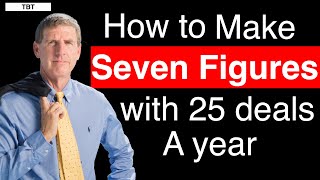
Craig Picken, a 7-figure executive recruiter, makes $700k to $1m annually from just 25 placements a year. He uses a low-tech approach (iPhone, paper, Outlook), builds relationships across aviation and aerospace by driving cross-country to meet clients, and positions himself as a business consultant rather than a transactional recruiter.
Chapters
Hey guys, welcome back to yet another episode of Top Billers Toolkit, where me and my twin brother interview top billers from all around the globe to unlock the secrets to their success. Today's guest is Craig Picken. Craig is a 7-figure biller, and the famous phrase that he is known for is, 'There's no money in the low end.' Craig manages to hit 7 figures doing just 25 deals a year. Each deal is worth anywhere between $70,000 to $100,000. In today's episode, we're going to be talking about why going after higher-end fees is one of the best ways to hit 7 figures as a recruiter. We're going to be going into Craig's story and understanding more about his journey from the Navy to high-end property to then recruitment. And Craig is going to be sharing with us why he's found it so valuable surrounding himself with high net worth individuals and why his powerful network is one of his biggest tools in his toolkit. Guys, as usual, grab a cuppa or a glass of wine depending on when you're listening to this, and let's get into it, shall we? Craig, thank you so much for coming on today, my friend. I am really excited about this podcast episode. How are you?
Good, good, Ben. Good to see you guys out there.
Awesome, mate. Yeah, really, um, really looking forward to this one, and I think it's going to be quite a different guest because I know you work at quite a senior level, Craig. Um, but I'm going to start off with the first question, which is what's the number one tool in your toolkit, whether it be a mindset, strategy, or software?
I don't use any software. I've got a CRM, which I really don't particularly care for, which I don't particularly care for, candidly. And I'll probably change that out in the next couple of months. So software is not a— other than Outlook, that's about the only— so software is Outlook. The number one tool is an iPhone with AirPods. Branded pad of paper, which my daughter bought me a whole bunch of for Christmas.
Nice.
And a pen.
I love that.
And that's the— those are the tools. Those are the tools.
Love that. So that is proper old school, isn't it, Craig? I'm quite amazed that you're doing the figures that you mentioned at the level you are, and you're pretty much kind of relying on the good old kind of foundational old school stuff.
The world does not have to get overly complicated. You know, it's, it's, it's the, you know, the, you could use as much software as you want, or you can do as much lead gen as you want, or, you know, things like that. I find that just kind of the, the phone, piece of paper, notes, Outlook, you know, you don't need a whole lot more than, you don't need a whole lot more than that. You know, I use Zoom. You know, obviously Zoom quite a bit. I've got a podcast I do. So there's, it's a mix of stuff, but it's not, it's not overly complicated to be honest with you.
So if it's not softwares, if there was one thing that, if it was like the one thing that you think has contributed to your success, Craig, what could you say it was, do you think?
There's no money in the low end. And I'll just say that's a mindset that I've, you know, look, there's no money in the low end. And what, you know, you know how I got to this place is you see airplanes in my back wall, pictures of airplanes in my back wall. I flew airplanes in the Navy for 8 years. Wow. When I got out of the Navy, I went to work for 2 aircraft business jet manufacturers. And they sold very expensive products. And you understand, you know, how much money is in the top end and how much, you know, versus like you could go sell a whole lot of really inexpensive things or you could sell a few expensive things. And I'm kind of in the, I'd rather just sell a few of the expensive things, you know, in between my starting my recruiting practice. In 2008 and the end of my business jet career in 2003, I spent 5 years in very high-end real estate development dealing with very wealthy people. And once again, it created a mindset of, you know, where do you want to be? So that's how I started my, you know, that's the mindset I started my recruiting practice with.
Can I go ahead, Sam? No, I'm just interested. I just want to go back to 2003. You just left the Navy and you went into high-end real estate, Craig, which is quite a— it's quite a stark difference, isn't it? It's like going from the Navy, from a certain salary that you're getting, to then going into high-end real estate where the numbers are absolutely limitless and you're probably meeting very high net worth individuals. What was that mind— was that very natural for you to move into that? And how did you end up there in the first place?
Well, the mindset was, so I left the Navy and then I went to work for Gulfstream Aircraft. I was at Gulfstream Aircraft for 4 years. Then I went to Bombardier Business Jets for 3 years. Yeah. And then, you know, look, from, as I tell, you know, and this is, it's a great story I tell candidates too, you know, when they're in a transition period in their lives. My boss and I at Bombardier just did not like each other. He hated me about as much as I hated him. And one day it just, the world just kind of looked up and said, hey, it's time for us to part ways. I parted ways and it was great. I loved it. The transition was some folks I knew were doing a very, very high-end real estate project. You know, we started talking about it. I was actually on my way to another interview in New York City with another business jet company. And they said, hey, stop and see us along the way. I did. Loved what they had to say, loved what they were doing, called the guys in New York City and said, I'm not coming. So that's how I got into the real estate business. Spent 5 years there. It was great. And was dealing with, you know, uber wealthy people, people I've been dealing with in the business jet side of the house. And, you know, and I was good. I was good. I was good. It was very easy for me to relate to them. It was very easy to connect with them. I understood what they were looking for. It's never about me. It's always about them. And if you go a little bit further than the next guy in dealing with them, you will gain their trust, their respect, their referrals, their business. And that's what I decided to do with my executive recruiting practice.
I love that. Interesting. Were there any— because you, it sounds like you spent a lot of time around people who are making a lot of money, Craig, which is very interesting, and I'm sure you've heard some stories. Are there any things that you've picked up on from spending a lot of time with these people in terms of habits, mindset, uh, things that they've taught you along the way? I'm just curious, if you're spending so much time with them, there must be something that has rubbed off onto you?
Yeah, I mean, you know, what's the most important thing to them? It's them. What do they want? They want solutions. What do they want? They want honesty. They're people too. And when they're wealthy, they know that everybody is trying to get into their pocket. And when you come at them with— when you when you work with them in an honest, straightforward approach, and even when you have a bad answer for them and you say, look, you're not going to like this answer, but it's the best one I got right now. And I'm going to just, you know, we're all adults here. Let's talk about it. You know, they respect that. And that's the way that the, you know, what I learned. Was that, you know, not everything's going to be perfect. It's going to be a little— it's going to be hard work. But when you deal with it, you know, in a, in a, you know, head-on manner, it becomes a whole lot easier and you gain their respect. And that's, you know, what— that's, you know, that's the best way to get down that path.
Interesting. Um, in the pre-call, uh, Craig, you said something quite controversial. You said quit being a recruiter, which I thought was quite interesting. What do you mean when you said that? Do you mind elaborating?
Yeah, I'll tell you. Yeah. And I'll be as blunt on this as I can and hopefully it resonates. I hate recruiters. Can't stand them because they're transactional. And, you know, there are, I there are people that I know that are executive recruiters and are great, and they're not executive recruiters. They are business consultants. They can look through a balance sheet. They can see cash flow problems. They can see business problems. They're so deep in businesses that they know the problems of the business before the business owners do or the business leaders do. And they just say, hey, look, have you thought about this? Or have you ever met this person who maybe could help you or can guide you in a different way? The best executive recruiters are consultants. And they're not dealing with talent management. They're not dealing with HR. And they're not making 1,000 cold calls a year with some transactional, you know, with some transactional, whatever you want to call it. They're strategic advisors. And, you know, that's what, that's what a really good recruiter is. I'm like, I'm on LinkedIn all the time and I see what people are putting out there and they're like, oh yeah, yeah. You know, if you want to be a really successful executive recruiter, then, you know, learn business, you know, learn the fundamentals of business and learn what businesses need, want. Must have at every level to thrive and, and survive. Not just survive, but thrive.
Can we— love that. Can we jump in and give a real example of that, Craig? Because I'm curious what that looks like in reality. So if I was, if I was a fly on the wall in one of your conversations with any of you and your clients, what are you advising them on, on a business level, that's helped you maybe secure more business or helped you build trust or help them succeed? I'm just curious what that looks like in real life.
Look, I can have business conversations with any of my clients and the business conversation is, you know, it's, you know, I see why we're talking, you know, here's what your competitors are doing, you know, here's what's happening in the market. A lot of private equity, you know, just have Private equity groups will call me up and go, hey, we're thinking about something in the industry we want to look at. Yeah, great example. A private equity group was looking at a parts business. They wanted to go buy just an aircraft parts business. I'm like, well, why that? There's no intellectual property. The only value of the business is really What's on the shelves? What's your plan moving forward? And when you ask them the hard questions, they're like, well, this is kind of what it is. And it's like, well, you can do that if you want, but here's what happened with another private equity group that I worked with that tried to do the exact same thing. And here's why they didn't succeed with it. So, if you want to go down this path, don't be like them. And oh, by the way, here's 3 people that you might want to meet along the way. Who can help you. So, now what have I done? I've said, okay, here's why these guys failed. I put some questions in their mind to make them think a little bit deeper as to why. Why do you want to do this? What do you think your upside is from an IRR perspective or an investment perspective? Do you really know what you're doing and do you know the best people out there who could potentially guide or help you? You know, okay, we thought about it. They ended up walking away from that business.
Love that example. Um, just must position you in such a different light as well when you're able to give them, uh, that kind of advice. It's like, it's just night and day, isn't it? From a transactional recruiter to a business consultant, it's just crazy.
Well, you can walk away from things, you know. What's power? Power is when you can walk away from it. It's not for me. You know, I don't care what you guys do. If you want to do that, that's great. Yeah. If you want my help, yeah, okay. Um, but you know, if I were you, I wouldn't do that. Um, that's just kind of, you know, I wouldn't do that if I were you guys. But if you, if that's the path you want to go down and, and you need some help, okay, call me. I'll, we'll, we'll talk through it. So, um, love that. It's, it's just a, you know, it's, it's understanding business.
Um, I'd love to jump to the, to the next question, Craig, which is you talked about a dartboard approach to building expertise in a vertical. Um, can you elaborate if there's— because, you know, I think a lot of people, a lot of recruiters understand the value of niching and building in a vertical, but it's easier said than done. And you've obviously done this successfully now, and you've probably got other friends and recruiters that have done the same. What's the, if there was like a process or a step-by-step map that we could give other people, what would you say?
So from day one, I thought of my business as a dartboard and what I said was from day one, you know, look, you're not gonna step into a business and you're not gonna start doing, you know, the C-suite, you're gonna grow to it. And I said, all right, I'm gonna start by the center point of my And my practice is all aviation aerospace companies. And I said that, you know, the dartboard, the bullseye on the dartboard, the little red dot will be general managers. And why general managers? Because they're pretty integral. They're P&L, you know, typically profit and loss leaders. And I said, all right, from a general manager, I'll learn the general managers. And if I want to go down a step, I'm learning their directors of operations. If I want to go, you know, if I go 2 steps out from, you know, from the bullseye down, I get the director of operations and the ops managers. So I'm learning the ops, I'm learning those folks. Ops managers will become directors of operations, directors of operations will become eventually general managers. If I go up from the general manager, I'll figure out who the chief operating officer is and, and eventually who the CEO or the CEO is, so I can build a relation there. If I go to the right, I'm into the CFO, the finance side. If I go to the left, I'm kind of into the admin side, more of the sales, VPs of sales, whatever. So if I put the, you know, that's the way I looked at the business. And I used to have, I got a whiteboard over here and I used to have a little diagram for every business that I wanted to know. I'd say, all right, here are the key people who are the general managers and who are the, you know, 5, 6, 10 key people around that general manager in each business that I was either doing business with or wanted to do business with. So it was a process that I had in my own mind of who are the people I need to know.
Really interesting.
At any given moment.
And so just to clarify, before you, as when you started the business, you were like, general managers are going to be the most valuable people to start placing because I can expand in different avenues by knowing these people and placing them. Am I right in saying that, Craig?
Yeah, that would be a good idea. Who, you know, who's the best relationship to know? Like when I started, you know, when I started in 2008, you know, right in the business, you know, right at the cusp of 2008, 2009, there's global recession. You know, we were in the middle of a global recession. If you remember the, you know, go back that far. And I looked at my wife, I had this thing called the World Aviation Directory. It's not printed anymore, but it was about that thick. It was a book about that thick. And I looked at it. I had it and I looked at my wife and I go, where do you think we started this thing? She goes, how about A? I go, okay, A. My first client was in the A's. And then, you know, we built a good relationship and I was like, all right, I got it. And that's how we started. That's how I started figuring out the dartboard theory. You know, who do I want to know in each of these? You know, here's my client. Who do I want to know in each of their competitors? And that's how I That was the process I mapped for myself. My first year in business, I think I did, I don't know, 10 general manager level, you know, ops director level placements, some salespeople in there. Didn't do great, but it was, you know, it was great. It was okay. I made a quarter million bucks my first year. I said, all right, if I can do a quarter million bucks this year, can I do 30% more next year? Well, yeah, probably. So there you go.
So pretty interesting. I get the feeling that you are a master at building relationships, Craig. And I'm sure it's evolved a lot since the general manager period up until now. If there were some tips and tricks that other people might be able to use to building relationships, What could you add, do you think? What, what, you know, if someone was good at building relationships but they could get better, you know, if there was something that you could, you know, if you were training someone to build relationships more effectively, what would you say to them?
There is nothing stronger than presence. You know, hard work, you know, you make your own luck. And, and this is something that I talk to executives out there, people calling me, I'm struggling in my career or whatever else. Nothing beats hard work. And hard work creates luck. And when you have luck, a lot of times it just goes your way. So I'll give you, for instance, I had a client up in Connecticut. I live in North Carolina. Connecticut is about a 3-hour drive. 12-hour drive, 13-hour drive from me. Um, the president of a company in Connecticut said, hey, uh, you know, I started talking to him and he's like, hey, why don't you just come on up and see what we're doing? All right, great. Well, I was a little resource limited at the time, so I jumped in my car and I drove to Philadelphia, which is about an 8, 9-hour drive from me, and I went and saw a potential customer in Philadelphia, stayed overnight, drove to Connecticut, went and met with the president of this company. And in that meeting, he introduced me to 6 of his direct reports. So I thought I was going to meet with him for an hour. I was willing to go that far for an hour meeting with him. He said, I want to introduce you to each of my 6 direct reports. Now, each of his 6 direct reports said, hey, I've got this need. Can you help me with this knee? I'm like, yeah, I can help with the knee. So, you know, the willingness to drive 800 or 900 miles to go see a client for what I thought was a meeting, which turned into 6 meetings, and that relationship is— I'll just give you, you know, kind of an idea how much that relationship has meant to me over 15 years. It's been about $1 million in revenue. So when I think about, you know, This person introduced me to this person who introduced me to this person. I could probably map it out. It's probably been over a million bucks, including, including a placement I just got not too long ago.
Interesting.
So it's hard work. I mean, it's, you know, I took a search for a CEO last year. The client was in California. I'm like, look, and they called me up. They were referred to me by an attorney. I'm like, I gotta go take a look at this thing. I just, I don't grasp, I couldn't grasp exactly what they're getting. I said, look, how about next week? What are you guys doing next week? Like, come on out. So I got on a plane at 6 o'clock in the morning in North Carolina and I flew to San Francisco, met them at noon, spent all afternoon with them, had dinner with them, got on the red-eye, got on the red-eye flight home. 24 hours later, I'm back in my office. I'm like, all right, I get it. You know, I get it. How many recruiters do you think are out there that are willing to go fly all the way across country to go meet a client and then fly all the way back and be in the office on the phone with them the next day going, all right, I understand what you're looking for. Here's what we're going to do. And oh, by the way, I didn't bill them for the, I didn't bill them for the, the flight either.
How do you know, Craig? Because if you were doing that like every day, like it would be how would you know where to spend your time? Because you can't get on every plane and meet every single client, can you? So if I was in your shoes, or a noob recruiter who wanted to do something similar, how do I know when to implement that presence instead of like a client who might be wasting time? How do you assess it?
Well, you know, you're talking to them, it's really hard for them to waste your time when you're right there in front of them, because then you sit there and you look around the eye. Are we gonna— are we dancing? Are we wasting each other's time? And you see, talk about it. You ask him, you ask him a lot of, you know, it's all, it's all in the conversations. You know, it's, you know, you know, we had had 3 or 4 or 5 conversations before that. I knew, you know, I knew what was going to, I knew it was going to be retained search, you know, but I want to know what exactly, you know, nothing, nothing beats seeing it, touching it, feeling it, understanding the culture, understanding the business. And then you can talk about it better to the people that you're trying to recruit for that role. It was, you know, it was essential. Conferences. Something I talk to young executives about. Well, just because your boss didn't send you to the conference doesn't mean you can't go. You get some personal time off and go take a day or even just say to your boss, hey, look, you don't want to pay for this. But can I just go to this conference without taking a vacation day? And 99 times out of 100, they're going to say, yeah. It's like, hey, look, it shows you're investing in yourself. So you go to a conference and you show up at a conference with a pocketful of business cards and you go make friends. You learn something.
Sorry, Craig. I just wanted to jump in there because that's fascinating and I completely understand why going the extra mile. Would help you to win business. I definitely know recruiters that maybe haven't gone as far as you, Craig, um, but, you know, do go in and meet people in person when they can, but maybe won't get the same level of success that you do. So is there— are there any nuances that you've learned to building relationships with these guys, like nuances in what they like to talk about, in how to get closer to them, and, you know, how to get them on side? Are there any nuances that you can give in terms of what you've learned?
They're people, you know, they're people. And once again, it's all about, it's all about them. If you know their kids' names, if you know them, if you know the kids' names, if you know where they live, if you know something about them, um, you know, just go talk. You know, it's, it's, it's a lot of times just talking about stupid things, weather, whatever. It's not, um, yeah, there's a private equity guy, I'll just give you, you know, the— he passed away, you know, um passed away about 10 years ago, but his name was Kevin Landry. Kevin Landry was the founder of a private equity group out of Boston called TA Associates. TA Associates, I haven't followed them lately, but Kevin was probably worth $1 billion or more. And he was a client of mine, you know, a long time ago, he was a client of mine. And we started talking about airplanes. And he was a pilot and he flew his own airplane. And I was like, hey, you know, and then he found out I worked at Gulfstream and Bombardier. So we started talking about airplanes all the time and he flew a TBM and, you know, turboprop and talk about his TBM and what he's trying to do. And, you know, one day he said, yeah, I've been trying to upgrade my TBM. I want to go buy the next model, but I can't get these guys to call me back. Um, which is kind of crazy. You think that, and I'm like, hey, let me, you know, I made a phone call for the guy and called a friend of mine and said, hey, why don't you call this guy? He's got a TVM 700. He wants to upgrade to an A50. You know, he's worth a trashload of money. Um, you know, it might behoove you to give him a call. Here's his phone number. Sure enough, you know, and I used to call up Kevin like, yeah, like, yeah, the guy sits on him. He was on the board of TD Ameritrade and some big companies, but I would just call them out of the blue and just say, hey, how are you doing? You know, what's going on with TA? You know, how's your airplane doing? And then one day I wrote him, I saw an article about, you know, TVMs, and I emailed it to him and he wrote me a note back and he's like, hey, I lost my medical. I've got, you know, I've got cancer and I can't fly anymore. And I was like, holy crap, what can I do for you? He's like, nothing. The people at Boston Mass are taking good care of me, but You know, that's how you build relationships. You find a— you find you— what is it that they have interested in their lives, their kids, their businesses, whatever. You know, when you go to conference and you have a— you get a copy of the attendee list in advance, you know, who's here that, you know, I might want to know, or who's here that I do know and can introduce me to somebody else. But it's not forced. It's you know, you're genuinely trying to build friendships and relationships, you know, you know, the business part, the business part is, you know, the business part is secondary to the friendship and the relationship.
Reminds me of another chap that we interviewed, um, a lot further on in his career, but, um, he, he said that when he first started, he didn't, he couldn't build any relationships. Well, he said it was difficult because he couldn't resonate with like senior executives and their lives. He didn't have kids, he didn't do any of the hobbies they did, and so it was really difficult for him to resonate. And then he said he found out what they like to do, and then he actually went to do those things. And then he said as soon as he did that, it was way easier to build relationships because he could find common ground between like hiking or sports or paddle or, um, you know, things that they would do on the weekend, if that makes sense. So that's kind of what I thought about there, just like find out what your clients like to do and try and ingrain yourself into their world because it's quite, it's quite rare, Craig, I'm guessing that you're gonna find someone who likes planes and you're a pilot. That's like 1 in, I'm guessing 100,000 or something. I don't know how many pilots around the world, but it's probably quite rare, right?
So, but it, but it's, but it's more than that. It's, it is, you know, it is, you know, understanding what's important to, you know, I'm going way out of my executive recruiting background, but, you know, I'm in fact, you know, it's, you know, I ran into a client one day in my real estate days and when they just started talking, it wasn't a client, it was just started talking. And I was like, hey, come on, let me show you what we're doing here. You know, I got, I was kind of bored and nothing going on. I was out and about just walking around, taking some pictures or something like that. And, and, um, you know, they pulled up in a car and we just started talking and they said, hey, come on, let me just show you what we're doing around here. And, you know, she was an interior designer and, uh, you know, multimillion dollar properties and no expectation at all. Hey, come on, let me just show you what's going on. Good way for me to kill a couple hours, talk to some nice people. They literally called me up about an hour or two later and said, hey, you got a $4 million house that you showed us that, you know, I'm like, yeah, of course I do. Yeah. Like, can we buy that? Like, yeah, yeah, you can buy that. Yeah, you can make that. Yeah, sure. We'll sell that to you. It was a, it was a house that we had. It was a spec home that we built. It was a model, a big model home that we built. And, um, yeah, we'll sell it to you.
That's so interesting.
$1,000, $100,000 a day, right? That's how you build relationships. You get out of your office and you get off— you get out of your office and you go take genuine interest in other people.
Um, yeah, that's really good. And it sounds simple, And I think you make it sound very easy, Craig, and maybe it is. Maybe people overcomplicate it. Maybe that's the thing. Maybe people do overcomplicate the idea of building relationships. Um, but I also think you've probably got a skill set and maybe a natural way of communicating that resonates with a lot of these people. Um, but what I'd like to jump on to is on the pre-call, you mentioned something that resonated with me, which is, um, when I asked you How do you get your foot through the door with people? We went through, you went through a process where you said you literally go out and you find the best people in the market, you build relationships with them, and then you use that as leverage to speak to CEOs and solve their problems. Can you, again, for people that aren't used to attracting the top 1% of candidates, can you give us some insight into how you do that?
Sure, happy to. Conversations, good questions. So, you know, great, great conversation I had with a CEO last week. We're thinking about doing something that looks like X. You know, we want to build it. We want to build a new sales team for this vertical. And this is what it would all look like. I know the company well. Like, he's like, how would you do it? What would you think? And I'm like, well, here's what I do. The best person at this company, the best sales VP at this company is, you know, Joe Smith. And he's great and everybody knows him. And if you can figure out how to attract him and get him to walk across the street, he'd be great. But underneath Joe is a couple of really good people here. I focus on these positions. Yeah. We haven't met. You open for dialogue. You just open for, you open for a conversation. If you send a, you know, if you, you know, send 100 of those emails out personalized, you get 30 responses, you had 30 conversations. So 30 conversations, you built 30 relationships. And then, you know, it grows from there. It's not something that happens overnight. It's work. But it's being able to have a conversation with somebody to say, hey, this is kind of what, you know, what I'm seeing in the market. This is what I'm doing. This is what I'm hearing. You know, will you, yeah. Can you take 10 minutes for an introduction? Like, yeah, we can do that. And then once the searches started coming, it was, I'm, you know, I'm working with this, I'm working with this company on this search. Can we have a chat? Or, you know, it's, I just worked with this company on this search, looking to build my network because other people are calling me. Are you open for a, are you open for dialogue? So they know that you work with, they know the companies I work with. They get it and like, hey, this— maybe this is somebody I need to know. No, look, it's not gonna— not gonna work for everybody, but you take what you can. But you, yeah, you, you work slowly and you, yeah, methodically, and just go down a path.
Love that. So you send, you send 100 personalized emails, you get, let's just say, 30% back, build those relationships. How do you— this might be a really simple question, but I'm still I'm interested in how you did this. How do you know who the top players were, Craig? You sent 100 emails. You must be sending them to people who you know are top performers to some degree. How do you know? How did you find that they are top performers in the first place?
Like I said, it's work and it's work and it's research and it's understanding the companies that you're like, yeah, I've been doing a lot of stuff in the jet engine, in the jet engine arena. Just, you know, jet engines. People are like, well, jet engines. So yeah, you know, what about them? I go, you make them, you build them, people trade them, there's a brokerage, they fix them. Um, there's a whole industry just around jet engines. Um, so for a long time I said, all right, who are all the general managers at all the jet engine companies? Who are all the, you know, who are all the good players at the jet engine companies? You know, I just placed a fellow, you know, 30-year-old superstar. He called me 3 years ago. It's like, this is kind of my background. This is what I'm thinking. I really don't want to do this anymore. This is where I want to be. We walked, we built a 3-year relationship. He's a young guy who built a 3-year relationship. And I said, hey, hang out where you are. Here's what you should be doing. Here's where you focus on. We probably talked. Once a quarter about where he was at, what he was looking for. Company called me up and said, hey, we're looking for a really young— we're looking for kind of a young superstar in our engine trading business. We'd like somebody who looks like this. Oh, you mean this guy here? There you go. Yeah, that's exactly who we're looking for. you know, 3-year relationship. You know, when they call me, he's a, you know, he's a vice president and he just made a 40% increase in his salary. He's happy as a pig in the mud, with his career. They're happy with him. You know, that's how you figure it out. So it's work. It's, it's once again, it's work and it's all about them and it's understanding their needs and, and it's like, I, yeah, when the days when you really don't want to take another call, you take another call and you help somebody with something. Um, it's work. So, you know, but when you're helping other people, that's, that's how you help yourself. Mm-hmm.
Love that. Um, I'd love to jump into your daily routine, uh, Craig, because I think that was quite interesting. You sound like an insanely disciplined person. You said you get up at 5:30 AM. It sounds like you're pretty switched on 7 days a week. Can you, can you tell us a little bit about your daily routine and what your life looks like behind the scenes?
Yeah, so 5:30 in the morning is the alarm goes off and there's no, no hit and snooze. My wife and I are up at 5:30. Coffee till maybe a couple of minutes after 6. She goes to the gym. I've got a 105-pound Rottweiler, Yellow Lab mix. He's great. He and I go for a walk. Um, I live down— I live close to the beach, and we, we've got about a mile and a half track that we go on. Um, I take him out, come back, I go meet a friend of mine, uh, private equity executive, uh, who's fantastic. I learn more about business from him every day, and he learns more about people and people leadership from me every day. We have great conversations. We do a form of CrossFit training for 45, 50 minutes every morning, 7 days a week. And, you know, then I'm in the office about 8:30. From 8:30 till 5:30, 6 o'clock, it's work. I go home for about a half hour for lunch. I live a mile and a half, my office is a mile and a half from my house. So I go home, meet my wife. For lunch, my daughter, if she's not working also. And then, you know, 5:30, 6 o'clock, you know, we go on a, we, you know, I get home, we talk for a little bit. Dog and I go back on a walk. Daughter, wife come with us sometimes, whatever. You know, 7 to 8:30, I'm probably back on the computer answering some emails, whatever. You know, 9 o'clock to 10 o'clock, I'm usually reading Wall Street Journal. Talking to my wife, whatever. It's pretty focused. It's a pretty focused routine during the week. On the weekends, um, before the gym, my wife and I get up, take the dog for a walk, and then we'll go on a 20-mile bike ride. I'll go meet my friend at the gym, we go have coffee, and then the weekend routine kind of starts all over. But we're not switched off. I'm not switched off very much. Um, I tell people, don't be like me. It's, you know, I just, yeah.
What's it, what's it like? Because, um, I know when I'm working insanely hard, my part— it sometimes, you know, my partner who, who loves her work but isn't as much of a fanatic as me tends to get a little bit annoyed at me sometimes. And do you— have you ever had that with your wife, Craig, being like this? It sounds like you're like this fanatical, very hard worker. Is she the same? Does it, does it affect the relationship at all, or is it quite—
no, we've got a great relationship. It's— we have a lot of fun. We actually have a lot of fun together. I mean, when, you know, we're out riding or we're doing stuff together, together. And, and, uh, yeah, we're out just on the back porch, you know, talking. A lot of times she's reading, I'll get on the computer, you know, I'll just be thinking about something, I'll get on the computer. I blog a lot, um, I'll start writing, but we're still communicating, we're still talking, we're, we're together. I mean, we're, we've got a great relationship. We're talking.
So you've obviously cracked the code then. I haven't, Craig.
So, uh, I'm really, I'm really fortunate, you know. We, my wife and I, we're We're, you know, we've got a great relationship. We've been married for 26 years. We've been get— we've been together for 30. Um, yeah, we're, we're together like on, you know, 20 miles in the morning on the weekends. Yeah. We do our own thing at the gym for a while. I go meet some friends for coffee. We'll come back, we have lunch, and then we'll do another 10 miles together, go have some fun, kind of do our thing in the afternoon. Um, but you know, like the afternoons are our time on the weekends. We have a great time. So it's— she's been a real partner. You know, it's— I don't— you know, people say, are you solo in your business? I'm like, yeah. And like, well, you have a team? I go, no, I do everything myself.
Like, why?
Like, because there's a degree of control that I want over everything in my business. So I'm not looking to scale. I'm not looking to sell. Um, I just, I have my business, I do great financially with it. I don't have a lot of distractions. I'm just pretty focused in everything I do.
Well, I feel like you're, you're making as much as like teams of 5 to 10, Craig. So it's like, I think you're obviously— if I was in your position, I probably would say the same thing. If you're, if you're making that amount of money solo, it's like, why do you need to add anything? It's like you can you can make and save a lot more just being on your own.
Well, that's, yeah, yeah, that's kind of the, yeah, that's the, you know, that's the, yeah, that's the, you know, people are, well, why don't you grow? I'm like, well, why, you know, you know, yeah, it's not me, you know, I know me and there's people out there that are really good for scaling and, you know, that's not me. So I, I, Yeah, I do what I do and I just keep my head down.
I just want to go back, Craig, to— because you said you meet with a— your friend every morning who's part of a PE investor firm. That reminds me of another podcast guest we had. In fact, we've had two, and they said one of the most powerful tools in their toolkit, if not the most powerful, was creating a mastermind with like-minded professionals, entrepreneurs who are hitting at that same level and want to improve. Is that a similar type of relationship? Is it like a mastermind where you guys push each other on and you are trying to improve together? Is that— I'm just curious how that started and the power of that.
And yeah, well, it started out like— well, it was kind of funny. I started out as— I've got my office in, in this building here, and he was, you know, his office is about 40 feet away. And I saw him every day in the office. And, you know, he, we talked and I was like, hey, you know, he found out I go to the gym. I'd be back in the day. I just did my own CrossFit routine. And he found out I went, you know, and he went to the doctor one day. He wasn't real healthy. He wasn't healthy that, you know, at all. And he went to the doctor and he found out how healthy he was. He knocked on my door and said, hey, can I start? You know, you've been saying for years, can I, you know, come to the gym with me if you want? You know, can I start that? And my answer to him was, yeah, but here's the rules. 7 o'clock every morning, you know, don't be late and we'll do it. And that started 4 years ago. We've become really good friends. He's great. One of the smartest people I know. He's taken 5 companies public. Wow.
My God.
He's been a, you know, he's an investor in a company now, which he's actually helping to run. You know, that's been a little challenging to him. And so he looks at my perspective on the people's side of the house, and I give him my candid, unfiltered opinions. But then, you know, also too, he's introduced me to a network. I talked about the group of people I go have coffee with. There's 4 of us. One is a professor at the University of North Carolina, Wilmington, and he used to be the managing director or managing managing director of the CFA Academy, very prestigious CFA Academy. And another one's an orthopedic surgeon. He's got his practice going. So the 4 of us go, we talk business, politics, stuff in general, just have a good time. It's really nice to learn from really smart people.
Pretty interesting. Really interesting. And it's like smart people in like different domains, which must be interesting to kind of get different perspectives from people who, you know, who aren't in recruitment or who are in— just, I think it's a really good idea to get smart people in different domains because you get a very— you get different perspectives, which is very cool. And your friend Craig, he must be a lot healthier now that he's done it for 4 years. Uh, does he do it— does he do it every day with you, or is he—
he's doing really well. Yeah, he's done great. Like I said, it's been a great— it's been a great relationship. It's been a great relationship all the way around. But yeah, really what it is, it's, it's just become a great friendship. And, uh, you know, but I appreciate, I appreciate where he comes from and the challenge that he had. You know, he talks about he's still actively involved in all the companies and, you know, we just talk about things, but he gives me perspectives. He gives me perspectives on stuff that I'm like, wow, I never thought about that. Yeah. Let me, you know, he talks about my business. He comes in, he puts his feet up on my, my, he sits down in this chair over here and he looks at my board. He's talking about it because they really thought about doing XYZ. I'm like, yeah, maybe, yeah, whatever. It gives you some good ideas and I'll roll with them. So it's, it's a nice, uh, it's a nice trade-off to have.
Love it. I'm curious, Craig, um, I'm curious to what like drives you every day because it sounds like you're, like Ben said, you're super disciplined. You went, you're obviously in the Navy, so that had an impact on your, I'm guessing, your kind of routine and discipline. But you sound incredibly driven and focused, like, for, you know, majority of the time. I'm just curious, what is driving you? Is it like a goal? Is it just your brain's operating like that and you just need to, to progress? I'm just wondering.
No, it's funny. Yeah, I'll go back to my personal life. When I was a kid growing up, and my brother and I were just— my brother and I just did a weekend away. We grew up in a pretty chaotic environment. I'll just, you know, I'll just— I'll leave it at that. It was just very chaotic. And then, you know, I went to school. We both went to college. We went our separate ways. And my goal was to fly in the Navy. That's all I wanted to do. And I barely made it through college, but still got to fly in the Navy. And one day I woke up, I said, I just don't want, you know, I don't want chaos in my life. And to me, the eliminating, eliminating chaos meant taking control. And this is something, yeah, look, it's not, I don't have control of everything. I'm not a control freak or anything like that, but I have control over my daily routine. I have control over my life. I have control over the things that I can control. And that's what I tell people, you know, for, you know, when people are, you know, my buddy, the private equity guy, it's like, hey, look, you can't control that. So focus on what you can. You know, here are the 3 things you can focus on. And then let somebody else worry about that. You got boards of directors, let the board of directors worry about that stuff. He's like, yeah, that's cool. So that's kind of where, that's where it comes from, from my, uh, that's where it comes from, from my avenue is, you know, I can control what I can control. I can't control clients. I can't control candidates. You know, I can't control people getting sick. So don't try. You know, what can I control? I control— can control bringing the best people to the table. I can control my own— how I run my own business. I can control things I say yes to, things I say no to, and that's it.
Love that. Great answer, Greg. Love it.
So to make a— to make a real— yeah, fear, you know, fear and greed, um, are great motivators. So, you know, there's that. That's— yeah, yeah, that's— yeah, there you go. There's, there's my answer.
Thanks, Craig. I can't believe how quickly this has gone, but it's been so lovely to just meet you and have your perspective on your life and how you recruit some of the best talent in your space. And thank you so much for coming on today, Craig. Really appreciate your time and Yeah, hope to have you on again one day.
Ben, Sam, thanks for the time. Thanks for the interview.
Hey guys, thanks for tuning in to this episode. If you enjoyed it, please don't forget to subscribe on YouTube and Spotify. Tune in for another episode next week, and we look forward to seeing you again very soon. Peace and love.
More from Sam




The difference between a $200K biller and a £1,000,000 Biller (full Breakdown video)

how to go from agency recruiter to Lone wolf (Advice from a $2.4 Million biller)



This Recruiter has billed $750K+ for 30 years straight. (Master of Consistency)

How to increase your candidate response rate by 25-30% (Whats app messaging system)


This recruiter has billed $1,000,000 for 5 years straight! (Master at Enterprise deals)