How to win clients in Private Equity ($2M Biller)
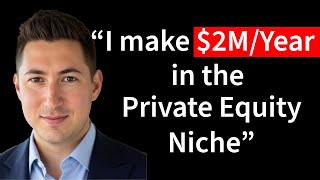
Paul Press, a recruiter billing $2 million annually, places senior talent in private-equity value-creation teams. He builds target lists using Sales Navigator and PitchBook, then runs a 12-touch outreach sequence over 3-4 weeks. His core strategy: research a specific market segment, tailor messaging to each stakeholder's style, and use AI to extract pain points from calls.
Chapters
Hello, you beautiful people. Welcome back to yet another episode of Top Billers Toolkit, where me and my twin brother interview top billers from all around the globe to unlock the secrets to their success. Today's guest is Paul Press. Paul is a $2 million biller, and Paul has absolutely mastered how to acquire clients in the private equity space. Private equity has always been quite a popular niche that a lot of recruiters want to get into, but The only problem is a lot of them have no idea where to start. Well, I can tell you now, guys, today's episode is going to be an absolute masterclass in how to penetrate and how to flourish in the private equity space. All the strategies that Paul's going to be sharing are going to be applicable to other niches as well. But today, Paul's going to be sharing with us how he goes about doing research on high-value clients. Paul's going to be sharing with us his exact BD methods and how he gets these high-value clients on the phone. And finally, Paul's going to be telling us how he maintains these relationships over time. This is a very rare episode, guys. I've never met a recruiter who understands the private equity space as well as Paul does. What you're about to listen to is an incredibly niche skill set, so listen up, and I hope you enjoyed it as much as Ben and I did. As usual, grab a cuppa or a glass of wine depending on when you're listening to this. Let's get into it, shall we?
Paul, thank you so much for joining us today, my friend. How are you doing?
Yeah, doing very well. Thank you. And good to be here. Really appreciate the invitation.
Awesome. Thank you. A bit of a side note here, completely random. I didn't know that Sam stood up for like pretty much every single one of our podcasts.
All right.
And now today I'm standing up and it feels amazing. So anyone who hasn't tried—
I didn't know you were standing up.
Yeah.
But Paul, thank you so much for joining us again. And I'd love to start off with the first question as always, which is what's the number one tool in your toolkit? Whether it be a mindset, strategy, or software?
Yeah, definitely. Um, I, I would have to 100% go with mindset. Um, I think it plays into the, uh, the software and the strategy pieces as well. Um, I think if you don't have the right mindset around service you're providing, approach to the market, it's how you turn up on every single call, it's how you approach kind of your business development, it's how you approach absolutely everything. So I think, uh, Mindset has to be number one. If you don't think you're good at what you do, if you don't enjoy what you do, if you don't strive to learn all the time and continuously improve, right, it doesn't matter what systems, strategy, kind of software you've got, you're not going to be inclined to kind of optimize it or improve it or anything like that. So that's the mindset, plays into absolutely everything.
That doesn't surprise us, Paul. I think every top biller bar maybe 2 have said mindset. Um, we try to leave something tangible with guests regarding mindset because it's such a broad but powerful topic. Is there any kind of advice that you have regards to mindset? It could be like a philosophy or a principle or a way of working, a way of thinking, anything that you can give that might be useful for other recruiters.
Yeah, I heard a, a really interesting, uh, perspective on this the other day in that someone said they never refer themselves to as a subject matter expert or use the word expert because it seems like they've like completed everything, they've done everything, there's like no more learning or development to do. So I found that very interesting in that I think the learning and development side is absolutely paramount. I think from a mindset perspective, you're never going to be complete in your journey, you're never going to reach that kind of finish flag. You're always going to need to learn more, kind of explore different things, research different things. I mean, AI is a huge one where like no one's a master of that. It's ever evolving on a day-to-day basis. So I think it's the L&D piece of it. I mean, I'm consistently like purchasing books on my Amazon and like reading kind of online articles, podcasts. I'm trying to kind of just soak up as much information as possible. So I think in the mindset piece, You've got to be just— I know it's an overused term, but intrinsically curious. You've got to be just consistently learning and wanting to kind of sharpen the tools and do better each day. So I think that's a key piece for me.
Love that. Do you ever have, um, times when your mindset goes backwards, Paul? Like it actually goes the opposite? And if so, how do you crawl your way back up to good, positive ROI mindset kind of thing?
Um, yeah, it definitely does. I mean, when you go to do a pitch that you think it's absolutely nailed on and they choose another search firm, or, um, if like a deal doesn't go your way or whatever it may be, or, uh, something stressing you out— it happens on a day-to-day basis as part of the kind of peaks and troughs of the job. But, uh, I think there's a few kind of good things that you can just reset your mind to, whether it's working out, walking the dog, spending time with family, just separating yourself from work for an afternoon or a morning, uh, going for a drive. I think it's just getting that kind of separation and reset that perspective. So I find, uh, those kind of, uh, exercise, family, uh, those types of things really do a good job of resetting the mindset and getting back to kind of what you actually believe in.
Yeah, simple but powerful. I agree with the separation. I started implementing like 15-minute walks in between my day, just out, just around the block, and it's amazing how much that's changed. Like, just refreshes me before I sit down at my desk. So I think it's— you're preaching something similar, Paul, but yeah, totally.
Yeah, definitely. Yeah, awesome.
And just one last question on that. Paul, I, you know, I've noticed, well, for me, I normally go through like periods of wanting to research certain, certain things. So like I went through a phase of like just avid copywriting, like just copywriting books, and then I went through a phase of like branding, and I read like every branding book there was in the market. And then I, and then it was psychology, and then like different things. Um, what are you, what kind of books are you buying at the moment? Like, well, what topics are you focusing on, should I say?
Yeah, um, my wife makes fun of me all the time for this, but literally it's all around like business books, like interesting selling, business development. Um, I bought a few on how AI is being implemented in private equity at the moment. So it's essentially anything around my craft is what I buy. Um, so it's all around, uh, just how I can make myself better day to day. And she's into kind of the Harry Potter, Lord of the Rings, like everything that's like nonfiction. So it's, yeah, she always makes fun of me. It's like, oh, is this book about selling more or bringing more revenue in? So yeah, those are the books that I really appeal to. But then again, I just use AI a lot as well, like ChatGPT. I often plug it in and go, hey, I want to learn about this, or hey, I'm thinking about this new service line with my business. What are the best books on go-to-market strategy, or kind of what are the best articles to learn about this topic on. So I'm definitely using ChatGPT to help guide those resources as well.
You know what's really interesting is how much I've noticed ChatGPT has just been— is like a natural go-to source for me for like anything that I'm unsure about. But okay, I'm just gonna ask ChatGPT, like, at least to get that first thing out the way, like that, that first thinking phase out of the way. So, oh cool, I'm just going to— but it's really interesting because I think Google used to be that first, you know, port of call. And now Google, I barely go to Google anymore. Like it's completely obsolete. And now ChatGPT is just like always there for me, which is so interesting.
Yeah, yeah.
But I'd love to jump on to the second question, Paul, because you're quite— you've had quite an interesting journey because you moved from the UK. Was it Leeds, Paul? You used to live in Leeds? Yeah, used to live in Leeds and then you moved to Canada. Um, and I'd love to understand that journey and how it shaped how you do business because I know for me and Sam, we, we know because we about 60% of our clients in the US, we know how different— I know you're from Canada, but Canada, Canadian and US mindset is to the UK. Yeah, I'm just curious how that shaped how you do business.
Yeah, definitely, definitely. It's quite a strange move. I mean, I'm sure if someone threw a dart at the map, no one will know where Leeds or Calgary is. So, uh, it's, uh, two very unique places, but Essentially, I started off my career in the oil and gas sector. So I worked for a boutique firm out of Leeds and they basically said, go after the oil and gas market globally, develop accounts, kind of make your mark there. So I did that for about 3-ish years and I wanted to get some international experience. I thought, I'm not going to kind of reach my potential sitting in an office in Leeds looking out the window, rainy, windy. Like just sitting here kind of living my life in the UK forever. Uh, nothing bad about the UK, but I really wanted to get the international experience, learn about different cultures and so on. So I really had the option of kind of either taking a gap year and just traveling, uh, like a load of my mates did, or continuing my career and kind of experiencing different, uh, cultures, different regions. So I had the options of either going to Australia, Calgary, Houston. I think that was it. My criteria was English speaking or in Gastown. Australia was way too far away, so I ended up having an opportunity to come over to Calgary with Hays, and they basically said, come to Calgary. If you don't like Calgary, we'll move down to Houston. So I thought, great, two bases covered there. If I didn't like it in one place, I can move down to the other. But it was really an opportunity to continue my career. All my work that I was doing at the time was remote. Like there was no oil and gas clients in Leeds. So it was an opportunity to get more in person, build those more kind of close-knit relationships, but also to kind of learn about different cultures, how different people tackle different problems. So it was a really awesome opportunity to jump into the deep and go somewhere I've never been. No infrastructure or friends or network there. So it was a really awesome opportunity to just jump into the deep end. And you're right, Canadians are very different to the US. Canadian kind of business development processes, they're very nice to you throughout the whole process, but it usually gets down to the finish line and they're like, no, it's not the right time yet, or we're still thinking about things. Whereas the US is very direct, brash, like, interesting, let's get this done. Um, so it was really interesting learning about how to manage the sales process in Canada. And then over time I shifted into the US, that further more direct kind of no-nonsense, like black and white, let's get this done or we're not interested. So it's good to learn kind of what environments you resonate with and where you get most traction. So it was a really good learning experience from that perspective.
Interesting. So you purposely went from doing deals in Canada to then shifting over to the US. Paul's still living in Canada. You're, you're now— and what percentage of your work is from the US, out of interest?
Um, basically 100%, I'd say 95% plus. I do a little bit in Canada still, um, a little bit in the UK, but yeah, the lion's share is the US.
And the biggest reason you switched is because of the, the, the, the cultural deal aspect, that it was harder to do deals in Canada and easier to do deals in the US for the reasons that you mentioned, because they're more direct?
Yeah, I would say that plays into it. It wasn't the, the biggest reason. It was a slow evolution, but essentially the US economy is just absolutely incredible, like, comparison to Canada, even comparison to kind of Europe. There's so much opportunity there. It's a fairly young economy in relation to Europe, so, um, it was a really good opportunity to kind of come in in a fairly immature market and kind of do what you can to make a success of yourself. So, um, it was a less saturated market. Um, the compensation for the candidates are a lot higher in the US. They pay extremely well. Um, the fees are higher. Um, you're not kind of looking at the 10 to 15% where people get battered down in the UK or Australia. Um, they really like the white glove service, and they, uh, really kind of appeals to the kind of McKinseys and the Bains and the consulting guys and the Kornferries. They like that highly professionalized kind of top-tier service. So all of that really lined up with where I wanted to play in the market and where I was interested. So there was kind of a myriad of reasons why I was interested in getting into that market. And then also my wife had a pretty big impact on it as well. I was doing oil and gas work. And I met my wife. She is an accountant at PwC. So I started to learn how much partners made at kind of your big four public accounting firms. And then from that, placed a few people there, moved into kind of the McKinsey world and the BCG. I was like, wow, these partners get paid even more. And then the running story from those partners were, hey, we all want to get into private equity and we want to be operating partners and we want to be chief strategy officers of portfolio companies. So my wife got the wheels spinning on kind of what the US market and the private equity space was like as well. So a little bit to blame for her.
Really funny how these things turn out. So cool. Yeah.
And I just wanted— I'm just— I always love hearing stories when people just pack up and go to another country, Paul. It really fills my soul with like adventure and I definitely want to do it one day. My wife wants to do it one day. The timing will be the question, but I'm curious, what has been your favourite shift in, or that your favourite cultural aspect of living in Canada? Because how long have you been living there for now, Paul?
Yeah, I've been here for 12 years.
Wow.
11 and a half, 12 years. Interesting.
What's been your favourite part? I'm just more from a selfish perspective of like, if I ever wanted to move abroad, which I will, what's been your favorite kind of cultural aspect and stops you from coming back to the UK or going to the US out of interest?
Yeah, I would say Calgary specifically is an absolutely incredible place. Um, what I got sold on originally is it's got the most sunshine hours in the Northern Hemisphere. So it's— I think the comparison is— I don't know how true this is, but it's comparable to, uh, Cairo. Um, so it's always blue skies, it's always sunny here. It may be -30 Celsius, but like, it's absolutely like incredible to look out the window. And I think that does a lot for your kind of mental health and, uh, uh, that side of things. But also Calgary's just got like a really cool vibe. So it's, uh, oil and gas town, uh, starting to get a little bit techy, but it's like right next to the mountains. So, um, everyone really values their work-life balance. So a lot of the times The old companies here have Fridays off in the summertime or half-day Fridays, and everyone just gets out to the mountains. They go skiing, hiking, chill on the lake from where the cabins are. Like, it's an hour drive, hour and a half away from the Rocky Mountains. So like, it's just an absolutely incredible way of life. Like, everyone's a kind of— it's a little bit slower pace. Everyone's nice and typically Canadian, but, uh, you just have a lot of, uh, access to kind of outdoor activities. The sun is shining, so, uh, I couldn't recommend it enough. I mean, if you can, uh, get to grips with the -30 in the winter, it's definitely worth it. Cool.
Awesome, man.
Thank you.
That's, that's epic. I just imagined me and my wife and my little kid, like, in another country. You're, you're like already persuading me, Paul, so thank you.
Oh yeah, you got to do it, definitely, at some point.
Yeah.
Um, I'd love to jump over to your fees because we kind of talked about it earlier, Paul. But correct me if I'm wrong, your average fee is about $200 to $220, which is insane. That's like 7 to 10 times the average fee, I'm guessing, for a recruiter in the UK, which is crazy. I'm guessing when you're working with fees that large, um, your approach, your mindset, your philosophy to business has to change because you're just dealing with a different kettle of fish. I'm curious, what's the biggest difference to working on larger deals like that compared to like a $20K to $30K fee placement? Are there big differences or does it just take longer? Like, what are the biggest changes, do you think, when you're working at that level?
Yeah, definitely. Um, the space that I work in specifically is building out value creation teams for private equity firms, and there's not too many people that focus in on this area. Uh, it's probably me and one other person, maybe two other people in the whole of the US that have really built up a niche for this. And it's because it's a very, very complex type of role. And with that, the process is long, lots of different stages, lots of different stakeholders. So I think the easy catch to fall in with search and recruitment is the process is the same for every single search. And it takes the same effort to do a 20K search as it does to do a 200K search. And Sometimes, yeah, that's the case. But in the area that I specialize in, it's a very kind of nuanced niche area where I said there's a ton of different stakeholders. Interview processes are usually 8 to 12 stages on average, sometimes even going kind of 15 plus. And it's a very, very needle in a haystack type of role. So there's a lot of complexity there. There's a lot of kind of calibration and really honing in on the right sort of profile from the outset in the kickoff meeting. So it's essentially, you've got to go into a lot of detail, you've got to go into a lot of depth, you've got to make sure that you're aligned with 4, 5, 6 different stakeholders, you want to make sure that they all have the same perspective, and they're all interested in the same competencies and criteria. So with those types of searches, it's all around the process, um, the questions you're asking, uh, confirm, confirm, confirm. If there's any uncertainty, any gray area, you've got to kind of just make sure there's certainty there and you're all kind of have the same sort of bullseye that you're throwing the darts at. So it's same sort of process and kind of you go through kind of our process, pre-screen, deep dive, present to clients, they go through their interview process, but it's kind of 8 to 12 to 15 stages, so you gotta like be on the ball for 3+ months.
Wow, got so many questions from that, uh, Paul. So thank you for opening up the floodgates for us. By the way, Paul, if we're looking down, it's because we're writing notes.
It's not because we're looking at our phone or anything.
Yeah, thanks for mentioning it.
Yeah, all right, I see the pen in Ben's hand.
Yeah, I got—
yeah, same one.
Oh, you got the same?
Yeah.
Um, Can we step back a bit? I just want to understand, you said the value creation niche, is that right, Paul? Yeah. What, what, for a layman that knows nothing about your world, what, what does that mean? Like, what, what problems are you fixing? What's the value creation niche, if you don't mind me asking?
Yeah, definitely. So, uh, the value creation team is a team that sits within the private equity ecosystem. So private equity, uh, for layman's terms, their business is buying and selling companies. And traditionally it's been run by the deals team where they go and identify the acquisition targets, they do due diligence on them, they buy them, they do some sorts of M&A activity or kind of inorganic growth strategy, financial engineering. They take the company either through kind of turnaround restructuring, kind of amalgamation of companies, and then they sell it for a profit in 3 to 5 years or whatever it may be. That's kind of traditional private equity. How private equity's evolved over the last probably decade or so is it's become more competitive and the interest rates have changed. So the cost of money's changed and the LPs who give the private equity firms their money are scrutinizing their process and how they operate in more depth. So our private equity firms are continuing to evolve is they're building out what they call a value creation team. And this value creation team is essentially non-deal professionals. So they're not kind of your Goldman Sachs kind of investment banker background. They're actually operators. So they've been a CEO, a CFO, a COO of a company. They've scaled a company from A to B and they bring them in at the PE level to look across their portfolio and advise their portfolio companies on how to get from A to B. And there's a variety of different people that do this. You can either be an industry expert, so, hey, I'm a specialist at scaling middle market software companies. You can go down the functional expert where, hey, I'm an absolutely awesome chief financial officer I'm going to look at the finance function across all the portfolio companies. You can have kind of board advisors who jump in every quarter and just kind of be like a river guide. So there's all different flavors of the value creation team, and it really depends on the private equity firm, their investment thesis, and how they interact with the portfolio companies. So going back to kind of what I was mentioning earlier with the 12 to 15 stage interview process, It's because within the value creation team, there's so many different stakeholders. You've got the deals team who want to interview this person. You've got the board members of the portfolio companies. You've got other people within the value creation team. You've got human capital, which is private equity's terminology for human resources. So it's very much a middleman type of role. But there's huge impact there. So that's the kind of value creation team in which I operate in.
Really interesting. Thank you, mate.
Um, I've always been fascinated in how people manage that many stages, Paul, with multiple stakeholders. Because, you know, if you compare it to like mine and Ben's sales process, it's— we go after CEOs of recruitment firms. There's usually only one decision maker, maybe two max. But, you know, it's a relatively simple sales process, and me and Ben have designed it like that because we do not want to go after So I admire your stamina and your process in order to do a complex deal like that.
I'm—
for someone else like myself who might want to enter into that world of managing multiple stakeholders, because that's 12 to 15 stages and multiple stakeholders, what is the most important thing, do you think, Paul? What's the most important part of managing multiple stakeholders for someone who has no idea how to manage a deal like that, would you say?
Yeah, I'd say first of all, going back to the first question, mindset, 100%. Like, uh, if you're not interested in it, if you're not an organized person, if there's no appeal there for you, if you're not kind of intrinsically curious about the area that you're going into, you're just going to burn out. It's just going to be really frustrating and you're not going to be excited by it every day and you're going to kind of pivot on what you're looking for. So 100% mindset on it. And then also I think it's down to organization and communication style with different stakeholders. And this is how I coach candidates throughout the interview process and how people are successful in the value creation role is you gotta understand the lens and perspective that the decision maker's looking through. So if you're chatting to a human capital person, they're going to have a completely different perspective to someone in the deals team. Uh, deals teams are usually very direct, very black and white, like, hey, can you do the search or not? Like, do you have candidates or not? They're very like, let's get to the end goal. I don't want to waste time here. Whereas other people in the process are like, okay, tell me your process. Tell me how you benchmark candidates. Tell me how you create scorecards, how you do assessments, et cetera, et cetera. So A real key piece of it is understanding the lens that the stakeholders are looking through, what's important to them, distilling that, looking at the information you have to hand, and then picking out the criteria that is going to appeal to them most and resonate with them the most. Because, like, you don't want to be being really direct with someone who likes a story, likes to talk about kind of the details and the process. And on the flip side, if you're talking to someone who's very direct. If you kind of go into the weeds and you start talking about whatever it may be for a 5-minute kind of soliloquy, they're going to be like, I can't work with this person, this is not for me. So I think the communication, the perspective is really important.
Fascinating.
I've got again so many questions off the back of that. But Ben, I'll let you— do you mind if I jump in or have you got a question?
Yeah, well, I've just got one off that, which is I'm guessing you didn't— I'm guessing this is understanding the different perspectives and the different stakeholders and what their communication style is typically like. That comes with experience, right? And kind of trial and error, Paul, I'm guessing. Do you have any lessons that you've learned? Because I feel like sometimes, you know, painting a picture of what you did wrong or where you feel like you could have improved in the past is quite a good lesson for other people. Was there some like— because I'm guessing you went through multiple of these lessons to say, oh, these guys like to communicate like this. Oh, okay, now I know these guys. Have you got an example of like maybe something that happened in the past that like gave you that epiphany or gave you like a really important golden nugget of how to communicate with these guys?
Yeah, I'd say it's a lot of trial and error. Um, just having these conversations. I think everyone, when they start off in recruitment, it's just like just interview as many candidates as possible in a certain space. Like everyone's like, that's the best way to learn things. And it's similar on the client side. Um, I'd say the real nugget here is if I could kind of rewind time, I wish we had ChatGPT and AI when I first started, because you can literally go in there and just go, what is the persona of a deals person at Blackstone? Or what is the persona of a human capital person at Apollo? Or like that sort of approach would like fast track it a lot because you can really identify the ideal client persona and understand their perspective. You just kind of bounce some ideas around ChatGPT. What's their communication style like? And usually it's pretty spot on. Obviously you've got to kind of prompt it accordingly. But I wish we had ChatGPT kind of 8, 9 years ago. But without ChatGPT, it's basically trial and error. You still have the conversations because you can spot trends. And it's good to kind of, after your calls, kind of write down, okay, very direct, likes data, appreciates follow-ups, is very structured. Or, hey, this person is a little bit of a cowboy, they shoot from the hip, they like more of the kind of feely touchy part of it and the relationship building. This is someone to have a few drinks with or take out for dinner. So it's good to kind of finish a call, write down your notes, and kind of look at those themes as well. But I would say utilize as much technology as possible and just bounce ideas around with ChatGPT, and it usually gives you a pretty solid answer to get you up and running quickly.
Love that, it's really useful.
That is really useful. And I'm wondering, um, Paul, because I'm trying to relate our sales, uh, process to yours to some degree to kind of understand it in more detail. So mine and Ben's calls that we get on, we always typically have to find some kind of pain and desire.
So we have to—
they have to be in some kind of pain typically, or they have to really want something. So want some kind of— are you going into sales calls, each separate stakeholder, and trying to find some kind of pain or desire, or is it, is it a bit more fluid than, than that? I'm just curious how you manage each sales call individually, if there's like specific goals you need to tick off. If that makes sense.
Yeah, it's, um, this is gonna be a bit of a gray answer, but it really does depend on the approach. Um, like, the private equity space specifically is ever fluctuating. I mean, it depends if they just raised the fund or they just closed the platform acquisition or they've just exited the company or they just made a key hire or they just opened new offices or whatever it may be. Like, the private equity space is like just changing at like a rapid pace. And my approach kind of varies on each kind of different scenarios. So I'd say the consistent thing is, once again, not to kind of, uh, flog a dead horse here, but like ChatGPT. Like, as soon as I'm about to go on a sales call, I block the 10-15 minutes off beforehand. And whether it's ChatGPT, Perplexity, whatever it may be, I'm like, tell me everything about this person, tell me everything about this private equity firm, bring that LinkedIn profile up, bring the company page up, look at the news, the insights, what announcements have been made, and then tailor the approach to what's going on currently. Um, I think there's a lot of people trying to get into the private equity space, and these guys are very time poor. Um, it's very valuable where they spend their time and what they spend their time on, so They don't wanna have their time wasted. And I think applying a generic approach could work, but often they wanna feel like they're the center of the universe and that they're been researched and it's not just another kind of sales process. So I feel that tailored approach really resonates. I think when you've got less stakeholders and it's more transactional in the kind of, let's say, $20K to $50K range for fees and it's more kind of round peg, round hole sort of situation. I think that structure and process around sales, like the pain points, will be like the same almost every single time. So I think there are kind of different horses for different courses, but I find the highly tailored, spend time on each sales call, kind of quality over quantity type thing works in my area of expertise.
Cool, interesting. And I have to ask another follow-up. On these calls, are you mainly building relationships or speaking about the problem? I'm just curious, like, where is most of the time being spent, relationship building or problem solving? Out of interest.
Yeah, I would say cold calls, cold contacts, like first time meeting, second time meeting, certainly building relationships. Like, this is what I specialize in. Um, PE firms, although in the deal side they take lots of risks and they invest in lots of companies, Throughout the entirety of the rest of their lives, they are very risk-averse, so very slow to trust, uh, very skeptical. So, um, in the early stages, it's got to be relationship building. It's got to be, hey, I'm not trying to sell here, I'm not trying to kind of pull the wool over your eyes. This is what I specialize in, this is who I've worked with, um, give them a call if you want to have a kind of reference on me. This is when to call me, like just really get them thinking when to give you a call. And then as the relationship develops and as you build more rapport, that's when you kind of go into the problem solving. That's when they'll go, oh, oh, this problem came up. I remember our conversation. This is where you specialize in. We'd love to pick your brains around how people are building out value creation teams. Are they going for functional experts? Are they going for industry experts? Are they hiring kind of at the step up principal level, or they're going straight for a partner level. So it's all about framing it early on, building a relationship, and then you can get into the more, okay, here's how we can add value, here's how we can— solutions for problems that you're encountering, here's what other companies or PE firms are doing in the space, uh, here's how to think about things. So you've got to build that trust, and that relationship starts off with, and then once they trust you and want to spend time with you, that's when you can kind of get into the more problem solving. I think if you've got a shaky foundation, whatever you say to these guys is not going to land. So you've got to spend time with that relationship building first. Interesting.
Really valuable. Thank you. Most people will be surprised to hear this, that one of your largest deals, £450K policeman, or not sure if it's one of your largest, but a very large bloody deal, £450K. Came from an NPC. Um, and you know, a lot of people will say, oh, NPCs don't work. And I think a lot of people don't say that nowadays, but there are still some, um, people out there who don't believe it works, especially at your level, Paul. I think that's the interesting thing. So what can we say to convince these guys that it does work, other than of course proof that you've actually used it before? But what, what kind of words would you say to someone listening to say like, oh, NPCs doesn't work for executive search or high level. What's your feeling?
Yeah, I would say there's even more of a reason for it to work at the higher level. Like these guys have more of an impact. You can see the value directly in what they do. Um, like if you're marketing out a candidate who's a, I don't know, grad or an entry level person, like there's millions of those types of people. Like how are you going to say to a client, this is the best person out there? You don't have a track record. They don't have much experience. Like, they are very commoditized skill set. Whereas at a senior level, if you go, hey, this person scaled a company from $100 million to $1 billion, like 10 times, they're going to go, holy shit, our company's at $100 million. I'd love it to be $1 billion. Like, I'm definitely hiring that person. They're going to cost me $1 million a year. That's a no-brainer. So I feel like the value's a lot easier. The difficulty with it is, is making sure the product, as in the candidate, is high value. So you got to make sure that the person that you're working with is going to move the needle because that's where your reputation gets hinged on. If you're marketing out candidates who are just kind of middle of the road, they're just going to sit there and go, you know what, I'm just going to run a process. If I need this person, I'm going to run a process. And worst case scenario, I get someone middle of the road, but at least I know I've done a full search and I've exhausted the market. Like, there's no reason for me to make an excuse to hire an average person. So you've got to give them a reason to entertain your outreach, uh, realize the value of what you're, uh, um, presenting here. And also, it's a very, very small percentage that you can actually place the candidates. Like, you've got to be right time, right place. It goes into a lot of the research behind it and making sure you partner with candidates that are in high demand. But realistically, it's very difficult to go through the whole process of opening up accounts, budget approvals, getting all the stakeholders aligned, saying we all realize we need this person. And 10 minutes earlier, they're like, we're not looking for this person, like we don't need this person. So it's a very small percentage that the person that you're marketing out is going to get that job. Um, so it's all around the quality of the person, but the value is a lot easier to portray when you're looking at people who have such significant impact at the senior levels of companies.
Interesting.
And am I right in saying, Paul, that when you did, um, send this NPC out, you already had a relationship with this private equity firm? This wasn't like a brand new relationship? Am I right in saying that?
It was a brand new relationship in that I'd never worked with them before. I've never done a search with them before, but I knew of them, they knew of me. So it was— it wasn't a complete cold outreach, but that's what I try and do. Kind of going back to what we're talking about earlier with the sales process is I try and make my target audience aware of what I do and what I specialize in so they at least recognize my name. So that if an email comes in, they're not just going spam or kind of delete or whatever. They're going, okay, the last conversation I had with Paul was of value, was of interest. They work in my space. So I try and kind of keep the relationships warm on a foundational level so that when I do reach out with someone incredible, they're going, okay, it's worth a read. So there are instances where I do cold outreach and the markets are changing. So there is a place for that, but with marketing candidates out, I try and keep the target list very tight and within my network so that there's better results, essentially.
Yeah, love that, mate.
Love that. Um, can we— so I go deep.
I've just got one question that I, I've been dying to ask, Paul, because I know there are dozens, if not hundreds, of other recruiters that are probably thinking this exact same thing. I want to get into private equity, where do I, where do I start? Like, who am I targeting? How do I approach them? Like, it's, it's a different beast entering into private equity. It's almost like this unicorn that you don't know where to find it. Is it even real? How do I catch it? Like, I'm just curious for the newbies that want to do that, where do they even start?
Yeah, I would say research, research, research. Like, um going back to the earlier topic, you've got to be interested in it. There's no point in trying to get into private equity for the sake of it. Um, if you're not interested in the space, um, don't bother because you're going to lose interest. Um, and then within private equity, there's a load of different areas you can focus in on. So go back to my prior comment, make sure you're interested in it, do your research, make sure there's a market there, there's a need there, etc. And then I got into private equity by marketing canvas out. So interesting. I know the private equity space is very results-driven. They are very value-focused. So if you can come to them with a product or a candidate in this instance and go, hey, this candidate is going to make you a shit ton of money, they're going to go, oh, I'll listen to you. So that was kind of my focus on it. I think there are multiple different ways of getting into it. You can be kind of the approach that I mentioned earlier, as you just called up all the target audience and go, hey, my name is Paul, this is what I specialize in, give me a call when you have these needs, and just keep that going. I think they really like to kind of put square pegs in square holes and go, okay, if I need this person in this location in this industry, I'm giving Paul a call, or if I need this person in that location, blah blah, I'm giving Ben a call or Sam a call. So I think making them aware and familiar with yourself is a good strategy as well. But I don't think it's a kind of silver bullet or anything like that. I think it's a— you got to show value in any industry. You got to show value. You got to show expertise in what you do. You got to show them that you offer something that others don't or they don't have access to internally. And you got to research the ideal client profile. Persona. Like, if they, uh, are someone who's direct and you're someone who waffles on, you're not going to have a conversation with them. They're going to be like, I don't want to speak to this person because it takes me 3 hours to get through a 5-minute conversation. So it's all about kind of making sure it's the right fit, um, you're tailoring your approach to the right audience and the communication styles there, and also you're differentiating yourself. So, uh, no silver bullet, lots of research and, uh, kind of, uh, groundwork to do. But, uh, there's lots of different ways you can get into it for sure.
Awesome, man. But, but from what you said, I'm guessing NPC sounds like your kind of main approach at the beginning of how you started conversations with these people. Am I right in saying that?
Yeah. Um, yeah, I'll definitely bait that into my process, um, going forward if I was to start out from kind of scratch again. Um, I think it's a really easy way to show value, but I think going down the ChatGPT route and really researching it and what these guys are interested in, how the industry is evolving, I think that's a really good way of kind of tailoring your approach as well, because there's so many people who want to get into private equity and you'll see recruitment websites where they're like, I recruit for anything and everything and I recruit for these and that and PE firms, as I said, they're risk averse, so they're going to click on your LinkedIn profile, they're going to go on your website, they're going to call around and see who's worked with you. And if it's not all pointing in the same direction and going, Sam specializes in placing CFOs in private equity-backed portfolio companies, if there's any variance to it, you're probably going to lose out to a Korn Ferry or a Heidrick or like a generalist. So, um, you've got to be very well researched and you've got to have everything pointing in the right direction. So NPCs help for sure to get your foot in the door, to show value, but you've got to have a very tailored, consistent kind of storyline to tell these PE clients. Otherwise they're going to go off in a different direction. There's no— unfortunately, there's no shortage of search firms out there.
That's a really good piece of advice because I have to— when you were talking about that, Paul, the first thing that came to mind was In the past, there's been recruiters who are like, oh, you know, I want to work with more PE firms. I'm like, oh great, so how did that— how did you get the first one? And it's like, oh, someone referred me into it and I ended up getting a load, a bunch of roles. It was like a holy grail of a client or an opening. And it's like, yeah, I want to work with more of them. And we're like, great, cool, so what kind of problems are they having? Or like, like, what's their situation? What's in demand right now? Who do they need? And it's like they don't know any of those questions. And it's like, you cannot go after PE firms if you know nothing about them. So I think it's such a good— especially PE firms, as you said, because they're just like the crème de la crème of clients. So I think it's just a really good reminder that if you want to play with the big boys, you have to understand them and do your research and really spend that— spend the time doing that first before you kind of, as you say, do the NPCs and the other— the cool stuff.
Um, yeah, 100%. Like, if you think about it, If you look at your kind of typical private equity person, like Harvard, Oxford, like then they went to Goldman Sachs or JPMorgan, like these guys earn millions of dollars a year. They've all got like houses in the Hamptons, they all drive nice cars, etc., etc. Like these aren't easily accessible people and they have just been at the top of their game throughout their entire education, career, etc. If you come to them with anything less than like a 10 out of 10 approach, they're gonna be like, I'm gonna use to like 10 out of 10, I'm used to perfection, and you aren't perfect at what you do, so see you later. So like, you've got to be on your game, you've got to know what they want before they want. Like, you've got to be like, imagine you've gone to school at Cambridge for an executive search course and then you've gone on to work for Korn Ferry, and then you've gone on to do X, Y, and Z, you've got to be like, at the top of your game. So anyone who thinks you can just like, rock up to a call and not know who you're speaking to, or not know kind of where their needs are, or that they've just acquired a company, if you're unresearched and unprepared, they're just gonna go, this guy is not someone I want to work with. Like, I wouldn't work with them within my own business. Why would I give them money to work on the stuff if they're not at the top of their game. So, um, yeah, you've got to put yourself in their kind of shoes and think about who they want to partner with. So I think that, uh, prep and that perspective is huge.
Really interesting. I've just got a few more questions. That's super valuable, Paul, super, super valuable. Um, who was your first point of contact? And this might change, but again, this is from a lack of knowledge of the PE world, so that might sound basic to you, but for me I just know so little about it. Um, who was your first point of contact that you want to go after for, for the introduction into the PE world? I'm just curious, who— is it the same every time? Is it slightly different? Who, who are you looking for, Paul? And how do you find them as well? That's a— that's another kind of follow-on one.
Yeah, it's always different. Every PE firm works in different ways. So I think that's one of the, uh, areas where people get burnt out when trying to develop clients in private equity, because it could be the human capital professional. It could be the value creation human capital professional. It could be the owner, founder, managing partner of the firm. It could be the lead person in the deals team that focuses on a specific strategy. It could be the head of portfolio ops. Like, there's probably 3 to 6 different decision makers, if not more, when you get up to the kind of the the Apollos, the Carlyles, the Blackstones. There's a lot of different decision makers. Obviously, the smaller the company, the less decision makers are involved and the less mature their whole structure is. But it's always different. So you've got to cover all bases at all times. And sorry, I forgot the follow-up question to that.
That was great. Yeah. So what I got from that first thing is there's multiple different decision makers. They're not just one. And my My second question was, how are you hunting them down? Because I might be thinking about this in a bit more of an overly complex way, but they're not going to come up on a Sales Navigator search in PE firms. I'm guessing there's— that you might have to go to more specific areas to find their contact details, and I'm just curious how you find these people in the first place.
Yeah, so Sales Navigator is actually a pretty decent resource. I've got Sales Navigator. Um, the difficulty is with that is these guys' profiles are like keyword friendly. Um, so, um, a lot of them just have titles as managing director or partner, and the PE firms sometimes sit in the venture capital private equity filter, sometimes they sit in the investment management filter, sometimes they fit in the financial services filters. So it's very difficult to get a good Boolean search on Sales Navigator and have 100% certainty that this is my exhaustive target list. You just got to research it. You got to go online, look at the kind of PEI top 300 private equity firms. You got to use ChatGPT and Perplexity saying like, if you want to focus in on lower middle market software investors, tell me the top PE firms in that space. You've got to use other platforms like PitchBook. PitchBook has a load of really good filters that specifically focus for the private market. So you can look at fundraising activity, you can look at sector focus, geographic focus. So it's not a kind of, I go to Sales Navigator and that's it done. You've got to spend some hours kind of researching it thoroughly. It's a pretty time-intensive process. And then once you— my approach would be once you've got your focus or set of criteria that you want to focus in, start with the PE firms themselves. Find all the PE firms that fit that criteria instead of going after the decision makers first. Look at the PE firms first and then just keep narrowing it down. So once you've got the kind of focus, investment thesis, geographic, etc., you then find the firms that's operate in that space. Once you find the firms that operate in that space, I would honestly go and click on every single one of their websites and go through their leadership page, um, then go into kind of LinkedIn, the Sales Navigator, if you use ZoomInfo or whatever it may be. Um, so you've got to have a pretty structured approach to it to ensure that you're leaving no stone unturned.
I love that.
So it feels like a funnel that you just— you started wide and which is really interesting. Just going back to the top of that funnel, what are the first principles on how you're deciding where to start or where to spend your time, if that makes sense, Paul? Because I'm guessing you're starting broad and you're kind of gathering all this information and then you're kind of going more narrow, more narrow, more narrow. Does that make sense? The question, the way I framed it?
Yeah, definitely. Definitely. I think it goes back to what you are interested in, what you want to focus in on. Like, for example, It's very different recruiting in oil and gas as it would be in kind of the startup software space. So I, I think to start off with, if you want to get into private equity, the really interesting thing is it's so broad. They buy any and every type of company. So I'd start off with what you're interested in. So let's say I want to focus in on kind of software investors in the US that focus in the middle market, um, that's a good set of criteria to start off with. And then you can go into, okay, I'm looking at the Vista Equities, the Thoma Bravos, the HGs of the world. So you can kind of start off with where you're interested in, build out kind of what that market looks like. Okay, this market's too small, it's too niche, I don't think it's enough to go out here. Again, this is too big, I mean, you need to narrow it down because it's too much of a generalist. You can really tweak it and go back to the drawing board and go, am I actually interested in this? Okay, I am. Great, let's dive deeper. So I'd always start off with long-term strategy, like, can I see myself hiring in the space? Is there a need? Is there enough of a market there? Start big and then kind of narrow it down from there and always go back to kind of your your North Star. Like, if you get to a target audience where you go, I'm not interested in any of these people, they're all boring to me, then you go back to the drawing board. So I think that North Star of what you're interested in should guide you throughout this rest of the funnel.
Interesting.
Um, I've got another question. We're absolutely peppering you with questions, Paul, and thank you so much. I can absolutely see how much of an expert you are, and it's an absolute group privilege to get this much information about your niche and PE firms. Um, I couldn't help but think you're dealing with candidates that are making in some cases like a million plus in terms of salary. That's what you said before. Anyway, I don't know if that's around the salaries. I'm sure they, they, some less, some more. But, um, how are you approaching these candidates and even getting their attention in the first place? Because they're probably similar level to the clients in the sense that these are the people that top of their game, and every recruiter is probably trying to get in touch with them. So I'm just curious how you, um, get in touch with these candidates. Is it a similar approach to the clients, or is it a completely different approach? I'm interested.
Yeah, it's a similar approach to the clients in that it's a varied approach. You've got to kind of really understand what's going to appeal to these guys, um, what kind of medium of communication is going to land with them. Like if you're a CEO of Walmart, you're not checking your like LinkedIn emails every day. So you got to really understand like what's going to get through to them. Most of these people will have an executive assistant. So if you need to get through an executive assistant, how would you approach for that? So it really does depend on who you're going after. Um, but the big thing is once again, similar to the client side is come to them with something of value. If you're coming to them with like a job opportunity that's like very low-hanging fruit and comes up all the time, they're gonna be like, yeah, I've taken like 10 of these calls this week, not really that interested. So you always got to come with to them with something of value to them. Whether it's even just, hey, I've got this job opportunity, you'd be perfect for it, or kind of going back to my BDE strategy. Hey, I'm Paul, this is what I specialize in. I think your profile could be suitable for this. If you're interested in getting into the PE space or making a move, give me a shout. Otherwise, hope all's well. I find the short, direct, easy to reply to with like a yes, let's chat, no, I'm not interested. You don't want to kind of open the gambit with a long-winded email or something where they've got to spend like 10 minutes reading it through, figuring out are they going to reply to it? So, uh, you've got to make sure the message is tight and, uh, really appeals to the value that you bring to the table.
Love that, mate. Absolutely love that. And, um, quick follow-up question.
What—
I know there's various different— like, like you said, the CEO of Walmart isn't going to be on LinkedIn, but is there one channel that you tend to get the most success with when contacting these people with a really succinct message out of interest?
Yeah, I find email is usually the best way to go. These guys are usually like on email all day, every day. So email is usually a good one. Once you get in with them and you build the relationships, the quick kind of snappy replies back and forth, text message is great. I find that the cold call or calling them out of the blue usually irritates them.
Oh, interesting.
They're usually back to back in meetings all day, every day. So to like disrupt them with like a sales call or something that isn't like the house is on fire, you need to address this right now. They usually like, this could have been an email. It's like the meme where that like this meeting could have been an email. It's that sort of approach that they take. So yeah, tailor it to kind of how you want to get the message through. Obviously, if it's like the house is on fire, we need to sort this out now, then call them. Uh, it's just going to be appropriate to the, uh, type of conversation.
Cool.
The theme I keep on hearing from you, Paul, is find a product or an offer that is insane, that's almost irresistible, and put it in front of that person. Like, for the PE firms, find a brilliant candidate they can't say no to. For the candidate, find a brilliant role that they can't say no to. It's about the quality of the ingredients, so to speak. That kind of fuels the rest of the BD, doesn't it?
To a degree anyway.
Yeah, definitely. I think that was the mistake that I made starting off in my career. It's everyone has KPIs. You've got to have this many connects a day or week or whatever. So back when I think ZoomInfo first started, I think I was like the third top user globally of ZoomInfo because I just like, oh wow, in the morning I'll go into the office I'd find a candidate on, it was Rig Builders or something like that. I can't remember what their website was called. It was like an oil and gas website, like Indeed for oil and gas. I'd find a drilling engineer and I would just download a list off ZoomInfo when it was like unlimited downloads. You could download thousands of contacts and I'll just mail merge everyone and anyone. And I was sending out like tens of thousands, if not hundreds of thousands of emails a year. And it was just like, see what comes back. And I think now with the way that technology's gone and ease of access to information, you've got to differentiate through quality. Like, it's not an exact search anyways. I mean, in the lower level stuff, maybe it is a volume game, but I think if you want to get into the bigger fees, the more white glove service, like, it has to be quality.
Mm-hmm. Absolutely love that. Very interesting. I'd love to, I'm not sure how much this has changed, Paul, but I've got a question here about your 12-touch sequence over 3 to 4 weeks across multiple channels when marketing candidates out. Has that adjusted since? Is it still 12 steps? Is it still over 3 to 4 weeks or has it changed a little bit? What's your feeling?
Yes, that's kind of the structure that I implement on a, like the playbook that I do every single time, but It does vary. The big thing is, is I've moved away from tech enablement in that automating all those types of things, and I do it on a manual basis. Because once again, it's quality over quantity here, and I want to make sure that the target is highly relevant for what I'm reaching out on. So I try and keep it really tight to start off with and focus in if I'm marketing Canada out. I would look at that candidate, really dissect where they specialize and what value they bring to the table. And then I would only go after people which it's 100% fit for. And there's a very clear, okay, this person can add value in this space. So I try and keep it really tight so that I can go through that 12-step process to ensure that they're reviewing the information, um, that it's going to be hitting their ears or their eyes, and they're gonna actually see it and understand it. Because if they're not going to be interested in it, you're going to be spinning your wheels with all your other outreach. So I make sure that my initial target list is tight, but I'm exhausting it with that 12-step process just to make sure that the 3 to 4 weeks is— people go on holiday for 2 weeks, so they could be out of office for 2 weeks, um, people are fundraising or doing due diligence on deals, like they're working like 90, 100-hour weeks. Like, it's very, like, reasonable for them to miss an email or a call or anything like that. So you want to spread it out over 3, 4 weeks so that if they're on vacation, if they're sick or whatever, they're going to get your message at some point. So I find that amount of outreach over LinkedIn, email, calling. I think those are the main ones. Texting, if I've got the cell number, it usually covers their bases on the platform they like to communicate on, and it'll hit their inbox at a time where they're actually sitting there and have time to reply. So that's the kind of general strategy, and then I'll tweak it accordingly.
Interesting.
And is it the same message over the— like, are you just sending the same message on every platform, or is it slightly tweaked, Paul?
And that's slightly different. Yeah, cool.
And, and how is it different? Um, I might be getting into really granular. Is it a slight word change and then the offer, or the— like, I'm just curious what you're— how you're changing it on each stage. You don't have to go through insane detail, just roughly.
Yeah, so it's, uh, similar to what I mentioned before. Like, uh, email, you can get into more detail. They've got time to read it. Phone calls, you just need a quick hook, otherwise they're gonna hang up on you. LinkedIn and text message is very short and snappy. So an email, for example, I'd be like, hey, I've got this Chief Technology Officer who's done X, Y, and Z. Here are the results. Here's who they work for. You should definitely meet them. And it will probably be, I don't know, a couple of sentences, pretty 3, 4 bullet points, closing sentence sort of thing. Whereas if you're texting or you're on LinkedIn, it's more of a, hey, I've got someone you need to meet, they're a CTO and they work for these companies, let's chat. It's a little bit more direct and a little bit more kind of tailored to the platform that you're on. Same with text message, like, hey, I've got someone you need to meet, when's a good time for a call? Um, interesting. So you've got to kind of tailor it to the platform. Um, but yeah, that's kind of how it differentiates.
That's really interesting, mate.
Yeah, thank you. I love that. Um, I found this really interesting as well, uh, Paul, um, how you research and you get information from different companies and then you use that information that you've gathered to then pitch in and leverage to give to other companies. More, I understand that. So you're kind of, you're looking at the market, you're speaking to lots of people, and then you're using that information to package and give to companies as kind of— because I'm— the one question that everyone always asks is, is how's the market going at the moment, or what's my competitor doing, or what's this person doing, or what have you heard from X, Y, and Z? Can you just go into that? Because I found that really interesting.
Yeah, definitely. And, um, I think that goes back to kind of these guys need to see some sort of differentiation from you. If you're doing the same as everyone else, then you're gonna get the same answers as everyone else, and The sectors that you're working in are highly competitive, so you need to be able to show where you can add value. And I think data and information is what my market really resonates with and what they base all their decision-making on. So, um, I find that when I'm doing candidate interviews, when I'm doing assessments, when I'm doing market research, when I'm speaking to clients, you get so much information from all those different conversations. And it's good to collate that information and digest it, research it, and then if they're interested in it, others are going to be interested in it. Um, it's going to be probably an industry theme that's going on, so, um, it's really good to just listen intently, be, as I said, intrinsically curious, understand what's resonating with them, what pains they're having, and then go out to the market and be like, hey, not like Sam at this company has this problem or Ben at this company has that problem, but more of, hey, what we're seeing in the market is this. I don't know if this is resonating with you. Are you going through some of the challenges? This is how others are solving this issue. Like everyone's going to be interested in kind of what their peer group are doing and how they're problem solving because it's competitive. They want to stay ahead of the game. They want to know kind of where they're at in the, the path. So, um, I think information and data and how you, uh, package it and articulate it to the market is a huge differentiator.
I can imagine that that is one way that these PE— these CEOs want to spend more time with you, Paul, as well. Like, if you are constantly up to date with what their competitors are doing, that's someone that I can imagine you'd want to be surrounded with on a, in a, on a constant basis to just know what's going on, if that makes sense.
Definitely. Yeah. And the recruitment business, I mean, you're basically a therapist in a lot of conversations. Like, you're chatting to candidates about their career, where they want to kind of go in life, etc., etc. And like, you get access to some pretty interesting information. So like, these PE guys and other people all have their different kind of areas of expertise and access to certain information, but you get access to a lot of good information and people are very open with you and, uh, tell you what's going on about the culture at a business or what deals are going well. And obviously you've got to use your discretion as to how specific you can be, but you get a lot of good information that no one else has access to. So, uh, you want to utilize that to, uh, kind of educate your audience.
Awesome. Um, so let's assume you've had like a Assume you've had a call with someone, super valuable, they just gave you all this gold and you're like, oh my God, I'm gonna use this. How are you packaging that call? And then when are you using it? Like, when, when, when's the time and the process to use it in order to actually leverage it and, you know, get a conversation started or get in front of someone, if you don't mind me asking?
Yeah, yeah. So it depends on what that conversation is, whether it's a candidate and you want to market them out, whether it's clients and you want to do some business development. So, um, you've got to, I think, frame it first. But basically all my calls that I'm doing, um, are transcribed at some point. So whether it's Gemini on Google or whether I'm using MetaView or whatever it may be. So essentially what I do is download the notes, the transcripts, um, the key summary, etc., pump it into ChatGPT, and I've got a load of custom GPTs from a private equity specialist to a human capital specialist to a sales development specialist. So I've got a load of different custom GPTs. So I just use them like a shrink and I just bounce ideas off them and go, hey, I just had a conversation with this person at this company. Here's the transcript. Please kind of pick out the pain points here, or please pick out the industry trends or what's resonating with them, or what challenges they're having or what opportunities they're seeing. So I've got a few kind of key kind of prompts that I just kind of bounce ideas back and forth, and you can really kind of identify where there's opportunities there, what they're hiring for, what problems they're trying to solve for. And then you just go, okay, identify all the other people that are exactly the same as this person. Give them all a call up and say, hey, finding any industry that people are trying to hire in the human capital function, the value creation team? And they see huge importance in leadership due diligence and organizational assessment. Are you seeing the same sort of thing? And they go, oh, actually, that's an interesting observation. We're actually looking into this. Or no, we haven't looked into this, but who's doing this? Like, what are they trying to get value out of? How are they approaching it? So I really kind of use ChatGPT as a shrink to kind of bounce ideas off on. And then it really does guide you into the next step of the I suppose the sales funnel or the marketing that can go out.
Absolutely love that, uh, Paul. So I just have to jump into the ChatGPTs because I think that's a little bit of genius, Paul.
Yeah, it is.
How are you prompting your ChatGPTs? Are you like creating separate prompts, uh, and then they— and then they're just constantly learning? Like, how are you creating them? Um, out of interest.
Yeah, so I go like really deep into kind of the ChatGPT wormhole, so I've got a prompt specialist that I created, like a ChatGPT custom prompt specialist. So I wasn't very good at— I'm not a prompt engineer and I don't have a computer science degree. So I basically went, hey, you're a ChatGPT and you're giving me the prompts that someone from MIT with a computer science degree, blah, blah, blah, then went on to work for OpenAI, etc., etc. So basically I use the prompts expert to go, hey, this is what I'm thinking, provide me like 10 prompts to get the information that I want. And then I go into the next custom GPT that I've made, which may be a private equity specialist or whatever it may be, which I've also created using the prompt thing. And then ask that the questions that the prompt GPT made me. So, yeah, I pretty much geek out on the ChatGPT stuff, but I love that. I think kind of going back to what we said at the very beginning, like, it's that start with GPT, like start with, hey, this is what I'm thinking, or I'm not very good at prompting or whatever it may be, and it will guide you through it. So I'm using that consistently to help guide me and it just kind of evolves and spirals from there.
Love that, mate. That's really interesting. And I'm going to actually nick a bit of that just to test on my end. That's absolute genius.
I love it.
Yeah.
Brilliant. Paul, you're one of the few guests that we've gone way above because you just had so much bloody gold to share. And I've I suspect we could sit here for another hour and still pick your brains, but I feel like we should bring it to a natural close now. And I just feel like I want to say thank you because this has been super valuable, very different. We've never had anyone as experienced in the private equity space as you. Um, and it's just, yeah, I think I've really enjoyed this session and it was just super valuable for me. So thank you so much for joining us. I totally agree.
This has been like a masterclass, Paul, for anyone wanting to get into private equity. This is like literally like the masterclass they should be watching. So thank you, mate, really appreciate it.
No, it's great to be here. I really appreciate the invite, and, uh, we'll have to do a kind of follow-up another time.
Definitely, mate.
Absolutely.
Hey guys, thanks for tuning in to this episode. If you enjoyed it, please don't forget to subscribe on YouTube and Spotify. Tune in for another episode next week, and we look forward to seeing you again very soon. Peace and love.
Mm-hmm.
More from Sam




The difference between a $200K biller and a £1,000,000 Biller (full Breakdown video)

how to go from agency recruiter to Lone wolf (Advice from a $2.4 Million biller)



This Recruiter has billed $750K+ for 30 years straight. (Master of Consistency)

How to increase your candidate response rate by 25-30% (Whats app messaging system)


This recruiter has billed $1,000,000 for 5 years straight! (Master at Enterprise deals)