I used to be Shy, Now I'm Cold Calling and Billing €2,000,000
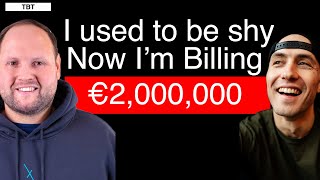
Stefan Ganser went from phone-shy in 2011 to billing €2 million for a single client by specializing in senior tech roles and building deep relationships. Two free placements for an interim CTO turned into a €2 million partnership. He credits disciplined cold-calling, detailed research on candidates and companies, and staying hungry.
Chapters
Hey guys, welcome back to yet another episode of Top Billers Toolkit, where me and my twin brother interview top billers from all around the globe to unlock the secrets of their success. Today's guest is Stefan Ganser. Stefan is a highly successful recruiter based in Germany, and he is a €2 million biller. He leads a team of 3 recruiters and specializes in senior tech roles like CTOs and head of engineering positions. On today's episode, we're going to be talking about how Stefan started off his cold calling journey being incredibly shy and how he turned into a master How he billed €2 million from a single client that started off from 2 free placements and how he had to rebuild his client base from scratch after losing everything during COVID Guys, I hope you enjoy this episode and as usual, grab a cuppa or a glass of wine depending on when you're listening to this. And let's get into it, shall we? Stefan, thank you so much for coming on Top Billers Toolkit today. I am very excited to ask you some questions. How you doing?
Hi guys. Yeah, great. And maybe servus, like we say here in Bavaria in Germany. So really doing nice, a little bit cold and icy outside today, but it's a lovely day still. And it's always time to hunt the right people, right?
Awesome. And you know what I just realized? You are the first recruiter in Germany that we've had on the podcast. We've had US recruiters, we've had UK recruiters, but we have not yet had a German recruiter. So you were the first, first one on the podcast, Stefan. So well done.
That's an honor.
Thanks.
Thanks a lot.
No, thank you. And, um, maybe some of the questions will go around the cultural differences because from the, from the recruiters I've spoken to in the US and the UK, there's quite a lot of cultural differences in Germany in terms of interacting with German, you know, senior people in Germany. Maybe you'll be, you've noticed that maybe you haven't because obviously you're, German speaker and you've lived there, but we'll maybe talk about that. But before I waffle on too much, Stefan, I'm just going to jump straight in with the first question, if that's okay with you, which is what is the number one tool in your toolkit, whether it be a mindset, strategy, or software?
Good question, to be honest. So I would definitely go for the mindset and personality thing because my side, it's a mixture between my first internship where I really got a really cool saying and it's mixture also from former Steve Jobs. So for me, my principle is always stay hungry and walk the extra mile to be authentic and 100% yourself. So for me, from a mindset perspective, it's all about discipline to not only, yeah, keep and create the right relationships with the people you're gonna need for the future. And yeah, it could be candidates, clients and anyone else, also recruiters. So in the end, we're always on that mindset, 360 degrees.
Love that. I couldn't help but just pick out the stay hungry, walk the extra mile. I love that saying, Stefan. Is there anything that you do that kind of encapsulates that, that word or that sentence perfectly?
If I was to ask that, I mean, by staying hungry, I, I, I really mean myself to, to develop myself as well. So on the technical side, I mean, the technical world is moving on so fast. I mean, you've got to have releases of multiple versions, frameworks, pretty much every day, every single minute. And it's, I think, essential, especially in the tech recruiting world, to keep up with that speed, to really dive deeply and stay hungry for new technologies, for innovation, for anything that comes up within any field, whether it's data, AI. That's one part of the success point. And the other thing is without kind of like destroying your internal mindset and personality. So always try to keep yourself authentic. And that's, that's for me the part— being humble and authentic. And I think in that combination, to really learn about new things and applying it directly in your clients' calls, for example, is essential for me to really also get high-level projects to, to go for. For also when I talk to candidates to go for the best candidate, to have an eye level. And that is essential for that stay hungry part and walking the extra mile to really research more, do more than other recruiters do. Hmm.
Really interesting thing. Can you give me an example of that, Stefan? So let's say you were speaking to someone really senior, a candidate or client, what would you do that's different, do you think, to the average recruiter in terms of research or approach or just showing that, you know, you're going the extra mile here?
Yeah, I mean, I always do a lot of research in terms of finding out about the background. So not taking the CV or taking the LinkedIn or any other profile, for example. So really, first of all, doing a little bit of research in terms of, is there some extra knowledge I can get from the GitHub repo, for example? Is there some extra knowledge on there? Maybe their own website or landing page they have, maybe blogs. Then also obviously doing research about the company, the technology, and for me also the engineering culture plays a huge matter. I mean, this is also something I can refer on later, refer to later when we talk about your question when it was about the mentality differences between maybe Germany, UK, US. So I still think when you've got to be successful, when you have to be or when you want to be successful in the German market, you've gotta adapt to the US-style recruiting. It's 90% in English, so German is hardly relevant for me, to be quite frank. And that's coming back to that part, I think, essential for me. And when talking to the candidates, you are prepared, you know where he's from, you're gonna direct your questions in terms of the cultural aspects for me. So I think tech hiring, is no buzzword bingo for me. It's not talking and asking a senior, hey, I see on your CV you worked 7 years with JavaScript and switched to TypeScript 3 years ago. So what the heck can you tell me about it? I think that's not my business. I always match them on the personal level and find out what is their motivation. And I think this is the background checks I do as well to find out, is there anything on their social media side? Is there anything on their active contribution, especially on higher-level seniors, where are they presenting, are they maybe fostering certain topics, are they publicly contributing to maybe parts of a framework or a product. Those are all signs where I think 80% of my clients are really happy to have that and to bring someone like this on board instead of just being one doing a 9-to-5 job and, well, walking home with his kids, which is obviously also relevant for some industries. But for the tech scale-ups I normally work for, this, uh, they are more like driven to go for the best possible way.
Very interesting. I just want to go on to the second question, um, guys, um, because it says that you were, you were really shy at the beginning of your career and afraid to answer the phone. Stefan, it says, but for people that don't know, your biggest billings was €2 million. And I know we're going to go into your journey, but you are a master cold caller now. And so it's just amazing to know that you were shy at the beginning of it. Can you tell us your journey with the shyness and then maybe how you developed your career through cold calling?
It's still very funny when I think back in 2011, to be quite frank. So I was not fresh from the studies. I had a quick a quick jump to, let's say, some retail for half a year, but then I really started cold into the recruiting business. And I mean, shy has a different perspective if you would see me in real. So I'm a 130-kilo, almost 2-meter guy and like former basketball player. And well, me, Being afraid of picking up a phone is just a crazy story. First of all, it was like I was really afraid of it when cold calling, and my former boss just said he went on vacation and told me, hey Stefan, we gotta do one more thing because otherwise it's gonna be tough to bring you through probation. On vacation for 2.5 weeks, here is a list, or just go into our database and minimum of 20 people just calling, in this case freelancers, and just ask them about what are their availabilities, what is their focus, what is their rates and everything. And I did it day on for like those 2 weeks. And afterwards, I kind of like was natural for me being on the phone. And afterwards I picked up my customer list, did my preparation and started cold calling. And within I would say a few weeks I was really already having my first, like, not only small contract, but it was a big-term contract where still my company's earning money from it now 13 and a half years later. So it's quite an amazing story from that. And it's kind of fun because I kept my small list as the first list of 11 clients. I still have it right under my mousepad in the end. Always there, and this always reminds me in a weak time, hey, you started small, you really start literally with nothing, you were about to bust in the end. And this always reminds me back to that time, giving me an immediate smile. And this is also one of these mindset things I told you guys, which brings you back to be not a superstar, not a superhero, just be yourself. Try to be as authentic as you are And keep your surrounding also with that mindset, and then you will succeed. And this is my story where I really almost failed with not picking up the phone or taking phone calls. And afterwards, I became the long-run number one guy in cold calling, like really perfecting it in terms of not only speed, but also efficiency of hirings and Maybe I gotta say I started with temporary business first, then I went into interim management, and since 2015, I'm just on the perm recruiting side. And that's also, I think, a game changer back then to bring all this pre-experience where normally perm guys very often have a recruiting background, and I do have a sales background, so that's a different starter as well.
Really interesting. I'm going to jump in, Sam, because it's my turn. But also I'm curious at that beginning stage when you were— it sounds like you went from literally no cold calling to then speaking fluently, being more comfortable, and then eventually picking up clients. You've already mentioned it, but what were the things that you started learning over time that made the biggest difference to the success successful outcome of a cold call, do you think? I know authenticity is one of them, but maybe you could go into more detail as to what were those little things you're like, oh cool, if I do this in this way, I'm more likely to convert this person into a client or at least a successful outcome, if that makes sense, Stefan?
Yeah, no, you're right. I mean, these are definitely the small steps. So I mean, you gotta first of all learn the basics. I think you, for me it was like really You gotta become one with the phone in the end. So when you pick it up at any time, you are in a different mode. You really focus and you really learn. My motivation was to learn something from every little call and then applying it in the next one. And from this case on, growing further. And this was my success story here to like really learn from any call, and at the end of the day, reflecting it, picking your top priority, maybe one, one thing on the sales side, one thing in terms of content you want to change, and also one thing in terms of maybe when a client says no and you, you gotta, you gotta argue against it. So I always picked focus topics and did a self-reflection every evening in order to apply it every morning and with my new, yeah, list in the end for cold calling again. And I also had certain routines. So I really, it was also help from our former boss. I mean, nowadays it's almost impossible to imagine in our organization, but back then we had a really hard structured day. It was like, you gotta be on your spot in the office at latest 9 AM, pick up the phone. You, you were not allowed to do anything until, let's say, 10:30, and then there's a quick break and then another cold calling session until 12. And if you don't reach your goals, then at the end of the day you're gonna stand, or you were punished even. So these were the hard days. No recruiter nowadays even knows that, but these were hard days how you learned it. And there was no recruiting support. And this brought you in this mindset to really optimize yourself, to get better results, to have more time for the candidates and for the whole experience about it. Um, but to learn it the hard way was, I think, my success factor back then. I don't know whether I would be there if I just started as a, well, these are our goals, try to gain it in your own way and go for it. So for me, I think this guidance back then, it wasn't even mentorship, it was more like a rule, guidance by ruling. But this ruling was essential for my success. And also bringing back, like with this little paper, this always reminds me to these days where I say, when I'm in a situation and I don't really know how things will move on, just reset yourself, reflect, and go for it. Just restart again, because that's life, that's business, and you can't change anything.
Really interesting. I find it really fascinating, Stefan, that that super hard, disciplined environment was actually the cultivation of your cold calling days, and that actually a lot of people need that discipline. Especially to do something as kind of terrifying as cold calling. I feel like if it's just up to you and you don't really like cold calling and you— and this is difficult to get in the mode of it, but I'm guessing you had other people around you cold calling and everyone was forced to do it. I think it's a good environment to train. Yeah, absolutely. Is there—
so I always compare it with that movie Wolf of Wall Street, if you know it.
I love that film.
It's really in parts, in small parts. I mean, it's not in that extreme. Way, but in small parts, we acted like that in the beginning. So, and that's always bringing me a smile, but you can apply it nowadays. The whole business, the mentality of people also changed, and the culture and company changed as well.
Are there any biggest mistakes that you used to make with cold calling that you now don't do, Stefan, out of interest? That you're like, okay, I'm going to stop doing that, I'm going to stop doing that.
Focus, I mean, for me it was in the beginning, you're not, you're a newbie to business, you don't know who are the right people. So I mean, it's, I think, the biggest learning. I now know exactly, and I would say even 99%, what people to target. In the beginning, you very often are miss, well, having simply misses in that way and say, It's simply the wrong person and it takes a lot of time sometimes to reach them, but in the end, the only purpose was then to find out that they're the wrong guys. But now I exactly know who to target and how to target and even sometimes beyond. And I think this is the experience you get over time and it's also essential. So I always say try to to be in a, in a service that everyone tries to offer. Be unique and be yourself, stay, stay that way. So, but you also got to target your, your clients 100% in your core field. So my personal recommendation also to anyone maybe struggling in that field is also specialize. So specialize and then generalize from the specialization. I've become a specialist in one field, and this makes it easier for cold calling, for anything you can relate to recruiting.
For me, why, why do you think it's so important to specialize while you're, you know, you said it's so important for cold calling. Why do you think that is, Stefan? Maybe you could just elaborate.
Because I would say a lot of people start with a complete off background of, in terms of recruiting. They started juniors, maybe fresh from the university. Specialization helps you to become an expert faster. That's, I would say, one important thing. Another aspect is it helps to build up knowledge, it helps to build up expertise in a specific field, obviously. And you then are able to faster relate from a very special area into the connected areas left and right, which brings you automatically also in a higher level position in the eyes of the clients and the candidates as well. I remember my first time when walking the way in the German automotive industry, and I literally didn't know anything about that field, especially not as they started about electrifying their cars. And e-mobility was like really very little. What I did, I bought myself some, some, well, journals. I read blogs. I was really specializing. And then I knew about, okay, what are the technical specifics about it? What are maybe the, the different block norms and ratios you have there? What are parameters that that are essential. And from this specialization, I moved myself into a larger mobility field from this point. But I started with the e-mobility and I really read myself into things and simply become an expert, at least in storytelling. And then later on with the project, also an expert in the projects themselves, because you start from scratch and you might be an expert in knowledge, but not an expert in terms of projects. And that's my recruiting way where I got successful from this point on.
Hmm, really interesting. And I just want to go back to— because this is really fascinating, Stefan. You said one of the biggest things you do now is targeting. Like, you know who to target, and that makes so much sense. Like, if you're making 20 cold calls a day and you speak to like 19 that aren't the right fit, you've just wasted like your whole day. But you obviously have figured out who to target, which gets you to the goal a lot quicker. I'm fascinated. How can you talk us through your process of how you know who to target now? Like what, yeah, what is your process? If you spot someone, how do you know they're a good fit and how do you know they're a bad fit now?
It's still a way of, I think, using your experiences over years. I mean, that's hard to, to tell, of course, to anyone who is not on that level. But I think it's also part of the research and what I definitely also do when I try to target a specific client or industry, for example. So let's say I'm gonna targeting the top 10 scale-ups or maybe potential unicorns in Germany, let's say. Then what I always do in preparation for my calls to— in order to target the right people is of course diving into the organization. So first of all, finding out who is maybe the management, how is their structure. So first of all, it's also the leveling. So you might have 5 different organizations in terms of software engineering, but they all might have a totally different hierarchy. So I think the leveling is essential. Then for me, a very important point, and my personal success factor in a lot of cases, is trying to find a certain relationship, whether it's a contact, whether it's maybe someone who could give, give, yeah, give a recommendation about me. Whether it's a third-party contact or anything. So that's all part of my preparation where I then do myself a prioritization and say, okay, I wanna call 5 guys, I wanna reach those people, but how is the best way to reach? So it's not about just cold calling again. So in this way, I select my strategy to get to this person and what could be maybe the best way to get to it. Sometimes, It is the personal contact you can use sometimes. It's the way where you might need to do a pre-call with a lower role to get more information about the organization to then target the right person. So there are multiple strategies I apply to come finally then to my right, yeah, targeting list to actually then target them. But sometimes it's really that information call, you gotta, yeah, simply get more information about the situation, about the people, and what's maybe essential about their needs.
I love that. I feel like the referral into, into someone is like the holy grail. My feeling is the majority of recruiters listening to this won't have that luxury. So I'd love to go into the other strategy, Stefan, which is let's assume that referrals are off the table and you don't know anyone. What has been the most successful way? And I think maybe you mentioned it, maybe it's that one where you, you know, you're digging for information, um, and then going to the senior leader. Could you just go into a little bit more detail as to, you know, what you're doing there, what information you're gathering, and then how you're using that information to get through to someone more senior?
Yeah, I mean, it, it definitely helps for me when I, when I find, uh, someone talking about it and going for like real open questions to simply find out more, either if I have a specific role. So let's see, let's say I give you one actual example. It was actually just 2 days ago when I was in the end having a head of position. I didn't know personally the hiring manager myself, so it was actually the founder himself. And what I did back then was to just, because I got a number from one person who was in that engineering unit, but yeah, well, he was not deciding about anything. And I talked to this guy on behalf of telling him, hey, I'm a recruiter and I would really like to support your organization there. Could you just give me some information about how is the current environment you're looking for that kind of role? So do you know about it? And in this case, I was really lucky as he gave me a lot of information. Also, who is like really hiring? How is the process? How is the mentality within the company, the culture? So people are quite frank talking about things where then when they're happy. And when they're really satisfied. And at the end, I always ask also what is— when he would be at the driver's seat, what are the things he would change? And that's also a very interesting question to get some side information. And summarizing that, and then I really— yesterday I target then the founder with this kind of information. So I knew the background, I knew exactly what they need, how they are. So that's exactly then the triggers I, in the end, without directly approaching it, but simply saying it with my arguments. And that was in the end also the base where we agreed in the end to work together in a retained model, this case. About the head of engineering role. And yeah, I think you gotta be the guy to do it. So it's nothing everyone wants to do or is able to do, but I'm quite honest in talking to people. Also, anytime when I'm on a plane, in a train, afterwards you come out with a lot of contacts and You'll never know where this contact will lead you at the end. And that's one part how I did it this case.
Hmm. One thing I just couldn't help but I just want to repeat this back, Stefan, just to make sure I got it correctly. You speak to the hiring managers and you ask them that key question, what would you change if you were in the driver's seat? And is that meant to imply like if you were running the show, What's the first thing that you would change within your immediate position? And they would say something like, oh, we need these guys because it's stopping us from doing this, or this is what I would change. And then you take that information and then you go to the CEO and then you're not necessarily saying John said this, but you're just entering these pain points into the conversation.
Right. So you, you definitely hit the nail here. So that, that's exactly my, my strategy here. And I think this came a little bit out of my background as in the very early years I was working for large and you know maybe from personal friends or any references that within corporates, it's always the case that in a specialist role, you normally want to do more, but you're kind of like tied, not be able to do it because you're forced in that process, in that management situation. And that was like also from my early days cold calling, a very essential question to find out actually, not only what they are actually looking for, but also what do they want to change, but they're not able to do the changes right now on their own. And these are exactly the pain points where you can use to target later on your customers.
Really interesting. What, um, I just want to go deeper into that. I want to go deep as possible, Stefan, and if we're going too deep, let me know, but But so far, this has been really fascinating, just what you're sharing. And I want to kind of go to that moment where you're on the call with, say, the founder, and you're like, hey, I've just spoken to two of your engineers and they've told me X, Y, and Z. What's the most— maybe you can give me an example of some of the most important information that you're presenting to him that makes him think Stefan has done his research, there's a problem here, and he can help me fix it. What kind of things are you looking for and/or relaying back to him that make him think you're the solution or you can help him with something, if that makes sense?
Yeah. I mean, for me, very often, that's, I think, a very positive thing that I was blessed to work with some really leading tech organizations here in Germany. And even though we are earning and gaining knowledge from them, The most important thing is really learn how they think, how they act, how they hire. And when you learn from leading organizations, you can apply it in smaller or maybe organizations that want to become, let's say, the leading stage as well. So there are a lot of things targeted towards, I would say, engineering culture and mindset. So it's also less technical facts in this case. So it's really a lot about the engineering culture, very often, to find out— or when I already found out that they, for example, work in a classic engineering DevOps QA way, and then saying, okay, have you been— it's of course very deep tech, thinking about, okay, that concept and this concept. You know, I don't want to act like a consultant here to him, but I always underline it with examples where I said, okay, I worked 3 years for that kind of client and company, and they were very successful in, in exactly applying that. And I can even relate to maybe a situation where they were exactly like my actual client before and then taking it up. So just today, to pick up a discussion from a client today, where it was a similar situation. So they are having issues in hiring an architect for like half a year. I was running against the wall when we talk about HR. I was running against the wall when I talked about the hiring manager. Today I was able to talk with the director, the key business unit lead, and I really told him, I had this client back in 2015, they were exactly like you, and see where they are now, and see where you are now. So I just speak out things, I be direct and confront them with things maybe someone would not necessarily even try to do in a regular sales call. So it's more in a certain way, not a negative answer telling them what they're doing wrong, but trying to offer them a consulting that is realistic and transparent and fair. And this is where I can help with exactly those candidates, then hiring for them. And this creates a certain wow effect for the clients. So when you have a typical German organization, you know, they're not used to this Silicon Valley strategies or Silicon Valley kind of like engineering culture. It's simply, You have software engineers, you have maybe even this typical German picture about software engineers, drinking Coke, ordering pizza, working at nights.
Can I jump in, Stephan? I just want to, sorry, I'm really excited and I need to ask this while it's fresh in my brain. So just to clarify, you, this is a great example because you said you hit a wall with HR, you hit a wall with two different people in the company that for whatever reason, what you were saying wasn't resonated. Then spoke to the director and you relayed these problems and for whatever reason it clicked with him. Could you share with us what was high level, what was the problem that you presented to him and why did he listen to it above, you think?
Yeah, I think it was in this case specific, even a situation in the own organization. So they had the issue that they are in a very rural area somewhere in Germany in the middle of nowhere. But they are a very successful company and they want to hire the best software engineers and architects and in general tech specialists. The problem is they, because of the core culture, have always been German speaking. And in this case, I was very successful in driving a key, let's say, spearheading project to create a new small hub in a different city. And in this small hub, it was an exclusive topic where we hired the first English-speaking person, but still having the manager German-speaking so that he's transferring the knowledge to also the product guys and everything relevant. And I wanted to, let's say, scale this kind of business model to a different area of that company. So it's a large-scale company, so it's not that easy that everyone knows about each other. But that was exactly my strategy here to see, okay, there is success. This was the very first move of that company to hire an English-speaking person and not just the German-speaking guys. And I wanted to really transform the other business where I see more potential in that scale. And like I said, HR was really against it, also actually the team itself. Also worked with them in the past. And that's why I targeted exactly with that example to a high-level manager, and I'm pretty sure that he's already in that agreed situation now to give it a try because he also sees, hey, we're having this vacancy open for like half a year and we were not succeeding in hiring the right, the right person for it with our vision and "Oh, we gotta go for a difference." And if they cannot go for remote, and there isn't the only way to do it with a maybe small office and restarting a tech hub in a different city to have simply a better choice.
So they couldn't attract the right person in a rural area. So your suggestion, which is what you've done for someone else, is just set up a tech hub in a city center or somewhere with more people. And why do they have to be English-speaking? What's the benefit of that compared to just another German-speaking person?
Well, that's, I think, the specifics about the German market that historically, when you go back 10 years ago, there were, let's say, 90% German-speaking organizations and German-speaking software engineers and tech specialists. Say, I was also very successful in hiring a lot of people and relocating them from all parts of the world, whether it's US, Brazil, Canada, Russia, to Germany. And there was quite hype, especially in those early days, let's say starting off maybe 2014, '15, where then all those unicorns ramped up. So you had Delivery Hero, you got Preconio, you got Celonis, and many, many others of those tech unicorns. And they started off hiring international. And they relocated hundreds, even thousands of people to Berlin, to Munich, to Hamburg. And nowadays the German tech market is even that way that you're losing quality in terms of hiring and choice when you are not hiring English-speaking candidates. So when you just hire German-speaking candidates, you're really well, having a major problem nowadays, especially looking for modern thinking tech organizations. And that's maybe the specifics about the German markets, so that changed dramatically across the recent 10 years. And therefore, when you're a company now that is still reluctant in opening up English-speaking software teams, you simply limit your choice. You limit your opportunities in hiring the perfect match. And that's, uh, that's something, uh, still some companies in their routine don't get, um, or they gotta get it the hard way when they are not filling their roles for like years sometimes. Crazy. There are some clients, it's really crazy and sad For me also, they're really not open about anything to change. They're looking for an engineering manager role, I would say, 2.5 years now. And I think they used all headhunters that are available around Munich, and everyone knows, and it's almost ridiculous nowadays to work with them. But yeah, if you don't change, you gotta learn it the hard way or you're going down.
Yeah, can I just jump in, Ben? Because, uh, my turn now. You can see we're still trying to get the hang of, uh, when to ask questions, Stephen. Um, I just want to jump to this because this really caught my eye. Your biggest success story came from doing 2 free placements that led to €2 million in billings from a single client. Now, now the reason why this stuck in my head so much is because mine and Ben's sales process with our, with our, um, what we do which is helping recruiters with content, is we give them a free trial. So we say, hey, we're going to write you 2 free posts and we'll show you what we've got. And we've won so many clients from that. And so I'm really fascinated that you've done the same thing on the recruitment side. Can you talk me through how you did that, Stefan?
Yeah, I mean, it was, I think, also part of my personality, as I said, is always being open, talking to people, and also having a large base in terms of good people I know. And it all started with a former interim CTO. So I hired an interim CTO for a company, nothing special. And actually we realized that we're actually living quite next to each other and we met up and we became real friends. And, uh, well, I knew that he's got a software business. I mean, he was very successful. He— I, I even don't know how he's ever done all this together. So, I mean, he partly performed 3 jobs next to each other, including, uh, on top, or on top, his family. So he was always doing interim management, having a full-time job, but he performed it that hard to do it in 20 hours a week. And, uh, I mean, he was a genius. He's like really the network is amazing. And I mean, it was not my intention to simply make friends and pretending to be friends just because of that. It was like real friendship. And yet it's a business and he said, okay, I wanna grow and it's really hard for me to do recruiting and, you know, for a 10-people company, it's simply too small. And I, you know, I simply helped him to send over 3, 4 candidates with my average feelings. They were, let's say, dropping out of a process, for example. And in the end, he hired 2 and I didn't charge anything. So it was just a friendship deal here. But it was back then already with the intention I knew that if there will be a situation, he can help me out. He might do his best doing it and help me out. And it was early 2020 when COVID struck the world and my whole portfolio, the first time ever for like years, just went down to nothing. It was literally frozen. And well, it was that easy. He was back then in the e-commerce company. He did one recommendation to the CTO The CTO used his assistance to just arrange a quick call with me. And afterwards, he overruled HR to bring me on board because it was kind of funny that we were trying to get into this company for like 10 years.
Wow.
But never found a way to get in. And with this one recommendation, the CTO overruled HR and said, okay, we gotta bring in those guys. They're like really helping us. And this was the story where we then had more than 80 senior software engineers, tech leads, team leads, up to principal and director level. So it was like a plus $2 million story just from that client. And in parallel, he opened up also more of his network and like another CTO network pretty much. And this also brought me a lot of additional projects and, and yeah, also learnings in many ways. So it's really that easy to keep that, that relationship in that sense. But in general, that's my nature. So I I think you expressed it that way. I think you gotta, also sometimes I do this for first projects when I work with a first client and they already work with another headhunter, for example. I really say, okay, let me do it the following way. I will give you the initial one discount you can try and My classic strategy is always to go for the, let's say, the rate of, let's say, the headhunter they normally work with. I will take the same condition and work for it. When I succeed afterwards, you're gonna accept my rates. And this is very often the beginning of a long-term success story.
But do you do that with most clients, Stephan? You say, or for new clients anyway, say, hey, cool, I'll match whatever it is your current recruiter is doing, you overperform, and then you get them to come back to your price. Is that a typical kind of pricing strategy for you?
It's not a typical pricing strategy, but it definitely helps to really place your rates, at least after you perform, because in very often ways you gotta give them something And if you really do a great job, and that's where I'm convinced I can do it with any project, and from this point on, I'm able to place my rates because it's a mutual agreement then. So it's really working out in very often cases like that.
Really interesting.
At least in, you know, companies. So there are sometimes companies where you never have a chance to get in. But sometimes you gotta go for that. Of course, preferably that's not my primary strategy to do it with every client, but when I really want something, sometimes you gotta go that way and you gotta, let's say, just add another or pick another tool from your toolkit in terms of pricing strategy or negotiations.
I just wanna go back to that point because a lot of big billers they've had the luxury of, I guess, kind of maybe when they're 5 years in, 6 years in, they've already built such a great reputation, they kind of already have key clients that they've been working with, and so they don't have to do a huge amount of net new business development. But you were in an interesting situation where you lost all your clients like overnight and you had to build from scratch again and go back to BD, which is interesting. And you talked about it a little bit, but I just want to kind of go back to that moment Stefan, you've told us a little bit about your strategy, but were you literally just doing that every day? Were you just calling candidates and getting information and then pitching solutions? Was that basically what you were doing from day in, day out to get new clients? Or is there anything we're missing in terms of what worked for you during that period?
Yeah, I mean, it is, to be quite frank, it's a mixture. So you always adapt to the actual situation. Because in some situations, I'm actually doing no reach-outs at all. I mean, for me, it's essential to keep a base. So always, let's say, for example, to block yourself like minimum half an hour to 1 hour every day to do at least some business development. So that's, I think, a key heartbeat you gotta take and you gotta have. And I think it's essential to block it that way. But applying different strategies, especially when everything breaks down, I mean, for me, it's always moving back to reflecting. Is there anything I can change or I want to change because of that specific situation? And especially when you lose all your clients out of different reasons, you gotta start over and you gotta start off from scratch. And that's, I think, the Maybe something about perm recruiters that everyone likes, because I think I could have the easiest life when I would stay in the temp or in the contract business back then. I mean, I still have colleagues doing that for 10 years and they're happy and, you know, they have their clients. There is quite a stable thing. In perm business is different because Typically your perm clients are smaller, let's say SME companies, and you have a lot of, you're not having that hard time having, let's say, 10 years relationship. Of course you have the relationship, but sometimes it's not the right way to hire. And breaking it down to really say, what are my strategies to restart from scratch? It's like, see yourself like a phoenix rising out of the ash. So in the end, you gotta refocus, you gotta not look back, but target yourself and try to simply start new to, yeah, reach your business again. So I mean, always comes in waves and it's kinda hard to keep a tight wave to surf on it. I think I had some years where it was possible, but especially the recent 2 to 3 years were very shaky, not only because of candidates market, because of COVID because of the aftermath of, let's say, the Ukraine war that really impacted also Germany and German industry and economy. And there are multiple effects, but the only thing which you can always go back to is yourself. And you gotta, you gotta refocus no matter what situation you're in. And, um, don't blame yourself, but move, move forward. And that's the only thing you, you, you're able to do, because otherwise, uh, yeah, you can give up and go into an maybe internal recruiting job then.
I love it. I think the mindset piece is so important, and It's— you're, you're definitely correct that I think 80% of the battle for recruiters with BD is mindset and discipline. But I would be— the listeners would probably, um, send me a few messages of discontent if I couldn't dig a little bit deeper into your strategies, Stefan. So I'm just going to ask you, if we can get— let's go back into that moment of, you know, BD for perm business SMEs. I'm just curious what your best strategy was at the time. And I know you said there was varying, but did you have success like speccing in candidates, or, you know, was it just cold calling and building relationships? Was it, um, like as you say, was it mostly speaking to candidates and pitching solutions? What— if you could go back to that time, what was the best way, or what was the top 2 best ways that you did, that you used to kind of get your foot through the door, do you think?
Yeah. So let's, if I pick the top, you always also gotta adapt to the market. I mean, when I look back 5 years ago, the market was like that. No company really got applicants and the headhunting business was like really flourishing. Today, you have a situation that you have also a lot of layoffs and in the end, when you are now opening up a job description on LinkedIn, you get hundreds of applicants every day. So we have a totally different situation also in the market as well. So that's why it's essential to adapt strategies. But if I pick my top 2, if I go back in, let's say, the earlier days when you have a, in this case, not a candidate market, but simply a customer or client market, then I can definitely say in this case, doing connections with candidates, going for recommendations, and also sometimes actively pushing candidates into processes really is a success factor as well to also get to new clients. Of course, always recommendations, which I will put on top. And in today's situation, It's definitely the hard way in terms of cold calling again, because you have a very strong market for candidates. You have a, let's say, struggling recruiting business in Germany. Even some companies already went bankrupt last year, some famous ones like Austin Fraser, for example. Wow. And, you know, in this case, if you cannot rely on your recommendations because all recommendations I called, they don't have any business for me now. And if I can rely on sending out candidates to customers because, you know, they got hundreds. I mean, yesterday I called with a guy, he said, okay, I'm getting 2,000 applicants, so what do you want with your candidate here? And if you're in that situation, there is no other way like to refocus, go back and do hardcore cold calling. There is no other way. I mean, otherwise you can simply give up. And, yeah, put yourself in a negative way, and that's exactly where you gotta switch. So I would say there is no perfect strategy. It depends on so many different factors, on the candidate side, on the client side, of course also in terms of crisis, wars, and different other situations that influence it. But the only thing that never changes is like refocusing and is the strategy you're currently applying the right one or not, and simply trying out things when the one successful piece is not working out. So that's the strategy, always recapturing also high levels of business. And it's always a return factor because your recommendations and your contacts are not buying right now, but maybe the next time, next month, it's a totally different situation. So in the end, that cold calling brings you also into a situation to additionally help you over that current period, but then is another boost to your business at a later stage because you simply add up another recommendation stack to your, yeah. To your, to your reference list.
Very interesting. Sam, did you have another question? I have one last one. Yeah, no, I was just going to say we're coming to the end of the pod, but if you've got one last— I've got one last one, Stefan. Thank you. You've been amazing so far. I just wanted to clarify. So when you say in this market, old school kind of cold calling, do you mean it's mainly based on volume and you've just got to kind of hit the phones and start speaking to people? And is that what you're referring to? Kind of just it's more about volume than it is about a specific strategy per se in this particular market. Would you say that's kind of accurate?
Not the volume, it's still specialization. It's, I would say, even less volume, but at least you gotta do cold calling at all because normally after 13 years, 14 years of being in the business, you might expect you gotta have so many contacts and it's always easy to get something, but there are times where it's not, where you don't get anything. Any business from, from your contacts or former managers. And that's exactly where you gotta start cold calling. But it's not that volume makes the deal. For me, it's about, once again, preparation and quality. And with that, the targeting. And this is also where I apply this, where we talked about, sometimes before I talk to the real decision taker, getting more insights, getting more input from either contacts I have in my list or from then, let's say, cold calling one area below before I target the real decision-taker. So that's my strategy. Also right now, I mean, same situation. I mean, I think we talked last year and, you know, back then it was a totally different situation than as it is today. So, um, I had to adapt my strategy once again early January. Interesting.
Stefan, thank you so much for your insight today. I've genuinely enjoyed this a lot, and I think you've given some really useful tips on the cold calling piece and just generally your wisdom in recruiting as well. So thank you so much for your time today, really appreciate it.
Thanks guys. Yeah, it was great. Um, and thanks a lot.
Hey guys, thanks for tuning in to this episode. If you enjoyed it, please don't forget to subscribe on YouTube and Spotify. Tune in for another episode next week, and we look forward to seeing you again very soon. Peace and love.
More from Sam




The difference between a $200K biller and a £1,000,000 Biller (full Breakdown video)

how to go from agency recruiter to Lone wolf (Advice from a $2.4 Million biller)



This Recruiter has billed $750K+ for 30 years straight. (Master of Consistency)

How to increase your candidate response rate by 25-30% (Whats app messaging system)


This recruiter has billed $1,000,000 for 5 years straight! (Master at Enterprise deals)