Meet the TikTok Star who's unlocked the Secrets to going Viral
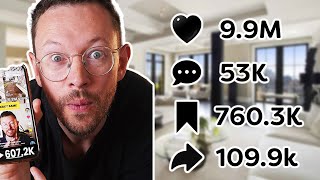
Yasin Mamary grew from zero to 400,000 TikTok followers in 15 months by posting up to three times a day, using trend-jacking and feedback loops to iterate fast. He credits obsessive focus and ADHD hyper-focus as his foundation, and recommends starting with short-form video before moving to YouTube.
Chapters
One thing you learn when you start doing this is it's a real headfuck.
This is Yasin Momori. Yasin managed to grow his following from 0 to 400,000 in 15 months.
How am I still able to like do okay despite my ADHD and all these like barriers that I have to go over that maybe someone else doesn't? And I think it's obsession.
He became absolutely obsessed with understanding how videos go viral, but it wasn't a smooth journey.
You post something, you pour your heart and soul into it, and then you get 3 views. And you're like, oh, like, why? Yeah, lots of imposter syndrome, lots of like frustrations.
Along the way, he learned one of the most valuable lessons of his career.
And then you have gurus who are telling you like, yeah, you can gain 2 million followers in 20 seconds. And then when it doesn't happen to you, you're like, why am I not good yet? When really you've only been posting for a month or 6 months. There's no other area of life where you would be exceptional with so little time.
On today's episode of Top Villas Toolkit, Yasin's going to be talking us through his journey from 0 to 400,000 followers. He'll be talking through the exact strategies he used to grow so quickly, and he'll be telling us the number one trap that people fall into when trying to grow their audience online. If you want to learn the secrets from someone who knows how to make videos go viral, then this episode is for you. Hello Yasin, how are you, my friend?
I'm great, how you doing?
Yeah, very good. Um, so me and my brother, you don't know this, but we found you a couple months ago. Ben has started getting into TikTok and he found the Viral Video Club which is a community that helps other creators create viral videos and, you know, get improved their video game. We joined your community. We absolutely loved it. I've learned more about you. I had to get you on the podcast because there's so many people in my, in my audience that want to up their video game and get better and understand social media in a better light. So I thought you would be the perfect person to bring on. So thank you for your time. I really appreciate it. We always, we always start with this question. What's the number one tool in your toolkit, whether it be a mindset, strategy, or piece of software? What do you think, mate?
Yeah, so it's probably mindset. I think mindset comes before all else. Um, I've seen people who are way better at like processes and systems and tools and that kind of stuff than I am. My work, uh, my workspace, the way my brain works is like super chaotic. Um, Everything's like last minute, on the spot, you know. And I, I was thinking about this recently, like, how am I still able to like do okay despite my ADHD and all these like, um, all these like barriers that I have to get over that maybe someone else doesn't, uh, and I think it's obsession. I think that's the main thing. I know, I know it sounds a bit cliché, but I, I really do think like If you wanna get good at something and you just like stew on it all day long, like everyone else is like gone, uh, okay, I'm bored of this now. They've moved on and you're just still there like, how, how do I do this? Uh, I think that trumps any tool or optimization or anything like that. Um, so I'd say it's that. And then probably if I had to pick a second, it would be Premiere Pro. Hmm. Mainly for like it— a lot of the AI stuff that's already built into Premiere Pro just means that when I'm editing or, uh, anything to do with my video process work slash workflow, it speeds it up, uh, hugely. Um, but I think probably other than Obsession, it's spread across a bunch of different tools that I use a lot or intermittently, but nothing like affects as much as the obsession does.
Hmm, that's so interesting you say that, because me and Ben speak about that all the time. We're like, if you want to get really good at something, you have to be obsessed. And we say that all the time, and I completely agree with that. And you're always going to beat someone else who isn't obsessed all the time. And this is what I'm fascinated about obsession. Is obsession just something innate within you, or can you form an obsession? And this kind of brings me back to your obsession, Yasin. Was that just a natural inclination to want to learn, or was it like, how did you form that obsession?
I think some people have more of a propensity to become obsessed, and, you know, like, the focus may change from one thing to the next. And it's like quite common with people with ADHD that like one week they are learning how to like knit socks, and then the next week they're like, I'm gonna be a pro, uh, breakdancer. And then the week after that they're like, I'm starting my OnlyFans. And it's like, uh, you just get hyper-obsessed. You learn a bunch about a topic because a lot of dopamine's released when you're learning new stuff. And then you move on to the next thing. Um, so I think some people just are instinctively more obsessive in nature, and that can be a blessing and a curse because, you know, when I was young, I was like addicted to all sorts of things. Um, now I'm able to like take the obsession and focus it in healthy ways, and I think some people just don't have that. They're happy, like, living a simple life and kind of, you know, clocking in, clocking out. And I, I think that's great. Like, I think I'd probably be, uh, a happier, more balanced person if I was like that. But, uh, I also think you can become obsessed if, like, you and, and your personality and your idiosyncrasies line up with, like, a particular topic or area where you're like Wow, when I apply myself to this particular area, I get so much back. You know, it's like a high leverage thing. It's sort of that whole, we tend to like the stuff that we're good at.
Yes.
I think even if you're not an obsessive type, if there happens to be something where, you know, you put in 1 unit of, of effort and you get back 10, whereas everywhere else you put in 1 unit and you get back 1, you probably start to snowball towards obsession.
It's really interesting. I relate so much to what you said, um, yes, and about having obsessive focuses for short periods of time. That's like the story of my life. And it was like video games, then it was like some form of recreational drug, and now I've managed to channel it into work and actually do it in a productive sense. So it sounds like we've been on a similar journey to that, which is interesting. So for people that don't know you and your journey, you've managed to gain 400,000 followers in the space of 15 months, which I think a lot of creators dream of, you know, the amount of stories I've heard of people putting in, probably, I mean, I don't know how you probably work your bloody ass off, yes. And but there's probably people that have worked that hard, but not gotten your results. And so I'm fascinated with your journey. Can you just explain to us your journey, the journey you've been on from, say, the very zero or 1,000 subscribers— I can't remember what you started with— up until this point.
Um, yeah, sure. So at the time, I was head of growth for a tech startup called Stashbee, um, and it was around the time where we had this like macroeconomic, uh, situation where investors just no longer wanted to invest in unprofitable companies, and we were one of those unprofitable companies, you know, like grow at all costs. Um, so that shifted very, very quickly and put us on the back foot, and I was kind of on the front line spending the money and looking at how much we were getting back. Um, and even though we were becoming more, more and more cost efficient we just were gonna run out of runway. And at the same time had investors telling us, yeah, like, we want something profitable. So, um, we were basically— can I swear?
Yeah, of course, go ahead.
Yeah, we were basically fucked. So I, I went to the CEO and was like, hey, I think we need to like cut off all forms of ad spend. Um, we need to probably put everyone down to 50% like work hours per week, and obviously pay should reflect those halved hours. And then within like 2 weeks, everyone including the founders were on, on half time. Well, and then I was left with like 50% of my week and I was like, okay, I need to do something. I actually started interviewing at a bunch of places and one guy who was a used to be a recruiter and then was getting into office spaces or something like that. I got on the call with him and within like 5 minutes he's like, listen, I've only said this 3 times in my career and this is the 3rd time: you are not meant to be an employee. So like, go start your own thing. And I was like, what the hell is he talking about? Uh, and I asked him and he gave me like some good points and it sort of stuck with me. Uh, so then I was like, okay, I'm gonna not look for jobs anymore. I'm gonna try and start my own thing on the side. So I built the, uh, TikTok on the side of working like half a week. I was probably working a bit more because I was also consulting, so I was maybe working still probably 40 hours a week and then doing this on the side. Um, And one thing that helps me start like actually doing work is higher stakes, which is what you get from startups, which I think is why I was good there but not in like big company work.
Um, interesting.
So I was trying to post a little bit and it was just not working. I had no motivation for it. So then I increased the stakes by saying, saying on LinkedIn like I will give everyone who comments on this post X amount of money, um, if I don't reach 10,000 followers in 30 days. And so that was the stakes, um, and so I got to work and I posted 3 times a day for a month, and then I hit 30K in the first month. Most of that, like, up until day 24, I was like, oh, fuck, I'm I'm gonna have to pay people a bunch of money. And then by day 26, I had hit the $10K, and then by day 30, I hit $30K. Madness. Um, and then I kind of was— I got a bit burnt out from posting so much, and I just— from— that was maybe August time, that kind of, that kind of time. Then from October, September, October to January, I just barely posted. Um, and then, but I'd gone full-time into the, into my business in January and was like, okay, I'm gonna like not be able to eat food if I don't start posting again.
Yeah.
So then I started posting again. I joined a few masterminds because one thing you learn when you start doing this is it's a real headfuck. Like, you post something, you pour your heart and soul into it, and then you get 3 views and you're like, oh, like Why, you know? And then you see your— it's such an open world, you can see everyone else's. It's like you're seeing inside people's bank accounts, but like it's social bank accounts. So you see everyone else growing and you're like, isn't my stuff as good as theirs or better? And, um, yeah, lots of imposter syndrome, lots of like frustrations, and then also like a lot of pain around where you want your content to be and what you want to be able to say and what you're currently able to say. Um, a lot of time, like, if you were doing something like learning to paint, you could just do it in the privacy of your own home, and over time you'd see, yeah, I'm like getting better now. I can kind of, you know, draw people's faces and landmarks and that kind of thing, and it's becoming more and more accurate over time. With this, it's in public, which makes it, I think, significantly harder. Um, and then there's just this gap between what you want to do and what you can do, and that's super painful. So like every day, every day you show up and you're like, ah, like I'm not as good as I want to be. And you probably have like, uh, yeah, like a vision in your mind of what it's going to look like, and every day you're failing to meet that. And then you have gurus who are telling you like, yeah, you can gain 2 million followers in 20 seconds. And then when it doesn't happen for you, you're like, why am I not good yet? When really you've only been posting for a month or 6 months. Like, yeah, there's no other area of life where you would be exceptional with so little time. Yeah, so there's so much to unpack.
Sorry, man, go ahead.
I'm done. I was just going to say the masterminds really, really helped with the mindset aspect of it. Cool.
What, what was the biggest part of the mastermind that helped? Was it getting feedback? Because I know you're big on feedback. Was it just speaking to other entrepreneurs that are maybe in a similar space? What was the most helpful part?
Um, yeah, it's, it's feedback. So like The one of the things that you never get from social is the people that swipe away, they never give you any information about why they swiped away. And actually they're the ones that have the most information to give you. Like you, you have the most to learn about them with the videos that you have that flop. Like, why did you leave? Like, at what point did you think, nah, this is shit? Um, and so feedback allows us to kind of speak to someone outside our own mind. Because when we create, when we create things, produce things, we just will always have this bias toward, oh, this is better than everyone else's thing. Um, now we might not think like, oh, my TikTok is as good as like Martin Scorsese or something like that, but we do think that our stuff is more valuable than it actually is. And so having someone on the outside go I got bored here, uh, this was too fast, I didn't understand this. Especially like things like storytelling, because we fill in all the gaps and we know like where we're going on this road trip. We're like, yeah, makes complete sense. But the person in the passenger seat is like, oh, I thought we were going to London and this dude took a like a left well before London, is now taking me down some dodgy side streets, I'm gonna get killed here. So, you know, it's like, uh, we think everything makes sense, is amazing, uh, is super engaging, and yet to others it's not. And so understanding where that breakdown happens is super crucial. But then just more mindset of like, uh, there's nothing wrong with you. This is part of the process. You are good. You're getting— I can see you're getting better. Um, that kind of stuff. And like, also hearing someone else go, I'm struggling too, can be good as well.
Like, yeah, I'm fine.
I'm finding it really hard right now to get the motivation. And then you just like— usually one of you is feeling better on that particular day than the other, and they go, come on, let's do this, you know. So it's like Um, yeah, it's like you're a team and you sort of push each other on. Because I think people that don't do this don't really understand it. And it's not like this is some weird thing that, that is very different from everything else. I think I probably don't understand the life of a doctor, uh, and they don't understand my life. And so when they need specific support, they should go to other doctors and I think content creators, uh, should go to other content creators, whether it's an individual, a personal brand, or a business. Like, go and find other people doing the same thing, uh, because as long as you continue and you keep obsessed, you will crack the code. You might not crack it as big as MrBeast or, you know, a huge content creator, but you will figure it out at some point. Yeah, it's just a skill.
100%, man, such great advice there. And it's so funny because for someone that has like— I, I left school at 17 and, and started in a film company, so I've been creating content for so long, but the amount of time, especially going off on my own, that I haven't let, let other people give me direct constructive feedback is insane. Like, if I did that earlier, I would have— my level would have been just like 20 times more. So that was such a valuable Such a simple but valuable piece of information that was. Um, I just want to go back to the— you were posting 3 times a day and then reach— because whenever— I'm sure other people are the same— whenever I hear people posting that level of volume, I'm like, oh my God, that's mental, how did he do that? Do I need to do that in order to see that level of success? What's your opinion now that you've kind of been through the thick of it, Yasin, on volume now? And what do you recommend to other people in terms of wanting to grow their following? Do they need to do the insane volume like that, or is it, is it not as much? What's your feeling?
Um, I, I think it's a few things. I think you've got to know thyself. Um, can you maintain this? Um, can you maintain any semblance of quality through the volume? If not, it's a waste of time. So I think you kind of want to like It's the same as going to the gym or something. Like, you want to do your reps and sets for as long as you can do good quality reps and sets. And then if you can do more of those and recover from more of those, that's even better. But then if you're going to the gym and you're doing these junk volume sets and reps, you're just wasting your time. And I think some people just think that the, the outcome and the goal is just post 3 times a day. I could post 3 times a day while we're on this chat, you know, just like meaningless jibber jabber, and it's not going to get me any results. So, um, first we have to know thyself. Like, how much can I do given my situation and my skills? Like, how good am I already? Like, one person, maybe a Gary Vee style person, could actually just like back to back to back say 10 profound things. I can't, I can't do that. Like, um, so there's that. Also depends on the niche. So back in the day, I was doing ad reactions, brand reactions, marketing advice, this kind of stuff. A lot of it was topical. Uh, I use the term trend jacking or social hacking. So you're like talking about a famous person or brand, or there's something hot happening in the news that you're using to piggyback and get views and attention off of. Um, and when I did that, it was easier to create content because— and I think I've already told you about this already— but I'd go to places like Reddit, LinkedIn, and I'd source ideas that were already validated as hot ideas, like ideas that people cared about. And then that gave me an endless, um sort of river of, of ideas, and ideation is the hardest piece. Um, so that made it significantly easier. And at the time I was not scripting, so that also made it easier. I wasn't recording on with a DSLR, uh, it was just like green screen on my phone. That made it easier. So there's definitely ways you can make the process more efficient and allow yourself to do more. But it is definitely niche-dependent, person-dependent, um, and like skill-dependent, uh, but, but generally, if you do more at the start when you have the least amount of knowledge, you will learn quicker. So as long as you go in with some sort of experiment or test, you know, like this time I'm testing whether speaking faster or having a brighter video or a different kind of hook or different music or a bigger topic, a more niche topic. You're like testing things and then over time validating or, uh, proving wrong those, those hypotheses. Uh, that's how you learn fast. So if you're posting once a week, then it's just going to take you years in order to learn anything at all. So condensing that learning by trying to do as many of those tests as you can, it definitely makes a lot of sense. Also, when you start out, I think your ideas should be smaller.
Okay, interesting.
I kind of use the analogy of boxing, right? Like, if you're— and I have no experience with boxing, but I know this— if you're just starting out with boxing, You probably don't want to do the haymakers. You've seen those street fights, you know, one guy like over-swings, over-commits, has low skill, misses, and then gets, you know, the shit kicked out of him. Same in the boxing ring. It's like you don't want to over-commit when you have low skill. So, but people do this with ideas. They're like, I'm gonna do a MrBeast style video, I'm gonna spend like, I'm gonna put my, uh, how, I'm gonna remortgage my house I'm gonna like sell feet pictures online, I'm going all in, you know. Um, and then like it turns out the idea was either not a good idea or they didn't have the skills to execute on it well, and they spent loads of time, potentially loads of money on something that was just a dud. So you don't know what those ideas look like, the good ideas, when you start out. And to be honest, even now I still don't fully know. It's just that you're confidence level improves over time, right? But when you start, you're just completely blind, but you're usually quite confident. It's a bad combination. You're like, I'm going to talk about this idea, it's amazing. And then you get 3 views and you're like, I'm shadowbanned, it's TikTok's fault. So when you start out, because you don't know what you're doing, you actually want to make smaller ideas, smaller bets. Right? As big as you can go, but with low commitment. So like, you should still go after compelling ideas and say something meaningful, but it shouldn't be taking you 2 days to make a video. It should be something you can get out the door. When I was starting out, each video, from coming up with the concept to recording to editing it down and posting it, was within an hour, sometimes 20 minutes.
For one video.
Yes, and for one video that, you know, some of them were getting millions of views. So wow, that's nuts. And then you get the data really quick. It means you can make more. But not everyone— maybe I, I don't know if I do, but maybe I had certain skill sets that meant I was able to do that. So know thyself, figure out what that is for you, but definitely don't overcommit to ideas. And the reason I'm saying this is because you can't create quality when you've never created anything at all. So you have to in some way produce some level of quantity so that you understand what a good idea is. You have the skills to deliver on that idea well. Um, and, and then I think you actually want to over time produce less content. So I don't think producing 10 pieces of content a day is a good idea for most content creators, especially educators. And I saw a guy just yesterday that went through from 20,000 to 1.3 million in 5 months, posting somewhere between 8 and 10 times a day. But he was not an educator. He's got some like Strawberry Milkshake. I don't know if you've heard of her, but it's that kind of like surreal personality, like entertainment-based content, which I don't know anything about. I look at his stuff and I'm like, wow, like people watch this, this is nuts. Um, so I can't speak on that, but for educators, over time you want to produce less and make each video, uh, more and more of a commitment. It's kind of same with investing, like Warren Buffett should invest huge amounts into individual stocks because he has the skill to know a good business from a bad one. But when you start out investing, and for most investors, you should just put it in the S&P 500 because you don't know what the hell you're doing. So what you're doing is you're spreading your bets and spreading your risk, and then as you get more experienced and more skilled, you narrow the number of bets you take and you put more into each one.
Yeah, that makes so much sense. That's such good advice, mate. Um, I'm curious, why short form? Because you could have started with any form of media. Why did you— why, why short form video was the thing that you decided to focus on and obsess over?
So there's a few reasons. Probably the first reason is YouTube long form, which is like the thing I want to work toward. I think it's the outcomes are the best there. Uh, but I found it to be the most competitive, the hardest. People are so talented there, and they have usually huge budget— budgets, huge teams. Um, yeah, you're competing against celebrities and millionaires, and sometimes even billionaires are on YouTube, which is nuts. So I found it really hard to crack that code, and usually difficulty spikes exponentially as we move from creating an image to creating a piece of short-form content to creating a piece of long-form content. It— because ultimately, a short-form piece of content, let's say 15 seconds, has thousands of images in it, each one that can go wrong, and you won't know really which one has gone wrong. And then if you expand that out to long-form content Now you just have tens of thousands or potentially even millions of images, each with an opportunity to screw up your retention graph, and, uh, you'll really never know why. So it's slower to learn long-form content, and it's significantly harder. And my thinking was, if I get good at the short form, it's a pathway to getting good at long form, maybe similar to like write a short story or write some articles before you write a book, you know. So, uh, get good at doing it on a small scale. It's a similar thing, get good at doing something on a small scale before going and trying to do it on a big scale, um, because you want to validate the concept. So I will be moving to YouTube, uh, long form. Wicked. That's one reason. The other reason is Instagram came along a long time ago and I just didn't use it for many, many years. I, I was very late. I think I started on Instagram in 2018 or 2019, like super late, and I found success there, uh, but I was always like, man, if I'd started back in the day, this would have been so much easier. So when TikTok came along, I was still very slow to the game, but not as slow. So I think it was 2022, um, I was like, I can't let another thing like Instagram pass when it's super easy. Uh, so I was like, let's jump on, let's try it. Uh, I, I consume video content. I don't really watch— outside of trying to create TikToks, I don't really watch them, um, like other than trying to analyze and break down I consume YouTube long form, but I prefer video content in all its shapes and sizes compared to like articles or like LinkedIn posts or Twitter posts. Yeah, it's just what I resonate with. And so if you want to do something for the long term, you have to be producing things that you want to produce. And I really like the idea of creating these just all-encompassing stories. That's kind of where I want to head. I'm not there yet, but story-based education, it's really high quality, very engaging, um, moves you emotionally, and then also tells you or teaches you something that is otherwise really complicated. So I want to like turn the, the complex and make it simple through exceptional storytelling. But obviously, I started 15 months ago or so. So it's a real journey. But that's the goal.
Wicked, man.
Wicked.
I'm really curious. Yes. And you've already, you probably already touched upon some of it. But for someone looking in and thinking, how the hell did Yasin grow so quickly? If you were to like, nail them down to like a few core pillars that someone else could try and duplicate, I know it's difficult, but what, what would you say? What are the main kind of pillars of the reasons you grew so quickly?
Uh, yeah, so touch back on obsession, and then I think also touch again on social hacking and trend jacking. So like, use other people's audiences, especially when you're starting out, because no one cares about you. Um, and if like something's trending right now, it's pretty easy to get some views on it. Another thing is scripting. Like, when I went to scripting, my growth rate went through the roof.
What do you mean by scripting? Sorry, I'm guessing.
So, like, instead of just hopping on a video and waffling on, like, be methodical about what you're trying to say. I kind of think of it like you— I think most people wouldn't rock up to their wedding and just, like, riff the speech. You know, they'd be like, whoa, I'd never do that. Like, I need to know what I'm gonna say and like how I'm gonna say it and so that I can guarantee it's meaningful. And obviously the stakes aren't as high, but we should still be trying to say things that are meaningful. And when we script, we increase the chances we'll say something meaningful. Um, so I would script and then I would, I joined a mastermind and then joined a bunch of masterminds. And was doing this probably every day of the week with a different person, talk, breaking down videos, breaking down their videos, my videos, other creators' stuff. Um, and then test a lot. Um, try not to get too committed to any one idea. Um, also learning from your winners more than your failures is a big one. Like, you should learn from your failures, But the beauty of a winner is there might be a formula for replication. And that's much easier to find in, in something that already exists. It's easier to go, ah, so it's probably the hook. I can test the same hook again, or like, you know, the same structure of hook and apply it to a slightly different topic within my niche. Maybe I'll use the exact same song. Similar length. I'm gonna say, if I said here are 3 takeaways, I'll say 3 takeaways. So by doing that, you start to create a format that is winning for you. Um, I used some of the, the effects that TikTok wanted you to use, like green screen, and I would move around the screen a lot so that you're sort of keeping people engaged. And then also change the green, the background that you're using as a green screen every so often. The more you can do it, the better. Um, there's, there's a thousand things. I think it's like you've got to steep yourself in it. You, if you've never been in a library, you don't know what a library is, and then you go in and you think it's a nightclub and you start screaming, everyone's gonna hate you and you'll probably get kicked out. Likewise, if you go into a nightclub and you're whispering, people are gonna be like, who's this like whispering dude? Does he not get it? So like, I think someone on your team has to be consuming some amount of content on the platform you wanna win at, whether it's TikTok, LinkedIn, Twitter. If you just come in bulldoze and you're like, I wanna be this way, it's probably not gonna work. There's, there are platform-specific strategies that you probably need to nail if you wanna really perform.
Mm, yeah, great advice, man. Lots of golden nuggets there. I absolutely love that. What are some of the— if you were to go back to Yasin starting this journey again and, and be like, Yasin, dude, avoid this and try not to do this, and it will save you so much bloody time and get you further, what, what would be a few pieces of advice you would go and give slightly younger Yasin at the beginning of the journey?
Um, I would probably say don't overthink. So I, I would sometimes see something that was trending that I thought I could say something good about, and then I'd go, ah, no, like, uh, yeah, should— I'm— shouldn't make that piece of content. And I didn't really have a reason. It's just making content's hard emotionally. Sometimes you just don't want to do it. And then I'd see 2, 3, 5 other creators do it and do, in my eyes, do something that was less valuable, less nuanced, uh, and get, get millions of views. And I had that happen again and again and again. And so I think, yeah, you've just got to pull the trigger. I was talking to someone yesterday doing like a consultation call, and they were like, how do I get out the door and be exceptional? And I was like, I don't know, or I would have done that myself. Like, it's a— it's honestly a weird question to ask. It's like, how, how do I make sure that the first time I play a guitar, I can play it like, you know, a— like AC/DC or something, you know? It's like 'What are you talking about? Like, come back to me in 10 years of playing.' And then, you know, so I would have just accepted that that's part of the process, and I would have probably tried to be less outcome-dependent. I know that's weird because I think sometimes being outcome-dependent increases, you know, what you're able to achieve, but it can also burn you out and make you feel really demotivated when you're not moving as quick as you think you should be. I think like patience, I would have said just be patient, learn the craft, learn the skills, have fun with it. Like this is a pretty cool thing to be doing. Um, I would have said script from the start, use trend jacking, social hacking from the start. Uh, I probably would have looked at other creators in my niche and done my version of what they were speaking about, you know. Like, especially creators that are small. Let's say they've got the same amount of followers as you, or less, or a little bit more, you know, around that range. And their average views is, we'll say, 200 views or 500 views. And then they have a few outsized returns, right? That one video has got a million, another video's got 200K. Okay, sweet. Let me look at those particular ones. Because they're in a similar, similar place to me. There's really no point looking at someone with 2 million followers and trying to make the same piece of content because they've got an audience that will like everything they do. So look at the smaller creators that have a few videos that have just really outperformed and then make content in those areas. So if they're talking about, I don't know, like how to, uh, get nits off your dog or something, like, okay, sweet, people care about that, I'm gonna do that too. Or like if it's like astrophysics, like whatever they're talking about specifically, you talk about it too. Obviously don't steal, like make it your own, try and make it better if you can, um, and you should see relatively similar results. And then eventually you want to move away from copying people because I think copying people helps you grow fast but not far, uh, to go really far you have to be an individual. You have to be unique. You have to be on the cutting edge, like coming up with the new concepts. Um, and too many people just stay stuck in copying others, and/or they don't copy, they just steal. They're like, I've had this multiple, you know, hundreds of times now where people just like word for word say what I've said. And that's like, how can you even like enjoy that process? And you don't learn anything when you do that. So always, even through the process of trying to grow, also try and become better for yourself and for the people that are watching.
Yeah, great advice, man. Really great advice. Um, you've— it's fair to say that you've grown quite a big audience on quite a few platforms. I think Instagram, TikTok, and LinkedIn, you've got quite a few, um, followers as well.
Finally.
You've done really well, man. Um, curious to know which platform has been your most valuable and why, because I would assume from an outside perspective that TikTok with the most followers has been the most valuable. But maybe you would say— I'm always fascinated behind the scenes what people say. What would you say?
Yes, it's been TikTok because TikTok's what got me my start. Um, and honestly, if there hadn't been TikTok, I would have given up. Like, really, TikTok late last year was easier than it is now, and this year right now is way easier than it will be in a year. So like, the longer you delay, the harder it gets, and it gets exponentially harder, not like linearly harder. Um, so it got me my start and it gave me the motivation, which, you know, I had tried YouTube a number of times and given up because I was like, man, I like, I'm getting 20 views like, and it's not going up. So being able to see those early wins keeps you motivated. So TikTok for sure, but Instagram's growing almost 3 times as fast now, uh, as TikTok. And it's— in more recent months, it's probably giving me the higher ticket sales as well than TikTok. Um, it— but yeah, it's like I post the same content on TikTok and Instagram, so I like both, but, um, yeah, probably Instagram in the future I imagine will be more of where I get clients and some of the bigger ticket things I sell. And then I imagine at some point LinkedIn will also start to play a bigger piece of the puzzle.
Wicked, man. I know, um, we're coming to an end soon. Can you tell people where they can find you? Because I'm personally a member of your Viral Video Club. I absolutely love it. I recommend it to absolutely everyone. Uh, but is there any other places that you want people to go to, to find out?
Um, I mean, you can check me out on TikTok, Instagram, YouTube, and LinkedIn. On the short-form platforms, I'm viralvideo.club, and then on LinkedIn, I'm Yasin space Mamary. Uh, if you can spell it, you know, come and say hello. If not, oh well. But yeah, like, come check out the community if you're someone who wants to grow and if you're someone who wants to find like-minded people to help push you and motivate you and give you the feedback you need to grow faster. It's not a silver bullet like I think some people think it is. Growing is hard and harder for some people than others. Like, some people have a natural inclination or like personality for video-based content. But I think for me personally, when I started using my own community, I started growing significantly faster. And I've seen the same for people that actually go in and use it and play the long game. Um, whatever you're doing, it will multiply it.
Thank you, bro. So much wisdom and knowledge, and just really appreciate you coming, man. Love your energy, love what you're doing, and, uh, Wish you nothing but luck and success for the future, my friend.
Been a pleasure, Sam. Thank you for having me.
Hey guys, thanks for tuning in to this episode. If you enjoyed it, please don't forget to subscribe on YouTube and Spotify. Tune in for another episode next week, and we look forward to seeing you again very soon. Peace and love.
More from Sam




The difference between a $200K biller and a £1,000,000 Biller (full Breakdown video)

how to go from agency recruiter to Lone wolf (Advice from a $2.4 Million biller)



This Recruiter has billed $750K+ for 30 years straight. (Master of Consistency)

How to increase your candidate response rate by 25-30% (Whats app messaging system)


This recruiter has billed $1,000,000 for 5 years straight! (Master at Enterprise deals)