Recruiters! Do this for 1 Hour Everyday To Get More Leads...
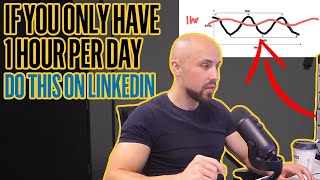
Recruiters lose business development when swamped with open roles, tanking revenue. Spend one hour daily on a five-step process: use LinkedIn Sales Navigator to find ten first-degree connections, craft messages targeting their biggest pain points, personalize deeply, and follow up with video messages showing pain, outcomes, and social proof.
Chapters
Without a doubt, one of the biggest problems that recruiters discuss with us is when they get a ton of jobs on and— Bloody hell, where have you been? It's a long story. Anyway, as I was saying, one of the biggest problems that we hear from recruiters that we work with is when they get a ton of jobs on and they're really busy trying to fill those jobs, BD goes out the window and they stop building a pipeline. Now that's a big, big problem. Today we're going to give you a very simple 5-step process so that you can continue doing BD, building a pipeline, even when you've got tons of jobs on. Let's get into it. Okay, so this is step 1, and this isn't so much as a tactic as it is a mindset shift on where you should be spending your time. You know, let's assume that you work 8 hours per day. Monday to Friday. If you're a business owner, you're very much likely working more than that, but, you know, let's be conservative and say 8 hours. We believe you should be putting at least 1 hour per day towards BD, minimum 1 hour per day. And there's a very good reason why. You know, if you look at this chart, this is the typical activity we see from recruiters. And the reason it looks like this is because recruiters will get a role on, or multiple roles, and then they'll go all out and trying to fill those roles, understandably. But the problem with doing that is other things that are important get sidetracked. One of the main things is business development. So this is what their revenue looks like as a result. It goes up and down. If you look at this over the year, their activity will go up and down, and this is exactly what their revenue will look like as well. They have months where they do great because they're filling those roles, and then they have to go back to square one when those roles are filled. Our argument is you should really be spending an hour a day, because what we've noticed is when you can put in the consistent habits that move the needle, it won't completely eliminate these peaks and troughs, but they'll be a lot less severe. So it'll look probably something like this, right? You'll still get peaks and troughs because that's natural, but there'll be less inconsistent, and they'll be less severe. And so what you'll notice is at the end of the year, you'll have a more predictable revenue stream. Okay, so this is step number 2 of the 5-step process, and for this step, we're going to use Sales Navigator because Sales Navigator is fantastic at finding the people you want to find quickly and efficiently. It's going to be located in the top right-hand corner of your screen. So let's press it and jump straight in. So you'll notice this is the search bar. The search bar is essentially where we're going to start the process, and to save time, I've already got it here. So we're going to look at recruitment and executive search. This is a saved list that I have, and as you can see in the left-hand corner, we've got first-degree connections. These are people who have already accepted my invitation. They're people that I can reach out to and speak to straight away. Now obviously, the reason we start with first-degree connections is because they're probably people that you've done business with in the past, or they've been watching you for a while, or they're familiar with your brand and what you do. At this stage, I'm just going to pick 10 people and open their accounts. So I'm going to do Richard, I'm going to do Louisa, I'm gonna do John, and you just want to follow this process and open up their accounts. I'm doing this with Command-click. Alex Avery, Josh, Nick, and you want to do that with 10 first-degree connections, and by the end of it, you should have 10 people, 10 first-degree connections that are ready to jump in and have a conversation with. So guys, number 3 of the 5-step process is about crafting a message that's going to get your candidate or client to sit up and pay attention. And in order to do that, we need to speak about pain. We need to understand what they're going through. We need to understand them as people. And if we can tap into pain in the right way, it gets a fantastic response rate. Now it's important to say that there's different levels of pain, you know, there's different levels of pain depending on what's important to these guys and what's on the top of their priority list. So if you're sending messages that, you know, it's only a 2 out of 10 in terms of pain, it's mild, you're not going to get a very good response. Again, if you're sending something that's a 5 out of 10, between moderate and severe, it will be a little bit better. But it's not going to be the best it can be. If you're sending a message that's between an 8 out of 10 on the scale of pain, what we've noticed is you get a much higher response rate. You're going to get people that sit up and pay attention, and it's because that is on the top of their priority list. It's something they're thinking about almost on a daily basis. So think about it, guys. Think long and hard. On a scale of 1 to 10, What is the thing that your customers are thinking about? And it may not be as obvious as you think. You know, recruitment is not just about recruitment. Recruitment has a knock-on effect to many areas of a business. So you may not be selling the person, you may be selling something else, but have a good think about it and come up with that message that you think will resonate. So this is a message that me and Sam have been sending to recruiters, and it's been really effective. And I'll tell you why, but let me read it first. Good to connect, Matthew. I saw your post about the perm positions in Yorkshire. Sounds like you guys are busy. Curious, what's it been like finding talent in your sector? Like a needle in the haystack, or is it not so bad? His response, uh, 1 minute later was challenging to say the least, and advertising costs have trebled. Now the reason me and Sam are talking about this is because Candidate attraction is an 8 out of 10 for a lot of recruiters. It's, you know, on the utmost priority when it comes to their list and things they want to focus on. It's because candidate attraction in this market has become really, really tough. It's become really time-consuming and almost laborious in some cases. They're having to do a lot for minimal returns. And as Matthew has mentioned, advertising costs have increased. They've gone through the roof. Some platforms, some job boards have almost trebled their costs, and the return from those platforms has either stayed the same or it's decreased. So they're having to spend more time with minimal results. They're having to spend more on job boards with, you know, the same results if not less, and they're in a position where they need more candidates. It's an 8 out of 10, and so this question is working. Okay guys, so this is step 4 of the 5-step process. It's pretty simple. We're going to get your message and we're going to send it to 10 of your first-degree connections. Now, we're not going to send it willy-nilly to every single person in the exact same way. What we want to do is we want to personalize it, okay? And this is the trick that most people don't understand. They don't know how to personalize it properly. And personalization isn't just about changing the name, it's a lot more than that. It's saying something that's going to demonstrate to that person that you, that you've done your homework and you said something even minute that shows them that you care, that shows them that you're going the extra mile to engage with them. So make it unique and do your best to stand out from the crowd. Okay guys, so this is step 5 of the 5-step process, and this is all about following up. Now, no matter how good your message, no matter how much you understand the pains of your customers, there will always be a percentage of people that don't respond for whatever reason. Now, most of the time it's because they're busy, you know, they have a million and one things going on, and to catch them at the right time, in the right place, in the right mindset, um, you know, it just isn't always realistic. So it's really important that we have an effective follow-up process. Now, the follow-up process for me and Sam and our customers has been one of the most valuable parts of the process. It picks up the people that didn't respond, and we use video, a really powerful method of engaging people and standing out from the crowd. The video gets their attention. You still need to say the right thing. We found there's 3 really important parts of a successful video. Number 1 is pain, just like the message, you know, saying the thing that is on the top of their priority list. What is the problem they're going through, and can you articulate that clearly? Number 2 is outcomes. This is all about talking about what they want, you know, what is it they desire, what's an ideal outcome in their eyes, and can you paint a picture of what that looks like. And number 3 is social proof. So it's all well and good stating what they're going through and stating what they want, but it's really important to show them that you've done this for other people. It's really important to demonstrate that you have the skills to actually get results. Now, if you can do these 3 things in the right way, you're much more likely to get a response from the people that need your help. Okay guys, I'm gonna take a really quick break because I'm desperate to go to the toilet. Where have you been? It's a long story. So to cut a long story short, guys, if you follow those 5 steps and you put aside just an hour every day to do them, then you'll start seeing more consistent revenue and you avoid those insane peaks and troughs that a lot of recruiters tend to go through. See you later. Have a great day.
More from Sam




The difference between a $200K biller and a £1,000,000 Biller (full Breakdown video)

how to go from agency recruiter to Lone wolf (Advice from a $2.4 Million biller)



This Recruiter has billed $750K+ for 30 years straight. (Master of Consistency)

How to increase your candidate response rate by 25-30% (Whats app messaging system)


This recruiter has billed $1,000,000 for 5 years straight! (Master at Enterprise deals)