She was Laid off 15 months Ago...Now she's Billing 700K!
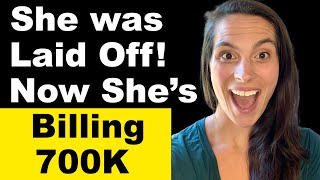
Julia Arpag was laid off on maternity leave, then built a $700K recruitment agency in 15 months while working 40 hours a week. She uses LinkedIn videos and Loom messages to prospect, charges retainers instead of commissions, and hired an operations manager early to handle back-office work.
Chapters
Hey guys, welcome back to yet another episode of Top Billers Toolkit, where me and my twin brother interview top billers from all around the globe to unlock the secrets to their success. Today's guest is Julia Arpag. 15 months ago, Julia was laid off on maternity leave. She had a newborn baby waking up 10 times a night, an infant, a 2-year-old, and 2 teenage foster sons to look after. And she had a massive mortgage on a house that required 2 working parents to pay for it. She was sleep deprived, extremely time poor, and still decided on whether or not to go all in on her company, but she decided to take the leap, and 14 months later she's built an absolutely incredible business. She's billed $700K and she only works 40 hours a week. On today's episode, Julia is going to be telling us how she managed to go from laid off to billing $700K in just 14 months. Julia is going to be sharing some of her most powerful prospecting strategies, and she's going to be telling us why and how she built such a powerful brand on LinkedIn. This is such a great story, guys. The energy was amazing. I hope you enjoy this podcast as much as Ben and I did. And as usual, grab a cuppa or glass of wine depending on when you're listening to this, and let's get into it, shall we? Hey Julia, how are you?
Hi, I'm so good, Sam. Good to see you both. So happy to be here.
Yeah, thank you for coming on, Julia. I have seen you on LinkedIn for like 5 years and I, I, for some reason, like, it's only the last year that I've really been paying attention to your story, and, um, you've just done amazing things and you've got an insane story to tell. So I was like, Julia has got to come on the podcast. So thank you for coming, I really appreciate it.
Oh, my pleasure, thank you.
Awesome.
We—
it's a bit of a, um, it's a bit of a habit, we start the podcast with this question every single time, which is, what's the number one tool in your toolkit, whether it be a mindset strategy or software? What would you say to that, uh, Julia?
100% mindset.
We've had that so much from top billers, it's insane. Everyone says mindset, um, and it makes sense. But, um, can you elaborate? Why is mindset your, uh, your tool that you would choose over anything else?
Yeah, so I've been a recruiter for about 6 years before I started my agency. I've only been running the agency for 15 months, and we've billed $700K in those 15 months. And the massive transition for me from working for someone where I had a salary and like small bonus potential, but not nearly the upside I have now as an agency owner. The shift was believing— like, my goal is to be a 7-figure annual business. So to believe that was possible took a massive mindset shift for me. Like, that was never my goal. Like, I never got into recruitment because I was like, I'm going to be a millionaire. I was like, I just want to like make enough money to pay my mortgage. Like, that was honestly my goal. So really shifting my mindset to what was possible And then I actually started looking for other people that were speaking those words into their own lives. And then I also started recording myself saying basically motivational statements or affirmations as well as I'm a Christian. So like scripture verses about abundance and wealth and just standing on the promises of God. I recorded myself saying those things and I play that recording every single day.
I love that. Absolutely love that. What was the moment— because you just said, Drew, there was a moment when you didn't want to be, uh, a millionaire. You were kind of cool being just a recruit. I said just to recruit. You were cool just being a recruiter. What was that moment when you were like— your belief started changing and you seemed to want more out of either your billings or your life?
Can you remember?
Like, it was— was it a moment or was it a collection of moments? Um, what do you think?
It was a collection, it was a collection of moments. So it first started to occur to me that I could go to business, go into business by myself in the last agency I worked for. I was there for 2 years and it was a startup, so I really got to kind of see the inside of the agency. Like, I, I didn't work in sales, but I got to work closely with the CEO and I got to see how he went to market. I got to see his pitch deck, I got to see his pricing structure, and I did the math. I was like, you are charging so much more to your clients than I am making. And so good for you, dude. But like, I would really like a bigger piece of that. So that was when I first started thinking like, maybe I should go do this for myself. But I'm a mom of 4. It just felt like, over— I was like, that is going to be so much work. Like, I don't even know the first thing to do. I'm just not going to do it. And then that CEO called me 5 weeks after I had my 4th child and he laid me off. He was like, I'm so sorry, this is closing down. We've lost all our clients. Like, the entire team got let go. So I was like, okay, this is the moment. So I got 6 job offers in the next 2 weeks, and one of them was to co-found Aligned Recruitment. So that's the one that I took. And so that moment, like, making that leap, I was like, okay, I need to go all in then. Like, if I'm gonna commit to starting an agency to make it worth my effort, I'm gonna be a freaking millionaire.
That's crazy. Wow.
So am I right that the shift was almost born out of necessity? It was like you were kind of pushed into the— correct if I'm wrong, but what I'm hearing is you were pushed into this corner, it happened, and it was kind of like sink or swim. Uh, was that the mentality you had at the time?
Yes, yes.
Crazy.
Interesting.
It's amazing how a bit of pain can push you to new heights, don't you think? It's always a bit of pain that gets you to that next level.
Um, 100%. Yeah, so every, every— basically everyone I've ever spoken to who's remotely successful in any way, they talk about how the thing that set them apart has been discipline. And you really only forge discipline when life— when hard things are happening. Like, you don't need to be disciplined when you're on the beach drinking a piña colada. Like, that's not discipline. That's just like chilling. So the only way to develop discipline is to go through hard situations.
Totally agree.
I love that. I just want to go a bit more into your— because you've built— I've got $600K in your first year, but you said $700K in 14 months. Yeah.
So now it's been 15 months.
So I'm just Adding on, yeah, which is an insane, insane number for such a short period of time in business. Uh, when me and you spoke, because we always have a prep call with everyone, when me and you spoke on the prep call, you said one of the fundamental reasons why you were able to build that amount, um, was that you hired a sales coach who helped you sell. Um, why was that, uh, sales coach so fundamental in your billings? Do you mind just telling us a bit about that?
Absolutely. So I had never sold a day of my life. I never ran a 360 desk. I've actually never worked in a contingent agency. I've only ever worked internal or retainer, like, ever. Like, I've— I did— the first time I worked at contingent rec was when I started my business.
Like, that's so crazy.
So I just had no idea. I was like, how do you get people to give you money? Like, I only know how to give candidates money. Like, that's all I've ever done. So I hired this coach, and I was like, just teach me everything you know. She scaled her agency and sold it for $28 million. $1,000. So I was like, this girl clearly knows what she's doing. So, um, she just told me, like, I, I literally didn't know how to run, uh, anything. Like, I didn't know how to run a campaign, I didn't know how to run a discovery call, I didn't know how to structure a contract, like nothing. So she just taught me from the ground up how to do all those things.
That's so crazy. Were there any, like, because normally I remember for me learning sales, I think everyone goes through this process, but for me there was like so many things to like, so this, this sales coach was an absolute master. And so I couldn't remember everything he told me. I could just remember some of these core fundamental principles that really helped me. Were there any kind of core things that you took away from that experience with the sales coach?
Yes, absolutely. Because I agree, it is overwhelming, and I still don't have enough time in the day to action on everything I've learned. So what really helped me was, number one, I just block an hour a day for sales activity. Like I can't get to every single possible sales thing I could do in a day. But if I'm disciplined about that hour, then at least I get to something and I get to the thing. I get to the things that are closest to the money. So I always work whatever the hottest deals in my pipeline are. I give those the most attention. Whoever my warmest leads are, I give them the most attention and then I automate as much as possible. So I always have drip campaigns going out. I always have cold email campaigns going out. I have a newsletter. And then I also have the manual one-to-one touches that I do every day, whether it's LinkedIn voice notes, LinkedIn selfies, direct DMs. And then the other thing was to always book a meeting from a meeting. So when I would have a discovery call, if they weren't ready to pull the trigger yet, I was like, no worries. When do you anticipate wanting to start recruitment for this role? They say 2 months. I'm like, great, I'm going to book a meeting on your calendar for this date, this time. I'll talk to you again then.
Cool.
Interesting.
What is the— so can I jump in there? But I'm really fascinated with the— with the when you book a meeting from a meeting, what's the show up rate? Is it quite—
is it—
I'm guessing I'm guessing the reason you still do it, it must be good. Do they still show up?
100%.
Yeah, really? Wow, that's really fascinating.
I've literally never had a prospective client ghost a sales call ever.
Wow, that's crazy.
So I'm getting from this sales coach, because I, I assumed you were going to say like, oh, ask better questions, active listening, but it sounds like, well, among other things, some of the core things that you took away from the sales coach was actually the, the prospecting and the business development activity. Am I right in saying that?
Yeah, it was the tactics. Yes, the tactics. Like, I didn't know— I know, I know how to ask pretty good questions from recruiting for 6 years. It's just a different muscle to ask a client versus to ask a candidate. But it's definitely helped me tweak. Like, I have really good discovery questions that she gave me to use on my sales calls. But the things that I really needed to know were the tactics, like the, the day-to-day activities that are really going to move the needle.
Love that. Were there any beliefs that she helped you shatter while working with her? Was there anything you thought like, oh, I can't do that? And then she was like, hey, yeah, you can, you can do this.
Well, so, so like I said, so she scaled her agency to 8 figures. So I was like, I didn't even think about that being a thing. Like, I didn't even think about that being something I was gonna shoot for. And in all fairness, she does staffing, so very different than direct hire. And I don't wanna do staffing. It just is so time consuming. And I really value my work, my work-life balance. That's part of why I picked this specific model. So I'm not going to do that. But it still gave me the, the confidence of like, whatever goal I set, I can do it. Like, I'm just gonna set up, set a revenue goal, and then I'm going to achieve it however long it takes.
That's priceless, that belief that, you know, if I set a goal, I'm gonna hit it. Yeah, because I remember when my mindset shifted to that, I was like, I'm gonna hit it even if it takes 5 years. I'm gonna hit it. I'm not stopping until I hit it. Um, and that's a powerful mindset. It really is.
Um, was there one particular tactic, or is there one thing that you're using? Because normally when I look in, when we speak to recruiters, they have maybe 2 or 3 different things they use, but it can normally be boiled down to one, one thing, or maybe 2, that's booking them the most amount of calls and generating the most amount of revenue. Is there one thing for you that's really generating the most amount of revenue for you in terms of tactics, uh, Julia?
Absolutely. Um, LinkedIn selfies and LinkedIn voice notes.
Selfie videos, you mean?
Selfie videos, yes, yes.
Interesting. Cool. Yeah. Okay, wow, interesting. Um, and what are you— what are you saying? You don't have to say it's word for word, but what is it that you're saying that's, you know, standing out and/or attracting these clients and candidates to you?
So I only do this with clients. I'm not going to lie to you, it's pretty easy for me to find candidates. Like, I just launched a new role last Friday and I already have 4 candidates that I'm screening today. So like, that's not— I'll be honest, that's not hard for me. But clients, uh, I keep it under a minute and my messaging is basically like, dang, I'm really impressed by XYZ because I'm prospecting into like C-suite. So they've had a very impressive career. So I just highlight like 2 or 3 things about their background that is genuinely impressive to me and they can tell that I am genuinely impressed. I think that authenticity goes a long way. And then I just say, hey, listen, I run a tech recruitment agency. I'd love to support you when you're looking to hire for your team, or if you just want to chat, I'm more than happy to see if there's other ways that I can serve you instead. I kind of keep it open-ended and I keep my language serving and supporting as opposed to like, please do me a favor and pay me for my services. I'm like, how can I serve you? So that's my language.
Really interesting.
And that's quite— sorry, Ben, I just want to confirm what Julie is speaking about. And that's a, a video that you're sending into their inbox through LinkedIn. You, you would spot a prospective client on LinkedIn, record a video, and send it to them from your phone. Am I right in saying that?
Yes, yes, yes. So on, on the LinkedIn app, you can actually like when you're DMing someone, you can go in to your DMs, click add photo or video, and then record the selfie right there in the LinkedIn platform and then send it directly right there.
Yeah, love that. That's so interesting.
So that's so interesting because historically it's always been harder to penetrate anything C-suite. You know, it's always been a lot, you know, longer burn, more trust. So what's the mindset of people when they respond from that video? Is it kind of like Hey, let's jump on a call. You know, we'll do business in 6 months. Like, what's the process after you get their attention? If you don't mind me asking, Julie, from that method.
No, I'm more than happy to share that. So that's part of why working with my coach was so helpful too, because she shared with me— I didn't know this— the average number of sales calls it takes to close retainer business is 5. So I'm always playing the long game. I'm always like, hey, this is a low-pressure sale. Like, I'm here to serve you. You will use me when you can use me. And I have that confidence. And I know that I'm going to be here to support you when you need it. So if you don't close on the first, second, third, fourth, or fifth call, that's okay. We'll just book another call. So I'm always playing the long game. I'm always just there for whatever they need at the moment. And I think they sense that I'm not pushy. Like, I don't run a pushy sales process because I know that the more— and that's why I post every day on LinkedIn, because it's just a constant nurture campaign. Like, you see me in the space, you see that you can trust me, you see that I'm making traction with my clients. And then when you're ready, you're going to come back.
Love that. Absolutely love that. And is the video the first port of call for you, Julia? Like, you spot, you spot a client. Are you always doing the video first? Is that your first port of, your first touchpoint? Cool. And then how do you use the voice notes out of interest? Is that a follow-up to say, hey, did you see my video? Or do you—
I kind of interchange them, to be honest. Yeah. So there's some days, honestly, it can be really glitchy sending selfies on LinkedIn.
Oh yeah, LinkedIn app is horrible. It's so bad.
LinkedIn is the worst. Like, I I'm dying for someone to please disrupt LinkedIn.
Like, please disrupt LinkedIn.
But in the meantime, they know they've got the market cornered. So whenever the selfie function doesn't work, that's when I leave a voice note. That's my whole methodology. I'm not even kidding.
Yeah, LinkedIn is so unreliable. I've sent out 10 voice notes last week and they didn't even send through. And I was like, oh, so annoying.
Ridiculous.
Cool. Can I jump in? Um, just because— yeah, of course.
Yeah, yeah, go ahead.
So I think it's my internet, it's not very good.
Um, it's annoying.
But so the— what the calls that you have after— so you got their attention, they're like, hey, Julia, yeah, let's jump on a call.
Is it—
is it a more free-flowing process on building relationships and going through that? Like, do you have a— is there a systematic kind of sales process past that point, or is it just about kind of building rapport, asking good questions, and getting them to trust you? What's your feeling, Julia?
So yeah, so my systematic process comes down to the questions that I ask. So that's why I think that's why it's been a successful process so far is because I'm not like, step 3, I will now lead you through this lead generation process. It's more like I have a list of about 18 different discovery call questions and I kind of feel out the situation to figure out which one is the most appropriate or which ones are the most appropriate. So Like, for example, let's say someone's like, oh, you know, I have a software engineer role that I'd like to fill, but it's not really urgent. To create a little bit of urgency, I'll be like, okay, what if I could find you an amazing candidate today? Would you hire them? And then they're like, well, actually, yeah, if you could find them today, I would. I'm like, okay, great. Then do you wanna start working together? So like, if they say something like that, then I have an easy in to kind of push a little bit further. But like yesterday I had a sales call with a guy who's like, actively fundraising and he's like, I cannot make any hires until I've raised my first million. So I'm like, perfect, I know a couple VCs, shoot me your one-pager, I'll shoot it to the VCs and let's circle back in a month and see how you're doing with fundraising. So I kind of take every conversation just wherever they're at. I'm like, how can I add value right now? And then what's, what's the action step that makes the most sense from here?
Love that. Great advice. And I just wanna stipulate how can I add value right now? 'Cause you, you, you had contacts and you just sent him to a VC that could have been helpful. And it wouldn't close the deal then, but he would have remembered that. Um, just wanna— it's an obvious thing, but I just want to point it out because it is a— it is very different to how most recruiters work. They'll just be like, okay, see you later, I'll contact in 6 months.
Yeah.
One thing I was really fascinated with was, I know one of the reasons why you were able to bill such a high amount in your first year is you went back to— or one of the things the sales coach told you was go back to all your warm— all your warm leads. Now, you made that sound incredibly simple. You're like, I just, I just went back to them and I closed $600K. But for me, like, I've gone back to warm leads before and haven't closed anything. So I'm curious, how did you go back to them and approach them and get them signed on as clients? Did you have a— was it just you being yourself or did you have a specific formula for interacting with them?
I— gosh, I love that you guys keep asking about formulas. It's making me realize that I really— yeah. You guys are like, can you please tell us your process?
You know, we've noticed, Julia, it's some of the biggest billers have more of an intuitive— and it sounds like you do have a process, but there's some people that are like systematic down to the T, and there's some people that function more intuitively. I would say me and Sam are probably under that intuitive bucket, which is like you have a consistent process, but it sounds like there's a lot of it is intuition and just experience.
Yeah, which is interesting. So it is. Yeah, I guess it is kind of a combination. So mostly intuition, I would say. But what was systematic is that I went back to every single client I have ever recruited on ever in my entire career and just super low. Again, I don't run a high-pressure sale. I know I don't feel good when someone's running a high-pressure sale on me, so I don't do that to my prospective clients. And I just said, hey, listen, I loved working with you at blank agency. I loved filling blank roles. I've now gone out on my own. I would love to chat with you about filling roles at whatever company they're at now as the CEO and founder here at Aligned Recruitment. So that's where, I mean, a lot of them said yes. And so that was awesome. My first ever client, actually the one who did push me to go all in on the agency, actually he reached out to me. So he was a hiring manager that I'd hired software engineers for him at his old startup. He had then switched to a new startup and I was his first call. Like he was like, hey, you did a great job filling roles for me there. I'd like you to fill roles for us here. And I was kind of waffling, to be honest. I was only, maybe 6 weeks postpartum at that time. I had just been laid off the week earlier. I was still debating if I was actually going to go all in, and then he contacted me and I was like, oh great, yeah, sure, let's go. That helped. That really helped, kind of. That was like the final push out of the nest, that, that— yeah, him reaching out to me.
Interesting. So it sounds like actually a— maybe a big part of it was your work you'd done prior and the relationships you build and, you know, the results that you delivered to your clients and candidates. Am I right in saying that?
Oh, 100%. Yeah, if I'd been a crappy recruiter, they would have been like, why are you talking to me? Like, I don't want you to work for me, you're horrible. So yeah, I think the fact that I'd gotten good results for them before, they were like, oh great.
But that's why I think— because Sam seemed quite surprised. But it's— but if, if you're, if you're so good at your job, it's like when you reach out to people, it's kind of like a no-brainer. And that's what it sounded like for, you know, a portion of these if not all of the people you reached out to.
That is what happened. Yeah. So for that first contact, he became a retainer client and he's come and gone. Like whenever he has roles to fill, he comes back to our agency, we fill them, he leaves, comes back, whatever. The second client we signed was actually a $200K annual retainer. So again, he's someone that I had recruited on before so he could trust me. He knew me like good, good vibes. And then our third again was a former client who has been a consistent retainer all year. We've filled anywhere from 1 to 3 roles a month for him for the past 12 months, and all of those trusted me and said yes to my outreach because I had delivered good results for them before. So yeah, interesting.
I, I haven't heard it many times, but you said annual retainer a couple of times. So what is it? You're, you're charging annually for X amount of retainers throughout the year, of X amount of placements throughout the year? Is that how—
so again, I had never recruited contingent. I didn't, I didn't— I've learned since starting Aligned how to do that, but I still prefer retained, and I think it's a better client experience, honestly, because because that model with that one client, he has a dedicated recruiter. So I have a full-time recruiter on my team who I worked with her before. She's an absolute genius. And so when I approached him, I was like, hey, I'm gonna be able to poach Sam. I'm gonna be able to bring her on board. She's fantastic. If I'm able to— when I'm able to bring her on board, would you be interested in working with us? She'd be— he knew her, so I was like, she'd be your dedicated recruiter. And he said yes. So yeah, it was a, a 1-year commitment. And then from there, you know, right now we're in contract negotiation 'cause it's up, up in January. So we'll kind of go from there and see what their hiring needs are from there. But, um, yeah, so that was the, the dedicated 1-year retainer. Typically I do month-to-month retainers, um, where you, you have 30 days to give notice if you, A, if I filled your role, or B, if your hiring needs have gone down or whatever the case may be. But yeah, that's how the majority of our clients work with us.
Yes, cool.
I mean, I have to say, I'm not sure about you, Sam, but I don't hear about that model that often with the yearly retainers. Yeah, even, you know, monthly retainers. I don't see many recruiters on, you know, putting their clients through any kind of monthly— yes, yeah, unless it's like an RPO or like— but it's not, not that common. Have you— what about you, Julia, from other recruiters you've spoken to? Is that common from the people you've spoken to, or—
no, they're always like, how do you get them to do that? I want to—
that's what I thought.
I don't like contingent. And again, I think I have the huge benefit of like, this is all I've ever done. Like, for me, I was like, wait, you don't get paid until you fill the role? That's psychotic. Like, I was like, what? So if anything, that was crazy to me. Like, I had to reframe my mindset around that because that's terrifying. Like, to put all this work in on the front end and maybe you will get $0 from it. So I had to just accept that. I had to be like, this is just how some clients prefer to work. It's how they've always worked. Like, like, if I want to win their business, I need to be flexible. So that's been great. And I mean, obviously you make way more, the upside's way higher, the margins are way higher. So if you can handle the terror, I guess it's worth it. But all that being said, I had to fix my mindset around that. And, and so now I go to market pitching the retainer, but if the client says I'm not comfortable with that, then I'm like, okay, then you can pay me 25% of your base salary. That's fine.
Yeah.
I love that. Um, so you, you closed a lot of business in a short period of time. Um, was there any, uh, was there any bottlenecks that kind of appeared? Like, how did you fill all those roles? Was, was it absolutely okay to do it on your own?
Did you need a team?
Like, what happened when you closed that much business? You didn't need— and where did your brain go in terms of team? Can you just tell us that process?
Absolutely. Immediate, immediate hire. So my plan was actually not to recruit at all. My plan was to do business development only, because like I said, my goal was to scale to 7 figures. And I was like, I don't have time to recruit again. Work-life balance is very important to me. I do not work more than 40 hours a week ever. I have 4 kids. That is a massive priority for me. So I was like, I'm not going to sit here and like spin my wheels sourcing at midnight when I want to be sleeping so I can hang out with my kids tomorrow. So yeah, no. So immediately, well, what worked out really well is that agency that I mentioned that laid off all of us laid off a lot of amazing recruiters. So they, as you guys know, it's been a brutal market for recruiters for the past couple of years. They didn't want to start their own, their own agencies, but they were having a really hard time landing roles even though they were incredible. So I brought them on as part-time contractors for several months and they filled roles for several of my clients. They've all since landed full-time gigs because they're absolute geniuses. But for several months, that was how we made it work. And then, like I said, we have the one full-time recruiter I also have a sourcer now, and then I fill up to 5 roles at a time myself.
Love it. Was there any challenges of bringing on a team? Because, um, some people find it really easy and it's a very simple process. Some people find it more difficult. I'm just wondering how you found— was it a very relatively smooth process, or were there any hiccups?
Um, it was smooth until I realized all the laws about contractors. Wait, this is like really complicated. I, not, I've since learned and now we only hire W-2s because it's just so hard to, to stay legal honestly if you're bringing on contractors. Like you can't provide any hardware or software or really tell them how to do their job at all. And that just did not align with the white glove treatment that I wanna give my clients. So I've since pivoted only to W-2. So now I only hire when I have like full-time work to give that recruiter, which is why, like I said, my team right now is really lean. It's just me, a sourcer, a recruiter, and then I do have an operations manager.
Cool, cool. That's interesting. Operations manager. I've always interested in operations because I feel like it's— it probably doesn't come naturally to a lot of business owners. Um, I feel like it's such an important thing. Like, what, what was the— why did you hire an operations manager? It's quite early to hire an operations manager as well, right? Like, so it's interesting you're thinking about that at this stage. Like, why did you choose operations this early, and what difference did this operations manager make, do you think?
Gosh, massive, massive, massive. So I hired an operations manager because originally I went into business with a co-founder, and she was more on the backend operations, and then I was more on sales and delivery. Um, but after a while, it was just very clear, like we were just not on the same page as far as what we were bringing to the agency. And so I approached her, offered her a buyout, she took it. So when I was on my own, I was like, okay, I don't want to add— like, I don't want to do all the back office crap. Like, I don't want to— like, I don't send invoices, I don't run my email campaigns. Like, I don't want to do any of that. So I actually— I studied abroad in South Africa when I was in college, so I knew that the standard of living there is so much different than in the US. So I knew that I could get an incredibly talented operations manager for a fraction of the cost of US talent. So I went ahead and did that. And so the girl that's on our team now, she's been here for about 3 months. Absolute genius. Like, wow. Literally today actually is starting a 25-touch newsletter campaign that she looked back at my LinkedIn posts from the past year, all the ones that were most relevant for my client audience specifically. And she wrote 25 newsletters based on that content. Like, she's a frickin' hustler. And that's one of like 30 projects she's running right now. So for me, it was a no-brainer, like knowing I could get such high-caliber talent, um, for not a crazy price. And she's just been worth her weight in gold.
Brilliant. What's the— I think so many, um, recruiters, um, especially smaller recruiters, could benefit from that strategy because I think operations is so— having an operations manager is— must be one of the most game-changing things in terms of time. And, and just be able to move the needle on projects that you just would never be able to get to.
Um, if you were to— no, just, I was just wondering if there was a few things that have saved you the most time that the operations director has implemented, uh, what would that be, do you think?
Um, oh man, that's such a good question. Um, I mean, all the day-to-day stuff that's not directly revenue-producing. So she sends all client invoices. She sends all— so, so like I said, I only do W-2 now, so I actually have two different payroll platforms. She runs all payroll.
Wow.
So she does all those like kind of annoying things that you have to do, but like, I don't want to spend 5 hours a week doing that. Like, that takes away from my BD activity. Like, I'm not doing that. So I would say those like consistent week-over-week activities that are, that are annoying. That's really—
it's not just the task itself, it's like the mental energy around remembering.
Exactly.
It sucks more more time than just the task itself. Plus, she inspired me, Sam.
It reminded me we talked about hiring an operations manager, and you spoke about that.
Inspired me.
Yeah, Julie's inspired me as well. We're doing it. We're gonna pull the trigger.
Thank you.
That's awesome.
Um, awesome. Great tip, Julia. Thank you.
Yeah. Um, there was one thing, um, that I saw. You said we had an 82% response rate from the last developer role we hired.
Isn't that crazy?
Yeah, that is nuts, right? 82%.
That's nuts.
How did you do it?
Okay, 2 things. Number 1, when I launch a new role, I do a calibration with my client 48 hours after we do the intake. So I come with 10 LinkedIn profiles that I've sourced and I just put them in front of them and I'm like, did I get it right? Is this who you're actually looking for? We go through every single profile line by line to make sure I didn't miss anything and to make sure that they don't wanna pivot. 'Cause you know how sometimes you present a candidate and they're like, well, actually I want XYZ and you're like, well, bummer. So this just prevents that. It just gets me, it gets me better candidates faster. So I always conduct that. And then in this case, they were specifically sourcing developers in Latin America. Latin and South America are really, really hot markets for developers. So I had, it was honestly a really awesome company to work for. They're a B2B SaaS company here in the US. They are construction project management. That's their industry. Great reputation, great Glassdoor reviews, really awesome director of engineering, great to work for. So I went to market. I think we sent like, gosh, 30 candidate DMs and we were just so dialed in on the exact profile. It was a great opportunity and it was a great, it was a great market. So that's how we got that.
Yeah.
If you were to kind of use your intuition of why that particular campaign got such success, was it the company? Was it your message? Like, what, what were the— using your intuition of why that particular campaign was so successful?
That particular campaign was so successful because, again, because of the location. So Latin and South American developer candidates love working for US-based companies.
I see.
Yeah. Typically they can make more than they would make working for a Latin or South American company. B, there's kind of like clout, like it's like a feather in their cap kind of to say I work for a US-based software company. Um, and then third, it just— yeah, it just is a great company, and they had a really good offer. Like, it was a very generous offer.
So yeah, all our clients that work with amazing companies just find it so much easier to recruit. And I'm not saying that it was obviously skill involved, but it's just amazing how much easier you make the journey when you actually recruit for, for good companies, and it's a good role with good salary and good benefits.
You know what I mean?
It's just, uh, just an interesting observation.
Yeah, I feel like we've got to jump on to your prolific brand, uh, social media presence, uh, Julia, because, um, you know, we see loads of recruiters. And it's interesting because for the amount of recruiters that use LinkedIn, there is still comparatively such a small percentage they're actually using LinkedIn properly and posting content and using it in a nurturing sequence like you are, which is really interesting. So what, what was it? When did you start posting? How did you get— like, how was your belief system altered to think that this was a useful Activity.
Yeah. I started posting the same month that I started the business. So August 2023. So about 15 months ago. Why did I start posting regularly? So I had posted before, like, intermittently, like, maybe every couple months just for fun. Like, I just liked writing and want— I had stuff to say. So I just, like, randomly did. But when I started the business, I was like, okay, I'm a good writer. I'm just gonna be honest. I was an English major in college, and everyone makes fun of you when you're an English major in college. I could tell you had a background in writing. Right. They're like, oh, what are you going to do? Make $20K, like, grading SATs? Like, good luck with your future. So I love telling people that I've been—
screw you.
Yeah. I'm like, oh, really? Comp sci major. How are you doing? Anyway, love that. So, A, I love to write. B, I'm a natural writer. And then C, I had seen this other guy's content. His name is Toby Ayoole, and he's more B.
He's awesome. Yeah, he's awesome.
Oh, you know him? Okay.
Yeah, I've heard of him.
He speaks to job, job seekers. So like a different kind of category. But I loved his tone. I loved his kind of his, his ethos, his energy. And he sells a course. It's literally— at the time it was $200. I don't know how much it is now, but it was such an affordable way to just learn how to do this, like to learn kind of like you said, the mindset and the tactics of being able to post prolifically and hopefully get good traction from my posts. Posts. So I took his course and just immediately started posting. And at first it was so awkward. Like, I remember showing my husband some of the posts I was thinking about posting and I was like, is this too aggressive? Is this too crazy? Am I going to scare people? And he was like, probably, like, for sure. But it's just go for it.
So much. Oh, at least he's honest.
He's very honest. No, our marriage is— if he were here, you'd be like, how are you guys married? We have the same personality. Like, we literally have the exact same personality. So he was very honest with me. He was like, yeah, that's very scary, but post it anyway. So it was a totally different muscle to work, to be so— to show up so authentically. Because as you've seen, I am very transparent. Like, I talk about revenue, I talk about challenges, I talk about family, I talk about wins, I talk about losses. Like, I'm very honest. But I honestly, like you said, it's a nurture campaign. Like, part of the benefit of running your own agency is you don't have a boss. So you get to be— you get to show up as whoever you want to show up as. And if you want to be like a super buttoned up, like suit and tie, like no one sees anything except for my wins, except for my client stories, except for like all work all the time. Like, okay, that's for some people. Great. That's not for me. I'm a mom, I'm a Christian, I'm a foster mom, and all of that is extremely important to me. And so I've attracted clients who care about those things or are like, well, you're a good recruiter, so I don't really care what you do after work, like whatever. So it's, it's really been, um, an amazing journey, and I really enjoyed it, to be honest.
It's amazing because when I was, uh, scrolling through your content, I learned so much about you, Julia, just from, from your content, just from scrolling through. And it definitely created a deeper connection. That's what content's all about, isn't it? Like, I learned more about your life, your beliefs, your family, like, and it just— it's amazing how quickly you can create a connection with someone. Just by opening up on those, those kind of more personal issues, those personal things a bit more. Um, Ben, were you going to ask a question?
Yeah, I was going to say, so just in terms of what you've learned from posting, um, Julia, without going into the granular, maybe you can just give us some, um, high-level principles. What are the most— if some— if another recruiter was in your situation and they were thinking about posting and they were like, okay, cool, I want to post, but what do I do? Like, what are the principles? How do I get the best results?
What would you—
what kind of words of wisdom would you give them from what you've tested so far?
Well, you're going to be thrilled to hear this. They should definitely hire a coach like you guys, for example.
So thanks to the pod, Julia.
Yeah.
So, so, so like I said, like I had the confidence because I did Toby's course. Like I didn't know— I had, like I said, I randomly posted every couple of months, just whatever I felt like posting. I had no idea, like, you guys are going to love this, like what formulas worked the best, right? Like I knew that I had to be more systematic. I didn't know what times of day I should post. I didn't know what types of content to post. So it just gave me a framework for like how to kind of frame my posts. And you'll, you'll see if you scroll through my content, like I have some frameworks, like the content's new every day, but I have frameworks that I use. And so that gave me kind of a helpful like trellis to, to build on where I'm not just having to like make it up from scratch every day, but I know formulas that work and I know um, types of content that work. So that was really helpful. I would say, you know, just, just find a guide, find someone who knows how to do this, and just do whatever they tell you to do.
Yeah, nice.
Interesting.
You know what we're going to ask next now, Julia? What types of content work typically? Like, I'm sure, like, for instance, I know for my audience, whenever I speak about top billers and give them tactics about top billers, it typically gets lots of traction. Lots of impressions and people are like, Sam, thank you so much for sharing this. Is there any type of content that you've noticed gets more traction than others, uh, on your, your new account with your audience?
Yeah. So you know what's funny? So since my content is kind of both direct to candidate and direct to client, like I'm kind of speaking to both audiences at the same time, when I get more likes, it's typically because candidates liked what I said. When I get fewer likes, it's typically because prospective clients liked what I said. So I've learned not to chase, likes or comments because it's typically actually inversely indicative of who my posts actually reached. Like, like you said earlier, it's really hard to sell into C-suite. C-suite, there's way fewer people at the executive level than there are not at the executive level. And they're not sitting scrolling on LinkedIn. They're like making millions of dollars in revenue for their businesses. So, Yeah. When like my one post I posted, it was just a video of me explaining how we'd filled 4 developer roles in that month for my client. I got a DM from a guy who runs a $300 million tech consulting firm and he was like, hey, I wanna talk to you. That post got literally 40 likes, like, like such little traction. But I got a DM from this guy that I'm still talking to. Like, it's just like that. So, so I've learned to, to kind of let the vanity metrics go. Um, it is fun to go viral. Like, you feel like a per— like, you feel like a celebrity for like 24 hours, but like, it doesn't really move the needle. So yeah, yeah, I've learned I want to make my content, um, A, honest, like we talked about. Like, I want you to know who I am and what I value. And then B, I do want to add value. So that's kind of my goal, is to explain how we do what we do or, um, things like that.
Have you found that the best posts are going into— because it sounds like you said one of the posts that you got an inbound from was, was just talking about the results you've had for another client, like how you, how you filled X amount of roles in X amount of time. Have you found those posts are the best at converting leads, or have you found that maybe going into more pain— have you found the specific types of posts that have been better at getting inbound for you, Julia?
Yeah, the posts that do the best in terms of driving client activity are the ones where I talk candidly about our process. Like, this is who we've hired recently, this is how we've hired them, this is what we were able to do for this client. Like, those types of stories are what make prospective clients the most engaged.
Nice.
Cool.
Great advice. Um, I can't believe how quickly the time's gone. I would love to— I've only got a good, like, one more question my end, Bennett, and if you have any more But I would love to go into your day plan, please, Julia, because you only work 40 hours a week, which is insane to me because I work like double that easily. And so I need to obviously work on my systems 100%. And operations director.
I think he's exaggerating a little bit, Julia.
He doesn't work double that. No, no, I actually added up my hours and it's probably around double that at the moment with a baby. So I need to get better, definitely. Um, but I would love to know, I want to kind of—
I feel lazy now.
I have to get up early anyway, Ben, because I've got a 10-month-old. So, uh, yeah, I would love to be like a fly on the wall and understand how you structure your day, because that will just give me insight. And I'm sure other people who are, who are working a lot as well. By the way, I love my work, I'm just— I definitely need to get an operations director, that's for sure. But yeah, fly on the wall, what's your typical day? And, and that includes habits as well.
I'd love to know that.
That as well?
Yeah, yeah, no, that is honestly the, the secret sauce. I'm not gonna lie, is, is the way I structure my day. So, okay, the way I currently structure my day, so I wake up every day at 4:30 and I spend— yeah, I spend the first hour of my day with Jesus. I'm a Christian, like I said. So I read my Bible, I pray, I journal, I meditate. Um, my husband's amazing and he makes me a cappuccino every single morning. So I'm sitting there, we both wake up at 4:30 to do that. Yeah, so that's step one. 5:30, I go work out. We have a Peloton. I know, such a basic suburban thing to do, but we have a Peloton. There's no way to get to the gym. I've got too many kids.
Good.
No judgment.
I'm going to work out at home, get it in as fast as I can. And then 6:30, shower. Typically my 1-year-old is already up, so my husband gets up with him while I'm working out. My 3-year-old gets up around 7, and then my 14 and 15-year-old foster sons get themselves up around 6, 6:30. Shower, get ready for school, leave for the bus at like 7:15. So I kind of like see them out the door and, you know, wish them well on their merry way. We hang out with our kids from like 7:15 to 8:15 and then they both go to a Montessori school. So we drive them to school and then from 8:30 to 4:30 every day, those are my dedicated work hours. So like I said, I schedule an hour every single day for business development. And then something I highly recommend, this is from Tim Ferriss' 4-Hour Workweek. I block two different half-hour chunks in my day to check LinkedIn and email, and I try really hard not to check my DMs or my emails anytime except for those two times of day because it's so easy to get sucked into the urgent as opposed to the important, and I don't want to let that happen to me. And then every single day, so I have a paper, I have a paper planner, and something that I do every single day is I write down what are the things I have to get done today. Like I have to source on this role. And I have metrics for it, like the role that I just launched last Friday. My goal is to source 25 profiles every single day this week for that specific role. Then I have another role that I'm like into week 3 of. So I have 4 candidates in process with my client, but I'm like, I still want to be sourcing at least 25 profiles this week so I can keep the traction. So I'm just very like disciplined and specific about the numbers of what I want to hit and all the categories I'm in. And then if I have a sales call, I send like a prep email. I think that's why I have a, a such a good no-show rate is I send a prep email with like a personalized Loom where I'm like, so excited to chat with you, blah, blah, blah. Yeah. Um, and then, uh, 4:30 I log off, uh, spend time with my kids, dinner, bedtime at like 7, 7:30 for the littles. And then I either spend time with my husband, spend time with the older kids, or I read. Like right now I'm reading a book called We Should All Be Millionaires. So highly recommend that. Check that out.
Yeah, write that down.
Yeah, please do.
Brilliant.
Cool. Oh, and then I should say I get in bed at 8:30. I'm one of those crazy early to bed people. That's how I'm able to get up at 4:30.
Cool. And then you have 8 hours sleep a night. Is that—
are you trying to get in 8 hours?
It probably ends up being more like 7 because it takes me a good like 45 minutes. I like listen to a meditation as I'm falling asleep. Like it takes My mind is spinning, as I'm sure you can tell from how fast I talk. So I'm always— it's very hard for me to fall asleep. So I have to— I like take melatonin. I have like lavender pillow spray. I'm very dramatic.
I'm very dramatic at night.
I'm like the opposite, Julia. I like conk out in literally 2 minutes. I'm just like, oh, I'm sorry. Probably shows you what's going on inside my brain very little.
My husband is exactly like that. He hits the pillow and I'm like, okay, bye. Let's talk to you later.
I just quickly want to go back to that personalized Loom before the sales call. So you send them a personalized Loom before you have your first sales call. Am I right in saying that?
Yeah. So like today I have a sales call later this afternoon, so I'm going to— after this call, I'm going to hop on. I'm going to basically do a Loom of whatever is relevant to our conversation. So for her, she has a couple of sales roles that she's trying to fill at her software company. So I'm essentially going to be like, hey, like, I know we talked about these roles. These are some thoughts I had about how to approach the search. Can't wait to talk to you. I'll keep it under a minute, super short and sweet. If it's a new client that I've never spoken to before or a new prospect, then I would just leave them a quick Loom like, hey, like I looked at X company, it looks like you guys are doing really exciting stuff in X, Y, Z space. Can't wait to hear more. Love to hear about how I can support you.
Nice. And I kind of have a feeling of why you do that. But why did you want to— why did you want to send the Loom before you have that first initial sales call? I'm interested in that.
So I have a 100% attendance rate.
Wow, that's crazy.
Because I want them to see, like, you're not just a random sales call. Like, you're someone I want on my calendar. I'm so honored that you gave me your time. I'm putting in the work beforehand to show you I value your time.
So yeah, I am actually implementing that by the end of this week. I'm going to be—
Yeah.
No, you don't have time. Okay. If you're going to implement that, you also have to hire an operations manager.
All right, fine.
Now that is on my list as well. Those two things.
You have to do those two. Okay.
I don't usually come away from these calls thinking I'm gonna do this, but you've given me two things today, Julia, so thank you. That is epic.
That's, that's amazing. Like, I think if every recruiter did that, you know, you're getting— maybe they won't get 100% like you, Julia, but they will— I bet you they'll get a dramatic increase in show-up rates and the people coming to calls, which is, uh, which is awesome.
Yeah. Well, and let me say one thing, I do sometimes have prospective clients cancel calls. So let me say it's not like they, they— we book it and they always come. Like today I had a second sales call that he just canceled yesterday. So instead of being like, oh crap, I lost him, I just emailed him and I was like, oh, so sorry. Like, like I'm super colloquial. I'm like, oh man, bummer. I saw that you canceled our call. Everything okay? Like, no pressure, no urgency. I'm not mad at you. And he responded. He was like, yeah, just no need. Like, we're good, we're chilling. So I'm going to respond later today and be like, awesome. Like, are you cool if we punt it out to a month from now? Like, I just— it's like a low pressure, just kind of like keep the conversation rolling. So I don't want to make it sound like I've never had someone cancel a call on me. That obviously—
that's what you mean. Yeah, yeah, yeah, yeah.
But I just, I just keep it kind of keep it rolling.
Wicked. So much value from this pod, Julia. So thank you for allowing me and Ben to pepper you with questions. It's literally been about 1,000 questions a minute.
So thank you.
Last question I have, and this wasn't planned. I'm just curious. You've had quite an insane journey the last 14 months. If you were to go back to Julia who started the business, you know, on month 1, uh, knowing what you know now, is there anything you would go back and say to her to make the journey maybe a bit more smooth? Even though it's, it sounds like you've already done amazing, but is there any little bits of advice you would give yourself?
Absolutely. So I, the reason I started it with my former co-founder is because I was terrified to start it by myself. Like there was so much I didn't know. Like I was like, how do you even file an LLC? Like how do you build a website?
Website.
Like, they're just about like all these barriers. And now I know, like, yes, those are time-consuming, but they're possible. Like, you can learn anything. So I would go back to myself and say, hey girl, start your own business. Like, you don't need a co-founder. Like, go do it. And now obviously I've bought her out and I am on my own, but it would have saved me, you know, a chunk of change that I paid her to buy her out. And I could have just done it on my own from the beginning. So that's one thing I would change. So if any of your audience right now is thinking about going out on their own, like, just freaking do it. Like, you can figure it out. You can just do Love that.
Julia, it was such a pleasure to meet you. Thank you so much for coming on the pod. And honestly, this was so valuable. And I am going to implement two things from this podcast, operation director and the Loom thing. So I'm sure everyone else got a bunch of value, but that's my little golden nuggets I'm taking away. So thank you for coming on today. Really appreciate it.
My pleasure. That's awesome, Sam. Happy to help. Thank you for having me. It was so much fun.
Hey guys, thanks for tuning into this episode. If you enjoyed it, please don't forget to subscribe on YouTube and Spotify. Tune in for another episode next week, and we look forward to seeing you again very soon. Peace and love.
More from Sam




The difference between a $200K biller and a £1,000,000 Biller (full Breakdown video)

how to go from agency recruiter to Lone wolf (Advice from a $2.4 Million biller)



This Recruiter has billed $750K+ for 30 years straight. (Master of Consistency)

How to increase your candidate response rate by 25-30% (Whats app messaging system)


This recruiter has billed $1,000,000 for 5 years straight! (Master at Enterprise deals)