This guy was homeless for 10 years and started recruitment in his 40's! (he transformed his life)
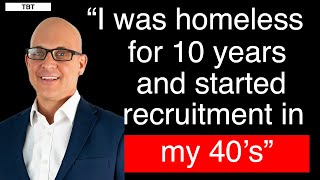
Pete Tomasco spent ten years homeless and addicted before his sister helped him get into a halfway house. He started in recruitment, overcame his fear of cold-calling, and eventually bought the recruiting firm where he'd worked, now called Integrity Placement Group. He credits his turnaround to daily discipline: early runs, cold plunges, meditation, and a willingness to embrace discomfort.
Chapters
Hey guys, welcome back to yet another episode of Top Billers Toolkit, where me and my twin brother interview top billers from all around the globe to unlock the secret to their success. Today's guest is Pete Tomasco. Pete has the most insane story I have ever heard. After growing up with an abusive stepdad, he watched his mother get murdered in front of his very eyes. At 30, he fell into a deep drug addiction that left him homeless for 10 years. Then in his 40s, he decides to get into recruitment to change his life around. And with hard work and determination, many years later, he ends up buying the very company he once started at. Ben and I were nearly in tears at multiple points in this conversation. Whoever's listening, this is going to be an insane rollercoaster of emotions. And Pete's story is the fundamental epitome of what you can accomplish in recruitment with hard work, determination, and a willingness to push past pain. I hope you enjoy this conversation as much as me and Ben did. Pete is an amazing human being, and I can't wait for you to hear his story. As usual, grab a cuppa or a glass of wine depending on when you're listening to this, and let's get into it, shall we?
Pete, thank you so much for joining us today, my friend. I am absolutely— I'm genuinely just really excited about this one. Really, really excited. The pre-call was one of the best pre-calls I've ever had, Pete. So thank you, my friend.
You're welcome. Thank you, Ben.
I think, um, you're sitting there very cool, calm, and collected, Pete, but I think people are really going to be blown away by the story today because I was when I spoke to you. Like, no joke, the things that you were telling me on the pre-call, I was like, this is insane. Like, this is This could be made into a Hollywood movie. That's how insane it was. And hopefully it will do one day. But before we get into your insane story, I'd love to ask you the very first question, which is what's the number one tool in your toolkit, whether it be a strategy, mindset, or software?
Yeah, that's actually a great question, Ben. You know, for me personally, it has always been and always will be my mindset and how I approach business and recruiting. Um, interesting.
Um, can you elaborate, Pete, a little bit? Like, why is mindset your— why, why have you chosen mindset above everything else?
Yeah, sure. So for me, just because of my background, right? And I'm sure we're going to get into that, um, a little bit as we get further along onto this. You know, for me, mindset is everything. It is how I approach life, right? It is how I approach my marriage. It is how I approach my relationships in business and with friends. And more importantly, you know, as specific to, you know, recruiting, right? I have just always been a firm believer in mindset is everything, right? It's how I prepare myself on a daily basis to actually tackle the job of recruiting. Because, you know, sometimes it can get a little tough, right? Um, recruiting, I'm sure in every single industry, right, has its ups and downs. Um, it can be a roller coaster, right? And so you have to have some mental stability to be able to handle, especially when it's going down, right? Um, when not everything is going well. So I just always Because I know that is the case, right? I always just try to prepare myself for the day, every single day, no matter what is thrown at me, even when it's good, right? Even when things are going well and you've got a bunch of new clients and the clients are working well and the clients are working the way that we want them to work and we're making a bunch of placements and everybody's making a bunch of money, right? You also need to know how to handle those emotions, right? You start dumping a bunch of money into recruiters' pockets, right? And they're not at the place where they can handle that. Like, I've seen recruiters derail from that before, right? And so it works both sides of, it works on both sides of the coin. That's why I just believe that having the proper mindset has always been and will always be the number one priority.
Yeah, great response, Pete. And I mean, I think, you know, you truly have battled with mindset for many years. I mean, everyone does every day, but you've been through an exceptional journey with your mindset, I think, because you, you were homeless for— when you told me, Pete, and this is the thing that blew me away, that you were, you were homeless, you said, for 10 years before you got into recruitment. And so you must have been through this insane mental battle for many, many years. Um, but I'd love to start there if that's okay with you, Pete. I'd love to start like, how did it happen? How did you actually become homeless in the first place? Can we start at the very beginning?
Yeah, so possible, right? But just actually be— bring a lot of clarity. Um, so at a very early age, I was 10 years old, um, I was, um, involved in some physical abuse at the hands of my stepfather. There was also some sexual abuse from somebody else in the family. And then what happened was, is when— and this went on for a number of years, right? And I didn't know that anybody knew that this was happening, this physical abuse at the hands of my stepfather. Right. But I didn't say anything to anybody. About it. And the reason I didn't say anything about it is because I also had a younger sister who was 1 year younger than me, and I knew that my stepdad was not hitting my sister, right? He was only abusing me. And my— as much thinking as I could think at that time, the only thing that I remember thinking is, is I know he's not hitting her, right? And so as long as he's not hitting her I'm going to weather this storm for as long as it takes. Right. And so at some point, my mother found out about it. Still to this day, don't know how she caught wind of it. But when she did, she finally immediately filed for divorce. Right. As soon as my stepfather got the divorce papers, just a couple of weeks later, he waited for my mother at an intersection a mile from the school when my mom was on her way to pick my sister and I up. He pulled his car out in front of hers in the middle of the intersection. He got out of his car, he walked over to her car, and he shot her and killed her right there in the street. Oh my God, insane. So right after that, my grandparents had— my grandparents had just— my grandfather had just retired from Ford Motor Company, my grandmother had just retired from Sears. They were planning on moving to Florida anyway. All of this took place in Cleveland, Ohio. My grandparents had planned on moving to Florida and retiring, right, and, and enjoying retirement, you know, playing golf 5 days a week and playing pinochle with some friends on a Saturday night. And, um, and they had a decision to make, right? It was either put my sister and I up for adoption, right, and hope that we landed somewhere safe, or bring my sister and me with them to Florida and raise us, right? And that's what they chose to do, right? The plans that they had for themselves of nice, easy retirement, right? There's plenty of money in the bank. They could just enjoy a stress-free life. They decided to put all that to the side and raise my sister and I, right? But, but what happened is, is, is for, for me right, the damage of the things that I just spoke about was already done, right, from a mental standpoint for me. So for that— so from 10 years old all the way up until 30 years old, you know, there was just always this mental struggle of, you know, um, me trying to find— and listen, my grandparents did a great job, right? We had— when we moved to Florida, we had a very stable environment a nice home. There was always food on the table. My grandmother and grandfather were always home. Right. But, but, but in my head, right, I was struggling. Right. Because of the emotion, because of the trauma that had happened. And, and I continued to struggle with it. I dabbled in drugs briefly at the age from 18 to 20, and then somehow managed to put all that to the side. And then from 21 all the way up until 30, I managed to, you know, kind of stabilize just a little bit. I got, I got a job that I had for 9 years. I worked at Walmart Distribution, got promoted up into a supervisory position. I ran the loading docks, you know, for a couple of years. But at the age of 30 years old, you know, I was still emotionally, internally just dealing with all this stuff and I just couldn't put my finger on it. So I, You know, unbeknownst to me, I kind of got back into drugs a little bit, really not thinking anything of it because I was 9 years removed from it. And so I tried some cocaine one night, you know, just on a whim, you know, with a friend, again, not really thinking a whole lot about it. And that was the beginning of like a runaway train that was going down a hill. I— once I started, once I did it that first time at 30 years old, I couldn't stop. And then within just literally within 12 months, I was, I was out of a job. My family didn't really want anything to do with me because of the drug use. I had backed myself into a corner. I was living in a home with— I had sold all the furniture out of the house. I had— there was no running water. There was no power.
Right.
I was kind of living destitute. I didn't have any money. So the town that I grew up in, which is just a small town just north of Tampa, Florida here, you know, I just remember thinking to myself that I had backed myself into a corner and I wasn't really sure which way to turn because at that time, this is 2000, you know, I mean, I didn't know about recovery. I didn't know about addiction. I didn't know, I didn't know that there was actually help out there because nobody that I knew was addicted to drugs or had any real mental health issues. So I just didn't know where to turn. What I thought I was going to do was leave my hometown, right? Go somewhere and get some help and then come back. Right. But what ended up happening is I left, I left my hometown in November of 2000. And for the first year, I lived, just lived in my car. Right. I didn't have any money. I ended up doing some, you know, some bad things on the street, you know, because I mean, you have to have money. All right. So I ended up turning to a little bit of retail theft, you know, stealing little things from a store to pay for, pay for some drugs, you know, once in a blue moon, get a hotel room. But I never, ever was able to get the help that I initially left, that I thought I was leaving for. Right? And then so what ended up happening is I just got entrenched into that whole drug-addicted, living on the streets lifestyle. Because at a year in, the car became disabled, and now I no longer had a car to live in. I was actually on— living on the streets. And just one thing led to another, and then before you know it, one year became two years, two years became three years, three years turned into four. I had no communication with my family. My daughter was 10 years old when I left. There was no communication with my kid, no communication with anybody. And then before you know it, I just, I was just one of those bums, you know, that a lot of us see that live on the streets, that live on the homeless. You know, you may see them, you know, sleeping on the sidewalks. I was eating out of dumpsters, sleeping in the woods, sleeping in the mud, sleeping in the rain. And then before you know it, you know, and it's what seemed like in the blink of an eye, it was 10 years later and I had had no communication with my family, no communication with my friends, no communication with anybody, um, that I had left. Wow. In the blink of an eye, it was like it was a decade later.
Thanks for sharing that, Pete. That is truly the most, uh, yeah, one of the most insane stories I've ever heard, just in terms of the roller coaster that you've been through. And the first thing that jumped to my mind is, you know, I don't know what the success rate of homeless people actually getting help and then getting off the street, but I'm pretty sure it's very low in the UK. I don't know what it is in the US. So my first, my first thought is, what happened? You go from homeless to to life starting to get a bit better somehow. Do you remember the moment that you were homeless and something started to change?
And what was that moment?
I'm completely fascinated.
Yeah, so I remember— I'll tell you what it was. So I was, um, I was in West Palm Beach, Florida. Um, I remember I was walking down Congress Avenue. This was at the very tail end. I was walking down Congress Avenue, you know, um, it was in the middle of summer, and then in, you know, summer here can get pretty brutal. Right? But when you're out there living on the streets, it doesn't matter the temperature, man. There's no shelter. But I just remember I was just so exhausted that I just laid again. You know, I just laid down in the grass. And I remember thinking to myself— and I'll be honest with you guys, I don't know if I was praying. I don't know if I was talking about it. But I do remember saying, man, God, man, this just doesn't make any sense. You know, how could I be possibly living like this? This just doesn't make any sense to me. And the very next day, again, I was— got arrested, incarcerated again. Well, this time while I was incarcerated, my sister actually found me. What had— what happened is— well, what had been happening for the last couple years of, of probably 8 years, 7, 8 7, 8, 9 of me being homeless, right? What my sister was doing, unbeknownst to me, is her and some friends, they would just call local jails all over Florida to see if I was in that jail, so at least they would know I was alive. Um, and on this one instance, she just happened to call, um, the Osceola County Jail, which is where I was. Right? And they said, yes, we have an inmate, Peter Tomasco. So she sent me a letter, right? And in the letter she sent me her phone number. I called her shortly after my, my sentence was over. Uh, they had me on a Greyhound bus and I was back here to Sarasota, Florida, where my sister lived at the time.
Wow.
So your, your sister—
there was something— obviously your sister came in And but what happened?
What?
Because it was still very easy for you, Pete, to go back to the same way of living. Do you see what I mean? Like, you had been 10 years homeless, homelessness, a lot of trauma, drug, um, drug habits. Like, you could have easily just gone back to the same lifestyle. I understand that your sister intervened, but what happened to change your mindset to go down a different direction, if you don't mind me asking?
No, that's— and it's actually a great question. So shortly after I arrived in Sarasota, um, I got into a halfway house, right? Um, and the first decision that I remember making was I was 2 months into living in this halfway house, right? And I just remember thinking to myself, as soon as I got in— like, Sam, kind of goes along with what you're saying— like, when I first got to the halfway house, my immediate The plan was stay there for a short time, right? Get a job, you know, get a little bit of money in my pocket, and then I'm gone again, right? Because I was still wrapped into that using mindset, that mentality of living on the streets, and I was planning on going back. But something happened. I remember laying in bed one night and I remember thinking to myself, I wonder what would happen. What if I just stayed here? Right? What if I just stayed instead of running back to the streets? I wonder what would happen. Right? So what I did is I made a decision to just stay there for a year. And I did. I stayed for a year. And what I found along that year's journey was I started to gain some clarity, right? Because at some point, you know, the drugs and the alcohol start, and it does take a while for for all of that stuff to start to get out of your system. I then got into actual recovery, right? And started to learn some things about myself that I actually didn't know before, right? That all those childhood things that had happened to me, all of those things that for a long time kept me on the street, kept me in a feeling of feeling like I was a piece of shit, like I was nothing, like I didn't deserve anything. All of those stuff, all of that stuff had nothing to do with me. None of that stuff was my fault. I was just bearing the consequences of it through my thought process. But I didn't know that before, right? So once I got into recovery and I started to learn these things and I started to gain a little bit of mental clarity, and I would go, you know, and I went for a first year without any drugs, no alcohol, right? Um, I bought my first little car. I opened up a bank account. I put a couple dollars in the bank account. I got a job with a friend painting houses that I met in recovery. And then I started to feel really good about myself for the first time that I can really ever remember. Right? And then, then I got into recruiting in 2014. You know, I had developed some friendships here in Sarasota. And once I got into recruiting, I heard something that just really clicked with me. And it was, it was that, you know, and maybe you guys have heard this before, but it was definitely true for me that the recruitment industry is really a personal development course disguised as a career.
I love that.
That's such a great thing.
So true.
And, and, and because recruiting just did, it just started to give me confidence. About myself because what I found is, you know, that initial fear when you get in is you're afraid to have a call with anybody, right? Because you're afraid of the judgment that's gonna come on the other end of the phone. And it doesn't matter if it's a new client or a new candidate, right? There's that little bit of tingling fear of the unknown. Once I started to get past that, I started to think about, think to myself, you know what, man, this could be a pretty good gig, you know? And then I was starting to work out a little bit and I was starting to feel real healthy. And then I just thought to myself, I want to see it. Let's see what I'm really capable of here. Let's see how good I can really get my life. Let's see what type of impact can I really make in this community, in recruiting and in recovery and in my local community of here, Sarasota. So ever since then, it's just been this personal thing of let's, let's see how good it can actually get. Let's see how many people I can actually impact and let's see how much better that I can make myself. And then ever since, since 2015, it's just like this been non-stop of more, more, more, let's do more, right? And one thing has led to another, which is, you know, the three of us sitting on this podcast this morning.
I love it. I'm, I, I'm actually getting quite emotional listening to your story because it's like so amazing and it's so I can feel everything you're saying, and I just— yeah, it's just, it's just such an amazing story, and I feel like you've been through such an incredible journey, and mixed probably with so much pain and so much euphoria and so much triumph and so much— yeah, just, I really appreciate you sharing this with us because it's just an amazing story. I think so many people are going to love listening to this.
Um, I'm just wondering, Pete, because like Ben said at the beginning, it literally could be made into a Hollywood film, this, you your story. It's honestly that insane. How do you feel sitting now with, you know, insanely successful business, knowing the insane journey you've been on? Like, how are you feeling? Do you constantly think back to those days thinking like, I can't believe that was my life, like, that was insane? Or like, can you tell me a bit about that? Because for me, it's still mind-blowing.
Sam, that's actually a great question, and the answer to that question is no. Um, I, I don't think about it, right? Um, and I think— and it's— I've been asked this question a few times, and I think the reason is it doesn't seem like a big deal to me because I'm the one that's lived it. That makes sense, right? And to me, it just seems like something normal, right? Because it's been my personal lived journey, and the And to be honest with you, if it wasn't for, you know, like you guys, you know, and some other people, like recently I was, you know, I also sit on the board of directors for LightShare Behavioral Wellness and Recovery Centers here in Sarasota. And the CEO, Shawnee, you know, she asked me to speak during the fundraiser. You know, it's this really highfalutin, you know, 5-star restaurant. You know, and, you know, and she asked me to come and speak. And the only reason that I do this kind of stuff is because I feel like it'll resonate with somebody, you know, even if it's not the homeless part, even if it's not the drug addiction part, right? Even if it's not the mental health aspect of it, there'll be something that I say that somebody will resonate with that'll be able to just help them just a little bit, because I know for me, Literally everything that I have learned since day one of this journey, I have heard from somebody else. Everything. Yes. Nothing, nothing that I have done or am doing is new, right? That's why I listen to podcasts like you guys, right? I read books, I, I gather information constantly, and when I hear something that resonates, I try to implement it into my life.
Really interesting. Um, sorry, Ben, I've been asking lots of questions.
No, it's okay. It's hard not to with Pete.
Yeah, there's like a thousand.
I think I'm gonna— I'd love to go to— because, you know, not only did you just get off— so this is, this is what I find even more fascinating, is not only did you kind of completely turn your life around, Pete, and go into recruitment, but you ended up then purchasing the company that you used to work for, which is like amazing. So I'd love, I'd love for you to tell the, the viewers just a little bit about that. So you went into recruitment, I think you exited— I won't, I feel like I'm going to butcher the story, but can you tell us how you're recruitment to then purchasing the company that you used to work for? I'd love to hear about that.
Yeah, sure. So the company that I currently own, um, Integrity Placement Group, right, is same organization, you know, that I really cut my teeth in recruiting, right? Started here, uh, worked here for 5 years. And then in October of 2022, right, I was just at the point recruiting, you know, because when you— when you're— when you're just a recruiter, right, um, there's only so much you can do with inside the organization, right? You can only have— you can only build a team so big right? You can only have so many clients, you can only have so many placements, you can only have so much of an impact. And I was starting to feel that in 2022. So I did what I think what, you know, a lot of recruiters do, you know, in today's market. You know, I just— I got a couple business partners, some other recruiters that were here also, right? And I just said, hey man, listen, why don't we bounce from this place and go start our own gig? You know, and they were on board with it. So we, we did everything the right way. You know, we were under at that time, you know, a non-compete, 2-year non-solicit. We went and sought out a lawyer first, right, to make sure that we were operating, that we were going to do everything correctly, you know, under the terms of our operating agreement. So we did. We came, we showed up here one day, turned in our resignation letters. We honored the non-compete part of it. We had— at that time, it was a 6-month non-compete, right? So we honored the 6-month non-compete. And what we did during that 6 months was continue to meet together on a weekly basis, right? And I think we did— the reason that we did that is because 6 months is a long time to just not be in the recruiting industry. It's literally a lifetime. Right. So what we did is we would meet together every single week, um, at each person's house. We would alternate and we would talk about business and we would talk about things and we put training manuals together and we did all of the back-end work, right, that was going to take to launch the company when it was time. And then in October of 2022, um, 6 months later, literally to the day, um, We had everything ready. We launched the company, um, massive explosion, right? Did a lot of business really quickly, hired people, got them trained fast. Um, but then we ran into a little bit of a problem that none of us foreseen, right? And only because we just didn't know, we didn't have the experience, right? And I always equate it— now I equate it to dating, right? When you first meet somebody and everything is good for those first— maybe even for the first year, right? You are pretty convinced that it's going to last forever and what could possibly go wrong. And that is the mentality that we had, right? But what we found, um, as we started to head towards, uh, Q3 of, of, of, uh, year 2 or year 1 No, year 2 is that it's really, it's really difficult, right, when you have 3 equal business partners in any business, and especially in a recruiting company, right? Because what we wanted to do and what we tried to do and what we did do is any decision that we made, all 3 of us had to be on board in agreeance. Right? But we started to run into problems, right? I think we all could see the writing on the wall that it's— that's not sustainable, right? You have to have— 2 business partners is definitely manageable. 3 is a crowd for sure. And that is something that none of us had thought about prior, right? So we made the decision that I, that I would exit the company right, and go figure something else out, right? Um, it was a very amicable split. Um, there was no lawyers involved other than once we got the final exit agreement written up, like, we, we contacted a lawyer so he could write up, make sure it was done the right way. Um, they gave me my fair share of the value of the company, which was pretty substantial even for a very short 19 months in, we did really, really well. So they gave me my fair share of the company, and my plan was to just go start my own firm brand new. I was going to build it from the ground up all by myself. But there was another, another opportunity that came to the table before I actually got it launched. I had the company name up, right? I had the website up. At least in place. I had an ATS system in place, but then another opportunity showed up unexpectedly. I was not thinking about it whatsoever, but Integrity Placement Group, which is the company that I left that I now own, the owner at the time, what happened is I was actually, we were actually in Dallas to watch the Jake Paul-Mike Tyson fight. And yeah, and while we were there, um, Bill, the guy that owned this company previously, or one of the owners, we were just having lunch, I mean, breakfast or coffee the morning of the fight. And, um, you know, sometimes it's— I'm not sure how it happened, and I— and it makes me— the reason it makes me pause, because I'm not a super, super big bull— I don't, you know, I'm not a firm believer in God, um, but like I felt in that moment, without even thinking about it, I just looked over at Bill and I said, have you ever considered selling Integrity Placement Group?
Oh wow.
And he, and he said to me, he said, He paused for a second and he said, why? He said, who's asking? And I said, I said, I don't know, Bill. I said, I think I am. And, and so that just started the conversation of— and then literally 10 days later, we were sitting in a lawyer's office exchanging exchanging a large sum of money and, uh, finalizing documents.
Wow.
So am I right in saying, uh, Pete, you didn't go to this conversation with any preconceived idea of asking about it, but you had this epiphany or this— I don't know, something came to your mind and you just asked the question? Am I right in saying that?
That is very accurate.
That's crazy. I, I do— I, I mean, I know this is not a religious podcast, but I do believe in a higher power and the universe. And I don't know, maybe don't call it God, but there is definitely another energy at play. And I, I'm a firm believer that I believe in that. Awesome. And it's got a— I mean, by the sounds of your story, I feel like although it's probably 99% you, Pete, I'm sure there's something the universe had to play to guide you into these decisions and all the, you know, into the place you are, which is amazing. Um, But yeah, wow, that's crazy. And so, okay, so you're sitting 10 days later, you're sitting on the table negotiating this deal. Um, what did that feel like? I mean, that must have been pretty insane to be like, I'm just about to buy a company that I used to work at. Like, what, what was that? What did it feel like in that moment of signing those documents and kind of getting that ready?
You know, again, you know, I, I can only relate it to my personal feeling right? It didn't feel like a big deal, right? Just like talking about, just talking about, um, you know, when Sam asked earlier, like, what is it, what does it feel like, you know, looking back on my personal journey, um, that, that didn't feel like a big deal. It still doesn't feel like a big deal to me. It just seems normal because it's my lived experience. And the same thing when we left the lawyer's office, um, I, and I'll be honest with you, like before we went to the lawyer's office, like I came to the office, met everybody. A couple of the people that I was currently colleagues with were still here, right? We all sat down and we had a conversation of— I had a conversation with them about what I was thinking about doing, right? To see if everybody at least was going to be on the same page, at least get their thoughts and feelings. Um, everybody seemed in agreeance. They're like, yeah, man, we think that'd be a great idea, right? And so, um, but once we signed the paperwork, um, I left the lawyer's office, I came here, um, and I had our— I had our IT guy set up my computer, right? And, um, I went to work.
I love how blunt that you are about it, you know.
I mean, because, you know, at the end of the day whether, whether, whether you are the CEO of a company, right, or in upper management of a very large company, right? And I can't relate to that because I don't know what it's like to run a 50, 100, 200, 300-person company. But especially when you're in these smaller boutique type of firms, right, there's still a job to do. Right? At the end of the day, when all of the smoke and mirrors are cleared away, like, I'm still a recruiter, right? It's what I do. It's a job. I have a desk out there with everybody else, literally right in the middle of everybody. And every single morning I come here just like they do and I sit at my desk, right? And I start the day.
Interesting. The thing that I— sorry, Sam, I've been— go ahead. No, it's okay.
I'm just— this question just came to mind because I'm just fascinated. I'm just— what drives you now, Pete? Because you're obviously in a very different part of your life. You're in a company, you've been through a crazy journey. I know you're not thinking too much about the past because it's normal to you, but like when you turn up to work every day, what excites you? What drives you? What's going around in your head to to, to drive forward, if that makes sense? I'm just curious.
Great question. So what, what my thought process is today is, is to build this company again, right? One of the things, you know, and here's sometimes the unfortunate part of, of, of owning a company, right? You have to evaluate, you know, often of the team that you have. And the one, one of the things that I had to do on day one is to let some people go, right? Because there were some toxic, toxic people here, right? And, and what made it even harder is they were very high producers.
Oh wow, interesting.
Crazy, right? So that was— listen, it wasn't for me, it wasn't difficult for, for me, a decision for me, right? Because I already know what toxic toxicity looks in the workplace. Right? And you just can't have it in a recruiting company, especially when you're a smaller boutique-type firm, right? If you're running a 5, 10, 20, 25-man team, like toxicity in a workplace, no matter how well the recruiter is doing, will just— it cultivates negativity, right? And it dampers growth, right? And it dampers enthusiasm. And I knew that. And so when I had to do that, I just knew there was a few changes that I was going to have to make, right? Because I still believe, like, the only way for a company to thrive, right, it has to cultivate a work environment that people want. It has to cultivate an environment where people want to be. Right, where people feel safe, right? And when you create those type of environments, that's when people really thrive. If you have one or two people that are just the opposite of that but are really good earners, does that work for the bottom line of the company? Well, sure it does, right? But is it good for the overall health of the company? I say no, right? And so what I'm focused on right now is rebuilding, finding new people. Um, we've got one, uh, coming on Monday morning. Um, just went through a nice little interview process. She'll be here Monday. Um, I got another next Tuesday as a final Zoom interview called— Zoom interview scheduled with another guy, right? Is finding the right people and then setting the tone. For the company, right? Because the one thing that happened while I, while I was gone, right, is, um, the one owner, Bill, that I was talking about, right, he had another company, so he wasn't able to be here every single day, right? And just in his absence, right, negativity started, right? So what I've learned is, is it always start— it always The company culture always starts from the top, right? It, it is all dependent upon me. I am the leader of this company, right? And how it grows and succeeds will depend— will depend on how I show up on a daily basis, because people are going to do exactly what I do. They're not going to do what I want them to do. They're not going to do what I hope they'll do. They're going to do what I do. They're going to follow my lead. And if you lead the right way, people will inherently just follow your lead.
That's great advice. Um, it must have been interesting as well. I'm not sure, because you, you joined the business, and I guess the plus of that is they, they would have had— although there would have been, I guess, some toxic employees— they had a lot of systems and processes already in-built. Am I right in saying that, Pete? I'd love to like, was it a big transformation with that or was it helpful joining a business that had already been built, you know, from the ground up? What was that experience of kind of going straight into a business that was already established?
No, it was not easy. Oh, really? Okay, interesting. No, quite the opposite. There were no— the recruiters that they had obviously were good. Right? They were able to do the job, but everybody was doing the job just a little bit differently. We had some people, some people that were using the ATS system, some people that were not, right? Some people that were following the scripts, some people that were not, right? And by themselves, they could get the job done, and they did it really, really well, right? But in order for a company to grow right, Ben, which is what I was talking about— systems and processes and procedures, right? You have to have something in place, right, in order for it to be scalable, right? It can't be you just bring somebody in, you teach them the basics, and then just let them go and hope they fly, right? They have to have a path to follow. So the problem that I ran into, and it took me a little bit, is to get the people that have been here for a while that were doing well for themselves to say, hey, stop doing what you've been doing that's been working, right? And then start doing it this way, right? And you have to be very delicate about that, right? Because you'll get pushback. I mean, we're talking about seasoned recruiters here. Like, you can't just come in and say you have to start doing that, right? You have to gently, just slowly start to teach and explain, explain why I'm asking them to do this rather than say you need to start doing this. Because telling, telling any human being you need to do this has never worked, right? So, but when I explain of why it makes sense for us to use all the templates that, that I set up in Crelate, which is the ATS that we use, right, explaining to them the importance of using this and how it helps us and helps the recruiter behind them that may work on the job following you during the next job order meeting. When, you know, because Crelate tracks everything, tracks all the phone calls, tracks all the text messaging. When somebody else comes in behind you to work on a job, they can see the work that you've already done if you're using the system the right way. And that is the benefit. but you have to explain all that stuff.
Yeah, that makes perfect sense. So I guess, I'm guessing there was a few, quite a few things you turned around by the looks of it, but one of the fundamental things was getting everyone on the same system, using it, tracking their data really, so that you can get a, you can get a streamlined process that new recruits can then use. Am I right in saying that, Pete?
Very accurate.
Awesome, that's really interesting. Was there anything else that That sounds like the main thing. I just want to make sure I'm not missing anything. Was there anything else that you had to turn around that was a focal point for you to make sure that, you know, this was a scalable business?
Yes. The first thing that— another thing that I implemented was the mandatory morning meeting in the conference room, which I think you can see way back there. Yes. There's nobody in it right now because everybody's at the beach. Yeah, yeah. Um, they were, they were not doing morning meetings. Like, everybody would just, everybody would just show up to work at 8:30 and just kind of just go to work. Um, that may have worked a little bit for a while, but the reason that I, that I started to implement the 8:30 meeting is because, again, like, it's about everybody feeling like a team. Because at the end of the day, right? Even though everybody here, you know, they're their own recruiter and they may or may not have their own book of business, right? At the end of the day, this is still a team sport, right? And you need to make everybody feel like they are actually a part of the team. So that means bringing them together, right? And so again, right, I just couldn't come in here and say, listen, from this point forward, We're going to have— we're going to start having morning meetings at 8:30. I had to sit down with everybody and explain why this is important. Right. And before you know it, everybody got on board. And then I did the same thing. We have a 1:00 meeting when everybody comes back for lunch. It's a very short meeting. When I say— I don't know, I think short. It's 20 minutes, right? We kind of just— everybody plugs back in. Make sure that nobody's in a food coma from lunch, right? And then I will do a, uh, do a short training, you know, um, or I'll ask one of the— I'll ask one of the seasoned recruiters like, hey, can you just do a short training on this, you know? Um, and again, it's just to get everybody re-engaged after lunch, to everybody— everybody's on the same page again. All right, man, let's get back at it.
Awesome, that's so cool. And What was the difference from once you started implementing the morning meetings and the afternoon meetings?
Did—
maybe it's too soon to tell, but, you know, for tangibles. But what difference did you start seeing, Pete, in the energy or performance or attitude of the people that you were working with?
Great question, Ben. It has absolutely been night and day. Wow. It has absolutely been a night and day shift. Between how everybody is interacting with each other right now. I, I listen, I— and this is one of the things that I said when I first got here. I've always believed it. I know it's true. And now I'm starting to see the fruit, and they're starting to see it too. It's like a really— especially when you're a boutique firm, everybody's in a cubicle kind of right next to each other. A recruiting company has to be filled with laughter. I love that, right? Yeah, it has to be filled. If people are not out there on the floor laughing, something's wrong. And once we— once I kind of asked them, hey, let's start having morning meetings, this is the importance of it, and we just started doing it day in, day out. Now on any given day, or if they were here, but like, they're out there, they're still getting the job done right? They're still doing the things that I've asked them, right? And now everybody is having a great time again.
I love that. I wasn't expecting you to say that, actually.
Well, you know, because it's, it's, it's really easy to isolate, you know, as a recruiter, even within a company, right? If you don't have systems and processes like that in place, right? It's really easy. And I'm sure maybe you guys have experiences like, it's real easy to just come into the office because your mindset It's just, I need to get to the desk, I need to get on the phone, I have business to handle, right? And before you know it, you've completely separated yourself from the pack. You let that start to happen with 10, 12, 15 recruiters and the bottom line looks good, the company looks good, but you've got 10, 12, 15 people that don't even have a lot of conversation between the monks themselves. They're just showing up, they're banging out the job, and then they're out of here. There's no company culture in that. Yeah, right. That doesn't create excitement. That doesn't create laughter. So you kind of, again, you have to bring everybody to the table. Um, but again, you have to explain why. Well, I had to explain why I believe that this is important, right? And you know, everybody just got on board and now we're seeing the fruit of it, which is why, you know, like I said at the very beginning, just yesterday at our 1 PM meeting, just we're all sitting around the table having a conversation about a company, a company outing. And before you know it, they were like, hey, how about if we just take Friday off and everybody's on their own and we can just go to the beach? And there we go. I love that. But if I don't have those mandatory meetings, and I hate even using the word mandatory, but they kind of are, right? Like that conversation that happened yesterday never happens. And everybody, you know, everybody's here on a Friday working like a normal day.
Really interesting.
I might do something that annoys both of you, but I want to go back in the story because there's one thing in my brain that I'm still asking Pete, which is when you got to the halfway house, which sounds like that was really the big change in your journey. You got to the halfway house, you had a place to, to stay, stability, and to think and to clear your head. And then you started doing jobs and meeting people that improved your confidence. But I'm still fascinated how you go from the halfway house to where you are now. It's still a huge leap, and I'm just wondering if there's been anyone or anything in terms of mindset that's kept you going to push to even greater levels? Because it could have been very easy for you to come out of the halfway house, get an average job, and just kind of stay average. But you've really gone 100% above that, and that's very rare. So I'm kind of asking myself, what happened? Is there anything else that happened that helped Pete do that? Do you see what I mean?
Yes, Sam. And listen, that is a great question. And I, uh, I will tell you, it wasn't one thing. There were many, many, many little things, right? Tiny little things that I just started to gain confidence, right? And I don't know how this is going to sound because I've never really spoke about it too often. That's why I think it's actually a great question for me to talk about. Um, I'll give you one instance, right? One little tiny scenario. And, and I could speak about this about a number of topics, right? Um, very shortly after that, the same time that I got into recruiting my very first year, was the same time that I heard that recruiting is actually a personal development course disguise as a career. I started running for the very first time in my life. And again, gotta remember, I, at this point, the conversation we're having, I'm 43 years old, right? That's when I came off the streets. I was 42 years old when I finally got off the streets.
Wow, absolutely great, right?
I'm 56 now, but back then, um, Going back to the running, and I'm starting to realize, I'm start thinking to myself, let's see how far I can push this thing. Let's see how good I can be at whatever happens. So I'm starting to run. And the very first, I'll never forget it, the very first time I went for a run, right? I left my house, I turned right, and I ran. It was about 5 houses away. Right. And again, at this time, I don't— I didn't look much different in terms of physicality than I look right now. Probably still weighed around the same, 180, 185 pounds, but just never been done any type of endurance sports, never exercise anything like that. And I ran 5 houses away, right? And I was doubled over, hands on my knees, sucking wind, right? And it was probably 80 yards, right? And then I kept walking, right? And I made it all the way around the block. Walk, run, walk, run, walk, run. And, and then the next morning, the next day, I did that same thing. But I remember thinking to myself, if I could actually run to the corner, right, that'll be a big deal without stopping. And I just, I ran past the house that I previously stopped at, and I ran all the way to the corner before I stopped and sucked in wind. And I remember in that moment thinking to myself, I can really push myself, right? I can, I can actually push past what I think I'm capable of doing, right? And one thing led to another, and then I started to run longer and longer. And I remember during one of those runs, again, it was summer, it's hot here in Florida, and I was probably 3 or 4 miles from my house. And, um, I just remember stopping, and it was hotter than you know what outside. And I just remember thinking to myself— God, this is bringing back some memories, Sam. Thanks, man. Um, I remember thinking to myself, I have no idea why I'm doing this. Why am I pushing myself so hard? You know, because I'm— you talk about physical pain, mental pain. I don't want to be out there in the hot heat. I don't want to be running. I would rather be at my house in the air conditioning, sitting on the couch on a Saturday watching TV. What on earth am I subjecting myself to all this pain for? And I remember I literally said that to myself. Why am I doing this to myself? And I remember the thought that came to my mind was is, I don't know, but don't stop.
That's interesting.
I don't know why. And so I have kind of just used— it's all— it's just been a number of things where in my personal life, in this business, with my cold plunging, you know, that I've been doing for a couple of years right now, the morning runs at 5:00 in the morning. I really don't want to do any of that stuff. But why not?
I love that.
Why, why not, right? And so I've just tried to continue to just, with myself, push whatever I think is possible. Just try a little bit more, right? And just because, you know, and that's kind of just where I am, um, you know, with my wife, you know, um How I met her, like, I was, you know, I was, uh, asking her on the first date was petrifying, right? But you just got to push past the fear. Here's what I've learned about myself in, in this, in this whole big picture. I am really scared of almost everything. There's always fear of the unknown, but I've just— you have to push the fear aside. Right, and go anyway. And I've just always adapted that mindset of no matter what I'm feeling inside, you just say yes and go for it.
Love that. That's such a great—
thank you so much for sharing that, mate. And it sounds like the running was like—
was that—
am I right in saying the running was the first moment when you were like, okay, I can push myself? And it started like almost like a domino effect of pushing, pushing, discomfort, pushing? That was the first.
No, I know. I think the very first thing was probably when I get my first year into recruiting, right? I was deathly afraid to pick up the phone. I mean, because you got to remember, I'm only 2 years removed, no, 3 years removed of being off the streets, right? So I'm just at the place where I can look another human being in the eye, right? Because I'm still shell-shocked. And now my buddy convinces me to go to this recruiting company because he thinks I could be good at it. And now I have to pick up this phone and you, and you want me to talk to a doctor? Like, are you kidding me? Like panic-stricken. I mean, there was, there was a— I don't know if anybody else does this, but I did. I had to do it early on. Like I would make the phone call and whoever I was trying to call, they'd pick up the phone and hang the phone up.
Yeah, I'm sure people have done that before.
Even because I was so scared, you know, but I remember that's what started to give me real confidence, right? Which is probably more important to this conversation, right? Is I was so fearful of that phone, right? That once I started to just— because listen, if you're going to be in recruiting, you got to overcome the fear. You have to. There's nothing else to do. What do you— or quit. right? And for somebody like me coming from where I was coming from, um, that phone like was literally the game changer for me. Because once I started to— once, once I made— once I dialed the phone number and then that person picked up the phone and I actually didn't hang it up and I actually had the conversation, right? And I went through all the screening questions, right? And they said, yes, Pete, I would love to go interview for this position. You want to talk about excitement? It's like, oh my gosh, I did it. Oh my gosh, I have a candidate, right? And then you actually get the candidate in play and then they accept the position. You get that first placement. Game changer.
It's amazing.
That's why I say like the recruiting business has absolutely changed my life.
Yeah, it's literally, isn't it? It's funny, people say it has, but it's completely transformed your mindset. Well, I'm sure lots of other things, but yeah. Wow, what an amazing—
I was just about to say that. This is why I love this industry, because you were homeless for 2 years off the street, and now you have— you're running a company, the previous company that used to work for Pete, which is insane. Like, there's not many other industries you can say that that could happen. As long as you have the right mindset and the drive, like, literally anything is possible. I've done quite a few posts on this, and you are the walking example of that, Pete. So, um, yeah, just thank you, Sam.
I appreciate that.
Yeah.
Um, last— Ben, do you have a question? I just want to go ahead. I always like, um, I'm guessing you still run, but I'm wondering what habits you've kept, Pete, and you're doing now that are continuing to build upon your mindset. I'm just really curious to understand, understand that.
Yeah, so for the last 2 and a half— well, I've never stopped running, right? I continue to run. So the habits that I incorporate now is I get up every, every morning at 4:30. By 5 o'clock in the morning, I am out my front door and I go run 4 miles. When I get home from the 4-mile run, I come into my house. I dry off real quick because usually I'm pretty sweaty. Then I hop right— I have a cold plunge at my home, right? I hop right into the cold plunge for 3 minutes. Right now I have the water temperature set at 50 degrees. Right. And so, and then after the cold plunge, I go shave, right? Go read a couple of daily meditations, and then I put my headset in. Right? And then I start listening to some type of audiobook, some podcast, anything. And then I do that all the way up until 7 o'clock, which is— at 7 o'clock is when I actually go wake my wife up for her day, get her out of bed. Um, yeah, so that's, that's what I do. And I've been doing that for quite a while now, you know. And I think between— listen, and listen, and I will tell you I, between the running, forcing myself out the door at 5 o'clock in the morning to go run 4 miles when there's not a single thing in my body that's telling me to go do it, is what helps with mentally. And then when I get back from— and all of this is, that's why I think mentality is a mindset for everything, right? Because I don't want to go run in the morning. I would rather stay in bed for an extra hour, but I know, but I know that's not good for me. No, not— that's— that cannot be a recipe for everybody out there, right? It's just what, what, what works for me. I'm not advocating for this, but it's what works for me. So, and then when I come back from running, you know, I'm pretty hot, right? And the thought of actually jumping into a tub of freezing cold water for 3 minutes is, is not exciting, right? Because that water, that water is really, really cold. And I could think of 15 different reasons of not to get into that water, that would make perfect sense. But I will tell you what happens every single morning without fail when I get into that water. First thing I do is I just— I set the alarm on my phone for 3 minutes, I jump in, um, and when that— the alarm goes off after 3 minutes and I step up out of it and I get out of that cold water, I have just this amazing feeling of like, I literally can conquer anything. I can literally do anything. Because there's nothing— there's nothing more frightening than freezing cold water. But it's good for your mentality.
Yeah, yeah.
We haven't got a cold plunger, but I do cold showers. And me and Ben have been big cold exposure therapy for quite a long time.
So then you guys understand, man, what we're talking about here.
Every morning I get the same feeling, like, oh no, not today. And I turn it on and then I get out and sometimes I do a little scream.
I'm like, yeah, dude, Sam, I do that every morning, man. I hear you.
Yeah, man, it's so funny. If my wife came in and saw me sometimes, she'd think I'm absolutely mental. I've tried to persuade her into cold showers, but she's like, no bloody way am I doing that.
My wife is the same way. She's not having it. I actually got her in it one time.
So did I. Yeah.
And she was like, I'm good. But yeah, I mean, since we're talking about it now, that is actually what I do. Like when I stand up, same thing that you described when you guys get out of the cold shower, right? When I stand up out of that cold water, it's just like, yes. Like there's just feeling of, it's just such a good feeling. And I think it's, it's the feeling, it's the feeling of accomplishment. Yeah, right. That is, that is where that emotion is coming from, is that feeling of accomplishment, right, of being able to subject yourself to something that is very, very uncomfortable. And then when you're on the other side of it, you're like, yes, I did it. And there's literally no better way to start your morning.
I keep coming back to this time in my mind, which is the, the, the trick to true happiness is pain and discomfort. I like that. That's always been my kind of— I keep hearing it and I keep— no, my philosophy now is like, you, in order to be happy, you have to embrace pain and discomfort. I don't know if, if you guys resonate with that, but this is kind of what I'm like. That euphoria, that feeling of accomplishment, that feeling of you know, being worthy and adding value to the world. Like, it always and only almost in my life comes through the painful journey or the difficult path to get there and overcome something. Um, and I feel like that story and the gold showers is, is an example of that. Um, don't know how you guys feel about that.
Yeah, totally agree, uh, 100%, definitely.
Yeah, I agree. You know, I mean, for me, for me personally, right, as in this, and, you know, the caveat to that is that that is not true for everybody, right? And my, my wife is a perfect example of where that is— that doesn't need to be her truth, right? She is a very successful professional, right? She doesn't need cold showers. She doesn't need long runs early in the morning. Right? I mean, does she work out? Yes, because I think that's pretty normal in today's society. But she doesn't need to create suffering in her own life to find true meaning, because at the end of the day, um, she knows who she is, right? But, but for me, right, I am not that person, right? And that's why I think the beauty of it is there's a there's a variety of things for everybody, no matter where you are on this journey of life, right? I think the important part of it, Ben, is what, what you talked about, is for you to pursue whatever it is, whatever thing that you need to do, if you need to do something, right, to find true meaning and find true happiness, right? I would encourage you to do it, right? For me, I listen, and this my, the things that I do in the morning now may not be true in 5 years. I might not need to do those things. Right. But for right now, it is, it is like my number one priority, because I intuitively am still aware that I want my, because my default mechanism, and I think most human beings, right, is just you're hardwired to always seek the path of least resistance in every area of your life. I think that's inherent in most humans, right? It's, it's triple for me, right? I am always going to seek the path of least resistance, but because I'm aware of that for myself, I avoid it. I do just the opposite.
Yeah, yeah, it's really, really good, good point, Pete. Um, Pete, I've just got to say thank you, mate, because this has been an amazing podcast. I've enjoyed, and you've captivated my attention literally for every minute of this podcast, which is rare. Me and Sam don't normally come into these podcasts and every minute you have our attention. It's, you know, just thank you so much for sharing your journey. Thank you so much for coming on today. And, you know, you're honestly an inspiring man and someone that I would love to keep in touch with and hopefully have on again one day. But Pete, thank you, mate. That was amazing.
Listen, it has been an absolute pleasure. I have really enjoyed this. And I would love— will absolutely stay in touch with you guys for sure.
Hey guys, thanks for tuning in to this episode. If you enjoyed it, please don't forget to subscribe on YouTube and Spotify. Tune in for another episode next week, and we look forward to seeing you again very soon. Peace and love.
More from Sam




The difference between a $200K biller and a £1,000,000 Biller (full Breakdown video)

how to go from agency recruiter to Lone wolf (Advice from a $2.4 Million biller)



This Recruiter has billed $750K+ for 30 years straight. (Master of Consistency)

How to increase your candidate response rate by 25-30% (Whats app messaging system)


This recruiter has billed $1,000,000 for 5 years straight! (Master at Enterprise deals)