This guy will level up your mindset (Coach to Seven figure recruiters)
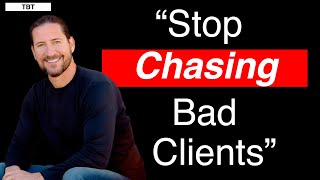
Gary Stubble, a former top recruiter turned peak-performance coach, teaches how to separate your best work from your worst. He uses a "Rainmaker" system to delegate tasks you hate, emphasizes daily outreach habits like the 10-by-10, and stresses that how you do anything is how you do everything.
Chapters
Hey guys, welcome back to yet another episode of Top Billers Toolkit, where me and my twin brother sit down and interview top billers from all around the globe to unlock the secrets to their success. Today's guest is Gary Stubble. Gary is a former top biller, and now he is a coach and a mentor for recruiters. Gary has helped countless recruiters escape burnout, systemize their business, and make more money. On today's episode, we're going to be talking about some really powerful mindset shifts that could change your perspective on your business. We're going to be talking about the power of disqualifying clients and how powerful this can be for your pipeline. And Gary's going to be sharing some of his models that he uses when he coaches and mentors top billers. As usual, guys, grab a cuppa or a glass of wine depending on when you're listening to this, and let's get into it, shall we?
Gary, thank you so much for coming today, my friend. I'm really looking forward to this conversation. How you doing?
I'm doing great, happy to be here with you guys.
Awesome. So you are actually a little bit of a different guest for us today because normally we have, you know, top billers, we have consultants who are kind of— or recruiters, should I say— in the trenches billing. Now I know you used to be a top biller and a recruiter in your old life, but now you're a peak performance consultant. And I just found that really interesting when I saw you. I was like, you know what, there's probably so many recruiters that could learn from you in terms of other people you've worked with, the strategies, the techniques, and the mindset that you've developed over many years. So I'm really looking forward to this. I'll stop waffling and just jump straight into the first question, which is, what's the number one tool in your toolkit, whether it be a mindset, strategy, or software?
There's a— I— that's a very interesting question. I think the mindset is what comes to, to mind first for me. And I, I kind of like trying on different axioms that I can use, almost like a thought virus It's the idea that you take a thought virus, release it into your brain, and let it run wild for a bit to see if it has any, if it's useful. And so, over the last 2 years, the one that's been the most useful for me is very, very simple. If I tell you what the phrase is, you'll go, okay, that sounds pretty ordinary, but it has the potential to actually transform your entire life, business and personal, which sounds really hyperbolic, but basically it's how you do anything is how you do everything. It's really, really simple. But when you think about it, there's nothing that it leaves out. So, how you keep your garage is how you do everything. How you treat your children is how you do everything. How you treat your clients is how you do everything. The integrity you have is how you do everything. So, all the little choices, all the little areas where I might be out of alignment in my own, whether they're micro or macro or whatever, they all come into sharp focus. They all come into high resolution. And each part of my business is, is there excellence in each part of the business, or could it be tweaked? Could it be improved? And it's not so much like an evil taskmaster, although it can feel like that at times. I mean, it can be, it can be a taskmaster. If I, if I'm walking out of a bathroom and I throw a piece of trash into the trash area and it misses and I'm already out the door, like, I'm not going back, I'm in a hurry. And then literally it goes, how you do anything is how you do everything. I'm like, oh, shit. And I turn around, pick up the trash and put it in. I mean, It's like micro little decisions like that. It makes a massive difference. So when you look at each part of your search process and you say, you know, how I market myself is how I do everything, how I talk to my clients and prospects is how I do everything, how I treat myself in relation to prospects and how I see myself is how I do everything. So it is a very useful thought virus, I would say. The other one that comes to mind is a couple of weeks ago or about a month ago, I was very stressed with work, with personal stuff, just really stressed and had been working really hard for a long period of time. And I needed a break. So, I went to Joshua Tree. I like riding motorcycles and rock climbing, and I just went there on kind of a personal retreat for about a week and rented an Airbnb, like a cabin. It was just me and my motorcycle and not a schedule, nothing specific to do. And I just wanted to deload my brain, deload the cognitive load that had been there. And I kind of noodle around on axioms that I like to play around with, like I said. And the one that came up that week was presence before productivity. So, for me, at the stage of life that I'm at, being present for my life has to come first before just being productive because my default setting is all gas, no brake. And probably, you guys, you're entrepreneurs, you're probably the same way. You're Type A personalities. And it's the reason we're successful is because we're highly focused, highly driven, highly motivated. But it comes with a cost and it can come with burnout. It can come with difficulty sleeping. There's a lot of different things that can happen as a result. And so based on where I'm at right now, that's the one I'm working on, which is presence before productivity. I want to be present for my classes. I want to be present for interviews like this. I just want to be present for what I'm doing. So those are the two. That I'm trying on at the moment.
I've got to say, that's probably the best follow-up from the response of mindset, because everyone says mindset and, uh, it's hard to kind of like vocalize what they mean by mindset because a lot of people don't know or don't have a strategy or don't have a way of thinking around it. It's kind of like they're wired to be like that way, and it's like, yeah, but yeah, it's really— I love that. I actually learned something similar from, you might not know him, a guy called Dan DeParni. He's like a monk who's now an entrepreneur but I watched, um, some of his— it was really great actually. I watched some of his, um, I think I— it was like a coaching course. I don't know what it was, but it was similar phrase, which is how you do one thing is how you do everything. And I actually adapted it or adopted it for a while, and it helps so much. So, um, yeah, I— it's really a great, great way to live by.
Um, I have a slight— so I just want to jump in there because that how you do one thing, how you do everything kind of resonated with me, but I do in a slightly different way, Gary. I have a a list of non-negotiables that I do every single day. So I have to get up at 5:30, I have to go to the gym, I have to write a journal, I have to do 15 minutes reading, and I have to do 15 minutes cleaning for my wife. That's something I had to put in there. But, um, I can't miss out on any of those things like every day. And when I, when I don't follow through with one, I feel like if you, if you can't prom— if you can't set little things each day and follow through with them, it will impact other things like my business and other things in my life. So that's my kind of similar mindset, but I've just tweaked it in a slightly different way. But that, that definitely resonated, man. Love it.
That's, uh, that, that, that is a really important point, is that if you can't trust yourself to follow through on what you say you're going to do, it is so damaging to your ability to, to do anything of significance. If you have big goals in life but you don't trust yourself— like if you say I'm going to wake up at 5:00 AM and you hit the snooze button, you're just setting into motion the idea that you can't trust your own voice. And so, that's a really important point. And yeah, I agree with you. I think that being careful about what you say and what you commit to is really important because if you want to be able to follow through, that's the one side. The other side is to have a little bit of grace for yourself as well, have a little bit of softening. And just one example of that is I take a cold shower every morning, like a 3-minute cold shower.
So do I. Yes, Gary.
It helps. It helps to really— the cold exposure, just, it's like an immediate dopamine release at 5 in the morning. But I've been doing that for, I don't know, 10 years or something, just taking a cold shower first thing in the morning. But more recently, and again, this could be age, I just, it was like, you know what? I don't want to always be, like I said, presence before productivity. So, I'm trying to soften a little bit. So, now I do it 5 days a week. So, Monday through Friday, I take a cold shower. Weekends I don't take a cold shower. So it kind of gives me a little bit of, um, a grace period as well.
Yeah, yeah, I think that's such a great point. And so I have to, yeah, but I think I've adjusted my habits so much, Gary. Like, just to, um, like, for instance, when I first started the habits, I would set so many goals in one day, like it was impossible to get them all done, and then I'd beat myself up. But I, over doing this for many years, I realized that it's actually better to set more achievable ones that you know you're going to get done, and then you can kind of— it's a self-fulfilling prophecy. Um, yeah, I think being flexible with those habits is important as well. Um, yeah, yeah, it's really interesting.
You know, James Clear has an app. He wrote Atomic Habits. I don't know if you guys know.
Brilliant book. Yeah, yeah.
Well, he has a, um, a habit tracker called Atoms.
I don't know.
Oh, he only allows— I think it's 6 daily things you can track, because I used to do the same thing. I'd have like, you know, a habit tracker that allows infinite numbers of habits. You're like, how do I have 19 habits that to do every day. You know, it's like this is becoming like the opposite of what I wanted. So, his is just 6 habits, I believe, max.
Nice.
And you have to make choices like what is actually essential, what is actually essential that I need to do. I find that very useful is limiting. And we'll probably talk about that is limiting your to-do list, shrinking your to-do list, shrinking the things that you're going to do because it's actually much more effective and you'll get more done, ironically.
Yeah, interesting. I'm going to try that app out, that sounds awesome. And that kind of brings us nicely on to the next question, which is you used to be a recruiter, um, Gary, so this is interesting. You know firsthand the kind of issues and problems, day-to-day problems that recruiters go through, you know, on a weekly basis. What were the biggest challenges that you faced when you were a recruiter that you now help clients with, do you think?
The, I think I mentioned to you the, what I call the Rainmaker model, which was the model that I developed for myself. It's not that original. It's just a hybrid between the two. If you think about our business, there's 3 ways you could run it typically. One is to be a firm owner and to hire a bunch of people, typically full cycle recruiters or split desk, whatever the model is. But the idea is that you are building a company and you're going to build an org chart and that's how you're going to And that's how you're going to do it. The other way that is very popular is the Lone Ranger. So, somebody with a lot of freedom typically works from home, can do whatever they want, but has no support system. I didn't want to do either one of those, but I wanted to keep it as simple and minimalist as possible. So, my version is called the Rainmaker Model. And essentially, what I looked at is, and what I suggest to my clients and the members of my programs is to really do an audit on a couple of different things. And the simplest way to think about this is to take a blank sheet of paper, draw a line down the middle, and on the top left, you're going to put things that I'm talented at, things that come naturally to me that are easy, and things that are highly leveraged and things that I enjoy. So, it's some version of that. But essentially, it's what do I enjoy, what comes easy, and what's highly leveraged, what's highly profitable that I can do. And on the other side, we have the exact opposite. What does not come easy, What's not highly leveraged? And what do I dread? So it's really about what do I look forward to? What do I dread? And then what's highly leveraged? And so if you make a list of those two sides of the paper, you could just leave that paper by your desk for a week. Everything, I've got to find candidates for a new search. Which side of the page does that go on? I need to do marketing. Which side of the page does that go on? I need to take care of my social media. What side does that go on? Every single task goes on the left or the right. And at the end of the week, essentially the left side ideally is your job description and the right side is somebody else's job description. And the translation of that for me was landing retainers, business development, marketing are the things that I'm good at and that come naturally. Closing deals is something that I'm good at and that comes naturally. Everything in between though, I don't want to do. So I hated sourcing. I never enjoyed sourcing. I don't like looking for candidates from scratch. I like working with them once they're interested, but I wanted someone else to do the, find out who's interested, find out who's available and who fits the criteria. And then from there, I'll take it. So the translation for me really was looking at it as a conveyor belt. Let's say the search process from, I get a retainer on the front end and I close the deal on the back end. So if this is a conveyor belt, I'm on the front end and I'm on the back end and everything in between is somebody else. So the translation is I get a new retainer in the door. You can think of it as a baton. I hand it to my lead researcher and I say, okay, you run with this until you get to the second interview. The second interview is the trigger for me to come back and do it. I mean, this, I'm giving you the idealized version. Obviously we're working together the whole time, but essentially you take it and run with it. It's your responsibility to find the candidates, Interview the candidates, recruit the candidates, submit the candidates to the client, talk to the client, set up the first interview, debrief the candidate after the first interview, debrief the client after the first interview. And when the client says we want to bring them back and the candidate's interested, you tap me on the shoulder and then we tag team together for the rest of the process. I may take it over completely. I might tag team with the researcher. But, but we get it closed and my job is to get it closed. So, That worked incredibly well. Finding the right people on my team who fit really well as a researcher who could do that type of work was huge. I used employees, not contractors. You can do it with, you can do some of that with contractors. But it's like I said, it's just a hybrid model that gives you some of the benefits of a bigger firm, which is I can take a vacation. I've got some backup support. Many parts of the business operate without me being involved. So that's a plus. But I don't have the liabilities of the high infrastructure, high costs, high salaries even, because again, I'm paying low to mid-level people to do a lot of this work. But I'm training them to do it my way. And so, so you get some of the benefits of that and then you get some of the benefits of the Lone Ranger, which is the independence and the ability to call your own shots without the isolation, without the inability to take a vacation and having to be the guy doing everything. So, it's just a hybrid model. And it's not that it's better than the other two. There's a lot of very successful Lone Rangers and a lot of very successful firm owners. I think it's more about figuring out who you are and what kind of life do I want? What do I want my life to look like? So, that's how I look at this business is it's a vehicle to give you a better life as opposed to this is now your life. Which is I think what 90% of recruiters think of it as. If you think I am my business, then your identity is in— there's no distance. What I want is this is my business, this is me, and I can work on this. I can work on systems, I can improve it like a conveyor belt, like a manufacturing process. I can work on it at a distance, but I don't want to feel like this is my business because I have no perspective and it's like a fish and you know, in water trying to get perspective.
So that's fascinating, really interesting. And I have to ask as well, Gary, what— you probably vocalize some, if not maybe some of the main problems that a lot of recruiters go through, but what are some of the most potent pain points? You know, when a potential client approaches you, what are they going through in their business at that point in time? What are the biggest problems that you see facing the market and recruiters at the moment?
Most of the people in my programs are contingency recruiters. We have some that are retained, but most are contingency. So the number one issue is unpredictability. It's the lack of predictability of cash flow. And that's what— there's a reason that people are stressed. There's a reason that people— I deal with people who are seven-figure producers who are completely stressed all the time about not having enough.
Wow. Really?
Well, yeah, because if you, if you have a great— if you have a great quarter, let's say you have your best quarter ever, there's nothing to say that the bottom is not going to fall out the next month. And it happens all the time. I have people that I interview for my programs the top producers in the industry, and they'll come on and just say, yeah, I had my best quarter ever, and then I went into a 4-month slump, you know, and these are the top people. So, so that lack of predictability is what really causes a lot of the problems. And it's, it's a structural issue in the sense that the, the game we're playing is set up in a bad way in many ways. So the contingency game is, and I sometimes use different examples to try to illustrate this, but if you were trying to get Let's say you needed to have your lawn mowed weekly, right? You were going to pay somebody to mow your lawn. If you rounded up a bunch of teenage boys in your neighborhood, and let's say you round up 4 boys in your neighborhood and you say, listen, I'm going to try you guys out. One of you is going to get the contract to be able to work and do my lawn every week. And but the way we're going to do this is I want you each to mow it once and it's going to be free. Just mow the lawn for free, clean up, rake, blow the leaves, do all of that stuff, no guarantee of payment. And then at the end, I'll pick one of you. The question is how many teenage boys would say yes to that offer? And my guess is very few. And so, if teenage boys won't accept a contingency offer to mow your lawn, we probably have to rethink the game we're playing. The game we're playing is being seen as a commodity, being treated like a pest, And, um, and not having standards or boundaries. So there's what I see is at the top of the, the game, go to the top of my screen here at the very top, you know, the 5% who are really producing the high numbers that we all hear about that are aspirational, like 7 figures or above $500K. That is a tiny fraction of recruiters. The rest of recruiters are somewhere in the middle usually or somewhere on the lower end. And they're struggling mightily because of the lack in a way because of the way the game is structured and how difficult it is to win that game. And so, you have to have a contrarian, I think, a contrarian approach if you want to have a sane life. And that's the question. So, one option is my business is my life and I can't separate myself from it. So, I'm working at midnight and I'm working on Sunday and I'm stressed out all weekend, or I need a new plan. This is not— I don't want to do this for the next 30 years. This has to change. I need a new structure. So for me, that was getting into retained search, installing a lot of firewalls. If I didn't have a retainer, I need interview times in advance. I call those firewalls. Those are things to stop the spread of somebody wasting your time, like a client who gives you a search assignment and then ghosts you and you've spent 40 hours on their search.
It's really interesting. It kind of goes back to my thing. I can, you know, I definitely agree with you, Gary. Generally, I think a retained model is the way to go. But I've also— we've also interviewed a lot of successful contingent recruiters. As you say, you've got successful contingent recruiters in your program as well. So I feel like there's also another piece missing. It's not maybe just the model, but there's something else missing in maybe the habits. Or like, for example, this is just one example from many. When I speak to a lot of recruiters, um, I feel like they're just not putting a lot of effort into business development. Like when I ask you how much business development are you doing, a lot of them are like— say a lot of them, that's a bit of an exaggeration— some of them, a portion of them, a significant portion are saying like maybe an hour a week or 2 hours a week. And I'm like, what? How are you like— do you see what I mean? And it's like, maybe part of the problem as well, they're not putting their energy into the right areas as well, or there's a fear there, or there's something. I don't know. Have you found that there's any common themes between what I've said there, between the people you coach?
No, I think, I think you're, you're hitting spot on because— and I, I describe it kind of like, uh, if you think of in the Serengeti there's a watering hole that's shrinking, you know, like when the wildebeests have to go get water and the crocodiles are there waiting to attack them. It's kind of like a watering hole and the recruiters are the crocodiles and they're waiting for something to come in. But that watering hole keeps shrinking and the watering hole is essentially their client list. So I've got, I've got 10 clients right now, but oops, I just lost one. Oh, I lost another one. So it's shrinking and shrinking. And the worst part is that If you don't have standards for what you will work on, you end up working on the garbage stuff that happens to be in the floating things or whatever that are in there. And it's sort of a, it's a problem I haven't solved in terms of being able to communicate to people that you're doing something by working on the garbage job orders you have as opposed to as a way to delay or procrastinate having to do the hard work that you're talking about, which is going out and finding A-level clients. There's a disconnect because it's kind of like they don't want to do the marketing work because it's hard and maybe it's boring or it's difficult. So it feels better to be busy working on my garbage job orders. And it's like you need some type of an aha moment, you know, the light needs to shine and go, this can't happen anymore. I can't do this anymore. More, you know, and, and that's what it was for me. I just became allergic to people wasting my time. And once you become allergic to people wasting your time, you go, okay, something has to change. And that could be you get into retained search. It doesn't have to be. Like you said, there's many, many— the most success, the most— the biggest producing recruiters that I know of are contingency. So if you just want to use that as your metric, like dollars, um, there, there's good reason to stay contingency. But the top, uh, if you listen to the top recruiters in the industry, they don't sound like your average recruiters at all. They're— I don't want to say they're rude, but they're just like, this is how we work, this is what we need, 100%. That's not going to work, sorry, can't do that. If, you know, if you want me to put you at the top of my list, I'm going to need these things.
It's— yeah, it's interesting because that actually brings me to another podcast guest we had, Mike Anderson. Now he works contingent, but he has a retained mindset with the clients that he qualifies and how he qualifies clients. So it's like, I think also part of the problem is maybe, yeah, retained or contingent, but it's also the, the way you qualify, kind of the way you just said that, the way you qualify clients and the amount of confidence you have with what you are going to take, what you are going to accept, and what you're not, which I think is an interesting way.
Interesting. I think about the interesting thing about Mike is he's actually systemized the qualification process. He sat down and been like Okay, what makes a good client? It's this, this, this, and this. And if I can tick those off, then I know they're going to be a good client. I think the problem is a lot of people haven't systemized the qualification process and a lot of, you know, the process in general, but specifically the qualification process, which is—
Yes. Yeah, that's absolutely— I'm going to listen to that. Mike Anderson, you said? You guys?
Yeah, Mike Anderson.
We've got two podcasts. Mike's gonna love us. We, we promote him so much now. Oh yeah, he's got so much business.
Yeah. Okay. Yeah, no, I want to hear that because that is correct. It's the qualification process. It is spending much more time, you know, if I want to be absurd about it, it'd be like if somebody says, hey, I've got a job order for you. You know what? I'm going to tell you the story. So this is a story that I think illustrates this really well. My wife and I were up north in California in Eureka, which is a nice little coastal town in the Redwoods. We were up there on vacation. This is maybe 10 years ago or so. And we had no interest in buying real estate there. But when you're traveling and you're like, oh, this cool little fishing village or whatever, I want to check out what houses cost here, just that level of interest. And there was a beautiful Victorian home and a for sale sign. And I thought, I wonder what that cost. So, I called the number. The realtor answered the phone. She was very enthusiastic right off the bat. And I said, yeah, we're standing in front of this house. I'm just curious how much it cost. She says, oh, I'm, I'm in the neighborhood. I'll be right there. So, okay. So she drives over, she gives us a tour of this beautiful house. She gave us—
she—
we got in her car and drove around. We got a great tour of Eureka, looked at a few different houses. It was fun. And then she dropped us off and we said goodbye. Now she spent, I don't know, 2 hours with us, never said, how soon would you like to move to Eureka? Are you qualified for a loan? What do you, you know, what do you exactly— I should probably ask what we're looking for, but she didn't ask any of the qualifying questions that would be basic. She could have said that at the very beginning of the phone call. I would have said, never move in there, no interest. You know what I mean? Just literally curious about the price of houses here. So she would have saved hours of her life, of her life that she just, you know.
Did you feel guilty after, Gary?
I mean, it was more like, yeah, I did feel kind of guilty, but it was like, but I also felt like it really illustrates what I think you guys are talking about is you've got to spend more time up front and it doesn't take much. That's the weird thing.
Yes, so true.
It's being overly thirsty, overly eager to please the client is not the right way to be because if you're going to be a consultant, they need to see you as a thought leader to some degree. You're the person who's going to be sending them the talent for these very important positions. And if they don't take you seriously, it's really if you don't take yourself seriously, then you can't expect them to take you seriously, you know? Yeah, 100%.
Love that story. It's such a great example of how to qualify.
Yeah, funny one.
So good.
Um, I'm really curious, Guy, this is a— this is kind of an off, uh, off-track question, but when me and Sam were— we had a coaching model years ago. We now have a done-for-you kind of service with content, but when we had our coaching model When we look back at what had the best results for our clients, we, we typically would find that content, um, had the best results. We're like, okay, out of everything we're teaching, content has the biggest impact, has the best results, gives the clients the biggest dopamine hit and something that they like and want to stick with. Have you found out of your coaching model there's one thing that has the biggest, you know, the, the biggest results when it comes to moving your clients forward?
You mean marketing specifically, or just—
No, just in terms of— because it sounds like you have a lot of knowledge in a few different areas with regards to what you can help your clients with. But have you found there's one particular thing that typically moves the needle the most with your clients in terms of getting them their results?
I, I honestly, I think it's the two things we've already talked about. Number one is to have a daily marketing schedule. That is, that is the, the cycle of, of frustration that people experience, and I'm sure you guys know this very, very well, is I would describe it as a rinse and repeat cycle that goes in a circle. So typically it's, um, I don't have enough search assignments, so I'm going to market like crazy to get them. I fill up my, you know, coffers with search assignments. Now my marketing goes to nothing, right? I stop all marketing because I got these searches. I got to work on these searches. Spend all your time working on the searches. They peter out. Maybe you close one. You probably don't close most of them, obviously, but, but Maybe you close something, but the point is you run out of search assignments. Then you pee your pants, you have a panic attack, and you go, oh my God, I've got to get search assignments. And now it's like, I start marketing like crazy, and then I get some search assignments. And basically that cycle is what the majority of recruiters do. And it's easily solved by just doing some marketing every day, you know, so you could have a I like, like I said, I like actionable little instructions or recipes. So if you said I'm going to do 10 by 10, that's 10 marketing actions before 10 AM. If you're going to do 5 by 9, that's 5 marketing actions before 9 AM. And a marketing action is an email, an in-mail, a phone call, warm call, cold call, whatever it might be, but you're doing outreach to people every single day. That's separate from your content strategy or whatever other automated strategies you might have. But I just mean in terms of actual outbound outreach. Something simple like that can save you so much stress and anxiety, but you have to be willing to pull yourself off of the desk. It's the frenetic. And again, this goes back to the model. The contingency model is inherently insecure because you're dealing with somebody who doesn't have shared risk. They don't have much risk. They're potentially seeing you as kind of like one of 5 or whatever. And so it creates inherent insecurity in the recruiter and this feeling of, I got to jump on this stuff, which of course you do, but you got to do it strategically. And that's— so I would say that's that. And the other thing is the selection process, the ability to select. I call it the firewall method, which is being able to install firewalls in that qualification process to make sure you don't spend time. What you're trying to avoid is somebody gives me a search assignment today. We're having a great connection. It sounds like there's really a lot of urgency. I'm excited. I hang up the phone. I go crazy working on this search for the next 3 days. I spend all of my time working on it. I come up with 2 qualified candidates. I send them to the client and they go dark. Like, that's it. They just don't return my phone call. That should be intolerable to people. And there's a lot of ways to kind of mitigate it. You can't prevent it, but it should be— that should not be your set point as a recruiter. And if it is, something's wrong and you need to fix it, you know.
Do you remember when you were— you said that there was a point when you became allergic to people wasting your time, Gary. Do you remember when it happened or like the week? Was there a moment or was it a collection of many things?
I don't remember it as an event. It was just a repeated thing. It was like an ongoing fatigue factor where that, that was, it's just, I don't know if you, it's important to think your, how you spend your time is how you spend your life. So if recruiters are working on, let's say 70% of their searches are not going to be leading to revenue, and that's probably a low estimate. It's probably 80% or more, but let's just say 70% of your searches are not going to lead to revenue. That means 70% of my efforts lead to no revenue. In almost any other field, that would be considered insanity. Now, for us, it's okay because the fees are big, right? So, it's elephant hunting. You might go out for a lot of days and you don't get an elephant. It's different than hunting antelope or something. But still, you want to up those odds as much as possible. So, that qualification process is incredibly important. If you get the qualification process right, and you're marketing every day, those two things alone would help you tremendously. There's a lot of other structural things that are about peak performance or productivity strategies, monotasking, having an appointment-driven calendar. I mean, there's a lot of specifics that we could talk about, but I do think structurally it is the lack of good marketing and the lack of a qualification system a real qualification system that, I mean, if you could, if you could subtract the 70% of wasted time and instead spend that time on things that lead to revenue, think of the difference. And one, one really good illustration of this is one person I interviewed had a, she did, she had the same mixture that I had, which is about 70% retained, 30% contingency. That's about what I did. I didn't switch to 100% retain. And I said to her, I was interviewing her for my program, and I said, what's your criteria then? If you pitch a retainer and somebody says no, and now you're going to fall back to a contingency, what's your criteria for whether or not you set up, you work with them on contingency? And she said, they have to give me interview times in advance. And I said, okay, well, what if they don't give you interview times in advance? She said, I don't work with them. I said, so if it's a great search, great company, big fee, they won't give you interview times in advance and they won't give you a retainer, you say no to it? And she said yes. Now, she was over— this is years ago— she was a 7-figure producer, solo, like crazy productive, um, person. But, um, think about that. So if 70% of your work leads to nothing, and then we've got her, 70% she gets paid up front, and the other 30% they carve out time on their calendar before she lifts a finger they carve out time on their calendar to interview the candidates that she hasn't found yet. Like, that's a level of— it's time and money, right? What do people care about? Time and money. So she got either money with the deposit or the retainer, and then she got time with their interview times in advance. That's much more strategic than the, the realtor in Eureka who just drives people around without any criteria.
Oh, I feel sorry for her. I hope she's doing all right.
I got a spider in my thing here. Sorry.
No worries, mate.
Good. All right.
Um, I love that though, because I feel like, you know, asking people to try and, and, you know, get people to invest money up front, that's quite a big gap, I think, in terms of skill level and confidence. But getting people to invest time, I feel like that's a much softer approach that I feel like makes perfect sense. And it's like, if they're not willing to invest time up front, that should be quite an easy disqualification for people. It's like, okay, well, I'm doing your work for free and you're not willing to invest time to interview the people that I'm handing you, like, that for me would be an easy disqualification process. Or at least, like, do you know what I mean? It's like it doesn't require much change other than making a decision. Um, so I really like that.
Um, and the thing is, it's, it's in their interest to do this, and you have to show them why. So if you— if you— if I asked you, if you were Ben, if you're a recruiter, and I say to you, um, if you're going to work with somebody and you, you know, I'm your client and today I give you a search assignment and you get 3 hours of interview times from me, you know, 5 days from today or a week from today, whatever you think you need. How motivated are you when you hang up to go find those candidates that I've already carved out? I'm like, you've got open, open slots on there, right? Your motivation level goes through the roof to perform for them.
Yeah.
When you have that, that's a really good point. From them. And so that's just tell the client, tell the truth. My team focuses on the clients who give us interview times in advance. We'll work on the other stuff afterwards, but we prioritize people who, uh, take this seriously. And so there's no cost, but we do, uh, request interview times in advance. So you really have to paint the picture, and you don't want to say things that are not true. But if you know in advance that— because I hear this stuff on coaching calls all the time, like, I would be so excited if they would just give me, you know, if they would just return our calls. I know I could fill this for them. That's what I hear. And I would say to them, do you say that to the client? And they go, not exactly. I'm like, why not? Just tell them, hey, my motivation for you when you're keeping us at arm's length and this is what I'm getting back from you, my motivation goes like this to work on, to perform for you. Say however you want. But there are, you know, we were talking, I think, messaging about flow theory, and there are what are called flow triggers, which are basically things that generate dopamine, that give us a boost in motivation and a boost in concentration and focus. And one of those is equal participation, and the other one is immediate feedback. So if I'm getting immediate feedback from a client, the other way, as an example, let's say you have a candidate who interviews today. And you hear back from the client, two different scenarios. First one, you get an email, very short, not much detail, just not a fit, send more resumes. Okay. So, well, okay. I thought that guy was great. The other one, this guy was great. Really want to see more people. He's not quite a fit because he's missing this, this, and this. But what I really liked about him is that he has this, this, and this. So if you could find somebody with those things, that would be great, and we really need somebody yesterday. So which scenario does your motivation skyrocket on? Is it the one who said like, send a resume, that's it? Or the one who gave you all these details? And the only difference is good communication. That's the only difference. But you know internally that your motivation goes— so you might as well tell them that. Yeah, if you keep us at arm's length, if you don't return our calls promptly, If you don't give us direct hiring authority contact, if we don't have the ability to interact with you and to problem solve, we're just ineffective. And therefore, we unfortunately, our hands are tied. We're not able to prioritize your search. I want you at the top of my priority list. I want you getting the best service that you could possibly get from us. I want my team excited about your search. And in order to do that, we just need a couple of basic things that I would call common courtesy, open communication, you know, return call within 24 hours, go through the list. But that's kind of the reset of that mindset. You know, when I talked about trying to get a teenager to mow your lawn and that would be difficult on contingency, I do think that recruiters need to reset the way they think about what they're doing and the game that they're playing and decide, do I like these rules of this game? And if not, I'm going to change them. You know, when I, when I switched to retained search, I was doing law firm administration was my niche, like department heads in law firms. Nobody did retained search in law firms and still to this day, very few people do. Some do, but almost nobody. So if I just listened to people who said, well, you can't do that for a law firm, they're not gonna work with you on a retainer, that would've never happened. So you, you have to ask better questions and think about the game you're playing and the game you wanna play, you know?
I love that. I just wanna go back to the Daily BD as well, cuz from my experience, and I'm sure from a lot of other recruiters I've heard, the big— the better your pipeline, the— what, like, that's an automatic, um, confidence boost when you're going to negotiations. I feel like it's like when you know you're going into a sales call or negotiation or anything, um, with a pipeline behind you, you're like, oh cool, I can kind of say what I want now and it doesn't really matter. Or it does matter, but you know, I can risk this because I've got other stuff. So I still feel like a lot of it the core, it stems from that pipeline, and I feel like it has a knock-on effect on everything that you do and how you hold yourself. But I'm also really curious because it sounds like even, you know, the people you're speaking to as well, Gary, that there's a lot of pushback. It's like you said, it's difficult, it's hard, it's, it's painful. Um, what— but recruiters are used to feeling pain. They're in, you know, one of the most, um, unpredictable industries, and they probably have a roller coaster of emotions every week. Why is this particular task so difficult for recruiters, do you think? I'm— I've always been baffled by that.
Marketing?
Yeah, just like exactly marketing or BD or, you know, anything related to getting new jobs. And why is it such a gap at the moment for so many recruiters?
Yeah, I think it's partly the urgency versus, um, importance question. So most of the things that matter in life are important but not urgent. So getting a college degree is important but it's not urgent. Having the physique you want is important, but it's not really urgent unless you have a medical condition. You know, I could eat chips today. It doesn't seem to make a difference. Almost anything you kept raising children is important and generally not urgent. You wake them up, get them ready for school, whatever. And marketing falls into that category. Marketing is really important, but it's not urgent. It's not acting upon me. I have to act upon it. And it's difficult. If I'm making phone calls, there's the fear of rejection. There's the fear or real rejection. So there's a lot of things that make it a difficult thing conceptually when, like I said, I've got these crappy job orders over here. Let me just, let me just focus on that because I'll feel really busy. I'll feel like I'm rushing. And so there must be this sense of urgency, but it's, you're mistaking results for busyness. And that's really the, the thing. And it's— I think we were talking about cold showers and all that stuff. That's all— everything that matters is, is it's not urgent to take a cold shower, um, but it is important if that's part of what you're trying to do, you know, to build yourself up. So yeah, I think it's partly that. It's just that it's— it seems more difficult.
Yeah, I think that's a really good, uh, way to frame it. And I know you said 10 before 10 and 5 before 9. Again, is there any, like, if there was one or two things that have had the biggest impact on getting your clients to do more BD more consistently, what are those little magic tricks? Or I don't want to say magic tricks because that assumes that it's not hard work, but yeah, what are the things that you've implemented that you've seen the biggest results with your clients?
Yeah, it's tiny goals, tiny goals, tiny actions, and activation goals. So So if you think about, if I say to you anything that sounds like a big task, it's gonna create friction, it's gonna create resistance. But if I said make one easy call before 9 AM as an example, make one easy call before 9 AM or make 3 easy calls before 9 AM. It's like if you go to the gym and you wanna do bench press, you don't go in there and put a bunch of 45s on your, the first, you know, with no warmup whatsoever. You know what I mean? That's not a great way to do it. So, kind of get yourself into the mode by doing— I'll give you an example. There's one guy I've interviewed a few times. He's a very successful owner with 2 different offices and about 20 different recruiters. He doesn't need to do this little habit that he's done for his whole career, but he still does it. He comes into the office. I'm at a stand-up desk right now, but he has a sitting desk. He comes in with his briefcase or whatever, and he will not sit down. Until he makes a single phone call. That's just a starter goal. Yeah. So, so what does it take to do that? You have to know what— you can't come in and go, what call am I going to make? Like, you're screwed already if you do that, right? You have to know who you're calling, what the purpose is. It should be easy. It doesn't matter if you have to leave voicemail. It doesn't. That's not the point. The point is he's avoiding that mid-morning panic attack when you, what you don't want is you come into the office, you maybe hit snooze before you got there. You're kind of doom scrolling through all the horrible news about politics and war and everything else. You're in this, you know, mindset that isn't productive. You get in there and you don't really have a plan. You start looking at automation tools maybe, or you're like, oh, this looks interesting. And you're doing this stuff and you look up and it's 10 AM. And that's when you have a panic attack going, shit, I didn't do anything that is pushing, pushing me further, getting my pipeline closer to a deal. So if you just make an easy call really early, it gets you started. Yeah, 3 easy calls by 9. And then whatever it is that you have friction or resistance around, try to find a downstream way of doing that thing. So if you say, I want to market candidates, but I hate cold calls. Fine, don't make a cold call, email somebody, create a really good impactful email with a very specific call to action and do that first. Do whatever you can do that's going to be a small thing. You don't want to force yourself into— there's a zillion ways to market your business. And if you force yourself into something that you hate, it's just, you know, you're not getting that free energy of a dopamine hit. So like, if you enjoy public speaking, maybe that becomes your thing. If you like networking, I know somebody who loves networking, so he just, that's his marketing strategy. He will, at the beginning of the year, he'll book like 4 different big events, trade shows that he's gonna go. Maybe he presents, maybe he's just there, maybe he sponsors something, but that becomes 4 separate marketing events during the year that he participates in. And there's the, you know, pre-event setup, making appointments with people at the trade show, calling them after, thanking them, sending them articles, whatever it is. So he has a whole program around it. I would hate that because I'm not the best networker. That's, I don't like standing around in a convention hall shaking hands.
Yeah, I hate networking.
Yeah, exactly. But he likes it. He's good enough and he's made it his thing. And maybe if he tried doing what I do, he would hate it and it would be like eating your vegetables. And it's, so I would say find a downstream way to do it that is a little more natural, but Do something daily, you know, don't let yourself get away from that because it's just too, too difficult to restart.
Love that.
Are there any habits outside of business and work that some of your clients have implemented that have had a really big impact on their mindset? Out of interest, Gary, this is quite a tough one, but I'm just wondering if there's any habits that they've implemented.
A big believer in— I have a program called Win the Morning, Win the Day, which I stole from Tim Ferriss, by the way. He had a report called that, which I think is kind of cool. So, I'm a big believer in what you do to start your day makes a massive difference. So, if I said to you, planning is a keystone habit that you have to implement and you go, I hate planning, I never follow my plan, it's overwhelming, I don't even know what to plan, then I would say, why don't you plan from 8 AM until lunch and nothing else? Just what you're doing from 8 AM to lunch. Can you do that? Probably can. And you can create some type of a plan for that. And really, I look at it as 3 segments. So, there's wake up until you arrive at the office. Then there's arrive at the office until lunch. And then there's your 4 PM power down. You might call it your planning session for the next day. So, just getting a basic structure and focusing on the front-loading, the early part of your day, because it really sets the tone. Like I said, if I wake up and my first thing is I hit snooze, I've already violated what I said I was going to do. So, it sets me up in a bad way. I skip the cold shower because I'm running late. Like I said, I start doom scrolling. I'm stressing out. I'm chugging coffee. I'm looking at the news. That arrival process is just terrible, right? And if that's your default setting and you do that every day, you're not going to be at your best. So, it's really getting very granular and creating a script almost, particularly if you're getting up at 5 in the morning or, you know, like I think you guys are and I am. It's like I can't rely on motivation at 5 in the morning. I've got to rely on discipline and an actual script. Step 1, jump in a cold shower. Step 2, get ready. Step 3, make my coffee. I'm in my office by 6 AM. That's not because I necessarily— that's the best way. It's just I do martial arts training every day at 9 AM. So, it helps me to get up at 5, office by 6. By 8:45, I've had almost 3 hours of work done. Then I go train. Then I come home. So, it's not about having it— that won't work for everybody, but I'm just saying it's a deliberate schedule. Like I know what's supposed to be happening when. So I would say, uh, one of the biggest things is to focus on your morning routine and figure it out and really systematize it.
Love it, man.
And I, uh, completely agree with that from someone who's tested morning routines, evening routines, and a million different habits. The morning is like what sets me up for the rest of the day. I totally agree with that.
Um, yeah, yeah.
Got to ask, different perspective on the morning routine too, or— I'm sorry, you Go ahead.
That's all right. No, sorry, Gary. You're probably going to say something more interesting to me. I was just going to ask if you're doing jiu-jitsu because I know Sam wanted to ask that question. I did. I didn't want to.
I didn't want to. You know me, Ben. I do. I do MMA. So I do Brazilian jiu-jitsu and Muay Thai primarily. Yeah.
Oh, okay.
So I do 2 days of Muay Thai, 2 days of jiu-jitsu typically in the week.
Oh, amazing.
Are you guys doing that as well?
I do jiu-jitsu. I've been doing it for about 4 years now and I've got a little baby, so I'm trying to juggle, um, trying to juggle doing jiu-jitsu. I'm averaging probably 1 to 2 sessions a week, which is still pretty good at the moment because every time I leave the house she gives me an evil stare. So, but no, man, I absolutely love it.
Absolutely love jiu-jitsu.
And that's one of my habits actually, Gary, that is like one of my non-negotiables because it's so tough, um, and it's— it really does toughen your mindset. Like when you come out of a sweaty session where you've been beaten up by a man like 3 times your size, it really makes the day quite easy, you know what I mean?
Yeah, it's true, it's true. Yeah, it's a— I would say jiu-jitsu, if anybody has an interest, it's the best personal development program I've ever— wow, by far. I've done therapy, I've done all kinds of things. Jiu-jitsu is way better than all of them. There's a quote by, uh, I forget his name, is, you know, one of the Brazilians, but he said, your insecurities, your fears, your trauma, your weakness, jiu-jitsu will reach inside your heart and rip them out. Wow. You know, and it's kind of like, that's kind of like what I think of it as. It's hard. It's very hard, you know? So, voluntary hardship is, I guess that's voluntary. I've been circling around that and I think you guys are on the same page, but voluntary hardship. It's like the only way to prepare for involuntary hardship is to practice voluntary hardship.
Yes, I so agree with that, man.
You, you acclimatize yourself to struggle. You acclimatize yourself to, to frustration, to losing, to, to not winning all the time but still showing up.
Yeah, yeah.
And it doesn't have to be jiu-jitsu. It can be cold showers. It could be lifting weights. It could be rucking. It could be whatever, whatever rings your bell, but, but should be something. It, it's like my set point is voluntary hardship. If your set point is, um, comfort at all costs, I'm gonna win every time.
Yes.
Yeah, you're just trying to be, you know, do the, the most comfortable thing, which is usually the lazy thing.
You know, I love that, man. Yeah, voluntary hardship. I haven't heard it described in that way, but yeah, so I love that, man. That's really cool.
Gary, I have to apologize because I think we've completely gone off track with like 90% of the questions that we had planned. But I feel like it's been a great podcast regardless because I feel like we had a really naturally flowing conversation and you've provided some super valuable insights into what you do. And thank you so much for joining us today, my friend.
Really appreciate it. You bet. You bet.
Hey guys, thanks for tuning into this episode. If you enjoyed it, please don't Don't forget to subscribe on YouTube and Spotify. Tune in for another episode next week, and we look forward to seeing you again very soon. Peace and love.
More from Sam




The difference between a $200K biller and a £1,000,000 Biller (full Breakdown video)

how to go from agency recruiter to Lone wolf (Advice from a $2.4 Million biller)



This Recruiter has billed $750K+ for 30 years straight. (Master of Consistency)

How to increase your candidate response rate by 25-30% (Whats app messaging system)


This recruiter has billed $1,000,000 for 5 years straight! (Master at Enterprise deals)