This Recruiter Built his Personal Brand and Won 50 Clients in just 3 Years! (No More Cold Calling)
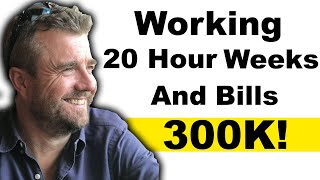
In this episode of the Top Billers Toolkit podcast, hosts Sam Miller and Ben interview Mark Wilson, an Oxford‑educated former biochemistry student who built a highly successful risk and compliance recruitment practice through a focused personal brand on LinkedIn. Mark explains how a digital‑marketing mindset, adopted during the COVID‑19 pandemic, became the single most powerful tool in his arsenal, allowing him to replace cold‑calling with inbound client and candidate leads. He shares the mechanics of his content strategy – weekly time‑blocking for writing, authentic storytelling born from frustration, and recycling high‑performing posts – and recounts a viral LinkedIn post that grew his network from 3,000 to 25,000 connections and generated thousands of inbound opportunities. The conversation delves into his early career path from biochemistry to recruitment, the importance of niching (first into call‑centre recruitment, then manufacturing accountancy, and finally risk & compliance), and why he repeatedly returned to a narrow focus despite temptations to broaden. Mark emphasizes a quality‑over‑quantity approach to business development, saying “no” to crowded roles and focusing on high‑calibre candidates, which he views as the product that sells his services. He also discusses audience‑specific tone – avoiding sales language for risk & compliance professionals and speaking from the candidate’s perspective – and offers practical advice on showing up consistently, not being discouraged by low engagement, building an audience, and using data to iterate content. Finally, Mark reflects on his entrepreneurial leap from agency employee to owner, the lifestyle benefits of a four‑day week and 20‑hour weeks while billing over $300K, and the confidence needed to make the jump. The episode provides a step‑by‑step blueprint for recruiters who want to grow a personal brand, attract high‑value clients, and create a sustainable, flexible business without cold calling.
Chapters
Hey guys, welcome back to yet another episode of Top Billers Toolkit, where me and my twin brother interview top billers from all around the globe to unlock the secrets to their success. Today's guest is Mark Wilson. Mark is an Oxford graduate with a master's in biochemistry, now a very efficient recruiter. He's paved the way for a truly successful lifestyle business. At one point, he was working just 20 hours a week and billing $300K. He spent the last 3 years building his personal brand and has won over 50 clients from posting content on LinkedIn without having to make a single cold call. On today's episode, we're going to be discussing why diving into a niche is so damn powerful. We're going to be asking Mark how he comes up with ideas and content that resonates with his audience. We'll also talk about some of the most successful BD tactics that Mark has used throughout his career. Put your seatbelt on, guys, because this is going to be a great episode. And as usual, grab a cuppa or a glass of wine depending on when you're listening to this, and let's get into it, shall we?
Mark, welcome to the podcast.
Good afternoon, Ben. Good to be here.
Yeah, thank you for joining us. Um, me and Sam have been following you for quite a while, and I've actually had conversations with other recruiters about you as well, Mark, that have watched your journey, um, over the last few years. All positive, I can say that. And yeah, I'm just really excited to jump into your journey and ask you a few questions. So again, thank you for coming on. And pleasure. We always start with the first question. You may have heard it before, but it's what's the number one tool in your toolkit, whether it be a mindset, strategy, or software, right?
That's— thank you for giving me the heads up on this previously because, um, it would have been really— to be fair, I would say it's, it's certainly not software. Um, mindset Partially. But for me, the biggest thing now in my armory actually is the sort of digital marketing approach that I learned a few years ago. And since putting that into practice, business results have just gone through the roof. So, and it is the one thing if you said to me, I've been running my own business now for 13 years, something like that. If there was one thing I knew now that I wish I'd known back then when I started up, what would it be? And that would be it. It wouldn't be a specific database or a way of thinking or an approach. It would be how much easier your life can be from certainly from a business generation perspective, but also from a candidate generation perspective. If you have a very strong digital marketing strategy and presence.
I'm so glad you said that as well, Mark, because we have— we've never had that answer before. And considering the power of digital marketing and branding, I'm surprised it hasn't been. But it's really interesting, and I'm so glad you said that because, uh, I guess it's a testament to the power of digital marketing if you do it correctly, which is awesome.
Um, So it's, uh, and if it's done correctly, which I'm sure we'll come on to, but, uh, yeah, it's, it's something you have to throw yourself into wholeheartedly. If you dip your toe, you're not going to get anywhere. Um, and that was a decision that I made about, uh, 4 years ago.
This is the biggest problem as well, I think, which is interesting that you touched upon it so early on as well. I don't think people understand the commitment it takes. I think they— from my perspective, any— there's a small percentage of recruiters that are willing to put in the time and effort, like most things that are difficult. But I think most people want the one inbound business and want to build a bigger brand and want to be recognized as an expert, but they're not willing to put in the effort to actually make those changes. So what was different with you, Mark? What Like, why are you the, the recruiter that managed to put in so much effort and time into building the brand?
I think some of it was good fortune timing-wise.
You—
I, I'm in a rare position, I suppose. I look back on the pandemic and see it as probably the most important positive influence on my business. Um, although, yeah, billings were, were down to very little indeed, and it was a very tough time in recruitment, it gave me a chance to basically research and learn about digital marketing and then put a strategy in place. Because let's face it, there wasn't a lot else to be done. Um, and it's strange because Everyone is willing in sales. Everyone accepts the fact that you're unlikely to make a sale on your first cold call, that it might take 6 or 7 points of contact to actually make any headway. And they seem quite happy to do that, but then not translate that to marketing. And yet, if you stick with it, you reach a very large audience consistently. It's an audience that generally wants to hear from you because they're actually signed, they're following you, they're signing up to see your posts, etc. So it's an engaged audience. But say for me, it was the timing which helped, and I had a fairly early bit of success which spurred me on. But, uh, yeah, I, I just— I was determined to make it work, and I think that's the key thing.
That's really interesting. I've also noticed— sorry, Sam, I'm kind of taking over here. Normally we take turns, but, um, it's interesting you say early success because I have noticed Sam and Mark, but Sam, just from our clients as well, the ones that see success sooner, I stick with it. You know, the sooner they see traction, the sooner they stick with it, which is really interesting because it does vary. Some people jump in and they get crazy results really quickly, others, um, they don't. And there's so many varying factors, I think, in terms of their brand offline, how long they've been on LinkedIn, their comp— their level of understanding of their market, their copywriting ability. There's just so many variables that I think with time you're going to get results, but it varies from the beginning. So that's really interesting. Sorry, Sam, I'll hand over to you for the next question. No, it's all good.
I was just wondering, Mark, you've been doing digital marketing for about 4 years now.
You started during COVID you said.
What have been some of the biggest kind of aha moments along the way for other recruiters maybe looking in that want to follow in your footsteps?
So the first thing that I would say is I set aside time every week. So I said I block out my diary on a Tuesday morning and that is where, as I guess other people will have BD sessions where they block that out and they just hammer away on the phones. I block out Tuesday mornings for content writing. And that I think is key because for me, the beauty of marketing as opposed to sales is we all know in recruitment that you have peaks and troughs, that you do this, you're quiet. So I did used to hammer the phones relatively. Don't speak to my old bosses, they will deny that back in the day. And then you get an influx of job activity, And as you got busier, your BD goes through the floor, you get on top of all those jobs, and then you've got no pipeline. We all know what it's like. The beauty of marketing is you can plan it in the future. You write content, I set up and I write content for days, weeks in advance, and now obviously you can schedule it on likes of LinkedIn. So I write content well in advance, and just that one morning each week produces that content for the next week, the next couple of weeks, whatever it might be. And then when I'm busy the rest of the week, I've got this is all going on in the background. This, the marketing is ongoing whether I'm doing this, um, wherever I am on that, the marketing is, is doing that. And that helps to flatten out those peaks and troughs. Mm. Because you're doing the engagement with your audience whilst not thinking about it, whilst you're doing searches, whilst you're arranging interviews, et cetera. This is all ongoing. And that to me is the big advantage of marketing, especially the more you automate it, it just goes on. And I think for me, I think some of you asked about Harmo, and that to me is just like, wow, yeah, this is it. The systems I have in place are doing this for me whilst I'm doing other things. And some of those, those other things are not necessarily work. Um, it's, it might be spending time with the family, playing golf, whatever, they're ongoing. And that's what I love about it. One quick other point, I suppose one other, it's an early success and an aha moment. An early post I had a few, only a few months in, went, I suppose what you'd call viral on LinkedIn. It was one of those rarities. It's now accrued somewhere near 6 million views.
Wow.
Well over 110,000, um, uh, interactions, likes, whatever. Um, tens of thousands of comments.
Wow.
Um, and what happened off the back of that, it wasn't overly manageable, but I had thousands, literally, of LinkedIn invitations.
Wow.
So my, um, my network went from what was about 3,000 to 10,000 in, in no time at all. It's now about 25, but it was that sudden leap. And all that's, that's a candidate base, that's a client base, and These people are reaching out to me asking me to connect. And I suppose that was a, a light bulb moment, that if you write good content that resonates with people, that generates you contacts. Like, I don't think— like, you'd have to do weeks on the phone of BD to do that, and it was one post. I wrote it in 15 minutes on a Friday afternoon.
How insane is that? That's absolutely crazy. Sorry, 15 minutes on a Friday afternoon, you said, Mark?
15 minutes on a Friday afternoon when I was really annoyed with a client who was frankly taking the proverbial, um, so yeah, I wrote it, um, but I posted it on the Monday morning.
Wow.
I wanted to think about it over the weekend. So I wrote it on the Friday afternoon and I thought, yeah, okay, this is, this, this needs to be heard. Um, and I put it out there on the Monday morning and the response was unbelievable.
And, and that just shows how many other people resonated with your message as well, right, Mark? Like the fact that it blew up, there were hundreds of thousands of people that were thinking probably the same thing at that time. And amazing that it took 15 minutes because that's probably the amount of time it takes me and Sam to write a post as well. Sometimes a little bit longer depending on what it is. Sometimes it might be 20, 25 minutes, but generally the result for the amount of time you put in is insane. Like you're reaching hundreds if not thousands of people and you're— you've seen that early on, which is amazing.
I also want to mention that some of the best posts are born out of frustration as well. Some of the best most viral posts I've seen on LinkedIn are kind of built out of that same emotion, which is just interesting for other people that may want to, you know, share their frustrations. I think it's a great place to start with content. What are you, what are you frustrated about in the industry? Write about it, share it with the audience. It's really a really good tactic.
Yeah. And the, the key, it was, it was a frustration obviously for me as the recruiter involved, but the key is your audience, your desired audience is not recruiters. Died audience are candidates and clients. So you put the spin on that, you express your frustration through the eyes, as in this case of the candidate, which then resonated at the time. It was a lowballing story, which were— this was once the market started just pick up a little bit towards the end of the pandemic. I think it was probably around September 2020, so it wasn't the end of the pandemic, but the market was just sort of picking up. And the client literally said, she's out of work, we've got a pandemic, she can't— beggars can't be choosers— ready to lowball her with a salary. Wow. And funnily enough, she had another opportunity on the go as well, and they didn't lowball. And the client tried to backtrack, and anyway, she was lost. So it was also then translated as a message to to any employers out there to not take the proverbial just because of the current market conditions at the time.
Yeah, I feel like what you said there, so it's so simple but so important, Mark. Great piece of advice is spinning the message in the point of view of the candidate or the client and thinking about who do you want this to resonate with. And as you said, it's likely not going to be other recruiters because I think a lot of recruiters get into the trap of speaking to other recruiters, don't they? And they don't really understand the, the difference in psychology and perspective. Um, but you've obviously learned that and, and flourished as a result, which is really cool. Um, I suspect most people don't know this about you, Mark. Um, I didn't when I got on the phone with you. The fact that you are, um, that you went to Oxford and studied biochemistry, which I find quite, uh, quite amazing because obviously it's a, an amazing university, and then studying biochemistry, which sounds like a ridiculously difficult subject.
Yeah.
Um, what I would love to know is, is your journey from, um, you know, Oxford studying biochemistry to then going to recruitment, because obviously they're completely different industries. Maybe you could give us some insight.
Yeah, so I was fortunate to go to Oxford. Uh, I don't see myself as being particularly bright. I've got a very good memory.
Um, and why people always say that, Mark.
But the memory bit is useful in our profession. But yeah, so that biochemistry was just something that I enjoyed. I was particularly good at biology and chemistry. The aim at the time was to do research. So I did my— it was actually a 4-year course that was actually a full master's from day one, but the final year was a year of research. And it bored the pants off me, to be fair. So that was the end of that dream. And like a lot of people, left university not knowing what I want to do. And that's— I went, I tried to use my knowledge to begin with, and I did a bit of medical sales for a while, and I taught. But it was just something missing. And then I went to see a career advisor who normally advised university grads. And here was I a few years, about 10 years post-graduation, sort of saying, I honestly don't know what to do, but I know it's not what I'm doing now. And we did personality profiles and things like that. And I am very competitive. And recruitment consultancy came up as one of the target market areas that might appeal. And that was it really. So back in those days, I like— this is— we're going back 25 years. So I fell into recruitment. That's what happened to you. Very few people came out of uni going, I want to get into recruitment. Obviously that's changed now, which is great. It's actually seen as a profession, a vocation. But I fell into it thanks to a career coach who just happened to think it would suit my personality.
Really interesting.
I dropped all the way— it's worth mentioning I dropped all the way back, so I took quite a significant salary cut. To go. I joined Reed because I'd heard— if I— once I know something, I want to do something, I research it. And I, and I heard that the training there was very good. I knew, I knew absolutely— I, I hadn't even heard the recruitment consultancy was a career until it was suggested to me. So I thought I wanted to be trained properly, um, and so I joined Reed and, uh, did a proper recruitment training. Um, and, uh, and I think that's a really important— I got such a good foundation from them, from those couple of years on the high street, being trained properly. Not sort of a few hours, it was, it was many different days. And you came away thinking, yeah, I sort of think I know what I'm doing. And then I put that into practice and the career sort of launched from there.
Interesting. And I know you said you were a top biller as well, Mark. I'm interested to know how long did it take you to become a top biller and what were the key components to get you to the point where you were one of the top billers in your company, do you think?
So I've not been the easiest person to manage. Um, so, uh, because my emphasis all the way through, I think if there's one thing, it's quality over quantity. So I used to sit in an office with managers getting people to hammer away on the phones, to, to speak to candidates, to fire out CVs. It was a numbers game. And I didn't agree with that, and neither, to be fair, did my manager at the time. And she used to look at my— I still do— I had a WIP, a work in progress, in Excel, and she'd go through it and go, how many agencies are working on that? That's not— get that out. Yeah, I've seen that role. That role's been live for months. Yeah, that's been doing it, get rid of it. And so I sit down with her on a Monday morning to talk through my WIP thinking I've got loads going on and she just bins 80% of it and says, now these are the roles that you need to be concentrating on. These are— let's focus. This role here, there's only 2 of you working on. It's brand new. It's not been around. That sort of thing. To appreciate quality over quantity, to say no. So very early in my career, I had a boss who taught me to say no. If a client was already engaged with 3 or 4 agencies, no thank you, good luck. If you find you've you're still looking and you want a fresh approach in a couple of weeks' time, then you know where I am. Thank you. And walk away. And that sort of approach I still use today. I say no a lot, whether that's because too many organizations are working on a role, whether it's because the role is not in my sweet spot. Even if I'm not overly busy, because of financial services, I regularly get approached about roles that are outside risk and compliance, and they can be quite lucrative, but it dilutes the message. If I suddenly start posting job ads for relationship directors, that dilutes my brand. So I say no and walk away. And the same applied to everything else. Business development, I'd focus on quality over quantity. Candidate reggies, really only registering candidates that I thought were high calibre that hadn't been registered by everybody else. Again, quality over quantity. I think, and we spoke briefly about this the other day, Ben, that one of my frustrations with the industry as a whole is it's quantity driven. KPIs in a lot of organizations are about numbers. Get this many BD calls done per week, get this many candidates registered per week, get this many CVs sent out per week. And I had an agreement with my boss back then, it was at Hudson, very early on to say the only KPI that she measured me on was revenue. And if I didn't hit my revenue, then she could beat me with a stick about other numbers. But she was in agreement that, yeah, wanted me to focus on quality. So as long as the top line figures were there in revenue, she didn't give a damn as to how many BD. And I used to go weeks with doing 1 or 2 BD calls.
And that was it.
It was just about nurturing quality relationships. Um, and that's been— that has stayed with me, I'd say, throughout my career.
That's so interesting. Um, I feel like it would be useful to touch upon, um, your niching journey as well, Mark, because that is something that comes up so frequently with recruiters. Um, you know, the variety of different situations. But typically it's they've worked in maybe, you know, 3 or 4 different niches, and when I ask them where the majority of their revenue is, it's probably in maybe one niche that they've worked on, but they don't really want or feel comfortable niching and putting all their eggs in one basket. That's kind of what they would say. Yeah, I would love to know, you know, you obviously successfully niched I don't think you were always in just risk and compliance, were you? I think you had variety. So can you tell us your journey of how you niched to specifically risk and compliance?
Yeah, no problem. So interesting enough, it goes back, I suppose, to something Sam was saying before as well, early success. So I learned the benefit of niching very early on. So I say starting my career at Reed and I worked on a high street um, just on the outskirts of Birmingham. Um, and the main office in central Birmingham was— they did really high revenues there, as you can probably expect. We were just a little bit further afield, um, only a couple of miles away, but it was, it was tough in comparison. We're a brand new branch, um, but ran in our local area. So you can imagine it's high street and it was just do anything that comes across your desk. But I had noticed that in the local area there were quite a few call centres. And, and Reed at the time had what they called a Contact Centre Solutions division, but it didn't run out of our office. Our office was too small. So I made a business case to my boss at the time that I thought it was worth doing. So, and so I specialized quite early on then in, in call center recruitment.
Interesting.
And it was quite high volume, um, but I, I identified a few local call centers that were quite high volume, um, not the really big boys, the banking call centers, but those sort of medium-sized with relatively high volumes. And I understood early doors about the value of value add. So I started working with 2 or 3 to design assessment centres to fill multiple vacancies. And then, so we worked together to design those and then I populated them. So they have an assessment centre for 50 people and maybe looking to hire 20, and I would be responsible for populating that, that down. And you'd get 20, 25 offers off the back of a day. Yet rates were great, so the fees were 2, 3 grand a pop, but that meant you were doing 50 grand a month.
Yeah.
Recruitment. Oh, okay. That's quite— So I learned very early about that. I then went to Hudson into so-called professional recruitment. And I started in, um, in accountancy. Um, and again, relatively early there, um, I got to chat to a director who was quite keen to bring in, um, sectorization within that. And, um, for example, manufacturing accountancy. Is actually quite a niche area of accountancy. There's also— there's cost accounting, stock accounting, etc., which you don't necessarily see in other industries. So again, quite quickly, um, I created a niche within my niche. I was doing qualified, uh, accountancy recruitment, but rather than just going at the whole market for qualified financial managers, controllers, directors. I just focused on the manufacturing sector, West Midlands, obvious place to go. But you then started to market yourself as a manufacturing accountancy specialist, and all of a sudden doors that have been closed before started to open. So And so to bring you up to speed though, it was about 15 years ago that I then moved into financial services recruitment. That was when I joined a search firm, Lord Search. And I focused on two sectors then, energy and financial services, both of which were regulated and started to get deeper into risk and compliance. I subsequently dropped energy to focus when I— a few years later when I was up on my own, to focus on financial services. So, the risk and compliance has been about 15 years, and solely financial services has been about 10 of the last 10. But there was this period about 5 years ago, So, I was recruiting for a top-tier investment bank, just risk and compliance. And I had a fantastic relationship with him. We were on a PSL of 3, and I had about an 80% fill rate.
It was bonkers.
And so, the internal recruitment teams kept saying, what about, can you help us with this? Help us with that. HR, IT, legal, just everything. And so I did. Um, and yeah, bluffing your way through parts of it. Um, but anyway, long story short, that, that relationship ultimately came to an end. Um, it was all done through a, uh, um, a managed vendor. There was a change in managed vendor, and things came to an end. But I thought I'd take this to the wider market. I thought it's going to be a huge success. They were the only company that I did anything other than risk and compliance recruitment for. So I just thought I'd take that elsewhere. This is about 2019, this would've been 2018, 2019. And my revenues nosedived.
Wow.
And it was like, and I couldn't understand it. I just, it was like, I just thought, surely I've got, there's so much financial services out there. What, why are, and then it came to the pandemic and the pandemic gave me time to look back and see, and it was a big decision because business hadn't been good up to the pandemic. And the pandemic was going to clearly erode business reserves, financial reserves quite quickly. And that was when the decision was made to go back to purely focusing on risk and compliance, partly because my digital marketing guru at the time was like, inch wide, mile deep. He was American. And he, because they called it a niche, and he used to keep saying, the riches are in the niches.
Yeah, many times.
And, and that way, he said, look, you want a message, we're going to come up with a marketing strategy for you. You've got to know your audience, and the more specific and defined your audience is, the easier it is to write content that will appeal. Um, and that was— so it's back in 2020 that I made the decision, after 2 years of really floundering, um, trying to make something work that didn't, to go back to just doing risk and compliance.
It's funny that you— that, that you had that epiphany for him telling you that, because I feel like you, you kind of already figured that out throughout your whole journey in recruitment, didn't you, Mark? It's fine. Every— so It sounds like at every stage niching has helped you to make more money, which is really interesting. But then I'm guessing at some point you kind of maybe just forgot it or perhaps weren't thinking in that way. I don't know what's—
At some point you need to step back from your business or your desk if you're working with somebody else. And the pandemic gave me an opportunity to do that. And I suppose it's— It's the same for candidates as it is for recruiters. When times are tough, your knee-jerk reaction is to throw your net wider.
Yeah.
To try and appeal to a wider audience. And this idea of pivoting came about during the pandemic. It's like, but no, you can't just suddenly go, okay, I'm going to forget all I've learned, all I've done, and I'm suddenly going to start focusing on PPE producers or whatever, or on healthcare recruitment because I know nothing about it. What I'm going to do is dive so deep into my niche that when the market comes back up, there's going to be one person they're going to turn to. And that was the road I adopted. Love that.
Such valuable lessons in that story, Mark.
Love that.
Um, kind of want to go back to content. Um, yeah, I still, I still felt, feel like there's lots of little golden nuggets to unpack there. Just so people understand the success you've had, Mark, you've won around 50 clients since, since 2021 without making a single cold call. So, you know, this isn't just minor success, this is quite, quite a substantial, um, push in your business from content. Um, you've also had record-breaking years, so it's, you know, impacted revenue in a brilliant way. Can you give us a, a bird's eye view of your content strategy for other recruiters or other business owners looking in who want to understand what is Mark doing to get this level of success? Could you give us some main pillars or some kind of key strategies that you're using?
Yeah, absolutely.
So awesome.
Put yourself in position of your audience first of all. So I'm going to simplify things over simplification. But for us recruiters, our audience consists of candidates, clients. Never forget that candidates can be clients. Mm-hmm. So judge or not, it's all based on market conditions, for example. So, so back in pandemic, literally 95% of my content was aimed at a candidate audience. Because that was where the demand was. And then as the balance shifted, the market really picked up in 2021, 2022. Um, then the shift went the other way to the clients, uh, with advice on, okay, you're missing out on your— if you, if you're missing out on your target individual, um, what could you be doing different? So It went from advice on job seeking to advice on recruiting. And that balance shifts. So at the moment, the market is going more towards the client in the sense that it's a hiring market, as it were, because it's slow, relatively slow. So there's more demand for job seeking advice and posts. So I would say at the moment, 80% of my posts are aimed at job seekers. Um, they are— there's a general blend. Some of them are— most of them are advisory. So it's tips on CVs, it's tips on interviews, it's, it's market updates, it's, it's how to set your Distinguish yourself from the masses or whatever. It's tips like that. But then also it's content that you touched on before, actually, Sal, about it's about writing from the heart. But so being authentic, for want of a better phrase, but being you. I write as I think. Which I think is important. Um, but as I say, I think it's important to put yourself in their shoes. So yeah, it is difficult. It is difficult when, when you're getting ghosted as a, as a candidate. So, um, instead of writing about ghosting— because we get ghosting occurs to recruiters, but most recruiters write about ghosting from a recruiter's perspective.
Why?
You're gonna get— that's going to resonate with other recruiters and just frankly pee off candidates who think, what are you getting on about? You lot ghost us all the time. So you've actually angered— but you turn it around and you talk about ghosting from a candidate perspective. It's the same frustrations that you feel, but you're putting it out there from them. So most of my content comes from conversations with candidates.
Interesting.
So I, and I think this is something that people, uh, I think the industry as a whole suffers from, that we don't talk to candidates enough. There's a huge emphasis on sales, and if you're not busy, you haven't got any jobs, then most— to work, no, no pipeline as such— then most recruiters will be hammering the phones will not be talking, trying to talk to clients, will not be talking to candidates necessarily apart from to go fishing for leads. Yeah. And candidates know you're doing that. So where's the value for them? So what I did was spin it round and look at the, the long term. If I help senior candidates out in particular, but I don't just reserve it to senior candidates, 'But if I help them out, then you never know, 1 in every 5, 1 in every 10 might pay it forward.' And the number of people that have done that is ridiculous.
Really?
Wow.
Um, so it's people that haven't placed, people who actually, after they get a job send me a message via LinkedIn thanking me because I put half an hour or an hour in my diary to have a chat with them, to talk about their CV, to talk about the market, to talk about, et cetera, et cetera. And I do— that's the call. Those are the calls that I do. I probably speak to about 10 senior candidates a week. On average, something like that. That's heads of risk, heads of compliance, chief risk officers, chief compliance officers, and some managers, et cetera, as well. It can vary, but all, literally every one of those candidates comes from LinkedIn. Every one of them reaches out to me rather than vice versa. Every one of them literally starts out by saying, love your content, been reading your posts, they resonate with me, I'm starting my job search, could we have a chat?
Interesting.
And that's what goes in my diary. Um, and then the other side of it, I do get— so I get people who I've helped out do that, and then I get quite a lot of people who just reach out via LinkedIn who say, I've been following you for months, Um, not needed the services until now, but now I'm looking to build out. I've got 2 critical hires and you seem to have the audience that I need. Will you help?
That's really— that, that's another brilliant thing, isn't it? Because I, I feel like recruiters forget that, is that if, if clients see that you're attracting the best of the best talent, like, that in itself is, is a very attractive proposition and boosts your brand considerably, which is really interesting. So like, if recruiters were to do nothing else than just talk to candidates and attract really good candidates, that, that's a fantastic proposition for clients in and of itself, which is interesting.
That, that bit is, is the absolute key. We're in a sales business, and without candidates, we've got no product. How can you sell if you haven't got a product? So even if you, if you do like business development, or even if you like doing cold email campaigns or whatever, then the best, as far as I'm concerned, the best, um, cold calls, and the best cold emails, etc., actually come from marketing high-caliber product. Yeah, it's people. So yeah, generally that's more of my bias. If I, I am focusing generally more on attracting candidates because I think it's, it's slightly chicken and egg, but I think they're the egg. Yeah.
I think it's a really smart move. And what I found really interesting as well, kind of sticking on to the— staying on the content, um, subject, Mark, is the fact that you mentioned that risk and compliance candidates and clients are quite unique, and you have to kind of adjust your tone and what, what you speak about in order to resonate with them. How have you had to adjust your tone and your subjects and how you speak to them in order to make sure that they connect with what you're saying?
I cut the sales, first of all. Um, that— there's a couple things about risk. This— I don't want to be overly simplistic here, but, um, they're generally slightly more introverted. They're not salespeople, etc. They're generally very values-driven. You're doing the job that you do because you want organizations to be run correctly. So, if you go out there with a sales approach, you're actually going to turn them off first and foremost. So, none of my posts are sales. At no point in any post do I write, "And if you want it done properly, give me a call," or whatever. I, I never write that. I never even ask people to follow me. Uh, it's just, it's either picking up on the tone from conversations— what are the frustrations from the people that I'm, I'm sensing— and then sharing that so other people know that they're not alone, that those other people are experiencing those frustrations. And I think trying to empathize with them is key. But yes, absolutely stay away from sales. Uh, and I say just, just don't do it. And even now, I don't miss it. I do get people who will disconnect from me on LinkedIn because I have I have a bit of an automated approach to messaging on LinkedIn that lets people know, basically offers advice, offers some salary surveys and whatever else. And every so often someone feels that's too much. Yeah. But—
It's normal, I think.
Yeah. Happens to everyone. Even that. Softly, softly approach does put some people off. And it— but I'd like to think that pretty much got the balance right.
Hmm, really interesting.
Are there any, any things that you've learned along the way, um, Mark, with your content journey that you're like, oh, that was a brilliant lesson, I'm not going to do that again? You kind of already alluded to it, but is there any other kind of lessons that you've learned along the way?
Yeah. Show up.
Mm-hmm.
Um, don't worry about engagement. So don't get put off if a post you put out there only has a handful of likes or views or whatever. Um, just because— get out there, be consistent, be authentic. So a number of times I've been approached by people who said, look, we can do that for you, let you focus on your job. And I was like, no, but this is my job. This is my voice. You can't replicate my voice. So, that's what I would say. Keep showing up. Don't get hung up about interaction. Build your audience because that is critical. I think the larger your audience, the greater your success is gonna be, the greater your traction is gonna be, quite simply. And what else was I thinking? So build your audience, be authentic. Sure. Oh, couple of things. Don't be afraid to recycle.
Great tip.
Yeah.
Yeah. So if you are an older, if I'm ever stuck, about what content to post, which is rare, because a lot of it comes from conversations, but if I'm stuck, what I'll do is I think, okay, when was the market last like this? And I'll look back at posts from back then that resonated. And if they resonated in that same market, under those same market conditions 2 years ago or whatever, chances are they're going to resonate now. So don't be afraid to recycle. And then also try to think about, could you break things down? So when one post can become three, when two posts can become five. So rather than just writing one post on, here's my CV tips, I'm putting five CV tips down, why not write five different posts and elaborate on each of those tips, for example. So those are a couple of key ones. You can all, if you're ever stuck for content, break something down or recycle. No one's going to turn around and go, well, someone might do, but, uh, yeah, Mark, I might have posted that in, in October 2020. You're boring me. Ain't happening.
Yeah, no, really good tips. Really good tips. Especially, yeah, showing up and recycling. Um, I'm gonna put a— I'm gonna add to the recycling, which me and Sam have just found so transformational, which is looking at the data and tracking what's working and, and learning what topics do better than others. And then, you know, sticking with the topics and building almost like a tree, building off the topics that are working and maybe testing the ones that aren't. But yeah, no, great advice, Martin.
I think the other side of Sam, but the other thing on that is I say I don't get caught up with the numbers too much because I always know that posts pitched at a client audience will get far less traction than posts pitched at a candidate audience.
Yeah, yeah. Good point.
And yet they're the ones that are slightly more likely to actually directly generate an opportunity for you, job opportunity. So yeah, you don't need anywhere near as much engagement. Yeah, that's a really good point. When you do it—
yeah, that's such a good point. Some of my best posts that have had inbound leads have, have flopped. Well, as an outsider looking in, they've completely flopped. Um, but it's interesting what, what's more likely to get someone to take action. So that's a brilliant point. Um, we're coming towards the end of the pod, Mark. I have really loved this conversation so far. I've just got one more kind of little topic I want to touch upon, which I think is quite important. Um, which is, you, you mentioned you feel passionate about having the courage to go out on your own. I think that's a really interesting topic. Um, would you mind just elaborating on your journey with this?
Yeah, no problem. So From what I've said today, you can probably sense there was always a bit of an entrepreneurial spirit there.
Yeah.
That, yeah, I did my own thing at Reed within the Reed. Yeah, I did my own thing at Hudson within the overall framework, etc. Um, and I think that— I guess my frustration over the years came that the business did less and less for me, and yet typically they got two-thirds of what I did. I think most recruiters probably earn about a third of their billings. And over the time, I was, I was almost like weaning myself off the teat, as it were. So when I was at Reed, that was, that was mummy. I was very young. I needed, uh, yeah, When I went to Hudson, I became more independent. And then when I went to Lord, literally, it was— oh, no, it's going back to my boss at Hudson, who I've mentioned before, who was very good. When I started, I said to her, so what am I doing? She said, there's a desk, there's a phone. You told me in the interview you can use it. Use it. And that was my— God, that was my onboarding. And so over time I got weaned off. And when I went to Lord Search, it was literally I had a desk and a phone, and my boss called me. I came in once a week and went through my whip, and that was it. I don't know. So outside of 20 minutes a week, I was left to my own devices. And then you start to think, um, I did anyway. Could I do this for myself? Not necessarily for the reasons— I've never been a world domination, build something, flog it, build something, flog it type of individual. And it was for work-life reasons. I live rurally. The jobs were all in cities, obviously. I'm not a fan of cities. And so I'd spend up to 3 hours or so a day commuting backwards and forwards.
Wow, um, that's a long time, isn't it?
Yeah, which is, which is no fun. Um, so it's, it's a big leap, and I remember people saying to me when I made it, it was like, wow, I just feel so— I'm so glad I did this. I mean, it was like, if it's so good, why isn't everyone doing it? And I think it's, it's first It's not for everyone. That's the first thing. But you need to have the confidence to do it. I think that's— it's a big leap. I walked away from a six-figure basic to earn nothing. So you've got to back yourself.
Yeah.
I didn't get any external investment. I wanted to be my own boss and not an investor's boss. But you have to believe in yourself. And I think that I wish— should I have done it earlier? Possibly. I think my timing was about right. I think I'd weaned myself off enough and learnt enough along the way. But it still remains the best thing that I did from a business perspective. I better not say anything else because the wife will not be happy. Probably watching this, but, uh, but, um, yeah, best thing I did. Gave me a lot of my life back. So, um, you— we told you, I pretty much— I work 4 days a week. Um, so awesome. Um, and at times with kids and so on, at one point I was working for a couple of years, I worked 20 hours a week. Wow. And we're still billing in excess of 300K.
Wow. That's really good.
From home.
Wow.
So you imagine the life that gives you back. So yeah, so my message would be, if anyone's thinking about it, timing is everything. Once you have a family, that makes it more difficult and so on in terms of the initial financial outlay. But if you get a window where the stars align, you think you're ready, you've got that confidence, financially it makes sense, then I'd go for it. I really, really would.
Amazing, Mark. Thank you so much, mate. This has been one of my favorite podcasts, and I'm not just saying that. I think it's been really, really good, really insightful, and really interesting to learn about your journey. And I genuinely believe a lot of people are going to find this really valuable. So, uh, yeah, thank you so much for coming on. Really appreciate it.
Absolute pleasure. Thank you both for your time.
Cheers, Mark. Thank you.
Hey guys, thanks for tuning in to this episode. If you enjoyed it, please don't forget to subscribe on YouTube and Spotify. Tune in for another episode next week, and we look forward to seeing you again very soon.
Peace and love.
More from Sam




The difference between a $200K biller and a £1,000,000 Biller (full Breakdown video)

how to go from agency recruiter to Lone wolf (Advice from a $2.4 Million biller)



This Recruiter has billed $750K+ for 30 years straight. (Master of Consistency)

How to increase your candidate response rate by 25-30% (Whats app messaging system)


This recruiter has billed $1,000,000 for 5 years straight! (Master at Enterprise deals)