This Recruiter grew up with Dyslexia, Everyone thought he was Dumb. Now he's a £1.8 Million biller!
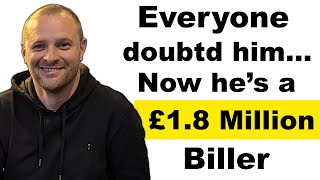
Recruiter Alex Dick built £1.8 million in billings despite dyslexia, crediting a resilient mindset and a decade of relentless outreach. COVID shifted his focus from volume to sustainable growth and team-based scaling. He now treats LinkedIn and TikTok as business-development engines, posting authentic content and tracking engagement over vanity metrics.
Chapters
Hey guys, welcome back to yet another episode of Top Billers Toolkit, where me and my twin brother interview top billers from all around the globe to unlock the secrets to their success. Today's guest is Alex Dick. Alex is one of the funniest, most down-to-earth recruiters we've ever had the pleasure of coming on the pod, and he's also a £1.8 million biller. After making bucketloads of money and ultimately feeling quite unfulfilled, Alex is now on a mission to scale his business with a focus on helping as many people as possible. He's one of the very few recruiters using social media to great effect, He's generating millions of impressions every single month, and as a result, he gets 400 people every week reaching out to him wanting to join his company. On today's episode, we're going to be talking about Alex's journey with dyslexia and how it's made him more resilient. We'll touch upon how he managed to build $1.8 million, and we're going to be delving into his social media strategy that's helped him generate millions of impressions every single month. I hope you guys enjoy the conversation as much as Ben and I did. And as usual, grab a cuppa or a glass of wine and let's get into it, shall we?
Alex, thank you so much for joining us today. We are really looking forward to speaking to you.
Not a problem. You're very welcome.
I didn't know this, but me and you had a chat off the podcast and we spoke in 2020. I just think it's interesting and we've kind of been following each other maybe without even realizing it. I've been following your stuff, you've been following my stuff, but we haven't really engaged that much, I don't think, have we? But I think we're the perfect definitions of lurkers.
Yeah, but lurking always ends up with something, so.
Exactly, yeah, absolutely. But no, it's an absolute privilege to have you on the podcast today, and, um, I would love to dive into, you know, I think you become quite prolific on LinkedIn as well. Your content's amazing. It's definitely something I'd love to chat, uh, chat more in detail about. But we're going to start off with the first question that we ask everyone, which is What's the number one tool in your toolkit, whether it be a mindset, strategy, or software?
Mindset, definitely.
Definitely.
I think with a bad mindset, the other two are almost entirely pointless. If you have a strategy that you don't deliver on with enough sort of effort and willingness and resilience in the crappy times— because let's be honest, in recruitment there's plenty of them— but yeah, you could have the best strategy on the planet and it all goes to crap if you're not laser focused and on it. So yeah, I think mindset beats everything by a mile. You can train most other things, but if people come into it with the wrong mindset, you're stuffed.
I think probably about, I don't know, maybe 15 of the top billers we've had have all said mindset, which isn't— which is crazy.
But are there people that have said other stuff?
There are a few others. There are, but mindset is definitely the number one, I think, because they all believe that that is absolutely the driving force of success for me. So I'm listening to a podcast, I'm listening to David Goggins. Sam has been telling me to listen to David Goggins for years and I completely dismissed him. And I'm sorry, Sam, because when I listen to David Goggins this time, I absolutely love it. And when I'm listening to someone like him, I'm super motivated, I'm on it, I'm focused. What is your strategy for your mindset? Do you have one, or have you just always been like this, Alex?
I've always been like it. I think, I think I was a pig-headed kid and kind of just carried that through, but learned to focus it a little bit more. So I went, I went to what was called at the time a special school. People probably don't call it that anymore, but it was a school specifically for dyslexics, and we were taught by educational psychologists. And so a lot of it was around overcoming adversity and all of that sort of stuff, because we were going into that school typically unable to read or write at all. So it was sort of taking us from that, and in 2 years went from that to normal, back to normal school. And, and that, I think a lot of the lessons I was taught there weirdly have sort of carried through with me throughout later life. So that's really interesting.
So basically it was like training on how to overcome adversity.
Is that— yeah, to a degree. What you'll find is with a lot of neurodiverse people, they have to become pretty comfortable with overcoming things because your brain's working in a different way. So you've got to sort of always be thinking of solutions to things, and that just naturally then makes it easier to overcome adversity. Because rather than you looking at it and becoming overwhelmed, instead you look at it and go, right, how do I get the hell out of this and how do I sort it out? So I think that lends itself to, to sort of some pretty positive ways of dealing with tricky stuff.
Was there any particular moment, Alex, where you, where you remember back in school there was like a really powerful lesson, or was it just a collection of things?
It was a collection of things. It was probably drummed into me over a period of time because I went in from that— so this was, we're talking 7 years old, so we're talking pretty early on. I went from like locking myself into a car with the keys and my mum having to get people to sort of break windows or AA or whatever to get me out, through to loving school just because it flipped and I understood it. So, wow, I don't, I don't, I don't know if it was a specific moment, but there were certainly teachers and people that really put an effort into me that the previous school hadn't, because the term they used, which again isn't politically correct, they said I was retarded in a report, which, um, which was pretty, uh, next level. And I got, I got a bit of sort of not revenge, but I, I had a moment where we went— one of the teachers was leaving from that original school and I went back and I would— I had the best grades by an absolute mile. It was Common Entrance exams, so age 13, and I got 100% in most of them. Wow. And, um, because I'm quite good with memory, so sort of regurgitating fact was quite simple. And, and yeah, that was sort of a moment where people were like, I thought you'd be sort of dribbling in the corner. It's like, no, really, actually, I'm a functioning human being, believe it or not.
That's amazing. So that is Amazing.
I feel like that's the definition of you put someone in the right environment and they can absolutely flourish. And I'm sure that's very relevant to recruitment as well.
Yeah, definitely.
It's just, that's a great story, man.
I love that. Really cool. I feel like the, the second thing that you probably thought you could put your middle finger up at everyone in the past that doubted you was the point where you reached £1.8 million in billings. I think that's, you know, quite extraordinary. I mean, me and Sam speak to a lot of billers and it's, you know, I think it's 0.1% of the population that reached that number.
This is quite a broad question, so it wasn't just— it was—
they all say that, Alex.
They all say that. Assuming there is a bit of luck in it, and, and, um, me and Sam, I'm sure I don't believe that for a second, Alex. I think it's a majority you. But how, like, how long did you think you took to get to that level? I'm sure it didn't happen overnight.
It was incremental increases over, well, coming up for a decade. So, so it's— it was slowly improving everything I was doing, getting better at it, and also becoming more networked in the world. So it was consultants, solicitors is, is my thing, and it was becoming more and more networked. And also having a stupid name helps because people remember someone called Adik, so that kind of helps as well. So, so when you're dealing with people, they're likely to remember the person with the stupid name over John Smith or whatever. So, um, so yeah, that, that's certainly played in it. So I, I've kind of been off the tools for quite a while, and I still now have 3 to 5 solicitors reaching out every month saying, hi, can you help me do this? And some of those will be from conversations 5, 10 years ago, but it's because I've always made an effort of actually talking to someone rather than just going, do you want to do the thing I am suggesting you do? Oh no? Okay, bugger off. Repeat. I always took the time, and still do, to get to know people. And yeah, anyone that's interviewed with me to join ALS will know that because they typically think it's going to be an hour and sort of sometimes 2, 3 hours later we're still waffling about some sort of nonsense, typically nothing to do with recruitment at that point. But I believe you should get to know people properly, otherwise what's the point in being in a people business? So I'm quite passionate about that bit of it.
Cool.
Um, I, I, we're going to reference a lot of other billers, uh, um, Alex, but, um, that's fine. There's one other guy that we interviewed, his name's Ash Rudolph, and he had like a quite a jump in billings. I think he went from—
I forgot the number now, I'm going to butcher it—
but I think he went from like 1 mil to 1.5 or 1.7. Have there been any periods in your career where you've made quite a jump because you've changed something?
Is that— no, it was, it was definitely more incremental for me. It was just a sort of general improvement. Like, COVID massively helped because the thing I specialized in was lawyers working from home. So when loads of other law firms were panicking and furloughing people and everything was going wrong for them, the environment I worked in, that was just like, oh, everyone was from home anyway, so it doesn't make any difference. So I was able to monopolize in that time period in a way that many others weren't. Um, which, don't get me wrong, for reasons we'll probably go on to later, it was pretty tricky to monopolize that, but, but was able to sort of take advantage. And again, lots of people that I'd spoken to over a prolonged period of time about remote working and flexible working and all of that sort of stuff suddenly went, hang on, who was that bloke I spoke to about that? So that definitely gave it a boost, but it had been sort of— it'd been motoring along quite a while quite comfortably. So, um, so yeah, it was— but that was the sort of— yeah, COVID was my best ever year for, for that reason.
Cool. Really interesting. And we've had pretty much every business development strategy there is, I think, so far, with a few that keep cropping up. For that 10-year period, I'm sure it changed and adjusted, but were there any fundamental business development strategies that you kept on going back to that worked time and time again?
Yeah, put the reps in, speak to shitload of people, but, but also, okay, yeah, yeah, volume, but targeted volume, honing in on the people that are likely to say yes rather than no, but also be yourself. So I've been unapologetically myself for the entire time I've been in business. I don't care if people don't like me. The people that don't like me aren't going to work with me, but the ones that bounce off of my personality will probably work with me above anyone else. So, so I've always just stayed true to myself and, and not really given them much of a toss about what people think about me, and that certainly helped along the way. So I think it's just be myself and, and do that at scale. So if you're not talking to a lot of people and spinning a lot of plates, the chances of many of those going positively are pretty low, whereas if you're doing it at volume, then of course the probability improves dramatically. So there aren't many ultra-high billers that I've met that are people that get into the office late, finish early, don't take it that seriously, won't speak to candidates outside of office hours and stuff like that, because weirdly the best people are probably working during office hours. So you've got to, you've got to be flexible around them. And so I remember I was still speaking to candidates on my honeymoon I think I even spoke to a couple on my wedding day before the wedding had begun. Once the wedding had begun, I was mic'd up for a chunk of it, so I didn't then, because I knew that'd haunt me. But, um, but yeah, I, I was always available to people, and it didn't matter whether it was day, night, evening, weekend. Sort of the, the best person I ever placed in billings did £690,000 in his first year, and I, I got a percentage of that.
Wow, £690,000 in his first year?
Yeah, in his first year as a lawyer, um, in, in a firm. And and I got a fairly sizable chunk of that. So, so that person I've worked on for 7 years, I think. Um, but I never gave up. There was one guy actually who, who may well listen to this, and I will bleep the name out for the purposes of this, but it actually got to the point where I just said, just sign the fucking contract. Like, you can't keep asking me the same questions every 6 months. I've had enough. And he did. And he's still at that firm now, but it just got to the point where I was like, I've tried to be nice about it, I've tried to be nice about it. And Rob, who works with me now, um, he was in the car and he's like, I can't believe you've just said that to a partner of a law firm. And I'm like, well, well, I tried everything else. I tried, I tried to be nice, that hadn't worked, so I had to just get on with it. And yeah, he just needed that push. And, and so yeah, adapt to the people you're dealing with as well, that helps.
But yeah, I'm feeling that was a moment that you use your personality to your advantage as well, because they probably already bought into you, knew what you were like.
Yeah, he knew me quite well at that point. It wasn't like some stranger that I'm just starting to swear at. There was a, there was a relationship building exercise that happened prior to that point.
Yeah, I feel like you can't— well, correct if I'm wrong, it's difficult to change your personality. You're either probably interesting to speak to or have the social skills to, to kind of schmooze people, or you don't, or you need a lot of work. But the volume piece is interesting because that for me is more controllable, but everyone's definition of volume kind of varies. So what would kind of high volume look like in your world, do you think?
Just so— the most, the most— like, let's talk about placements. Most lawyers I placed in one month was 27.
27? Gosh, insane.
But that, to be fair, that was a bit of an insane month. Um, but, but the thing is, I guess it's back to that mindset thing. I wasn't sat there rejoicing that I'd done 27. I was pissed off about the 3 that I'd lost. Because that 3 that I'd lost would have represented another 60 grand to me. And I was annoyed that I hadn't done that because I could have easily placed them, but I just lost them in the noise of, of how busy I was. So, so again, I, I came out of that month going, right, what do I need to do to make sure that never happens again? Because it was the ones that I'd lost that annoyed me. And I think it's a weird thing with my mind, I don't tend to massively celebrate. Like, people talk about 1 million like it's this— or 1.8 million like it's this amazing thing. And to me, I don't really care about that. It was— I enjoyed the journey. The end result was just the end result. Like, yes, it allowed me to buy stupid watches and drive stupid cars and all that sort of stuff, but actually I didn't enjoy that as much as I enjoyed the journey to get there. So, so yeah, it's always still striving to be better is kind of my thing. Love that.
Were you keeping track of your numbers at all?
Or was it just like at the end of the year you was like, whoa, every, every month I'll just see lumps of money coming and go, oh, to be honest, it gets to an amount of money where it's— you sort of run out of things to spend it on. Yeah. And without getting stupid, like I never got truly stupid, so I didn't go, oh, let's go and buy a yacht. Um, but, but yeah, there I got to a point where it just became, oh, that was a good month. Oh, that one wasn't quite so good, but it was still good by anyone else's sort of parameters. So I guess I became a bit blasé about it. In hindsight now, I look back and go, oh God, I wish I'd bought a load of investment properties and done all these other things because I could probably be retired now for what I've earned over the time I've done it. But instead I bought stupid cars and rented stupid houses and did other stupid things. But I've grown up a bit now, thankfully. Otherwise I'll be living—
I probably had a lot of fun though, Alex, right? You may have not invested in a lot of things.
I enjoyed— I've enjoyed my life thus far, and I plan to continue to do so. This is the, uh, yeah, we only get to live it once, so let's enjoy it while we're here, sort of thing.
Yeah, 100%.
I just want to go—
sorry, go ahead, Sam. So I just want to go back to that period where you said you placed 27 lawyers in one month.
Can we delve into like a day in the life of Alex during that period?
Like, what were you doing on a daily basis to get that?
Panicking. Panicking every day. Um, no, so, so what I'd done is I'd, I flipped sort of— so normally recruiters are chasing their candidates, chasing their clients, and all that sort of stuff. I'd effectively, with that client, become so close to them that to all intents and purposes I was the client. I was able to onboard people directly, so that made that process hugely more efficient. Um, so I didn't have to speak to many people. I was just able to fire stuff in. And at the same time, I put the onus on the individuals to come back to me rather than me go to them. So I was only ever dealing with what was directly in front of me rather than trying to chase an infinite number of people to try and get them to to sign effectively. So I would leave the ball in their court and make it clear that I will react very quickly at the point that they want something to happen, rather than me having a diary full of appointments where I have to chase people and chase people and chase people. And I still do that now. I'm a complete pain in the ass to get a hold of because when people give me a Calendly link and say, do you want to book this? I'm like, no. If you want to speak to me and you're trying to sell me something, here is my number, you call me. If you get me, great. If you don't, be persistent, then you might win. But if you're not persistent, you don't get a hold of me, you didn't want it. So it's— yeah, most, most suppliers and things absolutely hate me for that reason, but whatever.
I feel like it's really hard. Um, I don't see or hear many people who have put themselves in that level of control with clients. How do you do that? Like, if you were to teach a rookie how to do that, it's tricky.
Yeah, so I was in a niche at the point that it was only me in that niche, so—
wow.
So it allowed me a certain level of, I guess, flexibility. And also trust is built over time, isn't it? So I'd been delivering the right stuff in for a prolonged period of time. And after a while, in reality, external involvement was only slowing the process. And it's a process we all wanted to be quick. So, so at a certain point, if you're delivering permanently, consistently, it gets to a stage where it's illogical other people being involved if you know what they want. Like the back of your hand, and arguably you've told them what they want after a point, then other people sort of verifying that becomes a slightly pointless exercise. But that's tricky if you're not the leader in that niche. If you have been able to get to the point where you're the go-to, then people trust you and will trust your decision-making. But don't get me wrong, I don't have that with all clients, far from it. But if, if I push, most people will be comfortable to take the people I'm pushing because they will trust that I'm knowledgeable enough that there's a reason I'm pushing them, sort of thing.
Yeah, that makes sense. So what I find interesting about your journey, Alex, is you, um, obviously very successful biller, $1.8 million at your peak, and then you pivoted, right? You went into a different direction. What happened? What was the epiphany? What happened in your life at that point where you thought, I need to change things up?
Uh, wife had two massive great heart attacks after the birth of our second kid, and I was told she was gonna die.
Bloody hell.
So, um, so yeah, that was a bit of a— she didn't die, just to be clear, so let's not make it super somber. She's— I say she's fine, she's got heart failure, but conceptually she's fine compared to— if, if death is one end, she's very near the other end compared to that.
Yeah.
Um, but yeah, that— we, we just had a kid two weeks earlier. She woke up with, with pressure on her chest, and we just thought it was— we'd had an afternoon tea and a curry the day before because it was her birthday and just assumed it was indigestion. But it wasn't. It was a thing called SCAD, which is sudden coronary artery dissection. So effectively, her artery had split, um, and it had inflated itself, and it was pretty, pretty grim. Um, so that, that made 2020— although it was my best year from recruitment, it was also my most challenging year I will probably have in my entire life because I had a wife who was came out of hospital with a heart that was barely functioning, and, and COVID was kicking off and everything else. And I had two very young children in the, in the house with me. And thankfully, um, my mother-in-law came and lived with us and sort of helped us through a lot of the sort of child side, which allowed me to work, because otherwise I don't know how I would have done it. And Rob, who'd gone to work for somebody else, came back to work with me to support me through it as well. And actually, there are a fair few other people that that jumped on because in, in times of particular hardship, that's when you find out who actually gives a shit about you and who doesn't. And it's amazing. The people that you think would give a shit about you don't. And the people that you wouldn't have given a second thought to are the people that fall around you and you see people's true character in those moments. And so I even say it to the team now, I'm like, don't, don't judge us on how we behave in your good times, judge us how we behave in the tough times, because actually that's when people show their true character, in my view. So yeah, it was, it was, it was interesting. And I realized that billing a lot when you're almost on your, when you're basically on your tod, actually your business is worth £0 and 0p. Or that's not true. It's worth the, the invoicing you have left in the system, basically. And who knows, I could get hit by a bus at any point. So I have to build something that's of value so that if that happens, my family are all right. So that was the sort of click in my brain that went, right, stop being an asshole, stop spending your money on shit, right? Go and actually build something and do it in a way that it will survive you if shit hit the fan. So yeah, that's kind of what I've been concentrating on. What? I'm way poorer now though. But it's a long game now. It's not a short game. It's not about watches and stuff. It's about selling something for a lot of money later.
So interesting. Sorry, Sam, did you want to say something? You sound like you— No, no, I haven't.
No.
Okay, cool. Yeah, no, just amazed by that story. Thank you for sharing, Alex. That must have been—
Yeah, it was pretty horrific, but, um, but yeah, we're out the other side.
So how's the— how has the business changed now, Alex, just so I can get a kind of understanding of how you shifted things and maybe how your mindset shifted as well?
Yeah, so it was me on my tod just chasing fees, um, and basically just trying to chuck as many lawyers into places as I could, um, to now me running a business with people around me doing various other things that I'm crap at, which is most of running a business, if I'm honest. Um, and then finding like-minded recruit— well, not like-minded recruiters, recruiters who want to go on a slightly different journey than the sort of traditional recruitment model. Um, and positioning us as a business that is positioned quite differently to a lot of other businesses out there. So we're, we're very commission heavy, but in a way that people also have salary and, and all of the nice things of a normal business. But our, our commission structure is quite a bit greater than a lot of others. And I don't mean great as in better, I mean great as in the numbers are bigger. So we're planning on making a little bit of money out of a lot of people rather than a lot of money out of a few people. So kind of what I was doing in legal effectively, but, but transitioning into recruitment, but As we all know, recruitment doesn't have many barriers to entry, so I need to pay salaries and offer all sorts of things that law firms don't, because lawyers need insurance, and you can't just go and magic that up unless you've got a lottery win, and then you can. But yeah, so, so that's— so I, I'm building a business that doesn't need me is the plan, because then I can, A, spend time with my family and enjoy things, um, but also at the same time build something that's valuable, because the more onus it has on me, the less value the business has if I'm not in it. So yeah, building something that's bigger and better than me on my tod.
Yeah, absolutely.
I—
when we spoke, um, off camera as well, um, Alex, I did a post about this actually because I found it fascinating. You said, you know, you were earning a shedload of money, now you're happier than ever but you're not earning as much. And I found that really interesting and just a really good reminder that, you know, you— if you hit a million, it probably wears off very quickly, and then you kind of default to actually your environment and how you feel.
Yeah.
How have things changed? Why are you happy? I know it might be obvious, but I kind of just want the listeners to understand this.
I'm more fulfilled by helping other people on their journeys and seeing the positive impact I can have on other people than I was just seeing numbers on a spreadsheet or in a bank. Um, and look, don't get me wrong, like, it could be even better than it is now if I had that bank balance and this, but, but that will come with time. Um, so I, I enjoy the journey, I think is probably the truth. I when I sell ALS, which one day will happen, I, I will have to be very conscious of my mental health at that point and probably have other stuff I'm concentrating on in that moment so that I don't sort of go off the bubble. Because I— when I'm in, I'm all in. And, and so we're really going for it at the moment, and hence like the social media stuff and everything. Um, and yeah, after that it's going to be interesting, but I'm, I'm aware that it's going to be interesting, so hopefully I'll have put the right things in place to deal with it. But yeah, I hope either that or just default to buying boats and stuff and just go while away my woes on a boat somewhere.
That's really cool and a good reminder to, uh, enjoy the journey and find a, find a job or an environment that is going to be enjoyable.
Um, yeah, it's again the most important thing and people neglect it.
Yeah. No, I totally agree. I'd love to move on to your prolific, I think, LinkedIn presence. You may not, um, label it as that. I think it is because I could see you everywhere, Alex, and I thought you got a lot of engagement, even a lot of kind of followers and supporters.
Yeah, I'm a serial spammer, I think, is how I describe it.
Why did you even— because a lot of recruiters or a lot of business people, you know, wouldn't even consider using social media. So what, what, what was it that you got in— got you into LinkedIn in the first place, do you think?
Well, realizing that all those people are idiots is the starting point, because especially like, take a recruiter, they build an audience of tens of thousands of people and then sit there silently. It'd be like inviting thousands and thousands of people to a stadium to do a speech to them and then just sitting in the corner staring at the wall. It just, it just doesn't make any sense to me. I want to build something that's quite large. The last business I was involved in building is very large. And I want to build something big. So we're talking hundreds of people over the next 10 years. And to do that, I'm not going to do that by nobody knowing who I am and what I believe in and what the business believes in. So what's the easiest way of conveying that? Well, I can't go and speak to the hundreds and hundreds of thousands of recruiters or probably millions of recruiters that are out there. But if I post and I post something that's engaging, that will reach way further than I am able to reach. And, and I get— so as a business, we get over 400 people applying to join us a week. And, and we— and personally, I get a minimum of about 70 messages directly from people on LinkedIn asking to join us, um, and then probably another 10, 15, 20 asking to work with us, and I, I don't even count how many ask to find them jobs. And that's all off of posting. So it's crazy. People don't invest time in it, but like, it's not, it's not all-consuming. And any pipe of that sort of stuff, people would pay sort of business development companies and all sorts, tens of thousands if not hundreds of thousands, to achieve the same thing. And I'm just doing it by spouting shite I believe in, so So it's like I would say that stuff naturally, although my Stephen Bartlett video that's done quite well, love that, that was very heavily edited because, um, because yeah, I like that video, that was a great video. Probably would have been quite sued if it wasn't edited. So Sasha, who edited it, I think did a good sort of 2+ hours of editing out.
I really like that video. I think it was a, a good kind of grounding video to say, hey look, because I have to admit when I watched it not really understanding what he was investing in, I was like, oh my God, is this going to Change Recruitment. And then I listened to everybody, I was like, oh, okay, well, this is just classic Stephen Bartler, amazing marketer and brilliant salesperson, um, which was quite interesting. I do love Stephen, don't get me wrong, but it was just interesting to hear your perspective on what he's doing.
Yeah, he, he's not very pro-recruiters, um, so I was speaking to somebody today who, um, who went to one of his talks, and he's like, everyone doesn't need recruiters, you should just post and then people will come to you. And then, and also he said you should do like 8 interviews don't do 8 interviews, people. If you're doing 8 interviews, you're not going to get the best people. Um, but yeah, he— I don't think he necessarily understands the world of recruitment, and he's seeing it through a rose-tinted set of specs. Because at the end of the day, if you are on the BBC and you have one of the biggest podcasts in the entire world, that's one— and one of the only ones that's actually televised as well as online. Of course, if you put up a post and say you need something, you're going to get tens of thousands of people interested. But that's not the experience of a normal business person. A normal business person is, is shouting in a room where nobody is listening because they're not putting engaging content out there. And you only have to look at recruiters who post about a job they've got, and these are people with massive network, and how much engagement does that get? Bugger all, because people aren't interested. So, so yeah, I try not to sell in my stuff, which I think is why it gets a reasonable amount of engagement, because I don't tend— I'm not sat there going, join ALS, join ALS, join ALS. In fact, there's a hard and fast rule with the marketing elements of the business that that's not allowed. Like, anything that goes out has to be— except for, of course, an advert— but anything that goes out that's a post should not be sort of doing that. It should be trying to add value in some form or speak to someone rather than, rather than just trying to be a sales pitch or an advertorial or whatever they like to call them.
Yeah, am I right in saying, Alex, that your main strategy for posting is to get more people working for, for your company?
That, that's the problem in your mind?
So, so the main aim is to change recruitment for the better, um, but a byproduct of that, naturally, if we're posting about the things that are important to us around flexible working and all of them KPIs and all that sort of stuff, naturally of course people are going to go, do you think they're about that? And then they start to look at us more and it starts to go on that journey. Um, so, so it— I guess if I'm looking at it purely from a financial perspective, yes. But in reality, I'm looking to make a bit of a positive impact on the world of recruitment because I think it gets— well, we all know it gets a pretty bad rap. Stephen Bartlett is an example of it having a bad rap, making a sweeping generalization about it being broken and then speaking about elements of it that aren't even broken. So recruiters have a pretty bad— yeah, a lot of people have pretty bad views. I, I actually commented on it earlier. I now tell people I'm a legal human trafficker, and I get less bad reactions from telling people I'm a human trafficker than when I tell people I'm a recruiter. And it's nuts. It's nuts. Um, so, so yeah, it's, it's an odd world we live in where human trafficking is, is higher in the hierarchy of acceptable jobs than recruiter. But yeah, it's—
I should have that in your headline, Alex.
I did think about putting it, but at the moment I'm having a fight with YouTube over the fact that my surname's Dick, so I I feel like I need to pick my battles because they keep pulling down our videos saying that we're using like inappropriate language. Literally, I've had to send them my passport and everything.
Oh my God.
Yeah, that's so great.
So funny. So I just want to dive more into the content because I feel like you've had abnormally great results, Alex, and I just want to kind of—
and you might have a rigid process or it might be more fluid, but for other people wanting to achieve some good results on LinkedIn, and maybe start getting the engagement that you're getting, where do they start?
Like, can you, can you point them in the right direction?
Yeah, build— be yourself, starting point. So don't be the person you think people want you to be because people will see through it. Don't brag all the time because it's boring and everyone knows that nothing is perfect. So, so don't give a romanticized view. Be honest about work life, your views on things, and, and also don't give a shit about whether people hate you for it or love you for it. Just, just be authentically yourself. And, and look, if you're a toxic wanker, people probably aren't going to engage with it, but then, then that's probably the story of your life. Um, but if you, if you post about things that are important to you, that you believe in, you will find naturally other people that have those similar beliefs, and those people will become quite passionately supporting that because there aren't many voices. Like, what, less than 1% of LinkedIn is actively posting? So if you're consistently posting and turning up every day and they're seeing you on their feed every day and you're talking about things that are important to them, naturally people are going to start to, to engage with that. And we've just done that consistently for a pretty, pretty decent length of time. And to be honest, I had no idea that the level of engagement we were getting, I just sort of replied to people. I don't pay much attention to it. And it was only recently when I was speaking to somebody else um, who's got— in fact, two people. There's a group with, with three of us in it who are all local and involved in recruitment, and they've both got the blue sort of Top Voice, real one, not the one you've done for articles, the one you get invited to. And they shared their stats with, um, me, and I shared mine with them, and, and my last three months is more than their year. That's when I went, bloody hell, that's, uh, we are reaching quite a lot of people, because I think I think at peak we're on about 6.8, 6.9 million in 90 days. Which, which again, I know, I know it becomes weird. And I was talking to Charlotte, who helps me with, with the LinkedIn side of things, and Sasha, who helps on the video and TikTok side. And we were talking about it. And I remember it wasn't that long ago, we would have like 10,000 impressions on a post. And we'd be thinking this is like the best thing ever. Look how many people we've, we've reached. And so you get 10, 15 engagements, and you'd be thinking it's marvelous. And now we're sort of blasé about it. Going to a million and all of that sort of stuff, which is ridiculous in itself. But I'm not really that bothered about vanity metrics. It's more about, are more people interested in us? Are more people messaging me? And I actually, so I try and reply to everyone. I'm not able to anymore just because of the number of messages I get. But I go out of my way if somebody asks me for advice and I think I can help, I will always try and reply still now, even though that's happening at scale and I don't know how I'm going to manage that forever, but, but we will, we will try because I just want to help people. And that's people that join us who end up in a hopefully a less toxic environment with more support and more, um, and the ability to earn more and more flexibility. But also if I can help others, there's probably 40 or 50 recruiters that come to me if they want to bounce an idea off of someone than go to their own employers. So there's a lot of that going on at the moment and, and I'm happy to give my time where I can. It's, it's always there. It's just tricky at scale now is what I'm starting to learn. But who needs sleep?
I love that. I would, um, so I completely, I completely agree with your kind of foundational, um, tips, which is kind of like be yourself, add value, don't, you know, don't worry what other people think. I feel like you have more strategy below that, um, yeah, Alex, judging from the tracking, which is interesting because I remember we spoke off camera.
Yeah.
And Alex said that you have this, you know, you, you track a lot and you look at the data, if there was a few like little fundamental things that you've noticed make the biggest difference to a post and its virality or success, what would they be, do you think?
So people think it's pictures, but it's not, um, because I'm not that attractive and weirdly pictures don't improve my post in any way. If anything, they make them worse. I think people—
interesting.
I'm not going to look. Um, so, so if, if, if you are very attractive and people are going to engage you with you because of that, then they will almost certainly improve it. But But in normal life, that makes a bit of a difference, but not a huge difference. Video content, again, I do a bit of that. I try and vary it. I'm posting a lot of pictures at the moment because it occurred to me that I'm getting ridiculous engagement, but nobody really knows what I look like. So I was like, I might as well do that because I'm not sort of a man behind a mask. But yeah, I think we do pay attention to how things do. We pay attention to topics that do well and tweaking them and trying to improve on them over time. We pay attention to structure of posts and how subtle structure changes can make a huge difference. So I've posted almost exactly the same post as a block of text versus a sort of sweeping generalization statement and then sort of a few bullet points around the same thing and then a synopsis with a call to— well, actually sometimes call to actions actually make it worse, but But we played around with it quite a bit to sort of see what works. And so I'm now at a stage where I could be pretty— like, if you said to me tomorrow, go and do a post and get 1,000 likes, I would be able to put together a post that would get 1,000. Well, I could probably guarantee up to about 5,000 or so things. But the problem is there's a lot of creators out there that then do that same post over and over again. And that's the thing I'm not willing to do. So, so we're constantly recording video, which I've now— so I've got this now, but I, I was doing it on my phone, but staring at myself makes me go weird. So, um, so we've started recording, or we have always been recording, a huge amount of video, and it's just normally me talking a load of crap about some subject, and then that we work on turning that into posts and turning that into content. So we're always trying to refresh it and refresh ideas because my opinion changes on stuff. So something I think today and something I think in a few weeks' time when I've looked into it more may well be different. So you can get quite a lot of posts out with just brain dumping onto video, but I've upped the quality so now I can stick said brain dumps onto TikTok as well, because awesome, that is the future, I think.
So yeah, 100%, I love TikTok, I think it's a great platform. Um, so me and Sam kind of have a tick list in our mind of what posts— like, you, you know, we wouldn't, we wouldn't be able to completely get 1,000 likes on a post like you, but there's some posts that we know are going to pop off. Anything to do with top billers, figures. Yeah, anything to do with people overcoming something, like going from a really bad situation to a good situation. Short and snappy bullet points. Are there any kind of— I'm guessing if you know you can write in a thousand, you know, a post that reads a thousand likes, you've got a tick list in your mind of what you're trying to, trying to do. Can you give us an insight into what that looks like?
Well, we all know, look, any— I'm saying we all— I'm going to make this more for recruiters. We all know the things that people are bitching about constantly. Any of those subjects framed correctly are going to do well.
Yeah.
So I think playing with that works, but you have to do it in a sincere way. You have to add some value in the posts or humor. I use humor quite a lot just because like boring dry text is a bit dull. But yeah, just the topic, everyone knows the topics that are going to do well, but you have to do it in a way that's original because I could put up, any of us could put up a post saying toxic manager sort of rulebook and then just list all the things we see people doing that are toxic and go, don't be that guy or girl. Or whatever in the modern world. And, and you sit there and go, okay, that's probably going to do well because loads of people are going to go, and they'll do well on TikTok because everyone will go, no, you're the toxic wanker. So it's, it's, it's interesting posting the same post on both platforms because you do it on LinkedIn and everyone's like, yeah, no, you're right, and supportive. And you do it on, on TikTok and one guy called me a nonce. So I'm like, and do you want to know the real irony? I just went back going, and you're clearly an idiot. My comment got moderated. Comment didn't. I'm like, what the hell? But yeah, so apparently according to one bloke, I'm a nonce, but I'd just like to be clear that I'm not. Um, but one of my mates captioned the word nonce and me in on a post where the thing had done it, where I was talking about this, and then sent that to me and a load of other friends. I was like, thanks for that, mate. Yeah, that's just what I want. Cheers.
That's so funny. So I completely agree with you. I think topic is number one for me and Sam. Topic is absolutely key. And originality, that's really difficult. I think, you know, you have to have quite a creative mind and a lot of practice. Am I right in saying for you it's really more of a, a skill that you developed over writing, you know, hundreds of posts as opposed to having a formula for originality?
Yeah, it's been, it's over time, but also just because my brain is a bit different. I tend to look at things from a slightly different angle and just express that. Um, and there's a guy going viral on TikTok at the moment who has literally verbatim copied our posts, but he's just done it in a slightly different manner. Like, even the wording's the same. Oh my God, he's absolutely like— he— I think one of his posts has 50,000 likes on TikTok. I'm like, you absolute wanker. But of course now I can't call him out on it because, because his post's much bigger than mine.
So I'm like, oh my God. That's crazy. But yeah, so annoying.
That's the other thing we've noticed recently. So we've got— there's quite a lot of accounts stealing our content and we know it's— we know they're doing it because Sasha, who fronts our TikTok, is in some of these posts they've stolen. So they're literally stealing it and using images of, of like us. And yeah, they're not even original enough to remove them. It's like, if you're going to steal, at least sort of get AI to replace the people or something. On, just make an effort, but they can't even be bothered to do that. But yeah, it's just, I guess, yeah, it's, it's something to go, we must be doing something right if people are nicking it. So.
Oh, 100%. And when you're looking at metrics, Alex, what, what are the main metrics or one metric that you're looking at to see if something's successful or not? What do you, what kind of, what data are you looking at to see what's working?
So it's, it's tracking the amount, so people following afterwards.
Yeah.
So follower growth.
Yeah.
Messages received. The amount of people who are interested in us off of the back of it and all of that sort of stuff. I don't— we of course track the vanity metrics because those are the only ones that you're shown on, on the back end of LinkedIn. So, so you need like the easiest thing to do is press download and download the sort of how many followers you got and all of that sort of stuff on every day. But, but it's, it's really around growth. We want to see growth on the vanity metrics because that's— there has been a direct correlation between that and the amount of messages we're receiving and the amount of engagement we're getting on, on— so the platforms we're concentrating on, LinkedIn and TikTok. We have an Instagram, but, but the same effort isn't— sort of strategy stuff isn't being put into that yet. Um, and so, so as long as everything isn't dropping off of a cliff, which I understand a lot of people are finding on LinkedIn at the moment. Um, actually, we're, we're quite happy and comfortable. But we, for a while, I'm not going to lie, we were chasing sort of viral posts just because I did get kind of caught up in the people coming up to me at the Rec Expo going, oh, look how well you're posting. Oh really? I didn't know. But, um, but yeah, it's, it's really about us, us being able to assist in our growth as a business and assist in our, in people's awareness of us because I, I, I joke, but I'm, I'm looking to create something more akin to a cult than a business. So a lot of that is, is a complete awareness and a belief in what we're talking about and all that sort of stuff. So that is, yeah, that's— I think engagement, genuine engagement, is the important bit, not how many people have clicked more on the post. It's how many people have actually messaged you off the back of it. And I get way more messages of, of, of substance off the public forum than I do on it, because I've had posts that on the actual post you would look at it and think it's doing really badly because it's only got 40, 40 or 50 likes or whatever. But actually I've had hundreds of messages off of the back of it, but it's just on a subject that no recruiter in their right mind is going to agree with me on that post.
Yeah.
Because they only need someone to see it and go, ah, you agree with that, do you? Um, so yeah, certain topics I know will do very well on the bit that I care about but won't do very well on post. But that's again stuff that we're constantly playing around with and looking at. So it's just, yeah, data is king, even though it's really dull looking at it. But yeah, it is the important bit.
That's really interesting. Um, Sam, do I feel like I'm, uh, no, it's all good. You've asked some great questions.
Um, just one, one thing I wanted to know, Alex, which channels have been most useful? I know LinkedIn has, but are there any other channels that are showing signs of going to be very useful? Really?
So, so our work TikTok hit 10,000 last week and is on 10,500 now and is motoring. And in terms of engagement we have, if you compare the company channel— so ignore me for a minute, because, yeah, we're just playing around with my TikTok at the moment. We're not taking that seriously. We're taking the work one seriously at the moment. Um, the, the work one, we get loads of messages directly of people that— well, we get really nice messages actually. We've done some posts where people are like, I really need to see this today, and stuff like that, which is really nice to see because we just want to have a positive impact on the world. I know it sounds stupid, but I actually am way more concerned about having a positive impact on the world of recruitment and, and the world as a whole than I am on on how many people like or follow or whatever. But LinkedIn— sorry, our company profile on LinkedIn has 35,000 and is growing at about 1,000 to 2,000 a month, every month consistently, and has been for a while. The TikTok is growing now faster, and in terms of engagement, there's millions of people engaging with it a month now, which again, the company LinkedIn page, like all company LinkedIn pages, kind of, it has some posts that do well, but it's nowhere near the same level of sort of eyes on it. So yeah, and I've now got recruiters messaging me on TikTok asking to join a lot.
So cool.
So it's probably now comparable to my personal LinkedIn profile in terms of how many messages I get from people asking about the business and asking to join. And that's something that we've been So, so we've been taking it seriously for a little while, but it's really gone to the next level since, since Sasha's been involved. And so she's been with us since January, January, February, and it was 200 people and I think something like 5,000 likes at that point. And now she's well into the millions of likes and, and well, and views is, is nuts and messages is nuts and And yeah, she's really bloody good at what she does. Um, so that's helped because I don't have a clue when it comes to TikTok. You only have to look at the stuff that I do when I'm recording myself and it looks like I'm a hostage. It's not the best. Weirdly, in environments like this I can talk and be quite animated, but when I'm literally just talking to a camera, it's like someone's got a gun to my head and I'm holding a newspaper going, hello. Yes, it's like monotone as well. I'm getting better though.
I thought your video was really good, uh, Alex, I thought it didn't sound monotone at all.
So there's a few, there's been a few. Yeah, we're really making an effort on making me less of a loser on the screen now. And also, to be honest, it's things like just having a mic so I have something that I know the sound's gonna be decent, having a thing that follows my face so I'm not constantly worrying that I'm out of frame, and just stupid stuff like that's made a difference. And there's a guy, Dominic, who's helping me out at the moment as well, who's kind of helped— well, both Dominic and Sasha have helped kind of understand that you don't need to do one take on everything, which is what I was doing before. So I was like overthinking it, trying to do one take, where it's like, no, no, editing exists. Yeah, you can say the same thing 900 times if you want. And so, so yeah, realizing that, which is— we're talking literally a couple of weeks ago that this is, this is really— wow, yeah, has made one hell of a difference. Because now— and also I just make a load of really weird my fucking faces. I know it sounds weird, but I just— I've put out some content that makes me look like a complete twit, um, and, and my view is that if I put that out, which is like all the outtakes of me trying to record stuff and just making weird faces, facial expressions, and noises, that actually if that's out there, then anything I genuinely put out will be viewed as a real triumph of, of, of sort of professionalism and, and, and glorious by comparison. So, um, so yeah, just But we'll get there, we'll get there. Well, I want to become the Joey Swole of recruitment. I don't know if you've ever come across this TikTok, but if you haven't—
actually, Joey Swole, no, look him up.
He's a gym influencer that basically tells people that—
oh yes, I have. Yeah, yeah, do better. Yeah, yeah.
I want to basically go down that road on TikTok, but we'll, we'll see if we get there. It's, it's a work in progress. This is—
I can imagine. I'm sure you're gonna get there, Alex. And, uh, we're coming towards the end of the pod. Um, I just want to say thank you so much for joining us. It's been an absolute pleasure. I'd say this is one of the most relaxed, in a positive way, conversations we've had on our podcast, and I feel like it flowed really well and you gave lots of information and golden nuggets. So thank you so much for joining us, Alex.
I really appreciate it.
You're welcome.
I've never laughed so much on a podcast as well, so that's, uh, yeah, you've done it. You've won, uh, Alex. Yeah, absolutely.
I might put that on my LinkedIn bio now. Biggest joker on a podcast.
Hey guys, thanks for tuning in to this episode. If you enjoyed it, please don't forget to subscribe on YouTube and Spotify. Tune in for another episode next week, and we look forward to seeing you again very soon. Peace and love.
More from Sam




The difference between a $200K biller and a £1,000,000 Biller (full Breakdown video)

how to go from agency recruiter to Lone wolf (Advice from a $2.4 Million biller)



This Recruiter has billed $750K+ for 30 years straight. (Master of Consistency)

How to increase your candidate response rate by 25-30% (Whats app messaging system)


This recruiter has billed $1,000,000 for 5 years straight! (Master at Enterprise deals)