This Recruiter had $500 in his Bank, One Year later he's billing $789,000 (Here's how)
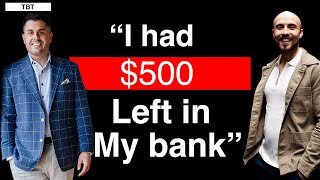
Recruiter Randy Stacks went from $500 in the bank to billing $789,000 in a year by raising his fee to 20-25%, doing business development every single day, and using a points system to track submissions, interviews, and contracts. He credits consistency and coaching from Mike Anderson with turning his business around.
Chapters
Hey guys, welcome back to yet another episode of Top Billers Toolkit, where me and my twin brother interview top billers from all around the globe to unlock the secrets to their success. Today's guest is Randy Stats. Randy has one of the most insane stories I've ever heard, guys. Just under a year ago, Randy had $500 in his bank account. He was about to give up on recruitment altogether. He had a wife and kid at home to look after, and it was one of the most darkest periods of his life. Fast forward 11 or so months, and he's managed to hit $760,000 in billings. On today's episode, we're going to be talking about the transformational mindset shift that Randy had and how he dug himself out of that dark hole. We're going to be talking about the exact BD strategies that Randy has used this year to bill a silly amount of money, and we're going to be talking about the mentors and the people that Randy has met along the way that have truly changed his life. Guys, this is up there on one of my favorite episodes of all time. I hope you enjoy it as much as me and Ben did, and As usual, grab a cuppa or a glass of wine depending on when you're listening to this. Let's get into it, shall we?
Hello, Randy. Thank you so much for joining us today, my friend.
Hey guys, thank you, Ben and Sam, for having me. I'm super pumped to be on here and, uh, super pumped to be speaking with you guys.
Awesome. I have to say, Randy, when we had the pre-call, your story was quite incredible. Um, we're going to go into it today, but it was really inspiring. I think so many other recruiters will gain inspiration from where you were and where you are now and the journey you've been on. So I'm genuinely really excited and really grateful that you're here today to share your story. But we will start off with the same question that we ask every single recruiter, which is, what would you say is the number one tool in your toolkit, whether it be a mindset, strategy, or software?
Great question. Number one tool in my toolkit is consistency. It's a mindset thing. I think recruiting and then anything in life, right, is if you're not consistent, whether, you know, you're in the trades doing plumbing or HVAC or, you know, being a recruiter, running a business, if you're consistently not showing up every day doing small tasks, somebody's going to outwork you and you're not going to win. If you consistently show up, It's a numbers game. You're going to strike gold one day as long as you're consistent with it. So consistency. And then the other half, I would have to add a PS to that comment, a little asterisk would be Mike Anderson. Mike Anderson has been a great coach of mine. He's been absolutely phenomenal. And having him in my corner has been an absolute game changer. Game changer.
Mike's gonna love this. It's gonna be an amazing branding exercise for him. I mean, he is amazing, Mike. So I think he deserves as much, you know, praise because he is brilliant at what he does. And he's taken you from, you know, from a really good position, which is really cool. So what I'd love to go into, Randy, because I just feel like we should start the podcast off with your story. You ended up with something like $500 in your bank at one point, you said in the pre-call, and not a lot of money. And you were in a dark place. Before you started working with Mike Anderson.
And I just want people to understand where you were and how you got there.
Do you mind just sharing what position you're in and how you got to that point in your life?
Yeah, absolutely. Um, so 9 years ago, I went out on my own and just took a jump. Um, started S4 Search Partners, um, started out of my parents' basement. Ted bought me the printer. I still have the printer today. Um, and, uh, you know, that was 2015. I, I didn't know anything about recruiting. All I knew is that I spoke to a gentleman that was doing nursing staffing and he made $20,000 on one placement. I was like, what? So then like my brain started going, right? Because like I'm an extroverted guy. I was like, well, how'd you do that? He's like, oh, just, you know, I connected the dots and used a cell phone and internet and this and that. And I was like, wait, so if I use a cell phone, internet, utilizing my personality and just don't stop, I can make $20 grand. So I'm like doing the math and I was yelling at the time, so like, and that'll turn into $100 if I do this, $150 if I do that. So I was like, oh my God, this is great, let's do it. So I took the jump. Um, wow, was I— um, so that first year I made $40 grand. Um, almost went out of business a million times. Um, and then, uh, I was lucky enough to land my first account. I had a great friend of mine who I used to work for call me up and go, Stacks, so-and-so just got bought out by so-and-so. I need you to go after all these, um, you know, people that were at so-and-so. He's like, you still doing that recruiting thing? I was like, yeah, man, absolutely. So I just went after those people, right? And I didn't really know what I was doing. All I knew was that if I made the phone calls and if I did the outreach, I was gonna somehow win. But I didn't come from a recruiting background. So I ended up placing these people with this big account that I used to work for because I knew the industry inside and out. And next thing you know, I had me and this one guy, you know, we started growing into a partner and we just, we just were doing 60, 70, 80 placements a year, making $600,000. You know, our fees were $7,000, $5,000, $12,000. To me, I'm, I'm making like $200-something thousand dollars, so I'm like super pumped. I'm like, this is great. Like, I'm crushing it. We don't need business development. This, this company's feeding us. Like, like, so let's just go all in and infiltrate it and, you know, go from there. We brought people on, they were $10.99, they were crushing it. And then the pandemic, um, and then boom. You know, everything went out from under us, but it also forced us to pivot. And then me and this partner, you know, we ended up going two different ways. Now, at this time, you know, I had a successful business. I had money in the bank. I just got married. I was able to pay for my wedding. You know, my wife and I were looking at houses. We ended up buying our first house. And then, you know, she gets pregnant. So I'm like, oh, great. So I'm building a house. My wife's pregnant. She's leaving her job in New York City, was making six figures, and I was like, all right, what am I gonna do? So at this time I had somebody call me up, an old family friend, and was like, hey, I got like 2 major contracts in like the financial side. You wanna do like a financial division? Yeah, sure, why not? And like my brain's going like, hey, we could supplement that income that my wife just lost for this new income. I already have the strategy. Like, let's just go, right? Thought of again, Naive. I think the story of me being naive is you're like, oh yeah, this is going to be super easy. Well, you know, I'm thinking dollar signs, how to replace one income with the other. And it wasn't easy. You know, that company ended up going against everything I stood for in terms of morals, right? Like we, we started paying the salaries, we started buying every tool under the sun, weren't utilizing the tools. Next thing you know, I'm taking money from S4, funneling it over to the other company. And just money's depleting. Now, mind you, my wife's 8 months pregnant. We're about to have my— our first child, which is a boy. And I'm like, I gotta like ring the register. What's going on? And I'm feeding all these different mouths, but I'm not feeding myself. And the problem with that is like, I, I care so much and I have such a good heart that I always put other people first. And next thing you know, I'm looking at my wife My house is done and I got no money to feed my son. So I'm like, what? What the heck's going on? What are we doing here? Well, you know, and we got to that point because, you know, we took one of those like PayPal loans out because we hired this guy for, you know, $100 grand. He had like 30 years of recruiting experience to do sales and promised us the world. And it just wasn't— it was a— it was extremely bad hire. Ironically, the recruiter hired the worst person for his company. But it just shows that— and I tell my clients, hey, when your heart's involved in staffing, you're going to lose. You got to just look at it as a high-level view. So that didn't work out. Next thing you know, I got this like payday loan and I got to pay $2,500 every week. Money's depleting. I have whole life insurance policies I'm pulling money from. And I remember making a phone call and I almost got like a panic attack to my parents being like, it's all gone, it's gone, it's gone, it's gone. Everything's gone. And that was 8 years, 7 years of just hard work. And I realized at that moment that I was the smartest person walking into that room. That's why those businesses failed, because nobody came from a recruiting background except the one person who just wasn't the right fit, wasn't a good recruiter. And I know that might sound arrogant, but it was like, I got to get in rooms with people that are smarter than me. And can build this up. Now, all those other people, they'll tell you, oh, it's Brady's fault, blah, blah, blah, blah, blah, you know. And I could sit here and play the blame game, but I don't. Um, the biggest person that I fault is the person in the mirror, and that's me. And I think that's what, you know, drove me to not break down, not give up, um, and really, you know, keep going after it. Also, you know, it was a little bit of ego, right? Like, I didn't want to lose. I didn't want these people to, you know, say at this time I fired everybody, everybody was gone. I left that partnership, had to restart S4 from scratch, basically. But one thing I knew was that I did it once, I can do it again. And those other people never did it. So that's kind of what gave me the, the push, right? Plus I had no money. I mean, I had $500 in my name. Literally December 16th of 2023 was when I was meeting with Mike Anderson, and that was my come to Jesus call, right? Because— and that'll be this Monday coming up.
And I was going to say, it's like literally almost a year in like the next couple of days.
It's, it's, it's just so funny. And I, I, you know, other people could sit here and say, oh well, you know, this person, that person. No, I, I was involved. I gave the yeses. I signed off on everything. So I took accountability. But I knew that if I was going to get out of this hole, it was the man in the mirror. And the hardest person to beat is the guy that got out in the loops. And at that point, I had nothing to lose. I got a son that's crying because he needs formula. My wife's asking where the money is. I'm playing credit card roulette. I owe everybody and everybody money over the sun. Because when you're on top of the mountain, right, everybody wants to be your best friend. When you fall down, that's when you realize who those people are and who is your true best friends. Um, and that was looking back at it, going through it itself. It was like I'm fighting depression, I can't get out of bed. I'm like Why, you know, what's going on? Am I gonna go work at, you know, this job? Let me go back to doing, you know, part-time work and maybe doing Uber Eats. And I just, I, you know, it was, it was a hard, hard place to be in. And I think, and this is gonna sound dark, but I, I really think, you know, with the way I grew up and the determination, it's something that was instilled in me, but I think a lesser person probably would have put a bullet in their head. And I couldn't do it, right? Because I didn't want to leave that legacy. So I knew that I had to get up and push, right? For my son, for my wife. And I also wanted to prove these people wrong. Like, hey, listen, like, I'm still standing here. I am, you know, and Every day was a challenge. So when you asked me what the number one tool was to win, it was getting up and being consistent and making the phone calls and calling the candidates, getting new business. And then back to Mike, you know, we had, uh, December 16th was that come-to-Jesus moment, and it was like, all right, man, this is it. I got nothing left. I got $500 to my name. I'm charging everything under the sun. You know, the pain behind my eyes I'm masking, right? Because you see a smile, but you don't really feel it. You don't see the pain. And, um, my brain's going a million miles a minute. I don't pay the mortgage. And I said, let's just go. And I paid Mike on credit cards, and I paid all my bills on credit cards, maxed out everything. And, uh, December 16th was the day we did the new Mike processed. A week later, I got my first major pilot track, 25%. And 2 weeks later, first bill for $37,500.
2 weeks. Crazy.
Talk about ROI, quick ROI. That's insane.
So what I would really love to know, Rana, thank you for sharing that, by the way, man, it was absolutely just insane story. But what I would love to know now is you have $500 in your bank. You just meet Mike. You've jumped on a call with him. What are the first steps he tells you that are the most important next steps to dig yourself out of this hole? Do you remember what they were like? What did you need to do at that point?
Yeah. First thing he said was, I'm shocked you've been in business this long with one client. I was like, what do you mean? We're about $600 grand, man. Isn't that cool? He's like, that is not a good client. He's like, and your fees, right? So the first thing he said was get rid of all the, get rid of everybody, get rid of the time vampires, everybody's pulling you away. You need to shut out everybody and we're gonna redo your schedule. Wow.
Hmm.
Wow. Interesting.
So, you know, there was two things. There was two things that he said you have to focus on. That's BD and that's candidate outreach. You focus on those two things. And you're going to be great, right? And within those two things, you know, he said, I challenge you to one, never miss, value your time and schedule, and don't take anything less than 20%. Now, mind you, I got $500 in my name, so I'm terrified, right? So I'm sitting there being like, what do you mean? Like, won't you get 20%? Like, dude, I gotta pay a mortgage, you know? And he's like, so I knew that if I didn't take these challenges, I wasn't going to grow. And if I wasn't coachable, then why am I doing this? So You know, and I basically said to him, I was like, Mike, listen, here's the deal, man. Like, if you tell me to go pick up manure for a football field and that's going to make me a millionaire and get me out of this hole, like, let's go. Show me the bag. I'm ready to do it. I didn't think twice about it. I just took the action. And that was Kenny. And he taught me, you know, the biggest thing, which was ARPO. And if any recruiter doesn't know what ARPO is, like, here's the goal. It's activity Rank, process, offer. You know, what's going on with the candidate? Who have they interviewed with? Who have they spoken with? Have they gotten offers? Where does your client rank with them? What's the current process of where they are with other offers? Is your client, you know, within the top 2? You know, if they had offers, what were they? What's the bottom line? So it was ARPA and business development, which is a candidate business development, candidate outreach, and utilize RPO, which was Toll. Love that, man.
Brilliant. I love how simplified you made that sound, and I'm guessing Mike probably did the same. He just kind of stripped it back to its bare bones and said, this is what you need to do to be successful. And you relayed that really well, Randy. What I'd love to double down on, or at least just go into a little bit more detail, because this is, this is the topic that every recruiter wants to hear more about generally, is business development. So you jumped in with Mike you, and you won a first, you know, first client in a week and then made a placement of $37K in a second week, which is insane. What did you do to win that first client, if you don't mind me asking? What was the strategy or the way to get your foot through the door?
Yeah, so the way to get your foot in the door with the clients, and I'm sure I'll get bashed for this, email. I didn't make one cold call. I didn't pick up the phone at all. Wow.
That's massive.
And I haven't for 360 days and I've had more clients and contracts than I ever had in my 9 years of being in business. It was all through email. And what Mike taught me was, hey dude, like, you gotta get in front of these clients, but you gotta show your personality, right? How many do we get that are like, hey, you know, Ben, I noticed you have a role and I'm a recruiter. This is what I do and blah, blah, blah, blah, blah. I just watched you, right? Where it's like, hey, you know what I mean? Get in there, show some personality. I'm a golf guy, right? So it was like, you know, Ben, listen, here's the deal. I know you got an attorney position open, right? I wanna show you how good I am. If I stink at it, I'm gonna go back. I love golf. Maybe I'll see if there's caddy openings. You know what I mean? Like, you start being funny, start being yourself because I think people get so, you know, they get so caught up in that professional, professional, professional. Listen, man, at the end of the day, whether, you know, you guys are at the UK, I'm, you know, New Jersey, we're all cut from the same cloth, man. We all have personalities, so why not bring that out? So I brought that out in the email.
I love that.
And I stopped, and I stopped caring, meaning like, I, you know, it was never rude, but I just— it's a numbers game. Recruiting's a numbers game. And I never, ever, ever took anything personal. So Mike said jump. I just said, okay, cool, I'm jumping. Even if I don't know how to swim, I figured I'll learn how to swim, right? Because at this point I have nothing to lose. I have $500. I can only, I can either go down to negative or just go up. So, you know, that's what I did. And I just, I sent the emails. As soon as they responded, Mike was like, listen, once you respond, once they respond, your goal is to get them on a Zoom or a Teams call. He said, because your natural gift is this face-to-face. And he was right. I don't know what it is about me, but I've always had that connection with people and that likability factor. I think that's a gift from God. I'm very charismatic. Again, that's a gift that God has given me. And, you know, I got these people on the phone, right? And I started being me and, you know, talking and I'm taking the call from my house at the time, you know, you know, um, I got my, my putter in the background, my little putting green, you know. So I'm talking to these people and, you know, we're going back and forth. And the hardest part about getting those clients once we went was the contract sign.
Hmm, interesting.
Because I was terrified to tell you that I wanted to do my fees at 25, 30, or 20%, right? It's for so long I've been doing them at like $7 grand, $5 grand as well. So to have that, the gut to say, hey, listen, it's 20%, and to know at that point I had no money, and to say no, our fees, you know, we do universal agreements across the board, you know, 15% with agencies. Take it or leave it. Now, mind you, I have no money. So I'm like, okay, internally I'm like, take it, take it, take it, take it. But externally I'm like, Mike's going to kill me. He's going to literally kill me. And sometimes he would be on the call with me and I'd be like, sorry, our fees, our standard fees are 25%. Listen, here's the deal. I can do it for 20%. I can guarantee you that the reason your role's open is because these recruiters are just yesing you to death at 15%, but they're literally working with 20 to 25% of roles because it's not financially So if you really want to get this role filled, you know, let's rock and roll. I'll do a one-time 20% fee. Nope, sorry, 15%. And I'm like, shit.
And then what happened, Randy?
I called Mike and was like, dude, I'm losing money on the table, you know? So, But I kept going. I never missed on business development. Even this morning, guys, I literally, before I got to the office, I woke up super early and I was like, all right, I got the podcast, I got this going on. I know at 9:00 AM I'm gonna get pulled in a million directions. Boom, knock out business development. My business development was done by 7:30 AM Eastern.
I was gonna ask what never miss means, and that means never miss a day of business development. That's what that means.
Never miss a day of business development. And that was the biggest thing Mike taught me, right? It was filling the funnel. Who gives a crap about the offers or the placements, right? Because if you do the job right and you put people first and you literally are going to fill that funnel and you do business development, right, all that's doing is filling the funnel and that funnel is going to drip. And man, when that thing drips, That's naturally going to give out business. Now, how do you stop a funnel? You get one good client, you think you made it, and you don't do business development, you know? Yeah. So no matter how hard it is and no matter how many jobs you have, always do business development. Because what if the client goes out of business? Or I had this happen. Sorry, we're on a hiring freeze. They've been on hiring freeze for 20, for 2 years, 24 months.
Wow.
Well, you know, one of the other clients I had. So what happens? Well, okay, cool. That's fine. Well, this person's out of play, but boom, we're going to plug this guy right in because we've been doing business development. We've got a hit on this. So that's what never, you know, never miss or don't miss. It's never miss on business development and always take the call and talk to candidates. Because you never know what you can plug and play, right? If you're playing, you know, everybody's playing checkers and we're playing chess. We're at that high level view where we're looking, what's the moves, what's going on? You know, that's why Bill Belichick is one of the best football coaches of all time, if not the best, because him and Tom Brady can see the situations. They've lived them. They can explore. They know, okay, if this guy goes that way, I'm going to go here. So that's how you have to look at recruiting. 30,000 foot over. What's my next move?
Do you guys ask something really quickly, Ben, before we get into strategy? I'm just curious, Randy, do you remember where you— because you, $500 in the bank, got a family to feed, 2 weeks, you close a pretty hefty deal. Do you remember where you were in that moment and like what the emotion was? Because I'm guessing it must have been like a euphoric moment? I'm just— I just like going back to those moments.
Do you remember where you were?
Yeah, I cried. Um, I cried. I said to my wife, I said, oh my God, this works! I just got paid $37,500. And then I started doing the math of how many fills it would have took me to do $7,000, right? And basically like 5 and a half fills. Crazy to get one. And I just made one placement. And that's when I knew my time management and raising my fees, um, was worth it. I was like, so I can literally triple my billings but cut in half my placements and be present for myself and my wife and not be broke. You know, so I was like, oh my God, it works. This is phenomenal. So, and I, and I think it's a funny thing I did there. I went out and I used one of the last credit cards I had, and I bought like a nice steak dinner. I was like, well, let's have a nice night as well. No more spam tonight. Um, I love that.
What an amazing moment that must have been. And I feel like we were there with you, Mike, in that moment. So that's, uh, sorry, Randy, I was speaking about Mike so much, so he's in my mind as well. Um, yeah, amazing. I'd love to go back to— I'm just going to go back to the business development side of things. That's okay, Randy, because I, um, it sounds like that was a little, um, an epiphany, that moment and that strategy. So I know, I get it, that one of the most important things, which I absolutely love, is being yourself, being natural, putting some humor in there. Basically standing out from the crowd. Was there anything else in that email that caught their attention? I know a lot of Mike's, uh, strategy is around presenting a candidate that's already, um, in the business that's really valuable. Was it something similar to that? Was it something different? Was it speccing in someone that was valuable? How else did you get their attention to say, yes, Randy, you know, let's, let's have a chat?
Yeah, um, so, you know, I, I use, um, 3 email templates, right? One is like more Hey, you know, this is what's going on, blah, blah, blah. And then one of the other ones, I'll pitch a candidate, right? So I'll pitch, I'll pitch a rockstar and be like, hey, listen, you know, you're an IT firm. I have an IT rockstar confidentially looking, you know, and I'll do like a 6, 7 email template kind of thing, right? And then on like the 4th one, it's like, listen, here, here's the person, here we go, right? Like, I showed you my cards, now show me mine. Because a lot of times, right, you have a lot of recruiters, and especially post-pandemic, like, I don't know what it was like in the UK, but in, in the US, like, post-pandemic, everybody and their mother wanted to be a recruiter or real estate agent because everybody was hiring, everybody was selling houses. Um, so the people that were there prior really we were the ones that were like, all right, cool, block out the noise, this will go away and the good ones will prevail. And with that being said, all these people would get spammed with, hey, I have a candidate. Okay, cool, show them. Oh, I don't have a candidate. So we always played the game with two ways, right? Here's my cards. What I do is ethical. I want to work with you because I'm a great person and I can truly help you. And I don't lie. And it has to make sense on both ends, right? So here's that candidate, confidential pitch. Now I showed you my cards. You can easily go and take that candidate and hire them. We don't have a contract. But morally, is that the right thing to do? So, you know, you show them a little eye candy, you get them on the phone, you go back and forth. You get a deal, right? I've lost deals that way though, because they wanted 15%. I'm like, can't do 15%. Well, we're small, blah, blah, blah. I get it, but I gotta feed, man. I was like, unless you can let me live in your office, I gotta pay the mortgage. So it's gotta be 20% or higher. So that's what we did. I would pitch candidates.
So awesome. And would you say out of the 3 templates, Randy, that was the most successful? Finding a rock star and presenting it to the right company?
I would say they're all pretty even. The pitch candidate would get a lot, a lot more response rates, right? Because they're like, oh, that's what Critter said, what he said he was going to do, like what's going on? But then equally, you know, I would, you know, pitch, you know, what kind of job they had open and that would work too, right? Because as soon as that, as soon as they got back, I'd get them on the phone and then I would just kind of pitch profiles. To what was going on. So I think they, they both worked equally. Um, so I can't tell you which one worked better because I think they both, they both do the same job, right? Get into a face-to-face with the client.
Yeah, love that.
Interesting.
I asked Mike, uh, the same question, and I'm interested in this, the, your answer for this, Randy. I, and I, I'm just fascinated in day plans and like how you structure your day. Would you mind letting me know— I know you do, it sounds like you do your BD very early, but can you just let me know how you structure your day nowadays, if that's okay?
Yeah, absolutely. Um, so, um, I'm looking at it, so I'll show you guys this. And this isn't a plug, I have no idea who made this, I got them off Amazon. So this is a, um, this is a dashboard, right? Cool. So I'm a mile emitter. I'm like the kind of guy that like, oh, doc, right, well, wait, another one over there, right? So like I have to stay very focused.
Yeah.
This dashboard allows me to plan out my week. It allows me to say what client, you know, what searches I'm doing that day on Monday, Tuesday, or Wednesday. I always write down all my active clients, my tasks, and then I check out my BD, right? So the first thing I do in the morning is I'm a swaddle the frog early guy. So I do my business development. I throw that in a platform I use. And again, this isn't a plug, but I will tell you they should pay me because I've referred so many people to these guys. I found a thing called Sourceflow, which is an absolute game changer in tools, right? Because everybody and their mother calls me up and says, hey, I got this tool. I can change the game. I can automate this. I don't want to, you know, because AI and automation is great, but if you don't know how to use it or if it's hard to use, it's pulling you away and it's a time vampire, right? It's sucking your time for you to really do the two things, which is business development, outbound, and candidates. Yeah. So I found Sourcewell and absolutely love the tool. It's a game changer. If that's one of the things, if you take away from this podcast, if you're a recruiter, and you have just a little bit of money, like you need to get Sourcewell because that will literally triple your activity.
What's so powerful about Sourcewell, Randy, would you say?
It allows you to reach out to people in different touches and automate it, but you can control it via, you know, email or phone or, you know, LinkedIn or text messaging, you know, or like sometimes like I'll do my BD at like 1 AM for the next day and I'll just throw it out and I'll throw it in Sortwell to go out, you know, early in the morning or sporadically, right? So it allows you to kind of work whenever you want in terms of different times if you get pulled away. And it acts as like a person, right? Because for me, follow-ups, if I'm doing hypothetically 50 outreaches a day, let's just say, right? 50 new businesses. And 50 new follow-ups without Sourcelink, that could take 2, 3, 4, 5 hours, right? Because you got to research the company, you got to find this person, that person, then you got to go back and see if they responded. Sourcelink automatically does all that for you. You just got to throw in the candidate or the client one time, and I have all the templates that I made out already pre-made, and I just put in the email what I want to write, attach a resume if it's, you know, highlighting or whatever, and then click it. And honestly, I forget it. So half the time I'm like, oh wait, this person responded. Who is this? And I have to go back and look it up. So that's why Sourcero is an absolute game changer. Awesome. And if somebody from Sourcero is watching this, can I get a plug?
Because definitely deserve a plug for that, mate. There's definitely going to be recruiters that take that. To be fair, I've seen Sourcewell. I know a lot of recruiters in the UK that use it, so it's definitely had— it's got a really good reputation in the UK at the moment for being a great software. But I love that you use it as well because it's, uh, the proof's in the pudding. If you say that it's working, then it's obviously a good software. Um, sorry, you were saying, Mike, so can you mind just continuing with your day plan? And so it's a BD early in the morning, or when you do it, Sourcewell I'm guessing is a big part of that. How else do you structure your day? What are the other important activities?
Yeah. So the first thing in the morning is business development, right? I knock that out right away because I know I'm going to get pulled over, right? So business development, boom. Then the next thing is, hey, you know, I'll do 3 sources. So I'll literally go on LinkedIn, I'll, you know, source like you're supposed to source or whatever. And then I'll start, you know, going through my source tasks. So also what my tasks are, right? So around mid-afternoon, you know, I'll source in the morning, get my business development done, and then like from 1 PM til like, um, I will, uh, I'll do my sourcing tasks, whether that's, you know, my phone calls that have called clients or candidates, um, or I'll just start, you know, cold calling candidates who I think are rock stars for the job, and then I'll refresh my job postings on like Dev as well.
Wicked. Interesting.
And just because, again, I'm always, I'm always curious with like volume and the amount you're doing, Randy, in order to prop up the pipeline in order to stay safe with, with a good pipeline. What kind of volume are you doing every day?
Great question. Um, so the volume's determined by a point system that Mike and I utilize, right?
Cool. So, uh, he kept this one quiet, um, Randy, so I'm glad you're telling us.
So, you know, I, I— again, it's accountability and consistency. Right. That's, that's the biggest thing here. You get 2 points for a submission, 3 points for an interview, 5 points for a contract. And when we first did this, you know, we would set it up at 20 points, 20 points a week, right? And I was blowing that out of the water. So on average now, Um, we do about 45, you know, 40 to 45 points a week, most likely 40. Um, and that's to ensure, one, I don't miss, two, I hit all my sourcing goals, right? Because, you know, you asked, hey, you know, how— what's the average? And, and that varies, right? There's days where I can make 35 phone calls, uh, there's days I can make 20, there's days I can make 10, right? But It all depends because some of those quiet days, you know, I'm maybe getting a new job sourcing for, um, but it's the point system really that, that I go by. I don't go by the volume because what the points do is if you hit those points, hypothetically 40 points, right, and you break that down even further to dollar signs, right, so let's just say each point's worth $1,000, you know what I mean, if you 40 points, you know, that's how much you're kind of basically going after a week. Yeah, right. And then all that closes, um, and then you know, okay, well, I had 15 points last week. Well, you failed, you know, because again, what that does is that constantly builds one thing, which is the fun. You're building the funnel, right, through submissions, through outreach, your new business.
Love that, man. But really interesting.
Does that answer that? I know it's like a little—
No, absolutely.
I'm—
I think that's so brilliant. It's such a simple concept. But again, this is what I'm learning about you and Mike, is that the simple things are the most powerful, and it's really stripping it back and coming up with simple principles that move the needle. And allow you to focus, which is really interesting. Um, I try— if it's because— because the point systems, I feel like, quite revolutionary, because I feel like that is a really smart way to— because there's such a big debate about volume.
Every—
when I do any post about this on LinkedIn, everyone has a different opinion on what the right volume is compared to the wrong volume. And I guess it is, it is quite different depending on what market you're in and what your goals are. But I love that. So can, can we go into a little bit more detail about— maybe it's as simple as that, um, Randy, but if you were to, like, without giving away too many secrets, if you were to kind of help someone to follow this point system accurately, you know, as a recruiter listening to this, have you got any more words of wisdom in terms of structure, how to set it up, how to follow it, anything else to, to kind of add to that?
Yeah, um, well, first and foremost, all these gurus out there on LinkedIn, I, I want to say this Working a full recruiting desk is hard as hell. It is like, because like you're always on a hamster wheel, right? And you can get overwhelmed really, really quick. So how do I counteract that? Well, I go back to what I said earlier, right? I split the day in half. You get business development, you know, and you do sourcing and then boom, once lunchtime hits, it's, you know, calling candidates and doing, you know, follow-ups and pushing interviews and stuff. And to the point system, that's kind of how it grounds me. So it's like, okay, cool, I have to get 40 points. You know, I still, I meet with Mike twice a week and it's like, all right, I met with him on Monday, I had 6 points. I meet with him again on Thursday, I gotta get 40 points and I only have 20 points. So like, what do we gotta do to fix that, right? And it's literally, it's simplified in terms of, okay, well, if I get, you know, 10 submissions at 2 points, there you go, you know. Um, or, hey, you know what, I got my BD going out, I got 6 new client potential calls coming up this week. If I land a contract, that's 5 points. Um, you know, or, hey, you know what, I submitted this person yesterday, it's 24 hours, let's do a follow-up. Hey, what are we doing here? This person can interview tomorrow, let's get on it. Oh, okay. Yeah. Thanks for the follow, Brandy. I missed this. Yeah. Let's schedule an interview. Boom. That's 3 points. So the simp— it's simplified, you know? And that's literally the point system for me. It's 2, 2 for submissions, 3 for interviews, 5 for new cloud accounts. You notice what I don't have in there? What do you guys— see if you guys can pick it up. What I don't have in there for points.
What are you missing? Submissions, new contracts, interviews. What do you not have in there for new points?
I don't know.
I don't know, Randy.
You put me on the spot. Dials. Dials.
Guys, fills.
Fills. Yeah.
Yeah, yeah, yeah.
Okay, cool.
Right. And you know why we don't have— you know why we don't have fills? Because the candidates, the subs, the interviews, the new BDD. What's that doing? That's filling the funnel.
Yeah, so it's a natural byproduct, right?
Yeah, the funnel drips, it leads to fills. So that's why you don't get once.
I see.
And it's the— but again, it's the consistency. It's always filling and filling at the top of the funnel.
How long have you been doing the point system for with Mike? Is this a new thing? Is this— did you start this at the very beginning of the year?
7 months. Cool.
Have you missed any days by any chance?
Have I not hit some of my points? Yeah.
Can you—
can we go the ladder though? You want to know how many points I got?
Yes. Yes.
89. Wow.
Awesome. That's good.
And now, now I have to get to 100 because I'm a psychopath.
I love it. Is there a—
sorry, just to jump in, because I'm sorry, I'm going to the point. Um, is there— so there's a point system. Is there a way to— because say if I love new business and I'm obsessed with new business and I just want to hit 30 points. Um, is there— is that— is the— is it designed in a way that I could just double down on new contracts and miss submissions and interviews? Is there a way to like balance those points? Because I'm guessing— I'm guessing there— maybe you could let me know, Randy. Like, what if I just focus on new contracts? I was like, oh cool, I got 20 points today. How do you— how do you, um, make up for submissions and interviews, which are obviously a necessary part of the process?
Yeah, great question. I think you can, that's at your own discretion, right? I think you could scale that. Let's just say all you do is focus on new BD. Well, it's like, okay, cool. Like I think you, that's when you can bring in maybe dials or like how many people responded. Hey, maybe you get like 2 points for an email response, 3 points for like a meeting booked, 5 points for the contract, right? I think you could play around with it and that's the thing, right? I think it's tailored. You can tailor it any way you want. I'm just a super competitive person, and Mike knew that, so he was like, all right, man, I'm gonna give you a points goal. I think what he said, just, just shut up and do it. I'm like, all right, let's jump.
I love that.
Cool.
Yeah, I love that as well. It's a good— it's good advice, and it's like being flexible and playing around with these points. The key is it's the gamification of the process, right? It's the gamification and the competitive nature of gaining points. Which I think is really smart. Um, very, very cool.
I'm interested in this, Randy.
I don't really—
I don't usually ask people this, but for some reason I'm drawn to asking you this. Um, you've had quite a life transformation the last year, it sounds. You know, beginning of the year, £500 and $500 in your account. Now you're billing, um, $500,000, I think it is. Um, what's the plan moving forward now? Like, your life has changed quite a lot in a year, uh, and you've had probably quite a few mindset shifts. Like, what's the next biggest goal for you now and where you're driving this business? Is it to create as much time as possible to spend with your family?
Are you—
do you want to build a certain amount? I'm just curious of where, where you want to take it.
Yeah, great question. It's funny, this has been— this question has been sitting with me, you know, as we go into the new year for the last month. First and foremost to date, and I want to clarify this because this is the really coolest part since I put my head down and I worked and I didn't stop. Today we've built $789,000. That is the highest I've ever built, built in my life.
I think it's so cool.
And this— if this, if this last year taught me anything, right? Because as a human, I think we all have different feelings and I have a lot of insecurities. Was it wasn't the past partnerships, it wasn't the multiple businesses, it wasn't this or that. It was the guy in the mirror. The guy in the mirror had the talent all along and is the best and worst enemy of himself. And I showed up every day and that's why we hit that number. Now, where I want to go from here, right, is, well, my son is now 2 years old. Um, I'm no longer at my house. I'm— I got an office here. Uh, this isn't a dentist office, this is actually a— uh, at, um, I want to grow the business the right way. I mentioned earlier that I, I was the smartest guy in the room and I had to get in circle with people that were way smarter than me. You know, not only did I get that with the coach and Mike, I got that on personal levels as well. Right. I'm part of an entrepreneurial group in the markets. I elevated my circle, which got very, very small when she hit rock bottom. And I don't really let people in anymore and I take a step back because of how I— right. But all those people around me are all business owners. They're all extremely successful. And now I am the dumbest guy, right? Which probably isn't right to say about yourself, but we get you. I'm the guy that's taking it all in till now. So what does that do? That teaches me additional systems, that introduces me to people. And what I got out of that was people were watching me without me realizing it. So I got new business out of it. I'm at 20% or 25%, just really easy, right? I got people texting me, calling me, hey, are you hiring? I'd be looking to hire people. So over the next year, my goal for my business is to expand it. I don't want to be the big boys, right? Maybe expand it 4 or 5, 6 people max, you know, with, you know, allowing me to not work the full desk as much and maybe just do like the business development side and the client interaction. But more importantly, to buy back my time, right? So that, you know, my son's 2, he's going to be 3 next week. Never going to vote. He's got these, you know, 7, he's going to be playing sports. And that was something that my father always gave me. My dad was my baseball coach, showed up and he was present, right? And I have to do that for my son. So my goal for the next year, 36 months, I think, is to scale this to a certain level where if I want to step back and take a day off, business isn't going to stop. I'm not going to be anxiety-driven to respond to an email right away because I could be, you know, something lost. So, um, to your point, Sam, like, I'm looking to grow this the right way with the right Love that, man.
Great answer.
It's like, it's really amazing as well. It shows you how much you can accomplish in a year. It's just such a— it's like, it's a long time, but it's actually a comparatively very short period of time as well. And it's like, the transformation you've had in a year, Randy, is quite insane. And yeah, just really inspirational. By the way, you have a great way of speaking, Randy. You've got a very hypnotic, kind of soothing voice, which is Very, uh, it's great having the podcast, and I'm sure people will appreciate it when they're listening to this. Um, but we are coming towards the end of the podcast, Randy, and I just want to say thank you, mate. This has been a really amazing podcast. Me and Sam always say we know it's been a good podcast if our attention has been captured the whole time, and you had my attention the entire time with your story and what you had to say. So really, thank you so much for coming onto the podcast today. It means the world to us, and I'm sure a lot of recruiters will learn from it.
No, thank you guys. I truly am honored. I would have never thought a year ago I'd be doing a podcast about my story because truthfully, I didn't think there was anything special about my story. But, you know, I appreciate it and I appreciate you guys allowing me to come on. You guys put out some great content. I think, you know, there's always everybody watching in the background. Keep going because what you guys put out is great. There's little golden nuggets in every interview and every post. So I guess my advice to you guys would be, if you don't think anybody's watching, you are, because I'm one of those guys in the background always reading stuff. Thank you. Even though I'm not commenting.
Thank you, man.
That means a lot.
Hey guys, thanks for tuning in to this episode. If you enjoyed it, please don't forget to subscribe on YouTube and Spotify. Tune in for another episode next week, and we look forward to seeing you again very soon. Peace and love.
More from Sam




The difference between a $200K biller and a £1,000,000 Biller (full Breakdown video)

how to go from agency recruiter to Lone wolf (Advice from a $2.4 Million biller)



This Recruiter has billed $750K+ for 30 years straight. (Master of Consistency)

How to increase your candidate response rate by 25-30% (Whats app messaging system)


This recruiter has billed $1,000,000 for 5 years straight! (Master at Enterprise deals)