This Recruiter has helped HUNDREDS to BD success, ultimate guidance for staying on top.
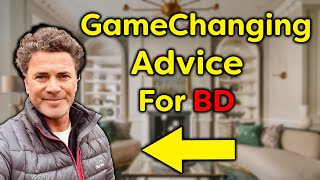
James Osborne, a 20-year recruitment veteran, says mindset and fundamentals matter most. He outlines a 16-channel BD strategy including podcasting and insight selling, warns that recruiters have gotten complacent, and argues that top firms now optimize workflows and measure conversion at each step.
Chapters
Hey guys, welcome back to yet another episode of Top Billers Toolkit, where me and my twin brother interview top billers from all around the globe to unlock the secrets to their success. Today's guest is James Osborne. James has been working in recruitment for over 20 years and has helped some of the biggest organizations in the world. He's now the co-founder of The Recruitment Network, a huge community of recruiters who are dedicated to helping one another improve, grow, and stay at the top of their game. He's trained hundreds of different recruiters across countless industries. So when it comes to knowledge and insight about the recruitment world, James is your go-to man. Today we're going to be speaking about the current trends that James is seeing in the markets. We'll discuss what the best recruitment companies are doing right now to stay ahead of the game. We're going to cover specific BD strategies that are getting great results for recruiters right now. We'll also talk about the one mindset hack that James has used throughout his entire career to stay motivated and help him bill vast sums of money. So as usual, you lovely people, grab a cuppa or a glass of wine, depending on when you're listening to this. Let's get into it, shall we? Hello, James, how are you, my friend?
I'm good, Sam, very good, thank you. How you doing?
Yeah, very good, thank you, mate. Thank you for joining us on Top Billers Toolkit. Me and Ben have known of you for many years on LinkedIn. I know you're, um, very much embedded in the recruitment world and you're big on building communities, especially with TRN Network. I know you're doing big and great things with that, so I wanted to have you on because I know you have a lot of wisdom and knowledge in this area. So thanks for joining us.
No, thank you. Yeah, I mean, I pretty much live and breathe the recruitment world, so it's my life, um, day in, day out, night in, night out as well. I love it. I love the industry. I think it's an amazing industry. Yeah, a lot going on at the moment though, interesting times. So it's— I think it's good to have these sort of sessions that you're running, that things that you're doing, because it gives people a good chance to just get a sense of what the hell's going on and what other people are up to. Definitely, mate.
Yeah, I'm glad to have you here.
Cool.
So the starting question is, um, what would you say is the number one tool in your toolkit, James, whether it be a mindset, a strategy, or piece of software? What do you think?
Yeah, it's a really interesting question, right? Because, uh, there's so many tools that you could use as a recruiter at your disposal, and many of them are brilliant. Um, to me, it always comes back into the mindset, always has done. If I look at the difference between an average recruiter and a great recruiter, someone who's killing it, somebody's not getting it at all, it all comes down to attitude and mindset. The process of recruitment is not that complicated if you follow it. Um, and the mindset to me comes— I break it down into two things, and two things I live by personally. I suppose one is optimism. So you wake up in the morning, you choose to be a pessimist or you choose to be an optimist. I personally choose to be an optimist and I think you can have a far better day if you do that, especially with the fluctuations we have in the recruitment sector. And then linking off the sort of optimism piece, I suppose, is opportunism. You look at the thing about the recruitment sector, think about the world we live in, there's continuous changes, it's evolving and moving and up and down, et cetera. Whenever there's a change, there's an opportunity. What most people focus on when there's a change is where it's all going wrong. What have I lost? Why is it different from what it was yesterday? I look at it as, well, if it's changed, there's something else is happening, there's opportunity to go after. Um, so to me, I think the difference between a good recruiter, average recruiter, you know, what's the tool in your toolkit, they just look for opportunity, they seek them out, um, and they're positive about the market irrespective of what the market's doing. They're optimistic about it.
Love that. And totally agree with you, mindset is, you know, as Tony Robbins says so much, I think it's like 80% of business is mindset, 20% is strategy. Have you ever come across a recruiter with a crappy mindset and helped them increase, or seen what they've done to, to develop a better mindset? Are there any kind of things that you've seen recruiters do, or any tips you can give people just to develop a stronger mindset?
Yeah, you see that— I've seen a lot of recruiters recently, actually, in the last 6 to 12 months, who their mind's been in the wrong place because it's a very, very different market for what they're used to. And if you think about it, if you look at the post-COVID boom that we're in, that we were in, A lot of recruiters joined the industry in that boom. So they're used to this beautiful market where you pick up the phone and client give you 100 jobs. It's all very easy. It's 28% margins, it's retainers, it's blah, blah, blah, blah. That market shifted at the back end of last year. We're now in a bit more of a normalized market. It's not bad, it's just a different market and more normal. So a lot of people don't know how to handle that. They're not used to it. So I wouldn't say they've necessarily got a bad mindset. I just think they're a little bit confused about understanding where the opportunity is and what good looks like. So, you know, how do you get people to do that? I mean, I'm a big fan of trying to get people to focus on their true potential. I think we often benchmark ourselves on what we did yesterday or last month or last quarter as opposed to what we could be doing. And every market, there's so much more that you could be doing. So yeah, getting people to focus on their true potential and where that is and then basically trying to build a roadmap to get there, I think is important.
Love that, James. Um, so one of the things I know that you are brilliant at is kind of keeping your ear close to the ground, if that's the right saying, and you just know what's going on in the market. You speak to a lot of recruitment agencies and recruiters in general, and I know one thing they love to hear is kind of what's going on in the market and, and what to do to improve or be better. So from what you're observing, what are the recruit— what recruitment companies, what types of recruitment companies are really standing out at the moment, and what are they doing differently to kind be above the rest at the moment in this current market, do you think?
Yeah, for sure. So again, if you go back to what I was saying before, the market shifted at the back end of last year. One of the things that we found is a lot of recruiters, a lot of recruitment companies, as the market shifted, were actually— when they look at their business, were being a little bit complacent. So they were busy, busy, busy billing, running around the place, making loads of cash, which is all great. But the reality is, because they were so busy, they stopped doing some of the basic stuff that they should have been doing. Now, we talk about doing the basics brilliantly and consistently, and a lot of those basic things got ignored, they certainly weren't being consistent. So, um, that came back and bit quite a few people on the backside for a, for a few months as they tried to play catch-up a little bit and trying to figure out what was going on. What's now happened, and I think this is actually really exciting, is that a lot of recruitment businesses are going through this process called optimization. Or certainly all the companies that we work with at TRN, we're pushing through this optimization process where we're basically saying, look, let's just take a big step back, let's look at our businesses and for a second look at our recruiters, look at our desks that we're running, and say, actually, honestly, are we running in a suboptimal way? Could we improve our efficiencies, our capacity, our productivity, our performance, and how we're working? And I think a lot of people are really starting to utilize that. AI has now turned its head on— AI's been around for decades, but AI has now popped up and is everywhere. So everyone's now basically going, well, actually, how can I use tech and AI and automations to give me more capacity, to make me more productive? Some people are getting that wrong, some people are getting it right. We'll talk about that, I'm sure, as we go in this conversation. But, you know, for me, what the really good recruiters doing now, they're going, all right, well, let me— let's just take a step back. Let's just look at our businesses as a machine and let's make sure our machines are really running as they should be. Because for the past couple of years they haven't been. And I think now we're starting to see an evolution of far more productive, higher performance, greater capacity recruitment businesses, which I think is really, really quite cool. When you build on that, when you add in the market that's flipping and turning and coming quite positive again, and I think I do honestly think we're going to see a boom market in 2024. I think you add all that together on top of an optimized machine, you can absolutely kill it, which is sort of really, really quite cool. Then that starts manifesting itself into, okay, I've got a really cool machine that's purring and firing up on all cylinders and we can just drive, drive, drive, which is awesome. I've got to make sure now that all the people involved in the business believe in that, buy into it, and set their bar higher than they have been. So there's been a massive focus around high performance cultures. So taking our businesses, looking at the culture, deciding whether our cultures are really fit for purpose and saying, well, if they're not, we've got an opportunity change is change. Let's change it. Let's create the cultures that we need to have in a business that's going to be able to truly capitalize, maximize on any market, but certainly on a growth market when it, when it sort of rears its head again. So I think for me, that, that's what the big focus has been, is tightening stuff up, super optimizing their businesses, getting the mindset back into high-performing cultures. Obviously, we can talk about all the other stuff. They've been doing business development a hell of a lot better, a little bit more strategically, probably properly, let's call it, and all those bits on that side of thing. But those two areas to me, optimization and high-performing cultures, have been the drivers, I think, of the strategy for the last 6 months, and I think will pay dividends for people over the next sort of 6-12 months.
Interesting. I would love to cover just 2 things in what you said there. Um, earlier on, on this, in, in your reply, you talked about the fundamentals that a lot of recruiters were kind of skipping over. Um, what were some of those fundamentals that people were getting complacent on, James? You tell me, asking.
No, no, not at all. So I mean, let's start with the obvious one, which is business development, because obviously BDD has been at the top of everyone's agendas recently because everyone's— a lot of people have sort of a limiting job flow coming through. When you look at business development at its core, it comes fundamentally down to getting in front of customers and having meaningful conversations with customers. You can pick up business as a recruiter over the telephone or over an email fairly easily. That's not that difficult to do really, if you do enough of it. But you won't be bringing in quality business. You won't necessarily be bringing business in that's been given to you exclusively on a retained basis by the customer. You probably won't really know how to solve the biggest issues that sit behind the reason why the customer's giving you that job in the first place. So therefore you can't really solve it. So to me, getting in front of customers has always been the number one central point of any sales strategy, um, face-to-face and/or Zoom or Teams now because we live in a bit more of a virtual world. Um, that's one example of where recruiters have just stopped seeing customers. So we've started to become a bit of a faceless industry from that perspective. The challenge with that is when you start really driving technology into the industry, into the agenda, um, people start questioning whether it's worthwhile even using a recruiter because I've got this tech to do the job for me. You don't even bother coming to see me anymore or speak to me. I just get an email from you. So actually, who are you? Are you just another AI bot that's sitting behind a face? I don't know. So for me, it's about the basic stuff. And one of the basics is about getting in front of customers. It always has been in sales. I don't know how a recruiter could do their job properly unless they've met a customer. I really don't.
Yeah, really interesting. I think we've heard that's been a common theme for our conversations as well. Do you have a particular area of BD? I'm sure you're using multichannels or you promote various things, James, but do you stand behind a particular method or strategy or way of working to get yourself in front of new customers? Do you advise a particular area or do you have multiple that you advise your clients?
Yeah, so we advise our customers on a channel strategy. So a multichannel strategy, 16 different channels. So if you look at the sales pipeline or sales workflow, basically your job is to drive people and traffic down through the workflow. At the top of the workflow, I I think there are up to about 16 different channels, so different— 16 different methodologies that recruiters should be running concurrently at any one time. The great thing about automations and tech is that you can do a lot of that stuff without having to actually be there and do it. So that stuff can be running in the background. And some of the stuff is a little bit left field, some of it's quite, you know, unique, some of it's fairly standard, you know, so it's very obvious, you know, things like podcasting strategies. You know, everybody's doing podcasts at the moment, and I love that as a concept, I think it's great. The reality is I don't think people understand the value of a podcast from a sales point of view. So a lot of people do podcasting because it creates content, which is brilliant, and the content we can share and learn, it's good for marketing and branding, etc. Totally get that. Wonderful result. It's a byproduct for me because I look at it from a point of view of if you gave me a list of 10 decision makers from customers I want to do business with and you asked me to cold call them and try and pitch to them right now, if I'm lucky, I might have a 10% success rate. I might get through to one and convince them to have a meeting with me. And I like to think I'm reasonably okay at BD. However, if you gave me that same list of 10 customers and I invited them onto a podcast because we're talking about a particular subject and they are the experts that have been identified that should be talking about it, I'll probably have close to 75% conversion rate. So, you know, to me, I look at podcasting as a brilliant BD strategy. We look at it from a marketing content point of view. I see that as a byproduct of actually what the real point of it is. So that's an example channel strategy, fairly obvious, but I don't think people necessarily utilize it in that way.
Pretty clever. It's really, it's simple, but it absolutely makes sense. I think me and Sam were talking about this and the amount of people that are willing to come on a podcast is unbelievable. I mean, obviously I think you have to build up some sort of a brand or I'm sure it gets a little bit easier once you've got an established brand in the market. But it is quite amazing how many people are willing to speak about themselves. And so I can see that being a very powerful avenue to start conversations and increase conversions.
Definitely. If you think about one of the biggest drivers of personal motivation is about being a master, mastery in your subject and your topic. If you're a master, if you're a true master, being invited onto a podcast to talk about your craft, you know, like you're doing to me today, I suppose, A, is incredibly flattering. So thank you. B, it's great exposure for me and my personal brand. Thank you again. And thirdly, actually, at the end of the day, I'm going to finish this podcast and go, actually, maybe I do know some stuff, you know, so maybe I am actually a bit of a master in my craft. I'm not saying that sounds arrogant, but You get the idea. Yeah, it ticks a lot of boxes off, I think, and people love it. So, and we're so used now to being in a podcasting world where, you know, every morning we wake up, we listen to a webinar or a podcast while we're cleaning our teeth or having breakfast. It's a standard thing now. So, um, yeah, I think that's an example, but that's just one very simple basic channel. I wouldn't say you rely on that, quite the opposite, but you imagine running that concurrently with all the other channels and actually it's quite interesting.
Yeah, I just want people listening now to take that strategy on board because I think a lot of people's perceptions of podcasts is that you have to build up a huge, you know, audience for it to bring something back in terms of monetary gain. But your strategy there, James, which is, you know, build a podcast, give it a name, and start inviting your target customers onto it, you know, that's a great way to start conversation. So if anyone's listening now and doubting the process of podcasting, try that out. I think that's a really great tip in terms of the You mentioned 16 channels, James. That's a lot of channels. I think, you know, the more the merrier. Definitely me and Ben are big advocates of using multi-channel approaches. If a recruiter was like, whoa, 16, I can only use like 3 or 4 until I'm overwhelmed. What would be your top 3 or 4 that you would recommend out of those 16? Do you think?
It really depends on your markets. And I wouldn't say that you would just depend on 3 or 4. I think where business development goes wrong is we look at BD as something that I have to do. I'm a recruiter at a desk. I have to do BD. BD is a company-wide strategy. So, you know, 5 or 6 of those channel strategies will be owned by your marketing division or your outsourced marketing partner. They, you know, any marketing, any marketing function in a recruitment company, if you can't measure the return on investment you're getting from that marketing function, then you shouldn't have it in your business. It's as simple as that. So for me, I look at that as a very clear sales strategy. Marketing often sits separate from sales. To me, it's part of the sales pipeline. In fact, it sits above the top of the sales pipeline. So, you know, marketing would drive 5 or 6 of those different channel strategies. What most recruiters tend to do they tend to have one and they get this, their go-to one, and they stick to it. Like, I spec out candidates, I reverse market candidates all day long. Does that work? It could work depending on the marketplace. I wouldn't necessarily rely on it. It certainly wouldn't be my only strategy, that's for sure. And I would certainly try and automate that as much as I possibly can so it wouldn't take up much of my time to be able to do that. We've got a really good strategy running at the moment with some of the members and some of the recruiters we're working with around their outreach video strategy. And so about how do you actually do a proper outreach campaign with video content that you're creating, but not just the bland same all the same old type of stuff. So it's a little bit different. So really love that. We've got some great strategies running around insight sales. So how are you getting a recruiter to build a data center of insights and information to take to market or flaunt in front of the marketplace? That's part of the channel strategy. So, you know, it's like me saying to Ben, you know, Ben, just before this call, I spoke to 5 of your best mates and they told me something about you that you don't know. Do you want to know? And you're going to probably say, yeah. Um, you know, and that's the concept, that's the concept behind insight selling, right? Is I've got some information, some unique information or insights about your market, about what's going on about your business. Love to sit down and tell you about what it is. Do you want to know what it is? You know, let's get a call. So there's a whole insight sales approach that sits behind that as well. So there's loads of different things. We've got some great stuff, initiatives going on around community building. Um, so recruiters building proper talent communities and client communities now, um, where in essence, if you imagine them as two circles, a recruiter sort of sitting in that middle and sort of concentrate the bit where they cross over. I've got an amazing talent community of candidates, of engaged candidates who are passively or actively looking for work. I've got an amazing community of clients who are talking about the market changes and what's going on. I, as a recruiter, own those communities and sit in the middle and help you meet and cross over. That's a brilliant strategy, but then you've got to run a proper community out of the back of that. You can't just dabble at it or stick up a Slack group. You've got to build a proper community that works and functions and evolves and is engaging and etc., etc. So there's lots of different strategies, lots of different ideas. And, you know, we have, we have a channel strategy guide that we share with members to allow them to pick maybe half a dozen and say, let's start with those and just get really damn good at those 6 first and then build and build and build from there.
Really interesting. I love the 2, 2 that stick out for me. I'm sure they're all equally as effective for different recruiters. The 2 that I love, video, that's been highly effective for us, you know, just using interesting video follow-ups and campaigns and insight, insight campaigns. I think that's fascinating. I haven't heard that before, James, in terms of a recruiter or recruiters building campaigns on a basic level. But it sounds like you're in quite the advanced stage of, you know, providing insights because when we did market research, a lot of our customers go back to their customers and ask, what do they want to hear about? What content would you find interesting for us to post? What would you want to listen to? Pretty much all of them said insights from the market, what my competitors are doing. Those are the two biggest things that came up every single time. So I can imagine that being really effective. That's, that's really interesting.
100%. I was on a call this morning with one of the members, and we were talking about what their recruiters are currently doing, and they're saying they're finding really— they're trying to penetrate a European market. They're saying they're really struggling at the moment to get any traction. I said, why? And they said, basically because every other recruiter all day long is just speccing CVs into these clients at the moment. That's all they're doing. So it's just, how the hell do you differentiate yourself when you've got 30 emails coming into a decision maker who's got one job? 30 people with CVs have probably got the same CVs, half of them as well. It's all exactly the same. So there's nothing wrong with speccing transits in. I totally get that as a concept, but if that's all you're relying on, that's a real hard slog you've got ahead of you. So we've got to think differently about these. And I think one of the great skills of a great recruiter— so it goes back to one of the earlier questions about what's in your toolkit— is empathy. Um, you know, really good recruiters just stop for a second and think, what the hell, the person I'm about to talk to or engage with on the telephone, email, however, what are they currently doing? So I'm going to interrupt them. Whatever they're doing, I'm now going to interrupt them. This better be bloody good, otherwise that is an annoyance as opposed to anything that's actually worth adding value. So a great question for any recruiters listening to this today to ask themselves is just before you engage with the customer, telephone, face-to-face, are you going to end up in the next 30 seconds annoying them because you've interrupted their day and then whatever they're in the middle of doing, or are you going to add some value to their life in the next 30 seconds? If you're going to annoy them, don't even pick up the phone. It's not worth it because all you're doing is damaging your reputation. You're on a bit of a spiraling, one of those false economies where great news, I ticked off another KPI, I've done another sales call. You haven't actually. You've actually basically annoyed someone.
Yeah, I love that going in with value on the sales call. I know everyone says that, but it's so true. And I'm guessing, James, using things like the data that you mentioned, you know, turning up on the call and saying, hey, I've got some competitor analysis that might be interesting, would you like to hear it? That would be a way of instantly providing some form of value on the call. Is that kind of where you're going with that?
Yeah, certainly one example. Absolutely. But, you know, ultimately, ultimately, You know, if you empathize with something, it's like me sitting here now. If someone suddenly picked up the phone, it was a cold call on my phone. I'm in the middle of this. I've got to— since I finished, I've got a board meeting in 10 minutes straight after our call. Bam, bam, bam, bam. You know, I've got 10 minutes to probably go and nip off to the bathroom and get a cup of tea or something. Someone picks up the phone and says, hey, it's like so-and-so from Recruiter. Do you want to buy from me today? We won all these awards. Like, are you kidding me? No, not really. Do you mind? I'm actually bloody busy. So actually, that's not going to wash with me. And I think we've got to really up our game with that type stuff.
Yeah, really interesting. Um, I'm just going to jump in, Sam, if you don't mind. I know you want to ask a question, but we always have this, James, jumping in.
Um, that's right, you're twins, you can do that.
You talked about, um, optimization. You said one of the things that some of the best recruiters are doing, they're standing back, looking at their business, and they're optimizing. Have you found one particular area or a particular area that's having the biggest impact in terms of optimization at the moment for businesses?
Well, again, it sort of depends on where your business is not performing at full capacity, I suppose, is the answer to that question, which is probably not the answer you're looking for. But if I give you— take a big step back, what do we do when we go into a company? We look at their business and go, right, let's pull your business apart and turn it into a series of workflows. So every recruitment company, even the recruiter's desk, is basically a bunch of workflows. I've got a business development workflow, I've got a marketing workflow that sits above that, I've got a BD workflow, I've got a delivery workflow, I've got an account penetration workflow. Workflow. And the workflow is basically, these are the 7, 6 things that I do to get a customer who doesn't know me to know me, or get a customer who now knows me to buy from me, or a customer who's buying from me to buy more from me, or a customer's giving me a job to deliver on that job. These are the steps I follow. So if you broke down in this basic format a recruitment company, it could be 46 steps. Let's just keep that as a, from a simple point of view, for you to write them all together. So then you look at those 46 steps, you go, right, let's start measuring conversion ratios across each of those different steps. Again, if you can't measure the conversion ratios, you sort of question why is that step in your workflow. You look at those conversion ratios and go, okay, okay, these are the current conversion ratios. Let's now benchmark that against best practice and what other recruitment companies are doing, which is why people join the Recruitment Network, because we have good insights into what everyone else is up to. Um, so let's benchmark what other people are up to. Let's look at maybe what you could be doing, what good looks like. Let's maybe look at what you were doing last month and see if it's better than that, etc., etc. Let's get a sense actually of where the areas are. From there you do a thing called tweak performance where you identify half a dozen areas and you go, right, in the next 30 days or in the next 90-day sprint that we're working on, I'm going to pick 5 or 6 of those areas and I'm going to tweak them by 2, 3, 4, 5%. So my conversion from calls to meetings, from meetings to jobs on, to CV sent, to second interview, whatever they are, from new clients to customer lifetime value, so increases the value of that customer. All these conversions, if I increase one of those by 2 or 3%, if I imagine it on an Excel spreadsheet, I can actually tell you the impact you would have at the bottom and how much from my performance point of view. And I love that as a concept. It's brilliant when you actually show someone that because they can start going, okay, I don't need to change everything. I really, really don't. What I need to do is focus on 2 or 3 areas in the next 90 days. If I improve those, tweak, tweak, tweak by 2 or 3, 4, 5%, I can throw in an extra 20, 30 grand to the bottom line of my desk in this quarter, or I can do an extra 100K in EBIT. Across the quarter, across a team of 5 or whatever it is. And it's brilliant when you start looking at the business like that. And that's where this optimization piece comes in because, you know, imagine recruitment is like a conveyor belt. Yeah, you're basically, you're building a product, you're building the product, you're turning the product and you're putting it into a packaging up into a box, you're sending the product out the other end. If it takes me an extra— or sorry, if it takes me 10 seconds less less at the front end to build the product, I can probably get an extra 30 products on my conveyor belt in the next 10 minutes type thing. Imagine the impact that has all the way down to the other end about how many deal— how many products I can therefore get off my conveyor belt at the other end and sent out. And that's the concept of a recruitment company. Lots and lots of workflows. You tweak 2 or 3 areas of it, it improves significantly at the other end. That tweak can change everything in the business and everything. And we often talk a lot in recruitment about— I'm rattling on here, sorry— we often talk a lot in recruitment about, you know, when we talk about underperformers, we go like, There's a bunch of people in my business, they're currently underperforming. Why? What we never look at or hardly ever look at is, is it the customer's fault that this consultant is underperforming? So are they working with certain customers in a certain way that actually means their conversion ratios at the part of the funnel process or the workflow is dropping off? What can we do to improve that? Classic example being how many recruiters actually measure on a month, week by week, month to month basis, the speed it takes for a customer to come back to them on CVs. Now we talk about it a 'Oh my God, they're a bit slow.' What's the actual measurement? Do we then say, right, to our customers, well, we know for me to be able to do my job properly and convert at the level I should be, that optimized level I should be, a customer must come back to me within 38, 36 hours of me sending through a CV. Otherwise, anything after that means we're going to get increase in dropouts and increase in slippage, etc., etc., etc. So we go to the customer and say, right, if we're going to work with you, your KPI, Mr. Customer, is you have 36 hours to come back to us on a CV. If you don't, I can't do my job properly. Believe. I might penalize you, I might just send you a bill, waste of my time. So that's the way that we should be thinking about it. That's part of the workflow. The customer is part of that journey as well.
Brilliant.
Yeah, I love that. I think that's all about having clear non-negotiables, isn't it, James, with the clients that you have initial calls with? We had a lovely lady called Amber Penrose. She's an $800K biller. And she said that one of the biggest things she did was set clear non-negotiables with her clients. And that was one of the biggest things that moved the needle for forward to kind of fish out the clients who were serious and the ones that weren't and therefore made her bill a lot more. So I really—
Yeah, definitely. And apologies, I haven't heard that, but I imagine Amber, when you talk to her, she talks probably more in the language of these customers are my partners as opposed to I'm not a supplier to them. So yes, we have an objective here, which is to make a placement in your business. It's a benefit for you, it's a benefit for me. So let's work together to figure out the best way of doing this. If that workflow breaks down at any point, someone's responsible for that. It ain't gonna achieve the objective we want. So we're a partnership. I'm not a supplier to you. You work with me as a partner, equal footing. We can do this.
Yeah. How do you— because I feel like that is one of the biggest things that recruiters struggle with, is, is being perceived, or trying to— yeah, trying to be perceived as a partner to their clients and being able to confidently persuade them or show that they have the expertise to become a partner. How can recruiters go about doing that in a better way, do you think, James? Have you seen any success stories or people that have kind of completely changed their value proposition? Is there anything that you've seen to help them do that in a better way?
Yeah, there's lots of ways of doing it. I mean, the root cause of it is what we call subservience. So we automatically position ourselves as below a customer. You know, I'm a 20— I'm not, but I wish I was. I'm a 23-year-old recruiter. This is my sort of second job out of uni. You know, I'm doing Python development recruitment, don't know much about Python, but I'm learning as I go sort of stuff. I'm about to deal with some sort of 45-year-old CTO who's been doing this for years, etc. What, how, you know, really, I'm so sorry to interrupt you, so sorry to bother you, would you mind possibly? We approach it with a real subservient footing straight away. We've got to stop doing that. We really have to stop doing that. It kills our business right from the very beginning. You need to go to your customers and be really, really clear the value that you can add to them. And you need to believe in that value. If you don't believe in that value yourself, then there's no point you picking up the phone in the first place. So there's a real belief system that sits behind that about the value that we offer. There's a real belief system, I think, that we are, as I said, partners rather than suppliers. Now, I would never work as a recruiter, as a supplier to my customers. I just don't see the point of doing that because you're treated differently. They work with you different ways, the margins are different, it all just goes wrong as far as I'm concerned. When you're a partner, it's completely different. So then that comes into, well, what are you selling? So are you selling supplier services or partnership products to customers? If you're selling partnership products, it's a very different product from a supplier thing. Um, having true belief that actually, as a recruiter, how on earth can you do your job properly if you're working with a customer who's keeping you arms distance, um, who's working with you with 15 other agencies at the same time on a contingent basis? I can't physically solve the problems that you've— the reason why, and I mentioned this before, you know, customers come to us with it, they use agencies because they can't do it themselves, and there's an issue, there's a reason behind that. So just by flicking a job out to hundreds of agencies, it's not necessarily going to solve their problems. You're going to get lots of other people working on the problem but not fixing it. Whereas if you actually sit down with an agency recruiter and go, right, let's look at the issue, what's causing this issue, it might be something simple as, um, my brand, our business as an organization, our brand is not strong enough to attract the right level of talent within the marketplace. So just by doing lots of running around trying to recruit for you is not going to solve that problem. But helping you build an EVP or brand campaign first as part of the solution will probably help solve that problem. I'm not going to do that on a contingent basis, but I'll damn well do that on a retained basis. So a recruiter needs to wake up in the morning and literally say to themselves, how am I going to be able to fix my customers' problems if they're making me work as a supplier, as a subservient supplier, arms-distance relationship? I think it's really, really hard to do. So recruiter needs to wake up and go confidently, I'm bloody good at what I do. This is why I'm here. I'm a catalyst for you as an organization to be able to grow your business and move forward. And there's only one real way that you can work with me, and that's basically in a partnership model. I may not know all the answers because I'm still junior to this particular 'But I'll go and find out the answers for you. But also, I need to make sure you're on side with me so we can work together and collaborate to get this job done to solve your problems. Otherwise, it won't work.' Love that.
So that— I got belief systems is like the main pillar there, James. I think it also comes down, which you alluded to, is understanding the problems of your customers and asking better questions. I think that kind of ties into it as well.
Yeah, well, it is. A big thing is around— well, it's a big thing around positioning on this, right? And I'll give you an example of this. So when I was a recruiter, I used to work in the Australian market many years ago. And I was a recruiter in the Aussie market. I worked in Sydney and I would do a classic day would be like 5 or 6 client meetings in a day. So I literally get in my car and I drive around different parts of Sydney and New South Wales to go and visit clients. And I could be in a meeting with a company that's a bank and then half an hour later I might be having a meeting with a guy who manufactures fridges in his warehouse in North Ryde or wherever it was. And, you know, what I trained myself to do, and I mean this genuinely, I didn't do this as some sort of clever sales trick. I really genuinely did this because I wanted to enjoy my job. Was I trained myself to get interested in everything that my customers were doing. So if I'm walking into a guy or a company that manufactures fridges, for that moment I am going to be absolutely obsessed with fridges. And it sounds like a real fake thing to say. I'm not being fake. I generally just got really excited and interested about it. So rather than having a meeting with that customer in their meeting room at the front of the building, I'd stop them right from the very beginning and say, just before we start this meeting, could you just show me around your warehouse. Could you show me around the fridges? And they're going like, why? You're wearing a suit. Why do you want to come look at my fridges? That's weird. I said, because I need to understand. I need to understand what exactly is this product these people are coming in to manufacture, build, deliver, sell, whatever it might be. And then you're walking around this warehouse with your hard hat on or whatever, looking at fridges, getting excited about fridges. This is a bad example. You get the idea. But for that moment, I am genuinely interested in that customer's business. So to For me, that is about positioning. And if you do that right, your customers buy into you and you genuinely buy into the customer's proposition as well. I can now go back to my, my candidates and confidently sell that fridge manufacturing business. I've been in the warehouse. I wasn't just stuck in some stuffy meeting room at the front. Recruiters need to have the desire and the want and the ability to get out of people's meeting rooms, um, and get into their boardrooms or get into their warehouses or get into the heart of their business. Business. If you think like that, brilliant, you can do anything in recruitment.
Absolutely love that.
I feel like that is like a little piece of gold that every recruiter should be— because there's so many people that I've spoken to that just haven't taken any interest in the business, in the businesses that they're serving. And I can, I can feel it, you know, when I ask them questions, they just don't really know anything and they haven't taken the initiative to ask better questions and be curious is where I'm getting it. I I think what you trained yourself to do, James, would be, was, was to become naturally curious about the other person, and then that gets you more excited, doesn't it? But I think that's, to approach every business like that, I think that's absolute gold. I absolutely love that.
Well, look at the quality of some of the job ads are going out, you know, half the time they're just really bland details, data, that's it. No one's selling the opportunity, no one's going like, forget the job spec, forget the salary, look at this company, it's amazing, I was there, it's a picture of me standing there. I'm gonna go back to my fridges now with the fridge. I don't need recruiters that listen into this are actually recruiting the fridge world, you know. If you do, you're gonna kill it now, I'll tell you. But no, but, but that's the reality, right? You know, so we need to be able to go to market and sell the brand, sell the company, sell the opportunity. The data is there underneath it. If I need to find the salary, it's all there. But you can't do that unless you're at the heart of the business and you've touched it, tasted it, felt it.
Absolutely love that, mate. Um, I was skimming through your posts and I realized that you, you speak a lot about, um, be— not being mediocre and kind of striving to be better. And I, and I absolutely love that. I don't think enough people are speaking about that, firstly. But secondly, I think it ties into mine and Ben's ethos as well, which is always, you know, we want to be experts in our field. We want to be the best. We don't want to be average. That scares the crap out of me and Ben, just to be average. Um, what is the definition of being mediocre in your eyes, James? When you speak about this, like, what do you think of mediocrity and what is it— what does it mean to you?
Out of interest, uh, accepting the status quo. It's as simple as that. So, you know, accepting that enough— I've done enough, that's enough for today, and that sort of thing. I just don't understand that concept, and that's built into me and how I'd like to behave. I, I have this thing in my life, it's terrible actually, I call it being positively discontent. It's like a disease I've got. And it means I'm not very good at celebrating success because if something happens, something good, we win, we grow, we achieve, we've outperformed, we hit a record month, I go, brilliant, but what's next? And I immediately think about what's the next piece. So for me, it's all about doing the thing. I do quite a lot of— and it's going to sound like people know me, I always try and drop this into any podcast I talk about. I've done a couple of Ironman triathlons and an ultra run. I do it for charity. It's a bit of fun. And I'm an old man, so it's like, why not give it a go, right? But one of the reasons why I do it, I like to see how far I can push myself. I love that feeling of when you hit the wall, what do you do? You hit a wall, you're on a run, you hit a wall. Do you stop? Do you give up? Do you sulk? Or do you go, you know what, I'm just going to punch through that wall and go again. And you know that you can always punch through that wall and go again and go harder and go faster and go stronger. So I love that as a concept in my personal life. I think in business it's the same thing. If you start accepting that enough is enough, then And people could argue that means you're happy with what you've got and you can focus on the today and all that sort of stuff. I get all that, of course I do. Um, I personally like to sort of think, what else could I get next? It keeps me moving forward, keeps me striving, and I love that feeling of continuously— when I did a run, we did an ultra marathon a couple of, um, a couple of months ago, it's 100K ultra marathon, it's the toughest thing I've ever done. And, um, when I finished it, the week after, I felt so depressed, it was unbelievable. Because I basically built up this thing, I finished it, and then that was it. I was just— I literally had depression all over me. It was awful. So I had to find something else now to go for, otherwise I'm just going to be depressed. And maybe I am a sad bloke, I don't know. But, you know, that was the— that was the reality behind that. And I bring that— I try and bring that into business as well, which means I'm never really happy, if I'm honest. Um, I'm a happy bloke, but I'm never really content with what I've got. Is that a bad thing? I don't know. But it does keep me always moving forward, always thinking about what's next, what quite like.
Yeah, absolutely love that. So funny, when I— when you listen to like some of the top CEOs in the world, that seems to be the common thing, is like striving, never really content, still happy but never really quite content, and always striving to do, to do more. It's really interesting that you say that. Um, you said that being mediocre could be— is probably draining for some people.
What—
I, I didn't really get that. Um, can you explain what you meant by that? Why, why do you think it's draining for some people?
You know, you know that feeling when you, you've been at work all day, you've had a really, really full-on day and you've thrown everything at it, you've been in what we call flow state, you've been in a state of flow, you've achieved stuff, you've put everything in it, you haven't even— you didn't even realize, but you just missed breakfast, lunch, and dinner. One of those sorts of days, you go back home, you can literally go again. You feel so pumped up, you can go again. And I love that feeling. I think that feeling is brilliant. I know a lot of people who go to work and they just scroll through the day, they just get through the day type of stuff. They're clock watching. By 10 'clock. They're just getting the stuff ticked off to keep their boss off their back and the KPIs, etc. When they leave, they feel absolutely exhausted. They feel really, really tired. And there's that draining feeling. And I'm absolutely convinced that if you— what creates energy in a person is completion, is fulfillment, is growth. You know, people talk about purpose and achieving your purpose. I think the more you do that, the more related you feel, the more energy you have. I see it in people all the time in sports and outside of sport and business and everything else. I think when you haven't really got a purpose, when you haven't really— when you don't feel like you're achieving anything, you're just getting through stuff. I think that's really tiring. And I think people mentally, emotionally probably feel that that then manifests itself into probably physical tiredness as well. I think so. So to me, I suppose, is it— why is it draining? I think it's just emotionally it feels like you're in a state of almost like a static state. And I think, I think people find that tiring. I personally do. I know I do. Definitely.
I'm sure you've had more experience with this, uh, James, but I find it almost impossible with someone who has a mediocre mindset. It's so difficult to shift that because I almost feel like it's this thing that's been developed from childhood or from some sort of traumatic experience or something really important in their life. Have you— like, am I right in saying that it's almost impossible to transform that mediocre mindset, or have you done it successfully before with recruiters feels like. What's your, what's your opinion on that?
Yeah, definitely not impossible. And I'm not saying I've got the, the sort of the golden ticket for this, because if I had them, you know, I'd be working with all sorts of different organizations that are making millions and millions and millions of pounds overnight. But, you know, the reality is I think anybody can change. Anybody can change if you want to. So you've got to understand what is it that drives your wants, you know. Why would you want to change? Why bother changing if I'm in the state of averageness, mediocrity, if I'm fine, fine and I'm getting away from it, then, and I'm comfortable with that, then why would I need to change? And you've got to understand, you've got to find that thing in there that gives you a reason to change. It could be a monetary thing, a financial thing. It could be a personal growth thing. It could be— I mean, there's thousands of things it could be. For everyone, it's different. We talk a lot about what motivates people, what motivates recruiters. Everybody always talks about financials. You know, you almost look— you almost like, if you say on a podcast like this, I don't think it's every recruiter is financially motivated, you get shot down overnight because it must be. We're a industry. Of course I get that, and of course we're out to make commission, and that's what— of course it is. But 90% of the recruiters I talk to aren't driven by money. It's a part of the process, but it's not the driving thing. And if you as a leader can find out what is that thing that drives the motivation of your, of your team, if you as an individual can unearth what is your real motivation, and that's what you hang your hat on, that's what you focus on, you can definitely change. You can definitely change overnight. And I think that's a really exciting thing. I about. I think it's an exciting thing about life is that life is a continuous evolution and a continuous change. Um, I always say to people, it's not what— it's not the circumstances you're in, it's not the change that affects you, it's how you react to the change and how you respond to it. So when the proverbial hits the fan, when things get rough, when we saw it over COVID, how do people respond to it? Some people went in their shell, some people panicked, etc. Some people People said, it is what it is. How do we make this into the best possible thing it could be? And a lot of people did a really good job of that. So it's your response rate, which I think is important. So long answer to your question, Ben, like all my answers. But, you know, I do think people can change. Definitely. It all comes down to the reason for change. If you can identify that, you'll change.
Yeah, fascinating. And I, yeah, I agree with you. I think I'm being a bit of a pessimist on this, uh, in this podcast. But, um, you said that 90% of recruiters aren't driven by money, or it's not their primary motivator, which I completely understand and agree with. What, what's the most common thing that typically crops up when you look at the kind of primary motivators for a lot of recruiters? Is there one thing that crops up more than others?
Well, there's a lot of things, there's been a lot of data being produced around this. We've done our own data about the recruitment sector, there's been data just talked about sort of people individually. But you know, you've got the hierarchy of needs type structure where people talk about purpose, mastery, all that type of stuff. I think that's absolutely valid. I think self-actualization is huge, which is that not that thing of people look at me and think I'm great, it's actually I go home and like look in the mirror and actually I do think I'm great. That self-actualization I think is hugely important. Otherwise you end up living in this false world where you're pleasing everybody but you don't actually like yourself, you don't think you're any good. So I think that's really important. Based on our research, when you look at the, some of the reasons why recruiters leave and move jobs and why they're attracted to other agencies, a lot of that comes down to their growth potential, their ability to learn, their ability to to go move up the food chain. Again, that's that sort of mastery piece and that evolution of development. I think they're big, big drivers as much as anything else. One of the biggest, I think, intrinsic drivers of motivation in any recruiter, in any sales-driven industry, is that you feel like you're part of a winning team. I think that is huge. So again, you know, how do we install that within our people? That high-performance culture I mentioned before is it's all about we're continuously winning and improving. I think people want to be part of that. When you're part of that high-performance winning team, you start to forget about some of the small things that annoyed you yesterday, they're not as important anymore because actually they're not important. Um, so on and so forth. So yeah, there's a lot, a lot of things, there's been a lot of data around, a lot of research. I think, um, I think people just generally want to be able to go home at night, feel I've done the best job I can, I'm part of a team that seems to be winning, it seems to be growing, and I've personally grown and developed today, and I'm continuously learning more.
Yeah, that makes so much sense. And we're coming to the end of the pod. James, we always end with this question. Cold calling, yes or no? Is there a place for it in today's modern world for the recruiter? Should they just give it up altogether? Is there, is it a balanced thing? What's your opinion on cold calling?
Does it have to be a yes or no answer?
No, it can be any answer you want.
Okay, cool. We need to be picking up the telephone 100 times more than we are today, and we need to be getting in meetings 100 times more than we are out today. That's number one. So that's been around in our industry since the beginning, and it doesn't change, and it won't ever go away. We're a human industry, and we need to utilize that. The art of cold calling, I think, has changed significantly, though. That's the reality. Um, does cold calling still work? Of course it does. If you bang the phones long enough and hard enough, you'll probably get through and make some deals. Is it the most efficient way of running a desk? No, not at all. Um, so we talk a lot about warm calling instead. I'm not trying to sound facetious and go, there's a slight change in terminology. Energy. But the reality is if I pick up the phone to 100 people who've never heard of me before, completely cold, I might get a 5% success rate if I'm lucky. If however I've warmed those customers up first through my automations, through my tech, through my marketing, etc., I'm still making the same 100 calls, but they're warm calls now. I'll probably get a 20% success rate. I would much rather make 100 calls and speak to 20 people than make 100 calls and speak to 5 people properly. So Has cold calling died? No, not at all. Telephone is still the most important tool in any recruiter's toolkit and should be used a lot more. But I think we could be better about who we're calling, how we're calling them, and that process that sits ahead of the call itself. So yeah, that's my answer. Yes and no. There we go.
Great answer.
Thanks, James. Mate, it was a pleasure to have you on the pod. Thank you so much. Really, really enjoyed it.
Pleasure. I really enjoyed it, guys. Thanks both for inviting me on. Appreciate it.
Hey guys, thanks for tuning in to this episode. If you enjoyed it, please don't forget to subscribe on YouTube and Spotify. Tune in for another episode next week, and we look forward to seeing you again very soon. Peace and love.
More from Sam




The difference between a $200K biller and a £1,000,000 Biller (full Breakdown video)

how to go from agency recruiter to Lone wolf (Advice from a $2.4 Million biller)



This Recruiter has billed $750K+ for 30 years straight. (Master of Consistency)

How to increase your candidate response rate by 25-30% (Whats app messaging system)


This recruiter has billed $1,000,000 for 5 years straight! (Master at Enterprise deals)